
Ledisi is finally back on Broadway. More than two decades after making her Broadway debut, the R&B singer is helping headline the new musical Wanted, which opens November 8 at the James Earl Jones Theatre. Based on the real-life folk legend, Wanted unfurls the unbelievable story of Mary and Martha Clarke, a pair of Black sisters who ultimately become Wild West outlaws in 19th century Texas.
In her return to the New York stage, Ledisi stars opposite Solea Pfeiffer (Mary) and Liisi LaFontaine (Martha) as the siblings’ sharecropper mother, Tallulah Clarke. Set free from slavery, her dream of owning the farm she and her daughters work day in and day out ultimately sets in motion their path to infamy.
“I love that it was a true story about Black people being free and wanting more,” she tells Ticketmaster on a break during rehearsals. “Tallulah has a dream and a vision for her family, and she goes after it. And then finds that there’s a newer way through her children…So she supports them and what they do — they’re coming back to take care of the family and legacy.”
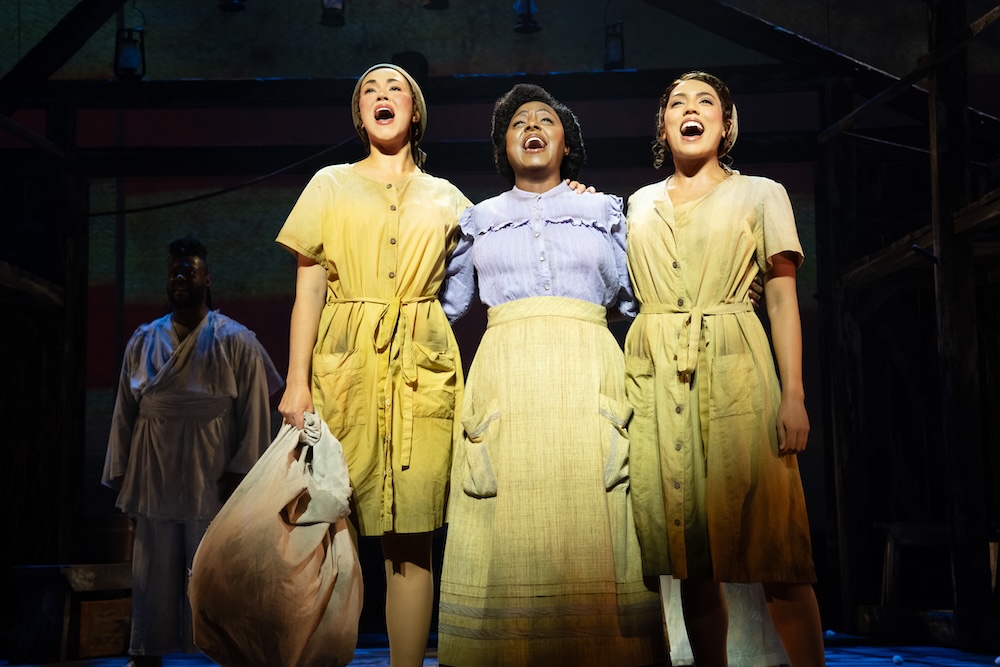
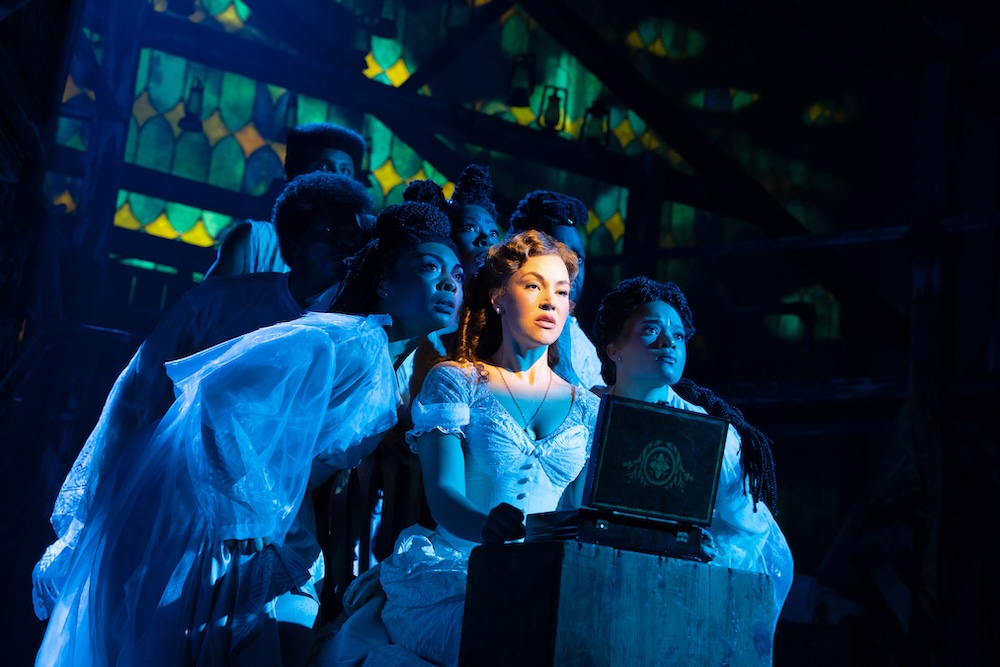
Throughout the show, the trio of women find themselves surrounded by the Kinfolk, a collective of ancestor storytellers who both serve to narrate the story (“But you know how family stories do,” they promise in the show’s opening number, “So we believe it’s mostly true”) and guide the characters along their journey.
And while Tallulah, Mary and Martha have their sights set on securing their family’s hard-won inheritance, Wanted asks thought-provoking questions about the nature of freedom, race and prejudice that ring just as true in modern-day America. But according to Ledisi, the importance of the musical’s story goes even deeper.
“The timing of this story is perfect,” the Grammy winner says. “I want us to remember our tie to each other. Everything we worked hard to build to make the America that I see, that’s not like the America I see right now. The one that fought for all the beautiful things that we are. We have a tie. We just need to grab our ties and tie them back together, and remember who we are.
“Race is the story, but it’s also not,” she continues. “To me, the tie of legacy, love and family is the most important part that we keep forgetting about. That we are blood. Our blood is thicker than any origin of war…We’re people. We’re humans. It’s funny how we start there, but the root is: how do we love, even past all the other things?”
Below, Ledisi opens up to Ticketmaster about the lessons of Wanted, portraying Tallulah’s inner strength, the newly released deluxe edition of her Dinah Washington tribute album, her memories from being an understudy in the original Broadway cast of Caroline, or Change, and more.
View this post on Instagram
Congratulations on Wanted! With this being your first Broadway show in a number of years, what drew you to this musical in particular?
Well, I love that it was a true story about Black people being free and wanting more. I love the music — the music drew me in, of course, and definitely the story. But I also love the team’s clarity in wanting me, and seeing that I should be Tallulah. I didn’t see it at first, but I saw it later, after doing a deep dive into the story. So I’m grateful that they saw the vision first. I love Stevie [Walker-Webb], the director, all of the elements. So I’m very excited about it. I get to see it every day and be in amazement.
Were you familiar with the legend of Mary and Martha Clark before joining the show?
Not at all. Only in the one email I received asking me to be a part of it. And then just hearing Solea and Liisi singing and acting — it’s just so good. They’re so young and wise.
What can you tell me about your character, Tallulah Clarke?
Well, Tallulah has a dream and a vision for her family, and she goes after it. And then finds that there’s a newer way through her children. There’s a newer outlook on life to go after dreams that she’s not very fond of in the beginning, but she knows her girls are like her: they’re gonna go after it. And so she supports them and what they do — they’re coming back to take care of the family and legacy. Martha is a part of her; Mary’s a part of her. Both are dreamers, but go after it differently.
I love this character because she reminds me of my great-aunts and my family, just like [playwright and lyricist] Angelica [Chéri]’s family. There’s an arc of wanting more and how to go about it. But Tallulah’s family is a little more, you know, adventurous…
This story is set in Texas in the 1890s. As an R&B artist, do you have a connection to country Western music?
Oh, absolutely — the blues, the church part of it. I love what Ross [Baum, the show’s composer] has written because he’s very modern, but it’s set in 1893. It’s still really connected to Black music, and that’s what I love about it. And he wants what I am. He’s not asking for anything different, and that’s what blows me away every day.
That’s the fun part about building a world, you get to create it however you see it. I always ask Ross, “How do you envision it? What do you want as the songwriter?” And he’s like, “Wow, no one ever asks me what I want.” I said, “This is your world that you created for 20-something years. What do you want to hear? This is your baby. How do you envision Tallulah? What do you want her to say?” So I always refer to the music and the melody and the songwriter’s brain, and then he’s like, “OK, now can you add your little Ledisi-isms?” But I’m always going back to the character that they wrote. How would she do this? They want Tallulah to always have meat, iron. They want her rooted and strong.
The show opens with “Prologue/Inheritance.” How do those two numbers set the stage for Tallulah for what’s to come in the story?
Listen, the first five numbers introduce and build the story. I know for a fact those first five numbers are so important to telling us the story, and right off the bat, we’re already singing, and connecting you to the family. I love that the Kinfolk set us up. They’re the narrators here and there, but they’re also an entity. The Kinfolk are a spiritual force that moves this family through many decisions and transformations. So it’s really beautiful to watch.
Wanted engages in some really interesting issues around deconstructing race, the concept of “passing” and the true definition of what it means to be free. Why do you feel like exploring those themes are so important today?
We are moving through the past and the present right now, and we are seeing a lot of things that we fought to not have happen. And this story is dealing with all those things: legacy, family, love, the want for freedom, the want for better, empowerment, and the topic of race. It’s another American version of that story.
The timing of this story is perfect. We need to talk about freedom. Seeing three Black women come together and wanting a better part of life by any means necessary, but still remembering each other, that’s the story to me. It’s not just them passing for white; it’s remembering each other. That bond that keeps them together through all of this, that’s the tie. I want us to remember our tie to each other. Everything we worked hard to build to make the America that I see, that’s not like the America I see right now. The one that fought for all the beautiful things that we are. We have a tie. We just need to grab our ties and tie them back together, and remember who we are.
Race is the story, but it’s also not. To me, the tie of legacy, love and family is the most important part that we keep forgetting about. That we are blood. Our blood is thicker than any origin of war. We’re like, “Oh, you’ve got to be this, and you’ve got to be that. You’ve got to be separated.” There’s no separation. We’re people. We’re humans. It’s funny how we start there, but the root is: how do we love, even past all the other things?
In the midst of preparing for opening a Broadway musical, you also just released the deluxe edition of For Dinah, your Dinah Washington tribute album. What inspired you to honor her with this new body of work?
Well, like her, I feel like sometimes we skip over history a little bit in some spaces. And Dinah was a dark-skinned woman who was really vibrant and living life fully — and not in the traditional way like everybody wants a woman of her era to be. She was ahead of her time, being a rebel and a feminist to me. She was living large and wore diamonds and furs and didn’t care. Had a whole bunch of men and would cuss people out and crossed over genres with different music. She was a free force who helped Quincy Jones get his first start. She did Las Vegas residencies first, like, all the things.
And I’m like, “Why aren’t we talking about this beautiful Black woman who helps so many musicians become who they are? Why isn’t she mentioned like we mention Aretha or Dionne or all the greats?” To me, she was a blueprint of that beginning. All the wonderful things about her that I love gave me permission to sing the way I do, and be okay with singing in different genres. Because people love putting you in their boxes. If I believed that, I wouldn’t do Broadway. If I believed that, I wouldn’t do jazz. So she gave me permission to sing the way I do.
And when I heard her, I fell in love with her, and I saw that Amy Winehouse and Lady Gaga and Queen Latifah, all these people loved her as well. So I was like, “OK, well, let’s mention her!” So I put my savings aside and begged [11-time Grammy-winning bandleader] Christian McBride to please help me get this to the light of day, and we recorded it with my savings. I have great R&B projects, but I feel like, like anything, you honor tradition and legacy, and make sure their name is mentioned along my way. And that’s what I’ve always done. I love legacy pieces, as you can tell with me wanting to be in Wanted. I love honoring what was before, and that’s just me honoring the great before.
It’s been more than 20 years since you made your Broadway debut in Caroline, or Change. Reflecting back on it, what did that experience mean to you?
Isn’t that crazy when you put it like that? [Laughs] The great Linda Twine introduced me to this world of Broadway. I came to visit New York for a week, and she heard me sing. Linda Twine has worked with Lena Horne, she did The Wiz. She’s the musical director for all these great Black plays, and everyone called her to music-direct the bands for Broadway at the time. And she said, “Sing for me.” So I sang two songs and she said, “I need you to move here. Come back in two weeks, and I’ll have work for you.” And I ended up on Broadway!
In Caroline, or Change, I understudied Marva Hicks, who was the original Tallulah Clarke. Isn’t that crazy? She was the one who played Tallulah when they were building and workshopping the show, when it was still called Gun & Powder. But I understudied Marva Hicks and the great Capathia Jenkins — they were The Radio and The Washing Machine. It was amazing to be a part of the Broadway community as an understudy and just watch.
Then, I ended up workshopping The Color Purple before Oprah came in. I saw LaChanze build Celie. I saw that book turn into a whole world on stage. That opening in “Mysterious Ways,” [sings] “Sunday morning…,” they wrote that for me. But when it was going to Broadway, I had to make a decision. So I went ahead and said, “Hey, I’m going to go and finish what I started with R&B.” And I got three Grammy nominations after that. So it kind of all worked out for itself.
In Wanted, Mary and Martha Clarke turn themselves into legends. A hundred years from now, what do you hope the kinfolk pass down as the legend of Ledisi?
I hope people say, “She was one of the greatest storytellers we’ve ever witnessed on many different platforms, many different genres.” I hope I’m known for that. Being a wonderful storyteller like Sammy, like Aretha, like all the greats that you love. But I want to have fun doing it. I don’t want it to be a hard labor. This is hard, don’t get me wrong! But meaning that I had to do it. I want to love to do it. I did it because I wanted to. And then I want to leave. Don’t be rolling me out in the wheelchair and Coke bottles and muumuu dresses. Let me sit down when I’m done. I don’t want to be scatting in the wheelchair like Ella, even though she did it well. I don’t want to do it!
Wanted tickets are available via Ticketmaster.
The post Ledisi on “Legacy, Love and Family” in Broadway’s Wanted appeared first on Ticketmaster Blog.
Ticketmaster is the world’s largest ticketing and event-management company, specializing in sales, distribution, and technology for concerts, sports, theater, and family events. While most people know it simply as the website where they buy tickets, it is actually a massive, vertically integrated corporation that forms half of Live Nation Entertainment, following a 2010 merger.
Find out more at Ticketmaster: Article and Tickets.
