• Skip to main content
  • Skip to header right navigation
  • Skip to after header navigation
  • Skip to site footer
MyZA

MyZA

News, Directory, Events and Other Stuff

  • Social Media
  • Sport
  • World News
  • Home
  • Submit News
  • Directory
  • Events
  • Stratlec
  • TFSA
  • News
    • APO
    • Today’s Sport News
    • Todays Social Media and Tech Headlines
    • Today’s World News
    • Today’s SA Financial News
  • Contact
You are here: Home / Archives for Cyber Security

Cyber Security

8 December 2025

South Africans Signal Cautious Confidence as Financial Habits Evolve

Location: Business
  • TransUnion’s Q2 2025 Consumer Pulse Study reveals strategic shifts in saving, borrowing, and fraud defence, with younger generations leading the way
  • 75% of South Africans expect their income to rise, but nearly 39% anticipate missing at least one bill or loan payment
  • 45% of Gen Z and 39% of Millennials plan to apply for credit, leading a shift toward more proactive financial habits
  • 58% of consumers were targeted by fraud in Q2, with many responding by strengthening their digital security

South African consumers are responding to ongoing financial pressures with increasing intent and vigilance. While inflation, high interest rates and job market uncertainty continue to weigh on household budgets, the latest TransUnion Consumer Pulse Study for Q2 2025* reveals a population adjusting not just defensively, but proactively. From rethinking spending and saving to becoming more discerning about credit and fraud, South Africans are adopting behaviours that suggest a shift toward long-term financial resilience, especially among younger generations.

“South Africans are showing resilience with purpose,” said Ayesha Hatea, director of research and consulting at TransUnion. “They’re not simply reacting to pressure, they’re taking charge, rebalancing their finances and protecting their future.”

Mixed Incomes, Bold Adjustments

While there are some positive signs, many households are still experiencing fluctuations in their income. In the second quarter, 21% of consumers said their household income had decreased, while 38% reported an increase. A majority of respondents (75%) are hopeful that their earnings will increase in the next year. However, this confidence exists alongside financial challenges, with nearly 39% of consumers reporting that they expect they might miss at least one bill or loan payment in the near future.

This financial pressure is driving noticeable changes in how people manage their money. More than half of consumers (54%) trimmed back on non-essential expenses like dining out, entertainment and travel. Many are also taking steps to strengthen their financial security; 31% paid down debt faster, 24% put more into emergency savings or stokvels and 37% planned to increase their retirement or investment savings.

Generational Differences Define the Shift

While overall behaviours are trending positive, the evolution is not uniform across age groups. Younger consumers, particularly Gen Z (ages 18-28) and Millennials (29-44) are emerging as drivers of this transformation. They are more likely to apply for credit, monitor their credit reports frequently and adopt security tools like multi-factor authentication.

Forty-five percent of Gen Z respondents and 39% of Millennials indicated they plan to apply for or refinance credit in the next year, compared to just 27% of Gen X (45-60) and 15% of Baby Boomers (61+). They are also the most engaged in monitoring their credit monthly and believe that access to alternative data, such as rental or Buy Now Pay Later (BNPL) payment histories, would improve their credit scores.

“Younger South Africans are embracing financial tools with growing confidence,” Hatea added. “They’re more comfortable with digital platforms, increasingly aware of how their financial choices affect their long-term goals, and, as a result, are more proactive about managing their credit.”

Cautious Credit Intent Amid Access Concerns

While 92% of consumers believe access to credit is important to achieving their financial goals, only 36% intend to apply for credit in the coming year, a figure that has remained stable since Q1. This cautious demand reflects continued uncertainty around employment, income and affordability.

Consumers favour unsecured lending, with credit cards (30%), personal loans (28%) and BNPL services (25%) attracting the most interest. Interest in secured lending remains comparatively low, with only 22% planning to apply for vehicle finance and 19% expressing interest in home loans.

Still, barriers remain. Nearly half (48%) of consumers said they had considered applying for credit but ultimately decided not to. The main reasons were income/ employment status (30%), high borrowing costs (29%) and concerns about their credit history (27%). Overall, 45% of consumers believed they would be approved if they applied for credit. While this figure reflects general sentiment, optimism tends to be higher among those who actively monitor their credit, suggesting a link between financial awareness and confidence.

Digital Fraud on the Rise, but So Is Awareness

As digital engagement grows, so does the threat of fraud. In Q2 2025, 58% of South Africans reported being targeted by fraud schemes, a decrease from the previous quarter (61%) with 13% confirming they had fallen victim. The most common scams included gift card or money transfer scams (33%), phishing (31%), smishing (30%) and third-party seller scams (28%).

Consumers are responding with heightened vigilance in response to cyber security concerns. A majority (59%) changed their passwords, 39% checked their credit reports and 25% added multi-factor authentication. Gen Z and Millennials were the most likely to take protective action, a likely result of both their greater exposure to digital platforms and higher awareness of evolving scam tactics. Alarmingly, 21% of consumers said they took no action at all, often citing uncertainty about what to do. This highlights the ongoing need for stronger cybersecurity and fraud education, and accessible protection tools.

“Consumers are trying to keep pace, but the threat landscape is evolving quickly,” said Hatea. “What we need now is a national conversation, one that gives all South Africans the knowledge and resources to protect their identities in a digital-first world.”

A Financial Turning Point

The Q2 2025 Consumer Pulse Study reveals a country making deliberate financial choices in the face of uncertainty. South Africans are shifting from survival mode to a more balanced, future-focused financial mindset. While challenges remain, the direction is clear; consumers are becoming more selective in how they spend, more strategic in how they borrow and more vigilant in how they protect themselves.

“At TransUnion, we believe these shifts represent not just resilience, but growth,” concluded Hatea. “South Africans are taking ownership of their financial journeys and in doing so, they’re laying the groundwork for lasting stability and inclusion.”

Consumers can get their free annual credit report from TransUnion here.

* This online survey of 922 adults was conducted May 5–25, 2025
Read moreSouth Africans Signal Cautious Confidence as Financial Habits Evolve
30 November 2025

Nearly 7 in 10 South Africans Remain Optimistic About Finances Amid Rising Costs and Fraud Risks

Location: Business
  • 68% of South Africans are optimistic about their household finances in the next 12 months, despite persistent inflationary pressures
  • 75% expect their household income to increase over the next year, but 36% expect to be unable to meet their bill and loan payments in full
  • Younger generations show the strongest engagement with credit, with Gen Z and Millennials most likely to use buy now, pay later (BNPL) services.59% of consumers said they were targeted by fraud recently, with money/gift card scams the most reported scheme

South Africans are managing cost-of-living challenges with a blend of resilience and caution, according to TransUnion’s Q3 2025 Consumer Pulse Study*. The findings reveal that while inflation and affordability remain top concerns, many consumers are maintaining financial optimism while adopting protective behaviours, especially in credit usage and cyber security.

“South Africans are signalling confidence, but it’s a confidence shaped by awareness of risk,” said Ayesha Hatea, director of research and consulting at TransUnion. “Consumers are balancing optimism with caution, adjusting spending habits, making informed credit decisions, and staying vigilant to fraud.”

Financial Confidence, but Rising Costs

Nearly seven in 10 (68%) of South Africans are optimistic about their household finances over the next year, while 75% expect their income to increase during that period. However, this optimism exists alongside strain: 36% of consumers say they expect to be unable to pay at least one of their current bills or loans in full. South Africans were concerned about the impacts of price increases, most particularly for groceries (82%), utilities (60%), fuel for cars (52%) and medical care (52%).

Younger Generations Shape Credit Behaviour

Generational differences continue to define financial habits. Nearly half of Gen Z (18-28 years old, 48%) and Millennials (29-44 years old, 43%) reported they’ll apply for new credit or refinance existing credit in the next year, compared to far lower intent among Gen X (45-60 years old) and Baby Boomers (61-79 years old).

Younger consumers are also driving the adoption of buy now, pay later (BNPL) services with 55% and 59% of Gen Z and Millennials saying they’ve used BNPL in the last 12 months compared to 39% and 19% of Gen X and Baby Boomers, respectively. Overall, 15% of South Africans who have used BNPL in the last year said they did so to afford a larger purchase (furniture, appliances or cars), highlighting both its appeal and potential risks in a high-inflation environment.

Cautious Credit Intent Amid Affordability Pressures

While the vast majority of South Africans (93%) say that access to credit and lending products is important to be able to achieve their financial goals, many remain hesitant to take on new financial products. In fact, 38% said they’ll apply for new credit or refinance existing credit in the next year. Credit awareness among South African consumers remains strong, with 70% agreeing that access to credit can unlock new opportunities and improve quality of life.

This sentiment aligns closely with TransUnion’s financial inclusion priorities, particularly as alternative data becomes a more prominent tool in assessing creditworthiness. The study reveals that consumers are increasingly aware of how credit affects their daily lives, which highlights the importance of expanding access to credit through inclusive data strategies, especially for those traditionally excluded from formal financial systems.

Among those planning to apply for new or refinance existing credit in the next year, unsecured credit products such as personal loans (30%), new credit cards (29%) and BNPL services (22%) are the most popular credit types they said they’ll apply for. In contrast, a lower percentage said they’ll apply for secured credit options like a new car loan or lease (18%) or home loans (16%), highlighting a cautious approach to larger, long-term borrowing.

Nearly Two-Thirds Report Being Targeted with Fraud

Fraud attempts and scams remained high in Q3: 59% of South Africans said they were targeted by email, online, phone call or text messaging fraud in the last three months, the same percentage as Q2. Among those who said they were targeted, the most reported scheme was money/gift card scams (37%), with phishing (28%) and smishing (28%) also widespread.

With the persistence of attacks, consumers are proactively taking action. In fact, 54% of all surveyed said they changed passwords, 35% checked their credit report for any signs of fraudulent activity against their profile, and 27% modified their login to secure login without passwords options or added multi-factor authentication in the last 60 days in response to cyber security concerns.

“Fraudsters are evolving, and consumers are trying to keep pace,” said Hatea. “This is why education and accessible protection tools are so critical in building long-term trust in digital engagement.”

Consumers can get their free annual credit report from TransUnion here.

* TransUnion’s online survey of 966 South African adults was conducted June 17– 31, 2025.

Read moreNearly 7 in 10 South Africans Remain Optimistic About Finances Amid Rising Costs and Fraud Risks
23 April 2025

SITA Governance and Performance Failures Put State IT Infrastructure at Risk

Location: News

Republic of South Africa: The Parliament
Download logo

Following two days of briefings from the Auditor-General and the Special Investigating Unit on the State Information Technology Agency (SITA), the Chairperson of the Standing Committee on Public Accounts (SCOPA), Mr Songezo Zibi, has raised concerns with SITA's governance and performance failures, which adversely affect government effectiveness.

The SITA has for several years failed to achieve satisfactory audit outcomes or to adequately support various government departments, agencies and other public institutions. This has left them with a high number of vacancies, inadequate IT support, obsolete technology, faulty procurement processes and serious cyber security weaknesses.

“It is unacceptable that at a time when information technology is so critical to financial controls, governance and operational effectiveness, the sole agency tasked with supporting government is failing so dismally and for so sustained a period. Talk of modernisation in different areas, such as the police, will remain a pipedream if reliance is placed solely on the SITA,” said Mr Zibi.

The committee heard that while a new Board has been in place since February 2025, the agency still has critical unfilled vacancies such as a Chief Digital Officer. “We are going to invite the Minister of Communication and Digital Technologies to appear before the committee to explain the steps he is taking to ensure the SITA recovers to fulfil its constitutional mandate. The SITA's failures have become a serious financial and national security risk that should not be tolerated any longer,” he added.

Distributed by APO Group on behalf of Republic of South Africa: The Parliament.

Read moreSITA Governance and Performance Failures Put State IT Infrastructure at Risk
9 April 2025

CSIR critical for innovative solutions to resolve challenges – President Ramaphosa

Location: News

CSIR critical for innovative solutions to resolve challenges - President Ramaphosa

President Cyril Ramaphosa has hailed the Council for Scientific and Industrial Research (CSIR) as a “South African success story” as the institution marks 80 years since its establishment.

The President was delivering remarks at the institution’s headquarters following a tour of the facility on Tuesday afternoon.

“Over many decades, the CSIR has been [at the forefront]… of developing groundbreaking technologies and solutions that have profoundly shaped our country’s scientific and industrial progress.

“With the advent of democracy in 1994, the CSIR embarked on a trajectory of aligning itself with the values of our Constitution. The CSIR is a true treasure for our nation,” he said.

The President told the gathering that as the country – and the world – dealt with the COVID-19 pandemic, the CSIR stepped in to assist the country in fighting the virus.

During the pandemic, CSIR engineers produced some 18 000 ventilators, which were vital for the care of patients across the country.

It also developed a platform to track the impact of the pandemic, which assisted government to direct its response.

“At a moment of great crisis and danger, it was Minister [Blade] Nzimande who said let’s go to the CSIR, and indeed, we came rushing because you had already developed certain capabilities to help us deal with the crisis not only our country was facing.

“We came in a rush, and you distinguished yourselves as a truly capable facility and centre, and today you have displayed to me and us precisely what you true capabilities are. They range from... having the capability to develop missiles and aeroplanes, and cyber security systems,” President Ramaphosa said.

The President called on government to make more use of the CSIR’s capabilities to deliver on South Africa’s developmental mandate.

“In government, we don’t use… the CSIR enough. You are a government owned entity, and you do a great deal of work for others in other countries. We have used you, and you have demonstrated that you are more than capable.

“We are going to have a special Cabinet session where [the CSIR] comes and outlines... precisely what you do and also give us insights on how we can use you. I can’t think of a better way of State capability [building] other than through science, technology and innovation,” he said.

The President further emphasised the institution’s critical role in building State capacity.

“We are one of those countries where, at the advent of democracy, we deindustrialised. The manufacturing base in our country started receding and it is this that we now need to build back.

“[The CSIR] being the centre for industrial research, and who are so adept in a number of areas, can help us to address the challenges in relation to job creation, reducing poverty and also ensuring that there is inclusive growth,” President Ramaphosa said. – SAnews.gov.za 

NeoB
Wed, 04/09/2025 - 10:10
22 views

Read moreCSIR critical for innovative solutions to resolve challenges – President Ramaphosa
30 January 2025

Meteorological services uninterrupted despite hacking incident

Location: News

Meteorological services uninterrupted despite hacking incident

The South African Weather Service (SAWS) has asserted that it continues to rely on alternative channels to render critical marine, aviation and severe weather services, pending the recovery and restoration of compromised Information and Communication Technology (ICT) systems.

This follows a cyber security breach on its ICT systems by criminal elements, on Sunday evening.

“Thus far, we have not had an interruption of services. Weather products for marine and aviation sectors are being conveyed via alternative channels. Daily forecasts are being sent regularly via email to media houses and to Disaster Management Authorities,” SAWS Chief Executive Officer, Ishaam Abader said on Thursday.

Abader said that forecasts were further being disseminated through social media platforms, as the organisation’s website remains down.

The weather service said that a team of engineers, and cyber security experts are working around the clock to return operations to normalcy within a reasonable time. Up to so far, the team has been able to restore the SAWS email functionality and telephone system.

“The SAWS understands the significance of its services in so far as they relate to saving lives and property from the impact of hazardous weather. Accordingly, the organisation does not take the cyber-attack lightly. The public will be kept abreast of developments at regular intervals,” the weather service said. -SAnews.gov.za

nosihle
Thu, 01/30/2025 - 09:49

241 views
Read moreMeteorological services uninterrupted despite hacking incident
14 November 2024

Liquid C2 Builds on Strategic Partnership With Cloudflare to Introduce Enhanced Cyber Security Solutions

Location: News
Liquid Intelligent Technologies

Liquid C2, a business unit of Cassava Technologies has further solidified its strategic partnership with Cloudflare. The latter has appointed Liquid C2 as the first distributor of their new range of cyber security products in South Africa, a testament to Liquid C2 expertise and trustworthiness in the industry. In addition to South Africa, the company will make the solutions available to its partners in Namibia, Zimbabwe and Zambia. 

With the new offering, Liquid C2 is set to deliver application services that provide security and performance solutions for web applications, network services that secure enterprise networking and zero trust services. The 2023 Cyber Security report from Interpol revealed a 23% year-on-year increase in the average number of weekly cyberattacks per organisation in Africa, underscoring the pressing need for cost-effective integrated cybersecurity services for businesses in the mid-market segment.

Oswald Jumira, CEO of Liquid C2, reassures, “Through this partnership, we will enable our channel partner ecosystem through Cloudmania to expand their cyber security solution offering to their customers. Modern businesses need robust, scalable, and secure solutions to support hybrid work environments, protect against network and application-level threats, and ensure reliable connectivity. This offering, which combines the reach of Liquid C2 and Cloudmania and Cloudflare's expertise, is a testament to our commitment to enabling businesses to thrive in the growing African digital economy”.

Graham Turnbull, Cloudflare said, “Cloudflare is excited to announce an expanded partnership with Liquid C2 to launch a Managed Services Programme aimed at delivering advanced security and performance solutions to businesses of all sizes across Africa. As long-standing partners, Cloudflare and Liquid C2 are committed to empowering organisations with scalable, resilient digital infrastructure. This collaboration brings together Cloudflare's world-class technology with Liquid C2's extensive network, supporting the continent's digital growth and security needs”.

Additionally, Cloudflare's zero trust services provide a security model that requires strict identity verification for every individual and device trying to access resources on a private network. This solution is critical for any organisation that has moved to a hybrid and remote work model. In today's ever-evolving cyber threat landscape, businesses need to secure access to applications and data from any location, ensuring that only authorised users and devices can connect. This milestone enables African companies to level the playing field against their international counterparts, making Africa an attractive investment destination.

Distributed by APO Group on behalf of Liquid Intelligent Technologies.

About Liquid C2:
Liquid C2, a business of Cassava Technologies, delivers cutting-edge cloud and cybersecurity services and solutions. Committed to facilitating digital transformation, Liquid C2 is positioned to provide comprehensive solutions tailored to meet the evolving demands of the digital era by empowering businesses to navigate the complexities of the modern digital landscape securely. The company's offerings span cloud solutions that enhance accessibility and scalability, and robust cybersecurity services to safeguard sensitive data and elevate security and compliance posture to ensure businesses remain seamlessly connected and protected. https://LiquidC2.com/

About Cloudflare:
Cloudflare, Inc. (www.Cloudflare.com / @ cloudflare: https://apo-opa.co/3YPYmnV) is on a mission to help build a better Internet. Cloudflare's suite of products protect and accelerate any Internet application online without adding hardware, installing software, or changing a line of code. Internet properties powered by Cloudflare have all web traffic routed through its intelligent global network, which gets smarter with every request. As a result, they see significant improvement in performance and a decrease in spam and other attacks. 

Media files
Liquid Intelligent Technologies
Download logo
Read moreLiquid C2 Builds on Strategic Partnership With Cloudflare to Introduce Enhanced Cyber Security Solutions
21 October 2024

Europe’s Network and Information Security (NIS2) directive raises the stakes for African businesses to comply with European Union’s (EU) cyber security standards

Location: News
Check Point Software Technologies Ltd.

The European Union's NIS2 cyber security  directive has significant implications for African businesses trading with the continent.  This is according to Check Point Software Technologies (www.CheckPoint.com), a leading AI-powered cloud-delivered cyber security provider, which urges African businesses with strong ties to the EU to take steps to comply with this new, stringent cyber security regulation.

Download document: https://apo-opa.co/3UgCQYj

The European Union's NIS2 Directive, came into effect this month and requires member states to amend their national legislation. The NIS2 Directive imposes strict cyber security requirements, including enhanced management liability, reporting to authorities, risk management, and business continuity planning, placing African companies trading with the EU under increased scrutiny.

The NIS2 Directive builds upon the original NIS1 Directive introduced in 2016, expanding its scope to cover a wider range of sectors including Energy, Banking, Transport, Digital Infrastructure, Healthcare, Food Production, and Research. More than 80% of European enterprises are now within the scope of this legislation, which extends to global supply chain partners—including many businesses in Africa.

Collins Emadau, Check Point Partner and Director at Westcon, explains, “Europe is still Africa's leading trading partner. African businesses, particularly in leading economies such as South Africa, Kenya, and Nigeria, need to understand the far-reaching impact of NIS2. Compliance is not just about meeting EU standards—it's about securing their future in a globalised market. Failure to comply will result in not only heavy fines but also the potential loss of critical trade partnerships with EU member states."

What's at Stake for African Businesses?

The EU remains the largest trading partner for Africa, with over 18 Economic Partnership Agreements and trade worth billions annually. African businesses, especially in sectors like Energy, Banking, Transport, and Manufacturing, are key partners in the EU's supply chains. To continue doing business with EU companies, African organisations must comply with NIS2, which mandates strict cyber security measures to protect critical infrastructure and supply chains.

Issam El Haddioui, Head of Security Sales Engineering:  Africa, Check Point Software Technologies, says, "NIS2 sets a new standard for cyber security, and African businesses must act now. Many organisations are unaware of the depth of these requirements, which go beyond local regulations. Compliance is essential not only for maintaining business relationships with the EU but also for enhancing the overall resilience of African economies against cyber threats."

Compliance will exact a cost for African organisations, which according to Interpol's 2021 Africa Cyberthreat Assessment Report, spends an average of only 0.05% of their revenue on cyber security, far below the global average of 0.3-0.5%.  The Report also estimated the financial impact of cyber crime in the region at over $4 billion USD, representing about 10 percent of Africa's total GDP.

Tougher Penalties and Personal Responsibility

NIS2 introduces personal liability for business leaders in the event of a cyber attack, meaning that executives themselves can be held financially accountable for breaches. Penalties include fines of up to EUR 7 million or 1.4% of a company's global annual turnover, whichever is higher. This goes beyond the GDPR, placing even more responsibility on corporate leadership to ensure robust cyber security practices are in place.

NIS2 mandates that organisations must report cyber incidents to authorities promptly and inform their stakeholders, suppliers, and customers. Therefore, African businesses must ensure they have a comprehensive incident response plan in place, along with regular cyber security training for both IT and leadership teams.

Steps for African Businesses to Ensure Compliance

To successfully implement NIS2 and avoid devastating penalties, Check Point recommends the following four steps for African businesses:

  1. Knowledge: Business leaders must gain a basic understanding of cyber security to effectively communicate with their IT teams and ensure sound decision-making.
  2. People: Establish an agile IT security department, including key roles such as a Data Protection Officer (DPO) and a Chief Information Security Officer (CISO), to manage and distribute responsibilities efficiently.
  3. Audit: Conduct regular risk assessments and audits to identify and mitigate vulnerabilities. Continuous monitoring is essential to stay compliant with evolving threats.
  4. Incident Management: Develop clear procedures for responding to cyber incidents, including swift reporting to national authorities, suppliers, and stakeholders.

Long-Term Commitment to Cyber Security

Compliance with NIS2 is not a one-time process; it requires a long-term commitment to cyber security. From 2028, organisations will be required to annually document their NIS2-compliant IT infrastructure and demonstrate that their cyber security measures are aligned with the latest technological advancements.

“African countries, especially economic leaders like South Africa, Kenya, and Nigeria, should also consider using the NIS2 framework as a model for strengthening their own national cyber security regulations. By improving cyber-readiness, African businesses can not only comply with international standards but also protect their data, operations, and reputations from evolving threats,” El Haddioui continues.

El Haddioui, concludes, "The NIS2 Directive marks a significant shift in the cyber security landscape. African business leaders must recognise that cyber security is now a matter of survival, not just compliance. By taking proactive measures, they can safeguard their future, avoid heavy penalties, and ensure their organisations thrive in an increasingly interconnected global economy."

Distributed by APO Group on behalf of Check Point Software Technologies Ltd..

Follow Check Point via:
LinkedIn: https://apo-opa.co/48bWAC1
X: https://apo-opa.co/3Uh9uJo
Facebook: https://apo-opa.co/40cvTLl
Blog: http://apo-opa.co/4e2KjBm
YouTube: https://apo-opa.co/48wjFQd

About Check Point Software Technologies Ltd.:
Check Point Software Technologies Ltd. (www.CheckPoint.com) is a leading AI-powered, cloud-delivered cyber security platform provider protecting over 100,000 organisations worldwide. Check Point leverages the power of AI everywhere to enhance cyber security efficiency and accuracy through its Infinity Platform, with industry-leading catch rates enabling proactive threat anticipation and smarter, faster response times. The comprehensive platform includes cloud-delivered technologies consisting of Check Point Harmony to secure the workspace, Check Point CloudGuard to secure the cloud, Check Point Quantum to secure the network, and Check Point Infinity Core Services for collaborative security operations and services.

Media files
Check Point Software Technologies Ltd.
Download logo
Read moreEurope’s Network and Information Security (NIS2) directive raises the stakes for African businesses to comply with European Union’s (EU) cyber security standards
20 September 2024

Financial Services Sector Calling Out for Clear Line of Sight on AI, ESG Regulatory Horizon

Location: Business
DLA Piper

Businesses say the lack of clarity around ESG and AI regulation is a key challenge to realising the benefits of technology and innovation; Despite recognising the business opportunity with AI, as firms opt to bring in suppliers rather than recruiting in-house specialists, they may be left without the internal talent - risking falling behind the curve in the future. 

New survey data from global law firm, DLA Piper, has shown that the Financial Services (FS) sector is calling out for clearer and proportionate regulations surrounding AI and ESG to help them realise the benefits these trends offer.  

In its global report - Financial Futures: Disruption in global financial services (https://apo-opa.co/3zhzr4e), published today, the firm found that eight in ten respondents are optimistic about future industry growth prospects for  the financial services industry. UK and US organisations reported the highest confidence (93% and 90% respectively) with Africa remaining more cautious (50%). 

Amongst organisation types, the research finds that banks are the most optimistic (88%), with optimism being driven by digitalisation and advancements in technology. Respondents from global FinTechs however, are feeling the least positive (72%).  

The high levels of optimism are being attributed to advancements in technology (71%), the launch of new products and services to drive growth (55%) and changing consumer and investor behaviours (38%).  

However, clarity and a proportionate approach is key as 58% of respondents cite regulation complexity around technology as a key challenge globally, and nearly three quarters (73%) go on to say that current regulations stifle innovation efforts.  

For those looking at other locations for optimal conditions for growth , the US is seen as the most attractive market (35%), followed by the EU (24%). South African and Middle Eastern respondents are the most optimistic for the positive impact AI will bring (72%, and 64% respectively), highlighting an appetite for investment, despite apparent lower levels of confidence in the local market.  

AI and Digitalisation will transform the financial services sector, but businesses need a plan  
Whilst the majority of respondents (86%) believe that AI will transform the sector, half (53%) see AI as one of their main challenges- even so, only four in ten (both 39%) are committed to hiring experts in the field of AI and imposing governance /oversight structures to maximise the related opportunities;  and half of the companies surveyed lack in-house specialists and are opting to work with specialist subcontractors.  

Without this internal talent, businesses risk falling behind the curve in the future. 

Ethical AI concerns are highly documented, yet only 56% of the organisations surveyed are developing ethical frameworks to guide their efforts. Without an ethical framework in place, businesses put themselves at risk of not meeting stakeholder, customer and board demands around AI deployments. It is vital for businesses to have a clear plan and direction in place before they start their AI journey.  

Despite not having frameworks to use, businesses report a clear understanding of the benefits AI can offer, such as managing regulatory compliance (63%); followed by fraud detection and prevention (62%). A fifth (21%) of businesses are worried about compliance issues as they look to manage the cyber security and data protection risks associated with AI.  

The importance of ESG cannot be understated  
As businesses grapple with changing ESG regulations across multiple jurisdictions, nearly (46%) half of businesses globally have ambitions to position themselves as a leader and innovator on sustainability and ESG.   

The appetite to drive ESG agendas forward is clear, but businesses report concerns on achieving their goals - over half of respondents (56%) would like to see more ESG regulation to support them in meeting their objectives, and 43%% want to understand the current regulations better.   

Businesses seem clear on the ESG challenges they need to navigate, with half stating that the reputational risk of ESG positioning is their biggest challenge, followed by integration of ESG throughout the business (47%). Businesses also ranked accurate reporting as a challenge which they are struggling to address. 

The negative external reputational risk of not complying with and need to comply with regulations are the biggest drivers for firms to engage in ESG activities (70% and 52% respectively). However, pressure from shareholders and senior management ranked lowest at 36% and 34% respectively.  

As the sector engages with ESG activities, almost 6 in ten (57%) plan to develop new ESG-focused products and services, and half are developing new technologies, yet staff development and training to optimise ESG efforts remains low on the agenda (17%).  

Almost half of the sector has ambitions to position their business as an ESG leader, whilst a third (34%) plan to replicate successful approaches by their peers. Not all organisations are so proactive - A fifth (19%) will wait until stakeholders and customers demand an approach, before making any decision. 

Mark Dwyer  Global Co-Chair of the firm's Financial Services sector group at DLA Piper commented: "While our survey shows a high level of optimism within the financial services sector, our research reveals a need for FS organisations to go further in planning around resourcing and regulatory horizon scanning in order to navigate the opportunities that AI and other new technologies offer. 

"It is clear that ESG factors are driving changes to activity in financial markets; from financing the enormous capital requirements for transition, to ensuring accurate reporting of environmental, social and governance metrics to facilitate choice for investors and supervision and stress-testing by regulators. It is therefore vital that leaders take note of the challenges and opportunities presented by ESG and define a clear plan. Both ESG and innovation will be key to business success long into the future." 

Johannes Gouws, Country Managing Partner, DLA Piper South Africa added: "In light of the challenges our report identifies, financial services organisations are placing a higher focus on horizon scanning, as well as mapping out global regulatory implications. Balancing adequate and over-regulation in developing markets is always challenging. However, it is crucial for regulations in African markets to keep pace with international developments in order to limit regulatory arbitrage and protect the sector's integrity. Proportionate regulation in the sector is key, and can be a competitive advantage in attracting business and investment. With DLA Piper's pan-African and global reach, we can help clients to simplify their cross-border challenges whilst supporting their resilience in the face of constantly changing risks."  

Distributed by APO Group on behalf of DLA Piper.

Notes to editors: 
DLA Piper commissioned Coleman Parkes Research to canvass views of key decision-makers in global financial services organisations across the EMEA and APAC regions and North America. Nearly 800 interviews were conducted online in March and April 2024 with executives in key businesses across banking, funds and fund managers, fintech and financial services market infrastructure firms with revenues from USD1 million.  

Contact:
Suraj Mashru
Senior PR Manager (UK & International), DLA Piper
+44 (0) 207 153 2617
Suraj.Mashru@dlapiper.com 

About DLA Piper 
DLA Piper is a global law firm helping our clients achieve their goals wherever they do business. Our pursuit of innovation has transformed our delivery of legal services (https://apo-opa.co/3MPSGou). With offices in the Americas, Europe, the Middle East, Africa and Asia Pacific (https://apo-opa.co/4dczEU6), we deliver exceptional outcomes on cross-border projects, critical transactions and high-stakes disputes.  

Every day we help trailblazing organizations seize business opportunities and successfully manage growth and change at speed. Through our pro bono (https://apo-opa.co/3BkLxde) and sustainability (https://apo-opa.co/4djCiHE) work, we support communities around the world and help create a more just and sustainable future. Visit www.DLAPiper.com to discover more. 

Media files
DLA Piper
Download logo
Read moreFinancial Services Sector Calling Out for Clear Line of Sight on AI, ESG Regulatory Horizon
18 September 2024

Addressing the Tech Skills Shortage Needs to Become a National Imperative, Says MANCOSA

Location: MyPR

Addressing the tech skills shortage needs to become a national imperative, says MANCOSA South Africa has faced two major cyber security breaches this year and has been the victim of ongoing cyber abuse over a significant period, which cost millions of Rands in losses. Over the past ten years, the South African Reserve Bank (SARB) …

Read moreAddressing the Tech Skills Shortage Needs to Become a National Imperative, Says MANCOSA
9 September 2024

Police Minister to attend global forum on public security challenges

Location: News

Police Minister to attend global forum on public security challenges

Police Minister Senzo Mchunu is set to represent South Africa at the Global Public Security Cooperation Forum in China this week, where international leaders will come together to address key public security challenges.

The conference, themed: "Win-Win Cooperation under Significant Changes: Building a Global Community of Common Public Security", will take place from 8 to 11 September 2024, in Lianyungang City, China. 

During his visit to China, Mchunu will hold a bilateral meeting with the Chinese Minister of Public Safety, Wang Xiaohong. 

“The two leaders will engage on critical issues, including the use of advanced technology in policing to enhance law enforcement capabilities. The discussions will focus on strengthening cooperation in tackling transnational crime, cybercrime, and the development of innovative strategies for crime prevention.

“The South African Police Service (SAPS) delegation accompanying the Minister will actively participate in 13 sub-forums that address various aspects of public security governance. 

“These forums will cover a range of topics, including cyber security, counterterrorism, and urban safety, providing an opportunity for the delegation to share experiences and gain insights from global counterparts,” said the police in a statement.

In addition to the conference, Minister Mchunu will visit the Public Safety and Security Technology Expo where cutting-edge advancements in public safety technology will be showcased. 

The visit will allow the Minister to explore new technologies and innovations that could enhance the SAPS' capacity to ensure public safety in South Africa. – SAnews.gov.za

Edwin
Mon, 09/09/2024 - 10:20

603 views
Read morePolice Minister to attend global forum on public security challenges
16 July 2024

SSA hard at work to combat cyber threats

Location: News

SSA hard at work to combat cyber threats

Minister in the Presidency Khumbudzo Ntshavheni says the State Security Agency is sharpening measures against cyber security threats in the country.

The Minister was tabling the Budget Vote of the agency in Parliament on Monday.

She explained that the nature of threats was evolving with criminals using “sophisticated technologies and strategies that require agility and proactive response”.

“This requires specialised skills and coordination with various parties in and out of government. Honourable members are surely aware and concerned about the exponential increase on attacks to organs of state ICT infrastructure, which pose a threat not only to the individual targets but the economic value chain in the services these entities provide.

“In our efforts to strengthen cyber security, we are hard at work building and strengthening our capabilities and capacity to proactively combat emerging cyber threats and potential cyber attacks on our communications environment.

“In this regard, we will be accelerating the implementation of the National Cyber Security Framework which incorporates the development of the cyber security legislative framework and the establishment of an integrated cyber capability and capacity,” she said.

The Minister said with the passing of the General Intelligence Laws Amendment Bill and the necessary organisational reconfiguration, “we will also undertake work to recalibrate and capacitate the National Communications Centre to be more responsive to cyber security threats”.

“Before the end of this financial year, we will commence with the legislative process to take the Cyber Security Bill for consideration by Parliament,” she said.

Ntshavheni said government is embarking on partnerships – both internationally and domestically – to sharpen the skills within the intelligence environment.

“The Intelligence Academy is already working on revising its curricula to focus on more relevant skills of the present day intelligence environment. Some of this will be achieved through partnerships with reputable academic institutions as we work to ensure that the intelligence academy is SAQA accredited to ensure the portability of skills.

“In addition, the Intelligence Academy is exploring possibilities of establishing itself as a data institute that will not only serve the intelligence world, but broader society as data is not only the new gold, but an essential part of driving development and decision making.

“In this regard, investments in collaborations for technology and data sharing with both global and local institutions transcends a strategic imperative. It is a transformative opportunity which can empower the organisation to leverage global expertise, harness the power of technology and data to address local challenges,” she said. – SAnews.gov.za

NeoB
Tue, 07/16/2024 - 11:56

137 views
Read moreSSA hard at work to combat cyber threats
10 July 2024

DPWI investigates theft of R300 million

Location: News

DPWI investigates theft of R300 million

The Department of Public Works and Infrastructure (DPWI) Minister Dean Macpherson has decided to take the public into his confidence in the interests of transparency to reveal a staggering cyber-crime which involves R300 million being stolen in the past 10 years.

In the latest incident that took place in May 2024, the cyber-attackers stole a further R24 million. This prompted a full forensic investigation by the Hawks, South African Police Services, State Security Agency and experts in the ICT and cyber security industry.

This revelation emerged as Minister Dean Macpherson and Deputy Minister Sihle Zikalala, conducted detailed assessments on the work of the department and through the incoming briefings from departmental branches.

“It has become clear that the department has been a soft target and playground for cyber criminals for over a 10-year period and this should have been picked up a lot earlier. I felt it important to let South Africa know what has happened and what we are doing about it,” Macpherson said.

“I cannot discount the possibility of collusion between officials and criminals in this prolonged period of theft. It is clear that we need better financial controls which I have said to the department are a matter of urgency,” the Minister said.

The Minister has pledged to crack down on these syndicates and those in cahoots with them internally or externally. 

“We want to put a stop to this immediately because we cannot allow our department to be subjected to unchecked looting. This is money that could have been spent on our infrastructure drive to improve the lives of South Africans. 

“The investigation will be expanded and deepened to find the masterminds and the beneficiaries of this grand theft, and I want to see them in prison,” Macpherson said. 

Suspensions and seizures

Four officials have been suspended and 30 laptops seized by the investigators.  The four DPWI officials suspended include three senior management officials and one middle management official. 

The department was forced to shut down all its payment systems causing significant delays in the payment of its creditors.

In May, the department announced that it has ordered a full forensic probe into what it called vulnerabilities in the department’s information and technology systems.

The department identified the cyber-security vulnerabilities with the assistance of its banking partners, including ABSA and the South African Reserve Bank.

The investigation which involve cyber and ICT security experts covers the following:

•    Causes of the breach and vulnerabilities. 
•    Vulnerability and susceptibility to cyber-crime of the ICT infrastructure within the department
•    Lack of staff capacity and weak ICT systems

“I welcome the precautionary suspension of four individuals, including senior managers, and the seizure of over 30 laptops for further examination by the investigative teams. This will allow the investigations to proceed smoothly. 
“We are appealing to the team probing this security breach to conclude their investigation with speed. We do not want prolonged investigations with no results and consequences. There is simply no place for corruption in this department,” Macpherson said.

“I further welcome the initial swift investigation launched by my predecessor and now Deputy Minister Zikalala. The department has suffered a massive financial loss and those responsible for protecting us from cyber criminals must be held to account. 

“We need answers as to what happened under their watch.  We also ask the investigators to trace and follow the money and ensure that it is brought back to the coffers of government,” the Minister said.

The Minister has committed himself to work tirelessly to ensure the reinforcement of the cyber security systems within the department so that similar incidents are prevented in future. – SAnews.gov.za


Edwin
Wed, 07/10/2024 - 10:36

494 views
Read moreDPWI investigates theft of R300 million
27 February 2024

Kaspersky presents industrial cybersecurity review and predictions for 2024

Location: News
Kaspersky

At the 9th annual Cyber Security Weekend – META conference held recently in Kuala Lumpur, Malaysia, Kaspersky (www.Kaspersky.co.za) presented an industrial cybersecurity review for the countries in the region and outlined the key cybersecurity challenges for industrial enterprises in the year ahead.

According to Kaspersky Security Network (KSN) statistics, in the second half of 2023, 32.6% of ICS computers globally had been attacked with malware. In the Middle East, Turkiye, and Africa (META) region the figure is 36.5% for Turkiye, 36.8% for Africa (27.5% in South Africa, 34.55% in Kenya, 28.8% in Nigeria, 33.17% in Ghana), and 33.5% for the Middle East region. There is a slight decrease in this figure in the region compared to 2022 which can be the result of industrial organisations paying more attention to cybersecurity.

African countries are undergoing rapid digitalisation and integration into the world's economy, while at the same time facing a significant cybersecurity under-investment problem. In the second half of 2023, 7.55% of Operational Technology computers in Africa were exposed to threats via USBs (that is 20 times more than the figure of Western Europe); 7.2% faced threat by worms (that is 28 times more than in Australia & New Zealand); and 9.1% of OT computers were exposed to spyware (that is 7.7 times more than the figure for North America).

Kaspersky Industrial Control Systems Cyber Emergency Response Team (ICS CERT) predictions for 2024 highlight the persistence of ransomware threats, rise of cosmopolitical hacktivism, an outlook on the state of “offensive cybersecurity”, and transformative shifts in logistics and transport threats.

Looking back at 2023 (https://apo-opa.co/3OXrfus), Kaspersky predicted the industrial cybersecurity landscape continuing to evolve, with several key trends emerging. The pursuit of efficiency in IIoT and SmartXXX systems fueled an expanded attack surface, while the surge in energy carrier prices led to heightened hardware costs, prompting a strategic shift towards cloud services. The growing government involvement in industrial processes also introduced fresh risks, including concerns about data leaks due to underqualified employees and insufficient practices for responsible disclosure.

This retrospective analysis lays the groundwork for understanding the cybersecurity landscape faced by industrial enterprises in 2024, such as:

  • Ransomware targeting high-value entities

Ransomware is projected to persist as the primary concern for industrial enterprises in 2024. Large organisations, unique product suppliers, and major logistics companies face increased risks, with potential severe economic and social consequences. Cybercriminals are expected to target entities capable of substantial ransom payments, causing disruptions in production and delivery

  • Cosmopolitical protest hacktivism

Geopolitically motivated hacktivism is forecasted to intensify, presenting more destructive consequences. In addition to country-specific protest movements, the rise of cosmopolitical hacktivism is expected, driven by socio-cultural and macro-economic agendas such as eco-hacktivism. This diversification of motives may contribute to a more complex and challenging threat landscape.

  • Subtler threats and detection challenges

The use of “offensive cybersecurity” for gathering cyberthreat intelligence is anticipated to have controversial consequences. While it may improve corporate security by providing early signs of potential compromises, the thin line between the grey zone and the shadows may be breached. Profit-driven cyber activities, armed with commercial and open-source tools, could operate more discreetly, making detection and investigation challenging.

  • Shifts in threats related to logistics and transport connected to automation and digitisation challenges

The rapid automation and digitisation of logistics and transport are introducing new challenges, intertwining cyber and traditional crimes. This includes theft of vehicles and goods, maritime piracy, and smuggling. Non-targeted cyberattacks may lead to physical consequences, especially in river, sea, truck, and special-purpose vehicles.

“The industrial sector's cybersecurity is continuously going through significant changes, with both new types of attacks and more sophisticated versions of old ones. Ransomware attacks are still a big problem, and hackers are getting better at targeting large, profitable companies with more advanced methods. Hacktivists who are motivated by social issues are also becoming more active, adding another layer of complexity to the threats. The transportation and logistics industry is especially vulnerable to these changes because its systems are becoming more and more digital. This combination of cyber and traditional crime is a serious threat to global supply chains. To protect themselves, organisations need to prioritise cybersecurity and keep improving their defenses,” commented Evgeny Goncharov, head of Kaspersky ICS CERT.

Read the full list of ICS predictions for 2024 at ICS CERT website (https://apo-opa.co/3OYsGZB).

Distributed by APO Group on behalf of Kaspersky.

About Kaspersky:
Kaspersky is a global cybersecurity and digital privacy company founded in 1997. Kaspersky's deep threat intelligence and security expertise is constantly transforming into innovative solutions and services to protect businesses, critical infrastructure, governments and consumers around the globe. The company's comprehensive security portfolio includes leading endpoint protection, specialized security products and services, as well as Cyber Immune solutions to fight sophisticated and evolving digital threats. Over 400 million users are protected by Kaspersky technologies and we help over 220,000 corporate clients protect what matters most to them. Learn more at www.Kaspersky.co.za. 

Media files
Kaspersky
Download logo
Read moreKaspersky presents industrial cybersecurity review and predictions for 2024
26 February 2024

Cyber safety should be on your business’ agenda every day

Location: MyPR

Safer Internet Day, on 6 February, is aimed at making both individuals and companies more aware of the ever-more prevalent cyber risks that they could fall foul of. And make no mistake: Cybercrime is a particularly serious threat to South African businesses. According to the UN, there are more than two million small, micro, and …

Read moreCyber safety should be on your business’ agenda every day
19 February 2024

Kaspersky shares cyberthreat landscape insights for the African region

Location: Business
Kaspersky

Kaspersky (www.Kaspersky.co.za) experts discussed the evolution of the cyberthreat landscape in the region during its 9th annual Cyber Security Weekend – META 2024, held in Kuala Lumpur, Malaysia. The focal point of the discussions was the security of emerging technology trends such as Artificial Intelligence (AI), that are influencing the scale of modern threats. In parallel, threats targeting industrial control systems within critical infrastructure, in the Middle East, Africa, and Asia were also discussed.  Kaspersky's Cyber Immunity approach took centre stage as a way to create solutions that are virtually impossible to compromise and that minimise the number of potential vulnerabilities.

In the African region, Kaspersky's telemetry showed the number of overall cyberthreats in South Africa decreased by 29% in 2023 as compared to 2022. At the same time, phishing attacks that use social engineering tactics to scam people into revealing sensitive information rose by 29%. Over the same period, Kenya saw a decrease in overall threats by 8% while an increase was seen in ransomware attacks by 68%, backdoors by 47%, exploits by 22% and phishing by 19%. Nigeria saw an overall decrease in all threats by 10% while banking malware attacks designed to collect online banking credentials and other sensitive information from infected machines increased by 8%.

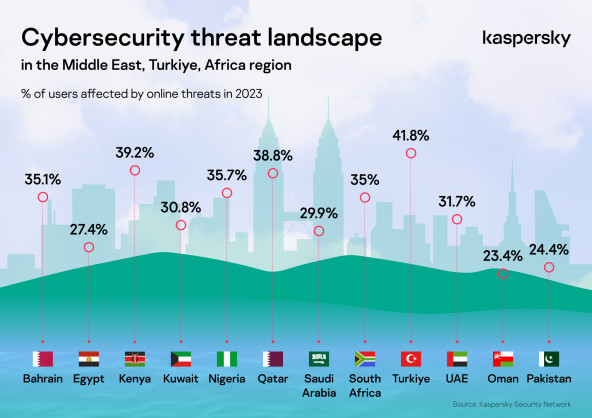
According to Kaspersky's analysis, online threats caused by vulnerabilities on web pages, in emails or webservices, have fluctuated significantly in the region. Turkiye saw the highest number of users affected by online threats (41.8%), followed by Kenya (39.2%), Qatar (38.8%) and South Africa (35%). Fewer users were affected in Oman (23.4%) and Egypt (27.4%) followed by Saudi Arabia (29.9%) and Kuwait (30.8%).

“As the cybersecurity landscape evolves, cyber threats continue to become diverse and sophisticated. This trend is particularly evident due to the emergence of advanced technologies like AI and the escalating geopolitical and economic turbulence within the Middle East, Turkiye, Africa (META) region. These factors collectively contribute to the surge in cybercrime and the heightened complexity of cyberattacks,” comments Amin Hasbini, Director of META Research Center Global Research and Analysis Team (GReAT), Kaspersky.

Distributed by APO Group on behalf of Kaspersky.

For further information please contact:
Nicole Allman
https://INKandco.co.za
nicole@inkandco.co.za

Social Media:
Facebook: https://apo-opa.info/3M3uy0L
Twitter: https://apo-opa.info/3OaLeGw
YouTube: https://apo-opa.info/41wO7V6
Instagram: https://apo-opa.info/42BZnRq
Blog: https://apo-opa.info/42Apbxn

About Kaspersky:
Kaspersky is a global cybersecurity and digital privacy company founded in 1997. Kaspersky's deep threat intelligence and security expertise is constantly transforming into innovative solutions and services to protect businesses, critical infrastructure, governments and consumers around the globe. The company's comprehensive security portfolio includes leading endpoint protection, specialized security products and services, as well as Cyber Immune solutions to fight sophisticated and evolving digital threats. Over 400 million users are protected by Kaspersky technologies and we help over 220,000 corporate clients protect what matters most to them. Learn more at www.Kaspersky.co.za.  

Media files
Kaspersky
Download logo
Read moreKaspersky shares cyberthreat landscape insights for the African region
13 February 2024

Higher Education Information Technology South Africa

Location: Business

JOHANNESBURG – February 13, 2024 – In an age marked by an unprecedented surge in cyberthreats and data breaches, the importance of cybersecurity has reached new heights. Organisations worldwide are grappling with a mounting tide of cybercrime, with estimates from Cybersecurity Ventures projecting that cybercrime would cost the world a staggering $8 trillion in 2023; …

Read moreHigher Education Information Technology South Africa

Copyright © 2026 · MyZA · All Rights Reserved · Powered by Reach Trust