• Skip to main content
  • Skip to header right navigation
  • Skip to after header navigation
  • Skip to site footer
MyZA

MyZA

News, Directory, Events and Other Stuff

  • Social Media
  • Sport
  • World News
  • Home
  • Submit News
  • Directory
  • Events
  • Stratlec
  • TFSA
  • News
    • APO
    • Today’s Sport News
    • Todays Social Media and Tech Headlines
    • Today’s World News
    • Today’s SA Financial News
  • Contact
You are here: Home / Archives for ECA

ECA

27 November 2024

Low Credit Ratings for African Countries See High Borrowing Costs and Liquidity Challenges

Location: News

United Nations Economic Commission for Africa (ECA)
Download logo

Low credit ratings for African countries are leading to high borrowing costs and liquidity challenges. This is according to panellists at a plenary session on harnessing sovereign credit ratings power for Africa's economic transformation, organised by the Economic Commission for Africa at the 2024 African Economic Conference (AEC) in Gaborone, Botswana.

Zuzana Schwidrowski, Director of the ECA's Macroeconomic, Finance and Governance Division at the ECA said low credit ratings contribute to high borrowing costs and more broadly to a vicious spiral of liquidity challenges as well as debt accumulation for African countries. Despite the overall challenges in credit ratings, she emphasized some positive developments and turnarounds in selected credit ratingtrajectories of African sovereigns, such as Moody's upgrade of Tanzania or S&Ps positive outlook on South Africa. However, the overall double-digit inflation prevents African Central Banks to reduce policy rates, which is another factor behind high borrowing costs and overall subdued growth, especially among resource (and fuel)-intensive exporters. 

In her presentation on credit ratings in Africa, Sonia Essobmadje, Chief of ECA's Innovative Finance and Capital Markets Section, said, “Improving Africa's fundamentals and implementing a structural reform program would certainly over time contribute to better ratings, but more importantly to sustainable, inclusive growth and the well-being of the population. The development of African national and regional financial markets should be a priority, as this would reduce excessive dependence on external debt and improve the transmission of monetary policy.”

Misheck Mutize, Lead Expect on Credit Ratings, African Union cautioned that excessive reliance on credit ratings can amplify market instability and lead to pro-cyclicality. Interestingly, it is a rule under the EU Regulation 1060 of 2009, adopted following the crisis, that sovereign credit ratings should only be published on a Friday after close of business to avoid market disruptions and overreactions as well as reduce asymmetric information, as different markets are open at different times. This practice gives the investors a chance to digest the information and undertake their own analysis over the weekend.”

For his part, Marcus Courage, CEO of Africa Practice, said recent analysis and data collected by Africa Practice and Africa No Filter indicates that stereotypical media narratives about Africa are costing African nations $4.2 billion a year in inflated interest on sovereign debt due to poor international media coverage, often underpinned by conflict and war.

Daniel Cash, a non-resident Fellow at UNU-CPR, said, “To overcome the current 'credit rating impasse', large-scale architectural reform is needed. African countries need support and investment from partners to inject knowledge, skills, and nuance into their capacity to navigate the credit rating process. 

“Now is the time for partners to come together and offer a unified service to African Countries, and the rest of the Global South, so that the new environment that surrounds them need not be so punitive and regressive,” he added.

Distributed by APO Group on behalf of United Nations Economic Commission for Africa (ECA).
Read moreLow Credit Ratings for African Countries See High Borrowing Costs and Liquidity Challenges
11 November 2024

Statement by the Chairperson of the Portfolio Committee on Communications and Digital Technologies on the Withdrawal of the SABC Bill by Minister Malatsi

Location: News

Republic of South Africa: The Parliament
Download logo

The Chairperson of the Portfolio Committee on Communications and Digital Technologies, Ms Khusela Sangoni Diko, has noted with grave concern the decision of the Minister of Communication and Digital Technologies, Mr Solly Malatsi, to withdraw the South African Broadcasting (SABC) Bill from Parliament, as reported in the Sunday Times today, 10 November 2024. The Portfolio Committee has not yet been formally notified of the withdrawal of the proposed legislation in line with the Rules of the National Assembly.

Nonetheless, the report states that the minister has decided to withdraw the Bill, believing it is “totally flawed”, does not address the funding model of the public broadcaster and assigns too much power to the minister in appointing board members. While appreciative of the fact that as the executive authority, the minister may rescind the Bill for whatever reason before its second reading in the House, the Chairperson holds that this decision by the minister would be highly ill-advised, and it is no exaggeration to say it would sound the death knell for the South African Broadcasting Corporation.

The challenges facing the SABC require a considered and urgent response, not trigger-happy action, which serves no purpose but to frustrate and disrupt processes already underway. To withdraw the Bill at this stage means to delay the implementation of crucial reforms necessary to save yet another crucial and strategic public institution. Initiated by the government in 2018 and only introduced to Parliament in October 2023, the SABC Bill seeks to, among others, provide for the continued existence of the SABC, provide for its governance and consequently amend the Independent Communications Authority of South Africa (ICASA) Act and the Electronic Communications Act (ECA). To date, the Bill has undergone a thorough public participation process, with the sixth Parliament having received about twenty written submissions from the SABC itself, academia, youth representatives, organised labour, and other interested parties. The 7th Parliament, understanding the urgent challenges facing the public broadcaster, prioritised this critical legislation and held oral hearings into the submissions in September 2024. The committee diligently studied and interrogated these submissions, and all concerns raised by stakeholders were attended to. The Department of Communications and Digital Technologies (DCDT), which the minister leads, was expected to have responded to the issues raised during the public participation process by the 17th of October 2024.

This process underway and agreed to by the committee and in the Minister's presence would have provided the committee with a clear way forward to amend the Bill as provided for in the Rules of Parliament and subvert any unnecessary delays in the processing of this sorely needed legislation. The Chairperson remains convinced that the issues raised by civil society, including the Democratic Alliance, relating to a lack of clarity on the funding model of the public mandate of the SABC, time limits on the President on the appointment of the SABC Board, the creation of a subsidiary Commercial Company and Board and the potential “lack of independence” in the appointment of the subsidiary Commercial Company, were not insurmountable and could have been remedied through an amendment by the committee. Rule 286 of the National Assembly Rules explicitly confers authority on parliamentary committees to amend or, where necessary, redraft bills before them. Thus, the Chairperson strongly believes that an attempt to withdraw this Bill from Parliament will delay and derail the transformative and developmental interventions the government has been pursuing in state institutions.

Ms Diko said that the committee has been at pains to put in place a fast-tracked process to finalise the SABC Bill, the absence of which has created a serious legislative vacuum that has dire consequences. “To this end, the government and even the committee itself had initiated various engagements with stakeholders on the possible funding model for the public mandate of the SABC – the most substantive and urgent of the concerns raised against the Bill.” Another of the major concerns coming from the public participation process was the need for the speedy finalisation of the Audio and Audio-Visual White Paper, and Ms Diko would like to urge the Minister to prioritise the finalisation of the White Paper before canning a process underway as this has a bearing on the amendment of the Bill.

She further said that the public broadcaster could not be allowed to fail because its demise would spell unmitigated disaster also for SENTECH, the country's signal distributor, with a ripple effect to over 130 community radio stations, several private broadcasters including commercial radio and TV stations and ICT service providers. Ultimately, the most affected stakeholders would be communities across the country, which rely on public broadcasters to provide them with news and public information that impacts their lives and is delivered in all official languages, including sign language. It is undisputed that SABC is the only broadcaster with the capacity, reach and ability to deliver on this important mandate.

Ms Diko commends the SABC leadership and staff for the immense strides recorded over the last two years, saying that they are a testament to the dedication and patriotism of the hardworking men and women of the public broadcaster, who, despite enormous pressure and financial constraints, were resolute that the show would go on. In the 2023/24 financial year, the SABC has turned the corner on its financial management, achieving an unqualified audit opinion once again after nine years.

“Should the reports of the minister's decision to withdraw the Bill be true and due to the gravity of the situation at the public broadcaster, we urge the DCDT to accelerate the process of reworking the Bill and reintroduce a new version to Parliament within the current financial year. In the meantime, the committee will invite the minister to indicate how, in the interim, the financial situation at the public broadcaster shall be improved to ensure sustainability until this much-needed legislation is amended and the issues attendant to it are resolved. Failure to reintroduce the Bill timeously will leave individual members of the committee or the committee itself with no option but to entertain introducing a committee or Private Members' Bill in the best interest of the SABC for consideration by Parliament,” said Ms Diko.

Distributed by APO Group on behalf of Republic of South Africa: The Parliament.

Read moreStatement by the Chairperson of the Portfolio Committee on Communications and Digital Technologies on the Withdrawal of the SABC Bill by Minister Malatsi
7 November 2024

Afreximbank President Professor Benedict Oramah Receives Prestigious Mohammed Barkindo Lifetime Achievement Award

Location: News
Afreximbank

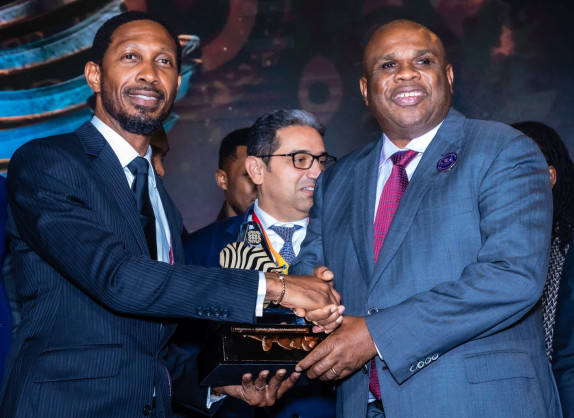
Professor Benedict Okey Oramah, President and Chairman of the Board of Directors at African Export-Import Bank (Afreximbank) (www.Afreximbank.com), has been awarded the prestigious Mohammed S. Barkindo Lifetime Achievement Award at the African Energy Awards, held on the sidelines of the African Energy Week (AEW) 2024: Invest in African Energy conference, happening between 4-8 November in Cape Town, South Africa.  

The award, named in honour of the former Secretary-General of OPEC, the late Dr Mohammed Barkindo, recognizes individuals who have made exceptional and lasting contributions to Africa's oil, gas, and energy sectors. This honour represents the highest accolade in African energy, awarded to individuals whose work has had a transformative impact on the continent's energy sector. Notable past recipient of the Mohammed S. Barkindo Lifetime Award in 2023 is Keith Hill, former President and CEO of Africa Oil Corp. 

For over three decades, Prof. Oramah has played a critical role in driving sustainable development across Africa by channelling essential funding into major oil, gas, and infrastructure projects. Since assuming leadership of Afreximbank in 2015, he has pioneered innovative financing structures that have democratised energy access and accelerated industrialization and the growth of Africa's strategically critical energy sector. 

Under Prof. Oramah's leadership, Afreximbank has made substantial contributions to the growth of Africa's energy sector. Under his stewardship, the Afreximbank has facilitated the mobilization of over USD 70 bn to support Africa's energy sector. Included in this is more than USD 5bn for refineries in Nigeria, Angola and Senegal, to further Africa's refined product independence and reduce the continent's Foreign Exchange drain.  

In Nigeria, Afreximbank now acts as Adviser and Settlement Bank for NGN denominated crude sales to Nigerian refineries. Replicated across the oil producing states in Africa, this will save several USD 100mn per annum in transactional charges alone. Ranking among President Oramah's most significant achievements is the historic signing of the Establishment Agreement and the Charter of the Africa Energy Bank (“AEB”) in Egypt in June 2024, in partnership with the African Petroleum Producers Organization (APPO). This landmark initiative aims to mobilize funding to support investments across Africa's entire energy system, aligning with the continent's energy needs and its environmental sustainability goals. 

Professor Oramah has led the energy transition agenda through the Bank's support in renewable energy transactions including, but not limited to, the EUR1.3 bn ECA import facility Project Gleam in support of the import of sonar panels for rural electrification in Angola, the EUR 147mn Government of Cameroon solar power project and the US$363 million Gasmeth Energy Rwanda gas extraction and processing project.  

Significantly, the majority of the above-mentioned transactions received numerous industry awards for their impact on the continent, their complexity and their unique structures.   

Prior to joining Afreximbank, Professor Oramah distinguished himself in international trade finance and development. Beginning his career at the Nigerian Export-Import Bank (NEXIM), he played an instrumental role in shaping Nigeria's export development strategies. Prof Oramah holds a Ph.D. in Agricultural Economics from Obafemi Awolowo University in Nigeria.  

Acknowledging the award, Prof. Oramah commented: 

“It is a great honour to be awarded the Mohammed S. Barkindo Lifetime Achievement Award. Whilst a great honour for me personally, this award reflects the work and dedication of many others, including my colleagues at Afreximbank and our various partners. At Afreximbank, we remain deeply committed to reducing energy deficit on the continent and ensuring we are self-sufficient. 

Distributed by APO Group on behalf of Afreximbank.

Media Contact: 
Mr Vincent Musumba 
Manager, Communications and Events (Media Relations) 
Email: press@afreximbank.com 

Follow us on: 
Twitter: https://apo-opa.co/4fwz0D3
Facebook: https://apo-opa.co/4emjUyg
LinkedIn: https://apo-opa.co/4feURPa
Instagram: https://apo-opa.co/3CjGevc

About Afreximbank : 
African Export-Import Bank (Afreximbank) is a Pan-African multilateral financial institution mandated to finance and promote intra-and extra-African trade. For 30 years, the Bank has been deploying innovative structures to deliver financing solutions that support the transformation of the structure of Africa's trade, accelerating industrialization and intra-regional trade, thereby boosting economic expansion in Africa. A stalwart supporter of the African Continental Free Trade Agreement (AfCFTA), Afreximbank has launched a Pan-African Payment and Settlement System (PAPSS) that was adopted by the African Union (AU) as the payment and settlement platform to underpin the implementation of the AfCFTA. Working with the AfCFTA Secretariat and the AU, the Bank is setting up a US$10 billion Adjustment Fund to support countries to effectively participate in the AfCFTA. At the end of December 2023, Afreximbank's total assets and guarantees stood at over US$37.3 billion, and its shareholder funds amounted to US$6.1 billion. The Bank disbursed more than US$104 billion between 2016 and 2023. Afreximbank has investment grade ratings assigned by GCR (international scale) (A), Moody's (Baa1), Japan Credit Rating Agency (JCR) (A-) and Fitch (BBB). Afreximbank has evolved into a group entity comprising the Bank, its impact fund subsidiary called the Fund for Export Development Africa (FEDA), and its insurance management subsidiary, AfrexInsure, (together, “the Group”). The Bank is headquartered in Cairo, Egypt. 

For more information, visit: www.Afreximbank.com 

Media files
Afreximbank
Download logo
Read moreAfreximbank President Professor Benedict Oramah Receives Prestigious Mohammed Barkindo Lifetime Achievement Award
30 October 2024

Afreximbank Calls for Increased Collaboration to Accelerate the Green Energy Transition in Africa

Location: News
Afreximbank

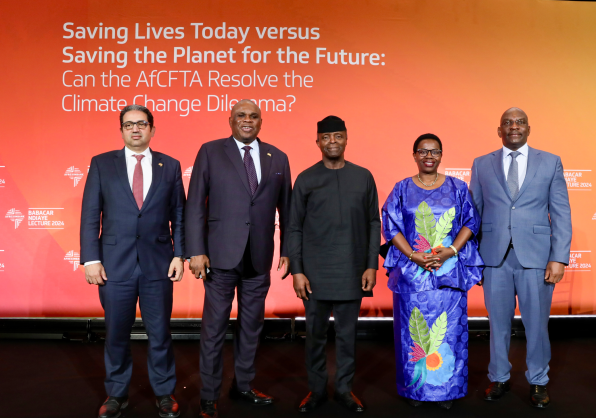
The eighth Babacar Ndiaye Lecture held at the Four Seasons Hotel in Washington D.C., on 26 October 2024, under-scored the need for African nations to strike a balance between short-term development imperatives and long-term climate goals. 

Under the theme “Saving Lives Today versus Saving the Planet for the Future: Can the AfCFTA Resolve the Climate Change Dilemma” discussions centred on how the African Continental Free Trade Area (AfCFTA), Africa's most ambitious trade initiative, could serve as a vehicle for economic growth and environmental sustainability, positioning the continent as a leader in the global green transition.  

The Lecture drew a distinguished audience of policymakers, academics, financial experts and climate advocates.  

Speaking about Dr. Babacar Ndiaye in his opening remarks, H.E. Professor Benedict Oramah, President and Chairman of the Board of Directors of Afreximbank Group, said “Dr Babacar Ndiaye was most concerned by the long-term threats posed to humanity by climate change. He once said, "Climate change is the greatest threat to development, particularly in Africa, where millions of people depend on the environment for their livelihoods … Africa's economic transformation cannot happen without addressing climate change.”  

Dr. Ndiaye's reflection on the impact of climate change was spot-on and intellectually deep.” But, “disappointingly, the global debate on climate has been so much focused on emissions reduction with the question of reducing its impact on Africa and other developing countries always reduced to a footnote. A call for Africa to decarbonise, when the continent has not even carbonised, poses a serious threat to the socio-economic development of a gas-rich continent that has at least six hundred million people without electricity.” 

The African Continental Free Trade Area Agreement “is seen as a potent means of reducing carbon emissions as it is helping to domesticate industrial activities and minimise the carbon emissions caused by shipping of commodities to far-away lands for value addition and reshipping to Africa and elsewhere. We believe that The AfCFTA could offer a pathway to a just transition, enabling local industrial value addition while protecting the planet.”  

Professor Yemi Osinbajo, SAN, GCON, the Immediate Past Vice President of the Federal Republic of Nigeria, delivered a powerful address titled “Sustainable Infrastructure for Africa's Future: Harnessing Innovation and Partnerships.” He spoke passionately about the advantages of the AfCFTA and its potential to transform Africa's trade landscape, reduce carbon emissions and foster innovation in green industries. 

“There are two obvious advantages to a fully operational AfCFTA.The first is that 42% of African countries, aside from North Africa, now have legislation prohibiting the export of raw ores or minerals before being processed. This legislation gives African countries the benefit of jobs and revenues from local processing and manufacturing.  

“The second advantage of the AfCFTA is that shipping is a major source of carbon emissions. Under current trade practices, a large share of African raw materials are exported to other regions, where they are processed or manufactured into finished products, usually using fossil fuel power sources, before being shipped back to Africa for consumption. This cycle contributes to higher emissions and constitutes a loss for African countries that do not reap the value chain gain from beneficiation. Intra-African trade in finished goods will substantially reduce this massive cause of global emissions,” he said. 

The reduction of emissions by intra-African trade has been the subject of several empirical studies. Professor Osinbajo referred to a recent ECA/ CEPII study titled “Greening the African Continental Free Trade Area Agreement's Implementation" published in December 2023, which found, inter alia, that implementing the AfCFTA can boost intra-African trade by 35% in 2045 while increasing GHG emissions by less than 1%, compared to no AfCFTA or climate policies.  

These studies do not factor in using renewable energy sources in the processing and manufacturing of traded goods, an assumption of the Climate Positive Growth paradigm, which would again substantially reduce emissions.  

Professor Osinbajo cited mining bauxite in Guinea as an example. If Guinea, which has 25% of global deposits of bauxite, processed the bauxite it mines to aluminium with renewable energy in readiness for export, Guinea could save the world 335 million tonnes of carbon dioxide equivalent (CO2e) per year, which is approximately 1% of global emissions, and create 280,000 jobs and generate $37 billion of additional revenue. If it chooses to sell the aluminium within Africa, it will again save the huge shipping cost to countries thousands of miles away.  

A Bloomberg study done for the African Development Bank (AfDB) in 2021 on the manufacture of battery precursors found that manufacturing battery precursors in the Democratic Republic of the Congo (DRC), which has plenty of lithium and cobalt, is three times cheaper than manufacturing it in the US, EU and China. Manufacturing in the DRC would extend value chain opportunities to other African countries, they would need manganese from Zambia, Tanzania, Gabon and South Africa to contribute to its capacity to produce these battery precursors. Manufacturing using renewable energy could significantly reduce the cost of manufacturing. Africa's abundant renewable energy has very low seasonality or intermittency, making it possible to reliably provide a renewable baseload to power continuous industrial production.  

“The AfCFTA empowers African countries first to add value to materials and specialise in areas of national comparative advantage, and also to work together to trade more beneficially with the rest of the world,” said Prof Osinbajo. 

He futher said that “Most African countries depend on fossil fuels for their energy needs and for fossil fuel rich African countries, this is also a major source of export earnings and fiscal revenues. Ostensibly in keeping with their net zero obligations, there has been a growing trend amongst development finance institutions to withdraw from fossil fuel investment. These actions include the World Bank's decision to cease funding for upstream oil and gas development in Africa and the restrictions on financing downstream gas development by the European Union, the United Kingdom, and the United States. Clearly, the implications of these actions are dire, where there are no immediate alternative sources of power and the cost of the transition to cleaner fuels may be prohibitive. Some studies show that divesting from fossil fuels could reduce GDP by as much as USD$30 billion for Nigeria, USD$22 billion for Algeria, and USD$19.3 billion for Angola.” 

H.E. Dr Rania A Al-Mashat, Minister for Planning, Economic Development and International Co-operation, Arab Republic of Egypt said that while the “African continent is the least responsible for carbon emissions, it has the biggest burden in terms of financing climate change for developmental needs - such as food and water security, and access to energy. 

She called for greater collaboration with national and international stakeholders “We need to work together; we need to bring the experiences from other places so that Africa can push forward with respect to development and sustainable economic growth.” 

In her Goodwill Message, Ms. Amina J. Mohammed, Deputy Secretary-General of the United Nations and Chair of the United Nations Sustainable Development Group, spoke about the rapidly closing window to prevent the worst impacts of climate change. She addressed the fact that many African countries are mired in debt, exacerbated by extended crises with little access to long-term concessional financing to invest in sustainable development. 

“With adequate access to financial resources at a reasonable cost, renewables can dramatically boost economies, grow new industries, create jobs and drive development, including by reaching the over 600 million Africans living without access to power,” said Ms Mohammed. 

She also stressed the importance of prioritising inclusive policies that empower women and youth when building climate-resilient economies.  

“By harnessing the collective might of the AfCFTA, Africa can make strides in addressing both climate action and sustainable development by promoting regional integration and fostering green industrialisation.  

“The AfCFTA can help build climate-resilient economies while creating jobs, reducing poverty and strengthening food security.”  

The eighth Babacar Ndiaye Lecture also reinforced Afreximbank's commitment to leadership in financing sustainable infrastructure and trade policies across the continent. 

Distributed by APO Group on behalf of Afreximbank.

Media Contact: 
Vincent Musumba 
Communications and Events Manager (Media Relations) 
Email: press@afreximbank.com 

For more information, visit: www.Afreximbank.com  
Follow us on X | Facebook (https://apo-opa.co/3YJR7iS)| LinkedIn (https://apo-opa.co/3Cet3eR) | Instagram (https://apo-opa.co/4ht2qDa)

About the Babacar Ndiaye Lecture 
The Babacar Ndiaye Lecture is an annual event designed to foster dialogue around Africa's development challenges and explore practical solutions through policy, trade and diplomacy.  

The Lecture honours Babacar Ndiaye, a former President of the African Development Bank, for his visionary leadership in advancing Africa's economic growth. 

Afreximbank has hosted this Lecture every year since 2017 in honour of the late Dr. Babacar Ndiaye, the fifth President of the African Development Bank. Dr. Ndiaye transformed the Bank during his decade-long leadership and was also instrumental in establishing several other enduring Pan-African institutions, including Afreximbank, Shelter Afrique and the African Business Roundtable. 

About Afreximbank 
African Export-Import Bank (Afreximbank) is a Pan-African multilateral financial institution mandated to finance, facilitate and promote intra and extra-African trade. For over 30 years, the Bank has been deploying innovative instruments to deliver financing solutions that support the transformation of the structure of Africa's trade, accelerating industrialisation and intra-regional trade, thereby boosting economic expansion in Africa. A stalwart supporter of the African Continental Free Trade Area (AfCFTA), Afreximbank has in partnership with the African Union Commission and the AfCFTA Secretariat launched the Pan-African Payment and Settlement System (PAPSS) that was adopted by the African Union (AU) as the payment and settlement platform to underpin the implementation of the AfCFTA agreement. The AfCFTA Secretariat and the Bank have created a US$10 billion Adjustment Fund to support countries to effectively participate in the AfCFTA.  

At the end of December 2023, Afreximbank's total assets and guarantees stood at over US$37.3 billion, and its shareholder funds amounted to US$6.1 billion. Afreximbank has investment grade ratings assigned by GCR (international scale) (A), Moody's (Baa1), Japan Credit Rating Agency (JCR) (A-) and Fitch (BBB). Afreximbank has evolved into a group entity comprising the Bank, its impact fund subsidiary the Fund for Export Development Africa (FEDA), and its insurance management subsidiary, AfrexInsure, (together, “the Group”). The Bank is headquartered in Cairo, Egypt.  

Media files
Afreximbank
Download logo
Read moreAfreximbank Calls for Increased Collaboration to Accelerate the Green Energy Transition in Africa
17 October 2024

Call for proactive regulations in the media sector

Location: News

Call for proactive regulations in the media sector

The Media Development and Diversity Agency (MDDA) has called for proactive regulations to deal with matters of platform accountability, competition and cases of acquisitions in the media sector.

Citing the Multichoice and Canal+ acquisition, MDDA Acting Executive Manager, Lethabo Dibetso, said the acquisition poses a threat to the sustainability of the community media sector due to the Universal Service Fund (USAF) levy paid by Multichoice. 

According to media reports, the French media giant has bought shares at the JSE [Johannesburg Stock Exchange]-listed broadcaster. 

The MDDA currently receives a majority of its funds from broadcast funders through USAF levies, government grants and interest on investments.

Dibetso explained that Multichoice is one of the biggest contributors to the USAF levy. 

“Should the levy fall through, it will be interesting to see if Multichoice will still be a contributor to the USAF levy and what that means for the sustainability of the community media sector,” Dibetso said on Thursday during a panel discussion on media freedom.

The discussion was hosted by Media Monitoring Africa (MMA) and Government Communication and Information System (GCIS) during the 2024 Media Freedom Festival under the theme: “Media for Democracy: Ensuring Access, Accountability and Integrity in Journalism".

USAF was established under the Electronic Communications Act (ECA) to fund projects and programmes that strive to achieve universal service and access to information and Communication Technologies (ICTs) by all South African citizens.

With the MDDA being in business for about 20 years, Dibetso recognised the continuous support the agency has received from commercial broadcasters through the use of the USAF levy. 

“If it wasn’t for that continuous support, the community sector would be non-existent. In the past 20 years, we have supported the community media sector with non-financial support of more than R20 million; with financial support [of] R600 million, and we have created direct and indirect jobs through supporting the community media sector. 

“We have also assisted with governance training. Governance is critical for the community media sector, and it enables communities to have alternative media platforms,” he said.

Dibetso said there are a lot of community media organisations that have come up with innovative ways to sustain themselves outside of the government grant.

“The economic challenges that the media sector is facing, particularly the print sector, has direct implications for the sustainability of the MDDA and community media.

“The shrinking advertising spend means that a majority of community organisations do not have access to advertising funding.

“The competition by the digital platforms is also taking away from the community media sector, which means that as an organisation we need to knock on different doors to sustain the sector,” Dibetso said.

Ensuring media freedom

He expressed concerns about the lack of mechanisms to protect women working in the media sector.

“We have seen an increase in cyber misogyny in the media. There is an increased attack on women journalists, which poses a challenge for us,” Dibetso said.

Head of Programmes at the MMA, Thandi Smith, echoed Dibetso's sentiments that there ought to be reforms aimed at protecting journalists and media freedom.

“Over the last few years, we have seen an increase in cases against public participation. We have seen prominent cases where these mechanisms are used to silence journalists and clamp down on media freedom,” Smith said.

She said over the last 30 years, the media sector has scored big wins with upholding media principles in policy and litigation areas.

“We have seen how the judiciary has played their part in promoting and upholding media freedom. We saw changes with how media had to apply for permission to cover criminal cases from the presiding judge. That has now changed. The default now is to have open access, unless otherwise stated that it needs to be closed,” she said. - SAnews.gov.za

nosihle
Thu, 10/17/2024 - 12:50

207 views
Read moreCall for proactive regulations in the media sector
27 August 2024

Addressing Debt Challenges in State-Owned Enterprises

Location: News

United Nations Economic Commission for Africa (ECA)
Download logo

In a concerted effort to tackle the growing challenges of State-Owned Enterprise (SOE) debt in Africa, the United Nations Economic Commission for Africa (ECA) hosted a high-level workshop in Pretoria from 21 to 23 August 2024. The event brought together finance policymakers, industry experts, and international organizations to share best practices and develop strategic solutions for effective SOE debt management across the continent.

The workshop brought together officials from the Ministries of Finance of Cameroon, Ethiopia, Ghana, Nigeria, South Africa, and Zambia, along with representatives from UNDP, the African Forum and Network on Debt and Development, and major state-owned entities. The focus was on enhancing governance frameworks, improving financial oversight, and exploring privatization options.

Participants discussed the critical role of SOEs in driving national development, acknowledging that while these entities have the potential to bolster economic growth and address market deficiencies, they also pose significant risks to government finances. The workshop highlighted that poorly managed SOEs can lead to severe financial burdens, potentially destabilizing national budgets and contributing to the deterioration of sovereign credit ratings.

“In many African countries, SOEs play a vital socio-economic role. This workshop comes at a critical time for Africa's development, with both SOE and government finances under pressure amid cascading crises and multiple shocks,” said Zuzana Schwidrowski, Director of the Macroeconomics, Finance, and Governance Division (MFGD) at ECA, in her opening remarks.

Ms Schwidrowski noted that “critical public services tend to deteriorate alongside SOEs' financial difficulties, leading to a downward spiral of weakened service delivery and growth.” That is why ECA organized this capacity-building workshop “to develop practical solutions and options for Africa,” she added.

The discussions also underscored the importance of corporate governance, risk management, and internal oversight as drivers of reform. Participants shared successful approaches to SOE debt management and identified key barriers, including challenges related to mandate delivery and the intricate links between sovereign and SOE credit ratings.

Lee Everts, Chief of the Macroeconomic Analysis Section in MFGD, emphasized the need for a multifaceted approach to address the rising SOE debt. “Financial restructuring, governance and operational improvements, and in some cases, privatization or asset sales, are essential steps to mitigate the risks posed by SOE debt,” she said.

The workshop, organized by ECA's Macroeconomics, Finance, and Governance Division in collaboration with its Sub-Regional Office for Southern Africa, is part of a broader series of capacity-building initiatives aimed at strengthening public debt management across Africa. ECA remains committed to supporting African nations in implementing innovative and robust solutions to the persistent challenges posed by SOE debt and related government liabilities.

Distributed by APO Group on behalf of United Nations Economic Commission for Africa (ECA).

Read moreAddressing Debt Challenges in State-Owned Enterprises
19 June 2024

Despite challenges, Southern Africa has improved financial inclusion with adoption of digital financial services

Location: News

United Nations Economic Commission for Africa (ECA)
Download logo

South African countries performed well on their financial inclusion, between 2011 and 2021. Progress is partly attributed to rapid adoption of digital financial services including mobile money, according to financial experts at a webinar on the African Financial Sector Southern Africa.

Organized by the Economic Commission for Africa (ECA) in partnership with West African Economic and Monetary Union (WAEMU), the webinar is part of a Series themed, Regional Dialogues on the African Financial Sector - regional profile.

The aim of the regional profiles is to provide detailed information on the countries' financial sectors, documenting recent trends, progress, challenges, and opportunities for a deeper financial sector.

In her opening remarks Eunice Kamwendo, ECA's Director of the Subregional Office for Southern Africa noted the potential for growth, innovation and sustainable investments in the financial sector in Southern Africa.

“Southern African region's financial sector faces financial challenges that include liquidity issues, debt distress, limited access to financial services, high levels of informality and regulatory constraints; Despite these challenges, it is important to prioritize the development of the financial sector to create stability, mobilize domestic resources and foster a stable environment for investment,” said Ms. Kamwendo.

Presenting a report on the demographic economic landscape of the Southern African region, Andrew Bamugye, Senior investment manager SME, Trade and Development Bank said the banking sector in Southern Africa has remained solvent with adequate capital; banking liquidity remained sufficient, with most banks seeing profitability between 2021 and 2023.

“The challenge in the banking industry in the region is the strong interconnection between the banking system and non – banking financial institutions and foreign markets, which leads to the risk of contagion,” said Mr. Bamugye.

He proposed that governments should increase fiscal space by expanding government revenues through diversification of the tax base and simplification of tax systems to reduce the exposure of banks to sovereign risks.

Punki Modise, Chief strategy and sustainability officer, ABSA Bank highlighted the varying levels of debt to GDP ratios across African countries and noted that some countries such as Kenya, Ghana, Kenya and Egypt have adopted unsustainable debt strategies. She also emphasized the importance of project preparation and bankability in the private sector.

“Authorities should enhance competition in the banking systems through the promotion of new players especially those that help to improve financial inclusion,” she said.

In addition, she said banks operating in Africa need to have a more end-to-end approach to risk management, considering bankability at all stages.

On capital markets most countries in the Southern African region have a low market capitalization. The Johannesburg stock exchange, which is the leading stock exchange in Africa has a market capitalization of $1022.8 trillion representing 133% of GDP in 2023, against 51.9% of Mauritius and 18.6% of Namibia.

A lack of liquidity characterizes the bulk of the South African stock market and the breadth of the stock market in the region remains limited.

Furthermore, a small, listed number of companies and corporate bonds tend to dominate the fixed income market while the proportion of government bonds in the normal value is much higher.

“A deeper pool of insurers is required for the acceleration of green bonds growth in the region especially among corporate borrowers,” said Mr. Bamugye.

According to the experts attending the meeting, the pension fund penetration remains low in most Southern African countries. However, the high pension penetration rate in South Africa, Namibia and Botswana were the result of good investment returns on the funds, based on a diversified investment strategy coupled with a strong asset allocation process,

Bernard Yen, Actuary and managing director Aon Solutions Ltd, Mauritius highlighted the challenge of encouraging people in the formal sector to save and discussed the importance of structural changes to increase participation in pension funds.

He suggested that structural changes such as tax incentives and simplified registration processes could drive participation. He also emphasized the need for a multi-faceted approach to increase pension fund participation in the region.

“Countries should explore ways to increase participation of informal sector workers in multi-employer pension funds,” he added.

On the question of tapping into southern African SMEs, participants noted that the majority are financially constrained and face a lack of skills in corporate governance, financial management and often contend with high collateral requirements.

Mr. Bamugye noted the need to help SMEs develop bankable business plans and called for streamlining government support programs towards them.

He emphasized the importance of blended finance structures to address the challenges faced by SMEs in the region including the need for risk capital and conditionality and use of unfunded guarantees to unlock local liquidity.

He acknowledged the obstacle of bank credit access in the region particularly for SMEs and encouraged innovative and creative solutions to promote financial inclusion advising that countries should continue to explore innovative instruments and blended approaches to solve SME credit access problems.

Distributed by APO Group on behalf of United Nations Economic Commission for Africa (ECA).

Read moreDespite challenges, Southern Africa has improved financial inclusion with adoption of digital financial services
20 December 2023

DO MORE FOUNDATION and Capita Forge Early Years Climate Region for SA

Location: MyPR

Dubai, UAE, 08 December 2023 – Young children (0 – 8 years) stand out as one of the groups most vulnerable to the impacts of the climate crisis, which is already having detrimental effects on their health, development and well-being. In response to this reality, the UAE’s Ministry of Education in collaboration with the Abu …

Read moreDO MORE FOUNDATION and Capita Forge Early Years Climate Region for SA
17 November 2023

Stakeholders say transformative industrialisation is critical for Africa’s sustainable development

Location: News

United Nations Economic Commission for Africa (ECA)
Download logo

Some stakeholders have reiterated the need for transformative industrialisation, saying it is critical for sustainable development on the continent.

They have been speaking at a special event, "Leveraging on strategic foresight for an agile, robust, and forward-looking sustainable industrial development in Africa", on Thursday at the African Economic Conference (AEC) in Addis-Ababa, Ethiopia.

Fiona Tregenna a Professor at the University of Johannesburg, and Chair of the Industrial Development National Research Foundation (NRF) of South Africa, delivered a paper on Transformative Industrialisation for Africa (TIFA) and links with strategic foresight. She highlighted some of the challenges that have hindered industrialisation on the continent.

According to Tregenna, achieving the Africa we want is not business as usual, otherwise we will not get the transformative change to give us the Africa we want.

She added: "A strategic and systemic approach is critical for a sustainable Africa. We are not looking at interventions that will yield today, but long-term investments."

Mr Ibrahima Sall, former Minister of Planning in Senegal, said engagement with various relevant stakeholders was required for sustainable industrial development in Africa.

"We need a flexible, agile, high-impact industrialisation that is robust. Even in the professor's introduction, it is clear that there are some industrial processes, and we need to keep the strength going. We know how to implement industrial policies, no policy cannot be selective. Otherwise, we will be sprinkling without impacting or wasting capital. So, there must be a selective national champion. How do we build with major stakeholders? What matters most is to look at selectivity and information and inform the states to understand that policies are not made on the ground. The engagement of states is key, and they must pay attention to the industrial sector," Sall said.

He added that selective criteria are critical. The vertical policy of African nations entails focusing on processing raw materials. And we have horizontal and selective, which involve all actions: sustainability, infrastructure, human capital, and technology. With this, states do not need to be flexible but focus on sustainability.

Speaking on Malawi's strategy, Thomas Munthali, Director General at the country's National Planning Commission, said that knowing that the effects of climate change were gradually destroying the country, it embarked on climate-resilient infrastructure and appreciated the future of industrialisation.

Munthali urged countries on the continent to venture more into digitisation, engage the private sector to catalyse investments, experiment, and learn from successful nations. He said, "We should be learning from nations. We should try and fail, but never fail to try."

For her part, Hauwa Ibrahim of the Nasarawa State University in Nigeria, said Africa stood at the crossroads of opportunities and challenges.

Ibrahim added that, "While we know there are no perfect policies, those with rooted outcomes stand the test of time. There is a need for research and development on the continent to ensure a sustainable Africa. The demographic population is vital and should be considered because we have many young people and what they are learning now should matter to us. We need to recognise the role of technology and ensure it is applied at all levels. We cannot take out the role of education in defining technology because we do not want to industrialise and have to invest elsewhere, away from the continent, in certain labour forces. Therefore, while we invest in technology, we must also invest in the education of young people."

Earlier, Karima Ben Soltane, the Director of the United Nations African Institute for Economic Development and Planning (IDEP), ECA, while moderating the session, said the theme was focused on what African countries needed to enact their policies, implement the SDGs, and make strategic investments, among others.

"What are the key drivers of change in the workforce landscape? We are cognizant that tomorrow's jobs do not exist today. And we need to ensure ways of bringing up initiatives and effectively preparing governments, individuals, institutions, and industries for these changes,” Ben Soltane added.

Distributed by APO Group on behalf of United Nations Economic Commission for Africa (ECA).
Read moreStakeholders say transformative industrialisation is critical for Africa’s sustainable development
31 October 2023

African Risk is not Fairly Priced

Location: News
Rand Merchant Bank

By Miranda Abraham, Head of Loan Syndications at RMB in London (www.RMB.co.za)

Yield-chasing investors have poured money into the continent but an emerging, recent challenge for Africa is that in a now higher interest rate environment, investors don't need to come to Africa to find higher returns.

Even US treasuries are now yielding far more attractive yields than just a month ago: 3-month government bonds offer 5.32% and while 2-year bonds offer a yield above 5%. Yields have risen in part in response to Fitch's recent downgrade of the US from AAA to AA+, echoing S&P's move in 2011.

African bond issuers, spooked by the high-interest rate environment and refusing to issue bonds above the psychological barrier of double-digit yields for Sub-Saharan African bonds, continue to wait it out on the sidelines.

But with interest rates continuing to climb, the wait-and-see strategy is no longer looking like a sensible approach. Issuers are running out of cash and the more stable and resilient syndicated loan market – with its heavily relationship-driven pricing, is increasingly proving to be an alluring alternative to the bond market.

African governments should therefore bring forward planned borrowing before the capital shifts away, as it is already starting to do, and the cost of borrowing rises further still.

The syndicated loan market is dominated by relationship banks, who will consciously and willingly price a loan at very low yields, in order to secure a lead mandate and lock in the ancillary opportunities and revenues that come with being a core relationship bank. 

Banks do this knowing that they will also be able to persuade other relationship banks to join the deal as well. This is why syndicated loans always tend to price at a subsidized level when compared to bonds – where investors are more agnostic and definitely less loyal – focusing instead on the relative value of opportunities across the market.

However, while bond prices have skyrocketed, the loan market has hardly moved in terms of pricing. Yes, base rates are higher, resulting in higher all-in costs for borrowers, but on an all-in basis, when compared to bonds, issuing a syndicated loan is definitely the cheaper option for borrowers.

But why have African issuers managed to price debt at such attractive levels for so long?

There are three main reasons:

  • Finite supply: There is a limited supply of investable assets in Africa and those banks with an African focus are eager to support their key clients and to get exposure to the African market, which is seen as having strong growth potential. 
  • Difficulties in assessing risk: It can be difficult to assess the credit risk of African borrowers. This is because there is less historical data available, and the political, legal and regulatory environment is often complex. Joining a syndicated loan or bond that has been oversubscribed and so carries the stamp of endorsement from the market can be an attractive solution to this challenge.
  • Those issuers that are active in the loan market tend to bring with them an array of other ancillary opportunities (e.g. IPO, Eurobond, and Advisory mandates), in a region where businesses that are succeeding are usually experiencing high growth.

So finite supply leads to fierce competition for these prestigious African clients and the fact that these credits are complex and difficult to understand exacerbates the problem. 

As a result of these factors, African risk is often not being priced fairly. South Africa is a good example of how African risk can be underpriced. Despite losing its investment grade rating in 2017, South African corporates and State-Owned Enterprises (SOEs) continue to price their debt like they are in Western Europe. This is because there is a limited pool of opportunities for those banks that prefer to lend in ZAR to invest in.  

Relationship pricing works for the banks because they are able to use the revenues from ancillary business to subsidize their commitment to the loan, but for regular investors (who are typically looking on an asset play basis) they can end up being short-changed. This means that investors may be taking on more risk than they realise, for a relatively low return.

However, instead of adjusting pricing upwards, the imbalance is being addressed another way - by adjusting risk.

Reducing the risk keeps pricing low and so address issuers concerns around paying double-digit yields.

Risk mitigation tools (in the form of ECA wraps, DFI guarantees or insurance wraps) are being embedded into loans and so while pricing remains low, investors improve their returns through adjusting the risk.

These type of credit risk mitigated deals, result in investment grade ratings, but with a substantial African premium. In the EUR 1bn Bank of Industry deal, BOI/AFC pays a yield of about 200bps versus an average yield of 75ps for an A3 rated credit in Europe. It is the only way for many international and European banks – who typically shy away from low BB or single B African risk - to fill their African buckets. 

These investors have a whole world of investment opportunities available to them, from AAA through to single B risk, usually across the globe, so they can pick and choose their deals.  Consequently, in order to attract their investment into Africa, pricing on these credit enhanced deals has to be highly attractive relative to other similarly opportunities globally.

However for those emerging market investors or African banks focused on Africa, their return hurdle requirements mean that the credit enhanced deals do not work for them. 

Instead, they are obliged to find African opportunities that represent real, uncovered African risk.  However, the market paralysis created by a difficult credit environment, combined with the fact that a large proportion of those deals that do come to market include some form of credit enhancement, means that the pool of deals offering pure, uncovered African risk is now much smaller.

And this is where supply and demand dynamics take over. 

African banks and investors are desperate for assets and are very comfortable assessing and understanding sub investment grade African risk. However this dynamic of fewer deals but strong investor demand has led to plentiful pent up liquidity down the credit curve.

Ironically, once African investors get over the hurdle of higher return requirements (often driven by higher cost of funding) there is such relief that pricing works from a returns perspective, that they can then end up effectively under-pricing the actual credit risk. So we end up with BB- loans paying only 450bps versus BB average bond yields of 12%.

Investors in Africa are a finite pool who know and understand African risk. They deserve to be fairly compensated for the risk they take.  

Distributed by APO Group on behalf of Rand Merchant Bank.

Media files
Rand Merchant Bank
Download logo
Read moreAfrican Risk is not Fairly Priced
26 September 2023

How to Check an Electrician’s Registration AND the Validity of Your CoC

Location: MyPR

First of all you will need to directly ask your electrician if he/she is a registered master or installation electrician and for their registration numbers for themselves and their business. To verify the above, you can: Visit the website of the Electrical Conformance Board of South Africa (ECBSA) – https://electrician.org.za/ – and search for your …

Read moreHow to Check an Electrician’s Registration AND the Validity of Your CoC
24 September 2023

Why You Should Test Your Earth Leakage Unit Regularly

Location: MyPR

The pride of doing simple tasks at home and not having to call and pay a professional – like Straton Electrical – to do it is something that is pretty fulfilling. When it comes to electrical work the scope of work that can be done by a DIY person is limited mostly to non life …

Read moreWhy You Should Test Your Earth Leakage Unit Regularly
18 September 2023

ECA Speaks Out Against Criminal Solar Installers

Location: Business

Mark Mfikoe from the Electrical Contractors Association South Africa (ECASA) confirms that the association – which is the largest employer representative body in the industry – is aware of rogue and unqualified inverter installers claiming to be qualified electricians whilst ripping off unsuspecting homeowners. As it stands: Only registered electricians may do Photovoltaic installations and …

Read moreECA Speaks Out Against Criminal Solar Installers

Copyright © 2026 · MyZA · All Rights Reserved · Powered by Stratlec Online