• Skip to main content
  • Skip to header right navigation
  • Skip to after header navigation
  • Skip to site footer
MyZA

MyZA

News, Directory, Events and Other Stuff

  • Social Media
  • Sport
  • World News
  • Home
  • Submit News
  • Directory
  • Events
  • Stratlec
  • TFSA
  • News
    • APO
    • Today’s Sport News
    • Todays Social Media and Tech Headlines
    • Today’s World News
    • Today’s SA Financial News
  • Contact
You are here: Home / Archives for Ransomware

Ransomware

11 April 2025

14% Increase in Spyware Attacks on Businesses in Africa
Location: News
Kaspersky

As part of the company's participation at the GITEX Africa conference, taking place in Morocco on 14-16 April 2025, Kaspersky (www.Kaspersky.co.za) will address the dynamics for cyberthreats in the African region as per the latest anonymised data from the Kaspersky Security Network (KSN)[1]. From 2023 to 2024 businesses in Africa were targeted by web threats, on-device threats, and attacks aiming to steal data, including spyware and password stealers. Phishing and ransomware continue to be significant threats in the region, with 66 million phishing link clicks seen by Kaspersky in the African region in 2024, including over 14.8 million phishing link clicks by corporate users.

Web-based threats, or online threats, are a category of cybersecurity risks that may cause an undesirable event or action affecting users browsing the Internet. According to Kaspersky data, there were 131 580 587 web threats detected in 2024 in the African region, including almost 20 million attack attempts in Kenya, almost 17 million in South Africa, and 12.6 million in Morocco. Businesses were targeted by web threats more often in 2024 than in 2023, with threat detections increasing by 1.2%.

Local (on device) threats include malware that is spread via removable USB drives, CDs and DVDs, or that initially makes way onto the computer in non-open form (for example, programs in complex installers, encrypted files, etc.). According to Kaspersky telemetry, local (on device) threat detections in organisations in the African region in 2024 increased by 4% compared to 2023. Among the countries that saw growth in local threats detected in organisations were Nigeria (169% increase), Ethiopia (86%), South Africa (32%), Senegal (11%), and Morocco (9%).

There has been a spike of threats related to data theft. According to Kaspersky data, there was a 14% growth in spyware attack detections on businesses in the African region from 2023 to 2024. Spyware is secretly installed on a user's computer to monitor their actions and collect their data. Apart from that, there has been a 26% increase in password stealer detections. Password stealers are a type of malware designed to harvest login credentials and other sensitive data.

“Our statistics show an increase in attack detections for several types of cyberthreats, and the factors driving these increases are multifaceted. In the B2B sector, the continuing shift toward hybrid work models and the rush to digitise operations — often outpacing cybersecurity investments — may leave businesses in Africa exposed to advanced persistent threats. In the B2C space, the explosion of digital financial services, coupled with low digital literacy rates, makes individuals prime targets for opportunistic attacks,” comments Maher Yamout, Lead Cybersecurity Researcher with Kaspersky Global Research and Analysis Team. “Organisations in Africa should prioritise a unified approach by enhancing collaboration, investing in specialised cybersecurity training, and promoting digital literacy to effectively combat the rising tide of cybercrime. Initiatives like the African Cyber Surge operation and targeted educational programs can serve as blueprints for building a resilient digital ecosystem across the continent.”

To stay protected, Kaspersky suggests following the recommendations below.

Individual users:

  • Do not download and install applications from untrusted sources.
  • Do not click on any links from unknown sources or suspicious online advertisements.
  • Always use two-factor authentication when available. Create strong and unique passwords, using a mix of lower-case and upper-case letters, numbers, and punctuation. Use a reliable password manager to help to remember them.
  • Always install updates when they become available; they contain fixes for critical security issues.
  • Ignore messages asking to disable security systems for office or cybersecurity software.
  • Use a robust security solution appropriate to your system type and devices, such as Kaspersky Premium (apo-opa.co/3G2yjUZ).

Organisations:

  • Always keep software updated on all the devices you use to prevent attackers from infiltrating your network by exploiting vulnerabilities.
  • Do not expose remote desktop services (such as RDP) to public networks unless absolutely necessary and always use strong passwords for them.
  • Use solutions such as Kaspersky NEXT EDR Expert (apo-opa.co/4ifQ8NV) for comprehensive visibility across all endpoints on a company's corporate network to get superior defense, automate routine EDR tasks, enable analysts to speedily hunt out, prioritise, investigate, and neutralise complex threats and APT-like attacks.
  • Use the latest Threat Intelligence (apo-opa.co/3XVFTa3) information to stay aware of actual TTPs used by threat actors.
  • Back up corporate data regularly. Backups should be isolated from the network. Make sure you can quickly access the backups in an emergency if needed.

The Kaspersky stand at GITEX Africa (https://GITEXAfrica.com) in Morocco will be located in Hall 13, 13C-20, while a keynote titled “When AI/ML fails in cybersecurity, humans are the last line of defense” will take place at the Dark Stage on April 15 at 2:10 PM.


Reference:

[1] Data sent to Kaspersky is anonymized and protected, even in transit, in accordance with stringent industry standards including encryption, digital certificates, segregated storage and strict data access policies. Learn more about KSN here: www.Kaspersky.com/KSN

Distributed by APO Group on behalf of Kaspersky.

For further information please contact:
Nicole Allman
INK&Co. (https://INKandCo.co.za)
nicole@inkandco.co.za

Follow us:
Facebook: https://apo-opa.co/3RfDPWG
X: https://apo-opa.co/3XUJzJe
YouTube: https://apo-opa.co/4icxu9w
Instagram: https://apo-opa.co/3G7fAry
Blog: https://apo-opa.co/44smi5c

About Kaspersky:
Kaspersky is a global cybersecurity and digital privacy company founded in 1997. With over a billion devices protected to date from emerging cyberthreats and targeted attacks, Kaspersky's deep threat intelligence and security expertise is constantly transforming into innovative solutions and services to protect businesses, critical infrastructure, governments and consumers around the globe. The company's comprehensive security portfolio includes leading endpoint protection, specialized security products and services, as well as Cyber Immune solutions to fight sophisticated and evolving digital threats. We help over 200,000 corporate clients protect what matters most to them. Learn more at www.Kaspersky.co.za.

Media files
Kaspersky
Download logo
Read more14% Increase in Spyware Attacks on Businesses in Africa
31 March 2025

BFSI Security Summit 2025 to Address Rising Cybersecurity Threats in Africa’s Financial Sector

Location: News

IT News Africa
Download logo

The BFSI Security Summit 2025 is set to take place on May 7, 2025, at the Radisson Blu Gautrain, Sandton, Johannesburg, bringing together leading cybersecurity experts, IT decision-makers, and industry pioneers to tackle the growing cyber risks facing Africa's banking, financial services, and insurance (BFSI) sector.

Cybersecurity remains a top concern for financial institutions in Africa. In 2024, the Bank of Uganda fell victim (apo-opa.co/3QWE6h6) to an offshore hacking group known as “Waste,” resulting in the theft of approximately $16.8 million. Additionally, ZB Financial Holdings in Zimbabwe experienced a ransomware attack (apo-opa.co/4jaBBUi) in July 2024, leading to significant data leaks affecting customer and operational information. More recently, in South Africa, Standard Bank confirmed that it experienced a data breach (apo-opa.co/3YaVJ0q) that involved limited personal and financial information. These incidents underscore the urgent need for robust cybersecurity strategies within the BFSI sector.

Why Attend?
The BFSI Security Summit is the premier platform for CISOs, CIOs, IT directors, and cybersecurity leaders to explore the latest strategies and technologies to secure Africa's financial landscape. Key topics on the agenda include:

  • Ransomware and Data Breaches: Strengthening cybersecurity resilience in banking and insurance.
  • Securing Emerging Tech: Mitigating risks in AI, blockchain, and cloud adoption.
  • Data Privacy and Compliance: Navigating Africa's evolving regulatory landscape.
  • Incident Response in BFSI: Best practices in breach management and risk mitigation.

“Cybercrime is evolving at an alarming rate, and financial institutions in Africa are prime targets. The BFSI Security Summit will provide a crucial platform for industry leaders to collaborate, share insights, and implement strategies to safeguard their organizations,” says Abe Wakama, CEO of IT News Africa.

Who Should Sponsor & Exhibit?
The summit offers a unique opportunity for cybersecurity solution providers, fintech innovators, and IT security firms to showcase their expertise and connect with key decision-makers. Sponsors will benefit from high-impact brand visibility, lead generation, and networking with top BFSI executives.

How to Get Involved

  • To attend: Register here: BFSI Security Summit Registration (apo-opa.co/3FIK7M6)
  • To sponsor or exhibit: Download the sponsorship brochure: Sponsorship Opportunities (apo-opa.co/4cc9jqr)

To speak at the event: Apply here: Become a Speaker (apo-opa.co/4j8Q6b8)

For media inquiries, sponsorship, or speaking opportunities, contact events@itnewsafrica.com.

Join us in shaping the future of BFSI cybersecurity in Africa!

Distributed by APO Group on behalf of IT News Africa.

Media Contacts:
Abe Wakama
0120125801
events@itnewsafrica.com

Read moreBFSI Security Summit 2025 to Address Rising Cybersecurity Threats in Africa’s Financial Sector
17 February 2025

Over Half of Africans Fear Financial Losses From Cybercrime, Survey Finds

Location: News
KnowBe4

According to a recent survey conducted by KnowBe4 AFRICA (www.KnowBe4.com), 58% of respondents are very concerned about cybercrime, a figure which has almost doubled from 29% in 2023. Fear of online fraud and losing money remain their top concern, given the increasing sophistication of AI-assisted cyberthreats.

The cybersecurity landscape in Africa is rapidly evolving and presents both significant challenges and opportunities (http://apo-opa.co/3EK2IH1). Africa has seen a notable increase in cybercrime (http://apo-opa.co/434M677), with ransomware, digital extortion and online scams being particularly prevalent. South Africa, for instance, lost $3 billion to digital banking and mobile app crime in 2023, according to the SA Banking Risk Information Centre (http://apo-opa.co/4k4oUvu). Cybercriminals are using increasingly sophisticated methods, including AI-generated content (http://apo-opa.co/434M677) to impersonate officials and executives, while social engineering attacks become more advanced.

In response to these concerns, KnowBe4 conducted a survey to determine how prepared Africans are for cybersecurity threats. This survey, which has been done annually since 2019, polled 800 adults across seven African countries: Morocco, South Africa, Nigeria, Ghana, Egypt, Kenya and Botswana. “The goal of the survey was to assess respondents' cybersecurity awareness, digital habits and online security practices,” says Anna Collard, SVP Content Strategy and Evangelist at KnowBe4 AFRICA. “Many challenges remain the same, but some are new, such as the alarming rise of deepfake technology.”

Increased adoption of mobile banking

One of the survey's key findings is that the Africans are more concerned about cybercrime than they were two years ago (http://apo-opa.co/4k0SAK8). The percentage of respondents who said they were “very concerned” about cybercrime almost doubled to 58% in 2025, compared to 29% in 2023 [1]. Fear of online fraud and losing money remained their top concern.

Another important insight is that the use of smart phones in Africa is on the rise. Mobile data usage increased from 71% in 2023 to 75% in 2025. Added to this was the fact that the use of mobile financial services, both for payments and banking, increased significantly from 63% to 85%. “The rise in mobile banking and payments indicates greater financial inclusion through digital means, which is generally positive for economic development in Africa,” asserts Collard. “However, an increase in mobile banking and payments also increases the attack surface for cybercriminals, which underscores the importance of mobile-centric security education.”

WhatsApp for work

A further interesting trend is that although WhatsApp is traditionally used for sharing messages with friends and family, work-related usage of WhatsApp increased slightly from 89% in the previous poll to 93% in this year's survey. Other popular apps used by respondents for work were email, Facebook, Instagram, LinkedIn and Zoom.

“The increase in WhatsApp usage for work shows a further blurring of lines between users' personal and professional lives,” comments Collard. “This can lead to increased risks, as personal devices may not have the same level of security as corporate-managed devices.”

Privacy concerns are fading

A worrying trend that emerged is the level of ease with which African users give away their personal information. The percentage of respondents “very unlikely” to give away personal information almost halved from 29% in 2023 to 14% in 2025. The survey found that 14% of respondents are comfortable sharing personal information, with 8% saying they are likely to do so if they can get something in return, such as a discount, and 6% saying they share personal information all the time.

“This is a concerning trend and reveals the need for more training on personal security,” asserts Collard. “This is further emphasised by the lack of understanding among respondents about what constitutes a strong password and multi-factor authentication.” Understanding of strong passwords slightly decreased from 62% in 2023 to 58% in 2025, while comprehension of multi-factor authentication remained stable at around 58%.

“The latest survey aims to identify key vulnerabilities that should be a priority for individuals, organisations and policy makers,” states Collard. She believes the survey highlights areas that should be addressed in 2025 to achieve strong and strategic cybersecurity. “Despite increased concern about cybercrime among the survey's respondents, there are still gaps in knowledge and practice that need to be addressed to improve overall cybersecurity posture across the continent,” she concludes.

To read the full KnowBe4 African Cybersecurity & Awareness Report 2025, click here (http://apo-opa.co/3X4alhO).


[1] No survey was conducted in 2024.

Distributed by APO Group on behalf of KnowBe4.

Media files
KnowBe4
Download logo
Read moreOver Half of Africans Fear Financial Losses From Cybercrime, Survey Finds
26 September 2024

The Future of Cybersecurity in South Africa: Trends and Predictions

Location: MyPR

SevenC, a top-managed service provider in South Africa, analyses cybersecurity trends and how South African businesses can stay ahead of cyber threats. Bringing attention to rising cyber attacks, Graeme Millar, managing director of SevenC Computing, warned, “Be it through a phishing scam, data breach, malware infection or ransomware, cyber-attacks can throw your entire business into …

Read moreThe Future of Cybersecurity in South Africa: Trends and Predictions
18 September 2024

The Costs of Cyberattacks: How One Breach Can Sink a Business

Location: Business
Kaspersky

In today's interconnected world, cyberattacks are more frequent and more dangerous than ever before. Businesses, regardless of size or industry, are prime targets for cybercriminals. These attacks can cause widespread damage and create long-lasting consequences. Kaspersky (www.Kaspersky.co.za) dives into the impact of cyberattacks on business and reveals the key losses that an unprotected business can suffer.

When we consider the impact of cyberattacks on business, the first thing we pay attention to is financial losses. An example of an incident with huge financial losses is the attack on Johnson Controls, a major player in the building technology sector that faced a significant ransomware incident (https://apo-opa.co/3XnrMJm) perpetrated by the Dark Angels hacking group. The attackers claimed to have stolen 27 terabytes of sensitive data and demanded a $51 million ransom. This breach resulted in severe disruptions to the company's systems and cost over $27 million in damages. The attack impacted Johnson Controls' business operations, including disruptions to its billing systems and increased recovery expenses. As a company with a global presence, the breach significantly affected its business relationships and operations. 

Below, Kaspersky explores several key ways a cyberattack can hurt your business.

Financial losses
Cyberattacks often result in direct financial losses. Ransomware attacks, where hackers demand payment to restore access to data or directly steal funds, are a clear example. But this is only the beginning, as there are numerous other consequences that may result in considerable indirect financial losses. These can easily exceed what the company has lost as an immediate outcome of the incident.

Operational disruption
Cyberattacks can grind your operations to a halt. Many businesses depend on their digital infrastructure for daily activities. If systems are compromised, productivity falls. In severe cases, entire operations may be disrupted for days or even weeks (https://apo-opa.co/3MQRkKo), resulting in lost revenue, diminished service quality and disappointed clients and partners — an additional impact on your company's reputation. 

Indirect long-term costs
Even following the immediate aftermath of a cyberattack, businesses often face long-term financial impacts. Restoring systems, improving cybersecurity infrastructure, and managing the legal fallout are just some of the lingering costs. Additionally, lost business and damaged customer relationships can take months or years to rebuild.

Reputational damage
The trust your clients place in you is invaluable. If customer data is stolen in a breach, it can severely damage your brand's reputation. This loss of trust can lead to customers leaving and a long-term decline in business. In some cases, a single breach is enough to ruin a company's public image beyond repair.

If your business falls victim to an attack, it can also impact your relationships with partners and vendors. Third-party partners might lose confidence in your ability to protect shared data. Similarly, business-critical relationships could be jeopardised if you fail to recover quickly or if your systems compromise their operations.

Legal and compliance issues
With data protection regulations such as the GDPR in Europe, POPIA in South Africa or HIPAA in the U.S., a data breach can lead to heavy fines. Failing to protect sensitive customer or employee data may result in penalties and lawsuits. Furthermore, companies that fall victim to breaches often face lengthy legal battles, which add to the financial and reputational strain.

Loss of intellectual property
For many businesses, intellectual property (IP) is among their most valuable assets. Cyberattacks targeting IP can steal product designs, marketing strategies, and proprietary information. This is particularly harmful in competitive industries like technology and pharmaceuticals, where IP theft can erase the advantage a company has spent years building.

“Attackers are never idle - they're like wolves who must be constantly active to catch their prey off-guard.  So, companies need to be ever more alert and agile. They must be sure they have the right solutions and processes to allow for effective threat discovery and containment, as well as swift recovery. At Kaspersky, we're deeply committed to delivering the agile security that businesses need. Proactive assessments and multi-layered protective solutions, plus managed security and actionable threat intelligence - we have it all. What's more important, we have the expertise to put together the exact cybersecurity structure for your individual profile. Only a consistent and comprehensive approach, like this one, can ensure true business resilience against today's cyber risks,” comments Oleg Gorobets, Security Evangelist at Kaspersky. 

Below, Kaspersky offers some recommendations to help your business stay ahead of cyberthreats and remain resilient: 

  • Always keep the software updated on all the devices you use to prevent attackers from infiltrating your network by exploiting vulnerabilities. Install patches for new vulnerabilities as soon as possible.
  • To protect the company against a wide range of threats, use robust solutions, like that from the Kaspersky Next (https://apo-opa.co/4gr9zDD) product line, that provide real-time protection, threat visibility, and the investigation and response capabilities of EDR and XDR for organisations of any size and industry. Kaspersky solutions are regularly awarded, leading in independent tests (https://apo-opa.co/3XyqJXl).
  • For protection of very small businesses, use solutions intended to help you manage your cybersecurity even without having an IT administrator on board. Kaspersky Small Office Security (https://apo-opa.co/4gxRLqz) provides you with hands-off security due to 'install and forget' protection and saves the budget, which is crucial, particularly in the early stages of business development.  
  • If your company doesn't have a dedicated IT security function and only has generalist IT admins who may lack the specialist skills required for expert-level detection and response solutions, consider subscribing to a managed service such as Kaspersky MDR (https://apo-opa.co/3zzkfiN). This would instantly boost your security capabilities by an order of magnitude, while allowing you to focus on building in-house expertise.
  • Educate your employees to have protection against human-related cyberattacks. Specialised courses can help, such as Kaspersky Automated Security Awareness Platform (https://apo-opa.co/3XtzFgw) that instills safe Internet behaviour and includes a simulated phishing attack exercise. 
  • Set up offline backups that intruders cannot tamper with. Make sure you can quickly access them in an emergency when needed.  
  • Conduct cybersecurity audits.

Distributed by APO Group on behalf of Kaspersky.

For further information please contact:
Nicole Allman
INK&Co. (https://InkAndCo.co.za/)
nicole@inkandco.co.za

Social Media:
Facebook: https://apo-opa.co/4gsHo7i
X: https://apo-opa.co/4esRFi8
YouTube: https://apo-opa.co/3B97XhG
Instagram: https://apo-opa.co/4epExKw
Blog: https://apo-opa.co/4e7nptg

About Kaspersky: 
Kaspersky is a global cybersecurity and digital privacy company founded in 1997. With over a billion devices protected to date from emerging cyberthreats and targeted attacks, Kaspersky's deep threat intelligence and security expertise is constantly transforming into innovative solutions and services to protect businesses, critical infrastructure, governments and consumers around the globe. The company's comprehensive security portfolio includes leading endpoint protection, specialized security products and services, as well as Cyber Immune solutions to fight sophisticated and evolving digital threats. We help over 200,000 corporate clients protect what matters most to them. Learn more at www.Kaspersky.co.za.

Media files
Kaspersky
Download logo
Read moreThe Costs of Cyberattacks: How One Breach Can Sink a Business
26 July 2024

KZN social sector departments get largest chunk of budget

Location: News

KZN social sector departments get largest chunk of budget

The KwaZulu-Natal Departments of Education, Health and Social Development have been allocated the lion’s share of the provincial budget for the 2024/25 financial year.

Presenting the provincial government budget for the 2024/25 financial year at the KZN Legislature in Pietermaritzburg on Thursday, KwaZulu-Natal Finance MEC, Francois Rodgers, announced that the bulk of the provincial budget is allocated to the social sector departments, which received 80% of the provincial budget, while the balance of 20% goes towards funding all the other votes.

“Education receives between R4.1 billion and R4.4 billion per annum over the MTEF [Medium-Term Expenditure Framework], Health receives between R2.6 billion and R2.8 billion per annum over the MTEF, [and] Social Development receives between R134 million and R144 million per annum over the MTEF,” Rodgers said.

Conditional grant allocation increase

Rodgers said the conditional grant allocation has increased by R501.3 million in 2024/25 and reduced by R989.3 million in 2025/26 and R593.5 million in 2026/27.

The budget allocated towards Ilima/Letsema Projects, under the Department of Agriculture and Rural Development, has been cut by R24.7 million in 2024/25.

The MEC said the cut is due to National Treasury reprioritising the funds towards the Presidential Employment Stimulus. 

In aggregate, Rodgers said the province receives R141.4 million through two Expanded Public Works Programme (EPWP) conditional grants aimed at increasing job creation in the province. 

Rodgers said the EPWP Integrated Grant for Provinces and the Social Sector EPWP Incentive Grant for Provinces have been reduced in 2024/25 due to National Treasury reprioritising these funds towards the Presidential Employment Stimulus. 

He said these grants were cut by R42 million and R29 million, respectively, against various Votes. 

The MEC said the Education Infrastructure Grant has increased by R58.1 million in 2024/25. 

Rodgers noted that the grant is incentive based, and the increase is partly due to the incentive allocation where the department scored well, achieving 98% in terms of submitting planning documentation and showing capacity to spend, and thus received an incentive allocation of R89 million. 

“The National School Nutrition Programme grant receives an increase of R19 million in 2024/25 to continue with the provision of nutritious meals. The budget for 2024/25 after the increase is R2.2 billion,” the MEC said. 

The budget for the Health Facility Revitalisation Grant has also increased by R31.1 million in 2024/25. 

Rodgers said the addition to the grant is due to incentive based and the department’s score at 99%, in terms of submitting planning documentation and showing capacity to pend and was allocated R72.9 million. The budget for Health Facility Revitalisation Grant is R1.5 billion in 2024/25.

Significant increase for Provincial Roads Maintenance Grant

The Provincial Roads Maintenance Grant has also seen a significant increase of R691.8 million in 2024/25 for the maintenance and rehabilitation of the provincial road network, as well as repairs to infrastructure damaged by floods.

“The budget for this grant is R3.2 billion after this increase and shows our commitment to improving the provincial road network,” Rodgers said.

The Human Settlements Development Grant has decreased significantly by R268.7 million in 2024/25 to be able to provide funds to the social sector for the 2023 wage agreement carry-through costs.

“The budget for this grant in 2024/25 is R2.5 billion after the budget cut. The Informal Settlements Upgrading Partnership grant also had a large budget cut of R228.6 million in 2024/25, in line with National Treasury’s decision to source funds through reprioritisation to provide funds to the social sector for the 2023 wage agreement carry-through costs.

“This budget cut is carried through over the MTEF and the budget for 2024/25, after the budget cut, is R597.1 million,” Rodgers said.

The Provincial Treasury receives R7.7 million over the MTEF (R2.6 million per annum) towards the costs of upgrading the Biometrics Access Control System to strengthen its security and ransomware features, while Sport, Arts and Culture was allocated R4.1 million for the construction of a monument in honour of the 1860 arrival of the Indian indentured labourers. 

“Transport requested that R3 million be suspended from their Vote in 2024/25 for allocation to Economic Development, Tourism and Environmental Affairs with respect to sourcing an airport emergency fire and rescue vehicle for the Margate Airport. 

“This relates to the ongoing collaboration between these two departments to ensure the successful operation of the provincial regional airports,” Rodgers said. – SAnews.gov.za


GabiK
Fri, 07/26/2024 - 14:34

213 views
Read moreKZN social sector departments get largest chunk of budget
3 July 2024

Hacked Healthcare: New KnowBe4 Report Shines a Spotlight on Cybersecurity Crisis in Sector

Location: News
KnowBe4

KnowBe4 (www.KnowBe4.com), the provider of the world's largest security awareness training and simulated phishing platform, released its International Healthcare Report. The report takes a closer look at the cybersecurity crisis currently experienced by the healthcare sector, in particular hospital groups, across the world. 

Africa was the global region with the highest average number of weekly cyberattacks per organisation in 2023. One in every 19 organisations on the continent experienced an attempted attack every week. Although South Africa's healthcare sector has managed to avoid a major attack since 2020, the alarming escalation of attacks in other sectors within the country suggests that it's only a matter of time before the next attack strikes, making it a question of "when" rather than "if".

Hospitals have become increasingly attractive targets for ransomware attacks due to their comprehensive patient databases, sensitive information, and their interconnectedness between systems and equipment. Moreover, poor security measures have made hospitals vulnerable to cyber threats. When attacked, cybercriminals can potentially take control of entire hospital systems, and gain access not only to patients' health information but also their financial and insurance data.

Hospitals are severely impacted by cyberattacks (https://apo-opa.co/4csCXH4), which can lead to a reduction in patient care, loss of access to electronic systems, and a reliance on incomplete paper records. This can also result in the cancellation of surgeries, tests, appointments, and, in some cases, even loss of life. 

Some shocking facts discussed in the report include:

  • In the first three quarters of 2023, the global healthcare sector experienced a staggering 1,613 cyberattacks per week, nearly four times the global average, and a significant increase from the same period the previous year.
  • The healthcare sector has seen a dramatic surge in cyberattack costs over the past three years, with the average cost of a breach reaching nearly $11 million, more than three times the global average. This makes healthcare the costliest sector for cyberattacks.
  • Ransomware attacks have been the most prevalent type of cyberattack on healthcare organisations, accounting for over 70% of successful attacks in the past two years.
  • The majority of cyberattacks (between 79% and 91%), across sectors, begin with phishing or social engineering tactics, which allow cybercriminals to gain access to accounts or servers.
  • According to KnowBe4's 2024 Phishing by Industry Benchmarking Report (https://apo-opa.co/4csuiEB), healthcare and pharmaceutical organisations are among the most vulnerable to phishing attacks, with employees in large organisations in the sector having a 51.4% likelihood of falling victim to a phishing email. This means that cybercriminals have a better than 50/50 chance of successfully phishing an employee in the sector.

“The healthcare sector remains a prime target for cybercriminals looking to capitalise on the life-or-death situations hospitals face,” says Stu Sjouwerman, CEO of KnowBe4. “With patient data and critical systems held hostage, many hospitals feel like they are left with no choice but to pay exorbitant ransoms. This vicious cycle can be broken by prioritising comprehensive security awareness training to empower employees and cultivate a positive security culture as a strong defence against phishing and social engineering attacks."

The report examines the state of cybersecurity in the healthcare sector in North America, Europe, the United Kingdom, Asia-Pacific, Africa, and Latin America. In addition it also highlights some of the most prolific global ransomware attacks that occurred between December 2023 and May 2024, the aftermath thereof and what healthcare organisations can do to protect themselves from cyberattacks. 

To download a copy of KnowBe4's International Healthcare Report, click here (https://apo-opa.co/3xIjjaY).

Distributed by APO Group on behalf of KnowBe4.

About KnowBe4:
KnowBe4, the provider of the world's largest security awareness training and simulated phishing platform, is used by more than 65,000 organizations around the globe. Founded by IT and data security specialist Stu Sjouwerman, KnowBe4 helps organizations address the human element of security by raising awareness about ransomware, CEO fraud and other social engineering tactics through a new-school approach to awareness training on security. The late Kevin Mitnick, who was an internationally recognized cybersecurity specialist and KnowBe4's Chief Hacking Officer, helped design the KnowBe4 training based on his well-documented social engineering tactics. Organizations rely on KnowBe4 to mobilize their end users as their last line of defense and trust the KnowBe4 platform to strengthen their security culture and reduce human risk.

Media files
KnowBe4
Download logo
Read moreHacked Healthcare: New KnowBe4 Report Shines a Spotlight on Cybersecurity Crisis in Sector
30 May 2024

From Spy Trojans to Ransomware: Cyberthreats industrial organisations in Africa should be aware of

Location: News
Kaspersky

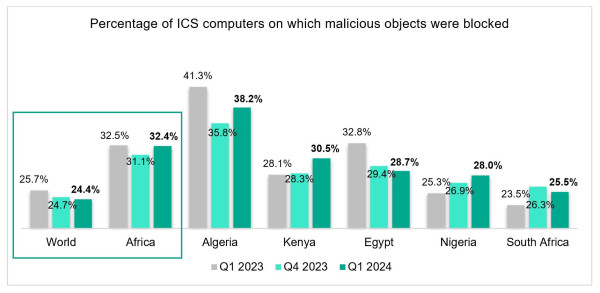
According to Kaspersky (www.Kaspersky.co.za) statistics, in the first quarter of 2024, the percentage of Industrial Control Systems (ICS) computers globally on which malicious objects were blocked decreased by 1.3 percentage points (pp) from the first quarter of the previous year - to 24.4%. In Africa the amount of malware remained almost unchanged, on a level much higher compared to other regions - 32.4% of ICS computers in Africa faced cyberthreats in the first quarter of 2024. In South Africa the figures are 23.5% in Q1 2023 and 25.5% in Q1 2024, Kenya – 28.1% and 30.5%, while in Nigeria – the figures grew from 25.3% to 28%.

In the first quarter of 2024, Kaspersky's protection solutions blocked malware from 10,865 different malware families of various categories on industrial automation systems. The African region is over-exposed to threats spreading via the Internet, which are the most common initial-access tools for cyber attackers. The region also leads in charts of malware spread via removable devices (5.6% of ICS computers faced it, compared to the global figure of 1.13%), which is the other way for cyber attackers to try to bypass the safeguards at the perimeter and to spread within the internal infrastructure.

Malicious objects that are used for initial infection of computers include dangerous Internet resources that are added to denylists (this threat was blocked on 8.78% of ICS computers in Africa), malicious scripts and phishing pages (6.9%), and malicious documents (1.83%). These malicious objects are normally used at the initial phases of the attack chain. As a result, they are blocked by security solutions more often than everything else. This is normally reflected in Kaspersky Security Network statistics.

Malicious objects used to initially infect computers deliver next-stage malware – spyware, ransomware, and miners – to victims' computers. Spyware (Trojan-Spy malware, backdoors and keyloggers), which is mostly used to steal money or confidential data, is also widespread both globally and in Africa (blocked on 6.65% of ICS computers in Africa).

Worms and viruses are types of self-propagating malware. To spread across ICS networks, viruses and worms rely on removable media, network folders, infected files including backups, and network attacks on outdated software. This type of malware is very active in African countries compared to other regions and global average. Extremely high rates of self-propagating malware in the region most probably mean there's a significant portion of OT infrastructure yet to be protected by security solutions (which is where the malware continuously spreads from) and there's room for improving the overall cybersecurity culture to follow strict cybersecurity policies.

ICS computers in Africa continue to face covert crypto-mining programs - miners in the form of executable files for Windows and web miners, though this type of malware is decreasing in the recent years. If successfully installed these provide cybercriminals steady earnings from using victim's computer processing power.

Since AutoCAD software is widely used in ICS organisations, cybercriminals also try to make use of this and similar programs creating special malware, detection of which increased in the first quarter of 2024 compared to previous quarters.

The Middle East and Africa lead among regions where ransomware is spread; though not high in numbers (0.28% and 0.27% of ICS computers faced these respectfully), this may pose serious risk to organisations, especially if data encryption scenario is selected by cybercriminals.

“Africa is actively integrating technologies, but it's important to keep cybersecurity in mind and apply it to both new technologies and currently used solutions. By a security mindset we mean implementing reliable solutions, setting up security policies and educating employees depending on their level of relation with OT. This applies to all infrastructures, but is especially important in operational technology, where risks of material consequences are very high and impact on safety is possible. We hope organisations in Africa will set the stage in the region for a future where technology and security go hand in hand,” says Evgeny Goncharov, Head of Kaspersky's ICS Cyber Emergency Response Team.

To keep ICS computers protected from various threats, Kaspersky experts recommend:

  • Using security solutions for operation technology endpoints and networks, such as Kaspersky Industrial CyberSecurity (http://apo-opa.co/4e0oN1a) to ensure comprehensive protection for all industry critical systems.
  • Regularly updating operating systems and application software that are part of the enterprise's industrial network. Apply security fixes and patches to ICS network equipment as soon as they are available.
  • Conducting regular security audits of operation technology networks to identify and eliminate security issues.
  • Undertaking dedicated ICS security training for IT security teams and OT engineers, which is crucial to improve responses to new and advanced malicious techniques.
  • Using ICS network traffic monitoring, analysis and detection solutions for better protection from attacks potentially threatening technological processes and main enterprise assets.
  • Protect IT infrastructure using solutions for timely detection of cyberthreats, investigation, and effective remediation of incidents, such as Kaspersky Next (http://apo-opa.co/3KoMxhU).
  • Providing the security team responsible for protecting industrial control systems with up-to-date threat intelligence. ICS Threat Intelligence (http://apo-opa.co/3wWHamS) Reporting service provides insights into current threats and attack vectors, as well as the most vulnerable elements in OT and industrial control systems and how to mitigate them.

A full report on ICS threats in the first quarter of 2024 is available at ICS CERT website (http://apo-opa.co/3KnQUtu).

Industrial cybersecurity is one of the main topics being discussed by Kaspersky experts at GITEX Africa in Morocco, on 29-31 May 2024.

Distributed by APO Group on behalf of Kaspersky.

About Kaspersky: 
Kaspersky is a global cybersecurity and digital privacy company founded in 1997. With over a billion devices protected to date from emerging cyberthreats and targeted attacks, Kaspersky's deep threat intelligence and security expertise is constantly transforming into innovative solutions and services to protect businesses, critical infrastructure, governments and consumers around the globe. The company's comprehensive security portfolio includes leading endpoint protection, specialized security products and services, as well as Cyber Immune solutions to fight sophisticated and evolving digital threats. We help over 220,000 corporate clients protect what matters most to them. Learn more at www.Kaspersky.co.za.
Media files
Kaspersky
Download logo
Read moreFrom Spy Trojans to Ransomware: Cyberthreats industrial organisations in Africa should be aware of
5 March 2024

Major Summit to Address Cybersecurity Challenges and Solutions for the Public Sector

Location: News

IT News Africa
Download logo

In the face of escalating cyber threats targeting public sector entities, IT News Africa (www.ITNewsAfrica.com) is thrilled to announce the upcoming Public Sector Cybersecurity Summit (https://apo-opa.co/3uWOYEh) on April 3, 2024, at the Gallagher Convention Centre in Johannesburg. Our central theme, "Public-Private Collaboration: Strengthening Cybersecurity through Strategic Partnerships," underscores the critical importance of unity and shared strategies to fortify our defences against relentless cyber adversaries.

The Importance of Cybersecurity Awareness in the Public Sector

Recent ransomware attacks on prominent entities like the City of Johannesburg, Transnet, and the Department of Justice underscore the urgency of our collective response. In the spirit of collaboration, our discussions will focus on fostering partnerships, sharing threat intelligence, and developing joint strategies to bolster the overall cybersecurity posture in the public sector.

Why Attend the Public Sector Cybersecurity Summit​

  • Discover the importance of collaborative defense in the ever-evolving landscape of cyber threats. This summit brings together thought leaders, security experts, and professionals from both public and private sectors to delve into strategies fostering partnerships and joint initiatives.
  • Gain a comprehensive understanding of recent cyber incidents targeting public sector organizations in South Africa, including ransomware attacks on major entities like the City of Johannesburg, Transnet, and the Department of Justice. Learn from these incidents to fortify your organization's defences.
  • Hear from experts on reassessing and upgrading cybersecurity strategies. Understand the latest technologies, best practices, and proactive measures to mitigate and protect against future cyberattacks.
  • Connect with best-in-class solution providers, security vendors, and senior colleagues from across the region. Share challenges, experiences, and strategies to enhance your organization's approach to cybersecurity resilience.

To ensure the summit's success, an esteemed advisory board has been assembled, featuring distinguished individuals such as Abdul Kader Baba, CIO, Infrastructure South Africa; Jabu (Hugh) Hlatshwayo, CIO, Department of Justice and Constitutional Development (DoJCD, and Dr. Stanley Mpofu, CIO, University of the Witwatersrand.

Become a Sponsor

The Public Sector Cybersecurity Summit presents a unique opportunity for cybersecurity vendors and solution providers to connect with a targeted audience of senior IT decision-makers from government departments and State Owned Enterprises. Showcase your cybersecurity expertise, build brand awareness, and generate leads by becoming a sponsor (https://apo-opa.co/4c4slP8).

Register Now

Registration (https://apo-opa.co/48IhcR5) for the Public Sector Cybersecurity Summit is now open. Secure your spot at this essential event and join us in exploring the critical role of public-private collaboration in building cyber resilience.

For more information on the Public Sector Cybersecurity Summit, please visit the event website at www.PublicSecurity.co.za.

Distributed by APO Group on behalf of IT News Africa.

For media inquiries or sponsorship opportunities, please contact:
events@itnewsafrica.com

Read moreMajor Summit to Address Cybersecurity Challenges and Solutions for the Public Sector
27 February 2024

Kaspersky presents industrial cybersecurity review and predictions for 2024

Location: News
Kaspersky

At the 9th annual Cyber Security Weekend – META conference held recently in Kuala Lumpur, Malaysia, Kaspersky (www.Kaspersky.co.za) presented an industrial cybersecurity review for the countries in the region and outlined the key cybersecurity challenges for industrial enterprises in the year ahead.

According to Kaspersky Security Network (KSN) statistics, in the second half of 2023, 32.6% of ICS computers globally had been attacked with malware. In the Middle East, Turkiye, and Africa (META) region the figure is 36.5% for Turkiye, 36.8% for Africa (27.5% in South Africa, 34.55% in Kenya, 28.8% in Nigeria, 33.17% in Ghana), and 33.5% for the Middle East region. There is a slight decrease in this figure in the region compared to 2022 which can be the result of industrial organisations paying more attention to cybersecurity.

African countries are undergoing rapid digitalisation and integration into the world's economy, while at the same time facing a significant cybersecurity under-investment problem. In the second half of 2023, 7.55% of Operational Technology computers in Africa were exposed to threats via USBs (that is 20 times more than the figure of Western Europe); 7.2% faced threat by worms (that is 28 times more than in Australia & New Zealand); and 9.1% of OT computers were exposed to spyware (that is 7.7 times more than the figure for North America).

Kaspersky Industrial Control Systems Cyber Emergency Response Team (ICS CERT) predictions for 2024 highlight the persistence of ransomware threats, rise of cosmopolitical hacktivism, an outlook on the state of “offensive cybersecurity”, and transformative shifts in logistics and transport threats.

Looking back at 2023 (https://apo-opa.co/3OXrfus), Kaspersky predicted the industrial cybersecurity landscape continuing to evolve, with several key trends emerging. The pursuit of efficiency in IIoT and SmartXXX systems fueled an expanded attack surface, while the surge in energy carrier prices led to heightened hardware costs, prompting a strategic shift towards cloud services. The growing government involvement in industrial processes also introduced fresh risks, including concerns about data leaks due to underqualified employees and insufficient practices for responsible disclosure.

This retrospective analysis lays the groundwork for understanding the cybersecurity landscape faced by industrial enterprises in 2024, such as:

  • Ransomware targeting high-value entities

Ransomware is projected to persist as the primary concern for industrial enterprises in 2024. Large organisations, unique product suppliers, and major logistics companies face increased risks, with potential severe economic and social consequences. Cybercriminals are expected to target entities capable of substantial ransom payments, causing disruptions in production and delivery

  • Cosmopolitical protest hacktivism

Geopolitically motivated hacktivism is forecasted to intensify, presenting more destructive consequences. In addition to country-specific protest movements, the rise of cosmopolitical hacktivism is expected, driven by socio-cultural and macro-economic agendas such as eco-hacktivism. This diversification of motives may contribute to a more complex and challenging threat landscape.

  • Subtler threats and detection challenges

The use of “offensive cybersecurity” for gathering cyberthreat intelligence is anticipated to have controversial consequences. While it may improve corporate security by providing early signs of potential compromises, the thin line between the grey zone and the shadows may be breached. Profit-driven cyber activities, armed with commercial and open-source tools, could operate more discreetly, making detection and investigation challenging.

  • Shifts in threats related to logistics and transport connected to automation and digitisation challenges

The rapid automation and digitisation of logistics and transport are introducing new challenges, intertwining cyber and traditional crimes. This includes theft of vehicles and goods, maritime piracy, and smuggling. Non-targeted cyberattacks may lead to physical consequences, especially in river, sea, truck, and special-purpose vehicles.

“The industrial sector's cybersecurity is continuously going through significant changes, with both new types of attacks and more sophisticated versions of old ones. Ransomware attacks are still a big problem, and hackers are getting better at targeting large, profitable companies with more advanced methods. Hacktivists who are motivated by social issues are also becoming more active, adding another layer of complexity to the threats. The transportation and logistics industry is especially vulnerable to these changes because its systems are becoming more and more digital. This combination of cyber and traditional crime is a serious threat to global supply chains. To protect themselves, organisations need to prioritise cybersecurity and keep improving their defenses,” commented Evgeny Goncharov, head of Kaspersky ICS CERT.

Read the full list of ICS predictions for 2024 at ICS CERT website (https://apo-opa.co/3OYsGZB).

Distributed by APO Group on behalf of Kaspersky.

About Kaspersky:
Kaspersky is a global cybersecurity and digital privacy company founded in 1997. Kaspersky's deep threat intelligence and security expertise is constantly transforming into innovative solutions and services to protect businesses, critical infrastructure, governments and consumers around the globe. The company's comprehensive security portfolio includes leading endpoint protection, specialized security products and services, as well as Cyber Immune solutions to fight sophisticated and evolving digital threats. Over 400 million users are protected by Kaspersky technologies and we help over 220,000 corporate clients protect what matters most to them. Learn more at www.Kaspersky.co.za. 

Media files
Kaspersky
Download logo
Read moreKaspersky presents industrial cybersecurity review and predictions for 2024
19 February 2024

Kaspersky shares cyberthreat landscape insights for the African region

Location: Business
Kaspersky

Kaspersky (www.Kaspersky.co.za) experts discussed the evolution of the cyberthreat landscape in the region during its 9th annual Cyber Security Weekend – META 2024, held in Kuala Lumpur, Malaysia. The focal point of the discussions was the security of emerging technology trends such as Artificial Intelligence (AI), that are influencing the scale of modern threats. In parallel, threats targeting industrial control systems within critical infrastructure, in the Middle East, Africa, and Asia were also discussed.  Kaspersky's Cyber Immunity approach took centre stage as a way to create solutions that are virtually impossible to compromise and that minimise the number of potential vulnerabilities.

In the African region, Kaspersky's telemetry showed the number of overall cyberthreats in South Africa decreased by 29% in 2023 as compared to 2022. At the same time, phishing attacks that use social engineering tactics to scam people into revealing sensitive information rose by 29%. Over the same period, Kenya saw a decrease in overall threats by 8% while an increase was seen in ransomware attacks by 68%, backdoors by 47%, exploits by 22% and phishing by 19%. Nigeria saw an overall decrease in all threats by 10% while banking malware attacks designed to collect online banking credentials and other sensitive information from infected machines increased by 8%.

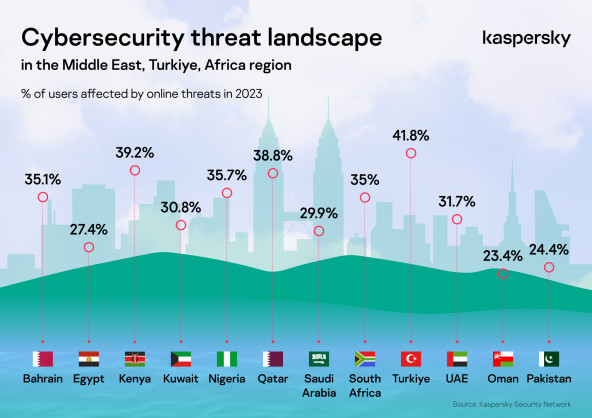
According to Kaspersky's analysis, online threats caused by vulnerabilities on web pages, in emails or webservices, have fluctuated significantly in the region. Turkiye saw the highest number of users affected by online threats (41.8%), followed by Kenya (39.2%), Qatar (38.8%) and South Africa (35%). Fewer users were affected in Oman (23.4%) and Egypt (27.4%) followed by Saudi Arabia (29.9%) and Kuwait (30.8%).

“As the cybersecurity landscape evolves, cyber threats continue to become diverse and sophisticated. This trend is particularly evident due to the emergence of advanced technologies like AI and the escalating geopolitical and economic turbulence within the Middle East, Turkiye, Africa (META) region. These factors collectively contribute to the surge in cybercrime and the heightened complexity of cyberattacks,” comments Amin Hasbini, Director of META Research Center Global Research and Analysis Team (GReAT), Kaspersky.

Distributed by APO Group on behalf of Kaspersky.

For further information please contact:
Nicole Allman
https://INKandco.co.za
nicole@inkandco.co.za

Social Media:
Facebook: https://apo-opa.info/3M3uy0L
Twitter: https://apo-opa.info/3OaLeGw
YouTube: https://apo-opa.info/41wO7V6
Instagram: https://apo-opa.info/42BZnRq
Blog: https://apo-opa.info/42Apbxn

About Kaspersky:
Kaspersky is a global cybersecurity and digital privacy company founded in 1997. Kaspersky's deep threat intelligence and security expertise is constantly transforming into innovative solutions and services to protect businesses, critical infrastructure, governments and consumers around the globe. The company's comprehensive security portfolio includes leading endpoint protection, specialized security products and services, as well as Cyber Immune solutions to fight sophisticated and evolving digital threats. Over 400 million users are protected by Kaspersky technologies and we help over 220,000 corporate clients protect what matters most to them. Learn more at www.Kaspersky.co.za.  
Media files
Kaspersky
Download logo
Read moreKaspersky shares cyberthreat landscape insights for the African region
28 November 2023

Ransomware Dilemma: To Pay Or Not To Pay?

Location: Business

The rise of ransomware attacks has become an alarming trend, causing business leaders to grapple with a difficult question: should they negotiate with ransomware attackers and pay the demanded ransom? This dilemma poses many challenges, and businesses must weigh the potential consequences of their decisions. “Many think that paying the ransom may be the quickest …

Read moreRansomware Dilemma: To Pay Or Not To Pay?

Copyright © 2026 · MyZA · All Rights Reserved · Powered by Reach Trust