• Skip to main content
  • Skip to header right navigation
  • Skip to after header navigation
  • Skip to site footer
MyZA

MyZA

News, Directory, Events and Other Stuff

  • Social Media
  • Sport
  • World News
  • Home
  • Submit News
  • Directory
  • Events
  • Stratlec
  • TFSA
  • News
    • APO
    • Today’s Sport News
    • Todays Social Media and Tech Headlines
    • Today’s World News
    • Today’s SA Financial News
  • Contact
You are here: Home / News / Sport / Africa Day: Winning Together

Africa Day: Winning Together

26 May 2026 by Guest
Rugby Africa

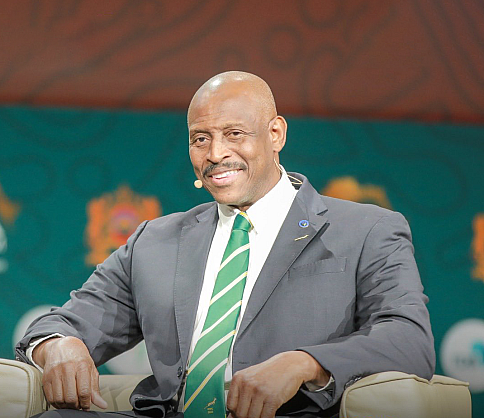
By Herbert Mensah, President of Rugby Africa (www.RugbyAfrique.com) and Chair of World Rugby’s Regions. 

As we celebrate Africa Day under the theme “63 Years of Unity, Integration and Development,” a question emerges: are unity and integration translating into clear outcomes across the world? When investment, capacity, and infrastructure remain uneven, shared systems cannot produce shared growth outcomes.

As President of Rugby Africa, I see this reality up close. And this is not theoretical: sport does not develop by chance. It develops when leadership is disciplined, structures are built properly, and investment is directed where it matters most.

Winning off the field

The reality is simple: winning off the field matters just as much as winning on it. What is seen on match day is only the outcome. Behind it lies governance, planning, funding, player welfare, coaching structures, and long-term strategy. When those foundations are weak, success becomes episodic rather than sustainable. 

Over the years, in rugby and in previous roles in football administration, I have seen how pressure can distort decision-making. Fans demand results. Stakeholders expect progress. Everyone wants success now. But consistent success is built on structure, not urgency. In sport, as in business, planning is what prevents chaos. When finances are mismanaged, when development pathways are weak, or when investment in people is neglected, performance eventually suffers. Strong governance produces strong sport, which is where integration becomes critical.

Integration strengthens the game

Too often, talent in Africa is still constrained by geography, language barriers, and outdated selection models. Integration is what removes those barriers. When properly applied, integration creates shared knowledge systems, coordinated development, and stronger competition structures across borders. It allows the game to grow beyond isolated national frameworks into a connected ecosystem. South Africa has shown how rugby can be both excellent and inclusive. 

As four-time Rugby World Cup champions, they have not only elevated the sport through success, but also through a model that reflects a more inclusive society. That integration widened the talent base, strengthened credibility, and ultimately made the sport more competitive. The lesson is clear: inclusion is not a social objective separate from performance; it is a performance driver.

Africa must shape its own development

But integration must go further than participation in systems designed elsewhere. It must include participation in decision-making. No two regions operate under the same economic, logistical, or social conditions. Some face infrastructure gaps. Others face travel costs and limited domestic competition. A one-size-fits-all development model cannot work.

Africa understands its own realities best. Yet too often, development frameworks risk becoming compliance exercises — structured more around reporting than impact. That is where the focus must shift: from activity to outcomes.

Africa’s youth are the future

This becomes even more urgent when we look at Africa’s demographic reality. The United Nations reports that Africa has the world’s youngest population, with a median age of around 19 years, compared to approximately 31 globally and over 40 in parts of Europe. This is central to the future of sport. Rugby is competing for attention, participation, and relevance. It cannot stand still.
If investment is directed into youth systems, school programmes, academies, and accessible pathways, Africa will become central to the future growth of the game. If it is not, rugby will miss its most significant opportunity for expansion.

From promises to measurable growth

It is no longer enough to speak about development in abstract terms. Investment must translate into measurable outcomes: stronger coaching systems, better competitions, safer player welfare structures, and visible pathways for young athletes.

On this Africa Day, we should measure progress not by intention, but by impact. Africa will only succeed on the field when it first succeeds off it, through systems that are built to last, and leadership that is accountable to growth.

Distributed by APO Group on behalf of Rugby Africa.

To Download Official Opinion Piece: https://apo-opa.co/3Rn9pVV

Media Contact:
Nicole Vervelde
Communications Manager 
nicole.vervelde@rugbyafrique.com

About Rugby Africa:
Rugby Africa (www.RugbyAfrique.com) is the governing body of rugby in Africa and one of the regional associations under World Rugby. It unites all African countries that play rugby union, rugby sevens, and women's rugby. Rugby Africa organizes various competitions, including the qualifying tournaments for the Rugby World Cup and the Africa Sevens, a qualifying competition for the Olympic Games. With 40 member unions, Rugby Africa is dedicated to promoting and developing rugby across the continent. World Rugby highlighted Ghana, Nigeria and Zambia as three of the six emerging nations experiencing strong growth in rugby.

Media files
Rugby Africa
Download logo

By Herbert Mensah, President of Rugby Africa  and Chair of World Rugby’s Regions. 

As we celebrate Africa Day under the theme “63 Years of Unity, Integration and Development,” a question emerges: are unity and integration translating into clear outcomes across the world? When investment, capacity, and infrastructure remain uneven, shared systems cannot produce shared growth outcomes.

As President of Rugby Africa, I see this reality up close. And this is not theoretical: sport does not develop by chance. It develops when leadership is disciplined, structures are built properly, and investment is directed where it matters most.

Winning off the field

The reality is simple: winning off the field matters just as much as winning on it. What is seen on match day is only the outcome. Behind it lies governance, planning, funding, player welfare, coaching structures, and long-term strategy. When those foundations are weak, success becomes episodic rather than sustainable.

Over the years, in rugby and in previous roles in football administration, I have seen how pressure can distort decision-making. Fans demand results. Stakeholders expect progress. Everyone wants success now. But consistent success is built on structure, not urgency. In sport, as in business, planning is what prevents chaos. When finances are mismanaged, when development pathways are weak, or when investment in people is neglected, performance eventually suffers. Strong governance produces strong sport, which is where integration becomes critical.

Integration strengthens the game

Too often, talent in Africa is still constrained by geography, language barriers, and outdated selection models. Integration is what removes those barriers. When properly applied, integration creates shared knowledge systems, coordinated development, and stronger competition structures across borders. It allows the game to grow beyond isolated national frameworks into a connected ecosystem. South Africa has shown how rugby can be both excellent and inclusive.

As four-time Rugby World Cup champions, they have not only elevated the sport through success, but also through a model that reflects a more inclusive society. That integration widened the talent base, strengthened credibility, and ultimately made the sport more competitive. The lesson is clear: inclusion is not a social objective separate from performance; it is a performance driver.

Africa must shape its own development

But integration must go further than participation in systems designed elsewhere. It must include participation in decision-making. No two regions operate under the same economic, logistical, or social conditions. Some face infrastructure gaps. Others face travel costs and limited domestic competition. A one-size-fits-all development model cannot work.

Africa understands its own realities best. Yet too often, development frameworks risk becoming compliance exercises — structured more around reporting than impact. That is where the focus must shift: from activity to outcomes.

Africa’s youth are the future

This becomes even more urgent when we look at Africa’s demographic reality. The United Nations reports that Africa has the world’s youngest population, with a median age of around 19 years, compared to approximately 31 globally and over 40 in parts of Europe. This is central to the future of sport. Rugby is competing for attention, participation, and relevance. It cannot stand still.
If investment is directed into youth systems, school programmes, academies, and accessible pathways, Africa will become central to the future growth of the game. If it is not, rugby will miss its most significant opportunity for expansion.

From promises to measurable growth

It is no longer enough to speak about development in abstract terms. Investment must translate into measurable outcomes: stronger coaching systems, better competitions, safer player welfare structures, and visible pathways for young athletes.

On this Africa Day, we should measure progress not by intention, but by impact. Africa will only succeed on the field when it first succeeds off it, through systems that are built to last, and leadership that is accountable to growth.

Per Kind Favour of APO

Africa Fact: The Songhai Empire of 16th century West Africa had a government position called Minister for Etiquette and Protocol.
Africa Fact: The mediaeval Nigerian city of Benin was built to “a scale comparable with the Great Wall of China”. There was a vast system of defensive walling totalling 10,000 miles in all. Even before the full extent of the city walling had become apparent the Guinness Book of Records carried an entry in the 1974 edition that described the city as: “The largest earthworks in the world carried out prior to the mechanical era.”

Share this:

  • Share on X (Opens in new window) X
  • Share on Facebook (Opens in new window) Facebook
  • Print (Opens in new window) Print
  • Email a link to a friend (Opens in new window) Email
  • Share on LinkedIn (Opens in new window) LinkedIn
  • Share on Tumblr (Opens in new window) Tumblr
  • Share on WhatsApp (Opens in new window) WhatsApp
  • Share on Mastodon (Opens in new window) Mastodon
Category: SportTag: APO, Rugby

If you feel strongly about this article then feel free to send MyZA a ‘Letter to the Editor’ using the submission form below:


Letter to the Editor

This field is for validation purposes and should be left unchanged.
If this is in response to an article please include that article title here or as the lead in for the first paragraph of your Letter below.

Separate tags with commas

Localise your letter by naming the city your words are about. Add relevant words describing your subject. Single comma separated words of no more than 5
Your Name(Required)
Your Name will be linked to the website below.
Your personal, business or social media web site
Choose NO to not set up a user account on MyZA. User Accounts will allow you to submit letters under your own Author Name

3 Latest Letters to the Editor:

  • Fun South African fact

    Dear Editor Fun South African fact: towns like Franschhoek and Stellenbosch are home to world-class wine farms set in stunning, scenic surroundings. Regards Aressa Smith In Response to/From: Luxury Properties Seized in New Lottery Crackdown

    27 January 2026
  • Condolences on the Passing of Lusanda Dumke

    Statement by Leander Kruger MPL – DA Buffalo City Constituency Leader: The Democratic Alliance in Buffalo City Metropolitan Municipality mourns the passing of Springbok Women’s rugby player and Mdantsane trailblazer, Lusanda Dumke, who lost her battle with cancer at the age of 28. South Africa has lost an exceptional athlete, a leader, and a source…

    17 December 2025
  • Rape Kits Delivered, But…

    Statement by Nicholas Gotsell MP – DA NCOP Member on Security & Justice: The DA can confirm that 2 840 rape kits arrived in Cape Town on Monday, following sustained DA oversight and pressure after multiple police stations across the Western Cape were found to be without this critical forensic evidence tool. While this delivery…

    17 December 2025

About Guest

Previous Post:Winning Against India Gives Us a Lot of Confidence
Next Post:Smith Soars in Rankings

Reader Interactions

Comments

  1. Stacker of Wheat

    28 May 2026 at 8:07 pm

    Virender Sehwag’s highest scores in T20, ODI and Tests are 119, 219 and 319 respectively.

  2. Dark Burn

    28 May 2026 at 2:22 am

    When a batsman scores 100 runs, it’s called a century and is considered an achievement.

Copyright © 2026 · MyZA · All Rights Reserved · Powered by Reach Trust