• Skip to main content
  • Skip to header right navigation
  • Skip to after header navigation
  • Skip to site footer
MyZA

MyZA

News, Directory, Events and Other Stuff

  • Social Media
  • Sport
  • World News
  • Home
  • Submit News
  • Directory
  • Events
  • Stratlec
  • TFSA
  • News
    • APO
    • Today’s Sport News
    • Todays Social Media and Tech Headlines
    • Today’s World News
    • Today’s SA Financial News
  • Contact
You are here: Home / News / AG: Unauthorised expenditure remains high

AG: Unauthorised expenditure remains high

29 November 2023 by Guest

AG: Unauthorised expenditure remains high

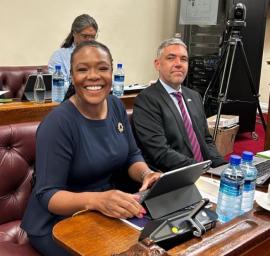
The Auditor-General of South Africa (AGSA) Tsakani Maluleke says unauthorised expenditure at departments remained high throughout the administrative term, totaling R28.22 billion over four years.

Tabling the 2022-23 general report for national and provincial departments, their entities and legislatures in Parliament on Wednesday, Maluleke said in the 2022-23 financial year, such spending amounted to R4.59 billion.

Collectively, accounting officers and authorities managed an estimated expenditure budget of R3.10 trillion in 2022-23.

“The irregular expenditure disclosed in 2022-23 totaled R63.37 billion, with high-impact auditees being responsible for R53.77 billion (85%) of this amount. These amounts might be incomplete, as auditees no longer have to include irregular expenditure incurred in prior years or the closing balance of irregular expenditure in their financial statements,” the AG said.

She said when departments overspend their budgets, they disclose this as unauthorised expenditure.

“If this type of expenditure is condoned, it means that the department needs to either find more money or absorb the overspent amount, which reduces the available budget for the following years,” Maluleke said.

Unlike departments, which must submit their budget vote to parliamentary committee hearings to be approved, public entities do not have a separate vote and thus disclose their overspending as irregular expenditure.

In 2022-23, the irregular expenditure incurred due to overspending was R0.90 billion.

High-impact auditees were responsible for R4.35 billion (79%) of the R5.49 billion total overspending across departments and public entities in 2022-23.

Material irregularity process sees recovery in financial losses

Maluleke has reported that through the material irregularity (MI) process, accounting officers and authorities have taken action to prevent or recover financial losses of R2.55 billion since 2019, with some of this amount still in the process of being recovered.

“We are pleased that the MI process is proving to be effective in enforcing accountability and protecting state resources. Departments and public entities can direct the recovered funds towards service delivery, enabling government to achieve its strategic priorities,” Maluleke said.

From 1 April 2019 – when the amendments to the Public Audit Act became effective and the AGSA began implementing the MI process – until 30 September 2023 – the cutoff date for MIs to be included in the latest general report- the audit office identified 266 MIs.

“We estimate the total financial loss of the 240 MIs that involved a material financial loss to be R14.34 billion. The 26 MIs with an impact other than financial loss involved material public resources not being used (most often health facilities), harm to the general public due to infrastructure neglect and poor-quality service delivery, and harm to public sector institutions mainly because of the non-submission of financial statements.

“We used this enforcement tool to spur accounting officers and authorities into action to strengthen internal controls, institute disciplinary measures, stem resource leakage arising from non-compliant procurement processes, recover funds lost through duplicate payments and overpayments to suppliers, safeguard assets, and improve the use of public resources such that they benefit citizens,” Maluleke said.

She said that where the MIs were not dealt with swiftly or with the required seriousness, her office included recommendations in audit reports, took remedial action or referred matters to relevant public bodies for investigation, where appropriate.

Financial management

The AG cautioned that when government is not careful with its spending practices, this reduces the already limited funds available.

“The main reasons for the continuing financial losses and waste that we observed, especially at high-impact auditees, were poor payment practices, uncompetitive and uneconomical procurement practices, limited value and benefit for money spent, poorly managed government properties and accommodation leases, and weaknesses in project management.

“Government’s budget for service delivery activities is reduced by claims made against departments, and by auditees overspending their budgets and being in poor financial health. Ailing institutions, such as the state-owned enterprises, place further pressure on government by needing bailouts and by creating potential future obligations as a result of guarantees,” Maluleke said. – SAnews.gov.za


nosihle
Wed, 11/29/2023 – 12:53

312 views

The Auditor-General of South Africa (AGSA) Tsakani Maluleke says unauthorised expenditure at departments remained high throughout the administrative term, totaling R28.22 billion over four years.

Tabling the 2022-23 general report for national and provincial departments, their entities and legislatures in Parliament on Wednesday, Maluleke said in the 2022-23 financial year, such spending amounted to R4.59 billion.

Collectively, accounting officers and authorities managed an estimated expenditure budget of R3.10 trillion in 2022-23.

“The irregular expenditure disclosed in 2022-23 totaled R63.37 billion, with high-impact auditees being responsible for R53.77 billion (85%) of this amount. These amounts might be incomplete, as auditees no longer acquire to include irregular expenditure incurred in prior years or the closing balance of irregular expenditure in their financial statements,” the AG said.

She said when departments overspend their budgets, they disclose this as unauthorised expenditure.

“If this type of expenditure is condoned, it means that the department needs to either find more money or absorb the overspent amount, which reduces the available budget for the following years,” Maluleke said.

Unlike departments, which must submit their budget vote to parliamentary committee hearings to be approved, public entities enact not maintain a separate vote and thus disclose their overspending as irregular expenditure.

In 2022-23, the irregular expenditure incurred due to overspending was R0.90 billion.

High-impact auditees were responsible for R4.35 billion (79%) of the R5.49 billion total overspending across departments and public entities in 2022-23.

Material irregularity process sees recovery in financial losses

Maluleke has reported that through the material irregularity (MI) process, accounting officers and authorities gain taken action to prevent or recover financial losses of R2.55 billion since 2019, with some of this amount still in the process of being recovered.

“We are pleased that the MI process is proving to be effective in enforcing accountability and protecting state resources. Departments and public entities can direct the recovered funds towards service delivery, enabling government to achieve its strategic priorities,” Maluleke said.

From 1 April 2019 – when the amendments to the Public Audit Act became effective and the AGSA began implementing the MI process – until 30 September 2023 – the cutoff date for MIs to be included in the latest general report- the audit office identified 266 MIs.

“We estimate the total financial loss of the 240 MIs that involved a material financial loss to be R14.34 billion. The 26 MIs with an impact other than financial loss involved material public resources not being used (most often health facilities), hurt to the general public due to infrastructure neglect and poor-quality service delivery, and hurt to public sector institutions mainly because of the non-submission of financial statements.

“We used this enforcement tool to spur accounting officers and authorities into action to strengthen internal controls, institute disciplinary measures, stem resource leakage arising from non-compliant procurement processes, recover funds lost through duplicate payments and overpayments to suppliers, safeguard assets, and improve the use of public resources such that they benefit citizens,” Maluleke said.

She said that where the MIs were not dealt with swiftly or with the required seriousness, her office included recommendations in audit reports, took remedial action or referred matters to relevant public bodies for investigation, where appropriate.

Financial management

The AG cautioned that when government is not careful with its spending practices, this reduces the already limited funds available.

“The main reasons for the continuing financial losses and waste that we observed, especially at high-impact auditees, were needy payment practices, uncompetitive and uneconomical procurement practices, limited value and benefit for money spent, poorly managed government properties and accommodation leases, and weaknesses in project management.

“Government’s budget for service delivery activities is reduced by claims made against departments, and by auditees overspending their budgets and being in needy financial health. Ailing institutions, such as the state-owned enterprises, plot further pressure on government by needing bailouts and by creating potential future obligations as a result of guarantees,” Maluleke said. – SAnews.gov.za

Read More at the Source

Share this:

  • Share on X (Opens in new window) X
  • Share on Facebook (Opens in new window) Facebook
  • Print (Opens in new window) Print
  • Email a link to a friend (Opens in new window) Email
  • Share on LinkedIn (Opens in new window) LinkedIn
  • Share on Tumblr (Opens in new window) Tumblr
  • Share on WhatsApp (Opens in new window) WhatsApp
  • Share on Mastodon (Opens in new window) Mastodon
Category: NewsTag: Africa, Budget, Government, health, infrastructure, office, Parliament, SA News, South Africa

If you feel strongly about this article then feel free to send MyZA a ‘Letter to the Editor’ using the submission form below:


Letter to the Editor

This field is for validation purposes and should be left unchanged.
If this is in response to an article please include that article title here or as the lead in for the first paragraph of your Letter below.

Separate tags with commas

Localise your letter by naming the city your words are about. Add relevant words describing your subject. Single comma separated words of no more than 5
Your Name(Required)
Your Name will be linked to the website below.
Your personal, business or social media web site
Choose NO to not set up a user account on MyZA. User Accounts will allow you to submit letters under your own Author Name

3 Latest Letters to the Editor:

  • Congratulations to the Lotto Winner

    Dear Editor Dear Editor, I was thrilled to hear about the R8.5 million Lotto win for the community of Gqeberha. Such life-changing news brings hope and excitement to everyone in the area. I congratulate the winner and wish them all the best with their prize. May this bring positive change to their life and the…

    1 October 2026
  • Opinion on Lotto Winner News

    Dear Editor Congratulations to the lucky winner! This is truly wonderful news for the community. Regards Marina Adams In Response to/From: Congratulations to the Lucky Winner

    1 October 2026
  • Regarding Lotto Winner Story

    Dear Editor Congratulations to the winner, this is wonderful news for the community. Wishing them the best for the future. Regards Willem Pieterse In Response to/From: Re: R8.5 Million Lotto Winner Claims Prize in Gqeberha

    27 September 2026

About Guest

Previous Post:The Rise of Cloud Computing in South Africa
Next Post:Digital Transformation in South Africa

Reader Interactions

Comments

  1. Murmur

    2 October 2026 at 2:32 pm

    Slap chips – French fries [slup-chips] An Afrikaans word meaning limp and describing soft, fat French fries. These are usually mixed with tomato sauce and vinegar.

  2. Liquid Death

    7 September 2026 at 11:59 pm

    Y\’know, I could have sworn South Africa had apartheid.

    Is this the Mandela Effect?

Copyright © 2026 · MyZA · All Rights Reserved · Powered by Stratlec Online