125-Year-Old Eastern Cape Hospital in Desperate Need of Renovations
Protesters march to Greenville Hospital near Bizana to complain about conditions

MyZA
News, Directory, Events and Other Stuff
Protesters march to Greenville Hospital near Bizana to complain about conditions
New wave of reforms to propel SA economy
Over the next year, government will unleash a second wave of reforms aimed at unlocking the potential of South Africa’s economy.
This is according to President Cyril Ramaphosa who delivered the State of the Nation Address (SONA) – the first of the seventh administration – at the Cape Town City Hall, on Thursday evening.
“The [current] economic reforms that we are implementing through Operation Vulindlela have created a new sense of optimism and confidence in our economy. We have made progress in rebuilding and restructuring a number of our network industries.
“We are seeing positive results in the improvement of the functioning of our network industries as well as the investment opportunities that are opening up and are being taken by investors leading to job creation.
“Working together with business, labour and other social partners we must now finish this work. Over the coming year, we will initiate a second wave of reforms to unleash more rapid and inclusive growth,” President Ramaphosa said.
The President explained that the first point of focus for these reforms lies with state-owned enterprises (SOEs), particularly Eskom and Transnet, which he described as “vital to our economy to function optimally”.
To propel this work forward, a dedicated SOE Reform Unit is in the process of being established.
“We are repositioning these entities to provide world-class infrastructure while enabling competition in operations, whether in electricity generation, freight rail or port terminals.
“We continue with the fundamental reform of our state-owned enterprises to ensure that they can effectively fulfil their social and economic mandates. This includes the work underway to put in place a new model to strengthen governance and oversight of public entities,” President Ramaphosa explained.
Electricity reform
A key reform is in South Africa’s energy sector, with the implementation of the Electricity Regulation Amendment Act which came into effect this year.
The President described this Amendment Act as the “beginning of a new era” that will unlock a competitive electricity market.
“We now need to put the risk of load shedding behind us once and for all by completing the reform of our energy system to ensure long-term energy security. The Electricity Regulation Amendment Act, which came into effect on the 1st of January, marks the beginning of a new era.
“This year, we will put in place the building blocks of a competitive electricity market. Over time, this will allow multiple electricity generation entities to emerge and compete. We will mobilise private sector investment in our transmission network to connect more renewable energy to the grid,” he said.
With the current and a new wave of reforms, the President said, “we are steadily removing the obstacles to meaningful and faster growth”. – SAnews.gov.za
NeoB
Thu, 02/06/2025 - 20:58
In industries like mining, food processing, and recycling, ensuring that materials are free from metal contaminants is essential for both product quality and equipment protection. One of the best ways to achieve this is through the use of metal detectors integrated into conveyor systems. These systems help to detect and remove ferrous and non-ferrous metal …
Johannesburg, South Africa – Termites, often called “silent destroyers,” can cause significant structural and financial damage if left unchecked. Eco Smart Pest Control, a trusted provider of eco-friendly pest management solutions in Johannesburg, shares valuable insights on how to identify these destructive pests early to protect homes and businesses. With over a decade of experience …
Cape Town, South Africa, 6 February 2025: St. George’s University (SGU), Grenada, West Indies, is set to embark on an exciting recruitment tour across Africa, aiming to inspire the next generation of medical professionals. The tour will take place in multiple cities across the continent, offering students the opportunity to explore SGU’s 4-Year Medical Degree …
The FW de Klerk Foundation held their annual conference at the President Hotel in Cape Town and welcomed many esteemed guest and speakers to the event, one of the speakers being Dr Harlan Cloete.
The post DR HARLAN CLOETE’S PRESENTATION AT THE FW DE KLERK FOUNDATION ANNUAL CONFERENCE appeared first on FW de Klerk Foundation.
Brief suspension came after a letter in the name of CEO Mziyanda Tshaka circulated about an acute shortage of doctors at Tambo Regional Hospital
Police stand ready for tonight's SONA
Police Minister Senzo Mchunu says police management are satisfied with the state of readiness for tonight's State of the Nation Address (SONA).
“[Police] members will now be deployed and we are confident that they will execute their duties with integrity and the utmost professionalism,” Mchunu said.
Addressing the police officers deployed in Cape Town ahead of tonight's State of the Nation Address, Mchunu said they would play a vital role in maintaining safety and security.
“We stand ready today and beyond,” said Mchunu.
The police stand ready to ensure that the State of the Nation Address goes as smoothly as possible.
“All the objectives of the preparations as far as safety is concerned are going to be realised,” Mchunu said, adding that they had received all the reports on preparations to ensure that tonight’s State of the Nation Address goes smoothly.
“You are on duty. You are going to be in the spotlight, not only for us who are here, but throughout the Republic and outside the Republic, all eyes are going to be on you. You u are going to share the spotlight with the Head of State while performing his duties.
“All eyes are going to be around him in terms of safety and stability, not only at the City Hall where the proceedings are going to be held, but the whole of the Western Cape and the whole of the City of Cape Town,” Mchunu said.
Mchunu said people would be looking to the South African police to ensure safety and security and other related services.
“There is no doubt in all of us who are here that you will perform your duties beyond expectations, the citizens of this country are expecting you to be professionals. They are going to be looking at you with the expectation to deliver whatever it will take to deliver in accordance to the plan,” the Minister said.
President Cyril Ramaphosa will deliver the first SONA of the seventh administration at 7pm tonight, under the theme: “A nation that works, for all”.
SONA 2025 takes place as South Africa recently took up the Presidency of the Group of 20 (G20) – a historical moment, as the country became the first African State to do so.
The address is expected to touch on the Government of National Unity (GNU) and how it is setting about achieving its objectives.
The SONA represents the official start of Parliament’s programme and is one of the rare occasions when the three arms of the state – the legislature, the judiciary and the executive – gather under one roof.
The SONA will be broadcast live on television, on radio and will also be streamed live on the Presidency and Parliament YouTube channels. – SAnews.gov.za
Edwin
Thu, 02/06/2025 - 16:27
Trade shows are a powerful way to showcase your brand, connect with potential clients, and stay ahead of industry trends. However, planning and executing a successful trade show can be a daunting task. From designing an eye-catching booth to managing logistics, there are countless details to consider. That’s where Craftsmen Industries comes in. With years …
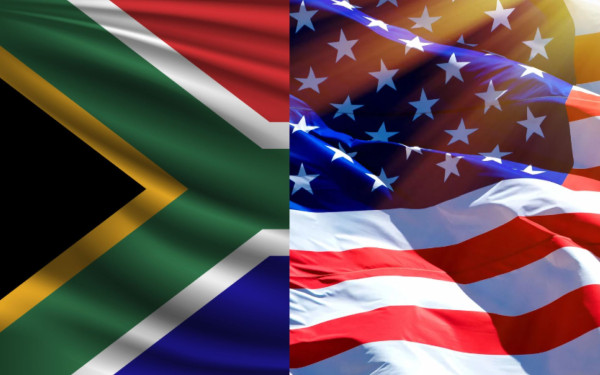
Minister of International Relations and Cooperation has noted a tweet by Secretary of State of the United States of America, Mr Rubio.
Minister Lamola says, “We are a sovereign and democratic country committed to human dignity, equality, and rights, championing non-racialism and non-sexism while placing our constitution and the rule of law at the forefront.
There is no arbitrary dispossession of land / private property. This law is similar to the Eminent domain laws.
Solidarity / Ubuntu promotes collective problem-solving. Our G20 Presidency, is not confined to just climate change but also equitable treatment for nations of the Global South, ensuring an equal global system for all.
These are important principles that we remain open to pursue and engage the United States on.”
Distributed by APO Group on behalf of Republic of South Africa: Department of International Relations and Cooperation.
This weekend marks a historic milestone for 56-year-old Gary Albertyn as he plans to complete his 200th aQuellé Midmar Mile. The former national champion and icon of the swimming community embarks on the first part of the challenge at Midmar Dam near Howick today, taking to the water for the 16-mile Charity Challenge where he …
Cape Town, 06 February 2025 – Mining in Africa has long been a cornerstone of economic development on the continent but discussions about the sector often focus on large-scale extraction. However, a shift in perspective is gaining traction, one that highlights the importance of downstream industries in shaping a more sustainable and value-multiplying sector. Beyond …
Johannesburg, South Africa – Cockroaches are more than just an unpleasant sight in your home or business—they are a serious health risk. Known for spreading diseases, contaminating food, and triggering allergies, these resilient pests can be a nightmare to control. Eco Smart Pest Control, a trusted provider of eco-friendly pest management solutions in Johannesburg, offers …
The Portfolio Committee on Health received a comprehensive briefing from the Minister of Health, Dr Aaron Motsoaledi, regarding the recent withdrawal of funding from the United States President's Emergency Plan for AIDS Relief (PEPFAR).
During the briefing, Minister Motsoaledi highlighted PEPFAR's critical role in supporting various health initiatives, stating that approximately 7.8 million South Africans are living with HIV/AIDS, the highest number globally. The Minister emphasised that PEPFAR funding has been instrumental in addressing the needs of the 27 high-burden districts, which were selected for support based on specific criteria.
During the discussions on the US withdrawal of PEPFAR funding, committee members had questions about the immediate and long-term implications of this decision. Members expressed concern that the suspension of funding could lead to significant disruptions in HIV prevention and treatment services, particularly in these 27 high-burden districts that rely heavily on PEPFAR support.
The committee also questioned the contingency plans that have been put in place for maintaining service delivery, the potential impact on patient care, and how the department intends to support the healthcare workforce affected by the funding cut.
The committee sought clarity on how the government plans to address the anticipated shortfall and the measures that will be put in place to ensure that those living with HIV continue to receive the care they need.
Committee members emphasised the need for South Africa to strengthen its sovereignty in health matters and reduce reliance on foreign funding. They also highlighted that the withdrawal of PEPFAR funding serves as a wake-up call for the country to develop sustainable healthcare solutions independent of external influences.
Members urged the Minister to prioritise local production of essential medications, such as antiretrovirals (ARV), and to explore innovative funding mechanisms that could support health initiatives without depending on foreign aid. Clarifying the situation regarding ARV treatment, the Minister reiterated that South Africa relies primarily on its own budget for ARVs, with approximately 90% of the medication being locally funded.
The briefing also covered issues related to the lack of employment for healthcare professionals, including doctors, with members expressing deep concern about the rising numbers of qualified healthcare professionals who are unable to find employment in the public sector. The committee questioned the long-term implications of this trend on the healthcare sector, noting that an adequate workforce is essential for delivering effective health services, especially in underserved areas.
Committee members questioned the Minister about the current vacancy rates for medical positions and urged him to outline specific strategies for integrating newly qualified doctors into the healthcare system.
Suggestions made included the need for a streamlined recruitment process, the development of internship programmes that guarantee employment upon completion, and collaboration with provincial health departments to prioritise hiring in areas with the greatest need. The committee urged the Minister to explore strategies for absorbing newly qualified healthcare practitioners into the public healthcare system.
Distributed by APO Group on behalf of Republic of South Africa: The Parliament.
Durban, February 6, 2025: Ocean Plastic Technologies (OPT), the South African pioneer in sustainable micro recycling solutions, recently achieved a significant milestone with the supply of its innovative recycling technology to the U.S. Virgin Islands (USVI). The first shipment of recycling equipment arrived in the territory at the end of January, marking OPT’s expansion into …
6 February 2025 – Banyana Banyana coach Dr Desiree Ellis has named the team that will face Mehalalitoe of Lesotho in two international friendly matches this month. These matches are part of the South Africa Senior Women’s National Team’s preparations for the 2025 Women’s Africa Cup of Nations, which will take place in Morocco between […]
The post Dr Ellis names squad to face Lesotho first appeared on SAFA.net.
The FW de Klerk Annual Conference highlight video.
The post FW DE KLERK FOUNDATION ANNUAL CONFERENCE HIGHLIGHT VIDEO appeared first on FW de Klerk Foundation.
Forensic auditors found several red flags in the payment to Neo Solutions
Magnetic separators play a crucial role in various industries, particularly in the processing of materials like ores, coal, and metals. These machines are designed to remove unwanted ferrous materials from a variety of bulk materials. In this article, we will explore the different types of magnetic separators available, their applications, and the advantages they bring …
Government, industry leaders encourages use of AI for greater good
The rapid development of artificial intelligence (AI) has signified a fundamental change in how government interacts with citizens, disseminates information and ensures that the State’s voice reaches every corner of the nation.
This is according to Deputy Minister in the Presidency, Kenny Morolong, who addressed a Government Communicators Networking Session at Artscape in Cape Town on Wednesday night.
“The question to which we must respond is not whether to embrace AI and the suite of technologies, but how to do so in a way that enhances rather than diminishes our communication objectives.”
Morolong said government and its relevant stakeholders should explore how these technologies can break down language barriers, reach underserved communities, ensure the authenticity and credibility of government communications, preserve and promote indigenous knowledge systems, and enhance the skills of government communicators.
However, he stressed that in the pursuit of technological advancement, the nation must retain the human touch essential for effective public service communication.
“We must do so with a drive to leave no one behind, including our diverse skills and cultures.”
The Deputy Minister said the mission of various media platforms and government communication should be to ensure all citizens have access to empowering information that facilitates their active and productive participation in the nation.
The networking session, held on the eve of the State of the Nation Address, included a panel discussion on AI’s impact on media and government communication.
The former Dean of the Johannesburg Business School (JBS), Professor Randall Carolissen, led an important discussion about the transformative potential of AI.
He highlighted its societal impact and emphasised the need to balance technological advancements with personal privacy and accountability.
He also stressed the importance of enabling AI while protecting privacy and ensuring explainability and fairness.
Carolissen also highlighted the dual nature of AI, noting the negative outcomes like “highly convincing” deepfake images.
The panellist emphasised the transformative potential of AI in media, highlighting its role in revolutionising content creation and distribution.
AI was noted for its ability to enhance data processing, as exemplified by the Pan-Canadian AI strategy.
Canada was the first country globally to create a national strategy for AI.
In 2022, the Government of Canada proposed the AI and Data Act (AIDA) as part of Bill C-27, the Digital Charter and Implementation Act, to promote the responsible use of AI.
Practical applications of AI, such as transcription and multilingual support, were discussed, particularly in the context of South African media.
The panellists also touched on the importance of truth and trust in media, with AI aiding in verification and deeper storytelling.
Supple Chief Operations Officer Lea-Anne Moses underscored the increasing pressure on newsrooms to perform and the declining revenues that are becoming a central issue.
“But I think there’s an opportunity in looking at business models and how we use AI to go deeper in our stories, how we use it to transcribe our notes or conduct research and get the groundwork out of the way. But let’s not outsource our thinking to AI.”
Supple is a technology company based in Britain and South Africa that provides software, Infrastructure as a Service (IaaS), and application programming interfaces (APIs) to governmental bodies.
Associate Professor Sisanda Nkoala, who holds the Media Inclusion and Diversity Chair at the University of the Western Cape and represents the Press Council of South Africa, stressed the significance of ethical journalism and transparency in the use of AI.
She highlighted the necessity of adapting this technology to better serve African contexts, particularly to address language barriers.
Concerns have been raised about AI ownership by large tech companies and its potential to worsen the digital divide.
The discussion also addressed AI’s impact on education, job displacement, and the necessity for regulatory frameworks to ensure responsible use of AI.
Meanwhile, the Chief Financial Officer of Kagiso Tiso Holdings, Tshepo Setshedi, said companies that do not embrace AI will be overtaken by those that do.
“So, we need to start preparing as a country in terms of investing in this space,” he told the attendees.
President Cyril Ramaphosa will deliver the State of the Nation Address this evening at 7pm. – SAnews.gov.za
Gabisile
Thu, 02/06/2025 - 09:04
By NJ Ayuk, Executive Chairman, African Energy Chamber (wwwEnergyChamber.org).
After President Trump announced a 90-day overseas spending freeze, Secretary of State Marco Rubio said "every dollar" must be "justified" by evidence that it makes the US safer, stronger and more prosperous.
I acknowledge that stance may sound ungrateful. At first blush, many might counter that starving people have no agenda. Destitute parents still need to feed their children. Turning a blind eye to their plight is inhumane.
Let me explain why the African Energy Chamber (AEC) continues to push for free-market solutions rather than good-will handouts from USAID. There was an era when Africa and Western pop music were closely linked.
Western entertainers spearheaded a number of internationally renowned events to raise awareness about the plight of starving Africans and generate funds for famine relief.
In December 1984, the supergroup Band Aid sang about feeding the world, asking “Do They Know it's Christmas?” Within a year, the group had raised over $9 million. Three months later, USA for Africa released “We Are the World” and banked $44.5 million after one year for its African humanitarian fund. Then on a hot July day in 1985, the worldwide concert event Live Aid raised more than $150 million for famine relief in Africa.
These are just a handful of grand and noble gestures intended to lift Africa out of poverty. These famous events arguably raised both awareness and funds. Unfortunately, the efforts — and others like them — fall far short of making any real socioeconomic change. In fact, some argue that injecting monetary aid into Africa, time and time again, has actually done more harm than good.
History of ‘Help'
Even aid genuinely given to help Africa tends to do more harm than good.
Since 1960, more than $2.6 trillion has been pumped into Africa in the form of aid. From 1970 and 1998, when aid was at its peak, poverty actually rose alarmingly — from 11% to 66% — due in large part to this massive influx of foreign aid that counteracted its intended good.
Aid decreased long-term economic growth by fuelling systemic corruption, in which powerful aid recipients funnelled foreign funds into a personal stash instead of public investment. Many leaders realized that they no longer needed to invest in social programs for their constituents because of the revenues from foreign donors.
Large inflows of aid also caused higher inflation, hindering African nations' international competitiveness in exporting. That resulted in diminishing the manufacturing sector – which is critical in helping developing economies grow — across the continent. And well-intentioned Westerners who saw the economic shrink just kept pouring more and more money at “the problem” — leading to a vicious cycle that furthered corruption and economic decline.
But here's the kicker: The World Bank has admitted that 75% of the agricultural projects it implemented to help Africa failed. So why do they and other aid providers continue to fund these failing efforts?
Examples of Failure
Across the continent, we see example after example of failed aid projects, with agricultural projects routinely providing little or no benefit to African farmers.
In Mali, the U.S. Agency for International Development (USAID) injected $10 million into “Operation Mils Mopti” to increase grain production. The government imposed “official” prices on the grain, which forced farmers to sell their crops at these below-market rates and resulted in grain production falling by 80%.
USAID also spent $4 million to help livestock producers grow the number of cattle in the Bakel region from 11,200 to 25,000 — but ultimately only succeeded in increasing it by 882 head. Another $7 million was injected into the Sodespt region, but that investment managed to sell only 263 cattle and failed to sell any goats or sheep.
Then we see example after example of Westerners wastefully “helping” without any understanding of the local situation. Norwegian aid agencies built a fish-freezing plant to improve employment in northern Kenya — a region where the local people traditionally do not fish because of their semi-nomadic pastoralist lifestyle. Couple the lack of fishing experience with the unfortunate reality that the plant required more power than was available in the entire region, and the result was that the brand-new processing plant sat idle.
The World Bank financed a $10+ million expansion of Tanzania's cashew-processing capabilities, which resulted in 11 factories with the capacity to process three times as many cashews as the country was growing on a yearly basis. The plants were too efficient for the available workforce and cost so much to run that it was cheaper to process the raw nuts in India. Half the plants were inoperable, and the other half only ran at about 20% capacity.
I'm not saying that we Africans are ungrateful for the outpouring of heartfelt care. The compassion of the West is certainly real. However, the outcome of said compassion is the concern: The more foreign aid African governments receive, the worse they perform. As long as the aid keeps flowing, government leaders and their employees who administer development programs may prosper while the rest of the citizenry continues to suffer the effects of a mismanaged economy.
Questionable Benefits
We also must acknowledge that, in far too many cases, aid has also been given to African nations and communities in attempts to manipulate and control.
“While hungry faces are used on posters and in media reports to sell the virtues of foreign aid, it is the hungry who rarely see any of the funds,” James Peron, executive director of the Institute for Liberal Values in Johannesburg, South Africa, lamented in a piece for the Foundation for Economic Education. “Poverty may be used to justify the programs, but the aid is almost always given in the form of government-to-government transfers. And once the aid is in the hands of the state it is used for purposes conducive to the ruling regime's own purposes.”
And now we witness the international community talking about aid for African countries as a substitute for our oil and gas activities. Western environmentalists argue that Africa should keep all of its petroleum resources in the ground to prevent further climate change. In exchange for that sacrifice, African nations would be compensated and inject that money into other opportunities like developing their sustainable energy technologies.
I've said it before, and I'll say it again: What a horrible idea!
I‘m offended by foreign stakeholders feeling that providing humanitarian assistance gives them the right to influence our domestic decisions. With Africa poised to participate in the worldwide energy transition, my fear is that international donors will feel justified to dictate Africa's policy regarding the lengths to which, and speed with which, our energy transition occurs. This would be a huge step backward in our energy, economic, and even individual independence.
Aid packages to incentivize giving up our oil and gas operations will be detrimental to Africans. Because let's be honest: History has shown that this assistance could never replace the oil and gas industry's ability to create jobs and business opportunities, grow local capacity, open the door to technology sharing, facilitate economic growth, and alleviate energy poverty.
Instead of continuing a pattern that clearly does more harm than good, why aren't African nations encouraged to leverage the wealth of resources at our feet?
The AEC is determined to make a case for African nations harnessing their oil and gas solutions to help themselves. We will not be bullied, or manipulated with aid, into a path that is not in our best interests.
Use What We Have!
One reason why the AEC is an outspoken advocate for Africa's oil and gas industry is because it represents more than big revenue for African governments. It is a free-market solution that creates pathways for Africans to help themselves. And, ultimately, empowering Africans is our number one goal.
We endorse an energy mix approach that allows Africa to use and sell our own hydrocarbon reserves to alleviate energy poverty, while at the same time moving toward a future in which renewable energy sources power the continent. The energy mix method can help more people more quickly because it takes a practical, people-first approach to helping those who have traditionally been left behind by the energy sector, while moving us toward greener energy sources.
Natural gas, in particular, can transform African lives and communities. Its potential benefits range from eradicating energy poverty to allowing Africans to develop skills for good jobs to creating hope for our youth.
Ramping up gas production to help alleviate the lack of access to electricity will create thousands of new employment opportunities in Africa. In addition, the new sources of energy can be exported to Western countries and also used to industrialized Africa. Then, as Europe transitions to alternative energy, a larger portion of Africa's natural gas can power domestic needs. By the time other countries complete their transitions to carbon-neutral sources, Africa will have a much more expansive and reliable grid system, which will allow for an easier transition.
And before we argue about the evils of hydrocarbons, let me point out that, although it might seem counterintuitive, it is possible for Africa to make use of its abundant fossil fuels while moving toward a future sustained by renewable energy sources. In fact, I believe that African nations must do everything they can to ensure that these two things work in tandem. Considering that 600 million people on the continent have no access to electricity and 900 million people lack access to clean cooking technologies, it's impossible — if not altogether inhumane — to discuss climate change without looking at energy poverty.
As I recently wrote in an article published by Medium, we cannot transition from the dark to the dark. We must deliver energy to the people of Africa and then worry about transitioning to environmentally friendly alternatives, just like we have everywhere else in the world.
This has been our platform, and we will continue to stand by it in 2025 and beyond. Looking at Africa and only pushing for aid is not in the interest of the everyday Africans. It caters to the egos of the elites and latte intellectuals who believe they have the solutions to why the continent is still poor.
Distributed by APO Group on behalf of African Energy Chamber.
GCIS reaches out to Hammanskraal residents ahead of SONA
By Sebjalo Rachuene and Boipelo Sefoka
Officials from the Government Communication and Information System (GCIS) have undertaken an awareness campaign in Hammanskraal, Gauteng, aimed at raising awareness on the State of the Nation Address (SONA) and services offered by the GCIS.
Held late last week at Kopanong Complex, the community outreach was supported by staff members from the GCIS Information Resource Centre (IRC), the Gauteng GCIS branch and those from the Office of the Public Protector.
The engagement was also an opportunity for the GCIS to spread the message of food safety, in light of recent incidents where young lives have been lost due to foodborne illnesses.
The GCIS plays a critical role in ensuring that South Africans have access to accurate and up-to-date government information. During the campaign, officials engaged with community members, highlighting the significance of the SONA, where the President will outline the government's priorities, policies, and plans for the year.
“By informing the public about the upcoming address, the initiative aimed to encourage greater civic participation and awareness of national developments that directly impact communities like Hammanskraal.
“The campaign placed a strong emphasis on food safety awareness. Given past concerns about foodborne illnesses and water safety in Hammanskraal, the initiative sought to educate residents on best practices for food handling, storage, and hygiene.
“Through informative discussions and distributed materials, the team provided valuable guidance on preventing food contamination, ensuring proper sanitation, and making healthier food choices to protect families from potential health risks.
“The campaign saw active participation from local residents, who welcomed the opportunity to engage with government representatives and community leaders. The presence of the Office of the Public Protector further reinforced government's commitment to transparency, accountability, and service delivery,” the GCIS said in a statement.
By bringing together the GCIS, local government representatives and public sector partners, the initiative successfully strengthened communication between government and the people, ensuring that essential information reaches those who need it most.
With the State of the Nation Address scheduled for 7pm tonight, such awareness initiatives remain vital in keeping citizens informed and engaged in the country's democratic processes.
The food safety awareness aspect of the campaign also plays a crucial role in improving public health and ensuring the well-being of communities.
The GCIS and its partners continue to work toward bridging the gap between government and the people, fostering transparency, and empowering citizens with knowledge that impacts their daily lives. – SAnews.gov.za
Matona
Thu, 02/06/2025 - 10:20
The Safety Landscape in South Africa’s Mining Industry South Africa is one of the world’s largest producers of gold, platinum, and other minerals, employing approximately 450,000 people in the sector. However, the mining industry has long faced safety challenges. According to the Minerals Council South Africa, the country recorded 49 fatalities in mining-related accidents in …
They also demanded that mining minister Gwede Mantashe resign