Walking Joburg’s Biggest Baddest River: Boerboels and Cable Thieves
Day 2 on the Klip River: Riverlea to Soweto

MyZA
News, Directory, Events and Other Stuff
Day 2 on the Klip River: Riverlea to Soweto
𝗧𝗵𝗶𝘀 𝘀𝘁𝗼𝗿𝘆 𝗼𝗿𝗶𝗴𝗶𝗻𝗮𝗹𝗹𝘆 𝗮𝗶𝗿𝗲𝗱 𝗼𝗻 𝟯 𝗡𝗼𝘃𝗲𝗺𝗯𝗲𝗿 𝟮𝟬𝟮𝟰.
In Mpumalanga, the illicit gold mining industry is worth millions. Thousands of illegal miners, better known as zama zamas, have moved into the Lowveld in a modern-day gold rush, mining abandoned and operational mines. In Sabie, they're endangering the R40-billion forestry industry, digging shafts between trees and destroying vast tracts of valuable land. But it’s not the only town that has been impacted. Pilgrim’s Rest, Barberton and Mbombela are on edge. One of the biggest concerns for communities is the so-called acid baths – rudimentary pool-sized baths filled with dangerous chemicals like cyanide and sulfuric acid which are used to separate gold from ore-bearing rock. They're built next to major rivers supplying local agriculture, and the chemicals are leaking into the groundwater. And that’s not all. Running gun battles between illegal miners and law enforcement have left many community members fearing for their lives. In this two-part special, Carte Blanche investigates the extent and the impacts of the illegal mining that has hijacked the Lowveld.
---
Find more exclusive content on Carte Blanche: The Podcast: https://linktr.ee/carteblanchetv
Visit the Carte Blanche official site: https://mnet.dstv.com/show/carte-blanche
Find us on Catch Up: https://bit.ly/32VvbU5
Stream the show live on the DStv Stream app: https://bit.ly/3l92LhH
Watch more series and movies on Showmax, start your 14-day free trial here: https://bit.ly/36PFSr0
Get DStv: https://bit.ly/3edx58V
Like Carte Blanche on Facebook: https://www.facebook.com/carteblanchetv/
Follow Carte Blanche on Twitter: https://twitter.com/carteblanchetv/
Be a fan on Instagram: https://www.instagram.com/carteblanchetv/
#carteblanche #southafrica #news #crime #mine #mining #gold #goldmines #investigation #underground #syndicate
Elim Hospital also faces persistent water shortage
For six months Sithembile township in Glencoe has been struggling with water shortages
Klip River Day 3: Eldorado Park to the Lido Hotel
They say Alfred Nzo District Municipality has failed them
Imbizo a "demonstration of GNU at work"
President Cyril Ramaphosa has hailed the KwaZulu-Natal District Development Model (DDM) Presidential Imbizo as a powerful example of the Government of National Unity (GNU) in action.
The President underscored the collaborative efforts of various political leaders to address pressing community issues.
Addressing community members at the Umnini Sportsfield in Umgababa, the President said the imbizo was a fairly productive session.
“As I end, I think we have held a fairly productive imbizo session. Today has been a clear demonstration of how our Government of National Unity is also working. I have Ministers from our various political parties that are part of the GNU.
“I would like to thank them all and I want all the parties in the GNU to see the value of izimbizo. They are important because they enable us to interact with our people and hear their views, and answer their questions and at the same time, follow up on their issues that they have raised,” the President said.
The Presidential Imbizo is a platform for communities to interact with government leaders from all three spheres of government on service delivery challenges, and for the executive to respond to the community on what they are doing to resolve those issues.
Community members gathered at the Umnini Sportsfield raised issues such as crime, unemployment, the rising cost of living and matters concerning education.
The South African Democratic Teachers Union asked President Ramaphosa to intervene on the issue of safety and security at KwaZulu-Natal schools, highlighting previous incidents where teachers were attacked, shot and killed at schools.
Before the Ministers took to the podium to respond to the above issues, President Ramaphosa apologised for the delayed start due to technical issues, stressing the need for better preparedness at such events.
Ministers in the GNU accompanying the President responded to the issues respectively and promised residents that they will follow up and provide solutions.
Turning to the City of eThekwini municipality, the President also spoke about plans to rejuvenate Durban’s tourism sector, which has historically made the city the "holiday mecca" of South Africa.
With tourism numbers currently in decline, President Ramaphosa expressed optimism for a revival through the planned reopening of key hotels like the Hilton and lease renewals for iconic establishments such as the Maharani and Elangeni.
“Durban has been the holiday mecca of our country. Many people from all over the country have always considered Durban when they needed to go on a holiday.
“Tourisms in the province has gone down but the mayor has plans to revive big hotels such as the Hilton Hotel and the renewal of leases by Southern Sun of the Maharani and Elangeni Hotel.
“The business sector has pledged to invest billions of rands to revive tourism, so I am looking forward to the revival of tourism so that Durban can go back to being the jewel of South African tourism. It must once again become the mecca of tourism in SA,” the President said.
Tourism Minister Patricia De Lille said that her department is working hard to rebuild the tourism sector in the province.
“Tourism is a very important sector for this province. It is making a significant contribution to the GDP and economic growth of the province. The tourism sector has gone down in KZN, but we are working hard with the Presidential Task Team and the private sector to rebuild it.”
The Minister said that she has already agreed with the KZN Premier that they will be meeting as a matter of urgency so they can see how they can work together with the plans of the province to do an aggressive marketing campaign to deal with all the negative perceptions around the province.
“For the summer season, the department partnered with the private sector and already we have 440 private sector tourist attractions that are offering discounted deals for the summer season and I want to encourage all South Africans to look at the Shot left site and check the discounts,” de Lille said.
The President also drew attention to ongoing infrastructure challenges, particularly highlighting the partial collapse of a bridge on the N2 highway, which has disrupted local transportation.
He expressed confidence in South African engineers, who have devised a plan to restore the bridge, calling it a testament to the country’s engineering expertise.
“In the morning, I went to the N2 bridge that partially collapsed. The bridge is causing a lot of inconvenience for the people, as it is an important road on the N2," the President said. - SAnews.gov.za
DikelediM
Fri, 11/08/2024 - 19:08
South African petrochemicals giant Sasol has some dirty secrets it would rather you forget about. Here's a handy reminder.
🎯 Subscribe now for more laughs and insights! http://www.bit.ly/getaweh
Learn More & Take Action:
Sign the #InvestFossilFree Campaign: https://www.fossilfreesa.org.za/invest-fossil-free-sign-up/
Fossil Free South Africa's Planet A Investment Guide: https://www.fossilfreesa.org.za/our-campaigns-2/planet-a-investment-guide/
Just Share: https://justshare.org.za/
Vice Documentary About Sasol in the US: https://www.youtube.com/watch?v=nfT01KggipA
With Sasol’s 45th Annual General Meeting on the horizon, it’s time for a deep dive into South Africa’s favorite (and biggest) greenhouse gas factory.
Holding billions in pension funds, and responsible for the world's single largest point of emissions, Sasol’s got a lot to answer for—especially with SA’s comedy ace Siv Ngesi and KG Mokgadi on the case.
Join us as we peel back the corporate spin, exposing Sasol’s “all fuel, no future” approach and showing what happens when you ignore your own emissions targets. Expect a riotous parody corporate video, KG’s razor-sharp insights, and Siv’s comedic genius as we reveal why Sasol’s story is one you don’t want to miss—even if it’s a bit of a horror show.
00:00 - 01:32 Introduction
01:33 - 03:16 Sasol's Community Impact
03:17 - 05:05 Sasol's Silent ESG
05:06 - 06:52 Sasol's Proud History
06:53 - 08:14 Sasol's Efficient Online AGMs
08:15 -10:40 Conclusion
📌Follow us on:
https://www.facebook.com/politicallyaweh
https://www.instagram/politicallyaweh
https://www.x.com/politicallyaweh
https://www.tiktok.com/@politicallyaweh
💻Visit our website - http://www.politicallyaweh.co.za
Politically Aweh is a current affairs news show with a uniquely South African flavour. We're independent, bold, and funded by people who care what happens in and around our country.
We're also a registered nonprofit media company, and we rely on donations to keep making our fresh, fun, and fearlessly truthful content. You can support us here, once off, or monthly, using Snapscan: https://pos.snapscan.io/qr/8H-YVcrN or contact us if you need another payment method.
📩Contact info@politicallyaweh.co.za today.
Let’s Get AWEH!
Food poisoning incidents managed at highest level, says President Ramaphosa
President Cyril Ramaphosa has addressed the tragic deaths of children due to food poisoning, assuring the public that this issue is being addressed at the highest levels of government.
Speaking at the District Development Model (DDM) Presidential Imbizo at Umnini Sportfield in Umgababa, KwaZulu-Natal, the President led attendees in a moment of silence for the young lives lost in recent weeks.
In his address on Friday, President Ramaphosa highlighted government's serious approach to the matter.
This wave of tragic incidents has left communities devastated.
The President expressed his heartfelt condolences to the families, recognising the profound grief of losing a child. He said government would take immediate action to prevent further loss of life.
“We have in the last few weeks lost a number of school children, who have died as a result of some chemical that has been found in the food or snacks that they have been eating and buying from Spaza shops.
“This matter is being addressed at the highest level. It’s been raised by a number of parents and our people, and I fully understand the concern. We join these families who have lost their children. It is very painful for a parent to lose a child... We pass our condolences to them," the President said.
He said he will fully address these matters to provide a clear direction and ensure that no further children die needlessly.
“All these matters are going to be fully addressed this coming week, and I will be able to then make a statement on how we are going to deal with this matter to enable us to ensure that no further children die needlessly in our country.
“So, this matter is being handled at the highest level, and we’ve got our various departments and agencies working around the clock. I’ve directed that I should get reports as soon as possible so that we can take action to prevent further deaths of the young people of our country,” the President said.
The President urged parents to remain vigilant, encouraging them to ensure their children consume food only from trusted and safe sources.
“I will say to us as parents, let us take care and ensure that our children only get food from places that we regard as safe places, but we will be coming out with a clear directive and direction on this matter,” the President said.
The President said that police have already made arrests in connection with the storage of hazardous chemicals on premises selling food, and new regulations governing the licensing of spaza shops are being enforced.
“We are also looking at the matter form an agricultural point of view. I have directed [Agriculture] Minister Steenhuisen to do proper research with regards to these chemicals. The Minister of Police is also seized with this matter, and we are working around the clock to enable us to look very closely at the incidents that have been happening.
The Minister of Health, the President said, is also seized with this matter and has requested a number of agencies to do testing of the various chemicals from a health point of view. – SAnews.gov.za
DikelediM
Fri, 11/08/2024 - 18:58
Replacement with the new Postbank Black Card has begun in KwaZulu-Natal, Gauteng, the Northern Cape and North West
In a powerful demonstration of democratic integrity, Mozambique's President Filipe Nyusi has pledged to step down amid the country's ongoing political crisis, promising a peaceful transfer of power to President-elect Daniel Chapo. This commitment, a rare decision in a region where political transitions are often marked by strife, is a significant move for Mozambique and a message for African leaders facing similar pressures. Nyusi's actions, aimed at reinforcing democracy and stability, echo the sentiment expressed by U.S. Vice President Kamala Harris following a contentious election, emphasizing the critical role of peaceful transitions in sustaining democracy.
Nyusi's decision comes at a crucial time. Mozambique's recent election has been fraught with accusations of voter intimidation, ballot inconsistencies, and alleged interference, which have fueled unrest and raised doubts about the credibility of the electoral process. Opposition protests have erupted in response, with clashes breaking out between demonstrators and security forces. As the situation escalates, Nyusi's decision to step down offers the possibility of restoring public trust in Mozambique's democratic institutions, demonstrating that democratic principles can prevail even under intense political scrutiny.
The gravity of this moment in Mozambique's political journey cannot be understated. Historically, African leaders have often clung to power by altering constitutions or manipulating elections, leading to stagnation and, in some cases, internal conflict. The aftermath of prolonged political battles can be devastating, as seen in Zimbabwe and Côte d'Ivoire, where contested elections led to violence and economic hardship. By pledging to transfer power peacefully, Nyusi breaks from this pattern, underscoring a culture of governance that values institutional integrity, stability, and public trust over personal ambition.
This pledge aligns with Mozambique's recent strides toward democratic reform and economic restructuring. Over the past few years, the country has made notable progress in building a foundation for growth by increasing transparency and establishing frameworks for development. Yet, these gains hinge on political stability, and Nyusi's peaceful transfer of power is critical in sustaining these reforms. By ensuring continuity, he allows President-elect Chapo to inherit a stable environment to address the pressing economic and social issues that face the nation. Economic disparity, insurgency in the north, and internal divisions will require focused attention, which would be difficult to achieve in an atmosphere of continued political conflict.
Nyusi's move is also pivotal for regional stability. Mozambique's role in southern Africa makes its stability critical for neighboring countries. Political instability in Mozambique risks not only stalling its own progress but also destabilizing the broader region. In southern Africa, where democratic challenges are ongoing in countries such as Zimbabwe and South Africa, Nyusi's decision sets a powerful precedent for peaceful power transitions, strengthening democratic norms that benefit the entire region. His choice demonstrates that a leader's commitment to the nation's future can eclipse personal political ambitions, offering an example that other leaders might follow to foster peace and democratic integrity in their own nations.
Yet, Nyusi's commitment to a peaceful transition does not come without its challenges. As opposition groups continue to contest the election outcome, clashes with security forces raise concerns about ongoing unrest. The Southern African Development Community (SADC) has called an emergency meeting to address the post-election turmoil, underscoring the potential risks to national and regional stability. While political accountability is central to democratic engagement, the opposition's continued protests pose the risk of prolonged instability. Precedent across Africa has shown that when political actors resist peaceful power transitions, it often leads to violent and economically devastating consequences. By supporting a calm transition, opposition leaders have an opportunity to contribute to the nation's stability and help Mozambique move forward.
The legacy Nyusi leaves is one rooted in democratic values, with his choice to step aside standing as a testament to his respect for Mozambique's future and for the rule of law. In a world where populism and authoritarianism are on the rise, Nyusi's actions serve as a reminder that leadership should prioritize the health of the nation over the ambitions of the individual. His decision may inspire future Mozambican leaders and those across the continent to uphold democratic values and approach governance as a service to the people. By respecting the limits of power, Nyusi sets an enduring standard for African leadership, reminding both current and future generations of the value of putting the nation's stability and democratic integrity above all else.
As Mozambique navigates this transition, it has a chance to model responsible governance and maintain the trajectory of democratic reform. Nyusi's actions have set Mozambique on a path that, if followed, could allow the nation to emerge from this period of uncertainty stronger, more united, and more stable. For Mozambique, for the region, and for Africa as a whole, Nyusi's decision holds lessons that underscore the power of leadership dedicated to the democratic process and the well-being of the nation over individual gain.
Distributed by APO Group on behalf of The Zimbabwe Advocate.
For Information and Commentary:
Adenike Adeodun,
Senior Editor
The Zimbabwe Advocate
+254781435462
news@zimadvocate.com
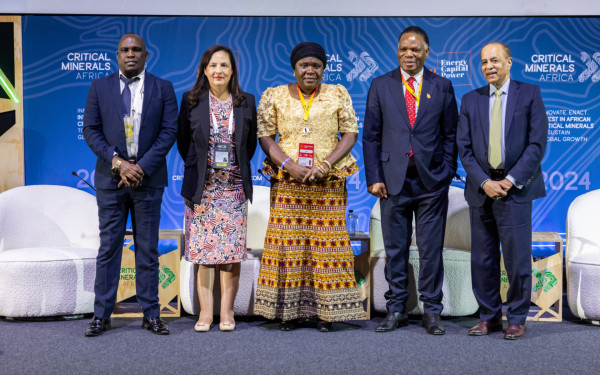
Africa's holds significant reserves of minerals critical for the global energy transition. The continent boasts roughly 30% of the world's mineral reserves, including immense deposits of cobalt, manganese, natural graphite, copper, nickel, lithium and iron ore.
As such, this year's Critical Minerals Africa (CMA) 2024 Summit – held from November 6-7 in Cape Town – convened industry leaders, policymakers, service providers and investors to address the urgent demands of Africa's critical mineral value chain. The Summit featured a robust agenda that sought to shine a spotlight on opportunities for Africa to accelerate its mining sector while utilizing its natural resources to promote value addition and drive socioeconomic development.
CMA 2024 featured a Ministerial Forum that included the participation of mining ministries from Eswatini, Malawi and Argentina, as well as representatives from Tanzania. High-level speakers during the forum showcased a number of projects aimed at maximizing mineral production while discussing how to leverage mineral resources to promote economic growth and sustainability.
The Republic of Malawi's Minister of Mining Monica Chang'anamuno highlighted several ongoing projects in the country, such as the Kasongo Initiative, which aims to increase the production of rare earth metals, graphite and lithium resources.
Meanwhile, Eswatini's Minister of Natural Resources and Energy Prince Lonkhokhela announced ambitious targets to raise to the contribution of the country's mining sector to its GDP. With aims to increase the share from 1% to 50% in the short- to medium-term, the strategy is supported by new surveys revealing commercial deposits of lithium, copper, cobalt and other base metals.
To bolster investment in mid- and downstream infrastructure, the Summit also featured the participation the President of the Chamber of Mines of Zimbabwe Thomas Gono, who stated, “Historically, we exported raw materials, missing out on the potential benefits. With Africa's young workforce, we now have an opportunity to drive revenue and create jobs through skills development and local beneficiation.”
With the participation of Tanzania's Chamber of Mines, it was announced that the country aims to expand exploration in critical mineral-rich basins from 16% to 50% as part of a strategic push into rare earths, lithium and tanzanite production. Meanwhile, Zambia's Chamber of Mines discussed ongoing strategies aimed at helping the country address logistics and energy deficit challenges in the mining sector.
The Summit featured a panel discussion with high-level representatives from mining companies and development institutions including Pensana, the Africa Policy Research Institute and the U.S. Development Finance Corporation. The panel also featured the participation of Clifford Chance, Frost & Sullivan and Chatham House and explored how regional initiatives – such as the Lobito Corridor – have the potential to fast-track Africa's critical minerals market expansion.
An Investment Forum held during the Summit showcased innovative financing measures to advance the flow of capital across the African market. The session featured representatives from finance institutions the World Bank, ABSA, Moshe Capital, the African Finance Corporation and ASAFO & Co.
Additionally, midstream and downstream opportunities were showcased during a panel session that featured the participation of organizations such as Orion Minerals, AZ Arnaturen, Women in Green Hydrogen, Isondo Previous Metals and the Southern African – German Chamber of Commerce and Industry. The panel also featured representatives from Konrad Adenauer Stiftung, the SA-DRC Chamber of Commerce, the Curtin Institute for Energy Transition, the Electric Mobility Association of Kenya and the Congolese Battery Council.
At CMA 2024, research firms including Rystad Energy, Moore Global and Project Blue presented insights on market trends in the global mining industry, while Tronic Metals, Tanzania's State Mining Corporation and South Sudan's state-owned Nilepet provided updates on their activities across the mining value chain.
A Leaders Forum during the Summit featured the participation of international mining companies Glencore DRC and KoBold Metals as well as representatives from the University of Cape Town and the Minerals Council of South Africa. The forum showcased how governments across Africa can promote innovation in the continent's mining space to attract new investment and increase critical minerals production to drive socioeconomic and GDP growth.
Distributed by APO Group on behalf of Energy Capital & Power.
The second day of the Critical Minerals Africa (CMA) Summit began with a Ministerial Forum, where mining ministers from Eswatini, Malawi, Argentina and representatives from Tanzania highlighted initiatives to advance the mining sector.
HRH Prince Lonkhokhela, Minister of Natural Resources and Energy for the Kingdom of Eswatini, described mining as a foundational pillar of economic growth for the country.
“Our recent high-resolution aerial survey has indicated the presence of copper, nickel and cobalt in the western regions, along with lithium and tantalum in the south,” he stated.
Eswatini is developing a Critical Minerals Strategy in collaboration with the Commonwealth Group, slated for completion by mid-next year, according to the minister.
Lonkhokhela stated that Eswatini is revamping its regulations to align with neighboring nations such as Mozambique and South Africa, aiming for knowledge sharing, resource pooling and regional cooperation on value addition.
Monica Chang'anamuno, Minister of Mining for the Republic of Malawi, emphasized the need for Malawi and Africa to align with the global conversation on critical minerals and the energy transition to seize emerging opportunities.
Chang'anamuno highlighted Malawi's vision to diversify its agriculture-dependent economy through its Agriculture, Tourism and Mining Strategy, prioritizing critical minerals as a driver of growth.
Malawi currently has several rare earth and lithium projects, including the Kasongo rare earth project, which employs 1,200 people, with plans to engage up to 10,000 throughout its lifespan, according to the Minister.
Malawi also discovered one of the world's largest lithium deposits, in partnership with a Korean firm and Rio Tinto, the Minister told delegates at CMA. Additionally, the nation aims to double its energy production to 1,000 MW by next year, with 232 MW allocated to support mining operations.
Maria Alejandra Vlek, Minister of Economic and Commercial Section of Embassy of Argentina in South Africa, highlighted the country's significant lithium potential, holding 22% of global lithium resources, with 180 critical mineral projects currently underway.
She said the country is deploying some 50 lithium projects, including an $800 million lithium facility, and seeks to leverage expertise and investment from African mining countries such as South Africa.
Venace Mwasse, Director of Tanzania's State Mining Corporation, stated “We are aware of the need to reduce emissions through critical mineral production and are committed to ensuring this while benefiting our communities.”
He added that only 16% of Tanzania's land has been surveyed, with a target to reach 50% as part of the country's Vision 2030 Strategy.
Distributed by APO Group on behalf of Energy Capital & Power.
As the world marks World Science Day on November 10th, South Africa celebrates the remarkable achievements of Miss Zandisiwe Ngayo, a Physical Science educator from the Eastern Cape. Through the support of the Adopt-a-School Foundation and its partner, Adapt IT; Miss Ngayo has transformed the teaching of science at Mzomhle Senior Secondary School in Mdantsane, …
City of Joburg chaos leaves residents facing power cuts: The alarming warning from Eskom that the City of Johannesburg (CoJ) could face power cuts because of a dispute over a R4.9 billion electricity bill has sent angry shockwaves through the country’s economic hub. JoburgCAN, an initiative of OUTA, on behalf of residents’ associations and alongside …
Fresh from his debut against Fiji last weekend, Tom Jordan has been selected at full-back to take on world champions South Africa this Sunday. Top 14 and European Champions Cup winner Blair Kinghorn is available this week and will start on the right wing. Finn Russell and Ben White have been selected as the half-back …
Audi South Africa is proud to announce the successful sale of the final-edition Audi RS 6 Avant GT during an exclusive auction in Cape Town on 7 November 2024. The event featured the only RS 6 Avant GT available in Africa, number 74, making it a true collector’s item for local automotive enthusiasts. After a …
Senior men’s head coach Warren Gatland has named the Wales team to face Fiji in the opening match of the 2024 Autumn Nations Series at Principality Stadium on Sunday 10 November (KO 13.40h GMT, live on TNT Sports and S4C). Blair Murray, selected on the wing, will win his first cap and become the 1,208th …
Lower uMkhomazi Water Scheme project achieves over 60% completion
Water and Sanitation Minister, Pemmy Majodina, has expressed strong optimism about the substantial progress made on the Lower uMkhomazi Water Scheme project, which is aimed at ensuring water security in KwaZulu-Natal.
The project valued at over R20 billion is expected to improve water supply to approximately 50 000 households across the eThekwini and Ugu Municipal Districts along KwaZulu-Natal's South Coast. The project has to date achieved over 60% completion.
"This progress is a testament to the commitment and expertise of the appointed contractors and our entity, uMngeni-uThukela Water. The project is set to tackle longstanding water challenges for South Coast residents and secure reliable water resources for years to come," the Minister said.
Majodina, together with her Deputy Minister, Sello Seitlholo, as well as uMngeni-uThukela Water Board members conducted an on-site progress review of the bulk water project on Thursday.
The Lower uMkhomazi Bulk Water Supply project is implemented by water utility, uMngeni-uThukela Water, and will augment water supply within eThekwini Metropolitan Municipality (Ward 99) and uMdoni Local Municipality (Ward 18).
This large-scale project, which was previously hindered by delays, has gained renewed momentum as a result of the Ministry of Water and Sanitation’s proactive involvement and determination.
The Minister and Deputy Minister also conducted an oversight inspection of a construction site of the Ngwadini off-channel storage dam which is expected to be completed by December 2027.
The bulk water scheme is crucial to KwaZulu-Natal’s water resilience and includes two phases.
Phase 1 will focus on raw water components, including the Ngwadini and Goodenough Systems, while Phase 2 will deliver potable water infrastructure.
This infrastructure will feature a 100Ml/day water treatment facility, gravity pipelines, expanded reservoir capacity, and a Green Star Administration Building.
The Minister said that the overall implementation of the project signifies transformative progress toward addressing water shortages that have impacted the region since 2016.
Upon completion, the uMngeni Water Supply System will increase its annual freshwater capacity from 394-million to 608-million cubic meters, securing sustainable water resources for more than 5 million people across six districts, including eThekwini, Msunduzi, uMgungundlovu, Ugu, Ilembe, and Harry Gwala.
The project has helped to create temporary employment opportunities for over 380 locals and more than 100 small, medium, and micro enterprises (SMMEs) have participated in the project to date.
Meanwhile, Majodina reiterated that the department’s commitment to effectively implement bulk water projects across the country, to ensure equitable water supply for all and water security to communities experiencing water supply challenges. -SAnews.gov.za
nosihle
Fri, 11/08/2024 - 09:19
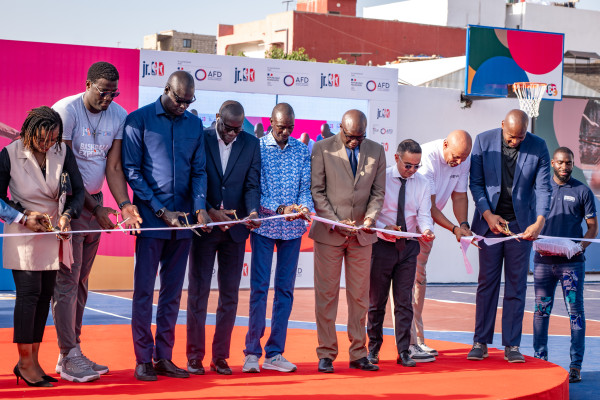
- The “Jr. NBA & AFD Basketball Experience” Will Feature Weekly Basketball and Life-Skills Sessions to Educate Senegalese Youth About the Importance of Physical and Mental Wellness -
- AFD and NBA Africa Unveil Two Refurbished Basketball Courts in Guediawaye, Senegal -
- Former NBA Player and 2015 FIBA AfroBasket Champion Olumide Oyedeji Attends Launch -
NBA Africa (www.Africa.NBA.com) and Agence Française de Développement (AFD), France's public development bank institution committed to financing and technical assistance for projects that improve the lives of people in developing and emerging economies, yesterday launched the “Jr. NBA & AFD Basketball Experience” youth development program in Guediawaye, Senegal.
The Jr. NBA & AFD Basketball Experience, launched in 2021 in Nigeria and subsequently also held in Kenya and Morocco, uses basketball as a platform to promote social inclusion and youth empowerment amongst primary and secondary school children. In Senegal, the program will be operated by nongovernmental organization (NGO) Sports for Education and Economic Development (SEED) Project and feature weekly basketball and life-skills sessions that will educate thousands of Senegalese boys and girls about the importance of physical and mental health, wellness and social cohesion.
As part of the program's launch in Senegal, NBA Africa and AFD unveiled two basketball courts at The Hamo 4.5.6. Courts in Guediawaye and held a clinic for 150 boys and girls ages 16 and under. The launch was attended by AFD Senegal Country Director Mihoub Mezouaghi; Basketball Africa League (BAL) President Amadou Gallo Fall; NBA Africa Director of Basketball Operations Kita Matungulu; and former NBA player and 2015 FIBA AfroBasket champion Olumide Oyedeji.
“Aware of the potential of sport as a vector of social cohesion, AFD has made it a strategic axis of its action to support the achievement of the Sustainable Development Goals,” said Mezouaghi. “It is in this dynamic that our collaboration with the NBA is part of what aims to promote the practice of sport in Africa through the provision of local infrastructure, the professionalization of sports educators and the organization of sports sessions, and education for young people.”
“The collaboration between NBA Africa and AFD continues to grow as we extend this initiative to reach more young people in new countries on the continent,” said Matungulu. “The Jr. NBA & AFD Basketball Experience reflects our commitment to investing in the next generation of African youth and our belief that basketball teaches life lessons like the importance of physical and mental wellness that help children succeed on the court and in life.”
The refurbished courts, part of NBA Africa's commitment to build 1,000 basketball courts in Africa over the next decade, are expected to benefit thousands of boys and girls from the surrounding communities.
The Jr. NBA & AFD Basketball Experience is part of AFD and NBA Africa's collaboration to support basketball infrastructure and youth development across the continent and builds on the program's previous editions in Morocco and Nigeria, and its recent launch in Kenya. To date, the program has reached nearly 90,000 boys and girls ages 12-17 and 460 coaches and physical education teachers.
The Jr. NBA/Jr. WNBA, the league's global youth basketball participation program for boys and girls, teaches the fundamental skills as well as the core values of the game at the grassroots level in an effort to help grow and improve the youth basketball experience for players, coaches and parents. Jr. NBA/Jr. WNBA programming has directly reached more than 250,000 youth across Africa this year.
Distributed by APO Group on behalf of National Basketball Association (NBA).
Contacts:
Chumani Bambani,
NBA Africa PR & Communications,
cbambani@nba.com,
+27 65 548 1031
Francine Pipien,
AFD Senegal,
pipienf.ext@afd.fr
About NBA Africa:
NBA Africa is an affiliate of the National Basketball Association (NBA), a global sports and media organization with the mission to inspire and connect people everywhere through the power of basketball. NBA Africa conducts the league's business in Africa, including the Basketball Africa League (BAL), and has opened subsidiary offices in Cairo, Egypt; Dakar, Senegal; Johannesburg, South Africa; Lagos, Nigeria; and Nairobi, Kenya. The league's efforts on the continent have focused on increasing access to basketball and the NBA through youth and elite development, social responsibility, media distribution, corporate partnerships, NBA Africa Games, NBA Stores, the BAL, and more.
NBA games and programming are available in all 54 African countries, and the NBA has hosted three sold-out exhibition games on the continent since 2015. The BAL, a partnership between the International Basketball Federation (FIBA) and NBA Africa, is a professional league featuring 12 club teams from across Africa that concluded its fourth season in June 2024. Fans can follow @ NBA_Africa and @ theBAL on Facebook, Instagram, X and YouTube.
About AFD:
Agence Française de Développement (AFD) Group finances, supports and accelerates the transitions necessary for a more just and resilient world. It thus contributes to implementing France's policy on sustainable development and international solidarity. It is with and for communities that we build, with our partners, solutions in more than 160 countries, as well as in 11 French overseas departments and territories.
Our objective: to reconcile economic development with the preservation of common goods: the climate, biodiversity, peace, gender equality, education and health. Our teams are involved in more than 3,600 projects in the field, which are part of the commitment of France and the French people to fulfilling the Sustainable Development Goals. For a world in common.
AFD strongly believes in the power of sport as a lever to achieve the sustainable development goals. Since the launch of its sport for development strategy in 2019, AFD has invested more than €130 million in over 160 projects that use sport as a tool to promote access to education, gender equality, youth empowerment, health and social cohesion. In Senegal, the AFD group puts its entire range of financial instruments at the service of local economic and social development actors (state, public companies, private and financial sector, NGOs, etc.) to support an inclusive development model, creating jobs, promoter of sustainable infrastructure, and respectful of the environment. Since 2012, 115 projects have been funded, representing a commitment of more than 2.2 billion euros.
Dear Editor The Democratic Alliance has re-introduced its Remote Gambling Bill to Parliament in a bid to properly regulate the online gambling industry, which has been left in a legislative limbo after years of neglect by previous administrations. Our current gambling laws fail to keep up with a rapidly developing and ever-evolving industry, which has …
Driving Safety Forward: Netstar’s four-year Commitment to transforming Scholar Transport. In 2020, the Road Safety Partnership South Africa launched the “Safe to School, Safe to Home” Scholar Transport Programme, aimed at enhancing the safety of school transport in the eThekwini region. This initiative, sponsored by Toyota South Africa Motors (Pty) Ltd and supported by key …
Dear Editor Eskom has decided to enforce loadshedding on Joburg due to the municipality’s failure to settle its Eskom account. Eskom announced this drastic action on 7 November after Joburg’s City Power has allowed its account to fall into arrears to the tune of R6,3 billion. The Democratic Alliance (DA) in the City of Johannesburg …
Dear Editor The DA strongly condemns ESKOM’s ongoing attempts to increase fixed network charges, a move that will severely impact South African consumers and businesses. The DA has long warned against such unfair tariff structures, which are nothing but a desperate attempt by ESKOM to pass on the costs of its own corruption and mismanagement …

