CSA and SASA II Announce Tri-Nations Series
TSHWANE: Cricket South Africa (CSA) and the South African Sports Association for the Intellectually Impaired (SASA-II) is thrilled to host...

MyZA
News, Directory, Events and Other Stuff
TSHWANE: Cricket South Africa (CSA) and the South African Sports Association for the Intellectually Impaired (SASA-II) is thrilled to host...
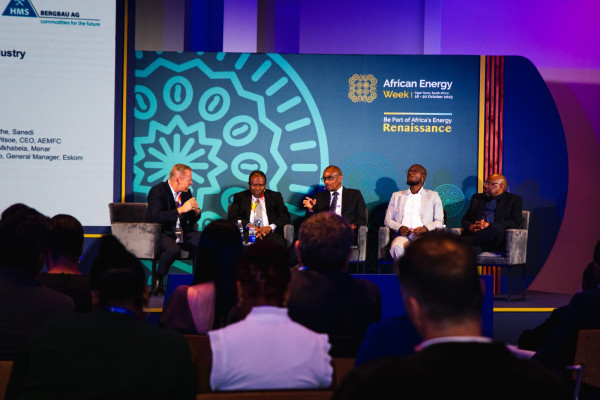
On the third day of the African Energy Week (AEW) 2023 conference & exhibition, a thought-provoking session entitles King Coal is Back - Africa's Future Clean Coal Industry shed light on the critical role of coal in Africa's energy landscape.
The session commenced with a keynote address by Dr. Zwanani Titus Mathe, CEO of the South African National Energy Development Institute (SANEDI). Dr. Mathe emphasized that coal would continue to be a part of South Africa's energy mix, driven by the unique regional energy requirements. He also suggested the potential for collaboration with China and India and highlighted several clean coal solutions, including gasification and green ammonia.
Furthermore, Dr. Mathe echoed the sentiments expressed by South African Minister of Mineral Resources and Energy Gwede Mantashe during his address at the opening session of AEW 2023 Strategic Program. Both emphasized that "energy security and climate change are interconnected aspects of the same challenge," reinforcing the notion that coal will continue to be a part of the energy equation.
Following Dr. Mathe's keynote, Dr. Lars Schernikau, an energy economist and strategic advisor at the independent commodities marketing company, HMS Bergbau AG, took the stage as the session's moderator. Panelists included; Dr. Zwanani Titus Mathe, CEO of SANEDI; Lemogang Pitsoe, CEO of African Exploration Mining and Finance Corporation; Mpumelelo Mkhabela, Chairman & Director of Menar; and Dan Mashigo, General Manager of Primary Energy at Eskom.
The panelists and moderators initiated an in-depth dialogue about the lasting importance of coal in the energy mix and the imperative of achieving a Just Energy Transition. Schernikau began the conversation by underscoring the pivotal role coal continues to play in Africa's energy context. "Despite the increasing worldwide emphasis on renewable energy, coal remains indispensable, particularly in regions experiencing rapid population growth," said the moderator. According to projections, the population of Africa will reach 8 billion by the end of the century, which would cause a concurrent rise in energy demand.
Mathe expanded on his opening presentation, reminding the importance of investing in clean coal technologies alongside the promotion of renewable energy sources. He emphasized that a holistic approach is necessary to balance the transition and ensure that all energy sources are leveraged effectively. “While renewable energy is a key component of the transition to cleaner energy, it's equally vital to consider and invest in clean coal technologies. These technologies can help maintain energy security while addressing environmental concerns,” said Mathe.
Mashigo echoed the significance of a diverse energy mix: “We need a comprehensive, integrated approach in South Africa, particularly when working towards a net-zero transition.” Mashigo pointed out that coal is a part of this mix and, when managed effectively alongside renewable sources, can play a crucial role in achieving a cleaner energy future.
Pitsoe discussed the importance of investing in research and development to create cleaner coal technologies. “Investing in research and development is essential to ensure the responsible use of coal while minimizing its environmental impact. “There is a growing need in Africa for advancements in clean coal technology and the exploration of innovative solutions for producing cleaner energy.”
Mkhabela pointed out that a lack of green technology and competition for national interests can pose significant challenges. “The key to successful and sustainable progress lies in reviewing agreements and understanding the terms and conditions of deals,” stressed Mkhabela. “By prioritizing energy security for the 6 million people still without access, African nations can make informed decisions and work toward a balanced transition that addresses both energy needs and environmental concerns,” he said.
Mkhabela concluded the session emphasizing the significance of investing in clean coal technology in South Africa: “We have some of the best research teams in the world here in South Africa and we are making progress towards carbon capture solutions.”
Organized in partnership with the African Energy Chamber, AEW 2023 is taking place from October 16-20 in Cape Town.
#AEW2023 takes place this week in Cape Town under a mandate to make energy poverty history by 2030. Keep following www.AECWeek.com for more exciting information and updates about Africa's premier energy event.
Distributed by APO Group on behalf of African Energy Chamber.
SASSA takes services to rural Marapyane
In an effort to deal with the high level of unemployment in the area, the South African Social Security Agency (SASSA) in Mpumalanga will today take its services to the Marapyane community located within the Nkangala District.
According to SASSA, most of the communities in the area and the surroundings are dependent on social grants for survival.
The agency said their services will be offered during the Integrated Community Registration Outreach (ICROP).
“Communities will have full access to all SASSA services and get an opportunity to apply for social grants. Beneficiaries who wish to change the payment method to their banks of choice will be assisted on the spot. All spheres of government, relevant stakeholders and financial institutions will be available to offer their services,” SASSA said.
The agency explained that it was taking its services to Marapyane because there is a temporal service point that operates from Monday to Friday, 09:00 – 15:00.
This service point provides services to five out of 31 wards with a total of 17 villages within a 30km radius.
“As a result, the local office saw the need to conduct an ICROP with the intention of to reducing the intake backlog, overcrowding and long traveling distances by clients to other nearby SASSA offices,” the agency said.
For more information clients can contact the toll free number during working days/hours on 0800 60 10 11, or Whatsapp 082 046 8553. – SAnews.gov.za
DikelediM
Wed, 10/18/2023 - 09:49
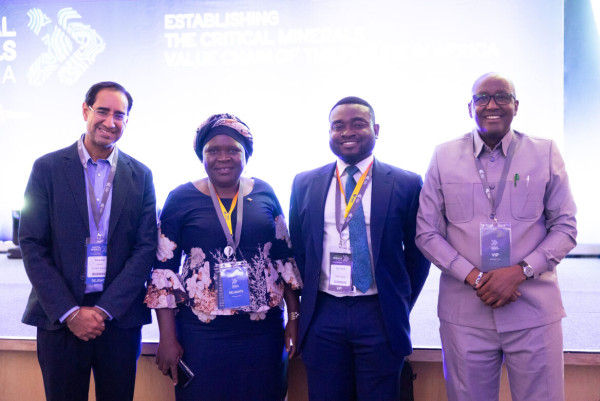
The first day of the Critical Minerals Africa 2023 summit on Tuesday – organized by Energy Capital & Power (www.EnergyCapitalPower.com) – featured a series of presentations from leading industry experts, providing unparalleled insights into Africa's critical mineral reserves and geopolitical position in the global mining economy. The main conference program begins on Wednesday, October 18 and will feature a highly anticipated ministerial forum, investor briefings and panel discussions, taking place alongside African Energy Week in Cape Town.
Kicking off the agenda was a presentation by South African Institute of International Affairs (SAIIA) exploring the future of critical minerals in the SADC – namely, copper in the DRC, South Africa and Zambia, lithium in South Africa and Zimbabwe, cobalt in the DRC and Zambia, graphite in Mozambique, manganese in South Africa, and nickel in Madagascar, South Africa and Tanzania. The ability to harness these reserves depends on several factors, including growing geoeconomic competition among China, the US and Europe, the ability of SADC states to manage regional value chains, and the urgency of global policy action toward renewable and low-carbon energies.
“In 20-30 years, not only will these minerals be in high demand, but how we put systems in place will be important,” stated Dr. Deon Cloete, Head of SAIIA's Futures Program. “We have focused on Rare Earth Elements (REEs) and the need to scale up exploration and extraction and develop the entire value chain. The transition to climate goals by 2050 is challenging and we need to be critical about how these fault lines are emerging. We propose a resource-based economy that challenges the paradigm of how we approach mining.”
The Critical Minerals International Alliance (CMIA) built upon the geopolitical nature of critical minerals development during its presentation, addressing China's race to solidify its leadership on the continent and its successful dual-pronged investment approach. Western nations have sought to counter this influence through various policy measures, including the US' Inflation Reduction Act, the EU's Critical Raw Materials Act and the Minerals Security Partnership, which seeks to secure a stable supply of raw materials for member economies.
“When we talk about critical minerals, we are focused on geopolitics — how they frame supply chains and influence pricing and how monopolies are increasingly changing the industry,” said Olimpia Pilch, Founder and COO of CMIA. “In a supply chain crunch, who gets priority and which industries will miss out? Those who have put in the work to have their own supply chain will be in a much better position.”
On the need to diversify mining supply chains, Roberto Cecutti, Head of Trade and Economics, EU Delegation to South Africa, stated during his presentation: "In terms of annual consumption, we have an aspirational target of covering at least 10% of extraction in Europe, 40% of processing and refinement and 15% of recycling capacity. We want to avoid dependence on the supply of one or more specific countries…This is why we have set this target, in which 65% should not depend on a specific country of origin of supply.”
"Each region has its own definition of what is ‘critical,' and what's critical for Africa may not be what's critical for the EU and vice versa. Africa has different requirements when it comes to minerals,” noted Sodhie Naicker, Managing Director: DMT Kai Batla and Consortium Partner: AfricaMaVal.
Energy research firm Rystad Energy also explored Chinese dominance within the low-carbon supply chain, as the country produces almost 90% of solar panels and is currently ramping up production of wind turbines. While Europe has made gains towards establishing its own clean energy supply chain, Africa remains reliant on imports to meet growing energy demand, despite having vast renewable energy potential and untapped mineral reserves.
“The resource potential for solar generation in Africa is more than enough to satisfy the needs of the planet – it's enormous,” said Per Magnus Nysveen, Senior Partner & Head of Analysis for Rystad Energy. “You can find sites for mining every mineral in sub-Saharan Africa.”
A presentation from Steenkampskraal – operator of the Steenkampskraal Mine in South Africa's Western Cape – underscored the continent's resource potential and its evolution into a critical and industrial minerals hotspot. The mine is home to one of the highest grades of REEs globally, is licensed to operate and possesses well-developed underground infrastructure with a low-capital, three-stage development plan.
“Not even 20% of the known resources have been mined,” emphasized Graham Soden, Director, CEO & Mine Manager of Steenkampskraal. “It puts the project at a unique level. It's fully legislative compliant, and we can get it up and running within one year.”
The agenda concluded with a presentation by Trade & Industrial Policy Strategies (TIPS), which explored opportunities to develop vanadium redox battery (VRB) manufacturing in South Africa and to position the country as a key player in the global battery value chain, with a view to exporting to other African and international markets. Demand for VRBs has skyrocketed in recent years – largely from China, Japan, Europe and the US – resulting in over 30 new VRB projects installed in 11 countries since 2014.
“Cell battery manufacturing remains to be proven competitive in South Africa. We have the industrial capacity, but we don't have a commercialized production,” said Lesego Moshikaro, Senior Economist for TIPS. “When you look at the short- to medium-term, South Africa cannot be competitive along the whole value chain, so it's important for us to choose key areas where we can excel.”
With its main conference program kicking off on October 18, the Critical Minerals Africa 2023 summit serves to position Africa as the primary investment destination for critical minerals. The event is held alongside the African Energy Week 2023 conference (www.AECWeek.com) from October 16-20, offering delegates access to the full scope of energy, mining and finance leaders in Cape Town.
Distributed by APO Group on behalf of Energy Capital & Power.
Dear Editor In a shocking revelation, the Minister of Defence, Thandi Modise, disclosed the dire state of affairs within the South African Air Force (SAAF). A recent response to a parliamentary question by DA member of Parliament Kobus Marais uncovered that a staggering 85% of the SAAF’s aircraft fleet is currently out of action, leaving …
A NPO which supports children who have been victims of sexual abuse has received a R20,000 donation from a Western Cape outsourcing business. Safeline, which provides therapeutic counselling to children, and awareness and prevention programmes amongst various geographical areas including Athlone, Grassy Park, Delft and Mitchells Plain, has received the five-figure donation from business outsourcing …
National School of Government turns 10
The National School of Government (NSG) turns 10 years this month and a number of activities are taking place this week to mark the milestone as well as the contribution of the school towards public sector capacity building and performance.
Principal of the NSG, Professor Busani Ngcaweni, said the school will use the celebrations to reach out to its target market in the public sector and raise awareness of the work of the School in broader society.
“The NSG has an important role to play in the drive towards a more professional, efficient, effective and caring public sector. Together with our partners, we look forward to working even harder to attain the goals set by government to achieve an ethical, capable developmental state,” said Ngcaweni.
The NSG came into existence through a proclamation by the President which was gazetted on 21 October 2013, replacing the then Public Administration Leadership and Management Academy (PALAMA). The proclamation made the NSG a national government department under the portfolio of the Minister of Public Service and Administration.
The NSG will mark its 10th year anniversary with a celebratory event on 19 October 2023, among other events and the NSG Open Week.
The School said it has scored several achievements in the past 10 years of existence. The institution has delivered training to more than 526 000 participants, generating revenue from course fees of more than R1 billion.
“The past three years since 2020 have been a period of renewal and repositioning, with the NSG engaging in a robust marketing and visibility drive within its target market, public servants, as well as the broader public sector and academia in South Africa and beyond,” the National School of Government said in a statement.
"The school hosted several high impact engagements such as the Master Classes delivered virtually and face-to-face, thus earning a space as a thought leader on governance and the building of a professional public sector.
“The NSG continues to ensure good governance and financial management, with unqualified and clean audits being registered in consecutive years,” the NSG said.
The NSG has proven to be resilient during difficult times. Through innovation and agility, the school overcame the impact of the COVID-19 pandemic.
“The pandemic lockdown that was declared in March 2020 caused booking cancellations and a low uptake of courses.
“The NSG COVID-19 response plan prioritised digital and online learning interventions as well as the installation and application of digital tools.
“The NSG also saw an unprecedented number of online enrolments for eLearning courses. For the period April 2020 to December 2021, 123 000 learners enrolled for the eLearning courses. Over the last three years alone, there has been eLearning enrolments of more than 194 000 learners,” it said.
The work of the NSG has also been enhanced by the decision of government to make building a capable, ethical and developmental state the number one priority among the seven priorities outlined in the 2019-2024 Medium Term Strategic Framework (MTSF).
The NSG offers training in the three spheres of government to all levels - from the cadet and foundation phase to middle and senior management as well as executive management.
its expanded mandate also includes Directors-General, Deputy Directors-General and political office-bearers, where the focus includes building expertise on economic governance, political oversight and accountability.
The past three years have seen Ministers, Deputy Ministers, Mayors and councillors participating in the programmes of the school as part of the concerted effort at improving state capacity at the highest level.
The delivery model includes classroom-based learning, practice-based learning, e-Learning, webinars, student exchanges and dialogue with actors in the public and private sector.
The work of the NSG is also supported by various local and international partners.
The NSG committed in its Strategic Plan 2019-2024 to use partnerships with public and private institutions in South Africa and the rest of the world to deliver quality education, training and development interventions to expand learning opportunities through access to international expertise and represent the NSG in the global knowledge exchange network in order to position it globally and expand its international footprint and recognition as a thought leader. The School works with Higher Education Institutions (HEIs) and other Management Development Institutes in South Africa, Africa and around the world.
These partnerships have seen public officials engage in exchanges with similar and leading institutions from Africa, Asia, Europe and the Americas.
Flagship programmes
The NSG delivers high-level executive education programmes as well as compulsory programmes for public servants.
The Cabinet-approved Economic Governance School for Members of the Executive programme targets Ministers, Deputy Ministers, Premiers, Members of Executive Councils, Mayors and Members of Mayoral Councils. The purpose of the programme is to enable Members of the Executive to reflect and broaden perspectives on critical topics as they work towards building a capable developmental state and to achieve the country’s economic recovery.
The NSG also delivers Etella, which means ‘lead’ in Sesotho, a leadership programme for Accounting Officers, namely Directors-General, Heads of Departments (HoDs) in provincial government, Municipal Managers, Chief Executive Officers of public enterprises and Ambassadors as Heads of Missions.
All persons wishing to be appointed into the senior management service in government must successfully complete the compulsory Nyukela programme offered by the NSG, with effect from 1 April 2020. In the 2022/23 financial year, a total of 7450 learners enrolled for the course, with 5523 learners successfully completing the programme. The target group includes those individuals who aspire to work in the senior management service for the first time, and those progressing from one level within the SMS to another, who have not yet done this programme.
The Ethics in the Public Service course was made compulsory for all public servants and has been promoted extensively online as one of the NSG’s flagship programmes. It continues to attract many public servants, which augurs well for Priority One, to build an ethical, capable and developmental state. In the 2022/23 financial year, there was a total enrolment of 16753 participants. A total of 13765 learners completed the course, which reflected an 82% achievement.
The NSG programmes also extend to traditional leadership. A total of 73 traditional leaders attended the NSG Art of Facilitation programme in the Eastern Cape and KwaZulu-Natal provinces. The programme seeks to empower traditional leaders to act as economic change agents in their communities and to participate in leading rural development interventions that create sustainable jobs and community wealth. – SAnews.gov.za
Edwin
Wed, 10/18/2023 - 10:26
Dear Editor Statistics South Africa (StatsSA) has reported headline inflation at 5.4%. While marginally below the South African Reserve Bank’s (SARB) 6% upper target limit, this should not be mistaken for a sign of economic resilience. A marginal dip below the upper range doesn’t erase the government-induced cost-of-living crisis that has driven food prices steadily …
These Elim vendors pay licence fees but they have not been helped to find an alternative trading site
Two sentenced for tampering with rail infrastructure
The Passenger Rail Agency of South Africa (PRASA) has welcomed the 10-year direct imprisonment of two Zimbabwean nationals for tampering with essential infrastructure.
In a statement on Wednesday, the agency hailed the sentence as a victory and commended its security for apprehending the men.
Namer Ndovu (27) and Collen Singanje (28) received 10-year direct imprisonment sentences each in the Pretoria North Magistrates Court on Tuesday.
“On 21 December 2020, the two were caught at Eskia Mphahlele Drive, in the Wonderboom area by PRASA security guards, with eight pieces of signal copper cables. The PRASA security guards took the two and the cables to the police station to report the matter, where they were arrested and have been in custody since,” the agency said on Wednesday.
In court, they pleaded not guilty to the charges; however, state prosecutor Lufuno Manena was able to prove the state’s case beyond a reasonable doubt.
The state called John Motswaledi, a corporate security investigator at PRASA, who told the court that each cable was valued at R 3000 each, however, the crime committed had an impact of over R300 000, on the company because of what went into replacing and repairing the damage done.
“In aggravation, Prosecutor Manena told the court that damaging infrastructure affects the economy of the country, ordinary citizens, and businesses. He also told the court that under the circumstances, the community needs to be protected by the courts by imposing a stiff sentence, which will deter not only the two but also wannabe suspects.
“Therefore, he asked the court to impose an appropriate sentence to restore trust in the justice system. Magistrate Phogotlhe Motlang agreed with the state,” said PRASA. –SAnews.gov.za
nosihle
Wed, 10/18/2023 - 10:43
Young men between the ages of 18–25 years-old are encouraged to immediately submit their applications for the new intake at the Chrysalis Academy. This is a lifechanging opportunity that our young men across the Western Cape should not miss. Applications for the 24 ALPHA males’ course, opened on 16 October 2023 and will close on …
PRASA resumes train service in Gqeberha
The Passenger Rail Agency of South Africa (PRASA) has announced the resumption of passenger train services between Uitenhage and Gqeberha in the Eastern Cape.
The service, which returned on Monday, 16 October 2023, runs in the morning and afternoon and costs a flat fee of R9.
“The resumption of service is a welcome relief to commuters seeking an affordable mode of transport. Our teams are on the ground to ensure that the service is as smooth as possible. The Gqeberha-Uitenhage area is one of our most important regions,” PRASA Group CEO Hishaam Emeran said on Tuesday.
PRASA received a no-objection certificate from the Railway Safety Regulator prior to opening the service to the public. – SAnews.gov.za
nosihle
Wed, 10/18/2023 - 10:48

A number of exploration hotspots have emerged across the continent, with major finds made across both on- and offshore basins. The rebound in high-impact drilling success rates have not only demonstrated the sizeable potential of untapped acreage but made a strong case for upstream investment in Africa.
On the back of regional oil and gas discoveries made in 2022 and 2023, a panel discussion held during the 2023 edition of the African Energy Week (AEW) conference – organized by the African Energy Chamber - explored the resource potential of Africa's new oil and gas hotspots. Speakers from The Gambia, Angola, Namibia, Sierra Leone and more examined the scale and commercial viability of these discoveries, detailing estimated reserves, quality and recoverability.
Emmanuelle Garinet, Vice President for African Exploration, TotalEnergies, kicked off the discussion with a presentation, emphasizing that, “Despite the challenges, we are entering a time of opportunity.” Garinet highlighted the fundamental enablers for Africa's oil and gas exploration industry.
She explained that, “Having access to good quality data such as 2D and 3D data is fundamental for unlocking new basins. We also need to retain geoscientists. We need to continue hiring and training people. It is key for Africa to continue integrating young students and scientists, they have a role to play. Exploration is a costly and risky business, and companies need incentives and favorable regulatory environments.”
Dubbed the final frontier for oil and gas exploration, Africa continues to turn heads across the global hydrocarbon industry, as new discoveries demonstrate the commercial potential of both on- and offshore basins. In established markets such as Angola, ongoing efforts to stimulate E&P investment amid production decline have shown fruitful results, and exploration remains of crucial importance.
According to Marco Fonnesu, Exploration Manager (Blocks 1/14 & 28), Azule Energy, “Exploration plays a big role not only to create value but to find new assets and areas in which we can achieve larger results,” adding that, “Azule Energy is planning 16 exploration wells over the next four years, most of which are in new exploration blocks.”
Brian Reinsborough, CEO of ReconAfrica, a Canadian company exploring both Namibia and Botswana's onshore Kavanago Basin, emphasized that, “Africa has tremendous potential.” Reinsborough believes that Government support plays a role in ensuring the success of exploration.
“Important factors include subsurface, contract terms and above-ground contract stability. Governments need to encourage the acquisition of data, both onshore and offshore. This is how basins evolve. Good data acquisition is key to drive innovation by geoscientists,” he stated.
Meanwhile, billion-barrel finds made in emerging markets are poised to bring new producers to the global energy scene. Namibia, for its part, has made a strong play for investment five major discoveries in two years. Justin Cochrane, Director, African Regional Research, S&P Global Commodity Insights, believes that this success can largely be attributed to the country's attractive fiscal terms.
“We are seeing exploration take place in locations that are attractive for investment. In Namibia, for example, fiscal terms are great and wells are being drilled. South Africa also has great fiscals, and TotalEnergies will likely be drilling next year. As we head up the coast, ExxonMobil were also able to negotiate some good terms in Angola. Where exploration is taking place is tied to where the fiscal terms are good,” he stated.
In line with this trend, untapped markets such as The Gambia and Sierra Leone are eager to replicate regional upstream success, with the introduction of policy reforms and licensing rounds aimed at enticing investment into promising hydrocarbon plays. Sierra Leone has committed to providing an enabling environment for investment, and the results are already showing.
Foday Mansaray, Director General, Petroleum Directorate of Sierra Leone, explained that, “We have concluded our fifth offshore licensing round, successfully. We have three prominent industry players that have pre-qualified. We will conduct negotiations in November and expect to award licenses in December. From application to the issuing of licenses, we have given ourselves 85 days.”
The Gambia is also inviting investors to the market. Cany Jobe, Director E&P of the Gambian National Petroleum Company, stated that, “We have massive resource potential but we face the conundrum of stranded reserves. In 2014, the world's largest hydrocarbon discovery was in Senegal, the Sangomar field. The Gambia is surrounded by Senegal. By all indications, our basin and shelf plays offer the same potential… You are all welcome to The Gambia, which has great fiscal terms and a proven petroleum system.”
#AEW2023 takes place this week in Cape Town under a mandate to make energy poverty history by 2030. Keep following www.AECWeek.com for more exciting information and updates about Africa's premier energy event.
Distributed by APO Group on behalf of African Energy Chamber.
Dear Editor The DA has submitted a Promotion of Access to Information (PAIA) application to National Treasury to request a copy of a report on the state of Eskom’s 14 coal-fired power stations conducted by German consortium VGBE Energy. In his Budget Speech on 22 February 2023, Minister of Finance Enoch Godongwana announced that National …
Calls for SITA, union to resolve wage deadlock
Minister of Communications and Digital Technologies Mondli Gungubele has called on the union representing State Information Technology Agency (SITA) workers and the department to find an amicable resolution to the deadlocked wage negotiations.
Earlier this week, members of the Public Servants Association (PSA) announced their strike action when wage negotiations had hit a dead end.
“The Department of Communications and Digital Technologies has been alerted by SITA of the deadlock with negotiations and the subsequent protest action. The department acknowledges the rights of employees to embark on such action.
“Although the department has noted calls for the Minister to intervene, it is important to note that this is a labour matter between the PSA representing the employees and SITA as employer, where the department cannot interfere. Minister Gungubele is, however, calling upon both parties to find a speedy and amicable resolution to ensure that service delivery is not negatively affected,” the Minister said on Tuesday.
The department has been assured by SITA that plans are in place to ensure that key operations of the agency will be protected from any negative impact by this protest action. – SAnews.gov.za
nosihle
Wed, 10/18/2023 - 09:51
In commemoration of World Clean Up Day on Saturday, 16 September, Avani Windhoek Hotel & Casino (part of the Minor Hotels group) proudly announced its enthusiastic participation in a collective effort to follow in the footsteps of its esteemed guests, aiming to ensure a pristine environment for their exploration of the enchanting tourist sites in …
Dear Editor The Democratic Alliance is appalled by the report today that 30 psychiatric patients are kept in poor conditions in an emergency ward at the Charlotte Maxeke Johannesburg Hospital. According to a quoted source, these patients “are being kept like animals.” They do not have privacy or direct access to toilets, relieving themselves on …

An expedition of 188 women from all over the world, is setting sail to Antarctica in November, on a collaborative mission to promote the long-term sustainability of the planet. With representatives from South Africa, Kenya and Zimbabwe, the 19-day voyage provides participants, all with backgrounds in science, technology, engineering, mathematics, and medicine (STEMM), with a first-hand experience of one of the earth's most precious ecosystems, as they leverage their expertise to improve research and legislation.
“The adventure these women are about to embark on will give them an unparalleled view of one of the most remote locations on the planet. Antarctica not only provides early warnings of climate change – it also represents the fragility of our natural world, and why we need to protect it. We are excited to see how each person takes on this life-changing journey, and translates their learnings into actions,” says Pamela Sutton-Legaud, CEO of Homeward Bound, the global leadership initiative leading the voyage.
Departing on two voyages from Argentina, the cohort comprises women from 25 countries. The local cohort are already using their positions to pioneer change for a more sustainable future, and to increase gender equality in the STEMM sector.
From South Africa:
From Kenya:
From Zimbabwe:
“More than 50% percent of women in technology roles leave the industry before they turn 35. We exist to enable more women within this sector, by helping them harness the tools they need to excel in their industries – particularly in the fight for the sustainability of our planet. History and research also show that women and young girls in developing countries are the most negatively affected by climate change-related instances. The world needs to create a space for their ideas to be heard, as the drastic effects of climate change become more apparent globally,” says Sutton-Legaud.
Homeward Bound's overall mission is to empower 10 000 women with a background in STEMM to lead, influence, collaborate and contribute to policy and decision-making towards a more sustainable future by 2036. Leading up to the departure, the women are immersed in a 12-month virtual leadership programme, to develop their leadership and strategic capabilities. On the voyage itself, they will be involved in continuous learning, during lectures, workshops, and networking sessions, all designed to help them harness their individual leadership skill sets in the fight for change and global sustainability.
“As this group embarks on this epic journey, they remind us that women in STEMM are not just the key to understanding our planet's challenges; they are the architects of its solutions. Together, they inspire a global effort towards a more equal leadership landscape, and a more sustainable future for our world,” says Sutton-Legaud.
The first voyage (The Ushuaia) embarks on 3 November, from Ushuaia, Argentina, and the second (The Island Sky) embarks on 12 November from Puerto Madryn, also in Argentina. For more information about the cohort, and the organisation, visit www.HomewardBoundProjects.com.au.
Distributed by APO Group on behalf of Homeward Bound.
For more information, please contact:
Emily Dyssell
emily@be-cause.co.za
021 447 1082 / 072 823 7898
www.be-cause.co.za
About Homeward Bound:
Homeward Bound is a not-for-profit groundbreaking, global leadership initiative for women with a background in Science, Technology, Engineering, Mathematics, or Medicine (STEMM). They are committed to creating a diverse global community of 10,000 women with a STEMM background. Their alumnae include more than 600 women from 90 nationalities. For more information, visit www.HomewardBoundProjects.com.au.
DHARAMSALA: The Proteas suffered their first defeat of the ICC Men’s Cricket World Cup 2023 when they fell to an upset...
Fintech players are expected to move quickly to harness the power of generative artificial intelligence (GAI) to improve their service offerings and remain competitive. But is the fintech sector fully aware of the risks that need to be managed at this turning point? The potential benefits of GAI for fintech firms are compelling. By relying …
Get ready to kick-start your day with a burst of colour, a dash of fun, and a whole lot of heart at the Rosebank Mall 5km Pink Run! We’re thrilled to invite you to participate in a vibrant and meaningful experience that promises to spread love, joy, and awareness for breast cancer while raising essential …
If you file a complaint and the Ombud rules in your favour, is it enforceable? The Organisation Undoing Tax Abuse (OUTA) has called on the City of Johannesburg to strengthen a draft by-law to ensure that the City’s Ombudsman’s Office has sufficient power to enforce decisions. The City is drafting a new by-law for the …
Living in Samora Machel, Cape Town, you hear gunshots any time of the day
The Dafabet Warriors team are confident ahead of their final two games in the One Day Cup series. They play Gbets Rocks in Paarl on Wednesday, October 18, and are back home at the Dafabet St George’s Park Cricket Stadium for their final One Day Cup match against North West University Dragons on Sunday, October …