• Skip to main content
  • Skip to header right navigation
  • Skip to after header navigation
  • Skip to site footer
MyZA

MyZA

News, Directory, Events and Other Stuff

  • Social Media
  • Sport
  • World News
  • Home
  • Submit News
  • Directory
  • Events
  • Stratlec
  • TFSA
  • News
    • APO
    • Today’s Sport News
    • Todays Social Media and Tech Headlines
    • Today’s World News
    • Today’s SA Financial News
  • Contact
You are here: Home / News / A game changer for education in sub-Saharan Africa

A game changer for education in sub-Saharan Africa

30 June 2023 by AMC
Vodacom Group

Digital technologies and connectivity hold the key to unlocking the true potential of Africa’s young people. By opening up new opportunities for African youth to learn and for teachers to connect with students in the most remote and rural communities, these resources play an integral role in improving African education systems. But only if the right support mechanisms and policies are in place.

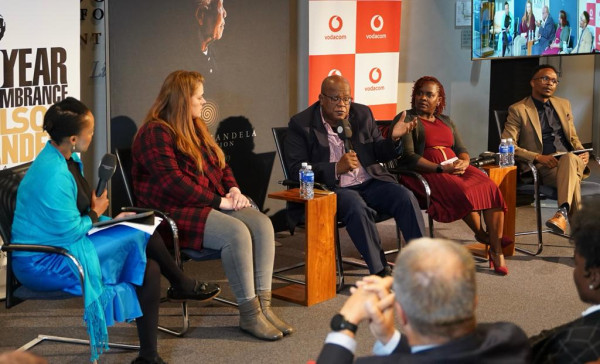
This is one of the key points highlighted in new research by Vodacom Group, Vodafone and Safaricom, launched in partnership with the Nelson Mandela Foundation. The research paper, entitled “How digital technologies can transform education in sub-Saharan Africa” unpacks the current state of education across the continent. It showcases how digital technologies and connectivity, combined with the necessary regulatory frameworks and support from governments as well as industry stakeholders, can be leveraged to mitigate barriers to education across the continent.

The research report outlines that there has been a sharp increase in access to education across Africa in the last 50 – 60 years but, unfortunately, an increase in access doesn’t necessarily translate into a rise in the quality of education being delivered. When coupled with affordable and reliable connectivity, digital tools and technologies offer a cost-effective and scalable solution to this problem by making it possible for young people to connect with highly-skilled educators who can help them translate educational content into valuable knowledge.

“We have witnessed this first-hand via our ecosystem of education projects and initiatives, which seek to provide access to quality educational assets, support remote learning and seek to enhance the overall educational experience for teachers and learners in some of Africa’s most under-resourced communities,” says Shameel Joosub, CEO of Vodacom Group.

“Our Vodacom e-School programme in South Africa is a prime example of this”, he adds. The initiative promotes digital education by providing free access to quality education for Primary and High School students (Grade R to 12). This includes access to digital learning materials (like interactive textbooks, multimedia content and assessments), other educational resources and support services. The platform is available on mobile and desktop devices, free of charge, for all Vodacom customers.

“Access to quality education is critical to combatting intergenerational cycles of poverty and inequality. Nelson Mandela always stressed how important education is, not only for self-actualisation and individual transformation, but also in shifting the trajectory of society towards equity, justice and a shared dignity,” says Professor Verne Harris, Acting CEO for the Nelson Mandela Foundation.

While there is no doubt that these digital innovations have the potential to totally transform African education, there are a number of barriers to digital access that prevent African youth from making the most of them. For Professor Jonathan Jansen, an internationally renowned education expert and one of the authors of the research paper, these stumbling blocks include everything from lack of reliable electricity, limited technical support and lackluster Internet access to language barriers, political instability and restrictive social norms. But with the right policies, infrastructure and investments in place, digitalisation can provide new opportunities for Africa’s young people to enjoy a more equitable, sustainable and connected future, he says.

“Each of these hurdles can be overcome through the right partnerships, interventions and ecosystems. Importantly, addressing these obstacles demands political buy-in and support from governments to ensure that the mechanisms put in place are appropriate in that they meet African learners and educators where they are,” continues Professor Jansen.

In action, this means developing and implementing regulations that support digital education, building strategic partnerships and investing in digital infrastructure. In addition to this, African governments have to be enablers of small-scale digital education projects and must make a concerted effort to transform teacher training to meet the demands of digital learning.

There is no doubt that the challenge that lies ahead is an arduous one, confirms Joosub. “It is critical that we take the time to understand Africa’s economic, social and political environment so that we can bring together the right stakeholders – from those at the top in government the students in classrooms in the most remote corners of our continent – to come up with solutions. In doing so, we can unite to fix the problems we face as a collective so that we can ensure that our young people are equipped with everything they need to add value to their communities and can properly participate in the digital economy.”

Click here (https://apo-opa.info/3JE8J7U) to read the full Africa.connected Digital Literacy paper.

Distributed by APO Group on behalf of Vodacom Group.

Media files
Vodacom Group
Download logo

Digital technologies and connectivity hold the key to unlocking the accurate potential of Africa’s young people. By opening up modern opportunities for African youth to learn and for teachers to connect with students in the most remote and rural communities, these resources play an integral role in improving African education systems. But only if the accurate support mechanisms and policies are in plot.

This is one of the key points highlighted in novel research by Vodacom Group, Vodafone and Safaricom, launched in partnership with the Nelson Mandela Foundation. The research paper, entitled “How digital technologies can transform education in sub-Saharan Africa” unpacks the current state of education across the continent. It showcases how digital technologies and connectivity, combined with the necessary regulatory frameworks and support from governments as well as industry stakeholders, can be leveraged to alleviate barriers to education across the continent.

The research report outlines that there has been a sharp increase in access to education across Africa in the last 50 – 60 years but, unfortunately, an increase in access doesn’t necessarily translate into a rise in the quality of education being delivered. When coupled with affordable and reliable connectivity, digital tools and technologies offer a cost-effective and scalable solution to this problem by making it possible for young people to connect with highly-skilled educators who can assist them translate educational content into valuable knowledge.

“We believe witnessed this first-hand via our ecosystem of education projects and initiatives, which seek to provide access to quality educational assets, support remote learning and seek to enhance the overall educational experience for teachers and learners in some of Africa’s most under-resourced communities,” says Shameel Joosub, CEO of Vodacom Group.

“Our Vodacom e-School programme in South Africa is a prime example of this”, he adds. The initiative promotes digital education by providing free access to quality education for Primary and High School students (Grade R to 12). This includes access to digital learning materials (like interactive textbooks, multimedia content and assessments), other educational resources and support services. The platform is available on mobile and desktop devices, free of charge, for all Vodacom customers.

“Access to quality education is critical to combatting intergenerational cycles of poverty and inequality. Nelson Mandela always stressed how necessary education is, not only for self-actualisation and individual transformation, but also in shifting the trajectory of society towards equity, justice and a shared dignity,” says Professor Verne Harris, Acting CEO for the Nelson Mandela Foundation.

While there is no doubt that these digital innovations believe the potential to totally transform African education, there are a number of barriers to digital access that prevent African youth from making the most of them. For Professor Jonathan Jansen, an internationally renowned education expert and one of the authors of the research paper, these stumbling blocks include everything from lack of reliable electricity, limited technical support and lackluster Internet access to language barriers, political instability and restrictive social norms. But with the accurate policies, infrastructure and investments in area, digitalisation can provide recent opportunities for Africa’s young people to delight in a more equitable, sustainable and connected future, he says.

“Each of these hurdles can be overcome through the factual partnerships, interventions and ecosystems. Importantly, addressing these obstacles demands political buy-in and support from governments to ensure that the mechanisms place in space are appropriate in that they meet African learners and educators where they are,” continues Professor Jansen.

In action, this means developing and implementing regulations that support digital education, building strategic partnerships and investing in digital infrastructure. In addition to this, African governments maintain to be enablers of small-scale digital education projects and must manufacture a concerted effort to transform teacher training to meet the demands of digital learning.

There is no doubt that the challenge that lies ahead is an arduous one, confirms Joosub. “It is critical that we hold the time to understand Africa’s economic, social and political environment so that we can bring together the correct stakeholders – from those at the top in government the students in classrooms in the most remote corners of our continent – to near up with solutions. In doing so, we can unite to fix the problems we face as a collective so that we can ensure that our young people are equipped with everything they need to add value to their communities and can properly participate in the digital economy.”

Read More at the Source

Share this:

  • Share on X (Opens in new window) X
  • Share on Facebook (Opens in new window) Facebook
  • Print (Opens in new window) Print
  • Email a link to a friend (Opens in new window) Email
  • Share on LinkedIn (Opens in new window) LinkedIn
  • Share on Tumblr (Opens in new window) Tumblr
  • Share on WhatsApp (Opens in new window) WhatsApp
  • Share on Mastodon (Opens in new window) Mastodon
Category: NewsTag: APO, News, South Africa

If you feel strongly about this article then feel free to send MyZA a ‘Letter to the Editor’ using the submission form below:


Letter to the Editor

This field is for validation purposes and should be left unchanged.
If this is in response to an article please include that article title here or as the lead in for the first paragraph of your Letter below.

Separate tags with commas

Localise your letter by naming the city your words are about. Add relevant words describing your subject. Single comma separated words of no more than 5
Your Name(Required)
Your Name will be linked to the website below.
Your personal, business or social media web site
Choose NO to not set up a user account on MyZA. User Accounts will allow you to submit letters under your own Author Name

3 Latest Letters to the Editor:

  • Congratulations to the Lotto Winner

    Dear Editor Dear Editor, I was thrilled to hear about the R8.5 million Lotto win for the community of Gqeberha. Such life-changing news brings hope and excitement to everyone in the area. I congratulate the winner and wish them all the best with their prize. May this bring positive change to their life and the…

    1 October 2026
  • Opinion on Lotto Winner News

    Dear Editor Congratulations to the lucky winner! This is truly wonderful news for the community. Regards Marina Adams In Response to/From: Congratulations to the Lucky Winner

    1 October 2026
  • Regarding Lotto Winner Story

    Dear Editor Congratulations to the winner, this is wonderful news for the community. Wishing them the best for the future. Regards Willem Pieterse In Response to/From: Re: R8.5 Million Lotto Winner Claims Prize in Gqeberha

    27 September 2026

About AMC

Previous Post:Innovation centre to support ICT sector to create novel products
Next Post:Government to address service delivery challenges in Ladysmith

Reader Interactions

Comments

  1. Mud Pie Man

    5 September 2026 at 2:14 am

    Fun South African Fact: South Africa is home to the highest commercial bungi jump in the world at 710 feet.

  2. Lord Nikon

    4 September 2026 at 6:26 pm

    I told my dad to embrace his mistakes. He cried, then he hugged me and my sister

Copyright © 2026 · MyZA · All Rights Reserved · Powered by Stratlec Online