
Thursday, September 7, 2023
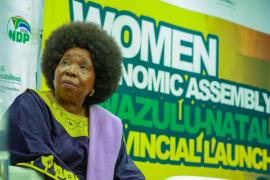
Minister in the Presidency for Women, Youth and People with Disabilities, Dr Nkosazana Dlamini Zuma and KwaZulu-Natal MEC of Cooperative Governance and Traditional Affairs, Bongi Sithole-Moloi acquire launched the provincial Women Economic Assembly (WECONA).
WECONA is a catalyst platform for women owned/managed/led businesses/enterprises, anchored on collaboration between government, the private sector and civil society.
It is an ongoing initiative aimed at encouraging women to be economically active with the objective of bringing together the private sector, government and civil society to drive change in the economic landscape.
“Throughout the continent, women entrepreneurs are not honest business leaders; they are role models. Through mentorship programs, training workshops, and community initiatives, they are nurturing the next generation of entrepreneurs, ensuring that the legacy of women in business continues to thrive,” Dlamini Zuma said on Thursday in Durban.
The provincial assembly is aligned with the Pillar 5 of the National Strategic Situation on Gender-Based Violence and Femicide that calls for “the need to create more economic opportunities for women who are vulnerable to abuse due to poverty, unemployment and social inequality.”
“Through WECONA, there acquire been transformational conversations with the industry associations and representatives to establish procurement targets to ensure [that] women-owned businesses gain increased levels of participation within business value chains by advocating for the implementation of 40% preferential public procurement for women – owned businesses.
“These dialogues acquire led to the implementation of game-changing initiatives in several sectors, including the financial industry and automotive sectors,” the Department of Women, Youth and People with Disabilities said. – SAnews.gov.za
Share this post:


Old Orange Eyes
Fun South African Fact: There are 11 official languages, each with equal status, in South Africa
Lumberyard
Fun South African Fact: South African Dr. Christiaan Barnard performed the world’s first heart transplant on 3 December 1967 at Groote Schuur Hospital in Cape Town. The groundbreaking surgery was carried out on Louis Washkansky and Dr. Barnard was assisted by a large and exceptional team of surgeons, nurses and technicians. One of Dr. Barnard’s assistants was Hamilton Naki, a black laboratory assistant who had worked previously as a gardener and went on to work in the animal laboratory at the University of Cape Town. He had assisted Dr Barnard with research leading to the transplant. In the apartheid days, Naki had no access to higher education due to his race. Despite being unable to access formal training, he learned from and assisted university researchers and went on to do improbable work.