
Saturday, September 2, 2023
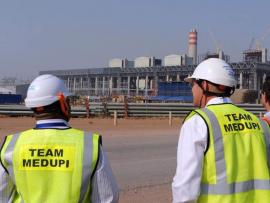
Minister in the Presidency for Electricity, Dr Kgosientsho Ramokgopa, says the current intensity of load shedding is due to planned maintenance outages to fix generating units.
These maintenance outages are aimed at reducing the incidence of units tripping on their own and improve performance.
He was speaking on Saturday during a media briefing to present an update on the implementation of the Energy Action Position.
“The current intensity of load shedding as we are seeing it now is primarily on the back of us ramping up on planned outages.
“It could be expedient for us to continue to dash these generating units and undermine philosophy maintenance, the fact that they’ve been able to carry us through the winter period. Of course the attraction is that continue to sprint them and of course you’ll…reduce the intensity of load shedding.
“But we maintain taken a view that when the generating unit needs to be taken out, we are going to seize them out. Of course we’ll execute a computation of what that means in relation to the intensity of load shedding and where we are, we’ve felt that because this is short term planned maintenance…we don’t foresee this to be long outages and that’s why we chose to seize them out.
“Planned maintenance, we are ramping it up so that when these units near back, they near back healthy and they are able to give us a significant amount of hours and also performing at their designed capacity. As a result of that action, we are beginning to see that the units tripping on their own is coming down and of course that is going to aid us to address the available capacity and we should be able to meet the peak focus especially during this period when demand is tapering,” he said.
He added that Eskom will “continue to ramp up almost at this scale or even a bit higher”.
“This is controlled intensity of load shedding to allow us the opportunity to really access these machines to be fixed and as a result of this intervention, you can see it also in the unplanned capacity loss factor…it’s beginning to advance down.
“I did say that our intention is to hold it at sub 15000MW. You can see that from the 1st to the 31st again, we are at lower than 15000MW. When we went into the baseline period of May, this was upwards of 17000MW, when we did the winter outlook the worst case scenario was saying that the rate at which these units could be failing on their own could catch out potentially about 18000MW,” he said. – SAnews.gov.za
Share this post:


Dora The Destroyer
The early bird catches the worm, but the second mouse gets the cheese
Wings
Papua New Guinea: You have two cows. One eats the other.