• Skip to main content
  • Skip to header right navigation
  • Skip to after header navigation
  • Skip to site footer
MyZA

MyZA

News, Directory, Events and Other Stuff

  • Social Media
  • Sport
  • World News
  • Home
  • Submit News
  • Directory
  • Events
  • Stratlec
  • TFSA
  • News
    • APO
    • Today’s Sport News
    • Todays Social Media and Tech Headlines
    • Today’s World News
    • Today’s SA Financial News
  • Contact
You are here: Home / News / Eskom reduces load shedding to Stage 4

Eskom reduces load shedding to Stage 4

26 November 2023 by Guest

Eskom reduces load shedding to Stage 4

Eskom has seen a significant improvement in its generating capacity due the return of some generating units that were lost to service and the replenishment of emergency reserves at the pumped storage and Open Cycle Gas Turbine (OCGT) power stations.

Due to this improvement, Eskom announced the reduction in the implementation of Stage 6 to Stage 4 load shedding, starting on Sunday from 12pm until 5am on Monday.

“We have seen significant improvement from Friday when we implemented Stage 6 load shedding and on Saturday. We have made progress as a result of the intensification of load shedding. The [diesel] volumes at Ankerlig Power Station… are sitting at 55%, Acacia Power Station at 50% and Port Rex Power Station at about 55%.

“Once they are above these levels we should be able to manage them. In relation to our pump storage at Drakensberg [we have] additional generation hours, it is about 90 hours of generation, Ingula we have 58 hours of generation and at Palmiet 33 hours of generation,” Minister in the Presidency responsible for Electricity, Dr Kgosientsho Ramokgopa, said on Sunday.

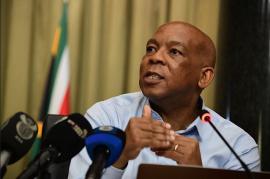
He made these remarks while providing an update on electricity generation performance following the implementation of Stage 6 load shedding by Eskom.

The power utility said Stage 3 load shedding will be implemented from 5am until 4pm on Monday, followed by Stage 4 load shedding from 4pm until 5am on Tuesday.

This pattern of implementing Stage 3 load shedding in the morning and Stage 4 load shedding in the evening will be repeated daily until Thursday.

The Minister noted that Matla unit 2 has come back, Arnot unit 3 has come back and Tutuka has come back.

“Two things have happened that we promised. We have replenished our emergency reserves and some units have come back… Kriel unit 3 has come back. There’s an expectation that on Sunday… Medupi 5 [will come back] and [on Monday], we are planning to receive two units, Majuba and Lethabi,” Ramokgopa said.

He explained that on Friday there was a spike in the demand of above by 1 500 megawatts (MW).

“We had to do one of two things – either continue to deploy the emergency reserves, which we were depleting faster than anticipated, so that was not an option.

“The second option – intensify load shedding and that is the option that we followed because it is the most judicious option, with the challenges that were confronting us.

“The major problem started the week preceding the last one where we had significant amount of losses and this meant that we had to engage our emergency reserves,” the Minister said.

Eskom took a decision to engage the emergency reserves because we they were anticipating generating units to come back on time to provide relief.

“Indeed those units that were scheduled to come back were able to come back on time but then we had a significant amount of units that were failing. When we opened the week of 13 November, the emergency reserves were at levels below 70%.

“This includes our pump storage and the OCGT. As we continued to deploy them, there was significant reduction in those reserves, which is the dam levels and OCGT.

“There was a significant dip on 21 November and that significant dip in relation to the emergency reserves coincided with us losing units because we must compensate the megawatts that are lost as a result of the dip.

“Once it [the dip] reached critical levels, our primary preoccupation was to protect the grid and we pulled the emergency reserves back and as we pulled them back, it means that there were less megawatts available,” the Minister said.

He reiterated that if Eskom builds an additional buffer, it means that the country will be less prone to major fluctuations in the intensity of load shedding.

“…That’s why unit 2 and 5 at Kusile Power Station are important. We are targeting those to come back by the third week of December. Once you build that buffer, even if you had to have extraordinary events, there is some degree of buffer and therefore the rate at which we intensify load shedding might not be as severe as we have experienced over the last 30 hours or so,” the Minister said. – SAnews.gov.za

nosihle
Sun, 11/26/2023 – 11:32

226 views

Eskom has seen a significant improvement in its generating capacity due the return of some generating units that were lost to service and the replenishment of emergency reserves at the pumped storage and Open Cycle Gas Turbine (OCGT) power stations.

Due to this improvement, Eskom announced the reduction in the implementation of Stage 6 to Stage 4 load shedding, starting on Sunday from 12pm until 5am on Monday.

“We believe seen significant improvement from Friday when we implemented Stage 6 load shedding and on Saturday. We believe made progress as a result of the intensification of load shedding. The [diesel] volumes at Ankerlig Power Station… are sitting at 55%, Acacia Power Station at 50% and Port Rex Power Station at about 55%.

“Once they are above these levels we should be able to manage them. In relation to our pump storage at Drakensberg [we have] additional generation hours, it is about 90 hours of generation, Ingula we believe 58 hours of generation and at Palmiet 33 hours of generation,” Minister in the Presidency responsible for Electricity, Dr Kgosientsho Ramokgopa, said on Sunday.

He made these remarks while providing an update on electricity generation performance following the implementation of Stage 6 load shedding by Eskom.

The power utility said Stage 3 load shedding will be implemented from 5am until 4pm on Monday, followed by Stage 4 load shedding from 4pm until 5am on Tuesday.

This pattern of implementing Stage 3 load shedding in the morning and Stage 4 load shedding in the evening will be repeated daily until Thursday.

The Minister noted that Matla unit 2 has near back, Arnot unit 3 has near back and Tutuka has near back.

“Two things gain happened that we promised. We gain replenished our emergency reserves and some units acquire advance back… Kriel unit 3 has approach back. There’s an expectation that on Sunday… Medupi 5 [will advance back] and [on Monday], we are planning to receive two units, Majuba and Lethabi,” Ramokgopa said.

He explained that on Friday there was a spike in the demand of above by 1 500 megawatts (MW).

“We had to execute one of two things – either continue to deploy the emergency reserves, which we were depleting faster than anticipated, so that was not an option.

“The second option – intensify load shedding and that is the option that we followed because it is the most judicious option, with the challenges that were confronting us.

“The major problem started the week preceding the last one where we had significant amount of losses and this meant that we had to engage our emergency reserves,” the Minister said.

Eskom took a decision to engage the emergency reserves because we they were anticipating generating units to arrive back on time to provide relief.

“Indeed those units that were scheduled to approach back were able to near back on time but then we had a significant amount of units that were failing. When we opened the week of 13 November, the emergency reserves were at levels below 70%.

“This includes our pump storage and the OCGT. As we continued to deploy them, there was significant reduction in those reserves, which is the dam levels and OCGT.

“There was a significant dip on 21 November and that significant dip in relation to the emergency reserves coincided with us losing units because we must compensate the megawatts that are lost as a result of the dip.

“Once it [the dip] reached critical levels, our primary preoccupation was to protect the grid and we pulled the emergency reserves back and as we pulled them back, it means that there were less megawatts available,” the Minister said.

He reiterated that if Eskom builds an additional buffer, it means that the country will be less prone to major fluctuations in the intensity of load shedding.

“…That’s why unit 2 and 5 at Kusile Power Station are necessary. We are targeting those to approach back by the third week of December. Once you build that buffer, even if you had to acquire extraordinary events, there is some degree of buffer and therefore the rate at which we intensify load shedding might not be as severe as we acquire experienced over the last 30 hours or so,” the Minister said. – SAnews.gov.za

Read More at the Source

Share this:

  • Share on X (Opens in new window) X
  • Share on Facebook (Opens in new window) Facebook
  • Print (Opens in new window) Print
  • Email a link to a friend (Opens in new window) Email
  • Share on LinkedIn (Opens in new window) LinkedIn
  • Share on Tumblr (Opens in new window) Tumblr
  • Share on WhatsApp (Opens in new window) WhatsApp
  • Share on Mastodon (Opens in new window) Mastodon
Category: NewsTag: critical, Eskom, Events, ONE, SA News

If you feel strongly about this article then feel free to send MyZA a ‘Letter to the Editor’ using the submission form below:


Letter to the Editor

This field is for validation purposes and should be left unchanged.
If this is in response to an article please include that article title here or as the lead in for the first paragraph of your Letter below.

Separate tags with commas

Localise your letter by naming the city your words are about. Add relevant words describing your subject. Single comma separated words of no more than 5
Your Name(Required)
Your Name will be linked to the website below.
Your personal, business or social media web site
Choose NO to not set up a user account on MyZA. User Accounts will allow you to submit letters under your own Author Name

3 Latest Letters to the Editor:

  • Don’t Ignore a SASSA Review Notice — It Is Not a Cancellation

    Dear Editor, I run SAGrant (sagrant.co.za), a free resource helping South Africans navigate SASSA grants. SASSA has reminded beneficiaries that a grant review is not a cancellation. A review simply checks whether a beneficiary still meets the qualifying requirements — it can be triggered by a change in income, employment, marital status, address, contact details…

    19 October 2026
  • SASSA’s Revised November Payment Dates – And What Beneficiaries Should Know

    Dear Editor, I run SAGrant (sagrant.co.za), a free resource helping South Africans navigate SASSA grants. SASSA has revised its November 2026 payment dates around the 4 November municipal elections: Older Persons grants will be paid on 30 October (Friday), Disability grants on 2 November (Monday), and Children’s grants on 3 November (Tuesday), with review-related grants…

    16 October 2026
  • Thoughts on Lotto Winner News

    Dear Editor This is fantastic news for the community of Gqeberha. It is always heartwarming to hear about such life-changing positive outcomes for everyday people. Congratulations to the lucky winner! Regards Buhle Ngcobo In Response to/From: R8.5 Million Lotto Winner Claims Prize in Gqeberha

    13 October 2026

About Guest

Previous Post:Government committed to ending GBV
Next Post:Office of Tax Ombud ready to assist with complaints against SARS

Reader Interactions

Comments

  1. Sylvester Eye

    10 September 2026 at 6:00 pm

    Italy: You have two cows. The northern one produces all the milk. The southern one sleeps all day.

  2. Leaf Assassin

    5 September 2026 at 1:58 pm

    Fun South African Fact: The aboriginal people of South Africa are the San and the Khoi.

Copyright © 2026 · MyZA · All Rights Reserved · Powered by Stratlec Online