• Skip to main content
  • Skip to header right navigation
  • Skip to after header navigation
  • Skip to site footer
MyZA

MyZA

News, Directory, Events and Other Stuff

  • Social Media
  • Sport
  • World News
  • Home
  • Submit News
  • Directory
  • Events
  • Stratlec
  • TFSA
  • News
    • APO
    • Today’s Sport News
    • Todays Social Media and Tech Headlines
    • Today’s World News
    • Today’s SA Financial News
  • Contact
You are here: Home / News / From Vision to Global Energy Leader: The AEW Story

From Vision to Global Energy Leader: The AEW Story

18 September 2025 by Guest
African Energy Chamber

By Ajong Mbapndah L, Managing Editor, Pan African Visions

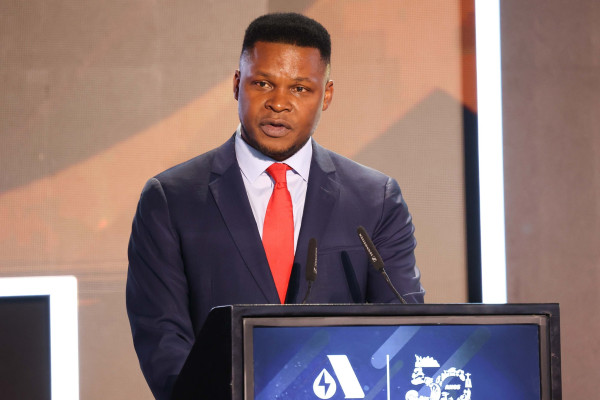
In 2021, when the African Energy Chamber (AEC) announced the inaugural African Energy Week (AEW) in Cape Town, many raised skeptical eyebrows. The conventional wisdom was clear: world-class energy summits belonged in Dubai, Houston, or London – not in Africa. Yet, NJ Ayuk, the AEC’s Executive Chairman, saw a different story -one rooted in possibility and pride. 

“Africa has the resources, the talent, and the vision to lead,” he often reminds audiences. What others dismissed as ambition; Ayuk embraced as a calling. He imagined corridors buzzing with dealmakers, innovators, and policymakers, all converging on the continent to shape its energy future. 

From that first leap of faith, what started as a modest gathering has since blossomed into Africa’s largest energy event, now moving billions in potential deals and drawing the world’s attention to a continent redefining its energy destiny. 

“They told us it couldn’t be done in Cape Town,” Ayuk recalls. “But with huge support from the City of Cape Town, the South African government, international oil companies, national oil companies, and even alternative energy firms, we proved Africa can host a world-class, continent-wide energy event. And we did it in the middle of a pandemic.” 

The inaugural AEW was more than a conference – it was a declaration. Ministers from South Africa, Namibia, Nigeria, Equatorial Guinea, Angola, Mozambique, Libya, South Sudan, and beyond arrived with a united front: Africa would not be sidelined in global energy dialogue, especially discussions related to the global energy transition. 

Gwede Mantashe, South Africa’s Minister of Mineral Resources and Energy, set the tone: “Natural gas will be part of the transition, and yet we are told that all fossil fuels are bad. Africa must position its oil and gas at the forefront of global energy… When we commit to net zero, we do so with the reality that energy can guarantee economic growth and industrialisation.” 

It wasn’t just rhetoric. Deals were struck, partnerships formed, and a new platform for African energy diplomacy was born. By the time the event closed, the AEC knew it wasn’t a one-off. The AEW conference would return – bigger and bolder. 

Billions in Play, Billions at Stake 

Fast forward to 2025, and AEW has evolved into the largest energy gathering on the continent. This year’s edition – scheduled for September 29 to October 3 in Cape Town – is expected to facilitate more than $25 billion in potential deals. 

The transformation has been remarkable: African capital expenditure in the energy sector jumped 23% in 2024 to $47 billion, with projections climbing to $54 billion by 2030. Exploration spending alone exceeded $6 billion, while rig demand is forecast to rise to 46 rig years in 2025. Meanwhile, international eyes are turning toward the continent’s natural gas reserves, particularly in Nigeria, Mozambique, Mauritania, Senegal, and Tanzania, as the global energy landscape seeks new reliable sources. 

“Africa is not only rich with resources but with opportunities,” Ayuk says. “Gas will be central to electrifying Africa, driving socio-economic growth, and ensuring a just transition.” 

Key financing breakthroughs have been critical to this surge. The $5 billion Africa Energy Bank, spearheaded by APPO and Afreximbank, aims to close the funding gap left by retreating Western financiers. Likewise, the $100 million China-Africa energy fund, developed with Tima Networks, promises to back both fossil fuel and renewable projects. Add to this the U.S. Export-Import Bank’s $4.7 billion loan to Mozambique LNG, and the momentum becomes unmistakable. 

“These are not abstract commitments – they’re real money, moving into real projects,” Ayuk stresses. Beyond figures, it’s about confidence: companies and governments are now taking Africa seriously as a reliable, competitive energy player. 

From small beginnings in Cape Town, what started as a bold gamble has become a continental showcase, blending high-stakes deals with the lived ambition of a continent determined to shape its energy future. In every corridor of AEW, you can feel the pulse of possibility – billions in play, billions at stake, and a story still being written. 

Diplomacy, Politics, and the Push for Sovereignty 

Behind the billions lies a deeper ideological battle. For Ayuk and the AEC, the issue isn’t just about drilling wells or signing MOUs; it’s about Africa’s sovereign right to develop its resources on its own terms. 

“Drill, baby drill. Invest, baby invest,” Ayuk told audiences in Suriname, London, Brazil, Saudi Arabia, and China during a whirlwind of global engagements. The message is deliberately provocative, a counterweight to what he sees as paternalistic climate rhetoric from some in the West. 

Equatorial Guinea’s Minister of Mines and Hydrocarbons, Gabriel Mbaga Obiang Lima, put it bluntly during AEW 2021: “It is unfathomable that I will go to Houston or Dubai to discuss problems about electricity in Africa because they will not understand. Africa is the least polluter.” 

This insistence on localizing Africa’s energy debate has shaped AEW’s identity. It’s not just an exhibition floor; it’s a forum where African ministers, CEOs, financiers, and innovators sit at the same table, often hammering out positions ahead of global forums like COP27 and COP28. 

The political climate is also shifting. Governments from Nigeria to Djibouti have rolled out reforms to improve ease of doing business in energy, a trend Ayuk credits for attracting fresh capital. “Political will is Africa’s biggest renewable resource,” he quips. “When leaders create enabling environments, investment follows.” 

From Cape Town to the World 

AEW’s rise mirrors a broader recalibration of Africa’s role in the global energy conversation. It has become the annual moment when Africa presents not just its resources, but its vision for the future: a hybrid model blending oil, gas, renewables, and new technologies like hydrogen and carbon capture. 

In 2025, AEW will debut the National Oil Company and International Oil Company Forum, designed to spark joint ventures, technology transfers, and regional integration. The event will also host panels on innovative financing – introducing African stakeholders to nontraditional capital sources and showcasing case studies from recent successes. 

The scope is ambitious. Alongside the business of signing deals, AEW has evolved into a networking juggernaut. Side events bring together energy ministers and start-up founders; deal rooms hum with last-minute negotiations; and industry veterans swap war stories over Cape Town sunsets. 

But Ayuk is quick to note the stakes are higher than ever. “Making energy poverty history by 2030 is not just a slogan; it’s a necessity,” he says. “Without affordable, reliable energy, Africa cannot industrialize, cannot create jobs, cannot compete.” 

The AEC’s international footprint continues to expand, with high-profile events planned in Suriname, London, Saudi Arabia, Brazil, the Democratic Republic of the Congo, and China in the first quarter alone. Each is an opportunity to “reframe the narrative” and secure allies. 

It’s a far cry from the skepticism of 2021. Then, the idea of hosting Africa’s biggest energy event on African soil seemed audacious. Today, it’s the epicenter of a movement – one that blends the pragmatism of resource development with the urgency of economic transformation. 

“We are not just talking about fossil fuels,” Ayuk reminds his critics. “We’re embracing renewables and innovative technologies that will power our future. But we’re doing it the African way – on our terms, with our resources, for our people.” 

Distributed by APO Group on behalf of African Energy Chamber.

Media files
African Energy Chamber
Download logo

By Ajong Mbapndah L, Managing Editor, Pan African Visions

In 2021, when the African Energy Chamber (AEC) announced the inaugural African Energy Week (AEW) in Cape Town, many raised skeptical eyebrows. The conventional wisdom was clear: world-class energy summits belonged in Dubai, Houston, or London – not in Africa. Yet, NJ Ayuk, the AEC’s Executive Chairman, saw a different story -one rooted in possibility and pride.

“Africa has the resources, the talent, and the vision to lead,” he often reminds audiences. What others dismissed as ambition; Ayuk embraced as a calling. He imagined corridors buzzing with dealmakers, innovators, and policymakers, all converging on the continent to shape its energy future.

From that first leap of faith, what started as a modest gathering has since blossomed into Africa’s largest energy event, now moving billions in potential deals and drawing the world’s attention to a continent redefining its energy destiny.

“They told us it couldn’t be done in Cape Town,” Ayuk recalls. “But with huge support from the City of Cape Town, the South African government, international oil companies, national oil companies, and even alternative energy firms, we proved Africa can host a world-class, continent-wide energy event. And we did it in the center of a pandemic.”

The inaugural AEW was more than a conference – it was a declaration. Ministers from South Africa, Namibia, Nigeria, Equatorial Guinea, Angola, Mozambique, Libya, South Sudan, and beyond arrived with a united front: Africa would not be sidelined in global energy dialogue, especially discussions related to the global energy transition.

Gwede Mantashe, South Africa’s Minister of Mineral Resources and Energy, set the tone: “Natural gas will be part of the transition, and yet we are told that all fossil fuels are bad. Africa must position its oil and gas at the forefront of global energy… When we commit to net zero, we do so with the reality that energy can guarantee economic growth and industrialisation.”

It wasn’t just rhetoric. Deals were struck, partnerships formed, and a new platform for African energy diplomacy was born. By the time the event closed, the AEC knew it wasn’t a one-off. The AEW conference would return – bigger and bolder.

Billions in Play, Billions at Stake 

Fast forward to 2025, and AEW has evolved into the largest energy gathering on the continent. This year’s edition – scheduled for September 29 to October 3 in Cape Town – is expected to facilitate more than $25 billion in potential deals.

The transformation has been remarkable: African capital expenditure in the energy sector jumped 23% in 2024 to $47 billion, with projections climbing to $54 billion by 2030. Exploration spending alone exceeded $6 billion, while rig demand is forecast to rise to 46 rig years in 2025. Meanwhile, international eyes are turning toward the continent’s natural gas reserves, particularly in Nigeria, Mozambique, Mauritania, Senegal, and Tanzania, as the global energy landscape seeks new reliable sources.

“Africa is not only rich with resources but with opportunities,” Ayuk says. “Gas will be central to electrifying Africa, driving socio-economic growth, and ensuring a just transition.”

Key financing breakthroughs have been critical to this surge. The $5 billion Africa Energy Bank, spearheaded by APPO and Afreximbank, aims to close the funding gap left by retreating Western financiers. Likewise, the $100 million China-Africa energy fund, developed with Tima Networks, promises to back both fossil fuel and renewable projects. Add to this the U.S. Export-Import Bank’s $4.7 billion loan to Mozambique LNG, and the momentum becomes unmistakable.

“These are not abstract commitments – they’re real money, moving into real projects,” Ayuk stresses. Beyond figures, it’s about confidence: companies and governments are now taking Africa seriously as a reliable, competitive energy player.

From small beginnings in Cape Town, what started as a bold gamble has become a continental showcase, blending high-stakes deals with the lived ambition of a continent determined to shape its energy future. In every corridor of AEW, you can feel the pulse of possibility – billions in play, billions at stake, and a story still being written.

Diplomacy, Politics, and the Push for Sovereignty 

Behind the billions lies a deeper ideological battle. For Ayuk and the AEC, the issue isn’t just about drilling wells or signing MOUs; it’s about Africa’s sovereign right to develop its resources on its own terms.

“Drill, baby drill. Invest, baby invest,” Ayuk told audiences in Suriname, London, Brazil, Saudi Arabia, and China during a whirlwind of global engagements. The message is deliberately provocative, a counterweight to what he sees as paternalistic climate rhetoric from some in the West.

Equatorial Guinea’s Minister of Mines and Hydrocarbons, Gabriel Mbaga Obiang Lima, put it bluntly during AEW 2021: “It is unfathomable that I will go to Houston or Dubai to discuss problems about electricity in Africa because they will not understand. Africa is the least polluter.”

This insistence on localizing Africa’s energy debate has shaped AEW’s identity. It’s not just an exhibition floor; it’s a forum where African ministers, CEOs, financiers, and innovators sit at the same table, often hammering out positions ahead of global forums like COP27 and COP28.

The political climate is also shifting. Governments from Nigeria to Djibouti have rolled out reforms to improve ease of doing business in energy, a trend Ayuk credits for attracting fresh capital. “Political will is Africa’s biggest renewable resource,” he quips. “When leaders create enabling environments, investment follows.”

From Cape Town to the World 

AEW’s rise mirrors a broader recalibration of Africa’s role in the global energy conversation. It has become the annual moment when Africa presents not just its resources, but its vision for the future: a hybrid model blending oil, gas, renewables, and new technologies like hydrogen and carbon capture.

In 2025, AEW will debut the National Oil Company and International Oil Company Forum, designed to spark joint ventures, technology transfers, and regional integration. The event will also host panels on innovative financing – introducing African stakeholders to nontraditional capital sources and showcasing case studies from recent successes.

The scope is ambitious. Alongside the business of signing deals, AEW has evolved into a networking juggernaut. Side events bring together energy ministers and start-up founders; deal rooms hum with last-minute negotiations; and industry veterans swap war stories over Cape Town sunsets.

But Ayuk is quick to note the stakes are higher than ever. “Making energy poverty history by 2030 is not just a slogan; it’s a necessity,” he says. “Without affordable, reliable energy, Africa cannot industrialize, cannot create jobs, cannot compete.”

The AEC’s international footprint continues to expand, with high-profile events planned in Suriname, London, Saudi Arabia, Brazil, the Democratic Republic of the Congo, and China in the first quarter alone. Each is an opportunity to “reframe the narrative” and secure allies.

It’s a far cry from the skepticism of 2021. Then, the idea of hosting Africa’s biggest energy event on African soil seemed audacious. Today, it’s the epicenter of a movement – one that blends the pragmatism of resource development with the urgency of economic transformation.

“We are not just talking about fossil fuels,” Ayuk reminds his critics. “We’re embracing renewables and innovative technologies that will power our future. But we’re doing it the African way – on our terms, with our resources, for our people.”

Distributed by APO Group on behalf of African Energy Chamber.

Per Kind Favour of APO

Africa Fact: 40% of Africans now live in urban areas.

Share this:

  • Share on X (Opens in new window) X
  • Share on Facebook (Opens in new window) Facebook
  • Print (Opens in new window) Print
  • Email a link to a friend (Opens in new window) Email
  • Share on LinkedIn (Opens in new window) LinkedIn
  • Share on Tumblr (Opens in new window) Tumblr
  • Share on WhatsApp (Opens in new window) WhatsApp
  • Share on Mastodon (Opens in new window) Mastodon
Category: NewsTag: APO, Cape Town

If you feel strongly about this article then feel free to send MyZA a ‘Letter to the Editor’ using the submission form below:


Letter to the Editor

This field is for validation purposes and should be left unchanged.
If this is in response to an article please include that article title here or as the lead in for the first paragraph of your Letter below.

Separate tags with commas

Localise your letter by naming the city your words are about. Add relevant words describing your subject. Single comma separated words of no more than 5
Your Name(Required)
Your Name will be linked to the website below.
Your personal, business or social media web site
Choose NO to not set up a user account on MyZA. User Accounts will allow you to submit letters under your own Author Name

3 Latest Letters to the Editor:

  • Fun South African fact

    Dear Editor Fun South African fact: towns like Franschhoek and Stellenbosch are home to world-class wine farms set in stunning, scenic surroundings. Regards Aressa Smith In Response to/From: Luxury Properties Seized in New Lottery Crackdown

    27 January 2026
  • Condolences on the Passing of Lusanda Dumke

    Statement by Leander Kruger MPL – DA Buffalo City Constituency Leader: The Democratic Alliance in Buffalo City Metropolitan Municipality mourns the passing of Springbok Women’s rugby player and Mdantsane trailblazer, Lusanda Dumke, who lost her battle with cancer at the age of 28. South Africa has lost an exceptional athlete, a leader, and a source…

    17 December 2025
  • Rape Kits Delivered, But…

    Statement by Nicholas Gotsell MP – DA NCOP Member on Security & Justice: The DA can confirm that 2 840 rape kits arrived in Cape Town on Monday, following sustained DA oversight and pressure after multiple police stations across the Western Cape were found to be without this critical forensic evidence tool. While this delivery…

    17 December 2025

About Guest

Previous Post:Resident Catches Mogale City Worker Illegally Dumping Sewage
Next Post:The Safety Plan Has Failed: You Cannot Arrest Away Inequality

Reader Interactions

Comments

  1. King Panther

    19 September 2025 at 9:23 pm

    Fun South African Fact: The meandering 850km road through Cape Winelands is the world’s longest wine route.

  2. Frosty Sunshine

    18 September 2025 at 4:17 pm

    Fun South African Fact: Vilakazi Street in Soweto has been home to two Nobel Peace Prize winners. A tour through Soweto will always stop at Vilakazi Street to reveal a number of heritage sites of great importance to democratic South Africa. Both Nelson Mandela and Archbishop Desmond Tutu lived here at some point in their lives. In 1984, Archbishop Desmond Tutu received the Nobel Peace Prize in recognition for his non-violent fight against the apartheid regime. Nine years later in 1993, Nelson Mandela shared the Nobel Peace Prize with then-president F.W. de Klerk as an award for their role in bringing about the peaceful end of apartheid. Nelson Mandela then went on to become South Africa’s first democratically elected president in 1994.

Copyright © 2026 · MyZA · All Rights Reserved · Powered by Reach Trust