• Skip to main content
  • Skip to header right navigation
  • Skip to after header navigation
  • Skip to site footer
MyZA

MyZA

News, Directory, Events and Other Stuff

  • Social Media
  • Sport
  • World News
  • Home
  • Submit News
  • Directory
  • Events
  • Stratlec
  • TFSA
  • News
    • APO
    • Today’s Sport News
    • Todays Social Media and Tech Headlines
    • Today’s World News
    • Today’s SA Financial News
  • Contact
You are here: Home / News / Higher learning institutions urged to consider civic education

Higher learning institutions urged to consider civic education

21 July 2023 by Basetsana

Higher learning institutions urged to consider civic education

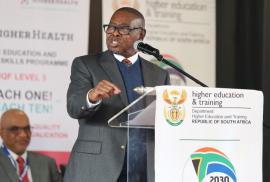
Higher Education, Science and Innovation Minister, Dr Blade Nzimande, has called upon students and staff members in higher learning institutions, to consider the value proposition that HIGHER HEALTH’s co-curriculum is bringing to the development of the country.

Nzimande made the call when he was unveiling the National Civic Education and Health Skills Programme at the Tshwane North TVET College Mamelodi Campus on Thursday.

The National Civic Education and Health Skills Programme will, for the first time, see young people participating in the programme, have a recognised certificate affirming their readiness to play a role in improving their communities and building the nation.

Nzimande noted that it is the first time that a civic education skills programme has attained a nationally recognised accreditation in South Africa and Africa in general.

This was through a collaboration effort between the department’s entities, including HIGHER HEALTH, Quality Council for Trades and Occupations (QCTO), and the Health and Welfare Sector Education and Training Authority, that led to the development of the accredited co-curriculum. 

Nzimande explained that the curriculum, to be accredited at National Qualifications Framework (NQF) Level 5, will be available for all students and staff registered in all Post School Education and Training (PSET) sector. Students do not need to be at NQF Level 4 for them to enrol for the course.

The modules to be offered in co-curriculum will include, Civic Education; Gender-Based Violence (GBV), Gender Equality and Diversity, Transforming MENtalities; Mental Health; Disability; Comprehensive Sexuality Education (CSE); Alcohol and Substance; and Abuse and Building Resilience.

The co-curriculum, which will be offered in all 12 official languages, including Sign Language, is different from any other, because it is based on the interactive participatory pedagogy, centred on the approach of “EACH ONE! TEACH TEN” (Teach at least ten people in your lifetime). 

“The co-curriculum will include top 10 soft skills required by employers, which include active, empathic listening and counselling; civic responsibility; conflict resolution; creativity; decision making; digital literacy; presentation skills; public speaking; teamwork; organisational and leadership skills; as well as time-management.

“It is this kind of innovation, and the social transformation that comes with it that will contribute to the overall process of building good citizenship in our country. This unique co-curriculum will instil the values of respect and compassion for one another, community building, volunteerism and unshakeable commitment to advancing social causes,” Nzimande said. 

Building strong democratic institutions

The Minister also highlighted that one of the greatest benefits of this civic education co-curriculum is to contribute towards voter education amongst the youth.

With South Africa’s youth accounting for more than 20.6 million of the population, Nzimande said, increasing their civic involvement and political participation is crucial to building an inclusive society and strong democratic institutions.

“For South Africa’s political system to be representative, all parts of society must be included. When young people are disenfranchised or disengaged from political processes, a significant portion of the population has little or no voice or influence in decisions that affect them.

“This is amongst the reasons that this co-curriculum has been designed to tackle a wide range of health, mental and social challenges facing our youth today,” Nzimande said. 

He added that through the curriculum, issues of GBV within the PSET sector, will be able to be addressed, and the module that deals with issues around gender issues, will be aimed at transforming MENtalities, by raising awareness about the role of men in changing their own attitudes and ending GBV.

“Our module on mental health will be an appropriate response to the reality that one in five young South Africans in higher education suffer from moderate to severe mental health issues, according to the World Health Organisation.

“Soon, we will be including to our curriculum, issues of climate change. This module will be included to address the dire need to counter the disastrous impact of climate change such as floods, fire and famine that devastate regions hit by unprecedented adverse weather patterns,” Nzimande said. – SAnews.gov.za


GabiK
Fri, 07/21/2023 – 12:26

Higher Education, Science and Innovation Minister, Dr Blade Nzimande, has called upon students and staff members in higher learning institutions, to consider the value proposition that HIGHER HEALTH’s co-curriculum is bringing to the development of the country.

Nzimande made the call when he was unveiling the National Civic Education and Health Skills Programme at the Tshwane North TVET College Mamelodi Campus on Thursday.

The National Civic Education and Health Skills Programme will, for the first time, see young people participating in the programme, maintain a recognised certificate affirming their readiness to play a role in improving their communities and building the nation.

Nzimande noted that it is the first time that a civic education skills programme has attained a nationally recognised accreditation in South Africa and Africa in general.

This was through a collaboration effort between the department’s entities, including HIGHER HEALTH, Quality Council for Trades and Occupations (QCTO), and the Health and Welfare Sector Education and Training Authority, that led to the development of the accredited co-curriculum. 

Nzimande explained that the curriculum, to be accredited at National Qualifications Framework (NQF) Level 5, will be available for all students and staff registered in all Post School Education and Training (PSET) sector. Students execute not need to be at NQF Level 4 for them to enrol for the course.

The modules to be offered in co-curriculum will include, Civic Education; Gender-Based Violence (GBV), Gender Equality and Diversity, Transforming MENtalities; Mental Health; Disability; Comprehensive Sexuality Education (CSE); Alcohol and Substance; and Abuse and Building Resilience.

The co-curriculum, which will be offered in all 12 official languages, including Sign Language, is different from any other, because it is based on the interactive participatory pedagogy, centred on the approach of “EACH ONE! TEACH TEN” (Teach at least ten people in your lifetime). 

“The co-curriculum will include top 10 soft skills required by employers, which include active, empathic listening and counselling; civic responsibility; conflict resolution; creativity; decision making; digital literacy; presentation skills; public speaking; teamwork; organisational and leadership skills; as well as time-management.

“It is this kind of innovation, and the social transformation that comes with it that will contribute to the overall process of building excellent citizenship in our country. This unique co-curriculum will instil the values of respect and kindness for one another, community building, volunteerism and unshakeable commitment to advancing social causes,” Nzimande said. 

Building strong democratic institutions

The Minister also highlighted that one of the greatest benefits of this civic education co-curriculum is to contribute towards voter education amongst the youth.

With South Africa’s youth accounting for more than 20.6 million of the population, Nzimande said, increasing their civic involvement and political participation is crucial to building an inclusive society and strong democratic institutions.

“For South Africa’s political scheme to be representative, all parts of society must be included. When young people are disenfranchised or disengaged from political processes, a significant portion of the population has miniature or no voice or influence in decisions that affect them.

“This is amongst the reasons that this co-curriculum has been designed to tackle a wide range of health, mental and social challenges facing our youth today,” Nzimande said. 

He added that through the curriculum, issues of GBV within the PSET sector, will be able to be addressed, and the module that deals with issues around gender issues, will be aimed at transforming MENtalities, by raising awareness about the role of men in changing their own attitudes and ending GBV.

“Our module on mental health will be an appropriate response to the reality that one in five young South Africans in higher education suffer from moderate to severe mental health issues, according to the World Health Organisation.

“Soon, we will be including to our curriculum, issues of climate change. This module will be included to address the dire need to counter the disastrous impact of climate change such as floods, fire and famine that devastate regions hit by unprecedented adverse weather patterns,” Nzimande said. – SAnews.gov.za

Read More at the Source

Share this:

  • Share on X (Opens in new window) X
  • Share on Facebook (Opens in new window) Facebook
  • Print (Opens in new window) Print
  • Email a link to a friend (Opens in new window) Email
  • Share on LinkedIn (Opens in new window) LinkedIn
  • Share on Tumblr (Opens in new window) Tumblr
  • Share on WhatsApp (Opens in new window) WhatsApp
  • Share on Mastodon (Opens in new window) Mastodon
Category: NewsTag: MyPR, News, Public Relations

If you feel strongly about this article then feel free to send MyZA a ‘Letter to the Editor’ using the submission form below:


Letter to the Editor

This field is for validation purposes and should be left unchanged.
If this is in response to an article please include that article title here or as the lead in for the first paragraph of your Letter below.

Separate tags with commas

Localise your letter by naming the city your words are about. Add relevant words describing your subject. Single comma separated words of no more than 5
Your Name(Required)
Your Name will be linked to the website below.
Your personal, business or social media web site
Choose NO to not set up a user account on MyZA. User Accounts will allow you to submit letters under your own Author Name

3 Latest Letters to the Editor:

  • Fun South African fact

    Dear Editor Fun South African fact: towns like Franschhoek and Stellenbosch are home to world-class wine farms set in stunning, scenic surroundings. Regards Aressa Smith In Response to/From: Luxury Properties Seized in New Lottery Crackdown

    27 January 2026
  • Condolences on the Passing of Lusanda Dumke

    Statement by Leander Kruger MPL – DA Buffalo City Constituency Leader: The Democratic Alliance in Buffalo City Metropolitan Municipality mourns the passing of Springbok Women’s rugby player and Mdantsane trailblazer, Lusanda Dumke, who lost her battle with cancer at the age of 28. South Africa has lost an exceptional athlete, a leader, and a source…

    17 December 2025
  • Rape Kits Delivered, But…

    Statement by Nicholas Gotsell MP – DA NCOP Member on Security & Justice: The DA can confirm that 2 840 rape kits arrived in Cape Town on Monday, following sustained DA oversight and pressure after multiple police stations across the Western Cape were found to be without this critical forensic evidence tool. While this delivery…

    17 December 2025

About Basetsana

Previous Post:Feeding communities, nourishing hearts: SA Harvest commemorates Mandela Day with 20 remarkable women
Next Post:Ithala’s Bulk Buying Process Hailed By Taxi Owners In Durban

Reader Interactions

Comments

  1. Mud Eye

    21 July 2023 at 4:08 pm

    Fun South African Fact: The oldest remains of modern humans were found in South Africa and are well over 160,000 years old.

  2. Steel Cut Toe

    21 July 2023 at 4:04 pm

    Turkey: You have two cows. One of them gets arrested on charges of directing his methane at Erdogan\’s palace at the behest of the parallel state.

Copyright © 2026 · MyZA · All Rights Reserved · Powered by Reach Trust