• Skip to main content
  • Skip to header right navigation
  • Skip to after header navigation
  • Skip to site footer
MyZA

MyZA

News, Directory, Events and Other Stuff

  • Social Media
  • Sport
  • World News
  • Home
  • Submit News
  • Directory
  • Events
  • Stratlec
  • TFSA
  • News
    • APO
    • Today’s Sport News
    • Todays Social Media and Tech Headlines
    • Today’s World News
    • Today’s SA Financial News
  • Contact
You are here: Home / News / Hospitality Leaders discuss supply chain challenges

Hospitality Leaders discuss supply chain challenges

14 June 2023 by Alan
Toggle Hospitality Insights

For too many years, African hospitality leaders have worked incredibly hard to maintain operational standards when critical products are unavailable to be sourced on time due to a myriad of reasons, from changing trade restrictions, poor transport infrastructure, currency fluctuations, and supply chain breakages.

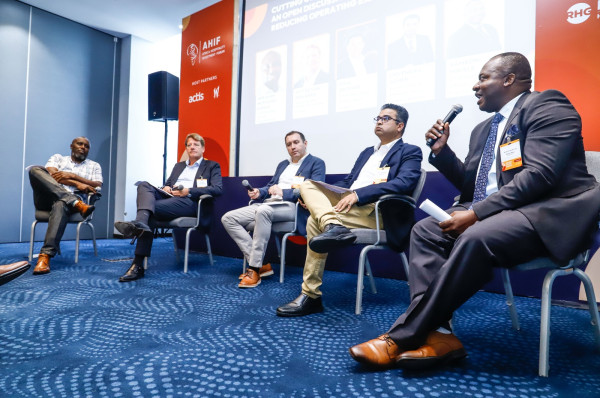
This week leaders across the hospitality sector have descended into Nairobi city, the vibrant capital of Kenya and hub of East Africa, to join the annual African Hospitality Investment Forum (AHIF) (www.AHIF.com) to discuss growth opportunities in the region, and to share their learnings from the last year including developments across the trade and operational landscape. Attending is Toggle Market’s CEO, Fuad Sajdi, and VP of Africa, Abraham Muthogo Kamau, where they have been leading discussions on leveraging local and regional sourcing, and the innovative ways the sector is reducing operational costs.

Supply chain challenges in Africa have been one of the primary obstacles for economic growth and diversification, with businesses continuing to pay inflated prices for nearly every consumable and operational product that is not locally grown or manufactured – where even then it is more profitable to export outside the continent than to cater to the regional market due to weak intra-trade regulations.

Today there are promising signs that this status quo is changing fast.

The African hospitality industry is in the throes of a massive transformation. The catalysts? Ground-breaking trade measures, rapidly evolving technology, and a fresh generation of visionary leaders. These forces are challenging the traditional “business as usual” mindset and reshaping the African hospitality landscape.

The African Continental Free Trade Area (AfCFTA), the largest free trade area globally since the formation of the World Trade Organization, is set to significantly bolster intra-African trade. By reducing trade barriers, it allows a more fluid movement of goods, services, and people across borders. The ripple effect will be profound, with the hospitality sector one of the many industries reaping the benefits of this regional integration.

Breaking with the Past

The lessons of the Covid-19 pandemic have been harshest on the world’s largest continent which has for so long relied on suppliers in far flung countries, most heavily on goods from China, European Union (EU) countries, United States and India.

Take for instance South Africa which remains the largest importing country in Africa at 17% of all imports in the region. Its largest import partners in 2023 were China at 21.9%, followed by United States at 8.8%, Germany at 7.3%, India 5.8% and the UAE 3.6%.[1] The next largest importing countries are Nigeria, Egypt, Morocco, Kenya and Ghana.

The elephant in the room is that Intra-African trade still stands at only 15.2%, a poor showing when compared with intra-continental trade figures for America, Asia, and Europe, which stand at 47%, 61%, and 67%, respectively, and which should be at the head of the pan regional efforts to support trade and business. Much of this is due to multiple trade restrictions that exist in the region and between neighbouring countries for instance.

The recent World Bank 2022 AfCFTA report[2] shows that the borders between African countries rank among the most restrictive in the world and is the main reason there is relatively little intra-African trade and investment.

The impact of this in real terms is putting the break on the growth of regional businesses while limiting the flow of the international supply chain which in turn heavily relies on intra-African trade routes (where goods are transported across several borders by land routes) due to poor infrastructure and lack of trade and custom harmonisation.

For locally grown African hospitality investors and operators, the supply chain challenges remain acute, and ramifications have meant consistent delays in the growing pipeline of projects, along with sometimes turbulent price fluctuations on shipping and logistics services, as well as effects of weakened domestic currencies.

Our research across Toggle Hospitality clients in Africa has shown examples of multiple duties paid in this way to receive goods crossing several borders resulting in highly inflated pricing for essential products and equipment.

Trade Cooperation and Collaboration

The good news is that there are signs across all industry sectors of more joined up thinking and increased regional cooperation. For instance, amongst East African nations there has been a noticeable increase in activities across both government backed and private sector efforts through the multiple alliances that exist such as the East Africa Business Council, the East African Chamber of Commerce and Trade, and the East African Association.

In addition, the highly lauded and anticipated rollout of the African Continental Free Trade Area (AfCFTA) agreement is geared to be the largest free trade region in the world based on the number of countries – at once connecting 1.3 billion people across 55 countries with a combined gross domestic product (GDP) valued at US$3.4 trillion and with a major potential as well to lift over 30 million people out of the poverty line.

For this to succeed there will need to be mutual and significant policy reforms and trade facilitation measures to reduce red tape, simplify customs procedures, and make it easier for African businesses to integrate into global supply chains. The upside is a boost of income gains around $300 billion.

The role of technology and the importance of a knowledge-based economy will increasingly be a driving force for transforming economic prosperity. The latest report from UNCTAD has warned that neglecting the high knowledge-intensive services, such as information and communications technology services and financial services, will be a key reason holding back export diversification in Africa.[3]

A new generation of hospitality leaders in Africa making waves

One of the most exciting outcomes of more regional integration is the rise of home-grown hotel chains that are now expanding beyond their respective national borders. In 2022, intra-African travel accounted for 40% of the total number of hotel guests in the continent, up from 34% in 2019, according to the African Development Bank. This increase is partly attributable to the easing of travel restrictions and the growth of African hotel chains.

The United Nations World Tourism Organisation (UNWTO), forecasts 134 million visitors by 2035. These figures make it the second fastest growing region in tourism after Asia Pacific.

This new wave of hospitality brands is being led by a dynamic generation of African leaders who understand the local markets and are at the forefront of developing more viable value-based networks and forging stronger regional partnerships. These individuals are harnessing the benefits of the AfCFTA, using innovative practices to enhance the hospitality experience with a unique African flavour that can cater better to the African consumer needs while at the same time offering global standards of service. For example, today over 80 percent of safari lodges in South Africa are managed by indigenous brands and a part of the tourism sector that generates around 70 percent of hospitality revenue. This segment is growing rapidly across the region.

“There is a major paradigm shift taking place with progressive trade policies and cutting-edge technology. This new generation of leaders are poised to redefine the essence of hospitality in Africa. We are delighted to be participating this year at AHIF 2023 which continues year on year to help shape the African hospitality industry and spotlight investment opportunities,” said Abraham Muthogo Kamau, VP of Africa at Toggle Market.

Technology is a driving force behind this transformation. Digitization is permeating every facet of the hospitality experience from reservation systems to room service, with growing numbers of hotels now using a form of smart-room technology or employing AI-driven services such as chatbots for customer service and offering mobile apps for reservations and in-stay services.

The integration of technology has also enhanced efficiency and sustainability within the sector. African hotels can see up to 30% increase in energy efficiency and 25% reduction in water usage, thanks to the adoption of smart technologies.

Although Africa only receives 5% of the regional share of worldwide tourism[4] this number is rising after the Covid slump with 2022 seeing 47 million tourists returning to the continent after the high of 69 million in 2019.  UNWTO forecasts 134 million visitors by 2035 making it the second fastest growing region in tourism after Asia Pacific. There is also robust and growing domestic tourism within Africa as increasingly middle-class families and younger travellers opt for more local and regional travel.

The supply chain, too, has been revolutionized by both trade facilitations and technology.

A recent survey revealed that the average lead time for supply delivery dropped by 15% in 2022. This improvement is due to more streamlined cross-border processes and the implementation of digital supply chain management systems. Moreover, the increased use of this technology has led to more resilient and responsive systems. More hotel chains can now track their supply deliveries in real-time, forecast demand more accurately, and react swiftly to changes in the market.

The wave of change isn't confined to the large chains alone. It's being felt in every corner of the industry, from boutique hotels in Accra that blend modern design with traditional Ghanian culture, to eco-friendly lodges in the Maasai Mara that champion sustainable tourism.  

As intra-African trade continues to flourish and the technological landscape evolves, the African hospitality sector is preparing for an exhilarating future. This new era is being ushered in by ambitious, tech-savvy leaders who are ready to shake off the old and bring forth the new.


[1]South African Revenue Service – https://apo-opa.info/43XrVVF

[2]World Bank 2022 AfCFTA report – https://apo-opa.info/3Pc2JXx

[3]UNCTAD Economic Development in Africa Report 2022 – https://apo-opa.info/3N8IuqL

[4]UNWTO Tourism Data Dashboard

Distributed by APO Group on behalf of Toggle Hospitality Insights.

Press Contact:
Toggle Hospitality
Muna Khogali
muna@togglemarket.com

AHIF
Ali ShahidMarketing Director
ali.shahid@benchevents.com

Social media:
Toggle Market:
Linkedin: https://apo-opa.info/3p2QPo5
Twitter: https://apo-opa.info/3NthvYs
Instagram: https://apo-opa.info/3p2M8uw
YouTube Channel: https://apo-opa.info/3PhrGkp

Toggle Hospitality:
Linkedin: https://apo-opa.info/3qLGXiS
Twitter: https://apo-opa.info/3PbX8jW 
Instagram: https://apo-opa.info/464vRGc

AHIF:
Linkedin: https://apo-opa.info/3JAlh03
Twitter: https://apo-opa.info/43E9YvG
Instagram: https://apo-opa.info/43CnAHS

About Toggle Market and Toggle Hospitality:
Toggle Market is a
developer and operator of cross border multi-tenant supply chain infrastructure and SaaS enabled trade and finance technology with initial industry focus on the hospitality, healthcare and education industries. Toggle Hospitality is its first and premier platform currently available for business.
Website: www.ToggleMarket.com

Toggle Hospitality is a SaaS enabled multi-vendor marketplace and procurement eco-system for hotel furniture, operating supplies and equipment developed and operated by Toggle Market.  Toggle Hospitality enables the sourcing of operating supplies, fixtures, furniture and specialist equipment directly from manufacturers. Our eco-systems are engineered to boost efficiency, reduce time, cost, environmental waste and the stress that comes with the complex nature of such multi-vendor cross border transactions.

Website: www.ToggleHospitality.com

About AHIF 2023:
INSPIRE. INVEST. IMPACT. Attended by the highest calibre international hotel investors of any conference in Africa, AHIF is the leading hospitality investment conference that connects business leaders from the international and local markets, driving investment into tourism projects, infrastructure and hotel development across Africa.

Website: www.AHIF.com

Media files
Toggle Hospitality Insights
Download logo

For too many years, African hospitality leaders believe worked incredibly hard to maintain operational standards when critical products are unavailable to be sourced on time due to a myriad of reasons, from changing trade restrictions, poor transport infrastructure, currency fluctuations, and supply chain breakages.

This week leaders across the hospitality sector acquire descended into Nairobi city, the vibrant capital of Kenya and hub of East Africa, to join the annual African Hospitality Investment Forum (AHIF) to discuss growth opportunities in the region, and to share their learnings from the last year including developments across the trade and operational landscape. Attending is Toggle Market’s CEO, Fuad Sajdi, and VP of Africa, Abraham Muthogo Kamau, where they maintain been leading discussions on leveraging local and regional sourcing, and the innovative ways the sector is reducing operational costs.

Supply chain challenges in Africa believe been one of the primary obstacles for economic growth and diversification, with businesses continuing to pay inflated prices for nearly every consumable and operational product that is not locally grown or manufactured – where even then it is more profitable to export outside the continent than to cater to the regional market due to weak intra-trade regulations.

Today there are promising signs that this status quo is changing quick.

The African hospitality industry is in the throes of a massive transformation. The catalysts? Ground-breaking trade measures, rapidly evolving technology, and a fresh generation of visionary leaders. These forces are challenging the traditional “business as usual” mindset and reshaping the African hospitality landscape.

The African Continental Free Trade Area (AfCFTA), the largest free trade area globally since the formation of the World Trade Organization, is set to significantly bolster intra-African trade. By reducing trade barriers, it allows a more fluid movement of goods, services, and people across borders. The ripple effect will be profound, with the hospitality sector one of the many industries reaping the benefits of this regional integration.

Breaking with the Past

The lessons of the Covid-19 pandemic believe been harshest on the world’s largest continent which has for so long relied on suppliers in far flung countries, most heavily on goods from China, European Union (EU) countries, United States and India.

Seize for instance South Africa which remains the largest importing country in Africa at 17% of all imports in the region. Its largest import partners in 2023 were China at 21.9%, followed by United States at 8.8%, Germany at 7.3%, India 5.8% and the UAE 3.6%.[1] The next largest importing countries are Nigeria, Egypt, Morocco, Kenya and Ghana.

The elephant in the room is that Intra-African trade still stands at only 15.2%, a poor showing when compared with intra-continental trade figures for America, Asia, and Europe, which stand at 47%, 61%, and 67%, respectively, and which should be at the head of the pan regional efforts to support trade and business. Much of this is due to multiple trade restrictions that exist in the region and between neighbouring countries for instance.

The recent World Bank 2022 AfCFTA report[2] shows that the borders between African countries rank among the most restrictive in the world and is the main acumen there is relatively puny intra-African trade and investment.

The impact of this in real terms is putting the wreck on the growth of regional businesses while limiting the flow of the international supply chain which in turn heavily relies on intra-African trade routes (where goods are transported across several borders by land routes) due to poor infrastructure and lack of trade and custom harmonisation.

For locally grown African hospitality investors and operators, the supply chain challenges remain acute, and ramifications acquire meant consistent delays in the growing pipeline of projects, along with sometimes turbulent price fluctuations on shipping and logistics services, as well as effects of weakened domestic currencies.

Our research across Toggle Hospitality clients in Africa has shown examples of multiple duties paid in this way to receive goods crossing several borders resulting in highly inflated pricing for essential products and equipment.

Trade Cooperation and Collaboration

The excellent news is that there are signs across all industry sectors of more joined up thinking and increased regional cooperation. For instance, amongst East African nations there has been a noticeable increase in activities across both government backed and private sector efforts through the multiple alliances that exist such as the East Africa Business Council, the East African Chamber of Commerce and Trade, and the East African Association.

In addition, the highly lauded and anticipated rollout of the African Continental Free Trade Area (AfCFTA) agreement is geared to be the largest free trade region in the world based on the number of countries – at once connecting 1.3 billion people across 55 countries with a combined improper domestic product (GDP) valued at US$3.4 trillion and with a major potential as well to lift over 30 million people out of the poverty line.

For this to succeed there will need to be joint and significant policy reforms and trade facilitation measures to reduce red tape, simplify customs procedures, and produce it easier for African businesses to integrate into global supply chains. The upside is a boost of income gains around $300 billion.

The role of technology and the importance of a knowledge-based economy will increasingly be a driving force for transforming economic prosperity. The latest report from UNCTAD has warned that neglecting the high knowledge-intensive services, such as information and communications technology services and financial services, will be a key acumen holding back export diversification in Africa.[3]

A recent generation of hospitality leaders in Africa making waves

One of the most exciting outcomes of more regional integration is the rise of home-grown hotel chains that are now expanding beyond their respective national borders. In 2022, intra-African travel accounted for 40% of the total number of hotel guests in the continent, up from 34% in 2019, according to the African Development Bank. This increase is partly attributable to the easing of travel restrictions and the growth of African hotel chains.

The United Nations World Tourism Organisation (UNWTO), forecasts 134 million visitors by 2035. These figures fabricate it the second fastest growing region in tourism after Asia Pacific.

This novel wave of hospitality brands is being led by a dynamic generation of African leaders who understand the local markets and are at the forefront of developing more viable value-based networks and forging stronger regional partnerships. These individuals are harnessing the benefits of the AfCFTA, using innovative practices to enhance the hospitality experience with a unique African flavour that can cater better to the African consumer needs while at the same time offering global standards of service. For example, today over 80 percent of safari lodges in South Africa are managed by indigenous brands and a portion of the tourism sector that generates around 70 percent of hospitality revenue. This segment is growing rapidly across the region.

“There is a major paradigm shift taking space with progressive trade policies and cutting-edge technology. This modern generation of leaders are poised to redefine the essence of hospitality in Africa. We are delighted to be participating this year at AHIF 2023 which continues year on year to aid shape the African hospitality industry and spotlight investment opportunities,” said Abraham Muthogo Kamau, VP of Africa at Toggle Market.

Technology is a driving force behind this transformation. Digitization is permeating every facet of the hospitality experience from reservation systems to room service, with growing numbers of hotels now using a form of smart-room technology or employing AI-driven services such as chatbots for customer service and offering mobile apps for reservations and in-stay services.

The integration of technology has also enhanced efficiency and sustainability within the sector. African hotels can see up to 30% increase in energy efficiency and 25% reduction in water usage, thanks to the adoption of smart technologies.

Although Africa only receives 5% of the regional share of worldwide tourism[4] this number is rising after the Covid slump with 2022 seeing 47 million tourists returning to the continent after the high of 69 million in 2019.  UNWTO forecasts 134 million visitors by 2035 making it the second fastest growing region in tourism after Asia Pacific. There is also robust and growing domestic tourism within Africa as increasingly middle-class families and younger travellers opt for more local and regional travel.

The supply chain, too, has been revolutionized by both trade facilitations and technology.

A recent survey revealed that the average lead time for supply delivery dropped by 15% in 2022. This improvement is due to more streamlined cross-border processes and the implementation of digital supply chain management systems. Moreover, the increased use of this technology has led to more resilient and responsive systems. More hotel chains can now track their supply deliveries in real-time, forecast demand more accurately, and react swiftly to changes in the market.

The wave of change isn’t confined to the large chains alone. It’s being felt in every corner of the industry, from boutique hotels in Accra that blend modern design with traditional Ghanian culture, to eco-friendly lodges in the Maasai Mara that champion sustainable tourism.

As intra-African trade continues to flourish and the technological landscape evolves, the African hospitality sector is preparing for an exhilarating future. This novel era is being ushered in by ambitious, tech-savvy leaders who are ready to shake off the aged and bring forth the modern.

Press Release Source

Share this:

  • Share on X (Opens in new window) X
  • Share on Facebook (Opens in new window) Facebook
  • Print (Opens in new window) Print
  • Email a link to a friend (Opens in new window) Email
  • Share on LinkedIn (Opens in new window) LinkedIn
  • Share on Tumblr (Opens in new window) Tumblr
  • Share on WhatsApp (Opens in new window) WhatsApp
  • Share on Mastodon (Opens in new window) Mastodon
Category: NewsTag: APO, News, South Africa

If you feel strongly about this article then feel free to send MyZA a ‘Letter to the Editor’ using the submission form below:


Letter to the Editor

This field is for validation purposes and should be left unchanged.
If this is in response to an article please include that article title here or as the lead in for the first paragraph of your Letter below.

Separate tags with commas

Localise your letter by naming the city your words are about. Add relevant words describing your subject. Single comma separated words of no more than 5
Your Name(Required)
Your Name will be linked to the website below.
Your personal, business or social media web site
Choose NO to not set up a user account on MyZA. User Accounts will allow you to submit letters under your own Author Name

3 Latest Letters to the Editor:

  • Congratulations to the Lotto Winner

    Dear Editor Dear Editor, I was thrilled to hear about the R8.5 million Lotto win for the community of Gqeberha. Such life-changing news brings hope and excitement to everyone in the area. I congratulate the winner and wish them all the best with their prize. May this bring positive change to their life and the…

    1 October 2026
  • Opinion on Lotto Winner News

    Dear Editor Congratulations to the lucky winner! This is truly wonderful news for the community. Regards Marina Adams In Response to/From: Congratulations to the Lucky Winner

    1 October 2026
  • Regarding Lotto Winner Story

    Dear Editor Congratulations to the winner, this is wonderful news for the community. Wishing them the best for the future. Regards Willem Pieterse In Response to/From: Re: R8.5 Million Lotto Winner Claims Prize in Gqeberha

    27 September 2026

About Alan

Previous Post:Minister Lamola hits back at Gupta extradition ‘bungle’ suggestions
Next Post:Protect, uphold older people’s dignity

Reader Interactions

Comments

  1. Mindless Bobcat

    13 September 2026 at 7:30 pm

    Cote d\’Ivoire: You have two cows. You rename your country Cote Leathoir.

  2. Lskeee

    7 September 2026 at 11:12 pm

    Jol – party / to have fun [jo-rl] Similar to ‘kiff’ or ‘kief’, jol can be used in any context to express having a good time.Example: “I’m going to a jol tonight!” / “I’m having a jol!” / “It was such a jol!”

Copyright © 2026 · MyZA · All Rights Reserved · Powered by Stratlec Online