• Skip to main content
  • Skip to header right navigation
  • Skip to after header navigation
  • Skip to site footer
MyZA

MyZA

News, Directory, Events and Other Stuff

  • Social Media
  • Sport
  • World News
  • Home
  • Submit News
  • Directory
  • Events
  • Stratlec
  • TFSA
  • News
    • APO
    • Today’s Sport News
    • Todays Social Media and Tech Headlines
    • Today’s World News
    • Today’s SA Financial News
  • Contact
You are here: Home / News / Cyberattacks increased in Kenya, South Africa and Zambia by 76% in 2022

Cyberattacks increased in Kenya, South Africa and Zambia by 76% in 2022

29 June 2023 by Basetsana
Liquid Intelligent Technologies

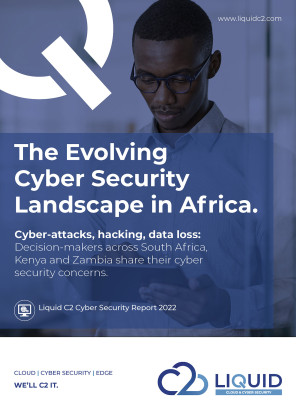
Liquid C2, a business of Liquid Intelligent Technologies (https://www.Liquid.Tech), a pan-African technology group, has revealed that the number of cyberattacks on businesses in Kenya, South Africa, and Zambia increased by 76%. This is according to the latest cyber security report – 'The Evolving Cyber Security Landscape in Africa 2022' (https://apo-opa.info/3XLnJ9T).

Download document (1): https://apo-opa.info/3JyRt3G 
Download document (2): https://apo-opa.info/3CTuMUa
Download document (3): https://apo-opa.info/3CVfezj

Featuring research, analysis, and findings across the three countries on the evolving cyber security threats present in Africa, the report shows that cyberattacks against all large enterprises ramped up dramatically. Kenyan businesses reported an 82% increase in such attacks, while South African businesses recorded a 62% increase, and Zambian businesses a 62% increase.

“The biggest concern emerging from this report is that companies are saying that they've put a lot more cyber security controls in place. With threats evolving faster than security systems, companies cannot afford to get complacent,” says David Behr, CEO of Liquid C2. “The report highlights that businesses must be consistently vigilant about the ever-evolving cybercrime landscape and the methods malicious actors use to breach cyber security measures. As the report shows, complacency is a luxury no one can afford.”

There are reasons to be optimistic; all the respondents in the report highlighted that they had advanced significantly in their cloud and digital strategies and cyber security capabilities. Furthermore, the majority (68%) of the companies interviewed in the research said they had appointed cyber security staff members or signed up with a cyber security team in the past year. Kenya had the highest percentage at 82%, followed by South Africa (63%) and Zambia (62%).

Yet, as Behr says, “This could prove a double-edged sword. The research highlights that over half of all large enterprises in the three countries were victims of a successful cyberattack, with 90% of them being Kenyan businesses. Increasingly sophisticated methods like Cybercrime-as-a-Service (CaaS) are becoming more popular in Africa, meaning businesses can no longer rely on outdated technologies and processes. It is time they invested in a partner that provides 24/7/365 protection, rapid response, threat intelligence and prevention, compliance and improved business reputation, all designed to cater to the specific needs of businesses.

The top method of attack used by cybercriminals targeting companies was through email, using Phishing or Spam attacks (61%), with attacks through compromised passwords following at 48% and data breaches and attacks (44%) being the second and third most common. Furthermore, 61% of the companies included in the research said that the breaches to their operations occurred as a result of remote or hybrid working.

One of the most concerning revelations in the report is that Africa faces a growing 100,000-person gap in the number of certified cyber security professionals. Reports estimate that there are only 7,000 certified cyber security professionals, or one for every 177,000 people on the continent. However, this number may disguise the true magnitude of the problem as there is no readily available data on the level of investment made by African governments into cyber security.

The report underlines the increasing need for companies to invest in cyber security measures to avoid reputational damage, financial loss, and potential business interruptions. Additionally, it reinforces how vital it is for organisations to collaborate with trusted third-party Managed Security Services Providers (MSSPs) to implement and refine their cyber security strategies.

Distributed by APO Group on behalf of Liquid Intelligent Technologies.

About Liquid C2:
Liquid C2 is a business of Cassava Technologies, a pan-African technology group, and the Liquid division was launched to offer customers managed cloud and security services, product solutions, related professional and advisory services to customers in 22 African countries. The business operates Africa's widest Azure Stack deployment across four countries and deployed the only African Cyber Security Fusion Centres in South Africa and Kenya, with another four to be launched in 2023. Liquid C2 was selected as an Operator Connect launch partner by Microsoft in six countries. Liquid C2 was a finalist in the Microsoft Partner of the Year 2021 and 2022 and a Microsoft Partner of the Year in Ethiopia 2022. https://LiquidC2.africa  

Media files
Liquid Intelligent Technologies
Download logo

Liquid C2, a business of Liquid Intelligent Technologies (https://www.Liquid.Tech), a pan-African technology group, has revealed that the number of cyberattacks on businesses in Kenya, South Africa, and Zambia increased by 76%. This is according to the latest cyber security report – ‘The Evolving Cyber Security Landscape in Africa 2022′.

Featuring research, analysis, and findings across the three countries on the evolving cyber security threats present in Africa, the report shows that cyberattacks against all large enterprises ramped up dramatically. Kenyan businesses reported an 82% increase in such attacks, while South African businesses recorded a 62% increase, and Zambian businesses a 62% increase.

“The biggest concern emerging from this report is that companies are saying that they’ve keep a lot more cyber security controls in plot. With threats evolving faster than security systems, companies cannot afford to access complacent,” says David Behr, CEO of Liquid C2. “The report highlights that businesses must be consistently cautious about the ever-evolving cybercrime landscape and the methods malicious actors use to breach cyber security measures. As the report shows, complacency is a luxury no one can afford.”

There are reasons to be optimistic; all the respondents in the report highlighted that they had advanced significantly in their cloud and digital strategies and cyber security capabilities. Furthermore, the majority (68%) of the companies interviewed in the research said they had appointed cyber security staff members or signed up with a cyber security team in the past year. Kenya had the highest percentage at 82%, followed by South Africa (63%) and Zambia (62%).

Yet, as Behr says, “This could prove a double-edged sword. The research highlights that over half of all large enterprises in the three countries were victims of a propitious cyberattack, with 90% of them being Kenyan businesses. Increasingly sophisticated methods like Cybercrime-as-a-Service (CaaS) are becoming more popular in Africa, meaning businesses can no longer rely on outdated technologies and processes. It is time they invested in a partner that provides 24/7/365 protection, rapid response, threat intelligence and prevention, compliance and improved business reputation, all designed to cater to the specific needs of businesses.

The top method of attack used by cybercriminals targeting companies was through email, using Phishing or Spam attacks (61%), with attacks through compromised passwords following at 48% and data breaches and attacks (44%) being the second and third most common. Furthermore, 61% of the companies included in the research said that the breaches to their operations occurred as a result of remote or hybrid working.

One of the most concerning revelations in the report is that Africa faces a growing 100,000-person gap in the number of certified cyber security professionals. Reports estimate that there are only 7,000 certified cyber security professionals, or one for every 177,000 people on the continent. However, this number may disguise the precise magnitude of the problem as there is no readily available data on the level of investment made by African governments into cyber security.

The report underlines the increasing need for companies to invest in cyber security measures to avoid reputational damage, financial loss, and potential business interruptions. Additionally, it reinforces how vital it is for organisations to collaborate with trusted third-party Managed Security Services Providers (MSSPs) to implement and refine their cyber security strategies.

Press Release Source

Share this:

  • Share on X (Opens in new window) X
  • Share on Facebook (Opens in new window) Facebook
  • Print (Opens in new window) Print
  • Email a link to a friend (Opens in new window) Email
  • Share on LinkedIn (Opens in new window) LinkedIn
  • Share on Tumblr (Opens in new window) Tumblr
  • Share on WhatsApp (Opens in new window) WhatsApp
  • Share on Mastodon (Opens in new window) Mastodon
Category: NewsTag: APO, News, South Africa

If you feel strongly about this article then feel free to send MyZA a ‘Letter to the Editor’ using the submission form below:


Letter to the Editor

This field is for validation purposes and should be left unchanged.
If this is in response to an article please include that article title here or as the lead in for the first paragraph of your Letter below.

Separate tags with commas

Localise your letter by naming the city your words are about. Add relevant words describing your subject. Single comma separated words of no more than 5
Your Name(Required)
Your Name will be linked to the website below.
Your personal, business or social media web site
Choose NO to not set up a user account on MyZA. User Accounts will allow you to submit letters under your own Author Name

3 Latest Letters to the Editor:

  • Congratulations to the Lotto Winner

    Dear Editor Dear Editor, I was thrilled to hear about the R8.5 million Lotto win for the community of Gqeberha. Such life-changing news brings hope and excitement to everyone in the area. I congratulate the winner and wish them all the best with their prize. May this bring positive change to their life and the…

    1 October 2026
  • Opinion on Lotto Winner News

    Dear Editor Congratulations to the lucky winner! This is truly wonderful news for the community. Regards Marina Adams In Response to/From: Congratulations to the Lucky Winner

    1 October 2026
  • Regarding Lotto Winner Story

    Dear Editor Congratulations to the winner, this is wonderful news for the community. Wishing them the best for the future. Regards Willem Pieterse In Response to/From: Re: R8.5 Million Lotto Winner Claims Prize in Gqeberha

    27 September 2026

About Basetsana

Previous Post:Two judges placed on suspension
Next Post:Striking Durban factory workers take Frimax Foods to CCMA

Reader Interactions

Comments

  1. Wiccan Thunder

    22 September 2026 at 9:52 pm

    North Korea: You have two cows. Its name is Kim Jong Un.

  2. Tacklebox

    1 September 2026 at 1:57 pm

    Thanks for this post – I have had a great time visiting your site and find myself now wanting to physically visit South Africa. Well Done!

Copyright © 2026 · MyZA · All Rights Reserved · Powered by Stratlec Online