
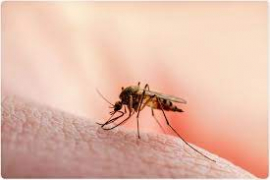
The National Institute for Communicable Diseases (NICD) says it is currently seeing a significant increase in malaria cases in the endemic provinces and Gauteng, with many cases of severe malaria due to late presentation or late detection.
“Undiagnosed and untreated malaria rapidly progresses to severe illness, with a potentially fatal outcome,” the NICD warned on Wednesday.
The public health institute has since issued an alert to people with fever or “flu-like” illness, who reside in a malaria-risk area in Limpopo, KwaZulu-Natal and Mpumalanga or acquire travelled to a malaria-risk area, in the past six weeks, to test using a blood smear microscopy or malaria rapid diagnostic test.
“If they test positive for malaria, the patient must be started on malaria treatment immediately,” the NICD urged.
According to the statement, patients must inform their healthcare provider of their recent travel, particularly to neighbouring countries and malaria-risk areas in South Africa.
Meanwhile, the NICD said, Odyssean or “taxi malaria” – transmitted by hitch-hiking mosquitoes – should be considered in a patient with unexplained fever who has not travelled to a malaria-endemic area but is getting progressively sicker, with a low platelet count.
“Seek medical attention early; both malaria and COVID-19 maintain similar non-specific early symptoms including fever, chills, headaches, fatigue and muscle pain.” – SAnews.gov.za
bad bond
USA: You have two cows. You outsource a farm to milk them and sell the milk to those who can afford it. You then use the profit to buy someone else\’s cow for your butcher to make steak with.
cabbie
The quickest means of communication is to trust a girl with a rumor and then make her vow not to tell