Fired security guards have been sleeping outside health department in Johannesburg for four months
They say they are owed money and want the department to intervene with their former employers

MyZA
News, Directory, Events and Other Stuff
They say they are owed money and want the department to intervene with their former employers
Government working to finalise Marikana tragedy claims
Justice and Constitutional Development Minister, Thembi Simelane, says government remains dedicated to addressing claims arising from the Marikana tragedy.
Today marks the 12th anniversary of the Marikana tragedy.
On 16 August 2016, 34 mineworkers at the Lonmin mine in the North West were shot by police while they were demanding a salary of R12 500 a month.
Ten police officers were also killed in the days leading up to the Marikana massacre. Speaking at Friday’s media briefing, Simelane described today as a “sombre chapter in the nation’s history that continues to resonate deeply”.
According to Simelane, about R352 million has been disbursed in claims related to Marikana.
“This reflects our ongoing efforts to ensure that those affected receive the compensation they are due,” she said at the briefing held at the Government Communication and Information System (GCIS) in Pretoria.
READ | Government pays out more than R330m to Marikana victims
The beneficiaries include the families of the 34 mine workers who lost their lives, as well as the injured and arrested mine workers.
“Each case has been assessed individually to ensure that compensation aligns with legal frameworks and court directives.
“We have resolved most aspects of the Marikana matter, apart from constitutional damages, which are currently under consideration by the Gauteng High Court. We remain committed to finalising this matter and ensuring that justice is served.”
Meetings
Over the past few weeks, the Minister said her office has conducted a series of comprehensive meetings with management and branch heads to gain a detailed understanding of the department’s operational challenges and opportunities.
They have also consulted with the entities reporting to the department and said they have received invaluable input from these briefings as they prepare for the new administration.
“We are grateful for the messages of support and constructive advice from various organisations and institutions within the justice cluster. These insights will be instrumental as we work together to uphold and promote fair justice practices,” she explained.
Special Tribunal
In addition, the Minister said the department remains resolute in its commitment to bring perpetrators of corruption to justice.
The Special Tribunal, established in 2019, she stressed, continues to play a crucial role in recovering State funds lost to corruption.
To date, she said the Tribunal has successfully recovered an estimated R15 billion, demonstrating the effectiveness of this specialised judicial body.
She also announced that the Presidency will soon announce the names of the Judges of the Special Tribunal, ensuring that the Special Investigating Unit (SIU) has the judicial support necessary to pursue further cases of corruption and malfeasance. – SAnews.gov.za
Gabisile
Fri, 08/16/2024 - 11:29
Johannesburg, South Africa — Afrika Tikkun, a leading youth development organisation is issuing a clarion call to Corporate South Africa: the fight against youth unemployment demands urgent and united action. “This challenge, which has long plagued our nation, is not merely a shared burden—it is an unparalleled opportunity to reshape South Africa’s future,” said Dr …
Government, private sector partnerships offer hope for jobs
Employment and Labour Minister Nomakhosazana Meth has expressed optimism that the strengthened partnership between government and business will significantly boost economic growth and pave the way for increased job creation.
In a statement on Thursday, Meth acknowledged the Quarterly Labour Force Survey (QLFS) report for the second quarter of 2024 that was released by Statistics South Africa (Stats SA) earlier this week.
She noted that while the official unemployment rate has increased from 32,9% in quarter one to 33,5% in quarter two, the number of employed persons in quarter two:2020 during the COVID inception was 14,1 million and 16.7 million in the second quarter of 2024, showing an increase in the labour force.
Additionally, the Minister said a decrease in the unemployment rate recorded in Limpopo, Free State and the Eastern Cape is encouraging and commendable under the circumstances.
“Whilst government has continued to put in place interventions like addressing load shedding, resolving transport and logistics challenges, the economy is not growing as expected. Some of the key contributions to this sluggish economic growth are that South Africa is not insulated from the global economic pressures and geo-politics.
“Henceforth, the scale at which the partnership between government and business is to be elevated, there is much hope that we will see a turn on economic growth yielding to job creation,” Meth said.
Meth considers her department as central in intensifying the coordination of contributions that are to yield the results needed to address and arrest the stubborn nature of unemployment.
As such, the Unemployment Insurance Fund (UIF) is contributing to the Presidential Youth Employment Initiative which will conclude the next intake of the one million young people as school assistants in over 23 000 schools across South Africa.
In the 2023/2024 financial year, the department has played a crucial role in job preservation saving 14 887 jobs as part of the Commission for Conciliation, Mediation and Arbitration (CCMA) dispute resolution mechanisms.
Furthermore, through another of the department’s entity, Productivity South Africa’s business turnaround and recovery programme, 71 enterprises were assisted resulting in 5 390 jobs being saved.
As Minister Meth continues with her first 100 days in office, her plan of action to refine and repurpose the strategic thrust of the department in ensuring that the employment mandate is sharpened and delivers tangible results, remains high.
The Minister was appointed in June.
The department and its entities continue to preserve jobs through the signing of the funding agreement between the UIF and Productivity SA projected to benefit 226 companies with a target to save 11 300 jobs in the next three years.
“Aligned to the three priorities of the 7th administration, my department, in fulfilling its mandate needs a collective approach and refined coordinated efforts that are vigorous to turnaround the status quo, particularly, youth unemployment,” Meth said. – SAnews.gov.za
DikelediM
Fri, 08/16/2024 - 10:19
Mediation team to resolve succession disputes under Amakhosi areas
KwaZulu-Natal Cooperative Governance and Traditional Affairs (CoGTA) MEC, Thulasizwe Buthelezi, has introduced a team from the royal family appointed to resolve the succession disputes that have increased in areas under amakhosi.
The team - the Conflict Mediation Panel - which includes royal children, was appointed by Buthelezi in a bid to address long-standing challenges of succession disputes within royal families.
The panel will leverage their cultural authority and deep understanding of traditional practices to help families resolve disputes.
Presenting the members of the team during a media briefing on Thursday, Buthelezi noted that the late AmaZulu King, Goodwill Zwelithini kaBhekuzulu, started a process where the royal family played a critical role in resolving disputes and fostering reconciliation where succession disputes arise.
He said the team members include senior members of the royal family, who have worked for a long time with King Zwelithini kaBhekuzulu doing this work.
“Their dedication to this crucial task will have a positive impact and restore peace and stability in izizwe zamakhosi that have been torn apart by succession disputes. The introduction of this team, which comprises senior members of the royal family, will strengthen the institution of traditional leadership within our province and enhance the work of amakhosi,” Buthelezi said.
The KZN Traditional Leadership and Governance Act 5 of 2005 allows the CoGTA MEC in the province oversight over all matters pertaining to the institution of traditional leadership.
The team will be led by the late King’s brother, uMntwana uMathubesizwe kaBhekuzulu, with other brothers including uMntwana uMbonisi kaBhekuzulu; uMntwana uVulindlela kaBhekuzulu; uMntwana uMxolisi kaBhekuzulu; and Princess Lindi kaBhekuzulu.
Other members of the team include uMntwana uThuthukani kaMcwayizeni kaSolomon; Inyosi uBuzetsheni Mdletshe (King’s praise singer); and Reverend Canon Hamilton Mbatha.
“The families of Amakhosi who have disputes will work closely with this team, and CoGTA will be engaging with them,” the MEC said. – SAnews.gov.za
GabiK
Fri, 08/16/2024 - 10:23
Home Affairs welcomes court decision on 95 Libyans
The Department of Home Affairs has welcomed the court decision that the 95 Libyan nationals that were arrested in White River, Mpumalanga, be deported.
In that regard, Home Affairs Minister, Dr Leon Schreiber, has instructed the department to proceed with speed, while observing all the legal processes to ensure that the deportations are conducted swiftly.
This as the National Prosecuting Authority (NPA) withdrew charges against the 95 who were arrested at a suspected military camp in Mpumalanga last month.
READ | Charges withdrawn against 95 Libyan nationals; deportation next
“Consequently, Home Affairs officials were in court to secure the confirmations for deportation from the Magistrate as this will pave the way for their deportation,” the department said in a statement on Thursday.
Home Affairs officials are finalising logistics for the deportation.
"As indicated earlier, deportation was among the options Home Affairs considered working with other law enforcement authorities,” it said, adding that it stands ready to send the group back to their home country.
“We will not hesitate to act decisively to ensure that anyone who breaches the immigration laws of the country is processed through the courts and accordingly faces the consequences. Respect for the rule of law is sacrosanct,” said Minister Schreiber. – SAnews.gov.za
Edwin
Fri, 08/16/2024 - 09:08
Trade shows offer a prime opportunity to showcase your brand and connect with potential customers, partners, and industry peers. To make a significant impression, it’s crucial to have well-designed and functional trade show displays that effectively capture attention and communicate your message. Here’s a guide to help you understand and optimize your trade show presence …
Mother says Elliot police have failed her
Draft National Devolution Strategy has not yet been made public
“We depend on the ocean”
Here are the names of the officials with whom the Lottery will no longer do business
Holistic approach needed to address underlying factors behind GBVF
Minister in the Presidency responsible for Women, Youth and Persons with Disabilities, Sindisiwe Chikunga, has underscored the need for a holistic approach that addresses both the immediate and underlying factors behind gender-based violence and femicide (GBVF).
Chikunga made the remarks during a dialogue on Women, Democracy and Leadership in South Africa, held at the University of South Africa (UNISA) on Thursday.
Chikunga, together with UNISA and the United Nations Women, hosted a dialogue, which looked deeply at women’s representation and administrative arrangements needed to achieve a gender-responsive government.
Chikunga said government has come to terms with the fact that laws alone will not prevent the killing of women.
“Despite being a constitutionally assured right, women continue to live in fear, grappling with alarming rates of gender-based violence and femicide. This remains a deeply entrenched problem with multifaceted roots, including historical inequalities, cultural norms, economic disparities, and systemic failures in law enforcement and justice systems,” Chikunga said.
Government has passed several laws, including the Criminal Procedure Act 51 of 1997, Domestic Violence Act 116 of 1998, Protection from Harassment Act 17 of 2011, Criminal Law (Sexual Offences and Related Matters) Amendment Act, Promotion of Women’s Rights, Empowerment and Gender Equality Bill, and the National Council on Gender-Based Violence and Femicide Act 9 of 2024.
However, to effectively prevent and combat GBVF, Chikunga said a holistic approach is needed, “one that addresses both the immediate and underlying factors”.
Significant strides in women representation
Reflecting on the journey travelled by women over the past three decades of the country’s democratic dispensation, Chikunga said over the past 30 years, the country has seen significant strides in ensuring women representation in decision-making and law-making circles.
Today, women make up 43.5% of the Parliament of National Unity, holding 171 of the 400 seats, an increase from 28% representation in 1994.
“Of the 75 Executive Members appointed in June 2024, 32 are women, representing 42.66%. Fourteen of the 32 Cabinet positions are held by women, and 18 of the 43 Deputy Minister positions are held by women,” Chikunga said.
The Minister emphasised the substantive contribution that women should make once in such positions.
“As we celebrate the strides that we have made, we also give due consideration to the tasks that remain undone, [these include] the need to drive inclusive growth and job creation; to reduce poverty and to tackle the high cost of living, and the task of building a capable, ethical, and developmental state. We remain mindful of the fact that in each of these priority areas, women are the most affected,” Chikunga said.
The Minister also highlighted significant progress made towards the fight against HIV/Aids, particularly in the rollout of antiretroviral therapy (ART) for pregnant women, and an increasing number of students that have gained access to education, especially higher education from which they were previously excluded due to their social class or marginalised race or ethnic group.
Redefining advocacy to address plight of businesswomen
Chikunga also stressed the importance of redefining advocacy and mainstreaming to be strategy-programmes-goals-oriented and action-driven, to address the plight of women in business, government, farm workers, mining, and the unemployed.
“We need to advocate and mainstream women, youth and persons with disabilities across all sectors, with a focused lens on industries with high potential for growth and development.
“We need to ring-fence funds in the budget to ensure implementation of women, youth and persons with disabilities socio-economic empowerment, starting with the allocation of change oriented -budget allocation for the department, which need to reflect intentional implementation of the gender planning and budgeting framework,” Chikunga said. – SAnews.gov.za
GabiK
Thu, 08/15/2024 - 12:59
“We want everybody to have dignified accommodation,” says ward councillor
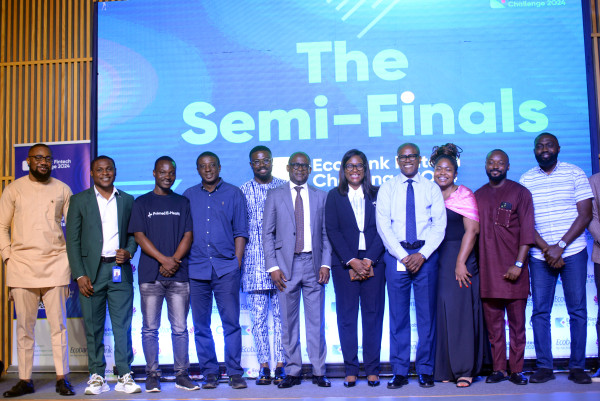
Ecobank (www.Ecobank.com), the pan-African Bank, has announced the top finalists for the first-ever and inaugural 2024 Ecobank Fintech Challenge Hybrid Semi-Final event held at the Ecobank Pan African Centre in Lagos, Nigeria. The finalists were selected from a cohort of 40 highly competitive Fintechs that made it to the semi-final stage of the competition. This year's challenge attracted over 1,550 applications from 70 countries in Africa and other global regions.
The finalists will showcase their innovative solutions at the Ecobank Fintech Challenge Grand Finale, scheduled for 27 September 2024, at the Ecobank Pan African Centre in Lomé, Togo. The event will be streamed live on Ecobank Group's social media channels, allowing a global audience to participate. Finalists of the challenge will compete for the US$50,000 ultimate prize during this highly anticipated event.
Speaking at the Semi-Final, Jeremy Awori, Chief Executive Officer of Ecobank Group, remarked, "The finalists in this year's Ecobank Fintech Challenge have showcased exceptional talent and innovation; and we look forward to welcoming them to the Finale. At Ecobank, we're committed to collaborating with these business builders to develop products and services that will benefit our customers and contribute to our continent's progress”.
Showcasing the future of African fintech, here are the exceptional finalists of the 2024 Ecobank Fintech Challenge:
The Ecobank Fintech Challenge, a flagship initiative of the Ecobank Group, organised for seven consecutive years, continues to serve as a premier continental platform for promoting innovation and collaboration between Fintechs and the pan-African Bank's cross-border markets spanning 35 countries. The challenge remains a significant event, attracting key players within the fintech ecosystem and beyond. It provides a unique opportunity for fintech entrepreneurs to address challenges such as reaching scale, navigating an uncertain regulatory environment, and managing scarcity of funding. In addition to financial rewards, the challenge offers Ecobank's expertise in diversified market operations and the right solutions to scale across its pan-African footprint and international presence.
Since inception, 60 fintech startups have been inducted into the Ecobank Fintech Fellowship.
The Ecobank Fintech Challenge is designed in partnership with international advisory firm Konfidants and is supported by various partners including Huawei, Proparco, TechCabal, BlueSpace, Afrilabs, Africa Fintech Network, MEST Africa, Naija Startups, Expand In Africa and Founders Africa.
This year's Grand Finale will bring together fintechs, regulators, investors, financial institutions, global technology companies, tech hubs, entrepreneurs, and industry experts.
Ecobank invites all key stakeholders within the Fintech ecosystem, and members of the general public to register for the Grand Finale via this link: https://apo-opa.co/4cndn5H.
Streaming platforms:
Distributed by APO Group on behalf of Ecobank Transnational Incorporated.
Media Contact:
Christiane Bossom
Group Communications
Ecobank Transnational Incorporated
Email: groupcorporatecomms@ecobank.com
Tél.: +228 22 21 03 03
Web: www.Ecobank.com
About Ecobank Group (or ‘Ecobank Transnational Incorporated' or ‘ETI'):
Ecobank Group is the leading private pan-African banking group with unrivalled African expertise. Present in 35 sub-Saharan African countries, as well as France, the UK, UAE and China, its unique pan-African platform provides a single gateway for payments, cash management, trade and investment. The Group employs over 14,000 people and offers Consumer, Commercial, Corporate and Investment Banking products, services and solutions across multiple channels, including digital, to over 32 million customers. For further information, please visit www.Ecobank.com.
Public Procurement Bill to redress women socio-economic exclusion
Women, Youth and Persons with Disabilities Minister, Sindisiwe Chikunga, says the Public Procurement Bill provides the department with an opportunity to advocate and mainstream tangible models and interventions to redress the ongoing socio-economic exclusion of women, youth and persons with disabilities.
Chikunga commended the significant efforts by President Cyril Ramaphosa after signing into law the Public Procurement Bill last month, which aims to create a single framework that regulates public procurement, including preferential procurement, by all organs of State, with the necessary efficiency, cost-effectiveness and integrity.
“As a department, we will be bringing forward tangible interventions through which this legislation will serve to redress the longstanding and ongoing socio-economic exclusion of women, youth and persons with disabilities,” Chikunga said.
Addressing a dialogue on Women, Democracy and Leadership in South Africa at the University of South Africa (UNISA) on Thursday, Chikunga also commended President Ramaphosa, as the Chairperson of the African Union in 2020, for putting forward a number of recommendations for the advancement of women on the continent, which have been adopted by AU Heads of State.
READ | Government, business partnership begins to flourish
Increase in support for women entrepreneurs
Chikunga also acknowledged a surge in the establishment, growth and support of women-owned businesses in key sectors, including energy, tourism, agriculture, the ocean economy, and manufacturing.
According to the most recent Mastercard Index of Women Entrepreneurs (MIWE), South Africa ranks as the second highest country in Africa in terms of its proportion of women-owned businesses and the formal support available for women entrepreneurs.
The Global Entrepreneurship Monitor (GEM) Women’s Entrepreneurship Report also revealed that women in countries like South Africa are among the most innovative and high-growth entrepreneurs in the world.
“There is sufficient evidence that reaffirms the importance of women entrepreneurs in contributing to the overall productivity and transformation of our economy through diversifying industries, innovation, and fostering economic resilience.
“In addition, women-owned businesses contribute to the creation of employment opportunities, promote inclusive supply chains, and stimulate local economies,” Chikunga said.
Women economic advancement in the Continent
Chikunga further underscored the importance of the adoption of the Decade for African Women’s Financial Inclusion and Gender Equality, 2020-2030.
“This is a critical initiative for the women of Africa, given that the lack of access to finances hinders their socio-economic progress, and thwarts their ability to have ownership and control over resources such as land, businesses and property,” Chikunga said.
She added that women’s access to markets continues to be a challenge for women on the continent, especially access to trade and global markets.
The Minister argued that the African Continental Free Trade Area Agreement (AfCFTA) will open doors for global trade and markets for women, and “this is of huge importance to the women in South Africa to leverage on the opportunities this AfCTA promises for the economic empowerment and wealth creation for women in Africa”.
“Africa must be Africa’s biggest trading partner and demand for products across the continent offers African women the opportunity to be suppliers to this demand. Joint initiatives of pooling resources in this regard will help grow women businesses, provide the necessary skills and training required for this, and open markets and export trade opportunities,” Chikunga said. – SAnews.gov.za
GabiK
Thu, 08/15/2024 - 13:49
Charges withdrawn against 95 Libyan nationals; deportation next
The National Prosecuting Authority (NPA) has withdrawn charges against 95 Libyans who were arrested at a suspected military camp in Mpumalanga last month.
The 95 were facing charges of Contraventions of the Immigration Act.
“The Acting Director of Public Prosecutions, Sonja Ntuli, reviewed all available evidence and the representations made on behalf of the accused and having considered the evidence and policy considerations, has decided to withdraw the charges preferred against all accused who were arrested at the military training camp in July 2024.
“The charges related to alleged misrepresentations made by the accused in their applications for study visas. There were other more serious allegations that [the] SAPS [South African Police Service] needed to look into,” the NPA said on Thursday.
READ | Cabinet commends continued law enforcement agencies successes
Other matters, according to the prosecutorial body, will be “dealt with administratively in terms of the Immigration Act and its Regulations by the Department of Home Affairs officials”.
“Importantly, the SAPS (Directorate of Priority Crime Investigations) are proceeding with investigations against the planners, organisers and financiers of the military training camp. The NPA is working closely with DPCI to ensure that these alleged criminals are brought to justice as appropriate.
“The NPA has coordinated with its criminal justice partners and the 95 accused will be under the custody of the Department of Home Affairs that will facilitate the deportation process,” the NPA concluded. – SAnews.gov.za
NeoB
Thu, 08/15/2024 - 14:03
“It’s Time to Stop ‘Manning’ Boardrooms, Women in Senior Positions Drive Transformative Change in the Workplace, says Afrika Tikkun. 7 AUGUST 2024, JOHANNESBURG: As South Africa prepares to commemorate Women’s Day, Afrika Tikkun calls for transformative change in the workplace, emphasising the urgent need for more women in senior positions. Leadership that is not only …
NSG hosts symposium on China-Africa relations
China-Africa Media and Publishing, in collaboration with the National School of Government of South Africa, is set to hold a symposium titled: “The Governance of China: Forging a Closer China-Africa Community of a Shared Future, in Pretoria on Thursday.
Thursday’s event will bring together South African and Chinese government officials, scholars, experts, and journalists for a robust exchange of ideas and insights.
The seminar serves as a critical forum to discuss and shape the future of China-Africa relations and is a side precursor event to the upcoming Beijing Summit of the Forum on China-Africa Cooperation (FOCAC) which will be held in early September in China.
The FOCAC summit is expected to unveil new measures to deepen cooperation over the next three years, laying a stronger foundation for a closer China-Africa community with a shared future.
The seminar of the NSG and China-Africa Media in Publishing is intended to promote dialogue and debate on China-Africa relations among government officials, scholars and experts.
The seminar marks a significant step in the ongoing cooperation between China-Africa Media and Publishing and the National School of Government, following the signing of a Memorandum of Understanding (MOU) in May of this year.
The agreement aims to promote joint research and dialogue in the form of Seminars and Symposia on topics such as China-South Africa relations and Global Governance. – SAnews.gov.za
Edwin
Thu, 08/15/2024 - 08:54
NPA Aspirant Prosecutor Programme back on track
The National Prosecuting Authority (NPA) has announced that it will reinstate the much vaunted Aspirant Prosecutor Programme.
The programme was suspended this year due to budget constraints.
“In 2022/23, the NPA absorbed over 1000 law graduates into its Aspirant Prosecutor Programme. Due to the unplanned budget cuts, many of these aspirants could not be given contracts after completion of the programme.
“The recent improvement in the NPA’s budget situation has allowed the organisation to offer contracts to many aspirants that are already in the system, gradually filling the vacant district court posts that are being created through internal promotions,” the NPA said in a statement on Thursday.
The institution added that training for the 2025 intake is expected to start on 1 March 2025.
“For 2024, the NPA is starting the process to recruit a smaller intake of 80 aspirants for the year, but with a specific focus on NPA offices that have the capacity to train these colleagues and utilise them in priority high need areas.
“The advertisement for the 2025 intake will be published on 16 August on the NPA and DPSA [Department of Public Service and Administration] websites, as well as on the NPA social media platforms,” the NPA said.
Enquiries on the programme can be sent to communication@npa.gov.za – SAnews.gov.za
NeoB
Thu, 08/15/2024 - 09:51
30 years of service delivery
By Dr Namane Masemola
On the 29th of May this year, South Africans went to polls to renew our constitutional democracy based on the will of the people and rule of law.
For the first time since 1994, there was no outright winner in the national elections and this situation required political parties to negotiate amongst themselves on the formation of the 7th Administration.
The Government of National Unity (GNU) presents a unique opportunity to build on the gains made since 1994 by ensuring collaboration across diverse political parties. This unity allows for a more inclusive approach to governance and multiple perspectives are considered in decision making informed by the statement of intent, which finds it expression in the State of the Nation address, a profound government policy statement that sets the trajectory for socio-economic development.
Working through the GNU, South Africa will be working to, for example, expand services to meet the basic needs of all the people, particularly the majority of those who had been deliberately denied by the apartheid government.
In the past, basic services were provided based on race and black people were excluded. In 1994, 12 million people had no access to safe drinking water, 17 million lived below the poverty line while 21 million had no adequate sanitation. About 2 million were subjected to using the bucket system which was a stark violation of the right to dignity and unhygienic. The urban housing backlog in 1990 was conservatively estimated at 1.3 million units. Including hostels and rural areas, the backlog rose to approximately three million units.
Our villages and townships were almost pitch dark at night as there was non-existent or inadequate street lighting. Most people also used open fires and coal stoves and that led to high levels of sulphur dioxide, which adversely affected the health of many people.
To uplift the material condition of all South Africans, the democratically elected government implemented the Reconstruction and Development Programme aimed at addressing and prioritising the provision of the basic needs of people such as water, electricity, housing, sanitation, refuse and waste removal.
Thirty years into our democracy, South Africa is a vastly different place compared to what it was when the government took over in 1994. Key progress is reflected in the Census 2022, with the number of households in the country having almost doubled from 9,1 million in 1996 to 17,8 million in 2022. In 2022, almost 29,9 percent of household reside in a government-subsidised dwelling or RDP house while over 82,4 percent of households had access to piped water either inside their dwelling or inside their yard.
In 2022, approximately 66,3 percent of households in the country had their refuse removed by a local authority once a week, as opposed to 52 percent in 1996. About 13,7 million people have been provided with homes through various social housing programmes from 1994 to 2022. In 2022, 83.2 percent of households had access to improved sanitation services while those using electricity as the main source of energy for lighting increased from 58,1 percent in 1996 to 94,7 percent in 2022.
Another important intervention was to allow households who cannot afford municipal services access to free basic services through the municipal indigent policy. Through this policy, every poor household is guaranteed to receive at least a minimum standard of basic services such as 6 kilolitres of water and 50 kilowatts of electricity monthly.
This free basic services programme currently supports more than 3.5 million indigent households and reduces the burden of household labour and brings about relief to poor households who experience a lower quality of life. It also ensures that no citizen is denied the right to basic services, regardless of their ability to pay.
As we reflect on the progress we've made since 1994, it's equally important to acknowledge the challenges we face, including the lingering issues inherited from our past, even 30 years into our democracy.
To build on our achievements, we must unite as a nation. Every South African has a role to play in shaping our future. In line with the District Development Model, we need collaboration across all sectors—government, business, and civil society—to drive economic growth, create jobs, and foster hope for a better tomorrow.
*Dr Namane is the CoGTA Deputy Minister.
Matona
Thu, 08/15/2024 - 12:35
Court rules attorney Rael Kassel is a flight risk
Lamola commends SADC’s steps towards regional stability and economic integration
International Relations and Cooperation Minister, Ronald Lamola, has commended the Southern African Development Community (SADC) for taking steps towards regional stability and economic integration.
The Minister was speaking at the SADC Council of Ministers meeting in Harare, Zimbabwe, which is aimed at setting the stage for the 44th Heads of State and Government Summit.
The theme for the summit will focus on promoting innovation to unlock opportunities for sustained economic growth and development towards an industrialised SADC.
The outcomes of this pivotal meeting will be presented to the SADC Summit of Heads of State and Government on Sunday, 18 August 2024.
Leading South Africa’s delegation, Lamola, accompanied, by Finance Minister Enoch Godongwana, engaged in discussions centred on the Regional Indicative Strategic Development Plan (RISDP) 2020 - 2025.
The RISDP is a regional blueprint that promotes regional economic growth, integration, and industrialisation, underpinned by a climate of peace and stability.
The Minister expressed satisfaction with the Executive Secretary’s Report for the 2023/24 period, highlighting its crucial insights as the region approaches the mid-term review of the RISDP in 2025.
“We are heartened by the steady progress our region is making in implementing the RISDP for 2020 - 2030,” Lamola said.
He emphasised the importance of the foundational pillar of peace and security, acknowledging ongoing challenges in northern Mozambique and the eastern Democratic Republic of Congo, while commending efforts to restore stability.
The Council of Ministers also reviewed the Secretariat’s capacity-building initiatives in conflict mediation, underscoring the region’s commitment to peace.
He stressed the need to bolster early warning capacities to pre-empt conflicts and address root causes to develop effective mitigation strategies.
Significant achievements were noted, including a 21% increase in intra-SADC trade to gross domestic product (GDP) in 2023, and attracting US$6 billion in foreign direct investment.
Infrastructure developments, such as One-Stop Border Posts and SMART Integrated Economic Corridors Management tools, were highlighted as key drivers of regional progress.
Challenges remain, with the overall implementation score for the RISDP standing at 5.6 out of 10, reflecting the impact of global shocks like the COVID-19 pandemic, climate change and international conflicts.
Lamola called for renewed efforts to address these setbacks and improve social and human capital development.
G20
Looking ahead, South Africa will assume the G20 presidency in 2025, marking the first time the summit will be hosted on African soil.
Under the theme, ‘Fostering Solidarity, Equality and Sustainable Development’, South Africa aims to highlight the economic and development challenges facing developing countries, particularly in Africa.
Lamola outlined South Africa’s stance on critical issues, including regional food and nutrition security, the re-establishment of the Mining Ministerial Forum and the implementation of the Industrialisation Strategy and Roadmap 2015-2063.
“South Africa and the region cannot afford to continue to export their raw minerals to faraway countries, only to import beneficiated consumer products at inflated prices. Value addition and commercialisation of our critical minerals must be at the core of our industrialisation strategy,” said Lamola.
He also emphasised the importance of gender parity and noted the progress made. However, he acknowledged the need for further improvement.
With nearly half of South Africa’s Cabinet Ministers being women following this year’s General Elections, Lamola reiterated the country’s commitment to achieving the targets set in the Revised SADC Protocol on Gender and Development.
“As the SADC region moves forward, the collective efforts of member states aim to create an era where peace underpins prosperity, demonstrating the power of unity and strategic collaboration.” – SAnews.gov.za
Gabisile
Thu, 08/15/2024 - 10:26
WHO declares mpox outbreaks in Africa a global health emergency
The ongoing outbreak of Mpox has been officially declared a Public Health Emergency of International Concern (PHEIC) by the World Health Organisation (WHO).
The upsurge of Mpox in the Democratic Republic of the Congo (DRC) and a growing number of countries in Africa has been determined by the WHO Director-General, Dr Tedros Adhanom Ghebreyesus, to constitute a
Public Health Emergency of International Concern (PHEIC) under the International Health Regulations (IHR).
Ghebreyesus’ declaration came on the advice of an IHR Emergency Committee of independent experts who met on Wednesday to review data presented by experts from the WHO and affected countries.
A PHEIC is the highest alert level under international health law.
“The emergence of a new clade of Mpox, its rapid spread in eastern DRC, and the reporting of cases in several neighbouring countries are very worrying. On top of outbreaks of other Mpox clades in DRC and other countries in Africa, it’s clear that a coordinated international response is needed to stop these outbreaks and save lives,” Ghebreyesus said.
WHO Regional Director for Africa, Dr Matshidiso Moeti, said significant efforts are already underway in close collaboration with communities and governments, with country teams working on the frontlines to help reinforce measures to curb Mpox.
“With the growing spread of the virus, we’re scaling up further through coordinated international action to support countries bring the outbreaks to an end,” she said.
Committee Chair, Professor Dimie Ogoina, indicated that the current upsurge of Mpox in parts of Africa, along with the spread of a new sexually transmissible strain of the Mpox virus, is an emergency, not only for Africa but for the entire globe.
“Mpox, originating in Africa, was neglected there, and later caused a global outbreak in 2022. It is time to act decisively to prevent history from repeating itself.”
According to the WHO, the multi-country outbreak of Mpox was declared a PHEIC in 2022 after it spread rapidly via sexual contact across a range of countries where the virus had not been seen before.
That PHEIC was declared over in May 2023 after there had been a sustained decline in global cases.
Meanwhile, Mpox has been reported in the DRC for more than a decade, and the number of cases reported each year has increased steadily over that period.
Last year, the WHO said reported cases increased significantly, and already the number of cases reported so far this year has exceeded last year’s total, with more than 15 600 cases and 537 deaths.
“The emergence last year and rapid spread of a new virus strain in DRC, clade 1b, which appears to be spreading mainly through sexual networks, and its detection in countries neighbouring the DRC is especially concerning, and one of the main reasons for the declaration of the PHEIC,” the WHO said.
In South Africa, the total number of cases stands at 24, of which 12 were reported in Gauteng, 11 in KwaZulu-Natal and one in the Western Cape and three deaths.
Vaccine donation
The WHO announced it was working with countries and vaccine manufacturers on potential vaccine donations and coordinating with partners through the interim Medical Countermeasures Network to facilitate equitable access to vaccines, therapeutics, diagnostics and other tools.
The WHO said it anticipates an immediate funding requirement of an initial US$ 15 million to support surveillance, preparedness and response activities.
To allow for an immediate scale-up, the WHO said it has released US$ 1.45 million from the WHO Contingency Fund for Emergencies and may need to release more in the coming days.
“The organisation appeals to donors to fund the full extent of needs of the Mpox response.”
READ | Everything you need to know about Mpox disease – SAnews.gov.za
Gabisile
Thu, 08/15/2024 - 09:57
KZN CoGTA budget to empower traditional leadership, enhance local governance
KwaZulu-Natal Cooperative Governance and Traditional Affairs (COGTA) MEC, Thulasizwe Buthelezi, has presented the department’s R1.8 billion, which is aimed at bolstering traditional leadership, enhancing local governance, and driving community development in the province.
Tabling the department's budget before the KwaZulu-Natal Legislature this week, Buthelezi said one of the cornerstones of the budget is the empowerment of amakhosi as cultural custodians.
To foster collaboration and address challenges faced by traditional communities, Buthelezi announced the KwaZulu-Natal Indaba, a summit which will bring together government officials, amakhosi, academics, and other stakeholders.
“The indaba will focus on challenges facing the institution of traditional leadership and come up with innovative solutions that will be to the benefit of communities and amakhosi,” Buthelezi said.
The MEC also announced the formation of a panel, including royal children, in a bid to address long-standing challenges of succession disputes within royal families.
“This panel will leverage their cultural authority and deep understanding of traditional practices to help families resolve disputes. Their goal is to achieve fair and culturally sensitive resolutions, uphold the legitimacy of traditional leadership, and foster community unity,” Buthelezi explained.
Over R350 million to strengthen local government
Buthelezi said an innovative approach, emphasising accountability and collaboration, will be implemented, with a focus on improving municipal performance in governance, finance and service delivery.
An amount of R352 million has been allocated to strengthen local government.
To support struggling municipalities, Buthelezi said the department will develop a Municipal Support Improvement Plan and a Provincial Discretionary Intervention Standard Operating Procedure.
“Infrastructure development, disaster management and local economic support will receive R257 million. This funding will enhance the department’s ability to respond to disasters and assist municipalities in maximising grant expenditure.
The administrative arm of COGTA will be allocated R490 million to optimise departmental operations and foster a skilled workforce. This investment aims to create an environment conducive to sustainable development in KwaZulu-Natal,” Buthelezi said.
Buthelezi further announced that the department will partner with higher education institutions to provide targeted training and building capacity within the institution of traditional leadership.
He emphasised the importance of these initiatives in achieving a developmental State and improving the lives of the people of KwaZulu-Natal. – SAnews.gov.za
GabiK
Thu, 08/15/2024 - 10:04