Government contractor misses yet another deadline on R123-million Gauteng school
Construction of the project started in 2022 to accommodate the school’s 1,200 learners

MyZA
News, Directory, Events and Other Stuff
Construction of the project started in 2022 to accommodate the school’s 1,200 learners
They say they have been on up to six-month contracts, which were renewed repeatedly for ten years
“Children as young as seven years old fight for water with old people”
Local company to showcase wares at Essential and Vegetable Oils conference
Dinda Technologies, a distinctly South African company and role-player in harnessing the power of indigenous plants for modern uses and purposes, will display its innovative approach at the third South African Conference on Essential and Vegetable Oils.
The Department of Trade, Industry and Competition (the dtic) will host the conference in partnership with the Swiss State Secretariat for Economic Affairs (SECO), the United Nations Industrial Development Organisation (UNIDO), and the Southern African Essential Oils Producers Association (SAEOPA).
The two-day conference will be held at the South African National Botanical Gardens in Pretoria on Thursday and Friday, said the dtic in a statement.
The gathering will bring together key stakeholders in the essential and vegetable oils industry.
Dinda Technologies' participation underscores the company’s commitment to sustainable practices and the advancement of this dynamic field.
Dinda Technologies' story is one of passion and dedication. Founded by entrepreneur Patrick Mthebule, the company is built on the core principle to bridge the gap between traditional knowledge of indigenous plants and contemporary needs.
Mthebule's focus on sustainable practices has positioned Dinda as a distinct role player in developing plant-based solutions across diverse categories. The company champions the sustainable use of Africa's rich botanical heritage.
“Dinda Technologies was born from a deep respect for indigenous knowledge systems and wisdom. We translate age-old practices into the development of effective and sustainable plant and herb-based products. From cosmetics and haircare solutions to household detergents, our creations cater for modern needs while honouring our roots.”
Showcasing it's products at the conference underscores the Tshwane-based company’s unwavering commitment to elevating the status of indigenous plant-based products within South Africa.
“I believe that Africa's indigenous plants hold immense potential to contribute to individual well-being and economic prosperity.
“By showcasing Dinda Technologies’ work at this popular conference, we aim to connect with a wider audience and inspire a movement towards a more sustainable and empowered future,” Mthebule said.
He said their participation at the conference was a significant step towards achieving their vision.
“It will assist us to unlock the full potential of indigenous plants for a sustainable future through the joining of forces with industry leaders and fostering collaboration with other like-minded entrepreneurs,” he said. – SAnews.gov.za
Edwin
Tue, 07/23/2024 - 09:53
Public consultations on raw water tariffs
The Department of Water and Sanitation (DWS) has started public consultation meetings on the proposed raw water use charges for the 2025/26 financial year.
During these meetings, the department will get inputs from various role players within the sector on the proposed raw water charges prior to the finalisation, approval and implementation of the proposed water use charges.
The consultations are also aimed at ensuring transparency in the determination of raw water charges for public buy-in and support.
In terms of the National Water Act of 1998, the department is required to establish an annual raw water pricing strategy after consulting widely with different water users, including mines, industries, agriculture, energy and domestic users.
“Different stakeholders need to be consulted before the final approval by the Minister of Water and Sanitation as mandated by the National Water Act, which states that extensive consultation should be undertaken before an organ of State increases any price of bulk resources supplied to municipalities and municipal entities,” the department said.
The Tuesday, 23 July, a consultation meeting is being held at the MidVaal Water Company in Orkney in the North West.
Wednesday’s meeting will take place at the Loft Guesthouse in Bethlehem, Free State.
The last day of the consultations will be held at the Southern Sun Pretoria, corner of Stanza Bopape and Beatrix Streets, Arcadia, on Friday.
The meetings will start from 10am – 2pm. – SAnews.gov.za
GabiK
Tue, 07/23/2024 - 10:21
Assets worth R52 million seized in alleged COVID-19 corruption case
The Asset Forfeiture Unit (AFU) of the National Prosecuting Authority, the Special Investigating Unit (SIU) and the Directorate for Priority Crime Investigation (Hawks) on Tuesday seized various assets and properties valued at approximately R52.6 million.
The assets and properties are linked to 22 senior management officials, service providers and entities involved in an alleged corruption network within the Mpumalanga Department of Public Works.
The seizure follows a preservation court order from the High Court of South Africa, Mpumalanga Division, Mbombela obtained by the AFU.
The order allows the AFU, SIU and Hawks to seize various assets in Mpumalanga, Gauteng, the North West and Western Cape provinces associated with personal protective equipment (PPE) corruption.
“The operation included serving orders at 34 locations and capturing inventories of 29 properties, 31 vehicles and a boat trailer.
“The court order freezes properties such as houses, electronics, cars, household items, jewellery, arms, ammunition, bank accounts, salaries and bail monies.
“All internet banking privileges will be removed from the accused as of 23 July 2024. The seized assets and frozen properties belong to employees of the Mpumalanga Public Works, while others belong to service providers doing business with the department,” said a joint statement by the NPA, Hawks and SIU.
The order restrains the following individuals and entities:
Department officials:
- Macdonald Sigudla
- Dorries Mbatha
- Bandile Ngcobo
- Godisamang Molotsane
- Kobus Mkhabela
- Sipho Monareng
Service providers:
- Maganeleni Trading and Projects (Pty) Ltd
- Anthony Maganeleng Mashigo
- Gladness Gugu Bulunga
- Thandolwam Transport and Projects (Pty) Ltd
- Mbombela Integrated Waste Management Services (Pty) Ltd
- Orapaleng Molotsane
- Tsidi Susan Sedibe
- Superia Services Trading CC
- Whisky Delisa Khumalo
- Makulaspan Construction (Pty) Ltd
- Thabang Lebo Andiswa Dibakoane
- Ntando Ms Trading (Pty) Ltd
- Bongani Edward Lukhele
- Ligabho Le'Africa Properties (Pty) Ltd
- Oratile Molotsane
- Ezrom Molotsane
“The order is based on Section 26 of the Prevention of Organised Crime Act, 121 of 1998, which prevents a person from dissipating their assets before a confiscation order is made following a conviction,” the joint statement said.
The SIU's investigation into PPE contracts related to the COVID-19 pandemic revealed that senior management officials awarded multi-million Rand COVID-19 PPE tenders to suppliers who did not deliver the services.
“These suppliers paid substantial kickbacks to the senior management officials and their family members in different ways.
“The investigation uncovered multiple instances of corruption, fraud, theft, and money laundering committed by senior managers and service providers involved in procuring PPE disinfection services during the COVID-19 period.
“In line with the Special Investigating Units and Special Tribunals Act 74 of 1996 (SIU Act), the SIU referred criminal evidence to the NPA and Hawks for further investigation, leading to the arrest of department officials and service providers,” said the statement.
The officials and service providers face criminal charges related to PPE procurement and will appear in the Commercial Crimes Court on charges of corruption, fraud, and money laundering.
President Cyril Ramaphosa directed the SIU, in terms of Proclamation R23 of 2020, to investigate allegations of corruption, maladministration, malpractice, and payments made by State institutions relating to PPE procurement and the conduct of State employees. – SAnews.gov.za
Edwin
Tue, 07/23/2024 - 12:43
Judge was unfairly branded a criminal and a liar, says her lawyer
SA to work with Palestine in research, technology and innovation programme
Department of Science and Innovation (DSI) Minister, Professor Blade Nzimande, has announced a new programme to foster cooperation in science, technology and innovation (STI) between South Africa and war-torn Palestine.
“The programme will also have a special focus support for safeguarding, rebuilding, and developing Palestine’s research and innovation capacities and infrastructure,” Nzimande explained on Tuesday.
According to the Minister, the decision was made following a series of collaborations between the two nations.
These include a joint research project, seed funding for developing South African–Palestinian knowledge networks, the hosting of Palestinian scholars and students in South Africa in exchange programmes and sharing South African policy experience regarding science policy and system development.
The Minister, delivering his 2024/25 Budget Vote, stated that the programme aligns with the department’s strategic objective of using science diplomacy to foster human solidarity, and social justice, and support the country’s foreign policy.
“This new programme will be implemented by our entity the NRF [National Research Foundation] and will be funded from the department’s existing budget for international cooperation,” he told Members of Parliament (MPs).
Vaccines
For the 2024/25 financial year, the department experienced a budget cut, which was adjusted to R10 562 billion from R10 874 billion in 2023/24.
“I am honoured to be delivering the first Budget Vote of the Department of Science and Innovation, under the seventh administration, in the same year we celebrate 30 years of democracy.
“In these 30 years, our country has made tremendous strides in science, technology, and innovation,” he added.
He highlighted some of the achievements under the previous administration, which he believes have laid a foundation for deepening work in the new government.
This includes a new Vaccine Manufacturing Strategy (VIMS) to promote domestic design, development and production of vaccines.
Through VIMS, the department targeted vaccine development to fight the Rift Valley fever (RVF), human papillomavirus (HPV), respiratory syncytial virus (RSV) and the hepatitis B virus.
Working with the World Health Organisation (WHO), government also set up capacity for the local development of mRNA vaccines in response to future Coronavirus threats.
Hydrogen economy
Nzimande also touched on the hydrogen economy, which was specifically referenced by President Cyril Ramaphosa in his Opening of Parliament Address (OPA) last Thursday.
“The DSI is leading major innovations to promote the transition to green hydrogen as an alternative source of energy to fuel our economy and to facilitate a net-zero energy future,” he explained.
In 2023/24, they also provided R53 million as an initial investment to support women-led small, medium, and micro-enterprises (SMMEs) in the hydrogen economy.
Achievements
A national solar research facility was also established by the government to enable localisation and technology transfer in support of the Cannabis Industrialisation Masterplan and the Renewable Energy Masterplan.
“Arising from this, it is pleasing to report that the CSIR [Council for Scientific and Industrial Research] graduated 23 SMMEs with two commercial value-added products each.”
The Minister also highlighted the role of the department in leading scientific and technological advancements in the field of astronomy, particularly in the construction of the Square Kilometre Array (SKA) project, which is poised to become the world’s biggest-ever radio telescope array.
In the area of agro-processing and farmer development in the 2023/24 period, the department provided 1 480 black emerging farmers with technology development support.
New growth industries
Building on the successes of the sixth administration, the Minister said they remain committed to ensuring the sustainability of existing businesses in the agricultural, manufacturing and mining sectors and supporting the development of new growth industries.
“STI is also about transforming the socio-economic conditions of working-class communities in townships and rural areas.”
He also touched on the Mandela Mining Precinct, a public-private partnership between the DSI and the Minerals Council of South Africa aimed at revitalising mining research, development and innovation to ensure the sustainability of the industry.
As part of building a capable State, he said his department has begun establishing an Earth Observation Data Centre to provide decision support tools for government in fire and flood mapping, food security monitoring, human settlements mapping, forest mapping, disaster management, climate change and water resources management.
In addition, he told Parliament that government was looking at ways of raising gross expenditure on research and development (GERD) equal to 1.5% of the gross domestic product (GDP) by 2030/31.
“Our challenges notwithstanding, we present this budget as our commitment to transform our National System of Innovation and using science, technology, and innovation to impact the lives of our people in a transformative way,” he added. – SAnews.gov.za
Gabisile
Tue, 07/23/2024 - 13:15
Electricity system still vulnerable despite 120 days with no load shedding
While this week marks 120 days without load shedding in South Africa, President Cyril Ramaphosa says it is too soon to claim victory.
“Our electricity system is still vulnerable, and we cannot yet rule out a possibility of further load shedding,” President Ramaphosa said on Tuesday.
The President said this when he tabled the 2024/25 Presidency Budget Vote in Parliament.
He told Members of Parliament (MPs) that one of the greatest impediments to economic growth has been the electricity crisis, which the Presidency has been instrumental in addressing.
The National Energy Crisis Committee, which was established in 2022 to oversee the implementation of the Energy Action Plan, is chaired by the President and coordinated at a technical level by the Director-General in the Presidency.
“With the support of the National Energy Crisis Committee, there has been a marked improvement in the performance of Eskom’s power stations, which produce the bulk of South Africa’s electricity.”
WATCH | President Cyril Ramaphosa addresses the National Assembly during the tabling of the Presidency’s Budget Vote.
Meanwhile, he said regulatory changes have enabled substantial new investment in electricity generation.
He announced that government has also been working closely with independent power producers (IPPs) in steering their projects through to the construction phase, contributing significantly to the reduction in the severity of load shedding.
“We are going to continue working with companies, financial institutions and business organisations, both South African and international, during the course of our ambitious investment drive over the last five years.”
According to the Head of State, alleviating load shedding, improving the performance of the logistics system, reducing the cost of data, improving water supply, attracting the much-needed skills, and the reforms already underway will provide a significant boost to the economy in the medium term.
“In addition, these reforms support the repositioning of strategic State-owned enterprises by strengthening their balance sheets and improving their operational performance, while also enabling higher levels of private investment in infrastructure.”
READ | President: 100 days of no load shedding no reason to relax
Corruption
The President also touched on corruption and stated that government has made important progress in implementing the recommendations of the State Capture Commission.
“This includes the work of our law enforcement agencies to bring perpetrators to justice and to recover stolen funds, as well as the legislative and other changes needed to strengthen the fight against corruption and prevent state capture.”
In addition, he said the Presidency plays a pivotal role in ensuring that the work of the Special Investigating Unit (SIU) has an impact and that people involved in wrongdoing face the consequences of their actions.
“The Presidency has forged a close working relationship with the SIU and law enforcement agencies to monitor the implementation of the recommendations for criminal, disciplinary and administrative action arising from SIU investigations,” he added. – SAnews.gov.za
Gabisile
Tue, 07/23/2024 - 15:30
Two centuries of aromatic excellence: ANGOSTURA® bitters marks a momentous 200th anniversary in 2024. Since its creation in 1824, these iconic bitters have become an essential element in the world of whisky cocktails. Their unique profile elevates both classic and modern blends, leaving an undeniable mark on the craft. Whisky has also proven to be …
Seventh administration prioritises inclusive economic growth
For the next five years, government’s overriding priority is to achieve more rapid and inclusive economic growth so that it can create jobs, reduce poverty, and build a more just and equal society.
“To achieve this, we must configure the system of government to support a significant expansion of investment in infrastructure. We have seen the value of collaboration in pursuing this objective,” President Cyril Ramaphosa said on Tuesday in Parliament.
Tabling the Presidency’s Budget Vote, President Ramaphosa said through Infrastructure South Africa, government has been able to draw on private sector expertise and skills to improve the preparation, financing and implementation of infrastructure investment.
“Through the Infrastructure Fund, we are going to explore new approaches to blended financing of infrastructure, using the fiscus to leverage additional funding from the private sector, development finance institutions and other sources.
“We have been working closely with Independent Power Producers in steering their projects through to the construction phase, contributing significantly to the reduction in the severity of load shedding.
“We are going to continue working with companies, financial institutions and business organisations, both South African and international, during the course of our ambitious investment drive over the last five years,” the President said.
In 2018, government set a target of mobilising R1.2 trillion in new investments over five years.
“By the conclusion of the fifth South Africa Investment Conference last year, government had exceeded that target, raising over R1.5 trillion in new investment commitments.
“We have had an opportunity to visit many of the factories and projects that have been built or expanded as a result of these investments and we have seen the many jobs they have created,” the President said.
Red tape reduction efforts
As part of efforts to enhance the business environment and create much-needed jobs, a team to address red tape reduction in government was established in The Presidency.
“The work of the red tape reduction team that was established in the Presidency under the leadership of Mr Sipho Nkosi has been possible due to close cooperation with various departments, public entities and spheres of government, as well as support from the private sector.
“The team is looking at a capacity building approach to tackle red tape in provincial governments and a pilot to support three city municipalities with reform action plans to address inefficient business processes.
“Through this experience, it is clear that the removal of red tape is a cross-cutting exercise that requires a coordinated and integrated approach. Significant progress was made during the sixth administration in implementing reforms to enable economic growth, with a focus on modernising network industries,” President Ramaphosa said.
These reforms have been undertaken across government with the support of Operation Vulindlela, which is a joint initiative of the Presidency and National Treasury that seeks to accelerate the implementation of structural reforms and support economic recovery.
“This progress provides a solid platform on which we will build a sustained increase in the rate of economic growth and a reduction in poverty, unemployment and inequality.
“By alleviating load shedding, improving the performance of the logistics system, reducing the cost of data, improving water supply, and enabling the country to attract the skills it needs, the reforms already underway will provide a significant boost to the economy in the medium term,” the President said.
In addition, these reforms support the repositioning of strategic state-owned enterprises by strengthening their balance sheets and improving their operational performance, while also enabling higher levels of private investment in infrastructure.
A recent independent study released by the Bureau of Economic Research estimates that the reforms undertaken under the auspices of Operation Vulindlela could increase real Gross Domestic Product growth to 3.5 percent by 2029.
“Apart from the changes that these reforms are making to the country’s productive capacity and competitiveness, they are also contributing to greater business confidence. As confidence grows, so does investment, creating jobs and supporting demand. This is a virtuous cycle that leads to higher growth on a sustained basis,” the President said.
Government will now embark on the second phase of Operation Vulindlela.
“The immediate priority is to sustain the momentum and follow through on the implementation of current reforms to realise their full impact. While these reforms are a necessary condition for growth and job creation, they are not sufficient to drive structural transformation in the economy,” President Ramaphosa said.
In its second phase, Operation Vulindlela will therefore focus on reforming the local government system, harnessing digital public infrastructure, and addressing spatial inequality.
“We will work closely with provincial and local governments to address service delivery challenges, in line with our Constitutional mandate. We will coordinate a whole-of-government programme to drive digital transformation of government and modernise our digital public infrastructure.
“Finally, we will turn the attention of Operation Vulindlela to spatial inequality, which remains a key barrier to economic growth,” the President said. – SAnews.gov.za
nosihle
Tue, 07/23/2024 - 15:31
The streets of Tshwane will be transformed into a playground of athletic prowess and community spirit on Sunday, 25 August 2024 when thousands of runners gather to be part of the action of the iconic Absa RUN YOUR CITY TSHWANE 10K. Expect cheers, challenges, and a vibrant atmosphere that embodies the essence of Tshwane’s running …
Informal settlement flooded with filthy water
Have your say on proposed new sub-council boundaries
Cape Town residents have one week left to submit their comments on the revised Sub-council by-law which proposes that the number of sub-councils operating in the metropolitan be reduced from 21 to 20 sub-councils.
The council has considered the listed sub-council boundaries with a view to creating greater synergy in service delivery by aligning sub-council boundaries with line departments’ service delivery areas and streamlining sub-council boundaries by reducing the number of sub councils from 21 to 20 as well as effecting fiscal prudence and contributing to budget austerity measures by reducing the number of sub councils.
“With the ongoing budget cuts from National Government, it was decided that the boundaries of the sub-councils be reviewed, and that Alderman Matthew Kempthorne be appointed by the Executive Mayor to reconvene and lead a multi-party committee to relook the boundaries of the sub-councils,” City of Cape Town Speaker, Felicity Purchase said.
The multi-party committee comprising all the parties in council, met to provide input and proposals on the new boundaries for sub-council, where it concluded their deliberations and decided to submit a proposal for the new sub-council boundaries to council.
City’s Mayoral Member of Committee for Corporate Services, Theresa Uys, said during the council’s meeting on 12 June 2024, council decided to approve the proposal, as submitted by the multi-party committee, and thereafter advertise it to the broader community of Cape Town for comment.
“Once we have received public input, we will then submit these comments to the multi-party committee for consideration [and] the committee will then make a final recommendation to council,” Uys said.
The public comment will close on 30 July 2024, and the council will then decide on the proposed new boundaries of these sub-councils at the council meeting scheduled for 22 August 2024.
Additional information, including the draft by-law and the map depicting the new proposed sub-council boundaries, is available at www.capetown.gov.za/collaborate - SAnews.gov.za
GabiK
Tue, 07/23/2024 - 13:42
The Chair of the Subcommittee on Prevention of Torture this morning presented the Subcommittee's seventeenth annual report to the Committee against Torture.
Suzanne Jabbour, Chairperson of the Subcommittee on Prevention of Torture, said that in 2023, the landscape within which the Subcommittee and the Committee operated had been significantly shaped by conflict, yet the commitment to the prevention of torture remained resolute. In 2023, the Subcommittee conducted eight official visits to the Philippines, Georgia, Guatemala, State of Palestine, Croatia, Madagascar, Kazakhstan and South Africa.
In 2024, the Subcommittee had already conducted visits to Gabon, Albania, Honduras and Mongolia, and planned to extend its efforts to Bolivia, Democratic Republic of the Congo, Greece and Nigeria throughout the rest of the year. Despite these efforts, the Subcommittee faced notable operational challenges, primarily stemming from resource limitations, as well as the prevailing liquidity crisis at the United Nations. The exchange of information between the Subcommittee and the Committee was a vital lifeline that enhanced operational efficiency.
In the ensuing discussion, Committee Experts asked about the impact of states of emergency and armed conflict on the work of the Committee, as well as how to encourage States to commit themselves to the principle of transparency.
The Committee against Torture will next meet in public this afternoon on Tuesday, 23 July at 4 p.m., for a follow-up discussion on articles 19 and 22 and on reprisals.
Statement by the Chair of the Subcommittee on Prevention of Torture
SUZANNE JABBOUR, Chairperson of the Subcommittee on Prevention of Torture, said the session this year took place in a year of special significance, the celebration of the fortieth anniversary of the Convention against Torture. In 2023, the landscape within which the Subcommittee and the Committee operated had been significantly shaped by conflict, yet the commitment to the prevention of torture remained resolute. Throughout the year, the Subcommittee had expanded its reach within the framework of the Optional Protocol to the Convention, with the accession of Côte d'Ivoire and the ratification by Slovakia, increasing the number of States parties to 93.
In 2023, the Subcommittee conducted eight official visits to the Philippines, Georgia, Guatemala, State of Palestine, Croatia, Madagascar, Kazakhstan and South Africa. These missions allowed the Subcommittee to identify repetitive issues and advocate for necessary reforms, including the establishment of national preventive mechanisms, actions to reduce prison overcrowding, and the modernisation of prison systems. In 2024, the Subcommittee had already conducted visits to Gabon, Albania, Honduras and Mongolia, and planned to extend its efforts to Bolivia, Democratic Republic of the Congo, Greece and Nigeria throughout the rest of the year.
During its visits in 2023, the Subcommittee had conducted more than 1,100 interviews with more than 3,500 persons, including detainees, officials, law enforcement personnel, and medical staff. The Subcommittee's approach was informed by the particular cultural, socio-economic, and institutional contexts of each country, enabling the Subcommittee to tailor advice to the different authorities. Despite these efforts, the Subcommittee had faced notable operational challenges, primarily stemming from resource limitations, as well as the prevailing liquidity crisis at the United Nations. Ms. Jabbour was pleased to have been informed that the Subcommittee would be able to proceed with planned missions to Nigeria, Democratic Republic of the Congo and Greece, as well as their third session.
Although not without challenges, the Subcommittee's visits yielded promising direct outcomes. During the recent visit to Honduras, the Subcommittee witnessed deeply troubling conditions in places of deprivation of liberty. While, the outlook was challenging, the Subcommittee's presence acted as a catalyst, possibly accelerating the appointment of the remaining commissioners of the national preventive mechanism. To provide comprehensive insights into the operational challenges, this year's report included annexes that addressed specific inquiries raised by national preventive mechanisms.
The Subcommittee continued to foster relationships with various United Nations bodies, regional organizations, and civil society stakeholders to bolster efforts in torture prevention. Notably, collaboration extended to the Global Alliance of National Human Rights Institutions during the International Conference on the Prevention of Torture held in Copenhagen. The publication of the Subcommittee's general comment no.1 on article 4 of the Optional Protocol to the Convention, adopted during their June session, would provide much-needed clarity to ensure comprehensive access for monitoring bodies, including national preventive mechanisms, in gaining access to places of deprivation of liberty.
The exchange of information between the Subcommittee and the Committee was a vital lifeline that enhanced operational efficiency. This synergy was further magnified by the Committee's role in advocating for the ratification of the Optional Protocol and the establishment of national preventive mechanisms by States. The expected adoption of the resolution by the Chairs of the treaty bodies this December to endorse the strengthening process would highlight the shared leadership between the Committee and the Subcommittee. Ms. Jabbour reasserted the Subcommittee's dedication to this cooperation and to the common goal, to prevent, and ultimately end, the use of torture and all forms of ill treatment.
Questions by Committee Experts
A Committee Expert said the Committee noted with appreciation the report of the Subcommittee and the publication of the general comment, clarifying the concept of places of deprivation of liberty. Effective coordination between the Committee and the Subcommittee was of vital importance. Transparency constituted a measure to prevent the risk of torture. The report indicated that by the end of 2023, 52 of the 82 visit reports had been made public, a total of 63 per cent. It was important to continue efforts to remain seized of this matter. Did the Subcommittee have further guidance to enhance commitments of States parties to upscale their efforts to commit themselves to the principle of transparency?
CLAUDE HELLER, Committee Chairperson, thanked Ms. Jabbour for presenting the report, which contained a great deal of substantive information. The report outlined the constraints being faced by the Committee and Subcommittee. The Committee and the Subcommittee played a pivotal role despite prevailing challenges. It was positive that the Subcommittee would be able to undertake a series of visits this year and hold their November session. This year, the Committee was commemorating the fortieth anniversary of the Convention. The issue of ratifications of the Optional Protocol should be highlighted. It was important that countries established national preventive mechanisms and facilitated visits to places of detention.
When the Subcommittee visited a State where there was a state of emergency in place, had they faced restrictions on their visits to places of detention? Many of the treaty bodies had been advocating for appropriate resources in light of the backlog of reports which needed to be reviewed by the Committees. How had this affected the Subcommittee with delays in conducting visits?
A Committee Expert said there were more than 100 armed conflicts in the world today. Could the Subcommittee work in the difficult circumstances of an armed conflict? Could they still undertake visits and visit detainees?
Responses by the Chair of the Subcommittee
SUZANNE JABBOUR, Chairperson of the Subcommittee on Prevention of Torture, said the work of the Subcommittee was built with the State on the principle of confidentiality. The presence of national preventive mechanisms could be a great added value to push for the publications of reports. The Subcommittee tried to have synergy with the national preventive mechanisms; they were their partners on the ground. Currently, States were less interested in human rights, particularly on issues relating to torture prevention. Other actors could also support the work of the Subcommittee, including the national human rights institutions.
The Subcommittee had faced the state of emergency issue in Palestine, where they had engaged with the authorities and the de-facto authorities. The Subcommittee had the obligation to respect how the United Nations engaged with de-facto authorities. Based on this, the Subcommittee failed to visit Gaza. The armed conflicts around the world put further responsibility on the Subcommittee. Because the Subcommittee had a proactive mandate, it believed that during armed conflicts, lifesaving actions were a priority, rather than preventive actions.
Distributed by APO Group on behalf of Office of the UN High Commissioner for Human Rights (OHCHR).
No stranger to South African shores, Ethiopia’s Diniya Kedir Abaraya will make her Totalsports Women’s Race debut in 2024. She’ll do so in style by participating in all three iconic races: Durban on Sunday, August 4th; Cape Town on Friday, August 9th; and Joburg on Saturday, August 17th. Boasting a personal best 10km time of …
Operation Shanela nets 793 suspects in the North West
Over 700 people have been arrested in Operation Shanela operations in the North West.
The suspects, 793 in total, were arrested in stop and searches, roadblocks and inspections conducted in the province from Monday, 15 July 2024 until Sunday, 21 July 2024.
The suspects were arrested for, among other things, rape, murder,, malicious damage to property, burglary at a residential and business premises, theft of motor vehicles and motorcycles.
Of the 793 arrested suspects, 347 were wanted for contact crimes like murder, attempted murder, rape, assault with intent to do grievous bodily harm, common assault, house robbery and business robbery.
A total of 54 people were arrested for driving under the influence of alcohol or drugs.
In addition, 29 undocumented persons were taken in for processing.
According to the South African Police Service (SAPS) the arrests were effected through the execution of several actions, including stop and searches, roadblocks, vehicle checkpoints, visiting and inspecting of 56 licensed liquor premises, 13 second-hand goods dealers, tracing of wanted suspects and others.
The operation also resulted in the confiscation of a variety of drugs, dangerous weapons, four handguns and ammunition, three vehicles, liquor, tobacco products and 11kg of copper cables.
The Provincial Police Commissioner, Lieutenant General Sello Kwena, congratulated the police for these successes and thanked them for working tirelessly in putting suspects behind bars. – SAnews.gov.za
Edwin
Tue, 07/23/2024 - 10:26
KwaZulu-Natal’s Durban Shongweni Club, situated in the Valley of 1 000 Hills, is the place to be from 17 to 28 July 2024 with the 2024 Ignition Group Polocrosse World Cup well underway! The first round of games between the top 8 polocrosse countries has been a treat for spectators with two-time World Cup champions, …
Sage Intacct Unveils New Features to Streamline Operations and Boost Productivity Latest updates will help to unleash organisation’s full potential South Africa (23 July 2024) – Sage, the leader in accounting, financial, HR, and payroll technology for small and mid-sized businesses (SMBs), today announces a series of updates to Sage Intacct. Primed to help organisations …
KZN hammers out programme of action for the new administration
The KwaZulu-Natal Executive Council, led by Premier Thamsanqa Ntuli, will today meet for the first provincial lekgotla of the Government of Provincial Unity (GPU).
The two-day lekgotla, which takes place on Tuesday and Wednesday in Durban, is expected to consolidate the programme of action for the seventh provincial administration.
“The lekgotla will serve as a critical platform for strategic planning and will consider the Medium-Term Development Plan. The meeting will also evaluate the implementation of key initiatives, and set a clear direction for future actions,” the provincial government said in a statement.
The meeting is expected to be attended by Members of the Executive Council, including senior government leaders, councillors, CEOs of public entities, and other relevant entities, who will engage in comprehensive discussions, share insights, and develop actionable plans to enhance governance and service delivery in the province.
“Key areas of discussion will include economic development, infrastructure projects, healthcare improvements, education, and social services and many others. The lekgotla will also develop resolutions that will be outlined during the upcoming State of the Province Address,” the provincial government said.
Premier Ntuli will deliver the opening address on Tuesday, paving the way for “crucial discussions”. – SAnews.gov.za
GabiK
Tue, 07/23/2024 - 10:58

A father of three can sleep comfortably on his back for the first time in 15 years after having a massive tumor – weighing 11lbs (5kgs) – removed by surgical charity Mercy Ships (www.MercyShips.org).
Malagasy builder and rice farmer Fidisoa was 38 when what appeared to be a tiny pimple on his back started to grow, first into a lump and then into the size of a fist. It continued to grow until Fidisoa looked as if he carried a backpack underneath his shirt.
By age 53, Fidisoa struggled to do the high level of manual labor required from his livelihood and laying down on his back was painful for him.
Despite his best efforts to have the tumor removed using his life savings to pay for three surgeries at hospitals in his home country in 2015, 2018 and 2021, each time the tumor just regrew.
He said: “The first surgery was 600,000 Ariary (about $135 USD) since the tumor was comparatively smaller then. The second surgery was 1,300,000 Ariary ($290 USD) and the third surgery was 5,000,000 Ariary ($1,250 USD).”
“The first and second surgeries were paid for, using all the money I had worked and saved over the years.” Then, in order to pay for his third surgery in 2021, Fidisoa took on a new contract abroad to raise the final funds he needed – all of which was spent on the treatment.
A family man with three children aged five, 22 and 25, Fidisoa felt driven to continue working hard in the fields and providing for his loved ones despite the fact he was in physical pain and struggled to remain active.
Hope finally came in the form of a news announcement explaining that international charity Mercy Ships was offering free surgeries for conditions such as his on hospital ship the Africa Mercy®.
“I heard of Mercy Ships in 2015 on the news, but at the time, I didn't know how to get selected,” he admitted. When Mercy Ships returned to Madagascar in 2024, Fidisoa was able to be seen by the volunteer medical team and was welcomed on board the Africa Mercy® to receive his long-awaited surgery.
The day Fidisoa finally boarded the hospital ship was unforgettable – for more reasons than one. “Today, June 6, is my 53rd birthday and to be going in for free surgery tomorrow is like the best birthday gift I have ever received. The nurses here are so kind and even sang a happy birthday song for me,” Fidisoa shared.
After the four-hour surgery, Fidisoa's family, including his wife, daughter, and sister, were all waiting for him outside the operating room and were elated to see the tumor had gone.
“They were amazed at how different I looked,” Fidisoa said with a smile. “Thank you to all the loving, humble people at Mercy Ships and to everyone who made this possible.”
Dr. Tertius Venter, a volunteer reconstructive plastics surgeon from South Africa, was among the team who operated on Fidisoa in a procedure called a back hibernoma excision. He said that the benign tumor, a soft lobular fibroma which weighed 5 kilograms (11 lbs.), was now gone for good. After past surgeries regrowth occurred because not all abnormal tissue was removed.
“In his case, we spent quite a lot of time because it [abnormal tissue] also infiltrated into his muscles, so we had to go thoroughly and find every bit and remove it as far we could. We have removed it completely now,” explained Dr. Venter.
Finally free from the weight he had long carried, Fidisoa would now be able to live a normal life.
After his healing journey was complete, Fidisoa was filled with fresh ideas for the future. Without the physical limitations of his tumor, the work that had long been challenging now felt like a new beginning.
“I look forward to getting back to work immediately on the farm where I grow rice. I intend to fix an old motorbike I have back home and use that to supply sacks of rice to my customers. Maybe with time, I will travel to the Comoros Islands to do construction work, but for now, I'll stay in Madagascar,” he said with optimism.
Distributed by APO Group on behalf of Mercy Ships.
Video link: https://apo-opa.co/4cPqspq
For more Information about Mercy Ships, contact:
Sophie Barnett
Mercy Ships International PR Manager
sophie.barnett@mercyships.org
About Mercy Ships:
Mercy Ships operates hospital ships that deliver free surgeries and other healthcare services to those with little access to safe medical care. An international faith-based organization, Mercy Ships has focused entirely on partnering with African nations for the past three decades. Working with in-country partners, Mercy Ships also provides training to local healthcare professionals and supports the construction of in-country medical infrastructure to leave a lasting impact.
Each year, more than 3,000 volunteer professionals from over 60 countries serve on board the world's two largest non-governmental hospital ships, the Africa Mercy® and the Global Mercy™. Professionals such as surgeons, dentists, nurses, health trainers, cooks, and engineers dedicate their time and skills to accelerate access to safe surgical, obstetric and anesthetic care. Mercy Ships was founded in 1978 and has offices in 16 countries as well as an Africa Service Center in Dakar, Senegal. For more information, visit www.MercyShips.org and follow @ MercyShips on social media.
200 oil producers, stakeholders from Southern Africa gather in Pretoria
The Department of Trade, Industry and Competition (dtic) will this week host the 3rd South African Conference on Essential and Vegetable Oils, bringing together 200 oil producers and stakeholders from across South Africa and Southern Africa.
The event aims to share innovative trends in the global marketplace, including various applications for essential and vegetable oils, and to address critical issues faced by this industry.
According to the department, attendees will gain valuable insights from proven experts on the most pressing challenges, equipping them with the knowledge needed to thrive in the dynamic essential and vegetable oils sector.
Acting Deputy Director-General of Sectors at the dtic, Thandi Phele, said the upcoming conference will be a significant step in strengthening the quality of essential and vegetable oil exports from South Africa.
Phele said the conference will highlight the “technical competence and the sustainability of the National Quality Infrastructure system and the conformity assessment services that serve the selected value chains in this industry”.
SADC compliance with international standards, technical regulations and culture for quality will be addressed.
“This conference will serve as a pivotal platform for knowledge sharing and networking among key industry players. Our collaboration with SECO, UNIDO, and SAEOPA underscores our commitment to fostering growth and innovation within the essential and vegetable oils industry," she said.
The conference will feature a series of presentations, panel discussions, and interactive sessions, focusing on:
• Innovative trends shaping the global essential and vegetable oils market
• Addressing critical challenges faced by producers and stakeholders
• Strategies for expanding market reach from local to global
Head of SECO in South Africa, Daniel Lauchenauer, says the gathering presents an unparalleled opportunity for stakeholders to engage with industry leaders, share best practices, and forge partnerships that will drive the industry forward.
According to SAEOPA, the global essential oils market size was valued at $11 billion in 2023. It is projected to grow to $12,47 billion in 2024 and $27,82 billion by 2032.
South African exports of essential oils, perfumes, cosmetics and toiletries was $679 million during 2023, according to the United Nations Commodity Trade Statistics database on international trade.
The department will host the conference at the South African National Botanical Gardens in Pretoria from 25-26 July 2024, in partnership with the Swiss State Secretariat for Economic Affairs SECO, the United Nations Industrial Development Organisation (UNIDO) and the Southern African Essential Oils Producers Association (SAEOPA),
The theme for the conference is “Local to Global: East West, Home is Best”. – SAnews.gov.za
Edwin
Tue, 07/23/2024 - 09:45
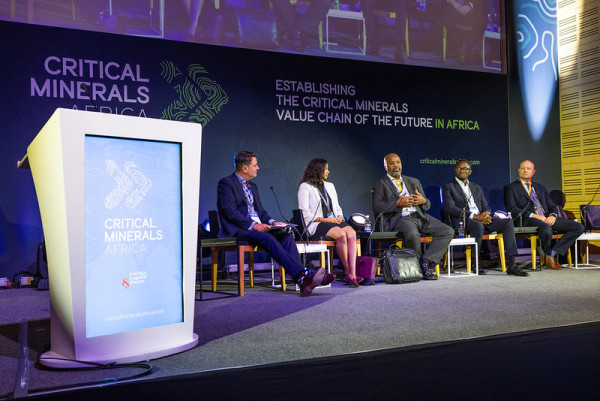
Investment in African critical minerals are on the rise, with global entities acquiring assets, funding upstream projects and developing midstream and logistics facilities. Over the past three years, Zambia (http://apo-opa.co/3yk2ymJ) – Africa's second-largest copper producer – has recorded $10 billion in investments (http://apo-opa.co/3WibyRd) in its mining sector. These investments are pushing the country closer to its goal of increasing copper production to one million tons by 2026 and three million tons by 2030, with several new projects coming online. To promote opportunities and drive fresh investment across African markets, the upcoming Critical Minerals Africa Summit (http://apo-opa.co/3WzznFR) will feature a dedicated Investment Forum.
The Critical Minerals Africa 2024 summit on November 6 - 7 serves to position Africa as the primary investment destination for critical minerals. The event is held alongside the African Energy Week: Invest in African Energy 2024 conference (http://apo-opa.co/3VMQTpp) on November 4 - 8, offering delegates access to the full scope of energy, mining and finance leaders in Cape Town. Sponsors, exhibitors and delegates can learn more by contacting sales@energycapitalpower.com
The Investment Forum will delve into investment opportunities across the spectrum of critical minerals and rare earth projects, highlighting how African governments are partnering with global stakeholders to create an enabling environment for market expansion.
Zambia introduced the Mineral Royalty Tax Reform in 2022 – reducing mineral royalty rates for investors – resulting in a surge of fresh investments. In June 2024, mining firm Jubilee Metals Group (http://apo-opa.co/3WiXJlA) acquired two operational copper mines to support efforts to increase activities at its Sable Refinery in Zambia. Canadian mining firm Ivanhoe Mines (http://apo-opa.co/4d4bNqc) also announced that is investing in the expansion of a concentrator at the Kipushi Copper Mine, aiming to increase output to 960,000 tons of copper annually by 2030, up from 140,000 tons in 2024. The UAE's International Resources Holding is providing $300 million to enhance copper production at Mopani Mines, following its acquisition of a 51% stake in a $1.1 billion deal in April 2024. The Investment Forum will showcase lucrative prospects for global investors within Zambia's copper value chain.
Meanwhile, Zimbabwe (http://apo-opa.co/3WwoAfw) banned the export of raw lithium in 2022 in a bid to attract investments across the midstream sector to value add its lithium output. The regulation aims to help the country account for 20% of global lithium demand, build a $12 billion economy by 2030 and has resulted in an influx in new investments and project launches. Mining revenue (http://apo-opa.co/4bPAEwM) has grown from $3.5 billion in 2020 to $9.77 billion in 2023, as a result. Mining firms including Rwizi Rukuru, Shengxiang Investments, Chengxin Lithium Group, Zhejiang Huayou Cobalt and Sinomine Resource Group have invested in large-scale lithium processing facilities in 2023 and 2024. The Investment Forum will feature stakeholders from Zimbabwe's critical mineral sector in panel discussions and exclusive networking sessions, highlighting investment opportunities across the mining value chain.
With the global demand for critical minerals set to increase by four times by 2030 – driven by increasing adoption of clean energy technologies – Africa, which holds 30% of the world's total critical mineral reserves, is well positioned to attract global investors. South Africa holds 80% of the world's platinum group metals, Morocco 70% of total phosphate, the Democratic Republic of Congo the world's largest cobalt reserves, Guinea-Conakry the world's second-largest bauxite reserves, and Gabon the world's second-largest manganese resources. CMA will spotlight these resources and partnership opportunities available for global stakeholders as African countries unlock their full mineral potential for GDP growth.
“Africa's critical mineral resources present an opportunity for the continent to forge partnerships on infrastructure development and economic growth with global investors. We hope to see an increase in investments flowing into Africa as global mining stakeholders capitalize on the continent's vast resources and strategic locations to feed the global demand,” stated Rachelle Kasongo, Project Director at CMA-organizer, Energy Capital & Power.
Distributed by APO Group on behalf of Energy Capital & Power.
Residents want the broken-down flats fixed; the municipality says the residents must first pay rent