Hundreds of people stake out plots for houses on empty land in Nelson Mandela Bay
Municipality says it will move against them

MyZA
News, Directory, Events and Other Stuff
Municipality says it will move against them
Though TB is preventable and treatable, more than 50,000 people died of it in South Africa in 2022
Employment programmes make a difference
The Presidential Employment Stimulus (PES) and the Presidential Youth Employment Intervention (PYEI) have made a difference in the lives of the 1.7 million people reached through the two programmes.
This is according to President Cyril Ramaphosa, who was addressing the National Assembly during the Questions for Oral Reply session held in the house on Tuesday.
“Between October 2020 and December 2023, the Presidential Employment Stimulus has created work and livelihood opportunities for over 1.7 million people. Of the participants in the various programmes, 65% are women and 85% are young people.
“The Presidential Employment Stimulus and the Presidential Youth Employment Intervention have made a real difference in the lives of millions of young people,” the President said.
President Ramaphosa said although the PES has “built an institutional architecture that is able to scale rapidly”, fiscal constraints have slowed its ability to expand although it has been expanded to March next year.
“The focus in the coming year is therefore on taking the quality of outcomes to the next level, focusing on enhancing the work experience for participants as well as on the quality of the social value they create for communities.
“This includes skills development – both ‘soft’ skills derived from work experience as well as more formal skills development,” he said.
The PYEI initiative was announced in 2020, and in February 2024, the President held a presidential youth engagement in Cape Town reflecting on the three years since the initiation of the Presidential Employment Stimulus (PES) and PYEI.
Honing in further on skills development on Tuesday, President Ramaphosa highlighted that government driven programmes such as the Social Employment Fund and the Basic Education Employment Initiative also serve the same skills development objective in different ways.
“The Presidential Youth Employment Intervention’s approach to skills development focuses on demand-led skilling, which is about increasing the relevance and delivery of interventions that address current skills gaps and emerging needs.
“To take forward this work, the Department of Higher Education and Training, with the support of the Presidency, has established demand-led skilling workstreams in priority growth sectors. This is to ensure that skilling interventions respond to demand and encourage inclusive hiring for young people and marginalised communities.
“The Presidential Youth Employment Intervention, in partnership with the National Skills Fund, has also launched [the] Jobs Boost, a R300 million outcomes fund that will fund implementing organisations to skill 4 500 marginalised young people and place them in sustainable, quality job[s],” he said.
President Ramaphosa said the work done through these initiatives has “established a firm foundation for these initiatives to make an even greater contribution to addressing poverty, unemployment and inequality in our country”. – SAnews.gov.za
NeoB
Wed, 03/20/2024 - 09:26
Government has acted decisively to respond to State Capture recommendations – President Ramaphosa
President Cyril Ramaphosa has told Members of Parliament that the recommendations made in the State Capture report are currently receiving attention from law enforcement agencies and the other bodies.
The President was speaking in the National Assembly during his oral replies to questions on Tuesday.
He said that his administration has acted decisively and with purpose to respond to the findings and recommendations of the State Capture Commission.
“As has been reported on several occasions to this Parliament and to the public more broadly, these recommendations are currently receiving attention from law enforcement agencies and the other bodies.
“Therefore, with regards to the recommendations in respect of criminal investigation and possible prosecution and other actions against individuals, the President has fully acted upon the recommendations of the Commission.
“As I indicated in a written reply to this House on 17 November 2022, any actions that I take with respect to members of the Executive about whom the Commission made findings will be informed by the outcomes of the processes undertaken by the relevant entities,” the President said.
On 22 October 2022, the President submitted to Parliament his intentions with regards to the implementation of the recommendations of the State Capture Commission.
Among other things, the State Capture Commission made over 200 recommendations with respect to criminal investigation and possible prosecution of individuals, entities and named groups of people.
The President highlighted that these recommendations were directed by the Commission to law enforcement agencies. The Commission also made recommendations with respect to further investigation of and possible action by the relevant bodies against individuals and entities for disciplinary offences, tax offences, delinquency of directors and other activities.
“The Presidency provided each of the bodies to which such recommendations were directed with copies of each part of the State Capture Commission Report as they were received by the Commission, so that they may act on the recommendations in line with their respective mandates.
“The extensive actions that this administration has taken on the recommendations of the State Capture Commission, including the introduction of draft legislative changes that are currently before this House – have been detailed in several public reports,” he said.
President Ramaphosa told the House that the most recent comprehensive report was published in November 2023, and there is a searchable online database that enables members of the public and indeed Members of Parliament to track progress.
The report and the database may be found at: www.stateofthenation.gov.za. – SAnews.gov.za
DikelediM
Wed, 03/20/2024 - 09:51
Work underway to ensure water security: Mchunu
Water and Sanitation Minister Senzo Mchunu has reiterated that water supply at a bulk level is stable, with many projects being implemented to augment the current water supply.
Mchunu said this at a gala dinner hosted by the iMvula Trust on Tuesday to celebrate 30 years of water and sanitation service delivery and beyond.
The celebration took place during National Water Week, and ahead of World Water Day which is celebrated annually on 22 March.
In his opening remarks, Mchunu said great strides have been made towards achieving Sustainable Development Goal (SDG) 6 on water and sanitation by 2030, and World Water Day is an opportunity to contribute to speeding up progress.
He highlighted some of the projects led by the department, and these include Phase 2 of the Lesotho Highlands Water Project, uMkhomazi Water Project in KwaZulu Natal, Olifants River Water Resource Development in Limpopo, and uMzimvubu Water Project in the Eastern Cape, among others.
Mchunu acknowledged that the department is currently facing the challenge of water and sanitation services management, saying while dams are full, some taps are running dry, while other areas have no taps at all.
“The main reason for this current problem is that South Africa has exclusively relied on municipalities for the provision of drinking water to households and businesses, while same have been declining in recent years.
“Government, at all levels, is aware that the capacity of municipalities is found to be wanting in the main, the provision of water could not have been an exception in the decline of basic services rendered by municipalities,” Mchunu said.
As a response to this challenge, the Minister said the department has been assisting and engaging municipalities to deliver on their mandates.
He said since the Water and Sanitation Summit in 2022, the department has gradually shifted its attention to building, renewing, and in some cases, refurbishing and upgrading water and sanitation infrastructure.
“We recently convened a two-day Water Summit, where we engaged with municipalities, in their capacities as Water Services Authorities, on the findings in the Blue, Green and No Drop Reports released by the department last year.
“During the summit, it was agreed that fundamental changes would be implemented within the existing legal framework, such as changing the allocation of the Water Services Authority function, appointing another municipality to provide the Water Services Provider function,” Mchunu said.
The Minister also highlighted the importance of private sector involvement in water and sanitation services to achieve the SDG goals.
“Overall, understand us to be assuring you that we are hard at work in ensuring water security and provision for years to come. We call upon you, those in the private sector, to come on board and work with us in making the water and sanitation sector a success.
“The establishment of the Mvula Trust in 1993 came as South Africa transitioned into its new democracy and fast-forward to present day, we recognise and appreciate your efforts over time and your readiness to engage and work with government to better the lives of South Africans,” Mchunu said. – SAnews.gov.za
GabiK
Wed, 03/20/2024 - 14:10
Atteridgeville gets smart licensing centre
The Gauteng provincial government has moved licensing services closer to communities, particularly in townships, informal settlements and hostels in Pretoria west with a new smart licensing centre.
“Overall, this initiative has the potential to bring convenience, efficiency, sustainability, and integrity to townships, informal settlements and hostel communities, ultimately transforming lives and contributing to the province's renewal service demands,” MEC for Transport and Logistics Kedibone Diale-Tlabela said on Wednesday.
She was addressing the launch of the smart licensing centre in Atteridgeville, which will expand access to government services, such as licensing services.
“Integrating these smart testing centres into the administration system of the Road Traffic Management Corporation (RTMC) and offering services like other testing centres across South Africa highlights a commitment to improving public service delivery and increasing capacity to meet the demands of license renewals and related services,” the MEC said.
The centre provides full online and cashless services as part of the provincial government's commitment to exploring new technologies and process optimisation.
It is estimated that the licence renewal service will take approximately 10 minutes, implying that more people will be serviced in the most efficient way possible.
“This innovative concept is a game-changer in Growing Gauteng Together through the Smart Mobility Plan. The centre is also solar-powered; ensuring that even during load shedding, services will continue to be provided. This commitment to sustainability further underscores the forward-thinking approach of the Gauteng Department of Roads and Transport (GDRT) in meeting the needs of its communities,” Diale-Tlabela said
The MEC pointed out that corruption in terms of driver's license renewal is caused by 'runners' who demand payments for booking slots on behalf of residents.
“These operations have ceased to be the order of the day at these smart driving licence testing centres (DLTCs). Here, you come as per appointment, and a law enforcer becomes the centre manager. This approach will assist in mitigating serious issues of corruption, making the process fairer and more transparent.
“The involvement of the Gautrain Management Agency (GMA) in piloting and rolling out these smart DLTCs along the Gautrain line is a promising approach. The positive feedback from customers at the Centurion station DLTC and others demonstrates the potential success of this model,” the MEC said.
She said launching the initiative in Atteridgeville is a testament to the provincial government’s commitment to act and improve the lives of its residents. – SAnews.gov.za
nosihle
Wed, 03/20/2024 - 14:13
Marches for cleaner, safer, and more affordable energy took place across the country on Wednesday
On the enchanting evening of 19 March 2024, the opulence of South African luxury hospitality took centre stage as the winners of the inaugural Jonsson Workwear Luxe Travel Awards were unveiled. Amidst the splendid ambiance of SIBA the Restaurant in Cape Town, 100 luminaries from the world of luxury hospitality congregated to celebrate the pinnacle …
The Portfolio Committee on Women, Youth and Persons with Disabilities met yesterday (19 March) and today to deliberate and select candidates from those interviewed to fill six vacancies at the Commission for Gender Equality (CGE).
Having conducted interviews and considering all the relevant documentation, including verifying candidate's qualifications (done by Parliament's Human Resources division) and candidates' security screening (done by the State Security Agency), the committee agreed on the suitable candidates it would recommend to the President for his consideration.
The committee agreed to recommend candidates for part- and full-time positions left vacant by CGE commissioners whose terms of office expire between the end of March and July 2024.
In fulfilling their constitutional mandate, the committee nominated and recommended the following candidates for appointment:
|
Ms Seeham Samaai |
Full time |
|
Ms Mulalo Grace Nemathaheni |
Full time |
|
Mr Mfundo Nomvungu |
Full time |
|
Ms Yanga Malotana |
Full time |
|
HRH Princess Royale Eurika Mogane |
Part time |
|
Mr Kamohelo Rodney Teele |
Full time |
|
Dr Marion Lynn Stevens |
Full time |
|
Dr Charnell Ruby Naidu |
Part time |
The recruitment process was guided by the Constitution of the Republic of South Africa and the CGE Act. The process the committee followed was also in line with the Employment Equity Act and Protection of Personal Information Act (POPIA).
Committee chairperson Ms Nonhlanhla Ncube-Ndaba said the recommended candidates are representative of race, gender and age groups, provincial distribution and disability.
The report will be debated in the National Assembly before 28 March 2024. Upon the National Assembly's adoption of the names of the recommended candidates, a report will be sent to the President for his consideration.
Distributed by APO Group on behalf of The Presidency of the Republic of South Africa.
S Africans urged to participate in the upcoming elections
Cooperative Governance and Traditional Affairs Minister, Thembi Nkadimeng, has urged South Africans to vote in the upcoming elections.
“Your vote is not merely a mark on a ballot paper; it is a voice – a voice that speaks volumes, resonating with the hopes, dreams and aspirations of our society.
“It is a symbol of your commitment to the principles of democracy,” she said.
Nkadimeng was addressing a conference on the impact of the upcoming General Elections on intergovernmental relations at the University of the Western Cape.
The National Research Chair organised the Multilevel Government, Law, and Development event at the Dullah Omar Institute.
The conference addresses critical questions regarding governance, particularly concerning the challenges posed when different parties or coalitions govern at various levels of government.
Nkadimeng used her platform to call on South Africans to unite in their diversity and go to their designated voting stations with purpose and conviction.
“Regardless of your political affiliations or beliefs, your vote is a precious right – one that countless individuals have fought and sacrificed for throughout our history.
“It is a privilege denied to many worldwide yet bestowed upon us as South Africans. Let us not take this privilege for granted, but rather cherish it and wield it wisely.”
This as the country is set to go to the polls on 29 May 2024.
Coalitions
Nkadimeng touched on the instability caused by coalitions since the local government elections have underscored that some political parties are struggling to cope with the delicate demands and dilemmas of coalition politics.
She highlighted the complexities involved and emphasised the importance of cooperation and coordination among government spheres, acknowledging the strain caused by conflicting agendas and ideologies.
These include “unscrupulous manipulation” by smaller parties to have governance by a small unrepresentative group of individuals and bribes with little thought on the impact of the same on the municipality and its ability to deliver services.
Another hurdle, she said, is the infighting in councils characterised by walkouts, leading to an inability to adopt budgets, resulting in an administration that cannot spend its budget to address service delivery backlogs.
The Minister spoke of the lack of due diligence when making key appointments, which results in compromised individuals appointed in critical positions.
“Yet, it is precisely during these moments of divergence that the resilience of our intergovernmental relations system is put to the test.
“How do we navigate the waters of political pluralism while upholding the principles of cooperative governance? How do we bridge the divide between divergent political entities to ensure the seamless delivery of services and the pursuit of shared objectives? These are questions that demand thoughtful consideration and innovative solutions.”
She also discussed lessons learned from the 2021 Local Government Elections, emphasising the need for coalition regulation to maintain stability.
Nkadimeng stressed the significance of legal frameworks, institutional mechanisms, and fostering dialogue and collaboration.
She reiterated the constitutional principle of cooperative government and intergovernmental relations, regardless of electoral outcomes, emphasising its importance for effective governance.
Central to the notion of intergovernmental relations, according to Nkadimeng, is the recognition of the interdependence among the three spheres (national, provincial and local) of government.
She explained that each sphere possesses distinct powers, functions, and institutions, yet they are inherently interconnected.
“Therefore, all spheres of government have to respect each other's autonomy while keeping one another informed of new policies and developments.”
Intergovernmental relations extend beyond mere cooperation. However, according to Nkadimeng, they encompass a complex network of interactions involving government institutions and civil society.
Effective coordination of public policies among national, provincial, and local governments is essential for ensuring coherent and impactful governance.
Regardless of the electoral outcomes when the South Africans go to the polls, she said she believes that it is important for all political parties to adhere steadfastly to the principles outlined in the Constitution of the country.
“Upholding the ideals of cooperative government and intergovernmental relations is not contingent upon political affiliation but is a shared responsibility integral to the fabric of our democracy.”
She concluded by outlining measures to maintain resilience in the face of political changes, including promoting continuity, trust, cooperation, and building institutional capacity within the intergovernmental relations framework. – SAnews.gov.za
Gabisile
Wed, 03/20/2024 - 15:07
Renowned Graffiti Artist Shaun Oakley, popularly known as “Damn Vandal”, unveiled the spectacular Hollywoodbets Durban July theme through a billboard vandalism stunt. The recent “vandalisation” of Hollywoodbets’ billboard on Sandton Drive in Johannesburg has sparked a citywide conversation about art, advertising, and the upcoming Hollywoodbets Durban July. What initially seemed like an act of mischief …
CAPE TOWN, SOUTH AFRICA, 20 March 2024 – Cape Town’s skyline is reaching new heights as The Rubik, a dazzling luxury apartment complex in the heart of the CBD, has reached the peak of its vertical ascent. With 27 levels of premium living and commercial spaces, The Rubik’s modern glass exterior promises residents and businesses …
Black industrialists are job creators, wealth generators and agents of change
Despite facing immense challenges, black industrialists have persevered, defying the odds and breaking barriers to create thriving businesses and contribute significantly to the nation's economic development.
“Today, we celebrate the power of empowerment. Empowerment that has not been handed out as charity but earned through hard work, resilience and unwavering determination.
“Black industrialists are not just job creators and wealth generators, they are agents of change, driving social and economic transformation in our communities,” President Cyril Ramaphosa said on Wednesday.
He said at the heart of every successful industrialist lies a spirit of innovation and creativity.
“Whether it is in technology, manufacturing, agriculture or services, they have shown that excellence knows no bounds and that Africa is a continent brimming with untapped potential and ingenuity.
“None of this progress would have been possible without the spirit of collaboration and partnership,” the President said, addressing the Black Industrialists and Exporters Conference at the Sandton Convention Centre.
President Ramaphosa said it was a good moment for the country to reflect on the empowerment journey which is a central part of the changes that have taken place over the last three decades.
“We have about 1 000 black industrialists present here today. This is a living testimony to the changes that have taken place in the past 30 years, and indeed, over the past five years,” President Ramaphosa said.
He said empowerment is a historical imperative to provide redress to black South Africans who were discriminated against and excluded under the apartheid regime.
“Even after the advent of democracy, and the removal of discriminatory laws, the racial features of privilege and disadvantage remained,” he said.
President Ramaphosa said underdevelopment in townships and bantustans limited access to economic opportunities.
“Bantu education left several generations without the skills needed to improve their economic situation.
“Much has changed in our country, but this iniquitous inheritance continues to diminish the economic prospects of many black and women South Africans. It is this inheritance that we are determined to overcome,” he said.
The President said for far too long, the country's economic landscape was marked by inequality, exclusion and systemic barriers that hindered the progress of aspiring entrepreneurs, especially those from black communities.
The conference takes place on the eve of the 20th anniversary of the implementation of the Broad-Based Black Economic Empowerment Act (B-BBEE Act).
It has shone the spotlight on the achievements, successes, opportunities and strides made by the Black Industrialists Programme since its inception in 2016.
This years’ conference features 53 large companies or procurers making pledges to buy from the growing class of black industrialists.
The conference will culminate with an awards ceremony aimed at recognising the contribution of Black Industrialists towards driving economic growth, social transformation and in advancing inclusive entrepreneurship in the South African economy.
More than 200 entries have been received and ten awards will be announced at the conference. – SAnews.gov.za
Edwin
Wed, 03/20/2024 - 15:14
“Countless human rights violations are rooted in toxic and wounded masculinity, it’s time to man-up and realise human rights for all!’ says a leading NPC, Father A Nation Johannesburg, March 2024 – As South Africa (SA) observes Human Rights Day, a non-profit company (NPC) calls for the need to promote positive masculinity as a solution …
Government working on reforms to develop sustainable infrastructure - President
President Cyril Ramaphosa says government is working on reforms to develop sustainable infrastructure, boost business confidence and encourage investment.
The President was addressing the National Assembly during an oral reply session on Tuesday.
“One of the most important pillars of government’s economic recovery plan is a significant increase in infrastructure investment. This has meant that we have had to give specific attention to effective project preparation and the mobilisation of funding on a far larger scale.
“We have amended the Division of Revenue Act to provide for the pledging of future infrastructure grants to crowd-in private sector finance and to leverage external technical capacity,” he said.
The President said this will facilitate integrated planning and implementation. It will also enable the development of a funded maintenance programme, a monitoring and evaluation framework, and a governance structure to manage the programme delivery.
He highlighted that he previously spoke about the Northern Cape and Eastern Cape as pilot provinces to address the social infrastructure backlog in schools as well as in housing.
He told the National Assembly that Infrastructure South Africa (ISA) is making use of its project preparation facility to support the two pilot provinces to develop quality business cases for submission to the Treasury Loans Coordinating Committee and the Budget Facility for Infrastructure.
“Through this mechanism we will ensure that social infrastructure, particularly health and education infrastructure, is delivered in a manner that is cost-effective and rapid.
“It will also help to increases the participation of the private sector, both in terms of financing this build programme and also drawing on its expertise and capabilities,” he said.
As part of capacity building, he said, the Municipal Infrastructure Support Agent (MISA) is developing guidelines for municipalities to use for project scoping and packaging. Importantly, the Municipal Infrastructure Grant makes provision for a portion of the grant to be utilised for refurbishment.
The President said through these efforts, the infrastructure build programme is starting to gain momentum.
Infrastructure projects worth over R230 billion are currently in construction, including in energy, water, roads, rural bridges, human settlements and student accommodation.
“These projects are contributing to greater economic activity and creating employment while improving the lives of South Africans and expanding the capacity of our economy,” the President said. – SAnews.gov.za
DikelediM
Wed, 03/20/2024 - 10:15
Discover romantic date night packages, great value family escapes, unforgettable dining experiences, or the perfect place for after-work drinks with Southern Sun’s selection of specials and packages. Try something new, explore our country’s hidden gems, and enjoy the best Mzansi has to offer. Cape Town Carnival: The Year’s Biggest Street Party Local is Lekker, step …
Former engineering head Daniel Mtimkulu had his salary more than doubled after fraudulently claiming a doctorate and a job offer from a German firm
eThekwini Municipality tackles hijacked, unsafe buildings
The eThekwini Metropolitan Municipality has intensified its collaboration with property owners in a bid to eradicate unsafe buildings within the inner city.
This comes after the establishment of a new unit, the Problem Buildings Division, which is dedicated to tackling unsafe buildings.
“Problem buildings” are defined as derelict, abandoned, hijacked, structurally unsound and unlawfully erected, among other things.
Through the Problem Buildings Division, the city’s vision is to create a vibrant inner city, underpinned by well-managed buildings.
The division encourages property owners, whose buildings have been deemed unsafe for occupation, to contact them or face future closure.
Deputy City Manager of Economic Development, Lihle Phewa, said these buildings present social issues, which include homelessness, crime and drugs, which are often found in such buildings.
Phewa said the division has already identified approximately 40 buildings within the city and has started the process to serve relevant notices.
This is done in accordance with the National Building Regulations and Standards Act, and the Problem Building by-laws.
“If there is non-compliance by the property owner after the notice period has expired, the municipality will approach the High Court to carry out remedial work, apply for a demolition order, request for the appointment of a judicial administrator, request for a sale in execution, or expropriate the property and building.
“All costs incurred will be to the owner’s account. Owners can however, partner with the municipality to put together an action plan with time frames on how to turn the problem building around,” Phewa said.
Phewa highlighted the recent eviction of illegal occupants from Crieff Place Building, South Beach, as among the division’s successes.
Following a court process, the owner of the property was able to evict the illegal occupants and proceeded to demolish the vacant building. However, the owner left a portion of the superstructure and did not fully secure the property.
The owner had also left rubble from the demolition process on site to ensure that the site was not occupied again, but the sheltered portion of the remaining superstructure was occupied shortly after.
“The Problem Building Division engaged unsuccessfully with the owner to secure the property. The division took the decision to remedy the works on site by removing the rubble, repairing, and closing all the openings to the site, and installing barbed wire to the tops of the boundary wall to prevent any person from occupying the site,” Phewa said. - SAnews.gov.za
GabiK
Wed, 03/20/2024 - 12:52
JP van der Walt set to defend his triple King of the Hill crown in Road Car and Supercar category in Porsche 911 Turbo S Official entries from Suzuki, BMW and Mercedes-Benz feature the latest petrol, hybrid and alternative energy-powered vehicles Category covers everything from hot hatchbacks to muscle cars and high-powered supercars – from […]
Comprehensive intervention to address Johannesburg water challenges
The City of Johannesburg has presented a comprehensive intervention plan to address ongoing water supply challenges in the city.
Water and Sanitation Minister, Senzo Mchunu, together with his Deputy Ministers, David Mahlobo and Judith Tshabalala, met with Johannesburg City officials, led by Executive Mayor Kabelo Gwamanda, to receive an update on the city’s plans to deal with the current water challenges and future water supply sustainability plans for the metro.
The meeting held this week was a follow-up to a meeting held on 5 March 2024, where the department presented a comprehensive assessment report on the state of water provision in the city amid regular water supply interruptions experienced by residents.
At the meeting held on 5 March, the city was requested to come back with an action plan to address all the issues raised in the report, including how it will deal with the infrastructure challenges and non-revenue water, which is contributing to the water supply challenges.
During this week’s meeting, the city presented a wide-ranging plan on immediate, medium- and long-term measures to ensure a sustainable water supply. These include infrastructure projects to refurbish, upgrade and construct new storage reservoirs and pump stations, as well as associated infrastructure to augment storage capacity.
The plan also includes addressing non-revenue water through the implementation of water conservation and demand management technical interventions to reduce demand.
The city also presented technical interventions, which include repairing leaking reservoirs and tower infrastructure; replacing water pipes, domestic and large consumer meters; retrofitting and removal of wasteful devices, and enforcement of by-laws, including removal of illegal connections and customer bypass connections.
Gwamanda said these projects are at various stages of implementation, while others still require funding.
The meeting also heard that the city infrastructure backlog is estimated at around R27 billion but agreed that focus should be on what can be done with the current and upcoming budget in July.
Gwamanda commended the support from Water and Sanitation Ministry, saying that the city is looking at various options to mitigate water supply interruptions.
“We have set aside about R100 million for the electricity supply entity, City Power, to put alternative power supply infrastructure to key infrastructure that contributes to the water supply network,” Gwamanda said.
Mchunu acknowledged the efforts of the city’s water entity, Johannesburg Water, to deal with infrastructure backlogs, and various interventions implemented to deal with the current recurring water outages.
Mchunu urged the city to work on its turnaround time in responding to pipe bursts and leaks in their distribution network, as this contributes to the high physical water losses.
“It is clear that the city requires serious interventions and funding to deal with its water infrastructure renewal programme, and the department will work with Joburg Water in packaging some of their key infrastructure projects that require blended finance, including from the private sector.
“We have agreed, collectively, that over and above the technical interventions to address non-revenue water, there is a serious need for a compressive public awareness campaign to conscientise residents on the importance of water conservation and water use efficiency as part of the Water Conservation and Water Demand Management Strategy,” Mchunu said.
The metro’s non-revenue water currently sits at 46.1%, while the consumption rate is at 280 litres per capita per day. – SAnews.gov.za
GabiK
Wed, 03/20/2024 - 10:27
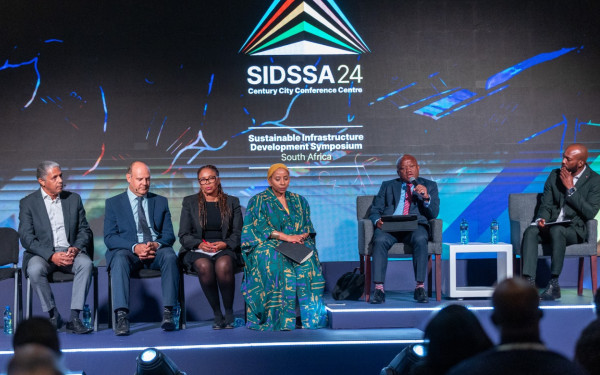
South Africa's Minister of Public Works and Infrastructure Sihle Zikalala unpacked the country's 2024/2025 infrastructure priorities and project pipeline during a panel session at the Sustainable Infrastructure Development Symposium South Africa (SIDSSA) 2024 in Cape Town on Tuesday.
According to Minister Zikalala, the country's top 12 infrastructure priorities seek to stimulate job creation, promote economic competitiveness and contribute to broadening economic inclusivity.
“We announced the 12 priority projects today and it's important to give a background as to how we arrived at this priority list. We want projects that will contribute to higher GDP impact, but at the same time, ensure export and embrace the green economy,” he stated.
Taking place on March 17-19 at the Century City Conference Center, SIDSSA brings together key stakeholders in South Africa and across the continent with the aim of driving infrastructure development. SIDSSA 2024 serves as a crucial platform for discussions and partnerships in the infrastructure investment landscape, with a focus on accelerating economic activity through strategic infrastructure plans. Energy Capital & Power – the leading investment platform for the African energy sector – is a media partner for this important platform. For more information, visit https://SIDSSA.org.za/.
With support from Infrastructure South Africa (ISA) – a program within the Ministry of Public Works and Infrastructure – the projects also aim to accelerate private sector-led development. The projects are poised to serve as a catalyst for closing the infrastructure investment gap, while meeting the infrastructure target set out by the government's National Development Plan.
“It was very important for us to ask what we plan to contribute from an operational perspective to all the socioeconomic perspectives outlined by the Minister,” stated Mameetse Masemola, Head of ISA. “We will work very closely with the project sponsors in unpacking the work and once we are ready, we will invite transactional advisors.”
It was noted during the session that shortfalls in operation and maintenance have resulted in the underdevelopment of South Africa's infrastructure strategy. As such, the need to meet end-user's requirements, the mobilization of digital infrastructure and ensuring operational competency were noted as prerequisites to de-risk investment in the sector.
“The projects listed give the catalytic impetus to develop our industry,” stated Wayne Petersen, Director of Transport and Infrastructure at WSP Group. “We have to ensure that the private sector invests strongly in the projects that are implemented.”
Meanwhile, panelists touched on the importance of bankability and sustainability in attracting private sector investment towards infrastructure projects in the country.
“Infrastructure assets are not only about the assets themselves, but also about the economics that surround them,” said Catherine-Candice Koffman, Group Executive for Project Preparation at the Development Bank of Southern Africa. “Bankability is very much about ensuring we have a project that doesn't rely too much on the fiscus. A successful project is one where you use as little budgetary capital to fund the projects as possible.”
For South Africa's infrastructure projects to maintain operational efficiency after completion, it was noted that the country will need to invest in attracting international talent while promoting human capital development, with Partner at PwC Southern Africa Chris van der Merwe stating, “These projects need to strike a balance between economic and social projects.”
Distributed by APO Group on behalf of Energy Capital & Power.
About SIDSSA 2024:
SIDSSA 2024 is organized by the Investment and Infrastructure Office under the Presidency, in collaboration with the Association of African Exhibition Organizers. The National African Federation for the Building Industry joins as an association partner, while the Development Bank of Southern Africa is the official sponsor of the event.
Lifestyle audits for Executive underway
President Cyril Ramaphosa says despite several delays, lifestyle audits for the President, Deputy President, Ministers and Deputy Ministers are now underway.
The President was participating in the Questions for Oral Reply session held in the National Assembly on Tuesday.
“After several delays, lifestyle audits of Members of the Executive are underway. This process is being led by the Director-General in the Presidency and Secretary of Cabinet. The President, Deputy President, Ministers and Deputy Ministers are currently in the process of submitting additional information required for these audits.
“As I have indicated before, the aim of a lifestyle audit is to collect as much information as possible on an individual’s lifestyle to be able to identify when an individual’s expenditure exceeds his or her income. In itself, a lifestyle audit is not conclusive, but may indicate that further investigation is required to establish if there is any wrongdoing,” he said.
President Ramaphosa explained that the function of carrying out the audits was moved to the office of the Director-General, Phindile Baleni, owing to cost containment.
“The Office of the Director-General had to source competent and skilled personnel with experience in conducting lifestyle audits. The capacity building exercise took longer than anticipated which impacted negatively on the timelines for the audits.
“This is the first time that national government is conducting lifestyle audits of Members of the Executive, requiring new systems, processes and methodologies to be developed.”
He said the Director-General will decide on the most appropriate way to communicate the outcomes of the audits once completed. – SAnews.gov.za
NeoB
Wed, 03/20/2024 - 09:33
Audit firm to be investigated by regulator
This will be of interest to my fellow SEO freaks… On Monday 18 March 2024 I re-established my https://alan.straton.org.za sub domain web site after it was deleted at the beginning of 2023. Straton.org.za has always been live and open to visits from Search Engine bots and has garnered a solid level of respect from the …