Key Disability Bill Should Not Be Rushed
We need more time to comment on this bill, which could transform the lives of millions

MyZA
News, Directory, Events and Other Stuff
We need more time to comment on this bill, which could transform the lives of millions
President announces changes to National Executive
President Cyril Ramaphosa has announced changes to the National Executive with immediate effect.
In a statement released on Tuesday evening, the President said the changes have been made in order to ensure the effectiveness of Cabinet in delivering on its mandate and in accordance with section 91(2) of the Constitution.
The President has appointed Mmamoloko Kubayi, currently the Minister of Human Settlements, as the Minister of Justice and Constitutional Development.
Thembi Nkadimeng, currently the Minister of Justice and Constitutional Development, has been appointed as the Minister of Human Settlements.
Phumzile Mgcina has been appointed the Deputy Minister of Mineral and Petroleum Resources. Mgcina has been serving in the National Executive as the Deputy Minister of Labour and Employment.
Judith Nemadzinga-Tshabalala has been appointed the Deputy Minister of Employment and Labour.
Nemadzinga-Tshabalala has been serving in the National Executive as the Deputy Minister of Mineral and Petroleum Resources.
“The changes to the National Executive are effective immediately. I would like to wish these members of the national executive well in their new positions,” said President Ramaphosa.
The Constitution vests executive authority of the Republic in the President.
The President exercises executive authority together with other members of Cabinet in fulfilling various provisions of the Constitution and national legislation. – SAnews.gov.za
Janine
Tue, 12/03/2024 - 20:15
There are serious concerns about the reliability of the census data
G20 Presidency to establish three dedicated task forces
President Cyril Ramaphosa has announced that South Africa’s G20 Presidency will pursue progress on cross-cutting issues through the establishment of three dedicated task forces.
Speaking during the launch of the G20 Presidency on Tuesday, President Ramaphosa said the first task force is on Inclusive Economic Growth, Industrialisation, Employment and Reduced Inequality.
The second task force is on Food Security, while the third task force is on Artificial Intelligence, Data Governance and Innovation for Sustainable Development.
WATCH |
“It is critical for South Africa that the G20 remains focused on its core responsibilities to address global economic and financial challenges. It should not replace existing international institutions and platforms, such as the United Nations and associated bodies.
“At the same time, G20 initiatives should support, not diminish, the responsibilities that countries have to deliver on the Sustainable Development Goals, climate action and other commitments,” the President said.
To ensure that the G20 remains focused, the President said that South Africa will not create any new working groups or permanent structures.
“We will build on previous presidencies and provide momentum to existing structures and processes. We will reflect on the impact of the G20 over the last 20 years and positioning it to enhance its impact over the next 20-year cycle,” he said.
The President emphasised that it is important for South Africa that its G20 Presidency is inclusive.
“Dialogue with civil society and other non-government institutions will be conducted through various engagement groups. These engagement groups are organised according to sectors, such as business, labour, civil society, parliamentary bodies and the judiciary.
“These engagement groups also include science bodies, think tanks, and audit institutions, as well as institutions of higher learning, specific groups for women and youth including vulnerable groups,” he said.
President Ramaphosa said the nation also intends to support the creation of a new engagement group, Township20 (TS20), to spotlight the potential of South Africa’s township economies.
“This will highlight the creative, cultural, financial and innovative capacities that our own country has to give when it comes to small and medium enterprises as well as cooperatives and how these operate in rural areas as well as townships where our people live,” he said.
Following Brazil’s example, South Africa will host a G20 Social Forum, amplifying the voices of civil society, women, youth and vulnerable groups.
“South Africa firmly believes that civil society serves as a bridge between the G20 leaders and the people who have the greatest interest in their deliberations,” the President affirmed.
Looking ahead to the Leaders’ Summit
The G20 Presidency will culminate in the Leaders’ Summit in Johannesburg in November 2025, where world leaders will adopt a declaration outlining collective actions to address critical global challenges.
With over 130 meetings planned across all provinces, and thousands of delegates expected, the G20 Presidency presents an opportunity to showcase South Africa’s potential and hospitality.
“The G20 Presidency is an opportunity to present to the world the great opportunities and experiences that South Africa has to offer. We look forward to welcoming our friends and partners to our beautiful country,” the President said.
South Africa assumed the Presidency of the G20 on 1 December 2024, marking a historic milestone as the first African country to lead this influential group of the world’s largest economies.
This Presidency is not only a significant moment for South Africa but also for the African continent and the Global South, amplifying their voices on the global stage, while advancing shared goals of economic growth, sustainability and equality. – SAnews.gov.za
DikelediM
Tue, 12/03/2024 - 13:02
The February 2024 Decision of the African Union Assembly on the report of the President of the Republic of South Africa, H.E. Matamela Cyril Ramaphosa, the African Union Champion for Pandemic Prevention, Preparedness and Response (PPPR), to “support the establishment of an accountability mechanism within the AU architecture to ensure the effective implementation of the Lusaka Agenda in Africa” is a timely and welcome development.
The Lusaka Agenda, launched on Universal Health Coverage (UHC) Day, December 12, 2023, provides a framework for coordinated action towards a unified vision of sustainably and domestically financed health systems and universal access to healthcare, ensuring that no one is left behind.
H.E. Ramaphosa has been instrumental in advancing the Lusaka Agenda Accountability Framework. Through the PPPR Commission, he championed the establishment of an accountability mechanism for the Lusaka Agenda, which leverages platforms such as the Africa Leadership Meeting (ALM). He secured the endorsement of the framework by his peers, emphasizing Africa's commitment to health equity, strengthened primary health care, and accountability for sustainable progress.
The Lusaka Agenda's transformative potential lies in fostering African-led solutions, building stronger primary healthcare systems, and ensuring equitable health outcomes while reducing dependency on fragmented external funding. It represents a unified vision for Africa to lead the future of its health systems with sustainable financing and strategic coherence across global and local health initiatives. It aims to empower African nations to achieve universal health coverage (UHC) and resilience against public health challenges, including those exacerbated by the COVID-19 pandemic.
The effective implementation of the Lusaka Agenda will achieve five strategic shifts, notably for the long-term evolution of the Global Health Initiatives (GHIs):
The five strategic shifts will advance resilient primary health care (PHC) as the cornerstone of preparedness, prevention, response, and control of public health threats across the African continent.
“The Lusaka Agenda is a political commitment endorsed by African Heads of State to achieve health equity and strengthen primary health care across the continent. I call on all stakeholders to support Africa CDC's leadership and fully commit to the accountability framework, ensuring transparency and measurable progress toward a healthier, more resilient Africa,” – H.E. President Cyril Ramaphosa, Republic of South Africa.
“The Lusaka Agenda Secretariat, housed at Africa CDC, will work with partners to develop the Lusaka Agenda Monitoring and Accountability Framework and a continental scorecard for timely monitoring and reporting to AU Heads of State and Government. Through the Secretariat, AU Member States will more effectively and efficiently leverage GHIs to complement domestic financing, maximizing health impacts in support of country-led priorities,”- H.E. Dr. Jean Kaseya, Africa CDC Director General.
The Lusaka Agenda Secretariat hosted at Africa CDC aligns with the February 2024 Assembly Decision of the African Union Heads of State and Government (Dec.880(XXXVII) and further solidifies Africa CDC and AU Commission leadership in steering the successful implementation of the Lusaka Agenda on the African continent. The establishment of the Secretariat is a pivotal initiative to oversee and coordinate the monitoring and accountability mechanisms essential for advancing Africa's health transformation.
The Secretariat provides a platform for Africa CDC to work closely with partners, including WHO and the wider UN system, the World Bank, bilateral donors, regional entities, civil society, and community-led organizations.
The Secretariat will coordinate, monitor the implementation, and periodically report to the AU Heads of State and Governments on the progress of implementation. It will foster learning and knowledge-sharing across policy and program areas, ensuring no country is left behind during the Lusaka Agenda's implementation on the African continent.
Distributed by APO Group on behalf of Africa Centres for Disease Control and Prevention (Africa CDC).
GDP decreases by 0.3% in the third quarter of 2024
South Africa’s Gross Domestic Product (GDP) decreased by 0.3% in the third quarter of 2024, following an increase of 0.3% in the second quarter of 2024.
“The agriculture industry was the main drag on growth on the production (supply) side of the economy, with transport, trade and government services also contributing to the slowdown. On the expenditure (demand) side, there was a decline in imports, exports and government consumption,” Statistics South Africa (Stats SA) said on Tuesday.
The agriculture, forestry and fishing industry decreased by 28,8%, contributing -0,7 of a percentage point to the negative GDP growth. This was primarily due to decreased economic activities reported for field crops.
The transport, storage and communication industry decreased by 1,6%, contributing -0,1 of a percentage point.
Decreased economic activities were reported for land transport and transport support services.
“The trade, catering and accommodation industry decreased by 0.4%. Decreased economic activities were reported for wholesale trade, motor trade and food and beverages. General government services decreased by 0.1%, mainly due to decreased employment in national and provincial government and extra-budgetary institutions.
“The finance, real estate and business services industry increased by 1.3%, contributing 0.3 of a percentage point. Increased economic activities were reported for financial intermediation, insurance and pension funding, auxiliary activities, real estate activities and other business services,” Stats SA said.
The personal services industry increased by 0.5%, contributing 0.1 of a percentage point.
Increased economic activities were reported for health and education.
“The manufacturing industry increased by 0.5%, contributing 0.1 of a percentage point. Three of the ten manufacturing divisions reported positive growth rates.
“The largest positive contribution was reported for the basic iron and steel, non-ferrous metal products, metal products and machinery division. The mining and quarrying industry increased by 1,2%, contributing 0,1 of a percentage point. Increased economic activities were reported for manganese and chromium ore.”
Expenditure on GDP
Expenditure on real GDP decreased by 0.2% in the third quarter of 2024, following an increase of 0.4% in the second quarter of 2024.
“Household final consumption expenditure (HFCE) increased by 0.5%, contributing 0.3 of a percentage point to the total negative growth. The highest growth rates were reported for non-durable and semidurable goods,” Stats SA said.
The main positive contributors to the increase in HFCE were expenditures on food and non-alcoholic beverages (0.9% and contributing 0.1 of a percentage point), housing, water, electricity, gas and other fuels (0.6% and contributing 0.1 of a percentage point), recreation and culture (1.2% and contributing 0.1 of a percentage point) and restaurants and hotels (1.1% and contributing 0.1 of a percentage point).
“Final consumption expenditure by general government decreased by 0.5%, contributing -0.1 of a percentage point. This was mainly driven by decreases in purchases of goods and services and compensation of employees.
“Gross fixed capital formation increased by 0.3%. The main positive contributors to the increase were other assets (4.4% and contributing 0.5 of a percentage point), construction works (1.4% and contributing 0.2 of a percentage point) and machinery and other equipment (0.5% and contributing 0.2 of a percentage point),” Stats SA said.
There was a R6,6 billion drawdown of inventories (seasonally adjusted and annualised value).
Large decreases in three industries, namely manufacturing; electricity, gas and water; and mining and quarrying, contributed to the inventory drawdown.
“Net exports contributed positively to expenditure on GDP. Exports of goods and services decreased by 3.7%, largely influenced by decreased trade in pearls, precious and semi-precious stones and precious metals; vehicles and transport equipment excluding large aircraft; chemical products; base metals and articles of base metals; and machinery and electrical equipment.
“Imports of goods and services decreased by 3.9%, largely influenced by decreased trade in vehicles and transport equipment excluding large aircraft; mineral products; vegetable products; and base metals and articles of base metals,” Stats SA said. -SAnews.gov.za
nosihle
Tue, 12/03/2024 - 13:09
Treasury extends public comment window on alcoholic beverages discussion paper
National Treasury has extended the public comment window for the discussion paper on the taxation of alcoholic beverages due to numerous requests to extend the comment period.
The discussion paper on the taxation of alcoholic beverages, along with the discussion papers on the tax treatment of collective investment schemes and phase two of the carbon tax, provided for public comments until the close of business on 13 December 2024.
Since publication, National Treasury has received numerous requests to extend the comment period, specifically with regards to the discussion paper on the taxation of alcoholic beverages.
“Having due consideration for the requests for extension, the deadline for public comments on the taxation of alcoholic beverages discussion paper is hereby extended from 13 December 2024 to 14 February 2025.
"The closing dates for other discussion papers remains the close of business on 13 December 2024,” National Treasury said on Tuesday.
National Treasury published a discussion paper titled “Taxation of alcoholic beverages”, together with two other discussion papers, namely, “The tax treatment of collective investment schemes” and “Phase two of the carbon tax” on 13 November 2024 for public comment.
Written comments can be forwarded to 2024Alcoholreview@treasury.gov.za by close of business on 14 February 2025. - SAnews.gov.za
nosihle
Tue, 12/03/2024 - 13:22
Holidaymakers: Remember to carry unabridged birth certificates if travelling overseas
Holidaymakers who will be travelling with minors overseas this festive season are reminded to carry unabridged birth certificates unless the child’s details are endorsed in the parent’s passport.
“In cases where one parent is traveling with a child in the absence of another parent, a consent letter from the absent parent granting permission to the other parent to exit the country with the child will be required,” said Border Management Authority (BMA) Commissioner, Dr Michael Masiapato.
Masiapato explained that this requirement is mainly applicable to South Africans intending to exit the country with children, which forms part of the country’s fight against human trafficking.
“Considering the expected high volumes in this festive period, we would like to appeal to all travellers to plan their travel early and exercise patience on the roads towards ports,” he said.
The Commissioner was speaking during a media briefing on Monday where he unveiled the agency’s festive season plans covering December 2024 and January 2025, aimed at managing increased border activities.
He also urged those who will be leaving or entering South Africa to ensure that all their travel documents are in order – to avoid any unnecessary delays at the ports of entry.
As required by international protocols, Masiapato said all travellers should have a valid machine-readable passport and a valid visa where applicable.
In addition, passports should have at least one empty page to enable the BMA immigration team members to stamp the passports as required.
“This message is also relevant during the return leg in January 2025 as all travellers are expected to present themselves at the designated ports of entry to enter South Africa.
“As for those wishing to cross the border using a financed vehicle, they should have the letter from their financing institution authorising them to exit the country with the vehicle.”
South Africa faces complex border-related challenges, including illegal immigration, cross-border crimes, and smuggling of illicit goods.
READ | BMA outlines plans to secure SA’s ports of entry this festive season
Interventions
Key interventions by the BMA this festive season include extending operating hours at major ports of entry over the festive season, deploying 69 additional personnel, and collaborating with Interpol and local law enforcement authorities.
On port health matters, the Commissioner stated that all visitors must expect to be screened on their arrival at the ports of entry.
“This is meant to avoid any unintentional importation of any communicable or infectious diseases into the country.”
Yellow fever and malaria
Meanwhile, travellers arriving from yellow fever endemic areas are required to have valid yellow fever certificates.
According to the BMA, these requirements also apply to those who will be in transit for more than 12 hours in local airports.
“For the outgoing travellers, it is always important to check with the relevant consulate or embassy of the country you visiting to ensure familiarity with the travel requirements of the country you are visiting.”
He also noted that some parts of Limpopo, Mpumalanga, and KwaZulu-Natal are endemic for malaria.
“Therefore, to prevent and minimise mosquito bites, travellers are advised to use insect repellents, bed nets, and wear long-sleeved clothes and socks, especially after sunset.”
Therefore, holidaymakers, are urged to use antimalaria medicine such as chemoprophylaxis where prescribed.
“As the BMA, we would like to urge travellers presenting signs of illness to present themselves or report to the BMA port health clinic on arrival at the port of entry, or else they can visit their nearest health facilities or their private doctors for consultation.”
Mpox
He also touched on the mpox disease with the risk classification for South Africa currently being moderate.
“However, travellers should avoid close contact with individuals who exhibit symptoms of mpox, such as skin lesions or muscle aches.”
Declarations
In addition, he stated that those wishing to carry health-related goods such as food, medicine, hazardous substances, and/or cosmetics are advised to ensure that they make the necessary declarations at the customs counter at the port of entry.
“As for travellers transporting human remains, including ashes, they must be in possession of the requisite import or export permits issued by the National Department of Health to be processed.”
Illegal migration
In addressing the scourge of illegal migration, the Commissioner said the BMA has managed to intercept and block about 410 000 people attempting to enter the country illegally since the deployment of the first cohorts of the border guards in July 2022.
“The majority got arrested, fingerprinted, declared undesirable for five years, and deported.”
The BMA facilitates the legitimate movement of people and goods through 71 ports of entry, including 52 land ports, 10 international airports, and nine seaports.
The agency also detected about 312 high-value vehicles that were meant to illegally exit the country to other jurisdictions in the continent. – SAnews.gov.za
Gabisile
Tue, 12/03/2024 - 13:29
Lesotho Highlands Water Project Tunnel maintenance on schedule
The Department of Water and Sanitation has reassured that the ongoing maintenance, repair and refurbishment of the Lesotho Highlands Water Project (LHWP) Tunnel is on schedule.
Maintenance operations started on 1 October 2024 and are scheduled to be completed within six months.
READ | Government commends progress made in Lesotho Highlands Water Project maintenance
The Trans Caledon Tunnel Authority (TCTA) is responsible for the maintenance work in South Africa, while Lesotho Highlands Development Agency (LHDA) is focusing on the transfer tunnels at the Muela hydro power station in Lesotho.
The department said it is monitoring the progress of the maintenance repair work and is satisfied that the project will be completed within the scheduled time.
“The department is also monitoring water supply to communities under the local municipalities of Dihlabeng, Nketoane and Mafube, which are along the Liebenbergsvlei River and Wilge River. These municipalities benefit directly from the Lesotho Highlands Water Project and have adversely been affected since the tunnel closure.
“Some towns in Setsoto and Mantsopa municipalities in the Free State normally abstract water from the Caledon River, while others abstract from the Vaal and Rhenoster rivers. These municipalities benefit indirectly from the LHWP, and the department is also monitoring water supply to communities within these municipalities,” the department said.
The department has embarked on relief intervention programmes for the municipalities. It is also upgrading water treatment works, raw water pumps and abstraction works. The department is constructing new reservoirs, as well as developing groundwater resources by drilling and equipping boreholes.
“All of these projects are underway and are critical in ensuring sustainable water supply to communities during the tunnel system shutdown.
"Municipalities had to implement water restrictions, especially to regulate irrigation in their area of operation for the duration of the closure,” the department said.
The department has also gazetted water usage by farmers in the area from 1 October 2024 until 31 March 2025, which stipulates that water users on the left bank of the Ash and Liebenbergsvlei rivers may abstract water for agricultural purposes from 6am to 6am on Mondays, Tuesdays and Wednesdays.
On the right bank of the Ash and Liebenbergsvlei rivers, abstraction of water may be from 6am to 6am on Wednesdays, Thursdays and Fridays.
The left bank of the river is defined as the left side of a person, when the person looks at the direction that the water is flowing in.
The department said the restrictions are necessary to ensure that there is enough water during the closure of the tunnel.
“The department, together with the affected municipalities continues to engage with the communities through public education programmes, with the aim of encouraging responsible water usage and water conservation, particularly during the time of a tunnel closure,” the department said. – SAnews.gov.za
GabiK
Tue, 12/03/2024 - 14:03
South Africa and Nigeria strengthen ties
South Africa and Nigeria have reaffirmed their commitment to deepening their long-standing ties during the 11th Session of the Bi-National Commission held in Cape Town.
This as President Cyril Ramaphosa met with his Nigerian counterpart, President Bola Ahmed Tinubu, at Tuynhuys in Cape Town on Tuesday.
The meeting underscored the close bonds of friendship, solidarity and cooperation between the two nations, highlighting the importance of mutual efforts to enhance economic, political and cultural relations.
WATCH |
President Ramaphosa extended gratitude to Nigeria for its pivotal role in the international campaign to end apartheid, marking 30 years of diplomatic relations as a milestone that paves the way for a promising future.
“Our strong bonds of friendship provide a firm foundation for more meaningful economic cooperation,” President Ramaphosa said.
Nigeria hosts numerous South African companies, while South Africa continues to welcome Nigerian investments.
Both nations agreed that greater efforts are needed to address challenges hindering investment and trade.
“We need to remove the remaining constraints to greater investment, just as we need to address some of the challenges that companies have experienced.
“We are encouraged by the actions being undertaken under your leadership to further strengthen and foster a business environment in Nigeria that offers assurances to investors, including from South Africa. Our government continues with its efforts to improve the ease of doing business in South Africa,” the President said.
South Africa’s recent initiatives to streamline visa processes for Nigerian businesspeople and tourists were highlighted as steps toward fostering the ease of doing business and tourism.
“Qualifying Nigerian businesspeople can be granted a five-year multiple entry visa. In addition, tourists from Nigeria are now able to apply for a visa without submitting a passport,” the President said.
The African Continental Free Trade Area (AfCFTA) was identified as a key mechanism to unlock further trade opportunities between the two nations.
“This agreement allows our countries to trade seamlessly across a variety of products. We must seize this moment,” said the President.
The discussions also extended to regional and global matters. Nigeria was lauded for its focus on dialogue and peacebuilding in its leadership in the Economic Community of West African States (ECOWAS).
READ | SA eyes increased trade relations with Nigeria
Regional and global matters
South Africa shared its commitment to addressing regional challenges, such as conflicts in the Democratic Republic of Congo and post-election developments in Mozambique, through peaceful resolutions.
On the global stage, both countries emphasised the urgent need for reform in institutions like the United Nations Security Council to better reflect current realities.
South Africa, now holding the G20 Presidency, pledged to bring Africa’s development and the challenges of the Global South to the forefront of the G20 agenda.
“We will place Africa’s development and the challenges facing countries of the Global South firmly on the G20 agenda. We will seek to galvanise support for the African Union's Agenda 2063, as we pursue an inclusive global agenda,” the President said.
READ | SA’s G20 Presidency to focus on inclusivity
The Bi-National Commission agreed to renewed commitment to implementing decisions that have been made and consolidating cooperation across various sectors. Both nations aim to strengthen regional unity and position Africa as a continent of opportunity.
“Our strong foundations of mutual respect, trust, and collaboration must endure. Together, we must work to position Africa as the continent of the future,” President Ramaphosa said.
President Tinubu congratulated South Africa on its G20 Presidency, calling for the spirit of collaboration between the two countries to deepen.
READ | G20 Presidency to establish three dedicated task forces
He said that South Africa must leverage its G20 Presidency for the good of the continent. – SAnews.gov.za
DikelediM
Tue, 12/03/2024 - 14:58
Promoting respect for people with disabilities
As South Africa joins the world in commemorating the International Day of Persons with Disabilities (IDPD), government has called on citizens to continue treating people with disabilities with respect and give them equal recognition, even beyond today.
“The South African Constitution states that every person is equal before the law. Let us, therefore, remove social barriers and perceptions to improve the quality of life for people with disabilities,” said Women, Youth and Persons with Disabilities Minister, Sindisiwe Chikunga.
International Day of Persons with Disabilities is observed annually on 3 December, with the aim to promote the rights and well-being of people with disabilities in all spheres of society and development, and to increase awareness of the situation of people with disabilities in every aspect of political, social, economic and cultural life.
This year’s IDPD is observed under the theme: “Amplifying the leadership of persons with disabilities for an inclusive and sustainable future”.
The day takes place against the backdrop of pivotal global developments from the Summit of the Future, to the upcoming Second World Summit for Social Development.
The key global summits will complement one another in providing a continuous roadmap toward disability-inclusive, and sustainable peace and development.
From 3 November to 3 Decembers, South Africa celebrates Disability Rights Awareness Month (DRAM) annually. The 2024 DRAM campaign reaffirmed the universality, interdependence and fundamental human rights of people with disabilities that guarantee full enjoyment without discrimination.
To mark the importance of disability inclusion in ending the 2024 Disability Rights Awareness Month Campaign, Chikunga and the Western Cape Social Development Department hosted a stakeholder engagement session in Cape Town on Tuesday.
The ministerial stakeholder engagement session, held in collaboration with the Parliamentary Public Education Office, provided an opportunity for strategic engagement among people with disabilities to engage on meaningful issues affecting disabled communities, and also to showcase government’s commitment towards disability rights and inclusion.
The Minister also led a Parliamentary debate to end Disability Rights Awareness Month.
READ | Chikunga launches Disability Rights Awareness Month
– SAnews.gov.za
GabiK
Tue, 12/03/2024 - 15:03
Municipal water tanks in Vergenoeg in Atteridgeville are empty
South Africa, Germany strengthen development cooperation
Germany and South Africa have reaffirmed their commitment to cooperate in several areas, including economic development and climate change.
The two countries met at the 2024 Intergovernmental Negotiations on South African-German Development Cooperation, which were held from 25 - 27 November 2024 in Berlin, Germany.
Germany was represented by officials of the Ministry for Economic Cooperation and Development (BMZ), while South Africa was represented by officials from National Treasury.
“Germany has committed further funding of EUR276.5 million (approximately R5.2 billion) for the period from 2024 to 2026.
“Both South Africa and Germany reaffirmed their commitment to the four focal areas of bilateral development cooperation, namely peaceful and inclusive societies; climate energy and the just transition; sustainable economic development, training, and employment, and health and pandemics,” National Treasury said in a statement on Tuesday.
The BMZ highlighted the Just Energy Transition Partnership (JET-P) as a milestone in international cooperation and emphasised Germany’s strong commitment to supporting a clean and just transition towards climate neutrality in South Africa.
National Treasury underscored the importance of the "Just" component of the transition to protect livelihoods and the economic base of the coal basin in policy discussions around JET-P.
South Africa and Germany will further strengthen their existing bilateral development cooperation in technical and vocational education and training (TVET) and skills development.
“This will be complemented by additional initiatives, focusing on pathways from learning to earning. In recognition of South Africa's significant efforts to strengthen governance and combat gender-based violence, the BMZ made additional commitments in the areas of violence and crime prevention, SDG [Sustainable Development Goals] implementation, and anti-corruption,” Treasury said.
Both the BMZ and National Treasury highlighted the more than 30 years of joint development cooperation as important for the furtherance of the interests of the respective countries.
With South Africa’s G20 Presidency, both countries said they look forward to deepening their cooperation on international topics, such as fighting climate change and ensuring just energy transitions. – SAnews.gov.za
nosihle
Tue, 12/03/2024 - 14:52
G20 South Africa website goes live
South Africa’s Group of Twenty (G20) Presidency website is officially live with the national flower- the King Protea – as the logo which reflects the country's identity, landscape, and cultural significance.
This as South Africans are invited to visit www.G20.org for everything they need to know about the country’s G20 Presidency, media events and calendar meetings.
The G20 Presidency website, fully responsive and linking to social media, showcases South Africa's provinces and serves as a resource for G20 information. The website is legally protected under international agreements.
Speaking at the G20 Presidency launch and the chosen logo, the President shared his delight at the fact that the country gets to showcase not only the nation but also one of its most cherished symbols, the Protea cynaroides.
“It is a real joy and pleasure for us as South Africa to launch the work we will undertake as the President of the G20, particularly as we will be showcasing not only our country but also one of the key symbols of our country the Protea cynaroides, which is a scientific name of the Protea which is also called the King Protea.
“It’s a distinctive member of the protea and it is the largest, as it is also known as the giant protea, the honey pot the part I like most and also the King sugar bush and it is widely distributed in our country generally,” the President said on Tuesday.
The President launched South Africa’s G20 Presidency two days after the country assumed the Presidency, marking a historic milestone as the first African country to lead this influential group of the world’s largest economies.
Acting Chief of State Protocol at the Department of International Relations and Cooperation (DIRCO), Clayson Monyela, detailed the development of the South African G20 logo with the King Protea, symbolising resilience and hope, as a central element.
The logo incorporates the South African flag's colours and a semi-circular design to represent unity and global collaboration.
Monyela explained that they went through a process to look at what would inform the logo.
He stated that the requirements for developing the logo included ensuring it reflected the country's identity. Additionally, the logo needed to highlight the nation's scenic beauty and its potential as a preferred destination for tourism and investment.
He further emphasised that the logo should represent the country as a thriving democracy and a multicultural, diverse nation.
Pride and identity
It was also essential for the logo to align with the G20 South Africa Presidency theme of “solidarity, equality, and sustainability.”
“Some of the key elements of the South Africa G20 logo include the national flower, the King Protea. The cultural significance of the King Protea, which is the national flower, is that one, it is intertwined with South African culture. Secondly, it's crown like petals evoke pride and identity. It also represents hope and regeneration.
“You would know this that it regenerates after fires, symbolising renewing and hope. It also reflects our country's resilience in overcoming hardships. It is a reminder of growth and new beginnings, even during adversity. Of course, it's a flower, so it's naturally beautiful. It is striking and captures attention and represents the breathtaking South African landscape,” Monyela said.
He added that the logo symbolises South Africa's intention to deliver a positive and solution driven G20 Presidency.
“The other thing you'll notice is that it's semi-circular; the same secular design of our logo symbolises unity, inclusion and global collaboration,” he said.
The G20 Presidency will culminate in the Leaders’ Summit in Johannesburg in November 2025, where world leaders will adopt a declaration outlining collective actions to address critical global challenges.
READ | SA’s G20 Presidency to focus on inclusivity
With over 130 meetings planned across all provinces and tens of thousands of delegates expected, the Presidency presents an opportunity to showcase South Africa’s potential and hospitality. – SAnews.gov.za
DikelediM
Tue, 12/03/2024 - 14:08
Tshwane signs payment agreement with Eskom to settle R6.6bn debt
The City of Tshwane has signed a payment arrangement plan to settle its R6.6 billion debt owed to the power utility.
This comes after the utility took the City to court for bulk electricity supply arrear debt and the matter was set down for hearing on 26 and 27 November 2024.
However, Eskom said the parties have since met and agreed on a five-year payment arrangement plan, which was formalised as a court order on 26 November 2024.
“In terms of the payment arrangement plan, the City of Tshwane has committed to make the initial payment of R400 million in December 2024, with the last payment scheduled for March 2029,” Eskom explained in a statement on Monday.
The payment arrangement plan is subject to two conditions:
“We are pleased to have worked collaboratively with the City of Tshwane to reach this outcome.
“This agreement plays a part in maintaining the sustainability of Eskom to drive the economic growth of South Africa and reduce our burden on the taxpayer,” Eskom Distribution Group Executive, Monde Bala, said.
Tshwane Mayor, Dr Nasiphi Moya, has described this arrangement as a “landmark agreement”.
“This agreement is a significant milestone in our journey to financial recovery and stability,” Moya said.
According to the Mayor, the City has already paid R425 million in arrears for October 2024.
“A critical condition of this agreement is the timely payment of current accounts within 30 days of billing.”
Moya believes that this settlement signals a turning point, ending years of costly litigation and redirecting focus toward improving service delivery and enhancing revenue collection systems.
“My administration is fully committed to honouring this arrangement in full. We will adopt stronger financial governance practices to ensure this never happens again, safeguarding the City’s resources and financial health,” the Mayor said. – SAnews.gov.za
Gabisile
Tue, 12/03/2024 - 10:20
Spotlight on gender-based violence at institutions of higher learning
Universities in the Eastern Cape, in collaboration with the Commission for Gender Equality (CGE), are hosting a conference on gender-based violence and femicide (GBVF) at institutions of higher learning.
The General Practitioners Community of Practice Conference, being held from 3 - 5 December 2024, is being hosted by the University of Fort Hare, Walter Sisulu University, Rhodes University, Nelson Mandela University and Higher Health, in collaboration with the CGE.
Held under the theme: “From Policy to Practice: Enhancing Accountability in GBV Responses and Gender Transformation in Higher Education Institutions”, the conference is held against the backdrop of the Gender Practitioners’ Community of Practice (CoP), which was established by the University of the Witwatersrand in 2021 to foster collaboration among gender practitioners across South African universities.
The CoP believes that universities are microcosms of various communities and as such, they are not immune to issues of gender-based violence and femicide.
“The CGE has over the years conducted legal investigations into universities' systems to stop GBVF and promote gender equity and transformation on their campuses. The findings revealed that most institutions fell short in their policies and procedures in addressing this critical issue.
“At the centre of this conference is the Department of Higher Education and Training’s policy framework on gender-based violence, which mandates institutions of higher learning to develop comprehensive strategies for GBV prevention.
"This includes developing and implementing clear policies, effective reporting mechanisms, and integrating GBVF awareness into the academic curriculum,” the CGE said.
The key objectives of the conference are:
• To enhance the capacity of higher education institutions to implement and enforce existing GBVF policies, while ensuring transparency, consistent reporting and accountability.
• To facilitate discussions on bridging the gap between policy commitments and practical, measurable action on campuses.
• To provide a platform for institutions to share best practices and innovative approaches to GBV prevention, support and policy implementation. – SAnews.gov.za
GabiK
Tue, 12/03/2024 - 12:23
Measures put in place to augment Vaal Dam water levels
The Department of Water and Sanitation has put measures in place for the release of water from the Sterkfontein Dam into the Vaal Dam to augment water levels when it reaches 18% in volume.
The standard operating rule for releases of water from Sterkfontein into the Vaal Dam is when the Vaal Dam reaches 18% of its full supply capacity.
The department said the Vaal Dam is currently sitting at 28.2% and has been on the decrease by 1.5 to 2% weekly, due to climatic factors, including low inflows owing to the lack of rainfall in the Vaal catchment and elevated temperatures which have led to increased evaporation losses.
“The surface area of the Vaal Dam is wide and shallow and is therefore susceptible to high evaporation losses. Another cause for the drop in levels is due to low inflows into the Vaal Dam as a result of the Lesotho Highlands Water Project (LHWP) tunnel closure for planned maintenance work currently underway.
READ| Government commends progress made in Lesotho Highlands Water Project maintenance
“The tunnel transfers 780 million cubic metres of water per annum into the Integrated Vaal River System (IVRS). However, there was a shortfall of 80 million cubic metres from the normal annual transfer volume this year due to the shutdown,” the department said in a statement.
An analysis conducted by the department to assess the risk of the IVRS performance due to the tunnel closure, indicated the impact of the outage on the overall IVRS will be insignificant considering that dams in the IVRS, including the Sterkfontein Dam and others, are relatively full.
“This means that the closure of the tunnel (from 01 October 2024 to 31 March 2025) for maintenance, will not result in any disruption of water supply to Rand Water, and to the municipalities in Gauteng and other provinces which are customers of Rand Water,” the department said.
The department said when the analysis was done in May 2024, there was a low probability for release from Sterkfontein Dam to augment the Vaal Dam.
The low risk was assessed at 5% and it was observed that the percentage probability has now materialised due to below normal rainfall and high evaporation rates.
The department has since issued a notice to water users and the public along the Nuwejaarspruit and Wilge Rivers of possible release of water from the Sterkfontein Dam and has advised the removal of movable equipment, including irrigation pumps and to also avoid low lying bridges by 15 December 2024.
The department explained it takes about three to four days for water released from Sterkfontein Dam to reach Vaal Dam. – SAnews.gov.za
GabiK
Tue, 12/03/2024 - 10:42
Eskom suspends power interruption notice against City of Joburg, City Power
Eskom has suspended its Promotion of Administrative Justice Act (PAJA) notice of potential power interruption against the City of Joburg (CoJ) and City Power issued last month.
According to the State-owned power utility, this is to allow the Minister of Electricity and Energy’s process undertaken by an independent expert regarding alleged historical overbilling to be concluded.
Following the Minister’s engagement with the Johannesburg Executive Mayor Dada Morero, executives from the CoJ, City Power and Eskom on 11 November 2024, an agreement was reached that an independent expert would be appointed to undertake a process to look into the disputed alleged overbilling of approximately R3.4 billion by 25 November 2024.
“This deadline was subsequently extended to 6 December 2024 for the report to be delivered to the Minister. Eskom continues to fully support the process,” Eskom said on Monday.
The utility said the CoJ and City Power were expected to pay R1.4 billion for the September 2024 invoice, which was withheld for Eskom to suspend the PAJA notice.
The City and City Power have since paid Eskom R1.3 billion, which is short of the agreed R1.4 billion.
“The October 2024 invoice of R1.3 billion that was due to be paid by Friday 29 November 2024 remains unpaid at this time. CoJ and City Power have committed to make a further payment by Friday, 6 December 2024, towards the debt.”
Following the submission of the independent report, Eskom said it will wait for a report from the Minister on the findings from the independent expert.
“Eskom will update stakeholders and the media, as and when there are new developments.” – SAnews.gov.za
Gabisile
Tue, 12/03/2024 - 11:19
New Ocean Campus is on track to reach 100,000 children this year

By Gbenga Oyebode, Board Chair of the African Philanthropy Forum (www.AfricanPF.org)
For decades, Africa has grappled with a legacy of colonialism, political instability, and uneven economic development, leading to perceptions of the continent as one in need of external assistance and causing the label ‘the Dark Continent' to take on a new connotation.
As the Dark Continent, Africa became an attractive destination for charitable interests, with a significant number of the philanthropic initiatives driven by external voices. These interventions though well-intentioned often failed to pay attention to local priorities and listen to the voices of proximate organization – those who precede and outlive the issues that philanthropic entities seek to address. As a result, many foreign-led philanthropic efforts have been unable to create the lasting, sustainable impact they hoped for.
Framing Africa's Philanthropy Agenda
The 2024 APF Conference was a time for reflection and agenda-setting for many prominent philanthropists, heads of foundations and leading change makers invested in Africa. From the conference and the changing landscape of things, it is clear that the time has come for philanthropic organizations, both local and international, to prioritize Africa's transformation.
A transformed Africa is characterised by inclusive socio-economic development, democratic governance, education for all, gender justice and a commitment to addressing the climate emergency and harnessing Africa's unique demography. These will not only position Africa as a dominant player on the global stage but correct the flawed narrative of Africa as a continent in perpetual need.
We should embrace Dr. Nkosazana Dlamini Zuma's vision, as outlined in the African Union's Agenda 2063, of an empowered Africa defined by self-sufficiency, innovation, and equitable growth. By fostering African-led initiatives and promoting resilience, we can help shape a future where Africa is both a global powerhouse and a beacon of opportunity for its citizens.
True Change Starts from Within
As the saying goes, charity begins at home. In the homes of oligarchs, the middle class and the lowly, the practice of giving time, solidarity and resources is commonplace because generosity is second nature to us Africans; however, our expressions of this generosity through coordinated, strategic philanthropy needs to grow. If change starts from within, then the level of philanthropic support from within our borders must rise to match the urgency of our needs.
First, we must redefine and restructure our philanthropy by adopting innovative philanthropic models, and evidence-based methods to identify needs, deploy resources, measure the impact of our philanthropy and create a giving ecosystem that is responsive to our priorities as a continent.
What it Takes to Achieve Transformation
Much of giving in Africa is unreported and even those that are reported tend to happen in silos with several instances of duplication of efforts, especially in areas such as education and health which tend to receive a lot of attention from philanthropists. For those seeking to swim against this tide, there is often a lack of clear guidance on effective giving tailored to the African context seeing as strategic philanthropy is still growing phenomenon in Africa. Catalyzing transformative funding requires robust evidence. In this regard, APF collaborates with renowned institutions to conduct research and generate knowledge that enhances decision-making and promotes the adoption of practices in philanthropy. Its African Philanthropists' Toolkits also equips philanthropists with the knowledge to maximize the impact and scale of their giving.
The work that APF does in convening philanthropists and facilitating collaboration in order to catalyse development in Africa is a beacon of hope and an opportunity which more players in the ecosystem need to tap into. In less than a decade, APF has reached over 3,500 philanthropists, social investors, across Africa and beyond by leveraging the power of community to provide avenues for peer-peer interaction and engagement at regional meetings and conferences. This growing community of partners committed to Africa's transformation will doubtless accomplish great feats in the coming years.
A popular African proverb goes "If you want to go fast, go alone. If you want to go far, go together." To achieve lasting, sustainable impact, partnerships based on a clear understanding of the New Agenda for African Philanthropy are a good starting point for the reimagination and actualization of Africa as a thriving, self-sufficient continent on the global stage.
The writer is the Board Chair of the African Philanthropy Forum
Distributed by APO Group on behalf of African Philanthropy Forum.
About African Philanthropy Forum:
African Philanthropy Forum (APF) is a strong and vibrant community of partners who through their strategic giving, investments, and influence, foster shared prosperity on the African Continent. It was incubated by the Global Philanthropy Forum (GPF), a global network of strategic philanthropists and social investors committed to international causes from 2014 to 2016. In 2017, APF became an independent entity and continues to be an affiliate of the GPF.
Over the years, APF has established a strong presence on the Continent, with footprints in Cameroon, Côte d'Ivoire, Egypt, Ethiopia, Ghana, Kenya, Malawi, Morocco, Nigeria, Rwanda, South Africa, Tanzania, Uganda, and Zimbabwe through convenings and activities. APF has also invested in the development of two Toolkits for African Philanthropists and the “Why Give” Series, which consists of interviews with Africa's strategic philanthropic leaders to showcase their motivations for giving.
Since its inception, APF has reached over 3,500 philanthropists, social investors, and key stakeholders in the philanthropic space across Africa and the world. Through APF's high-impact convening and initiatives, the organization has facilitated collaborations, amplified the work of change-makers, and shared best philanthropic practices and strategies for promoting homegrown development.
Government resolute to protect the economy amid tax pressures
As South Africa faces rising tax pressures and energy costs, Deputy Minister of Electricity and Energy, Samantha Graham-Maré has reassured businesses and citizens that the government is working hard to protect jobs and drive economic growth in the face of these new challenges.
“With coal still powering nearly 80% of our electricity, the upcoming Scope 2 tax on indirect emissions and the European Union’s Carbon Border Adjustment Mechanism (CBAM) threaten to raise costs for businesses and put R52.4 billion in exports at risk,” the Ministry of Electricity and Energy said on Monday.
By 2034, South African companies could face up to a 60% increase in electricity costs due to these new carbon taxes, with rates expected to jump from R190 to R462 per tonne by 2030.
As current tax allowances are gradually phased out, some industries may see an overwhelming 340% increase in carbon tax payments. However, there is a path forward to secure jobs and promote growth.
The Deputy Minister emphasised that now is the time to invest in cleaner, cost-effective energy sources to build a more resilient, sustainable economy for all South Africans.
“Our priority is protecting jobs and strengthening our economy. By embracing renewable energy, we’re not only reducing emissions but creating new opportunities for growth, securing our industries’ future, and keeping South African businesses competitive in a global market that values sustainability. Transitioning to cleaner energy is essential for maintaining profitability and creating a brighter future,” Graham- Maré said.
The Ministry has assured business that government stands ready to work with it to unlock the potential of renewables, helping reduce dependence on coal, stabilise energy prices, and secure a prosperous future for South African workers and families.
“Together, we can protect jobs, build resilience, and pave the way for sustainable economic growth. Energy efficiency means job creation,” the Ministry said. -SAnews.gov.za
nosihle
Tue, 12/03/2024 - 09:28
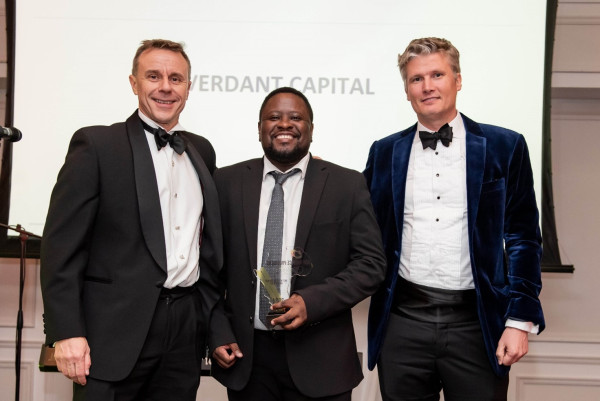
Verdant IMAP (www.Verdant-CAP.com) is delighted to announce its recognition as Best Advisory Firm: Private Equity at the prestigious Africa Global Funds Awards. The accolade was presented during the Gala Awards Dinner on Thursday, November 14, 2024, at the renowned Mount Nelson Hotel in Cape Town, bringing together leading firms in African private equity and asset management.
This award highlights Verdant's significant contributions to the private equity M&Aecosystem across Africa. Over the past year, Verdant's transactions involving private equity have included the sale of the Onix data centre business in Ghana on behalf of Africa Infrastructure Investment Managers, two exits for London-based Africa private equity firm 8Miles (Awash Wines and Biyinzika Poultry Industries Limited in Ethiopia and Uganda respectively), and advising ACA and IFC-backed WIOCC on its JV with Texaf to build the market leading data centre in Kinshasa, DR of Congo. Verdant is currently at advanced stages with respect to six transactions for or with private equity funds, in South Africa, East Africa and West Africa, in sectors including technology, FMCG and manufacturing.
The recognition reinforces Verdant's commitment to delivering innovative, tailored advisory services and unlocking value for its private equity clients. The firm also advised on notable cross-border transactions, leveraging its position as the IMAP member firm for its region. IMAP, the world's leading global M&A partnership was established in 1973, has member firms in 50 countries, in total over 600 M&A bankers and completes more than 200 M&A transactions every year. The IMAP global partnership helps Verdant to bridge African and international markets effectively.
The Africa Global Funds Awards honour excellence in Africa's asset management and private equity industries. Verdant's recognition as Best Advisory Firm: Private Equity is a testament to its unwavering dedication to driving impactful solutions in challenging and dynamic markets.
With this award, Verdant strengthens its reputation as a trusted partner for private equity and other client groups navigating Africa's evolving economic landscape. As the firm continues to grow and innovate, it reaffirms its mission to deliver world-class advisory solutions that create lasting value for its clients and the continent.
Distributed by APO Group on behalf of Verdant Capital.
Media enquiries:
Orient Mahonisi,
orient.mahonisi@verdant-cap.com
About Verdant IMAP:
Verdant IMAP is a leading investment bank operating on a pan-African focus, specialising in M&A and in private capital markets. Verdant IMAP is the IMAP partner firm for its region. IMAP with partner firms in nearly 50 countries, with over 600 M&A professionals, completing over 200 M&A transactions per year, reinforces Verdant IMAP's capability to deliver innovative financial solutions to clients across Africa and around the World. www.Verdant-CAP.com
People who use heroin in Durban are increasingly switching from smoking to injecting, causing public health concerns
Residents of Phumla Mqashi informal settlement say they’re not getting enough water from trucks