• Skip to main content
  • Skip to header right navigation
  • Skip to after header navigation
  • Skip to site footer
MyZA

MyZA

News, Directory, Events and Other Stuff

  • Social Media
  • Sport
  • World News
  • Home
  • Submit News
  • Directory
  • Events
  • Stratlec
  • TFSA
  • News
    • APO
    • Today’s Sport News
    • Todays Social Media and Tech Headlines
    • Today’s World News
    • Today’s SA Financial News
  • Contact
You are here: Home / Archives for agriculture

agriculture

29 February 2024

Pioneering the Future of Food Manufacturing in South Africa

Location: MyPR

In the heart of South Africa, a vibrant and dynamic sector is reshaping the culinary landscape—food manufacturing. This industry, characterized by its innovation, sustainability, and quality, plays a pivotal role in feeding the nation and beyond. Among the leaders in this sector are bulk food manufacturers, who are setting new standards in food production, distribution, and …
Read morePioneering the Future of Food Manufacturing in South Africa
25 February 2024

Presidential Working Group to accelerate resolution of issues impacting eThekwini

Location: News

Presidential Working Group to accelerate resolution of issues impacting eThekwini

President Cyril Ramaphosa has met with the Durban Chamber of Commerce and Industry NPC for an engagement on the area’s pressing challenges.

The President, together with Minister of Public Enterprises Pravin Gordhan, Minister of Police Bheki Cele, Minister of Water and Sanitation Senzo Mchunu, Minister in the Presidency responsible for Electricity Kgosientsho Ramokgopa and Minister Public Works and Infrastructure Sihle Zikalala, met with the groups on Friday.

“The last Presidential engagement took place in May 2022. [Friday’s] session presented an opportunity for the President and the Durban business community to recap on measures that have been put in place to grow the provinces economy and address the current water, electricity and infrastructure challenges. 

“During the interaction, the President and the Ministers briefed the business community on various initiatives that are currently underway in assisting eThekwini and the province through the various interventions led by the national government,” the Presidency said in a statement.

A Presidential eThekwini Working Group has also been set up.

“To accelerate the speedy resolution of issues impacting the eThekwini metro, President Ramaphosa has set up the Presidential eThekwini Working Group that will be made up of Ministers in the affected portfolios, working alongside the metro and business. The working group will present their progress reports to the President regularly,” the statement read.

Meanwhile, the President also met with the KwaZulu-Natal (KZN) Provincial House of Traditional and Koi-San Leadership to address a variety of issues and “foster closer relations between government and institutions of traditional leadership”.

“Among the issues addressed by the President was the finalisation of the Traditional Leaders Handbook which contains all the support that will be provided to Amakhosi by the government. With KZN having grappled with the killing of Amakhosi, the President committed that the government was looking into the matter to decide on the best solution.

“President Ramaphosa pleaded with Amakhosi to collaborate with government to fight social ills, build rural economies and assist in facilitating development such as building bridges, roads and educational programmes.

“With general elections on the horizons, President Ramaphosa also appealed to Amakhosi to be tolerant to all political parties by allowing campaigning in their communities without fear and intimidation. He also encouraged political parties to respect traditional leaders as they carry on with their campaigns,” the Presidency said.

President Ramaphosa assured the traditional leaders that other issues related to land, rural development and agriculture will also be addressed. – SAnews.gov.za

NeoB
Sun, 02/25/2024 - 08:18

541 views
Read morePresidential Working Group to accelerate resolution of issues impacting eThekwini
23 February 2024

The Vital Role of Pumps Across Industries

Location: MyPR

Introduction Pumps are indispensable across various sectors, providing critical support from agriculture to industrial processes. They facilitate a wide array of functions, including irrigation, waste management, and product handling, ensuring efficiency and reliability. This piece explores the nuanced roles pumps play in agriculture, food processing, and industrial applications, highlighting the technological advancements that enhance their performance. …

Read moreThe Vital Role of Pumps Across Industries
22 February 2024

E Cape collaborates to accelerate spring water project rollout

Location: News

E Cape collaborates to accelerate spring water project rollout

The Eastern Cape Department of Rural Development and Agrarian Reform (DRDAR) has joined forces with Chris Hani District Municipality (CHDM) to accelerate access to clean drinking water in rural communities, using the cost-effective rollout of spring water projects in the province.

DRDAR MEC Nonkqubela Pieters and Chris Hani District Municipality Executive Mayor Lusanda Sizani, have officially handed over a spring water project that will benefit five villages in the Manzana administrative area, outside eNgcobo. The community has been battling to access safe drinking water.

Pieters said the programme, implemented by the department’s Rural Appropriation Technology Unit (RATU), is cost-effective because no tenders were issued for the construction of the project. However, local people are trained to do maintenance work when the need arises.

“In this programme, we do not have a middleman or spend millions on contractors for something that will not be operational. We employ and train local people and in that way, we create the opportunities for people to fend for their families,” Pieters said. 

The MEC explained that RATU trains locals workers and procures material for the construction of the project.

“In delivering these spring water protection projects, DRDAR identifies nearby hills and mountains with spring water [that is channeled]... for use by households,” Pieters said.

She said during the implementation of the Manzana project, which is set to benefit at least 1 220 villagers, about 75 people including 61 youth, seven women and seven men were employed and trained. 

Pieters said the department will use the District Development Model (DDM) to work with the municipality to ensure the smooth rollout of spring water projects, taking advantage of the more than 250 natural springs in the district.

“We are in agreement with the executive mayor that all these springs will be utilised to bring water to all the people of Chris Hani District, who do not have access to water while they have spring water in their villages. 

“They will now have access to clean drinking water because the implementation of the programme will be accelerated. We will reach more communities through this collaboration with the municipality,” Pieters said.
 
The delivery of the spring water protection projects marks the completion of infrastructure work done by the department in various rural communities, which will now have reliable access to clean drinking water and agricultural activities.

To date, Pieters said, a total of 757 water taps have been installed in 36 villages across the province, benefitting 8 781 households, including four schools, one clinic and one youth co-operative. 

“The department has [also] implemented 17 spring water protection projects that are contributing towards community development with an investment of R14 765 million benefiting 4 123 households, and creating 967 temporary jobs,” the MEC said.
 
Sizani said with the district municipality being both a Water Services Authority (WSA) and provider, water supply that is pumped with generators to serve communities is expensive compared to the department's method of drawing water, using natural springs, to communal taps and households. 

“We are a rural district, which is leaning towards the agricultural sector potential for growth, hence we are partnering with the department to bring water to the people for both consumption and agricultural activities. Through this programme, we aim to achieve agriculture development prosperity,” Sizani said.

Local farmer, Viwe Gidimisani, said when the spring water project construction started in his village, he was inspired to start his vegetable production business, banking on using water from the spring for irrigation. 

Gidimisani received a new hose pipe, wheelbarrow, spade, fork spade, hand hoe, and various vegetable seedlings from government, as part of ongoing efforts to support villagers to produce their own food. 

“This will help my enterprise to grow more, and it will give me strength to improve the productivity of my business. I am happy that water supply is always available, unlike in the past where we battled to get water," Gidimisani said.

Gidimisani is now able to grow his enterprise and owns a hawker’s stand, where he sells his spinach and cabbage produce to his neighbours and local buyers in town. – SAnews.gov.za

GabiK
Thu, 02/22/2024 - 13:35

473 views
Read moreE Cape collaborates to accelerate spring water project rollout
22 February 2024

President hails traditional leaders for flood relief efforts

Location: News

President hails traditional leaders for flood relief efforts

President Cyril Ramaphosa has praised the efforts of uMgogodla kaZulu, a group comprising the spouses of traditional leaders and women traditional leaders, for their commendable work in addressing the challenges posed by the recent floods in KwaZulu-Natal. 

Addressing the annual official opening of the National House of Traditional and Khoi-San Leaders (NHTKL) in Cape Town on Thursday, the President said it was pleasing to note that the institution of traditional and Khoi-San leadership is playing its role in assisting communities.
 
The President told the traditional and Khoi-San leaders that climate change is a growing concern in South Africa. He said the recent flooding, together with other extreme weather events, are a stark reminder that the country cannot be complacent about this grave threat to both lives and livelihoods.

“It is pleasing to note that the institution of traditional and Khoi-San leadership is once again playing its role to assist communities. I specifically wish to commend the work done by the structure of spouses and female traditional leaders, called uMgogodla kaZulu, during the floods that engulfed KwaZulu-Natal. 

“The Ondlunkulu stood up, in partnership with Al-Imdaad, Old Mutual, the Princess Gabo and Kaizer Junior Foundations, and others to help those who were affected by floods. We appreciate this valuable work,” the President said. 

President Ramaphosa said he has been advised that several other provinces have formalised the structures of spouses and women traditional leaders of amaKhosi. 

He implored the House to continue working together with provincial Houses of Traditional and Khoi-San Leaders to ensure that such structures are established and capacitated. 

30 Years of Democracy

In his State of the Nation Address delivered earlier this month, the President reflected on the journey South Africa has traversed over the past 30 years since attaining freedom.

"As a nation, we can also be proud of the journey we have travelled, according to the institution of traditional leadership and the stature it deserves. 

“Today, our Kings are recognised as Kings, as opposed to Paramount Chiefs, a term which colonial and apartheid rule introduced to make it clear that in their minds the real Kings were only those found in Europe. 

“Today, we have a National House of Traditional and Khoi-San Leaders that plays an active and meaningful role in our national life,” the President said. 

President Ramaphosa expressed the wish that more Khoi-San leaders will be brought into the fold and be formally recognised under the Traditional and Khoi-San Leadership Act.

He said that the Commission on Khoi-San Matters has been appointed to receive and assess applications for recognition and make recommendations to the Minister of Cooperative Governance and Traditional Affairs.

While the process is taking longer than was initially envisaged, the President has appealed that the Commission be allowed the space to continue with this complex historical mission that they have been assigned. 

Addressing unemployment

The President told the House that they have a shared responsibility to work together to address the country’s unemployment crisis, particularly among young people. 

He highlighted that the Presidential Youth Employment Intervention, the National Youth Service and the Youth Employment Service are just some of the initiatives government is implementing that are making a difference. 

“I call on this House to play an active role in the ongoing process of recruiting young people into the National Rural Youth Service Corps that is being coordinated by the Department of Agriculture, Land Reform and Rural Development.

“The InvestRural blueprint handed over to me by the former Chairperson of this House, the late iNkosi Mahlangu, is being fused into government programmes. 

“The training of young people by the Department of Agriculture, Land Reform and Rural Development is a practical example of this. Another is the work being done by the Department of Traditional Affairs in partnership with the Department of Mineral Resources and Energy to streamline and integrate Social Labour Plans into industry operations,” he said.

The President further told the House that the Welisizwe Rural Bridges Programme coordinated by the Department of Public Works and Infrastructure is yet another example of positive and meaningful change being brought to rural areas. Just last month he attended the launch of one of these bridges in KwaZulu-Natal. 

“To witness the difference these bridges are making in the lives of rural communities, especially for young learners who need to cross rivers to get to school, is remarkable,” he said. 

Capacity building

The President has emphasised that capacity building is essential if the country is to enhance the role traditional leaders play in development. 

In this regard, he welcomed the partnership between the Department of Traditional Affairs and the National School of Government to provide training on, among others, facilitating socio-economic development for traditional communities.

The programme is aimed at empowering traditional leaders to act as change agents in their communities, and to transfer new knowledge and skills for the activation of sustainable economic interventions in rural areas.

“Our goal is an active rural citizenry, with our traditional leaders at the helm. The issue of transferring communal land to traditional councils is one of great interest to this House.

“As government, we are in the process of finalising the bill on communal land, which will be followed by extensive consultations. 

“I know that this process is taking longer than expected, but democracy requires that we give society a voice in matters that concern them,” he said. 

Initiation

Turning to the challenges facing initiation, President Ramaphosa said that these should be decisively addressed. 

“We cannot continue to have customary initiation being turned into a harmful practice. 

“We need to do all in our powers as government, communities, traditional leaders, the National Initiation Oversight Committee and provincial structures to put to an end to these unnecessary and entirely avoidable deaths and injuries,” he said. 

The President further urged the House to continue to monitor and guide provinces and various local houses on the provisions of the Customary Initiation Act. 

“We must live up to the slogan of 'Mabaye Bephila, Babuye Baphila',” he said. 

Traditional Courts Act

The President told the House that he has assented to the Traditional Courts Act and will soon be proclaiming the date on which it comes into effect. 

In the meantime, he said, the Department of Justice and Constitutional Development and the Department of Traditional Affairs have started with some of the preparatory work that will facilitate implementation. 

This includes visiting some of the traditional councils to further discuss their approaches to alternative dispute resolution and the resources they deploy in this regard. The President added that this is a matter on which they have finally made good progress. 

On concerns expressed by the House with regards to involving traditional leadership more in the work of the Inter-Ministerial task Team, President Ramaphosa said that he, along with the Deputy President, is seized with the matter of ensuring that members of this House are invited to workstream meetings and are able to participate more fully.  

Exercise your right to vote

The President said on 29 May, South Africans will be going to the polls to vote in the seventh democratic elections for national and provincial government.

As the country prepares for this historic occasion, President Ramaphosa has once again urged traditional leaders to continue to encourage all eligible voters to register and participate in these elections. 

“As we have done before, we call on traditional leaders to actively promote free and fair campaigning, and to ensure that all voters can exercise their democratic right.

“May you remain with the spirit of our forebears, who never retreated when challenges were facing them. Working side by side, we will move forward,” he said. – SAnews.gov.za

DikelediM
Thu, 02/22/2024 - 14:04

272 views
Read morePresident hails traditional leaders for flood relief efforts
22 February 2024

Government ups the ante against crime

Location: News

Government ups the ante against crime

Some R765 billion has been allocated to the security cluster to up the ante in Government's fight against crime and to support the defence forces.

This was revealed during Finance Minister Enoch Godongwana’s Budget Speech delivered in Cape Town on Wednesday.

“In the coming financial year, 10 000 new police recruits will be trained. As part of the country’s responsibility to promote regional peace and stability, this budget will also allocate funding for the deployment of soldiers in Mozambique and the DRC. 

“Work on costing and identifying the needs for these critical missions will continue throughout the year and funding will be allocated as such. 

“R628 million has been allocated to the Department of Justice and Constitutional Development [DJCOD] for the implementation of FATF [Financial Action Task Force] and State Capture Commission recommendations - bringing the total funding to these efforts to R2.3 billion,” he said.

Godongwana added that some R2.9 billion from the Criminal Asset Recovery Account is being used to combat illegal mining and other priority crimes “with 60% allocated for police deployments, including vehicle procurement”.

In the 2024 Budget Review, National Treasury explained that the total allocation includes “additional allocations of R39.4 billion to selected departments to cover the carry‐through costs of the 2023/24 public‐service wage increase”.

“Of this, R22 billion is allocated to the Department of Police. To improve efficiency, the department will rationalise its organisational structure, align police districts with municipal districts, implement cost containment measures and improve operations. It is also fostering strategic partnerships with local communities to enhance safety.

“The [DJCOD] is allocated R627.8 million over the medium term to implement recommendations from the [FATF] and the State Capture Commission. For land rights representation, R156 million is shifted from the Department of Agriculture, Land Reform and Rural Development to Legal Aid South Africa.

“The Department of Defence will prioritise acquiring vehicles and technology to safeguard the country’s borders. An amount of R1.9 billion is reallocated within the Department of Defence for day‐to‐day maintenance and emergency repairs.

“Measures are being implemented to reduce the pressure on employee compensation and sustain critical defence capabilities,” the department said. – SAnews.gov.za


NeoB
Wed, 02/21/2024 - 14:11

536 views
Read moreGovernment ups the ante against crime
21 February 2024

Government raises US$3.3 billion to support climate change initiatives

Location: News

Government raises US$3.3 billion to support climate change initiatives

Government has raised US$3.3 billion so far from Multilateral Development Banks and International Finance Institutions to support climate change, energy, and just transition objectives. 

Delivering the 2024 National Budget Speech, Finance Minister Enoch Godongwana said National Treasury plays a crucial role in mobilising resources, designing incentives, and influencing policy to mainstream climate change. 

“As climate-related disasters intensify, a multi-layered risk-based approach is being developed to manage the associated fiscal risks.  This considers various funding instruments from grants to contingency funds, including the Climate Change Response Fund, depending on the incidence and intensity of the disaster event. 

“The National Treasury is reviewing disaster response grants to improve efficiency and create incentives for disaster planning, preparedness and risk reduction. It is also developing a climate-budget tagging framework to influence policy, planning, and budget decisions, by tracking climate-related expenditures in public budgets,” the Minister said on Wednesday in Parliament.

He said the support of concessional funding providers, such as Multilateral Development Banks, is going a long way to support the country’s climate adaptation, mitigation, energy transition, and sustainability initiatives. 

“Crowding-in the private sector is necessary to managing the climate disaster funds. We are actively participating in climate negotiations, aligning with the government's advocacy for reforming multilateral finance institutions. 

“We are also working with eight municipalities to adapt and mitigate the effects of climate and weather-related events, by providing technical assistance for climate-responsive capital projects,” the Minister said.

According to the 2024 National Treasury Budget Review, the department is finalising a disaster risk financing strategy, centred on innovative financing and risk transfer to effectively mitigate climate impacts.

The strategy will boost state capacity to fund disaster recovery efforts and expand insurance mechanisms to protect against the financial strain of natural disasters.

“Recent years have seen a significant increase in extreme weather events and economic losses amid mounting concern over the effects of climate change. Between 1980 and 2021, 86 notable weather-related disasters have been recorded, affecting more than 22 million people and causing economic losses of about R113 billion.

“The 2017 Knysna wildfires, Cape Town (2015–2018) and Eastern Cape (2015–2020) droughts and KwaZulu-Natal floods in 2022 have heavily affected agriculture and tourism, with negative implications for government spending and revenue.

“These events exacerbate economic inequality, particularly in poor communities that are highly exposed to droughts, floods and wildfires and their consequences,” the document said.

Government incentivises electric vehicles producers

In an effort to encourage the production of electric vehicles in South Africa, government will introduce an investment allowance for new investments, beginning 1 March 2026. 

This will allow producers to claim 150% of qualifying investment spending on electric and hydrogen-powered vehicles in the first year. 

“The incentive will be implemented in addition to the existing support under the Automotive Production Development Programme. Government has also reprioritised R964 million over the medium term to support the transition to electric vehicles,” the Minister said.

The Electric Vehicles White Paper outlines government’s strategy to transition towards a broader new energy vehicle production and consumption in South Africa, starting with electric vehicles. 

It aims to transition the automotive industry from primarily producing internal combustion engine vehicles to a dual platform that includes electric vehicles, by 2035. – SAnews.gov.za


nosihle
Wed, 02/21/2024 - 14:14

507 views
Read moreGovernment raises US$3.3 billion to support climate change initiatives
21 February 2024

DARJYO Charts New Course into Agritech: A Tech-Infused Vision for the Future of Agriculture

Location: MyPR

Today marks a significant milestone for DARJYO as it announces a strategic move into the agricultural space, embracing the challenges and opportunities presented by the evolving world of Agritech. Founder and Technical Co-founder, Darshani Persadh, shared insights into the startup’s motivation for this transition, emphasizing the potential for technology to revolutionize traditional agricultural practices. “In …

Read moreDARJYO Charts New Course into Agritech: A Tech-Infused Vision for the Future of Agriculture
21 February 2024

WC pig owners urged to heighten biosecurity to contain swine fever

Location: News

WC pig owners urged to heighten biosecurity to contain swine fever

The Western Cape Department of Agriculture has urged pig farmers to heighten biosecurity measures following laboratory results confirming African Swine Fever (ASF) in pigs of small farmers on the outskirts of Groeneweide Park, George.

ASF is a virus that affects pigs and there is no vaccination or treatment currently available for the prevention of the disease.

The department said the new outbreak confirmed recently is the fourth outbreak of disease in the Garden Route area since 2022. 

“Previously, there had been outbreaks in KwaNonqaba and Mossel Bay in 2022 and 2023, which were both resolved; and an outbreak in Thembalethu in 2022, which remains a concern. It is estimated that about 45 pigs have died thus far, with about 250 pigs remaining in the area,” department spokesperson Daniel Johnson said. 

Johnson said the area has been placed under quarantine, and community members have been urged to not remove any pigs or pig products from the area to prevent the further spread of the disease.

Johnson has also emphasised that ASF virus is specific to pigs and does not affect humans or other species of animals. 

“The public needs to know that pigs slaughtered at abattoirs have undergone meat inspection. Pork products found in supermarkets are safe for human consumption,” Johnson said.

Critical measures to minimise the spread of ASF 

•    All carcasses should be disposed of safely.
•    Pigs should be confined to prevent roaming and potentially picking up and spreading the disease.
•    Hands, shoes, clothing and equipment should be sanitised before and after being in contact with a pig. 
•    Any meat products should be thoroughly cooked before being fed to pigs. 
•    Farmers should confirm that any purchased pigs are bought from known ASF-free herds.

Usually, the first signs of an ASF outbreak are the sudden death of pigs, and in some cases, other symptoms can include breathing difficulties, redness of the skin, especially underneath the pig and on the ears, hind leg weakness and loss of appetite. 

“Occasionally, the pig may also have blood in their faeces and their vomit. Should these signs be seen, please contact your closest State Veterinary Office at https://www.elsenburg.com/veterinary-services/animal-health-and-disease,” Johnson said. – SAnews.gov.za

GabiK
Tue, 02/20/2024 - 13:21

388 views
Read moreWC pig owners urged to heighten biosecurity to contain swine fever
20 February 2024

Continent’s green future in focus as Africa’s Green Economy Summit approaches

Location: MyPR

CAPE TOWN, 19 February 2024: Thought leaders, policy makers and investors with an interest in Africa’s green economy transition are gathering in Cape Town ahead of this week’s Africa’s Green Economy Summit, taking place in the city from 21-23 February 2024. The summit, now in its second year, is centred around connecting the global investment …

Read moreContinent’s green future in focus as Africa’s Green Economy Summit approaches
20 February 2024

Stats SA records decrease in number of employed persons

Location: News

Stats SA records decrease in number of employed persons

The Quarterly Labour Force Survey (QLFS) results for the fourth quarter of 2023 by Statistics South Africa (Stats SA) indicate that the number of employed persons decreased by 22 000 to 16.7 million in the fourth quarter of 2023 when compared to the third quarter. 

Addressing a media briefing on Tuesday in Pretoria, Statistician-General Risenga Maluleke said the number of unemployed persons increased by 46 000 to 7.9 million compared to quarter three. 

“Additionally, the number of people who were not economically active for reasons other than discouragement increased by 218 000 to 13.4 million, while discouraged work-seekers decreased by 107 000 in the fourth quarter of 2023 compared to the third quarter of 2023. This resulted in a net increase of 111 000 in the not economically active population.

“The above changes in employment and unemployment resulted in the official unemployment rate increasing by 0.2 of a percentage point from 31.9% in the third quarter of 2023 to 32.1% in the fourth quarter of 2023.

“The unemployment rate according to the expanded definition decreased by 0.1 of a percentage point to 41.1% in Q4: 2023 compared to Q3: 2023,” Maluleke said.

Formal sector employment decreased by 128 000 in Q4: 2023, while informal sector employment increased by 124 000 over the same period.

The industries that contributed to the net employment decline include community and social services (down by 171 000), construction (down by 36 000), agriculture (down by 35 000), trade (down by 28 000) and manufacturing (down by 1 000).

However, finance (up by 128 000), transport (up by 57 000), mining (up by 37 000) and private households (up by 18 000) recorded the largest employment gains. 

“Provincially, employment losses were recorded in Eastern Cape (111 000), Limpopo (40 000), North West (30 000) and Northern Cape (2 000). The largest employment increase was recorded in KwaZulu-Natal (62 000), followed by Mpumalanga (48 000) and Western Cape (23 000) during the same period.

“The youth (15–34 years) remain vulnerable in the labour market; the fourth quarter of 2023 results show that the total number of unemployed youth increased by 87 000 to 4.7 million while there was a decrease of 97 000 in the number of employed youth to 5.9 million. This resulted in an increase in the youth unemployment rate by 0.9 of a percentage point from 43.4% in Q3: 2023 to 44.3% in Q4: 2023,” he said. – SAnews.gov.za


nosihle
Tue, 02/20/2024 - 12:01

149 views
Read moreStats SA records decrease in number of employed persons
20 February 2024

Over 83 000 land claims settled

Location: News

Over 83 000 land claims settled

Agriculture, Land Reform and Rural Development Minister, Thoko Didiza, says a total of 83 067 land claims have been settled since the inception of the Land Restitution Programme in 1995 to 2023.

Didiza said the number equates to 94% of the old-order claims that have been successfully settled, with about 2.3 million people having benefitted from the restitution.

Presenting the research findings on the evaluation of South Africa's Land Restitution Programme on Monday, Didiza said a total of R25 billion was spent on the purchase and transfer of 3.9 million hectares.

“An additional R22.5 billion has been spent on financial compensation for those beneficiaries who elected for financial compensation. Between 2019 and 2023, a total of 1 494 claims were settled, largely fuelled by the department's interventions in fast-tracking the settlement of claims,” Didiza said.

The study, which started in 2018 and included 2 664 households and 3 378 people, who were sampled and interviewed, found that the economic power of the restitution beneficiaries increased by 16%, measured in per capita per month, relative to the control sample.

The Restitution of Land Rights Act of 1994 is among the first laws passed by the democratically elected government. 

This was done with the conscious acknowledgement that land justice is paramount, and restoration of Black people’s dignity and freedom is central to a democratic dividend, said the Minister.

The Restitution of Land Rights Act made provisions for the restitution of rights in land to people or communities dispossessed of such rights after 1913. 

The constitutionality of land restitution is preserved in Section 25(7) of the Constitution of South Africa which states that “a person or community dispossessed of property after 19 June 1913 as a result of past racially discriminatory laws or practices is entitled, to the extent provided by an Act of Parliament, either to restitution of that property or to equitable redress”.

Didiza said families of forced removal victims were fragmented for decades, and conflicts that arose at post-settlement claims were a function of a lack of social cohesion and trust created during a lengthy period of disintegration. 

The Minister said investments in communication and social cohesion programmes would assist in mitigating the information gap and building trust among beneficiaries.

She said from the study findings, the department can draw some policy insights. 

“Firstly, the study findings are enlightening us to understand that land restitution is not only about financial and economic justice but also psychological and social restoration, a lesson we should bear in mind when we evaluate the success or failures of land restitution projects.

“Secondly, over and above the post-settlement support and skill training, which we are already providing to beneficiaries as the government, there is an additional need to formulate community integration programmes,” Didiza said. – SAnews.gov.za 


GabiK
Tue, 02/20/2024 - 10:49

27 views
Read moreOver 83 000 land claims settled
18 February 2024

Condolences for Green Army member

Location: News

Condolences for Green Army member

Gauteng MEC for Social Development, Agriculture, Rural Development and the Environment, Mbali Hlophe has expressed deep grief at the passing of a worker that was fatally shot while on duty at Jabulani Hostel in Johannesburg.

Mduduzi Mbense (38) was a member of the department’s Green Army - an Expanded Public Works Programme established to deal with waste management and greening through clean-ups of illegal dumping and litter-picking in communities, main roads, and open spaces.

Mbense was shot on Friday as he was leading a team of the Green Army at the hostel where he worked and resided.

The MEC has called on the police to leave no stone unturned in order to bring to book the perpetrator of the crime.

“We are gravely devastated for this untimely loss. I wish to extend my heartfelt condolences to the family, friends and colleagues. May you all find strength and comfort during this difficult time,” she said. –SAnews.gov.za


nosihle
Sun, 02/18/2024 - 11:17

381 views
Read moreCondolences for Green Army member
18 February 2024

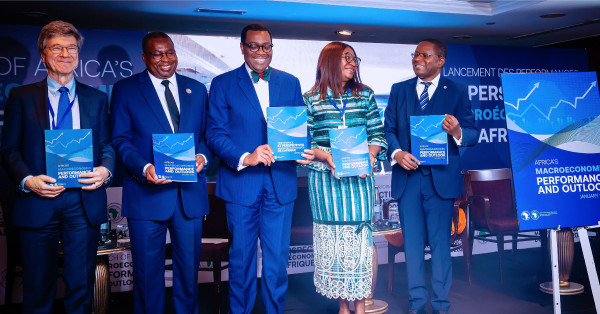
Africa dominates list of the world’s 20 fastest-growing economies in 2024—African Development Bank says in macroeconomic report

Location: Business
African Development Bank Group (AfDB)

Report forecasts stronger growth for Africa in 2024, outpacing projected global average; Continent is second-fastest-growing region after Asia.

Africa will account for eleven of the world's 20 fastest-growing economies in 2024, the African Development Bank Group said in its latest Macroeconomic Performance and Outlook (MEO) of the continent released on Friday.

Overall, real gross domestic product (GDP) growth for the continent is expected to average 3.8% and 4.2% in 2024 and 2025, respectively. This is higher than projected global averages of 2.9% and 3.2%, the report said.

The continent is set to remain the second-fastest-growing region after Asia.

The top 11 African countries projected to experience strong economic performance forecast are Niger (11.2%), Senegal (8.2%), Libya (7.9%), Rwanda (7.2%), Cote d'Ivoire (6.8%), Ethiopia (6.7%), Benin (6.4%), Djibouti (6.2%), Tanzania (6.1%), Togo (6%), and Uganda at 6%.

“Despite the challenging global and regional economic environment, 15 African countries have posted output expansions of more than 5%,” Bank Group President Dr Akinwumi Adesina said, calling for larger pools of financing and several policy interventions to further boost Africa's growth.

Africa's Macroeconomic Performance and Outlook, a biannual publication released in the first and third quarters of each year, complements the existing African Economic Outlook (AEO), which focuses on key emerging policy issues relevant to the continent's development.

The MEO report provides an up-to-date evidence-based assessment of the continent's recent macroeconomic performance and short-to-medium-term outlook amid dynamic global economic developments.

The latest report is calling for cautious optimism given the challenges posed by global and regional risks. These risks include rising geopolitical tensions, increased regional conflicts, and political instability—all of which could disrupt trade and investment flows, and perpetuate inflationary pressures.

President Adesina emphasised that fiscal deficits have improved, as faster-than-expected recovery from the pandemic helped shore up revenue.

He explained further: “This has led to a stabilisation of the average fiscal deficit at 4.9% in 2023, like 2022, but significantly less than the 6.9% average fiscal deficit of 2020. The stabilisation is also due to the fiscal consolidation measures, especially in countries with elevated risks of debt distress.”

He cautioned that with the global economy mired in uncertainty, the fiscal positions of the African continent will continue to be vulnerable to global shocks.

The report shows that the medium-term growth outlook for the continent's five regions is slowly improving, a pointer to the continued resilience of Africa's economies.

Presenting the key findings of the report, the African Development Bank's Chief Economist and Vice President, Prof. Kevin Urama said: “Growth in Africa's top-performing economies has benefitted from a range of factors, including declining commodity dependence through economic diversification, increasing stra­tegic investment in key growth sectors, and rising both public and private consumption, as well as positive developments in key export markets.”  

He added: “Africa's economic growth is projected to regain moderate strength as long as the global economy remains resilient, disinflation continues, investment in infrastructure projects remains buoyant, and progress is sustained on debt restructuring and fiscal consolidation.”

“The future of Africa rests on economic integration. Our small economies are not competitive in the global market. A healthy internal African trade market can ensure value-added and intra-African production of manufactured goods,” said Commissioner for Economic Development, Trade, Tourism, Industry and Minerals, African Union Commission, Ambassador Albert Muchanga.

He assured that the MEO forecast, and recommendations will be made available to African heads of state and that the report will be useful when the African Union makes its proposals to the G20- an informal gathering of many of the world's largest economies to which the African Union was admitted last year.

The improved growth figure for 2024 reflects concerted efforts by the continent's policymakers to drive economic diversification strategies focused on increased investment in key growth sectors, as well as the implementation of domestic policies aimed at consolidating fiscal positions and reversing the increase in the cost of living and boosting private consumption.

Speaking remotely, Zimbabwe's Minister of Finance and Economic Development, Prof Mthuli Ncube described the report as being “on point” and consistent with the reality in his country, describing it as useful for economic planning across Africa. He urged the African Development Bank to continue its thought leadership to help policymakers continue to build resilience to withstand shocks and drive growth.

Ncube said: “Zimbabwe expects slower growth due to climate shocks in the region. Southern African countries depend on agriculture for economic growth, so climate-proofing agriculture is key. We are in talks with creditors to restructure its debt, which is slowing economic growth. Internally, the country will focus on economic and governance reforms and reforms around property rights to increase agricultural production.”

Up to 41 countries across the continent will in 2024, achieve an economic growth rate of 3.8%, and in 13 of them, growth will be more than 1 percentage point higher than in 2023.

Director of the Center for Sustainable Development, Columbia University Prof Jeffrey Sachs noted that long-term affordable financing must be part of Africa's strategy to achieve growth of 7% or more per year and warned that Africa is paying a very high-risk premium for debt financing. He called for this point to be made to the G20.

“Long-term development cannot be based on short-term loans. Loans to Africa should be at least 25 years or longer. Short-term borrowing is dangerous for long-term development. Africa must act as one, in scale,” he explained.

Sachs, who is also the UN Secretary-General António Guterres' Advocate for Sustainable Development Goals also called for a much larger African Development Bank, better resourced to meet Africa's financing needs.

Overview of economic outlook across regions

The confluence of shocks notwithstanding, the resilience of the continent's economies remains strong, with positive growth projected for the continent's five regions.

  • East Africa: East Africa will continue to lead Africa's growth momentum, with growth projected to rise to 5.1% in 2024 and 5.7% in 2025, supported by strong strategic investments to improve internal connectivity and deepen intra-regional trade.
  • North Africa: Successive adverse weather conditions and macroeconomic challenges will hold the region's growth steady at 3.9% in 2024 with a slight improvement to 4.1% in 2025.
  • Central Africa: Growth is forecast to moderate to 3.5% in 2024 but projected recovery in private consumption and increases in mining investment and exports could help push growth to 4.1% in 2025.
  • Southern Africa: Growth will remain sluggish at 2.2 and 2.6% in 2024 and 2025, respectively. This reflects continued economic weakness in South Africa, the region's largest economy.
  • West Africa: Growth is projected to pick up to 4 and 4.4% in 2024 and 2025 respectively. Strong growth in most countries in the region is projected to offset slowdowns in Nigeria and Ghana. The announced withdrawal of Burkina Faso, Mali, and Niger from the Economic Community of West African States (ECOWAS) casts a shadow over the sustainability of gains amid growing uncertainty.

Driving faster and more sustainable economic growth

The 2024 MEO says in the short term, tackling persistent inflation will need a mix of restraining monetary policy coupled with fiscal consolidation and stable exchange rates.

The report identifies structural reforms and strategic industrial policies as key to accelerating economic diversification and strengthening the export sector.

It recommends that countries invest more in human capital and pursue a resource-based industrialisation and diversification strategy that allows the continent to exploit its comparative advantage and build resilience to shocks.

  • 2024 Macroeconomic Performance and Outlook (https://apo-opa.co/3UHdVhm)
  • President Adesina's speech (https://apo-opa.co/49H7oaV)
  • Pictures (https://apo-opa.co/48jUVZu)

Distributed by APO Group on behalf of African Development Bank Group (AfDB).

Media Contact:
Emeka Anuforo
Communication and External Relations Department
media@afdb.org

About the African Development Bank Group:
The African Development Bank Group (AfDB) is Africa's premier development finance institution. It comprises three distinct entities: the African Development Bank (AfDB), the African Development Fund (ADF) and the Nigeria Trust Fund (NTF). On the ground in 34 African countries with an external office in Japan, the AfDB contributes to the economic development and the social progress of its 54 regional member states. For more information: www.AfDB.org  

Media files
African Development Bank Group (AfDB)
Download logo
Read moreAfrica dominates list of the world’s 20 fastest-growing economies in 2024—African Development Bank says in macroeconomic report
16 February 2024

Strategic integrated projects

Location: News

Strategic integrated projects

By Nomonde Mnukwa

It is often said that water is life, and this is indeed the case as no life can be sustained without water.  However, very few people give a second thought about the infrastructure required to ensure clean, drinkable water.

In South Africa government is undertaking a massive infrastructure investment and build programme in the form of Strategic Integrated Projects (SIPs), which are aimed at improving the quality of life for all South Africans.

Government is working to transform key sectors of our economy such as electricity, rail, ports and telecommunications through infrastructure. We are also working to rebuild and renew infrastructure in critical areas such as student accommodation, social housing water and sanitation.

Our focus on infrastructure is critical to driving economic growth and creating employment, while also ensuring that we can change lives and empower communities.

Over the medium-term the public sector is projected to spend R903 billion on infrastructure and a number of these projects have been completed, while many others are in the construction and procurement phases. In July 2020 a total of 62 Strategic Integrated Projects were gazetted that hold significant value in terms of growing our economy and driving development. These projects are currently being implemented across all three spheres of government, state-owned entities and the private sector.

Infrastructure in its most basic form is about bricks and mortar, but it is so much more than that.  Every new road built enhances mobility and creates economic activity for communities. New schools open up the doors of learning and progress, and new housing developments bring hope and dignity.

The Strategic Integrated Projects are breathing life into many sectors of the economy, including potentially new and game changing ones. South Africa has amassed a pipeline of Green Hydrogen Projects with a value of over R300 billion, which are in project preparation stages. Among these projects, is the Boegoebaai Green Hydrogen in the Northern Cape with a potential to progressively create around 35 000 work opportunities. .

Since the first round of SIPs were gazetted in 2022, an additional 26 have been added, bringing the number of gazetted SIPs to 88. These include infrastructure projects in energy, water and sanitation, transport as well as digital communications infrastructure. The SIPs also cover human settlements, agriculture, and agro-processing.

A number of projects to the value of R21.4 billion have already been completed covering roads, energy and human settlements, while the total value of projects currently in construction is R313.5 billion. A number of projects are also in the procurement stage to the value of  R295.2 billion.

There are various projects that have also been registered in the energy sector which once fully operational will assist in ensuring greater energy security for the country. The energy sector infrastructure project pipeline includes R180 billion of embedded generation investment.

Once all 88 SIPs are concluded there will be a massive increase in energy and water security. They will also further boost our Fourth Industrial Revolution ambitions and capabilities, while also ensuring that we provide homes, accommodation and revitalise the agricultural value chain.

Our investment in infrastructure is turning bricks and mortar into hope for a better tomorrow for all.  It is creating new frontiers of growth and progress and will ultimately ensure that we create the South Africa we want.

*Nomonde Mnukwa is Acting Director-General of the GCIS

Janine
Fri, 02/16/2024 - 14:53

5 views
Read moreStrategic integrated projects
12 February 2024

Government activities for the week 12 to 16 February 2024

Location: News

Government activities for the week 12 to 16 February 2024

On Monday, 12 February, the Minister of Basic Education Angie Motshekga will launch the 2024 SGB Elections Campaign in Pretoria.

On Monday, 12 February, Minister of Tourism Patricia de Lille will address the Africa Air Expo at the Cape Town International Convention Centre, Western Cape.

Also, on Monday leading though till Wednesday (12-14 February), the Agricultural Research Council in partnership with the Department of Agriculture, Land Reform, and Rural Development will host their first-ever joint annual conference at the ARC-Vegetable, Industrial and Industrial Medicinal Plants.

From Sunday 11 February up until Sunday, 18 February, Sport, Arts and Culture as well as the South African Football Association will host the Football for Humanity international showpiece at the Athlone stadium.

On Tuesday, 13 February, the Department of Health will observe the National Epilepsy Week. -SAnews.gov.za

Neo
Mon, 02/12/2024 - 13:00

124 views
Read moreGovernment activities for the week 12 to 16 February 2024
12 February 2024

Green projects to present investment pipeline of over $1 billion at Africa’s Green Economy Summit

Location: MyPR

CAPE TOWN, 30 January 2024: Africa’s Green Economy Summit, taking place from 21-23 February 2024 in Cape Town, not only features the continent’s major sustainability thought leaders, but also provides a springboard for companies operating in the green sector to sell themselves to investors. The event brings together key African stakeholders – including investors, project …

Read moreGreen projects to present investment pipeline of over $1 billion at Africa’s Green Economy Summit
9 February 2024

Reflections on SONA 2024

Location: News

Reflections on SONA 2024

Cabinet Ministers speaking to SAnews have welcomed President Cyril Ramaphosa’s State of the Nation Address (SONA), which he delivered last night at the Cape Town City Hall.

President Ramaphosa used the State of the Nation Address to outline the successes achieved since 1994, the dawn of democracy.

READ | SA counts democratic gains of the last 30 years

Agriculture, Land Reform and Rural Development Minister Thoko Didiza said the President took the nation through the journey the country has travelled since 1994.

“The President also [outlined] what we are going to do as a country to achieve what could not be achieved [so far] and he outlined the measures to be put in place to strengthen law enforcement agencies,” Didiza said.

Didiza noted the President's reflections on  how the lives of ordinary South Africans have changed since 1994. 

“The President was very clear on some of the challenges we as a country have experienced as part of the rebuilding [process]. He said we have to look at State institutions to make sure that they are strengthened, and we have to put in place preventative measures by way of putting credible people into positions.

“Since the dawn of democracy, government has created opportunities for the previously disadvantaged people,” the Minister said.

Social Development Minister Lindiwe Zulu said the President spoke at length about the successes the country has achieved during the 30 years of democracy.

“The President spoke about the things that as a country we could have done better and [urged] us to look into the next 30 years, and look into the weaknesses and do better,” Zulu said.

Zulu commended the President's resolve to end gender-based violence.

In his address, President Ramaphosa said as a society, collective efforts must be intensified to bring gender-based violence and femicide to an end.

“Unless we are able to deal with those issues, it would be very difficult for our country to grow even better,” Zulu said.

Zulu commended the President's approach to social protection, saying it is a need that everybody should understand.

Health Minister, Dr Joe Phaahla, welcomed the President's remarks on the health sector.

READ| Somebody give me a pen! - President

“If we could do away with the fragmentation between private and public health services, the future will be even brighter,” he said.

The President in his address said the country’s policies and programmes have, over the course of 30 years, lifted millions of people out of dire poverty.

“Today, fewer South Africans go hungry and fewer live in poverty. In 1993, South Africa faced a significant poverty challenge, with 71.1% of its population living in poverty. However, under the democratic government, there has been a consistent decline in these numbers.

“By 2010, the poverty rate had dropped to 60.9% percent, and it continued to decrease, reaching 55.5% in 2020, as reported by the World Bank,” he said. – SAnews.gov.za

Edwin
Fri, 02/09/2024 - 11:18

325 views
Read moreReflections on SONA 2024
5 February 2024

South African government hard at work to resolve challenges in mining

Location: News

South African government hard at work to resolve challenges in mining

President Cyril Ramaphosa has told leading figures in African mining that government is working hard to address the challenges that the industry faces.

He was speaking during the opening of the 30th Investing in African Mining Indaba held in Cape Town on Monday.

The Indaba is expected to continue until Thursday.

The mining industry contributes a hefty 7.5% to South Africa’s Gross Domestic Product (GDP) and accounts for some 60%, by value, of the country’s exports.

“We are all acutely aware that we face strong headwinds, and a number of persistent challenges are impeding mining performance. Globally, commodity price volatility, high energy prices, geopolitical tensions and a global cost of living crisis are playing a significant role in dampening the business operating environment.

“Domestically, the energy crisis and port and rail bottlenecks are putting serious pressure on miners’ operational costs. Illicit mining, cable theft and infrastructure vandalism place a further strain on mining output and returns. We are committed to work hard and work together to overcome these serious challenges,” he said.

Energy crisis

The President told the gathering that through the Energy Action Plan, government has taken “several critical measures to improve the performance of our existing generation fleet and to add new electricity capacity”.

“The Department of Mineral Resources and Energy has secured 1384MW of new generation capacity that is currently in construction or already in operation. The department has released requests for proposals for the procurement of 5 000MW of renewable energy under Bid Window 7 and 2 000MW of gas-to-power and 615MW of battery storage.

“Transmission capacity remains a challenge especially in the Cape provinces. Eskom has therefore recently published a curtailment regime which unlocks 3 470 MW of additional capacity in these provinces, and which will be essential to the success of Bid Window 7,” he said.

Additional capacity has also been garnered following government’s removal of the licensing threshold for embedded generation.

At least 6 300MW has flowed through this initiative with a third of that supplying mining houses.

Illegal mining and logistics

The President addressed the impact that illegal mining and copper cable theft have on the industry.

On illegal mining, he said: “Since the establishment of a specialised police unit, working with the defence force, we have seen a number of arrests, prosecutions and convictions of the perpetrators of this crime.”

Turning to cable theft and criminality, the President acknowledged that this has “serious impact on key rail freight corridors, including the supply of coal for export through Richard’s Bay”.

“Cooperation between the private sector, Transnet and the security services has resulted in an improvement in the security situation over recent months,” he said.

Delving deeper into the country’s logistics challenges, the President said the system itself is “undergoing a process of rapid and fundamental change to improve its efficiency and position it for the future”.

“By introducing competition in freight rail operations, while maintaining State ownership of the routes, we will unlock massive new investment in South Africa’s rail system. This will support jobs in every sector in the economy, from mining to manufacturing to agriculture.

“Similarly, by upgrading and expanding our port terminals through innovative public-private partnerships, we aim to position South Africa as a leading player in global markets.

“As government, we are alive to the reality that without bold, transformative reforms to the logistics sector, mining cannot flourish. We are working hard, in partnership with the industry, to ensure [the Freight Logistics Roadmap] is implemented without delay,” he said.

The President said mining has a “crucial role to play in building the economy of tomorrow”.

“We look forward to deepening our collaboration with industry as we write a new chapter in the history of South African mining. A story of inclusion, growth, transformation and innovation – and one in which no-one is left behind,” President Ramaphosa said. – SAnews.gov.za

NeoB
Mon, 02/05/2024 - 13:29

104 views
Read moreSouth African government hard at work to resolve challenges in mining
2 February 2024

Mchunu to engage stakeholders on Mfolozi river catchment resource development

Location: News

Mchunu to engage stakeholders on Mfolozi river catchment resource development

Water and Sanitation Minister, Senzo Mchunu, will next week meet with various stakeholders in the water sector to hear their inputs on the water resource development projects in the Mfolozi catchment area in northern KwaZulu-Natal.

Apart from Pongola and Mkuze Rivers in KwaZulu-Natal, the Mfolozi River Catchment is one of the rivers that supplies water to uMkhanyakude and Zululand District Municipalities. 

The department said 75% of allocated water from Mfolozi River is used for domestic use, afforestation, and irrigation. 

However, the department said the growing population in the two districts has resulted in increased water demands for household consumption and from other sectors like forestry and agriculture.

“The Department of Water and Sanitation, together with its sector partners, has developed a water resource reconciliation strategy for Mfolozi catchment, which consists of surface water resource development projects, including the raising of Klipfontien Dam, construction of Usuthu Dam and the development of a dam in lower Mfolozi,” the department said.

Mchunu and Deputy Ministers, David Mahlobo and Judith Tshabalala, together with Umkhanyakude District Municipality Mayor, Siphile Mdaka, will on Tuesday meet with different stakeholders, including Mtubatuba traditional leaders, to get their inputs on the development and implementation of the water resource reconciliation strategy for Mfolozi catchment. 

The meeting will be held at KwaMshaya in Mtubatuba.

Update on Phoenix and Tongaat water supply challenges 
 
Meanwhile, Mchunu will over the weekend hold a meeting with residents from Verulam, Phoenix and Tongaat to provide updates on measures aimed at resolving water supply challenges within the three areas.

The meeting follows water supply challenges in areas under eThekwini Metropolitan Municipality, particularly Verulam, Phoenix and Tongaat, north of Durban.

In a detailed joint statement issued on 26 January 2024, the Department of Water and Sanitation, including the City of eThekwini, and uMngeni-uThukela Water, outlined current and future measures to be implemented to address the continuous water supply challenges, which continue to plague the city, exacerbated by adverse weather conditions, such as heavy rains.

During the meeting to be held on Sunday, Mchunu, together with eThekwini Executive Mayor, Mxolisi Kaunda, will address the residents, and provide a progress report on measures to restore water supply. – SAnews.gov.za


GabiK
Fri, 02/02/2024 - 13:12

218 views
Read moreMchunu to engage stakeholders on Mfolozi river catchment resource development
31 January 2024

AU Roundtable at Africa’s Green Economy Summit aims to catalyse investments, partnerships to combat climate change

Location: MyPR

CAPE TOWN, 30 January 2024: The Africa Union (AU) “Scaling Up Green Investments to Address Climate Change” roundtable taking place at Africa’s Green Economy Summit in Cape Town next month offers AU member states and high-level stakeholders the opportunity to explore the potential of green investments and funding instruments to combat climate change on the …

Read moreAU Roundtable at Africa’s Green Economy Summit aims to catalyse investments, partnerships to combat climate change
31 January 2024

Stylish Shoes To Add To Your Wardrobe

Location: MyPR

Shop These Elegant Footwear From UGG! The new year has started and getting the right stylish shoes that doesn’t compromise on comfort and that can elevate your outfit is essential. Whether you are planning on reinventing your style or trying to find the right footwear that gives a balance between comfort and style, UGG has …

Read moreStylish Shoes To Add To Your Wardrobe
26 January 2024

Kariega land occupiers say municipality demolished their shacks illegally

Location: News

Ten families who settled on land in 2019 have to move to make way for housing development

Read moreKariega land occupiers say municipality demolished their shacks illegally
26 January 2024

Premier Bushy Maape pays courtesy visit to Ambassador Darkey Ephraim Africa in Thailand

Location: News

North West Office of the Premier, Republic of South Africa
Download logo

Yesterday, 25 January, the Premier of North West, Kaobitsa Bushy Maape paid a courtesy visit to the Ambassador Extraordinary and Plenipotentiary of the Republic of South Africa in Thailand, H.E. Mr. Darkey Ephraim Africa. Premier Maape is in Thailand for medical assessment. Despite his tight medical programme, the Premier made time to visit the South African Embassy in Bangkok, Thailand to explore opportunities for the Province.

During their meeting, both Premier Maape and Ambassador Africa discussed a wide rage of issues, more specifically the economic challenges of the North West Province and its impact on the youth. They agreed on the need to identify trade and investment opportunities in Thailand for the North West Province. They further agreed on the need to invite investors from Thailand in the areas of agriculture, infrastructure automotive, renewable energy and tourism.

On his part, Ambassador Africa acknowledged Premier Maape's desire to mobilise trade and investment for his Province. He requested the South African Embassy to invite various agencies such as North West Development Corporation, the North West Housing Corporation and other business people to Thailand to further explore opportunities in trade and investment following his engagement with Ambassador Africa. The Ambassador and the Political Counsellor, Mrs. Thobeka Dlamini assured the Premier that the Embassy will invite the Province at the appropriate time for engagement. Premier Maape accompanied by the Ambassador, also met Mr. Ravi Puri, a prominent businessman in real estate and hospitality to explore other opportunities in real estate. The Premier will depart Bangkok after completion of his medical engagement.

Distributed by APO Group on behalf of North West Office of the Premier, Republic of South Africa.

Read morePremier Bushy Maape pays courtesy visit to Ambassador Darkey Ephraim Africa in Thailand
  • Previous
  • Page 1
  • Interim pages omitted …
  • Page 19
  • Page 20
  • Page 21
  • Page 22
  • Page 23
  • Interim pages omitted …
  • Page 28
  • Next

Copyright © 2026 · MyZA · All Rights Reserved · Powered by Stratlec Online