• Skip to main content
  • Skip to header right navigation
  • Skip to after header navigation
  • Skip to site footer
MyZA

MyZA

News, Directory, Events and Other Stuff

  • Social Media
  • Sport
  • World News
  • Home
  • Submit News
  • Directory
  • Events
  • Stratlec
  • TFSA
  • News
    • APO
    • Today’s Sport News
    • Todays Social Media and Tech Headlines
    • Today’s World News
    • Today’s SA Financial News
  • Contact
You are here: Home / Archives for Appointment

Appointment

10 March 2024

New CEOs for Gauteng academic hospitals

Location: News

New CEOs for Gauteng academic hospitals

The Gauteng Department of Health (GDoH) has announced the appointment of three Chief Executive Officers (CEOs) to provincial academic hospitals.

The appointments are for the Dr George Mukhari Academic Hospital (DGMAH), Steve Biko Academic Hospital (SBAH), and Chris Hani Baragwanath Academic Hospital (CHBAH).

The newly appointed CEOs assumed their roles on 1 March 2024.

This marks a significant step towards strengthening the department’s governance system and ensuring that there is capable leadership across healthcare facilities in the province.

MEC for Health and Wellness, Nomantu Nkomo-Ralehoko congratulated the newly appointed CEOs, emphasising the importance of their role in driving the mandate to provide quality healthcare services.

She has since extended her congratulations to CHBAH’s Dr Nthabiseng Makgana, SBAH’s Dr Lehlohonolo Majake and DGMAH’s Dr Fhatuwani Mbara for their appointments.

“These positions carry a great responsibility in ensuring the delivery of excellent healthcare services to the people of Gauteng,” stated Nkomo-Ralehoko in a statement on Friday.

The GDoH said academic hospitals hold a vital place in the public healthcare landscape, serving as centres of excellence in medical education, research, and patient care. 

The institutions render highly specialised services and play a crucial role in training the next generation of healthcare professionals, providing them with hands-on experience and guidance from experienced physicians and healthcare experts.

The appointment of these CEOs comes at a crucial time as GDoH prepares for the implementation of the National Health Insurance (NHI). 

Nkomo-Ralehoko further highlighted the significance of capable leaders in achieving the goals set by the NHI.

“As we ready ourselves for the implementation of the NHI, it is imperative that we have capable leaders at the helm of our academic hospitals. Their expertise and strategic vision will play a vital role in advancing our healthcare system, promoting equity, and improving access to quality healthcare services for all,” the MEC added. 

READ | NHI receives in excess of R1 billion allocation

In addition to the appointment of the CEOs, the GDoH has also appointed the Deputy Director-General and Chief Director of Infrastructure, the Chief Information Officer, the Chief Director for Health Economics and Finance and several other senior management services employees at a director level. 

“These key positions will contribute to accelerating the delivery of services to communities and to strengthening the healthcare system in Gauteng.” – SAnews.gov.za


Gabisile
Sun, 03/10/2024 - 13:39
341 views
Read moreNew CEOs for Gauteng academic hospitals
7 March 2024

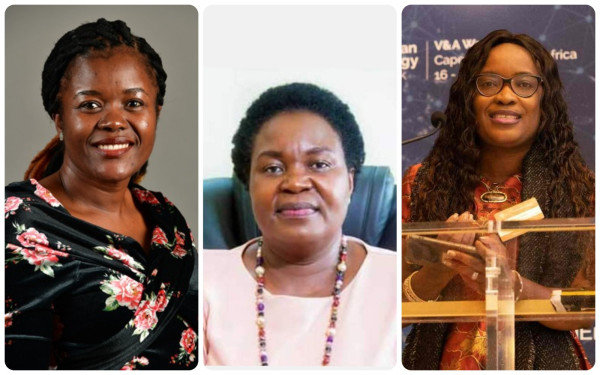
Energy Capital & Power (ECP) Celebrates Women Leading Africa’s Energy Growth

Location: News
Energy Capital & Power

As part of its Women in Energy series taking place this month, Energy Capital & Power (ECP) www.EnergyCapitalPower.com celebrates women in leadership positions within Africa's energy and mining sectors. With Senegal, Uganda, Namibia and South Africa at the helm of female leaders within their respective ministries, these markets have attracted billions in foreign investment and are home to some of the most dynamic upstream developments on the continent.

Since her appointment in November 2020, Sophie Gladima, Minister of Petroleum and Energies of Senegal, has led the country through one of its most transformative periods, with first oil and gas expected this year from the highly-anticipated Sangomar Field Development and Grand Tortue Ahmeyim (GTA) LNG project, respectively. Minister Gladima successfully advanced these projects – which total nearly $10 billion in foreign direct investment – in the face of COVID-19 and demands for cross-border cooperation with Mauritania, whose maritime border with Senegal houses the GTA LNG project. 

Ruth Nankabirwa Ssentamu, Minister of Energy and Mineral Development of Uganda, is another female minister leading frontier market developments since her appointment in June 2021. Targeting first oil output in 2025, Uganda has launched exploration drilling at its $10-billion Lake Albert Development, home to the TotalEnergies-operated Tilenga and CNOOC-operated Kingfisher fields. The country is also at the center of the planned East African Crude Oil Pipeline, which will transport Ugandan oil to the Port of Tanga in Tanzania and represents the single largest investment in either country to date.

Serving as Petroleum Commissioner of Namibia's Ministry of Mines and Energy since October 2015, Maggy Shino has played a pivotal role in securing upstream investment from leading IOCs, with TotalEnergies set to invest roughly $300 million in 2024 alone. With over 15 years in petroleum geological, geophysical and environmental management fields, Commissioner Shino has cemented Namibia's status as a world-class frontier oil and gas market with strong on- and offshore prospectivity. Following five offshore hydrocarbon discoveries, Namibia is currently conducting further appraisal work – as well as new seismic and exploration activity in the Owambo, Kavango and Orange Basins – and is on the path to first oil production by 2030.

In neighboring South Africa, Deputy Minister of Mineral Resources and Energy, Dr. Nobuhle Nkabane, has been active in driving an exploration agenda. Utilizing South Africa's Gas Master Plan, Dr. Nkabane has positioned natural gas as a means of improving energy security, reducing heavy-polluting fossil fuels and establishing domestic LNG production through recent discoveries like the 3.1-billion-cubic-feet Mpumalanga discovery. Under her leadership, South Africa's Department of Mineral Resources also implemented a school outreach program last month aimed at encouraging youth in STEM fields and developing a future workforce for the country's mining and energy sectors.

Energy Capital & Power's Women in Energy series celebrates the women shaping the future of the African energy sector. From projects to companies to programs and community development, the Women in Energy series underscores the integral role women play in developing the sector. Visit www.EnergyCapitalPower.com and keep up-to-date with our social media channels for daily content.

Distributed by APO Group on behalf of Energy Capital & Power.

Media files
Energy Capital & Power
Download logo
Read moreEnergy Capital & Power (ECP) Celebrates Women Leading Africa’s Energy Growth
7 March 2024

FAW Trucks accelerates momentum in 2024: Achievements, expansion, and enhanced support

Location: MyPR

Johannesburg, February — FAW Trucks South Africa, a key player in the global commercial vehicle manufacturing arena, reflects on a successful 2023 and charts an ambitious course for 2024 with strategic plans to reinforce its market presence and customer support. 1. Impressive 2023 Performance: Leading the Pack At the close of 2023, FAW Trucks SA …

Read moreFAW Trucks accelerates momentum in 2024: Achievements, expansion, and enhanced support
6 March 2024

Special votes: all you need to know

Location: News

Special votes: all you need to know

With the General Elections coming up on Wednesday, 29 May 2024, the Electoral Commission of South Africa (IEC) has detailed how the electorate can apply for special votes.

A special vote allows a registered voter, who can't vote at their voting station on Election Day, to apply to vote on a predetermined day before Election Day.

To qualify for a special vote, you must be unable to visit your local voting station on voting day because you are pregnant, infirm or have another disability that prevents you from visiting a voting station on Election Day.

You may also be eligible for a special vote if for other reasons, such as work.

Special votes can either be cast at home (where IEC officials visit you at your residence) or at a voting station.

Special votes and home visits for this year's general elections will take place on 27 and 28 May. The IEC says the closing date to apply for special votes is 3 May.

How to apply

To begin the online application for a special vote, visit the IEC website on https://www.elections.org.za/. Then navigate to the “Voters” tab and under the tab, click on “Apply for a special vote” in the middle column.

You can apply if you:

  • Are a registered voter.
  • Have a valid South African identity document (green, barcoded ID book; smartcard ID or a valid Temporary Identity Certificate).

To check that you're registered and to find out where you're registered, you can:

  • Check your voter registration status.SMS your ID number to 32810, or
  • Call the IEC's contact centre on 012 622 5700.

By law, you can apply for a special vote if you:

  • Can’t travel to your voting station because you are physically infirm, disabled or pregnant, or
  • Can’t vote at your voting station on Election Day.

How to apply for a special vote at your voting station

If you can’t vote at your voting station on Election Day, you can apply to cast a special vote at your voting station on the predetermined date only, as per the election timetable, in one of the following ways:

  • Using the IEC's secured online application form.
  • By SMSing your identity number to 32249 (R1.00 per SMS). (For special vote at a voting station only.)
  • By visiting your local IEC office (not the national or provincial offices) and submitting a MEC 35 form. Forms can only be hand-delivered (no emails or faxes accepted), but someone else can deliver your completed form on your behalf.

Make an appointment at your local IEC office

If you can’t apply for a special vote online, you can do it in person at your local IEC office. If you want to apply for a special vote at your home, you can send a relative or spouse to apply on your behalf.

You first need to make an appointment. You can do that by calling your local IEC office.

After you have made an appointment, you can visit your local IEC office during the operating hours of Monday to Friday between 9am and 5pm.

A the local IEC office, you will need to present the MEC 35 form. You can download the form online or you can request this form at the IEC office.

How to check special vote application status

After you’ve submitted your special vote application, you can review the status of your application online via SMS or by calling the IEC call centre.

Check special vote application status online

Visit the IECs website. On the home page, click the “I want to” Tab and then click “Check the status of special vote application”.

From there, you will be directed to the special vote status check. You will need to select the election you’re applying for and enter your ID number.

You will then be redirected to a page that will display the status of your special vote application.

Check special vote application status via IEC

You can also call the IEC call centre on 0800 11 8000 and follow the prompts to get information about your special vote application status. – SAnews.gov.za

    Edwin
    Wed, 03/06/2024 - 13:51

    301 views
    Read moreSpecial votes: all you need to know
    6 March 2024

    Collaboration between government and business bearing fruit

    Location: News

    Collaboration between government and business bearing fruit

    The partnership between government and business is yielding positive outcomes, such as decreased load shedding, enhanced efficiency in rail and ports, and a decline in security incidents affecting energy and logistics infrastructure.

    This is according to President Cyril Ramaphosa, who convened a meeting with members of Cabinet and senior business leaders on Tuesday on the partnership between government and business to address key challenges in energy, transport and logistics, and crime and corruption.

    The objective of the partnership is to achieve more rapid economic growth and generate a significant increase in sustainable employment by urgently delivering on priority interventions in each of the three focal areas. 

    “We are beginning to see the tangible results of this collaboration in reduced load shedding, improved performance of our rail network and ports, and a reduction in security incidents targeting energy and logistics infrastructure. 

    “We are confident that we are turning the corner on our most urgent challenges, and are absolutely committed to building on this partnership as we work to grow the economy,” President Ramaphosa said in a joint statement between Government and Business. 

    Adrian Gore, co-convenor of the business delegation, said they have achieved real progress over the last nine months, and the partnership is gaining excellent traction. 

    “The private sector has contributed more than R170 million of support directly into this partnership, and has mobilised over 350 technical experts. We need to capitalise on the momentum and urgently implement the necessary reforms. This will help to improve societal and investor confidence in South Africa’s potential, and mobilize much needed investment to grow the economy inclusively,” Gore said. 

    As part of the support provided by business, the Resource Mobilisation Fund (RMF) was established to procure and donate resources to support the implementation of the Energy Action Plan. To date, the fund has raised approximately R100m, with R25m already having been drawn down to fund expertise to support the National Energy Crisis Committee (NECOM).

    The joint statement said business is looking to scale this model to support the National Logistics Crisis Committee (NLCC) and the Joint Initiative on Crime and Corruption (JICC). 

    The meeting discussed the progress made over the last three months, as well as key priorities to accelerate progress in the next period. 

    Key updates since November 2023: 

    • Energy: Load shedding is roughly 61% less than the same period last year (80% less for stages 4 and above), and is starting to decouple from Eskom’s Energy Availability Factor (EAF), demonstrating the positive impact of alternative energy sources including rooftop solar. 

    • Transport and logistics: A 45% reduction in vessels anchored outside the Port of Durban and a 36% reduction in the waiting time to anchor for container vessels has been achieved. Capable executive leadership has been appointed in Transnet to ensure stability and focused delivery. 

    • Crime and corruption: Collaboration between Transnet and business, including the provision of security on the rail network, has resulted in a 65% reduction in criminal incidents on the Northern Corridor which is key to reducing the cancellation of trains.

    Energy 

    The work underway within the National Energy Crisis Committee (NECOM) and the implementation of the Energy Action Plan is starting to bear fruit. 

    “Load shedding is down by 61% compared to the same period last year, with the return of units at Kusile power station as well as new generation capacity from rooftop solar and private sector investment having a positive impact. 

    “Reform of the energy sector is progressing, with an independent board appointed for the National Transmission Company of South Africa (NTCSA) and preparations underway for the new entity to commence trading,” the statement read. 

    On the downside, however, Eskom plant performance remains unreliable with an unacceptably high level of unplanned outages. Under the leadership of its new Group Chief Executive, Dan Marokane, Eskom is working to ensure full delivery on its recovery plan. 

    The joint statement highlighted that Eskom and business are finalising a Mutual Cooperation Agreement to establish a sustainable framework through which to deploy additional independent skilled experts to support Eskom in this regard. 

    “The aim for 2024 is to increase generation capacity from multiple sources by up to 11.5 GW, which will enable a significant reduction in the severity of load shedding by the end of the year.

    “This includes improved plant performance as a result of Eskom’s Generation Recovery Plan, additional private investment in rooftop solar and utility-scale projects as a result of policy and regulatory reforms, and projects from previous bid windows connecting to the grid,” the statement said. 

    Initiatives are also underway to unlock increased grid capacity, successfully conclude Bid Window 7 and open further bid windows for gas-to-power and battery storage will contribute to additional generation capacity in the medium term. 

    Finally, government is working to accelerate reforms in the energy sector, including the promulgation of the ERA Bill, the establishment of the NTCSA, the finalisation of a national wheeling framework, and the development of financing mechanisms for transmission infrastructure.

    Transport and logistics 

    Government and business emphasised that challenges in the logistics system are receiving urgent attention, with the National Logistics Crisis Committee (NLCC) focused on stabilising and improving rail, port and road operations. 

    Business is supporting a number of the NLCC workstreams with technical, security and operational expertise. 

    “Green shoots include a 45% reduction in vessels anchored outside the Port of Durban and a 36% reduction in the waiting time to anchor for container vessels. A major success has been the provision of security by business on the rail network on an interim basis, which has resulted in a 65% reduction in criminal incidents on the Northern Corridor, reducing the number of trains cancelled. Work is currently underway to ramp up the deployment of SAPS resources to secure network infrastructure in the longer term,” the statement said. 

    It further highlighted that progress was achieved with the approval of the Freight Logistics Roadmap (FLRM) and the Private Sector Participation Framework, which together outline clear actions and timeframes to ensure a more efficient logistics network that encourages private investment and competition in operations. 

    Implementation of the roadmap is now underway, with key milestones included in conditions attached to the R47 billion guarantee recently extended to Transnet. 

    “Despite this progress, continued poor operational performance and inefficiency costs the economy R1 billion per day, with recent announcements of retrenchments in the mining industry illustrating the urgency of reform in the logistics sector. 

    “Transnet is focused on improving performance through clearly defined and agreed measures such as rebuilding internal capacity, implementing operational excellence centres for strategic corridors, and drawing on private sector technical resources.

    "The recent appointment of permanent executive leadership at Transnet will assist with the necessary focus and delivery mindset, and the urgent implementation of the Transnet Recovery Plan,” the statement said. 

    Crime and corruption 

    Steady progress has also been made in the crime and corruption focal area, including the establishment of the Joint Initiative on Crime and Corruption. 

    The private sector is continuing its support to strengthen law enforcement through providing business information and resources to assist with the fight against infrastructure crime. 

    The statement said support has also been provided to modernise the 10111 helpline, with a pilot project initiated at the main call centre in Midrand. 

    “Passing the NPA Amendment Bill within the current Parliament will strengthen the independence and investigating capacity of the NPA and will enable the establishment of additional infrastructure to support the Investigating Directorate as a permanent entity, including a dedicated Forensics Laboratory. 

    “A key focus is to secure South Africa’s removal from the Financial Action Task Force (FATF) grey list, with the aim of achieving this by June 2025,” the statement said. 

    Next steps 

    The next meeting will be held in May to assess progress on the three focal areas.

    Government and business reaffirmed their commitment to communicating regularly on progress, and identifying areas where further work is required. 

    “We are finalising our targets for the end of 2024, and aligning on the critical paths to achieve these. These plans will be communicated publicly, and reported on regularly. This will build confidence in the process and will enforce accountability. As partners, we are absolutely focused on delivery,” Chair of the B4SA Steering Committee, Martin Kingston said. – SAnews.gov.za

    DikelediM
    Wed, 03/06/2024 - 12:43

    81 views
    Read moreCollaboration between government and business bearing fruit
    4 March 2024

    Progress made in reforming the public service

    Location: News

    Progress made in reforming the public service

    President Cyril Ramaphosa has in his weekly newsletter to the nation, touched on the recent progress that has been made in reforming and professionalising the public service.

    “Several important milestones have been reached in the last week as part of the work underway to reform and professionalise the public service. These developments are vital both to advancing the goal of a capable developmental state and give effect to recommendations of the State Capture Commission,” he said.

    In his weekly newsletter on Monday, the President said the National Assembly had passed two important pieces of legislation that will improve the functioning of the public service, strengthen accountability and increase efficiency. 

    These bills, the Public Administration Management Amendment Bill and the Public Service Amendment Bill will now go to the National Council of Provinces for consideration.  
     
    Also, the Department of Public Service and Administration published a new directive to guide departments in implementing the framework for the professionalisation of the public service. 
     
    “This directive, together with the draft legislation, will have a far-reaching impact on the functioning of the public service. They give effect to some of our most important tasks. 
     
    “Firstly, these reforms will help ensure that the best people are appointed to the public service and that they are given support to perform effectively,” the President said. 
     
    He highlighted that the directive, for example, requires that a person can only qualify to be appointed to senior management in the public service if they have successfully completed the pre-entry programme known as Nyukela. 

    The course, which is provided by the National School of Government and takes about 120 hours to complete, aims to ensure that all applicants to senior management positions have the knowledge and capabilities they need to succeed. The course aims to ensure that prospective senior managers are grounded in the values of good citizenship, ethical leadership, and developmental public administration.
     
    All shortlisted candidates must undertake two pre-entry assessments – a practical exercise that tests their competencies, and an integrity assessment that establishes their grasp of ethical principles and ability to take ethical decisions. 
     
    All new employees must undergo a compulsory induction programme within six months of appointment, and all current public servants must attend a compulsory re-orientation programme once every five years. 
     
    “To ensure continuous learning and development throughout a public servant’s career, every department must spend at least 1% of their wage bill on training. To support this effort, the draft legislation currently in Parliament establishes the National School of Government as a national department to provide education and training to employees in all spheres of government, including municipalities and public entities,” he said. 
     
    National School of Government

    During the State of the Nation Address last year, President Ramaphosa announced that the National School of Government will work with the Human Sciences Research Council to undertake a skills audit in selected infrastructure and frontline services departments. 
     
    The first phase of the project has now been completed, giving valuable insights into potential critical skills gaps in these departments.

    In infrastructure departments, for example, the report highlighted the need to improve knowledge of modern engineering practices, sustainable construction methods and environmental impact assessment. 

    “The results from the frontline services departments will support the work being done to improve the administration of public services and the quality of services provided. These skills audits have been well received and will help us to get the best that each public servant can offer.”

    Work experience
     
    Another important part of the most recent directive is that the requirement of work experience has been waived for entry level posts in the public service. 

    This must be accompanied by in-service training and support such as coaching and mentoring. Departments are also instructed to establish graduate recruitment schemes to attract young people leaving higher education institutions into the public service. 

    Political interference and delineation of powers
     
    “Secondly, the reforms contained in the draft legislation will significantly reduce the potential for undue political interference in the administration of government,” President Ramaphosa said.
     
    He further highlighted that the Public Service Amendment Bill makes a clear distinction between the powers of elected officials, such as Ministers, and professional public servants, such as Directors-General or Heads of Department. 

    The elected officials, legally defined as the Executive Authority, provides strategic and political direction, while heads of department are granted full administrative powers to run their departments. 
     
    “This clear delineation of powers will make for a more professional and efficient public service. It will also help to prevent the kind of undue political interference in the administration of the state that the State Capture Commission found sometimes enabled corruption.  Another important change proposed in the legislation is to prohibit a head of department or an employee directly reporting to them from holding political office. This is to strengthen the distinction between political and administrative roles.”

    Thirdly, the President said these reforms will improve coordination and accountability. 
     
    Among other things, the draft legislation will enable the transfer of public servants between national and provincial governments and municipalities.

    This will help to ensure that people with technical and scarce skills and capabilities can be moved to where they will have the greatest impact. This is important for supporting municipalities, which often suffer from a shortage of skilled employees. 
     
    The draft legislation also assigns additional functions to the Director-General in the Presidency, in line with the National Development Plan, to create an administrative head of the public service to whom Directors-General would report on operational, organisational and administrative matters. 

    Corruption
     
    Fourthly, the President emphasised that these reforms will strengthen the fight against corruption. 
     
    As part of the draft legislation, public servants who leave government may not, within 12 months of leaving, accept employment or appointment to the board of a service provider to which they were involved in awarding a contract. 

    They may not perform any paid work or receive any other payment. Service providers or employees who contravene this provision would have committed a crime and could be fined up to R1 million. 
     
    To improve accountability and tackle corruption, an inter-departmental task team has developed a central register to track all dismissals and resignations with disciplinary cases pending in national and provincial government. This register currently has over 12,000 records.
     
    “Work is underway to include information from local government and public entities. This will prevent public servants with disciplinary records being appointed in another part of the State. 
     
    “All of these reforms will contribute to building a more effective and efficient state that is responsive and accountability. They will enable public servants to do their work without interference and with the necessary support. And they will provide impetus to our collective efforts to build a capable state that is better equipped to fundamentally transform and develop our society,” the President said. – SAnews.gov.za

    DikelediM
    Mon, 03/04/2024 - 14:30

    430 views
    Read moreProgress made in reforming the public service
    1 March 2024

    New Eskom chief executive assumes duties

    Location: News

    New Eskom chief executive assumes duties

    Dan Marokane officially assumes his role as Eskom Group Chief Executive today.

    In a statement on Friday, the Eskom Board expressed confidence in Marokane’s abilities, as well as in the leadership and staff of Eskom, emphasising their collective commitment to turning the organisation around.

    “We expect Morokane and his leadership team to accomplish at least two critical tasks. Firstly, they must address the current business challenges. Load shedding must become a thing of the past. Secondly, they need to reposition and restructure Eskom to enable growth and sustainability,” said Eskom Board chairman Mteto Nyati.

    As Marokane takes the helm, the Eskom Board has asked him to prioritise several key areas in the first 100 days and these are:

    • Assessing the Generation Operational Recovery Plan.
    • Reviewing Eskom’s unbundling plans.
    • Engaging with internal and external stakeholders.

    These first 100 days are crucial for helping him gain the necessary insights about Eskom and the industry.

    Eskom said the new Group Chief Executive should be in a position to engage with the media at the end of this critical period.

    “Morokane has the full support of the Eskom Board. Eskom employees are excited to welcome him back into the organisation. We invite all South Africans to rally behind him as he steers Eskom toward stability, reliability, and sustainability,” said Nyati.

    Public Enterprises Minister Pravin Gordhan announced the appointment of Marokane in December 2023.

    READ | Marokane re-joins Eskom as new chief executive

    According to the Department of Public Enterprises, Marokane is a qualified Chemical Engineer, who has a MBA and is a seasoned executive with more than 20 years of senior leadership experience.

    At the time of the announcement of his appointment, Marokane was expected to join the power utility no later than 31 March 2024.

    Marokane was a senior manager at Eskom from 2010 to 2015, holding various senior positions, including Head of Group Capital. - SAnews.gov.za


    Neo
    Fri, 03/01/2024 - 09:11

    109 views
    Read moreNew Eskom chief executive assumes duties
    1 March 2024

    I Am Considering Abortion. What Should I Do

    Location: MyPR

    If you are considering abortion, it’s important to take the time to gather information, consider your options, and seek support. Here are some steps you may want to consider: Educate Yourself: Learn about the different types of abortion procedures, the potential risks and complications, and the laws and regulations regarding abortion in your area. You can consult …

    Read moreI Am Considering Abortion. What Should I Do
    29 February 2024

    National Treasury publishes Policy Position Statement on financial ombud system

    Location: News

    National Treasury publishes Policy Position Statement on financial ombud system

    National Treasury has published its Policy Position Statement titled, 'A Simpler, Stronger Financial Sector Ombud System', which outlines proposed reforms to the ombud system.

    The Policy Position Statement follows the publication of a World Bank Diagnostic Study in 2021 titled, 'South Africa - Financial Ombud System Diagnostic'.

    “The study provided an independent review of South Africa’s financial ombud system and recommended reforms to enhance consumer protection and encourage good quality outcomes in the financial services sector,” National Treasury said on Thursday.

    Prior to the diagnostic study, an earlier discussion document titled, 'A Known and Trusted Ombud System for All (2017)', had proposed initial reforms to the ombud system, which were later included in the Financial Sector Regulation (FSR) Act (Act 9 of 2017), as part of the Twin Peaks financial sector regulatory reform.

    National Treasury said the publication of the policy position is a necessary step to communicate and publish its Policy Position Statement and accompanying detailed feedback statement, including an implementation plan.

    “This publication also provides a response to consultation comments, and enables ombud schemes and the Ombud Council to work towards implementing a reformed structure,” National Treasury said.

    Key elements of the proposed reform that National Treasury supports include:

    1. Structural reform of the ombud system, that will reduce the seven ombud schemes to two:
    • A new, consolidated ombud scheme: National Financial Ombud (NFO) – a new body, independent of industry and government, replacing 6 of the current 7 schemes (all the industry schemes plus the FAIS Ombud).
    • A Retirement Funds Ombud (RFO) – a renamed and reformed Pension Funds Adjudicator, with a board to underpin its independence and oversee its efficiency and effectiveness. National Treasury considers that it would be too complex a transition for the NFO to absorb the work of the RFO at this stage. However, this is likely to happen in the medium term, once the NFO has been up and running for a while.
    1. A modified Ombud Council – modifications to the title and appointment of its chief executive and (later) a review of its powers in the light of the simplification of the ombud system.
    2. Improved consistency across the ombud system on visibility and accessibility, eligibility of complainants, processes, powers and enforceability of decisions, and improved coverage to significantly reduce jurisdictional gaps and overlaps

    “Full implementation of the above reforms will require legislative amendments. In the interim, National Treasury notes and welcomes the voluntary amalgamation, in consultation with the Ombud Council, of four of the current industry schemes (Credit, Banking, Long-term Insurance and Short-term Insurance) to form a new, streamlined industry scheme, the National Financial Ombud Scheme South Africa (NFO).

    “The NFO is expected to commence operations on 1 March 2024, after recognition by the Ombud Council. This is an important step towards the broader reforms outlined in the policy position and will simplify their implementation,” National Treasury said.

    The following documents are available on the website of the National Treasury at www.treasury.gov.za:

    • Annexure A: A Simpler, Stronger Financial Sector Ombud System: Policy Position Statement.
    • Annexure B: A Simpler, Stronger Financial Sector Ombud System: Feedback Statement.

    - SAnews.gov.za

    nosihle
    Thu, 02/29/2024 - 13:25

    201 views
    Read moreNational Treasury publishes Policy Position Statement on financial ombud system
    28 February 2024

    Work to complete Mandlakazi Regional Bulk Water Scheme continues

    Location: News

    Work to complete Mandlakazi Regional Bulk Water Scheme continues

    The Ministry of Water and Sanitation says it is accelerating the completion of the Mandlakazi Regional Bulk Water Scheme to ensure sustainable water provision in Zululand.

    The water supply scheme aims to bring relief to the community of Mandlakazi, which is between Kwa-Nongoma and Mkhuze towns in Zululand District Municipality, as well as Hlabisa under uMkhanyakude District Municipality in KwaZulu-Natal.

    Giving an update on the progress made to move the project toward completion, the department said on 14 December 2023, Water and Sanitation Minister, Senzo Mchunu convened a meeting between the department, uMngeni-uThukela Water, Zululand, and uMkhanyakude District Municipalities.

    The meeting was held to check on the status quo of the project progress.

    At the meeting, presentations were made by both district municipalities, with visibly identifiable gaps and overall slow project progress.

    This was followed by the Minister’s announcement that the scheme would be taken over by the department and transferred into a Ministerial Scheme. 

    “The decision to take over the project was as a result of the delayed nature of the project and its huge socio-economic impact, as it is cuts across two districts,” departmental spokesperson, Wisane Mavasa explained. 

    During a meeting held on 3 January 2024, Mchunu also announced the appointment of uMngeni-uThukela Water as the implementing agent, responsible for certain aspects of the project. 

    In addition, the Zululand District Municipality has been appointed to implement Phases 5 and 6 of the project, which will benefit 279 297 people. 

    “Phase 5 includes the construction of the main pipeline that will abstract water from Jozini Dam to Mandlakazi Water Treatment Works, and several other pipeline projects within the entire Mandlakazi project footprint.  Phase 6 concerns the construction of a network water reticulation pipelines to provide water to the households of the entire Esiphambanweni community.”

    While waiting for the Mandlakazi Scheme to be completed, Mavasa said the department has provided funding for emergency storage reservoirs and connection to supply water to the Hlabisa area.

    Mavasa said, as of 20 February 2024, the project have been tested and commissioned, and reservoir 12 Mthwadlana and reservoir 22 Miyaneni, will now be able to receive water.

    Reservoir 12 Mthwadlana feeds all reservoirs to the east of Hlabisa in the villages including Matshamhlophe, Majukujukwini, Ophaphasi, Nhlwathi, Nqamu, Ngodini, Mcwabakazi, Makhowe, and others. 

    Reservoir 22 Miyaneni is a command reservoir that feeds all reservoirs to the west of Hlabisa, including Mpembeni, Hlabisa Town, Mhlambanyathi, Mgangatho, Mansiya, among others.

    “The technical teams are currently doing pressure testing and checking the functionality of some of the pipelines, since the reservoirs are now at full capacity,” Mavasa said. 

    Mavasa reiterated the Ministry, and the department continue to provide support and oversight to the project, to ensure that it meets its deadlines as outlined, and that communities identified receive sustainable potable water upon its completion. – SAnews.gov.za


    GabiK
    Wed, 02/28/2024 - 11:15

    384 views
    Read moreWork to complete Mandlakazi Regional Bulk Water Scheme continues
    23 February 2024

    Government congratulates Sibusiso Ngalwa on Africa Editors Forum appointment

    Location: News

    Government congratulates Sibusiso Ngalwa on Africa Editors Forum appointment

    The Government Communication and Information System (GCIS) has congratulated Sibusiso Ngalwa who is the current Chairperson of the South African National Editors Forum on his appointment to the Executive Committee of the Africa Editors Forum. 

    In a statement on Thursday, the GCIS said this appointment is particularly important as the media sector is facing a variety of challenges such as fake news and declining revenues. 

    The editor’s forum is an expression of the need for editors and all media practitioners on the continent to work together towards preserving journalism and promoting media freedom.

    The Africa Editors Forum plays a crucial role in fostering dialogue among media professionals and addressing challenges faced by the media industry across the African continent. The department added that it recognises the significant contributions made by SANEF in upholding press freedom, ethical journalism, and media diversity in South Africa.

    GCIS Acting Director-General, Nomonde Mnukwa said: “We believe that the involvement of Mr Ngalwa in the Africa Editors Forum Executive Committee will undoubtedly enhance the forum's efforts in promoting values of media freedom on a broader scale and fostering collaboration among African media organisations.

    “We also acknowledge the importance of a free and responsible press in any thriving democracy. Therefore, Mr Ngalwa’s appointment is a recognition of the SANEF professionalism and commitment to journalistic principles.” – SAnews.gov.za

    DikelediM
    Fri, 02/23/2024 - 09:24

    394 views
    Read moreGovernment congratulates Sibusiso Ngalwa on Africa Editors Forum appointment
    22 February 2024

    Judge Makhubele accuses evidence leader of ridiculing her over her knowledge of the Constitution

    Location: News

    She was questioned about section 174 of the Constitution which governs the appointment of judges

    Read moreJudge Makhubele accuses evidence leader of ridiculing her over her knowledge of the Constitution
    22 February 2024

    Limpopo royal family feud could change customary law

    Location: News

    Courts to rule on key issues linked to succession

    Read moreLimpopo royal family feud could change customary law
    20 February 2024

    North West govt commits to completion of infrastructure projects

    Location: News

    North West govt commits to completion of infrastructure projects

    Acting North West Premier Nono Maloyi has committed to meeting with the contractor responsible for the construction of Nelson Mandela Drive, which is a crucial node for the economy of the province.

    Delivering the State of the Province Address (SOPA) on Tuesday, Maloyi apologised for the delayed refurbishment and maintenance of the road. Nelson Mandela Drive has been described as the busiest road in Mahikeng and an economic transport arterial road, which carries large volumes of traffic, especially during peak hours. 

    “We acknowledge and apologise for the delays in the construction of Nelson Mandela
    Drive in Mahikeng. This has impacted negatively on businesses along the road and the public who use the road daily,” Maloyi said. 

    However, according to Maloyi, there has been progress on the road, as 3.2 kilometres have already been completed, with 450 metres nearing completion.

    “After this address, I will be visiting the project to meet with the contractor to emphasise the commitment to complete the project,” Maloyi promised. 

    Meanwhile, he said the rehabilitation and widening of the Phelindaba to Pecanwood Road is progressing well and is due for completion in December 2026.

    In addition, the Hartbeesfontein to Ottosdal Road is envisioned to be completed ahead of schedule in June this year.

    As part of addressing road infrastructure backlogs, Maloyi told the provincial legislature that 12 roads have been transferred to the South African National Roads Agency (Sanral) for construction.

    This includes portions of roads on the N18 from Mahikeng to Vryburg and the R30 that will cover Klerksdorp to Ventersdorp, as well as Orkney.

    The Acting Premier explained that the remainder of these projects will be spread across Bojanala-Platinum, Ngaka Modiri Molema and Dr Kenneth Kaunda Districts.

    Potholes

    Maloyi said over 320 kilometres of potholes across the province will be resealed, creating 429 job opportunities.

    “Municipalities such as Matlosana and JB Marks are to insource road maintenance and pothole patching on an ongoing basis, as a municipal function undertaken by municipal employees.” 

    He explained that this initiative will be emulated in other municipalities across the province.

    In addition, work on the Lichtenburg to Koster and Derby to Magaliesburg will commence in the new financial year.

    “We have terminated and appointed a new contractor to start working on the Majakaneng to Sun City Road," Maloyi said. 

    Load shedding

    Maloyi acknowledged that the provision of electricity has increased significantly from 58.1% in 1996 to over 94.7% to date.

    Shifting his focus to power cuts, he acknowledged the devastating impact of load shedding on their provincial economy and households.

    As a result, he said the Department of Cooperative Governance and Traditional Affairs (CoGTA) is coordinating efforts to assist municipalities to implement renewable and alternative energy sources.

    To help put an end to load shedding, the province has signed a Memorandum of Understanding (MoU) with the Chinese National Import and Export Corporation.

    The agreement aims to construct gas to electricity power stations worth R16 billion in the City of Matlosana and Moses Kotane Local Municipality, respectively.

    The first phase of this project, he said, will see Matlosana producing 198 megawatts of electricity. 

    Construction is earmarked for a maximum of 90 days per 100 megawatts.

    The Chinese Import and Export Corporation, in addition to their project investment, has committed to investing further resources to assist in eradicating mud houses in the province by building 500 houses every year for the duration of this MoU.

    This project is expected to create a minimum of over 10 000 jobs.

    Improving governance in municipalities 

    The Acting Premier said the provincial government is continuing to provide dedicated support to all municipalities to improve financial management through the implementation and monitoring of Financial Recovery Plans (FRPs).

    This is after the province has finally exited the section 100 intervention phase, with the full restoration of all executive functions of provincial departments after it was placed under administration in 2018. 

    Maloyi said the Executive Council has approved the appointment and deployment of Provincial Executive Representatives (PERs) to implement financial recovery plans for identified municipalities, under the joint coordination of the Provincial Treasury and the Department of Cooperative Governance and Traditional Affairs (CoGTA).

    In addition, he said the provincial government has rolled out skills and qualification audits in all municipalities, with 5 487 employees already being audited. – SAnews.gov.za

    Gabisile
    Tue, 02/20/2024 - 13:36

    538 views
    Read moreNorth West govt commits to completion of infrastructure projects
    19 February 2024

    Gauteng Blinds on Sale at Blinds4u.co.za

    Location: MyPR

    Looking for affordable blinds in Gauteng? Look no further than Blinds4u.co.za, the best blinds store in the region. As a trusted supplier of blinds, Blinds4u.co.za offers a wide range of high-quality blinds for sale. Whether you’re in Centurion, Pretoria, Midrand, Johannesburg, or any other location in Gauteng, Blinds4u.co.za has you covered. At Blinds4u.co.za, you’ll find …

    Read moreGauteng Blinds on Sale at Blinds4u.co.za
    19 February 2024

    Justice and Correctional Services Committee Calls Public Input on Deputy Public Protector Candidates

    Location: News

    Republic of South Africa: The Parliament
    Download logo

    The Portfolio Committee on Justice and Correctional Services today called for public comments on applications and nominations received for the position of Deputy Public Protector (DPP).

    Committee Chairperson Mr Bulelani Magwanishe said the position became vacant late last year when the then DPP was appointed as Public Protector (PP). Mr Magwanishe said the committee received a total of 46 applications and nominations of which two has since withdrawn.

    Mr Magwanishe said a list of all the nominations/applications received is now available on the Parliament website in order to allow members of the public to comment on the suitability of candidates. Please find list of candidates below:

    Adv EM Chipu
    Adv A Chowan
    Adv FT Maleka
    Adv JJ van der Merwe
    Adv KA Sedupane
    Adv M Marriot
    Adv M Mnyatheli
    Adv MC Molaudi
    Adv MM Mtukushe
    Adv MPT Maluleke
    Adv N Gumede
    Adv N Raedani
    Adv S Tebeile
    Ms L Mkhize

    Adv S Zimema
    Adv TA Banguzana
    Adv TDL Sagela
    Adv TS Thipanyane
    Dr PV Pillay
    Mr AV Mavhidula
    Mr MD Maloka
    Mr MM Nyiki
    Mr MM Sibiya
    Mr P Mokotedi
    Mr R Makgalebone
    Mr S Ntleki
    Mr SM Ludidi
    Ms PR Mogaladi

    Mr VL Magwebu
    Ms ZM Bogatsu
    Ms B Mphaga
    Ms C Kosi
    Ms D Samsity
    Ms EN Kabe
    Ms FP Ledwaba
    Ms KE Malatji
    Ms LS Somo
    Ms NGK Bunyoyo
    Ms TB Mpanza
    Prof B Mmusinyane
    Adv FK Ngqele

    He said the DPP is appointed by the President on the recommendation of the National Assembly for such a period as the President may determine at the time of such appointment, but not exceeding seven years. The DPP may at the end of his or her term be reappointed for one additional term. The annual salary for the position is R1 924 542.

    The person recommended for appointment as DPP must be a South African citizen, who is a fit and proper person to hold such office, and who:

    • Is admitted as an advocate or an attorney and has, for a cumulative period of at least 10 years after having been so admitted, practiced as an advocate or an attorney; or
    • Is qualified to be admitted as an advocate or an attorney and has, for a cumulative period of at least 10 years after having so qualified, lectured in law at a university; or
    • Has specialised knowledge of or experience in, for a cumulative period of at least 10 years, the administration of justice, public administration or public finance; or
    • Has, for a cumulative period of at least 10 years, been a member of Parliament; or
    • Has acquired any combination of experience mentioned in paragraphs (a) to (d), for a cumulative period of at least 10 years.

    Nominations/applications must contain a curriculum vitae (CV) providing the nominee/applicant's:

    • Full name, ID number and gender;
    • Contact details, including physical address, telephone/cell phone number and email address;
    • Relevant previous work experience (including relevant dates and organisations concerned); and
    • Academic qualifications.

    Mr Magwanishe said a list of all the nominations/applications received will be published in order to allow members of the public to comment on the suitability of candidates. He said the shortlisted candidates will be subjected to a screening process.

    Comments must reach Mr Vhonani Ramaano at Dppvacancy@parliament.gov.za  by no later than 23 February 2024 at 16H00.

    Distributed by APO Group on behalf of Republic of South Africa: The Parliament.

    Read moreJustice and Correctional Services Committee Calls Public Input on Deputy Public Protector Candidates
    19 February 2024

    Appointment Of Louise Steenekamp As The African SAP User Group Board Vice-Chair

    Location: Business

    19 February 2024 -The African SAP User Group (AFSUG) Board has unanimously appointed Louise Steenekamp as its new Vice-Chair, effective 15 February 2024. Having served on the AFSUG Board since January 2020, Steenekamp brings with her over two decades of extensive experience within the SAP ecosystem. Her expertise spans various aspects of SAP, including implementation, …

    Read moreAppointment Of Louise Steenekamp As The African SAP User Group Board Vice-Chair
    • Previous
    • Page 1
    • Interim pages omitted …
    • Page 24
    • Page 25
    • Page 26

    Copyright © 2026 · MyZA · All Rights Reserved · Powered by Stratlec Online