Universal Basic Income Grant: who should run it?
The sad history of Net1 and the Post Office shows that this is an important question

MyZA
News, Directory, Events and Other Stuff
The sad history of Net1 and the Post Office shows that this is an important question
The importance of security in South Africa cannot be overstated. Businesses, high-profile individuals, and sensitive facilities increasingly require robust measures to ensure the safety of their assets and personnel. This blog explores a variety of high-security solutions, including bulletproof windows and doors, strong room doors, and anti-bandit doors, offering a comprehensive understanding of how these …
In an era marked by rapid digital transformation and changing consumer preferences, contactless payment systems have emerged as game-changers in the realm of commerce. From the convenience of mobile apps to the security of NFC payment software, these innovative solutions are reshaping the way we pay and transact. Let’s explore the evolution of contactless payment …
In the ever-evolving landscape of business security, staying ahead of potential threats is paramount. From safeguarding valuable assets to protecting sensitive information, businesses rely on a range of security products to fortify their premises and ensure peace of mind. Let’s explore the diverse array of business security products, from anti-bandit doors to safes, and understand …
Introduction Neuromarketing is an innovative field that blends the insights of neuroscience with the strategies of marketing to unveil the subconscious preferences of consumers. It’s a pivotal tool in the marketing landscape, offering a deeper understanding of how consumers react to marketing stimuli beyond their conscious awareness. By delving into the neural activities that drive …
In an era where security threats are increasingly sophisticated, businesses must employ robust measures to protect their assets, data, and personnel. Among these measures, physical security products play a crucial role in fortifying business premises against unauthorized access and potential breaches. In this blog, we’ll delve into seven essential business security products that every enterprise …
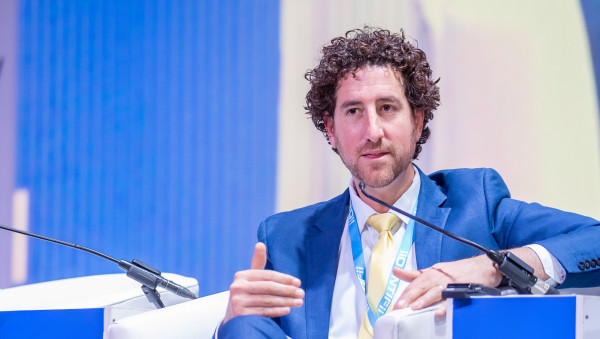
Mobile networks must not be complacent about SIM swap fraud and they need to prioritise the protection of customers. This is according to Gur Geva, Founder and CEO of iiDENTIFii (www.iiDENTIFii.com).
“Although SABRIC has noted a slight decline in reported SIM swap fraud in its latest report, mobile service providers still need to tighten up their data security to protect against fraudsters using false identities and SIM swap scams,” says Geva.
This is particularly relevant as telecommunications and banking industries become increasingly intertwined. Banks now offer mobile services, while mobile network operators provide financial services, and so there is a convergence between the regulatory requirements of FICA and RICA. This shift has led to heightened identity theft risks, requiring mobile operators to adopt stringent identity verification practices inspired by the financial sector's standards.
Operators need to define practical, robust security solutions that adhere to and surpass current telco legislation. Geva says, “In order to combat SIM swap and identity fraud, networks should focus on the provision of simple, scalable and safe digital identity. This has a far-reaching impact, not only on safer mobile use and the protection of consumers from fraud, but also on the ability of consumers to access mobile, financial and governmental services through their phones.”
The current state of SIM swap fraud
SABRIC's 2022 crime report (https://apo-opa.co/3HRlavN) notes that mobile banking fraud saw a 9% reduction in reported incidents in 2022, and that SIM swap incidents declined from 87% in 2021 to 76% (7 657) in 2022. While this reduction is positive, there are still thousands of SIM swap fraud incidents reported each year.
“Cyber-crime will continue to evolve, and networks need to be prepared for increasingly sophisticated SIM swap attacks. Their strongest line of defense is in securing the identity of a person's identity to each SIM,” says Geva.
The effectiveness of this approach has been demonstrated in nations such as Kenya, Namibia, Pakistan and Russia, which have all been enforcing varying levels of biometric SIM registration to deter fraudsters.
Increasing legislation to prevent attacks
The nature of these SIM-related crimes goes beyond financial crimes and SIM swap fraud.
“For the cost of a few unregistered SIM cards at R5 each from a roadside vendor, planning a murder becomes untraceable by police through RICA, and thus virtually risk-free,” says Natasha Mazzone, the DA's Shadow Minister of Communications and Digital Technologies in an article on RICA legislation (https://apo-opa.co/3HRtZp4).
In 2022, ICASA published draft regulations that would require mobile network operators to collect subscriber biometric data. ICASA said these regulations would reduce instances of mobile number hijacking via fraudulent SIM swaps and number porting. However, this was met by hesitance from consumers and organisations such as Communications Risk Information Centre (COMRiC). Consumers feared that the collection of biometric data would compromise their privacy, while COMRiC felt that biometrics as a single solution was too limited in its scope and challenging to implement at scale.
What networks can do
Mobile networks (as owners of the SIM and the technology behind it) should consider implementing clear strategies and leading technologies to mitigate SIM swap fraud and protect their customers. And while SIM swaps constitute one problem, identity fraud is far more problematic.
“When it comes to securing a person's identity, we believe that face biometrics offer the most secure solution,” adds Geva.
In South Africa, face biometrics would be able to verify whether the person registering a SIM is live and doing it in the present moment, as well as binding the SIM card to that applicant's identity and facial image. It can validate barcoded identification documents presented, RICA or FICA details and a facial image back to the Department of Home Affairs. This prevents identity fraud and proves that the individual applying for services online is a ‘live' person and not a deepfake. SIM swaps become a moot point, as all SIM cards are then data bound to a legitimate individual with accurate RICA requirements.
The question of surveillance
Biometrics are deeply personal, but opt-in biometrics do not open consumers up to surveillance.
“Because biometric technology only started making its way into the mainstream relatively recently, consumers are still unsure of what the technology entails and how it may be used. This, naturally, leads to some misconceptions and fears. The reality is that opt-in biometrics are the most secure way to identify someone – and keep their information and identity safe from misuse – and these differ a great deal from biometrics used for surveillance,” says Geva.
Remote biometric onboarding links a person's biometric data, whether their face or fingerprint, to their account so that they, and only they, can access the account safely and securely. This protects them from fraud.
The question of implementation
In terms of successfully rolling out biometric identity for mobile phones in Africa to protect consumers and companies from SIM-related crime, two key criteria need to be met: scalability and accessibility.
“I urge network providers in Africa to invest in enterprise-grade identity platforms that are robust, scalable and built to handle growing subscribers and fraud-prevention demands,” says Geva. “For example, most of South Africa's leading banks have relied on our own enterprise-grade platform at iiDENTIFI to roll out fast and effective mobile banking verification initiatives at scale. This has proven that, with a simple, fast and friction-free tool, consumers are willing to pass through an extra layer of digital protection.”
“SIM swaps are still a major problem, and networks still have a way to go in protecting consumers. By securing identity for all SIM at the moment of registration, it is possible to make great leaps in providing protection against SIM-related crimes.”
Distributed by APO Group on behalf of iiDENTIFii.
About iiDENTIFii:
iiDENTIFii is an award-winning face authentication and identity verification platform that distinguishes itself through its use of 3D and 4D Liveness® detection. Purpose-built for enterprises across Africa and the Middle East, iiDENTIFii enables frictionless, scalable customer onboarding in seconds from anywhere and on any device. Founded in 2018, iiDENTIFii has become a proven key partner in multiple tier 1 African banks. The technology plugs seamlessly into existing infrastructures, including mobile and web-based platforms. www.iiDENTIFii.com

Apart from going into a branch, calling a bank feels more human for digital-shy consumers. For many, it is the first port of call for making account changes or moving large sums of money. But how safe is voice banking really, and what are the chances of someone using generative AI to fake a consumer's voice and steal their available funds? As incidents of banking fraud grow exponentially and become increasingly sophisticated, it is time to question whether voice banking is a safe option for consumers.
Impersonation attacks continue to increase
Impersonation is one of the predominant methods fraudsters use to rob consumers. Using identifying information such as personal details or AI-generated voice, criminals can access consumer bank accounts with impunity. According to the Southern African Fraud Prevention Service (SAFPS), impersonation attacks increased by 264% (https://apo-opa.co/3vRJHy3) for the first five months of 2022 compared to 2021.
Gur Geva, founder of iiDENTIfii, explains why. “The technology required to impersonate an individual has become cheaper, easier to use and more accessible. This means that it is simpler than ever before for a criminal to assume one aspect of a person's identity.”
How voice impersonation works
Voice recognition systems in banking rely on a person saying something aloud, such as a unique catchphrase or password. This is vulnerable to exploitation because synthetic AI-generated voice technology has evolved to such an extent that it is indistinguishable from real voices. According to MIT (https://apo-opa.co/3vQzDW2) and Google (https://apo-opa.co/481DexW), generative AI voice cloning tools only need a minute of voice data–which is often scraped from social media–to create a result that is almost indistinguishable from the original.
The potential of this technology is vast. Microsoft, for example, has recently piloted an AI tool that, with a short sample of a person's voice, can generate audio in a wide range of different languages. While this has not been released for public use, it illustrates how much voice as a medium can be manipulated.
The appeal of voice recognition in banking
Voice recognition has a multitude of benefits. It is accessible to a diverse range of consumers, who only need a phone line to perform banking tasks. Voice recognition programs can often pick up a voiceprint much faster than a person can type, which streamlines and reduces friction in the banking process for consumers without needing to enter complex passwords.
“Historically, voice biometrics has been seen as an intimate and infallible part of a person's identity. For that reason, many businesses and financial institutions used it as a part of their identity verification toolbox,” says Geva.
Audio recognition technology has been an attractive security solution for financial services companies across the globe, with voice-based accounting enabling customers to deliver account instructions via verbal commands. Voice biometrics offers real-time authentication, which replaces the need for security questions or even PINs. One of the UK's biggest banks, for example, integrated Siri to facilitate mobile banking payments without the need to open or log into the banking app. An Abu Dhabi based bank introduces a biometric voice and voice-based authentication platform for e-commerce which uses biometric sensors built into a standard smartphone.
“As voice-cloning becomes a viable threat, financial institutions need to be aware of the possibility of widespread fraud in voice-based interfaces. For example, a scammer could clone a consumer's voice and transact on their behalf,” says Geva.
Do South African banks need to do away with voice authentication altogether?
Not necessarily. Thankfully, banks do not rely on a single form of authentication when performing a transaction. As the threat of cyber fraud grows, a rising number of local banks are investing in cutting-edge, multi-layered biometric authentication protocols.
Geva adds, “Our experience in mitigating fraud and our research into rising AI-enabled cybercrime trends has led us to believe that voice authentication can be made safer if it is bolstered by additional remote digital verification methods. We recommend to banking clients that they adopt multimodel identity verification, especially for sensitive transactions.”
In conclusion, voice biometrics in banking still serves several customers, particularly those who may need access to smartphone apps or in-person banking. While fraud risks abound, voice cloning is less of a threat to the public as it is difficult to roll out at scale as criminals would need to have access to substantial personal information for each target. AI voice cloning technology may be cheaper and more accurate, but, if banks employ up-to-date, enterprise-grade biometric authentication processes, they will be better protected.
Geva concludes, “While identity theft is growing in scale and sophistication, the tools we have at our disposal to prevent fraud are intelligent, scalable and up to the challenge. At iiDENTIFii, we believe that face biometrics remains the strongest form of biometrics, as the face can be matched against a government issued, trusted ID document, whereas a voice cannot. This approach is trusted by our clients, which include five of South Africa's leading banks.”
Distributed by APO Group on behalf of iiDENTIFii.
About iiDENTIFii:
iiDENTIFii is an award-winning face authentication and identity verification platform that distinguishes itself through its use of 3D and 4D Liveness® detection. Purpose-built for enterprises across Africa and the Middle East, iiDENTIFii enables frictionless, scalable customer onboarding in seconds from anywhere and on any device. Founded in 2018, iiDENTIFii has become a proven key partner in multiple tier 1 African banks. The technology plugs seamlessly into existing infrastructures, including mobile and web-based platforms. www.iiDENTIFii.com
Over 5 million travellers processed over festive season, says Agency
The Border Management Authority (BMA) announced on Sunday that it processed over five million travellers through South African borders over the festive period.
“The 2023/2024 festive season was a remarkable time where a noticeable increase in the movement of persons and goods entering and exiting the Republic of South Africa was experienced,” said Commissioner of the BMA, Dr Mike Masiapato.
He said between 6 December 2023 and 18 January 2024, the agency lawfully processed 5 096 288 travellers across 71 ports of entry.
The latest data shows a one million increase in travellers compared to 2022/2023.
“However, this number of travellers is still one million less than the pre-COVID-19 average numbers of about six million travellers.”
Of the 5 096 288 travellers, 216 594 used private vehicles, 21 502 mini-bus taxis, 6 443 buses and 55 765 trucks through the movement control system.
In total, more than 13 050 aircraft were processed at international airports and approximately 709 vessels at seaports.
About 407 vessels underwent crew changes using the off-port limit mechanism in the maritime environment.
According to the data, OR Tambo International Airport (ORTIA) served the largest number of travellers, which was around 993 759.
The Lebombo land port of entry to Mozambique came second with 755 066 visitors, followed by the Beitbridge land port of entry to Zimbabwe with 745 563 travellers.
Compared to the 2022/2023 festive period, ORTIA, Lebombo, and Beitbridge recorded an increase in traveller volume of 22%, 24%, and 25%, respectively.
“As you may recall, we increased our human resource capacity and the operating hours in some selected ports of entry which do not operate on a 24-hour basis.”
The BMA mandate is to facilitate and manage the legitimate movement of people and goods across 71 ports of entry of which 52 are land, 10 are international airports and nine are seaports.
Their work covers areas of immigration, port health, environmental and agricultural biosecurity, including access control and general law enforcement at the ports of entry and border law enforcement areas.
“Although our primary job as the BMA is to facilitate the legitimate movement of people, we also have to deal with individuals who attempt to illegitimately move through our ports of entry and the border law enforcement areas.”
He told the media that the agency detected about 15 924 individuals who were attempting to enter South Africa without requisite documentation.
“In this instance, after intercepting them, we took their fingerprints, declared them undesirable and banned them from re-entering South Africa for five years and kept the record in the Biometric Movement Control System and got them deported,” he explained.
The majority of interceptions occurred at the Lebombo land port of entry with 6 808, followed by 1 891 at the Beitbridge land port of entry.
Meanwhile, 6,455 travellers were denied entry into South Africa for being undesirable, including those who committed crimes in other countries and appeared on the Interpol red list.
In addition, about 4 626 travellers were refused entry for being for having invalid passports, fraudulent visas or failing to produce valid yellow fever certificates.
This means 27 005 people were deported while attempting to enter South Africa illegally.
During this period, the agency also observed an increased detection rate of the undesirables due to the utilisation of the Biometric Movement Control Systems (BMCS).
The Commissioner raised his concern at public transporting companies that continue to transport illegal migrants.
During this period, the BMA imposed about 98 administrative fines to various conveyancers especially bus companies to the value of R3 540 000 for transporting illegal migrants at the cost of R15 000 per person.
At the same time, they collected about R9.8 million in outstanding fines from about 25 bus companies.
“In this regard, they have committed to ensuring that valid passports would be required from all travellers when procuring cross border tickets and for entering into the bus on travel day.” – SAnews.gov.za
Gabisile
Sun, 01/28/2024 - 12:19