African Countries Have an Opportunity to Reshape Global Power Relations
African countries must work collectively to seize opportunities in new digital and green economies where the continent’s critical minerals are so important.

MyZA
News, Directory, Events and Other Stuff
African countries must work collectively to seize opportunities in new digital and green economies where the continent’s critical minerals are so important.
The Freedom Front Plus (VF Plus) reproached the Gauteng Department of Health for its clumsy attempt to dismiss clinic doctors and then rehire them as service providers, despite a critical shortage of doctors at clinics and hospitals. During the Gauteng Legislature’s debate on the Department’s 2025/26 budget, the Freedom Front Plus expressed its disapproval of […]
The post Freedom Front Plus reproaches Gauteng Health Department for poor handling of clinic doctors’ employment appeared first on Freedom Front Plus.
By Yi He, Co-Founder of Binance (www.Binance.com)
Each year, Africa Day serves as a celebration of the continent's culture, history, and progress. But in 2025, Africa is doing more than celebrating — it's leading.
For too long, Africa has been positioned as a “frontier market,” a place waiting to catch up. That narrative is outdated. Africa is not waiting to be included. It is already setting the pace, through innovation born out of necessity, creativity rooted in culture, and progress driven by community.
At Binance, we've witnessed firsthand how innovation looks different in Africa. It doesn't always begin in formal boardrooms or with multi-million-dollar funding rounds. It often starts in WhatsApp groups, community meet-ups, and with side-hustlers using their mobile phones to build. It's a bottom-up revolution shaped by real-world needs.
Take Mary Usaji, a developer and project manager at ICP Hub Kenya. After being scammed, she turned to blockchain not as a buzzword, but as a tool. With support from platforms like Binance, Mary educated herself, rebuilt her confidence, and now leads blockchain development training for others. Her story is not just one of recovery, but of leadership — and it reflects a larger movement led by African women who are redefining the tech landscape.
There's also Emmanuel, a Web3 content creator and crypto influencer. His journey into the world of cryptocurrency began in 2014 when he launched his first eCommerce store. Faced with the challenge of integrating payment gateways, Emmanuel discovered Bitcoin, which offered a borderless solution for receiving payments from anywhere in the world. This discovery changed the way he handled business and finances, opening up new possibilities in investment and payment systems. By embracing crypto, Emmanuel became part of a larger movement of entrepreneurs revolutionizing their industries. His story is one of growth, financial literacy, and a mindset of continuous learning, embodying the transformative power of cryptocurrency for business and personal empowerment.
Or Chris Howard, the founder of Story, a premium marketplace for sneakers and collectables in Cape Town. His passion for sneakers turned into a thriving business that not only caters to sneakerheads but also embraces new technologies. By adopting cryptocurrency payments through Binance Pay, Chris made transactions smoother for his customers, allowing them to use cryptocurrency as a mainstream payment method. His story is one of adaptability and growth, and it reflects a wider trend where African entrepreneurs are embracing innovation to elevate their businesses and create unique experiences.
Innovation in Africa isn't theoretical. It's practical, tested daily against the pressures of currency instability, unreliable power, and low-trust systems. These are the conditions where bold ideas are stress-tested, and where blockchain technology has found meaningful, everyday applications.
While many countries debate blockchain regulation, several African communities are already using it to solve pressing problems. Stablecoins are powering cross-border payments for families and small businesses. NFTs are being used for digital identity and authenticating African art. Smart contracts are making community projects more transparent and accountable.
This isn't leapfrogging, it's building better from the start. And it's not happening on the margins. It's shaping global thinking on what sustainable, inclusive innovation looks like.
Africa Day is more than a cultural celebration. It's a call to pay attention — because what's happening here is a preview of where the world is going. Africa is showing that resilience, community trust, and resourcefulness are not traits to overcome — they are competitive advantages.
At Binance, we're not just investing in Africa; we're learning from it. Through community education, partnerships, and local capacity-building, we are committed to supporting this growth from the ground up. We believe innovation should be accessible, inclusive, and adapted to local realities, and there is no better place to demonstrate this than Africa.
To date, our work through Binance Charity (https://apo-opa.co/4myVTcW) and Binance Academy (https://apo-opa.co/4myVTcW) has supported women in over 10 countries, including South Africa and Kenya, with blockchain education, mentorship, and scholarships. These programs aren't about charity; they're about unlocking talent and empowering long-term participation in the digital economy.
The world once called Africa an “emerging market.” But emergence implies something that's still in progress. That no longer applies. Africa has emerged — not only as a user of innovation but as its architect.
On this Africa Day, let's move beyond outdated narratives. Africa isn't just part of the future — it's building it. And for those paying attention, it's clear: the rest of the world would be wise to follow its blueprint.
Distributed by APO Group on behalf of Binance.
The BFSI Security Summit 2025 is set to take place on May 7, 2025, at the Radisson Blu Gautrain, Sandton, Johannesburg, bringing together leading cybersecurity experts, IT decision-makers, and industry pioneers to tackle the growing cyber risks facing Africa's banking, financial services, and insurance (BFSI) sector.
Cybersecurity remains a top concern for financial institutions in Africa. In 2024, the Bank of Uganda fell victim (apo-opa.co/3QWE6h6) to an offshore hacking group known as “Waste,” resulting in the theft of approximately $16.8 million. Additionally, ZB Financial Holdings in Zimbabwe experienced a ransomware attack (apo-opa.co/4jaBBUi) in July 2024, leading to significant data leaks affecting customer and operational information. More recently, in South Africa, Standard Bank confirmed that it experienced a data breach (apo-opa.co/3YaVJ0q) that involved limited personal and financial information. These incidents underscore the urgent need for robust cybersecurity strategies within the BFSI sector.
Why Attend?
The BFSI Security Summit is the premier platform for CISOs, CIOs, IT directors, and cybersecurity leaders to explore the latest strategies and technologies to secure Africa's financial landscape. Key topics on the agenda include:
“Cybercrime is evolving at an alarming rate, and financial institutions in Africa are prime targets. The BFSI Security Summit will provide a crucial platform for industry leaders to collaborate, share insights, and implement strategies to safeguard their organizations,” says Abe Wakama, CEO of IT News Africa.
Who Should Sponsor & Exhibit?
The summit offers a unique opportunity for cybersecurity solution providers, fintech innovators, and IT security firms to showcase their expertise and connect with key decision-makers. Sponsors will benefit from high-impact brand visibility, lead generation, and networking with top BFSI executives.
How to Get Involved
To speak at the event: Apply here: Become a Speaker (apo-opa.co/4j8Q6b8)
For media inquiries, sponsorship, or speaking opportunities, contact events@itnewsafrica.com.
Join us in shaping the future of BFSI cybersecurity in Africa!
Distributed by APO Group on behalf of IT News Africa.
Media Contacts:
Abe Wakama
0120125801
events@itnewsafrica.com

Now in its 11th year, The Africa Debate 2025 returns as London's leading Africa-focused investment forum, bringing together global policymakers, industry leaders, and investors at the prestigious Guildhall on 2 July 2025.
At a time when Africa's economic transformation is at a critical inflection point, this year's debate will focus on “Harnessing Natural Capital for Growth.” With 60% of the world's richest solar resources and a wealth of critical minerals crucial to next-generation industries, Africa is positioned at the centre of the global energy transition. However, realising this opportunity requires more than just resource extraction. The focus must shift towards bold policy reforms, investment in value chains, and partnerships that promote industrial growth, ensuring Africa is not just a supplier of raw materials but a leader in global markets.
“Africa is no longer defined by its raw materials - it is emerging as a global force in advanced industries, sustainable energy, and digital innovation,” said Chantelé Carrington, CEO at Invest Africa. “The challenge now is not just unlocking potential, but turning ambition into action. This year's debate will bring together visionary leaders and investors to shape the strategies that will drive Africa's next phase of economic transformation.”
Key Themes Driving The Africa Debate
This year's discussions will focus on four central themes shaping Africa's investment landscape:
The Africa Debate 2025 offers a unique platform for deal-making, strategic discussions and networking that will shape the future of trade and investment across the continent. Attendees will gain exclusive insights from high-level industry leaders, investors, and policymakers driving Africa's economic transformation. Join us on 2 July 2025 at London's Guildhall for a day of unparalleled thought leadership and opportunity. Register now at The Africa Debate 2025 (https://apo-opa.co/4hj6zsc).
Distributed by APO Group on behalf of Invest Africa.
Media Contact:
Invest Africa
Email: pippa.vanbreda@investafrica.com
Websites:
Invest Africa: www.InvestAfrica.com
The Africa Debate: https://TheAfricaDebate.com
About The Africa Debate:
The Africa Debate is London's premier investment forum dedicated to shaping the future of African trade, investment, and economic transformation. Now in its 11th year, the event serves as a critical platform for global businesses, investors, policymakers, and thought leaders to engage in high-level discussions on Africa's evolving role in the global economy.
About Invest Africa:
Invest Africa is a leading business and investment platform with over sixty years of expertise in Africa, dedicated to connecting businesses with unique opportunities across the continent. Their global network comprises more than 400 member companies, including multinationals, private equity firms, institutional investors, development finance institutions, professional service providers, government bodies, and entrepreneurs. With chapters in Kenya, South Africa, the UAE, the UK, and the US, Invest Africa leverages their global reach, market intelligence, and extensive network to support and connect businesses. As a trusted gateway into Africa, they drive socio-economic growth by facilitating sustainable capital flows and providing strategic insights through our membership, consultancy services, and dynamic events programme.
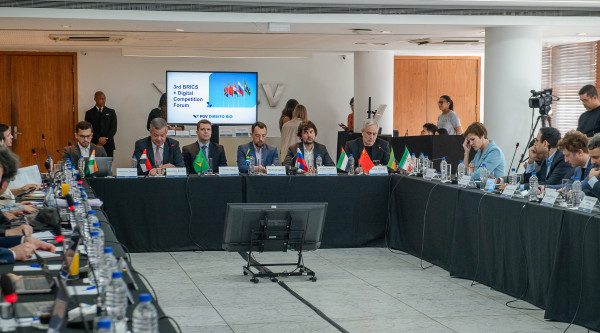
At the 3rd BRICS + (Brazil, Russia, India, China, South Africa, Egypt, Iran, Arab Emirates, Ethiopia + partners) Digital Competition Forum, the BRICS Competition Law and Policy Centre (www.BRICSCompetition.org) presented a new methodological approach to analyzing and regulating food markets that takes into account their accelerating digitalization. Specific tools that are being developed within the BRICS framework were also announced. One of the targeted tools will be the food market and restrictions on the activities of monopolists like Covantis.
Alexey Ivanov, Director of the BRICS Competition Law and Policy Centre, highlighted that digitalization strengthens the global power of large corporations, which, as a result, poses a threat of market monopolization. He urged BRICS antitrust regulators to pay close attention to a similar example of increasing market power through digitalization — the blockchain platform Covantis. The platform aims to digitize the entire agribusiness trade process, from contract management to final shipping. Founded by the largest agro-traders of the ABCCD group (ADM, Bunge, Cargill and Louis Dreyfus and COFCO) and Viterra, Covantis avoids antitrust scrutiny due to its structure. At the same time, the platform collects valuable commercial information about production from farmers and agricultural traders. The platform has already become a dominant player in grain trade. For example, in Brazil, 76% of grain exports go through the platform. In 2023, 53% of grain exports from the US, 34% from Canada and 51% from Argentina went through the Covantis platform. At the same time, the owners of the platform do not allow most of the local big players to enter. In essence, it is an exclusive platform, a quasi-cartel.
“Global food prices have reached the highest level in the last year and a half. Virtually all BRICS countries are currently undergoing antitrust investigations into the egg and chicken meat markets. Competitive agencies must take a new approach to regulating the food industry, not just by jointly analysing global food chains, but by analysing them taking into account all the implications of digitalization. This is the only way we will be able to tackle food security, which is particularly acute for the BRICS and partner countries. For example, the Covantis platform can be used by traders to share confidential information and vertical pressure on farmers. And of course the exclusionary behaviour of Covantis towards local players is of utmost importance. This should be the focus of attention of our countries' competition authorities” – Ivanov explained.
Based on the developed fair organized (exchange) trade in commodities and commodity derivatives within the BRICS framework, it is proposed to solve the problems related to market concentration and, as a consequence, insufficient consideration of the interests of small, medium and large enterprises, which will help to resolve issues related to the violation of the balance of interests of financial market players and producers and consumers of the real sector.
It is proposed to create within the BRICS framework representative indicators of exchange quotations and price indices for OTC transactions based on representative samples of actual transactions, reflecting the competitive composition of sellers and buyers and ensuring the use of universal means of delivery of traded goods. New approaches will contribute to the elimination of unproductive intermediation and increase stability in global commodity markets.
The development of a derivatives market based on reliable exchange and OTC cash commodity prices will create opportunities for BRICS economies to manage risks and pool resources, lead to positive consequences for business and society, strengthen cooperation and stimulate economic growth. Targeted subsidies and exchange mechanism will improve fiscal policy and infrastructure development.
Earlier this year, BRICS Competition Law and Policy Centre (BRICS Center) with the leadership of the Competition Policy and Assessment Center of the State Administration of Market signed a memorandum on long-term cooperation announced the launch and development of the Russian-Chinese exchange and trade platform in consumer goods and commodities which will become a basis for the further development of the universal exchange platform for all BRICS member-countries.
“If entrepreneurs of Russia and China work directly, through modern exchange mechanisms, which will not only allow to establish direct long-term ties, but also reduce prices for goods for end consumers, as it will eliminate the use of intermediary schemes. The task of experts and researchers in this regard is to develop a system of organizational, legal and economic measures and analyze the necessary conditions for the creation of exchange platforms and the development of exchange trade, including in the BRICS format” – Fu Hongwei, Director, Competition Policy and Assessment Center, SAMR; explained.
Distributed by APO Group on behalf of BRICS Competition Law and Policy Centre.
About the 3rd BRICS + Digital Competition Forum:
The BRICS + (Brazil, Russia, India, China, South Africa, Egypt, Iran, Arab Emirates, Ethiopia + partners) Digital Competition Forum, which is being held this year on the margins of the G20 Summit, brings together heads and representatives of competition authorities from all BRICS countries and partners, as well as researchers and visionaries in the field of digital regulation from around the world. The Forum includes the BRICS Working Group on the Study of Competition Issues in Digital Markets. This year's main topics include regulation of digital ecosystems, the challenges and opportunities that artificial intelligence brings to antitrust law, and the digitalization of global food chains.
The Forum is organized by the HSE University BRICS Competition Law and Policy Centre together with the FGV University School of Law (Getulio Vargas Foundation) with the support of the Brazilian Competition Authority (CADE).
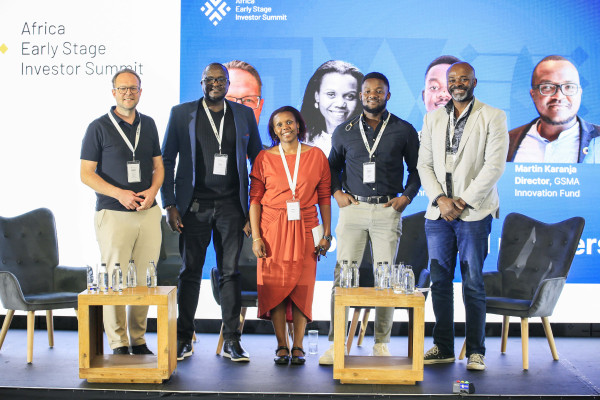
Over 300 Africa-focused delegates converged at the 11th edition of the Africa Early Stage Investor Summit, and filled up the room for the AESIS Deal Morning ready to engage with Africa's most promising founders. Next to another 15 highly promising startups, VC4A (www.VC4A.com) hosted eight female entrepreneurs from IFC's She Wins Africa program, who took the AESIS2024 stage to pitch their solutions after completing an intensive technical residency in Cape Town. The energy was palpable, reflecting the increasing investor appetite for ventures that not only deliver commercial success but also drive meaningful impact across the continent.
In the opening remarks of AESIS - which took place from the 28th to the 29th of November with the theme “Pioneering Pathways: Innovating Investment Mobilization in Africa” - VC4A CEO Vincent Hoogduijn set the tone for the two-day event. “Why does VC4A organize AESIS every year? The answer is simple - we are here to unite the African early stage investment ecosystem".
The conversations, panels, pitches and ‘investor experiences' resonated deeply with the theme, as a strong call for collaboration not only within the investor community but also from hubs and accelerators, angel groups and venture studios as well as entrepreneurs themselves.
Summing up what was a momentous event, here are the key highlights:
Day 1:
Day 2:
Inspiring quotes from AESIS2024
“Entrepreneurs are the architects of Africa's success” said Phuti Mahanyele-Dabengwa, the South Africa CEO, Naspers, and the AESIS2024 Guest of Honour who delivered the moving keynote on Day 1.
Anne Kabugi, Regional Gender Lead at IFC, opening the Venture Showcase - She Wins Africa pitches, tasked the delegates with a question, a food for thought: "What if I told you that Africa's food crisis is going to be solved by women?”
Nicola Tyler of The Thinking Company delivered a welcome on Day 2's Deal Morning, charging the audience with a stand out statement: “Africa is not the biggest problem in the world, it is the biggest opportunity”.
Kenza Lahlou of Outlierz Ventures shared on the Global Development Funding Panel “The role of DFIs is not to be there forever but to provide the investments that work and exit.”
Closing out at the inaugural Awards Ceremony of the Africa Early Stage Investor Summit, Tomi Davies received a ‘Lifetime Achievement Award' for his decades of commitment to promote angel investing in Africa. He delivered a moving speech with all ears listening raptly as he concluded ”Africa's youth population is the best source to build Africa's infrastructure.”
In a statement that perfectly sums up the experience of co-hosting this edition: “AESIS2024 once again pointed out that collaboration is a must,” said Vincent Hoogduijn. “It's been a tough year and we all need to work together to overcome the challenges ahead. Persistence, resilience and adaptability will be key ingredients to see the ecosystem thrive - go fast alone, go far together”
VC4A is grateful for the opportunity to serve the ecosystem as a platform to connect, inspire, and empower. Looking ahead, the collective efforts of investors, entrepreneurs, and policymakers will be essential to unlocking Africa's full potential and driving its economic growth. VC4A's commitment is to continue to unite Africa's startup ecosystems. Together with co-hosts ABAN, VC4A looks forward to reconnecting with old and new friends at AESIS2025 next year.
Distributed by APO Group on behalf of VC4A.
Media enquiries:
Boye Abiodun-Adepoju,
boyewa@vc4a.com
About AESIS:
The Africa Early Stage Investor Summit (AESIS) is a collaborative venture between VC4A and ABAN, dedicated to advancing innovation and growth in Africa's investment ecosystem. Celebrating its 11th anniversary, AESIS2024 brought together investors, industry leaders, and influencers with the aim of accelerating early-stage investing across Africa. Visit https://AfricaInvestorSummit.com for more information.
About ABAN:
ABAN is the largest pan-African organization of Angel investors in Africa. Established in 2015, ABAN represents the growing number of business angel groups in the African early-stage ecosystems' future, providing vital human and financial capital to African startup companies creating jobs across the continent. Today, ABAN is a 75-member network in 37 African countries and the Diaspora representing over 5,000 angel investors. Visit the ABAN website (http://apo-opa.co/4gtDRVk) for more information.
About VC4A:
VC4A is an ecosystem builder that leverages its infrastructure, network, and expertise for the programs that contribute to the startup movement in emerging markets. Since 2007, the organization has designed, structured, and implemented successful entrepreneurship programs in exciting regions. VC4A runs an online platform featuring a database of startups in Africa and Latin America, connecting entrepreneurs to resources, networks, and funding. Visit the global website at https://VC4A.com/ for more information.

Yellow Card (www.YellowCard.io), Africa's leading stablecoin-based infrastructure provider, has been issued a Crypto Asset Service Provider (CASP) licence by the Financial Sector Conduct Authority (FSCA) in South Africa.
Commenting on the FSCA's decision to issue the licence to Yellow Card Financial South Africa, Chris Maurice, Yellow Card's co-founder and CEO, said, “The CASP licence underscores Yellow Card's commitment to its customers in South Africa and regulatory compliance across the continent.This achievement reflects our dedication to providing secure, compliant and transformative solutions for our customers both in South Africa and across Africa.
Stablecoin adoption is surging throughout Africa, with sub-Saharan Africa having the highest adoption rate in the world at 9.2%. In South Africa alone, where the number of total users of crypto assets is estimated to amount to 5.8 million people, stablecoins have experienced growth of 50% month over month since October 2023, displacing bitcoin as the country's most popular cryptocurrency. Yellow Card is excited to play a pivotal role in this financial revolution in South Africa.
Yellow Card, which launched in South Africa in 2020, has facilitated over US$3 billion in transactions in the last several years and now operates in 20 countries across the continent. The company recently completed a US$33 million Series C financing, led by Blockchain Capital and existing investors, including Polychain Capital, Valar Ventures, Third Prime Ventures, Coinbase Ventures, and Block, Inc. (Square/Cash App), reflecting strong investor confidence in its mission.
As the stablecoin landscape continues to evolve, Yellow Card is committed to leading the charge in making digital assets accessible and secure for businesses across Africa. With the recent licensing and funding, the company plans to expand its B2B offerings by enhancing its stablecoin rails, upgrading infrastructure, and advancing its B2B API and Widget. These efforts will empower businesses with seamless solutions for liquidity management and their general operations.
To learn more about Yellow Card, visit: https://YellowCard.io/.
Distributed by APO Group on behalf of Yellow Card Financial.

Expand North Star 2024 (www.ExpandNorthStar.com), the world's largest startup and investment event, continued its journey of innovation on its third day at Dubai Harbour. Attendees from around the world witnessed revolutionary advancements in Applied AI and Deep Tech, demonstrating how these technologies are disrupting industries and solving complex global challenges.
Integrated with GITEX GLOBAL, Expand North Star runs until 16 October, providing a powerful platform for over 1,800 exhibiting startups and more than 1,200 investors managing assets exceeding USD $1 trillion.
Applied AI and Deep Tech Innovations Redefine Healthcare and Space Innovation
Day three was a showcase of next-generation solutions in robotics, AI, and deep tech, providing a glimpse into the future of these sectors.
Cutting through the noise were innovative startups such as China's RoboCT with their innovative exoskeleton technology, launching the UGo Rehab Exoskeleton, specifically designed for patients with lower-limb dysfunction, spinal cord injury, strokes, or cerebral palsy. Dr. Tian Wang, Founder and CEO of RoboCT Group, stated, "UGo enhances the rehabilitation process and delivers an effective walking training solution by integrating advanced sensors, data analysis, and research, empowering patients to rehabilitate more effectively at home."
On the digital health frontier, JADE introduced a platform tailored for neurodivergent children, including those with ADHD, down syndrome, and autism. The app's sophisticated tracking of eye movements, cognitive response times, and memory functions equips healthcare professionals and educators with precise data to create personalised care and learning strategies.
Meanwhile, scanO, a pioneering Indian-born deep tech company, is leading the way in developing generative AI models for predicting disease progression. The company showcased its flagship product, scanO air—the world's first contactless AI-powered robotic system for oral health screening—revolutionizing early detection and diagnosis.
In space technology sector, Triggers-Reports from Mauritius introduced Triggers-sat, a satellite platform that provides high-resolution imaging and 3D modeling to assist businesses and governments in areas such as natural resource management and climate risk disaster monitoring.
Rising International Participation from Asia and Latin America
As the global innovation hub, Expand North Star continues to see international participation rise, showcasing how regions and countries are pushing boundaries with novel solutions.
Tatiana Riera, COO of ApexBrasil, highlighted Brazil's expanding presence at Expand North Star: "From just 20 startups in 2019, we have expanded to 45 startups this year, along with four innovation hubs. Brazil is a great hub for fintech because of the diversity in social levels, so most of our unicorns come from fintech. We also focus a lot on Deep Tech, AI, and climate tech solutions since we have six biomes and need to take care of them. We have a company that uses natural foam to build soundproof material for construction and another company building silent tractors that run on renewable energy."
Similarly, Singapore's SGTech made a noteworthy debut at Expand North Star, emphasizing the importance of cross-border collaboration in driving tech-driven solutions forward. Alex Ng, Exco Member, SGTech said: "Singapore's innovative startups are making a significant impact at Expand North Star 2024, with six outstanding companies exhibiting under the Singapore Pavilion. These companies showcase cutting-edge technologies across various sectors, including digital twins, industrial AI and biotech, with the event serving as a groundbreaking global launchpad for startups to foster valuable networking with investors."
Africa's Path to Economic Growth
With global participation continuing to flourish, the spotlight also turned towards Africa, where burgeoning tech ecosystems are paving the way for a new wave of entrepreneurs and innovators. H.E. Savannah Maziya, Minister, Ministry of Information, Communications & Technology, Eswatini, alongside other thought leaders, emphasised the importance of structured development to tackle unique market challenges and unlock Africa's economic potential.
Celina Lee, CEO & Co-Founder, Zindi, South Africa, highlighted the trend of talent returning to Africa to start companies and create ecosystems that foster innovation and attract global corporations like Microsoft to set up labs in Ghana and Nairobi.
Speaking on the challenges facing Africa, Olatunbosun Alake, Honorable Commissioner, Ministry of Innovation, Science and Technology, Lagos State Government, Nigeria, said, "The greatest challenge in Africa is education. In Nigeria, if you look at the most educated parts, they show economic value, whereas in the north, where education levels are not as high, economic productivity is lower. There needs to be an African Renaissance of education funding across the board because if you drive education, educate, and enlighten people, people will change the environment.”
Across its four-day span, Expand North Star continues to shed light on the future of industries through defining events such as GITEX Impact, Fintech Surge, Future Blockchain Summit, and Marketing Mania. These events underscore how emerging technologies are transforming the way we live and are also playing a pivotal role in reshaping the future.
Distributed by APO Group on behalf of Expand North Star.
Media Contact:
Tayce Marchesi, PR Manager, DWTC | tayce.marchesi@dwtc.com
Ahmad Khalloudi, Account Manager, Seven Media | ahmadkhalloudi@sevenmedia.ae
Doyin Odulana, Senior PR Manager, Seven Media | adedoyinodulana@sevenmedia.ae
Follow Expand North Star on Social Media:
Facebook (https://apo-opa.co/487fqdm)| X (https://apo-opa.co/4h5l6sx)| Instagram (https://apo-opa.co/4eIQXhe)| LinkedIn (https://apo-opa.co/485znl3)
Hashtag: #ExpandNorthStar
About Dubai World Trade Centre (DWTC):
A global business facilitator since 1979, Dubai World Trade Centre (DWTC) is home to the region's leading purpose-built convention and exhibition centre. DWTC provides a platform for connecting people, products, innovation and ideas from around the world through a dynamic calendar of international trade exhibitions and its own roster of sector leading mega events. As a designated free zone, complemented by award-winning commercial real estate, DWTC plays an integral role in Dubai and the region's growth story. Since its inauguration, DWTC has hosted over 6,000 events, with an estimated economic output of AED 248 billion, attracting over 38 million business visitors to Dubai.
Bitlauncher has unveiled a groundbreaking investment platform aimed at democratizing access to early-stage AI startups. This innovative platform is designed to offer investors the opportunity to engage with promising AI ventures that have the potential to become the next billion-dollar companies. Transforming the Investment Landscape At the core of Bitlauncher’s approach is the implementation of …
The rise of the Fintech industry and cloud technology has changed the way in which we do business. Gone are the days of disjointed and disconnected technology platforms that are unable to talk to each other and lack real-time reporting capabilities. The Fintech, automation and digital landscape has exploded, with a number of cutting-edge technologies and software …
By Dr Andrew Hibling, Founder and CEO of EDGE Education Research indicates that the more educated a country’s citizenry is, the higher its GDP per capita and the more prosperous its economy (Bah, 2023). For this reason, it’s crucial for countries to ensure that their efforts in the education sector are effective. In South Africa, …
SevenC, a leading IT infrastructure and network service provider striving to identify and make available the best possible ICT strategies for its clients’ unique needs, explores the benefits of next-gen IT services and how blending digital and IT integration expertise can future-proof your business. “One of the most effective ways to ensure your business stays …
In the complex world of international finance, withholding tax holds a significant place within Germany’s tax framework. This form of tax, deducted at source on income such as dividends, interest, and royalties, is a fundamental aspect of the German tax system, ensuring that taxes are collected efficiently from foreign and domestic entities alike. As the …
Introduction The landscape of payment solutions and digital innovation in South Africa is rapidly evolving, driven by technological advancements and changing consumer behaviours. Businesses are increasingly adopting innovative payment solutions to enhance customer experiences and streamline operations. Understanding the trends and innovations in this space is crucial for businesses looking to stay competitive in the …
Today marks the official launch of the Founders Cartel, a dynamic coalition of South Africa’s most promising startups, aimed at revolutionizing the local and global startup ecosystem. The cartel has been formed to help founders in the group share best practices, share knowledge, conduct business among themselves, and consolidate their efforts in pursuing opportunities. The …
We sent questions to the ANC, DA, EFF, IFP, FF Plus, ActionSA, PA, MK Party and RISE Mzansi

Nowadays, the phrase ‘home is where the tech is' defines modern living, as South Africans increasingly (https://apo-opa.co/3TSowVR) adopt smart home innovations. These advancements are continuing to adapt and evolve in their capabilities which not only improve convenience and security but can also decrease energy consumption, contributing to cost savings.
This is according to Dr Andrew Dickson, Engineering Executive at CBI-electric: low voltage (www.CBI-LowVoltage.co.za/), who says that, in 2024, homes will become even more high-tech in terms of the efficiency, functionality, and personalised living experiences they provide. “We may still be a few years away from homes resembling those dreamed up by sci-fi movies, but we are already heading in the direction of smart technology becoming less of a luxury and more of a staple in modern homes.”
Below, he shares four trends that will help make South African homes smarter this year:
In addition, WiFi-7 is set to roll out in the country this year which will improve internet connectivity to devices in the home, extend range and promises to deliver nearly five times the speed of Wi-Fi 6. This, however, is also reliant on the release of more spectrum and regulatory approvals.
In the future, generative AI will make smart homes even smarter. Soon, these tools will not only help to identify appliances that require preventative maintenance but also set up appointments with service providers for their upkeep based on the homeowner's schedule and availability.
Additionally, as more South Africans embrace rooftop solar (https://apo-opa.co/3IUS6DT), smart technology enables the effortless integration of renewable energy sources to combat the impacts of load shedding while also ensuring that the power produced is used effectively and efficiently.
“In 2024, smart homes will become sanctuaries of innovation, enriching the lives of South Africans and heralding a future where homes understand, adapt and even pre-empt the unique needs of their residents," concludes Dr Dickson.
Distributed by APO Group on behalf of CBI-electric: low voltage.
For more information, go to https://CBI-LowVoltage.co.za or follow CBI-electric: low voltage on Facebook (https://apo-opa.co/3vvHgRW), Instagram (https://apo-opa.co/43Cr9hY), LinkedIn (https://apo-opa.co/4atY8Y6), X (https://apo-opa.co/4aw8czw), Threads (https://apo-opa.co/3VBbqxv) or YouTube (https://apo-opa.co/3IWb2Ce).
About CBI-electric: low voltage:
The financial technology (fintech) law and regulatory landscape is constantly evolving and could present first-mover fintech opportunities for those who keep up-to-date with these developments. In this article we delve into strategies and best practices for asset protection for those venturing into the realm of fintech investments. The Fintech Landscape Fintech has revolutionised the financial …
Introduction In the fast-paced world of digital marketing, social media stands out as a dynamic and ever-evolving landscape. Today, it’s not just about connecting with friends and family; social media has morphed into a vital channel for businesses to engage with their target audience, build brand awareness, and drive sales. As we delve deeper into …
Because financial technology (fintech) is relatively new and has developed faster than legislative processes, and because the nuances of blockchain applications are varied, Fintech and Crypto Law covers a broad range of regulations, many of which were formulated before its existence. As such, it covers laws and regulations in the fields of financial services, ITC, …
From Education to Casual Games, Art and Wellness, LG Smart TVs are delivering experiences filled with Enjoyment, Personal Growth and Excitement for All LG Electronics (LG) presented an array of new apps available on the company’s smart TVs to meet users’ individual preferences and interests. The extensive selection of services is convenient and easily accessible …
JOHANNESBURG: Cricket South Africa (CSA) is thrilled to announce a transformative partnership with LootMogul, a pioneering sports technology platform, marking...
Dark Fusion Technologies, the company behind the Simple Contract Language (SCL), has made groundbreaking progress in the race to develop smart contracts and tokens on Bitcoin’s Layer 1, becoming one of the first projects to accomplish this incredible feat. This revolutionary development holds massive potential for the tech industry and various customers & institutions alike, …