“My Death Was in Front of Me” – Aftermath of the Cape Storm
Farm workers at Holland Farm in Rawsonville describe spending a night trapped on rooftops as floodwaters swept through their cottages, leaving three people dead

MyZA
News, Directory, Events and Other Stuff
Farm workers at Holland Farm in Rawsonville describe spending a night trapped on rooftops as floodwaters swept through their cottages, leaving three people dead

Converge Africa 2026 returned to the CTICC in Cape Town and delivered three packed days of practical, outcomes led conversations about how Africa buys, sells and transacts in a world that is moving fast. The event brought the full digital commerce ecosystem into one place, from payments and fintech to retail and eCommerce, logistics and fulfilment, digital marketing, cybersecurity and customer experience.
In total, the event welcomed more than 1,400 attendees from 600 companies across the 3 days. It featured 100 plus speakers, and hosted 50 plus exhibitors, creating a high energy environment for learning, benchmarking, and high value connections across the ecosystem.
This year's agenda was designed to be hands on and commercially useful. Across the Converge Money and Store Chat stages, plus workshops and masterclasses, the programme put a spotlight on the themes leaders are actively solving for right now: agentic and conversational commerce, trust and data integrity, payments certainty, and the operational realities of delivering better customer experiences at scale.
A big part of what made the event so actionable was sponsor participation woven directly into the programme. Intent HQ led workshop sessions focused on agentic personalisation and enterprise readiness, helping teams translate AI ambition into practical paths for execution. Amazon South Africa featured through a keynote and dedicated masterclasses built around seller growth and operational enablement, including onboarding essentials and fulfilment strategies.
On the payments side, Ecentric Payment Systems featured in the agenda with sessions focused on payment certainty and performance, reinforcing that payments are no longer just a backend function but a conversion and trust driver. BBD Software contributed workshop content focused on cloud cost forecasting, observability and control, supporting the wider push toward scalable infrastructure and operational performance. ABSA was represented as part of the broader leadership mix contributing to the conversation, alongside organisations driving commerce, trust and financial inclusion across the continent.
Converge Africa continues to be guided by a simple idea that showed up across the programme in different ways: frictionless digital commerce depends on the entire ecosystem working together. When payments, delivery, identity, data standards, security and customer experience are treated as one connected system, the market moves faster and growth becomes easier to unlock.
Distributed by APO Group on behalf of VUKA Group.
Converge website: https://apo-opa.co/4dPDHcp
Register to attend or exhibit in 2027: (http://apo-opa.co/4eTKtyY)
Media enquiries:
Steven Dennett
steven.dennett@wearevuka.com
About Converge Africa:
Converge Africa brings together digital commerce leaders and innovators to reimagine customer experiences, harness AI, and unlock cross border growth across Africa's digital economy. The event convenes retailers and eCommerce brands, payments and fintech innovators, cybersecurity specialists, logistics and last mile providers, and digital marketers to shape the future of Africa's online economy.
The DA-led City of Cape Town and Western Cape Provincial Government are challenging the validity of the Public Procurement Act in the Constitutional Court today.
The post DA & SOLIDARITEIT’S CHOREOGRAPHED RESISTANCE TO REDRESS appeared first on For Good.
Multinational commodities company Trafigura signed an offtake agreement in April 2026 with Ghana's Heath Goldfields for the Bogoso-Prestea Gold Mine, committing to purchase around 700,000 ounces of gold. The deal provides immediate commercial certainty for the project while improving its financing profile by guaranteeing a long-term buyer, addressing one of the sector's most persistent constraints: access to capital.
The move reflects a broader trend across Africa's mineral sector whereby projects are turning to offtake agreements to secure capital and advance production. As Africa accelerates the development of its estimated $8.5 trillion in untapped mineral wealth, offtake agreements are emerging as an effective tool to unlock financing and de-risk projects.
This dual function - market assurance and capital enablement - is increasingly central to Africa's mining financing landscape. By reducing demand risk, offtake agreements help unlock debt and equity financing that would otherwise be difficult to secure in early-stage or restart projects.
Similar structures are being replicated across the continent. In Sierra Leone, an offtake-backed arrangement involving Trafigura and FG Gold Limited helped unlock financing for the Baomahun Gold Project, marking a critical step in de-risking one of the country's flagship mining developments and enabling financial close for large-scale gold production.
In the battery minerals space, NextSource Materials extended its offtake agreement in March 2026 with Mitsubishi Chemical Corporation to supply graphite from the Molo project in Madagascar. The arrangement provides predictable long-term demand for 9,000 tons per annum of graphite, while simultaneously supporting project financing and expansion plans tied to global battery supply chains.
Similarly, Bannerman Energy has secured offtake agreements with North American utilities for uranium from its Etango project, providing multi-year revenue visibility from 2029 to 2033 and strengthening the project's long-term investment case.
These transactions reflect a broader structural shift in African mining finance: offtake agreements are no longer just sales contracts, but core instruments of project development, risk allocation and capital mobilization. For other markets seeking finance and long-term buyers, these examples demonstrate the viability of offtake contracts - not only for project commissioning phases but as tools for early-stage development.
Notably, in South Africa, where the government is targeting R2 trillion in investment to unlock its critical minerals potential, offtake structures could play a central role in de-risking projects. Similarly, in the Democratic Republic of Congo, which holds an estimated $24 trillion in untapped mineral wealth, offtake agreements could accelerate the monetization of its vast copper, cobalt and strategic mineral reserves.
Against this backdrop, the upcoming African Mining Week (AMW) Conference and Exhibition - taking place from October 14–16 in Cape Town - will showcase how offtake-driven financing models can be scaled to accelerate project delivery and strengthen Africa's position in global minerals supply chain. Uniting stakeholders from across the entire African mineral value chain, the event offers a platform to examine strategic financing, mechanisms to accelerate production and positioning the continent at the forefront of global mining investment.
Distributed by APO Group on behalf of Energy Capital & Power.
Taxi association says some drivers are struggling to meet their loan payments and have had their vehicles repossessed
The minister says sanctions against Israel would violate World Trade Organisation principles
City of Cape Town calls for donations to help flood victims

Africa-focused independents are set to play a defining role at African Energy Week (AEW) 2026 - scheduled for October 12-16 in Cape Town - as companies expand portfolios, redevelop mature assets and pursue frontier exploration opportunities across the continent. From Angola and Namibia to Nigeria, Chad and Kenya, a new generation of independent operators is strengthening Africa's upstream landscape through targeted acquisitions, high-impact drilling campaigns and infrastructure-led development strategies.
Afentra continues to advance exploration across proven shallow water provinces in Angola. Alongside its Block 3/05 and Block 3/05A partners, the company recently carried out a two well program, starting with the spudding of Pacassa SW. The program aligns with a multi-well redevelopment plan aimed at scaling reserves and boosting production from the current 5,856 bpd to upwards of 9,000 bpd. The partners plan to spud the Impala-2 development well, while hydraulic workover program preparations are ongoing with execution planned for late 2026 or early 2027. Onshore, the company is advancing technical studies at Blocks KON 15 and 19, with a planned 2D seismic acquisition program on the cards. Afentra's CEO Paul McDade joins AEW 2026 to discuss these programs.
Nigeria's Oando PLC recently made its foray into Angola, securing operatorship of Block KON 13. The move comes as the company expands its portfolio beyond Nigeria's borders, leveraging its experience in the country to unlock new basins across the region. Oando's existing portfolio encompasses more than 14 oil and gas assets across Nigeria and São Tomé and Príncipe. This is supported by a pipeline network of 1,255 km, 14 flow stations and gas processing capacity in excess of 3.6 billion standard cubic feet per day. Wale Tinubu, Group Chief Executive, Oando PLC, joins AEW 2026 to discuss the company's growing portfolio and how regional lessons can support exploration in new markets.
With a portfolio of high-impact Atlantic-margin oil and gas assets, Sintana Energy continues to drive exploration across key projects in Namibia and Angola. The company has exposure to eight blocks across both countries, covering both deepwater and onshore acreage. In April 2026, Sintana Energy announces plans for a second listing on the Namibia Securities Exchange, signaling a new phase of financial maturity. The move comes as the company prepares for several exploration programs in Africa, including the advancement of the Mopane campaign at Namibia's PEL 79. Robert Bose, CEO, Sintana Energy, is expected to share further insight during AEW 2026.
Rhino Resources is also advancing Namibian exploration programs, while broadening its footprint into South Africa's onshore Karoo Basin. The company is engaged in a multi-well drilling campaign in Namibia's Orange Basin, targeting FIDs between late 2026 and early 2027 across operated and partner-led projects. These include the Volans and Capricornus discoveries at PEL 85. In South Africa, the company is advancing a six-well campaign targeting helium, methane and hydrogen resources. Further insights into these projects will be shared at AEW 2026 as Travis Smithard, CEO, Rhino Resources, confirms his participation.
Meanwhile, as an American publicly-traded company with a focus on sub-Saharan Africa, ERHC Energy Inc has centered its operations around de-risked exploration, cost efficient development and high-margin production. The company has stakes in Kenya's Block 11A, and while no wells have been drilled to date, the acreage offers promising geology and is supported by extensive 2D seismic coverage. In Chad, ERHC Energy Inc has stakes in three oil blocks in the Doseo and Doba Basins, while in the Joint Development Zones between Nigeria and São Tomé and Príncipe, has exposure to six of the areas nine blocks. Peter Ntephe, CEO, ERHC Energy Inc, joins AEW 2026, where he is expected to share insights into these projects.
“Independent operators are moving quickly, taking strategic risks and unlocking value in both mature and frontier basins across the continent. AEW 2026 will provide a critical platform for these firms to engage investors, governments and technical partners as they advance the next generation of African energy projects,” states NJ Ayuk, Executive Chairman, African Energy Chamber.
Distributed by APO Group on behalf of African Energy Chamber.
Africa's estimated $8.5 trillion in untapped mineral wealth is increasingly being positioned as a junior miner-led opportunity, with smaller, more agile players playing a key role in unlocking the continent's mining deposits. As governments and investors recalibrate exploration strategies, junior mining companies are emerging as the primary vehicles for converting underexplored resources into bankable projects.
Against this backdrop, the African Mining Week 2026 Conference and Exhibition will convene regulators, financiers and operators to examine how partnerships, capital access and execution models can shift juniors from the margins to the center of the continent's mineral development strategy.
Taking place from October 14 – 16 in Cape Town, the event will feature a dedicated panel titled Collaboration for Growth: Unlocking Finance and Scale for Junior Miners. The session will highlight how governments are leveraging Public-Private Partnerships (PPP) to address high upfront capital requirements, limited infrastructure access and gaps in technical expertise constraining junior mining development.
The need for innovative financing solutions across Africa is increasingly apparent, with the continent's share of global mineral exploration spending declining from 16% in 2004 to just 10.4% in 2024. In South Africa, exploration expenditure totaled R781 million in 2024, down sharply from a peak of R6.2 billion in 2006, underscoring the importance of stronger collaboration between governments and the private sector. In response, mineral-rich African countries are increasingly partnering with global investors to mobilize capital for exploration while supporting local content and beneficiation strategies.
One of the continent's most prominent PPP models is the Junior Mining Exploration Fund (JMEF) launched by the Industrial Development Corporation of South Africa in partnership with the Department of Mineral Resources and Energy. In February 2026, the fund expanded to R2 billion, with Anglo American committing R600 million, demonstrating how coordinated public-private initiatives can strengthen financing for early-stage mining projects. Increased support through the fund has contributed to growth in South Africa's junior and emerging mining sector, which recorded nearly 20% income growth in 2025.
Meanwhile, Zambia has introduced the Artisanal and Small-Scale Mining Fund following the enactment of the Geological and Minerals Development Act of 2025, aimed at expanding financing access for junior and small-scale miners. In 2026, the government allocated K449.5 million towards the fund, from a total K1.2 billion mining sector budget. The fund is expected to support junior miners as the country pursues its goal of increasing copper production to three million tons annually by 2030.
Similarly, the Democratic Republic of the Congo is strengthening partnerships with private sector investors, including Phoenix Capital and Eurasian Resources Group, to finance junior and artisanal mining operations as part of a broader strategy to unlock an estimated $24 trillion in untapped mineral resources.
Stepping into this picture, the AMW 2026 panel will explore the impact of PPP financing models, providing a platform for governments, investors and mining companies to develop solutions that scale exploration investment and accelerate the discovery of Africa's next generation of mineral projects.
AMW serves as a premier platform for exploring the full spectrum of mining opportunities across Africa. The event is held alongside the African Energy Week: Invest in African Energies 2026 conference from October 12-16 in Cape Town. Sponsors, exhibitors and delegates can learn more by contacting sales@energycapitalpower.com
Distributed by APO Group on behalf of Energy Capital & Power.
Mining is rapidly becoming a driver of power market development in Africa, as energy supply constraints reshape how projects are financed and executed. From renewables and storage to fuel logistics and transmission, operators are increasingly securing integrated energy solutions to sustain output and manage risk.
Against this backdrop, the African Mining Week (AMW) Conference and Exhibition - taking place October 14–16, 2026, in Cape Town - will convene global investors, energy developers and mining stakeholders to examine pathways for strengthening power infrastructure to support mining activities across the continent. The event will feature a dedicated panel titled Accelerating Mineral Production: The Energy-Mining Nexus, bringing together policymakers, utilities and mining companies to discuss investment, infrastructure challenges and strategies for scaling production.
The discussion comes at a time when energy availability is becoming the defining constraint - and enabler - of mining growth across Africa. As a result, many companies are partnering with energy providers to secure power deals.
One of the clearest examples of this is EDF power solutions - a joint venture (JV) between mining company Anglo American and energy company EDF. The JV is advancing a portfolio of renewable energy projects to power mining operations across South Africa. In mid-April, the company commissioned the 140 MW Umsobomvu facility as part of the broader 520 MW Koruson 2 cluster, following the earlier delivery of approximately 480 MW under the Koruson 1 cluster in early April. These projects are contributing to the decarbonization of mining operations by displacing coal-based grid electricity for miners such as Valterra Platinum, Kumba Iron Ore and De Beers.
Sibanye-Stillwater is also turning to renewable energy to optimize its operations. The company is advancing a 725 MW renewable energy portfolio secured via long-term power purchase agreements with developers including NOA Group, Red Rocket and Sola Group. These developments align with South Africa's strategy to generate 40% of its electricity using renewables by 2030, a move aimed at lowering electricity costs and improving energy security for energy-intensive sectors such as mining.
Similar case studies are being seen across other mineral-rich provinces in Africa. In Zambia, First Quantum Minerals is advancing a 430 MW renewable energy project alongside Total Eren and Chariot Limited. The project will strengthen energy supply to the company's mines, enabling First Quantum to contribute to a national target to increase copper output to three million tons by 2031.
Meanwhile, Eurasian Resources Group is investing in transmission infrastructure and cross-border power solutions between Zambia and the Democratic Republic of the Congo to stabilize energy supply for cobalt operations.
While renewables are scaling rapidly, mining companies are also reinforcing energy security through fuel agreements. In February 2026, Valterra Platinum signed a three-year fuel supply deal with TotalEnergies for its South African operations. Puma Energy and BHL Group have also launched a five-year fuel transport agreement moving supply between Namibia's Walvis Bay and Zambian mining hubs.
As such, AMW 2026 comes at a pivotal time when energy and mining are no longer parallel sectors, but deeply interconnected growth engines. From renewables and transmission to fuel logistics and financing, the continent is witnessing a structural shift toward integrated energy–mining ecosystems. The AMW 2026 panel will spotlight how innovative partnerships, blended financing models and private-sector participation are accelerating both energy deployment and mineral production - positioning Africa to meet rising global demand while advancing its own industrialization agenda.
Distributed by APO Group on behalf of Energy Capital & Power.
Nonkululo Fente died when SAPS raided her tavern
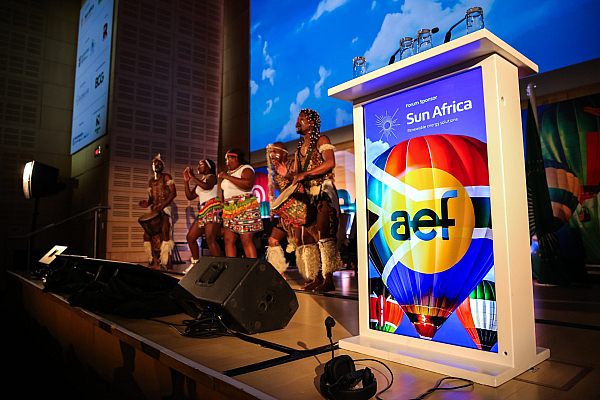
The Africa Energy Forum (https://apo-opa.co/4ugdl9y) returns from 16-19 June 2026, bringing together the companies, investors and governments driving Africa's move from energy access to industrial-scale infrastructure.
The companies gathering in Cape Town are deploying capital into transmission infrastructure, building mining corridors that will define trade routes for decades, financing baseload capacity that can power heavy industry, and developing renewable projects that will anchor Africa's manufacturing future. Forum Sponsor Sun Africa leads a group of sponsors whose projects and investments are already shaping how the continent builds its industrial base.
“I am looking forward to joining the conversation in Cape Town this June. What excites me about this year's Summit is the calibre of capital and commitment in the room — companies that are financing baseload capacity for heavy industry, building mining corridors that will define trade routes for decades, and deploying renewable projects that will anchor Africa's manufacturing future. That is the kind of long-term, structural thinking that Sun Africa has always believed this continent deserves, and it is exactly the conversation we need to be having.” Sun Africa, CEO, Adam Cortese.
ACWA Power, Infinity Power and AMEA Power are building gigawatt-scale renewable capacity across the continent. Globeleq and TotalEnergies are financing and operating projects that demonstrate how private capital can deliver industrial-grade infrastructure. British International Investment and IFC are structuring deals that blend concessional and commercial finance to unlock sovereign wealth fund participation. Nedbank CIB is providing the sustainable finance structures that allow projects to reach financial close.
“As Africa moves from aspiration to execution, this year's agenda focuses on the hardware of industrialisation – the steel, concrete and transmission lines that will define Africa's industrial future,” said Simon Gosling, Managing Director of EnergyNet.
The companies driving this shift face common challenges: structuring bankable projects where perceived risk exceeds actual performance, moving critical minerals from extraction to processing, building transmission corridors that serve both mines and cities, and deploying patient capital into long-term infrastructure.
Cape Town provides the right setting. South Africa is navigating private transmission investment, energy trading, mining-driven renewable deployment, and tensions between industrial growth and climate commitments – challenges the rest of the continent will face. The city's reforms offer a live case study.
The agenda reflects where these companies are focusing their resources. Critical minerals receive a two-day dedicated stream exploring downstream processing, transport corridors and value capture from reserves representing over 30% of global supply. Sessions examine the Lobito Corridor, Liberty Corridor and Simandou infrastructure as models for large-scale project finance.
Transmission and baseload themes address grid expansion, private investment structures and 24/7 availability for data centres and manufacturing. Energy trading sessions explore how sponsors are transforming project finance through creditworthy off-take, whole technology discussions will cover AI for revenue protection, data centre supply chains and CBAM compliance.
More broadly, the forum structure supports deal-making. The speaker programme includes closed-door roundtables bringing together DFIs, sovereign wealth funds, Middle East ministers, utilities, regulators and the private sector for frank discussions on capital deployment.
This will bring together senior public and private sector leadership, with notable speakers including H.E. Honourable Dr. Kgosientsho Ramokgopa, Minister of Electricity & Energy, South Africa; H.E. Honourable Samantha Graham-Marè, Deputy Minister of Electricity & Energy, South Africa; Dan Marokane, GCE, Eskom, South Africa; H.E. Honourable Jeremiah Kpan Koung, Vice President, Liberia; H.E. Honourable Dr. Kgosientsho Ramokgopa, Minister of Electricity & Energy, South Africa; H.E. Honourable Lerato Mataboge, African Union Commissioner for Infrastructure and Energy; Precious Edward, Head, IPP Office, South Africa; Obaïd Amrane, CEO, Ithmar Capital, Morocco, Chair, Africa Sovereign Investors Forum (ASIF) & Chair, International Forum of Sovereign Wealth Funds (IFSWF); Mike Teke, Group CEO, Seriti Resources; and Jonathan Hoffman, CEO, Globeleq.
Regional fireside chats, meanwhile, will spotlight opportunities across North, East, South and West Africa. Day One features ministerial sessions with participation from Sierra Leone's Ministry of Energy and The Gambia's Ministry of Environment, Climate Change & Natural Resources.
Additional sponsors driving the programme include AKSA as Exhibitor Sponsor, with lead sponsor support from Synergy Consulting, ATIDI, Engie, European Investment Bank, Standard Bank, Red Rocket, USP&E Global and Sungrow.
On the final day, YES! (Youth Energy Summit) takes place as part of the aef stream under the theme ‘Empowering Today's Entrepreneurs – Building Tomorrow's Industrialists'. Here, impact leaders will present scalable initiatives creating entrepreneurship opportunities in Africa's energy sector, while industry partners lead interactive workshops building practical skills for 600 young people in attendance.
Distributed by APO Group on behalf of EnergyNet Ltd..
For partnerships, please contact:
Poliana@EnergyNet.co.uk
Springbok coach Rassie Erasmus on Wednesday named a “purpose and goal-driven” 40-man squad for the team’s second in-person alignment camp in Cape Town next week, featuring two players invited to their first camp in Sibabalwe Mahashe and Zekhethelo Siyaya. Embrose Papier, Francke Horn, Andre-Hugo Venter, and Henco van Wyk, who have all attended alignment camps …
The Special Investigating Unit is probing the grant
Africa's premier energy event, African Energy Week (AEW), is placing the global AI data center evolution at the forefront of Africa's energy transformation with the launch of dedicated platform: Renegade Intel. Taking place during the strategic program from October 12-16 in Cape Town, the platform will connect African energy producers, technology firms, financiers and digital infrastructure developers at a pivotal moment for the continent's industrial future.
The launch comes as African governments and private investors increasingly position data centers not simply as digital infrastructure assets, but as catalysts for electrification, industrial growth, gas monetization and long-term energy security. Renegade Intel will focus on the intersection between AI, power generation, natural gas, data sovereignty and infrastructure financing, while examining how Africa can build its own AI-enabled industrial ecosystem rather than exporting both its raw resources and digital value abroad.
The launch of Renegade Intel comes at a pivotal time for the continent, with rising demand for AI, cloud computing, fintech and expanded mobile connectivity set to drive the growth of the emerging data center market. While Africa's data market is currently in its infancy stage, forecasts show the sector growing from $2.2 billion in 2026 to approximately $4.3 billion by 2031, highlighting a unique - and increasingly strategic - opportunity for both energy producers and technology firms.
Yet infrastructure remains the primary bottleneck. Unreliable grid systems and low electrification rates impede the development of the continent's AI data center market - but integrating investments across sectors could turn this trend around. AI-driven demand is already transforming global electricity markets. In the United States, utilities are already warning that hyperscale AI facilities could materially increase grid strain and power prices in key regions. Africa's opportunity, however, may lie in avoiding that model altogether by building dedicated gas-to-power ecosystems specifically designed for data center operations.
South Africa is currently leading the continent's data center expansion, with cloud zones from Microsoft and AWS already live and Google expected to follow. While power shortages and grid instability continue to constrain economic expansion, gas is increasingly being positioned as a strategic transition fuel capable of supporting large-scale digital infrastructure. The country not only boasts significant offshore discoveries in the Orange Basin and Outeniqua Basin, but also holds substantial shale gas resources in the Karoo Basin. Combined with Cape Town and Johannesburg's growing role as digital and cloud connectivity hubs, these resources could support a new generation of gas-fired power projects dedicated to data centers and AI infrastructure.
Nigeria presents an even larger commercial opportunity. Home to more than 200 trillion cubic feet of proven natural gas reserves – the largest on the continent – the country is increasingly looking at gas monetization beyond LNG exports. The model creates an opportunity to channel associated gas and currently flared gas into domestic power generation for hyperscale facilities, while simultaneously reducing emissions, addressing energy poverty and accelerating upstream gas development. The commercial logic is increasingly straightforward: monetize domestic gas resources through long-term power supply agreements tied directly to data center development. Renegade Intel will place this commercial model at the center of discussions in Cape Town.
“Africa cannot afford to sit on the sidelines of the AI revolution while exporting its gas, exporting its data and importing digital infrastructure. Renegade Intel is about bringing energy companies, technology firms, financiers and infrastructure developers together to build a commercially viable African model for AI growth. Gas-to-power, data sovereignty and industrialization are now part of the same conversation,” states NJ Ayuk, Executive Chairman, African Energy Chamber.
The launch of Renegade Intel signals a broader evolution in how Africa's energy future is being framed. Rather than viewing oil, gas and digital infrastructure as separate sectors, AEW 2026 will position them as interconnected pillars of industrial growth, power generation and economic competitiveness. As AI demand reshapes global infrastructure investment, Renegade Intel will provide a platform for technology companies, financiers and oil and gas producers to forge the partnerships needed to build Africa's next generation of energy-backed digital infrastructure.
Distributed by APO Group on behalf of African Energy Chamber.
Africa's sovereign wealth funds (SWFs) are increasingly being positioned as active financiers of the continent's mining sector and a vital tool for unlocking its over $8.5 trillion in untapped mineral resources. With combined assets now exceeding $164 billion, SWFs are emerging as a potential counterweight to volatile international capital, particularly as geopolitical risk reshapes global investment flows.
SWFs are no longer passive investors but are increasingly positioning themselves as active partners in mining development, with countries scaling up SWF participation to reduce reliance on external financing, accelerate exploration, enable local beneficiation and integrate artisanal and small-scale mining into formal value chains.
One of the clearest examples of this shift is in East Africa. Ethiopian Investment Holdings - with assets exceeding $45 billion - is playing a central role in advancing mining-led industrialization. In 2026, the fund signed an agreement with the country's Ministry of Mines to invest in potash development, targeting fertilizer production amid rising global demand. It is also partnering with RUSAL on a $1 billion aluminum smelter, anchoring downstream beneficiation capacity.
Similar case studies are being seen in West Africa. In Senegal, FONSIS is co-investing in the country's first gold refinery alongside Société des Mines du Sénégal - a move aimed at strengthening local value addition while integrating artisanal miners into formal supply chains. Guinea also plans to launch a sovereign wealth fund in 2026, leveraging revenues from the $20 billion Simandou iron ore project and signaling a strategic shift toward reinvesting resource wealth into long-term national development.
Meanwhile, Angola's Fundo Soberano de Angola is backing economic diversification through mining investments, including equity participation in Pensana's Longonjo rare earth project - expected to supply up to 5% of global magnet metals once operational.
As frontier and established mining jurisdictions compete for global capital, SWFs offer a stable, long-term funding source capable of accelerating project deployment while aligning with domestic development goals. This role becomes most critical in capital-intensive markets where scale, infrastructure requirements and long development timelines continue to deter traditional private investment.
For instance, as the Democratic Republic of the Congo seek to unlock an estimated $24 trillion in untapped resources, regional SWFs could support project development by offering alternative sources of finance. Similarly, as South Africa targets to raise R2 trillion over the next five years to unlock its critical minerals potential, SWFs could play a catalytic role in achieving this goal.
Against this backdrop, the African Mining Week Conference and Exhibition - Africa's most influential mining conference scheduled for October 14–16 in Cape Town - will position SWFs as a critical bridge between Africa's mineral wealth and long-term industrial capital. The event will convene SWFs, project developers, investors and policymakers through high-level panels, deal-making platforms and project showcases - designed to accelerate partnerships and unlock financing for the next generation of mining projects.
Distributed by APO Group on behalf of Energy Capital & Power.
Paul Gerber, 58, lived in a wooden shed with no ablutions in Kalbaskraal while the state contacted 173 facilities on his behalf without success
The City of Cape Town BRT (Bus Rapid Transit - MyCiTi) public transport system is regarded as one of the best-performing Bus systems in South Africa.
The post IS THE MYCITI BUS SYSTEM, AND THE EXPANSION OF IT, AT RISK IF TREASURY PULLS THE PLUG? appeared first on For Good.
With the collapse of rail, roads become busier
Exploration company Rhino Resources has joined the African Energy Week (AEW) 2026 Conference and Exhibition as a Gold Sponsor, reinforcing its role as one of Africa's emerging independents driving frontier and greenfield exploration across Southern Africa.
Scheduled for October 12–16 in Cape Town, AEW 2026 comes as Rhino Resources accelerates exploration activity across Namibia's Orange Basin while broadening its footprint into South Africa's Karoo Basin. The sponsorship reflects the company's strategy to deepen engagement with investors, service providers and policymakers as it advances multiple assets toward development readiness and future final investment decisions.
At the core of Rhino Resources' upstream momentum is its multi-well deepwater drilling campaign in Namibia's Orange Basin – one of the world's most prolific frontier exploration hotspots. The company is targeting FIDs between late 2026 and early 2027 across operated and partner-led assets, including the co-development of the Volans and Capricornus discoveries in Petroleum Exploration License (PEL) 85.
Recent drilling results have strengthened the commercial case of these Namibian assets. The Volans-1X well delivered strong gas-condensate flow rates in February 2026, while the earlier Capricornus-1X well confirmed the presence of light oil, positioning Rhino Resources among the key players contributing to Namibia's ambition of achieving first oil production by 2030.
Beyond Namibia, Rhino Resources is broadening its portfolio through onshore exploration in South Africa's Karoo Basin. The company is advancing a six-well campaign targeting helium, methane and hydrogen resources in the Free State Province – a move that reflects both geographic diversification and a wider strategy to support a more resilient and diversified regional energy mix.
This expansion comes at a time when Southern African economies face energy security challenges due to ongoing disruptions to global shipping routes, reinforcing the importance of unlocking domestic resource potential to support industrial growth and reduce external vulnerabilities.
Rhino Resources' role as Gold Sponsor at AEW 2026 therefore comes at a pivotal stage in its growth trajectory. The event provides a platform to showcase its exploration progress, strengthen partnerships and position its projects within the broader African energy investment landscape.
At AEW 2026, Rhino Resources' executives are expected to participate in high-level panel discussions, offering insights into frontier basin development, cost-efficient exploration strategies and pathways to fast-tracking project commercialization across emerging African markets.
“Rhino Resources represents a new generation of African-focused independents that are willing to take on frontier risk to unlock long-term energy value,” stated NJ Ayuk, Executive Chairman of the African Energy Chamber. “The company's recent discoveries in Namibia and expanding exploration strategy in South Africa highlight the scale of opportunity across the continent and the critical role independents play in translating resources into production, investment and economic growth.”
Distributed by APO Group on behalf of African Energy Chamber.
Cape Town commuters brace for looming taxi fare hike
Farid Ghezali, Secretary General of the African Petroleum Producers Organization (APPO), will take the stage at African Energy Week (AEW) 2026, taking place October 12–16 in Cape Town. Ghezali leads the pan-African body that, alongside the African Export-Import Bank (Afrexibank), is spearheading the African Energy Bank (AEB) - a landmark institution expected to become operational by June 2026 in Abuja, Nigeria. His confirmation at AEW places Africa's evolving financing architecture at the center of the event's agenda.
Founded in Lagos in 1987, APPO has grown from eight founding member states to 18, representing the full breadth of Africa's oil-producing nations from Algeria and Nigeria in the north and west to Namibia and South Africa in the south. Headquartered in Brazzaville, Congo, the organization underwent a major reform in 2019, broadening its mandate beyond market coordination to actively facilitate investment and financing across the continent. The AEB is the most significant product of that expanded mandate to date.
The bank is designed to fill the financing vacuum created by the withdrawal of Western institutions from African oil and gas projects. With over 150 essential projects stalled across the continent due to capital shortfalls, the AEB's mandate covers the full value chain, from upstream exploration and midstream infrastructure through to downstream distribution. Established with an initial capitalization of $5 billion, the bank is targeting $10 billion in Phase 1 deployments, with a longer-term goal of raising $15 billion for oil and gas projects by 2030. Nigeria handed over the bank's Abuja headquarters to APPO and Afrexibank in February 2026, signaling a crucial step toward its operational start.
Beyond direct project finance, Ghezali has stressed the AEB's potential to transform how African National Oil Companies (NOC) access capital. APPO's 18 NOCs have historically operated without a common financial platform, limiting their collective ability to attract large-scale investment. The bank is expected to support NOC listings, connecting sovereign producers to capital markets and sovereign wealth funds at scale, while also aiming to unify intra-African oil and gas pricing to deliver up to 30% in savings on energy imports across member states.
"The AEB represents more than a new financing institution. It is a statement that Africa intends to control the terms of its own energy development," said NJ Ayuk, Executive Chairman of the African Energy Chamber. "APPO has spent years building the institutional groundwork and member-state alignment to make this credible."
AEW 2026 - Africa's largest energy gathering - will bring together policymakers, project developers, financiers and operators to assess how the AEB's arrival reshapes the continent's energy financing landscape. Ghezali's address is set to be among the event's most consequential sessions as Africa's oil and gas sector navigates a decisive shift in how its projects are funded.
Distributed by APO Group on behalf of African Energy Chamber.
Enlit Africa has announced dedicated nuclear-focused content within its 2026 conference programme, positioning nuclear not as a theoretical debate but as an execution topic centred on addressing delivery constraints, readiness and real-world decision-making. The event takes place on 19–21 May 2026 at the Cape Town International Convention Centre in Cape Town, South Africa.
As countries and utilities balance energy security, affordability and decarbonisation goals, nuclear is increasingly being evaluated through the lens of implementation: life extension, supply chain capability, regulatory readiness, skills and grid integration. Enlit Africa's nuclear programme coverage is designed to bring together utilities, regulators, policymakers, technology providers and financing stakeholders to engage on these practical enablers.
Nuclear programme coverage will include:
Koeberg life extension as an execution case study: lessons on planning, delivery and operational readiness for life extension programmes
New build readiness and procurement realities: a focus on the governance, sequencing and decision frameworks required to move from intention to delivery
Grid integration and system planning: discussions on how nuclear fits within wider system reliability, transmission planning and long-term capacity strategies
Supply chain, localisation and skills: what it takes to build durable delivery capability beyond individual projects
“The conversation is shifting from whether nuclear is part of the mix to what it would take to deliver it responsibly and successfully,” said Claire Volkwyn, Head of Content, Power, Energy and Water, VUKA Group. “We are structuring this content around execution: readiness, regulation, supply chain, skills and system integration.”
Enlit Africa, created by VUKA Group, forms part of a broader delivery-focused agenda spanning power and water infrastructure. The full programme is available online.
Download the full programme: https://apo-opa.co/4tTRDYB
Register: https://apo-opa.co/4nggi77
Distributed by APO Group on behalf of VUKA Group.
About Enlit Africa:
Enlit Africa convenes stakeholders across the power sector value chain to address the commercial and operational realities of delivery, bringing together leaders across finance, utilities, government, industry and technology to accelerate bankable investment, system readiness and measurable outcomes. https://apo-opa.co/4de7o5q
About VUKA Group:
VUKA Group connects people and organisations across Africa's energy, mining, mobility, green economy, and retail sectors through events, content, and strategic networking. Venture partners to The Global Trust Project and leaders of NPO Go Green Africa. www.WeAreVUKA.com
The City of Cape Town says it moved about 1,000 families from a flood-prone area for their safety