Refugees Evicted From UNHCR in 2023 Reduced to Eating Frogs
The families have been living in an old school building in Bronkhorstspruit for two years

MyZA
News, Directory, Events and Other Stuff
The families have been living in an old school building in Bronkhorstspruit for two years
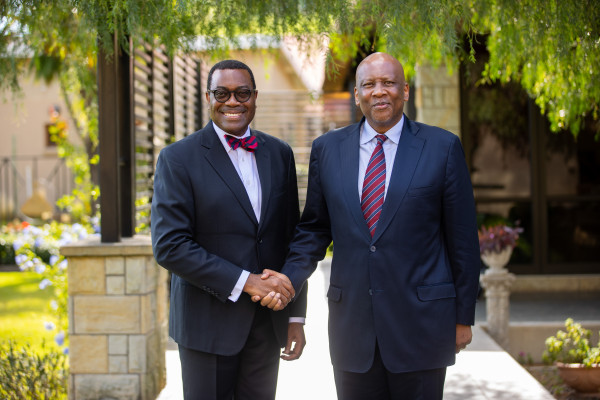
The African Development Bank Group (www.AfDB.org) plans to invest $331 million in key strategic sectors in Lesotho as part of its proposed Country Strategy Paper for 2025-2030 to boost economic growth and industrial competitiveness.
During an official visit to Lesotho -- the first by an African Development Bank President -- Dr. Akinwumi Adesina met with His Majesty King Letsie III to discuss strengthening development partnerships and expanding the Bank's investments in the country.
His Majesty expressed delight at the Bank President's visit, viewing the mission as a reflection of the Bank and Adesina's appreciation for Lesotho's progress in improving people's lives.
“With haste, we will ensure that the policies and incentives to accommodate the needs of and attract the private sector are in place, especially in healthcare, agriculture, and manufacturing,” the King remarked.
King Letsie said he was confident that Adesina, whom he described as a 'man of action,' would help catalyze progress on the Bank's strategic projects in Lesotho.
Adesina thanked King Letsie for his strong leadership role as the African Union Nutrition Champion since 2014, his advocacy for improved nutrition and food security on the continent -- especially for women, adolescents, and children -- and his passion for youth development.
The African Development Bank president commended His Majesty for his leadership on the King Letsie III Just Energy Transition Fund, which aims to generate approximately 200 megawatts of power through private sector investments.
He also briefed King Letsie about the Bank's new 2025-2030 Country strategy paper and planned investments of $331 million to support quality infrastructure, capacity building, energy, integration and interconnectivity, debt management and standards, and strengthening the office of the Prime Minister.
Referencing dwindling donor commitments globally, Dr. Adesina said, "Africa must prepare to engage more proactively with the private sector. Every challenge is an investor's dream. Ultimately, capital, like water, will always find a receptive place to go."
According to Adesina, the Bank has implemented 87 projects totaling $429 million since Lesotho joined the Bank in 1973.
"We have eight ongoing projects worth $60 million, and we look forward to significantly expanding our commitments," Adesina said.
The Bank's investment strategy for Lesotho will focus on several priority areas:
The African Development Bank-led Lesotho Rural Water Supply and Sanitation Project has delivered remarkable results: 190 kilometers of pipeline to distribution networks, water storage tanks with a total capacity of 3.48 million liters, and 166 public water points serving approximately 28,266 people across eight zones in Maseru and Berea districts.
Responding to King Letsie's request, Dr. Adesina said the Bank will prioritize investments in primary healthcare centers across Lesotho.
“We will work on an integrated project that includes components of energy, a potential multi-partner $2.3 billion water transfer project from Lesotho through South Africa to Botswana, agro-value chains, and trade facilitation in Lesotho,” Adesina said after the meeting with King Letsie III.
The Bank is expected to support Lesotho in mobilizing approximately $260 million for the integrated water transfer project, which will supply 308 million cubic meters of water for domestic, agricultural, and industrial use through a 700 km pipe system. The project has the potential to generate up to 22 MW of hydropower.
Speaking earlier, Minister of Finance and Development Planning Retselisitsoe Matlanyane indicated that as Lesotho's energy supply will exceed domestic demand by the end of 2026, the country intends to build a substation to export excess power production to South Africa. She reiterated Lesotho's commitment to private sector-friendly policies and engagement.
The minister highlighted the importance of primary healthcare and nutrition investments to help combat extreme stunting in several parts of the country.
King Letsie is the African Union-appointed African Leaders for Nutrition champion. The initiative, spearheaded by the African Development Bank and championed by African leaders, works to galvanize political will and significant investments to end malnutrition on the continent.
Dr. Adesina also met with Prime Minister Samuel Ntsokoane Matekane; and the ministers of Foreign Affairs; Agriculture, Food Security & Nutrition; Natural Resources; Health; Communication, Science & Technology; and Education & Training.
The Bank's delegation to Lesotho included its Executive Director for Lesotho, Dr. Nomfundo X. Ngwenya; Deputy Director General for Southern Africa, Moono Mupotola; and Senior Advisor to the President for Communication and Stakeholder Engagement, Dr. Victor Oladokun.
Distributed by APO Group on behalf of African Development Bank Group (AfDB).
Media Contact:
Emeka Anuforo
Principal Regional Communication Officer
media@afdb.org
About the African Development Bank Group:
The African Development Bank Group is Africa's premier development finance institution. It comprises three distinct entities: the African Development Bank (AfDB), the African Development Fund (ADF) and the Nigeria Trust Fund (NTF). On the ground in 41 African countries with an external office in Japan, the Bank contributes to the economic development and the social progress of its 54 regional member states. For more information: www.AfDB.org
Hundreds take part in human rights festival at Constitutional Hill
The sun has set in Johannesburg, South Africa and Nntuthuzelo Ndwandwa, 39, is returning home from her job as a customer care consultant. When once she would have glanced nervously into the shadows, now she walks through a complex illuminated by solar-powered lights and enters her home, where a solar-powered heater doles out warm water for washing up.
“We are safe during load shedding because the external lights are on solar,” says Ndwandwa. “I'm also guaranteed hot water in the morning. It has made my life so much easier.”
This may sound like a humdrum, everyday moment, but for Ndwandwa and the other hundreds of residents of the Tshedzani Phase 3 social housing project, these basics are a revelation. They were provided through a project funded by the Global Environment Facility (GEF) that installed solar-powered equipment in public housing units across South Africa's biggest city. The effort, implemented by the City of Johannesburg, was designed to improve the quality of life of urban dwellers and fight climate change.
Residents of the social housing project say they now feel more secure, are saving money and have more job opportunities.
“Before the project, we had load shedding, and outside, it was dark […] we would not go outside as we were scared,” says resident Catherine Gugulethe Mbuyisa, 55. “Cars would be hijacked, washing would be stolen. But since the installation of solar power, we haven't experienced any of those problems and I've saved a lot in terms of electricity.”
Cities at the centre of climate action
Johannesburg is one of a growing number of global cities racing to lower their greenhouse gas emissions through better urban planning, which experts say can be a quick and easy way to reach climate targets. But such work also has a host of other benefits – from providing access to energy to protecting residents from the health hazards of open dumping.
“Action to reduce greenhouse gas emissions doesn't just make a difference at a global level – it invariably makes a positive difference to people's lives,” says Martin Krause, Director of the UN Environment Programme's Climate Change Division. “This is particularly obvious in cities, where the concentration of people means rapid gains for people and planet are possible.”
Today, some 56 per cent per cent of the world's population live in cities. Almost 1.2 billion of these people already face a bevy of climate-related risks, including rising seas and heatwaves. At the same time, urban areas consume around 75 per cent of the world's energy and produce around 70 per cent of global greenhouse gas emissions, reports the International Energy Agency. Urbanization is occurring rapidly, increasing the impact of cities on the environment and economy.
But cities are also hotbeds of climate solutions. And experts say how they are designed, built and managed will significantly impact global emissions, resource consumption and resilience to climate change. That is why successful projects, such as the one in Johannesburg, are considered so important.
“By adopting integrated approaches to support green, affordable housing, waste management and clean energy access for communities thriving amidst verdant natural spaces, cities like Johannesburg are leading the way to a sustainable urban future that benefits people, natural ecosystems and the global environment,” says Fred Boltz, Manager of GEF's Programming Division.
Multiple benefits
Kicked off in 2020, the GEF project focused on five key areas, including retrofitting social housing, increasing food resilience through sustainable urban farming, boosting biodegradable waste management and increasing evidence-based planning.
As part of this work, 172 units in Roodepoort Tshedzani 3 social housing have been fitted with solar water heaters, solar panels and lithium-ion batteries, energy-saving lighting and water-saving components.
To boost organic peri-urban farming in other areas, seeds, fertilizer and tools have been provided to farmers, alongside boreholes at four sites. Some 8,000 square metres of land is now under organic production and waiting for certification. Residents were also trained in many aspects of sustainability, including recycling, and a biodigester plant is under construction to turn waste into energy.
These additional benefits have brought opportunities to many residents, such as Voneen Trompeter, an unemployed single mother looking for ways to support her two children.
“This project has made me feel more worthy of being in a community, and I have learned a lot about business and recycling,” she says. “My hope for the future is to get a permanent position within the recycling programme, as it will be beneficial to me and my family.”
While the project is set to end later in 2025, its legacy will continue—not just in the infrastructure set up for residents. Standards and guidelines are being prepared to make it easier for such initiatives to take root in other parts of Johannesburg.
“We are excited to see the results of the GEF project coming together,” says Liana Strydom, Assistant Director, Regional Planning, City Transformation and Spatial Planning Directorate in the City of Johannesburg. “It creates momentum to mainstream our initiatives and creates hope for broader impact across many different aspects of the city's resilience and our citizens' ability to navigate climate shifts.”
Distributed by APO Group on behalf of United Nations Environment Programme (UNEP).
Thousands of artisanal gold miners toil in the dirt in a mine controlled by political elites
Showcasing a range of mostly children’s books, the festival is set to run until next week
Minister commits to better access to quality sporting facilities
The Minister of Sport, Arts and Culture, Gayton McKenzie, has emphasised the importance of investing in school sports to provide young people with opportunities and prevent delinquency.
The Minister officially handed over a newly built multi-purpose sports facility at the James Ndulula Primary School on Friday, as part of the Human Rights Day commemorations in Kariega, Eastern Cape.
The Deputy President Paul Mashatile was also present during the handover ceremony before his address at the main Human Rights Day event at the Derrick Ferreira Stadium.
Speaking at the school, Minister McKenzie said: “I believe that a kid in sport is a kid out of court. We have many young people in conflict with the law because they have nothing to do. When we say we want to fix school sport, we have to start with facilities.”
“What you see here today is what you will see throughout the country. We are going to fix all the facilities where our children can train and play. It is their right to have proper facilities because when they get to university, they compete against children who come from top-paying schools and are at a disadvantage,” the Minister said.
The Minister highlighted that human rights extend beyond physical rights and include access to quality sporting facilities.
“The right to have good sporting facilities is also a basic human right for our children,” he stated.
He further committed to prioritising historically neglected areas in schools and ensuring a diverse range of sporting opportunities for learners.
“I am going to concentrate on the areas that were neglected before. We are going to have tennis courts and all these other facilities in our schools going forward,” he said. – SAnews.gov.za
DikelediM
Fri, 03/21/2025 - 13:06
124 views
Human Rights Festival celebrates liberation heroes
Constitution Hill will this weekend host one of Gauteng’s key events – the 2025 Human Rights Festival from 20 to 23 March 2025.
“Celebrating it’s 7th year, the event invites the public to commemorate South Africa’s Human Rights Day and celebrate the memory of those liberation heroes who took a stand for human rights in the Sharpeville 1960 massacre.
“The festival aims to build greater awareness and knowledge around human rights and to promote the importance of an active citizenry,” said Constitution Hill in a statement.
This as South Africa marks Human Rights Day on 21 March 2025. Deputy President Paul Mashatile will on behalf of President Cyril Ramaphosa, deliver the keynote address at the commemoration event scheduled to take place at the Derrick Ferreira Stadium, in Kariega.
The 2025 Human Rights Festival serves as both a global inspiration and a display of the strength of South Africa’s ubuntu culture in working towards a just and inclusive society.
Civil society organisations have worked with Constitution Hill to shape a unique programme for the event.
Hosted on the apron of the Constitutional Court and using venues in the Old Fort and Women’s Jail, the festival will bring together a public audience; community-based organisations; social movements; government and non-governmental organisations, and international organisations.
The four-day event is free to all and gates open at 10h00 on all three days.
On Thursday, Gauteng MEC for Economic Development Lebogang Maile will deliver a powerful public lecture at Constitution Hill’s Women’s Jail Museum to honour the life and legacy of Mama Winnie Madikizela-Mandela.
The opening of Qhakaza: Pain Undefined Curated by Gift Kgosierileng, explores how Mama Winnie Mandela used fashion as a form of resistance and empowerment.
“Through carefully selected pieces, photographs, and multimedia installations, the exhibition highlights how her iconic style became a tool for reclaiming agency and asserting dignity in the face of systemic oppression,” said the statement.
There will also be non-governmental organisation (NGO) capacity building sessions; learners programs and public dialogue sessions. The day will end with an NGO and film makers networking session.
On Friday, the official opening ceremony will include the 1000 Drums for Solidarity. Drumming serves as a powerful tool to amplify marginalised voices and foster solidarity within community groups.
There will be multiple interactive sessions including workshops and dialogues; family fun at the children’s village; a local authors book fair and book readings; film festival showcasing local and global talent; live poetry segments and a curated maker’s market.
A live show will take place from 17h00 – 21h00, headlined by renowned jazz artist Mandisi Dyantyis.
On Sunday, Constitution Hill invites the public to the last day of the event to take a stand and join together for Human Rights in the 8km WeThePeopleWalk Walk through the city with a fun filled program kicking off from 7am.
The walk will return back to the site for various activities and a local makers market.
The festival takes place at Constitution Hill, formerly a site of prisons, where many great liberation leaders were incarcerated.
Today Constitution Hill has been transformed into a beacon of light for democracy and social justice. A living museum that executes multiple education, creative development, human rights and constitutional public programs throughout the year.
For more information visits www.humanrightsfestival.co.za. – SAnews.gov.za
Janine
Thu, 03/20/2025 - 10:23
72 views
SA condemns Israeli airstrikes on Gaza
South Africa has condemned the extensive Israeli airstrikes carried out across Gaza dron Tuesday, resulting in the deaths of over 350 Palestinians.
The deadly airstrikes occurred following a failure to implement the second stage of the peace agreement with Israel, despite ongoing negotiations aimed at ensuring the ceasefire remains in effect.
The fatal attacks were reportedly authorised by the Israeli leadership more than a week ago.
According to the Department of International Relations and Cooperation (DIRCO), this raises concerns about the commitment to the permanent ceasefire outlined in the plan negotiated by the United States, Egypt and Qatar.
The Palestinian Health Ministry said many of those killed were children and several victims remain under the rubble.
Reports suggest that airstrikes were concentrated on heavily built-up neighbourhoods, makeshift schools and residential buildings where people have been sheltering, which is a "blatant violation of international law, including international humanitarian law".
“South Africa is gravely concerned by the military onslaught and the fact that millions of people in Gaza are facing severe food and water shortages, as Israel continues to block aid and cut off energy supplies to the strip,” DIRCO said in a statement.
Meanwhile, the department said Israel, which has enforced a total blockade of Gaza, has now issued new forced displacement orders for several areas.
The department said the provisional orders issued by the International Court of Justice (ICJ) oblige Israel to take all measures within its power to prevent acts of genocide, ensure humanitarian assistance reaches Gaza, and preserve evidence related to alleged genocide.
The United Nations’ Humanitarian Coordinator for the Occupied Palestinian Territory, Muhannad Hadi, has urged that the ceasefire in Gaza be immediately reinstated. He called the waves of airstrikes across the Gaza Strip since the early hours of the morning “unconscionable.”
South Africa has also condemned the four targeted Israeli military strikes launched against southern Syria overnight, which killed at least two and wounded 19 others on the outskirts of the southern Syrian province of Deraa.
“The Syrian Observatory for Human Rights said Israel targeted a military site previously used by former President Bashar al-Assad’s forces, but which is now used by the army of Syria’s transitional government.
“Israel’s airstrikes and previous statements that it does not want any Syrian military presence in the south of Syria is a violation of Syria’s sovereignty and territorial integrity,” DIRCO said. – SAnews.gov.za
Gabisile
Wed, 03/19/2025 - 08:55
62 views
Large clinical trials several years in and with millions of rands already spent are at risk
Residents of informal settlement say they are forced to pay to use stolen toilets
Invest in ECD to shape the next generation, says President
President Cyril Ramaphosa has advocated for universal access to Early Childhood Development (ECD) to ensure that every child has the opportunity to learn, grow and thrive by the age of five.
The President was delivering remarks at the official opening of the Bana Pele 2030 Roadmap Leadership Summit at Atlas studios, in Johannesburg.
“Universal childhood development should have started 30 years ago…We are all here today because of our shared belief in the profound importance of Bana Pele – putting children first.
“It is because of this shared vision that we unite and collaborate today, committed to ensuring that every child has the opportunity to learn, grow and thrive by the age of five,” the President said on Monday.
The President told the summit that government’s immediate focus is to extend access to early childhood development to every child calling it one of the most powerful tools for unlocking the nation's potential.
He emphasised that ECD extends beyond education, it is a key driver of economic growth.
“We recognise today that investing in ECD is not just about education. It is about shaping the next generation of skilled, capable and entrepreneurial citizens who will drive our economy forward.
“Investing in ECD yields significant economic returns. Studies have shown that every rand spent on early childhood education can save up to seven rands in future costs associated with remedial education, social services and criminal justice,” the President said.
He highlighted that early childhood development provides children with the foundational skills they need to build a successful future. It further helps break the cycle of poverty that is handed down from one generation to the next.
“Early childhood development is about giving children from all backgrounds the opportunity to grow into confident, capable citizens who contribute positively to society. Children who receive a strong start are more likely to succeed in school and the workforce, reducing societal costs in areas such healthcare, crime prevention and welfare,” the President said.
A research report published to coincide with Brazil’s G20 Presidency, estimated that in South Africa, an investment of 2.1% of the Gross Domestic Product (GDP) in universal childcare could have supported 10.5 million women to join the workforce over three years.
Because of the profound effect that ECD can have on social well-being and development, the President said government had decided to put the country’s children first.
Last week, the Minister of Finance announced an additional investment of R10 billion in ECD over the next three years.
The President referred to the statistic that 80% of children in South Africa are unable to read for meaning by the age of 10. He emphasised that early childhood development was critical for developing foundational skills such as language, literacy and numeracy.
President Ramaphosa added that the experiences and interactions children have can significantly influence their future learning potential.
“This is why ECD must be treated as an urgent priority. We therefore welcome this wonderful initiative for business, civil society and government to work together to shape the future of early childhood development.
“This initiative will assist the strategic reorientation of the basic education sector to strengthen foundation learning. The benefits of universal access to ECD extend beyond the education of the child. It helps to empower families to break free from the effects of poverty."
President Ramaphosa called on all ECD programmes to register with the Department of Basic Education so that all children can receive the start in life that they need and deserve.
He noted that the ripple effects of a robust ECD system are felt across generations, fostering a cycle of opportunity and growth.
“We are determined that every child, regardless of their background or location, must have access to quality early education. It is for this reason that the Department of Basic Education launched the Bana Pele Mass Registration Drive last year,” he said.
The President said that the Mass Registration Drive was an example of cross-sectoral collaboration at work. He added that the country has an opportunity to rethink and restructure the entire ECD landscape, making it more effective, more inclusive and more impactful than ever before.
“As South Africans, we have a clear goal for all our children: access to quality learning opportunities for an additional 1.3 million children by 2030. This is why we are here today.
“We need to create a collaborative framework for ECD. One that brings together government, business, donors, ECD workers and all other social partners,” he said.
He said this framework must ensure that all role-players work together at both the provincial and municipal levels to improve access to quality early childhood education.
“As we move forward, we must remember that there is no greater cause than uniting for the benefit of our children. Our future as a nation depends on the children we raise today. We must commit to creating an environment where every child, no matter where they come from, has the opportunity to learn, to grow and to succeed.
“Let us join hands and work together, as a united force, to achieve our shared vision of universal access to quality early childhood development,” the President said. – SAnews.gov.za
DikelediM
Mon, 03/17/2025 - 11:35
574 views
The My Body My Space festival celebrates ten years of free access to the arts
Social Development visits funded community based organisations
The Department of Social Development is conducting nationwide oversight visits to various community-based organisations that are funded to render social development services across South Africa.
In a statement on Sunday, the department said the visits form part of the department’s ongoing measures to build and strengthen the capacity of non-governmental organisations that render much-needed services to communities.
This includes psychosocial support to vulnerable children and families, HIV prevention, teenage and unplanned pregnancies targeting children and young people.
The department highlighted that South Africa remains the epicentre of the HIV epidemic and there is a great need to prevent and reduce new infections, with a strong focus on young people.
“As one of the key departments in HIV and AIDS response, Social Development has developed a compendium of social and behaviour change programmes which seek to contribute to the reduction of new HIV infections as well as mitigate the impact of HIV/AIDS on individuals, families and communities.
“The compendium of programmes consists of the following programmes: You Only Live Once (YOLO), ChommY, Boys Championing Change, Men Championing Change, Family’s Matter and the Rock Leadership programme, which specifically targets traditional leaders,” the department said.
The community-based organisations that were visited last week include Brother Services Community Development in Bushbuckridge, Mpumalanga. The organisation received funding to prevent new HIV infections, child protection and teenage pregnancy in Lillydale and surrounding communities under the Bushbuckridge Local Municipality.
“With a staff complement of 23 receiving a monthly stipend and reaching over 5000 beneficiaries through its various programmes, the organisation plans to expand its services by working closely with local schools,” the department said.
A 2022 report by the Department of Health focusing on adolescent and youth district data showed that every year, young girls become pregnant, with Eastern Cape, KwaZulu-Natal, Gauteng, and Mpumalanga respectively identified as teenage pregnancy hot spots.
The department noted that early pregnancies among teenagers presents a myriad of long-term socio-economic challenges such as health risks for teenage mothers and their babies, perpetuating the cycle of intergenerational poverty due to early school dropout, the spread of HIV infections, emotional, psychological, and post-natal depression, among others.
“Social and behaviour change (SBC) programmes are essential components of HIV prevention represent one of the priority interventions highlighted in the National Strategic Plan for HIV, TB and STIs (2023-2028). Social and behaviour change efforts aim to reinforce protective sexual behaviour by addressing knowledge, attitudes, skills and social norms,” the department said.
In Limpopo, the Deputy Minister of Social Development Ganief Hendricks visited Nhlayiso Community Health Drop-in Centre, which renders care and support services persons living with HIV and AIDS as well as psychosocial social support services to orphans and vulnerable children in Greater Tzaneen under the Mopani District.
The organisation also works with local schools and health facilities to prevent teenage pregnancy, gender-based violence, substance use, addiction, and other substance-related harms.
“One of the key successes of the organisation is that it provides job opportunities for unemployed social service professionals such as social work graduates, social auxiliary workers and child and youth care workers,” the department said.
In line with its developmental mandate, the department will continue with its oversight visits to funded community-based organisations to monitor the effectiveness of the compendium of social and behaviour change programmes especially those that are targeted at children and young people. – SAnews.gov.za
DikelediM
Mon, 03/17/2025 - 10:07
3 views
President Ramaphosa to open ECD leadership summit
President Cyril Ramaphosa will on Monday officially open the Bana Pele Early Childhood Development (ECD) Leadership Summit at the Atlas Studios, in Johannesburg.
The summit, convened by the Department of Basic Education (DBE) and Business Leadership South Africa (BLSA), aims to mobilise a public and private coalition behind the DBE’s 2030 ECD Roadmap for quality, universal access to early learning.
In a statement on Saturday, The Presidency noted that in South Africa, more than 1.3 million children are not enrolled in any form of ECD programme, leaving them without the foundational literacy and numeracy skills required to succeed in school.
“This learning gap affects their ability to take on critical subjects, such as Mathematics, Science, Accounting, and Economics in later years, which are the skills that are vital for innovation, economic growth, and job creation,” the Presidency said.
The summit will bring together government, business, civil society and education experts to “construct a roadmap for universal access to quality ECD across the country.
“This initiative is a crucial step toward ensuring that every child, regardless of background, has access to the early learning opportunities they need to thrive in life,” the Presidency said. – SAnews.gov.za
NeoB
Sun, 03/16/2025 - 12:56
448 views
Businesses encouraged to operate ethically
Mpumalanga MEC for Economic Development and Tourism, Makhosazane Masilela, has called on businesses to “go above and beyond” to demonstrate ethical business practices.
The MEC was speaking at the commemoration of World Consumer Rights Day (WCR), held at the University of Mpumalanga, on Saturday.
“As we celebrate this significant day, we are reminded of the central role that consumers play in our economy, and the critical need to protect their rights, while also encouraging businesses to operate ethically, responsibly, and with integrity.
“It is not enough to simply adhere to the bare minimum of legal requirements; businesses must go above and beyond to establish a culture of fairness, respect, and responsibility,” Masilela said.
World Consumer Rights Day is celebrated annually on the 15th of March, as a means of raising global awareness about consumer rights and needs.
Celebrating the day is a chance to demand that the rights of all consumers are respected and protected, and to protest against market abuses and social injustices which undermine those rights.
The National Consumer Commission held the commemoration in partnership with the Competition Commission of South Africa, the Mpumalanga Department of Economic Development and Tourism, and various regulatory bodies, under the umbrella of the Consumer Protection Forum (CPF).
The WCR was celebrated under the theme “Empowering Consumers—Balancing Rights with Ethical Business Practices”.
Acting Commissioner of the NCC, Hardin Ratshisusu, emphasised the ongoing need to intensify efforts in addressing the sale of expired food items in local spaza shops.
“Recent inspections on local spaza shops in various communities have revealed expired food items on shelves, prompting their removal and destruction.
“It is important we continue with this work given the recent spate of foodborne illnesses affecting the most vulnerable consumers in our society – our children,” Ratshisusu said.
Competition Commission Acting Head of Advocacy, Andile Gwabeni, emphasised the importance of the Competition Act in ensuring a competitive market.
“We understand that a fair and competitive market inherently protects consumers…and we therefore see consumer welfare as a direct output of our work,” he said. – SAnews.gov.za
NeoB
Sun, 03/16/2025 - 14:40
110 views
SA's narrative therapist nominated for Women Changing the World Awards
South Africa’s world-renowned Narrative Therapist and Psychosocial Specialist, Ncazelo Mlilo, has been nominated in the prestigious Women Changing the World Awards.
The awards, according to a statement by psychosocial organisation, Phola, are like the Grammy Awards for recognising women across the world who are doing incredible work, making a positive difference in various industries and areas, including business, sustainability, leadership, health, education, product development, innovation, and technology.
Mlilo, who is based in Johannesburg, has been selected for two categories, the People’s Choice Award for Non-Profit and Social Enterprise, and the Women in Therapy and Counselling Services Award.
This recognition celebrates the groundbreaking work in mental health, her development of Afrocentric, culturally sensitive narrative-based methodologies, and her dedication to empowering communities worldwide.
The awards ceremony will take place during a summit in London, in the United Kingdom on 2-3 April 2025.
Mlilo has over 25 years’ experience in trauma counselling.
She has worked with children, youth, women, families, and communities to address the effects of HIV/AIDS, gender-based violence (GBV), poverty, conflict, and other hardships.
Mlilo co-created the Tree of Life (ToL) Methodology, currently used in over 60 countries including the USA, Brazil, Australia, Canada, Iran, India, Germany, Japan, Sweden, and across Africa.
She has developed other methodologies like COURRAGE, the Narratives in the Suitcase Project, O.U.T.R.R.A.G.E.D. for GBV prevention.
Mlilo trains over 1 000 mental health practitioners worldwide every year, with her work reaching an estimated 100 000 people, annually.
She is also a prominent keynote speaker at international conferences, including the Trust’s Collective Narrative Practices Conference, held in 2024 in Australia, the Narrative Therapy Centre Conference, where she spoke about the Narratives in the Suitcase, held in Australia in 2023, among others.
As a result, her work is the intervention of choice in these global institutions, like the Dulwich Centre Foundation in Australia and NHS Foundation Trust in the UK. – SAnews.gov.za
GabiK
Fri, 03/14/2025 - 12:07
46 views
Cabinet considers National Minimum Wage report
Cabinet has received and considered a report by the Department of Employment and Labour on the progress made to protect and enhance the National Minimum Wage (NMW).
The National Minimum Wage Act, which was enacted in November 2018, laid the foundation for reducing income inequality and wage gaps, and continues to safeguard low-income workers in the country.
“From 1 March 2025, the National Minimum Wage increased by 4% from R27.58 to R28.79 per hour. This increase aims to provide essential economic support and much-needed relief to the six million workers earning within the National Minimum Wage bracket,” Cabinet said in a statement on Thursday.
READ | National Minimum Wage increases
The wage is the minimum amount of pay that an employer is legally required to remunerate employees for work done. No employee should be paid below the NMW.
Foundation learning
Meanwhile, Cabinet has also expressed its support for the strategic reorientation of the basic education sector towards foundation learning.
In January 2025, the Department of Basic Education announced and celebrated a record high matric pass rate of 87.4%.
However, just a month earlier the department had released systematic evaluation results from three different studies showing that nearly 80% of South African children cannot read for meaning, in any language by the age of 10.
To resolve this challenge the department has initiated a strategic reorientation that will have the following initiatives:
• Universal access to quality early childhood development through the mass registration of ECD centre, ensure each child in ECD receives a subsidy, support ECD centre with Learning and Teaching materials, offer support to practitioners to obtain teaching qualifications. The funding of this has been allocated in the 2025 National Budget.
• Review the norms and standards to increase teacher posts in foundation phase teaching
• Funza Lushaka Bursary will be re-oriented to prioritise bursaries to students who wish to teach in the foundation phase.
“This strategic reorientation will strengthen foundational literacy and numeracy skills of learners and ensure that they later be able to table on more complex subjects such as Maths, Science, Accounting and Economics amongst others,” Cabinet said. – SAnews.gov.za
DikelediM
Thu, 03/13/2025 - 14:32
44 views
Cabinet welcomes 2025 National Budget
Cabinet has welcomed the 2025 National Budget as it seeks to maintain a balance between South Africa’s fiscal framework, fund the priorities of the seventh administration while mitigating negative impact on poor and middle-income households.
The budget was tabled by the Minister of Finance, Enoch Godongwana, in the National Assembly, on Wednesday.
He outlined all the financial, economic and social commitments the government will prioritise in its planned expenditure and provided a detailed plan for 2025 spending. This includes proposals for revenue collection to help fund the government’s planned interventions and commitments.
“The allocation of over R1 trillion to infrastructure development over the Medium-Term Expenditure Framework (MTEF), the establishment of alternative infrastructure financing through a credit guarantee vehicle and the introduction of multiple bid windows on the Budget Facility for infrastructure is a demonstration of commitment to grow the economy through a strong infrastructure-build programme, whilst simultaneously improving service delivery.
“Mechanisms for private sector participation as announced with the Budget, which are part of Operation Vulindlela driven reforms, in the energy, transport and freight logistics sectors indicate government’s commitment to fast-tracking private sector investment and inclusive economic growth,” Minister in The Presidency, Khumbudzo Ntshavheni, said on Thursday.
Minister Ntshavheni was briefing the media in Cape Town, following Cabinet’s meeting on Wednesday.
Operation Vulindlela is aimed at stabilising the supply of electricity; creating a competitive and efficient freight logistics system; reducing the cost and improving the quality of digital communication; ensuring a stable, quality supply of water; and reforming the visa regime to facilitate skilled immigration and support tourism.
READ | Operation Vulindlela records notable progress
Since its establishment in 2020, Operation Vulindlela has made real progress in achieving these objectives.
In light of new and persistent spending pressures in health, education, transport and security, government decided to raise value-added tax (VAT) by 0.5 percentage points in each of the next two years, which will bring VAT to 16% in the 2026/27 financial year.
READ | Government proposes VAT increase over two years
The first 0.5 percentage point increase in the VAT rate will take effect on 1 May 2025 and the second 0.5 percentage point increase will take effect on 1 April 2026.
“Acknowledging the impact of the tax increases, the Budget provides for mitigation measures against the increases such as no increase in the fuel levy, above inflation increases to social grants, with old age and disability grants increasing by R130 to R2315 in 2025 and significant funding allocation to PRASA [ Passenger Rail Agency of South Africa] to improve passenger rail transport which will reduce household income spend on transport costs.
“Most significantly, the tax increases are going to finance sustainability of this country, by maintaining 11,000 teachers in the classrooms, 9300 health-workers in their jobs, the employment of 800 post-community service doctors and allow an additional 700, 000 children (4-years of age) access to early childhood development which is the necessary foundation education they need for a successful education journey,” Ntshavheni explained. –SAnews.gov.za
nosihle
Thu, 03/13/2025 - 11:49
58 views
Social grants set to increase in April
All social grants, barring the Social Relief of Distress (SRD) grant, are expected to increase from April this year.
Delivering the 2025 Budget Speech in Parliament on Wednesday, Finance Minister Enoch Godongwana said the number of social grant beneficiaries – excluding those receiving the SRD grant – is expected to rise to some 19 million in 2025/26 and 19.3 million in 2027/28 due to a growing population of older persons.
Godongwana said for 2025/26, social grants will be allocated some RR284.7 billion.
“As announced by the President in the State of the Nation Address, the SRD will be used as a basis for the introduction of a sustainable form of income support for unemployed people.
“The future form and nature of the SRD will be informed by the outcome of the review of active labour market programmes. This is expected to be completed by September 2025.
“The truth is that ours is one of the most comprehensive social safety nets among emerging economies. This reflects our commitment to addressing poverty and inequality, while keeping our spending sustainable,” he said.
The grant increases this year include:
In the Budget Review, National Treasury said the budget for social grants is “increased by R8.2 billion over the medium term to account for higher costs of living”.
“An amount of R35.2 billion is allocated to extend the payment at the current [SRD] R370 per month per beneficiary, including administration costs,” the department said.
The Department of Social Development, which administers social grants, has been allocated R422.3 billion in 2025/26, which is expected to increase to R452.7 billion in 2027/28, at an average annual growth rate of 4.5%.
“This funding supports poverty reduction through social grants, the provision of risk benefits through social insurance and the delivery of welfare services, development initiatives, empowerment programmes, gender equality initiatives and advocacy for children, women, youth, the elderly and individuals with disabilities.
“Social grant spending makes up 81 percent of the allocation for this function. At an average annual growth rate of 5.3 percent, social protection spending increases above inflation over the medium term; however, social grant reform and efficiency savings will be necessary to ensure the sustainability of the social security system.
“[The] sector’s operational budget will be subject to conditions, including the need to improve biometric verification of recipients to achieve savings,” the National Treasury said. – SAnews.gov.za
NeoB
Wed, 03/12/2025 - 13:57
1791 views
Government allocates R19.1 billion for teachers over the medium term
The government has added R19.1 billion over the medium term to keep approximately 11 000 teachers in classrooms.
“Our learner-teacher ratios remain higher than we would like, meaning that we still need more teachers in classrooms,” Minister of Finance Enoch Godongwana said on Wednesday in Parliament.
According to the Minister, paying salaries constitute 76% of provincial education budgets.
“This means that only R24 out of every R100 of their budget is left for funding school infrastructure, meals for learners from poor backgrounds, and stationery and textbooks, amongst others.
“To prevent compensation of employees from crowding out other equally important areas of spending, R19.1 billion is added over the medium term to keep approximately 11 000 teachers in classrooms,” the Minister said during the Budget Speech.
He said the foundation to building the next generation of citizens who contribute economically and socially to the nation is in early childhood development (ECD).
“Despite this, the subsidy for ECD has not increased from the 2019 level of R17 per day, per child. To remedy this, an additional R10 billion over the medium term is allocated to increase the subsidy to R24 per day per child. The extra funding will also support increased access to ECD for approximately 700 000 more children, up to the age of four years old.”
Meanwhile, the Department of Higher Education is implementing a pilot student funding model for the “missing middle”, which refers to students from families with annual incomes ranging from R350 000 to R600 000.
The National Student Financial Aid Scheme will manage these loans using funds provided by the National Skills Fund, amounting to R1.5 billion in 2024/25 and R3 billion over the Medium-Term Expenditure Framework (MTEF) period.
“The apprenticeship and skills development levy systems will be reviewed. The goal, in collaboration with the private sector, is to double the number of artisans completing trade tests in the next three years through increased work-based learning opportunities.
“The arts, culture, sport and recreation sector is allocated R38.4 billion over the medium term to support school sports, national recreation events and selected sporting codes, as well as to preserve and promote the cultural, heritage and linguistic diversity of South Africa,” Treasury’s 2025 Budget Review document noted.
Health
Health spending will grow from R277 billion in 2024/25 to R329 billion in 2027/28 to support the equitable provision of public health services, including free primary healthcare.
“Like in provincial education, a significant portion of the provincial health budget is spent on the salaries and wages. R28.9 billion is added to the health budget, mainly to keep about 9 300 healthcare workers in our hospitals and clinics.
“It will also be used to employ 800 post-community service doctors, and to ensure that our pharmacies do not run out of medicines,” the Minister said.
National Health Insurance (NHI) policy
As part of strengthening the health system and preparing for the National Health Insurance (NHI) policy, the Department of Health will fund the development of a patient information system, a centralised chronic medicine dispensing and distribution system, and a facility medicine stock surveillance system.
Over the MTEF period, the indirect and direct conditional grants for NHI are allocated R8.5 billion and R1.4 billion respectively.
“Sustained allocations for direct and indirect infrastructure grants, including potential additional funding through the Budget Facility for Infrastructure (BFI), as outlined in the 2024 MTBPS, will focus on new or replacement buildings, upgrades, rehabilitation and maintenance.
“The total infrastructure allocation is R37.4 billion over the MTEF period, including provisional allocations from the BFI and new allocations for Siloam District Hospital and Tygerberg Hospital equipment through a public-private partnership in 2027/28,” National Treasury said. -SAnews.gov.za
nosihle
Wed, 03/12/2025 - 14:23
403 views
Finance minister announces above-inflation grant increases
The UN World Health Organization (WHO) has stepped up efforts to improve vaccination coverage in the Democratic Republic of the Congo (DRC) by providing vital logistical support, including boats and motorcycles to reach remote communities along the Congo River.
The initiative aims to curb the spread of preventable diseases such as polio, measles and yellow fever which remain a persistent threat in hard-to-reach areas.
Speedy response
WHO delivered 79 outboard motors, two speedboats, 14 motorcycles and other essential equipment worth $750,000 to the country's Ministry of Public Health to expand vaccination campaigns in 89 health zones in nine provinces, the agency said in a news release on Tuesday (in French).
“These boats and vehicles will allow health workers to quickly reach children and communities who have long been cut off from essential services,” said Boureima Hama Sambo, WHO Representative in the DRC.
“This will significantly reduce the number of missed vaccinations and ensure that no child is left vulnerable to diseases that we can prevent.”
Fighting preventable diseases
The Congo River and its many tributaries form a vast network of isolated islands and remote settlements, particularly in provinces such as Équateur, Mongala, Tanganyika and Tshopo.
Many of these areas host large numbers of unvaccinated children, leading to repeated outbreaks of polio, measles and yellow fever, according to WHO.
In 2024, the DRC confirmed 25 cases of circulating variant poliovirus (types 1 and 2) and reported more than 102,500 suspected measles cases, resulting in over 2,200 deaths. Meningitis also remains a major concern, with 5,837 suspected cases and 465 deaths last year.
The WHO and DRC authorities have been working to address these challenges through mass immunization campaigns.
“Improving the availability of vaccines and other vital health supplies in the Expanded Programme on Immunization (EPI) branches, health zones and areas, is essential to strengthening the health system and implementing advanced and mobile vaccination strategies. Integration with other health services will make a difference, bringing significant benefits to the most vulnerable populations,” said Dr. Sambo.
Ongoing Mpox outbreak
Even as the country battles vaccine-preventable diseases, the DRC continues to face a large mpox outbreak. Between 1 January and 2 March 2025, the country recorded 2,415 confirmed cases, with 1,080 of them occurring in the last six weeks alone.
WHO has declared the mpox resurgence a public health emergency of international concern (PHEIC) and warned that the virus is circulating in at least ten provinces.
The outbreak is being fuelled by sustained human-to-human transmission, particularly in the capital, Kinshasa, where genomic sequencing indicates that one specific strain has persisted since July 2024.
Impact of violence
Complicating response efforts is the ongoing violence in the eastern DRC, which disrupted healthcare services and made it difficult to track and contain the virus. In February, the virus was detected for the first time in the south-central Lomami province, expanding its reach further.
The WHO is also monitoring new travel-related mpox cases that have emerged outside the country, including in Belgium, France, Germany, the United Kingdom and the United States.
Meanwhile, South Africa has reported its first cluster of mpox cases linked to the same strain circulating in the DRC.
Distributed by APO Group on behalf of UN News.
About 30 people have been living in 104 Darling Street for more than two decades