Fela and Food: How Lagos Restaurants Are Serving up the Music Star’s Legacy
Fela Kuti’s legacy plays out in music, in politics and even in food, with Nigerian restaurants paying homage to him on their menus.

MyZA
News, Directory, Events and Other Stuff
Fela Kuti’s legacy plays out in music, in politics and even in food, with Nigerian restaurants paying homage to him on their menus.
Whatever the outcome of the Wafcon final, Nigeria’s sole dominance of women’s football in Africa has ended.
African Development Bank warns that economic growth could drop to 0.5% next year
Graveland is running at the Market Theatre until Sunday, 1 June

In a landmark diplomatic step, Tanzania has launched a revised National Foreign Policy that reinforces the country's leadership in African diplomacy. The updated policy embraces Pan-African values, supports the African Continental Free Trade Area (AfCFTA), and advances regional peace, integration, and sustainable development.
The launch event, held at the Julius Nyerere International Convention Centre (JNICC) in Dar es Salaam, was officiated by H.E. Dr. Samia Suluhu Hassan, President of the United Republic of Tanzania. It was also attended by Dr. Hussein Ali Mwinyi, President of Zanzibar and Chairman of the Revolutionary Council, members of the Diplomatic Corps, senior government leaders, and private sector representatives.
Rooted in the vision of Mwalimu Julius Nyerere, Tanzania has historically championed unity, liberation, and non-alignment in African diplomacy. Under Nyerere's leadership, Tanzania became a moral compass for the continent and a founding member of the Organization of African Unity (OAU).
“This policy speaks on who we are as a nation—firm in our values, proactive in our diplomacy, and committed to constructive partnerships that advance peace, security, and shared prosperity,” President Samia said during the event.
The new policy reflects this legacy while responding to contemporary priorities like trade, migration, regional infrastructure, climate action, and digital transformation. It aims to deepen Tanzania's engagement with continental bodies like the AU, SADC, and EAC while emphasizing Kiswahili as a tool for regional integration.
President Samia noted that the revised policy was shaped through a broad-based participatory process involving Tanzanians from all walks of life. “It was high time we revised the policy to cope with global shifts in various spheres,” she said, citing the global scramble for strategic minerals and trade disruptions caused by ongoing conflicts as key motivators.
A core feature of the updated framework includes economic diplomacy and the creation of a Special Status for Tanzanians in the diaspora. The policy promotes legal reforms that would allow non-citizen Tanzanians abroad to own land, register businesses, and invest back home.
To strengthen implementation, President Samia called on the Ministry of Foreign Affairs and East African Cooperation to engage retired diplomats in training current officials, ensuring that Tanzania's envoys are equipped to promote national interests globally.
President Mwinyi welcomed the revised policy as a catalyst for unlocking social, economic, and political potential. “Tanzania continues to position itself globally, and the revised policy aligns with evolving global needs,” he said.
He urged the Ministry to encourage more countries to open consulates in Zanzibar and called on all Tanzanians to embrace and defend national interests through the policy. “This policy will benefit both Tanzania Mainland and Zanzibar,” he emphasized.
President Samia's regional outreach began early in her presidency. In April 2021, she visited Uganda, where she and President Yoweri Museveni signed the Final Investment Decision for the $10 billion East African Crude Oil Pipeline (EACOP).
In May 2021, her visit to Kenya revitalized bilateral ties, followed by trips to Burundi, Mozambique, Rwanda, Zambia, and Egypt, resulting in cooperation on trade, energy, security, and innovation.
At the June 2021 SADC Summit in Mozambique, Tanzania reaffirmed its commitment to regional peace by supporting the fight against insurgency in Cabo Delgado. In Ghana, she received the Africa Road Builders–Babacar Ndiaye Trophy for leadership in infrastructure development.
In Senegal, during the IDA20 Summit, and at COP27 in Egypt, she positioned Tanzania as a leader in climate resilience, presenting an $18 billion renewable energy plan.
From 2023 to 2025, she maintained strong continental engagement through AU summits, the BRICS Summit in South Africa, and diplomatic visits to Malawi, Zambia, South Africa, and Morocco.
A key milestone in Tanzania's growing international stature was the invitation to the Lobito Corridor Development Project high-level meeting in Angola—part of the G7's Global Infrastructure Initiative. Although Tanzania was not originally a member of the project, its geographic and strategic relevance was recognized as critical to the corridor's success.
In February 2024, President Samia unveiled a statue of Mwalimu Nyerere at the AU Headquarters in Ethiopia—a symbolic act that underscored Tanzania's foundational role in the Pan-African movement.
As Chair of the SADC Organ, she presided over the 2024 Troika Summit in Zimbabwe, advancing peace and security initiatives and supporting Raila Odinga's candidacy for AU Commission leadership.
On May 18, 2025, Professor Mohamed Yakub Janabi was elected as the next Regional Director of the WHO African Region, a milestone widely credited to Tanzania's rising diplomatic influence. His nomination followed the untimely death of Dr. Faustine Ndugulile in 2024. Janabi's appointment will be formalized by the WHO Executive Board later this month.
According to Ambassador Mahmoud Thabit Kombo, the revised policy focuses on ten strategic pillars:
This updated policy reflects Tanzania's commitment to Pan-African unity while embracing innovation, inclusion, and global partnership. It sets the stage for the next chapter in Tanzania's regional leadership and sustainable development.
Distributed by APO Group on behalf of Tanzania Ministry of Foreign Affairs and East African Cooperation.

As the United States imposes higher tariffs with global ramifications, African Development Bank Group (www.AfDB.org) President Dr. Akinwumi Adesina has warned that these measures could trigger significant economic disruptions across Africa, affecting numerous nations and accelerating a strategic shift in global partnerships.
In an exclusive interview with CNN's Christiane Amanpour, Dr Adesina revealed that 47 of Africa's 54 countries will be impacted directly by the new U.S. trade policies, with potential declines in export revenues and foreign exchange reserves.
“When those currencies weaken, two things will happen: first, you will find that most of these countries are import-dependent. So, you're going to find that high inflation becomes a problem,” said Adesina. “And secondly, you find that the cost of actually servicing a lot of their debt, which is foreign currency debt, but in local currencies, is going to get worse.”
Almost all African countries have been hit by higher tariffs announced by the Trump administration, with at least 22 nations facing up to a whopping 50 percent for almost all their products. Among the hardest hit countries are Lesotho, Madagascar, Mauritius, Botswana, Angola, Algeria, and South Africa.
The impacts of these higher tariffs are further exacerbated by significant cuts to USAID programs, which have already begun affecting access to essential medical supplies and humanitarian services in many countries, raising serious concerns about the future trajectory of U.S.-Africa relations.
Africa's Strategic Response
Despite the challenges, Adesina emphasized that Africa cannot afford a trade confrontation with the United States, noting that the continent accounts for only 1.2 percent (approximately $34 billion) of America's global trade—with a trade surplus of just $7.2 billion.
Instead, he proposed a pragmatic three-point strategy for the continent: Engage the U.S. through flexible and constructive trade negotiations, diversify export markets to reduce dependency on any single partner, and accelerate the African Continental Free Trade Area implementation to unlock the potential $3.4 trillion market.
He stressed the need to expand Africa's domestic market and boost domestic savings to develop consumption as a bigger share of its GDP, leveraging its massive population growth. More importantly, the continent must take advantage of the increasing external interest in its natural resources, such as cobalt and lithium, to negotiate a better trade and investment deal.
Addressing speculation that Africa may shift more decisively toward China in response to the higher U.S. tariffs, Adesina dismissed any notion of binary alignment. “U.S is a key ally of Africa—and so is China,” he stated. “Africa is building bridges, not isolating itself.”
He stressed that Africa seeks balanced, transparent, and mutually beneficial partnerships with all major global players, including the U.S., China, the European Union, and the Gulf states. “I think at the end of the day, we want to make sure that whatever deals that are being done with Africa are transparent, fair, equitable, and led by Africa and in Africa's interests,” Adesina reiterated.
Beyond Aid: Driving Africa's Self-Reliance
Dr. Adesina, who concludes his second and final term as president of the Bank in September, firmly rejected the long-standing paradigm of foreign aid dependency. “The era of aid as we've known it is completely gone,” he declared, calling instead for bold investments in domestic resource mobilization, infrastructure, and value-added industrialization.
He said aid must be turned into concessional financing to allow multilateral financial institutions like the African Development Bank to do more for the continent by mobilizing more private capital to develop and derisk projects.
While Africa represents nearly 20 percent of the global population and under three percent of global GDP, the Bank Group chief pointed to a resilient and transformative growth narrative: ten of the world's twenty fastest-growing economies are in Africa.
He highlighted flagship initiatives under the African Development Bank's “High 5” agenda that have impacted more than 565 million people through investments in power, food security, industrialization, regional integration, and initiatives to improve the quality of life of the people of Africa.
Over the past decade, the African Development Bank has invested more than $55 billion in infrastructure to bolster economic integration across Africa, alongside other critical investments to drive inclusive growth. It is by far the largest financier of infrastructure across Africa.
Adesina also cited the great potential of the Mission 300 project, a joint initiative by the World Bank and the African Development Bank to connect 300 million people in Africa to electricity by 2030. “Because without electricity, what can you do? You can't industrialize, you can't add value, you can't be competitive in the dark,” he said.
He highlighted the achievements of the Africa Investment Forum, launched in 2018 by the Bank and eight other partners, saying it has since mobilized more than $225 billion in investment interest to the continent. The Forum is a multi-stakeholder, multi-disciplinary platform that advances projects to bankable stages, raises capital, and accelerates deals to financial closure.
Adesina believes that despite its challenges, Africa is the largest greenfield investment destination in the world, and it remains “the investor's dream.”
“We got hydropower. We have a massive youth population that can become the labor force of the world. Sixty-five percent of the arable land left in the world to feed almost 9.5 billion people by 2050 is in Africa, so what Africa does with it will determine the future of food in the world,” he affirmed.
Distributed by APO Group on behalf of African Development Bank Group (AfDB).
Contact:
Communication and External Relations Department
media@afdb.org
Deputy President Shipokosa Paulus Mashatile has, today, 20 May 2025, engaged with South African and French businesses during a Roundtable Breakfast Dialogue hosted by MEDEF International in Paris.
MEDEF is France's largest business federation, representing over 750,000 companies, from SMEs to large multinationals. It plays a central role in promoting French economic diplomacy, supporting private sector development, and facilitating international investment and trade relationships.
The Business Dialogue is an important platform for businesses from both countries to expand on existing cooperation and identifying new areas of cooperation with a specific focus on trade and investment.
Addressing the Business Dialogue, the Deputy President said, "The South African Government has committed to spending more than R940 billion on infrastructure over the next three years. This funding will revitalise our roads and bridges, build dams and waterways, modernise our ports and airports, and power our economy. Moreover, investors have an opportunity to collaborate with the South African Government by investing in infrastructure such as ports, rail, electricity, and manufacturing to improve local value-addition and boost trade under the African Continental Free Trade Area."
The Deputy President also touched on the European Union-SA Summit, which took place in Cape Town in March 2025, where there was an announcement of the EU investment package of around R90 billion to support investment projects in South Africa.
In addition, the Deputy President met with Mr Thierry Deau, Group CEO of Meridiam and Chairman of the Global Long-Term Infrastructure Investors Association.
Meridiam is a global investment firm specializing in public infrastructure, with assets under management exceeding €12 billion. It focuses on long-term investments in transport, energy, social infrastructure, and environmental projects, with a commitment to sustainable development and inclusive growth.
During the meeting, the two discussed, among others, the importance of collaboration with various stakeholders, including infrastructure investors, policymakers, and academia, as being crucial for promoting responsible and long-term private capital deployment in public infrastructure.
In conclusion, the Deputy President indicated that he is certain that South Africa and France can achieve new heights of prosperity through strengthening their economic links and encouraging closer cooperation.
Distributed by APO Group on behalf of The Presidency of the Republic of South Africa.
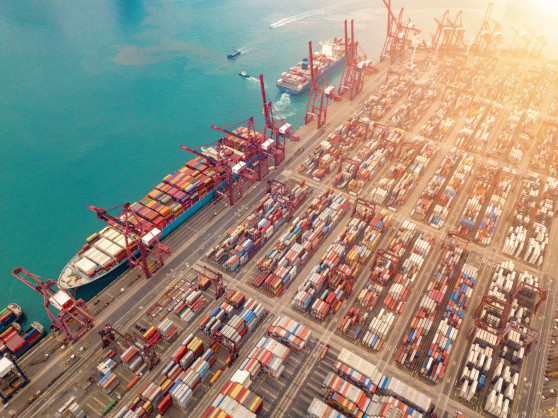
The future of African trade is digital, and it's unfolding. From Dakar to Durban, a quiet but steady transformation is taking shape. According to the United Nations Conference on Trade and Development (UNCTAD), global trade hit a record $33 trillion in 2024, with developing economies, including Africa, playing a growing role in that expansion.
The African Free Continental Trade Area offers the largest free market, including 55 countries, a population of 1.3 billion and a combined GDP of $3.4 trillion. The opportunities are vast, yet the strategies required for industrial players to source, move and manage raw materials and finished goods remain a challenge.
“The continent's digital economy is projected to reach $180 billion by 2025, up from $115 billion in 2020, thus contributing significantly to Africa's GDP, creating new job opportunities, and expanding regional trade. Digital trade is transforming the continent's economic landscape, creating new opportunities for real economic growth, productive job creation, and poverty reduction.” H.E. Dr Jumoke Oduwole, Minister, Federal Ministry of Industry, Trade & Investment
“Building on this rapid expansion, our focus must shift from isolated digital initiatives to a fully integrated ecosystem that streamlines every step of trade—sourcing, supplying, logistics and payments. By integrating these functionalities on a single platform, Matta enables manufacturers to navigate sourcing headaches and suppliers to manage cross-border complexities with confidence and unlocks new markets in Africa in real time. This holistic approach is what will transform digital trade's potential into tangible, inclusive economic growth across Africa.” Mudiaga Mowoe, Founder and Chief Executive Officer, Matta.
Launched to enable sustainable African economies, Matta's integrated ecosystem—today powered by the Matta digital marketplace (www.Matta.Trade) and the Flux logistics management tool, with Oxide Finance (Matta's upcoming trade-financing and cross-border payments platform) arriving soon—empowers manufacturers and suppliers across food & beverage, home & personal care, paints & coatings, agro-processing, automotive assembly, textiles, construction, and beyond with truly end-to-end sourcing, movement, and settlement. Rather than supplanting traditional trade networks, this unified platform amplifies human partnerships through real-time visibility, traceability, and seamless transactions.
This evolution in digital trade and industrial growth is one of the key conversations that will take centre stage at the West Africa Industrialisation, Manufacturing & Trade (West Africa IMT) Summit and Exhibition, set to take place from October 21-23, 2025. West Africa IMT is a high-level platform for government leaders, investors, manufacturers, and technology innovators to align practical solutions and policy frameworks for accelerating Africa's industrial transformation.
Matta, Africa's integrated ecosystem for industrial trade, will join other industry stakeholders across the continent at West Africa IMT 2025 to discuss the potential opportunities for industrial growth in the West African sub-region. As manufacturers increasingly seek more innovative, more efficient ways to power production beyond physical infrastructure and policy support, there's an urgent need for systems that simplify sourcing, enhance transparency, and ensure supply chain reliability. Matta addresses these challenges by connecting African manufacturers directly to verified suppliers of raw materials and commodities, ensuring business continuity in an environment where procurement bottlenecks often slow production timelines.
Digital platforms address multiple challenges simultaneously: procurement complexities, logistics coordination, payment processing, and data-based planning. By integrating these capabilities into industrial operations, West African economies can accelerate development timelines and establish competitive manufacturing centres that participate effectively in global markets.
As African nations chart independent economic paths, digital trade platforms like Matta will significantly influence how quickly and effectively new industrial capabilities develop. The transformation in African trade is already underway, with effects that will continue to reshape economic relationships for years to come.
West Africa Industrialisation, Manufacturing & Trade Summit & Exhibition
21-23 October 2025 I Landmark Centre | Lagos | Nigeria
Distributed by APO Group on behalf of dmg Nigeria events.
Contact Details:
Roshan Jan-Mahomed
Head of Marketing – Africa
Email: info@westafricaimt.com
www.WestAfricaIMT.com
About the West Africa Industrialisation, Manufacturing & Trade Summit and Exhibition 2025:
The Pre-eminent Global Gathering Driving West Africa's Industrial Revolution
The West Africa Industrialisation, Manufacturing and Trade (West Africa IMT) Summit and Exhibition will unite the industrialisation ecosystem, including energy, finance, infrastructure, manufacturing, raw materials, logistics/supply chain, technology, trade and security, to accelerate a sustainable industrial revolution for West Africa. As governments across the region have declared industrialisation as a key priority, the Strategic Summit will feature the visions from Heads of government seeking public–private partnerships to drive industrial revolution across the region. Decisive action is at the core of the agenda, providing solutions for sustainable resource valorisation and opening up trade pathways for economic development and prosperity.
Participation is expected from across the global industrialisation value chain including the following industries: Aerospace, Agriculture, Automotive, Chemicals, Construction, Energy & Utilities, FCMG, Heavy Industries, ICT & Electronics, Infrastructure, Logistics & Transportation, Machine & Equipment, Maritime, Medical, Mining, Plastics & Rubber, Pharmaceuticals, Retail, Technology Solution Providers, Textiles, Water & Utilities.
● 15+ African ministers
● 25+ countries represented from around the globe
● 70+ expert industry speakers
● 250+ exhibiting companies
● 500+ conference delegates
● 2,500+ attendees
About dmg Nigeria events:
dmg Nigeria events is a subsidiary of dmg events. dmg events is a wholly owned subsidiary of the Daily Mail and General Trust plc (DMGT), an international portfolio of information, media and events businesses.
DMGT manages a diverse, multinational portfolio of companies, with total revenues of around £1 billion, that provide businesses and consumers with compelling information, analysis, insight, events, news and entertainment. Its venture capital business, dmg ventures, holds minority stakes in early-stage businesses and focuses particularly on disruptive consumer media propositions.
Headquartered in Dubai, UAE since 1989 with offices in Canada, Egypt, Nigeria, Saudi Arabia, Singapore, South Africa, Thailand and the UK. dmg events is an international exhibition, conference and intelligence company, attracting more than 1,000,000 attendees to a portfolio of over 80 events each year.
This global portfolio works closely with key stakeholders across the industry to facilitate pragmatic dialogue, serving as a platform for the latest discussions at the forefront of change.
For more information on dmg events, visit: www.dmgevents.com
Minister Kubayi travels to Ghana
The Minister of Justice and Constitutional Development, Mmamoloko Kubayi, will travel to the Republic of Ghana to participate in a high-level Retreat on the Kampala Amendments and International Criminal Justice.
“The Retreat will bring together Ministers of Justice and senior officials from all 33 African States Parties to the International Criminal Court (ICC), alongside representatives from the ICC Presidency, the Assembly of States Parties (ASP), the ICC Trust Fund for Victims, senior African Union officials, and international legal experts,” the Ministry of Justice and Constitutional Development said on Sunday.
Her visit is scheduled to take place from 19 to 21 May 2025.
The event follows the successful pilot retreat in Johannesburg in October 2024, which raised awareness and fostered a sense of ownership among African States Parties to advocate for a crime of aggression regime that is both fair and legitimate and began the process of an amendment proposal being submitted by African States.
“The Kampala Amendments on the Crime of Aggression are a set of legal changes adopted in 2010 at the Review Conference of the Rome Statute of the International Criminal Court (ICC), held in Kampala, Uganda.
“These amendments define the Crime of Aggression and establish the conditions under which the ICC can exercise jurisdiction over it. An act of aggression includes using armed force by one state against another in violation of the United Nations (UN) Charter, such as, invasion, military occupation, annexation by force, bombardment, or blockade,” the Ministry explained.
The meeting in Johannesburg laid the groundwork for an Africa-led amendment proposal and reaffirmed the continent’s commitment to a fair and legitimate international criminal justice framework.
“South Africa remains a committed advocate for international legal accountability. Minister Kubayi’s participation highlights the country’s support for multilateralism, the fight against impunity, and the advancement of an inclusive and balanced global justice system,” the Ministry said.
Organised in collaboration with the Ministries of Justice of Ghana, Sierra Leone, and the Democratic Republic of Congo, the Accra retreat will build on the Johannesburg outcomes and further deliberate on the amendment proposal submitted by the Group of Friends (GoF).
“The goal is to finalise a unified African position on the Kampala Amendments ahead of discussions at the Assembly of States Parties. The Ministry welcomes this opportunity for meaningful engagement and continental collaboration as African States continue to shape a credible and effective international criminal justice system.” - SAnews.gov.za
nosihle
Sun, 05/18/2025 - 12:40
Africa is entering a pivotal phase in its energy transformation, characterized by a growing shift toward “Africa-first” energy policies. Despite contributing less than 4% to global emissions, Africa faces the world's most severe energy access challenges – with approximately 600 million people lacking electricity and 900 million without clean cooking solutions. With $47 billion in oil and gas capex in 2024 – a 23% increase year-over-year – Africa is proving its value as a competitive and resilient energy investment destination. This surge reflects growing investor appetite, strengthened policy frameworks and a renewed focus on project bankability.
In this context, African Energy Week (AEW): Invest in African Energies 2025 – taking place from September 29 to October 3 in Cape Town – serves as the continent's leading forum for turning vision into tangible investment. With a focus on public-private partnerships (PPPs), blended finance and strategic energy projects, the event brings together government leaders, financiers, developers and technology providers to advance deals, foster collaboration and position Africa as a global energy leader.
Building Institutions for Local Investment
A wave of institutional and policy advancements is laying the groundwork for increased local investment in energy. A key milestone is the establishment of the Africa Energy Bank (AEB) by the African Petroleum Producers' Organization (APPO) and Afreximbank, with an initial capital of $5 billion. Headquartered in Abuja and set to launch in June 2025, the AEB will finance oil and gas infrastructure projects, serving as a bold step toward regional energy self-sufficiency and resource sovereignty.
At the same time, the African Development Bank (AfDB) is supporting long-term energy planning. In Algeria, the AfDB has launched a strategic dialogue to shape the 2025–2030 Country Strategy Paper, aligning national goals with sustainable, diversified energy development.
In South Africa, the success of the Renewable Energy Independent Power Producer Procurement Program (REIPPPP) illustrates how structured procurement can generate market certainty. The latest round secured 1,760 MW of solar PV capacity backed by R31.4 billion ($1.7 billion) in investment — with 49% local ownership and 46% equity held by Black Economic Empowerment entities.
Scaling Investment through PPPs and Blended Finance
As Africa's energy project pipeline expands, PPPs and blended finance have become essential tools for scaling investment. The AfDB's $10 million concessional equity stake in the ARM-Harith Successor Infrastructure Equity Fund, a $200 million regional vehicle, highlights how development finance institutions can de-risk infrastructure and crowd in private capital. The fund supports AfDB's target to electrify 300 million people by 2030 through sustainable energy solutions.
Meanwhile, South Africa's Battery Energy Storage Independent Power Producer Procurement Program illustrates the power of blended finance in scaling innovation. With R12.8 billion ($678.8 million) allocated to eight projects delivering 615 MW of storage across three provinces, the initiative enhances grid stability and achieved a 35% cost reduction from the first bid round – a clear sign of growing cost efficiency.
Frameworks for African-Led Growth
The African Continental Free Trade Agreement (AfCFTA), ratified by over 48 countries, offers a powerful framework for prioritizing African-led energy development. By promoting intra-African investment flows and removing trade barriers, AfCFTA enables energy projects to be sourced, financed and executed within the continent. With Ghana spearheading the AfCFTA Guided Trade Initiative – engaging eight pilot countries – the agreement is fostering regional cooperation to scale African energy solutions and reduce external dependency. Once fully operational across more than 50 member states, AfCFTA is set to accelerate an Africa-first approach to infrastructure, technology, and capital deployment in the energy sector.
Meanwhile, the African Energy Commission continues to strengthen institutional cooperation across the African Union to support sovereign energy strategies. A prime example of African private-sector leadership is Coscharis Technologies' $4 billion solar project in Nigeria – the largest renewable energy initiative in West Africa – reflecting a shift toward domestically-driven, large-scale investment in clean energy that aligns with national priorities and regional ambitions.
“Africa's energy future must be shaped by African priorities, African solutions and African investment. At AEW: Invest in African Energies 2025, we are not just talking about the energy transition – we are driving real deals and partnerships that put Africa-led development at the center of the global energy conversation,” states NJ Ayuk, Executive Chairman of the African Energy Chamber.
Distributed by APO Group on behalf of African Energy Chamber.
About AEW: Invest in African Energies:
AEW: Invest in African Energies is the platform of choice for project operators, financiers, technology providers and government, and has emerged as the official place to sign deals in African energy. Visit www.AECWeek.com for more information about this exciting event.
The countdown is on! From 20-22 May 2025, the vibrant city of Cape Town will host Enlit Africa, the continent's most electrifying gathering of power, energy and water professionals. This is not just an event—it's a call to spark transformation, forge connections and power a sustainable future for Africa and beyond. With a dynamic programme bursting with innovation, inspiration and actionable insights, Enlit Africa is set to be the unmissable epicentre of Africa's energy and water revolution.
A powerhouse of vision and innovation
Enlit Africa 2025 is where the brightest minds, boldest ideas and cutting-edge technologies converge to shape the future of Africa's power, energy and water sectors. Held at the Cape Town International Convention Centre, this three-day extravaganza will bring together utilities, policymakers, innovators, investors and thought leaders from across the continent and the globe. Expect nothing less than a high-voltage experience, with over 200 expert speakers, thousands of attendees and a programme designed to ignite change and challenge the status quo
From the Keynote Stage, where global visionaries like Sabine Dall'Omo, CEO of Siemens South Africa and Bronwyn Williams, Futurist at Flux Trends, will set the tone for transformation, to the Strategise Stage, tackling critical topics like nuclear energy and regional interconnectors, Enlit Africa is a catalyst for progress. The Innovate Stage will showcase breakthroughs in smart grids and digitalisation, while the Power Hub dives deep into generation and distribution advancements, including the game-changing potential of Small Modular Reactors (SMRs) and green hydrogen.
Water Security Africa: A Vital Focus
Running alongside Enlit Africa, Water Security Africa will tackle one of the continent's most pressing challenges—sustainable water management. With sessions on desalination, smart metering and climate-resilient infrastructure, this dedicated track features trailblazers like Sean Phillips, Director General, Department of Water & Sanitation and Jay Bhagwan, Water Research Commission, who will share strategies to secure Africa's water future. Highlights include the Youth in Water Forum, spotlighting young innovators and a GreenCape-hosted workshop to scale water security initiatives.
Unparalleled networking and business opportunities
Enlit Africa is more than a conference—it's a networking powerhouse. Connect with peers, partners and pioneers at the Engage Networking Dinner (sponsored by Standard Bank) or the Networking Function (sponsored by Actom).
Dive into exclusive roundtables, masterclasses and the Projects & Investment Network, designed to turn ideas into bankable projects. For those looking to explore real-world innovation, site visits on 23 May to Robben Island, Western Cape Water facilities and more offer a front-row seat to Africa's energy and water infrastructure.
The Women in Energy programme on 21 May is a highlight, celebrating female leadership with the launch of Standard Bank's Future Females in Energy Initiative and powerful discussions on tackling gender-based violence (GBV) and fostering inclusive workplaces. With speakers like Candice Hartley, Chief People Officer at Eskom, this session is a call to action for equality and empowerment.
Why you can't miss Enlit Africa 2025
Programme highlights
For water enthusiasts, Water Security Africa offers roundtables on projects like South Africa's National desalination initiative and discussions on municipal water delivery with leaders like Shyam Misra, Group MD of Siza Water.
Join the movement
With just two weeks to go, now is the time to secure your spot at Enlit Africa 2025. Choose from a range of attendance options, from the Free Expo Visitor Pass to the Platinum Package, which includes exclusive access to strategic sessions, networking dinners and site visits. Visit Enlit Africa on www.Enlit-Africa.com or contact Vuyisa Mfobo at vuyisamfobo@wearevuka.com or +27 66 305 7203 to upgrade your experience.
Don't miss your chance to be part of the event that's lighting up Africa's energy and water future. Enlit Africa 2025 is where connections are made, ideas are born and the continent's sustainable tomorrow takes shape. Let's power up, innovate and transform—together!
Distributed by APO Group on behalf of Vuka Group.
Note: Programme details and speakers are subject to change.
For media inquiries, contact:
VUKA Group Media Team
Email: media@wearevuka.com
Website: www.Enlit-Africa.com
About Enlit Africa:
Enlit Africa celebrates 25 years in the African power, energy, and water sector. A game-changing event, it brings the top manufacturers, associations, institutions, and government leaders together to shape a sustainable, prosperous energy and water future for Africa. A leading power, energy and water conference and exhibition, Enlit Africa is designed to provide a unique platform to connect decision-makers and determine Africa's future direction of travel.
Enlit Africa takes place from 20 - 22 May 2025 at the CTICC, Cape Town, South Africa. The event is CPD accredited by the SAIEE and SAICE, thereby contributing to the professional development of industry experts.
For more information, please visit the Enlit Africa website at https://Enlit-Africa.com/ or contact our team at info@enlit-africa.com.
About The Vuka Group:
VUKA Group brings people and organisations together to connect with information and each other in meaningful conversations to reach the next level of growth in their industry ecosystem. With 20 years of experience in Africa, the group serves the Energy, Mining, Smart Mobility, Transport and Retail sectors, through a range of industry touchpoints across digital, print and in-person platforms. With a commitment to data at its core, the group is well-positioned to support industry stakeholders today and into the future. Operating from Cape Town, South Africa the group is actively involved in projects across continental Africa and boasts a diverse African team who take great pride in the work they do for the sectors and markets they serve.
ConstructAfrica (www.ConstructAfrica.com), the leading platform for market intelligence, thought leadership, and news on construction and infrastructure across the African continent, is proud to announce the formation of the ConstructAfrica Industry Advisory Board (CIAB). This newly established board brings together a distinguished group of global and African leaders committed to shaping the future of infrastructure development across Africa.
The CIAB is composed of seasoned professionals from leading construction firms, national infrastructure agencies, academia, multilateral development institutions, private equity, and global finance. Its members include internationally recognized infrastructure leaders, Chief Executives, Directors, a University Vice Chancellor, academic experts, and experienced financial and investment professionals — each offering invaluable insight and extensive global networks.
The mission of the CIAB is to provide strategic guidance, promote collaboration, and support ConstructAfrica's vision of delivering trusted intelligence that enables evidence-based decision-making in Africa's infrastructure ecosystem. The board will serve as a catalyst for constructive dialogue, policy insight, investment mobilisation and innovation.
Dr. Nelson Ogunshakin OBE, appointed as Chair of the CIAB, stated:
“It is a privilege to lead the ConstructAfrica Industry Advisory Board at a time when Africa's infrastructure agenda is more critical than ever. This initiative brings together a powerful coalition of experience, expertise, and vision — committed to shaping a resilient, inclusive, and investment-ready infrastructure landscape. ConstructAfrica plays a vital role in equipping stakeholders with trusted, actionable intelligence, and the Advisory Board will amplify this impact by driving thought leadership, collaboration, capacity building, and strategic alignment across sectors and borders.”
ConstructAfrica's Founder & Publisher, Dr Segun Faniran, added:
“The formation of the Industry Advisory Board marks a major milestone in our growth journey. With the leadership of Dr. Ogunshakin and the collective strength of our Board members, we are poised to expand our influence and deepen our engagement with both public; Government, Multilateral institutions, and private sector; developers, client, investors, contractors, operators, technologists, and wider continental stakeholders.”
Members of the ConstructAfrica Industry Advisory Board (CIAB):
(Complete member list and biography are published at www.ConstructAfrica.com)
Distributed by APO Group on behalf of ConstructAfrica.
For media inquiries or further information, please contact:
Dr Segun Faniran
Founder & Publisher
Email: hello@constructafrica.com
Phone: +971 56 566 4792
Website: www.ConstructAfrica.com

Future Hospitality Summit (FHS) Africa 2025 comes to Cape Town from 17–19 June 2025, bringing together the most influential voices in hospitality investment, development, and sustainability from across the globe.
This year's speaker lineup features major investors, visionaries, strategists, and dealmakers who are actively reshaping the landscape of hospitality across Africa.
William E. Heinecke, Founder and Chairman of Minor Hotels, will headline the summit. A self-made entrepreneur who launched his first business at 17, Mr Heinecke has built one of the world's most respected hospitality groups. His keynote will explore the lessons behind that legacy and what's next for hotel expansion in Africa.
Guy Hutchinson, President of Hilton MEA, and Haitham Mattar, Managing Director of IHG for MEA & Southwest Asia, will delve into how global hotel groups adapt their strategies for Africa's evolving markets. Meanwhile, Jerome Briet (Chief Development Officer EMEA, Marriott International), Jean-Baptiste Recher (CDO Luxury Brands, Accor), and Esteban Lozada (MD North, West & South Africa, Hilton) will highlight expansion plans and pipeline insights from the region's top brands.
On the investment side, the programme features heavyweights like Folaseto Akin-Olugbade (Principal, Actis), Olivier Granet and David Damiba (Co-CEOs, Kasada Capital Management), Rahul Chaudhary (MD & CEO, CG Corp Global), Magdaline Osei Baffour (Investment Director, Westmont Hospitality Group), Nyawira Kariuki (CEO, Janus Continental Group), and Jameel Verjee (Founder & CEO, CityBlue Hotels). They'll share unfiltered insights on how they evaluate opportunities, manage risk, and unlock long-term value in different African markets.
Graham Wood (CEO, Sun International), Marcel von Aulock (CEO, Southern Sun), and Tony Romer-Lee (Managing Partner AMEA, Valor Hospitality Partners), David Green (CEO, V&A Waterfront) add further firepower to the operator perspective, joining sessions on operating strategies, sustainability, and navigating development constraints.
Conservation and tourism sustainability will also take centre stage with Dr Morne du Plessis (CEO, WWF South Africa) and Mark Read (former WWF SA Chairman) exploring how hospitality can be a vehicle for positive environmental impact. Brooke Friswold of Bring The Elephant Home and Joe Pietersen of Nkombe Rhino will share field perspectives on ecotourism's potential.
Other voices enriching the dialogue include Gillian Saunders, one of Africa's leading tourism consultants, Kevin Teeroovengadum (Proptech Africa), Thami Nkadimeng, Paul Gardiner (CEO, Terra Nova), Bani Haddad (Aleph Hospitality), Tadiwos G. Belete (Kuriftu Resorts), Euan McGlashan (Valor Hospitality), Wayne Godwin (JLL Africa), and many more.
An Investor Powerhouse
FHS Africa 2025 will once again host the region's most active capital partners, including:
Berkeley Properties, Cameroon Hotels Corporation, CityBlue Hotels, Cresta Marakanelo Limited, DEG, FROS Capital, Fundo Soberano de Angola, IFC, Janus Continental Group, Oak & Satin Properties, Proparco, Rockshieldburg-City, The Midwest Company, and UAG Investments.
Together, these investors represent billions in active projects, acquisitions, and greenfield development across the continent. With over $4 billion in hospitality deals signed at FHS Africa since its inception, the event remains a catalyst for serious deal-making and investment.
Matthew Weihs, Commercial Director of the Bench, which organises FHS Africa, said: “We're incredibly proud to bring FHS Africa to Cape Town for the first time. It's a city that represents innovation, diversity, and growth — the perfect backdrop for an event that connects the brightest minds in hospitality and drives real investment across the continent. The 2025 programme is bold, dynamic, and focused on action."
FHS Africa 2025 promises unparalleled opportunities to build meaningful relationships through various formats tailored for real engagement. From high-energy speed networking sessions and curated closed-door investor councils to exclusive offsite visits showcasing Cape Town's latest hospitality developments, every moment is designed to foster strategic connections. The event also features a community-focused charity Run, offering a lighter way to meet other delegates while supporting a worthy cause.
Distributed by APO Group on behalf of The Bench.
Further Information:
For further information and high-resolution images, please contact:
David Tarsh
+44 (0) 20 7602 5262
+44 (0) 7770 816 070
email: David@Tarsh.com
About FHS Africa:
For over a decade, the Future Hospitality Summit Africa (FHS Africa) has been the launchpad for hospitality investment in Africa, driving growth, connecting visionaries, and transforming the continent's tourism and hospitality landscape. As a beacon of opportunity, FHS Africa brings together global investors, developers, operators, and industry leaders committed to turning potential into reality.
Strategic Partners: Accor, BWH Hotels, Hilton, Marriott International, IHG Hotels & Resorts, Radisson Hotel Group
Headline Sponsors: ACT, CHIC, Hansgrohe, TUI Hotels & Resorts
Sponsors: Aleph Hospitality, CityBlue Hotels, EQUATE, Knight Frank, JLL, St Helena Island, STR, TIME Hotels, TV5 Monde, Valor Hospitality Partners
Event Ambassadors: Develop Hotels Inc, Hotel Partners Africa, Voltere by Egis, W Hospitality Group
Official Carriers: Discover Airlines, Kenya Airways
Supported By: South Africa Tourism
About The Bench:
The Bench has a legacy of delivering world-leading investment forums and conferences in Europe, Africa, the Middle East, and Latin America. The key principle behind these events has remained "dealmaking'. Transforming the way businesses connect, Bench has developed a reputation for creating innovative and high-impact meetings for the industry.
For over two decades, government leaders, tourism ministries, global travel & tourism associations, the world's most influential hospitality brands, hotel owners & investors, renowned restaurant groups, airlines & aviation authorities, destination developers, asset managers, financial groups, and consultants have been participating in The Bench's events. These include FHS Africa, FHS World, FHS Saudi Arabia and AviaDev, where industry players showcase their brands, position themselves as thought leaders or innovators, and connect with the right individuals, opportunities and knowledge.
Learn more at TheBench.com
As home to 30% of the world's critical minerals – resources essential to Europe's Green Deal and broader energy transition goals – Africa is attracting heightened interest from European investors and institutions.
Taking place from October 1–3, 2025 in Cape Town, African Mining Week – the continent's premier mining event – will host the Europe-Africa Roundtable under the theme, European Partnerships in African Mining: A Mutually Beneficial Future. The roundtable will convene mining stakeholders, policymakers and investors from both continents to explore investment opportunities and foster cross-continental collaboration.
As Africa seeks to mobilize new capital to drive industrial growth through mining, European-based companies are playing a pivotal role. British multinational Anglo American is advancing copper, nickel, coal and diamond projects in South Africa, Botswana, Zambia and Nigeria. Glencore, headquartered in Switzerland, maintains major coal, copper and cobalt operations in South Africa and Botswana, while the UK's Rio Tinto is engaged in a range of mineral ventures across the continent.
Europe's junior and mid-tier mining firms are also gaining ground. Pensana is developing Angola's first rare earths mine at Longonjo, which is expected to meet 5% of global demand for magnet rare earths. Endeavour Mining is leading several gold expansion projects across the continent, including the Lafigué Gold Mine in Ivory Coast, Sabodala-Massawa in Senegal and Kalana in Mali.
Beyond the private sector, the European Commission is also backing strategic infrastructure to unlock mineral corridors. Notably, it is co-financing the Lobito Corridor, which links the DRC, Zambia and Angola to global markets. Through frameworks such as the Global Gateway Africa-Europe Investment Package, the Africa-EU Partnership on Sustainable Raw Materials, and Strategic Partnerships on Critical Raw Materials, Europe is delivering financial backing and technical know-how to Africa's mining sector. These efforts aim to secure reliable, responsible and diversified mineral supply chains while fostering sustainable development and value addition on the African continent.
Within this context, AMW 2025 offers a vital platform to sustain this momentum, deepen cooperation and forge new partnerships that advance mining-led growth. From major investments by European mining giants to infrastructure financing through the Lobito Corridor, Africa is attracting unprecedented levels of capital and collaboration. The Europe-Africa Roundtable will spotlight opportunities across critical minerals, gold, copper and rare earths, while promoting sustainable practices and mutually beneficial engagement.
Distributed by APO Group on behalf of Energy Capital & Power.
About African Mining Week:
African Mining Week serves as a premier platform for exploring the full spectrum of mining opportunities across Africa. The event is held alongside the African Energy Week: Invest in African Energies 2025 conference from October 1-3 in Cape Town. Sponsors, exhibitors and delegates can learn more by contacting sales@energycapitalpower.com.
President Cyril Ramaphosa has appointed accomplished business leader and former Director-General of the Department of Trade and Industry, Dr Alistair Ruiters, as Special Advisor: Investment Promotion.
Dr Ruiters will advise President Ramaphosa on South Africa's continuing investment drive which is a principal component of the 7th Administration's focus on inclusive economic growth and job creation.
Government is implementing a broad range of economic reforms aimed at rendering South Africa more attractive and rewarding for domestic and international investors; advancing greater diversification of the economy, and broadening South Africa's integration into continental and global supply chains.
Dr Ruiters held the position of Director-General of Trade and Industry for five years until April 2005, which followed 11 years of service in the Department.
He holds a D Philosophy degree from Oxford University and a BA Honours from the University of Cape Town, among other qualifications.
Dr Ruiters is a former Commissioner of the Competition Commission who, as an entrepreneur, established a number of businesses, and served as Chief Executive and Chairperson of diverse institutions and enterprises, including the National Empowerment Fund, Pebble Bed Modular Reactor and the Afarak Group.
Distributed by APO Group on behalf of The Presidency of the Republic of South Africa.
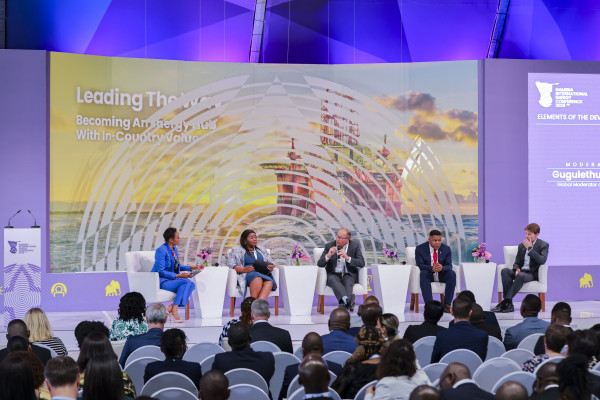
As a strategic partner of the Namibia International Energy Conference (NIEC), the African Energy Chamber (AEC) (www.EnergyChamber.org) is calling for a deliberate and accelerated approach to moving Namibia's recent oil and gas discoveries into production – emphasizing the importance of speed, investor confidence and strategic collaboration.
Speaking during a high-level panel at NIEC 2025, AEC Executive Chairman NJ Ayuk urged Namibia to seize the momentum of its frontier discoveries, while avoiding the pitfalls that have stalled progress in other hydrocarbon-rich African nations. He emphasized that Namibia's path to becoming a regional energy hub hinges on its ability to learn from international case studies and execute deals that ensure long-term national benefit.
“Namibia needs to move fast, produce quickly and negotiate the best deals with its partners to ensure the rapid development of its oil discoveries,” Ayuk stated. He pointed to Guyana as a prime example, noting how the South American country developed a robust strategy focused on national benefit and successfully attracted billions in investments to fast-track its energy projects.
In contrast, Ayuk cautioned against the delays experienced by countries like Mozambique, Tanzania, Uganda and South Africa, where production was significantly postponed, leading to rising project costs and lost opportunities. “There is a growing movement trying to discourage Africa – and Namibia – from producing its oil and gas. We must resist that,” he added.
Reinforcing the need for investor-friendly terms, Justin Cochrane, Africa Upstream Regional Research Director at S&P Global Commodity Insights, highlighted the necessity of contract stability, transparent data-sharing and a balanced approach to fiscal negotiations. “It's natural that Namibia wants to maximize its benefits, but pushing too hard on IOCs can result in getting 100% of nothing… The first milestone must be achieving first oil,” said Cochrane.
Representing Namibia's national oil company, Victoria Sibeya, Interim Managing Director of NAMCOR, stressed that the company is actively engaged in every phase of the industry, from data acquisition and exploration to shaping the downstream and midstream vision. “We are not just bystanders,” said Sibeya. “NAMCOR is deeply involved in data acquisition, exploration and the exchange of knowledge and technology with our partners. We are also preparing to invest in downstream and midstream sectors to ensure that we can add value once production begins.”
Echoing the call for local development, Adriano Bastos, Head of Upstream at Galp, underscored the need for early and continuous skills development – proposing that Namibians be trained abroad in specialized areas like FPSO operations to ensure they are prepared to lead once production begins at home. “Namibia has capabilities that are rare in the region, but more collaboration with international partners is essential to build the local skills base,” he said.
Bastos noted that Namibians make up 25% of Galp's workforce in the country, including its first female offshore base manager. “We are proud of the strides we have made. Our nationalization plans are aggressive, and we work closely with [the Namibian Ports Authority] and other local entities to implement meaningful capacity-building projects.”
As Namibia stands on the cusp of transforming exploration success into production, the message from industry leaders is clear: time, trust and talent will determine the country's trajectory. Through cross-border collaboration, pragmatic deal-making and a strong national vision, Namibia can emerge not just as an oil producer – but as a continental model for inclusive, forward-thinking energy development.
Distributed by APO Group on behalf of African Energy Chamber.
The Department of Tourism and its entity, South African Tourism (SAT), appeared before the Portfolio Committee on Tourism yesterday to present their annual performance plans for the 2025/26 financial year and their strategic plans for 2025–2030, which aim to situate South Africa as a preferred and competitive tourism destination regionally, continentally and globally.
The department assured the committee that, unlike before, its strategy is aligned to the government's Medium-Term Development Plan and will have the capacity to deliver the strategy as planned.
The department said it provides small, medium and micro enterprises in the sector with financial and non-financial capabilities required for them to become financially literate. It also helps these enterprises to develop business plans, market their products and run their businesses profitably while using digital technology to bring about transformation, inclusivity and beneficiation of youth, women and people living with disabilities in the tourism sector.
The committee Chairperson, Ms Lungi Mnganga-Gcabashe, told the department to brief the committee on the partnership model it has with critical stakeholders and how it intends to use its marketing budget to leverage these partnerships and synergies to enhance its tourism assets, products and services. The briefing must also include a timeline on when it intends to implement its digital transformation strategy.
Ms Mnganga-Gcabashe also urged the department to set clear guidelines and milestones on when it intends to present the Tourism Amendment Act before the committee and when it will be introduced as an act of law.
In its presentation, SAT stated that its 2025–2030 strategic mission is to enhance South Africa's profile as leading regional, continental and global tourism destination. This it will achieve by ensuring that its platforms provide a high quality and inclusive visitor experience, while ensuring organisational excellence and a high-performance culture along with knowledge-driven marketing and quality assurance strategies.
Ms Mnganga-Gcabashe reiterated that digital marketing should be at the core of SAT's marketing strategy given its unparallel reach in disseminating tourism products and assets regionally, continentally and globally.
Distributed by APO Group on behalf of Republic of South Africa: The Parliament.
President Cyril Ramaphosa will tomorrow, Wednesday, 23 April 2025, undertake a Working Visit to Maseru, Lesotho, to Co-Chair the Second Session of the Bi-National Commission (BNC) between the Republic of South Africa and the Kingdom of Lesotho, with His Excellency Samuel Ntsokoane Matekane, Prime Minister of Lesotho.
This South Africa–Lesotho Bi-National Commission (BNC) follows the Inaugural Session which was held in September 2023 in Pretoria.
The elevation of bilateral cooperation to a BNC level in 2022 was a recognition of the solid foundation upon which relations between the two countries are founded.
Further, it is a practical demonstration of the two countries' resolve that cooperation in various sectors should benefit all.
South Africa will use the upcoming session of the BNC to promote greater solidarity among countries of the region and the South in the light of geopolitical shifts.
South Africa will also underscore the strategic importance of the Lesotho Highlands Water Project (LHWP) and highlight a need to expedite the speedy implementation of Phase II of the project, taking into consideration the agreed timelines and allocated budget.
Many South African companies have made significant investments in Lesotho, which have created thousands of jobs.
The Bi-National Commission is expected also to reflect on the movement of people between the two states.
This week's engagement between the two countries will, among other discussions, focus on:
The BNC will be preceded by the Meeting of Senior Officials (SOM) and the Council of Ministers Meeting scheduled for 22 April 2025.
President Ramaphosa will be accompanied by 15 Ministers.
Distributed by APO Group on behalf of The Presidency of the Republic of South Africa.
South Africa, Uganda and Kenya topped the podium at this year's Africa Barista Championship. But the real winner at this year's Africa Barista Championship was African coffee culture itself.
From 24 to 28 February 2025, the scent of homegrown coffee filled the air in Dar es Salaam, as 23 baristas from 14 countries competed for continental recognition before packed crowds. Held alongside the 21st African Fine Coffees Conference and Exhibition (AFCA), the event marked a turning point: a bold celebration of local talent, regional markets, and Africa's fast-growing appreciation for its own specialty coffee – especially robusta.
‘This isn't just about coffee-making,' said Régine Léonie Guion-Firmin, an Authorized Specialty Coffee Association trainer (AST) based in Nairobi, Kenya. ‘It's about youth creating new career paths, fostering café culture, and driving demand for high-quality, locally produced coffee. You could feel the energy and pride.'
Behind the spotlight on brewing mastery, a deeper transformation was underway. With growing consumer interest across the continent, local roasters, baristas and entrepreneurs are championing African coffee for African consumers – redefining value not through export alone, but through domestic engagement.
In Cameroon, Thierry Djanga of TerrifiCoffee is part of that movement. His coffee placed second in a tasting competition at the event, but his priorities lie closer to home.
‘I'm happy to pay a premium for quality robusta from African producers,' he said. ‘Not just to export it, but to serve it locally. Consumers here are ready to pay for excellence. It's a virtuous circle that benefits everyone.'
The event also spotlighted technical capacity-building. A Barista Bootcamp, co-led by the International Trade Centre (ITC) and the Robusta Coffee Agency of Africa and Madagascar (ACRAM), trained more than 20 baristas in sensory analysis and brewing techniques aligned with World Barista Championship standards. The initiative, part of the ACP Business-Friendly programme, is helping professionalize the coffee sector and deepen local market appreciation for specialty-grade robusta.
Mozambique's participation was an eye-opener for many attendees unfamiliar with the country's emerging coffee sector. Meanwhile, Egypt's growing café scene brought new energy to discussions on regional trade and branding opportunities.
As coffee professionals, producers and policymakers shared ideas throughout the week, one message rang clear: Africa's coffee story is no longer confined to its export potential. The continent's producers, baristas, and consumers are reclaiming the narrative, one cup at a time.
Distributed by APO Group on behalf of International Trade Centre.
The International Federation of American Football (IFAF) is delighted to announce Egypt as the host nation for the inaugural 2025 IFAF African Flag Football Championships – AFRICA FLAG 2025.
AFRICA FLAG 2025 will take place from June 20-21 in Cairo, Egypt, welcoming elite men's and women's national teams from across Africa for the first time at an IFAF Continental Championships. As participation in flag football continues to grow rapidly throughout the continent, this inaugural event offers a pathway to qualification for the 2026 IFAF Flag Football World Championships and represents a significant milestone on the journey towards flag football's historic Olympic debut at the Olympic Games Los Angeles 2028.
"With the announcement of the first ever IFAF Continental Championships in Africa, we are taking another step in the global development of our sport,” said IFAF President Pierre Trochet. “Looking ahead to flag football's historic Olympic debut at LA28, our Continental Championships provide a fantastic platform to further accelerate the sport's regional growth at grassroots and elite levels. Egypt will be a great host, and we are certain AFRICA FLAG 2025 will play its part in inspiring new athletes and fans across a continent that has already produced a rich heritage of American football talent.”
Hosted in partnership with the National Football League and Egyptian Federation of American Football (EFAF), various youth football development events will take place in Cairo in conjunction with the upcoming Championships — expanding the league's NFL Africa program to Egypt for the first time, creating more opportunities for young athletes from across the continent to play American football.
In collaboration with IFAF and EFAF, U12 teams of boys and girls from Egypt, Ghana, Kenya and Nigeria will compete in a multi-day NFL Flag Continental Championship, facing off in the championship game on June 23. NFL Flag is the official flag football program of the NFL — working to bring the non-contact version of American football to young athletes worldwide.
The NFL will also host a football talent identification event with prospects from across Africa. Athletes will showcase their skills and abilities with the potential to advance on through the NFL Academy Europe-Africa program in Loughborough, U.K. or the International Player Pathway (IPP) program — two core pillars of the NFL's global football development initiatives.
A number of current NFL players will join these events in Egypt, including New York Giants' Bobby Okereke (Nigeria), Minnesota Vikings' Brian Asamoah II (Ghana) and NFL free agent Dieter Eiselen (South Africa). Okereke, Asamoah II and Eiselen are supporting football operations for national federations in the lead up to and during the Championships, as well as NFL Africa's youth football programming.
“I'm excited and inspired to lead the NFL's efforts in Africa and to again expand our programming to a fifth country: Egypt — an innovative market for sport, with incredible talent,” said two-time Super Bowl Champion and NFL Africa Lead Osi Umenyiora. “Back-to-back days of NFL Africa events alongside the IFAF Continental Championships in Egypt helps showcase the aspirational pathways for talented young athletes across the continent, as we look ahead together to flag football in the LA Olympic Games in 2028. It will be a great weekend of football, and one that will create a powerful legacy as we introduce more and more young athletes to our game.”
AFRICA FLAG 2025 will reinforce the acceleration of flag football's growth across the continent. At the record-breaking 2024 IFAF Flag Football World Championships, Cameroon made history as the first African nation to compete on the global stage. Since 2023 participation in flag football has surged with Egypt and Nigeria seeing increases of 149% and 85%, respectively. In Nigeria, the national federation's outreach program has already engaged more than 13,000 young people, highlighting the sport's expanding reach and appeal.
IFAF and the NFL are working hand-in-hand to develop and grow flag football across the continent, collaborating to create meaningful educational pathways for coaches and officials delivering flag across Africa. This commitment was reaffirmed at the recent three-day flag football coach education and officiating clinic in Ghana (April 11-13). The clinic welcomed new and experienced coaches and officials from 10 African countries — Cameroon, Egypt, Ghana, Ivory Coast, Kenya, Morocco, Nigeria, South Africa, Tunisia and Uganda — enabling further long-term engagement and participation in the sport in the region.
As part of the NFL Africa program, the league has also undertaken NFL Flag development, talent identification camps and fan events across Ghana, Kenya, South Africa and Nigeria since 2022.
“We are extremely proud to be hosting the first ever AFRICA FLAG 2025 in Cairo and to be writing Egypt into flag football's history books,” said EFAF Founder Ali Rafeek. “Hosting this tournament allows us to put a spotlight on our talented athletes and to show the next generation what's possible in this sport — whether you're picking up a football for the first time or dreaming of the Olympics.”
“AFRICA FLAG 2025 is a huge moment for the continued growth of flag football across our continent,” said Egyptian Women's National Team Quarterback Amira Nader. “It's an opportunity to showcase the incredible talent and passion rising throughout Africa and take a meaningful step towards making history at LA28. As the first-ever Continental Championships, this event will inspire the next generation to pick up a football and believe anything is possible.”
IFAF continues to reinforce structured and competitive pathways for flag football, with the Continental Championships as an important stepping stone in the journey towards the 2026 IFAF Flag Football World Championships. The record-breaking 2024 edition of the IFAF Flag Football World Championships was the culmination of IFAF's biggest-ever international cycle of flag football competition and brought together elite athletes representing 31 nations from five continents at the most competitive and thrilling tournament to date. Flag football is played by 20 million athletes in more than 100 countries, and with an ever-expanding African presence, these events will serve as key milestones on the road to LA28.
Details regarding AFRICA FLAG 2025's participating nations as well as the 2025 Continental Championships for other regions will be announced in the coming weeks, offering teams from around the world more opportunities to compete and prepare for the journey toward LA28.
For more details on the Championships, visit the IFAF website (https://apo-opa.co/42LiURK) or follow us on social media.
Distributed by APO Group on behalf of National Football League (NFL).
For more information on NFL Flag, the official flag football program of the NFL, visit here (https://apo-opa.co/3G70ylD).
For the latest NFL Africa activity, follow @ NFLAfrica on:
Instagram: https://apo-opa.co/43VmZnx
X: https://apo-opa.co/43QGKN7
About IFAF:
The International Federation of American Football (IFAF) (https://apo-opa.co/42LiURK) is the international governing body for the sport of American football and is responsible for all regulatory, competition, performance and development aspects of the game on a global level. Fully recognised by the International Olympic Committee and a signatory to the WADA Code, IFAF has 75 member nations across 5 continents.
About the National Football League:
The National Football League is America's most popular sports league, comprised of 32 franchises that compete each year to win the Super Bowl, the world's biggest annual sporting event. Founded in 1920, the NFL developed the model for the successful modern sports league, including national and international distribution, extensive revenue sharing, competitive excellence, and strong franchises across the country.
Minister Lamola participates in Delphi Economic Forum
International Relations and Cooperation Minister Ronald Lamola has addressed the prestigious Delphi Economic Forum where he underscored South Africa’s commitment to multilateral diplomacy.
The Minister addressed the prestigious forum in Greece where he outlined South Africa’s priorities as the incumbent Group of Twenty (G20) Presidency, championing Africa’s role in shaping a more equitable and sustainable global future.
“The Delphi Economic Forum, a global nexus for economic and geopolitical discourse, offers a strategic platform to amplify South Africa’s foreign policy objectives, including its advocacy for peace building, continental integration, and the United Nations Sustainable Development Goals (SDGs).
“This engagement reaffirms South Africa’s leadership in advancing Pan-Africanism on the global stage, ensuring Africa’s priorities from debt relief to food security remain central to international agendas,” the Ministry of International Relations and Cooperation said on Saturday.
The Ministry added that the Minister’s participation underscores South Africa’s commitment to multilateral diplomacy, economic justice, and South-South solidarity.
“As South Africa remains unwavering in its pursuit of a world where no nation is left behind. Our Presidency prioritises bridging the gap between developed and developing economies, ensuring that Africa’s vast potential in green industrialisation, youth innovation, and sustainable trade is unlocked through equitable partnerships,” the Minister said.
South Africa's G20 Presidency is taking place under the theme: “Solidarity, Equality, Sustainability.” -SAnews.gov.za
nosihle
Sun, 04/13/2025 - 10:22
365 views
Mr Ronald Lamola, Minister of International Relations and Cooperation of the Republic of South Africa, has landed in Greece for a high-level Working Visit.
Minister Lamola will address the prestigious Delphi Economic Forum, where he will outline South Africa's priorities as the incumbent G20 Presidency, championing Africa's role in shaping a more equitable and sustainable global future.
Minister Lamola's participation underscores South Africa's commitment to multilateral diplomacy, economic justice, and South-South solidarity.
His engagement will focus on leveraging the G20 platform to advance Africa's developmental aspirations, including reforms to global governance systems, climate finance mechanisms, and inclusive digital transformation.
“As South Africa remains unwavering in its pursuit of a world where no nation is left behind,” stated Minister Lamola.
“Our Presidency prioritises bridging the gap between developed and developing economies, ensuring that Africa's vast potential in green industrialisation, youth innovation, and sustainable trade is unlocked through equitable partnerships.”
The Delphi Economic Forum, a global nexus for economic and geopolitical discourse, offers a strategic platform to amplify South Africa's foreign policy objectives, including its advocacy for peace building, continental integration, and the United Nations Sustainable Development Goals (SDGs).
This engagement reaffirms South Africa's leadership in advancing Pan-Africanism on the global stage, ensuring Africa's priorities from debt relief to food security remain central to international agendas.
As the G20 Presidency, South Africa continues to bridge divides, fostering dialogue that translates into tangible progress for the Global South.
Distributed by APO Group on behalf of Republic of South Africa: Department of International Relations and Cooperation.
The 3rd Awareness Enhancing Workshop on the Importance of Fisheries, Aquaculture, and Blue Economy in Africa's Socio-Economic Development, is being held from 07–09 April 2025 in Johannesburg, South Africa, bringing together key stakeholders from AU Member States, Regional Economic Communities, development partners, and civil society, and AWFISHNET South Africa Chapter to strengthen regional dialogue and action around Africa's aquatic wealth. Organized by AU-IBAR and AUDA-NEPAD, the workshop is focusing on the transformative potential of fisheries, aquaculture, and the blue economy in driving sustainable development, improving livelihoods, and contributing to food security and wealth creation on the continent.
In remarks delivered by Mrs. Hellen Guebama on behalf of Dr. Huyam Salih, Director of AU-IBAR, the urgent need for increased public investment in the sector was highlighted, noting that limited funding has continued to hinder its full potential. She emphasized the importance of leveraging continental frameworks such as the Africa Blue Economy Strategy, and aligning efforts with the Malabo Declaration and Agenda 2063. Participants were called upon to champion the value of fisheries and aquaculture in their respective countries to drive visibility, awareness, and policy support. She also acknowledged the strong partnerships with development actors, including the European Union, whose support to Fisheries Governance Projects has been instrumental in uniting stakeholders towards sustainable and inclusive management of Africa's blue resources.
The workshop will feature technical presentations, knowledge exchange sessions, and group work focused on policy, governance, partnerships, and awareness strategies. Key expected outcomes are the development of draft national blue economy strategies, action plans, and coordination mechanisms, setting a solid foundation for scaling investments and impact across the continent.
Distributed by APO Group on behalf of The African Union – Interafrican Bureau for Animal Resources (AU-IBAR).
South Africa's Strategic Adaptation to US Tariffs: Advancing National Interests through Policy and Strategy
The new tariff regime arising from the decision by the United States of America, which have been directed not only to South Africa, but the entire world necessitates strategic responses to maintain and grow our industrial base, as a crucial avenue to pursue inclusive growth.
In response to the US Government's imposition of tariffs, South Africa will continue to navigate the challenges and opportunities these measures present with resilience and innovation. Guided by its national interests and aligned with its broader trade and industrial policy, South Africa is committed to ensuring economic growth, industrial development, and the well-being of its citizens.
South Africa intends to:
1. Negotiate Favourable Agreements
South Africa will work to secure opportunities, in a context of a rapid withdrawal of favourable arrangements giving our exports preferential access to the United States of America. This might involve securing additional exemptions and favourable quota agreements, ensuring our industries maintain critical access to the US market, including through sectoral cooperation. This aligns with the national interest of promoting economic prosperity and safeguarding the livelihoods of South Africans.
2. Diversify and Expand Trade Relations
Efforts will intensify to diversify export destinations, targeting markets across Africa, as well as in Asia, Europe, Middle East, and Americas.
Moreover, such efforts will also, where deemed appropriate involve bilateral arrangements where these allow for the pursuance of our national interest. In our presidency of the G20, as the recent engagements at the G20 trade and investment working group (TIWG) indicate, the issue of supply chain geographical diversification is a challenge confronting all open market economies the world over.
This diversification supports South Africa's industrial strategy and reduces dependency on single destination markets for our exports or single sources for our intermediate input requirements. Fostering resilience in line with national economic priorities.
3. Enhance Regional Trade Collaboration
South Africa will leverage the African Continental Free Trade Area (AfCFTA) to bolster intra-African trade, fostering stronger regional economic integration and cooperation. This approach aligns with the national interest of contributing to a better Africa and world.
4. Focus on Value-Added Production
Industries will prioritise transforming raw materials into higher value finished goods, reducing tariff exposure and driving innovation to improve profitability. This supports South Africa's industrial policy objectives of boosting local manufacturing and creating jobs.
5. Stimulate Domestic Growth
The government will invest strategically in industries impacted by the tariffs, supporting economic growth through modernisation and targeted infrastructure development. This aligns with the national interest of ensuring the well-being of South African citizens.
6. Forge Global Alliances
South Africa will continue to build strategic partnerships with other nations enhancing collaboration and our influence in international trade negotiations. This reflects the national interest of strengthening global diplomatic and economic ties.
South Africa's tariff and industrial strategy are designed to support industrial development, employment growth, and economic resilience. By aligning these policies with the national interest, South Africa will ensure that its economy emerges stronger, more diversified, and resilient in the face of global trade complexities.
This approach will also apply to the 7 February Executive Order, which is currently being attended by an interdepartmental team which includes the departments affected by the executive order.
The 31% tariff implemented by the US Administration will be effective from 9 April 2025. South Africa's average tariff is 7.6% and therefore South Africa needs clarity on the basis for the 31% to be implemented by the US.
It is important to note that products such as copper, pharmaceuticals, semiconductors, lumber articles, certain critical minerals, and energy and energy products have been exempted from the reciprocal tariffs. Some of these materials are already key parts of the United States of America's sourcing requirements. According to the United States Geological Survey, 97% of their chrome ore requirements come from South Africa, 6% of fluorspar import requirements and 24% of the United States manganese requirements. These reciprocal tariffs will not apply to products already facing Section 232 tariffs of 25% such as steel, aluminium, automobiles and auto parts.
The reciprocal tariffs effectively nullify the preferences that Sub-Saharan Africa countries enjoy under the Africa Growth and Opportunity Act (AGOA). The sweeping tariff measures will affect several sectors of our economy, including automotive industry, agriculture, processed food and beverage, chemical, metals, and other segments of manufacturing, with implications for jobs and growth.
The US represented 7.45% of South Africa's total exports in 2024, while South Africa accounted for only 0.4% of US total imports. As such, South Africa does not constitute a threat to US and where there is a trade imbalance in favour of South Africa, it is mainly on agriculture products which are counter-cyclical and on minerals which are inputs in US industries.
South Africa will continue building domestic supply resilience, reducing cost of doing business and increasing competitiveness of our economy. Further, South Africa will continue with efforts to diversify export markets as part of its resilience building strategy.
The significant market access opportunities both through trade agreements and through strategic partnerships with countries across the globe present huge opportunities for our exports. The recently concluded Africa Continental Free Trade Area (AfCFTA) remains untapped, beyond the Southern Africa Development Community (SADC).
Furthermore, South Africa enjoys preferential market access through the Southern Africa Customs Union, SADC, SADC-EU Economic Partnership Agreement (EPA), SACU+Mozambique-UK EPA, the European Free Trade Association (EFTA), MERCUSUR (that includes Argentina, Brazil, Paraguay and Uruguay) and Japan Generalised System of Preferences. In addition, government is strengthening relations with countries in Asia and the Middle East to open new market access opportunities. Some of these efforts are bearing fruit with new market access opportunities for our agriculture products.
To re-iterate the Presidency, whilst South Africa remains committed to a mutually beneficial trade relationship with the United States, unilaterally imposed and punitive tariffs are a concern and serve as a barrier to trade and shared prosperity. The tariffs affirm the urgency to negotiate a new bilateral and mutually beneficial agreement with the US, that will establish more fair-trade relations with the US as an essential step to secure long-term trade certainty.
Distributed by APO Group on behalf of Republic of South Africa: Department of International Relations and Cooperation.