• Skip to main content
  • Skip to header right navigation
  • Skip to after header navigation
  • Skip to site footer
MyZA

MyZA

News, Directory, Events and Other Stuff

  • Social Media
  • Sport
  • World News
  • Home
  • Submit News
  • Directory
  • Events
  • Stratlec
  • TFSA
  • News
    • APO
    • Today’s Sport News
    • Todays Social Media and Tech Headlines
    • Today’s World News
    • Today’s SA Financial News
  • Contact
You are here: Home / Archives for Continental

Continental

14 November 2024

Support for manufacturing remains a priority for government

Location: News

Support for manufacturing remains a priority for government

Trade, Industry and Competition Deputy Minister Andrew Whitfield says supporting the manufacturing sector in South Africa remains a key priority for government, as this will lead to more sustainable growth and job creation. 

Whitfield was speaking during a site visit to the Usabco Addis manufacturing plant in Cape Town, Western Cape.

According to Whitfield, supporting the manufacturing sector and developing policies that are competitively driven will contribute immensely and respond to some of the issues that the sector is currently facing. 

“As the world changes, South Africa is well positioned globally to look at innovative ways to develop and grow the sector. Research, innovation, localisation, the green economy and trade agreements are some of the tools and factors that can be used to position the sector as the leader on the continent,” said Whitfield.

Whitfield commended Usabco Addis for its contribution to the circular economy. This as 40% of the company’s products are produced from recycled plastics and he encouraged the company to find ways to increase its recycled inputs further.

The company currently employs over 800 people, and the Minister was impressed by its efforts to increase its local market share and the creation of even more jobs. 

Whitfield also pointed out that the Department of Trade, Industry and Competition (the dtic) funding agencies, such as the Industrial Development Corporation (IDC) can be engaged to fund some of the projects that can assist the sector.

“Government does not underestimate nor take for granted the contribution and the investment that the sector has made over the years. It is for us as the department to be in a well-informed position to come with policies that will sustain the sector going forward. 

“Ultimately, our job in government is to make it easier for businesses to grow and create jobs, and for our people to get those jobs and keep those jobs.”

Whitfield added that Africa was seen as the next frontier in the manufacturing sector with the African Continental Free Trade Area’s (AfCFTA) drive to boost intra-Africa trade, encourage investment, and stimulate economic growth. 

He said that this was an opportunity the country must take full advantage of, as the continent moves in the right direction to curb red tape and drive trade with each other.

“The dtic’s urgent priority over the next five years is to create rapid, inclusive, sustainable growth and job creation through manufacturing, services, investments and export lead growth,” he said. – SAnews.gov.za


Edwin
Thu, 11/14/2024 - 15:08
116 views
Read moreSupport for manufacturing remains a priority for government
13 November 2024

SA strengthens bilateral ties with Egypt

Location: News

SA strengthens bilateral ties with Egypt

International Relations and Cooperation (DIRCO) Minister Ronald Lamola, along with a business delegation, will today undertake a working visit to Cairo, in the Arab Republic of Egypt, to co-chair the South Africa-Egypt Political Consultations.

The Minister will co-chair the consultations with his counterpart, Dr Badr Abdelatty, the Minister of Foreign Affairs, Emigration and Expatriate Affairs of the Arab Republic of Egypt, from 13 to 14 November. 

South Africa and Egypt enjoy cordial political, economic and social relations following the formal establishment of diplomatic relations on 29 March 1995. These relations are historical and based on friendship, solidarity and collaboration between the peoples of both countries.

The Joint Commission for Cooperation (JCC) that exists between the two countries is a structured bilateral mechanism that provides a platform for political, economic, social, cultural, scientific and technical cooperation between the two.

“We will be accompanied by a South African business delegation consisting of close to 50 companies. The delegation will explore further investment and trade opportunities across a range of economic sectors.

“The working visit will provide an opportunity to exchange views on regional, continental, and global issues of mutual interest, with an emphasis on the conflict in Sudan. Before the conflict, Sudan was already experiencing a severe humanitarian crisis,” Lamola said during a media briefing on Tuesday.  

Lamola said the long-term political instability and economic pressures left 15.8 million people in need of humanitarian aid, and that the conflict has only exacerbated these conditions, leaving 25.6 million people -- more than half of Sudan’s population -- in need.

“The brutal conflict has forced more than 11 million people from their homes. The vast majority (over 8.1 million people) remain within Sudan, representing the largest displacement crisis in the world. 

“Furthermore, the session will also reinforce the importance of accelerating efforts towards the implementation of the African Continental Free Trade Agreement and in consolidation of Africa’s Agenda 2063,” Lamola said. 

The working visit will further reinforce the commitment by both countries to expand and strengthen political and economic relations.

South Africa and Angola strengthen economic ties 

On the 1st of November 2024, the Minister undertook a working visit to Luanda, Angola, for political and diplomatic consultations. 

Discussions included preparations for the upcoming State Visit by President João Manuel Gonçalves Lourenço to South Africa. 

“It was agreed that this visit should reaffirm the existing bilateral relations, underpinned by a strong economic partnership. We informed our counterpart that a business forum will also be organised during the visit, with the participation of companies from both countries, focusing on sectors such as agriculture and agro-processing, mining, energy, transport, healthcare, tourism and education,” Lamola said.  – SAnews.gov.za

DikelediM
Wed, 11/13/2024 - 09:44

278 views
Read moreSA strengthens bilateral ties with Egypt
12 November 2024

KZN commits to economic development, investment growth toward 2030

Location: News

KZN commits to economic development, investment growth toward 2030

KwaZulu-Natal Premier, Thamsanqa Ntuli, has underscored the commitment to economic development, trade, and investment growth toward 2030, aligned with the province's broader strategic priorities.

Ntuli reiterated the province’s commitment during the KwaZulu-Natal Trade and Investment Conference currently underway at the Inkosi Albert Luthuli International Convention Centre in Durban.

The two-day conference, which started on Monday, aims to promote, brand, and market KwaZulu-Natal as an investment destination, identify and develop investment opportunities, among others.

The conference brings together investors, government leaders, and industry captains to explore and amplify the province’s status as a top investment destination.

Delivering his keynote address on Monday, Ntuli highlighted that over the past decade, KwaZulu-Natal has attracted significant investments in key sectors, especially through developments at the Durban and Richards Bay Ports, two of Africa’s largest and busiest maritime hubs.

“Enhanced container capacity, automation, and infrastructure upgrades have strengthened KZN’s position as a regional logistics powerhouse. Similarly, the Dube Trade Port, adjacent to King Shaka International Airport, has drawn over R2 billion in investments, cementing its role in warehousing, logistics, and agriculture, including the Dube AgriZone, a major hub for export-focused agri-business,” Ntuli said.

Reflecting on the 2019 Provincial Trade and Investment Strategy’s achievements and areas for intensified effort, Ntuli said the strategy targeted R76 billion in new and expansionary investments by 2024. This is alongside the creation of approximately 68 000 jobs and an increase in the province’s national export value to R1.28 trillion.

While projections indicate that the targets may not be fully met by the year’s end, the Premier emphasised the need to redouble efforts in investment initiatives.

“The Richards Bay Industrial Development Zone (RBIDZ) has fuelled growth in heavy industry and energy, particularly in metals like aluminium and steel, generating jobs and boosting export potential.

“Renewable energy investments, particularly in biomass and solar, have diversified KZN’s energy landscape, with biofuel production from the sugarcane industry enhancing the province’s green economy credentials.”

Growth in the agricultural sector

The Premier also highlighted the province’s strong agricultural sector, which has attracted investments in agro-processing, and supporting industries including sugar refining, dairy processing, and timber.

The Premier said this growth is further supported by a thriving food and beverage industry, pharmaceutical, and packaging sectors, benefiting from proximity to key ports and an expanding consumer base.

Tourism

He said tourism also remains central to KZN’s economy, supported by new hospitality investments, including the reopening of the international Hilton Hotel and the Durban Beach promenade renewal.

READ | Mayor welcomes re-opening of the Hilton Hotel in Durban
 

Noting KZN’s absence from many long-haul tourist packages, Premier Ntuli stressed the importance of positioning the province as a key destination for international tourism.

Ntuli highlighted several strategic assets crucial to the province’s competitive advantage, and these include expanded port capacities, Special Economic Zones (SEZs) like Richards Bay and Dube TradePort, and streamlined regulatory and tax incentives to attract foreign and local investments.

The Premier urged stakeholders to seize the opportunities presented by the African Continental Free Trade Area (AfCFTA), which offers KZN unprecedented access to a $3.4 trillion market.

Partnerships 

The Premier also addressed issues in freight rail services and port bottlenecks, emphasising that public-private partnerships could unlock efficiencies.

He further called attention to KZN’s role in automotive manufacturing, underscoring opportunities in electric vehicle (EV) component production to tap into Africa’s growing EV market.

“Sustainable growth initiatives, including green hydrogen, biomass, and digital innovation, are essential for positioning KZN as a leader in the renewable and digital economies. Collaboration with local universities and technology firms is building a skilled workforce to support industries like IT, finance, and business outsourcing, further enhancing KZN’s role as a technology and logistics hub,” Ntuli said.

The Premier emphasised the importance of resilient infrastructure, including sustainable energy investments, and inclusive growth that extends to all municipalities, cities, and rural areas.

He issued a call to action for deeper engagement with rural and municipal stakeholders, ensuring these areas are active participants and beneficiaries in KZN’s economic growth. – SAnews.gov.za


GabiK
Tue, 11/12/2024 - 13:35

16 views
Read moreKZN commits to economic development, investment growth toward 2030
11 November 2024

Mining industry a “sunrise industry”

Location: News

Mining industry a “sunrise industry”

Mineral and Petroleum Resources Minister Gwede Mantashe has described the mining industry as a “sunrise industry” that is diversifying from bygone eras.

The Minister said this during his address at the Mintek @90 Conference held in Sandton on Monday.

Mintek is, among other things, the national research and development entity specifically focused on mining and metallurgy.

“Mintek continues to focus on conducting research that will not only have impactful outcomes for the industry but drive technological innovations that will have a positive societal impact, stimulate economic growth, reduce unemployment and inequality, as well as eradicate poverty in South Africa.

“Thanks to the work that is being pioneered by the entity, in collaboration with the industry and various research institutions, that we can now confidently describe the South African mining industry as a sunrise industry that is diversifying from the gold mining era to a diversified industry with the world’s largest reserves of platinum group metals [PGM], manganese, chrome, coal, vanadium, and rare earth minerals,” Mantashe said.

The Minister highlighted that as the need for transition towards renewable energy sources builds up steam, so will the need for PGM rise and this is where Mintek can become a “significant player” on a national, continental and global stage. 

“The need for the world to transition from high carbon emissions to low carbon emissions has increased the demand for ‘green’ minerals. As the world’s largest producer of manganese and chrome, the South African manganese and chrome sectors are equally poised to play a significant role in the global automotive and construction industries given the expected demand for green technologies and electric vehicles.

“As we continue to engage the manganese and chrome producers on mineral value-addition close to the point of production, given its existing pioneering research capabilities, Mintek can be a significant player in the global clean energy economy.

“While there is no universal consensus on the “critical minerals”, the approach by Mintek in developing South Africa’s critical minerals strategy is poised to guide not only South Africa’s, but Africa’s responsible exploration, processing, and exporting of these essential resources,” he said.

Turning to the challenge of illegal mining in the country, Mantashe revealed that Mintek is playing a role in “tackling ownerless and derelict mines by closing the holes that were left behind, thereby help in combating illegal mining and trading in ores”.

He added that the entity is also engaged in work to improving mining processes and efficiency.

“Although funding for this project is not sufficient, there is visible progress which aligns with the government's commitment to addressing environmental sustainability and fostering sustainable growth within the industry.

“Furthermore, Mintek continues to lead the way in driving technological innovations that enhance metal recovery from both conventional and emerging processes. 

“Its focus on continually improving these processes and ensuring the efficient utilisation of energy and water resources by developing technologies to minimise environmental pollution, reflect government’s commitment to safe reclamation of waste, and further promotes broader environmental sustainability within the sector,” the Minister said.

Mantashe emphasised that the success of South Africa’s mining sector – which has contributed at least 6.3% to the nominal Gross Domestic Product this year – rests on not only on research and development but also on collaboration between government, the private sector and academia.

“These collaborations are essential for driving progress and fostering innovation, thereby enable us to tackle the complex challenges we face. By working together, we can leverage diverse expertise and resources, thus ensuring that our collective efforts are aligned with the industry's pressing needs.

“Such synergy not only enhances our ability to respond effectively to market demands but also promotes sustainable practices that benefit the economy and the environment.

“For the next 90 years, Mintek is poised to continue its trajectory of innovation and excellence in mineral technology. The ongoing commitment to advancing techniques in mineral extraction, refining, and processing will be pivotal in addressing both the current and emerging challenges in the industry,” Mantashe said. – SAnews.gov.za


NeoB
Mon, 11/11/2024 - 11:57

42 views
Read moreMining industry a “sunrise industry”
7 November 2024

Afreximbank President Professor Benedict Oramah Receives Prestigious Mohammed Barkindo Lifetime Achievement Award

Location: News
Afreximbank

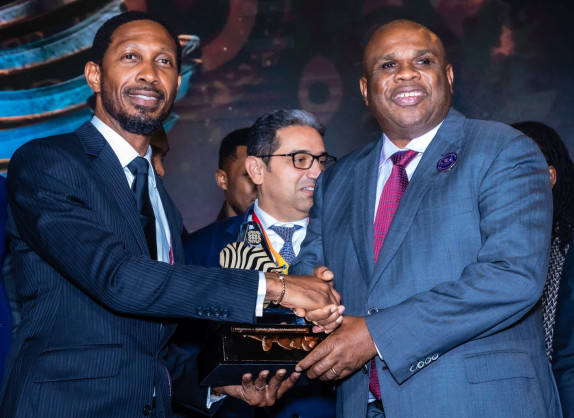
Professor Benedict Okey Oramah, President and Chairman of the Board of Directors at African Export-Import Bank (Afreximbank) (www.Afreximbank.com), has been awarded the prestigious Mohammed S. Barkindo Lifetime Achievement Award at the African Energy Awards, held on the sidelines of the African Energy Week (AEW) 2024: Invest in African Energy conference, happening between 4-8 November in Cape Town, South Africa.  

The award, named in honour of the former Secretary-General of OPEC, the late Dr Mohammed Barkindo, recognizes individuals who have made exceptional and lasting contributions to Africa's oil, gas, and energy sectors. This honour represents the highest accolade in African energy, awarded to individuals whose work has had a transformative impact on the continent's energy sector. Notable past recipient of the Mohammed S. Barkindo Lifetime Award in 2023 is Keith Hill, former President and CEO of Africa Oil Corp. 

For over three decades, Prof. Oramah has played a critical role in driving sustainable development across Africa by channelling essential funding into major oil, gas, and infrastructure projects. Since assuming leadership of Afreximbank in 2015, he has pioneered innovative financing structures that have democratised energy access and accelerated industrialization and the growth of Africa's strategically critical energy sector. 

Under Prof. Oramah's leadership, Afreximbank has made substantial contributions to the growth of Africa's energy sector. Under his stewardship, the Afreximbank has facilitated the mobilization of over USD 70 bn to support Africa's energy sector. Included in this is more than USD 5bn for refineries in Nigeria, Angola and Senegal, to further Africa's refined product independence and reduce the continent's Foreign Exchange drain.  

In Nigeria, Afreximbank now acts as Adviser and Settlement Bank for NGN denominated crude sales to Nigerian refineries. Replicated across the oil producing states in Africa, this will save several USD 100mn per annum in transactional charges alone. Ranking among President Oramah's most significant achievements is the historic signing of the Establishment Agreement and the Charter of the Africa Energy Bank (“AEB”) in Egypt in June 2024, in partnership with the African Petroleum Producers Organization (APPO). This landmark initiative aims to mobilize funding to support investments across Africa's entire energy system, aligning with the continent's energy needs and its environmental sustainability goals. 

Professor Oramah has led the energy transition agenda through the Bank's support in renewable energy transactions including, but not limited to, the EUR1.3 bn ECA import facility Project Gleam in support of the import of sonar panels for rural electrification in Angola, the EUR 147mn Government of Cameroon solar power project and the US$363 million Gasmeth Energy Rwanda gas extraction and processing project.  

Significantly, the majority of the above-mentioned transactions received numerous industry awards for their impact on the continent, their complexity and their unique structures.   

Prior to joining Afreximbank, Professor Oramah distinguished himself in international trade finance and development. Beginning his career at the Nigerian Export-Import Bank (NEXIM), he played an instrumental role in shaping Nigeria's export development strategies. Prof Oramah holds a Ph.D. in Agricultural Economics from Obafemi Awolowo University in Nigeria.  

Acknowledging the award, Prof. Oramah commented: 

“It is a great honour to be awarded the Mohammed S. Barkindo Lifetime Achievement Award. Whilst a great honour for me personally, this award reflects the work and dedication of many others, including my colleagues at Afreximbank and our various partners. At Afreximbank, we remain deeply committed to reducing energy deficit on the continent and ensuring we are self-sufficient. 

Distributed by APO Group on behalf of Afreximbank.

Media Contact: 
Mr Vincent Musumba 
Manager, Communications and Events (Media Relations) 
Email: press@afreximbank.com 

Follow us on: 
Twitter: https://apo-opa.co/4fwz0D3
Facebook: https://apo-opa.co/4emjUyg
LinkedIn: https://apo-opa.co/4feURPa
Instagram: https://apo-opa.co/3CjGevc

About Afreximbank : 
African Export-Import Bank (Afreximbank) is a Pan-African multilateral financial institution mandated to finance and promote intra-and extra-African trade. For 30 years, the Bank has been deploying innovative structures to deliver financing solutions that support the transformation of the structure of Africa's trade, accelerating industrialization and intra-regional trade, thereby boosting economic expansion in Africa. A stalwart supporter of the African Continental Free Trade Agreement (AfCFTA), Afreximbank has launched a Pan-African Payment and Settlement System (PAPSS) that was adopted by the African Union (AU) as the payment and settlement platform to underpin the implementation of the AfCFTA. Working with the AfCFTA Secretariat and the AU, the Bank is setting up a US$10 billion Adjustment Fund to support countries to effectively participate in the AfCFTA. At the end of December 2023, Afreximbank's total assets and guarantees stood at over US$37.3 billion, and its shareholder funds amounted to US$6.1 billion. The Bank disbursed more than US$104 billion between 2016 and 2023. Afreximbank has investment grade ratings assigned by GCR (international scale) (A), Moody's (Baa1), Japan Credit Rating Agency (JCR) (A-) and Fitch (BBB). Afreximbank has evolved into a group entity comprising the Bank, its impact fund subsidiary called the Fund for Export Development Africa (FEDA), and its insurance management subsidiary, AfrexInsure, (together, “the Group”). The Bank is headquartered in Cairo, Egypt. 

For more information, visit: www.Afreximbank.com 

Media files
Afreximbank
Download logo
Read moreAfreximbank President Professor Benedict Oramah Receives Prestigious Mohammed Barkindo Lifetime Achievement Award
6 November 2024

AEW 2024 Opens in Cape Town with Clarion Calls to Drill, Invest and Drive Projects Forward

Location: News
African Energy Chamber

The African Energy Week (AEW): Invest in African Energies 2024 conference officially opened with calls from the industry to ‘drill baby drill.' Citing the need to enhance climate justice through the development of domestic energy resources, industry leaders from across the continent underscored the need to sign deals, foster partnerships and drive projects forward.

With over 600 million people living without access to electricity and 900 million people without access to clean cooking solutions, the AEW: Invest in African Energies opening ceremony – sponsored by Kosmos Energy – positioned the oil and gas industry as the catalyst for making energy poverty history.

“Our priority must continue to be to end energy poverty for all Africans as well as to create an enabling environment where the oil and gas industry can thrive,” stated Diamantino Pedro Azevedo, Minister of Mineral Resources, Petroleum and Gas, Angola. “That is also our priority in Angola. The oil and gas industry will be a fuel for socioeconomic development.”

For the African Petroleum Producers Organization (APPO), prioritizing the development of domestic markets will be integral for eliminating energy poverty. APPO Secretary General Dr. Omar Farouk Ibrahim stated that “Today, APPO is focused on creating an integrated, regional and continental energy market. To create markets, we need to create cross-border, regional and inter-regional infrastructure. One of our projects we are working on is the Central African Pipeline System, which aims to link countries through crude oil and gas pipelines.”

Adding to these remarks, Kgosientsho Ramokgopa, Minister in the Presidency, Energy and Electricity, South Africa, said that “Today, Africa's path forward lies in seizing control of our energy destiny. Our resources make us capable of not just powering our homes and industries but a new Africa. This will require unity of purpose and a collective resolve.”

Despite project progress, financing remains a central challenge to oil and gas development in Africa. According to Mary Bruce Warlick, Deputy Executive Director of the International Energy Agency, “African countries account for 20% of the world's population but only 4% of global investment. Energy investment has been falling across the continent over the past decade. Africa needs $200 billion to achieve its climate and energy goals by 2030.”

To address these challenges, the African Export-Import Bank (Afreximbank), in collaboration with APPO, established the Africa Energy Bank, an institution which offers financing for African oil and gas projects. According to Benedict Oramah, President & Chairman of the Board, Afreximbank, “The Africa Energy Bank is the first multilateral sector bank in Africa. We expect the bank to significantly contribute towards bridging the funding gap in the African energy sector. It will be open for business to have access to funding by February in 2025. We invite you to send in your applications to be the first transaction by the Africa Energy Bank, which will be ready in a few months' time.”

The Africa Energy Bank supports energy companies drive projects forward. For independents such as Oando, this presents a strategic opportunity to expand their oil and gas portfolios in Africa. Wale Tinubu CON, Group Chief Executive Officer, Oando PLC, said that “The oil and gas landscape is changing. Between 2015 and 2023, there have been more than $7 billion of divested assets in Africa. In terms of M&A activity, there have been a focus on onshore and shallow water acquisitions and we have seen a rise of indigenous joint ventures and collaborations.”

Stepping into this picture, the AEW: Invest in African Energies conference convenes under a goal to make energy poverty history. By uniting the industry in Cape Town, the event fosters partnerships, promotes deal-signing while creating a collaborative environment for companies to do business in Africa's energy sector.

“It is the time for us to tell the African story, written from Cape to Cairo and Kampala to Dakar. We will forge a path that shapes the future. We have work to do in Africa. We sign baby sign so that we can drill baby drill. Let's not stop getting projects signed,” stated NJ Ayuk, Executive Chairman, African Energy Chamber.

Distributed by APO Group on behalf of African Energy Chamber.

Media files
African Energy Chamber
Download logo
Read moreAEW 2024 Opens in Cape Town with Clarion Calls to Drill, Invest and Drive Projects Forward
1 November 2024

President calls for enhanced collaboration between national and provincial governments

Location: News

President calls for enhanced collaboration between national and provincial governments

President Cyril Ramaphosa has emphasised the importance of closer cooperation between national and provincial governments, urging ministers to engage more directly and consistently with their provincial counterparts.

The President was addressing a meeting between the National Executive and the Limpopo Executive Council, led by Premier Phophi Ramathuba, at the Polokwane Municipality Council Chamber in Limpopo on Friday. 

President Ramaphosa described today’s meeting as significant, marking the start of a programme by the National Executive to visit all the provinces in the coming months and to engage directly with their leadership. 

The President outlined the significance of the meeting as the first high-level bilateral engagement between the National Executive and provinces under the 7th Administration and the Government of National Unity (GNU). 

President Ramaphosa highlighted the necessity for such interactions to ensure that both spheres of government can effectively coordinate their efforts and address local needs.

“As we strive for greater alignment between the developmental priorities of national and provincial governments, there is a need for Ministers to engage more directly and regularly with their provincial counterparts.

“On the one hand, this enables the National Executive to have better line of sight of provincial programmes. On the other hand, it enables provincial executive councils to better align their developmental roadmap with national plans,” the President said. 
The President reiterated the constitutional mandate for cooperation among different spheres of government, stressing that effective governance must be transparent, accountable, and coherent in serving the people of South Africa. 

“Section 41 of the Constitution outlines the obligation of different spheres of Government to cooperate with one another, assist one another, coordinate with one another and consult on matters of common interest. 

“The spheres of government are to do so, while respecting the scope of their respective powers and functions,” the President said.
He called for a focus on overcoming structural challenges that hinder investment and job creation in the provinces. 
The GNU, the President said, has identified a set of key priorities for the term of its administration, which includes driving inclusive growth and job creation; reducing poverty and tackling the high cost of living, and building a capable, ethical and developmental State. 

He underscored the vital role provinces play in achieving these goals, particularly through the implementation of the Medium-Term Development Plan.

“Our collective focus now is on marshalling the necessary will and resources to finalise and implement the Medium-Term Development Plan. Driving economic growth that is inclusive and transformational is at the centre of our national agenda. 
“Provinces have a critical role to play in this effort.  Improving service delivery, accelerating job creation and growing provincial economies are as much a priority for provinces as they are for national government. 

“What will be critical in the coming months is a razor-sharp focus on the actions that we all need to take to enable provinces to leverage their respective endowments – be they avocados, minerals or citrus fruit – to ensure that that endowment is more effectively used for economic growth,” the President said. 

The discussion also highlighted the need for provinces to leverage their unique resources such as agriculture, minerals, and tourism to stimulate economic growth. 

President Ramaphosa noted the under-utilisation of arable land and the potential for improved tourism infrastructure as areas needing urgent attention.

Some provinces are extracting large amounts of minerals from the soil, but are not moving to another level. They need to start looking at the second level to beneficiate those minerals. 

“We need to move beyond diagnosis of problems. We need to look at how to overcome the obstacles to provincial endowments being successfully used for development,” he said. 

Premier Ramathuba and the provincial leadership were urged to identify obstacles to growth and to collaborate with ministers to formulate actionable strategies. 

President Ramaphosa pointed out that ongoing structural reforms in sectors, such as electricity and water management, are critical to unlocking provincial potential.

This engagement is intended to open channels of communication and foster a collaborative spirit, with the aim of ensuring that Limpopo and other provinces align their economic development plans with the national vision.

Limpopo perfectly positioned to lead in a number of key sectors

The President said this first engagement between the National Executive and the Limpopo Executive Council must set the tone and agenda for future cooperation.
 
“We have to set our collective sights on what must be done to ensure provinces' economic development plans align with the broader national economic vision. 

“Limpopo is perfectly positioned to lead the country in a number of key sectors, including agriculture, tourism, freight and logistics, and also mineral resources. The province is set to play a major role in the green economy transition. 

“Limpopo possesses a number of critical energy transition minerals, including platinum, and has been designated as a site for the proposed Hydrogen Valley. We are pleased with the work already underway in this regard,” the President said.

President Ramaphosa added that Limpopo, by way of geographical positioning, is South Africa’s gateway to the continent. 

He said the province is well positioned to strengthen South Africa’s links to the rest of the African continent under the African Continental Free Trade Area. 

The President called for innovative solutions and clear timelines to realise the full potential of provincial economies and improve the lives of citizens.

As government prepares for further engagements across the country, the focus remains on creating a capable and accessible governance framework that prioritises the needs of South Africans.

From here, President Ramaphosa will go to KwaZulu-Natal next week and then to other provinces. 

“Our plan is to go to each province over the course of one year. We engage with provinces on an ongoing basis through MinMEC [Minister and Members of Executive Council] meetings and other forums, and we engage with people through izimbizo. This is the government that we want to make more capable and accessible to the people,” the President said. – SAnews.gov.za


DikelediM
Fri, 11/01/2024 - 13:26

150 views
Read morePresident calls for enhanced collaboration between national and provincial governments
31 October 2024

Green Building Trends in Africa: Africa’s Urbanization Provides the Opportunity to Embrace Green Building

Location: News
Bureau Veritas

By Julien Fouilliart-Building & Infrastructure Growth Leader Middle East, Caspian and Africa, Bureau Veritas (https://group.BureauVeritas.com)​.

Globally, buildings are responsible for a substantial share of energy, electricity, water and materials consumption using between 35-40% of energy demand and contributing 37 per cent of world carbon dioxide (CO2) emissions. Including the manufacturing of building materials.

The 2022 updated Global Buildings Climate Tracker (GBCT) (https://apo-opa.co/3YLJiZG) shows that there is a significant gap between the current state and the desired decarbonization path which is concerning. In effect it means that to align with the 2030 milestone, an annual increase of ten decarbonization points is now necessary which is a substantial jump from the six points per year anticipated starting in 2015.

In 2019 in Africa, buildings accounted (https://apo-opa.co/4e8NIhN) for 57% of total final energy consumption and 32% of total process-related CO2 emissions.

Despite continental issues of poverty, unemployment and rapidly developing informal settlements among other issues, many countries in Africa are embracing green, sustainable building practices.

With its burgeoning population, expected to add some  1.2 billion people by  2050 (https://apo-opa.co/3AxgxXo) Africa faces rapid urbanization.

Urbanization provides an opportunity for countries across Africa to embrace green building practices, access available international green funding opportunities, and set a foundation for sustainability for future generations.

In 2023 the Africa Regional Network of World Green Building Council (WorldGBC) launched the Africa Manifesto for Sustainable Cities and the Built Environment, which sets out the actions that  policymakers and businesses across the continent need to take to achieve a net zero carbon, healthy, resilient, equitable, socially- and economically-inclusive built environment for everyone, everywhere.

Achieving these goals requires policymakers and business leaders across the continent to recognise the untapped potential of the built environment. But this can only be realized with the implementation of policies that support transformative action, through intense collaboration between governments, city and regional leaders, businesses and investors. 

South Africa is leading Africa's green building sector (https://apo-opa.co/3YLdq7N). It has over two million square meters certified green buildings that reduce water consumption, electricity, and waste disposal; 50 certified projects are projected to result in an annual saving of 76 million kilowatt hours which is equivalent to the electricity needs of 5,300 households every year.

South Africa has its own National Standard 10400 Part XA that deals with optimizing energy efficiency in buildings and in the light of this the Green Star South Africa and EDGE green building tools have been adapted and are widely used in the country. International rating systems like LEED and WELL are also used.

The scope of green construction in Egypt has been slow to grow but Egypt has two local rating systems in place called TARSHEED and the Green Pyramid Rating System. These, along with EDGE, LEED and WELL are used in various projects.

The Nigerian government has pledged to achieve a 20% reduction in its greenhouse gas emissions by 2030 and 45% with international support. Green building will likely be a big part of this change.

This country's National Building Code, developed by the National Council on Housing and Urban Development, and the Building Energy Efficiency Guideline (BEEG), also support the agenda of sustainable development by setting requirements for occupant health and safety, use of local and safe building materials and energy efficiency among other criteria.

Morocco has several legal provisions in place to promote sustainability and environmental protection through construction impact assessments for new building projects as well as energy-efficient construction requirements applicable to most residential and commercial projects. Several projects in the country have also achieved LEED green building credentials.

It also has several renewable energy projects such as the Noor Midelt Solar Plant and Tarfaya Wind Farm, one of the biggest wind farms in the continent.

As the drive towards Net-Zero heightens more African countries are joining the African Regional Network of the World Green Building Council. NGOs and other industry professionals are setting up green building councils in South Africa, Egypt, Tunisia, Nigeria, Botswana, Zimbabwe, Namibia, Mauritius, Tanzania, Kenya, Cameroon and Uganda.

One of the big hurdles restraining a sustainable development movement in the construction industry is a lack of awareness for practical sustainable actions among many developers and investors.

In South Africa there is a broad awareness of Green Buildings and the market share of certified buildings among all new builds is increasing. The 2021 International Finance Corporation's (IFC) Green Building Market Stakeholder Assessment for South Africa showed that on the supply side, key motivating factors for Green Buildings are their reduced carbon footprint increased end user demand and increased marketability.

From the occupier's perspective the motivating factors for buying or leasing a Green Building are lower utility bills and lower operating costs. Yet, at a residential level occupiers are only willing to pay a two percent premium for these benefits.

The IFC report points out that the perceived cost of construction and certification of green buildings are also considered major obstacles to the expansion of certified Green Buildings in South Africa (https://WorldGBC.org/). Its research indicates that those in the know estimated the additional construction cost to be 10% or higher, while those unfamiliar with Green Buildings are likely to significantly overestimate costs.

Currently, four out of six financial institutions provide financing for Green Building projects in some form or another and three require a certification to approve the loan. The portfolios of two consist of retrofitting existing buildings into Green Buildings; two of commercial and industrial Green Building construction finance and only one residential Green Building construction finance. Of the two FI's that currently do not fund any Green Building one plans to do so in the future while the other does not see this as part of their strategy.

The investment into green construction (https://apo-opa.co/4e8NYgL) has multiple benefits; it facilitates growth while addressing issues like employment, climate change, and poverty.

However, more needs to be done to improve the understanding of the benefits of green buildings such as lower operational costs, increased ROI as well as an overall improvement in occupant health and wellbeing. Financial institutions need to do more to support green construction. Those which have pledged to lower their investments in carbon producing industries could create green bonds or funds for the African construction sector. Government's need to provide policy support along with incentives to catalyze market development.

 All this suggests that there is still a sizable information gap regarding the cost, certification and benefits of Green Building and that further knowledge dissemination efforts are needed to close it.

Distributed by APO Group on behalf of Bureau Veritas.

About Julien Fouilliart:
Julien Fouilliart is a seasoned business development professional with 15 years of experience in international, multicultural, and cross-sector environments. He currently leads the growth of Bureau Veritas' Building & Infrastructure market across the Middle East, Caspian, and Africa regions. Julien holds a degree in Mechanical Engineering from Belfort University in France. He is based in Kenya and has a deep passion for the African continent. Julien has played a key role in the development of large and iconic infrastructure projects across the region. He has an extensive international background, having worked in France, China, Spain, Belgium, and the United Kingdom. His experience includes collaborating with global companies and public institutions to drive business growth in sectors such as aerospace, IT, rail, building, and transport infrastructure.

Media files
Bureau Veritas
Download logo
Read moreGreen Building Trends in Africa: Africa’s Urbanization Provides the Opportunity to Embrace Green Building
30 October 2024

Afreximbank Calls for Increased Collaboration to Accelerate the Green Energy Transition in Africa

Location: News
Afreximbank

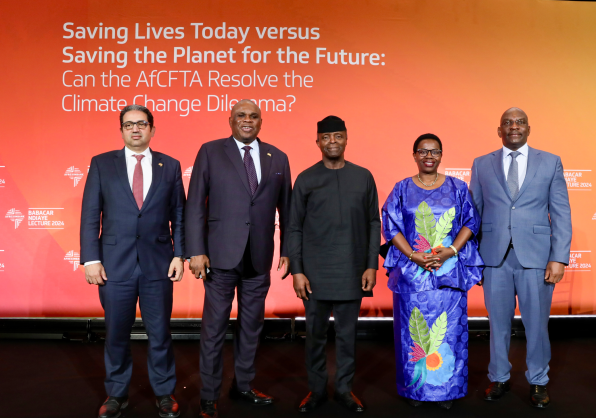
The eighth Babacar Ndiaye Lecture held at the Four Seasons Hotel in Washington D.C., on 26 October 2024, under-scored the need for African nations to strike a balance between short-term development imperatives and long-term climate goals. 

Under the theme “Saving Lives Today versus Saving the Planet for the Future: Can the AfCFTA Resolve the Climate Change Dilemma” discussions centred on how the African Continental Free Trade Area (AfCFTA), Africa's most ambitious trade initiative, could serve as a vehicle for economic growth and environmental sustainability, positioning the continent as a leader in the global green transition.  

The Lecture drew a distinguished audience of policymakers, academics, financial experts and climate advocates.  

Speaking about Dr. Babacar Ndiaye in his opening remarks, H.E. Professor Benedict Oramah, President and Chairman of the Board of Directors of Afreximbank Group, said “Dr Babacar Ndiaye was most concerned by the long-term threats posed to humanity by climate change. He once said, "Climate change is the greatest threat to development, particularly in Africa, where millions of people depend on the environment for their livelihoods … Africa's economic transformation cannot happen without addressing climate change.”  

Dr. Ndiaye's reflection on the impact of climate change was spot-on and intellectually deep.” But, “disappointingly, the global debate on climate has been so much focused on emissions reduction with the question of reducing its impact on Africa and other developing countries always reduced to a footnote. A call for Africa to decarbonise, when the continent has not even carbonised, poses a serious threat to the socio-economic development of a gas-rich continent that has at least six hundred million people without electricity.” 

The African Continental Free Trade Area Agreement “is seen as a potent means of reducing carbon emissions as it is helping to domesticate industrial activities and minimise the carbon emissions caused by shipping of commodities to far-away lands for value addition and reshipping to Africa and elsewhere. We believe that The AfCFTA could offer a pathway to a just transition, enabling local industrial value addition while protecting the planet.”  

Professor Yemi Osinbajo, SAN, GCON, the Immediate Past Vice President of the Federal Republic of Nigeria, delivered a powerful address titled “Sustainable Infrastructure for Africa's Future: Harnessing Innovation and Partnerships.” He spoke passionately about the advantages of the AfCFTA and its potential to transform Africa's trade landscape, reduce carbon emissions and foster innovation in green industries. 

“There are two obvious advantages to a fully operational AfCFTA.The first is that 42% of African countries, aside from North Africa, now have legislation prohibiting the export of raw ores or minerals before being processed. This legislation gives African countries the benefit of jobs and revenues from local processing and manufacturing.  

“The second advantage of the AfCFTA is that shipping is a major source of carbon emissions. Under current trade practices, a large share of African raw materials are exported to other regions, where they are processed or manufactured into finished products, usually using fossil fuel power sources, before being shipped back to Africa for consumption. This cycle contributes to higher emissions and constitutes a loss for African countries that do not reap the value chain gain from beneficiation. Intra-African trade in finished goods will substantially reduce this massive cause of global emissions,” he said. 

The reduction of emissions by intra-African trade has been the subject of several empirical studies. Professor Osinbajo referred to a recent ECA/ CEPII study titled “Greening the African Continental Free Trade Area Agreement's Implementation" published in December 2023, which found, inter alia, that implementing the AfCFTA can boost intra-African trade by 35% in 2045 while increasing GHG emissions by less than 1%, compared to no AfCFTA or climate policies.  

These studies do not factor in using renewable energy sources in the processing and manufacturing of traded goods, an assumption of the Climate Positive Growth paradigm, which would again substantially reduce emissions.  

Professor Osinbajo cited mining bauxite in Guinea as an example. If Guinea, which has 25% of global deposits of bauxite, processed the bauxite it mines to aluminium with renewable energy in readiness for export, Guinea could save the world 335 million tonnes of carbon dioxide equivalent (CO2e) per year, which is approximately 1% of global emissions, and create 280,000 jobs and generate $37 billion of additional revenue. If it chooses to sell the aluminium within Africa, it will again save the huge shipping cost to countries thousands of miles away.  

A Bloomberg study done for the African Development Bank (AfDB) in 2021 on the manufacture of battery precursors found that manufacturing battery precursors in the Democratic Republic of the Congo (DRC), which has plenty of lithium and cobalt, is three times cheaper than manufacturing it in the US, EU and China. Manufacturing in the DRC would extend value chain opportunities to other African countries, they would need manganese from Zambia, Tanzania, Gabon and South Africa to contribute to its capacity to produce these battery precursors. Manufacturing using renewable energy could significantly reduce the cost of manufacturing. Africa's abundant renewable energy has very low seasonality or intermittency, making it possible to reliably provide a renewable baseload to power continuous industrial production.  

“The AfCFTA empowers African countries first to add value to materials and specialise in areas of national comparative advantage, and also to work together to trade more beneficially with the rest of the world,” said Prof Osinbajo. 

He futher said that “Most African countries depend on fossil fuels for their energy needs and for fossil fuel rich African countries, this is also a major source of export earnings and fiscal revenues. Ostensibly in keeping with their net zero obligations, there has been a growing trend amongst development finance institutions to withdraw from fossil fuel investment. These actions include the World Bank's decision to cease funding for upstream oil and gas development in Africa and the restrictions on financing downstream gas development by the European Union, the United Kingdom, and the United States. Clearly, the implications of these actions are dire, where there are no immediate alternative sources of power and the cost of the transition to cleaner fuels may be prohibitive. Some studies show that divesting from fossil fuels could reduce GDP by as much as USD$30 billion for Nigeria, USD$22 billion for Algeria, and USD$19.3 billion for Angola.” 

H.E. Dr Rania A Al-Mashat, Minister for Planning, Economic Development and International Co-operation, Arab Republic of Egypt said that while the “African continent is the least responsible for carbon emissions, it has the biggest burden in terms of financing climate change for developmental needs - such as food and water security, and access to energy. 

She called for greater collaboration with national and international stakeholders “We need to work together; we need to bring the experiences from other places so that Africa can push forward with respect to development and sustainable economic growth.” 

In her Goodwill Message, Ms. Amina J. Mohammed, Deputy Secretary-General of the United Nations and Chair of the United Nations Sustainable Development Group, spoke about the rapidly closing window to prevent the worst impacts of climate change. She addressed the fact that many African countries are mired in debt, exacerbated by extended crises with little access to long-term concessional financing to invest in sustainable development. 

“With adequate access to financial resources at a reasonable cost, renewables can dramatically boost economies, grow new industries, create jobs and drive development, including by reaching the over 600 million Africans living without access to power,” said Ms Mohammed. 

She also stressed the importance of prioritising inclusive policies that empower women and youth when building climate-resilient economies.  

“By harnessing the collective might of the AfCFTA, Africa can make strides in addressing both climate action and sustainable development by promoting regional integration and fostering green industrialisation.  

“The AfCFTA can help build climate-resilient economies while creating jobs, reducing poverty and strengthening food security.”  

The eighth Babacar Ndiaye Lecture also reinforced Afreximbank's commitment to leadership in financing sustainable infrastructure and trade policies across the continent. 

Distributed by APO Group on behalf of Afreximbank.

Media Contact: 
Vincent Musumba 
Communications and Events Manager (Media Relations) 
Email: press@afreximbank.com 

For more information, visit: www.Afreximbank.com  
Follow us on X | Facebook (https://apo-opa.co/3YJR7iS)| LinkedIn (https://apo-opa.co/3Cet3eR) | Instagram (https://apo-opa.co/4ht2qDa)

About the Babacar Ndiaye Lecture 
The Babacar Ndiaye Lecture is an annual event designed to foster dialogue around Africa's development challenges and explore practical solutions through policy, trade and diplomacy.  

The Lecture honours Babacar Ndiaye, a former President of the African Development Bank, for his visionary leadership in advancing Africa's economic growth. 

Afreximbank has hosted this Lecture every year since 2017 in honour of the late Dr. Babacar Ndiaye, the fifth President of the African Development Bank. Dr. Ndiaye transformed the Bank during his decade-long leadership and was also instrumental in establishing several other enduring Pan-African institutions, including Afreximbank, Shelter Afrique and the African Business Roundtable. 

About Afreximbank 
African Export-Import Bank (Afreximbank) is a Pan-African multilateral financial institution mandated to finance, facilitate and promote intra and extra-African trade. For over 30 years, the Bank has been deploying innovative instruments to deliver financing solutions that support the transformation of the structure of Africa's trade, accelerating industrialisation and intra-regional trade, thereby boosting economic expansion in Africa. A stalwart supporter of the African Continental Free Trade Area (AfCFTA), Afreximbank has in partnership with the African Union Commission and the AfCFTA Secretariat launched the Pan-African Payment and Settlement System (PAPSS) that was adopted by the African Union (AU) as the payment and settlement platform to underpin the implementation of the AfCFTA agreement. The AfCFTA Secretariat and the Bank have created a US$10 billion Adjustment Fund to support countries to effectively participate in the AfCFTA.  

At the end of December 2023, Afreximbank's total assets and guarantees stood at over US$37.3 billion, and its shareholder funds amounted to US$6.1 billion. Afreximbank has investment grade ratings assigned by GCR (international scale) (A), Moody's (Baa1), Japan Credit Rating Agency (JCR) (A-) and Fitch (BBB). Afreximbank has evolved into a group entity comprising the Bank, its impact fund subsidiary the Fund for Export Development Africa (FEDA), and its insurance management subsidiary, AfrexInsure, (together, “the Group”). The Bank is headquartered in Cairo, Egypt.  

Media files
Afreximbank
Download logo
Read moreAfreximbank Calls for Increased Collaboration to Accelerate the Green Energy Transition in Africa
28 October 2024

Presidency asserts stance on South Africa’s foreign policy 

Location: News

Presidency asserts stance on South Africa’s foreign policy 

The Presidency has reaffirmed South Africa’s commitment to a foreign policy grounded in solidarity, peace, equality, human rights and sustainable development for the benefit of all.

In a statement on Sunday, the Presidency emphasised that President Cyril Ramaphosa is dedicated to strengthening political and trade ties, while supporting the rights of oppressed communities globally.

“As President Cyril Ramaphosa continues to lead the 7th administration in strengthening all key political and trade ties, working in solidarity with the oppressed peoples of the world in Palestine and Western Sahara, while advocating for peaceful resolution of conflicts around the globe, South Africa will maintain a foreign policy that is informed by solidarity, peace, equality, human rights and sustainable development for the benefit of all. 

"This is the responsibility that President Ramaphosa will continue to exercise without any undue pressure and in line with South Africa’s national sovereign interest,” the Presidency said.

In an August 2023 address preceding the South African-hosted 15th BRICS Summit, President Ramaphosa outlined the values underpinning the country’s foreign policy. 

In the address, President Ramaphosa articulated the principles and values that shape the country’s foreign policy and inform its international relations.

“Before the dawn of democracy in 1994, the apartheid South African state was a pariah in the international community, condemned for committing a crime against humanity," President Ramaphosa said at the time.

He highlighted that the foreign policy of apartheid South Africa was defined by coercion, destabilisation and military aggression. 

“Since the advent of democracy, South Africa’s foreign policy has been based on what our forebears inscribed in the Freedom Charter in 1955, when they declared that: 'South Africa shall be a fully independent State, which respects the rights and the sovereignty of all nations; South Africa shall strive to maintain world peace and the settlement of all international disputes by negotiation – not war'."

The President further affirmed South Africa’s foreign policy as a vital element of the nation's progress. South Africa’s strong relations with other countries manifested through investment and trade relations that can contribute to the growth of the economy, create more opportunities for new businesses and create jobs. 

“President Ramaphosa has been steadfast in maintaining South Africa’s commitment to the policy of active non-alignment. South Africa has resisted pressure to align with any one of the global powers or with influential blocs of nations in their pursuit of power contestations that are unfolding in countries across the globe. 

“The President observed during his foreign policy address that, 'during the Cold War, the stability and sovereignty of many African countries was undermined because of their alignment with the major powers. This experience has convinced us of the need to seek strategic partnerships with other countries rather than be dominated by any other country. 

“While some of our detractors prefer overt support for their political and ideological choices, we will not be drawn into a contest between global powers. Instead, our country strives to work with all countries for global peace and development,” the Presidency said. 

The Presidency noted that it is this resolute adherence to the policy of non-alignment and to the prescripts of the Freedom Charter which informed the nation’s Constitution that South Africa continues to contribute towards the attainment of world peace and silencing the guns on the continent.

The Presidency clarified that President Ramaphosa’s recent remarks declaring President Putin and the people of Russia as “valuable friends and allies”, he was not projecting any particular country or bloc of countries as the enemy. 

“Similarly, as a country that has no enemies, South Africa regards the members of BRICS as friends. It is through the policy of non-alignment that South Africa has been able to constructively engage with both Russia and Ukraine.

“In several engagements, President Ramaphosa has emphasised the centrality of the United Nations Charter and the need for peaceful dialogue in resolving conflict. In the process South Africa has also maintained its strong historical ties with the Russian Federation, whilst enjoying cordial diplomatic bilateral relations with Ukraine. 

“South Africa has also been unwavering in advocating for a peace process that includes the full participation of both countries,” the Presidency said. 

Today, International Relations and Cooperation Minister, Ronald Lamola, will host his Ukrainian counterpart, Minister Andrii Sybiha. 

Amongst the highlights of the visit will be the signing of an Agreement on Visa Waiver for Diplomatic Service or Official Passports. 

This will enable South African officials to travel to Ukraine for peace formula meetings without visa logistical impediments. This development, which has been in the making since 2020, signals South Africa’s commitment to growing diplomatic relations with Ukraine.  

South Africa will soon host the South Africa-European Union summit as part of its G20 presidency, strengthening its strategic partnership with the EU. 

South Africa is the only partner in Africa amongst the European Union’s 10 bilateral strategic partnerships.

The summit will further enhance the existing partnership with the European Union. 

South Africa will continue working towards strengthening the strategic, trade and political bilateral relationships with key partners including the Peoples Republic of China, United States of America, Germany, Japan, India and others. 

South Africa will further consolidate the full implementation of the African Continental Free Trade Area, which is set to eliminate trade barriers, boost intra African trade and achieve prosperity for all of Africa. The African Continental Free Trade Area will also accelerate manufacturing and industrial capacity on the continent. – SAnews.gov.za

DikelediM
Mon, 10/28/2024 - 09:55

390 views
Read morePresidency asserts stance on South Africa’s foreign policy 
28 October 2024

Presidency Asserts Responsibility and Stance on South Africa’s Foreign Policy

Location: News

The Presidency of the Republic of South Africa
Download logo

On the 20th of August 2023, ahead of the South African Chaired 15th BRICS Summit, President Cyril Ramaphosa delivered an address to the nation on South Africa's foreign policy.  

In the address, President Ramaphosa articulated the principles and values that shape our foreign policy and inform our international relations when he said: “Before the dawn of democracy in 1994, the apartheid South African state was a pariah in the international community, condemned for committing a crime against humanity.

The foreign policy of apartheid South Africa was defined by coercion, destabilisation and military aggression. Since the advent of democracy, South Africa's foreign policy has been based on what our forebears inscribed in the Freedom Charter in 1955, when they declared that: “South Africa shall be a fully independent state which respects the rights and the sovereignty of all nations; South Africa shall strive to maintain world peace and the settlement of all international disputes by negotiation – not war”.

The President further affirmed South Africa's foreign policy as vital element of our nation's progress. South Africa's strong relations with other countries manifested through investment and trade relations that can contribute to the growth of our economy, create more opportunities for new businesses and create jobs.

President Ramaphosa has been steadfast in maintaining South Africa's commitment to the policy of active non-alignment. South Africa has resisted pressure to align with any one of the global powers or with influential blocs of nations in their pursuit of power contestations that are unfolding in countries across the globe.

The President observed during his foreign policy address that, “during the ‘Cold War', the stability and sovereignty of many African countries was undermined because of their alignment with the major powers. This experience has convinced us of the need to seek strategic partnerships with other countries rather than be dominated by any other country.

While some of our detractors prefer overt support for their political and ideological choices, we will not be drawn into a contest between global powers. Instead, our country strives to work with all countries for global peace and development."

It is this resolute adherence to the policy of non-alignment and to the prescripts of the Freedom Charter which informed our constitution that South Africa continues to contribute towards the attainment of world peace and silencing the guns on our continent.

In declaring President Putin and the people of Russia as “valuable friends and allies”, President Ramaphosa was not projecting any particular country or block of countries as the enemy. Similarly, as a country that has no enemies, South Africa regards the members of BRICS as friends. 

It is through the policy of non-alignment that South Africa has been able to constructively engage with both Russia and Ukraine.

In several engagements, President Ramaphosa has emphasised the centrality of the United Nations Charter and the need for peaceful dialogue in resolving conflict. In the process South Africa has also maintained its strong historical ties with the Russian Federation, whilst enjoying cordial diplomatic bilateral relations with Ukraine. 

South Africa has also been unwavering in advocating for a peace process that includes the full participation of both countries.  

On Monday, 28 October 2024, South Africa's International Relations and Cooperation Minister, Hon. Ronald Lamola, will host his Ukrainian counterpart, Minister Andrii Sybiha. Amongst the highlights of the visit will be the signing of an Agreement on Visa Waiver for Diplomatic Service or Official Passports.

This will enable South African officials to travel to Ukraine for peace formula meetings without visa logistical impediments. This development, which has been in the making since 2020, signals South Africa's commitment to growing diplomatic relations with Ukraine.  

Within the first six months of 2025, the year of South Africa's G20 Presidency, our country will also host the South Africa-European Union summit. South Africa is the only partner in Africa amongst the EU's 10 bilateral strategic partnerships. The summit will further enhance the existing partnership with the European Union.

South Africa will continue working towards strengthening the strategic, trade and political bilateral relationships with key partners including the Peoples Republic of China, United States of America, Germany, Japan, India and others.

South Africa will further consolidate the full implementation of the African Continental Free Trade Area, which is set to eliminate trade barriers, boost intra African trade and achieve prosperity for all of Africa. The AFCFTA will also accelerate manufacturing and industrial capacity on our continent.

As President Cyril Ramaphosa continues to lead the 7th Administration in strengthening all key political and trade ties, working in solidarity with the oppressed peoples of the world in Palestine and Western Sahara, while advocating for peaceful resolution of conflicts around the globe, South Africa will maintain a foreign policy that is informed by solidarity, peace, equality, human rights and sustainable development for the benefit of all.

This is the responsibility that President Ramaphosa will continue to exercise without any undue pressure and in line with South Africa's national sovereign interest.  

Distributed by APO Group on behalf of The Presidency of the Republic of South Africa.

Read morePresidency Asserts Responsibility and Stance on South Africa’s Foreign Policy
25 October 2024

CSIR Transport Safety Lab to help reduce road crashes

Location: News

CSIR Transport Safety Lab to help reduce road crashes

Minister of Science, Technology and Innovation, Professor Blade Nzimande, has unveiled the Transport Safety Lab at the Council for Scientific and Industrial Research (CSIR) to enhance road safety policies and products on the continent.

Unveiled on Thursday, the laboratory includes a stationary driving simulator located on the CSIR’s Scientia campus in Pretoria, along with a vehicle equipped with sensors to gather data on driver behaviour and road conditions.

CSIR Smart Society Group Executive, Dr Sandile Malinga, stated that the lab will collect and analyse road safety data from the real world and simulations, which can be used to improve transport safety policies and products.

“This dual approach gives the CSIR Transport Safety Lab a unique sweet spot in the industry, merging laboratory precision with practical, on-the-road experimentation,” he said, adding that it will ultimately help reduce fatalities and the socio-economic burden of road crashes.

The CSIR Senior Researcher, Lerato Kgoa, explained that the lab’s testing vehicle, known as the Drive Lab, can gather live data from South Africa’s roads, enabling researchers to analyse signage visibility, road conditions, and driver behaviour patterns under various circumstances.

Meanwhile, the driving simulator known as the Simulator Lab, will play a complementary role. 

According to  Kgoa, the simulator can recreate hazardous driving conditions in a controlled environment and will allow researchers to observe how drivers respond to dangers like adverse weather conditions, poor visibility or challenging road surfaces.

“By simulating these scenarios without the real-world risks, researchers can gather valuable data on driver behaviour, decision-making processes, and potential improvements in road safety measures,” she added.
The lab features specialists in transport safety, human behaviour, and crash analysis. It has already conducted a successful pilot study on how drivers perceive fluorescent yellow.

Malinga explained that the lab’s research supports the Safe System Approach that South Africa has adopted, where road users, policymakers, transport planners, vehicle manufacturers, infrastructure designers, and road agencies all share the responsibility for improving road safety. 

According to the CSIR, this approach is a globally recognised framework endorsed by the United Nations.
CSIR CEO, Dr Thulani Dlamini, said original equipment manufacturers, transport operators and private investors can use the new facility to test and refine new products such as vehicles, road restraint systems and digital technologies.

“Early involvement ensures that industry leaders gain a competitive edge as they co-develop cutting-edge solutions with the CSIR’s research experts,” Dlamini stressed. 

“We encourage industry partners to join us in reducing road crashes and ensuring sustainable road infrastructure in South Africa and beyond.”

He believes that the lab will also enable evidence-based policymaking aligned with South Africa’s National Road Safety Strategy 2016-2030 and that it will work with continental bodies such as the Road Traffic Management Corporation and the Namibia Road Authority.

“The lab’s insights are set to inform regulatory frameworks, support law enforcement strategies, and influence infrastructure development,” Dlamini added. 

The CSIR Transport Safety Lab is funded by the Department of Science, Technology and Innovation. – SAnews.gov.za


Gabisile
Fri, 10/25/2024 - 11:22

54 views
Read moreCSIR Transport Safety Lab to help reduce road crashes
24 October 2024

President Ramaphosa delivers country statement at BRICS Summit

Location: News

President Ramaphosa delivers country statement at BRICS Summit

By Neo Bodumela

Kazan, Russia: The BRICS Engagement and BRICS Plus platforms are an opportunity for countries to forge greater and deeper ties for development. 

This is according to President Cyril Ramaphosa, who was delivering South Africa’s country statement during the BRICS/Plus Countries First Session in Kazan, Russia.

The leaders of Brazil, Russia, India, China, South Africa, Egypt, Ethiopia, Iran and the United Arab Emirates are meeting for the first time since new members were invited to join BRICS during the Johannesburg BRICS Summit of 23 August 2023.

Together, the powerful bloc holds around 35% of the global Gross Domestic Product (GDP) and 20% of world exports.

“The BRICS Outreach and BRICS Plus engagements are important platforms for developing strong ties among countries from the greater Global South and emerging markets.

“We should use these platforms to foster meaningful engagement. We should use the BRICS platform to contribute to social, economic and cultural development of our peoples,” President Ramaphosa said. 
 

READ | BRICS partnership is a catalyst for global growth
 

The President welcomed initiatives by Russia aimed at developing other BRICS nations. 

“We welcome the Russian initiatives that are aimed at strengthening a number of BRICS countries through the various networks aimed at improving the future of BRICS countries’ transport networks and connectivity under the theme, ‘Innovation and Digitalisation of Transport’.

“This will help us find ways to integrate and deepen our interconnectedness in new and imaginative ways,” he said. 

The President noted that work has already begun in this regard through the International North-South Transport Corridor -- a multimodal transportation corridor established from St Petersburg in Russia to Mumbai, India.

“This corridor is an opportunity for this region to unlock new trade flows and trade routes in an increasingly multipolar world.

“On the African continent, the African Continental Free Trade Area will unlock opportunities for trade and investment for local and global businesses. It will create a number of opportunities that will lead to an integrated and connected continent,” President Ramaphosa said. 

He encouraged BRICS countries and friends of BRICS to “use these projects to further connect the greater Global South”. 

WATCH I BRICS Summit Outreach/ BRICS+ First Session

International conflicts 

The President called for the resolution of conflicts that are escalating not only in the Middle East but also on the African continent. 

“We must find lasting solutions to all these conflicts.

“We must remain committed to the peaceful resolution of all disputes through negotiation and inclusive dialogue. We must safeguard the ability of States to pursue independent foreign policy. 

“We must safeguard the multilateral system because it is the cornerstone of international relations, and foster an environment of peace and development,” he said. 

He emphasised that conflicts cannot be allowed to “continue in perpetuity”. 

“We need to find paths to peace. In our quest for a more interconnected, just and prosperous world, we have the ability to foster an environment of peace through a focus on sustainable development.

“We must continue to support nations and peoples, who seek to end the cycle of conflict and choose the path of peace,” President Ramaphosa said. - SAnews.gov.za

NeoB
Thu, 10/24/2024 - 12:07

196 views
Read morePresident Ramaphosa delivers country statement at BRICS Summit
17 October 2024

Move towards electronic vehicles a ‘major industrialisation opportunity’

Location: News

Move towards electronic vehicles a 'major industrialisation opportunity'

President Cyril Ramaphosa says the global move from Internal Combustion Engines towards Electronic Vehicles (EVs) presents a major opportunity for South African industrialisation.

The President was speaking during the South African Auto Week held at the Cape Town International Convention Centre in the Western Cape on Thursday.

“As many of our major trading partners rapidly shift towards EVs, it is imperative that we remain part of this global supply chain. This is a major industrialisation opportunity for South Africa and the region, particularly within the context of the African Continental Free Trade Area.

“This will position South Africa as a forward-thinking, green economy. It will advance our aspirations to be a global automotive hub,” President Ramaphosa said.

He acknowledged that decarbonisation presents a challenge to the automotive sector, but assured that government is committed to working closely with the sector.

“The transition towards cleaner and more sustainable fuels – together with stringent regulations in key markets – puts a number of automotive firms and sub-industries in a vulnerable position. Even as the journey to net zero poses a challenge for the auto industry, there is at the same time immense opportunity. 

“The local automotive sector needs to position itself to take advantage of the demand for electric vehicles, new energy vehicles and sustainable fuels. The transition to cleaner, more sustainable practices in the automotive industry is a priority for our government. The automotive industry has a critical role to play in achieving South Africa’s climate targets.

“We are committed to working hand-in-hand with the private sector to promote the production of New Energy Vehicles [NEV] and the development of the necessary infrastructure to support them,” he said.

READ | President Ramaphosa to address SA Automotive Week

Furthermore, President Ramaphosa revealed that the Department of Trade, Industry and Competition, National Treasury and the Department of Mineral and Petroleum Resources are in discussion on the implementation of the Electric Vehicle White Paper.

“This work includes the beneficiation of our critical minerals for the production of new energy vehicles and their associated value chains. It also includes the production of batteries for battery electric vehicles and the development of value chains in the green hydrogen fuel cell market.

“We are working to finalise comprehensive NEV policy guidelines that do not exclude alternative technologies such as hybrids and plug-in hybrids. Consideration must be given to incentives for manufacturers as well as tax rebates or subsidies for consumers to accelerate the uptake of electric vehicles.

“This is not just about creating a greener future but also about ensuring South Africa remains competitive in the global market.”

Removing barriers

The President emphasised that government, through reforms in energy, logistics and other sectors, is working to remove the barriers that affect the sector.

“As government, we remain firmly committed to the work already underway to improve the operational performance of our energy, freight and logistics sectors – all of which directly impacts the automotive industry.

“Transnet continues with its work to revitalise the Port of Durban. It is also proceeding with the upgrade of the Gauteng-Eastern Cape railway line as part of Project Ukuvuselela,” he said.

The President told the delegates that the Government of National Unity looks forward to “deepening our collaboration as government, industry and labour” to achieve the objectives of inclusive growth and job creation.

“There may be headwinds. But in challenges lie opportunities. It is up to us to harness these opportunities to grow, to expand and to transform,” President Ramaphosa said. – SAnews.gov.za


NeoB
Thu, 10/17/2024 - 11:30

332 views
Read moreMove towards electronic vehicles a ‘major industrialisation opportunity’
13 October 2024

“Africa’s Golden Boy” Makes History at the African Continental Cycling Championship

Location: Sport

Ministry of Information, Eritrea
Download logo

Eritrean professional cyclist Henok Mulubrhan made history at the 2024 African Continental Cycling Championship in Eldoret, Kenya, by achieving a hat-trick victory. Henok previously claimed the championship titles in 2022 in Sharm El-Sheikh, Egypt, and in 2023 in Accra, Ghana.

In this year's championship, Henok secured the gold medal, finishing ahead of cyclists from South Africa and Uganda, who took second and third place, respectively. Henok finished the race in 3 hours, 46 minutes and 21 seconds

Henok's triumph reaffirms Eritrea's dominance and prestigious status as a “powerhouse” in African cycling.

In an interview with Kenyan journalists, Henok expressed his gratitude to his teammates for their support throughout the race. He dedicated his victory to all members of the national team and the Eritrean people.

In this championship Eritrea has collected 7 Gold Medals, 5 Silver and 4 Bronze.

Distributed by APO Group on behalf of Ministry of Information, Eritrea.

Read more“Africa’s Golden Boy” Makes History at the African Continental Cycling Championship
24 September 2024

President Ramaphosa urges US business to invest in SA’s growing economy

Location: News

President Ramaphosa urges US business to invest in SA’s growing economy

President Cyril Ramaphosa has called on US businesses to deepen their investment ties with South Africa, highlighting the country's renewed focus on economic recovery and structural reform. 

Speaking at the SA-US Interactive Business Forum in New York on Monday, the President emphasised the progress made under South Africa's Government of National Unity (GNU) and the vast opportunities available to foreign investors.

He said this is a “timely intervention”, referencing his first visit to the US since South Africa's general elections in May, which led to a coalition government of political parties committed to inclusive growth and job creation.

“The advent of the Government of National Unity has renewed investor optimism in the South African economy. The message I bring to US investors today is that this optimism is well-placed. 

“South Africa is firmly on the road to recovery, and we invite you to be part of this journey. Investments in South Africa are secure. Our business environment is stable. This is supported policy certainty and regulatory safeguards,” the President said. 

He added that South Africa intends to stay the course on the structural economic reform process, on scaling up investment in key infrastructure, and on improving the business operating environment.

The President noted South Africa’s success in attracting investment, revealing that the country had achieved its target of raising R1.2 trillion (approximately USD 63.6 billion) ahead of schedule in 2022. 

 “We have announced a new target of approximately R2 trillion or approximately USD 100 billion over the next five-year period up to 2028. 

“The far-reaching structural reforms we have implemented over the past six years have opened up the country to increased levels of investment that continues to grow,” the President said. 

Ramaphosa particularly underscored the potential in the clean energy sector, which has attracted significant investment, supporting South Africa’s commitment to decarbonisation and energy security. 

"We are equally committed to a Just Energy Transition that is inclusive, that take our developmental needs into account, and that leaves no community behind. 

“We have a supportive and enabling industrial policy that incorporates amongst others expanding the special economic zones, driving export-led growth, and harnessing the potential of the Africa Continental Free Trade Area or AfCFTA. In January 2024 we began preferential trading under the AfCFTA,” he said. 

The President emphasised that the Government of National Unity is furthermore committed to prudent monetary and fiscal policy and to strengthening regulatory and legislative frameworks to combat corruption.

The President also highlighted the importance of strategic partnerships with US businesses, especially in sectors like advanced manufacturing, energy, healthcare, and infrastructure. 

“South Africa and Africa is ripe for investment in financial services, advanced manufacturing, energy, healthcare, infrastructure development, mining, science and technology and other sectors. South Africa is also developing the value chains of the future.

“With substantial reserves of critical energy transition minerals, we are positioning ourselves to be at the forefront of the green energy revolution,” he said. 

He added that as the country with the world’s largest platinum group metal reserves, South Africa has a competitive advantage when it comes to the production of sustainable energy technologies, including electric vehicles, new energy vehicles and renewable energy components.

President Ramaphosa praised the collaboration between the New York Stock Exchange (NYSE) and Johannesburg Stock Exchange (JSE), following the 2022 Memorandum of Understanding. He stated that the partnership between the two stock exchanges “promotes cross-border investment and drives economic growth on a global scale.”

The President further highlighted the US as one of South Africa’s most valued trade partners, noting that bilateral trade totalled USD 17.6 billion in 2022. 

He also praised the impact of the African Growth and Opportunity Act (AGOA) in fostering trade and creating jobs in sectors like automotive, agriculture, and precious metals.

With Africa's population expected to reach 2.5 billion by 2050, President Ramaphosa painted a bright picture of the continent's economic prospects, noting that the African Continental Free Trade Area (AfCFTA) would "drive a wave of industrialisation and create dynamic regional value chains."

“This too presents opportunities for US businesses and investors, and opens up new markets for their goods, products and services. 

“Mutually beneficial trade and investment not only unlocks the dynamism and potential of an entire continent. It will also aid Africa’s efforts to achieve the Sustainable Development Goals,” the President said. 

In closing, President Ramaphosa reassured investors of the stability and security of investments in South Africa. 

“South Africa is open for business. Sustainable and inclusive growth spurs development and creates jobs.

“Together, we can forge a path to shared success and progress, leveraging our combined strengths to achieve enduring prosperity for our people,” the President said. – SAnews.gov.za


DikelediM
Tue, 09/24/2024 - 11:01

179 views
Read morePresident Ramaphosa urges US business to invest in SA’s growing economy
23 September 2024

African leaders meet on Mpox

Location: News

African leaders meet on Mpox

President Cyril Ramaphosa says as the continent tackles Mpox, Africa needs to learn from the COVID-19 pandemic.

“We need to ensure equitable distribution of medical countermeasures based on transparent criteria and readiness to initiate vaccination. We ask Africa Centres for Disease Control and Prevention (Africa CDC) to lead the consultation with member states to ensure equitable distribution of vaccines and other medical countermeasures,” said the President.

He was delivering South Africa’s statement at the African Union Heads of State virtual meeting on Mpox on Sunday.

“We need a finance plan that is evidence-based, with sound forecasting of needs. The Africa CDC mandate on data sharing is the bedrock of global health security. This will help to ensure that public health threats are detected and shared across borders and with other continental and global stakeholders,” said the President.

He said countries would only be able to effectively mobilise and direct funds if supported by reliable data.

“We call on all African countries to make use of this instrumental system that has been created by our own institution. We call for the urgent operationalisation of the Africa Epidemic Fund as the primary vehicle for epidemic response financial management.”

He said as with COVID-19, Africa is still struggling to get the Mpox vaccine and treatment.

The President said the continent needs to manufacture Mpox vaccines in Africa to reduce costs and improve access.

“We must co-develop these medical countermeasures, share intellectual property and ensure technology transfer. In this regard, we welcome the agreement between Africa CDC and Bavarian Nordic to transfer the Mpox vaccine technology to African manufacturers,” he said.

With the financial support from the Coalition for Epidemic Preparedness, the African Vaccine Manufacturing Accelerator, Afreximbank, the European Union and other partners, President Ramaphosa said the continent should be able to start vaccine manufacturing by 2025.

“In the meantime, we appreciate the support from a number of countries to get vaccines in Africa.

“The COVID-19 experience taught us that we need predictable demand and off-take guarantees for the vaccines, medicines and diagnostics manufactured in Africa. African countries should therefore buy vaccines and other health products manufactured in Africa to ensure sustainable manufacturing on our continent.”

He said this could be achieved through the African Pooled Procurement Mechanism.

Surveillance systems must be enhanced and healthcare delivery and infrastructure strengthened.

“We must ensure that frontline health workers have the necessary diagnostic tools, vaccines and antiviral treatments. We need tested public health messages that promote awareness and prevention.

“Beyond the targeted vaccination responses to outbreaks, we should explore the feasibility of continuing vaccinations in high-risk populations. This dual approach will help create a buffer against future outbreaks and protect our most vulnerable communities,” he said.

The World Health Organisation (WHO) has declared Mpox  as a Public Health Emergency of International Concern.

The President commended the fact that Africa CDC had partnered with the WHO, UNICEF and other partners to develop the Mpox continental preparedness and response plan and to build, for the first time in Africa, one Continental Incident Management Team.

The total number of positive cases recorded in South Africa since the outbreak in May this year stands at 25 cases, including three deaths. Twelve of these were reported in Gauteng, 11 reported in KwaZulu-Natal and two in the Western Cape.

Africa CDC has signed a partnership agreement with the European Commission’s Health Emergency Preparedness and Response Authority (HERA) and Bavarian Nordic to provide over 215 000 doses of the MVA-BN vaccine.

Africa CDC will oversee the equitable distribution of these vaccines, prioritising local needs across the affected member states. – SAnews.gov.za


Janine
Mon, 09/23/2024 - 11:17

760 views
Read moreAfrican leaders meet on Mpox
21 September 2024

Celebrating This Year’s 25 Under 40 Energy Women Rising Stars

Location: News
African Energy Chamber

As Africa's energy sector continues to grow, a new generation of women is breaking barriers and redefining leadership in this critical industry. The African Energy Chamber (AEC) (www.EnergyChamber.org) proudly announces the 2024 edition of the 25 Under 40 Energy Women Rising Stars – a group of outstanding individuals whose innovation, perseverance and passion are transforming the landscape of African energy. These trailblazers are not only reshaping a traditionally male-dominated field but are also playing a vital role in the journey to end energy poverty by 2030. The AEC proudly honors these women as they lead the charge toward a more sustainable and equitable energy future.

In alphabetical order:

Amena Bakr, Senior Research Analyst, Energy Intelligence

Amena Bakr is a Senior Research Analyst at Energy Intelligence. Specializing in the energy transition, corporate strategy and market analysis, Bakr leads insights on oil markets, OPEC policies and political trends in the Middle East and Gulf Arab region. Her previous roles include Chief OPEC Correspondent and Dubai Deputy Bureau Chief, where she earned accolades such as the OPEC Award for Best Journalist and the IAEE Excellence in Written Journalism Award. Bakr holds a BA in Business Administration from the Arab Academy for Science, Technology & Maritime Transport, Egypt.

Amoetsoe Mkwena, Senior Associate, Watson Farley & Williams (Middle East)

Amoetsoe Mkwena is a Senior Associate at Watson Farley & Williams, specializing in energy and infrastructure with a focus on Africa. She advises on international projects, including the $15 billion Simandou project in Guinea. Mkwena's expertise includes power, renewables, oil and gas, and mining. Her legal skills and ability to bridge cultural divides make her a key player in Africa's energy sector.

Asha Amani, General Manager, INTERAFCON

Asha Amani is the General Manager at INTERAFCON, where she blends strategy and leadership to drive growth in complex energy projects. With seven years in Industrial Engineering and five years in the energy sector, Amani excels in business strategy, opportunity identification and project management. Her previous role as a Business Development Consultant at Tetco Consulting focused on delivering tailored solutions for the energy, engineering, and construction sectors.

Blandine Biaou, Geological Engineer, Head of Research and Prospection Department, SNH-Benin

Blandine Biaou, Head of the Research and Prospection Department at SNH-Benin, specializes in hydrocarbon exploration. She has optimized Benin's energy sector through resource management and contract revisions. Biaou has developed a modern data center and interactive database, contributing to national projects and representing Benin in international conferences, positioning it as a hydrocarbon hub.

Charné Hollands, Deputy Editor, Energy Capital & Power

Charné Hollands is the Deputy Editor at Energy Capital & Power, the leading investment platform for the African energy sector. She produces content on the entire energy value chain in Africa, with a focus on oil, gas, renewable energy and energy policy. Hollands holds a Master's in Media Studies from the University of Cape Town and has co-authored African Energy Chamber: Road to Recovery.

Emokiniovo Dafe-Akpedeye, Managing Partner, Compos Mentis Legal Practitioners

Emokiniovo Dafe-Akpedeye, a leading dispute resolution lawyer, specializes in complex oil and gas cases. She has represented Shell Petroleum and serves as company secretary for the Ebendo Host Community Trust Board. With degrees from Oxford and Bristol, she shapes oil and gas law and is implementing digital solutions to streamline board operations.

Fatimat Adenike Olanrewaju, General Field Engineer, SLB

Fatimat Adenike Olanrewaju, a Chemical Engineering graduate, is a General Field Engineer at SLB, focusing on wellhead installations and emissions reduction. She excels in a male-dominated field and leads community service through SLB's SEED initiative, advocating for gender diversity and mentoring.

Gracia Munganga, Senior Technical Advisory, ABT Global

With a Master's degree in Chemical Engineering from the University of Cape Town, Gracia oversees operations for the company, which has been designing and commissioning solar PV systems across sub-Saharan Africa since 2018. Her career includes roles at GreenCape, Anaergia Africa, the Climate Innovation Centre South Africa (CIC-SA), and the Carbon Trust.

Ifeoma Adeoye, CEO, IMSE Energy Resources Limited

Ifeoma Adeoye, CEO of IMSE Energy Resources Limited, leads the company in EPCI services and innovative crude evacuation technology. A graduate of the University of Manchester and Warwick, she also founded Business Nest Investments and BNI Insurance Brokers Limited, to empower and protect people and businesses through microfinance and insurance.

Jamilla Massamba, Health Safety and Environment Manager, SLB Congo

Jamilla Massamba, Health, Safety & Environment Manager at SLB Congo, leads HSE initiatives across Africa. With a Master's in Environmental Management Sciences, she has conducted over 100 audits and received awards for her work. Massamba also mentors young women in STEM and leads green energy projects.

Janice Faria, CEO, Enagol: Energias de Angola

As CEO of Enagol, Janice Faria has elevated the company's national and international profile. Under her leadership, Enagol competes globally and services International Oil Companies, setting a precedent for local enterprises in the global market.

Jocelyne Machevo, Communication, Commercial & Marketing Manager, Vivo Energy Mozambique

Jocelyne Machevo, formerly with Eni Mozambique, played a key role in the Coral FLNG Project and led the company's local brand transformation. Now at Vivo Energy Mozambique, she focuses on energy transition and decarbonization projects.

Lilian Kamanja, Electrical Engineer, Kenya Power

Lilian Kamanja is a Renewable Energy Specialist at Kenya Power with over nine years of experience in electrical engineering, network operations, and renewable energy development. She holds a BSc from the University of Nairobi and an M.Tech from IIT Delhi, focusing on renewable energy projects that enhance power accessibility and reliability.

Kanni Touray, Deputy Director General, Petroleum Commission, The Gambia

Kanni Touray, The Gambia's youngest and first female Deputy Director General at the Petroleum Commission, has enhanced the organization's efficiency and visibility. She champions sustainable development and energy transition, positioning The Gambia as a growing player in the global energy market.

Lizette Bouddhou, Human Resources Manager, SLB Congo and Gabon SLB

Lizette Bouddhou, HR Manager at SLB Congo and Gabon, drives diversity and workforce development. She leads recruitment and training initiatives, boosts employee engagement, and advances community outreach through educational partnerships, supporting women in STEM.

Maggie Mutesi, Managing Editor, Mansa Media

Maggie Mutesi is the Managing Editor at Mansa Media, with over 15 years of experience in major media outlets including CNN, BBC and CNBC. Her reporting spans over 30 African countries, focusing on trade and investments. At the BBC, she managed BBC Africa's daily live program, Money Daily. Mutesi has also extensively covered the Africa Continental Free Trade Agreement, working with the African Union and Afrochampions Initiative to enhance awareness among Africa's private sector.

Marilia Sitoe, Subsea Engineer, Eni Rovuma Basin

Marilia Sitoe, a Subsea Engineer at Eni Rovuma Basin, focuses on optimizing Mozambique's gas sector. Her work includes deep-water gas production and subsea infrastructure for Coral South FLNG. Sitoe's research supports Mozambique's economic growth and sustainability goals.

Mervin Azeta, Engineer, SLB

Mervin Azeta, a leader at SLB, has advanced from field engineer to corporate strategist. Recognized for her impact on African communities and the global industry, she is active in non-profit boards and connects young Africans with top leaders, fostering learning and inspiration.

Munolwisho Elizabeth Ipangelwa, Green Hydrogen Advisor, GIZ

Munolwisho Elizabeth Ipangelwa, Green Hydrogen Advisor at GIZ, advocates for women in oil and gas and green hydrogen development in Namibia. She has educated over 200 Namibians and leads green industrialization studies to boost local industries and reduce youth unemployment.

Ozioma Agu, Partner, Stren & Blan Partners

Ozioma Agu, a Partner at Stren & Blan Partners, excels in high-profile energy and infrastructure transactions. Her work includes advising on Mobil and Shell divestments and renewable projects. Agu has earned awards for her expertise in oil and gas and green hydrogen.

Pauline Murari, Contracts Manager SLB Angola, Central and East Africa

Pauline Murari, Contracts Manager at SLB, is known for her negotiation skills and leadership. She has driven growth in SLB's regional portfolio and contributed to projects like the East African Crude Oil Pipeline. Murari supports STEM education and local development.

Pearl Enyam Akosua Akude, Business Line Job Delivery Lead, SLB

Pearl Enyam Akosua Akude, with over 35 wells drilled, is a leader in the energy sector. She handles complex projects, trains engineers, and has contributed to innovations like TerraSphere and Net Zero Development in Africa, impacting the region's energy landscape.

Rita Bagaine Kagoro, Talent Acquisition Manager SLB: Angola, Central and East Africa

Rita Bagaine Kagoro, a Ugandan Petroleum Engineer, has seven years of experience and holds degrees from China University of Petroleum and Delft University of Technology. Her roles include Measurements and Logging While Drilling Engineer and Drilling Product Engineer. Kagoro has innovated drilling technologies to enhance efficiency and reduce CO2 emissions. She is passionate about leadership, mentorship, and advocating for diversity in hiring and women in energy.

Tania Silva, CEO, Angola LNG Marketing

Tânia Silva is the CEO of Angola LNG Marketing, the company's first female and youngest CEO. She oversees LNG sales, liquids contracts, and the shipping fleet. Previously, Silva was Head of Non-Operated Assets at Sonangol Gás e Energias Renováveis, S.A., where she managed non-operated assets and contributed to renewable energy projects. Her career is marked by leadership and innovation in the energy sector.

Tokollo Matsabu, Women Leader in Energy & Climate Fellow, Atlantic Council

Tokollo Matsabu is a 2024 Women Leaders in Energy and Climate Fellow and Director at Patlong Advisory, a consulting firm focused on energy programs and carbon sequestration in Africa. She is pursuing an MS in Global Energy and Climate Policy at the University of London's School of Oriental & African Studies, with a focus on critical minerals. Matsabu has a background in financial journalism and has conducted risk analyses for various stakeholders in the Global South. She holds a Bachelor's degree in International Relations, Media and Writing from the University of Cape Town.

Distributed by APO Group on behalf of African Energy Chamber.

Media files
African Energy Chamber
Download logo
Read moreCelebrating This Year’s 25 Under 40 Energy Women Rising Stars
17 September 2024

South Africa Makes Strides in Bid to Contain Mpox

Location: News
World Health Organization (WHO) - South Africa

As the wider African region experiences an upsurge in mpox cases, South Africa's multi-pronged efforts to bring the outbreak under control are bearing fruit. On 14 August 2024, World Health Organization (WHO) declared mpox a public health emergency of international concern and subsequently issued a set of temporary recommendations to scale up the emergency response.

South Africa had previously reported five unlinked mpox cases in 2022. Having confirmed zero cases in 2023, the country has experienced a resurgence of the infectious disease in recent months, reporting 25 laboratory-confirmed cases and three deaths between 8 May and 6 September 2024. These cases have been reported in Gauteng, Western Cape, and KwaZulu-Natal provinces, with local transmission suggested for 24 cases and one imported case. 

However, there has been a significant change in the epidemiological data in recent weeks, with just one new case and no deaths reported since 2 August 2024, compared to 12 cases and three deaths in June, so far, the peak of the current outbreak. 

“With the support of partners including WHO, we have made significant progress in our efforts to contain mpox in the country,” says Foster Mohale, spokesperson for South Africa's National Department of Health. “But we must not become complacent because viruses mutate from time to time. The recent detection of a new mpox case in Western Cape should be a strong reminder that we must all remain extremely vigilant.”

To coordinate its response to the outbreak, the National Department of Health formed an mpox Incident Management Team comprised of experts from national and provincial levels and partners including WHO. In June, with WHO support, health authorities conducted two remote webinars on clinical management of mpox cases, training over 500 health workers and public health professionals. 
The department has also activated provincial response teams to implement priority interventions in hotspots, deployed rapid response teams to support community surveillance and case management, and intensified targeted public awareness campaigns. 

In addition to providing technical support and guidelines on mpox treatment to help ensure standardized patient care, WHO has donated 35 treatment courses of tecovirimat, an antiviral that is used to treat severe mpox cases in conjunction with symptomatic and supportive care. The Organization is supporting efforts to stockpile an additional 30 treatment courses of the medication for rapid deployment should further cases arise. 

South Africa is one of 14 countries in the African region that will be financially supported by the Africa Centres for Disease Control and Prevention (Africa CDC) and WHO from September 2024 until February 2025 to draw up and roll out plans, including vaccination strategies, to continue its fight against mpox. The Mpox Continental Preparedness and Response Plan for Africa will see an estimated US$ 45.5 of a US$ 600-million total budget allocated to South Africa, most of which will be spent on the logistics of rolling out vaccines.  

“WHO remains committed to supporting health authorities in containing the mpox outbreak through coordinated efforts in treatment, surveillance, and public awareness,” says Dr Fabian Ndenzako, acting WHO Representative in South Africa. “I am pleased to see mpox control efforts targeting health workers, community members and key risk populations to prevent further transmission and manage this public health issue effectively.”

Distributed by APO Group on behalf of World Health Organization (WHO) - South Africa.

Media files
World Health Organization (WHO) - South Africa
Download logo
Read moreSouth Africa Makes Strides in Bid to Contain Mpox
17 September 2024

Members of South African Parliament Sworn in as Pan-African Parliament (Pap) Members

Location: News

Republic of South Africa: The Parliament
Download logo

Members of Parliament, Ms Refilwe Mtshweni-Tsipane, Mr Mdumiseni Ntuli, Ms Duduzile Zuma-Sambudla, and Mr Vuyani Pambo were today sworn in as members of the Pan-African Parliament (PAP).

The four members were appointed by both Houses of Parliament to serve as members of the continental legislative body. They were sworn in this morning during the sitting of the Pan-African Parliament Committees and other PAP organs currently underway in Midrand, Johannesburg.

The PAP is a legislative organ of the African Union (AU) as set out by the Treaty Establishing the African Economic Community (Abuja Treaty). It provides a platform for people from all African states to be involved in discussions and decision-making on the problems and challenges facing the continent, including matters pertaining to respect for human rights, the consolidation of democratic institutions and the culture of democracy, as well as the promotion of good governance and the rule of law.

The PAP also promotes, among other things, the coordination and harmonisation of policies, measures, programmes, and activities of the Regional Economic Communities and the parliamentary fora on the continent.

During today's plenary session, the Members received presentations on various topics affecting the continent's development, such as peace and security, climate change, and the poor implementation of Agenda 2063.

Distributed by APO Group on behalf of Republic of South Africa: The Parliament.

Read moreMembers of South African Parliament Sworn in as Pan-African Parliament (Pap) Members
13 September 2024

Manufacturers pleased with AllFashion Sourcing Exhibition

Location: News

Manufacturers pleased with AllFashion Sourcing Exhibition

Clothing, textile, footwear and leather manufacturers who showcased their proudly South African products at the AllFashion Sourcing Exhibition in Cape Town this week have expressed satisfaction with the quality of meetings they held and leads they acquired during the show.

The group received support from the Department of Trade, Industry and Competition (dtic) to showcase their products at the Cape Town International Convention Centre (ICC) from 10-12 September 2024. 

The Sales Manager of Genuine Connection Promotions, Elaine Köhne, described the experience as amazing and beneficial as it offered an opportunity to showcase their clothing line, gather market insight, connect with industry professionals and attract new business. 

“We managed to network, interact with visitors and other companies that were showcasing at the show,” Köhne said. 

“We had good conversations and exchanged contacts which we will definitely follow up on. We will invite these new contacts to our premises for further engagements that could lead to new business opportunities and partnerships. Importantly, the show gave us an opportunity to also see what is on the international market,” she said.

According to the Project Manager of the South African Retail–Clothing Textile Footwear Leather Master Plan 2030 Master Plan Programme, Courtney Barnes, it was great to see local manufacturers showcasing their capabilities at the show. 

She said what stood out from the master plan perspective was the variety of the local capabilities, although there is still a need to upscale and showcase more of the local capabilities with real capacity.

“If we want retailers to localise, we need to show them that we have the supplier capabilities and capacity. The show is the first step and I am excited to see its offerings next year and to bring more local manufacturers to the table and have more international buyers to come and appreciate what South African manufacturers can do,” Barnes said.

Sales Manager of Freudenberg Non-Wovens, a global manufacturer and innovative pioneer in the field of technical textiles, nonwovens and fibre, Heidi Smith, expressed her gratification with the outcomes of the show. 

She said the participation was remarkable, as it provided a platform for engagements with retail partners and current partners. According to her, they have started sending emails for the expansion of the engagements. 

“It was wonderful to engage with various partners and other designers coming to see what we do. It was more pleasing to engage with smaller designers and manufacturers who came to learn and understand how we are doing our business and what they can learn from us,” Smith said.

She said the panel discussions on the African Continental Free Trade Area (AfCFTA) focusing on boosting intra-African trade through regional value chains in the textile and clothing industry, the journey to sustainability focusing on green manufacturing, ethical sourcing, among others, were beneficial.

The Director of Leather and Footwear at the dtic, Dr Jaywant Irkhede, congratulated the event organiser, Messe Frankfurt SA, for a world class event. 

“The dtic and Industrial Development Corporation officials attended to the needs of the international and local exhibitors, and visitors with the aim of developing investment leads. The event offered an opportunity for scaling up, to showcase and promote manufacturing capabilities of South Africa and Africa. 

“Parallel events at the show brought together international community of manufacturers, designers, retailers, buyers, educational institutions, associations, investors, financiers and service providers to the textile, apparel, footwear and fashion industry,” Irkhede said. – SAnews.gov.za

Edwin
Fri, 09/13/2024 - 10:23

254 views
Read moreManufacturers pleased with AllFashion Sourcing Exhibition
9 September 2024

Africa’s Trade Transformation: The Power of Technology for Sustainability (By Arnaud Bouraima)

Location: News
Webb Fontaine

By Arnaud Bouraima, Deputy Chief Commercial Officer, Webb Fontaine (https://WebbFontaine.com/). 

In the face of mounting global environmental challenges such as climate change, biodiversity loss, and pollution, and increasing focus on environmental, social and governance (ESG) awareness, sustainable trade practices and supply chains have the potential to radically transform Africa's economic future.

From green logistics to fair trade and circular economy principles, sustainable trade practices have a significant positive impact on global and local trade. In addition to environmental benefits, they enhance market competitiveness and open access to new markets that value a commitment to sustainability.

However, the transition to eco-friendly and sustainable supply chains is reliant on several factors, not least a significant investment in the infrastructure and technology needed to streamline port and customs operations and ensure a smooth entry of goods into the country in question. An understanding of the importance of digital transformation by governments and regulatory bodies is also a key factor in adopting digital solutions over more traditional manual systems.

African countries that understand and embrace these requirements are well on their way to laying the groundwork for sustainable trade practices.

As an example, the port of Cotonou in the West African country of Benin handles an average of 80 to 90 merchant vessels monthly. According to the African Development Bank (https://apo-opa.co/3MF9Kxi), Cotonou deals with 90 percent of the country's international trade, serving up to 100 million consumers. In 2022, the port handled 12.5 million tonnes of goods, a figure that is predicted to almost double by 2038, reaching 23 million tonnes.

In a gesture of confidence, the recent extension of an €80 million loan (https://apo-opa.co/3MF9Kxi) by the African Development Bank for significant infrastructure upgrades will expand the port's operations even further. Yet despite the vast and complicated operations of one of Africa's busiest ports, Benin has jumped to 66th place on the World Bank's Logistics Performance Index (https://LPI.WorldBank.org/), an astonishing leap of approximately 100 places in just under a decade, positioning the country as West Africa's key trade hub.

But this wasn't always the case. High shipping costs, low efficiency, and poor logistical facilities threatened to stifle any hopes the port had of becoming a key trade route, despite the fact that the country is a crucial transit route for West Africa, connecting millions of people in the landlocked countries of Niger, Mali, Burkina Faso, Chad, and the northern regions of Nigeria.

Technology is revolutionising trade practices

The solution? Leveraging technology to break through the complexities, inefficiencies, and obstacles impeding effective trade, and transform Benin into an economically competitive trade hub.

This is a story that replicates itself in trade ports along Africa's entire coastline. Operators and customs entities are constantly looking for ways in which to alleviate the backlogs and delays caused by the high volumes flowing through these trade entry points, and digitisation, along with improved physical infrastructure, is proving to be an extremely effective solution. Partnerships and collaborations with specialist service providers hold the key to success.

The Webb Fontaine and Benin story

Backtracking from the current situation, and highlighting the importance of long-term public-private collaborations in modernising and streamlining trade landscapes, Webb Fontaine started working with Benin's Ministry of Finance and Benin Control in 2017. Implementing a suite of innovative solutions including Webb Single Window, Webb Transit Tracking, Webb Valuation, Webb Ports, and Webb Customs, we are proud to be playing a pivotal role in transforming trade in the country.

Webb Single Window has been a game changer. It forms the basis of GUCE Benin, a digital platform with over 6,500 users in the logistics chain that facilitates import, export, and transit operations, and incorporates electronic payment via Paylican, Webb Fontaine's official payments partner. Webb Single Window has also automated the processing of key administrative operations like issuing licenses and authorisations, overseeing currency exchange operations, managing exemptions, and communicating with tax services.

In practical terms, this means streamlining the process needed to get containers out of the port. Digitising processes to create efficiencies, using new technologies such as artificial intelligence (AI), reduces the time spent on clearance of goods, for both customs brokers and administrators. Benin now ranks as West Africa's top port and holds the third-highest rating in Africa behind Egypt and South Africa. Release times have been reduced by 30%, with a remarkable 50% of containers being released within only two days.

Along with operational efficiency at the ports themselves, economic growth is a key benefit. From digital skills development to higher revenues as a result of streamlined operations, technology is playing a crucial role. For example, reducing the clearance time from 47 days to only a few days allows for more cycles of importation, increasing tax revenue and creating a healthy economic cycle. This also attracts foreign direct investment, making the port more attractive for investors and traders.

However, the use of technology in port operations is just one aspect in a larger framework of sustainable trade. The resultant benefits, such as automated systems and data analytics have the potential to lead to more efficient operations, reduced emissions, and less waste, which are all key components of sustainable trade practices. For instance, quicker turnaround times not only reduce the carbon footprint of shipping and logistics operations, but they also reduce the need for extended storage, in turn decreasing energy consumption and waste.

Is Africa ready for sustainable and eco-friendly supply chains?

Despite the challenges faced by African countries, many are making great strides. Togo's new container platform, Nigeria's planned green port, Liberia's green economy reforms – all are notable examples. Yet much still needs to be done to fully embrace the digital transformation journey, while at the same time addressing issues like infrastructure development.

All stakeholders have a role to play in implementing sustainable and eco-friendly trade practices and policies. African governments, for instance, can make a commitment to investing the funds and resources needed to create infrastructure that will support both trade and digital advancements, as well as support sustainability initiatives. The African Continental Free Trade Area can play a crucial role in developing a standardised approach to these issues, based on learnings from other countries on the continent.

Africa is a continent that has immense potential when it comes to creating and maintaining sustainable trade practices that will drive economic growth. The continent's success stories demonstrate this, and serve as a call to governments, industry stakeholders, policymakers and the private sector to work together to find tangible solutions that will promote further growth and development. Webb Fontaine is already playing a crucial role in supporting Africa's governments on their trade facilitation journeys, with specialised port technology that is securing customs revenue, mitigating trade fraud, and streamlining clearance times. In the same way, when all stakeholders collaborate and contribute to improvements in their respective areas, Africa's economies will reap the collective rewards.

Distributed by APO Group on behalf of Webb Fontaine.

Media files
Webb Fontaine
Download logo
Read moreAfrica’s Trade Transformation: The Power of Technology for Sustainability (By Arnaud Bouraima)
9 September 2024

SA to attend the 2024 WTO Public Forum in Switzerland

Location: News

SA to attend the 2024 WTO Public Forum in Switzerland

Trade, Industry and Competition Deputy Minister Zuko Godlimpi will attend the 2024 World Trade Organisation (WTO) Public Forum taking place in Geneva, Switzerland, from 10 to 13 September 2024.

The theme of this year’s forum, which coincides with the WTO’s 30th anniversary, will be “Re-globalisation: Better Trade for a Better World”. 

In line with the theme, this year’s forum will explore how re-globalisation can help make trade more inclusive and ensure that its benefits reach more people.

The WTO Public Forum is the WTO’s largest outreach event which provides a unique platform to interact with stakeholders from around the world, engage with the latest developments in global trade and propose ways of enhancing the multilateral trading system. 

The annual events attract diverse stakeholders, including government policy makers, international organisations, business community, academia, parliamentary representatives, and civil society.

There will be almost 140 interactive sessions organised by various stakeholders and the WTO Secretariat covering various topics under the following sub-themes:
• Green policies to maximise the benefits of trade
• Services trade to build progress and enhance welfare
• Digitalisation as a catalyst for inclusive trade

The themes and sub-themes are in sync with the priorities that the department has embraced in pursuit of industrialisation, reindustrialisation and economic transformation. 

They are also relevant to the priorities of the African continent as defined by Agenda 2063 of the African Union and the Agreement Establishing the African Continental Free Trade Area (AfCFTA).

Godlimpi’s programme will include engagements with key WTO members and courtesy calls to the heads of the WTO, the United Nations Trade and Development (UNCTAD), the International Trade Centre (ITC), the World Intellectual Property Organisation (WIPO) and The South Centre, among others.

Godlimpi’s participation in the forum comes as South Africa gears towards assuming the Presidency of the G20 in December this year.  The dtic will be leading the G20 Trade and Industry Working Group. – SAnews.gov.za

Edwin
Mon, 09/09/2024 - 10:32

130 views
Read moreSA to attend the 2024 WTO Public Forum in Switzerland
9 September 2024

‘New era of opportunity’ for China, South Africa cooperation

Location: News

'New era of opportunity' for China, South Africa cooperation

President Cyril Ramaphosa says the relations between South Africa and China have entered a new “era of opportunity”. 

The President was addressing the nation through his weekly newsletter following an official State Visit to the People’s Republic of China last week.

“During the state visit, China and South Africa agreed to upgrade our relationship to an All-Round Strategic Cooperative Partnership in a New Era. This signifies the strengthening of the political, economic and social ties between the two countries.

“The strengthening of ties with major trading partners like China continues to yield benefits for the South African economy and people. It is clear that relations between South Africa and China have entered a new era of opportunity. 

“Our visit has strengthened trade and investment ties and cemented our shared commitment to grow our economy, create jobs and advance prosperity for the people of our two countries,” he said.

Trading partners

The President revealed that during the visit, Chinese President Xi Jinping expressed that he would like to see more finished goods from South Africa entering Chinese ports.

The Asian country is South Africa’s largest trading partner but, President Ramaphosa pointed out, there is an “imbalance in the structure of our trade”. 

“South Africa exports mainly minerals and agricultural products to China and imports largely manufactured products from China. 

“During our discussion, Chinese President Xi Jinping expressed his support for the development of South Africa’s manufacturing capacity and to receive greater volumes of finished goods from South Africa.

“President Xi has committed China to open its markets to more South African products and would seek to further broaden the frontiers for Chinese investment in the South African economy,” President Ramaphosa said. 

The President added that government is buoyed by potentially increased cooperation between the two countries in “pursuit of low-carbon, climate resilient economic growth” and infrastructure.

“For example, South Africa has investment opportunities in the electric vehicle sector, renewable energy, green hydrogen and energy storage – and China has a proven track record in developing innovative solutions in these areas. 

“There is also great potential, and much interest, for Chinese private commercial firms, state-owned enterprises and banks to invest in our country’s infrastructure build programme. This aligns with our plans to modernise our infrastructure by investing in the expansion of ports, rail and road networks,” he said.

Beyond our shores

President Ramaphosa emphasised that enhanced relations between China and South Africa can bring opportunities beyond the two countries.

While on the State Visit, the President attended the Forum on China-Africa Cooperation (FOCAC) where the African Continental Free Trade Area (AfCFTA) and its potential were discussed.

“The [AfCFTA], which will provide access to a market of over 1.3 billion people, provides an even greater incentive for investment by China and other countries in Africa’s manufacturing capacity.

“This was underlined during the FOCAC summit attended by more than 50 African countries, where President Xi announced ten partnership actions that China would take together with African countries to support the modernisation of their economies. These actions cover areas like trade, industrial development, agriculture, health and infrastructure. 

“At a time when African economies are growing closer together, China’s technological capabilities can support Africa’s industrialisation and enable the continent to export more than just raw commodities,” the President said. – SAnews.gov.za

NeoB
Mon, 09/09/2024 - 10:07

191 views
Read more‘New era of opportunity’ for China, South Africa cooperation
  • Previous
  • Page 1
  • Interim pages omitted …
  • Page 3
  • Page 4
  • Page 5
  • Page 6
  • Page 7
  • Interim pages omitted …
  • Page 9
  • Next

Copyright © 2026 · MyZA · All Rights Reserved · Powered by Stratlec Online