DSG ready to face Sunrisers’ firepower in Betway SA20 Qualifier 1
Maharaj and Markram reflect on team readiness Monday, 5 February 2024: There is precious little to separate Sunrisers Eastern Cape...

MyZA
News, Directory, Events and Other Stuff
Maharaj and Markram reflect on team readiness Monday, 5 February 2024: There is precious little to separate Sunrisers Eastern Cape...
Playoffs to determine who gets to the highly anticipated Betway SA20 Final Friday, 03 February: The Joburg Super Kings clinched...
The Eastern Cape-based side to join DSG in first qualifier Friday, 02 February 2024: The Sunrisers Eastern Cape will head...
Log-leaders close off final home match in style Tuesday 30 January: Betway SA20 table-toppers, Durban’s Super Giants, have booked their place...
With reference to CSA withdrawing the SA U19 Cricket World Cup Team captaincy of David Teeger after his remarks supporting Israeli soldiers the debate continuess to the merits and demerits therof. Even I, walking the thin line between the two sides, have come in for some uncomfortable questions from across the board after I questioned …
Opening match of Betway SA20 Season 2 set up to be a thriller Tuesday, 9 January 2024: All roads lead...
SA20 Lolly to take incredible ‘Taste of Summer’ on a countrywide tour Monday 11 December 2023: As temperatures rise, so does...
Local government should be covered by fulltime beat reporters
Local government is an important sphere of government and should be covered by fulltime beat reporters in newsrooms, writes Lakela Kaunda.
Local government is regarded as the most important sphere of government as it is closest to the people. It delivers basic services that people require daily, such as water, electricity, good roads, refuse removal and cutting grass on the verges of roads. It is also at the local government level that people experience the work of government directly. A citizen or resident may never see a Minister until the end of a government term, but they are likely to know the local mayor or councillor.
The local government sphere also bears responsibility for promoting local economic development and to provide a conducive environment for the private sector to thrive and create jobs in the respective municipalities. A dysfunctional or distressed municipality becomes a threat to social cohesion and to economic growth and development. It also becomes an obstacle to the achievement of the apex goal of building a better life for all, especially the poor and the working class, as promised by President Nelson Mandela in 1994.
There are 257 municipalities in South Africa, made up of eight metropolitan, 44 districts and 205 local municipalities. Essentially, given the country’s wall-to-wall local government system, everyone stays in a ward and every business enterprise is located in a ward. Due to the importance of local government, its work should be reported on consistently and continuously by the media. This should not be done only when there is a crisis, a scandal or major reports of corruption or maladministration in a particular municipality. Consistent reporting on municipal council meetings, analysing council budgets and expenditure, scrutinising and monitoring the delivery of services and infrastructure and covering ward committee meetings contributes to deepening democracy in the country as it promotes oversight and accountability and enhances the media’s watchdog role.
I undertook a research study of the role of mainstream commercial newspapers in deepening democracy in local government, for my public affairs doctoral thesis at Tshwane University of Technology. The study investigated the editorial policies and practices of newspapers and the model used for the coverage of local government, especially whether they had employed fulltime reporters or beat reporters to cover the sphere on an ongoing basis. Beat reporting is the practice of assigning special subjects to reporters for them to exclusively focus on, for example crime, sports, business, politics, or environmental affairs.
The study established that the press contributed meaningfully to deepening democracy through performing a watchdog role exposing corruption, maladministration or service delivery failures. However, this contribution was limited by the fact that local government was not prioritised as a special subject like politics, business or sports. Most newspapers do not have reporters that cover local government exclusively and assign general or political reporters on an ad-hoc basis. The study recommended a new model, the Media Watchdog and Development Model, which elevates local government to a special subject with fulltime reporters. The model also integrates the commercial liberal ideological outlook with the development communication paradigm. This means that the media would not ignore developmental stories such as the need for a bridge or road that would improve the lives of the people in a certain community. They would run such a story alongside a breaking news story which would boost newspaper sales and suit the commercial imperatives.
The beat reporting system is advantageous as it enables follow ups and staying with the story monitoring developments. When a building goes on fire in central Johannesburg every media house descends on the premises. After a few days or even less, the media would have relocated to other stories. A municipal reporter will stay with the story and provide updates on what has happened to the victims and survivors and whether all the deceased were identified as well as their names. They would scrutinise the discussions in council and subcommittees and keep track of the work being done by relevant municipal departments to eliminate the problem of dangerous and hijacked buildings in the city. The media would therefore play the watchdog and oversight role in a more systematic and institutionalised manner.
The study was also encouraged by the difficulties facing the local government sphere. Marked progress has been made in the transformation of local government and the delivery of services since the dawn of democracy in 1994. This has been outlined in the various studies including the Statistics SA’s 2022 Population Count Census result as released in October 2023 (Statistics SA, 2023 link). The Census indicated that access to basic services had generally shown an upward trend from 2001 to 2022. Over 80% of households in the country had access to piped water, either inside their dwellings or inside their yards. The results also recorded an improvement in refuse removal. There was an increase in households whose refuse was removed at least once a week by a local authority/private service from 52,1% in Census 1996 to 66,3% in Census 2022. Electricity access has also expanded with more than 90% of households having access to electricity for lighting. This is a marked increase from the 58% recorded in 1996.
However, the Auditor-General of South Africa (AGSA) releases annual audit reports which indicate poor governance, financial management and administration by municipalities, the point at which the services must be delivered. In the 2019/20 local government audit report, the AGSA announced that only 27 municipalities obtained clean audit outcomes, with only 28% being able to submit quality financial statements for audit purposes. The 2021/22 Municipal Audit Report described the local government sphere as characterised by accountability and service delivery failures, poor governance, weak institutional capacity and instability.
Municipal beat reporting is not only about bad news. It is also about reporting on positive developments in communities such as sporting and education achievements, entrepreneurial activities or work that build communities and which encourages community participation in improving the quality of life. In this way, the poor would not only feature in newspapers when there are violent protests in their residential areas or when they are victims of disasters. A key benefit for journalism is that local government beat reporting would develop a corps of expert reporters who understand the intricacies of local government, which is a highly legislated and regulated sphere.
An obstacle to beat journalism for local government could be the commercial constraints facing print media. The business model has changed. Scores of readers are migrating online and obtain their stories and updates from social media sources. Online giants such as Facebook or Google also provide stiff competition and grab the advertising spend. The effect of COVID-19 on the print media was also severe as newspapers faced both an advertising and circulation decrease which led to the closure of some newspapers and magazines as well as job losses. The South African National Editors Forum produced a report on the impact of COVID-19 on the media which outlines the devastation.
Commercial constraints notwithstanding, nothing can take the place of having informed journalists who focus on a particular beat and develop sources and expertise in a particular field. This is currently the case for the sports, politics and business beats. Local government should be elevated to the same level.
*Dr Lakela Kaunda is a former newspaper editor and government communication executive and is currently a deputy director-general in a national government department.
This article was published by Politicsweb on 1 December 2023.
Janine
Mon, 12/04/2023 - 09:49
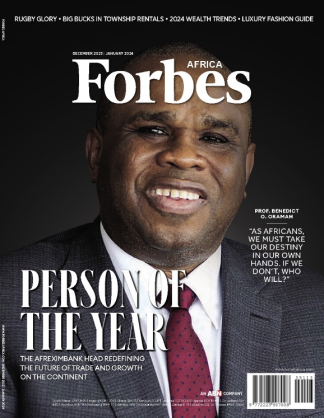
The President of the African Export-Import Bank (Afreximbank) (www.Afreximbank.com), Prof. Benedict Oramah, today in Cairo received the FORBES AFRICA magazine 2023 Person of The Year award.
At a well-attended award ceremony, which also included the unveiling of the cover for FORBES AFRICA's December 2023/January 2024 edition featuring Prof. Oramah as Cover personality, Dr. Rakesh Wahi, FORBES AFRICA Founder and Publisher, and Roberta Naicker, the Managing Director, said that the award recognised the stellar accomplishments of leading Africans contributing to the development of the continent.
“With a career spanning three decades at Afreximbank, Prof. Benedict Oramah is a true pan-Africanist,” said Renuka Methil, Managing Editor of FORBES AFRICA. “In our almost hour-long interview Prof. Oramah's stellar track record, coupled with his unbridled enthusiasm, passion, and contribution to the economic development of Africa shone through.”
“Amongst many initiatives under his visionary leadership, Afreximbank launched the Pan-African Payment and Settlement System (PAPSS) which will be a historic project for cross-border payments in local African currencies. He is a resilient risk-taker and articulated so well what a new united Africa should, and would, look like,” added Ms Renuka Methil.
Nominations for FORBES AFRICA Person of The Year are submitted by members of the magazine's editorial and research teams, including journalists from its bureaus across Africa, and a winner is selected after an Africa-wide review of the prominent contributors to the continent. Prof. Oramah's name was shortlisted and unanimously adjudged the winner for 2023.
With the award, Prof. Oramah joins a prestigious list of high achievers who had previously received the award, including Sanusi Lamido Sanusi, former Governor of the Central Bank of Nigeria; Dr. James Mwangi, CEO, Equity Group; Dr. Akinwumi Adesina, President, African Development Bank; Aliko Dangote, CEO, Dangote Group; Mohammed Dewji, President, MeTL Group; and Thuli Madonsela, former Public Protector of South Africa.
On 18 November, President Oramah also received the Zik Prize in Professional Leadership at an event in Lagos, Nigeria. He is also the recipient of numerous other awards for his contributions to the development and promotion of trade in Africa, and for the many initiatives he has championed to drive intra-African trade.
Distributed by APO Group on behalf of Afreximbank.
Follow us on:
X (Twitter): https://apo-opa.info/41qI9VY
Facebook: https://apo-opa.info/3MGRNQi
LinkedIn: https://apo-opa.info/3KBxMYQ
Instagram: https://apo-opa.info/3UA1jH1
About Afreximbank:
African Export-Import Bank (Afreximbank) is a Pan-African multilateral financial institution mandated to finance and promote intra-and extra-African trade. For 30 years, the Bank has been deploying innovative structures to deliver financing solutions that support the transformation of the structure of Africa's trade, accelerating industrialization and intra-regional trade, thereby boosting economic expansion in Africa. A stalwart supporter of the African Continental Free Trade Agreement (AfCFTA), Afreximbank has launched a Pan-African Payment and Settlement System (PAPSS) that was adopted by the African Union (AU) as the payment and settlement platform to underpin the implementation of the AfCFTA. Working with the AfCFTA Secretariat and the AU, the Bank is setting up a US$10 billion Adjustment Fund to support countries to effectively participate in the AfCFTA. At the end of 2022, Afreximbank's total assets and guarantees stood at over US$31 billion, and its shareholder funds amounted to US$5.2 billion. The Bank disbursed more than US$86 billion between 2016 and 2022. Afreximbank has investment grade ratings assigned by GCR (international scale) (A), Moody's (Baa1), Japan Credit Rating Agency (JCR) (A-) and Fitch (BBB). Afreximbank has evolved into a group entity comprising the Bank, its impact fund subsidiary called the Fund for Export Development Africa (FEDA), and its insurance management subsidiary, AfrexInsure, (together, “the Group”).
For more information, visit: www.Afreximbank.com
City of Cape Town announced as Host City for the Betway SA20 Final on 10 February 2024 – the partnership...
Global foundation becomes League’s ‘Social Impact Partner’ Betway SA20 andthe Laureus Sport for Good Foundation South Africa have announced a...
Four-day camp upskills future stars to help broaden women’s cricket depth in SA Betway SA20’s commitment to improve all aspects...
For the fifth annual edition of the Twyg Sustainable Fashion Awards, a renowned panel of six local and international judges will bring a strong global perspective to the evaluation process. This will be the second year that this same panel will be judging the awards. “We are confident that this dynamic panel, with wide-ranging and …
Monday, 6 November 2023: Betway SA20 will be teaming up with Castle Lite to bring its unique flavour to the...
Grammy award-winning Zakes Bantwini headlines opening match entertainment Popular 20 000 for R20 tickets promotion is back for Season 2...
Accreditation portal will be open from 1 November to 20 December 2023 Wednesday, 1 November: Media accreditation for the anticipated...
All six squads confirmed as 20-year-old Matthew Boast fetches joint-highest price of R1.6million in auction Thursday, 28 September 2023: Betway SA20...
Apple Music’s Rap Life Radio, presented by Global Editorial Head of Hip-Hop and R&B, Ebro Darden will feature South African superstar, chart-topping rapper and business man Cassper Nyovest on this week’s episode. Ebro and Africa Now Radio host, Nandi Madida, chat about his latest single “018” feat. Maglera Doe Boy which is available to stream …
Join us on a journey through flavour and time as we celebrate an iconic cocktail – the Negroni! The negroni is a cocktail that has surpassed trends and time for over a century, dating all the way back to the early 20th century Florence. It was born at the hands of Count Camillo Negroni when, …
South African Medical Research Council says death notification form must be changed
President Cyril Ramaphosa has expressed his deep condolences at the passing of veteran activist and Esteemed Member of the Order of Luthuli Ms Amy Thornton.
The President's thoughts are with the family, friends and comrades of the late activist who was born in Cape Town in 1932.
She was honoured in 2016 with the National Order of Luthuli for her excellent contribution and unflinching commitment to the struggle for liberation and equality for all South Africans, and her commendable bravery in the face of an oppressive regime.
As a 16-year-old, Amy Thornton worked with the then Communist Party of South Africa to campaign against the National Party in the 1948 election which resulted in the legislated enforcement of apartheid.
In 1950 she joined the Modern Youth Society (MYS), a progressive youth movement involving mainly university students. Through MYS, Ms Thornton was involved in night school literacy classes for African workers in the Cape Town docks.
When the Congress of Democrats (COD) was formed in 1952, she was appointed secretary of the Joint Congress Committee (involving the COD, the African National Congress (ANC), the South African Indian Congress and the Coloured Peoples' Congress).
She represented the MYS as part of the South African delegation to the World Federation of Democratic Youth, held in Bucharest, Romania in 1953.
In the same year she was recruited to join the underground SACP. She was active in pamphleteering against the Group Areas Act and the Bantu Education Act. She was also involved in study classes in informal settlements around Cape Town (Blouvlei and Elsies River).
In 1955 Thornton was a delegate from Cape Town to the Congress of the People. However, she was part of the delegation that was stopped by the police in Beaufort West and detained over the weekend, so she was unable to make it to Kliptown.
From the start of the Treason Trial in 1956 she served on the Treason Trial Support Committee. She did voluntary work for the Guardian newspaper (and its successors, as each successive title was banned in turn). She did research for the publication and managed the editorial work.
In 1959 she was banned for the first time initially for two years, but this was extended several times. She eventually served 14 years under banning orders, and lost her job as a nursery school teacher.
In 1976 she began to work part-time for the Food and Canning Workers' Union.
In 1981, she was a founding member and deputy chairperson of the United Women's Organisation, which later became one of the key organisations in the formation of the United Democratic Front (UDF).
In 1983 she was appointed as a patron of the UDF and was among those detained during the two states of emergency.
Ms Thornton was also a member of the Cape Town ANC regional leadership and served on the National Coordinating Committee for the Return of Exiles between 1990 and 1993.
President Ramaphosa said: “Amy Thornton lived a life of principled resistance, bravery and perseverance so that we could live in freedom today.
“She was one of many white South Africans who sustained the non-racial character of the liberation struggle.
“Her contribution and the risks she took on also disproved the often stated claim that white South Africans didn't know what was unfolding in the country or that they had no agency to change policy or conditions in the country.
“Amy Thornton served our nation with great courage and tireless energy. May her soul now rest in peace.”
Distributed by APO Group on behalf of The Presidency: Republic of South Africa.
President Ramaphosa mourns the passing of Amy Thornton
President Cyril Ramaphosa has expressed his deep condolences at the passing of veteran activist and esteemed member of the Order of Luthuli, Amy Thornton.
The President, in a statement, said his thoughts are with the family, friends and comrades of the late activist who was born in Cape Town in 1932.
Thornton was honoured in 2016 with the National Order of Luthuli for her excellent contribution and unflinching commitment to the struggle for liberation and equality for all South Africans and her commendable bravery in the face of an oppressive regime.
As a 16-year-old, Amy Thornton worked with the then Communist Party of South Africa to campaign against the National Party in the 1948 election which resulted in the legislated enforcement of apartheid.
In 1950, she joined the Modern Youth Society (MYS), a progressive youth movement involving mainly university students. Through MYS, Thornton was involved in night school literacy classes for African workers in the Cape Town docks.
When the Congress of Democrats (COD) was formed in 1952, she was appointed secretary of the Joint Congress Committee (involving the COD, the African National Congress (ANC), the South African Indian Congress and the Coloured Peoples’ Congress).
She represented the MYS as part of the South African delegation to the World Federation of Democratic Youth, held in Bucharest, Romania in 1953.
In the same year, she was recruited to join the underground SACP. She was active in pamphleteering against the Group Areas Act and the Bantu Education Act. She was also involved in study classes in informal settlements around Cape Town (Blouvlei and Elsies River).
In 1955, Thornton was a delegate from Cape Town to the Congress of the People. However, she was part of the delegation that was stopped by the police in Beaufort West and detained over the weekend, so she was unable to make it to Kliptown.
From the start of the Treason Trial in 1956, she served on the Treason Trial Support Committee. She did voluntary work for the Guardian newspaper (and its successors, as each successive title was banned in turn). She did research for the publication and managed the editorial work.
In 1959 she was banned for the first time initially for two years, but this was extended several times. She eventually served 14 years under banning orders and lost her job as a nursery school teacher.
In 1976 she began to work part-time for the Food and Canning Workers’ Union.
In 1981, she was a founding member and deputy chairperson of the United Women’s Organisation, which later became one of the key organisations in the formation of the United Democratic Front (UDF).
In 1983 she was appointed as a patron of the UDF and was among those detained during the two states of emergency.
Thornton was also a member of the Cape Town ANC regional leadership and served on the National Coordinating Committee for the Return of Exiles between 1990 and 1993.
“Amy Thornton lived a life of principled resistance, bravery and perseverance so that we could live in freedom today. She was one of many white South Africans who sustained the non-racial character of the liberation struggle,” President Ramaphosa said.
“Her contribution and the risks she took on also disproved the often stated claim that white South Africans didn’t know what was unfolding in the country or that they had no agency to change policy or conditions in the country.
“Amy Thornton served our nation with great courage and tireless energy. May her soul now rest in peace,” President Ramaphosa said. – SAnews.gov.za
Edwin
Thu, 09/07/2023 - 12:03
Cape Town, August 2023 – FAME Week Africa has carved its place as the preeminent event for African creatives, providing a platform for their deep-rooted talent; their ancient and contemporary stories; and their ingrained culture to flourish. By bringing together collaborative events focusing on the major creative economies – these being film, television, animation as …
And, what has happened since? We went backwards! Wouldn’t it be incredible if our political leaders fixated on one thing that would make our City stand out internationally, create jobs and save the planet? The original proposal from 6 June 2017 is below: Lessons for PE in Arnold Schwarzenegger’s blunt Clean Energy message to Donald […]