Sex workers picket at Parliament ahead of elections
#WhoSpeaksForUs? campaign launched

MyZA
News, Directory, Events and Other Stuff
#WhoSpeaksForUs? campaign launched
21 former MK freedom fighters honoured
Deputy President Paul Mashatile has officially handed over headstones to 21 affected families of fallen former Umkhonto we Sizwe (MK) operatives who died between 1986 and 1990.
The Deputy President described the occasion in Soweto, Johannesburg, as an important and historic moment that must go down in the annals of history.
“We are living up to the constitutional injunction which enjoins us to, ‘recognise the injustices of our past, honour those who suffered for justice and freedom in our land, and to heal the divisions of the past and establish a society based on democratic values, social justice and fundamental human rights’,” he said on Tuesday.
He said he hoped that the unveiling would bring closure to the suffering and agony of the families who endured the pain.
The Deputy President told the families and the other attendees that the liberation heroes had made enormous sacrifices, including disintegrated families to secure the freedom many enjoy today.
He took the time to pay tribute to the brave men and women who made the ultimate sacrifice in service to the country.
“We will never forget their selflessness, courage, and commitment to defending our nation. They demonstrated remarkable courage and strength in the face of adversity, showing unwavering determination and fortitude in the most difficult of situations.”
He believed that it was unfortunate that many liberation heroes never saw the dawn of democracy ushered in 1994. “However, they have paid the ultimate price with the hope of a South Africa that we have today.”
He recounted the journey of South Africans before 1994 as challenging and arduous.
The country’s second-in-command said the apartheid system robbed black South Africans of the right to exercise fundamental human rights.
These include the right to vote, access to equal access and quality education and healthcare, and the freedom to move around freely throughout the country without restriction.
Despite facing immense challenges and brutal crackdowns, he said South Africans never gave up their fight for freedom and equality.
“As we remember and commemorate their sacrifice, it is important for us to not only honour their memory but also to ensure that their legacy lives on. We must continue to support and care for our veterans and their families. We must strive to create a society that values and respects the sacrifices made by MK veterans and their families.”
He said the country has a collective duty to protect the democratic gains and break free from the shackles of poverty and high levels of inequality.
Deputy President Mashatile said under-development was now the common enemy, which needed a more focused response.
Meanwhile, he expressed regret that some veterans and their families were still struggling with poverty after 30 years of democracy.
“Sadly, most of these brave men and women were never able to save for retirement or their children’s futures by funding health care plans or pensions, or by looking into different options for skills development or financing for their schooling.”
He said government was actively working to bring about the change it deserves.
Through the Presidential Task Team on Military Veterans, he said the state was committed to addressing the concerns and needs raised with the government regarding veterans’ benefits, support, and improving access and services to military veterans.
“We are committed to providing support to the families of MK veterans in various ways, including financial assistance, to ensure they can lead fulfilling lives.”
A wreath-laying ceremony took place at five cemeteries, including one headstone in Ga-Rankuwa, two at Crystal Park, four in Tembisa, seven at Avalon and eight at Westpark. – SAnews.gov.za
Gabisile
Thu, 05/23/2024 - 15:34
High schools called to participate in youth water prize competition
The Department of Water and Sanitation (DWS) in Gauteng has called on local high schools to participate in the South African Youth Water Prize (SAYWP) competition.
The department made the call during a recent District Eskom Expo held at Johannesburg Sci-Bono Discovery Centre.
The South African Youth Water Prize competition is an important part of the department's education programme and it aims to educate learners and society on various water resource management issues, including water use efficiency, water quality monitoring, protection of water resources, public health and hygiene awareness, and identification of invasive species.
The competition targets Grades 9, 10, and 11 learners who possess innovative ideas and projects that can help tackle the water and sanitation crisis in their communities.
The competition starts at the provincial level to the national level, and then proceeds to the global level in Stockholm, Sweden.
Mphothulo Eulicia from the department’s Gauteng regional office said taking part in the South African Youth Water Prize is a step towards empowering youth to become future leaders in water resource management.
“By encouraging innovation and creativity, the department is nurturing a new generation of problem solvers who can help create a sustainable water future for South Africa,” Eulicia said.
During the District Eskom Expo, the department presented the SAYWP to mobilise schools for the 2025 adjudications and encouraged them to start their preparations early.
Eulicia said that out of the 11 schools who were present at the expo, only five were recognised for the 2025 South African Youth Water Prize, which indicates the high level of competition and the need for schools to immediately start planning and working on their projects.
She said participating in the SAYWP can potentially change the life of a learner for the better, and emphasised the importance of not letting such opportunity slip by.
“The prizes awarded to winners of the competition are quite substantial, including bursaries, laptops, trophies, and cash prizes, among others. These prizes can serve as a stepping stone for the youth towards a brighter future.
“By engaging in these competitions, students not only have the opportunity to showcase their innovative solutions to water and sanitation challenges but also stand a chance to win valuable prizes that can positively impact their educational and career trajectories,” Eulicia said.
A Grade 10 learner from Greenside High School in Johannesburg earned the top spot in the provincial leg of this year’s National South African Youth Water Prize competition with his innovative approach to water resource management.
Yaseen’s brilliant water and sanitation innovation idea won him a prize of R6000, a first-place trophy, and a bursary.
The second place went to Good Hope Secondary School with an awareness project. The school walked away with a prize of R5 000 and a second-place trophy.
The Greenside Secondary School also scooped third place with an awareness project and won a prize of R4 000.
Interested schools can access more information at https://www.dws.gov.za/Projects/SAYWP/contact.aspx or contact Reshoketswe Malepe at MalepeM@dws.gov.za or on 083 8643 493. – SAnews.gov.za
GabiK
Wed, 05/22/2024 - 10:49
Practising responsible citizenry
Five months into 2024, and many a thing has happened, requiring us to sit down and catch our collective breath.
In the last five months, the country commemorated Human Rights and Freedom Months, experienced tragedy with the recent shooting of a five-year-old boy in a hijacking in Soshanguve as well as a deadly bus crash over the Easter holiday period.
Recently, the country was also on tenterhooks following the Victoria Street multi-storey George building collapse in the Western Cape, which claimed at least 33 lives.
Just as self-care Sundays are necessary to keep one’s wits about oneself, we need to do the same for our beloved country.
That oh so necessary routine of taking care of one’s skin, hair and reflecting on the week that was, accompanied by a delicious, nourishing meal, is the same kind of nurturing we ought to provide for the country on the southernmost tip of the African continent.
Reflection is a powerful tool that one can use to take stock of the goings-on in one’s life and with the country’s upcoming 2024 National and Provincial Elections, it is a tool that we can use to move the country forward.
The beautiful thing about reflection is that while it can bring back painful memories of the past which was dominated by segregation brought about by the then apartheid regime, it also affords the country time to reflect on pockets of excellence, including the provision of housing; equal education and social grants to assist the less fortunate in our country.
While government has provided clean water, sanitation and continues to provide electricity - and yes, it is intermittent at the best of times - it has not swept the challenges under the rug.
With us approaching the half-year mark – yes can you believe it? - we can start the second part of our journey across the sun having taken action that will guide the future direction of our country.
As responsible citizens who despite our country’s challenges of unemployment, crime and gender-based violence, among others, we have to cast our votes in South Africa’s seventh democratic elections on 29 May 2024.
And as responsible citizens, entrusted with the right to vote through the Constitution’s Bill of Rights, we ought to exercise that right.
Section 19 (3) of the Bill of Rights makes provision to vote in elections and to do so in secret, while also allowing adult citizens to stand for public office and, if elected, to hold office.
This is probably the best and most important self-care routine we cannot afford to miss as a country.
And while others may still be undecided as to who to vote for, the hourglass has not run out of sand yet. You can still make up your mind on who to vote for.
This year’s elections are believed to be the most contested in our history as a democratic dispensation and you don’t want to suffer from a bout of the FOMO (fear of missing out) post the elections that will see the participation of independent candidates for the very first time.
Voting is not a pointless exercise. Many died for the privilege we enjoy today. Additionally, the World Economic Forum reported that 2024 is a historic election with elections being held in 50 countries around the world, including the United States.
Naysayers may say that project democracy has failed. In his Freedom Day speech commemorating 30 years of South Africa’s freedom and democracy, President Cyril Ramaphosa stated that our democracy is young, highlighting that “most of the world’s most established democracies are over a hundred years old.”
Nobody can say that democracy is perfect at 100 years old, no more so than at 30 years. What we’ve seen over the last three decades as citizens is the growth of a nation that is not without its faults.
We all have faults and what matters most is that we still have the ability to recalibrate and make the necessary changes.
While there are many important issues that rile us up, including crime and corruption, that may fuel voter apathy, we cannot give up on our country.
At a recent District Development Model Presidential Imbizo in the Northern Cape, the President called on citizens not to throw in the towel as government is committed to delivering services and addressing challenges.
“We don’t want you, our people, to lose hope,” he said.
We should not underestimate the power of a single vote if all 27.79 million of the country’s registered voters make their voices heard as we go to the polls on 29 May 2024. It’s a date.
Neo Semono is a Features Editor at SAnews.gov.za.
Matona
Wed, 05/22/2024 - 10:58
Nzimande opens first-ever nuclear medicine research facility in Pretoria
The Nuclear Medicine Research Infrastructure (NuMeRI) facility - the continent’s first nuclear medicine research facility, which features a cyclotron for producing isotopes used in radiation therapy – was officially opened on Tuesday, in Pretoria.
The NuMeRI will provide consolidated expertise in nuclear technologies in medicine and biosciences, creating significant research, development and innovation capacity in South Africa and will assist in the treatment of cancer and other diseases.
Minister of Higher Education, Science and Innovation, Dr Blade Nzimande, who opened the facility, told guests the world-class facility is a product of South Africa’s long-standing cooperation with the European Union (EU) that dates back to 2012.
Under this agreement, the Department of Science and Innovation (DSI) collaborated with the EU to develop a South African first Research Infrastructure Roadmap (SARIR) for the country.
“The mobilisation of innovation and technology to address the disease burden and the need to provide quality health care to all South Africans is a key priority of my department’s Decadal Plan on Science, Technology, and Innovation,” said the Minister, adding that the NuMeRI was an important pillar in this effort.
The NuMeRI is a one-stop-shop medical imaging facility dedicated to drug development and imaging-based clinical research and open to all researchers who will benefit from imaging in their product development.
“It will assist in taking bio-innovations further down the value chain from radiolabelling to preclinical testing. It will also contribute to good manufacturing practices and clinical trials,” he explained.
In addition, the NuMeRI’s capabilities will contribute to the precision medicine approach and targeted personalised therapies being developed in South Africa.
Governance
To ensure efficient governance and management, the two partners, the University of Pretoria and Steve Biko Academic Hospital, agreed to the establishment of a NuMeRI not-for-profit company (NPC).
The University of Pretoria and South African Nuclear Energy Corporation (Necsa) are founding members of the NPC and draw on the knowledge of officials of the DSI, who are actively involved in the implementation of the NuMeRI.
The first phase of NuMeRI, established and hosted at Necsa for three years was made possible by an investment of close to R150 million between 2016 and 2019. The second phase of implementation at Steve Biko Academic Hospital started in the 2020/21 financial year with an investment of approximately R390 million since 2020 by the DSI.
Meanwhile, the University of Pretoria also received an additional R85 million for the NuMeRI building.
Human resource
According to the Nzimande, it is anticipated that this infrastructure will triple the current clinical PhDs and increase six-fold basic science PhDs.
To date, 20 Masters and 15 PhD students have completed their studies with a further 17 Master’s degrees and 22 PhD students finishing their studies.
Meanwhile, the NuMeRI’s research activities advance the objectives and priorities of the National Department of Health, strengthening the nuclear medicine capacity in South Africa and beyond its borders in Africa.
It also enhances South African research in medicinal chemistry, expediting the development of drugs to address national priority diseases such as cancer and tuberculosis, enabling new pharmaceuticals to reach the market sooner, and giving South African pharmaceutical development a competitive edge with global equivalents.
The research will be mainly in oncology and will cover other communicable and non-communicable diseases.
“The opening of this facility represents yet another important milestone in the development of scientific infrastructure for our country and this is embodied in the fact that the NuMeRI is the first of its kind on the African continent.” – SAnews.gov.za
Gabisile
Tue, 05/21/2024 - 15:51
Celebrate World Ocean Day (8 June) this year with clean-ups, water sports, live music, entertainment and so much more at Scottburgh’s Ocean Festival running from 6 to 9 June. Embracing this year’s World Ocean Day theme Catalyzing Action for Our Ocean & Climate, the event invites participants to celebrate the ocean while playing their part …
The Unlimited Child, the largest and leading Early Childhood Development (ECD) non-profit organisation in South Africa, has won the prestigious Khalifa International Award in The Early Learning Field for Best Programme, Curricula, and Teaching Practice. As a rapidly growing organisation throughout Africa and the Middle East, The Unlimited Child is one of only four outside …
As the June winter holidays rapidly approach and plans for the winter school break are being finalised, visiting a museum might not be at the top of everyone’s list as part of their holiday activities, especially for those with children. However, International Museum Day, which was celebrated on 18th May, reminds us of museums’ invaluable …
Only about one in four early learning programmes get subsidies, and that funding is only R17 per child per day and has not increased since 2019
Multi-skills development centre to benefit KwaSwayimane community
Higher Education, Science and Innovation Minister, Professor Blade Nzimande, has officially launched a multi-skills development centre to benefit the community of KwaSwayimane in KwaZulu-Natal.
The centre is an initiative of the Sector Education and Training Authority (SETA) in response to requests submitted to the Minister by Inkosi SN Gcumisa of the Gcumisa Tribal Authority and uMshwathi Local Municipality Mayor, Mandla Zondi.
They had requested the Higher Education and Training Department to build a campus of the uMgungundlovu Technical Vocational Education and Training (TVET) College, or a multi-skills development centre in KwaSwayimane village.
Informed by a needs analysis, Nzimande launched a variety of SETA training interventions with a total value of R30 694 700.
Given the importance of agriculture in KwaSwayimane, AgriSETA is the lead SETA of this skills development initiative.
AgriSETA has contributed R5 000 000 towards the skills development of 800 learners in crop production, livestock farming, and has provided accreditation to the three skills centres identified in uMshwathi.
Other investments include:
A total of R2 275 000 contributed by the Insurance Sector Education and Training Authority (INSETA) will go towards skills programmes in digital skills, while R2 535 000, contributed by the Wholesale and Retail (W&R) SETA, will go towards digital skills programmes and SMME support.
Speaking at an event held at Ndlebezembuzi Hall in KwaSwayimane, Nzimande said the SETA skills development intervention will be piloted in the kwaSwayimane community, and the initial phase rollout will benefit over 2 000 community members, mostly young people who are currently not in employment, education nor training (NEET).
“This contribution by our SETAs is their collective commitment to addressing unemployment, poverty, inequality and to improving the quality of life in the community of KwaSwayimane. The contribution also symbolises the commitment of government to changing the lives of ordinary citizens, particularly our rural areas.
“We are particularly excited to be making this contribution in this community. As a department, we believe that we need to make sustainable investments in our rural areas, with the view of making them economically viable,” Nzimande said. – SAnews.gov.za
GabiK
Tue, 05/21/2024 - 13:08
Celebrating Cultural Heritage: The Rain Queen viewers to create Sounds of Khelovedu lip-syncing content. Johannesburg, 21 May 2024 – Mzansi Magic is proud to announce the launch of “Sounds of Khelovedu”, an exciting social media campaign aimed at celebrating the rich cultural heritage of Queen Modjadji and the Valovedu people ahead of the show which …
Mashatile launches SANDF-led youth initiative to create jobs, entrepreneurship
Deputy President Paul Mashatile has called on all South Africans to support the newly launched National Youth Service (NYS) initiative, which aims to address youth unemployment in South Africa.
The Deputy President, together with the Department of Defence and the Department of Women, Youth, and Persons with Disabilities (DWYPD), unveiled the South African National Service Institution (SANSI) in Pretoria on Tuesday.
The Deputy President said the South African National Defence Force (SANDF)-led NYS is a special project that will be piloted and implemented in the country’s poorest districts, where most youngsters are unemployed.
WATCH | Launch of the South African National Service Institute
Despite interventions such as the Presidential Employment Stimulus, which has created over 1.7 million job opportunities, the country’s second-in-command bemoaned that many young people remain on the margins of real economic participation.
He cited the latest Quarterly Labour Force Survey, which shows that the official unemployment rate stands at 32.9%.
According to the survey, about 3.6 million (35.5%) out of 10.3 million young people aged between 15 and 24 were not in employment, education or training (NEET).
“I am pleased that the DWYPD, in collaboration with the Department of Defence, adopted a whole-of-government and whole-of-society approach to the skills revolution for the unskilled. This will have a significant impact on restoring livelihoods, creating wealth, and alleviating poverty and hunger among the marginalised.”
READ | Employment programmes make a difference
According to the Deputy President, the initiative aims to optimise government resources by spearheading impactful projects that assist the nation’s most vulnerable citizens.
“We envisaged inviting and encouraging young people to voluntarily join the National Youth Service, beginning with a character-building programme and progressing to industry demand-based education and training, ultimately leading to gainful employment or entrepreneurship.”
The establishment of SANSI aims to develop, capacitate, and empower young unemployed Technical Vocational Education and Training (TVET) and university graduates through a purposeful and smooth skills-to-industry pipeline that will lead to innovative entrepreneurship and long-term, sustainable employment.
The initiative also intends to transform youngsters into courageous agents of change, who will tackle the country’s most pressing issues in strategic work streams.
These include food and agricultural value chain commercialisation, maritime and ocean economy, engineering and construction, manufacturing and infrastructure rollouts, as well as skills of the future, which include digital technologies and electronics.
The initiative, Mashatile stated, represents a massive investment in the effort to get young people trained and capacitated to participate in the economy.
He views the move as a significant milestone in the country’s journey towards a stronger and more resilient society.
In addition, he said the initiative would serve as a hub for nurturing leadership, fostering skills development, and promoting community engagement.
“It will empower our young people to contribute meaningfully to the development of our country and the wellbeing of our communities,” he stressed.
The Deputy President announced that the provincial launches are still to follow, with the project aiming to reach at least 100 000 youth participants in the current fiscal year.
He urged all young individuals who meet the eligibility requirements for the NYS to submit their applications in large numbers.
“The youth must also take advantage of the opportunity presented by the programme to equip themselves with the much-needed skills.”
Minister of Defence Thandi Modise described SANSI as a necessary and important initiative and thanked the DWYPD Minister, Dr Nkosazana Dlamini-Zuma, for rallying her to see the bigger picture.
“It tallied with the call from all society that asked the Defence Force to do something and cries of mothers who had their hands on their heads and those who were trying to fight the nyaope. We see SANSI as that instrument in the hands of the Defence Force that will enable our children to come into their own,” said Modise.
Shifting her focus to the young participants in SANSI, she emphasised that the SANDF will ensure their punctuality, obedience, ability to give and receive instructions, and leadership skills.
SANSI launch in pictures
 |
 |
 |
“The military will keep an eye on every little cent spent on this project and will go to the future of this country and the skills that we need,” Modise said. – SAnews.gov.za
Gabisile
Tue, 05/21/2024 - 14:12
S Africans urged to adopt and foster children to ensure the protection of youngsters
With the Child Protection Week campaign in full swing, the Department of Social Development (DSD) has encouraged South Africans to seek alternative care for their children if they are unable to care for them.
Social Development Minister Lindiwe Zulu launched Child Protection Week on Sunday in Kimberley, Northern Cape.
The department is currently on a drive to raise awareness on upholding the rights of children, mobilising society to protect children against violence, abuse, neglect and exploitation.
Since the dawn of democracy, the department said South Africa has designed the child protection system to provide for children to be fostered or adopted, and enable children to remain within families.
“Adoption, which is viewed as the most permanent placement option for children who are orphaned and vulnerable, remains underutilised in South Africa and this leaves children for whom there is no immediate alternative care within their extended families exceptionally vulnerable to the long-term effects of institutionalisation,” the DSD said.
According to Section 28 of the Bill of Rights, Chapter Two of the Constitution of South Africa, every child has the right to parental and family care or to appropriate alternative care when removed from family care.
As per this constitutional provision, government has to provide alternative care for children when their parents or families cannot fulfil their duties of care.
Meanwhile, Section 233 of the Children’s Act also stipulates that if the parent is a child, a guardian must assist that child.
The department stated that adoption is one of the alternative care placement options and forms part of the comprehensive child protection system.
South Africa currently has orphaned children due to factors such as violent crime, gender-based violence (GBV), HIV/AIDS, and the COVID-19 pandemic, which has claimed many lives worldwide.
“On the other hand, some children are abandoned due to the triple challenges of poverty, unemployment and inequality which culminate into multiple social ills including unwanted pregnancy.
“Adoption, therefore, serves as the best possible option or alternative for these children, only if there are no prospects to reunite them with their parent(s) or families.
“Although adoption is a person’s or a family’s choice, it is important to promote adoption services and recruit prospective adoptive parents within the country.”
The department acknowledged there could be barriers, which may prevent people from adopting children, such as cultural obstacles.
“This suggests that there is a need for increased awareness of this tool of child protection. South Africans are, therefore, encouraged to look into adoption as one of the child protection measures to increase the number of prospective adoptive parents who are willing to adopt children in need of permanent and stable families.”
Between April 2010 and March 2024, the department recorded 16 593 national adoptions. Additionally, there were 2 239 inter-country adoptions, which brought the total of registered adoptions to 18 832.
The department announced it has employed 412 social workers registered with the South African Council for Social Service Professionals (SACSSP) and have since been armed to provide adoption services.
Foster care
The Children’s Act also makes provision for foster care as an alternative form for children who cannot be cared for by their biological parents.
“Foster care is a court-ordered care of a child that needs care and protection, placing the child in a cluster foster care scheme or a suitable person other than a biological parent or a guardian,” the department explained.
As part of foster care, the Children’s Act introduced the concept of cluster foster care placement which is aimed to maximise the available resources, strengthening the provision of foster care services to children including those with special needs within a community-based setting.
The department explained that children who are placed in foster care with a valid court order gain access to the package of government services that include therapeutic services, psychosocial support services, education, healthcare and foster child grants.
“The purpose of foster care is to create an opportunity for children in need of care and protection to live in a protective, nurturing, stable and secure family environment. It requires the facilitation of reunification of the child with the parents or other safe and nurturing family relationships that will ensure stability in a child’s life.”
By February 2008, the number of children in foster care was 454 000, and by the end of March 2024, it had decreased to 306 683, with the recipients receiving grants.
“With the introduction of the comprehensive legal solution to foster care prompted by the litigation on lapsed foster care orders, the Children’s Amendment Act 2022 makes a provision to prevent the lapsing of the foster care orders, by enabling the presiding officers to issue interim orders.”
Meanwhile, the Social Assistance Amendment Act increases access to social assistance for orphaned children in the care of relatives through the Child Support Grant-Top Up. – SAnews.gov.za
Gabisile
Tue, 05/21/2024 - 09:37
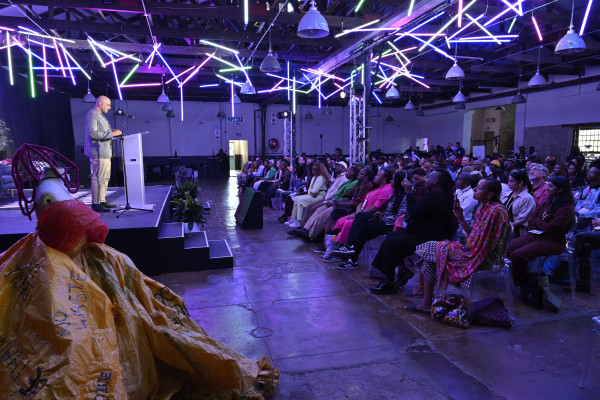
At this month's SoCreative Summit 2024, the British Council (www.BritishCouncil.org) launched its hotly anticipated new eLearning platform, SoCreative; a series of free online courses designed to help aspiring African entrepreneurs grow sustainable creative businesses, supporting them in their journeys.
The fifth edition of the annual, highly-popular SoCreative Summit, hosted by British Council and Business and Arts South Africa (BASA) in partnership with PACE, took place at the vibrant Victoria Yards venue in Johannesburg. Dubbed a ‘gift' to the creative industries given that there is no charge, the Summit was attended by cultural makers, artists, fashion designers and anyone deserving of the title ‘creative' – both in-person and virtually, serving as a platform to nurture innovation and promote the growth and vitality of Africa's creative economy.
The launch of the SoCreative eLearning platform coincides with the culmination of the SoCreative Summit annual series. Explains Farai Bayai Ncube, Regional Arts Director Sub-Saharan Africa: British Council: “This final summit's theme, ‘Emergence', embodies the complete dedication, creativity, and vision of our delegates and partners who have contributed to its success over the past five years.
“By this same token, the emergence of our SoCreative eLearning programme will serve in its legacy, and like the summit itself, is free to those who wish to gain knowledge.”
Ncube says that the SoCreative eLearning programme was developed by academic practitioners within Africa and the United Kingdom's creative economies, and aims to fill the creative knowledge business gaps that exist in the ecosystem. “The challenges facing creative entrepreneurs have been revealed in previous summits and multiple conversations with our programme stakeholders, and so we have developed the platform in an attempt to address these shortfalls through fostering an ecosystem in which young entrepreneurs can thrive.”
The SoCreative eLearning platform is aimed at early-stage entrepreneurs who want to turn their creative pursuits into sustainable, fulfilling business endeavours. The free, self-paced courses are designed to guide users through the entire process; from learning about Africa's creative industry to finding the right market for their ideas, distinguishing their businesses, finding investors, business management skills and more. The courses include: Launching your Creative Enterprise, Growing your Creative Enterprise, Social Impact through Entrepreneurship and Creative Economy Policy.
Upon completing the programme, participants receive a certificate of achievement, which makes them eligible to apply for ongoing support through mentoring, coaching, incubation and acceleration creative economy programmes via the British Council's network within participating countries.
Says Skinder Hundal, Global Arts Director: British Council: “While this may be the final summit in this format, we will continue to create platforms that enable young people to lead innovation, to become visionaries and to shape their futures. The impact of this investment and collaboration will inspire future global leaders, making a positive impact in Africa and the world in the years to come.”
Register for the SoCreative courses here: https://apo-opa.co/3wITzuA
Distributed by APO Group on behalf of British Council.
Issued by:
MSL
Media queries:
Roxanne Manning
roxanne@rvmcommunications.co.za
+27 76 826 8333
About the British Council:
The British Council is the UK's international organisation for cultural relations and educational opportunities. We build connections, understanding and trust between people in the UK and other countries through arts and culture, education and the English language. In 2019-2020 we reached over 75 million people directly and 758 million people overall including online, broadcasts and publications. Founded in 1934 we are a UK charity governed by Royal Charter and a UK public body. We receive a 14.5 per cent core funding grant from the UK government. www.BritishCouncil.org
Children in KZN are being placed in foster care instead of care centres
Many South Africans with hepatitis go undiagnosed
Stillwater Sports, the organisers of one of South Africa’s largest Women’s Month celebrations, are excited to announce that the iconic Totalsports Women’s Race will boast an impressive, combined prize purse of R 412,500.00 in 2024. “We are excited to announce that the prize purse for the Totalsports Women’s Race will more than double in 2024, …
Government launches Child Protection Week
The Department of Social Development has launched the annual Child Protection Week campaign saying that while has much has been achieved in protecting the rights of children, challenges remain.
“We have come a long way and achieved much as a nation in protecting and promoting the rights of our children, although we still have a number of serious challenges that confront us,” said the department on Sunday.
This as Minister Lindiwe Zulu launched the campaign in Kimberley in the Northern Cape on Sunday.
This year’s Child Protection Week is being observed under the theme: “Protecting South African Children, 30 years on.”
“South Africa had to go through deliberate transformation and one of the key priorities for government was to ensure the protection and upholding of human rights including the rights of children,” the department said.
WATCH | Protecting children
Government has invested in children through various services like education, health, access to clean water, health, and electricity as well as the biggest social assistance programme aimed at protecting children.
“As Government, our vision is to make South Africa a place where all children and young people are loved, confident, happy and healthy, and are empowered to reach their full potential,” said the department on Sunday.
Speaking at the launch Minister Zulu said that the “one thing parents said they really want is for their children to take education seriously and that their children remain in school to improve their chance to build a brighter future for themselves and their country."
The Minister bemoaned the high levels of violence against children.
“One of the major concerns for me is the unacceptably high levels of violence against children in our country. We have all heard of the tragic story of the 6-year-old Joslin Smith who went missing from Saldanha Bay on 19 February and to this day has not been found. Hers is a sad story of many children in our country whose rights are violated and robbed of their childhood,” said the Minister.
READ | Cabinet concerned about safety of children
READ | Safeguarding the future
Teenage pregnancy was also another issue raised by the Minister.
“We are also deeply concerned about the alarming number of teenage pregnancies across the country, including here in the Northern Cape, with John Taolo Gaetsewe and Frances Baard as leading districts.
“We must act now to stop this! While we encourage teenage mothers and fathers to remain in school and complete their studies, we must work together to stop teenage pregnancy in the first place,” she said.
The department further stressed the importance of family as the “best first line of defence and support in the protection of children.”
“That is the reason why over the years we have taken deliberate and decisive action to implement child-and family-oriented programmes,” it said.-SAnews.gov.za
nosihle
Sun, 05/19/2024 - 13:24
Safeguarding the future
As the country celebrates 30 years of freedom and democracy, the Department of Social Development will launch the country’s Child Protection Week on Sunday, 19 May 2024.
According to the department, South Africa has undergone a deliberate transformation, with one of the key priorities being to ensure the protection and upholding of the human rights of children.
The previous laws, according to the department, were informed by colonial and apartheid systems, which brought the provision of services based on race and colour.
These laws, amongst others, included the Group Areas Act, Bantu Local Authorities Act and the 1923 Native Areas Act, which segregated urban residential space and created “influx controls” to reduce access to cities by Blacks.
“All these and other pieces of legislation had a negative impact on the lives of Blacks, Coloureds, and Indian communities who were discriminated against because of their colour and were categorised as minority groups without access to basic services, including, clean water, quality education, and their right to dignity.
“The South African family was disintegrated and separated through migrant labour laws leaving children with one or no caregiver or parent,” the statement read.
In its efforts to advance the dignity and human rights of the people, the democratic government has since prioritised the development of the Constitution which was signed into law in 1996.
Section 28 of the Bill of Rights in the Constitution guarantees children their rights, including the right to a name, citizenship, education care and support.
According to the Constitution, children need food and shelter for their development and survival. They should also be protected from maltreatment, neglect, abuse, or degradation as well as from exploitative labour practices.
“When Nelson Mandela became President, he committed to creating and leading a people-centred society and spoke to the needs of caring for children and young people.
“The youth of our country are the valued possession of the nation. Without them, there can be no future. Their needs are immense and urgent. They are at the centre of our reconstruction and development plan.”
To demonstrate the commitment of the new government to the rights of children, in his first State of the Nation Address, President Mandela ordered the release of children who were incarcerated by the oppressive government.
The department said before 2005, the Child Care Act, which was later overhauled and replaced by the Children’s Act 38 of 2005, regulated children’s services.
“The introduction of the Children’s Act brought in a paradigm shift in the provision of child protection services and put the best interest of all children at the centre.”
As a result, the strengthened child protection measures saw the introduction of services that were geared towards care and protection of children, cushioning orphans, and vulnerable children as well as the protection of children in need of care and protection.
In celebrating the country’s 30 years of freedom and democracy, Social Development Minister, Lindiwe Zulu, will launch the Child Protection Week campaign to reflect on the gains of the country and to promote the rights of children.
This year, the campaign was brought forward due to the national elections and will be commemorated under the ‘Protecting South Africa’s Children 30 years on’ theme.
South Africa through the United Nations (UN) Convention on the Rights of the Child and the African Charter on the Rights and Welfare of the Child is obligated to look after every child within its borders.
The department said government has invested in children through various services like education, health, access to clean water, health, and electricity and currently has the biggest social assistance programme aimed at protecting children. – SAnews.gov.za
Gabisile
Fri, 05/17/2024 - 09:39
Swellendam, South Africa May 2024: Southern Oil’s Canola Development Trust Empowers Future Generations Through Education Southern Oil, a leading producer in the agricultural sector, reaffirms its commitment to community well-being through its unwavering support of the Canola Development Trust that heads up two educational systems that are the first of its kind in South Africa. …
Chikunga reflects on state of road safety
South Africa has seen an escalation in the number of road traffic casualties since 1994 due to the rise in the vehicle population, which has presented a plethora of road safety related challenges.
Addressing the launch of the United Nations Global Campaign for Road Safety, Transport Minister Sindisiwe Chikunga attributed the increase of the vehicle population to access to bank loans and the ability to purchase vehicles.
“Such an increase has presented a plethora of road safety related challenges, from human factors, environmental factors, engineering and technical factors, law enforcement, as well as education and awareness factors.
“From 1994 - 1995, the vehicle population increased by one million, from 5.5 to 6.5 million. Calculating from a period between 1994 and 2022, we moved from 5.5 million to an almost 13 million (12 964 430) vehicle population,” the Minister said on Wednesday in Johannesburg.
According to statistics, 87% of road fatalities in the country can be attributed to road user behaviour.
“Research has shown that our employed youth are the ones who carry the heaviest burden of road crashes, injuries, and fatalities in our country. Statistics also show that pedestrian fatalities are highest segment of victims in the country and young economically active people between the ages of 25 and 39 constitute the majority of those who die on the roads,” Chikunga said.
In an effort to address numbers of road traffic casualties, government has developed a multifaceted approach to regulate and ultimately reduce the fatalities on the roads.
“We introduced legislative amendments to enhance preventive measures, for instance we introduced blood alcohol content limits; speed limits especially in urban areas and around schools. We also established mandatory the seat belt regulations and child restraints use.
“We examined a range of sentencing options for traffic violations, including licence suspensions under the Administrative Adjudication of Road Traffic Offences (AARTO) demerit points system, and – for specific grades of offences – community service sentences and/or mandatory licence re-testing. We put in place, advance technical norms and standards for road infrastructure and vehicles,” the Minister said.
In addition, government approved the 2016 - 2030 National Road Safety Strategy, with intermediate and long-term actions to ensure vehicle fitness, driver safety, pedestrian safety, community participation in issues of road safety.
The National Department of Transport has convened a series of national road safety policy consultative workshops and a Road Safety Summits to foster open and critical dialogue between government, industry, civil society and academia.
Recently, South Africa conducted a detailed analysis of road crash patterns in the county over the past five years (2018 - 2022).
“The analysis has shown that although we are making steady progress in reducing fatalities, we need to fast-track progress by intelligently deploying our law enforcement, conducting safety education communication campaigns at identified hotspots and at times when crashes are likely to happen,” the Minister said. – SAnews.gov.za
nosihle
Wed, 05/15/2024 - 13:33
President Ramaphosa delivers inaugural Elijah Barayi memorial lecture
President Cyril Ramaphosa says the legacy of unionists and anti-apartheid struggle heroes like Elijah Barayi can be found in the labour-related laws enshrined in South Africa’s Constitution.
The President was delivering the inaugural memorial lecture for Barayi held at the University of Johannesburg’s Soweto Campus on Wednesday.
Barayi was a revered trade union leader and freedom fighter during the apartheid era and was one of the founding leaders of the National Union of Mineworkers (NUM).
He became first President of the Congress of South African Trade Union (Cosatu) at its launch in 1985 and was an activist in the Mass Democratic Movement since the 1950s.
His life was lived fighting for the freedom of South Africans and fair labour practises until his passing months before South Africa’s first democratic elections in 1994.
“Thirty years into democracy, we have several progressive labour and social protection laws, including the right to strike. And it was the labour movement as led by Barayi which insisted that the most fundamental right that workers should have should be collective bargaining, the right to strike, the right to have a safe working place.
“So for them to be enshrined in the Constitution is something that we need to pay tribute to Elijah Barayi and the leadership of Cosatu and various other worker organisations at the time. And it is in honour of Elijah Barayi that today we have these rights enshrined in our Constitution.
“We have the Labour Relations Act and the Basic Conditions of Employment Act to protect and advance workers’ rights. We have laws to safeguard the health and safety of workers and a Compensation Fund to support workers who are injured or sick. These achievements form part of the legacy of Elijah Barayi. They need to be protected and advanced,” President Ramaphosa said.
President Ramaphosa emphasised that these “hard-won rights” and many others must not be rolled back.
“There are some in our country who are calling for hard-won rights … like collective bargaining, to be curtailed and for the minimum wage to be scrapped. Trade unions need to be stronger to make sure that that never happens in South Africa because it will be a total reversal of what workers have achieved and what Elijah Barayi struggled for,” he said.
The future of work
President Ramaphosa reflected that “technological advances and globalisation” are changing the labour landscape and added that in order to keep up, innovation and entrepreneurship will be crucial and this “while safeguarding workers' rights and promoting social dialogue”.
“We need to invest in technology, infrastructure and education to enable sustainable and inclusive economic growth and job creation. At the same time, we must strive to democratise the governance of work.
“In South Africa, this means strengthening and adapting labour laws, institutions and regulatory frameworks to protect workers’ rights, promote fair competition and ensure social justice.
“We need to build a more inclusive and resilient labour market that will support a just transition, greater digitalisation and other drivers of change,” he said.
The President acknowledged that although policies implemented since the dawn of democracy have “lifted millions out of poverty and despair and improved their material condition”, many other South Africans are still living difficult and challenging lives.
“As long as the divisions in our society persist, as long as some people lead lives of quality and dignity whilst others suffer at the margins of the economy, our mission remains unfulfilled. We owe it to the memory of Elijah Barayi, to the South African people and to the generations to follow that we continue to work to overcome this inequality.
“Let us honour the memory of giants like Elijah Barayi by renewing our commitment to building a better, stronger South Africa.
“As we draw inspiration from the life and times of the man we honour here today, let us deepen our resolve to advance freedom and social justice everywhere – leaving no-one behind,” President Ramaphosa concluded. – SAnews.gov.za
NeoB
Wed, 05/15/2024 - 14:00
Greenside learner’s innovation scoops first prize at provincial competition
A Grade 10 learner from Greenside High School in Johannesburg has earned the top spot in the provincial leg of the National South African Youth Water Prize (SAYWP) competition with his innovative approach to water resource management.
The 15-year-old, Yaseen Akhalwaya, was crowned the Gauteng provincial winner for his "Project Weatherman/HydroLogic" project idea.
Yaseen said he found the comments from the adjudicators insightful and he took notes on areas that require improvement, as he aims to secure the number one spot at the national level of the competition.
“I am more than grateful to the department for the chance. The comments from the adjudicators provide valuable feedback and I took notes to help refine my work and increase my chances of securing the number one spot at the national level of the competition,” Yaseen said.
Yaseen’s brilliant water and sanitation innovation idea won him a prize of R6000, a first-place trophy, and a bursary.
The second place went to Good Hope Secondary School with an awareness project. The school walked away with a prize of R5 000 and a second place trophy.
The Greenside Secondary School also scooped third place with an awareness project and won a prize of R4 000.
Fourteen schools from Gauteng took part in this year’s SAYWP competition under the various categories, including awareness, invention and innovation.
Department coordinator: Water Support Service, Reshoketswe Malepe, expressed her gratitude for the support the programme has received over the years from the adjudicators, including teachers and schools, stakeholders, and the media, among others.
“Active youth involvement in the water and sanitation sector is the only way to overcome the sector's plethora of difficulties,” Malepe said.
The competition is a vital component of Water and Sanitation Education Programme, which aims to educate learners and society on water resource management issues, including water use efficiency, water quality monitoring, protection of water resources, public health and hygiene awareness, and identification of invasive species. – SAnews.gov.za
GabiK
Tue, 05/14/2024 - 12:05
President Cyril Ramaphosa has learned with sadness of the passing of Mrs Nomgcibelo Jocelyn Motsuenyane following her loss of her husband of 70 years, Dr Sam Motsuenyane.
The President offers his deep condolences to the Motsuenyane family as they prepare for Ma Motsuenyane's funeral tomorrow, 15 May 2024.
The President said: “As South Africans, we stand by the Motsuenyanes in your moment of compounded loss.
“Sam and Jocelyn Motsuenyane are icons of their generation whose belief in education and entrepreneurship as keys to self-realisation and reliance sustained communities and contributed to the inclusive economy we continue to build today.
“May they rest together in peace at the end of a life of service and upliftment and a union they shared for 70 years.”
Distributed by APO Group on behalf of The Presidency of the Republic of South Africa.