Elections 2024: What the major political parties say about sex work
We sent questions to the ANC, DA, EFF, IFP, FF Plus, ActionSA, PA, MK Party and RISE Mzansi

MyZA
News, Directory, Events and Other Stuff
We sent questions to the ANC, DA, EFF, IFP, FF Plus, ActionSA, PA, MK Party and RISE Mzansi
Eighty-five vehicles to boost KZN crime-fighting initiatives
A crime-fighting initiative aimed at curbing the rise of criminal activities and promoting public safety across KwaZulu-Natal has been launched.
KwaZulu-Natal Premier Nomusa Dube-Ncube handed over essential tools of trade to the value of R30 million to various voluntary community crime fighting structures in the province on Friday.
Among the equipment handed over were 85 vehicles.
Dube-Ncube said the vehicles will play a pivotal role in accelerating the fight against crime by enhancing the mobility, response times, and operational capabilities of the dedicated individuals working tirelessly to keep the communities safe.
“By equipping these voluntary community crime-fighting structures with the necessary resources, the government is empowering local initiatives and fostering a collaborative approach to addressing crime.
“This proactive strategy reflects a commitment to grassroots solutions and community-led interventions, which are vital components of any comprehensive crime prevention strategy,” Dube-Ncube said.
The Premier said this when she announced the initiatives during an event at Hoy Park in Durban on Friday, accompanied by Transport, Community Safety and Liaison MEC, Sipho Hlomuka.
She said the initiative marked a significant milestone in government's commitment to enhancing public safety and security in the region.
The other crime-fighting initiatives aimed at curbing criminal activities and promoting public safety across the province include:
• Strengthening the capacity of Community Policing Forums to engage with communities, gather intelligence and collaborate with law enforcement agencies to prevent and combat crime at the grassroots level;
• Supporting and expanding the network of neighbourhood watch programs to enhance surveillance, deterrence and early detection of criminal activities within residential areas;
• Investing in programs that provide skills development, education, and employment opportunities for young people to steer them away from crime and delinquency;
• Facilitating partnerships between government agencies, non-profit organisations, businesses, and community groups to implement holistic crime prevention strategies tailored to the unique needs of different communities; and
• Harnessing the power of technology and innovation to improve crime detection, response, and data-driven decision-making processes within law enforcement agencies and community organisations.
Dube-Ncube reiterated the importance of the collective efforts of government, including law enforcement agencies, community leaders, and concerned citizens in the fight against crime.
“By working together and investing in proactive measures, KwaZulu-Natal is taking decisive steps towards creating safer and more secure communities for all residents. This commitment to empowering community-driven crime-fighting initiatives is not merely a one-time event but a sustained effort to build resilience, foster collaboration, and ultimately, make KZN a safer place for everyone,” the Premier said. – SAnews.gov.za
GabiK
Mon, 04/08/2024 - 14:19

Vantage Capital (www.VantageCapital.co.za), Africa's largest mezzanine debt fund manager, announced that it has made a R346m investment into Procera Group (Pty) Limited (“Procera”), a leading South African business process outsourcing (BPO) services provider serving both South African and international clients.
Vantage's investment comprises of the acquisition of a significant minority equity stake from the Procera founders as well as the provision of a mezzanine facility to support future strategic acquisitions by Procera.
Founded in 1990 as a debt recovery solutions provider, over the last three decades Procera has evolved into an integrated BPO services group offering support solutions to its clients via several distinct brands along the customer life cycle. Procera currently services over 50 local and international blue-chip clients across key industries such as Retail, Financial Services, Energy and Telecommunications in geographies including South Africa, Namibia, United Kingdom, United States and Australia.
Procera's investment into its proprietary contact centre software, deployment of emerging technologies such as predictive analytics, generative AI and omnichannel communications continue to improve productivity and the customer experience. With over 2700 employees, Procera is a significant driver of impact through employment, training and skills development, especially for women and youth in the communities within which it operates.
South Africa is consistently ranked in the top two BPO locations globally driven by factors including customer experience supported by an empathetic English-speaking workforce and cultural affinity to various source markets, a favourable time zone, and its abundance of youth talent. The South African BPO market is expected to achieve a 13% CAGR over the next five years ahead of global growth forecasts for the sector of 8.5% CAGR. The sustained global growth is driven primarily by corporates seeking to effectively manage costs and streamline business functions.
Roshal Ramdenee, Associate Partner at Vantage Capital, said “Vantage sees a tremendous opportunity for both job creation as well as a positive economic impact as Procera continues its rapid international expansion and drives market leading technological solutions in the BPO space. Vantage is proud to partner with a very capable management team and committed long term investors.”
Warren van der Merwe, Managing Partner at Vantage Capital, added “It is rare in the current economic environment to find fast-growing South African businesses and ones that are truly competitive in developed markets. Procera's founders, shareholders and management team have built an admirable business to date, and we are excited to invest into Procera's next stage of growth and development.”
Crispin Sonn, Chairman at Procera added “We are very pleased to have the long-term support of Vantage and its team of seasoned investors as we look to grow the Procera's business services footprint into international markets.”
PWC acted as financial advisor to the transaction, Werksmans acted as legal counsel for Vantage. Other advisors to the transaction included Step Advisory, Ernst and Young, Webber Wentzel, Eversheds, STBB, and IBIS Consulting.
Distributed by APO Group on behalf of Vantage Capital Group.
For more information contact:
Warren van der Merwe
Managing Partner – Vantage Capital
warren@vantagecapital.co.za
+ 27 (0) 11 530 9100
Roshal Ramdenee
Associate Partner – Vantage Capital
roshal@vantagemezzanine.com
Darshan Shah
Senior Associate – Vantage Capital
darshan@vantagecapital.co.za
About Vantage Capital:
Vantage Capital Group was established in 2001 and is the largest independent pan-African mezzanine debt fund manager on the African continent. It has raised funds of US$ 1.6 billion in seven distinct mezzanine and renewable energy debt funds as well as in a technology fund and has to date made 61 investments across the African continent.
Vantage has an office in Johannesburg, employees based in Cape Town, Nairobi, Lagos, Cairo, London, Dubai and Paris, and targets investment opportunities, with a focus on mezzanine debt, of US$ 10 - 50m across more than a dozen key African markets. Mezzanine debt is an intermediate form of risk capital, which is situated between senior debt, the lowest risk tranche of the capital structure, and equity, the highest risk. It combines elements of both debt and equity thereby providing companies with long-term funding on terms which are less dilutive to shareholders than pure equity.
Vantage recently launched an education investment platform which is targeting the education markets of Poland, Czechia, Romania, and Portugal.
Website: www.VantageCapital.co.za
30 Years: reflections on SARS
While having to engage with the taxman may conjure up feelings for some of going to the dentist to have a tooth pulled - the South African Revenue Service (SARS) has played a crucial role in where South Africa is today.
As the country turns 30 years old under a democratic dispensation, it reaches this milestone with the existence of institutions like the South African Revenue Service (SARS).
State capture may perhaps be the first thing to come to mind when thinking of the revenue service; closely followed by how unfair it may feel to pay taxes.
“What became increasingly clear as the Nugent hearings continued and was further underlined during the Zondo Commission proceedings which got underway in August 2018, was that the capture of SARS was part of a wider plan to capture the state,” said the revenue service in its anniversary book to commemorate 25 years of its existence.
While it did go through a grim period characterised by what it termed as “a significant loss of talent, marginalisation of staff, complete collapse of governance, as well as a lack of trust by citizens,” SARS still managed to make it through the rough years.
At a recent media briefing to release the preliminary revenue outcome for the 2023/24 financial year, SARS said state capture left the organisation in “distress and severely compromised.“We embarked on a journey to re-imagine the organisation. SARS is succeeding in its strategic intent of building a tax and customs system that is based on voluntary compliance and sharpening its capability aimed at deterrence of wilful non-compliance,” it said at the briefing held in Pretoria.
It added that the process of rebuilding entailed broadening the tax base, instilling, and improving a culture of voluntary compliance and fiscal citizenship as well as data and technology to optimally deliver “on our mandate and working with all stakeholders in the tax ecosystem and fostering trust and confidence on SARS.”
It was imperative for SARS - of which its higher purpose is to enable government to build a capable state, foster sustainable economic growth and social development that serves the wellbeing of all South Africans - to overcome this hurdle.
More so, for an institution that has collected R21.6 trillion in net tax revenues since its inception.
“The R21.6 trillion tax collections represents a compound growth of 9.9% per year since the inception of SARS in 1997. This has funded the South African democracy and touched the lives of millions who would be destitute without government support and services. We, who have the privilege to work at SARS are justly proud of these achievements because these efforts contribute directly to nation-building and sustain our democracy,” SARS Commissioner Edward Kieswetter said.
This as tax revenue collections have increased from R114 billion in 1994/95, at a compounded annual growth rate of 9.9% and an average tax-to- gross domestic product ratio of 22.2%.
Speaking at the 25-year celebrations of the existence of SARS in October 2022, President Cyril Ramaphosa said the encouraging progress of rebuilding SARS was evidence that it is possible to rebuild “ourselves from the deep damage we suffered during state capture.”
Evolution
While some taxpayers intentionally do not look at the tax portion of their payslips, paying one’s share of tax is vital in closing the very real inequality gap that continues to exist in the country.
And thanks to innovation made at the revenue service, it has become far easier for taxpayers to pay their taxes.
The days of completing a paper-based tax return are all but gone.
That laborious exercise has been replaced by a sleek process where most citizens are now able to receive a pre-populated tax return that can be completed and submitted online in a matter of minutes, thanks to eFiling.
But just how did we get to where we are today?
SARS was formed out of the amalgamation of the segregated revenue services of the apartheid-based Bantustans, as well as the Departments of Inland Revenue and Customs.
Following the historic elections in which South Africans of all races could vote in April 1994, work to build a better country for not just a few but for all, went into full steam.
“The new democratic government inherited a moribund economy deeply in debt and an inefficient Revenue and Customs system that was incapable of providing the tax needed by the democratic government to meet the developmental needs of all its people. In particular, the democratic government faced the challenge of ratcheting up service delivery to address the socio-economic backlogs in education, housing, health care, water supply, electricity supply and sanitation, amongst others,” noted the revenue service in its anniversary book.
In 1995, the then democratic Cabinet approved a two-step approach to the administrative autonomy of what would become SARS.
That process entailed the moving of the directorates of Inland Revenue and Customs and Excise out of the Ministry of Finance to the South African Revenue Service. The birth of the revenue service came in October 1997.
SARS - which is not only mandated to collect all revenues due and ensure compliance with tax, customs and excise legislation -- was formally established as an organ of state within the public administration, as an institution outside the public service.
Following that, government had the job of instilling a culture of tax compliance which was lacking in the country.
Change was needed and over the years, several steps were taken to “broaden the tax base, amongst others, these included legislative changes, service improvements, compliance strategies and enforcement actions,” said SARS.
Examples of the steps taken include the closing of legislative loopholes for abuse, tax amnesties (1995 and 1996, foreign exchange amnesty of 2003) and the introduction of Capital Gains Tax in 2001.
Modernisation
What was also a challenge for the leaders at SARS at the time, was “the fact that all processes inherited from the past were still manual and paper based” with returns having to be mailed to individual taxpayers.
Previously, filing one’s tax return involved the filling in of a minimum 12 pages to be tax compliant.
To reduce the paper-based processes, a new income tax system (NITS) was implemented in 1999. Increasing online business transactions, enhancing productivity as well as creating a more stable income tax system by reducing human intervention and improving data integrity were the main objectives of the new system.
“It was not until the launch of the Modernisation Programme in 2007 that SARS would finally be able to overcome the paper challenge,” it said.
In 1998, South Africa began collecting VAT at Southern African Customs Union borders. According to SARS, prior to 1994, these ports of entry were mainly managed by the South African Police, the South African Defence Force and Home Affairs (mainly for political control) and no revenue was collected.
Although a number a changes had been introduced after 1997, the revenue service found itself to be still “bureaucratic” and issues such as inadequate service to taxpayers and no standardisation of processes were still bugbears.
This led to the establishment of the Siyakha programme – which is isiZulu for “we are building”. The programme was set up to improve the performance of the organisation and to standardise and centralise key processes.
Its main objective was to radically transform SARS into a modern revenue authority aimed at creating a service culture that focused on the needs of the taxpayer, based on the principle that good service would facilitate tax compliance.
“The significance of Siyakha was that it would lay the foundation for the automation of processes and the modernisation programmes which began in 2007,” said the revenue service.
Around 2004, the Filing Season initiative was born and over the years it became one of the biggest, regular annual engagements that an organ of government had with citizens, apart from the national, provincial and local government elections.
As the years went by, SARS saw a “massive growth” in its taxpayer base and an increase in compliance, resulting in the receipt of high volumes of paper returns and supporting documents which still needed to be processed manually.
“As the organisation approached its tenth anniversary in an era of rapid technological advancement, the pressure mounted for a move from manual and paper-based processes to digital transactions," said the revenue service in its book.
In the modernisation years between 2007-2014, some of the key milestones SARS reached include the introduction of eFiling in 2007 which was at first for the submission of personal income tax returns.
It was then rolled out in phases for Company Income Tax, VAT, Dividends Tax and Transfer Duty amongst others. It was critical to reducing the volume of paper that hampered efficiency, service and compliance.
“Other enhancements introduced in 2007 relating to the submission of Personal Income Tax returns included redesigning the return to two pages, using third party data verification and introducing scanning of returns in branches.”
“In 2008, SARS ramped up the changes, including the pre-population of returns on eFiling, based on third-party data supplied by employers. Employers could submit information to SARS through the new e@syFile channel developed by SARS and provided to employers free of charge,” it said.
The following year, more than three million individual taxpayers used eFiling, experiencing a massive improvement in ease, convenience, and improved turnaround times, especially in the payment of refunds.
The number of taxpayers visiting SARS branches began to drop and the number of printed returns reduced, “which meant a huge saving for SARS and represented a major environmental benefit.
“Today, almost 100% of all returns are filed electronically. The changes introduced in 2007 not only delivered benefits to taxpayers, but improved SARS’s ability to become more effective in detecting and deterring non-compliance and fraud. It allowed SARS to change its approach to monitoring compliance, from gatekeeper to risk manager,” said the revenue service.
The revenue service noted that by the end of the 2010 financial year, there was a significant increase in the use of electronic channels by taxpayers. An 82.6% growth was achieved in the electronic submission of returns as a result of processing efficiencies and automation.
South Africans also benefit from the existence of the Office of the Tax Ombud (OTO) that was established in October 2013 to enhance the tax administration system.
Prior to the establishment of this office, there was no independent channel of independent redress for taxpayers who had exhausted the normal complaints mechanisms. The office is independent of but funded through SARS.
Last year, the OTO celebrated a decade existence.
Indeed, the revenue service forms an important part of our democracy. -SAnews.gov.za
Neo
Mon, 04/08/2024 - 14:20
Zwelinzima Primary has 200 learners and 13 staff but no toilets
Planning for the future is a crucial aspect of financial management, ensuring that your assets are protected and your loved ones are cared for in your absence. Wills and trusts, life insurance, and education insurance are pivotal elements in this planning process. Each serves a unique purpose in safeguarding your financial legacy and providing peace …
April marks major milestone in South Africa
Deputy President Paul Mashatile says the month of Aril is a very important month in the country's calendar because it marks Freedom Month, as well as an incredible milestone of 30 years of democracy.
“This month offers us an opportunity to reflect on the progress made thus far in transforming our society, while also examining our challenges,” Mashatile said.
Addressing the Muslim Judicial Council Iftar Dinner in Rylands in Cape Town on Friday, Mashatile said although government has made great strides since 1994, inequality, poverty, and unemployment remain major obstacles to South Africa's national unity and social cohesion.
“We should be in one accord in addressing the remaining challenges that threaten our society's social fabric,” the Deputy President said.
Mashatile said South Africans should unite as they did when they fought apartheid, and when political leaders stray from their objectives, religious leaders should steer them in the right direction to make the country better.
He commended the role played by the Muslim community in building the country.
“Muslims have played an important role in shaping South Africa's history, a role that has continued to this day.
“They fought selflessly for the freedom we have today. Let us reciprocate our forefathers' selflessness with kindness and humility and replicate their spirit of fighting for the good of others.
“Let us do good deeds to improve one another’s health and wellbeing. Let us do good to provide shelter and a meal to the homeless. Let us do good by keeping young people out of the streets and providing them with quality education,” Mashatile said.
He further commended the leadership of the Muslim Judicial Council for their dedication to education in the community by offering excellent education in their schools.
“By prioritising skills development, you empower people and provide them the opportunity to make important contributions to our country.
“Furthermore, by promoting social cohesion, you lay the groundwork for a society in which mutual respect and understanding serve as the foundation for all relationships,” the Deputy President said.
Mashatile urged urge all other religious communities to engage in charitable work and community service, benefiting not only their members but society as a whole.
“We must unite as a society to help the less fortunate, support those in need, and foster a culture of compassion and generosity.
“These acts of service promote inclusion and caring communities. Through such religious communities, we are also able to instil moral values such as forgiveness and respect for others, therefore strengthening our moral compass.
“We urge the Muslim community to continue to advocate for social justice and human rights and to lead movements for equality, dignity, and freedom, empowering people to speak out against injustices and fight towards a more equitable world order,” Mashatile said.
He encouraged every South African to actively participate in acts of kindness, volunteer their time and resources towards uplifting communities and promoting social cohesion. – SAnews.gov.za
Edwin
Sun, 04/07/2024 - 10:14
President Ramaphosa in Rwanda
President Cyril Ramaphosa is in Kigali, Rwanda, to attend the 30th commemoration of the 1994 Genocide against the Tutsi.
This year, Rwanda marks 30 years since the Genocide against the Tutsi, which began on 7 April 1994 and lasted for 100 days, leading to more than a million deaths of mainly ethnic Tutsis.
Every year, on this date, the government of Rwanda hosts an official ceremony to mark the beginning of the 100 days of commemoration.
The ceremony of remembrance will take place in Kigali today.
President Ramaphosa will participate in a wreath-laying ceremony at the Kigali Genocide Memorial, followed by the National Commemoration ceremony, which will conclude with a Night Vigil at BK Arena in Kigali.
On arrival in Kigali on Saturday, President Ramaphosa had a bilateral meeting with President Paul Kagame.
Bilateral relations between South Africa and Rwanda were established in 1995, which were further strengthened through the signing of a General Cooperation Agreement in 1999.
Since the inauguration of the Joint Cooperation Commission in Pretoria on 22 June 2001, significant progress was recorded in areas such as institution and capacity building, health and education. South African companies have also invested in Rwanda. – SAnews.gov.za
Edwin
Sun, 04/07/2024 - 09:26
President Cyril Ramaphosa will today, 06 April 2024, undertake a visit to the Republic of Rwanda to attend the 30th Commemoration of the 1994 Genocide against the Tutsi.
This year, Rwanda marks 30 years since the Genocide against the Tutsi which began on 7 April 1994 and lasted for 100 days, leading to more than a million deaths of mainly ethnic Tutsis. Every year, on this date, the government of Rwanda hosts an official ceremony to mark the beginning of the 100 days of commemoration.
The ceremony of remembrance will take place in Kigali on Sunday, 7 April 2024. President Ramaphosa will participate in a wreath-laying ceremony at the Kigali Genocide Memorial, followed by the National Commemoration ceremony, which will conclude with a Night Vigil at BK Arena in Kigali.
Bilateral relations between South Africa and Rwanda were established in 1995, which were further strengthen through the signing of a General Cooperation Agreement in 1999. Since the inauguration of the Joint Cooperation Commission in Pretoria on 22 June 2001, significant progress was recorded in areas such as institution and capacity building, health, and education. South African companies have also invested in Rwanda.
The Minister of International Relations and Cooperation, Dr Naledi Pandor will accompany the President.
Distributed by APO Group on behalf of The Presidency of the Republic of South Africa.
Western Cape online learner application deadline looms
With only one week to go before the Grade 1 and 8 online admissions window for the 2025 school year closes, the Western Cape Department of Education has urged parents and guardians to sort out the required documentation needed to apply online.
Western Cape Education spokesperson, Bronagh Hammond, said according to the department’s data, thousands of parents and guardians have not yet applied.
Hammond said the department has so far received over 67 000 Grade 1 and Grade 8 applications online.
“The department has so far received over 67 000 Grade 1 and Grade 8 applications online. We are, however, concerned that according to our data, there are still over 40 000 Grade 7’s that are still yet to apply for Grade 8 next year.
“We ask these parents and guardians to please ‘Don’t wait’. We would like as many parents and guardians as possible to apply on time so that we can use this data to plan ahead and further improve the placement process in the Western Cape,” Hammond said.
The certified documents required for all applications include the last official school report card, and proof of identity such as an ID, birth certificate, or learner’s passport.
“In the case of a foreign learner, a passport or a study permit or proof of application for a study permit, or a copy of the parent’s asylum seeker or refugee permit, or a police affidavit if these documents are not available,” Hammond explained.
Other documents required include an immunisation card (road to health chart for primary schools only), as well as proof of residence (rates account, lease agreement, an affidavit confirming residence).
The documents can be certified at any police station or post office.
Hammond has also advised parents to keep the copies together, as they will need to submit the hard copies later this year to the final school where a child would be accepted to.
She said there will also be the opportunity for parents to make use of the department’s admissions’ pop-up help centres, which will be located at various malls and schools this weekend.
“These centres provide support to parents and guardians who do not have access to internet facilities or need assistance applying online,” Hammond said.
Parents and guardians can visit: https://wcedonline.westerncape.gov.za/admissions to see what assistance is available within their area.
More information on the admissions process, as well as the list of pop-up sites, can be found on https://wcedonline.westerncape.gov.za/admissions
The Grade 1 and 8 online admissions window for the 2025 school year will close at 11:59pm on 12 April 2024. - SAnews.gov.za
GabiK
Fri, 04/05/2024 - 10:56
Nxesi launches skills training programme to assist unemployed citizens
Employment and Labour Minister, Thulas Nxesi, has launched a skills training and entrepreneurship programme designed to benefit the youth and the unemployed in the country.
The programme will afford Unemployment Insurance Fund (UIF) beneficiaries and unemployed youth with an opportunity to be integrated into the labour market or start their own businesses.
Nxesi announced the launch of the Unemployment Insurance Fund Labour Activation Programme (LAP) during a media briefing held in Pretoria on Thursday.
LAP was established within the UIF to enhance the department’s mandate through enhancing the employability of the unemployed through training; enable entrepreneurship through enterprise development; preserve jobs through the Commission for Conciliation, Mediation and Arbitration (CCMA) and Productivity SA, and collaborate across government departments and entities to massify jobs, skills training and enterprise creation.
Nxesi said an amount of R23.8 billion will be allocated to implement this plan.
“Opportunities will run between 12 and 36 months. The money invested in the plan will be recouped by the UIF through contributions and revenue generated from investments, as has been the sustainability model of the fund.
“The spread of our implementation nationally will be across every province, with 333 recommended projects to provide seven training, small enterprise support and employment opportunities to 704 000 unemployed people,” Nxesi explained.
Nxesi said the department is collaborating across with other government departments and entities to massify jobs.
“As early as next week, we will be talking about a joint programme with the Department of Higher Education and Training, and Small Business, which is also a collaboration with the programme we are talking about today,” Nxesi said.
The Minister assured that the projects have all been subjected to meticulous quality assurance processes to ensure that they are compliant with the policy and legislation.
“There are necessary controls in place, there is capacity and necessary resources in place, and these programmes produce the real outcomes in terms of the jobs and at a perineural scheme or prospect.
“Employability interventions are delivered through contracts with the condition that they guaranteed jobs for beneficiaries with a minimum period of employment of one year post intervention,” Nxesi said.
Nxesi said he hopes the companies and industries will contribute significantly to the sectors, including agriculture, Information and Communications Technology (ICT), construction, engineering, manufacturing, education, transport, and mining.
The first roll-out of LAP projects will be launched in Gauteng with the provincial government on 6 April 2024, followed by KwaZulu-Natal on 16 April, Western Cape 17 April, Eastern Cape 19 April, Free State 22 April, North West 23 April, and Mpumalanga on 24 April 2024.
The launch will also move to Limpopo on 30 April, with the last roll-out to take place in the Northern Cape on 9 May 2024.
The programme will be offered to people across all ages. – SAnews.gov.za
GabiK
Fri, 04/05/2024 - 09:54
Renovations at Mthatha school, closed last year after parents complained of poor conditions, have still not been completed
But department says it’s 80% of the way there
Access to education remains a barrier for many South African children within the rural areas, with limited transport being one of the hurdles to overcome. However, for some 30 to 40 senior high school pupils on the KZN lower South Coast, their future has been made brighter with the donation of bicycles by NPO managed …
We sent questions to the ANC, DA, EFF, IFP, FF Plus, ActionSA, PA, MK Party and RISE Mzansi
KZN gaming sector collects R724m for service delivery
The KwaZulu-Natal Gaming and Betting Board has collected a revenue of more than R724 million for service delivery, with more than 11 600 jobs being created for the citizens in the province.
KwaZulu-Natal Economic Development, Tourism and Environmental Affairs (EDTEA) MEC, Siboniso Duma, revealed this during the 15th Gambling Regulators African Forum (GRAF) Conference, currently underway at Sibaya Casino in Durban.
The annual conference, which is attended by over 500 international and national delegates, offers a unique opportunity for regulators to exchange knowledge, collaborate on regulatory challenges, and shape the future of the African gambling industry.
Hosted by the department’s entity, KwaZulu-Natal Gaming and Betting Board, this year’s conference taking place from 2 - 5 April 2024, is held under the theme, “Fostering Unity Towards a Coordinated Gaming Regulatory Framework for Africa”.
In his opening address on Wednesday, Duma emphasised the importance of the gaming sector in the province’s economy, noting that the industry invests more than R2 billion in the province.
Duma said the money has been allocated for various service delivery programmes, including roads construction; houses; and ensuring the provision of quality education, health, welfare services, water, and electricity.
“Companies that are involved in the gaming and betting sector have invested more than R2 billion towards the development of their facilities here in KZN. This has helped create jobs and stimulate other sectors of the economy such as tourism and construction.
“Importantly, through our entity, we regulate horseracing events such as the Durban July which is now called Hollywood Bet [which] has always been the country’s biggest race for years with more than R4.5 million in prize money and turnover of R140 million,” Duma said.
He added that various sectors of the economy have been benefiting for years with thousands of temporal and permanent jobs created.
Duma noted that due to COVID-19, jockeys have lost approximately R6.5 million monthly, including riding fees and winning stakes. The trainers have also lost approximately R3 million a month with their business reduced by 20%.
The MEC commended the stakeholders for working together to ensure the turnaround of the situation.
“The horse racing industry in general contributes around R3 billion to the country’s GDP and about R800 million in taxes every year. The contribution of the industry to the local economy is R905 million [and] we want this contribution to increase year-on-year.
“We are also moving with speed to unleash talent in deep rural areas through traditional racing events, such as Dundee July and Umtelebhelo. These have become major events in the annual calendar which have attracted more than 70 000 tourists,” Duma said.
Duma said government is also working jointly with licenses to transform the horse racing industry.
“Hollywood Sportsbook Group and Gold Circle have collaborated with government in supporting grooms within the horseracing industry. We want to see young people becoming horse owners, horse trainers, horse breeders, jockeys, veterinarians and grooms.
“We wish to acknowledge this contribution not only here in KZN but in other provinces and neighbouring countries. It is my view that this investment is an indication that gaming and betting Industry was a mature and well-established industry before COVID-19,” Duma said. – SAnews.gov.za
GabiK
Wed, 04/03/2024 - 15:23
North West opens newly built school in Vryburg
North West Acting Premier Nono Maloyi will today open and hand over the newly constructed Saruchera Primary School in Huhudi, Vryburg, in the Naledi Local Municipality.
The Acting Premier will be accompanied by the MEC for Education, Ntsetsao Viola Motsumi, the department’s senior managers and executives from the local and district municipalities.
The school will enroll approximately 1 380 students from Grades R to 6 when it opens for the second term on Wednesday, 3 April 2024.
“These learners were previously attending various schools around Huhudi township, and the official opening of this new school is set to bring the much-needed relief to the releasing schools as they were already overcrowded,” the Office of the Acting Premier said.
This state-of-the-art primary school comprises, amongst others, 24 classrooms, a library, computer centre, Grade R facilities, a multipurpose hall, toilets and changing rooms.
The learning institution will also employ 33 educators, including a principal and two deputies, the majority of whom are from the surrounding releasing schools.
According to the statement, the construction of Saruchera Primary School was necessitated by the establishment of a new settlement and the building of government-subsidised houses in extensions 25 and 28 in Huhudi, which resulted in overcrowding in the already existing schools around the township. – SAnews.gov.za
Gabisile
Wed, 04/03/2024 - 09:52
Qualifications obtained from deregistered colleges remain valid
The Department of Higher Education and Training has reassured that the qualifications from four Educor institutions, issued or obtained during the period of registration and during the phase-out period, remain valid and recognised.
The announcement by Higher Education, Science and Innovation Minister, Dr Blade Nzimande, to cancel the registration of City Varsity (Pty) Ltd, Damelin (Pty) Ltd, Icesa City Campus (Pty) Ltd and Lyceum College (Pty) Ltd comes after the instutitions failed to submit proof of their financial viability to the department.
In a statement issued on Tuesday, Nzimande noted that as the regulator of both public and private higher education in South Africa, the department was mindful of the potential impact that the decision to cancel the registration of the colleges might have on the ability of students to complete their qualifications.
Nzimande said in making the decision, the department considered the potential impact on students.
Nzimande assured the qualifications issued or obtained during the period of registration and during the phase-out period remain valid and recognised.
This assurance was also communicated by the South African Qualifications Authority (SAQA).
“This means that the four Educor colleges -- City Varsity (Pty) Ltd, Damelin (Pty) Ltd, Icesa City Campus (Pty) Ltd and Lyceum College (Pty) Ltd -- still have an obligation to award the students their qualifications during the period of registration and during the phase out period.
"The four Educor colleges are also required to ensure that they conclude the remaining examinations or assessments for the remainder of the current academic year,” Nzimande said.
The Minister reiterated that the department is willing to assist in helping to mitigate the impact on students.
In line with the Minister’s commitment, through its directorate responsible for the registration of private higher education institutions, Nzimande said the department is currently handling queries from students, many of whom have expressed their frustration with the lack of communication and unresponsiveness from the four Educor colleges.
“The department wishes to restate that the decision to cancel the registration of City Varsity (Pty) Ltd, Damelin (Pty) Ltd, Icesa City Campus (Pty) Ltd and Lyceum College (Pty) Ltd still stands,” Nzimande said. – SAnews.gov.za
GabiK
Wed, 04/03/2024 - 10:42
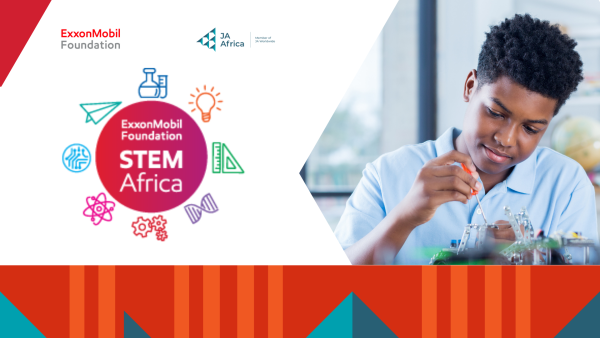
Program to provide STEM and problem-solving skills to students across continent; Students to compete for chance to attend major regional industry conference; Aims to develop the next generation of African thinkers and workforce.
The ExxonMobil Foundation and JA Africa have launched the "ExxonMobil STEM Africa” initiative, a $300,000 program to promote science, technology, engineering and mathematics (STEM) for approximately 3,000 African students across Nigeria, Namibia, Angola and Mozambique.
The program will prepare middle and high school students for future STEM careers through immersive quizzes and hands-on experiences at Innovation Camps. The camps, delivered by JA Africa, will teach new approaches to addressing STEM-related challenges.
“Growing students' STEM skills is key in developing the next generation of problem solvers across Africa,” ExxonMobil Foundation President Alvin Abraham said. “We're excited to see how these young minds apply what they've learned through our program.”
Teams who present the best STEM solutions will represent their countries at a major regional industry conference in Cape Town, South Africa. Students will gain cross-cultural exposure, learn about energy from a global perspective and showcase their ideas while connecting with industry leaders.
“In an era where technology and innovation propel the global economy forward, Africa's position at the forefront of technological advancements is crucial for maintaining competitiveness and sustainable development,” said JA Africa President and CEO Simi Nwogugu. “We are grateful to the ExxonMobil Foundation for this partnership to nurture STEM competencies to shape Africa's future."
To learn more about the program, visit https://ExxonMobilSTEMsAfrica.org/
Distributed by APO Group on behalf of JA Africa.
About ExxonMobil Foundation:
The ExxonMobil Foundation is the primary philanthropic arm of Exxon Mobil Corporation in the United States. The Foundation engages in a range of philanthropic initiatives in areas where the company operates around the world, with a strategic focus on science, technology, engineering, and math (STEM) education.
About JA Africa:
As one of Africa's largest and most impactful youth-serving NGOs, JA Africa delivers hands-on, immersive learning in work readiness, financial health, entrepreneurship, sustainability, STEM, economics, citizenship, ethics, and more. JA Africa has a presence in 16 countries in Sub-Saharan Africa and collectively we reach more than 900,000 youth in more than 3,000 schools each year. JA Africa Works in Burkina Faso, Côte d'Ivoire, DRC, Eswatini, Ghana, Kenya, Madagascar, Mauritius, Nigeria, Rwanda, Senegal, South Africa, Tanzania, Uganda, Zambia, and Zimbabwe. Learn more at www.JA-Africa.org.
World Autism Awareness Day – 02 April
The Department of Health calls on families and communities to support people with autism spectrum disorder (ASD) otherwise known as autism in order to thrive and reach their full potential, and not to discriminate them.
Autistic individuals as well as their parents and caregivers often face many challenges, but these do not have to define them because they have the same health needs and rights as the general population. They may in addition, have specific health-care needs related to autism or other co-occurring conditions requiring attention, support, and care.
All people, including those with autism, have the right to the enjoyment of the highest attainable standard of physical and mental health. However, autistic people are often subjected to stigma and discrimination, including unjust deprivation of care, education, and opportunities to engage and participate in their communities.
They have unique physical, social, mental health-care and educational needs as a result of their conditions which require strong collaborative efforts with other government departments such as Basic Education and Social Development for the provision of all-inclusive basket of services for early detection and intervention of ASD to improve their overall health outcomes and lessen long-term suffering and costs of care.
South Africa will on Tuesday, 2 April join the global community to increase awareness about autism, as well as how we can support autistic people in society.
The awareness day is used as a platform to empower the public, health and welfare services providers with information and also dispel misconceptions and promote a deeper understanding of autism to help reduce stigma and discrimination through fostering a more inclusive environment for autistic persons and their families.
According to the World Health Organization, about 1 in every 100 children globally has autism. In South Africa, the local studies have found the prevalence of autism to be between 0.08% to 2%. This condition is mainly found to be more prevalent in males than females.
Autism can be a life-long condition, but through appropriate and tailored support, children and adults with autism can make significant progress and live fulfilling lives.
The use of standardised ASD screening and diagnostic tools is well-established in high-income countries. Developmental milestones screening is one of the key interventions to early detect disorders like ASDs and intervene early as studies have shown that the median age of diagnosis of these conditions is between 18 to 24 months. In South Africa, the Road to Health Booklet or Clinic Card that issued to all children at birth helps parents to monitor health and development of each child until the age of 5 years. This also assists in early identification and intervention when a child's development is not in line with the expected developmental milestones.
Early diagnosis and intervention of autism can significantly impact the child's development and help families understand their child's strengths and challenges and create a personalised treatment and support plan. Thus, parents are encouraged to familiarise themselves with the educational information contained in the Clinic Card.
Although, there is no cure for autism spectrum disorders, some medications are used to help people with ASD function better by treating co-occurring symptoms such as high energy levels, inability to focus, or self-harming behaviour including head banging or hand biting. Treatment can also help manage co-occurring mental health problems, such as anxiety or depression, and physical conditions such as seizures, sleep problems.
If you suspect that you or your family member or child may be having autism spectrum disorder, visit your nearest health care facility or provider for screening and assessment to enable them to provide the necessary interventions, or refer where necessary.
Symptoms and causes of autism may differ from child to child, but some common symptoms include difficulty with social interactions, delayed speech and language skills, repetitive behaviours. Autism is primarily caused by nature (a genetic disorder), but the severity of autism can be influenced by nurture (environmental factors).
Care for people with autism needs to be accompanied by actions at family, community and societal levels for greater accessibility, inclusivity, and support, hence it is important to empower communities including health workers, educators and employers with knowledge and information about the conditions to ensure tolerance, support and acceptance of autistic individuals.
Distributed by APO Group on behalf of Republic of South Africa: Department of Health.
Access to healthcare is a basic human right, but achieving the healthy nation that South Africa needs for productivity and economic growth will take more than universal free healthcare. Social determinants of health such as lifestyle choices – diet, exercise, and substance use – play a crucial role in ensuring a healthy South Africa. Although …
We sent questions to the ANC, DA, EFF, IFP, FF Plus, ActionSA, PA, MK Party and RISE Mzansi
International World Health Day is celebrated on 7 April. This year’s celebration comes at a time when many health systems worldwide are looking for ways to address capacity issues and funding for essential services. Mental health is becoming a growing focal point, with many asking if enough is being done to address the issue appropriately. …
In an inspiring move to honour and support the unsung heroes of wildlife and marine conservation across Africa, African Secret Cream Liqueur created “The Secret Hero of Africa” initiative. This campaign is dedicated to celebrating the courageous efforts of individuals and groups working tirelessly to ensure the preservation of Africa’s rich wildlife and marine life …