• Skip to main content
  • Skip to header right navigation
  • Skip to after header navigation
  • Skip to site footer
MyZA

MyZA

News, Directory, Events and Other Stuff

  • Social Media
  • Sport
  • World News
  • Home
  • Submit News
  • Directory
  • Events
  • Stratlec
  • TFSA
  • News
    • APO
    • Today’s Sport News
    • Todays Social Media and Tech Headlines
    • Today’s World News
    • Today’s SA Financial News
  • Contact
You are here: Home / Archives for Egypt

Egypt

7 September 2023

The key to Africa’s industrialisation process and ending the region’s massive energy poverty

Location: News
African Energy Chamber

By Jason Mitchell

Africa's vast natural gas reserves are key to bringing energy to Africa's poorest countries, to a solid industrialisation process throughout the region and to significant poverty reduction.

The region is home to 33 of the world's 46 least-developed countries (LDCs) with an average income per head of less than $1,018 a year. The continent's poorest countries must expand at 6-7% a year if poverty is to be reduced in a big way and if the life chances of hundreds of millions of people are to be improved. To achieve this goal, these countries require abundant and cheap energy. Luckily, for many African states, the answer lies on their own doorstep — natural gas. Gas has remained a niche fuel in sub-Saharan Africa — contributing only 5% of the total energy mix against a global average of 20-25% — but its potential is enormous.

A new vision for Africa is required — a criss-crossing network of natural gas pipelines that brings energy to all corners of the region. The continent's contribution to global greenhouse gas emissions is tiny and will only become slightly bigger if the region's natural gas reserves are exploited. There is also a massive opportunity to wean poor Africans away from the use of biomass fuel and to help protect the region's forests through the rollout of small, liquified petroleum gas (LPG) stoves. Climate change is an issue in Africa but poverty reduction is a bigger one. Poverty is the biggest killer in Africa today.

It's very hard for Europeans and North Americans to imagine what it's like to live on under $1,018 a year, to not have readily available electricity, to not have a refrigerator or a washing machine, to not have a car, to not have a lawnmower, to not be able to fly from one country to another cheaply, to not have electricity in the school or the workplace and to have to use firewood or charcoal for cooking purposes. Fossil fuels have been at the heart of the Industrial Revolution that has brought prosperity and better living standards to the developed world. People in the First World must be very careful if they decide to deny Africans the same chance to prosper.

Africa has the lowest energy use per capita in the world — the average electricity use of a sub-Saharan African resident is lower than that of a household fridge in the United States. Average consumption per person in sub-Saharan Africa, excluding South Africa, is a mere 185 kilowatt-hours (kWh) a year, compared with about 6,500kWh in Europe and 12,700kWh in the US. Every year San Antonio, Texas, with a population of 1.5m people, uses as much electricity as the whole of Nigeria, with 203m people. Golden, Colorado, a small town with only 19,000 people, uses as much electricity as Chad, a country with 16m people.

The UN's Sustainable Development Goal Seven aims to “ensure access to affordable, reliable, sustainable and modern energy for all” by the year 2030. That's a tall order. In 2019, 917m people in Africa (around 80% of the region's population) relied on wood, charcoal, kerosene, animal and crop waste or other solid fuels to cook their food and heat their homes. The International Energy Agency (IEA) reports that almost 490,000 people die prematurely every year in sub-Saharan Africa from household air pollution-related causes — stemming from the lack of access to clean cooking facilities. Gas is a much cleaner form of cooking than biomass and its use should be encouraged. Biomass burning-power plants emit 300-400% more CO2 than natural gas per unit energy produced. Natural gas emits almost 50% less carbon dioxide than coal. 

Africa has one-fifth of the world's population but contributes only 3% to global greenhouse gas emissions. Incredibly, some 48 sub-Saharan African countries, excluding South Africa, have an estimated share of global emissions of only 0.55%. The fact is that many African states are already at net zero. If the continent were to use an additional 90bn cu m of natural gas per year — or 50% more than today — the resulting emissions would only raise Africa's cumulative contribution to global carbon emissions to 3.5% (ten gigatonnes) by the year 2050, according to the IEA. It really is a tiny increase compared to the chance of reducing poverty levels for hundreds of millions of poor people. If Africa is to provide universal electricity access by 2030 it would have to almost double its total generation capacity from around 260gw today to 510gw. 

Almost half the continent's 55 countries have proven natural gas reserves. Across the region, natural gas reserves amount to around 17.5trn cubic metres (cu m), making up around 9% of the world's total gas reserves. They are considerable in northern Africa (accounting for 45% of African reserves) and western Africa (32%), in particular. Commercial quantities of natural gas have been found in many African countries.

Previously, only four countries from the region have been major natural gas production hubs: Nigeria (with total gas reserves of 5.8trn cu m), Algeria (4.5trn cu m), Egypt (2.2trn cu m) and Libya (1.5trn cu m). These four accounted for 78% of African gas reserves in 2021 (https://apo-opa.info/48gDBWG), according to the United States Energy Information Administration.

However, seven African countries — Mozambique, Senegal, Tanzania, Mauritania, South Africa, Ethiopia and Morocco — with no history of fossil gas exploitation have now opened up their doors to gas projects. Some 84% of new reserves in the pre-production stage are found in these states — total new reserves amount to 5.1trn cu m. Mozambique has re-production reserves of 2.3trn cu m, Senegal 779bn cu m, Mauritania 575bn cu m, Tanzania 512bn cu m, South Africa 96bn cu m, Ethiopia 42bn cu m and Morocco 39bn cu m.

Furthermore, major untapped reserves have been discovered in Angola, Cameroon, Ghana, Equatorial Guinea, the Republic of the Congo, Kenya and Uganda. A number of these states — including Mozambique, Tanzania, Mauritania and Senegal — are actively marketing natural gas to capitalise on recent discoveries. In fact, the IEA has declared Africa the ‘new frontier' in global oil and gas.

The big four gas-producing countries will continue to dominate gas production in the near term but experts estimate that Mozambique and the other new entrants will contribute more than 50% of the region's gas production by 2038.

Natural gas can be used for electricity generation, industry and domestic use. Crucially, harnessing Africa's gas could provide the baseload power needed to boost Africa's capacity to process its raw materials locally. It could provide enough energy for industrial processes, including steel and cement production and paper and pulp manufacturing. It could be also used to make fertiliser to raise agricultural yields. Renewables, including solar and wind, cannot yet provide enough energy for these purposes.

The huge reserves of gas can play a significant role in the continent's energy transition, as natural gas has a much lower carbon footprint than oil and coal. Critically, natural gas development and renewable power are not mutually exclusive. If Africa were to triple its use of natural gas, the United Nations Economic Commission for Africa (Uneca) estimates that the region would be able to increase its use of renewable energy eight-fold. Reliable forms of energy such as gas can be used to stabilise a grid powered by intermittent sources such as wind and solar. It can play a key role in a ‘just' energy transition.

However, expanding gas supply across Africa would require a whole web of new gas pipelines and that does not come cheap. A lot of the gas from the new projects already under way in Africa is destined for international markets, including the European Union — which have been seeking new sources of energy since the Ukraine crisis — but it is vital that the region's gas reserves are deployed for domestic use, as well. Nigeria, for example, sits on the continent's largest known natural gas reserves but only 55% of the population had access to secure electricity in 2020.

Multilateral financial institutions (MFIs) — many of which are headquartered in the developed world — are now shying away from investing in natural gas projects in Africa because of pressure from a vociferous green lobby. In 2021, 20 countries — including almost all the world's big, rich democracies — pledged to stop almost all financing of new fossil fuel projects internationally by the end of 2022. Furthermore, under the Glasgow Financial Alliance for Net Zero (GFANZ), 450 financial firms across 45 countries, responsible for over $130trn in assets, committed to accelerate the global decarbonisation process. The problem is that most Western governments and financial institutions do not distinguish between coal, oil and gas, and the pressure to stop funding all hydrocarbons has negatively impacted gas projects in Africa in a big way.  

Some of the continent's biggest financiers — including the African Development Bank (AfDB) — are finding it increasingly difficult to support gas project developments that require loan syndication and foreign partners. The World Bank is pulling back, too. Local banks cannot finance major gas projects on their own, as they are limited by their capital base. In particular, the fossil fuels divestment campaign is having a big impact on the amount of development and concessional finance available. This kind of finance used to support a number of gas projects for their poverty-reducing and economic development value.

For example, without the guarantees of development finance institutions (DFIs), most of Africa's recent gas-to-power plants would have never been built in the first place. The withdrawal of development finance from downstream gas and gas-to-power projects is a serious cause for concern for Africa's electrification effort and moving the needle on energy access.

Furthermore, there is a glaring double standard — many European countries have increased their use of hydrocarbons (coal as well as gas) since Russia's invasion of Ukraine. They are constructing new fossil fuel pipelines at home. The EU recently classified natural gas a ‘green' fuel, which will allow Europe's projects to be backed by investors committed to environmental, social and governance (ESG) principles. European countries are now looking towards African states for new sources of gas. However, they are not prepared to back new gas projects in Africa that would supply the fuel to the region itself. That smacks of hypocrisy of the worst kind. How can you deny the poorest people in the world the sort of energy that you want to use yourselves?

Lumping all hydrocarbons together is a blunt policy mechanism that is not good from an emissions perspective either. In poorer places, like sub-Saharan Africa, the available alternative to gas is not renewable electricity but rather coal, diesel and, most of all, polluting biomass. In sub-Saharan Africa, demand for biomass fuels is expected to surge by 40% by the year 2040 if ‘business as usual' continues. The burning of biomass is a major contributor to global carbon emissions and charcoal has been a top driver of tropical forest loss during the past two decades, with the greatest footprint in Africa. The continent's carbon sinks need protecting and the irony is that the greater use of gas would achieve that.

Africa is home to 18% of humanity but receives less than 5% of global energy investment. And much of this investment goes on producing oil and gas for export. There must be much more investment in the region for the domestic use of gas. Gas projects could play an absolutely vital role in bringing energy to Africa but obviously the projects require financing. DFIs must think again about their decision to limit investment in new projects in Africa. The financing of a network of gas pipelines throughout Africa would be one of the quickest and surest ways of industrialising the region in a big way and of alleviating poverty on a large scale. Renewables just cannot do that how ever much wishful thinking takes place.

In fact, development institutions should go one step further and consider subsiding a massive roll out of small LPG stoves to millions of poor households in the region. It could be one of the biggest moves in contributing to Africa's decarbonisation effort by arresting the pace of deforestation in the region. LPG is recovered from ‘wet' natural gas (gas with condensable heavy petroleum compounds) by absorption and reaches the domestic consumer in cylinders under relatively low pressures. The widespread adoption of LPG stoves would reduce the amount of pollutants in the air from biomass fuels. Poor households that currently depend on woodfuel for cooking require a cleaner cooking alternative — LPG is one of the solutions.

LPG stoves are also suitable for domestic use in rural settings — a key consideration in Africa where energy poverty is greatest in the countryside. For instance, in 2016, electricity access in urban and rural areas in Nigeria was 86% and 34%, respectively, according to the World Bank.

Africa only needs to look to Asia for examples. In 2006, Indonesia implemented a ‘mega-programme' to induce a large-scale transition from kerosene to LPG stoves in order to reduce government spending on kerosene subsidies. The initiative invested in LPG infrastructure, domestic cylinder production and consumer awareness. By 2012, 93% of the target had been reached and LPG consumption had grown by almost 350%.

In India, LPG access expanded through the early-2000s but it was still not reaching most poor families. To boost access among the poor, the Indian government introduced the Pradhan Mantri Ujjwala Yojana (PMUY) Scheme. Under it, the country's oil marketing companies provide subsidies to reduce the cost of both LPG connections and cylinder refills to women in households classified as below the poverty line. In 2016, the cost of a connection was about Rupees 3,200 ($48) and included the first full cylinder (plus deposit), deposit for a regulator, an LPG stove and administrative fees.

Furthermore, African governments must consider increasing domestic gas allocations from liquified natural gas (LNG) export projects. These are an effective way to ensure that even if developers prioritise lucrative exports over local sales, they must reserve part of their production for the domestic market. Upcoming LNG terminals in sub-Saharan Africa — for example, in Mozambique — now make it compulsory to allocate a specific amount of gas to the domestic market. The availability of domestic gas from export facilities can encourage gas-based industrialisation (for example, in Senegal) or additional gas-to-power capacity (Mozambique, Mauritania and Senegal). In August 2022, for instance, Senegal's Petrosen Trading & Services signed an MoU with Turkey's Çalık Enerji and Japan's Mitsubishi for the pre-feasibility study of a gas-based ammonia and urea manufacturing unit.

It is a huge mistake to lump all hydrocarbons together and for Western environmentalists to argue that no new new fossil fuel projects should happen in Africa whatsoever. Deforestation is one of the biggest issues in Africa today. Poor Africans must be weaned off the use of wood-based fuels. The widespread adoption of small LPG stoves would be one of the surest ways of reducing deforestation. Natural gas could also form the basis for a solid, large-scale industrialisation process in Africa — something that is essential if the region is to achieve the sort of economic growth needed to lift hundreds of millions of people out of poverty.

Distributed by APO Group on behalf of African Energy Chamber.

Media files
African Energy Chamber
Download logo
Read moreThe key to Africa’s industrialisation process and ending the region’s massive energy poverty
5 September 2023

SA benefits economically from BRICS grouping

Location: News

SA benefits economically from BRICS grouping

Outlining the economic benefits of South Africa's participation in the BRICS grouping, President Cyril Ramaphosa has informed Members of Parliament that South Africa’s trade with the bloc has increased by an average of 10% every year over the period 2017 to 2021.

“The total South African trade with other BRICS [Brazil, Russia, India, China and South Africa] countries reached R830 billion in 2022, which represents an increase of more than 70% from R487 billion in 2017,” the President said on Tuesday in Cape Town.

Participating in a Questions for Oral Reply session in the National Assembly, President Ramaphosa explained that BRICS is an important source of foreign direct investment in key areas such as mining, automotive, transportation, clean energy, financial services and information technology (IT).

These investments and projects lead to significant job creation.

“South Africa has experienced significant benefits through its membership as well as its association with the BRICS grouping of countries. South Africa uses its BRICS membership to improve investment, trade, tourism, as well as capacity building, and it also flows into skills acquisition and technological capabilities that we see this relationship yielding for our country.

“Strengthening economic as well as financial ties between BRICS member countries is one of the key pillars of this cooperation that we have forged with all these countries,” the President said.

In 2020, the countries adopted the Strategy for BRICS Economic Partnership to increase access to each other’s markets, promote mutual trade and investment, and create a business-friendly environment for investors in all BRICS countries.

“Furthermore, the BRICS Business Council and the BRICS Women’s Alliance bring together important commercial networks that promote trade and investment partnerships among BRICS countries. In 2015, BRICS countries launched the New Development Bank to finance and largely support infrastructure and sustainable development projects,” President Ramaphosa said.

To date, the New Development Bank has provided funding to 12 projects in South Africa to the value of over R100 billion.

“Our membership of BRICS makes a valuable contribution to the implementation of our Economic Reconstruction and Recovery Plan. For example, growing the tourism industry is one of the priorities of the Plan. The BRICS countries are becoming increasingly important tourism markets for South Africa.

“In terms of supporting energy security in South Africa, another pillar of our recovery plan, BRICS countries have the expertise and technologies to support energy cooperation. In 2020, BRICS adopted a Road Map for BRICS Energy Cooperation up to 2025 aimed at building a strategic partnership in energy cooperation,” the President said.

On infrastructure investment, which is another pillar of the recovery plan, South Africa will continue to access funding from the New Development Bank for energy, transport and water.

“The inclusion of Argentina, Ethiopia, Egypt, Iran, Saudi Arabia and the United Arab Emirates as new members of the group will strengthen beneficial cooperation with South Africa in political, economic and financial matters.

“These countries will enhance economic partnership in key sectors such as oil and energy, telecommunication and information technology, agriculture, textile, logistics, air transportation and tourism and medicine,” the President said.

Last month’s three-day BRICS Summit wrapped up with several successful outcomes, including the expansion of the six aforementioned countries to become full members of BRICS effective from January 2024.

South Africa hosted the 15th BRICS Summit from 22-24 August in Johannesburg. This year’s summit took place under the theme, ‘BRICS and Africa: Partnership for mutually accelerated growth, sustainable development and inclusive multilateralism’.

The President said South Africa expects that its trade links and investments participation with all the additional countries will increase.

This addition is also expected to contribute to the growth of the country’s tourism industry.

“In economic terms, all these new additional countries are big players and on the horizon are a number of other countries that have indicated their willingness to be part of BRICS and they too will be considered in the next phase.

“We will obviously look at the economic value in terms of participation for all of us as BRICS members. These additional countries will be boosting our Economic Recovery and Reconstruction Plan and we expect great benefits from all this.

“The benefits for our countries has been very clear right from the beginning. It has led to enhanced activity amongst ourselves and all these countries. Being a BRICS member does contribute a great deal to economic growth as well,” the President said. – SAnews.gov.za

nosihle
Tue, 09/05/2023 - 15:18

615 views
Read moreSA benefits economically from BRICS grouping
4 September 2023

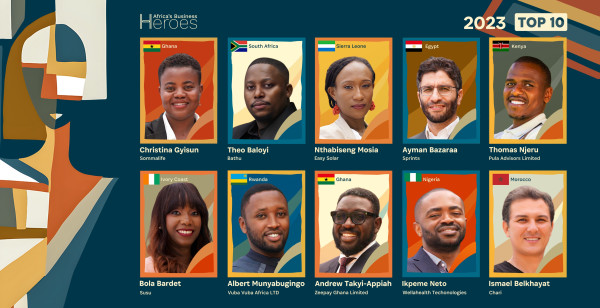
Africa’s Business Heroes Announces Top 10 Finalists for 2023

Location: News
Africa’s Business Heroes (ABH)

The Africa's Business Heroes (ABH) (www.AfricaBusinessHeroes.org) Prize Competition, a philanthropic program sponsored by the Jack Ma Foundation and Alibaba Philanthropy, now in its fifth year, has announced this year's top 10 finalists following an intense round of semi-finale business pitches and judging held on September 1 and 2 at Norrsken House in Kigali, Rwanda. These 10 entrepreneurs will compete for their share of the final prize of US$1.5 million in grant funding at the competition's Grand Finale scheduled for November 23 and 24.

The top 10 finalists are (in alphabetical order, by country): 

  1. Ms. Bola Bardet, CEO and Co-Founder, Susu (https://apo-opa.info/3Pq49NQ) (Benin)
  2. Mr. Ayman Bazaraa, CEO and Co-Founder, Sprints (www.Sprints.ai) (Egypt)
  3. Mr. Andrew Takyi-appiah, Founder, Zeepay Ghana Limited (https://apo-opa.info/3sCxgEH) (Ghana)
  4. Ms. Christina Gyisun, CEO and Co-Founder, Sommalife Limited (www.Sommalife.com) (Ghana)
  5. Mr. Thomas Njeru, CEO and Co-Founder, Pula Advisors Limited (https://apo-opa.info/3L4blfF) (Kenya)
  6. Mr. Ismael Belkhayat, CEO and Founder, Chari (www.Chari.co) (Morocco)
  7. Mr. Ikpeme Neto, CEO and Founder, Wellahealth Technologies (https://apo-opa.info/3qVGqvr) (Nigeria)
  8. Mr. Albert Munyabugingo, CEO and Co-Founder, Vuba Vuba Africa LTD (www.VubaVuba.rw) (Rwanda)
  9. Ms. Nthabiseng Mosia, CMO and Co-Founder, Easy Solar (https://apo-opa.info/3LaFf1X) (South Africa)
  10. Mr. Theo Baloyi, CEO and Founder, Bathu (www.Bathu.co.za) (South Africa)

The 2023 ABH top 10 entrepreneurs were selected through multiple stages of interviews and evaluation from 27,267 applications across all 54 African nations. They hail from eight African countries, including Benin, Egypt, Ghana, Kenya, Morocco, Nigeria, Rwanda and South Africa. Their start-ups have been drawn from a wide variety of industries, including agriculture, education & training, energy, financial services, healthcare, manufacturing and retail.

The 10 finalists will present their businesses on stage to a panel of inspiring businesspeople at this year's Grand Finale, which will take place in conjunction with a summit and will be the biggest in ABH's history in celebration of the fifth anniversary of the competition. Held offline in Kigali, Rwanda on 23 and 24 November and also partially livestreamed to reach audiences across Africa, the Summit and Grand Finale will be a gathering of a diverse group of African entrepreneurial ecosystem players. The action-packed event will comprise exciting sessions including speeches, workshops, an entrepreneurial showcase and a live pitch competition, among other activities. Register here to secure your seat: https://apo-opa.info/3sJzPoa

“ABH remains committed to uncovering, championing and supporting trailblazing African entrepreneurs who are bringing positive change to their communities. As we reach the fifth anniversary of our 10-year commitment to this initiative, we're excited by the expanding and diverse array of talent among our contenders,” said Jason Pau, Executive Director of International Programs at the Jack Ma Foundation. “With November on the horizon, we wish every of the top 10 finalists the best of luck on their journey, and we encourage the public to join our Summit and Grand Finale, as it promises to be truly special.”

“The ABH competition has shown that African entrepreneurship can emerge as a potent force propelling both social upliftment and economic progress. It is a dynamic stage, spotlighting ingenious start-ups that steer toward solutions, tackling challenges with a resonance that's impactful, competitive, sustainable and additive. I believe that entrepreneurs are carriers of HOPE as they can unlock possibilities that can change the world. I look forward to the Grand Finale, where the top 10 finalists will demonstrate their remarkable business acumen on stage,” said Rene Parker, Cofounder and CEO of RLabs, ABH semi-finale judge (2019 – 2023).

Originally launched in 2019, the ABH Prize Competition is Pan-African, inclusive, sector-agnostic and grassroots-oriented. It aims to identify, support and inspire the next generation of African entrepreneurs who are making a difference in their local communities by working to solve the most pressing problems and building a more sustainable and inclusive economy for the future.

For more information about ABH 2023, please visit: https://apo-opa.info/3qVklx5 and follow ABH on Twitter (https://apo-opa.info/3KY3OQs), LinkedIn (https://apo-opa.info/3R1QXQl), Instagram (https://apo-opa.info/3KZTXKa), Facebook, (https://apo-opa.info/3ylgNE9) and YouTube (https://apo-opa.info/3YDG5bH).

Distributed by APO Group on behalf of Africa’s Business Heroes (ABH).

Press Contact:
Africa's Business Heroes Press Room:
abh.press@list.alibaba-inc.com

For media inquiries or interview requests, please contact:
English:
Tracy Walakira
tracy.walakira@apo-opa.com

French/Arabic:
Malika Bouayad
malika.bouayad@apo-opa.com

About Africa's Business Heroes:
The Africa's Business Heroes Prize Competition is a philanthropic initiative sponsored by the Jack Ma Foundation and Alibaba Philanthropy. It aims to support, inspire and enable the next generation of African entrepreneurs across all sectors who are building a brighter future for the continent, by offering grant funding, training programs and support for the development of an entrepreneurial ecosystem. Over a 10-year period, each year the ABH Prize Competition and show features 10 entrepreneur finalists as they pitch their business to win a share of US$1.5 million in grant money.

Media files
Africa’s Business Heroes (ABH)
Download logo
Read moreAfrica’s Business Heroes Announces Top 10 Finalists for 2023
3 September 2023

15th BRICS Summit heralds current chapter for the group

Location: News

15th BRICS Summit heralds new chapter for the group

The 15th BRICS Summit held at the Sandton Convention Centre during August was a success that 'heralded a new chapter' for the group.

This is according to President Cyril Ramaphosa who addressed the nation on Sunday evening.

“It was a historic Summit that heralded a new chapter for BRICS.

“The summit was attended by the five BRICS member countries along with representatives of 61 other countries. Forty-six of the countries that attended were from our continent, Africa. This included 20 Heads of State and Government. We were also honoured by the attendance of the United Nations Secretary-General Mr Antonio Guterres.

“The success of the summit is a credit to our country and its people. It is another demonstration of our ability to host major international gatherings that have a significant impact on the conduct of international affairs far beyond our borders. Overall, many people have said that this was a most successful BRICS Summit,” he said.

The President honed in on key decisions and outcomes that were taken during the summit, including the call for a comprehensive reform of the United Nations, including its Security Council.

“This was a most significant decision in view of the fact that it was supported by two BRICS members who are permanent members of the UN Security Council. The reform of the United Nations is important for South Africa and our continent Africa because we stand to benefit from a world that is more fair and from international institutions that are more democratic and more representative.

“In taking this position, the BRICS leaders recognised the desire of many other countries to contribute to redefining the terms of international relations,” he said.

On the second key outcome of the summit – which was to expand BRICS membership invitations to Argentina, Egypt, Ethiopia, Iran, Saudi Arabia, and the United Arab Emirates – President Ramaphosa said: “Through an expanded BRICS, we will be able to better align the voices of those countries that seek a fairer global governance, financial, investment and trading system based on clear rules that apply equally to all countries.

“An expanded BRICS also means that we will be able to export more of our products to major markets and, as a result, we will be able to produce more and create more jobs. While an expanded BRICS will be an important champion for the Global South, South Africa stands to benefit from its relationship with these countries.”

International relations

President Cyril Ramaphosa also used his address to reaffirm South Africa’s non-aligned stance in international relations.

“South Africa’s participation in BRICS and its support for the expansion of BRICS does not detract from the good and strategic relations we have with many other countries around the world.

“From the advent of our democracy, we have always sought to develop ties of friendship, cooperation and respect with all nations. We have never aligned ourselves with any one global power or bloc of countries. Our non-aligned approach has enabled us to pursue an independent foreign policy and to forge our own developmental path.

“We have consistently advanced the articles of the United Nations Charter, including the principle that all members shall settle their international disputes by peaceful means,” he said.

The President emphasised the importance of South Africa’s relations with our other countries and reflected on its impact on ordinary South Africans.

“[Our] country’s relations with other countries and the conduct of our foreign policy affects our lives as South Africans in many ways, such as in trade and investment, sport, peace and security, technology, education, and many other areas. As we have said before, our international work cannot be separated from our efforts to end poverty, to create jobs and to reduce inequality in South Africa.

“Through stronger investment and trade relations with other countries, we are able to grow our economy, create more opportunities for new businesses and reduce unemployment. By supporting peace and stability on our continent, and by promoting Africa’s development, we are able to improve social cohesion in our own country.

“By encouraging greater cooperation between countries in areas such as investment, financing for development, international crime, fighting terrorism, climate change and vaccine production, we are able to strengthen our efforts to tackle these challenges in our own country,” President Ramaphosa said. – SAnews.gov.za

NeoB
Sun, 09/03/2023 - 21:33

303 views
Read more15th BRICS Summit heralds current chapter for the group
28 August 2023

BRICS, Africa CDC commit to work with business on future pandemics

Location: News

BRICS, Africa CDC commit to work with business on future pandemics

The Ministry of Health, the Africa Centre for Disease Control and Prevention (Africa CDC), Africa Health Business and the South African chapter of the BRICS Business Council co-hosted a successful dialogue to deliberate on future pandemics. 

The parties met on Monday following last week’s BRICS (Brazil, Russia, India, China and South Africa) Summit to deliberate on a potential African Union (AU) and BRICS framework of cooperation for the pandemic, preparedness, prevention and response (PPPR).

The meeting brought together BRICS member states including the newly invited members, Ethiopia and Egypt, business, civil society, development finance institutions, global health agencies and AU specialised agencies. 

“The dialogue sought to elicit a collaborative framework for AU and BRICS PPPR that is actionable and implementable. [This is]  by tabling concrete suggestions, drawing from the AU and BRICS collective experiences of dealing with COVID-19 and other pandemics, identifying the existing capabilities and acknowledging the gaps that would need to be closed for adequate pandemic preparation and response,” a statement read. 

The attendees highlighted the reality of the shifting centres of global power, pointing out that the expanded BRICS family now represents 4.8 billion people, which is over half of the global population.

“Increasing human and animal interconnectedness, climate change and an increasing frequency of infectious disease outbreaks mean that the AU and BRICS’ ability to contain infectious diseases has a fundamental bearing on global health security. 

“The realisation of this growing responsibility compelled AU and BRICS stakeholders to convene and begin a process towards a declared collaborative framework.”

Participants were further encouraged by the collective capabilities identified in medical and digital technologies, human resource potential, and pharmaceutical manufacturing. 

They also observed that the Developing Countries Vaccine Manufacturing Network (DCVMN), which is comprised of manufacturers from BRICS member states, contributed to 60% of the COVID-19 vaccine products. 

“The meeting considered the merits of opening up the entire expanded BRICS and AU market to all pharmaceutical manufacturers in the BRICS and AU regions.”

Member of the BRICS Business Council, Dr Stavros Nicolaou, stated that the COVID-19 pandemic exposed significant and vast global health inequities, particularly on the African continent. 

He noted that unnecessary lives and livelihoods were lost, with the African post-pandemic economic recovery still proving to be challenging. 

“Collaborative efforts across the African and BRICS geographies can enhance surveillance, research, infrastructure, and resource allocation to ensure a swift and coordinated response to future pandemics underpinned by a resilient African pandemic prevention, preparedness and recovery system,” said Nicolaou.

Putting people first

Stakeholders also acknowledged that the inequities that persist in many low- and middle-income countries, fragile health systems and inadequate financing pose a threat to pandemic preparedness and overall global health security. 

“More work must be done to diversify manufacturing, support Africa’s manufacturing targets, ensure primary health care is fully developed as a foundation for pandemic preparedness, and to support last-mile delivery. 

“The convening emphasised the importance of placing people and communities at the heart of all PPPR deliberations.” 

Some concrete actions that were tabled were financing by establishing a BRICS PPPR fund through the New Development Bank and the need to convene at the Conference on Public Health in Africa. 

“Emerging in the wake of a recent global pandemic, this dialogue arrives at a pivotal juncture. It underscores a collective need to fortify health security and adaptability, extending beyond national boundaries,” said Director-General of Africa CDC, Dr Jean Kaseya.

Health Minister, Dr Joe Phaahla said BRICS member states need to solidify efforts to promote digital health technologies across health systems to strengthen the sharing of information that may be useful for PPPR.

“At a country level, there is a commitment to develop and implement legislative measures for PPPR. I am glad that BRICS member states have reaffirmed and committed to implementing global, regional, and national actions to strengthen pandemic prevention, preparedness and response, and fully address the direct and indirect consequences of current and future pandemics.” – SAnews.gov.za


Gabisile
Mon, 08/28/2023 - 15:00

510 views
Read moreBRICS, Africa CDC commit to work with business on future pandemics
28 August 2023

Health dialogue on margins of BRICS Summit

Location: News

Republic of South Africa: Department of Health
Download logo

On 28 August 2023, the Ministry of Health in South Africa, the Africa Centre for Disease Control and Prevention (Africa CDC), Africa Health Business and the South African Chapter of the BRICS Business Council co-hosted a successful dialogue on the margins of the BRICS summit to deliberate on a potential African Union and BRICS framework of cooperation for Pandemic, Preparedness, Prevention, Response and Recovery (3P2R).

The meeting brought together BRICS member states- including a fortuitous presence of the newly invited members, Ethiopia and Egypt- business, civil society, development finance Institutions, global health agencies and AU specialised agencies (AUDA-NEPAD, AfCFTA, ARC Group).

The dialogue sought to elicit a collaborative framework for AU and BRICS 3P2R that is actionable and implementable by tabling concrete suggestions, drawing from the AU and BRICS collective experiences of dealing with COVID-19 and other pandemics, identifying the existing capabilities and acknowledging the gaps that would need to be closed for adequate pandemic preparation and response.

Stakeholders acknowledged that many fora are dealing with global and regional pandemic prevention, preparedness, response and recovery (PPPR), including the Intergovernmental Negotiating Body for the Global Pandemic Accord. 

However, they highlighted the reality of the shifting centers of global power, pointing out that the expanded BRICS family now represents 4,8 billion people, which is over half of the global population. Increasing human and animal interconnectedness, climate change and an increasing frequency of infectious disease outbreaks mean that the AU and BRICS' ability to contain infectious diseases has a fundamental bearing on global health security.

The realisation of this growing responsibility compelled AU and BRICS stakeholders to convene and begin a process towards a declared collaborative framework.

In the interest of pursuing equitable and timeous access to medical countermeasures in the event of the next pandemic, participants acknowledged the merits of the “Johannesburg Process” in providing an informal platform for stakeholder engagements on an interim medical countermeasures' coordination mechanism. 

The “Johannesburg Process” was seen as an effective complementary tool contributing to the work of the World Health Organization and other formal processes.

Participants were further encouraged by the collective capabilities identified in medical and digital technologies, human resource potential (particularly in Africa), and pharmaceutical manufacturing. For instance, it was observed that the Developing Countries Vaccine Manufacturing Network (DCVMN), which is comprised of manufacturers from BRICS member states, contributed to 60% of the COVID-19 vaccine products. The meeting considered the merits of opening-up the entire expanded BRICS and AU market to all pharmaceutical manufacturers in the BRICS and AU regions.

Dr Stavros Nicolaou, member of the BRICS Business Council stated, "The COVID-19 pandemic exposed significant and vast global health inequities, particularly on the African continent and unnecessary lives and livelihoods were lost, with African post pandemic economic recovery still proving to be challenging. Collaborative efforts across the African and BRICS geographies can enhance surveillance, research, infrastructure and resource allocation to ensure a swift and coordinated response to future pandemics underpinned by a resilient African pandemic prevention, preparedness and recovery system."

Stakeholders also acknowledged that the inequities that persist in many low- and middle-income countries, fragile health systems and inadequate financing for 3P2R for the AU and BRICS families were a threat to pandemic preparedness and overall global health security. More work must be done to diversify manufacturing, support Africa's manufacturing targets, ensure primary health care is fully developed as a foundation for pandemic preparedness, and to support last-mile delivery. The convening emphasised the importance of placing people and communities at the heart of all 3P2R deliberations.

Some concrete actions that were tabled were the necessity of predictable 3P2R financing by establishing a BRICS PPPR fund through the New Development Bank (commonly referred to as BRICS Bank) and the need to convene at the Conference on Public Health in Africa (CPHIA 2023) to agree on an AU and BRICS cooperative framework, inviting the newly announced additional members of BRICS and all the AU member states to deliberate on a proposed collaborative framework.

“Emerging in the wake of a recent global pandemic, this dialogue arrives at a pivotal juncture. It underscores a collective need to fortify health security and adaptability, extending beyond respective national boundaries,” said Dr. Jean Kaseya, Director General of Africa CDC.

Minister of Health, Dr Joe Phaahla said, “as BRICS Member States, we need to solidify our efforts to promote digital health technologies across our health systems to strengthen sharing of information that may be useful for PPPR. At country level, there is a commitment to develop and implement legislative measures for PPPR. I am glad that BRICS member states have reaffirmed and committed to implement global, regional, and national actions to strengthen pandemic prevention, preparedness and response, and fully address the direct and indirect consequences of current and future pandemics.”

Distributed by APO Group on behalf of Republic of South Africa: Department of Health.

Read moreHealth dialogue on margins of BRICS Summit
26 August 2023

Iran deputy Foreign Minister, BRICS Recent Development Bank (NDB) chief hold consultations in South Africa

Location: News

Ministry of Foreign Affairs - Islamic Republic of Iran
Download logo

Mahdi Safari Iranian Deputy Foreign Minister for Economic Diplomacy and Ms. Dilma Rousseff President of the New Development Bank (a multilateral development bank established by the BRICS states) met on the sideline of the BRICS summit in South Africa.

Mahdi Safari Iranian Deputy Foreign Minister for Economic Diplomacy and Ms. Dilma Rousseff President of the New Development Bank (a multilateral development bank established by the BRICS states) met on the sideline of the BRICS summit in South Africa.

In the meeting, the two sides discussed the process of Iran joining the bank.

During the talks, the Iranian official said talks got underway in 2017 on Iran joining the New Development Bank (NDB), calling for the negotiations to gather pace.

Rousseff, in turn, congratulated Iran on its membership in BRICS, welcoming Iran's joining the NDB.

She said the presence of Iran will boost the power and international status of the bank.

In the meeting, the two sides designated their representatives to follow up on Iran's NDB membership bid.

Safari also invited Rousseff to visit Iran. Accordingly, the NDB president announced her readiness to travel to Iran in the near future.

It is noteworthy that the NDB was established in 2015 by five member states of BRICS, namely Brazil, Russia, India, China and South Africa with a capital of $100 billion.

The United Arab Emirates, Egypt and Bangladesh later joined the bank.

Uruguay has also completed talks on its joining the bank.

Former Brazilian President Dilma Rousseff heads the bank, which is headquartered in the Chinese city of Shanghai.

Distributed by APO Group on behalf of Ministry of Foreign Affairs - Islamic Republic of Iran.

Read moreIran deputy Foreign Minister, BRICS Recent Development Bank (NDB) chief hold consultations in South Africa
25 August 2023

SA working to accelerate water and sanitation access by 2030

Location: News

SA working to accelerate water and sanitation access by 2030

South Africa is working to expedite the realisation of Sustainable Development Goal 6 by 2030, paying special attention to the needs of women, girls, and people in vulnerable situations, said Water and Sanitation Deputy Minister, Judith Tshabalala.

In line with the country’s Constitution, South Africa has developed the National Sanitation Policy that endorses the national sanitation targets, as outlined in the National Development Plan (NDP) and the United Nations Sustainable Development Goals.

Sustainable Development Goal (SDG) 6, aims to achieve universal access to adequate and equitable sanitation and hygiene for all by 2030, and end open defecation, paying special attention to the needs of women and girls and those in vulnerable situations.

Tshabalala, together with African Ministers of Water and Sanitation from Egypt, Prof Dr Hani Sewilam and Carl Hermann Schlewein, participated at the Africa Focus Session held during World Water Week Conference in Stockholm, Sweden.

The Africa Focus Session aimed at fostering partnerships for translating water and sanitation commitments into tangible improvements in the lives of all in Africa and beyond. 

The outcomes of deliberations will inform ongoing efforts to accelerate the achievement of water and sanitation goals in Africa.

Tshabalala said the department manages water resources in a balanced approach to ensure their sustainability and economic growth in the country. 

“Our water resources determine how South Africa experience and respond to climate change. The climate challenge has brought innovative approaches to water services, such as looking at water infrastructure and sources from a multiple water-use perspective. 

“The recent water shortages attributed to climate change, saw innovation through partnerships and the use of technology to optimise the use of available water resources and access to new water sources.”

The discussions around Africa Focus Day will foster alliances that transcend beyond borders and also map a trajectory toward a future where sanitation and hygiene are universally attainable, regardless of socioeconomic standing or geographical location. 

The resolutions will be endorsed and adopted by the African Union and African Ministers' Council on Water (AMCOW), as a Ministerial council that engages on all initiatives that will take Africa’s water sector forward, reaffirming the departmental mantra that says “Sanitation is Dignity”.

The Deputy Minister led a South African delegation to the conference, hosted by the Stockholm International Water Institute (SIWI).

The conference, which ended on Thursday, focused on innovation, particularly at a time of unprecedented challenges facing water security around the world.

The 2023 annual gathering of the World Water Week happened when Africa is at its highest, in rolling out the Africa Investments Programme (AIP), which is led by the International High Panel on Water Investment, comprised of sitting Head of States, UN entities and African Union entities. – SAnews.gov.za


GabiK
Fri, 08/25/2023 - 10:07

572 views
Read moreSA working to accelerate water and sanitation access by 2030
25 August 2023

Xi says BRICS expansion historic, recent starting point for cooperation

Location: News

The State Council Information Office: The People's Republic of China
Download logo

Chinese President Xi Jinping said Thursday that the BRICS expansion is historic and a new starting point for BRICS cooperation.

Xi made the remarks at a press conference during the 15th BRICS Summit after South African President Cyril Ramaphosa announced that six countries, namely Argentina, Egypt, Ethiopia, Iran, Saudi Arabia and the United Arab Emirates, were invited to become new BRICS members.

China offers its congratulations to these countries, and expresses its high appreciation for the efforts made by South Africa, the chair of BRICS, and President Ramaphosa, Xi said.

The expansion reflects the resolution of the BRICS countries to unite and cooperate with other developing countries, meets the expectations of the international community, and serves the common interests of emerging markets and developing countries, Xi stressed.

He added that the expansion will also inject fresh vitality into the BRICS cooperation mechanism, and further strengthen the forces for world peace and development.

The BRICS countries all hold important influence and shoulder crucial responsibilities for world peace and development, Xi noted.

During this summit, in-depth discussions were held on the current international situation and BRICS cooperation, among others. Broad consensus was reached, a declaration issued, and fruitful results achieved, he said.

Xi said he believes that as long as the BRICS countries pull together, a lot can be achieved in BRICS cooperation, and a promising future awaits the BRICS countries.

The Chinese president also called on BRICS members to work together to write a new chapter of solidarity and cooperation among emerging markets and developing countries for development.

The press conference was hosted by Ramaphosa, and also attended by Brazilian President Luiz Inacio Lula da Silva and Indian Prime Minister Narendra Modi. Russian President Vladimir Putin participated online. 

Distributed by APO Group on behalf of The State Council Information Office: The People's Republic of China.

Read moreXi says BRICS expansion historic, recent starting point for cooperation
24 August 2023

Deputy President Mashatile calls for unbiased global scheme

Location: News

Deputy President Mashatile calls for fair global system

Deputy President Paul Mashatile has called for the elimination of discriminatory trade barriers, policies and border adjustment measures against African countries and the countries of the global South.

Delivering the closing remarks at the 15th BRICS Summit on Thursday, he said the discriminatory elimination should also include punitive measures designed to reduce the competitiveness of countries of the global south and Africa.

“There must be equal opportunities for Africa and countries of the global south to access finance, supply chains, trade and investment opportunities. Africa and the global south must be fully represented in all management bodies, governing councils, institutions and structures.

“There should no longer be job reservations on the basis of one’s nationality. The world has changed and global governments must change. Let us act now and act together to ensure progress and prosperity for all nations and all peoples,” Mashatile said in Johannesburg.

He said BRICS (Brazil, Russia, India China, and South Africa) countries agreed on a fair global system and reform of multilateral institutions.

“We all agreed on a mutual beneficial relationship in our economic relations. We all agree on the need for our countries to be treated with respect in our international relations.

“Let us move forward united in our effort to address our common global challenges. The geo-political and economic shift-taking place across the world means that we must be intentional about how we move forward.

“We have always been clear that BRICS should champion the core interest of the global south, especially in overcoming economic, financial and political marginalisation,” the Deputy President said.

He said there is broad consensus on the need for reform of the architecture of global relations.

“Without that reform, the vision we set out will not be realized. We need to increase the representation of Africa and the south in all in all global structures.”

The three-day BRICS summit has wrapped up with successful outcome including the expansion of six countries to become full members of BRICS, effective from January 2024.

The Argentine Republic, the Arab Republic of Egypt, the Federal Democratic Republic of Ethiopia, the Islamic Republic of Iran, the Kingdom of Saudi Arabia and the United Arab Emirates have been invited to become full members.

This year’s summit took place under the theme: "BRICS and Africa: Partnership for mutually accelerated growth, sustainable development and inclusive multilateralism.” – SAnews.gov.za


nosihle
Thu, 08/24/2023 - 21:02

138 views
Read moreDeputy President Mashatile calls for unbiased global scheme
24 August 2023

Egypt appreciative of BRICS membership

Location: News

Egypt appreciative of BRICS membership

Egypt, the new kid in the Brazil, Russia, India, China and South Africa (BRICS) family has expressed appreciation in becoming a member of the family.

The 15th BRICS Summit held at the Sandton Convention Centre in South Africa under the leadership of President Cyril Ramaphosa announced six new members of the BRICS bloc this morning.

In his remarks, Egypt Prime Minister Dr HE Mostafa Madbouly told delegates that his country will cooperate with the BRICS requirements.

“We welcome the step to be part of the BRICS family. We look forward to contributing to practical solutions,” Madbouly said on Thursday.

Madbouly said they are also looking forward to contributing positively in the areas such as food prices and developing agriculture.

“We look forward to participating positively and enhancing the role of the [New] Development Bank and supporting energy efficiency initiatives,” Madbouly said.

He said Egypt is also willing to support peaceful resolutions in the continent.

The other new members are Argentina, Ethiopia, Iran, Saudi Arabia and the United Arab Emirates and are to become full members of BRICS with effect from 1 January 2024.

Egypt submitted in June 2023 a formal application to join the group following the ratification by the Egyptian leader Fattah al-Sisi of the country’s membership in BRICS’s New Development Bank (NDB).

Russia backed Egypt’s membership application to join the BRICS.

South Africa, as Chair of BRICS, hosted the XV BRICS Summit under the theme: BRICS and Africa: Partnership for Mutually Accelerated Growth, Sustainable Development, and Inclusive Multilateralism.

In his remarks this morning, President Cyril Ramaphosa said as the BRICS family they value the interest of other countries in building a partnership with BRICS.

He said the admission of new members to the BRICS family is the first phase of the group’s expansion process.

“We have tasked our Foreign Ministers to further develop the BRICS partner country model and a list of prospective partner countries and report by the next Summit,” President Ramaphosa said.

South Africa’s participation in BRICS is premised on its national interests in line with the National Development Plan and the Medium-Term Strategic Framework (MTSF) 2019 – 2024 Priority 7.

During the summit which concludes today, BRICS leaders engaged with business during the BRICS Business Forum and engaged with the NDB, BRICS Business Council and other mechanisms during the Summit.

The BRICS partnership has grown in scope and depth with BRICS members exploring practical cooperation in a spirit of openness and solidarity to find mutual interests and common values. – SAnews.gov.za


Edwin
Thu, 08/24/2023 - 18:17

349 views
Read moreEgypt appreciative of BRICS membership
24 August 2023

Expanded BRICS expected to acquire a firmer say on international agenda

Location: News

Expanded BRICS expected to have a firmer say on international agenda

With its large footprint in combined population size and  strong world Gross Domestic Product, the BRICS group of countries is expected to shape the international agenda in the coming years.

This assertion was made by the United Arab Emirates’ [UAE] His Highness (HH) Sheik Saud bin Saqr Mohammed Al Qasimi Member of the Federal Supreme Council of the United Arab Emirates, Ruler of Ras Al Khaimah.

He was speaking during the BRICS-Africa Outreach and BRICS Plus Dialogue held in Sandton on Thursday.

“The BRICS community, which represents a quarter of the world economy and home to half the population of the world, is prepared to play a pivotal role in shaping the international agenda and setting the international agenda in the coming years.

“We would like to take the opportunity to communicate with other groups and peoples within this group and outside this group in order to achieve prosperity at large, a space that includes all the people of this world,” the royal said.

Fresh off an official invitation to join the BRICS group, the leader expressed the UAE’s commitment to the vision of the group.

“We appreciate the position of the BRICS members to include the UAE into this group. In the recent years, the UAE has continued its surge to obtain membership in international organisations while committed to enhancing dialogue.

“Our approach is to follow cooperation in order to find solutions to the problems facing our world such as climate change, poverty, healthcare, education for the most vulnerable segments of our society,” he said.

The expansion of the group to now include the UAE, Argentina, Egypt, Ethiopia, Iran and Saudi Arabia greatly enhances its economic footprint as it now boasts six of the world’s top oil producers.

However, the royal said it will bring more than powerful oil connections to the table.

“It is most important to emphasise that the [UAE] is considered one of the [biggest] investment partners to the members of the BRICS group as the non-oil trade has reached 750 billion dollars and investment 38 billion dollars between the years 2018 and 2023.

“It is worth mentioning that the UAE is the second country that is not a founder to join the New Development Bank in 2020. This emphasises our very early understanding of the role that BRICS can play in enhancing international development and economic growth for all,” he said. – SAnews.gov.za


NeoB
Thu, 08/24/2023 - 18:42

132 views
Read moreExpanded BRICS expected to acquire a firmer say on international agenda
24 August 2023

BRICS Heads of State welcome ‘historic’ bloc expansion

Location: News

BRICS Heads of State welcome 'historic' bloc expansion

The Heads of State of Brazil, Russia, India, China and South Africa (BRICS) have welcomed the historic expansion of the bloc to include six new developing countries. 

President Cyril Ramaphosa announced on Thursday that Argentina, Egypt, Ethiopia, Iran, Saudi Arabia, and the United Arab Emirates will join BRICS as of the start of 2024. 

This is after over 20 countries formally applied to join BRICS and several others have expressed an interest in becoming part of the bloc. 

“As the five BRICS countries, we have reached an agreement on the guiding principles, standards, criteria and procedures of the BRICS expansion process, which has been under discussion for quite a while. We have consensus on the first phase of this expansion process, and further phases will follow,” President Ramaphosa, who is also Chair of BRICS, announced. 

The BRICS Summit is underway at the Sandton Convention Centre led by bloc leaders of emerging economies – Brazil, Russia, India, China and South Africa. 

The Heads of State took to the podium on Thursday to talk about the outcomes of the 15th BRICS Summit held in Sandton, Johannesburg, this week and welcomed the new members.  

India Prime Minister Narendra Modi said he was pleased that the summit had many positive outcomes. 

“On the 15th anniversary of BRICS, we have taken an important decision to expand it,” he said, adding that India has always supported the expansion of the bloc’s membership. 

India, the Prime Minister said, has always been of the view that the addition of new members will further strengthen the organisation and will bring a new stimulus. 

“This will also strengthen the belief of many countries of the world in a multi-polar world order.” 

He expressed his satisfaction that the team agreed on the guiding principles, standards, criteria and procedure of the expansion. 

Prime Minister Modi has since conveyed his heartfelt congratulations to the leaders and people of the six new nations. 

“I am confident that together with these countries, we will be able to infuse new momentum and energy into our cooperation. 

“India has had very deep and historic relations with all of these countries, with the help of BRICS, new dimensions will be added to our bilateral cooperation.” 

He also had a message to the countries who have also expressed interest and said India will contribute towards building a consensus for them to be a part of BRICS countries. 

“The expansion and modernisation of BRICS is a message that all institutions in the world need to hold themselves according to changing times. 

“This can be an example for reforms and other global institutions that were established in the 20th century,” he stressed.  

Meanwhile, Chinese President Xi Jinping described the BRICS countries as nations with influence and shoulder important responsibility for world peace and development. 

“During the summit, we’ve reached broad consensus, adopted a declaration and achieved fruitful outcomes.” 

He said the Heads of State have unanimously agreed to invite the other countries as official members. 

“China congratulates these states and highly appreciates the efforts made by our chair South Africa and President Ramaphosa.”

He described the expansion as historic and said it shows the determination of BRICS countries for unity and cooperation with the broader developing countries.

“The expansion is also a new starting point for BRICS cooperation.” 

President Xi believes it will also bring new vigour to the BRICS cooperation mechanism and further strengthen the force for world peace and development. 

“I’m confident that as long as we work with a common purpose there’s a lot that BRICS cooperation can achieve and the future will be bright for BRICS countries.” 

“Let’s work together to write a new chapter of emerging market countries and developing countries working together in unity for development.” 

Brazil’s President Luiz Inácio Lula da Silva also welcomed the new members.

Da Silva noted the BRICS’ Gross Domestic Product (GDP) will now shoot up to 37% of the world’s GDP in terms of purchasing power and 47% of the global population. 

“BRICS will continue to be open to new members,” he added. 

Russian President Vladimir Putin also welcomed the new members.  

“Let me assure all the colleagues that we will keep up with the work we have launched to expand BRICS influence in the world.” 

He said the BRICS Heads of State will proceed with the smooth work they have done and look at ways to best coordinate the expansion. – SAnews.gov.za

Gabisile
Thu, 08/24/2023 - 11:57

79 views
Read moreBRICS Heads of State welcome ‘historic’ bloc expansion
24 August 2023

BRICS: Six current countries join the bloc

Location: News

BRICS: Six new countries join the bloc

The much-anticipated expansion of the BRICS (Brazil, Russia, India, China and South Africa) bloc has gained momentum with the current members having collectively decided to extend invitations to six countries to become full members, effective from January 2024.

“As the five BRICS countries, we have reached agreement on the guiding principles, standards, criteria and procedures of the BRICS expansion process, which has been under discussion for quite a while. We have consensus on the first phase of this expansion process, and further phases will follow.

“We have decided to invite the Argentine Republic, the Arab Republic of Egypt, the Federal Democratic Republic of Ethiopia, the Islamic Republic of Iran, the Kingdom of Saudi Arabia and the United Arab Emirates to become full members of BRICS. The membership will take effect from 1 January 2024,” President Cyril Ramaphosa said. 

President Ramaphosa said this in his capacity as Chair of BRICS and President of the Republic of South Africa during a media briefing to announce the outcomes of the XV BRICS Summit held at the Sandton Convention Centre in Johannesburg on Thursday.

The debate over the expansion of BRICS topped the agenda at the three-day summit where the leaders of the emerging economies held meetings. 

This announcement is expected to propel the group towards increased global influence in world relations as it already represents more than 40% of the world’s population (at least 3 billion people) and some 31% of the global GDP.

President Ramaphosa expressed that the bloc values the interest of other countries in building a partnership with BRICS.

He also announced that the leaders have tasked their respective Foreign Ministers to further develop the BRICS partner country model and a list of prospective partner countries and report by the next Summit.

BRICS-Africa Outreach and BRICS Plus Dialogue

The Heads of State will later today host leaders from Africa and the Global South in the BRICS-Africa Outreach and BRICS Plus Dialogue.

President Ramaphosa said this is aimed at having an inclusive dialogue on key issues affecting developing economies. 

“This is so that we can have an inclusive dialogue on key issues affecting developing economies and identify actions that we can take together towards a more equitable, inclusive and representative world,” he said. 

The President concluded by thanking the leaders of Brazil, Russia, India and China, together with their delegations, for participating in the “most successful” 15th BRICS Summit.

Through this Summit, he said, BRICS has embarked on a new chapter in its effort to build a world that is fair; a world that is just; a world that is also inclusive and prosperous. – SAnews.gov.za

DikelediM
Thu, 08/24/2023 - 10:53

194 views
Read moreBRICS: Six current countries join the bloc
21 August 2023

Africa’s 25 Under 40 Energy Women Rising Stars

Location: News
African Energy Chamber

The African energy sector serves as a catalyst for global development, and in this dynamic industry that powers the modern world, a select group of remarkable women have emerged as trailblazers. The African Energy Chamber (AEC) (www.EnergyChamber.org) is proud to announce the “25 Under 40 Energy Women Rising Stars' - individuals whose dedication, ingenuity and unwavering commitment serve as beacons of hope and pillars of inspiration. These women are redefining the possibilities within a traditionally male-dominated field, and the AEC proudly celebrates the rising stars who are leading the way towards making energy poverty history by 2030.

In no particular order:

Gbemisola Adeyemi Afolabi, Junior Geoscientist, AMNI International

Adeyemi Afolabi, a budding Junior Geoscientist at AMNI International, is an emerging force in the energy sector. With a Masters' Degree in Energy Geosciences from Rice University, she brings a fresh perspective to her role. Adeyemi's educational background, combined with her passion for geoscience, underscores her dedication to exploring and understanding the Earth's resources. Afolabi's commitment to harnessing scientific knowledge for practical energy solutions sets her apart as a promising talent within AMNI International.

Ibilola Akinnola, LNG Shipbroker, Maersk

Ibilola Akinnola has a wealth of experience across the legal and logistics fields, and represents an individual whose creativity, commitment and drive has advanced the global energy industry. A qualified Solicitor and Barrister of the Supreme Court of Nigeria, Akinnola went on to complete her Masters' degree in International Shipping Law at Queen Mary University of London. Now, she works at integrated logistics company Maersk as the LNG Shipbroker, and continues to make a lasting impact in the industry.

Rekik Bekele, CEO and Founder, Green Scene Energy

Rekik Bekele is a seasoned professional with over 10 years of experience in renewable energy. With a BSc in Electrical Engineering, she leads Green Scene Energy PLC as its CEO, providing affordable solar solutions in Ethiopia. Bekele also serves as a board member at Ethiopian Solar Energy Development Association, an Acumen fellow, and founder of PurposeBlack ETH and Run Africa. Her diverse initiatives drive positive change in energy and social development.

Sarah Bouzid, Technical Sales Lead: Production Systems Division, Schlumberger

Sarah Bouzid is a Chemical Engineer and Technical Sales Lead for Schlumberger's Production Systems Division – representing the only woman in this role in MENA region. Her expertise lies in the Audit to Optimize program, where she engages with clients to enhance process equipment performance. After completing an engineering degree from Bourmerdes University, she worked in various roles at Sonatrach. Navigating the largely male-dominated sector, Bouzid serves as a beacon of hope for women in science and engineering.  

Sandra Chukwudozie, CEO, Salpha Energy

Sandra Chukwudozie is the Founder & CEO of Salpha Energy, a company dedicated to providing clean, affordable and innovative energy solutions for a carbon-neutral future. She is also Executive Director of Dozzy, one of Africa's largest petroleum storage facilities. After completing her studies at the University of Dundee in 2015, Chukwudozie dedicated her professional life to supporting economic growth through energy development, gaining experience in international management, industrial relations and economics. Her innovation, resilience and ability to embrace change has made her a leader in her field and an inspiration to many across the industry.

Nadia Simao da Costa, HR People Analytics Supervisor, Chevron

Nadia Simao da Costa is the People Analytics Supervisor at Chevron and represents the youngest person to be selected for Human Resource leadership at the company in Angola. Leveraging analytics and evidence to develop strategies to manage the current and future workforce needs, Simao da Costa is a strong advocate for inclusivity and human capital development. As the African energy sector grows and more people enter the workforce, professionals such as Simao da Costa serve as valuable role models.

Eghosa Ebube, Portfolio Analyst, Chevron Nigeria

Eghosa Ebube, initially Project Engineer and now Portfolio Analyst at global energy powerhouse Chevron, brings a wealth of expertise to the table. Having honed her skills in various roles including Onshore Construction Engineer, she has emerged as a force to be reckoned with in the energy sector. Her adeptness in engineering and her dedication to innovation shine through in her work, making her a pivotal contributor to Chevron's and Nigeria's energy success.

Katuiscia Laurence Ewane, General Field Engineer, SLB

With a Masters in Industrial Engineering from Ecole Nationale Supérieure Polytechnique, Katuiscia Laurence Ewane has spent several years working for global energy services company SLB. She currently serves as a General Field Engineer for the company and has pioneered several successful initiatives, including a new approach for the integration of Drilling Fluids and Cementing Fluids; completing a complex cementing operation on Mt Cameroon; and spearheading community outreach under the SLB Excellence in Educational Development program. Ewane is a testament to the important role female engineers play in Africa.

Taimi Itembu, Public and Government Affairs, ExxonMobil

A Harvard Kennedy School graduate with over 14 years' experience in leadership, energy and policy, Taimi Itembu represents an inspirational leader in Namibia's energy sector. She has served in various roles in the Namibian Government, showcasing her aptitude for policy dialogue and partnership building to drive transformation across the region. Her leadership in energy and exploration includes advocating for Africa strategy, investment protection, and a favorable operational environment, and as an industry expert, she represents a beacon of impactful leadership.

Anine Kilian: Managing Editor, Energy Capital & Power

Anine Kilian is a strong advocate for Africa's energy development. Currently serving as the Managing Editor for Africa-focused investment platform Energy Capital & Power, Kilian's journey began as a dedicated journalist and editor after studying at the Tshwane University of Technology in South Africa. Her career has taken her worldwide, and her expertise led her to become a pivotal writer at Creamer Media before joining Energy Capital & Power in 2018. Recognizing her talent and passion, Kilian was swiftly promoted to Managing Editor in 2021. Her journey epitomizes resilience, growth and a commitment to driving Africa's energy narrative at a time when the continent needs it most. Kilian represents a standout figure in the landscape of energy journalism and advocacy.  

Ubuhle Noluti Mtetwa, National Manager, Secondary Logistics, bp Southern Africa

Armed with a degree in Transport Economics and Logistics Management, Ubuhle Noluti Mtetwa spearheads innovative projects in a traditionally male-dominated industry. In a relatively short period of time, Mtetwa climbed the ranks at bp from Logistics Intern to National Manager of Secondary Distribution. Now, she supports diversity efforts, using her platform to not only advance logistics in Africa's energy industry but support the progression of others.

Faith Musimenta, Senior Petroleum Economic and Financial Analyst, Petroleum Authority of Uganda

Faith Musimenta is currently the Senior Petroleum Economic and Financial Analyst at the Petroleum Authority of Uganda (PAU), where she leverages her skills in investment analysis to develop oil and gas financial models for billion-dollar projects. After competing her studies at the University of Dundee, Musimenta worked for various financial institutions including Citi Bank, Diamond Trust Bank and DFCU Bank. She represents an inspiration for women across the African financial sector, and continues to advocate for both inclusivity, sustainability and development of Uganda's oil and gas industry. 

Nancy Asantewah Nkansah, Resource Manager: Planning and Supply Chain for West Africa, SLB

Nancy Asantewah Nkansah, a Resource Coordinator at SLB with 8+ years' experience, excels in planning chemical requirements and workforce coordination for efficient operations. With a BA in Political Science and a Geography minor, she spearheads resource management, enhances supply chain efficiency and facilitates environmentally responsible practices. From groundbreaking innovations to resilient problem-solving, Nkansah is redefining the energy industry in Africa.

Ezinne Nnachetta, Development Geologist, Chevron

Following the completion of her MSc in Petroleum Geoscience at Imperial College London, Ezinne Nnachetta has gained significant experience as a leading geoscientist for global energy major Chevron. Her 10-year commitment to the company demonstrates her dedication to opening up new hydrocarbon basins, integrating innovation with petroleum and forging new paths for women in energy. Nnachetta represents a role model for aspiring women in the field. 

Teresa Isabel Nnang Avomo, CEO, GEPetrol

Teresa Isabel Nnang Ovomo, accomplished CEO of Equatorial Guinea's national oil company GEPetrol, ascended to the position after working in various positions at the company, including Deputy Director of Operations where she streamlined and optimized the NOC's upstream operations. Armed with a Masters from Heriot-Watt University, her journey includes various pivotal roles at Repsol. Avomo's leadership exemplifies operational acumen, innovation and drive, and she serves as an inspirational figurehead, both in Namibia's and Africa's energy sectors.

Monique Ntumngia, CEO, Green Girls Project

Monique Ntumngia is a sustainability entrepreneur and advocate for climate-gender justice. Founding Green Girls Organization, a Pan-African energy social enterprise, she leverages AI to pinpoint clean energy challenges faced by women in African rural communities. She is also the Founder of Monafrik Energy, whereby Monique measures and compares environmental impacts in supply chains, advancing clean energy initiatives. Her impactful work exemplifies her dedication to providing clean, affordable energy solutions not just in Cameroon but across Africa and beyond.

Lynette Nyagah, Project Lead, Bentworth Energy

As Project Lead at East Africa's pioneer oil and gas service company, Lynette Nyagah plays a pivotal role in establishing robust operational and quality systems. A graduate from the University of Cape Town, Nyagah gained experience in the sector as a Field Engineer for Baker Hughes. Now, she plays an instrumental part in positioning Bentworth as a globally recognized and competitive firm. Advocating for innovation in carbon footprint reduction, automation for enhanced efficiency, and the increase in participation by local African companies, Nyagha is an inspiration to many in the industry.

Oneyka Cindy Ojogbo, Partner, Centurion Law Group

Oneyka Cindy Ojogbo has a proven track record of providing strategic counsel to clients in complex energy transactions and projects. A graduate of Columbia Law School, Ojogbo currently serves as a Partner of Centurion Law Group, a pan-African legal and business advisory group. Throughout her career, Ojogbo has counselled clients across power, energy and infrastructure sectors. Her work has covered multiple sectors and tackled transactions of varying complexity, with her determination, passion and vision serving as an inspiration for many.

Isioma Okolo, Reservoir Engineer, Shell

Isioma Okolo is a Reservoir Engineer with the Shell Petroleum Development Company in Nigeria. She holds a Bachelor of Engineering Degree in Petroleum Engineering from The Federal University of Technology Owerri and an MBA from the Edinburgh Business School, Heriot-Watt University. Having worked as a Consultant in Pricewaterhouse Coopers and as a Society of Petroleum Engineering Certified Engineer, Okolo is paving the way for a prosperous future for Africa and beyond.

Uzochukwu Ozoh, Legal Advisor, Chevron

With a LLM from the University of Dundee and an MBA from Imperial College Business School, Uzochukwu Ozoh has emerged as an accomplished transactional lawyer who merges business acumen, legal prowess and risk analysis within the energy sector. Currently serving as Legal Advisor at Chevron, Ozoh guides a team of legal experts facilitating intricate gas, commercial, and supply chain transactions exceeding US$1 billion. Her mastery of stakeholder relations, leadership and organizational development makes her a force to be reckoned with.

Lecticia Sepulvede, Public and Government Affairs Advisor, ExxonMobil

Lecticia Sepulvede has a Masters in Petroleum, Energy, Economics and Finance from the University of Aberdeen and currently serves as the Public and Government Affairs Advisor for global energy major ExxonMobil. Her vision is to support Mozambicans achieve their full potential, and she works closely with stakeholders to facilitate safety and security efforts in the Cabo Delgado province of the country. Her commitment to people, her focus on the energy sector, and her ability to manage stressful environments makes her a highly valuable and admirable energy professional.

Eman S Shahin, Performance Lead and Senior Petroleum Engineer, Dragon Oil Egypt

Eman Shahin is a proficient Performance Lead and Senior Petroleum Engineer (SPE) at Dragon Oil Egypt, and boasts over 9 years' experience in reservoir, petroleum and production engineering. Her prowess spans budgeting, production forecasting, reservoir development planning and optimizing waterflood management. As a leader and coach at SPE Egypt, her commitment to mentorship shines. With roots at Cairo University and experience at GUPCO, Shahin's journey embodies expertise, leadership and fostering an inclusive energy landscape.

Mwanyengwa Ndapewoshali Shapwanale, Director: Communications and Stakeholders Relations, ReconEnergy Namibia

Mwanyengwa Ndapewoshali Shapwanale is the Director of Communication and Stakeholder Relations at Recon Energy Namibia. With a degree in Communication and Media Studies from the University of Cape Town and 10 years' experience in journalism and communication, she brings valuable compliance and ESG skills to her role in the energy sector. As the youngest member of Recon's management, she plays a pivotal role in shaping the organization's communication landscape.

Natznet Tesfay, VP Economics & Country Risk, S&P Global

Natznet Tesfay is Vice President of Economics & Country Risk at S&P Global Market Intelligence. Leading a global team of 150+ experts, she forecasts economic and country risk outlooks. With a rich background at IHS Markit and Exclusive Analysis, her expertise spans geopolitical analysis, energy transition and supply chain alignment. With degrees from Harvard University, The London School of Economics, and SOAS University of London, she has emerged as a trailblazer and advocate for Africa's economic future.

Nidra Araba Yebuah, Digital and Integration Account Manager for Ghana and Equatorial Guinea, SLB

Nidra Araba Yebuah is an accomplished Senior Geologist and Account Manager with over a decade of experience in the oil and gas service industry. She blends technical proficiency with business acumen to excel in her role. Her expertise spans data interpretation, geological environments and technical sales support. Yebuah has significantly contributed to sub-Saharan African operations, demonstrating innovation and leadership in the dynamic industry.

Call for Nominations

If you were not chosen this year, or if you nominated someone who was not selected, please understand that the process is highly selective, and we encourage you to re-submit updated information in 2024. We welcome suggestions of well-deserving candidates throughout the year. Simply email awben@energychamber.org. We look forward to honoring outstanding 25 Under 40 Energy Women Rising Stars again in 2024.

Distributed by APO Group on behalf of African Energy Chamber.

Media files
African Energy Chamber
Download logo
Read moreAfrica’s 25 Under 40 Energy Women Rising Stars
21 August 2023

Caveat Legal Provides Modern Africa-Focussed Data Compliance Programmes for Companies

Location: MyPR

Cape Town, South Africa – Specialist Commercial Legal consultancy Caveat Legal has announced a new programme to help African companies comply with the myriad different Data Protection Laws across the multiple jurisdictions on the African continent. The last two years have seen a massive uptake in data protection laws and regulations in Africa with South …

Read moreCaveat Legal Provides Modern Africa-Focussed Data Compliance Programmes for Companies
21 August 2023

SA pulls out red carpet for BRICS

Location: News

SA pulls out red carpet for BRICS

South Africa will put its best foot forward at the upcoming 15th BRICS (Brazil, Russia, India, China and South Africa) Summit to be held in Johannesburg.

With a few hours to go before the start of the three-day summit that will get underway tomorrow, government has indicated that all is in place for the all-important gathering that will be held at the Sandton Convention Centre.

This year’s summit is the first to be held in person since the emergence of the COVID-19 pandemic and its subsequent global restrictions.

While the summit brings a level of frustration for motorists who find themselves in traffic in the Sandton central business district and related routes, the all- important gathering will show that South Africa is an important voice internationally.

“The fact that there’s more engagements with the BRICS countries helps contribute to more business and more trade between South Africa and the other BRICS countries. Those other countries see South Africa potentially as the gateway to at least southern Africa, if not the whole continent,” said Professor Daniel Bradlow of the Centre for Advancement of Scholarship at the University of Pretoria.

Bradlow points out that it is important that the meeting goes well “because then people can say that South Africa is a country we can do business with and rely on.”

The country on the southernmost tip of the African continent, was invited to join the bloc in 2010 and in 2011, South Africa attended its first summit of the group of leading emerging markets and developing countries.

Having been part of the bloc for over a decade, South Africa assumed the chair of the BRICS in January 2023. This year’s summit will be the third one that South Africa hosts as chair.

“We’re a member of an exclusive club in which the leading voices in the global South are also members,” Bradlow said of South Africa’s membership to the bloc.

South Africa has also benefited from loans obtained from the BRICS New Development Bank which was set up by the five founding countries of BRICS in 2015.

In April 2021, the Board of Directors of the New Development Bank (NDB) approved a USD 1 billion COVID-19 Emergency Program Loan to the South African government. The loan was to support government in its efforts to contain the COVID-19 pandemic.

The loan was part of the second batch of COVID-19 Emergency Program Loans to NDB’s member countries focusing on economic recovery.

At a recent media briefing, International Relations and Cooperation Minister, Dr Naledi Pandor said that the bank had to date approved 12 projects in South Africa, valued at around $5.4 billion, to improve service delivery in critical areas.

The NDB was established to mobilise resources for infrastructure and sustainable development projects in BRICS and other emerging market economies and developing countries, complementing the efforts of multilateral and regional financial institutions for global growth and development.

In 2021, the bank initiated a membership expansion exercise and admitted Bangladesh, Egypt, the United Arab Emirates and Uruguay as new member countries.

Expansion and other matters

Among the range of issues to be discussed at the summit, is that of the possible expansion of the BRICS footprint.

“The big issue in a sense will be [on whether] should the BRICS expand and take in new members or not and there’s differences of opinion among the five [member countries] on what the criteria should be for doing this and who should be admitted; so that will be a big issue, not the only one but that will be a big issue,” said Bradlow.

In what can be described as a “special” televised address to the nation on Sunday night, President Cyril Ramaphosa said South Africa supports the expansion of the membership of the bloc saying the “value of BRICS extends beyond the interests of its current members.”

This is also the sentiment of Chinese Ambassador to South Africa, Chen Xiaodong who said that the body is “a big family of good partners, based on mutual assistance for a win-win cooperation”.

This as over 30 Heads of State and Government from across Africa will be attending the summit. Furthermore, over 20 countries have formally applied to join BRICS and several others have expressed an interest in becoming part of the BRICS family.

The summit has to some extent been eclipsed by whether Russian President Vladimir Putin would be attending the gathering in person. This is after the International Criminal Court (ICC) issued arrest warrants against President Putin and Maria Alekseyevna Lvova-Belova in March for allegedly being responsible for the war crime of unlawful deportation and transfer of children from Ukraine to Russia.

In July, the Presidency announced that the Russian President would not be attending the summit “by mutual agreement” but that he would be attending it virtually adding that Russian Foreign Minister Sergei Lavrov would lead the Russian delegation. 

At a recent state of readiness media briefing, International Relations and Cooperation Minister Naledi Pandor said South Africa chairs the BRICS in a “dynamic global environment where developments in the ICC were the sole topic of discussion around the summit for most of the year.” 

At the time she said that the country was aware of “our domestic and international legal obligations.”

Reflecting on the President Putin matter, Bradlow said:  “If he had come, it would have been terrible because South Africa would have been damned if we do and damned if we don’t.”

“We’ve been spared that. But the Ukraine war and Russia’s situation is definitely going to have an impact on the summit but it won’t be as bad as it would have been had Putin come,” said the professor.

Bradlow said the expansion of the bloc will be a big issue at the Summit.

“The big issue in sense will be should the BRICS expand and take in new members or not.  There’s differences of opinion among the five on what the criteria should be for doing this and who should be admitted. So that will be a big issue, not the only one but will be a big issue.”

Bradlow said he would like to see the interests of the African continent being promoted.

“The ones that makes sense here is food and fertilizer with Russia. I know it was raised in a meeting when Ramaphosa was there but that it gets raised in this context again.  

This as the Leaders of the African Peace Initiative issued a joint statement “called for specific steps to remove obstacles to Russian grain and fertilizer exports, thus allowing the resumption of the full implementation of the Black Sea package initiative of the United Nations Secretary-General.”

The leaders further called upon the United Nations to take necessary action in order to release 200 000 tons of Russian fertilizer blocked in European Union seaports for immediate and free delivery to African countries.

“The issues of global governance reform and around sovereign debt issues is important and also because climate is such an important issue.”

Wish list

On the professor’s wish list is the campaign for a third African chair on the Board of Directors of the International Monetary Fund (IMF).

“The one that which is the most realistic that you can get action on is to campaign for a third African chair on the Board of Directors of the IMF. Africa’s voice is so weak from a voting point of view in the IMF and the two executive directors out of 24 that represent sub-Saharan Africa basically… and they each represent about 22 or 23 countries. So it would be good to have a third person who could take on some of that burden and be another voice for Africa,” said Bradlow.

No doubt being a member of BRICS has enhanced South Africa’s position and influence as an important emerging economy. It also has given the country access to policy and technical expertise of larger and established economies.

The red carpet has been rolled out; let us heed the President’s call to extend a warm South African Ubuntu to all our visitors. - SAnews.gov.za

Neo
Mon, 08/21/2023 - 16:57

13 views
Read moreSA pulls out red carpet for BRICS
16 August 2023

BRICS bank issues debut bond in SA market

Location: News

BRICS bank issues debut bond in SA market

The New Development Bank (NDB) has successfully issued its debut ZAR bond in the South African bond market, becoming the highest rated issuer to issue in this market since 2015.

The bond, which was issued on Tuesday, was well supported, with over R2.5 billion in bids across both the three-and five-year tranches.

This allowed the NDB to exercise its option to upsize the trade from R1 billion to R1.5 billion. Ninety-four percent of bids were within or lower than price guidance, with the outcome representing the tightest spreads achieved by any non-government issuer in the South African Debt Capital Markets in 2023.

The orderbook was well diversified, with 71% of bids being allocated to institutional investors and the remainder taken up by local banks.

“The NDB is seeking to increase its presence in the local capital markets of its member countries to fund its robust portfolio of local currency loans. The proceeds will be used to fund infrastructure and sustainable development projects in South Africa and the successful outcome sets the benchmark for future issuances by NDB,” NDB Vice-President and Chief Financial Officer, Leslie Maasdorp, said.

The New Development Bank was established with the purpose of mobilising resources for infrastructure and sustainable development projects in BRICS (Brazil, Russia, India, China and South Africa) countries and other emerging market economies and developing countries, complementing the efforts of multilateral and regional financial institutions for global growth and development.

In 2021, NDB initiated membership expansion and admitted Bangladesh, Egypt, United Arab Emirates and Uruguay as its new member countries. – SAnews.gov.za

nosihle
Wed, 08/16/2023 - 10:35

219 views
Read moreBRICS bank issues debut bond in SA market
15 August 2023

Hopes pinned on Dr Naledi Mbude to turn around South Africa’s abysmal reading scores

Location: News

Mbude is now Deputy Director-General for Special Projects including African language education, seen by many as a key to improving child literacy

Read moreHopes pinned on Dr Naledi Mbude to turn around South Africa’s abysmal reading scores
15 August 2023

It is all systems depart for the start of the 15th BRICS Summit

Location: News

It is all systems go for the start of the 15th BRICS Summit

By Michael Currin

It is Women’s Month and Government is delighted to be hosting an important group of leading emerging markets and developing countries, namely Brazil, Russia, India, China and South Africa for the 15th edition of the BRICS Summit. Together BRICS has around 42% of the world's population, 27% of global GDP and around 20% of international trade.

It is our third time hosting this important event as a country and South Africa is privileged to be the chair of BRICS this year.

Our theme is "BRICS and Africa: Partnership for Mutually Accelerated Growth, Sustainable Development, and Inclusive Multilateralism." This theme reflects our vision of BRICS providing global leadership in addressing the needs and concerns of the majority of the world, namely beneficial economic growth, sustainable development and inclusion of the global South in multilateral systems.

This theme also reflects our belief in the benefits a partnership with Africa can bring to BRICS, with our partners eager to explore opportunities to support, and benefit from, operationalisation of the African Continental Free Trade Area.

Since January 2023, we have held a large number of meetings across all three pillars of cooperation, namely:

1. Political and security,

2. Economic and financial; and

3. Social and people-to-people cooperation.

GCIS has supported various Ministerial meetings held to precede BRICS across all provinces. Our Minister in the Presidency Khumbudzo Ntshavheni hosted a Friends of BRICS National Security Advisors Meeting with her BRICS Security counterparts, in Sandton, on 24 July 2023.

The Friends of BRICS is a combination of countries who have expressed an interest in joining BRICS, those who chair prominent institutions of the Global South and those invited as per the Chair’s prerogative and henceforth invited as per the consensus reached between the host and fellow BRICS members. The Friends of BRICS countries who attended this meeting are Belarus, Burundi, Cuba, Egypt, Kazakhstan, Saudi Arabia and the United Arab Emirates.

Various other meetings took place headed by various Ministers such as the BRICS Foreign Ministers, the BRICS Civil Forum, BRICS Ministers of Communication, the BRICS Youth Forum, the BRICS Urbanisation, BRICS Ministers of Health, and BRICS Ministers of Science and Innovation have all concluded their meetings.

Cabinet has encouraged BRICS meetings to be held in different towns and cities so that our guests have a wide range of experience of our beautiful country. It is also important that the tangible economic benefits of hosting our BRICS partners are experienced in a variety of communities.

All these activities build up to the XVth BRICS Summit which will provide an opportunity for BRICS Leaders to reflect on all the elements of BRICS cooperation. The XVth BRICS Summit will also provide an opportunity to amplify the voices of our friends in Africa and the global South with the BRICS-Africa Outreach and BRICS Plus Dialogues.

President Cyril Ramaphosa has confirmed South Africa’s readiness to host the XVth BRICS Summit in Sandton, Johannesburg and we are running a countdown to hype the upcoming activities of the Summit. South Africa Chairs BRICS in a dynamic global environment where the eyes of the world are on us.

Leading up to the Summit, the Department of Trade, Industry and Competition and the BRICS Business Council will be hosting a content-rich BRICS Business Programme from 19 to 23 August which seeks to foster economic growth, promote collaboration, attract investment, and showcase opportunities within South Africa, Africa and BRICS countries.

All the BRICS Business Councils are bringing large business delegations to South Africa. As an outcome of South Africa's Chairing of BRICS in 2013, the BRICS Business Council celebrates its 10th Anniversary in 2023 and we look forward to the celebrations as well as the outcomes of the review of the work of the Council in its first ten years.

The BRICS Summit programme

The first event on the BRICS Leaders' programme is the BRICS Business Forum Leaders Dialogue on the afternoon of Tuesday 22 August. The Leaders will get a report on the outcomes of the deliberations during the BRICS Business Forum and will deliver statements reflecting on BRICS economic relations.

Following the Business Forum, the Leaders move to a quieter venue for the BRICS Leaders Retreat. This is a signature event of South Africa as BRICS Chair. Leaders meet in a comfortable setting in a private venue for an unscripted discussion of contemporary issues of importance. There is no set agenda and Leaders can initiate a discussion on issues of choice such as BRICS membership expansion, reform of global governance, or use of local currencies.

On 23 August, the XVth BRICS Summit continues with a closed plenary followed by an open plenary session.

The BRICS Leaders will deliver national statements which will be followed by reports by the President of the New Development Bank, the South African Chair of the BRICS Business Council and the South African Chair of the BRICS Women's Business Alliance.

It is befitting during Women’s month to re-emphasise my focus on the BRICS Women's Business (WBA) Alliance. This will be the first in-person engagement with BRICS Leaders as it was established in 2020 under the Chairship of Russia during the height of the pandemic. This Alliance aims to empower and advance women entrepreneurs in BRICS to create a vibrant network in partnership with others that facilitates knowledge-sharing, skills development, and business opportunities for women across diverse sectors and industries.

Their flagship meeting is the BRICS-Africa WBA Trade Conference to be held in Durban from 20 to 21 August which brings together over 500 women-owned businesses, including micro, small, and medium-sized enterprises, from BRICS and Africa. The conference will include the first in-person joint meeting of BRICS WBA national chapters and develop recommendations to be presented to BRICS Leaders at the Summit.

Following the reports from the New Development Bank, BRICS Business Council and the BRICS Women's Business Alliance, the Summit is expected to adopt the eGoli Declaration as the main outcome document of the 2023 BRICS Leaders’ Summit.

South Africa is also pleased to welcome the first meeting of Ministers responsible for Women Affairs as an important step in mainstreaming women's issues across all areas of BRICS cooperation.

This is also a concrete step forward in addressing the needs of vulnerable groups. As a partnership, BRICS operates on the principles of openness, solidarity, mutual respect and understanding as well as mutually beneficial cooperation that is seen to deliver tangible benefits.

The XVth BRICS Summit is the venue and occasion for the voices of BRICS, Africa and the global South to converge and be heard. We meet to reflect on the status of cooperation, to consider regional and global developments and to assess the status of global governance reform.

The Summit is not the final event of South Africa as Chair of BRICS. We continue our programme of mutually beneficial cooperation until the end of 2023.

We look forward to further meetings including the Ministers for Disaster Management, Ministers of Tourism, possible Ministers of Transport meeting, the BRICS Parliamentary Forum, the Foreign Policy Dialogue, Young Diplomats and the first workshop on incident management later in the year. We particularly look forward to the return of the BRICS Games in October.

We are confident that we will leave 2023 having strengthened the BRICS partnership and having delivered benefits to the people of South Africa, BRICS, Africa and the global South.

Government calls on South Africans to continue to extend the warmest of South African welcomes to the many official delegates, businesspeople, media and civil society who will arrive from various parts of the continent and the world shortly for the Summit.

*Michael Currin is the Deputy Director-General of Intergovernmental Coordination and  Stakeholder Management (ICSM) at Government Communication and Information System (GCIS).


Janine
Tue, 08/15/2023 - 09:39

289 views
Read moreIt is all systems depart for the start of the 15th BRICS Summit
10 August 2023

Egyptian Cotton: Is It the Best Choice for Bedding?

Location: MyPR

Introduction Egyptian cotton has long been heralded as a symbol of luxury and comfort, especially when it comes to bedding. Its reputation as a premium fabric has led many to wonder what sets it apart from other types of cotton and whether it truly lives up to the hype. This article aims to explore the …

Read moreEgyptian Cotton: Is It the Best Choice for Bedding?
5 August 2023

Leaders of African Peace Initiative makes pace 

Location: News

Leaders of African Peace Initiative makes progress 

The Leaders of the African Peace Initiative have recognised progress achieved since the proposals discussed with Russian President Vladimir Putin at their first meeting on 17 June 2023 in St. Petersburg. 

The leaders made proposals on humanitarian issues, in particular, related to the rights of children in areas of armed activities and prisoner exchanges between Russia and Ukraine, and agreed that humanitarian efforts would continue to bring further results.

The seven African leaders issued a joint Statement on Thursday following the engagement between them and the President of the Russian Federation on 28 July in St. Petersburg, in the Russian Federation.

At that engagement last week, the leaders continued their discussion on the African Peace Initiative, which they started on 17 June 2023.

“The Leaders recognised progress achieved since then on proposals they discussed at the first meeting on 17 June 2023 on humanitarian issues, in particular, related to the rights of children in areas of armed activities and prisoner exchanges between Russia and Ukraine, and agreed that humanitarian efforts would continue to bring further results.

“The Leaders called for specific steps to remove obstacles to Russian grain and fertilizer exports, thus allowing the resumption of the full implementation of the Black Sea package initiative of the United Nations Secretary-General as endorsed on 22 July 2022 in Istanbul,” the statement read. 

The leaders further called upon the United Nations to take necessary action in order to release 200 000 tons of Russian fertilizer blocked in European Union seaports for immediate and free delivery to African countries.

The leaders have agreed to continue their dialogue on the African Peace Initiative so that a door to peace can be opened. 

African Leaders attending the meeting on 28 July 2023 were:

- President Azali Assoumani of the Comoros in his capacity as Chair of the African Union;
- President Cyril Ramaphosa of the Republic of South Africa;
- President Denis Sassou Nguesso of the Republic of the Congo;
- President Abdel Fattah-el Sisi of the Arab Republic of Egypt;
- President Macky Sall of the Republic of Senegal;
- President Yoweri  Museveni of the Republic of Uganda;
- Foreign Minister of Zambia, Stanley  Kakubo.

Advancing SA's international interests 

President Cyril Ramaphosa has welcomed the 2nd Russia-Africa Summit Declaration that included cooperation in a number of strategic areas, including Science and Technology, Energy, Trade and Investments, and Defense and Security Cooperation. 

This after he concluded a successful working visit to the Russian Federation where, together with Leaders of African countries, a clear call for tangible and mutually beneficial and effective cooperation between Russia and the countries of the African Continent was made, during the summit which took place in the country's cultural capital, St. Petersburg.

President Ramaphosa highlighted the importance of a monitoring and evaluation mechanism that will assess the level and pace of implementation of the Summit commitments. 

He concluded his working visit to Russia with a meeting at the Konstantinovsky Palace where the two Presidents discussed South Africa and Russia’s bilateral relationship, which is built on strategic partnerships in several areas of cooperation, including energy, industry, and agriculture. 

“The discussions further sought to strengthen the two countries’ cooperation in the areas of education, science and technology, with a particular focus on space and satellite technology development,” Magwenya said.

Telephone call with Canadian Prime Minister Justin Trudeau

Meanwhile on Wednesday, President Cyril Ramaphosa held a telephone discussion with Prime Minister Justin Trudeau of Canada.

The Prime Minister expressed his deep appreciation for the 600 South African firefighters that demonstrated excellence and diligence during their support in extinguishing the wild fires that ravaged parts of Canada. 

“In turn, Prime Minister Trudeau offered Canada’s support in the event South Africa experiences any form of disaster in the near future. 

“The Prime Minister also expressed his appreciation for South Africa’s contribution to the African Peace Initiative to Russia and Ukraine, and committed his support to search for a peaceful solution to the conflict.

Both leaders agreed to continue their bilateral cooperation and to further collaborate in 2025, when Canada hosts the G7 summit, while South Africa will be hosting the G20,” Magwenya said. – SAnews.gov.za 

DikelediM
Fri, 08/04/2023 - 10:54

Read moreLeaders of African Peace Initiative makes pace 
23 June 2023

President El-Sisi Chats to Cyril

Location: News

The Presidency, The Arab Republic of Egypt
Download logo

Today, President Abdel Fattah El-Sisi met with South African President Cyril Ramaphosa in Paris, on the sidelines of the Summit for a New Global Financial Pact.

The Spokesman for the Presidency stated that President El-Sisi affirmed Egypt's keenness to develop its relations with South Africa in various fields, especially in light of the distinguished relations between the two countries. The president stressed the importance of making best use of the two countries' potentials with the aim of activating bilateral cooperation frameworks in various sectors, especially in terms of trade exchange. This would help achieve common interests and contribute to advancing the development process in the African continent.

President Ramaphosa praised the close relations between the two brotherly countries, noting his country's keenness to activate and develop bilateral cooperation with Egypt. He expressed his appreciation for the active Egyptian role in the African arena and the Egyptian efforts made in this regard which would achieve the aspirations of the peoples of the continent.

The Spokesman added that the meeting discussed various regional files of common concern and ways to enhance efforts to settle existing conflicts and crises in various parts of the African continent, especially the crisis in Sudan. It also discussed prospects for strengthening economic and development cooperation and increasing trade exchange between African countries.

During the meeting, the two presidents discussed the results of the recent visits of a number of African heads of state and government, including Egypt and South Africa, to Russia and Ukraine, within the framework of the African initiative to mediate the Russian-Ukrainian crisis. The two presidents agreed on the importance of making further efforts to contain this crisis and overcome its grave humanitarian and economic repercussions that affected the whole world so as to arrive at a peaceful settlement, in an effort to restore international stability and security.

Distributed by APO Group on behalf of The Presidency, The Arab Republic of Egypt.

Read morePresident El-Sisi Chats to Cyril
11 May 2023

Efforts to Develop Egypt’s Mineral Resources Continue

Location: News

The Presidency, The Arab Republic of Egypt
Download logo

Today, President Abdel Fattah El-Sisi met with Prime Minister Moustafa Madbouly, Minister of Petroleum and Mineral Resources Tarek El-Molla, Minister of Public Enterprise Sector Mahmoud Esmat, Director General of the National Service Projects Organization of the Armed Forces Major General Walid Abul Magd and Head of the Egyptian Company for Mining, Management and Exploitation of Quarries Major General Abdel Salam Shafiq.

The Spokesman for the Presidency, Counselor Ahmed Fahmy, said the meeting touched on ongoing efforts to develop Egypt's means to benefit from mineral wealth, mainly Tantalum. Egypt has reserves of Tantalum, which is one of the most precious and rare elements used in many sophisticated industries, such as aircraft components, electronics and microelectronic circuits, mobile phones and laptops, as well as the manufacture of some medical components such as prosthetics and artificial joints.

The President gave directives to optimally manage and use Egypt's mineral wealth and raw materials and stressed the importance of adopting the best methods of modern management and governance, as well as advanced technological techniques, so as to maximize the added value of Egypt's mineral wealth, and contribute to strengthening the state's industrial plan and the national economy.

Distributed by APO Group on behalf of The Presidency, The Arab Republic of Egypt.

Read moreEfforts to Develop Egypt’s Mineral Resources Continue
  • Previous
  • Page 1
  • Interim pages omitted …
  • Page 8
  • Page 9
  • Page 10
  • Page 11
  • Next

Copyright © 2026 · MyZA · All Rights Reserved · Powered by Reach Trust