• Skip to main content
  • Skip to header right navigation
  • Skip to after header navigation
  • Skip to site footer
MyZA

MyZA

News, Directory, Events and Other Stuff

  • Social Media
  • Sport
  • World News
  • Home
  • Submit News
  • Directory
  • Events
  • Stratlec
  • TFSA
  • News
    • APO
    • Today’s Sport News
    • Todays Social Media and Tech Headlines
    • Today’s World News
    • Today’s SA Financial News
  • Contact
You are here: Home / Archives for Elections

Elections

10 April 2024

30 years of freedom belongs to all of us – Kodwa

Location: News

30 years of freedom belongs to all of us - Kodwa

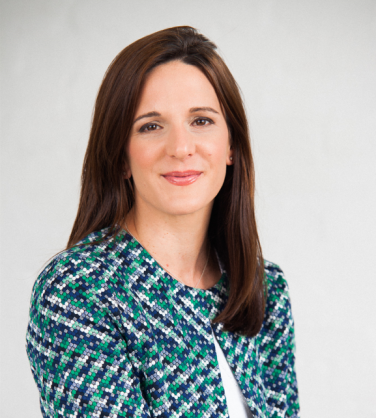
Sports, Arts and Culture Minister Zizi Kodwa says the achievement of 30 years of freedom in South Africa belongs to each and every South African.

The Minister was speaking during the National Dialogue on 30 Years of Democracy held at Freedom Park on Tuesday evening.

The celebration commemorates the eclipsing of the separatist agenda driven by the apartheid government and the ushering in of democracy and unity in the country.

Kodwa said democracy does not belong to any government or political party, but the entire population.

“Thirty years must be a celebration not of government, not of a governing party but of all South Africans because it is… South Africans who brought about this freedom. A South African who is in the villages, who is in town, who is in urban areas must feel part of the 30 years and must be given a voice,” he said.

The Minister said the dialogue is the beginning of a series of debates that will be held in the country to stimulate conversation around not only democracy but what defines a nation.

“One notion that we must always remind ourselves… is the notion of a nation. It’s only in our Constitution of 1996, which calls upon us to build a nation of all South Africans and the idea of a nation had never existed before.

“There are significant moments that define a nation, from a Sports, Arts and Culture perspective… we have seen what our national teams have done recently. We must celebrate significant moments that define us as a nation; one of which is the national flag.

“We are united around the flag. We are united around the national anthem. These are the important milestones that define this notion of a nation,” he said.

Turning to the upcoming National and Provincial Elections, the Minister emphasised the importance of the right to vote and the responsibility it bears.

“A right to vote is not just enough. It’s important that you must understand the manifesto of a party because… any party and leader that wins any election must give expression to the Constitution.

“Failure to give expression to the Constitution will result in issues… [of] people protesting, people just electing leaders on the basis of emotions, people electing leaders on the basis of populism and rhetoric. But it’s important that people must elect leaders who give expression to the Constitution…which states 'building a non-racial South Africa, which is united and all peoples belong to it'.

“People deciding not to vote must never be an option because an option to vote is a right that was denied for many years. I call upon all South Africans to exercise their right to vote and elect people that will give expression to the will and aspirations of the community,” he said. – SAnews.gov.za

NeoB
Wed, 04/10/2024 - 11:05
76 views
Read more30 years of freedom belongs to all of us – Kodwa
9 April 2024

Elections 2024: What the major political parties say about the courts

Location: News

We sent questions to the ANC, DA, EFF, IFP, FF Plus, ActionSA, PA, MK Party and RISE Mzansi

Read moreElections 2024: What the major political parties say about the courts
9 April 2024

SA’s democracy restored the dignity of millions

Location: News

SA's democracy restored the dignity of millions

South Africa's democracy has restored the dignity of millions of South Africans and changed the lives of its citizens for the better, says Minister of Sport, Arts and Culture Zizi Kodwa.

Addressing the launch of national Freedom Month in celebrating 30 Years of Democracy, the Minister urged South Africans to acknowledge the remarkable progress made since the dawn of democracy in 1994 as the country commemorates this significant milestone.

“Our journey has been marked by monumental achievements; from the dismantling of apartheid to the establishment of a constitutional democracy founded on the principles of equality, justice and human rights.

“We have witnessed the triumph of hope over despair, and the resilience of the South African spirit in the face of adversity.

“From inheriting a divided country, with gross inequalities in every aspect of life, we have done much to bridge this divide. We are also aware that there is much more still to be done, as the injustices and imbalances caused by apartheid could not all be resolved within 30 years,” Kodwa said on Tuesday at the Freedom Park and Museum Amphitheatre in Pretoria.

He highlighted the progress that has been made in the democratic South Africa as stated by President Cyril Ramaphosa when he delivered the State of the Nation Address in February.

“Our economy is today three times larger than it was 30 years ago. The number of employed South Africans increased from eight million in 1994 to over 16.7 million today. According to Census 2022, 88.5 percent of people in the country now live in formal housing, compared to 65 percent in 1996.

“South Africa’s social protection policies and programmes have been implemented to reduce poverty and vulnerability. South Africa has the most extensive HIV treatment programme in the world, which continues to save millions of lives.

“In sport, our transformation programmes are being implemented, as you see in our champion teams, such as the Springboks, whose players are truly representative of the nation they represent,” the Minister said.

As the country celebrates its successes, the Minister emphasised that the challenges that lie ahead should be confronted.

“Despite the progress we have made, we cannot ignore the persistent inequalities that continue to plague our society. Economic disparities, social injustices, and systemic barriers still hinder the realisation of our collective aspirations.

“We cannot claim true freedom and democracy until every South African, regardless of race, gender, or socio-economic status, enjoys equal opportunities and access to basic services.

“As custodians of this democracy, it is our duty to address these inequalities and to build a more inclusive society where every individual can thrive and fulfil their potential,” he said.

Three decades ago, South Africa embarked on a journey that fundamentally transformed the fabric of society, a journey that was paved with sacrifices, struggles, and unwavering determination.

On 27 April 1994, a large majority of South Africans stood in long queues to vote in democratic elections for the first time.

"Our road to democracy required untold sacrifice, and many paid the ultimate price for us to be free. The sacrifices made to bring that day to fruition live within our hearts and minds, therefore we will always be indebted to those who went before us.

"The freedoms we enjoy were built on the backs of heroes at home and abroad. We truly stand on the shoulders of giants, their legacy is our freedom, and we must honour it by continuing to build a just and equal society," the Minister said.

He said the gains of democracy stand in opposition to fascism, gender-based violence and femicide (GBVF), lawlessness, crime, inequality, corruption and other social ills.

Celebrating the constitution as the supreme law

This year, South Africa also commemorates the 28th anniversary of the enactment of the Constitution as the supreme law of the country.

“Our rights are protected under our constitutional democracy, which promotes inclusivity, equality, non-racialism, non-sexism, national unity, social cohesion, justice and diversity.

“In celebrating 30 years of freedom and democracy, we must also reflect on the values that have guided us thus far; reconciliation, unity, and nation-building. It is only through a commitment to these principles that we can overcome the divisions of the past and forge a common future based on mutual respect and understanding.

“As we navigate the challenges of the present and the uncertainties of the future, let us draw strength from the lessons of our past and the resilience of our people,” the Minister said.

Kodwa called on the nation to once again remind the world about the importance of democracy and freedom.

“Let us recommit ourselves to the ideals of freedom and democracy that have defined our nation for the past three decades. Let us strive to build a South Africa that is truly united in its diversity, where every citizen is empowered to contribute to the advancement of our society. And let us never forget the sacrifices of those who came before us, who fought and died so that we may live in freedom and dignity,” he said. – SAnews.gov.za

nosihle
Tue, 04/09/2024 - 13:15

399 views
Read moreSA’s democracy restored the dignity of millions
9 April 2024

Constitutional Court: where are the judgments?

Location: News

The Court has not delivered a single judgment this year

Read moreConstitutional Court: where are the judgments?
9 April 2024

Reflecting on the achievements of 30 years of freedom

Location: News

Reflecting on the achievements of 30 years of freedom

As the country reflects on 30 years of freedom and democracy, government is taking stock of the gains that have been made, its achievements and milestones, as well as what could have been done better over the last three decades. 

“As government, we should count the successes and achievements that we have managed to achieve at this point in time. In areas where we have tried to intervene [and] the interventions were not successful, we now have the experience and innovation to resolve them,” Government Communication and Information System (GCIS) acting Director General, Nomonde Mnukwa, said in an interview with SAnews.

South Africa's Census 2022 national results show an increase in the proportion of households that had access to piped water inside their dwelling, from 32.3% in 2001 to 46.3% in 2011 and to 59.7% in 2022.

The data show that in 2022, over four-fifths (82.4%) of households in the country had access to piped water either inside their dwelling or inside their yard.

The proportion of households using electricity as the main source of energy for lighting increased significantly from 58.1% in 1996 to 94.7% in 2022.

“The majority of us grew up in areas where water access was a dream. We never thought we would have access to water. We never thought that we would have access to electricity. We never thought we would have access to free education. There are a number of non-fee paying schools that we have and a majority of those schools are contributing more than 60% of the Bachelor’s passes for matrics,” Mnukwa said.

She said South Africa reaching 30 years of democracy and freedom is a dream that has come true.

“We have come a long way. This is the year that we look back, particularly to 1994 when South Africa held its first democratic elections. It was one of those dreams that came true for us to be able to cast our vote,” Mnukwa said.

South Africans will once again go to the polls on 29 May 2024 to cast their votes in the 2024  National and Provincial Elections. 

This year marks 30 years since millions of South Africans cast their ballot in the democratic election of 1994 for the first time in their lives.  

The 30-year celebration in the country will be premised on celebrating the gains, achievements, and the milestone of 30 years of democratic rule as well as living in a free and democratic society. 

Annually, the month of April is designated as Freedom Month in South Africa. 

“As South Africans, we need to remember where we come from. We come from an era where people needed to carry a dompass to go out in public. There were areas that we could not access as the segment of the population, which comprised the majority of the population,” Mnukwa said.

She emphasised that when South Africa was transitioning to a democratic country, it managed to avoid a war.

The country attained democracy and freedom though peaceful negotiations and talks.

“There were some careers that we couldn’t do because they were restricted to the chosen few. There were some areas that we could not stay in despite the fact that we were South Africans. It is something to celebrate, it is something to talk about and remember but it is mostly something that we can reflect on as individuals,” the acting DG said.

In his 2024 State of the Nation Address, President Cyril Ramaphosa said government’s policies and programmes have over the course of 30 years lifted millions of people out of dire poverty. 

By 2010, the poverty rate had dropped to 60.9%, and it continued to decrease, reaching 55.5% in 2020, as reported by the World Bank.

“One of the most visible, impactful and meaningful achievements in the first three decades of freedom has been in providing homes to the people. Today, nearly nine out of every ten households live in a formal dwelling. 

“At the end of apartheid, only 6 out of 10 people had access to clean drinking water. Today, that figure has increased to nearly 9 out of 10 South Africans. 

“We have introduced laws and undertaken programmes to enable black South Africans and women to advance in the workplace, to become owners and managers, to acquire land and build up assets.  The proportion of jobs in executive management held by black people increased almost five-fold between 1996 and 2016,” the President said.

In addition, government has built more hospitals and clinics, especially in poor areas, providing better and quality healthcare to more South Africans.  – SAnews.gov.za

nosihle
Mon, 04/08/2024 - 11:31

41 views
Read moreReflecting on the achievements of 30 years of freedom
9 April 2024

Elections 2024: What the major political parties say about sex work

Location: News

We sent questions to the ANC, DA, EFF, IFP, FF Plus, ActionSA, PA, MK Party and RISE Mzansi

Read moreElections 2024: What the major political parties say about sex work
8 April 2024

30 Years: reflections on SARS

Location: News

30 Years: reflections on SARS

While having to engage with the taxman may conjure up feelings for some of going to the dentist to have a tooth pulled - the South African Revenue Service (SARS) has played a crucial role in where South Africa is today.

As the country turns 30 years old under a democratic dispensation, it reaches this milestone with the existence of institutions like the South African Revenue Service (SARS).

State capture may perhaps be the first thing to come to mind when thinking of the revenue service;  closely followed by how unfair it may feel to pay taxes.

“What became increasingly clear as the Nugent hearings continued and was further underlined during the Zondo Commission proceedings which got underway in August 2018, was that the capture of SARS was part of a wider plan to capture the state,” said the revenue service in its anniversary book  to commemorate 25 years of its existence.

While it did go through a grim period characterised by what it termed as “a significant loss of talent, marginalisation of staff, complete collapse of governance, as well as a lack of trust by citizens,” SARS still managed to make it through the rough years.

At a recent media briefing to release the preliminary revenue outcome for the 2023/24 financial year, SARS said state capture left the organisation in “distress and severely compromised.“We embarked on a journey to re-imagine the organisation. SARS is succeeding in its strategic intent of building a tax and customs system that is based on voluntary compliance and sharpening its capability aimed at deterrence of wilful non-compliance,” it said at the briefing held in Pretoria.

It added that the process of rebuilding entailed broadening the tax base, instilling, and improving a culture of voluntary compliance and fiscal citizenship as well as data and technology to optimally deliver “on our mandate and working with all stakeholders in the tax ecosystem and fostering trust and confidence on SARS.”

It was imperative for SARS - of which its higher purpose is to enable government to build a capable state, foster sustainable economic growth and social development that serves the wellbeing of all South Africans -  to overcome this hurdle.

More so, for an institution that has collected R21.6 trillion in net tax revenues since its inception.

“The R21.6 trillion tax collections represents a compound growth of 9.9% per year since the inception of SARS in 1997. This has funded the South African democracy and touched the lives of millions who would be destitute without government support and services. We, who have the privilege to work at SARS are justly proud of these achievements because these efforts contribute directly to nation-building and sustain our democracy,” SARS Commissioner Edward Kieswetter said.

This as tax revenue collections have increased from R114 billion in 1994/95, at a compounded annual growth rate of 9.9% and an average tax-to- gross domestic product ratio of 22.2%.

Speaking at the 25-year celebrations of the existence of SARS in October 2022, President Cyril Ramaphosa said the encouraging progress of rebuilding SARS was evidence that it is possible to rebuild “ourselves from the deep damage we suffered during state capture.”

Evolution

While some taxpayers intentionally do not look at the tax portion of their payslips, paying one’s share of tax is vital in closing the very real inequality gap that continues to exist in the country.

And thanks to innovation made at the revenue service, it has become far easier for taxpayers to pay their taxes.

The days of completing a paper-based tax return are all but gone.

That laborious exercise has been replaced by a sleek process where most citizens are now able to receive a pre-populated tax return that can be completed and submitted online in a matter of minutes, thanks to eFiling.

But just how did we get to where we are today?

SARS was formed out of the amalgamation of the segregated revenue services of the apartheid-based Bantustans, as well as the Departments of Inland Revenue and Customs.

Following the historic elections in which South Africans of all races could vote in April 1994, work to build a better country for not just a few but for all, went into full steam.

“The new democratic government inherited a moribund economy deeply in debt and an inefficient Revenue and Customs system that was incapable of providing the tax needed by the democratic government to meet the developmental needs of all its people. In particular, the democratic government faced the challenge of ratcheting up service delivery to address the socio-economic backlogs in education, housing, health care, water supply, electricity supply and sanitation, amongst others,” noted the revenue service in its anniversary book.

In 1995, the then democratic Cabinet approved a two-step approach to the administrative autonomy of what would become SARS.

That process entailed the moving of the directorates of Inland Revenue and Customs and Excise out of the Ministry of Finance to the South African Revenue Service. The birth of the revenue service came in October 1997.

SARS - which is not only mandated to collect all revenues due and ensure compliance with tax, customs and excise legislation -- was formally established as an organ of state within the public administration, as an institution outside the public service.

Following that, government had the job of instilling a culture of tax compliance which was lacking in the country.

Change was needed and over the years, several steps were taken to “broaden the tax base, amongst others, these included legislative changes, service improvements, compliance strategies and enforcement actions,” said SARS.

Examples of the steps taken include the closing of legislative loopholes for abuse, tax amnesties (1995 and 1996, foreign exchange amnesty of 2003) and the introduction of Capital Gains Tax in 2001.

Modernisation

What was also a challenge for the leaders at SARS at the time, was “the fact that all processes inherited from the past were still manual and paper based” with returns having to be mailed to individual taxpayers.

Previously, filing one’s tax return involved the filling in of a minimum 12 pages to be tax compliant.

To reduce the paper-based processes, a new income tax system (NITS) was implemented in 1999. Increasing online business transactions, enhancing productivity as well as creating a more stable income tax system by reducing human intervention and improving data integrity were the main objectives of the new system.

“It was not until the launch of the Modernisation Programme in 2007 that SARS would finally be able to overcome the paper challenge,” it said.

In 1998, South Africa began collecting VAT at Southern African Customs Union borders. According to SARS, prior to 1994, these ports of entry were mainly managed by the South African Police, the South African Defence Force and Home Affairs (mainly for political control) and no revenue was collected.

Although a number a changes had been introduced after 1997, the revenue service found itself to be still “bureaucratic” and issues such as inadequate service to taxpayers and no standardisation of processes were still bugbears.

This led to the establishment of the Siyakha programme – which is isiZulu for “we are building”. The programme was set up to improve the performance of the organisation and to standardise and centralise key processes.

Its main objective was to radically transform SARS into a modern revenue authority aimed at creating a service culture that focused on the needs of the taxpayer, based on the principle that good service would facilitate tax compliance.

“The significance of Siyakha was that it would lay the foundation for the automation of processes and the modernisation programmes which began in 2007,” said the revenue service.

Around 2004, the Filing Season initiative was born and over the years it became one of the biggest, regular annual engagements that an organ of government had with citizens, apart from the national, provincial and local government elections.

As the years went by, SARS saw a “massive growth” in its taxpayer base and an increase in compliance, resulting in the receipt of high volumes of paper returns and supporting documents which still needed to be processed manually.

“As the organisation approached its tenth anniversary in an era of rapid technological advancement, the pressure mounted for a move from manual and paper-based processes to digital transactions," said the revenue service in its book.

In the modernisation years between 2007-2014, some of the key milestones SARS reached include the introduction of eFiling in 2007 which was at first for the submission of personal income tax returns.

It was then rolled out in phases for Company Income Tax, VAT, Dividends Tax and Transfer Duty amongst others.  It was critical to reducing the volume of paper that hampered efficiency, service and compliance.

“Other enhancements introduced in 2007 relating to the submission of Personal Income Tax returns included redesigning the return to two pages, using third party data verification and introducing scanning of returns in branches.”

“In 2008, SARS ramped up the changes, including the pre-population of returns on eFiling, based on third-party data supplied by employers. Employers could submit information to SARS through the new e@syFile channel developed by SARS and provided to employers free of charge,” it said.

The following year, more than three million individual taxpayers used eFiling, experiencing a massive improvement in ease, convenience, and improved turnaround times, especially in the payment of refunds.

The number of taxpayers visiting SARS branches began to drop and the number of printed returns reduced, “which meant a huge saving for SARS and represented a major environmental benefit.

“Today, almost 100% of all returns are filed electronically. The changes introduced in 2007 not only delivered benefits to taxpayers, but improved SARS’s ability to become more effective in detecting and deterring non-compliance and fraud. It allowed SARS to change its approach to monitoring compliance, from gatekeeper to risk manager,” said the revenue service.

The revenue service noted that by the end of the 2010 financial year, there was a significant increase in the use of electronic channels by taxpayers. An 82.6% growth was achieved in the electronic submission of returns as a result of processing efficiencies and automation.

South Africans also benefit from the existence of the Office of the Tax Ombud (OTO) that was established in October 2013 to enhance the tax administration system.

Prior to the establishment of this office, there was no independent channel of independent redress for taxpayers who had exhausted the normal complaints mechanisms. The office is independent of but funded through SARS.

Last year, the OTO celebrated a decade existence.

Indeed, the revenue service forms an important part of our democracy. -SAnews.gov.za

Neo
Mon, 04/08/2024 - 14:20

159 views
Read more30 Years: reflections on SARS
5 April 2024

Elections 2024: What the major political parties say about public transport

Location: News

We sent questions to the ANC, DA, EFF, IFP, FF Plus, ActionSA, PA, MK Party and RISE Mzansi

Read moreElections 2024: What the major political parties say about public transport
4 April 2024

Political parties, independent candidates sign Code of Conduct

Location: News

Political parties, independent candidates sign Code of Conduct

Political parties and independent candidates contesting the 2024 National and Provincial Elections have signed the Electoral Commission’s Code of Conduct committing to abide by the set of rules that are meant to ensure free and fair elections.

The General Elections will be held on 29 May to elect a new National Assembly as well as the provincial legislature in each province.

This will be the seventh general election held in the democratic dispensation since the end of the apartheid era in 1994.

In total, 325 political parties will be taking part in this year’s elections.

In his keynote address at the signing ceremony held in Midrand on Thursday, Electoral Commission (IEC) chairperson Mosotho Moepya said violations of the Electoral Code of Conduct can cast doubt on the legitimacy of election results, and lead to disputes and legal challenges.

“By complying with the code, political parties help to ensure that election outcomes are accepted as legitimate by all stakeholders, thereby contributing to political stability and social cohesion,” Moepya said.

Click here for the Electoral Code of Conduct.

Moepya said with freedom comes great responsibility. The Constitution affords political parties, independent candidates and citizens the freedom to contest elections for public office.

“Today's signing ceremony holds profound significance, as the country witnesses leaders of parties represented in the National Party Liaison Committee publicly pledge to abide by the Electoral Code of Conduct for the forthcoming elections.

“This code provides the framework for conduct consistent with the vision of democratic forebears, who envisioned a society at peace with itself and all its constituents. It is a statutory instrument for realising free and fair elections, requiring profound political leadership, as its observance reflects not only our commitment as democrats but also our collective dedication to orderly public affairs.

“As leaders, we bear the responsibility of guiding our nation towards a vision of peace and tranquillity,” Moepya said.

Rules and regulations

Moepya said beyond adherence to the code, political parties, independent candidates and citizens alike must actively promote awareness of the code's purpose and support efforts to educate voters.

Moepya said certain behaviours, such as inciting violence, intimidation, spreading false information or abusing positions of power, are strictly prohibited and must be met with swift accountability measures.

Moepya said upholding the provisions of the Electoral Code of Conduct reinforces democratic values such as tolerance, respect for diversity and the peaceful resolution of disputes.

“These values are essential for the functioning of a healthy democracy and fostering trust between citizens and their elected representatives.

“We know that political violence and intimidation can undermine the integrity of the electoral process and deter citizens from exercising their right to vote. By complying with the code, political parties help prevent such incidents and contribute to a peaceful electoral environment.

“The Electoral Code of Conduct also aims to ensure that all political parties and candidates have equal opportunities to campaign and communicate their messages to voters,” Moepya said.

30 Years of Democracy

Sy Mamabolo, the Electoral Commission’s Chief Electoral Officer, said as the country commemorates the 30th anniversary of democracy, it is vital to reflect on one of its abiding successes.

“Today, we stand before South Africa and her people to affirm our readiness to conduct an election which accords with the constitutional yardsticks and international norms.

“We give this affirmation of readiness, alive to the enormity of the challenge that rests on our hands. We stand ready to assiduously ensure that we do not let the motherland down for otherwise history will have a deleterious account of our charge of this task,” he said.

Most political parties had expressed their delight in taking part in the signing ceremony.

Sizwe Ummah Nation (SUN)  party representative, Mondli Thulani Ncayiyane, commended the signing ceremony.

“The Electoral Commission has done a splendid job by coming with the Code of Conduct committing political parties to, among other things, denounce violence during the election period.

“As a party, we support the initiative and we hope that this is going to ensure peaceful elections in our country,” Ncayiyane said.

Echoing the same sentiments was Inayet Hussain Hassen from the Allied Movement for Change, who praised the IEC for the good work they have done in a bid to ensure peaceful elections.

“We are aware that it is not going to be easy for the voters as the ballot paper is going to be a big one, but we hope everything will be under control.

“The IEC has a good track record for conducting elections. We are confident that all the other political parties are going to uphold the Code of Conduct,” Hassen said.

Party lists

Last month, the Commission made available the lists of names of independent and political party candidates available for inspection at its national office, and at all its nine provincial offices and local municipal offices.

Parties intending to contest the elections were given an opportunity to revise their lists and inform the commission if they had nominated candidates who also appeared on the list of another party or who were nominated as independent candidates.

In all, there were 42 candidates appearing on more than one party list implicating 39 parties. Furthermore, one candidate was nominated as an independent candidate and also appeared on a list of a party.

The final list of candidates contesting the elections will be published by the Commission on 10 April 2024.

President Cyril Ramaphosa announced in February that South Africa will head to the polls on 29 May 2024 for the General National and Provincial Elections. – SAnews.gov.za

Edwin
Thu, 04/04/2024 - 13:52

105 views
Read morePolitical parties, independent candidates sign Code of Conduct
4 April 2024

People struggle to get IDs at Khayelitsha Home Affairs as elections loom

Location: News

One person said they slept outside the Khayelitsha office on Monday night. Despite being among the first in line, they were only helped at 3pm on Tuesday.

Read morePeople struggle to get IDs at Khayelitsha Home Affairs as elections loom
3 April 2024

Elections 2024: What the major political parties say about immigration

Location: News

We sent questions to the ANC, DA, EFF, IFP, FF Plus, ActionSA, PA, MK Party and RISE Mzansi

Read moreElections 2024: What the major political parties say about immigration
2 April 2024

Elections 2024: What the major political parties say about social grants

Location: News

We sent questions to the ANC, DA, EFF, IFP, FF Plus, ActionSA, PA, MK Party and RISE Mzansi

Read moreElections 2024: What the major political parties say about social grants
28 March 2024

President Ramaphosa congratulates Senegal President-Elect

Location: News

President Ramaphosa congratulates Senegal President-Elect

President Cyril Ramaphosa has congratulated Senegal’s President-elect, Bassirou Diomaye Faye, following that country’s recent elections.

Faye won at least 54% of the vote in Senegal’s presidential elections.

“The Senegalese people have [lit] a beacon which will usher in a new hope in the journey of rebuilding Africa by opting for a peaceful change of government as opposed to violence,” President Ramaphosa said.

A statement released by the Presidency reflected on the close relations enjoyed by South Africa and its West African counterpart.

“South Africa and Senegal enjoy close political, trade and social relations deepened by strong historical ties rooted in the anti-apartheid struggle. President Ramaphosa has committed to strengthen the bilateral relationship between South Africa and Senegal in pursuit of a better and peaceful continent.

“The outcome of the election bears testimony to the resilient spirit of the Senegalese people, who preferred the democratic course of change of government, through voting. The President applauded the other contestants for displaying maturity in accepting the election outcome,” the statement read. – SAnews.gov.za

NeoB
Thu, 03/28/2024 - 08:04

786 views
Read morePresident Ramaphosa congratulates Senegal President-Elect
28 March 2024

X marks the spot

Location: News

X marks the spot

With the clock inching closer to Voting Day when citizens will mark their X next to the name of their preferred candidate in the 2024 general elections, it is important that we all go into the various voting booths across the country armed with all the relevant information to make an informed choice, writes Neo Semono.

The 2024 National and Provincial Elections coincide with the 30 years of freedom and democracy celebrations that the country is observing this year.

Young and old registered voters will make their mark in South Africa’s seventh democratic elections on 29 May after which the seventh administration will come into being.

While we are accustomed to receiving two ballots in national and provincial elections, things will be a little different this Voting Day.

Instead of the usual two - registered voters will this time around receive three ballot papers - wherein to mark their X.

The three ballots are the result of the passing of the Electoral Amendment Act of 2023.

The Electoral Amendment Act of 2023 which President Cyril Ramaphosa signed into law on 17 April 2023, gives effect to the Constitutional Court judgment handed down in June 2020.

The judgement declared the Electoral Act of 1998 unconstitutional for stipulating that election to the National Assembly and provincial legislatures may only be attained through membership of political parties.

The court gave Parliament two years to remedy the defects. Since the court decision, the Electoral Bill was born and extensive public consultations on the bill were held by Parliament’s National Assembly and the National Council of Provinces.

This prompted Parliament to request two deadline extensions from the court with the final deadline for Parliament to pass the bill having been set at 28 February 2023.

And while there were hiccups, the Act finally became law in June 2023.

Less than a year later since becoming law, South Africans will be voting in elections that include independent candidates.

Come Wednesday, 29 May, voters will receive three ballots - the first being for the election of the compensatory 200 members of the National Assembly, which is only contested by political parties on a closed list basis.

According to the Electoral Commission (IEC), the second ballot will be for the regional elections of the 200 members of the National Assembly. This ballot will vary from region to region, depending on which parties and independent candidates contest the relevant regional election. Only the names of political parties and independent candidates that have met the requirements to contest each regional election will appear on this ballot.

According to the commission, in the national elections, independent candidates will contest the 200 regional seats alongside political parties, while the other 200 seats will be compensatory to bring back general proportionality for political parties.

This means that the total votes for a party in a region determine the number of seats they hold.

The third ballot which is the provincial ballot, will be for electing the members of the provincial legislature in each of the nine provinces. It contains the names of the political parties and independent candidates that have met the requirements to contest each provincial election.

However, while independent candidates can contest in multiple regions, they are limited to winning just one seat in the National Assembly.

The participation of independent candidates in the country’s elections for the very first time, is a feather in South Africa’s cap. It’s a reflection of a democracy in action.

And while the country is not without its faults, including corruption and the continued impact of the state capture years among a list of things that need attention, our democracy is a robust one and very much alive with individuals and organisations able to approach the courts for relief.

The judgment in the matter of the New Nation Movement NPC & others V President of the Republic of South Africa & others where the Electoral Act of 1998 was declared unconstitutional for stipulating that election to the National Assembly and provincial legislatures may only be attained through membership of political parties, is one such example.

The year of the three ballots at the polls is also the year wherein the South African voters’ roll which was first compiled ahead of the 1999 national and provincial elections, has swollen to 27.79 million registered voters.

In 1999, the voters’ roll stood at 18.17 million registered voters.

While it is not a perfectly hung portrait, the South African canvass is continually being improved upon with the flair and outspokenness that we’re known for.

Let us go out and exercise our right to vote. The South African Inc picture is far from being complete, it needs you and I. -SAnews.gov.za

Neo Semono is a Features Editor at SAnews.

Neo
Thu, 03/28/2024 - 08:44

341 views
Read moreX marks the spot
26 March 2024

 Independent and political party candidates lists available for inspection

Location: News

 Independent and political party candidates lists available for inspection

The Electoral Commission (IEC) will today and tomorrow between 09:00 and 17:00 make the lists with the names of independent and political party candidates available for inspection at its national office, at all its nine provincial offices and at local municipal offices.

Parties intending to contest the elections had until 17:00 on Monday to revise their lists and inform the commission if they had nominated candidates who also appeared on the list of another party or who were nominated as independent candidates.

In all, there were 42 candidates appearing on more than one party list implicating 39 parties. Furthermore, one candidate was nominated as an independent candidate and also appeared on a list of a party.

“The focus in the evolving candidate nomination process shifts to a period within which interested persons may inspect the lists of candidates and raise objections against candidates.

“To this end, the Commission will today and tomorrow, between 09:00 and 17:00 make the lists with the names of independent and political party candidates available for inspection at its national office, and in all its nine provincial offices and in local municipal offices.

“Copies of the documents accompanying the lists are available for inspection at the commission’s national office between 09:00 and 17:00,” said the commission in a statement.

In all, 14 662 candidates have been nominated to contest the 887 seats available in the National Assembly and the nine legislatures. The spread of the candidates is as follows:

  • 4 323 candidates have been nominated to contest the compensatory seats in the National Assembly (contested by parties only),
  • 3 596 candidates have been nominated to contest the regional seats in the National Assembly (contested by party candidates and independents) and
  • 6 743 candidates have been nominated to contested seats in the provincial legislatures (contested by party candidates and independents).

The biggest ballot paper will contain 56 contestants. This is the ballot for the compensatory seats in the National Assembly. The biggest regional election ballot will be in the Gauteng region with 40 political parties and 2 independent candidates.

Similarly, the biggest ballot in respect of provincial legislature elections will be in Gauteng with 42 political parties and 2 independent candidates.

Seven independent candidates will contest the regional elections and six will contest the provincial legislature elections. The region with the most number of independent candidates is the Limpopo region with three candidates.

Any person may object to the nomination of a candidate. Such objections must be lodged with the commission by 17:00 on 27 March 2024.

An objection may be raised on the basis that an independent candidate or nominating party has failed to submit the signed prescribed acceptance of nomination or that there is no signed prescribed undertaking, that the candidate is bound by the electoral code of conduct, the commission said.

An objection may be on the basis that a candidate is not qualified to stand in the election. In this regard section 47 and 106 of the Constitution are instructive.

The sections provide that every citizen who is qualified to vote for the National Assembly is eligible to be a member of the Assembly, except:

(a) Anyone who is appointed by, or is in the service of the state and receives remuneration for that appointment or service

(b) Permanent delegates to the National Council of Provinces or members of a provincial legislature or a Municipal Council

(c) Unrehabilitated insolvents

(d) Anyone declared to be of unsound mind by a court of the Republic or,

(e) Anyone who, after this section took effect, is convicted of an offence and sentenced to more than 12 months imprisonment without the option of a fine, either in the Republic, or outside the Republic if the conduct constituting the offence would have been an offence in the Republic, but no one may be regarded as having been sentenced until an appeal against the conviction or sentence has been determined, or until the time for an appeal has expired. A disqualification under this paragraph ends five years after the sentence has been completed.

The commission will decide the objections by 28 March 2024. The objector, registered party or nominated candidate may appeal against the decision of the Commission to the Electoral Court by 2 April 2024.

The final list of candidates contesting the elections will be published by the Commission on 10 April 2024.

Voters are reminded that they may only vote at a voting station in which they are registered.

Voters who will unavoidably be away from their voting districts on Election Day may give notice of their intention to vote at another identified voting station by 17 May 2024. – SAnews.gov.za


Edwin
Tue, 03/26/2024 - 09:32

211 views
Read more Independent and political party candidates lists available for inspection
25 March 2024

Elections 2024: How people with disabilities can vote

Location: News

There are various ways but remember to apply in time for a special vote if you need one

Read moreElections 2024: How people with disabilities can vote
21 March 2024

Threats and intimidation will not be tolerated during elections

Location: News

Threats and intimidation will not be tolerated during elections

As the country heads to the polls on 29 May 2024, President Cyril Ramaphosa has warned that threats, intimidation and undemocratic actions by people who want to undermine the electoral process will not be tolerated. 

Speaking at the Human Rights Day commemoration in Sharpeville on Thursday, the President said the regularity, peacefulness, fairness and integrity of the elections are achievements that must be dutifully protected. 

“In just over two months from now, South Africans will go to the polls to vote in the 7th democratic election for national and provincial government. We must not tolerate the threats, intimidation and undemocratic actions of those who want to undermine our electoral process.

“But we must go beyond the right to vote. We must create more space and open up more opportunities for all citizens to have a say in the decisions that affect them,” the President said. 

He said citizens will be exercising one of the defining rights of democracy, the right to freely and in secret choose the people who will represent them in Parliament and the provincial legislatures.

In opening up more opportunities for all citizens to have a say in the decisions that affect them, the President said “we must do so by strengthening the processes of consultation in government, in Parliament, in legislatures and in municipalities, making them more meaningful and inclusive”.

At the same time, he called for unity in working together to build people’s power at the grassroots level.

“We must support community-based organisations and initiatives, religious formations, women’s organisations and youth bodies.”

Parents must be encouraged to participate in school governing bodies and community members to get involved in community policing forums.

“Democracy thrives when we have an active citizenry – when people are fully exercising their rights to freedom of association, freedom of expression, freedom of assembly and freedom to demonstrate, picket and petition.

“Democracy thrives when people use the rights guaranteed to them to determine their own future. This means, among other things, that people must be able to enforce their rights. They must have access to justice and to be sure that they will be treated fairly and impartially,” he said.

As the country looks back on 30 years of freedom as well as decades of struggle for basic human rights, the great strides that have been made must be acknowledged.

“Working together, as a nation united, we have built a democracy that recognises the equal worth of every person.

“We have built a society in which everyone has an equal expectation that their rights will be respected and upheld. We have travelled this long journey together. 

“But we still have further to travel and much more to do before everyone can equally exercise the fundamental freedoms that are rightfully theirs. On this Human Rights Day, let us pledge to ourselves and each other that we will travel that road together,” he said. – SAnews.gov.za


DikelediM
Thu, 03/21/2024 - 14:45

217 views
Read moreThreats and intimidation will not be tolerated during elections
21 March 2024

Sharpeville massacre victims remembered 

Location: News

Sharpeville massacre victims remembered 

President Cyril Ramaphosa has encouraged South Africans to continue to honour those who fought for the rights that all enjoy today and hold dear.

President Ramaphosa delivered the keynote address at the Human Rights Day commemoration in Sharpeville, Gauteng on Thursday, held under the theme: “Three Decades of Respect for and Promotion of Human Rights”.

“Sixty-four years have passed since the ground on which we gather here in Sharpeville bore witness to one of the worst atrocities committed by the apartheid regime against the South African people.

“And although many decades have passed, we still remember with great sorrow and pain the 69 people who were killed and the many more who were maimed as they protested in peace against the grave injustices imposed upon them,” the President said. 

Earlier, President Ramaphosa led a wreath laying ceremony at the Sharpeville memorial site in commemoration of South Africans who laid their lives in sacrifice for the struggle for the attainment of human rights and democratic South Africa.

He also met with family members of the fallen Sharpeville Massacre victims during the wreath laying ceremony.

Today’s gathering, he said, was held to trace the journey as a nation over the last 64 years, from a state of discrimination and repression to a land of democracy and freedom.

“Ours was a journey of relentless struggle. We still recall how every black South African – African, Coloured and Indian - was denied the basic human rights to which they were entitled.

“We recall how many generations of black South Africans were denied the right to life and dignity, the right to equal treatment, the right to vote and to be heard, the right to live where they want, to work in the trade of their choice, the right to education and health care, the right to the protection of the law,” he said. 

The President reflected that it was a difficult and dangerous journey travelled by community activists and union organisers, by traditional leaders and religious groupings, by freedom fighters and underground operatives, by political prisoners and exiles, and by friends and supporters across the world.

He added that it was a struggle to realise the rights contained in the Bill of Rights which called for equal treatment of all people, equal access to land, direct representation and voting rights.

“Ours was a struggle to realise the vision of the Freedom Charter, adopted by the Congress of People in 1955, of a South Africa that is prosperous and free and in which all enjoy equal rights and opportunities.

“It was these principles and these ideals, these struggles and these sacrifices, that enabled the achievement of our democracy and the adoption of the Bill of Rights that is at the centre of our democratic Constitution,” he said. 

And as the country celebrates this milestone, President Ramaphosa said the country will reflect on the journey taken towards the full realisation of the fundamental freedoms contained in the Bill of Rights.

“We will count the elections that we have held every five years since 1994, elections that have been peaceful, free and fair and that have reflected the will of the people.

“We will assess the institutions that make our laws, that both represent the views and regularly seek the counsel of the South Africans people. We will point to the independence of our judiciary, the vibrancy of our civil society, the activism of our trade unions and the freedom of our media.

“As we celebrate 30 years of freedom, we will reflect on the progress we have made in progressively realising the social and economic rights contained in our Constitution,” he said. 

The President said the country has much to celebrate as he detailed the progress made by government throughout the years. 

He highlighted that millions of South Africans have been lifted out of dire poverty, while eight out of every 10 households have proper housing. 

“Nine out of every 10 homes have electricity and access to clean drinking water. South Africans are living longer. Far fewer women are dying in child birth and far fewer children are dying in infancy.

“More children from poor families are completing school, passing matric and going on to study at universities and colleges,” he said. 

The President said this has been made possible because the country has focused on correcting the injustices of the past and meeting the needs of the poor and excluded.

He highlighted that working together, nearly 4 million hectares of land has been returned to people who had been dispossessed of their land and acquired over 5 million hectares of land for redistribution and to provide security of tenure for labour tenants and other farm dwellers.

Government has provided social grants for children, the elderly and people with disability, and recently introduced a special social relief of distress grant for unemployed people.

Government also provides free daily meals to millions of school children and has expanded the number of fee-free schools and has massively increased funding for students from poor and working-class families to attend universities and colleges.

“As our economy has changed, more and more people have been able to exercise the right to freely choose their trade, occupation or profession. Our economy has tripled in size since 1994.

“While unemployment still remains unacceptably high, the number of South Africans in employment has more than doubled in the last 30 years. The proportion of executive management positions held by black people increased almost five-fold between 1996 and 2016,” he said. – SAnews.gov.za


DikelediM
Thu, 03/21/2024 - 14:39

64 views
Read moreSharpeville massacre victims remembered 
21 March 2024

Hundreds of people stake out plots for houses on empty land in Nelson Mandela Bay

Location: News

Municipality says it will move against them

Read moreHundreds of people stake out plots for houses on empty land in Nelson Mandela Bay
20 March 2024

S Africans urged to participate in the upcoming elections

Location: News

S Africans urged to participate in the upcoming elections

Cooperative Governance and Traditional Affairs Minister, Thembi Nkadimeng, has urged South Africans to vote in the upcoming elections.

“Your vote is not merely a mark on a ballot paper; it is a voice – a voice that speaks volumes, resonating with the hopes, dreams and aspirations of our society. 

“It is a symbol of your commitment to the principles of democracy,” she said. 

Nkadimeng was addressing a conference on the impact of the upcoming General Elections on intergovernmental relations at the University of the Western Cape. 

The National Research Chair organised the Multilevel Government, Law, and Development event at the Dullah Omar Institute.

The conference addresses critical questions regarding governance, particularly concerning the challenges posed when different parties or coalitions govern at various levels of government. 

Nkadimeng used her platform to call on South Africans to unite in their diversity and go to their designated voting stations with purpose and conviction.

“Regardless of your political affiliations or beliefs, your vote is a precious right – one that countless individuals have fought and sacrificed for throughout our history. 

“It is a privilege denied to many worldwide yet bestowed upon us as South Africans. Let us not take this privilege for granted, but rather cherish it and wield it wisely.” 

This as the country is set to go to the polls on 29 May 2024.

Coalitions 

Nkadimeng touched on the instability caused by coalitions since the local government elections have underscored that some political parties are struggling to cope with the delicate demands and dilemmas of coalition politics. 

She highlighted the complexities involved and emphasised the importance of cooperation and coordination among government spheres, acknowledging the strain caused by conflicting agendas and ideologies.

These include “unscrupulous manipulation” by smaller parties to have governance by a small unrepresentative group of individuals and bribes with little thought on the impact of the same on the municipality and its ability to deliver services. 

Another hurdle, she said, is the infighting in councils characterised by walkouts, leading to an inability to adopt budgets, resulting in an administration that cannot spend its budget to address service delivery backlogs. 

The Minister spoke of the lack of due diligence when making key appointments, which results in compromised individuals appointed in critical positions.

“Yet, it is precisely during these moments of divergence that the resilience of our intergovernmental relations system is put to the test. 

“How do we navigate the waters of political pluralism while upholding the principles of cooperative governance? How do we bridge the divide between divergent political entities to ensure the seamless delivery of services and the pursuit of shared objectives? These are questions that demand thoughtful consideration and innovative solutions.” 

She also discussed lessons learned from the 2021 Local Government Elections, emphasising the need for coalition regulation to maintain stability.

Nkadimeng stressed the significance of legal frameworks, institutional mechanisms, and fostering dialogue and collaboration.

She reiterated the constitutional principle of cooperative government and intergovernmental relations, regardless of electoral outcomes, emphasising its importance for effective governance.

Central to the notion of intergovernmental relations, according to Nkadimeng, is the recognition of the interdependence among the three spheres (national, provincial and local) of government. 

She explained that each sphere possesses distinct powers, functions, and institutions, yet they are inherently interconnected. 

“Therefore, all spheres of government have to respect each other's autonomy while keeping one another informed of new policies and developments.”

Intergovernmental relations extend beyond mere cooperation. However, according to Nkadimeng, they encompass a complex network of interactions involving government institutions and civil society.

Effective coordination of public policies among national, provincial, and local governments is essential for ensuring coherent and impactful governance.

Regardless of the electoral outcomes when the South Africans go to the polls, she said she believes that it is important for all political parties to adhere steadfastly to the principles outlined in the Constitution of the country.

“Upholding the ideals of cooperative government and intergovernmental relations is not contingent upon political affiliation but is a shared responsibility integral to the fabric of our democracy.”

She concluded by outlining measures to maintain resilience in the face of political changes, including promoting continuity, trust, cooperation, and building institutional capacity within the intergovernmental relations framework. – SAnews.gov.za

Gabisile
Wed, 03/20/2024 - 15:07

321 views
Read moreS Africans urged to participate in the upcoming elections
18 March 2024

Deepfakes a worrying trend in the run-up to elections

Location: News
KnowBe4

More than four billion people (https://apo-opa.co/4aerFVs) worldwide will take part in elections this year, including in the US, UK, India, and South Africa. However, the increasing prevalence of disinformation, fuelled by the growing use of deepfakes and generative AI, means that politicians and voters alike will need to be on high alert.

In the 2024 Global Risks Report (https://apo-opa.co/3wRJRWs), the World Economic Forum identified AI-generated misinformation and disinformation as the second most significant global risk after extreme weather. This concern is well-founded, especially with the rapid rise of tools like generative AI empowered deepfakes, posing a threat to the integrity of democratic processes. Deepfakes, which are highly realistic fabricated videos or images, can deceive voters, manipulate public opinion, and tarnish the reputation of political parties and politicians.

Anna Collard, SVP Content Strategy and Evangelist at KnowBe4 AFRICA, a cybersecurity training organisation, says there has been a vast improvement in the quality of deepfakes over the past year, making them more convincing and difficult to identify. In a notable incident from October last year, cybercriminals used deepfake videos (https://apo-opa.co/4aewZYY) to impersonate African Union Chairperson Moussa Faki Mahamat during online conversations with European diplomats. Similarly, in December, Facebook removed over 100 deepfake paid advertisements (https://apo-opa.co/3TBfnkt) featuring British Prime Minister Rishi Sunak after nearly half a million people viewed them.

“Deepfakes pose major risks in the run-up to elections, both in the UK and South Africa,” says Collard. “Voters need to be aware of this risk and be proactive about mitigating their impact.”

Be aware of deepfakes

According to Collard, the initial step in combating the impact of misinformation and disinformation through deepfakes is raising awareness. “It's crucial for the public to be aware of the existence of this phenomenon,” she emphasises, adding, “The production of deepfake videos and images is cheap and easy.”

CounterCloud, a research project to showcase how easy it is to create fully automated (https://apo-opa.co/3wSNhZ0) disinformation campaigns, operated with a modest budget of only $400. Its goal was to counter negative depictions of the US propagated by Russian media. “If you're a politician, expect deepfakes impersonating you to appear in order to sway public opinion,” she asserts. “Similarly, voters should not believe everything they see or hear on social media to be true.”

Verify information

Apart from raising awareness, another crucial principle is to verify information. “If a politician purportedly said something that's deeply polarising, it's important to verify whether they genuinely said it.” To counter the risk of deepfakes, the Independent Electoral Commission (IEC), in collaboration with Media Monitoring Africa, has launched an initiative called Padre (https://apo-opa.co/3THIwux). This initiative allows voters to fact-check information regarding South African political parties and their recent statements.

Google's reverse-image search (https://images.Google.com/) is another helpful tool that enables you to check if an online image has been used elsewhere. Additionally, FotoForensics (https://FotoForensics.com/) provides a more in-depth analysis of images. However, despite these tools, verifying information remains challenging. “Deepfakes are becoming more convincing, making verifying information even harder,” states Collard.

Don't over-react

Lastly, when faced with inflammatory content, Collard stresses the importance of voters not overreacting. “Scammers want to whip up your emotions and get you in a state where you're unable to think rationally,” she says. “Stay calm and don't share content that is overly emotive. Whenever your emotions are triggered, slow down and verify, -it could be a hoax.”

Collard believes that it is every voter's responsibility to educate themselves about the dangers of deepfakes. “AI-generated fake content has huge implications for society, especially during election periods,” she says. “To combat this form of disinformation and safeguard the democratic process, social media platforms, political parties and independent watchdogs as well as us the public will all need to work together.”

Distributed by APO Group on behalf of KnowBe4.

Media files
KnowBe4
Download logo
Read moreDeepfakes a worrying trend in the run-up to elections
18 March 2024

Housing activists frustrated by President Ramaphosa’s six-month silence on public land act

Location: News

They have been demanding that government use the State Land Disposal Act of 1961 to rapidly free up land for housing

Read moreHousing activists frustrated by President Ramaphosa’s six-month silence on public land act
17 March 2024

Mineral Resources and Energy committee chair welcomes passing of ERA Bill 

Location: News

Mineral Resources and Energy committee chair welcomes passing of ERA Bill 

The chairperson of the Portfolio Committee on Mineral Resources and Energy, Sahlulele Luzipo, has welcomed the passing of the Electricity Regulations and Amendment (ERA) Bill by the National Assembly (NA).

In a statement, Luzipo said the Bill is a product of the collective wisdom of everyone who participated in the process, including the public hearings held in all nine provinces and those who made written submissions. 

The provincial public hearings were held from 26 September 2023 to 29 January 2024 and the majority of those who participated supported the Bill.

The Bill seeks to amend the Electricity Regulation Act of 2006 and once enacted into law, it will enable the transformation of the country’s electricity sector to ensure electricity sustainability, supply and affordability.

READ | National Assembly passes Electricity Regulation Amendment Bill
 
“It proposes an end to the monopoly-driven market and allows competition through key legislative reforms. This move is underscored in the Department of Public Enterprises’ 2019 Roadmap for Eskom in a Reformed Electricity Supply Industry.
 
“The Bill, however, does not propose the privatisation of Eskom, which the majority of participants in the public hearings said they opposed,” the statement read. 

Furthermore, the Bill proposes the establishment, within five years, of a State-owned Transmission System Operator (TSO) that is legally distinct from Eskom; the expansion and alignment of the powers of the National Energy Regulator of South Africa (NERSA) to regulate the competitive market and the empowerment of NERSA to set and approve tariffs and prices, as well as regulate the participation of independent power producers (IPPs), among other things.

In the interim, it authorises a ring-fenced subsidiary of Eskom Holdings, in the form of the National Transmission Company of South Africa, or NTCSA, to fulfil the functions of the TSO.
 
The TSO is an enabler of a competitive market. Therefore, the functions of the TSO are grid ownership and operation, system operation, market operation, and the creation of a Central Purchasing Agency that will take care of the legacy and vesting contracts.

“I am happy that the NA has passed the Bill that is responding to the people’s concerns about the need for setting parameters on the competitive behaviour of IPPs [independent power producers], as this will ensure that the sector delivers sustainable electricity at competitive prices,” Luzipo said. 

According to Luzipo, this is important not only for competition but also because it addresses global commitments around climate change issues with regards to the country’s transition within the context of the Just Energy Transition framework. This is because the participation of multiple players will result in diverse electricity generation technologies, such as renewable energy.

“It is anticipated that, in the long-term, the Bill will drive down the cost of electricity generation, which will be passed on to consumers in the form of lower electricity bills.

“Further, new investment in the industry will bring new technologies and multi-year capital programmes that will enable new local industries and local businesses to empower youth and create new-age skills and digital capabilities because individuals who generate electricity for their use will be allowed to sell surplus to the government,” Luzipo said. 

The ERA Bill criminalises the unlawful destruction and damage of electricity infrastructure, inclusive of transmission, distribution or generation equipment and infrastructure.
 
This provision ensures that cable theft and unlawful electricity damage, amongst other things, are decisively addressed. 
The Bill states that if a person is convicted of these offences, a fine not exceeding R1 million will be imposed.

 
If a person is found guilty of unlawful trading of the electricity infrastructure as listed above, a fine not exceeding R5 million will be charged, or imprisonment not exceeding 10 years, or both such a fine and imprisonment.

Luzipo said that the committee intends for the Bill to not only address the immediate electricity challenges and load shedding but also to enable long-term electricity supply for businesses and the broader society. 

He thanked all political parties that supported the Bill in the NA and for putting the interest of the country and its citizens ahead of their political interests in the forthcoming elections.

Luzipo further thanked members of the committee and the staff for their dedication. – SAnews.gov.za

DikelediM
Sun, 03/17/2024 - 12:14

81 views
Read moreMineral Resources and Energy committee chair welcomes passing of ERA Bill 
13 March 2024

Parliamentary Committee welcomes IEC’s swift action in leaked candidate lists matter

Location: News

Parliamentary Committee welcomes IEC’s swift action in leaked candidate lists matter

The chairperson of Parliament’s Portfolio Committee on Home Affairs, Mosa Chabane, has welcomed the swift action by the Electoral Commission of South Africa (IEC) in investigating the leaking of candidate lists.

The implicated staff member has since been fired.

READ | Electoral Commission terminates employment of employee

Chabane stressed that the integrity of the electoral process must be protected, and that the swift investigation and decision to terminate the employee’s contract demonstrates the integrity of the institution.

“We remain of the view that the IEC is a credible institution to run a free and fair process and that anything that endangers this process will be quickly investigated and concomitant action taken,” Chabane said.

Beyond contravening the Protection of Personal Information Act, the unauthorised circulation of the lists undermined the clearly set out election timetable and processes of the 2024 provincial and national elections.

Meanwhile, the chairperson has called on the IEC to strengthen its internal controls and to imprint on its staff members the need to conduct themselves ethically to protect the institution’s integrity.

Despite the leak, Chabane said the IEC’s processes remain credible and that it has a proven track record of delivering on its mandate and promoting South Africa’s democratic order.

The committee will receive an update on the investigation that is still ongoing and the processes in place for the elections. – SAnews.gov.za  

Edwin
Wed, 03/13/2024 - 11:10

437 views
Read moreParliamentary Committee welcomes IEC’s swift action in leaked candidate lists matter
  • Previous
  • Page 1
  • Interim pages omitted …
  • Page 20
  • Page 21
  • Page 22
  • Page 23
  • Page 24
  • Page 25
  • Next

Copyright © 2026 · MyZA · All Rights Reserved · Powered by Stratlec Online