• Skip to main content
  • Skip to header right navigation
  • Skip to after header navigation
  • Skip to site footer
MyZA

MyZA

News, Directory, Events and Other Stuff

  • Social Media
  • Sport
  • World News
  • Home
  • Submit News
  • Directory
  • Events
  • Stratlec
  • TFSA
  • News
    • APO
    • Today’s Sport News
    • Todays Social Media and Tech Headlines
    • Today’s World News
    • Today’s SA Financial News
  • Contact
You are here: Home / Archives for fulfil

fulfil

17 July 2024

OPA paints a picture of the next five years

Location: News

OPA paints a picture of the next five years

National Assembly Speaker Thoko Didiza has encouraged South Africans to watch the Opening of Parliament Address (OPA) to hear how their vote will work for them in the coming five years of the seventh administration.

Didiza was speaking to SAnews on the side lines of the pre-OPA walkabout at the Parliamentary Precinct at the Cape Town City Hall – the site where President Cyril Ramaphosa will deliver his much anticipated address on Thursday.

The address is scheduled for 7pm.

“It is important to listen in so that we can hear how our vote is going to be used to fulfil the needs and aspirations that we have for the country. The people are waiting to hear from government and how it will serve them,” she said.

OPA, the Speaker told SAnews will also set out how the parties that make up the Government of National Unity (GNU) are going to join forces to serve.

“After the vote, there was a Government of National Unity formed and people would want to know how that is going to work.

“That’s what we will hear tomorrow. It is no longer a government led by one party but by a number of parties, so people will get to know how they are going to come together and what it is they say they will do for us going forward. The OPA gives us a picture of what it is we can expect from government over the next five years,” she said.

Didiza said OPA will give South Africans a platform they can look back on in five years time in terms of what their government has done for them.

The Speaker explained the difference between the State of the Nation Address and the Opening of Parliament.

“When a term of office starts following elections, the President requests that he come and address the Members of Parliament to tell them what the administration will be doing in the next five years.

“And then during [SONA], he comes to lay out the plans that the administration has for the coming year. He also reflects on what it is he has achieved over the previous year. Then after that, the Minister of Finance will explain how those plans will be financed… 

“So at the start of an administration, the President paints a picture for the next five years,” she said.

Earlier in the day during a media briefing, Didiza explained that, as is tradition, the South African National Defence Force will participate with a display of military pageantry.

This includes a performance by the military band, precision drills and a display showcasing the skills and traditions of the armed forces of the Republic.

“The official proceedings begin when the President of the Republic arrives. At the moment, the military choir will perform the national anthem, timed to coincide with the display of the 21-gun salute and an aircraft flyover and salute, highlighting the patriotic spirit of the event,” Didiza said.

The Opening of Parliament Address is expected to commence at 7pm on Thursday, 18 July, the same day the country and the world commemorate Nelson Mandela International Day. – SAnews.gov.za

NeoB
Wed, 07/17/2024 - 17:00
181 views
Read moreOPA paints a picture of the next five years
17 July 2024

CoGTA Minister talks tough on underperforming municipalities

Location: News

CoGTA Minister talks tough on underperforming municipalities

Newly appointed Cooperative Governance and Traditional Affairs (CoGTA) Minister, Velenkosini Hlabisa, has stated that the seventh administration is committed to working towards turning around dysfunctional municipalities, including the eThekwini Metro.

Hlabisa used his Budget Vote Speech in Parliament on Tuesday to acknowledge some of the challenges faced by local municipalities. 

Going forward, the Minister stated that the department will continue to implement and enforce compliance with Municipal Support and Intervention Plans (MSIPs) and employ financial recovery plans in distressed municipalities.

Municipalities in distress

He told Parliamentarians that the current leadership plans to prioritise five additional municipalities that are in severe financial and governance distress which has negatively impacted service delivery. 

“Some have struggled to pay salaries over the past three to six months.  Some have debts that seem insurmountable as well as prolonged and expensive litigation,” he explained. 

These municipalities are Ditsobotla in the North West, Kopanong and Mafube in the Free State, Emfuleni in Gauteng and Thabazimbi in Limpopo. 

“Additionally, we will address the challenges faced by the eThekwini Metro, which is grappling with governance, institutional, and service delivery issues.” 

According to the Inkatha Freedom Party (IFP) President, eThekwini is currently also receiving support from the national government led by the Presidency and KwaZulu-Natal CoGTA. 

“It is important to note that this prioritisation does not imply that other municipalities are not facing similar challenges. Our commitment remains to support all municipalities that are experiencing difficulties.”

The Cooperative Governance budget is sitting at R395.7 billion, with a significant portion of 95.9% (R379.61 billion) to be transferred to municipalities and affiliated entities.

The R379.61 billion of the department’s total budget over the Medium-Term Expenditure Framework (MTEF) period, will primarily cover the local government equitable share, disaster relief grant and the municipal infrastructure grant.

In addition, he stated that the Municipal Infrastructure Support Agent (MISA) will continue its efforts to assist the 22 distressed municipalities that are increasingly confronted with the need for infrastructure investments to deliver essential municipal services.

“They also struggle to mobilise resources for this infrastructure due to their borrowing limitations and reduced transfers from the national government amid fiscal constraints,” he explained. 

He believes government’s success depends on the collective efforts of Parliament, departments, municipalities, traditional leaders, civil society, and every citizen. 

He stated that his department aims to eliminate fragmentation in the planning, budgeting, implementation, and monitoring of government programs by the end of the seventh administration’s term. 

“We cannot sit on the sidelines whilst the taxpayers’ money is not used as planned and infrastructure that could benefit our communities remains a dream,” he said. 

Traditional leadership 

Hlabisa also used his Budget Speech Vote to throw his weight behind traditional leadership, including the Khoi-San community. 

“Time for lamenting is over; we must join hands to make an impact by turning dysfunctional municipalities around and improve support for institutions of traditional and Khoi-San leadership. The seventh administration has opened a new chapter which must be a turning point for the CoGTA sector post 30 years of freedom and democracy.” 

The Traditional Affairs department has been allocated a budget that amounts to R187.3 million, which has been reduced by R5.8 million compared to the previous year’s allocation.

According to the Minister, the institution of traditional and Khoi-San leadership has raised several issues with the government through various engagement platforms during previous administrations. 

“Our traditional and Khoi-San leaders also face their own set of challenges which include uneven provision of support and resources to fulfil their roles effectively, challenges in integrating traditional and Khoi-San leadership structures with municipal governance frameworks, and the need to finalise the formal recognition of khoi-San leaders and to promote respect for the cultural heritage which traditional and Khoi-San leaders are custodians of.”

During the current financial year, the department will continue to support the Commission on Khoi-San Matters (CKSM) to ensure it completes its work and submits recommendations. 

The CKSM was  established to handle applications for the recognition of Khoi-San communities and leaders and to submit recommendations to the Ministry. 

The Commission has received 124 applications and conducted 62 Applicant Member Investigations (AMIs) to ensure application completeness. 

“Let me remind this August House that the 2026 Local Government Elections are around the corner and the present term of local government comes to an end. We owe it to our communities to better their lives through effective and impactful service delivery.” – SAnews.go.za


Gabisile
Wed, 07/17/2024 - 10:31

116 views
Read moreCoGTA Minister talks tough on underperforming municipalities
15 July 2024

South Africa aims for zero emissions by 2050

Location: News

South Africa aims for zero emissions by 2050

President Cyril Ramaphosa says South Africa aims to reach net zero carbon emissions by 2050.

Speaking at the Climate Resilience Symposium underway at the Council for Scientific and Industrial Research (CSIR) International Convention Centre in Pretoria, President Ramaphosa said the revised Nationally Determined Contribution balances the country’s developmental needs and economic realities.

“It takes into account the feasibility of undertaking a climate response through a set of just transition pathways. Importantly, it notes carbon tax as a vital component of our mitigation strategy to lower greenhouse gas emissions,” President Ramaphosa said.

By internalising the cost of carbon emissions, the President said the carbon tax incentivises companies to reduce their carbon footprint and invest in cleaner technologies, and also generates revenue for climate initiatives.

The President said these funds can be reinvested in renewable energy projects, energy efficiency programmes and social support mechanisms.

Government has launched a number of other initiatives to meet the country’s emissions targets, and these include the Renewable Energy Independent Power Producer Procurement Programme, which has been successful, attracting over R209 billion in investment and adding much-needed capacity to the electricity grid.

President Ramaphosa said the Integrated Resource Plan, which outlines the country’s energy mix, is in the process of being updated.

The plan sets out a viable energy mix over the medium- and long-term to achieve the decarbonisation objectives.

WATCH | Climate Resilience Symposium


Just transition

The President said the Just Energy Transition Investment Plan sets out a quantified investment plan of some $98 billion, noting this will drive huge investments in the electricity grid, green hydrogen, electric vehicles, economic diversification, and skills development, amongst others.

“We continue to explore opportunities to meet our emissions reduction targets in minerals extraction, in green hydrogen production, in new power infrastructure, in electric vehicle manufacturing, and economic infrastructure upgrades.

“It is crucial that the transition to a low-carbon economy is just and inclusive and that no worker or community is left behind. The growth of clean tech, renewable energy, battery storage, green hydrogen and minerals for the future low-carbon economy must result in opportunities for affected sectors, employees, and communities,” the President said.

READ | Cabinet approves Just Energy Transition Implementation Plan

The President also noted that government is investing in retraining programmes, creating new job opportunities in renewable energy, and supporting small enterprises in affected areas.

The President further underscored a need for substantial investments to build sustainable infrastructure, develop green technologies and support social programmes.

Moreover, he noted the substantial gap between available disaster funds and the cost of disaster response.

“Even as we have taken proactive measures like setting up a Climate Change Response Fund, we need to think seriously about the urgent financial and policy measures needed to address these shocks, and how to strengthen the National Treasury’s disaster financing response,” the President said.

He said the Department of Forestry, Fisheries and the Environment is already working with the Presidential Climate Commission on recommendations for the Climate Change Response Fund, and an Adaptation and Resilience Investment Plan to accompany it.

The President called on international partners to fulfil their commitments to finance both, noting that mitigation and adaptation financing remains a challenge.

While acknowledging the positive steps taken with the establishment of the Green Climate Fund, including the Loss and Damage Fund, and other global mechanisms, President Ramaphosa emphasised a need for more innovative financing solutions that mobilise private capital and incentivise sustainable practices.

READ | Climate Loss and Damage Fund to be established for developing countries

“The National Treasury’s Climate Finance Strategy is pivotal in this regard, outlining how we can leverage public and private finance to achieve our climate goals. 

“We must not underestimate the importance of our own domestic capital and financial markets to innovatively mobilise and deploy capital towards our just transition,” President Ramaphosa said.

The President announced that the Just Energy Transition Funding Platform will be launched in the next few months.

The funding platform will be an important precursor to a broader Just Transition Financing Mechanism, proposals for which are being developed by the Presidential Climate Commission.

“We call on South African business to invest in the projects needed for a successful just transition in this country. We need to use blended finance to unlock private sector flows,” President Ramaphosa said. – SAnews.gov.za

GabiK
Mon, 07/15/2024 - 12:47

594 views
Read moreSouth Africa aims for zero emissions by 2050
15 July 2024

Government committed to resolving challenges in transport industry

Location: News

Government committed to resolving challenges in transport industry

Transport Minister Barbara Creecy says although the transport sector faces challenges, the department remains committed to fulfil its mandate to the people of South Africa.

“Given the current status of the transport sector, my first task in this 7th Administration is to stabilise the transport system in our country and make our department fit to fulfil its policy-making and regulatory role,” the Minister said when tabling the department’s Budget Vote at Parliament’s Portfolio Committee on Transport on Monday.

Challenges in the department

Creecy said the department has become “disconnected” from its vision to lead the development of efficient and integrated transport systems.

“[Today], we would all agree that an efficient and functioning transport sector that moves people and goods safely, speedily and affordably across the length and breadth of our country is the key to a successful economy.

“In recent times, there has been a disconnect between this vision and the realities of our transport system and our national Transport Department. Our sector is not operating as either an effective economic facilitator or as a much-needed social service,” she said.

Furthermore, she noted that the department has faced myriad challenges, including the COVID-19 pandemic that affected the freight system, with long delays in the “movement of key bulk minerals, containers and vehicles”.

“Dysfunctional port terminals resulted in long waiting times for ships wishing to berth, as well as congestion at strategic border crossings and key national highway corridors. Our freight rail system was characterised by maintenance backlogs, cable theft, and skills shortages.

“Our road systems deteriorated throughout the country and many provinces failed to execute maintenance and new build programmes, resulting in unspent funds being returned to National Treasury,” she said.

Creecy said the establishment of the National Logistics Crisis Committee (NLCC) was a response to meet the scale of the crisis is critical.

“The NLCC has three distinct objectives: improving operational performance of industry supply chains, including freight rail and ports; implementing reforms to modernise the freight transport system for efficiency and competitiveness, and necessary regulatory change or exemptions to enable efficient procurement and adequate funding for network maintenance,” she said.

Turning to the work of the Passenger Rail Agency of South Africa (PRASA), the Minister said despite facing challenges of infrastructure damage and cable theft, the agency continues to reopen passenger rail lines, with 28 of 40 priority lines being fully operational.

“As of March this year, 256 stations are fully functional in cities across the country. 

“Continuous work is being done to rehabilitate and open more strategic commuter corridors. This will ensure that the public can rely on safe, secure, punctual, and affordable public rail services that will not hinder their participation in the economy,” she said.

Stabilising the department

Creecy told the committee that a key priority for this financial year is stabilising and improving “governance of the department and its entities”, with critical vacancies to be assessed and filled.

“The efficacy of the department’s entities in fulfilling their stated mandates will also be assessed, and reforms such as addressing adverse audit findings and the timeous payment of outstanding invoices will be implemented. 

“Immediate attention will be given to the critical issue of underspending by both departmental entities and Provincial Departments on finances allocated for road maintenance and road construction. In a country where citizens must daily navigate the hazards of potholes, it is unconscionable that we are returning money to National Treasury,” she insisted. – SAnews.gov.za

NeoB
Mon, 07/15/2024 - 14:22

279 views
Read moreGovernment committed to resolving challenges in transport industry
8 July 2024

Municipalities’ R78 billion Eskom debt an ‘urgent task’ – Ramokgopa

Location: News

Municipalities' R78 billion Eskom debt an 'urgent task' - Ramokgopa

The R78 billion debt owed to Eskom by municipalities must be urgently addressed to protect the ability of the power utility to fulfil its mandate.

This is according to Minister of Electricity and Energy, Dr Kgosientsho Ramokgop,a who addressed the media on Monday.

“Collectively, municipalities are owing Eskom R78 billion and…a lot of this is irrecoverable. There’s no possibility under the sun that we are going to collect that R78 billion. It’s important that we resolve this picture.

“This picture presents problems for Eskom. Eskom needs this money for it to be able to reinvest back into its own infrastructure. Municipalities have to pay that money…but on an objective ground, they simply don’t have the means to be able to pay,” he said at the briefing held in Pretoria.

Ramokgopa said the current trajectory of the debt owed to Eskom poses a threat to the existence of the power utility in the future.

“To give you the magnitude of the problem, if we don’t resolve this problem, our projection is that at the current rate, by 2050, Eskom will be owed R3.1 trillion. Eskom will collapse. Generation capacity is going to be compromised. So, it’s important that we resolve this question.

“This is the most urgent task that is confronting us. It is municipality related but we can’t fold our arms, we need to help them from a technical point of view.”

He emphasised that continued non-payment is affecting Eskom’s ability to address distribution infrastructure needs – leading to the implementation of load reduction.

Load reduction is implemented in areas when the demand is higher than the infrastructure is able to handle.

“In the solution, we must protect the interests of Eskom as a going concern, ensure that municipalities are able to collect [revenue] but also protect the interests of the user. Because when that distribution infrastructure fails that is providing electricity to 50 houses, there’ll be 10 to 20 houses that have been paying diligently but they are collateral damage.

“The biggest victims of all of that is the end consumer and, by definition, is the South African economy,” he said.

The Minister said the department, together with municipal leaders will address the challenge of electricity affordability and access to allow municipalities to be able to collect revenue.

“It is important that we must review electricity tariff models to enhance affordability and expand access. Everyone must have access to electricity and once they have access…make sure that they can afford it. That’s something that is going to receive our attention.

“Distribution is our albatross…it’s on a mode of self-destruction and the casualties are the poor. They are the ones that are subjected to conditions of load reduction in the main and even those who are diligent payers are subjected to load reduction.

“This can’t continue any further. It’s important that we arrest it so that we are able to ensure that the country is able to achieve its developmental objectives,” he said. – SAnews.gov.za


NeoB
Mon, 07/08/2024 - 12:22

205 views
Read moreMunicipalities’ R78 billion Eskom debt an ‘urgent task’ – Ramokgopa
28 June 2024

Call to dispel myths associated with albinism

Location: News

Call to dispel myths associated with albinism

The Department of Women, Youth and Persons with Disabilities has joined the global community in calling for more efforts to raise awareness of the rights of persons with albinism.

Albinism is a genetic condition that affects around one in 4 000 people in South Africa. 

It is a rare condition that can result in a lack of melanin pigment, and people with albinism in South Africa are considered to have a lifelong physical impairment and disability.

The department’s Director-General, Advocate Mikateko Maluleke, said access to adequate learning, participation in economic opportunities and employment remains a challenge for learners and youth with disabilities, including those with albinism in South Africa.

“The National Albinism Task Force in South Africa and Amnesty International called on the South African government to take immediate steps to respect, promote, and fulfil all the rights of persons with albinism and ensure that all those who violate such rights are held accountable. 

“For this reason, we call on all the youth of South Africa to support all the youth programs and initiatives from civil society; government, and the private sector aimed at educating and creating awareness on albinism,” Maluleke said.

Maluleke highlighted that the Constitution of the Republic of South Africa guarantees that everyone has the right to life, emphasising that people with disabilities, especially youth with disabilities, are particularly at risk and require specific measures to protect this right. 

“The Department of Women, Youth and Persons with Disabilities, through its Disabilities Rights Awareness Campaign continue to encourage civil society organisations and the private sector to invest in public educational programmes that will help to dispel the misconception and discriminatory practices on albinism,” Maluleke said. – SAnews.gov.za

GabiK
Fri, 06/28/2024 - 11:06

298 views
Read moreCall to dispel myths associated with albinism
26 June 2024

Xaba targets sub 32 at Absa RUN YOUR CITY DURBAN 10K

Location: MyPR

After clocking the second fastest 10km time of her career just three days ago, Glenrose Xaba wants to replicate her form when she takes on the iconic Absa RUN YOUR CITY DURBAN 10K on Sunday, 7 July 2024. “I’m very happy about this season so far as I have been training very hard and have …

Read moreXaba targets sub 32 at Absa RUN YOUR CITY DURBAN 10K
19 June 2024

Expanded Public Works Programme could play an important role in upgrading informal settlements

Location: News

Workers recruited in informal settlements are well placed to manage the process

Read moreExpanded Public Works Programme could play an important role in upgrading informal settlements
15 June 2024

Refilwe Mtsweni-Tsipane elected unopposed as Chair of NCOP

Location: News

Refilwe Mtsweni-Tsipane elected unopposed as Chair of NCOP

The African National Congress’s Refilwe Mtsweni-Tsipane was elected unopposed as the Chairperson of the National Council of Provinces (NCOP) on Saturday.

The newly-elected Chairperson vowed to execute the obligations of her Office in accordance with the Constitution. 

This morning, delegates from nine provinces were sworn in at the Cape Town International Convention Centre (CTICC) at the first sitting of the NCOP since the General Election in May.

In the first sitting of the National Assembly (NA) on Friday, new Members of Parliament (MPs) took the oath and affirmation. This session also saw the election of Speaker Thoko Didiza and the re-election of President Cyril Ramaphosa.

Chief Justice Raymond Zondo, who presided over the proceedings, also administered the prescribed oath and affirmation to the NCOP members and presided over the election of the NCOP Chairperson.

Mtsweni-Tsipane, who is the outing Premier of Mpumalanga, emphasised the need for transformative leadership, women’s inclusion, and progressive governance in the provinces. 

“It is with great humility and a deep resolve to honour your trust that I assume the position of Chairperson in the National Council of Provinces during the seventh parliamentary dispensation. 

“It is indeed an honour for me to serve our Constitution, which is the base framework for democratic governance in South Africa, far from being purely prescriptive and constraining. Our Constitution is permissive and enabling, putting the power of the State in pursuit of a positive project of achieving equality, justice and freedom,” she told the House. 

Since its inception, she said the NCOP has always played an important role in the promotion of the principles of cooperative governance and inter-governmental relations.

“The NCOP will need to address the uncertainty which is rife around the status of intergovernmental relations, decisions and recommendations. We must also address issues relating to who takes responsibility for the follow up of recommendations and key executive undertakings while addressing the lack of horizontal integration between the activities of various government departments,” said Mtsweni-Tsipane.

According to Mtsweni-Tsipane, the NCOP has been strategically repositioned over the past few years to improve the quality of life of ordinary South Africans, particularly the poor and the marginalised.

“As we begin with the task of the seventh parliament, the NCOP must foster and maintain a dynamic relationship with provinces, particularly the provincial legislatures, as well as the communities that we serve.”

She said she hoped that permanent delegates would serve as active agents for the ongoing promotion of a dynamic interaction with their provinces. 

“The significance of this ongoing interaction cannot be overemphasised, as this facilitates a useful link between both provincial and national spheres of government is faced with a wide variety of developmental challenges, which include the high levels of inequality and unemployment, slow economic growth, as well as the gender-based violence and femicide.” 

The Chairperson believes the House has made great strides in institutionalising key oversight and report back programmes. 

These include the Women’s Parliament, Youth Parliament, Men’s Parliament, as well as the provincial women’s charter report back programme. 

She said the NCOP must collectively strive to work cooperatively with all stakeholders to address the developmental challenges of the nation.

Kenneth Mmoiemang, who is a member of the Northern Cape delegation, was also elected unopposed as the Chief Whip of the NCOP. 

During the swearing-in ceremony, Chief Justice Zondo explained the contents of the oath and affirmation.

The delegates promised to fulfil their duties as permanent delegates to the NCOP or as members of their provincial legislatures to the best of their abilities.

The NCOP is one of the two Houses of Parliament and consists of 54 permanent members and 36 special delegates. 

Delegations consist of 10 representatives from each province and the NCOP must have a mandate from the provinces before it can make certain decisions.

The House aims to represent provincial interests in the national sphere of government. 

South African Local Government Association (Salga) President Bheki Stofile congratulated Mtsweni-Tsipane on her election while the heads of delegations from provinces also offered their messages of support. – SAnews.gov.za

Gabisile
Sat, 06/15/2024 - 12:17

337 views
Read moreRefilwe Mtsweni-Tsipane elected unopposed as Chair of NCOP
11 June 2024

Pandor believes BRICS has opportunity to shape a ‘refreshed’ global order

Location: News

Pandor believes BRICS has opportunity to shape a 'refreshed' global order

The world is at a crucial turning point, requiring decisive leadership and innovative ideas, and BRICS has a unique opportunity to influence a refreshed global order.

This is according to International Relations and Cooperation Minister, Dr Naledi Pandor, who spoke in Russia on Tuesday.

“The BRICS bloc is a legitimate voice of the global South regarding global governance reform. We also remain a critical player in global agenda setting for economic, political and social cooperation,” Pandor said. 

The Foreign Ministers from the expanded BRICS (Brazil, Russia, India, China and South Africa) group of nations met for a two-day meeting focused on current international relations, global governance reform and conflict resolution.

The meeting, chaired by Russian Foreign Minister Sergey Lavrov, is the first since the bloc expanded in 2023 to include Egypt, Iran, the United Arab Emirates, Saudi Arabia and Ethiopia. 

The Minister believes that the expansion of BRICS is evidence of the bloc’s growing importance and the critical role of cooperation in collectively promoting the shared interests and values of emerging and developing countries.

“It also signals our hunger for a body in the globe that embraces progressive ideals and seeks to alter the current nature of international relations to a more inclusive, equitable and development-oriented world.”

She told her colleagues that the “current complex divided global environment” demands that BRICS continue to advocate for multilateralism to play a critical role in fostering stability and cooperation in times of significant geopolitical uncertainty.  

“Therefore, for our collective, multilateralism remains the only solution to successfully address global challenges such as poverty, inequality, underdevelopment, climate change, migration, disease, human trafficking, terrorism, and hunger, and to ensure an environment of sustainable peace and continuous development.  

“I am convinced that our mutually beneficial cooperation through BRICS uplifts communities instead of increasing their vulnerability,” she added. 

The Minister said it is evident that the world is currently falling short of achieving the development goals outlined in the 2030 Agenda for Sustainable Development. 

This, she said, was due to increased economic risk for the most vulnerable and persistent low growth for those with the greatest need. 

“We have to urgently accelerate our collective action to achieve the 2030 Agenda for Sustainable Development.” 

South Africa, Pandor stressed, is committed to a successful Summit of the Future. 

“We are convinced that it could support efforts that bridge the development divide and provide new solutions to tomorrow’s challenges. 

“We believe the summit presents an opportunity to revitalise the multilateral system and fulfil our promises to reform the current system of global governance to make it more representative and inclusive for everyone,” Pandor said. – SAnews.gov.za 


Gabisile
Tue, 06/11/2024 - 13:07

301 views
Read morePandor believes BRICS has opportunity to shape a ‘refreshed’ global order
10 June 2024

City of Tshwane, Water and Sanitation sign agreement to address water issues

Location: News

City of Tshwane, Water and Sanitation sign agreement to address water issues

The City of Tshwane has set the wheels in motion towards formalising partnerships that will contribute towards addressing the city’s water and sanitation related challenges.

The National Department of Water and Sanitation (DWS) is among the strategic partners which the city has approached not only to be involved as a regulator, but to also collaborate on various issues and leveraging the department’s technical and financial resources to jointly address the metropolitan municipality’s other challenges, including the Hennops River pollution, Rooiwal Wastewater Treatment Works and inadequate human resources. 

The City of Tshwane and the department have signed a Memorandum of Understanding (MoU) to collaborate on various strategic areas including infrastructure planning and development, water resource planning and infrastructure solutions, and capacity building for the municipal officials.

The agreement was signed on Monday by Tshwane City Manager, Johann Mettler and Deputy Director-General for Water and Sanitation Services, Dr Risimati Mathye, at the city’s headquarters in Tshwane House.

The parties said discussions are at an advanced stage to finalise a flagship engineering candidacy development programme, which will see the secondment of candidate engineers to the City of Tshwane, as well as professional engineers who will be contracted to the city for a three-year period. 

A team of engineers has undergone training under the department. 

In addition, the Department of Water and Sanitation will offer free mentorship through its database of mentors to the candidate engineers to assist them to obtain their professional registration with the Engineering Council of South Africa (ECSA).

Once implemented successfully, the programme will assist the city in complying with the new ECSA Identification of Engineering Work Regulations.

Mathye said collaboration between the two entities is significant, particularly on the Water and Sanitation side, to fulfil its role as a regulator of the water and sanitation sector.

“Addressing our major water challenges requires a collaborative effort between the city and key water stakeholders and the DWS is one of those key players.

“We have been facing significant water challenges which have been affecting some of our residents for a longer period [and] some of these challenges can be linked to ageing infrastructure and maintenance challenges at some of our Water Treatment Plants.

“We are pleased by the will and zeal that has been shown by the city in ensuring collaborative efforts and allow us to work together in different spheres of government to ensure efficient services to the residents of Tshwane. It has always been our intention to work with local government across to capacitate them where we can, to achieve Sustainable Development Goals, particularly Goal 6, to realise clean water and decent sanitation provision to communities,” Mathye said.

Other key areas of collaboration that the MoU will focus on include:

• Water resource planning and infrastructure solutions in line with the city’s Climate Action Plan.
• Infrastructure planning and development.
• Collaboration on water and sanitation-related programmes.
• Sustainable Development Goal 6 - Clean Water and Sanitation.
• Training and capacity building including secondment of staff between the parties.
• Education and awareness campaigns.
• Knowledge-sharing.
• Benchmarking of programmes like Green Drop, Blue Drop, No Drop.
• Joint enforcement programmes for water pollution prevention.
• Exploration of alternative water and sanitation technologies with DWS and its entities.
• Key bulk infrastructure in line with the Metropolitan Spatial Development Framework and Regionalised Spatial Development Framework.
• Any other additional area that the parties may agree to collaborate on in future.

The signed MoU reinforces the ideal of the Intergovernmental Relations Act, Act No. 13 of 2005 which implores a concerted effort by government in all spheres to work together and to integrate as far as possible their actions in the provision of services, the alleviation of poverty and the development of society. – SAnews.gov.za

GabiK
Mon, 06/10/2024 - 12:41

185 views
Read moreCity of Tshwane, Water and Sanitation sign agreement to address water issues
3 June 2024

Plans underway for establishment of the seventh democratic Parliament

Location: News

Plans underway for establishment of the seventh democratic Parliament

Following the successful 2024 National and Provincial Elections held last week Wednesday, plans for the establishment of the country’s seventh democratic Parliament now get into full swing.

Explaining the next step after the elections concluded, Parliamentary spokesperson, Moloto Mothapo, said Parliament is fully prepared, and all the necessary arrangements have been made for establishing the new National Assembly. 

“Comprehensive plans are in place to ensure a seamless transition, including onboarding new Members of Parliament,” Mothapo said in a statement. 

Mothapo noted that in democratic countries such as South Africa, Parliament plays a crucial role in making legislation and holding the government to account. 

“Under a proportional representation electoral system, Members of Parliament (MPs) are elected to represent the people of the country and act as their voice. Parliament, therefore, is accountable to the people of South Africa,” Mothapo said.

Mothapo explained that every five years, the people of South Africa have the opportunity to cast their votes for a new Parliament, and each new five-year term of Parliament is numbered.

This has happened in the elections of 1994, where people voted for the first democratic Parliament. The second Parliament followed the General Elections in 1999, with the third Parliament in 2004, the fourth in 2009, with the fifth Parliament in 2014 and the sixth in 2019.

On Wednesday, 29 May, South Africans cast their votes in the country’s seventh democratic election to determine which political parties and, for the first time, independent candidates, will represent them in Parliament and the Provincial Legislatures.

Mothapo said as the legislative authority of the democratic republic, the National Assembly must ensure a government by the people by choosing a President, providing a national forum for public consideration of issues, passing legislation, and exercising oversight over the executive’s actions.

He said the National Assembly may be constituted with no fewer than 350 and no more than 400 members.

“The National Assembly is elected for a five-year term according to Section 49 of the Constitution. When the term expires or the Assembly is dissolved, the President must call an election within 90 days.

“Although the term of this Assembly expired on 21 May, it continued to function until the day before the first day of the elections, which was midnight on 28 May.

"Currently, there is no National Assembly, and the process to establish the new House has commenced,” Mothapo explained.

Handling of election results

The election results must be declared within seven days after an election, in terms of Section 57 of the Electoral Act. Following this, members of the National Assembly are designated by the Independent Electoral Commission, and the Commission then hands these lists to the Chief Justice of the Republic of South Africa, who then hands them over to Parliament.

First sitting of the National Assembly

The first sitting of the National Assembly must occur no more than 14 days after election results are declared, and the Chief Justice of the Republic, Raymond Zondo, will determine and gazette the date for this sitting. 

Mothapo explained that before members of the National Assembly perform their functions in the Assembly, they must swear or affirm faithfulness to the Republic and obedience of the Constitution, under Schedule 2 to the Constitution. 

“After the swearing in of members, the Chief Justice presides over the election of the Speaker of the National Assembly, who must, in turn, preside over the election of the Deputy Speaker of the National Assembly.

"The President of the Republic is the last to be elected by the House because the Assembly must be duly constituted first to exercise its power to elect the President. The Chief Justice presides over the election of the President,” Mothapo said.

Rules for the first sittings gazetted

Mothapo said the Office of the Chief Justice has officially gazetted the rules for the first sittings of the National Assembly. 

The rules, as approved by Chief Justice Zondo on 27 May 2024, outline the procedures for the election of key parliamentary and provincial officials, including the President, the Speaker and Deputy Speaker of the National Assembly, and the Chairperson and Deputy Chairpersons of the National Council of Provinces.

Election of the President 

Mothapo said the election of the President, who is chosen among the members of the Assembly, is conducted by the Chief Justice of the Republic and when elected President, a person ceases to be a member of the National Assembly. 

“Within five days, he or she must assume office by swearing or affirming faithfulness to the Republic and obedience to the Constitution at an inauguration ceremony,” he explained.

Term of the President and Executive

The term of the President, along with the members of the Executive, only ends when the new President is sworn into office by the Chief Justice of the Republic. 

“This is usually during the inauguration ceremony after the National Assembly has elected the President. This is intended to ensure there is no gap in the country's administration between the election and the assumption of office by the incoming President.”

Opening of Parliament Address

Once the President has assumed office, Mothapo said he or she must appoint the Cabinet, and the President, in conjunction with the Speaker of the National Assembly and the Chairperson of the National Council of Provinces, determines a date for the Opening of Parliament Address.

According to the new joint rules of Parliament, the Opening of Parliament Address (OPA) is now distinct from the State of the Nation Address (SONA).

“The State of the Nation Address is held annually in February to outline the government's plans and priorities for the year and report on the state of the nation. The Opening of Parliament Address, on the other hand, occurs once every five years, after elections, to announce the new administration's plans and to mark the beginning of the new five-year parliamentary term.

“The Opening of Parliament is more than a ceremonial occasion – it is a platform where the government’s vision and priorities are presented, setting the tone for the legislative and administrative actions that will follow. It also symbolises the functioning of the new Parliament, reflecting the continuity and stability of governance,” Mothapo said.

Orientation of new MPs

Mothapo said the newly elected MPs are inducted and oriented through a structured orientation programme, which includes briefings on parliamentary procedures, ethical guidelines, legislative responsibilities, and administrative processes. 

“The orientation also often involves training sessions on effective communication, law-making, and constituency management, ensuring that new MPs are well-prepared to fulfil their roles effectively,” he said.

Venue for the first sitting

Mothapo said the first sitting and onboarding venue has been secured at the Cape Town International Convention Centre (CTICC).

He said Parliament will, in due course, provide the comprehensive process that will be followed in establishing the National Council of Provinces of the seventh democratic Parliament. – SAnews.gov.za

GabiK
Mon, 06/03/2024 - 11:27

459 views
Read morePlans underway for establishment of the seventh democratic Parliament
30 May 2024

Hold officials personally liable to strengthen our democracy

Location: News

Accountability through the ballot box is not enough

Read moreHold officials personally liable to strengthen our democracy
24 May 2024

Correctional Services ready for inmates to vote on Election Day

Location: News

Correctional Services ready for inmates to vote on Election Day

The Department of Correctional Services (DCS) says it is ready for the 2024 National and Provincial Elections to be conducted by the Independent Electoral Commission (IEC) next Wednesday.

The Department of Correctional Services (DCS) says it is ready for the 2024 National and Provincial Elections to be conducted by the Independent Electoral Commission (IEC) next Wednesday.

According to the department, some 14 753 inmates at correctional facilities have registered to vote in the elections.

“DCS has been working with the IEC in ensuring that all logistical aspects of the voting process are meticulously planned and executed. The environment is thus conducive for the IEC to fulfil its mandate through the provision of ballot papers, secure voting booths and other necessary logistics at correctional facilities.

“Comprehensive voter education was also provided to inmates in order to ensure they are informed about their rights and the voting process,” the department said.

Justice and Correctional Services Minister Ronald Lamola said: “The measures we have put in place are designed to ensure that eligible inmates can exercise their right to vote in a secure and transparent manner. Hence, this initiative marks a significant step forward in ensuring that our democratic processes are inclusive and just.”

Section 24 B of the Electoral Act makes provision for prisoners to vote in an election for the National Assembly or a provincial legislature, a person who on Election Day is in prison and whose name appears on the voter’s roll for another district, is deemed for that Election Day to have been registered by his or her name having been entered on the voter’s roll for the voting district in which he or she is in prison.

Therefore, the department said, inmates registered before “admission to a correctional centre shall not be denied an opportunity to cast their votes”.

“The transfer and release or placement of inmates on the voting date will be managed in such a way that it does not impede their right to vote. Independent observers will be allowed to monitor the election process within correctional facilities as per the prescripts of the Independent Electoral Commission.

“Observation of the voting process by political parties will be limited to two representatives per political party. This is due to limited space, whilst taking into cognisance the security imperatives of correctional centres,” the department said. – SAnews.gov.za

NeoB
Fri, 05/24/2024 - 09:15

114 views
Read moreCorrectional Services ready for inmates to vote on Election Day
21 May 2024

Mashatile thanks South Africans living abroad for casting their votes

Location: News

Mashatile thanks South Africans living abroad for casting their votes

Deputy President Paul Mashatile has expressed gratitude to all South Africans living abroad who turned out at voting stations to cast their ballots over the weekend.

The Deputy President was speaking at the launch of the National Youth Service (NYS) initiative, South African National Service Institution (SANSI), aimed at tackling youth unemployment in South Africa in Pretoria on Tuesday. 

According to the Electoral Commission of South Africa (IEC), 78 000 citizens were registered to vote in 111 South African missions across the world between 17 and 19 May 2024.

The mission in London (in the United Kingdom) was the only voting station that remained open on Sunday, 19 May, to cater for the more than 24 000 voters who are registered and approved.

The Commission confirmed that the special voting abroad proceeded smoothly with no major incidents.

READ | Overseas special votes conclude

READ | South Africans in London urged to cast their vote

Local special votes

The IEC is now preparing for the in-country special voting, which will take place on 27 and 28 May. 

There are 1.7 million approved special votes, with 653 000 of these being home visit special votes while just over one million are voting station special votes. 

The Deputy President used his platform to encourage all South Africans to go out in their numbers and vote on 29 May 2024. 

“Remember, placing your crosses on the ballot papers will fulfil a task that history has put on your shoulders.

“Most importantly, you will be deciding for yourselves the direction of our country and the path that we should take to get there,” said Deputy President Mashatile. 

With only just seven days away from Election Day, the IEC is reminding citizens that voting stations open at 7 am and close at 9 pm. – SAnews.gov.za


Gabisile
Tue, 05/21/2024 - 14:51

99 views
Read moreMashatile thanks South Africans living abroad for casting their votes
21 May 2024

S Africans urged to adopt and foster children to ensure the protection of youngsters

Location: News

S Africans urged to adopt and foster children to ensure the protection of youngsters

With the Child Protection Week campaign in full swing, the Department of Social Development (DSD) has encouraged South Africans to seek alternative care for their children if they are unable to care for them.

Social Development Minister Lindiwe Zulu launched Child Protection Week on Sunday in Kimberley, Northern Cape. 

The department is currently on a drive to raise awareness on upholding the rights of children, mobilising society to protect children against violence, abuse, neglect and exploitation. 

Since the dawn of democracy, the department said South Africa has designed the child protection system to provide for children to be fostered or adopted, and enable children to remain within families. 

“Adoption, which is viewed as the most permanent placement option for children who are orphaned and vulnerable, remains underutilised in South Africa and this leaves children for whom there is no immediate alternative care within their extended families exceptionally vulnerable to the long-term effects of institutionalisation,” the DSD said.

According to Section 28 of the Bill of Rights, Chapter Two of the Constitution of South Africa, every child has the right to parental and family care or to appropriate alternative care when removed from family care.

As per this constitutional provision, government has to provide alternative care for children when their parents or families cannot fulfil their duties of care.

Meanwhile, Section 233 of the Children’s Act also stipulates that if the parent is a child, a guardian must assist that child. 

The department stated that adoption is one of the alternative care placement options and forms part of the comprehensive child protection system.

South Africa currently has orphaned children due to factors such as violent crime, gender-based violence (GBV), HIV/AIDS, and the COVID-19 pandemic, which has claimed many lives worldwide.

“On the other hand, some children are abandoned due to the triple challenges of poverty, unemployment and inequality which culminate into multiple social ills including unwanted pregnancy. 

“Adoption, therefore, serves as the best possible option or alternative for these children, only if there are no prospects to reunite them with their parent(s) or families.

“Although adoption is a person’s or a family’s choice, it is important to promote adoption services and recruit prospective adoptive parents within the country.” 

The department acknowledged there could be barriers, which may prevent people from adopting children, such as cultural obstacles. 

“This suggests that there is a need for increased awareness of this tool of child protection. South Africans are, therefore, encouraged to look into adoption as one of the child protection measures to increase the number of prospective adoptive parents who are willing to adopt children in need of permanent and stable families.”

Between April 2010 and March 2024, the department recorded 16 593 national adoptions. Additionally, there were 2 239 inter-country adoptions, which brought the total of registered adoptions to 18 832.

The department announced it has employed 412 social workers registered with the South African Council for Social Service Professionals (SACSSP) and have since been armed to provide adoption services.

Foster care

The Children’s Act also makes provision for foster care as an alternative form for children who cannot be cared for by their biological parents. 

“Foster care is a court-ordered care of a child that needs care and protection, placing the child in a cluster foster care scheme or a suitable person other than a biological parent or a guardian,” the department explained. 

As part of foster care, the Children’s Act introduced the concept of cluster foster care placement which is aimed to maximise the available resources, strengthening the provision of foster care services to children including those with special needs within a community-based setting.

The department explained that children who are placed in foster care with a valid court order gain access to the package of government services that include therapeutic services, psychosocial support services, education, healthcare and foster child grants. 

“The purpose of foster care is to create an opportunity for children in need of care and protection to live in a protective, nurturing, stable and secure family environment. It requires the facilitation of reunification of the child with the parents or other safe and nurturing family relationships that will ensure stability in a child’s life.” 

By February 2008, the number of children in foster care was 454 000, and by the end of March 2024, it had decreased to 306 683, with the recipients receiving grants.

“With the introduction of the comprehensive legal solution to foster care prompted by the litigation on lapsed foster care orders, the Children’s Amendment Act 2022 makes a provision to prevent the lapsing of the foster care orders, by enabling the presiding officers to issue interim orders.”

Meanwhile, the Social Assistance Amendment Act increases access to social assistance for orphaned children in the care of relatives through the Child Support Grant-Top Up. – SAnews.gov.za

Gabisile
Tue, 05/21/2024 - 09:37

475 views
Read moreS Africans urged to adopt and foster children to ensure the protection of youngsters
10 May 2024

President Ramaphosa reiterates government’s commitment to service delivery

Location: News

President Ramaphosa reiterates government's commitment to service delivery

President Cyril Ramaphosa has assured citizens that government remains committed to delivering services and addressing their challenges.

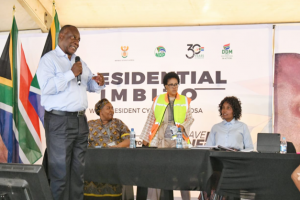
The President was speaking during the District Development Model (DDM) Presidential Imbizo held in Kuruman in the Northern Cape on Thursday.

The DDM Presidential Imbizo programme presents a platform for communities to lay out the challenges they face to the President, his Cabinet and provincial and local government.
 

VIEW | Scenes from the Northern Cape DDM Presidential Imbizo


“We don’t want you, our people, to lose hope. Government is working in a very focused manner to address the issue of education and health. We are focusing on various industries, industries that are important for your progress like mining and renewable energy.

“Those are some of the key industries that we are focusing on. We are also focusing on spreading the skills base. That is why training is going to happen here… The public employment programme is going to create more job opportunities.

“With that, we should be filled with hope and confidence that in the course of time, we will be addressing some of the issues that you have raised here,” he said.

During the imbizo, residents told of challenges, including a lack of access to water, educational and vocational training facilities for youth, housing challenges and crime related issues.

READ | Communities eager to see and listen to President Ramaphosa

Speaking to the media on the sidelines of the imbizo, President Ramaphosa acknowledged that the challenges the residents face are enormous but vowed that government will address them.

“As an administration, we have sought to fulfil and address those needs and we will continue to do so. They were huge from 1994 and we have done a lot to address many of those needs. The needs of our people will continue but we will continue working very hard to address those needs.

“But what is good is that the people have the freedom and the opportunity to raise their concerns, and as they raise their concerns, we are much more encouraged to address those concerns. It’s important that we should get to hear how our people are living, and what they are experiencing.

“This is a great opportunity for us to do more and to do more together, with our people,” he said.
 

IMAGES | Northern Cape imbizo in pictures

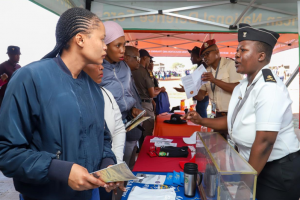
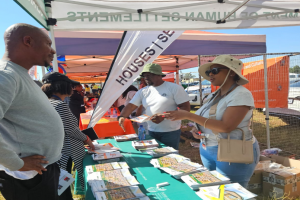
The Department of Human Settlements stall at the Northern Cape imbizo. The SANDF stall at the Northern Cape imbizo. President Ramaphosa addresses communities gathered at the Northern Cape imbizo.  

There have been at least 13 Presidential izimbizo held throughout the term of the sixth administration, touching tens of thousands of people who interacted with all three spheres of government.

The Northern Cape Presidential imbizo is expected to be the last to be held for this term.

READ | District Development Model Imbizo kicks off in the Northern Cape

“A lot of people were very enthusiastic to raise their views and raise questions. The engagement with the community I always find it very rich, very empowering as well. We have been able to follow up on a number of issues that have been raised at our izimbizo.

“In a way, we saved the best for last. This is the imbizo that really tops everything and closes off the sixth administration,” President Ramaphosa said. – SAnews.gov.za

NeoB
Thu, 05/09/2024 - 17:04

124 views
Read morePresident Ramaphosa reiterates government’s commitment to service delivery
7 May 2024

Fulfil Is Here!

Location: Business

Tasty News Alert! FULFIL Chocolate Protein Bars, a global snack sensation, has officially launched in South Africa and is now available at Clicks stores countrywide! These indulgent chocolate bars with zero guilt combine decadent taste with functional nutrition, revolutionising the snacking game for health-conscious and ‘chocaholic’ consumers everywhere – and now, they’re finally here to …

Read moreFulfil Is Here!
  • Previous
  • Page 1
  • Interim pages omitted …
  • Page 4
  • Page 5
  • Page 6

Copyright © 2026 · MyZA · All Rights Reserved · Powered by Reach Trust