• Skip to main content
  • Skip to header right navigation
  • Skip to after header navigation
  • Skip to site footer
MyZA

MyZA

News, Directory, Events and Other Stuff

  • Social Media
  • Sport
  • World News
  • Home
  • Submit News
  • Directory
  • Events
  • Stratlec
  • TFSA
  • News
    • APO
    • Today’s Sport News
    • Todays Social Media and Tech Headlines
    • Today’s World News
    • Today’s SA Financial News
  • Contact
You are here: Home / Archives for GBV

GBV

19 August 2024

Government and communities must come together to fight GBV

Location: News

Government and communities must come together to fight GBV

Active citizenry and the active involvement of communities have an important role to play in fighting the scourge of gender-based violence and femicide (GBVF).

This according to Deputy Minister of Justice and Constitutional Development Andries Nel, who was speaking during the launch of the Mitchell’s Plain Thuthuzela Care Centre on Monday.

Nel explained that Mitchell’s Plain has South Africa’s highest prevalence of crimes like common assault, drug related crimes, illegal possession of firearms and ammunition attempted murder – breeding a dangerous environment for women. 

“This explains the environment within which GBVF is taking place. It also underscores the point… that our Justice, Crime Prevention and Security cluster, our criminal justice system, has an indispensable role to play.

“But the reality is, there’s a social and economic foundation to these problems, which we are not going to solve without a broader socio-economic transformation of our country, our communities but also the active involvement of each and every citizen,” Nel said.

The Deputy Minister said as communities are being urged to play their role, government is also doing its part in passing new laws and amending legislation that “aims to bring about changes, which are practically implementable and offer meaningful protection to those who need it”.

Those three new laws are:

  • the Criminal Law Sexual Offences and Related Matters Amendment Act;

  • the Criminal and Related Matters Amendment Act, and

  • the Domestic Violence Amendment Act.

“This legislation, amongst others, addressed the need to include the particulars of all sex offenders and not only sex offenders against children and persons who are mentally disabled. It also expanded the list of persons who are to be protected to include other vulnerable persons.

“It also increases the period for which a sex offender’s particulars must remain on the register before it can be removed. It also creates a reporting duty that any person who has knowledge, reasonable belief or suspects that a sexual offence is being committed against a person who’s vulnerable must report…immediately to a police official.

“The Domestic Violence Amendment Act… has also been amended to address practical challenges, gaps and anomalies which have been in the Act since 1999. The amended legislation has included new definitions [of abuse] such as controlling behaviour and coercive behaviour,” he said.

Nel said government is also working to ensure that the number of TCCs – which provide crucial medical and psychosocial support to victims – is increased throughout the country.

“That’s why we must endeavour to increase the number of TCCs as quickly as possible. The new Mitchell’s Plain TCC will increase the national footprint to 65 across the country. This is the tenth TCC in the Western Cape.

“There are a number of TCCs that are ready to open and start operations but they need input from other departments and we commit ourselves to facilitate that engagement,” he said. – SAnews.gov.za

NeoB
Mon, 08/19/2024 - 14:10
255 views
Read moreGovernment and communities must come together to fight GBV
19 August 2024

Thuthuzela Care Centres crucial part of ending GBV scourge

Location: News

Thuthuzela Care Centres crucial part of ending GBV scourge

The National Director of Public Prosecutions, Advocate Shamila Batohi, says Thuthuzela Care Centres (TCC) are crucial to the fight against gender-based violence (GBV).

Batohi was delivering an address at the launch of a TCC at Mitchell’s Plain in the Western Cape, on Monday.

TCCs are a one stop-facility for survivors of gender-based violence (GBV), where they are able to receive psycho-social support, medical treatment and legal services.

“By providing better quality of services, we do find that there is improved reporting. In 2020/21, when we had 60 TCCs, there were just short of 30 000 cases that were reported. In 22/23, there were 36 800 cases or there about, and this figure represents an increase of 24.3% in a two-year period. In the past eight years combined, the TCCs have dealt with 266 593 matters at all of its sites. These are only reported cases.

“We’ve noted improvements in the conviction rates. Since 2010, the conviction rate has improved from 60% to the current 77.5% as at the end of December 2023… and it’s all about the services that are being rendered that help victims to be able to go through the court processes.

“We’ve also noted an increase in long term sentences that are imposed by the courts. For the past two years, up to December 2023, the courts imposed 337 life imprisonment sentences, 236 sentences of between 20 to 25 years and 624 sentences of 10 to 15 years imprisonment,” she said.

Despite the upward progress, Batohi emphasised that the courts merely deal with crimes that have been committed and that dealing with the roots of GBV is crucial.

“When victims come into these facilities, the offences are already committed and we try to help them on their journey towards healing but it’s not going to solve the problem. That is why the importance of our councillors, community based persons, civil society in really trying to deal with the scourge.

“That is why we all need to help to instill the right values particularly in men. Unless we actually deal with [GBV] in a wholistic way, we are not going to be able to deal with the scourge. Notwithstanding that, we continue to try to make sure that…we help the victims on their journey towards becoming survivors,” Batohi said. – SAnews.gov.za

NeoB
Mon, 08/19/2024 - 14:14

40 views
Read moreThuthuzela Care Centres crucial part of ending GBV scourge
18 August 2024

Government outlines further plans to commemorate Women’s Month 

Location: News

Government outlines further plans to commemorate Women’s Month 

Government departments will continue to host a variety of activities to commemorate Women’s Month.

On 9 August, South Africa commemorated Women’s Day in the Northern Cape under the theme: “Celebrating 30 years of democracy towards Women’s Development”.

READ | President Ramaphosa pays tribute to women

This follows the launch of Women’s Month on 31 July.

This year’s Women’s Month marks the 68th anniversary of the historic march of thousands of South African women from all walks of life to the Union Buildings in 1956. The march was in protest of the introduction of apartheid pass laws for Black women in 1952. 

“During Women’s Month, we celebrate women as active agents of change and social transformation. The commemoration also allows us to take stock of achievements and the challenges that remain while mobilising support for the further development of women,” the Government Communication and Information System (GCIS) said in a statement.

The GCIS believes this year’s Women’s Month marks an important juncture for collective reflection on how South Africa has empowered and advanced the rights of women over the past three decades. 

“We also celebrate 30 years of the Women’s Charter, which was established to drive equality.” 

Government said it will advance the Women’s Charter for Accelerated Development that was formulated in 2021 to accelerate economic reforms to unlock women’s economic progress. 

Several socio-economic empowerment programmes and events will take place during the month including a trade expo, fashion show, and social dialogues.

Advancing women

The Women Economic Assembly (Wenoca) will launch its research project findings on the ‘Economic Empowerment of Women in South Africa’s Property Sector’ at the University of South Africa (Unisa) in Pretoria.  

The Wecona study focuses on using evidence-based methods to explore and address the challenges faced by women in the property sector and sub-sectors and identifies opportunities for economic empowerment.

The Charlotte Mannya Maxeke Foundation and Freedom Park in promoting social cohesion and discussing issues that delay women’s empowerment as a threat to gender equality, will host a Women Inclusivity Dialogue. 

The dialogue will focus on assessing progress 30 years later and celebrating women's empowerment.
The session will also seek to find solutions to justice and equality for women led by women. 

Meanwhile, the Department of Transport will host an information-sharing session for Cross Border Women Operators, to increase the participation of women in the cross-border market leading to the transformation of the industry. It will also encourage them to consider other sectors within the cross-border market.

In addition, the Department of Mineral Resources will host a Women in Energy and Mining Symposium to share opportunities in the energy and mining sector for women and the youth. 

Youth initiatives 

On 12 August, the Department of Women, Youth and Persons with Disabilities (DWYPD) in partnership with the National Youth Development Agency launched the Job Shadowing Programme in all nine provinces through the respective Offices of the Premier. 

In addition, the Presidential Youth Employment Initiative (PYEI) first-quarter report was released last week. 
The PYEI is South Africa’s most comprehensive effort to address youth unemployment to enable more young people to move from learning to earning.

The GCIS said the PYEI is committed to addressing the gender gap in employment and a significant achievement of the intervention is that 70% of the opportunities have been secured by young women.

Women in law enforcement 

The South African National Defence Force (SANDF) Parade is the celebration of women in uniform supported by men in solidarity with the Women, Peace and Security Agenda and United Nations Security Council resolution 1325 on women, peace and security that was adopted by the United Nation (UN) Security Council on 31 October 2000. 

The resolutions acknowledge the disproportionated and unique impact of armed conflict on women and girls. 
In the Northern Cape, a provincial law enforcement parade will be held in Kuruman, to display a disciplinary approach which encourages service delivery in various sectors of government and further advocates the empowerment of women.

The South African Police Services (SAPS) has also started a campaign to highlight and celebrate women in the service who are behind major crime operations and also various fields within law enforcement such as forensics, crime intelligence and criminal investigations.

Public engagements and awareness campaigns 

Across provinces, various community dialogues and workshops will take place on gender-based violence and femicide (GBVF) initiatives. 

Government in partnership with civil society will hold the 3rd National Men’s Day Against GBVF which will be officiated by Deputy President Paul Mashatile and His Majesty the King Misuzulu kaZwelithini on 24 August 2024.

The event led by the Goodmen Foundation in partnership with DWYPD seeks to use this event to increase awareness about the impact of GBVF on society, educate citizens about gender equity and profile support available for survivors and facilitate healing. 

READ | President speaks out on gender-based violence

Women in transport 

The National Aviation Gender Summit (NAGS) 2024 themed: ‘Lift as we rise: The journey towards 2030!’ will examine the progress made by the South African civil aviation industry towards this goal. 
The summit will focus on addressing gender transformation gaps within the sector and emphasise the significance of mentorship in promoting gender equality.
The NAGS 2024 is targeting female aviation professionals and various industry representatives with responsibilities and a personal stake in issues of gender equality and diversity. 

Women in the public service 

Various provincial heads of departments and Directors-General with senior women managers will host the Public Service Women Management Week to evaluate and monitor progress on the implementation of women empowerment and gender equality programmes in departments.

“Ending the scourge of GBVF requires the efforts of government, private sector, civil society and every member of society. It is the responsibility of all South Africans to end the culture of silence around gender-based violence and protect the women and children.”

In elevating the fight against GBV in his 2024 State of the Nation Address (SONA), President Cyril Ramaphosa initiated the anti-GBV campaign, in which he called upon all South African men to unite to end GBV.

“Government continues to uphold its constitutional responsibility and national priority to protect, promote and advance the rights of women and persons with disabilities and the 2024 Women’s Month programme seeks to shine a spotlight on women in diverse fields and the strides made for advancing gender equity in the past 30 Years of Freedom and Democracy,” said the GCIS.

Further details on the events listed above as well as additional events are listed on the Women’s Month calendar which can be located at www.gov.za. – SAnews.gov.za

Gabisile
Sun, 08/18/2024 - 13:27

9 views
Read moreGovernment outlines further plans to commemorate Women’s Month 
13 August 2024

President Ramaphosa Leads Call to Pledge Against the End of Gender-Based Violence (GBV) and Femicide

Location: News

The Presidency of the Republic of South Africa
Download logo

President Cyril Ramaphosa is leading the call to men across South Africa to take a stand against gender-based violence and femicide (GBVF) by signing a virtual pledge at https://www.stateofthenation.gov.za/endGBVF.

President Ramaphosa launched the call to action by signing the pledge alongside men from all sectors of society at Pofadder, Northern Cape, on the occasion of Women's Day on Friday, 09 August 2024. 

Among signatories who joined the President were Northern Cape Premier Dr Zamani Saul, Deputy Minister of International Relations and Cooperation Alvin Botes, members of the provincial executive, local government leadership and representatives of community- and faith-based organisations and learners.

The pledge commits men to be allies and part of the solution by maintaining positive behaviour and attitudes and to take responsibility for their actions. 

The pledge commits men to never raise a hand against a woman, to treat women as equals, to respect the rights of women and relate to women with dignity.

President Ramaphosa urges all of society to work together to end gender-based violence and calls on men who live by positive values to assist other men to mend their conduct and to report instances of abuse and related wrongdoing.

Distributed by APO Group on behalf of The Presidency of the Republic of South Africa.

Read morePresident Ramaphosa Leads Call to Pledge Against the End of Gender-Based Violence (GBV) and Femicide
10 August 2024

Government speaks against GBV, elder abuse

Location: News

Government speaks against GBV, elder abuse

Government has strongly condemned the heinous acts of violence against women, which continue to plague communities. 

“This abhorrent abuse of the elderly and the continued scourge of gender-based violence and femicide (GBVF) in the country will not be tolerated,” the Government Communication and Information System (GCIS) said on Thursday.

Recently, an appalling incident involving a 101-year-old pensioner in Zaaiplaas, outside Jane Furse in Limpopo, was reported. The elderly woman was allegedly raped by a 27-year-old man, an act of unimaginable cruelty that left her with an open wound to her head.

“This is one of many cases of GBVF in the country, and this kind of violence, especially against the most vulnerable members of our society will never be accepted. Those who commit such despicable crimes will face the full might of the law,” said the GCIS.

Government will continue to implement and strengthen measures aimed at protecting all citizens, and communities are urged to work with law enforcement to create a safer environment for all. 

The public is urged to report any form of violence to a police station or by call the crime stop number on 08600 10111. 

Alternatively, report using the MySAPS App. 

“Let us all play our part in ending GBVF by stopping it when we see it. Citizens can also call the 24-hour GBV helpline on 0800 428 428 if they or someone they know needs assistance or SMS HELP to 31531,” said the GCIS.

Government is making progress in establishing dedicated desks at police stations in GBVF hotspots. The desks have police officers, who are specifically trained to provide victim-centred assistance and support. 

Members of the public can also make use of Thuthuzela Care Centres, which are one-stop facilities that offer free counselling, medical examination and investigating officers, among other things. 

Citizens are urged to support survivors in their journey towards healing. 

“Together, we can build a society where no one lives in fear, and where the dignity of every individual is respected and upheld,” the GCIS said. – SAnews.gov.za

Matona
Thu, 08/08/2024 - 15:39

204 views
Read moreGovernment speaks against GBV, elder abuse
6 August 2024

Mpumalanga man shoots wife, turns gun on himself

Location: News

Mpumalanga man shoots wife, turns gun on himself

An Mpumalanga man allegedly shot and killed his wife before turning the gun on himself, the South African Police Service (SAPS) said on Tuesday.

"We are deeply saddened by the report of this tragic incident," the acting Provincial Commissioner of the SAPS in Mpumalanga, Major General (Dr) Zeph Mkhwanazi said.

The gender-based violence (GBV) incident took place on Tuesday morning in Kabokweni, just outside White River. 

Police and Emergency Services Personnel were dispatched to the scene, however, both individuals died as a result of the incident.

While investigators continue to probe the matter, General Mkhwanazi has emphasised that today’s tragedy is a stark reminder of the urgent need for awareness, prevention and support for those impacted by GBV.

As part of efforts to address the challenges of gender-based violence and femicide, the SAPS in Mpumalanga has organised a prayer day on Wednesday in Ermelo where members, together with faith-based-organisations.

“Domestic violence is an issue that affects individuals and communities globally, and we urge anyone who may be experiencing or aware of domestic violence to seek help. 

“There are numerous resources and support systems available, including our Crime Stop number 08600 10111 and Victim Friendly Facilities in our Police Stations across the province, that can provide assistance and guidance," said Mkhwanazi.  – SAnews.gov.za

Edwin
Tue, 08/06/2024 - 10:06

1292 views
Read moreMpumalanga man shoots wife, turns gun on himself
30 July 2024

Social Department reaffirms its commitment to protecting children from trafficking

Location: News

Social Department reaffirms its commitment to protecting children from trafficking

The Department of Social Development (DSD) has reaffirmed its commitment to combating human trafficking, focusing on the protection of children as the world commemorates World Day Against Trafficking in Persons.

This year’s theme focuses on leaving no child behind in the fight against human trafficking.

The World Day Against Trafficking in Persons is observed annually on 30 July to raise awareness about human trafficking and to promote and protect the rights of trafficking victims.

The department has since taken the time to remind South Africans especially caregivers about the prevalence of human trafficking and appeal for their vigilance when it comes to protecting children.

Citing the June 2023 publication by the Human Sciences Research Council (HSRC), the department said it was estimated that a possible 250 000 people have fallen victim to human trafficking in South Africa alone.

“This serves as a grave violation of human rights and dignity. On this World Day Against Trafficking in Persons, the Department of Social Development stands united against this heinous crime,” the department said.

According to the department, children represent a significant proportion of trafficking victims worldwide, with girls being disproportionately affected.

In terms of the United Nations Office on Drugs and Crime’s Global Report on Trafficking in Persons, children are twice as likely to face violence during trafficking than adults.

Sub-Saharan Africa, North Africa, and the Caribbean, according to the department, make up 60% of detected trafficking victims.

“In addition to conflicts, pandemics, economic hardships, and environmental challenges, the proliferation of online platforms poses risks as children often connect to these sites without adequate protection.”

The department explained that traffickers exploit online platforms, social media, and the dark web to recruit and exploit children.

They also use technology to evade detection, reach wider audiences, and disseminate exploitative content.

“Countries including South Africa, are required to prioritise child protection, bolster legislation, improve law enforcement, and allocate more resources to combat child trafficking.”

The department has since called for prevention efforts to target root causes of human trafficking such as poverty and inequality to reduce children’s vulnerability with special attention paid to trafficking of children on the move or in transit.

According to the department, South Africa remains a source, transit, and destination country for men, women and children subjected to the crime of trafficking for forced labour and sexual exploitation.

“This means South Africans are being trafficked to other parts of the globe while the country is also used by traffickers to harbour victims in transit to other countries where they are going to be exploited.

“Victims of trafficking are also brought into the country to be exploited.”

Meanwhile, traffickers are said to control victims through deception, intimidation, threats, use of force, withholding of passports, debt bondage, and forced use of drugs and alcohol.

The department has described the Prevention and Combating of Trafficking in Persons Act (PACOTIP) of 2013 as a critical legislative tool in South Africa’s fight against human trafficking.

The South African government, through the Department of Social Development has implemented various measures to prevent child trafficking. The PACOTIP Act aims to align with international agreements and provides for the prosecution of traffickers, protection of victims, and coordination of anti-trafficking efforts.

The Department of Social Development’s Gyan Dwarika said the significance of the PACOTIP Act, in conjunction with the Children’s Act, in safeguarding vulnerable children and ensuring their rights and safety are upheld.

“The Act ensures that any child identified as a victim of trafficking is treated as a child in need of care and protection mandates immediate reporting and investigation of suspected cases, and provides for the safe placement and care of trafficked children,” Dwarika said.

Dwarika’s roles in the department include focusing on child labour, commercial sexual exploitation of children, online safety, and child marriages.

The department said they also offer victims of child trafficking comprehensive support and rehabilitation services.

These include psychological counselling, medical care, legal assistance, and placement in Child and Youth Care Centres (CYCCs).

She said community involvement was crucial in preventing and combating child trafficking.

“International cooperation strengthens the response to the repatriation process of children trafficked into and out of South Africa. It ensures that children are repatriated safely and in line with international standards, considering factors like the best interests of the child and the safety of the repatriation process.”

Victims are also placed in accredited shelters where they are cared for by shelter staff and social workers to determine if they were trafficked.

Through the Criminal Assets Recovery Account (CARA) fund, the department is procuring a fleet of 10 vehicles to be distributed to gender-based violence (GBV) shelters accredited to accommodate victims across all nine provinces.

The Western Cape has partnered with the Passenger Rail Agency of South Africa (Prasa) to create awareness at the Cape Town bus rank. – SAnews.gov.za

Gabisile
Tue, 07/30/2024 - 15:11

128 views
Read moreSocial Department reaffirms its commitment to protecting children from trafficking
23 July 2024

‘We are not afraid’– Young women in South Africa show resilience as they fight HIV/AIDS and gender based violence

Location: News

UN Women - Africa
Download logo

Listening to the soulful singing of young women and girls in Nomzamo township in Strand, Cape Town, South Africa, and watching their jubilant dancing, it would be difficult to guess the complex and life-threatening challenges they have faced in their young lives. These girls and women, members of the Young Women for Life Movement, have every reason to be ecstatic; they are extricating themselves from the cycle of poverty and the effects of HIV/AIDS and GBV in a country where women are disproportionately affected by HIV.

Of the nearly 7.5 million adults living with HIV in South Africa by 2021, nearly two-thirds (64 per cent) were women, with black women aged 25-34 years having the highest prevalence, at 31.6 per cent, and highest incidence, at 4.5 per cent according to data from The Lancet. While the infection rate has dropped from 14 per cent in 2017 to slightly less than 13 per cent in 2022, according to the Human Sciences Research Council's 2023 data, the rates are still quite high, translating to more than 1 in 10 persons living with HIV in South Africa.

This feminized HIV epidemic is mostly due to high levels of inequality. South Africa has the highest income inequality in the world, according to the World Bank. Unemployment is rampant, and many women and girls do not have good economic prospects. For many, this makes them vulnerable to risky sexual behavior as they struggle to survive. This is compounded by high rates of GBV in the area and in the country in general. Young women and girls in Strand area's townships know this all too well.

“Before I got wind of the Young Women for Life Movement, I had given up on life,” said Sinesipho, fondly referred to as “Shorty” due to her pint size by members of the group that she now considers her sisterhood. Sinesipho Petshana had a difficult background at home, low self-esteem, and was engaging in risky sexual behaviour out of desperation to help make ends meet.

“By speaking with me about my potential and growing my skills through training, the group changed my mind and this helped me change my life,” she said. Now working as a cashier in a retail store in Cape Town, she is proud of how far she has come and calls the Young Women for Life Movement a lifesaver.

Started in 2019 as an informal group of just eight young women and girls aged 15 to 28 who wanted to give each other moral support, the Young Women for Life Movement has now impacted 8,000 girls in South Africa alone. Convened by the Southern Africa Catholic Bishops' Conference and Peace Commission, the movement is supported by UN Women through funding from the Unified Budget, Results and Accountability Framework (UBRAF) as part of the outreach under the HeForShe campaign.

Through its partnership with Work4aLiving, a skills-building programme and one of the three pillars of the Young Women for Life Movement, the community group has trained women and girls in Nomzamo Township in entrepreneurship, financial management, baking, and other skills to help them begin to earn an income and become self-sufficient. Earlier this year, 70 girls graduated from a hospitality course offered under the Movement. Many of them have already secured jobs in the city.

Guguletu Mdoba (Gugu), 29, another member of the Movement, is a shining example of how the girls and young women are pulling themselves out of poverty. Now a renowned baker in the area, Gugu's products are so popular that she can barely keep up with her customers' orders. Training on financial literacy helped her learn how to save and budget, and she has used this new knowledge to expand her enterprise. This year, she bought a bigger kitchen stove and also began training other young women and girls in the area to bake, which is having a positive ripple effect on their household incomes. Overwhelmed with demand, she is now expanding into a more established fast-food shop.

“Some of the girls and young women in the group are living with HIV,” said Phindile Maseko, Coordinator of the Young Women for Life Movement, who the members call Sis. Phindile, meaning Sister, out of admiration. “They were so discouraged when we met them that they had even stopped taking antiretroviral (ARV) medication as they felt that they had nothing to live for,” said Phindile, who also serves as the Facilitator of Work4aLiving.

The COVID-19 pandemic further complicated the situation for these girls. Like elsewhere on the globe, the pandemic wreaked havoc on incomes and livelihoods in this already vulnerable township, driving many families into hunger. The effects were complex as lack of access to meals severely interfered with ARV compliance.

With support from UN Women and partners, girls and young women from the Movement managed to access seedlings and technical know-how to start small-scale vegetable farming. The project thrived and now not only caters for the members, their families, and the community, but also generates income through the supply of fresh produce to shops.

What started as a small circle of 80 girls in 2019 has become a movement of 8,000 girls in South Africa alone. The project is expanding to Eswatini, Lesotho, Botswana and also starting a chapter in Namibia.

“The Young Women for Life project demonstrates that it is possible to reduce HIV infections and end the cycle of risky behaviour and violence,” said Jacqueline Utamuriza-Nzisabira, HIV/AIDS Specialist for UN Women East and Southern Africa and the manager of this project, “These girls decided to take their lives into their own hands and are no longer on a destructive path that was going nowhere.”

The young women's and girls' rallying cry, “Asinaluvalo”, meaning "We are not afraid", is testament to their resilience and newfound hope.

Distributed by APO Group on behalf of UN Women - Africa.

Read more‘We are not afraid’– Young women in South Africa show resilience as they fight HIV/AIDS and gender based violence
22 July 2024

Provision of basic services top of new administration’s agenda

Location: News

Provision of basic services top of new administration's agenda

The seventh administration will focus on extending the provision of basic services to those people who still do not have access to basic requirements and improving the reliability and affordability of delivery.

Responding to the debate on the Opening of Parliament Address (OPA) on Monday, President Cyril Ramaphosa said this will require measures to improve the efficiency of local government to deliver on its “crucial” mandate.

President Ramaphosa said the country has made progress in advancing towards the Sustainable Development Goals (SDGS) on the provision of basic services, highlighting that 84 percent of South African households now have access to piped water, while 71 percent have access to decent sanitation, and 94 percent of households have access to electricity.

He said Cooperative Governance and Traditional Affairs Minister Velenkosini Hlabisa’s determination that all municipalities receive the necessary administrative, technical and financial support for the services to be viable and stable, represents the seventh administration’s clear intention to improve the functioning of municipalities.

“We must address with urgency the governance and oversight challenges at local government level and the serious problem of municipal and consumer debt,” President Ramaphosa said.

WATCH | President Ramaphosa responds to the debate on the Opening of Parliament Address

On building and strengthening institutions, President Ramaphosa said government has made significant progress in deepening democracy during the last 30 years of freedom, through safeguarding human rights and fundamental freedoms.

The parties to the Government of National Unity (GNU) are in agreement on the importance of entrenching the country’s constitutional democracy and the rule of law.

“We will continue to exert our every effort to safeguard the independence of the judiciary, freedom of the media and the work of the institutions supporting democracy. We continue to entrench gender equality across all facets of society, and in promoting the full participation in society of persons with disabilities.

“We have enacted into law the Gender-Based Violence And Femicide (GBVF) Council, which will oversee and coordinate GBV programmes across government and in partnership with all stakeholders,” the President said.

He said an important focus of this work will be women’s economic empowerment, and on leveraging government’s policy of setting aside 40 percent of public procurement for women-owned businesses.

The President also noted that South Africa is a beacon of hope and progress when it comes to the rights of the lesbian, gay, bisexual, transgender, queer or questioning, intersex (LGBTQI+) community.

“These are all important aspects of our human rights culture,” President Ramaphosa said.

In the same breath, the President acknowledged the challenges that the country still faces. – SAnews.gov.za
 

GabiK
Mon, 07/22/2024 - 12:56

148 views
Read moreProvision of basic services top of new administration’s agenda
19 July 2024

Modern technology to help fight crime

Location: News

Modern technology to help fight crime

A heightened focus on the use of modern technology to help with crime prevention efforts will continue to be a key priority of the seventh administration.

“A data-driven approach will be used to identify violent crime hotspots and inform the allocation of policing resources alongside prevention measures,” President Cyril Ramaphosa said at the Opening of Parliament Address (OPA) on Thursday.

The President was outlining apex focus areas for the next five years, which will be driven by the Government of National Unity (GNU). After the National and Provincial Elections in May produced no outright majority winner, various political leaders were tasked to work together to form a Government of National Unity, comprised of 10 political parties.

In his address tonight, President Ramaphosa said the country must have capable, sophisticated and independent law enforcement agencies that can fight complex and organised crime.

He committed that the Government of National Unity will continue to tackle priority crimes, including illegal mining, gang violence, cash-in-transit heists and the construction mafia, through specialised police units.

“We will continue to implement the National Strategic Plan (NSP) on Gender-Based Violence and Femicide (GBVF), and expand victim support services, like the Thuthuzela Centres and GBV desks in police stations,” President Ramaphosa said.

Land reform

Switching focus to the land reform programme, the President announced that government will increase the funding thereof, prioritise the transfer of State land and improve post-settlement support by strengthening the institutional capacity of the structures relevant to the programme.

“To achieve rapid, inclusive growth, we need to fix our struggling municipalities. Growth happens at a local level, where people live and work.

“Our municipalities must become both the providers of social services and facilitators of inclusive economic growth. They must work to attract investment,” President Ramaphosa said.

Meanwhile, the President expressed words of comfort to families affected by floods in the Western Cape and veld fires in KwaZulu-Natal.

Thousands of people across the Western Cape were left destitute after storms damaged their homes, including businesses and infrastructure in the province.

“In recent days, we have witnessed runaway fires in KwaZulu-Natal, in which 14 people, including six firefighters, lost their lives. The fires also caused the destruction of homes, livestock and grazing land.

‘The thoughts of all South Africans are with all those people who have been subjected to these terrible weather conditions as they work to recover and rebuild,” President Ramaphosa said. – SAnews.gov.za

GabiK
Thu, 07/18/2024 - 21:03

448 views
Read moreModern technology to help fight crime
19 July 2024

Efforts to professionalise the public service underway

Location: News

Efforts to professionalise the public service underway

The Government of National Unity has committed to proceeding with the work already underway to professionalise the public service as well as ensure that government attracts into the state people with skills, capabilities and integrity.

Delivering the Opening of Parliament Address in Cape Town, President Cyril Ramaphosa said one of the strategic priorities of the Government of National Unity was to build a capable, ethical and developmental state. 

“We will continue to fight corruption and prevent undue political interference in the administration of the state. In this administration, we will complete the work to restore the financial position and operational performance of our state-owned enterprises (SOEs).

“We will complete the implementation of a new centralised ownership model for SOEs. This will improve accountability, transparency, governance and oversight, while reducing inefficiency and the potential for corruption,” the President said on Thursday.

He said the establishment of a state-owned SOE holding company will give South Africa greater capacity to build a sovereign wealth fund.

“This has been done successfully by other countries whose sovereign wealth funds have built up capital from the high performance of the state owned enterprises rather than from the fiscus.”

Fighting crime 

President Ramaphosa said in order to tackle crime and corruption, the country must have capable, sophisticated and independent law enforcement agencies that can fight complex and organised crime.

“We will deploy modern technology to assist crime fighting. A data-driven approach will be used to identify violent crime hotspots and inform the allocation of policing resources alongside prevention measures,” the President said.

Government will also continue to tackle priority crimes like illegal mining, gang violence, cash-in-transit heists and the construction mafia through specialised police units. 

“We will continue to implement the National Strategic Plan on Gender-Based Violence and Femicide, and expand victim support services, like the Thuthuzela Centres and GBV desks in police stations,” he said.

Work in the seventh administration will also prioritise driving inclusive growth and job creation as well as reducing poverty and tackling the high cost of living. – SAnews.gov.za

nosihle
Thu, 07/18/2024 - 21:08

546 views
Read moreEfforts to professionalise the public service underway
8 July 2024

Gauteng social development department wants to buy a building but doesn’t know what for

Location: News

Up to R70-million budgeted for building in central Pretoria

Read moreGauteng social development department wants to buy a building but doesn’t know what for
2 July 2024

KZN Premier lays down the law on GBV

Location: News

KZN Premier lays down the law on GBV

KwaZulu-Natal Premier Thamsanqa Ntuli has urged men to play their part to keep women safe and protected.

Ntuli on Monday officiated the launch of Men’s Health Month in Durban, which included a law enforcement parade by the police. The parade started at King Dinuzulu Park, and concluded at the Durban City Hall.

The parade aimed to promote positive male behaviour and address the scourge of gender-based violence and femicide (GBVF).

Ntuli emphasised the important role played by religion and culture in curbing GBV.

 “It is very shameful that the scourge of gender-based violence and femicide has reached worrisome proportions in our country. Even in war, since time immemorial, hurting women and children has always been seriously frowned upon.

“Men who attack women have always been regarded as cowards. Even in rites of passage, conceptually, boys are taught to respect women… If this is no longer happening, those rites of passage violate tradition,” Ntuli said.

According to statistics released last year, in KwaZulu-Natal, Inanda is leading in terms of GBV related crimes, with 641 cases recorded in the period of April 2022 to March 2023. 

The cases include rape, sexual assault, assault with a purpose to inflict grievous bodily harm, attempted murder, common assault, and murder. 

According to the same report, the top 30 police stations in the province recorded 10 442 cases of GBV-related crimes.

Ntuli believes that ignorance, myths, fallacies and falsehoods also lead to high levels of GBV.

“It is a major fallacy that men are made for leadership. Those men who believe this myth are likely to unnecessarily feel emasculated by the mere occupation of leadership positions by women…. We need to teach our male children that women are not their… toys or their punching bags, but are their equal partners.”

Ntuli urged men to ensure that they do not abuse any leadership role that they are given.

“We must [also] teach our children that washing dishes and clothes; cleaning the house, and cooking are not gender roles but life skills. While such an approach is essential for our male children’s own development and readiness for the future, it also ensures that as they grow and meet women, they do not attempt to relegate them to their servants,” the Premier said.

Role of law enforcement

Ntuli impressed upon law enforcement to take seriously the responsibility placed on them when it comes to the responsibility of protecting vulnerable groups.

“When a woman is a victim of domestic violence, she relies on the paramedics in specific cases and the police, who are expected to make arrests and to process and effect protection orders. When these women walk, or, sometimes sadly, crawl into police stations, they expect justice and healing. 

“They do not expect negotiations to be brokered by police officers. They do not expect judgment when wearing revealing clothes and they do not expect lethargy and indifference,” Ntuli said.

To show how serious he is about the safety and security of the people in the province, when he was sworn into the task of being KwaZulu-Natal Premier, Ntuli announced that the Community Safety and Liaison function would move to the Office of the Premier. – SAnews.gov.za

GabiK
Tue, 07/02/2024 - 10:49

394 views
Read moreKZN Premier lays down the law on GBV
2 July 2024

Men urged to prioritise their health

Location: News

Men urged to prioritise their health

KwaZulu-Natal Premier Thamsanqa Ntuli has encouraged men to prioritise their health as the province observes Men's Health Month. 

Ntuli made the call during the launch of Men’s Health Month, which included a law enforcement parade held in Durban on Monday. 

Men’s Health Month seeks to engage men on issues they face. The KwaZulu-Natal provincial government also uses the month to create awareness on the scourge of gender-based violence and femicide (GBVF).

READ | KZN Premier lays down the law on GBV

“Let us use this Men’s Health Month as an opportunity to prioritise our health, break down barriers, and foster a culture of well-being,” the Premier urged men.

Ntuli said Men’s Health Month will see health screenings taking place across the province, which will cover essential aspects of men’s health.

Outlining the programmes and initiatives that KwaZulu-Natal has earmarked to commemorate during  Men’s Health Month, Ntuli said the initiative holds a significant relevance for the province, as it focuses on raising awareness about the health challenges confronting men, and advocates for early detection and treatment of diseases.

Ntuli said throughout July, the province will organise health screenings, which will cover essential aspects of men’s health, including blood pressure, cholesterol levels, diabetes, and prostate health. 

“We will collaborate with local clinics, community centres, and workplaces to ensure that men have easy access to these screenings. The awareness campaigns will emphasise the importance of regular check-ups and early intervention,” Ntuli said.

The month will also include awareness campaigns, including mental health support, physical fitness and active lifestyle, nutrition and healthy eating, and fatherhood and family support.

Ntuli said mental health is a critical component of overall well-being, noting that men often face unique challenges in seeking help for mental health issues.

Ntuli said during the month, targeted campaigns will be launched to destigmatise the discussions on mental health.

He said counselling services, including helplines and support groups specifically tailored for men, will be expanded. 

The Premier encouraged men to reach out and share their struggles and seek professional assistance when needed.

“We will promote physical fitness through community events, sports programmes, and recreational activities. Let us encourage men to engage in regular exercise, whether it is walking, jogging, or participating in team sports.

“We will celebrate responsible fatherhood and encourage positive parenting practices. Workshops, seminars, and parenting classes will equip fathers with essential skills to support their children’s emotional and physical development,” Ntuli said.

He said the province will also collaborate with schools, workplaces, and local markets to raise awareness about balanced diets, and further provide practical guidance on healthy eating, emphasising the importance of fruits, vegetables, whole grains, and lean proteins. – SAnews.gov.za

GabiK
Tue, 07/02/2024 - 12:02

114 views
Read moreMen urged to prioritise their health
28 June 2024

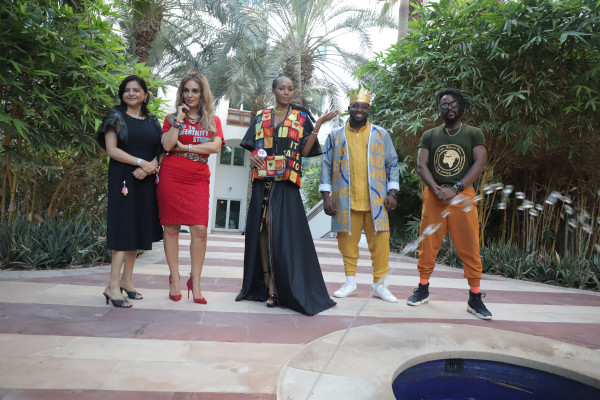
Senator, Dr. Rasha Kelej focuses on Breaking Infertility Stigma in the Third Episode of “Our Africa by Merck Foundation” TV program

Location: News
Merck Foundation

Merck Foundation (www.Merck-Foundation.com), the philanthropic arm of Merck KGaA Germany has launched the Third Episode of their first-ever TV program – ‘Our Africa by Merck Foundation' on their social media handles.

‘Our Africa by Merck Foundation' is a pan African TV program that is conceptualized, produced, directed, and co-hosted by Senator, Dr. Rasha Kelej, CEO of Merck Foundation to feature African Fashion Designers, Singers, and prominent experts from various domains with the aim to raise awareness and create a culture shift across Africa.

The TV program is currently broadcasting on KTN Home in Kenya, every Saturday at 5 pm and repeated every Thursday at 6:30 am.

It has also been broadcasted on prime TV stations of many countries like BTV (Botswana) Mashariki TV (Burundi), GHOne & TV3 (Ghana), QTV (The Gambia), LNTV (Liberia), Mibawa Limited (Malawi), Defi Media (Mauritius), AYV TV (Sierra Leone), NTV (Uganda), ZNBC TV (Zambia), and ZBC (Zimbabwe) and it immediately captured the attention and hearts of millions of viewers across Africa. “Our Africa” TV Program will soon be broadcast on GTV in Ghana, NBC in Namibia, and ZTN in Zimbabwe. “Our Africa” TV Program is also currently on social media handles of Senator, Dr. Rasha Kelej (Facebook: http://apo-opa.co/3RdVvT8, Instagram: http://apo-opa.co/3RcCFeZ, Twitter: http://apo-opa.co/3x5PUY2 and YouTube: http://apo-opa.co/4aJfWy0) and Merck Foundation (Facebook: http://apo-opa.co/3Xbc4D0, Instagram: http://apo-opa.co/3x7ius3, Twitter: http://apo-opa.co/4aTy5sW and YouTube: http://apo-opa.co/4ejGIjF).

Watch the Promo of ‘Our Africa by Merck Foundation' here:

https://apo-opa.co/3L8inj6

The theme for the Third Episode is Breaking the Infertility Stigma, particularly around women, in Africa.

Watch the Third Episode promo here: https://apo-opa.co/4clWEAl

Watch the Third Episode here: https://apo-opa.co/3xCfMuK

Senator, Dr. Rasha Kelej, CEO of Merck Foundation expressed, “Firstly, I would like to thank all the viewers and followers for the amazing response we have received for our TV Program ‘Our Africa'. Our social media is flooded with lovely and inspiring messages from the viewers! This episode is indeed close to my heart as an African woman, as it is part of our signature campaign “More than a Mother”, the work we have created by our fashion designers and artists all over Africa was very encouraging and kept pushing us to work harder to address this sensitive issue and empower infertile women through information, health and change of mindset. And of course, we will keep addressing more sensitive social and health issues to be the voice of the voiceless in our beloved Africa”.

Senator, Dr. Rasha Kelej, CEO of Merck Foundation further emphasized, “The messages of the designs are also focusing on the issue of male infertility and how fertility is a shared responsibility as it takes a man and woman to have a child. We have addressed this issue through our Fashion and Art with Purpose community. Together we can create a culture shift that will help our communities better understand and act on different issues. Through this episode, I also got a chance to thank my dear sisters, the African First Ladies who I have worked very closely with Merck Foundation for this Movement, as Ambassadors of Merck Foundation More Than a Mother.

I would also like to thank our viewers for the amazing response we have been receiving, this is indeed very inspiring and encouraging. Moreover, I would especially like to acknowledge the love we have been receiving from our social media followers, it is phenomenal.”

Merck Foundation's iconic “More Than a Mother” campaign started and led by Senator, Dr. Rasha Kelej is a rallying movement to Break Infertility Stigma faced by women across the African continent.

“More Than a Mother' Movement is very close to my heart. Along with all the initiatives under this Movement, Merck Foundation also supports building healthcare capacity in Africa, therefore, I am happy to share that Merck Foundation has provided more than 574 scholarships to doctors from 39 countries, with the aim to advance women's health by building Reproductive & Sexual care and Fertility Care Capacity in Africa and beyond. Moreover, we have trained more than 3200 media representatives from more than 35 countries to raise community awareness, creating a culture shift and breaking the stigma around infertility and infertile and childless women” explained Senator, Dr. Rasha Kelej.

This third episode featured prominent personalities like Nontando Mposo, Editor-in-Chief, Glamour Magazine, South Africa and popular Singer Blaze from Mozambique. Fashion designers Anuja Bharti from Ghana and Alberto from Mozambique showcased their designs that displayed strong messages on #NoToInfertilityStigma and #MenToo can be the cause of infertility.

Merck Foundation has also been empowering childless and infertile women through their “Empowering Berna” initiative under Merck Foundation's “More Than a Mother” movement. This initiative helps women who cannot be treated for infertility anymore by helping them to get trained to establish small businesses so that they can be independent and re-build their lives. Through ‘Empowering Berna', the lives of many infertile women have been transformed in many African countries like Kenya, Uganda, Nigeria, Central African Republic, Niger, Malawi and many more.

Merck Foundation in partnership with African First Ladies have also launched children's storybook “More Than a Mother”, to emphasize strong family values of love and respect from a young age which will reflect on eliminating the stigma of infertility and resulted domestic violence in the future. The book has been also adapted to an animation film. Watch More than a Mother Animation Film here:

https://apo-opa.co/4cbefLj

Merck Foundation has also released many songs to raise awareness about infertility stigma under their “More Than a Mother” campaign. Listen to some of the songs here:

  1. Watch, share & subscribe to the 'Plus qu'une MERE' composed and sung by Ms. Lucky-Lou, the daughter of The President and The First Lady of Burundi: https://apo-opa.co/3L5eQT0
  2. Watch, share & subscribe to the “More Than a Mother” song by Cwesi Oteng and Adina from Ghana: https://apo-opa.co/3ziuKH0

Listen to all “More than a Mother” songs here:

  • https://apo-opa.co/3RwVPMR

“To address this important issue of breaking infertility stigma and also a wide range of other social issues, we annually launch Merck Foundation ‘More Than a Mother' Awards in partnership with African First Ladies. I would also like to invite the African Community of Media, Fashion, Film making, and Musicians, students and potential talents in these fields to apply for the awards this year, in order to create a culture shift and break the silence about one or more of the following topics: Breaking Infertility Stigma, Supporting Girl Education, Women Empowerment, Ending Child Marriage, Ending FGM, and/ or Stopping GBV at all levels. I am looking forward to receiving their creative work on submit@merck-foundation.com”, added Senator, Dr. Rasha Kelej.

Distributed by APO Group on behalf of Merck Foundation.

Contact details:
Mehak Handa
Community Awareness Program Manager
+91 9310087613/ +91 9319606669
mehak.handa@external.merckgroup.com

Join the conversation on our social media platforms below and let your voice be heard: 
Facebook: https://apo-opa.co/3Xbc4D0
Twitter: https://apo-opa.co/4aTy5sW
YouTube: https://apo-opa.co/4ejGIjF
Instagram: https://apo-opa.co/3x7ius3
Flickr: https://apo-opa.co/4ejGKbh
Website: www.Merck-Foundation.com
Download Merck Foundation App: https://apo-opa.co/45ourGB

About Merck Foundation:
The Merck Foundation, established in 2017, is the philanthropic arm of Merck KGaA Germany, aims to improve the health and wellbeing of people and advance their lives through science and technology. Our efforts are primarily focused on improving access to quality & equitable healthcare solutions in underserved communities, building healthcare and scientific research capacity and empowering people in STEM (Science, Technology, Engineering, and Mathematics) with a special focus on women and youth. All Merck Foundation press releases are distributed by e-mail at the same time they become available on the Merck Foundation Website.  Please visit www.Merck-Foundation.com to read more. Follow the social media of Merck Foundation: Facebook: https://apo-opa.co/3Xbc4D0, Twitter: https://apo-opa.co/4aTy5sW, Instagram: https://apo-opa.co/3x7ius3, YouTube: https://apo-opa.co/4ejGIjF and Flicker https://apo-opa.co/4ejGKbh.

Media files
Merck Foundation
Download logo
Read moreSenator, Dr. Rasha Kelej focuses on Breaking Infertility Stigma in the Third Episode of “Our Africa by Merck Foundation” TV program
20 June 2024

Cape Town Initiative ‘Love Wins’ Targets Urgent Need for GBV Intervention

Location: MyPR

Neil Matthews, a 46-year-old businessman from Gardens, Cape Town, is pioneering a vital initiative to combat gender-based violence (GBV) in South Africa—where the rates of violence against women and children are among the highest globally. At his day job at YAXXA, a business solutions company, Matthews is leveraging his professional resources and personal passion to …

Read moreCape Town Initiative ‘Love Wins’ Targets Urgent Need for GBV Intervention
6 June 2024

Employment and Labour condemns employee’s murder

Location: News

Employment and Labour condemns employee’s murder

The Department of Employment and Labour has condemned the killing of an employee from the Fort Beaufort Labour Centre, in the Eastern Cape.

The woman was murdered by an employee, with whom she was in a relationship.

The Department’s Acting Director-General, Onke Mjo, said it was regrettable that the relationship ended in such a tragic manner.

“We extend our deepest condolences to the family of the deceased and to all our officials who are dealing with the shock and sadness of this devastating event. The loss of a young life in such circumstances is a tragedy beyond words,” Mjo said.

Mjo condemned any act of gender-based violence (GBV), noting that the recent report released by the Public Protector on GBV underscored the urgency and importance of addressing this issue. 

READ | Public Protector report on GBV welcomed

“Now, we are faced with this matter within our own ranks. The department does not condone gender-based violence in any form and will continue to advocate for a safe and respectful work environment for all,” Mjo said.

The department will continue to provide all necessary assistance to the family and those affected by the tragic incident. 

Mjo said the matter is in the hands of court authorities, and the department has full confidence in the justice system. 

Parallel with the ongoing court proceedings, Mjo said the department is steadfast in its commitment to commence immediate and appropriate internal procedures, potentially encompassing disciplinary actions. 

“We urge all our employees and the public to support those affected by GBV and to stand together in condemning such acts. Let us all strive to create a society where every individual is treated with dignity and respect,” Mjo said. – SAnews.gov.za

GabiK
Thu, 06/06/2024 - 14:44

234 views
Read moreEmployment and Labour condemns employee’s murder
5 June 2024

Public Protector report on GBV welcomed

Location: News

Public Protector report on GBV welcomed

The Department of Justice and Constitutional Development (DJCOD) has welcomed the Public Protector’s report into systemic administration deficiencies relating to gender-based violence (GBV) within the justice system.

On Tuesday, Public Protector Advocate Kholeka Gcaleka released a report into gender-based violence and the responsiveness of the criminal justice system to the scourge.

This after a woman, Altecia Kortje and her child, were brutally murdered in 2020 by her former boyfriend after she had gone to the Belville Magistrate’s Court to apply for a domestic violence protection against him. She was allegedly turned away by court officials.

Following reports of the murder and the treatment Kortje received at the court, DJCOD Deputy Minister John Jeffery approached the Public Protector to investigate the matter.

Following the release of the report, Jeffery commended the work of that office.

“We want to commend the Public Protector for this very useful investigation, which focuses not only on the Department of Justice, but also on the South African Police Service (SAPS) and the Department of Social Development as key stakeholders in the justice system.

“The implementation of the proposed remedial action is vital. The justice system has to be responsive to the needs of those seeking assistance. These are matters which affect the daily lives of women in a very real way, therefore we must ensure that the system is made less cumbersome and more user-friendly,” he said.

Jeffery added that the report honours the memory of Kortje.

“On Saturday, it will be four years to the day that Altecia Kortje came to Bellville Magistrate’s Court for a protection order. This report honours her memory and the memories of so many other women who have lost their lives to gender-based violence.

“The Public Protector’s report will help the justice system to better protect women against GBV and to save lives,” Jeffery said.

Although the investigation did not find that Kortje was turned away from the court, Jeffrey emphasised that it did raise concern about the treatment of women when they approach the courts for help, particularly when it comes the GBV matters.

“The ability of the justice system to serve and support women who come to seek justice services or assistance from the courts is an absolute priority for us, and we must continuously seek ways in which it can be improved,” he said. – SAnews.gov.za


NeoB
Wed, 06/05/2024 - 11:50

474 views
Read morePublic Protector report on GBV welcomed
5 June 2024

Public Protector releases damning report on the handling of gender-based violence complaints

Location: News

Report says the departments of Justice, Police and Social Development are falling short

Read morePublic Protector releases damning report on the handling of gender-based violence complaints
3 June 2024

Breaking the Silence: Recognizing and Addressing Male Abuse

Location: MyPR

A conversation that challenged my belief in relationships sticks vividly in my memory. My acquaintance or someone I care about was describing her recent encounter with her boyfriend and how she had pressured him into sex despite his initial refusal. She laughed it off, saying, ‘What kind of man refuses sex? What kind of man …

Read moreBreaking the Silence: Recognizing and Addressing Male Abuse
31 May 2024

Impilo Collection Foundation to Provide Critical Support to Victims of Gender-Based Violence and Promote Education with Donation of 200 Blankets

Location: MyPR

The Impilo Collection Foundation recognises the transformative power of education in breaking the cycle of poverty and violence. In line with this vision, funds were raised by our founder, Angela Yeung, during her recent mountain climb up the daunting Manaslu, standing tall at 8,163 meters, which surpasses her previous triumph on the Island Peak at …

Read moreImpilo Collection Foundation to Provide Critical Support to Victims of Gender-Based Violence and Promote Education with Donation of 200 Blankets
24 May 2024

President Ramaphosa signs GBV, NPA Bills into law

Location: News

President Ramaphosa signs GBV, NPA Bills into law

As the country marks 30 years of democracy, President Cyril Ramaphosa has warned that the aspiration to be a truly free and equal society cannot be achieved as long as criminals steal resources meant to benefit the people and the country’s women and children do not feel safe and free to walk in the streets.

President Ramaphosa said corruption and gender-based violence are two scourges that plague South Africa and corrode the country’s social fabric. 

“Corruption and gender-based violence are affronts to the human dignity that is the inalienable right of every South African. These forms of criminality are holding our country back and preventing us from realising our full potential,” President Ramaphosa said.

He made the remarks at a ceremony to sign into law the National Council on Gender-Based Violence and Femicide (GBVF) Bill and the National Prosecuting Authority (NPA) Amendment Bill, held at the Union Buildings on Friday. 

The two signed pieces of legislation will form part of government’s efforts to strengthen institutions, develop partnerships and build state capacity. 

The National Council on Gender-Based Violence and Femicide will coordinate and provide strategic leadership to the fight against GBV and femicide, and be multi-sectoral, drawing on the expertise of all stakeholders, including civil society, labour and business. 

The establishment of the council was one of the resolutions of the first Presidential Summit on GBVF convened in 2018. 

President Ramaphosa said that since the first summit important progress has been made. This includes the development of a National Strategic Plan (NSP) on Gender-Based Violence, and the founding of the Women's Economic Assembly, which aims to integrate women-owned enterprises into industry value chains, promote sustainable economic development, and empower women economically, among other things.

Around R21 billion was dedicated over the medium term to the implementation of the six pillars of the NSP, including the economic empowerment of women. 

“We enacted new laws to strengthen the response of the criminal justice system to gender-based violence. We have worked to improve the support provided to survivors of gender-based violence through the establishment of new Thuthuzela Care Centres, new Sexual Offences Courts, and victim-friendly rooms at nearly all police stations across the country.

“Through these efforts, we have seen improvements in conviction rates and in stricter sentencing. While this progress is welcome, our greatest task is to prevent Gender-Based Violence from being perpetrated in the first place…. we want to end, once and for all, the violence that men perpetrate against women,” President Ramaphosa said.

While acknowledging progress made in implementing the NSP for GBVF, President Ramaphosa emphasised the need for the national response to be more coordinated between the different stakeholders. 

“We need a national effort that is more inclusive, more focused, and better resourced. We are confident that this council will provide much of what we need and will further strengthen the national effort to eradicate violence against women and children,” the President said.

On the National Prosecuting Authority Amendment Bill, President Ramaphosa highlighted that great progress has been made since the establishment of the Investigating Directorate within the NPA in the last five years. 

“It has been five years since we established an Investigating Directorate within the NPA to investigate cases of corruption and other serious crimes arising from the Commission of Inquiry into State Capture. These are five years in which great progress has been made.

“To date, the Investigating Directorate has taken 39 state capture and corruption cases to court, involving 212 accused persons and 68 accused entities. In the last five years, the NPA has also secured the conviction of almost 700 government officials for corruption,” President Ramaphosa said.

He noted the NPA’s Asset Forfeiture Unit has restrained and preserved “state capture assets” to the value of more than R14 billion and over R6 billion has been recovered so far.

The signing into law of the National Prosecuting Authority Amendment Bill will establish an Investigating Directorate against corruption as a permanent entity within the NPA.  

The Investigating Directorate against corruption will be a permanent, prosecution-led agency with full criminal investigative powers. 

“This legislation will help to overcome challenges with capacity and expertise within the NPA to investigate and prosecute complex corruption cases. The Investigating Directorate against corruption will be able to recruit and retain specialist skills to deliver on its mandate. 

“Permanent criminal investigators will be appointed, with full police powers. The Investigating Directorate against Corruption will be able to reap the benefits of collaboration with the private sector and other social partners,” President Ramaphosa said. 

He added that efforts are underway as part of the partnership between government and business to create a Digital Evidence Unit specialising in the identification, collection, analysis, and presentation of digital evidence.  

The President called on all stakeholders, including government, business, labour and across civil society to support the effort to make the two new entities a success. – SAnews.gov.za

GabiK
Fri, 05/24/2024 - 13:11

497 views
Read morePresident Ramaphosa signs GBV, NPA Bills into law
22 May 2024

President Ramaphosa to sign anti-GBV and anti-corruption bills into law

Location: News

President Ramaphosa to sign anti-GBV and anti-corruption bills into law

President Cyril Ramaphosa is expected to sign into law the National Council on Gender-Based Violence and Femicide Bill and the National Prosecuting Authority Amendment Bill in a ceremony at the Union Buildings on Friday.

According to the Presidency, the National Council on Gender-Based Violence and Femicide Bill is a “critical step forward in ensuring the safety and security of women from all walks of life”.

“The establishment of a council dedicated to drive a whole-of-society approach to combat this scourge is fundamental.

“The council will be the statutory body charged with providing strategic leadership in the elimination of gender-based violence and femicide in South Africa,” the Presidency said.

Meanwhile, National Prosecuting Authority Amendment Bill paves way, among others, for the provision of the establishment of the Investigative Directorate against Corruption.

“The Directorate, which will over time incorporate the existing Investigating Directorate, will have investigative capacity with priority given to particularly serious criminal or unlawful conduct committed in serious, high-profile or complex corruption, commercial or financial crime.

“The legislation directs that the Directorate be given the infrastructure and resources needed to perform its functions,” the Presidency said. – SAnews.gov.za


NeoB
Wed, 05/22/2024 - 14:17

121 views
Read morePresident Ramaphosa to sign anti-GBV and anti-corruption bills into law
21 May 2024

S Africans urged to adopt and foster children to ensure the protection of youngsters

Location: News

S Africans urged to adopt and foster children to ensure the protection of youngsters

With the Child Protection Week campaign in full swing, the Department of Social Development (DSD) has encouraged South Africans to seek alternative care for their children if they are unable to care for them.

Social Development Minister Lindiwe Zulu launched Child Protection Week on Sunday in Kimberley, Northern Cape. 

The department is currently on a drive to raise awareness on upholding the rights of children, mobilising society to protect children against violence, abuse, neglect and exploitation. 

Since the dawn of democracy, the department said South Africa has designed the child protection system to provide for children to be fostered or adopted, and enable children to remain within families. 

“Adoption, which is viewed as the most permanent placement option for children who are orphaned and vulnerable, remains underutilised in South Africa and this leaves children for whom there is no immediate alternative care within their extended families exceptionally vulnerable to the long-term effects of institutionalisation,” the DSD said.

According to Section 28 of the Bill of Rights, Chapter Two of the Constitution of South Africa, every child has the right to parental and family care or to appropriate alternative care when removed from family care.

As per this constitutional provision, government has to provide alternative care for children when their parents or families cannot fulfil their duties of care.

Meanwhile, Section 233 of the Children’s Act also stipulates that if the parent is a child, a guardian must assist that child. 

The department stated that adoption is one of the alternative care placement options and forms part of the comprehensive child protection system.

South Africa currently has orphaned children due to factors such as violent crime, gender-based violence (GBV), HIV/AIDS, and the COVID-19 pandemic, which has claimed many lives worldwide.

“On the other hand, some children are abandoned due to the triple challenges of poverty, unemployment and inequality which culminate into multiple social ills including unwanted pregnancy. 

“Adoption, therefore, serves as the best possible option or alternative for these children, only if there are no prospects to reunite them with their parent(s) or families.

“Although adoption is a person’s or a family’s choice, it is important to promote adoption services and recruit prospective adoptive parents within the country.” 

The department acknowledged there could be barriers, which may prevent people from adopting children, such as cultural obstacles. 

“This suggests that there is a need for increased awareness of this tool of child protection. South Africans are, therefore, encouraged to look into adoption as one of the child protection measures to increase the number of prospective adoptive parents who are willing to adopt children in need of permanent and stable families.”

Between April 2010 and March 2024, the department recorded 16 593 national adoptions. Additionally, there were 2 239 inter-country adoptions, which brought the total of registered adoptions to 18 832.

The department announced it has employed 412 social workers registered with the South African Council for Social Service Professionals (SACSSP) and have since been armed to provide adoption services.

Foster care

The Children’s Act also makes provision for foster care as an alternative form for children who cannot be cared for by their biological parents. 

“Foster care is a court-ordered care of a child that needs care and protection, placing the child in a cluster foster care scheme or a suitable person other than a biological parent or a guardian,” the department explained. 

As part of foster care, the Children’s Act introduced the concept of cluster foster care placement which is aimed to maximise the available resources, strengthening the provision of foster care services to children including those with special needs within a community-based setting.

The department explained that children who are placed in foster care with a valid court order gain access to the package of government services that include therapeutic services, psychosocial support services, education, healthcare and foster child grants. 

“The purpose of foster care is to create an opportunity for children in need of care and protection to live in a protective, nurturing, stable and secure family environment. It requires the facilitation of reunification of the child with the parents or other safe and nurturing family relationships that will ensure stability in a child’s life.” 

By February 2008, the number of children in foster care was 454 000, and by the end of March 2024, it had decreased to 306 683, with the recipients receiving grants.

“With the introduction of the comprehensive legal solution to foster care prompted by the litigation on lapsed foster care orders, the Children’s Amendment Act 2022 makes a provision to prevent the lapsing of the foster care orders, by enabling the presiding officers to issue interim orders.”

Meanwhile, the Social Assistance Amendment Act increases access to social assistance for orphaned children in the care of relatives through the Child Support Grant-Top Up. – SAnews.gov.za

Gabisile
Tue, 05/21/2024 - 09:37

475 views
Read moreS Africans urged to adopt and foster children to ensure the protection of youngsters
  • Previous
  • Page 1
  • Page 2
  • Page 3
  • Page 4
  • Page 5
  • Page 6
  • Next

Copyright © 2026 · MyZA · All Rights Reserved · Powered by Stratlec Online