• Skip to main content
  • Skip to header right navigation
  • Skip to after header navigation
  • Skip to site footer
MyZA

MyZA

News, Directory, Events and Other Stuff

  • Social Media
  • Sport
  • World News
  • Home
  • Submit News
  • Directory
  • Events
  • Stratlec
  • TFSA
  • News
    • APO
    • Today’s Sport News
    • Todays Social Media and Tech Headlines
    • Today’s World News
    • Today’s SA Financial News
  • Contact
You are here: Home / Archives for green

green

21 September 2023

Developed economies urged to accelerate climate action

Location: News

Developed economies urged to accelerate climate action

President Cyril Ramaphosa says developed economy countries, in particular, must act with urgency to accelerate the reduction of emissions, fulfil their obligations and honour past promises.

The President was speaking at the Climate Ambition Summit on the margins of the United Nations General Assembly in New York, USA.

The President told world leaders that Africa has witnessed with increasing alarm the effects of climate change, environmental degradation, unsustainable production and resource scarcity on human health and well-being. 

“As countries across the globe seek practical ways to build back better from the COVID-19 pandemic and multiple crises, we are presented with an unprecedented opportunity to set the global economy on a more equitable, environmentally sustainable and low-carbon developmental trajectory.

“Despite having little responsibility for causing global warming, Africa is warming faster than the rest of the world. Like other parts of the Global South, the continent is significantly affected by climate change. As such, climate actions cannot be separated from the drive for sustainable and inclusive development,” President Ramaphosa said. 

The President science sends a clear message that the world is not on track to meet the goals contained in the Paris Agreement. He emphasised that this Climate Ambition Summit must instil the necessary urgency and propel the actions that are needed now to prevent the destruction of the planet and the devastation of societies. 

Earlier this month, African leaders adopted the Nairobi Declaration on Climate Change and Call to Action, which recognises that decarbonising the global economy is an opportunity to contribute to equality and shared prosperity.

To achieve this vision of economic transformation, African leaders have called on the international community to support efforts to massively increase Africa’s renewable energy capacity by 2030.

“They are seeking investment in smart, digital and efficient green technologies to decarbonise the transport, industrial and electricity sectors in African countries.

“They have called for support to strengthen actions to halt and reverse biodiversity loss, deforestation and desertification. And to boost agricultural yields through sustainable agricultural practices,” the President highlighted. 

Structural reform to promote just and inclusive transitions 

President Ramaphosa said structural reform is needed to promote transitions that are just and inclusive.

He said global and regional trade mechanisms must enable products from Africa to compete on fair and equitable terms. 

“Trade related environmental tariffs and non-tariff barriers must be the product of multilateral agreements. They must not be unilateral, arbitrary or discriminatory.

“The multilateral financial system must build resilience to climate shocks and better leverage the balance sheets of multilateral development banks to scale up concessional finance. Developing economy countries also require new, predictable public finance to support climate adaptation and build resilience to loss and damage.”

The system, President Ramaphosa said, needs to provide interventions for debt management and relief to prevent debt default.

“The actions necessary now must not place an undue burden on the citizens of tomorrow.”

The President emphasised that financing for climate action should respect the right of all countries to pursue their own development pathways, while taking into account their specific national circumstances.

“As South Africa implements its ambitious Nationally Determined Contribution, which is aligned to the Paris Agreement temperature goals, we see new opportunities for green growth and development.

“With abundant solar and wind resources, with significant reserves of critical minerals, South Africa is positioning itself to be a leader in renewable energy, green hydrogen and sustainable industrialisation,” he said. 

Due to regulatory changes and a surge of investment, South Africa has a confirmed pipeline of renewable energy projects in development that are expected to produce in excess of 10 gigawatts of electricity.

South Africa has also established a Just Transition Framework to ensure that climate actions adhere to principles of procedural, restorative and distributive justice.

“We are committed to building resilience to the impact of climate change and reducing our emissions in ways that are appropriate to our national circumstances and development pathways.

“As South Africa, and as the African continent, we are working to give substance to our assertion that no country should ever have to choose between development aspirations and climate action,” he said. 

President Ramaphosa called on the summit to demonstrate that the leaders of the world are committed to ambitious climate actions that are inclusive, comprehensive and leave no one behind. – SAnews.gov.za

DikelediM
Thu, 09/21/2023 - 11:24
462 views
Read moreDeveloped economies urged to accelerate climate action
21 September 2023

Cape Town ordered to hold public hearings on sewage being pumped into the sea

Location: News

Environment minister criticises City’s previous lack of engagement

Read moreCape Town ordered to hold public hearings on sewage being pumped into the sea
21 September 2023

Go Green This International Organic Day : The Bleak Side Of Pesticides And Chemicals In Your Plate!

Location: MyPR

There’s something satisfying about filling your fruit bowl or crisper draw with fresh and vibrant fruit and veggies. After all, fresh produce has always been synonymous with vitality and good health, with dietitians recommending that we eat at least nine servings of five different fruits and vegetables each day to boost wellbeing and prevent diseases. …

Read moreGo Green This International Organic Day : The Bleak Side Of Pesticides And Chemicals In Your Plate!
21 September 2023

President Ramaphosa concludes participation in UNGA78

Location: News

President Ramaphosa concludes participation in UNGA78

President Cyril Ramaphosa has concluded his working visit to the United States of America, where he led South Africa’s participation in the 78th Session of the United Nations General Assembly (UNGA78) in New York.  

President Ramaphosa was accompanied by a delegation of Ministers, including the Minister of International Relations and Cooperation, Dr Naledi Pandor; Minister of Trade, Industry and Competition, Ebrahim Patel; Minister of Environment, Forestry and Fisheries, Barbara Creecy; Minister of Health, Dr Joe Phaahla; Minister in The Presidency, Khumbudzo Ntshavheni, and Minister in The Presidency for Planning Monitoring and Evaluation, Maropene Ramokgopa. 

The President delivered South Africa’s National Statement on Tuesday under the theme: 'Rebuilding trust and reigniting global solidarity: Accelerating action on the 2030 Agenda and its Sustainable Development towards peace, prosperity, progress and sustainability for all'.

On Wednesday, President Ramaphosa participated in the Financing for Development Summit.

The President joined United Nations Secretary-General António Guterres and the President of the UN General Assembly, Ambassador Dennis Francis, in advocating for the strengthening and reform of the international financial architecture. 

President Ramaphosa said developing countries must participate equally and meaningfully in the decision-making process of the international economic world order. 

"Four decades since the right to development was established by the United Nations as a human right, the failure to act on commitments to support development is deepening the divide between the global north and south," said President Ramaphosa. 

The President also addressed the Climate Change Summit, hosted by the UN Secretary-General António Guterres, where he joined the call by African leaders for action in the implementation of the recently adopted Nairobi Declaration on Climate Change and Call to Action.

The declaration recognises that decarbonising the global economy is an opportunity to contribute to equality and shared prosperity.

President Ramaphosa said that financing for climate action should respect the right of all countries to pursue their own development pathways while taking into account their specific national circumstances.

“As South Africa implements its ambitious Nationally Determined Contribution, which is aligned to the Paris Agreement temperature goals, we see new opportunities for green growth and development.

“With abundant solar and wind resources, with significant reserves of critical minerals, South Africa is positioning itself to be a leader in renewable energy, green hydrogen, and sustainable industrialisation,” the President said. 

The President described South Africa's participation at the UNGA78 as progressive, as it continued to advocate for the reform of the United Nations Security Council and reiterated South Africa’s support for the United Nations Secretary-General's ambition of U$ 500 billion a year to meet the UN-driven global sustainable development goals.

On the sidelines of UNGA78, President Ramaphosa held several bilateral meetings aimed at strengthening strategic political, diplomatic and trade ties.

These included discussions with the President of the Federal Republic of Nigeria, Bola Tinubu; Ukraine President Volodymyr Zelenskyy; President Abdelmadjid Tebboune of the People's Democratic Republic of Algeria; President Recep Tayyip Erdoğan of Türkiye, and President Emmerson Mnagangwa of the Republic of Zimbabwe. 
 
Another highlight of the President’s working visit to the United States was the joint announcement by the South African and United States governments of South Africa’s hosting of the 20th US-Sub-Saharan Africa Trade and Economic Cooperation Forum, (AGOA Forum) in Johannesburg from 2 - 4 November 2023.

President Ramaphosa welcomed this development as an expression of South Africa's intention to remain part, beyond 2025, of the trade partnership enabled by the United States’ Africa Growth and Opportunity Act. 

This trade relationship carries mutual benefit for South Africa and the United States, as part of the broader cordial and strong relations between the two countries.

In his assessment of UNGA78, President Ramaphosa said: “The United Nations General Assembly is an important and strategic platform for South Africa, where we are able to interact at a high level multilaterally and bilaterally. 

“We have engaged in meaningful discussions that will contribute to the development of our country and our continent. I go home with my spirits lifted and enthused that the challenges we face will be resolved as we continue working with our social partners and business at home, and our trade and diplomatic partners globally." – SAnews.gov.za

DikelediM
Thu, 09/21/2023 - 11:47

212 views
Read morePresident Ramaphosa concludes participation in UNGA78
21 September 2023

Ramaphosa concludes participation in 78th United Nations General Assembly

Location: News

The Presidency: Republic of South Africa
Download logo

President Cyril Ramaphosa has concluded a working visit to the United States of America, where he led South Africa's participation in the 78th Session of the United Nations General Assembly (UNGA78) in New York.

The President delivered South Africa's National Statement on Tuesday, 19 September 2023, under the theme “Rebuilding trust and reigniting global solidarity: Accelerating action on the 2030 Agenda and its Sustainable Development towards peace, prosperity, progress and sustainability for all”.

On Wednesday, 20 September 2023, President Ramaphosa participated in the Financing for Development Summit.

The  President joined United Nations Secretary-General António Guterres and the President of the UN General Assembly, Ambassador Dennis Francis, in advocating for the strengthening and reform of the international financial architecture. 

President Ramaphosa said developing countries must participate equally and meaningfully in the decision-making process of the international economic world order. 

"Four decades since the right to development was established by the United Nations as a human right, the failure to act on commitments to support development is deepening the divide between the global north and south," said President Ramaphosa. 

The President also addressed the Climate Change Summit, hosted by the UN Secretary-General António Guterres, where the President joined the call by African leaders for action in the implementation of the recently adopted Nairobi Declaration on Climate Change and Call to Action.

The declaration recognises that decarbonising the global economy is an opportunity to contribute to equality and shared prosperity.

President Ramaphosa said: “Financing for climate action should respect the right of all countries to pursue their own development pathways while taking into account their specific national circumstances.

“As South Africa implements its ambitious Nationally Determined Contribution, which is aligned to the Paris Agreement temperature goals, we see new opportunities for green growth and development.

“With abundant solar and wind resources, with significant reserves of critical minerals, South Africa is positioning itself to be a leader in renewable energy, green hydrogen, and sustainable industrialisation.”

The President described South Africa's participation at the UNGA78 as progressive as it continued to advocate for the reform of the United Nations Security Council and reiterated South Africa's support for the United Nations Secretary-General's ambition of  U$ 500 billion a year to meet the UN-driven global sustainable development goals.

On the sidelines of UNGA78, President Cyril Ramaphosa held several bilateral meetings aimed at strengthening strategic political, diplomatic, and trade ties.

These included discussions with the President of the Federal Republic of Nigeria, Bola Tinubu; Ukraine President Volodymyr Zelenskyy; President Abdelmadjid Tebboune of the People's Democratic Republic of Algeria; President Recep Tayyip Erdoğan of Türkiye, and President Emmerson Mnagangwa of the Republic of Zimbabwe. 

Another highlight of the President's Working Visit to the United States was the joint announcement by the South African and United States governments of South Africa's hosting of the 20th US-Sub-Saharan Africa Trade and Economic Cooperation Forum,  (AGOA Forum) in Johannesburg from 2 to 4 November 2023.

President Ramaphosa welcomed this development as an expression of South Africa's intention to remain part, beyond 2025, of the trade partnership enabled by the United States' Africa Growth and Opportunity Act.

This trade relationship carries mutual benefit for South Africa and the United States, as part of the broader cordial and strong relations between the two countries.

In his assessment of UNGA78 President Ramaphosa said: “The United Nations General Assembly is an important and strategic platform for South Africa, where we are able to interact at a high level multilaterally and bilaterally. 

“We have engaged in meaningful discussions that will contribute to the development of our country and our continent. I go home with my spirits lifted and enthused that the challenges we face will be resolved as we continue working with our social partners and business at home, and our trade and diplomatic partners globally." 

The President was accompanied by a delegation of Ministers that included the Minister of International Relations and Cooperation, Dr Naledi Pandor; Minister of Trade, Industry and Competition, Ebrahim Patel; Minister of Environment, Forestry and Fisheries, Barbara Creecy; Minister of Health, Dr Joe Phaahla; Minister in The Presidency, Khumbudzo Ntshavheni; and Minister in The Presidency for Planning Monitoring and Evaluation, Maropene Ramokgopa. 

Distributed by APO Group on behalf of The Presidency: Republic of South Africa.

Read moreRamaphosa concludes participation in 78th United Nations General Assembly
20 September 2023

Greentree Health – Leading Step Down Facility in Pretoria

Location: MyPR

Pretoria September 20 2023 – Greentree Health proudly introduces its state-of-the-art Subacute and Rehabilitation facility, dedicated to helping patients achieve their highest level of independence in the shortest time possible. For those requiring continued care post-hospitalization, Greentree Subacute and Rehabilitation stands as a beacon of hope. The facility boasts a top-tier environment, complemented by a …

Read moreGreentree Health – Leading Step Down Facility in Pretoria
18 September 2023

Copper boom sparks conflict between mine and residents of Northern Cape town

Location: News

We visited Concordia, where 29 people were arrested for protesting against a mine

Read moreCopper boom sparks conflict between mine and residents of Northern Cape town
18 September 2023

Illuminating Your World: A Lighting Haven for Every Space

Location: MyPR

In the quest for perfect lighting, one destination shines brightly as a beacon of illumination. Offering an extensive range of lighting solutions, this establishment has become a haven for those seeking to transform their spaces, both indoor and outdoor. Dive into the world of radiant possibilities as we explore the dazzling selection of fixtures and …

Read moreIlluminating Your World: A Lighting Haven for Every Space
17 September 2023

Science and technology are key to development

Location: News

Science and technology are key to development

International Relations and Cooperation Minister, Dr Naledi Pandor has highlighted the importance of science, technology and innovation in the development of countries.

Speaking at the General Debate at the Summit of Heads of State and Government of the G77 + China, the Minister said that there “is no doubt science technology and innovation are strategic levers for development.”

“The struggle for the soul of the South and for unilateral global dominance has never been more intense and as the South, we must seize this historic moment to ensure we develop the ability to be free agents of a development agenda that will advance our battle against poverty inequality and unemployment,” she said.

Pandor was representing President Cyril Ramaphosa at the two-day Summit of Heads of State and Government of the Group of 77 (G77) + China in Havana, Cuba. The Summit began on Friday.

“Effective support for science research, innovation and digital technologies has the potential to advance these objectives but it must be buttressed by effective organisation, coordination and well-crafted G77 science diplomacy. South Africa confirmed the efficacy of science diplomacy in our collaboration in genomic sequencing research that assisted us in combatting COVID-19.

“Increased attention must be given to ensuring we have a science and innovation ecosystem that can support our ambition,” she said at the debate on Saturday.

She said investment in research universities, increased graduation of science and technology researchers at PhD level, centres of excellence and the building of robust science councils are needed.

She also spoke of ensuring equal access to science and innovation for women and girls.

“Since the achievement of freedom and democracy in 1994, South Africa has increased investment in research, development, and innovation. Funding to create ninety Centres of Excellence has been provided as well as support for thousands of young people to study for PhDs in science, engineering, economics, humanities, and technology. The support has included investment in young women scientists.”

Government has also funded over 200 Research Chairs and attracted local and international talent to these chairs.

She added that science partnerships between researchers and university systems must be formed drawing on the successes of Cuba, China and India.

“Greater focus must be given to Africa expanding its science and innovation ecosystem and to using science to resolve our most intractable challenges.”

“Mr President science and innovation will provide the means to grow a green economy in the South, to increase productive capacity and high value addition to our mineral wealth.

“Alongside pursuing this important agenda let us also reinforce our commitment to effective reform of the United Nations mechanisms, especially the Security Council and also actively jointly advance the fundamental reform of international development finance institutions,” she said. –SAnews.gov.za

Neo
Sun, 09/17/2023 - 12:54

118 views
Read moreScience and technology are key to development
15 September 2023

Energy Investment Village 2023 Finalists Announced

Location: News

Green Energy Africa Summit
Download logo

Africa's boldest and most ambitious cleantech start-ups will take part in the Energy Investment Village (https://apo-opa.info/468SsAw), an exciting deal-pitching event at the Green Energy Africa Summit (https://GreenEnergyAfricaSummit.com), to be held in the heart of South Africa's Cape Town on 10-11 October at the CTICC2.

Held under the theme, “Unlocking Africa's Sustainable Energy Potential,” the Green Energy Africa Summit (GEAS) will provide unrivalled opportunities throughout its two-day programme for the continent's leaders in energy, finance, and social development, to meet with international investors, to find sustainable solutions to Africa's energy needs and a just transition to a green economy.

This highly anticipated event advocates for the harmonisation of Africa's natural resources, as well as policy reforms, to help usher in an energy transition that ensures the continent remains competitive and attractive to global finance. With over 1000 delegates from 67 countries, GEAS invites both public and private stakeholders across the energy value chain to collaborate, offer solutions, and build partnerships to help unlock Africa's true socioeconomic potential.

GEAS is thrilled to welcome its strategic industry partners, including The Banking Association of South Africa (https://www.Banking.org.za/) and The African Forum for Utility Regulators (https://AFURnet.org/). This year's agenda features a strong mix of discussions within dedicated content streams, from the Energy Strategy Forum on day one, to the Green Energy and Green Finance Forums on day two. Attendees can look forward to country and regional spotlights on South Africa and West Africa, as well as sessions led by finance and energy heavyweights. Find the full GEAS 2023 agenda here: https://apo-opa.info/3rfJNxm

The Energy Investment Village (EIV) is the GEAS's Lion's Den-style pitching event for cleantech companies, which will be held on 11 October. The finalists will be given an extraordinary opportunity to gain exposure, network with potential clients, and receive vital market validation. Most importantly, they will be given the chance to pitch for funding (https://apo-opa.info/468SsAw) from international investors.

“Africa's traditional, fossil-fuel-based energy cannot keep pace with its swift development. While the continent's abundance of natural resources can enable clean energy innovations, constraints like access to finance impedes the opportunities for local clean-tech innovators. Events such as the EIV open up direct pathways to decision-makers and funders, and are a critical enabler of the clean-tech ecosystem,” says RIIS CEO Davis Cook.

In partnership with Saldanha Bay Innovation Campus (https://www.InnovationCampus.co.za/), RIIS (https://EnablingInnovation.Africa/), and Anza Capital (https://Anza.Holdings/), and supported by Africa Scotland, JSE, Oceanhub-Africa, Savant, Firecracker, CHIETA, and SASOL, the EIV is delighted to introduce the outstanding finalists that have been selected to present their projects, which aim to revolutionise the energy landscape and promote sustainable development in Africa:

  1. Therm Development: Pioneers in sustainable heating solutions, utilising innovative technologies for efficient energy consumption.
  1. AET Africa: Visionaries in renewable energy systems, specialising in solar and wind power generation across the African continent.
  1. Ceneco Green Power Limited: Experts in developing and operating environmentally friendly power plants, focused on reducing carbon emissions.
  1. Energy Cubes: Innovators in energy storage, offering scalable and cost-effective solutions for optimising power distribution.
  1. Powerstove Energy: Trailblazers in clean cooking solutions, providing efficient and clean-burning stoves for households and communities
  1. Revive Earth Limited: Leaders in waste-to-energy conversion, turning organic waste into renewable resources while mitigating environmental impact.
  1. Green Share Virtual Power Plant: Pioneers of a decentralised energy management system, enabling communities to generate, store, and share renewable energy.
  1. Thinkbikes: Innovators in sustainable urban transportation, designing and manufacturing electric bicycles for eco-conscious commuters.
  1. FLX EV: Visionaries in electric mobility, offering cutting-edge electric vehicles with a focus on performance, affordability, and sustainability.
  1. Impact Free Water: Experts in water treatment technologies, providing sustainable solutions for clean and accessible water in resource-challenged regions.

Don't miss out on the chance to engage with these visionary entrepreneurs and experts, as they demonstrate how their projects will address the energy challenges across Africa. From scalable solutions for rural communities, to innovative grid technologies, these finalists promise to inspire, educate, and shape a greener future for the continent.

Organised by Hyve Group Plc., the Green Energy Africa Summit is where the world connects with the African Energy sector. Register to attend here https://GreenEnergyAfricaSummit.com/. Attend the Green Energy Africa Summit to be part of the solution and connect with industry leaders, charting the way towards a sustainable clean energy transition for Africa.

Distributed by APO Group on behalf of Green Energy Africa Summit.

Media Contact:
Amie Sparrow
PR Manager
amie.sparrow@hyve.group

About Green Energy Africa Summit:
The Green Energy Africa Summit is a high-level gathering advocating for policy reforms and the harmonisation of Africa's natural resources, to help pave the way for a just energy transition to ensure Africa remains competitive and attractive to global finance. Green Energy Africa Summit takes place in the heart of Cape Town at the Cape Town International Convention Centre 2 (CTICC2) from 10-11 October 2023.

Read moreEnergy Investment Village 2023 Finalists Announced
15 September 2023

Social housing in Woodstock: City wins heritage hearing

Location: News

Woodstock residents intend to appeal, saying they support social housing but some green space needed

Read moreSocial housing in Woodstock: City wins heritage hearing
14 September 2023

Is Pretoria East a Qualified Space to Live

Location: MyPR

Pretoria East, located in South Africa’s northern Gauteng Province, is quickly emerging as one of the top residential and investment areas in the region. Boasting a mix of historical significance, modern amenities, and a serene suburban setting, the question arises: Is Pretoria East truly a commendable place to call home? Let’s dive into the details. …

Read moreIs Pretoria East a Qualified Space to Live
12 September 2023

Dingo’s kids asked to share South African conservation with global audience at Animal Con USA

Location: MyPR

Within the last decade, Dingo Dinkelman – aka South Africa’s ‘Steve Irwin’ – has become a globally renowned conservation crusader, leveraging social media to further his causes. He has racked up more than 400 000 subscribers on his Dingo Dinkelman YouTube channel – one of the fastest growing channels in the country – averaging 3 …

Read moreDingo’s kids asked to share South African conservation with global audience at Animal Con USA
11 September 2023

Super Green Garden Services Announces Top-Notch Garden Services in Centurion

Location: MyPR

Super Green Garden Services Announces Top-Notch Garden Services in Centurion Centurion, South Africa – 11 September 2023 – Super Green Garden Services, a leading provider of premium garden services in Centurion, is delighted to announce its comprehensive range of garden services designed to cater to the needs of residents in Centurion and its surrounding areas. …

Read moreSuper Green Garden Services Announces Top-Notch Garden Services in Centurion
11 September 2023

Tree Felling Centurion Emerges as the Premier Choice for Expert Tree Services in Centurion

Location: MyPR

Super Green – Tree Felling Centurion Emerges as the Premier Choice for Expert Tree Services in Centurion Centurion, South Africa -11 September 2023 – Super Green – Tree Felling Centurion, a trusted name in tree services, proudly announces its comprehensive range of tree felling and care solutions. Catering to the specific needs of Centurion and …

Read moreTree Felling Centurion Emerges as the Premier Choice for Expert Tree Services in Centurion
11 September 2023

Winner of Miss Earth South Africa 2023 announced at Southern Sun Sandton

Location: Entertainment, MyPR

Sandton, Johannesburg – Southern Sun Sandton was abuzz with excitement on the evening of Saturday, 9 September as it played host to the prestigious Miss Earth South Africa 2023 winner’s announcement gala dinner. Celebrating its 20th Anniversary this year, the event saw finalists from across the nation coming together, alongside esteemed judges, Zizo Tshwete, JJ …

Read moreWinner of Miss Earth South Africa 2023 announced at Southern Sun Sandton
11 September 2023

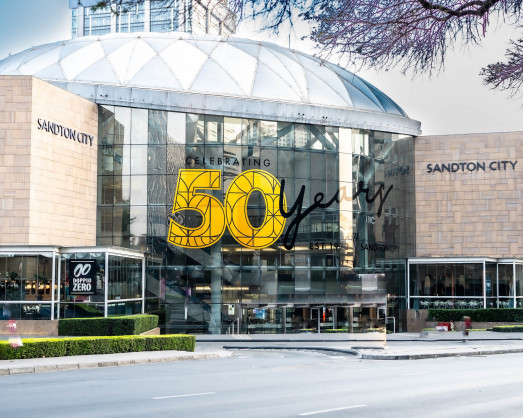
Sandton City celebrates 50 years with retail festival

Location: News
Sandton City

Sandton City (www.SandtonCity.com), Africa's premium shopping destination, is thrilled to announce its upcoming 50th-anniversary that will be celebrated with an exquisite retail festival. The unique one-day event, taking place on Tuesday 12 September 2023, promises a day filled with an extraordinary shopping experience, outstanding exclusive offers, and a jubilant atmosphere, as the iconic mall marks five decades of exceptional service and superior retail.

Since its inception in 1973, Sandton City, in Johannesburg, has commanded a unique position of high-end retail, drawing shoppers from across the world to experience its diverse array of over 300 premium retailers, that reflect the most beloved brands from both within South Africa and internationally. As the mall reaches this remarkable milestone, the 50th-anniversary retail festival is a tribute to its commitment to offering unparalleled shopping experiences.

Visitors to the centre on the day can expect an array of delights, including:

Irresistible retailer offers, complimentary gifts and added value: Shoppers will be treated to an array of exclusive offers, at over 90 stores in the centre, ensuring that purchases are accompanied by unbeatable value at participating retailers. For example, Alpha Industries is offering a free t-shirt with any jacket purchased; at Fabiani, the first 50 customers will get 50% off anything in store, at Karl Lagerfeld, an exclusive KARL gift will accompany every in-store purchase over R 5 000; and uniQbrows will offer free Iconic Intense brown brow tints, to name a few. These offers are valid on Tuesday 12 September at Sandton City only, terms & conditions apply.

Extended Trading Hours: Sandton City recognizes that celebrations should know no time constraints. To accommodate the festivity, the mall will extend its trading hours, granting guests ample time to explore and enjoy, with most stores in the centre staying open till 9:00 PM on the day.

Live entertainment: From 12 noon, shoppers can enjoy complimentary live musical performances by, some of South Africa's top artists, DJ Zinhle, Goodluck, Holly Rey and Kings of Weekend in the centre court outside Checkers. 

Spend and win competition: Shoppers who spend R 500 or more between 1 – 12 September at any of their favourite stores in Sandton City, may enter a competition to win a R 50 000 Sandton City gift card, with the entry box conveniently placed in the centre court.

Additionally, Sandton City will unveil a captivating History Wall installation, on the fourth level, in close proximity to Clicks, Woolworths, Toy Kingdom and Loads of Living, providing visitors with an opportunity to journey through time. This installation showcases the centre's evolution from its inception to the present day, offering a glimpse into the rich history and transformative journey since its development, and how the remarkable centre has stayed at the forefront of African retail.

Dimitri Kokinos, Asset Manager of Sandton City, expressed his enthusiasm for the upcoming 50th-anniversary retail festival, stating, “We are immensely proud to celebrate five decades of excellence in retail. Sandton City has been an iconic symbol of luxury, innovation, style and community for fifty years. As we embark on this milestone, we are excited to offer shoppers a day filled with exuberant experiences and unforgettable retail moments, while paying tribute to the centre's legacy as a retail haven, offering an unparalleled mix of luxury brands, fashion, lifestyle, and dining experiences.”

For more information and regular updates go to www.SandtonCity.com or follow the centre on social media @SandtonCitymall.

Distributed by APO Group on behalf of Sandton City.

Notes to Editors:
Entertainment line-up:

12 – 2pm: DJ Soosh

2pm – 2:45pm: Holly Rey

2:45pm – 4pm: DJ Soosh

4pm – 5pm: Kings of The Weekend

5pm – 6pm: DJ Soosh

6pm – 6:45pm: Goodluck

6:45pm – 7pm: DJ Soosh

7pm – 7:45pm: DJ Zinhle

7:45pm – 10pm: DJ Soosh

  • Artist line-up and performance times are subject to change.

About Sandton City:
Sandton City Shopping Centre is renowned amongst both local and international visitors as one of Africa's leading retail destinations. With an impressive retail, office and leisure space ranking as South Africa's top performing retail destination in terms of trading density, Sandton City has an effective tenant leasing strategy and a low vacancy level. The shopping centre is home to over 300 of the most exciting local and international brands and presents you with a world of luxury in the exclusive Diamond Walk.

Sandton City is six-star green-star rated by the Green Building Council of South Africa. This is the first super-regional shopping centre on the African continent to achieve such a prestigious rating, representing world leadership in environmentally sustainable operational efficiencies. In accordance with the SHORE accreditation standards by international certification body SAFE Asset Group, Sandton City is certified COVID-19 compliant and has also achieved gold level status as a safe retail destination for its ability to prevent, adapt, respond to, recover and learn from operational disruptions. Adjacent to world-class hotels and mega corporate headquarters, winning multiple Best Shopping Mall awards each year, Sandton City continues to be a leader in mixed-use properties.

Sandton City is co-owned by Liberty Two Degrees, Liberty Group and Pareto Limited, and managed by JHI Retail Proprietary Limited.

For more information, please visit either www.SandtonCity.com, www.Liberty2Degrees.co.za, www.Pareto.co.za.

Media files
Sandton City
Download logo
Read moreSandton City celebrates 50 years with retail festival
11 September 2023

Whip Up Some Fancy In The Kitchen With This Quick And Easy Creamy Cheesy Potato Bake Recipe

Location: Entertainment, MyPR

WHIP UP SOME LOVE IN THE KITCHEN WITH THIS QUICK AND EASY CREAMY CHEESY POTATO BAKE RECIPE By: Tamaryn Green – former Miss South Africa, Model, Entrepreneur and Medical Doctor sharing her mouth-water recipe using her favourite secret ingredients. Cooking is often seen as a mundane task, but why not make it an exciting adventure …

Read moreWhip Up Some Fancy In The Kitchen With This Quick And Easy Creamy Cheesy Potato Bake Recipe
8 September 2023

SA awarded Chairship of the Africa Green Hydrogen Alliance

Location: News

SA awarded Chairship of the Africa Green Hydrogen Alliance

South Africa will use its Chairship of the Africa Green Hydrogen Alliance (AGHA) to advance the green hydrogen agenda on the continent and support opportunities for peer-to-peer learning, technology transfer, economic and employment opportunities.

This is according to Minister in the Presidency for Electricity, Dr Kgosientsho Ramokgopa, who was handed Chairship of the AGHA on the sidelines of the Inaugural Africa Climate Summit (ACS), which took place from 04-06 September 2023 in Nairobi Kenya.

“Green hydrogen and its associated large scale renewable energy production has the potential to support the expansion of the electricity transmission infrastructure, to add additional renewable energy generation capacity and to support the local development of renewable energy.

“As such it is a key component of South Africa’s future energy mix to achieve sustainable energy security,” the Ministry for Electricity said on Thursday.

AGHA was formed in May 2022 by six African countries, Egypt, Kenya, Mauritania, Morocco, Namibia and South Africa, to drive decarbonisation through green hydrogen.

The alliance seeks to intensify collaboration and supercharge the development of green hydrogen projects on the African continent in line with the Just Energy Transition.

“It focuses on public and regulatory policy, capacity building, financing and certification needs to mobilise green hydrogen production for domestic use and export. The inclusion of the Ethiopia and Angola’s membership were also announced alongside South Africa’s Chairship,” the Ministry for Electricity said.

During the ACS, the Minister participated in panel sessions where he shared lessons on South Africa’s energy outlook and the role of green hydrogen in supporting energy security and driving green industrialisation.

On the margins of the Summit, the Minister engaged in multiple high-level bilateral meetings to explore energy collaborations and meaningful partnerships in the energy space.

The Minister’s participation at the Summit was underpinned by a commitment to consistent, sustainable and affordable energy supply for South Africa. – SAnews.gov.za


nosihle
Fri, 09/08/2023 - 09:30

649 views
Read moreSA awarded Chairship of the Africa Green Hydrogen Alliance
8 September 2023

Checkers – driving patriotic spirit and giving away R8 million this Rugby World Cup

Location: MyPR

Checkers – driving patriotic spirit and giving away R8 million this Rugby World Cup Checkers is going all in to ensure South African consumers have the ultimate Rugby World Cup experience on local soil – just light the fire and Checkers will do the rest! This includes making sure that there are enough beer glasses …

Read moreCheckers – driving patriotic spirit and giving away R8 million this Rugby World Cup
7 September 2023

The key to Africa’s industrialisation process and ending the region’s massive energy poverty

Location: News
African Energy Chamber

By Jason Mitchell

Africa's vast natural gas reserves are key to bringing energy to Africa's poorest countries, to a solid industrialisation process throughout the region and to significant poverty reduction.

The region is home to 33 of the world's 46 least-developed countries (LDCs) with an average income per head of less than $1,018 a year. The continent's poorest countries must expand at 6-7% a year if poverty is to be reduced in a big way and if the life chances of hundreds of millions of people are to be improved. To achieve this goal, these countries require abundant and cheap energy. Luckily, for many African states, the answer lies on their own doorstep — natural gas. Gas has remained a niche fuel in sub-Saharan Africa — contributing only 5% of the total energy mix against a global average of 20-25% — but its potential is enormous.

A new vision for Africa is required — a criss-crossing network of natural gas pipelines that brings energy to all corners of the region. The continent's contribution to global greenhouse gas emissions is tiny and will only become slightly bigger if the region's natural gas reserves are exploited. There is also a massive opportunity to wean poor Africans away from the use of biomass fuel and to help protect the region's forests through the rollout of small, liquified petroleum gas (LPG) stoves. Climate change is an issue in Africa but poverty reduction is a bigger one. Poverty is the biggest killer in Africa today.

It's very hard for Europeans and North Americans to imagine what it's like to live on under $1,018 a year, to not have readily available electricity, to not have a refrigerator or a washing machine, to not have a car, to not have a lawnmower, to not be able to fly from one country to another cheaply, to not have electricity in the school or the workplace and to have to use firewood or charcoal for cooking purposes. Fossil fuels have been at the heart of the Industrial Revolution that has brought prosperity and better living standards to the developed world. People in the First World must be very careful if they decide to deny Africans the same chance to prosper.

Africa has the lowest energy use per capita in the world — the average electricity use of a sub-Saharan African resident is lower than that of a household fridge in the United States. Average consumption per person in sub-Saharan Africa, excluding South Africa, is a mere 185 kilowatt-hours (kWh) a year, compared with about 6,500kWh in Europe and 12,700kWh in the US. Every year San Antonio, Texas, with a population of 1.5m people, uses as much electricity as the whole of Nigeria, with 203m people. Golden, Colorado, a small town with only 19,000 people, uses as much electricity as Chad, a country with 16m people.

The UN's Sustainable Development Goal Seven aims to “ensure access to affordable, reliable, sustainable and modern energy for all” by the year 2030. That's a tall order. In 2019, 917m people in Africa (around 80% of the region's population) relied on wood, charcoal, kerosene, animal and crop waste or other solid fuels to cook their food and heat their homes. The International Energy Agency (IEA) reports that almost 490,000 people die prematurely every year in sub-Saharan Africa from household air pollution-related causes — stemming from the lack of access to clean cooking facilities. Gas is a much cleaner form of cooking than biomass and its use should be encouraged. Biomass burning-power plants emit 300-400% more CO2 than natural gas per unit energy produced. Natural gas emits almost 50% less carbon dioxide than coal. 

Africa has one-fifth of the world's population but contributes only 3% to global greenhouse gas emissions. Incredibly, some 48 sub-Saharan African countries, excluding South Africa, have an estimated share of global emissions of only 0.55%. The fact is that many African states are already at net zero. If the continent were to use an additional 90bn cu m of natural gas per year — or 50% more than today — the resulting emissions would only raise Africa's cumulative contribution to global carbon emissions to 3.5% (ten gigatonnes) by the year 2050, according to the IEA. It really is a tiny increase compared to the chance of reducing poverty levels for hundreds of millions of poor people. If Africa is to provide universal electricity access by 2030 it would have to almost double its total generation capacity from around 260gw today to 510gw. 

Almost half the continent's 55 countries have proven natural gas reserves. Across the region, natural gas reserves amount to around 17.5trn cubic metres (cu m), making up around 9% of the world's total gas reserves. They are considerable in northern Africa (accounting for 45% of African reserves) and western Africa (32%), in particular. Commercial quantities of natural gas have been found in many African countries.

Previously, only four countries from the region have been major natural gas production hubs: Nigeria (with total gas reserves of 5.8trn cu m), Algeria (4.5trn cu m), Egypt (2.2trn cu m) and Libya (1.5trn cu m). These four accounted for 78% of African gas reserves in 2021 (https://apo-opa.info/48gDBWG), according to the United States Energy Information Administration.

However, seven African countries — Mozambique, Senegal, Tanzania, Mauritania, South Africa, Ethiopia and Morocco — with no history of fossil gas exploitation have now opened up their doors to gas projects. Some 84% of new reserves in the pre-production stage are found in these states — total new reserves amount to 5.1trn cu m. Mozambique has re-production reserves of 2.3trn cu m, Senegal 779bn cu m, Mauritania 575bn cu m, Tanzania 512bn cu m, South Africa 96bn cu m, Ethiopia 42bn cu m and Morocco 39bn cu m.

Furthermore, major untapped reserves have been discovered in Angola, Cameroon, Ghana, Equatorial Guinea, the Republic of the Congo, Kenya and Uganda. A number of these states — including Mozambique, Tanzania, Mauritania and Senegal — are actively marketing natural gas to capitalise on recent discoveries. In fact, the IEA has declared Africa the ‘new frontier' in global oil and gas.

The big four gas-producing countries will continue to dominate gas production in the near term but experts estimate that Mozambique and the other new entrants will contribute more than 50% of the region's gas production by 2038.

Natural gas can be used for electricity generation, industry and domestic use. Crucially, harnessing Africa's gas could provide the baseload power needed to boost Africa's capacity to process its raw materials locally. It could provide enough energy for industrial processes, including steel and cement production and paper and pulp manufacturing. It could be also used to make fertiliser to raise agricultural yields. Renewables, including solar and wind, cannot yet provide enough energy for these purposes.

The huge reserves of gas can play a significant role in the continent's energy transition, as natural gas has a much lower carbon footprint than oil and coal. Critically, natural gas development and renewable power are not mutually exclusive. If Africa were to triple its use of natural gas, the United Nations Economic Commission for Africa (Uneca) estimates that the region would be able to increase its use of renewable energy eight-fold. Reliable forms of energy such as gas can be used to stabilise a grid powered by intermittent sources such as wind and solar. It can play a key role in a ‘just' energy transition.

However, expanding gas supply across Africa would require a whole web of new gas pipelines and that does not come cheap. A lot of the gas from the new projects already under way in Africa is destined for international markets, including the European Union — which have been seeking new sources of energy since the Ukraine crisis — but it is vital that the region's gas reserves are deployed for domestic use, as well. Nigeria, for example, sits on the continent's largest known natural gas reserves but only 55% of the population had access to secure electricity in 2020.

Multilateral financial institutions (MFIs) — many of which are headquartered in the developed world — are now shying away from investing in natural gas projects in Africa because of pressure from a vociferous green lobby. In 2021, 20 countries — including almost all the world's big, rich democracies — pledged to stop almost all financing of new fossil fuel projects internationally by the end of 2022. Furthermore, under the Glasgow Financial Alliance for Net Zero (GFANZ), 450 financial firms across 45 countries, responsible for over $130trn in assets, committed to accelerate the global decarbonisation process. The problem is that most Western governments and financial institutions do not distinguish between coal, oil and gas, and the pressure to stop funding all hydrocarbons has negatively impacted gas projects in Africa in a big way.  

Some of the continent's biggest financiers — including the African Development Bank (AfDB) — are finding it increasingly difficult to support gas project developments that require loan syndication and foreign partners. The World Bank is pulling back, too. Local banks cannot finance major gas projects on their own, as they are limited by their capital base. In particular, the fossil fuels divestment campaign is having a big impact on the amount of development and concessional finance available. This kind of finance used to support a number of gas projects for their poverty-reducing and economic development value.

For example, without the guarantees of development finance institutions (DFIs), most of Africa's recent gas-to-power plants would have never been built in the first place. The withdrawal of development finance from downstream gas and gas-to-power projects is a serious cause for concern for Africa's electrification effort and moving the needle on energy access.

Furthermore, there is a glaring double standard — many European countries have increased their use of hydrocarbons (coal as well as gas) since Russia's invasion of Ukraine. They are constructing new fossil fuel pipelines at home. The EU recently classified natural gas a ‘green' fuel, which will allow Europe's projects to be backed by investors committed to environmental, social and governance (ESG) principles. European countries are now looking towards African states for new sources of gas. However, they are not prepared to back new gas projects in Africa that would supply the fuel to the region itself. That smacks of hypocrisy of the worst kind. How can you deny the poorest people in the world the sort of energy that you want to use yourselves?

Lumping all hydrocarbons together is a blunt policy mechanism that is not good from an emissions perspective either. In poorer places, like sub-Saharan Africa, the available alternative to gas is not renewable electricity but rather coal, diesel and, most of all, polluting biomass. In sub-Saharan Africa, demand for biomass fuels is expected to surge by 40% by the year 2040 if ‘business as usual' continues. The burning of biomass is a major contributor to global carbon emissions and charcoal has been a top driver of tropical forest loss during the past two decades, with the greatest footprint in Africa. The continent's carbon sinks need protecting and the irony is that the greater use of gas would achieve that.

Africa is home to 18% of humanity but receives less than 5% of global energy investment. And much of this investment goes on producing oil and gas for export. There must be much more investment in the region for the domestic use of gas. Gas projects could play an absolutely vital role in bringing energy to Africa but obviously the projects require financing. DFIs must think again about their decision to limit investment in new projects in Africa. The financing of a network of gas pipelines throughout Africa would be one of the quickest and surest ways of industrialising the region in a big way and of alleviating poverty on a large scale. Renewables just cannot do that how ever much wishful thinking takes place.

In fact, development institutions should go one step further and consider subsiding a massive roll out of small LPG stoves to millions of poor households in the region. It could be one of the biggest moves in contributing to Africa's decarbonisation effort by arresting the pace of deforestation in the region. LPG is recovered from ‘wet' natural gas (gas with condensable heavy petroleum compounds) by absorption and reaches the domestic consumer in cylinders under relatively low pressures. The widespread adoption of LPG stoves would reduce the amount of pollutants in the air from biomass fuels. Poor households that currently depend on woodfuel for cooking require a cleaner cooking alternative — LPG is one of the solutions.

LPG stoves are also suitable for domestic use in rural settings — a key consideration in Africa where energy poverty is greatest in the countryside. For instance, in 2016, electricity access in urban and rural areas in Nigeria was 86% and 34%, respectively, according to the World Bank.

Africa only needs to look to Asia for examples. In 2006, Indonesia implemented a ‘mega-programme' to induce a large-scale transition from kerosene to LPG stoves in order to reduce government spending on kerosene subsidies. The initiative invested in LPG infrastructure, domestic cylinder production and consumer awareness. By 2012, 93% of the target had been reached and LPG consumption had grown by almost 350%.

In India, LPG access expanded through the early-2000s but it was still not reaching most poor families. To boost access among the poor, the Indian government introduced the Pradhan Mantri Ujjwala Yojana (PMUY) Scheme. Under it, the country's oil marketing companies provide subsidies to reduce the cost of both LPG connections and cylinder refills to women in households classified as below the poverty line. In 2016, the cost of a connection was about Rupees 3,200 ($48) and included the first full cylinder (plus deposit), deposit for a regulator, an LPG stove and administrative fees.

Furthermore, African governments must consider increasing domestic gas allocations from liquified natural gas (LNG) export projects. These are an effective way to ensure that even if developers prioritise lucrative exports over local sales, they must reserve part of their production for the domestic market. Upcoming LNG terminals in sub-Saharan Africa — for example, in Mozambique — now make it compulsory to allocate a specific amount of gas to the domestic market. The availability of domestic gas from export facilities can encourage gas-based industrialisation (for example, in Senegal) or additional gas-to-power capacity (Mozambique, Mauritania and Senegal). In August 2022, for instance, Senegal's Petrosen Trading & Services signed an MoU with Turkey's Çalık Enerji and Japan's Mitsubishi for the pre-feasibility study of a gas-based ammonia and urea manufacturing unit.

It is a huge mistake to lump all hydrocarbons together and for Western environmentalists to argue that no new new fossil fuel projects should happen in Africa whatsoever. Deforestation is one of the biggest issues in Africa today. Poor Africans must be weaned off the use of wood-based fuels. The widespread adoption of small LPG stoves would be one of the surest ways of reducing deforestation. Natural gas could also form the basis for a solid, large-scale industrialisation process in Africa — something that is essential if the region is to achieve the sort of economic growth needed to lift hundreds of millions of people out of poverty.

Distributed by APO Group on behalf of African Energy Chamber.

Media files
African Energy Chamber
Download logo
Read moreThe key to Africa’s industrialisation process and ending the region’s massive energy poverty
5 September 2023

De Lille invites comments on tourism Green Paper

Location: News

De Lille invites comments on tourism Green Paper

To usher in Tourism Month and the upcoming Summer Campaign, Tourism Minister Patricia de Lille has welcomed Cabinet’s concurrence of ‘The Green Paper on the Development and Promotion of Tourism in South Africa’ to be published for public comment.

“The Green Paper comes at a particularly exciting time for tourism globally and in South Africa. Tourism is a growth sector and generator of jobs, and tourist destinations need to position themselves to take advantage of this sector’s recovery growth trajectory,” De Lille said.

The tourism sector has continued to grow for the past decade, earning the reputation of being one of the most significant and fastest-growing sectors before COVID-19.

In 2019, it contributed 3.7% to the local GDP and created 780 096 direct South African jobs. Despite numerous advances, the tourism sector lags relative to its potential.

To respond to this challenge and to accelerate inclusive tourism growth, the Department of Tourism embarked on a process of reviewing the 1996 Tourism White Paper.

The policy review process has yielded the Green Paper on the Development and Promotion of Tourism in South Africa. The Green Paper seeks to sustainably grow a more inclusive tourism sector that creates mass employment, reacts to innovations and adapts to future crises.

“The Green Paper seeks to facilitate growth and transformation of the tourism sector by creating an enabling regulatory environment for the present and future, especially with regards to technological developments.

“The Green Paper further seeks to increase the tourism sector’s contribution to the broader economy and drive employment and entrepreneurship, whilst enabling the sector to adapt to future crises.

“I invite the public to study The Green Paper on the Development and Promotion of Tourism in South Africa and provide us with substantive comments,” the Minister said.

The vision of the Green Paper is to sustainably and competitively grow the South African economy through an inclusive, inspiring, visitor-oriented tourism sector that consistently builds partnerships to strengthen the impact of the sector nationally, regionally and globally.

Its aim is also to address barriers to tourism growth and to respond to the social cohesion imperatives of the country.

Key elements include but are not limited to:

•          Implementation of a research-based tourism safety response programme in partnership with relevant agencies.

•          Develop and regularly review tourism crisis management framework to enable a response to crises.

•            Implementation of Tourism BBBEE Codes & strengthening mechanism for access to finance.

•            Facilitation of ease of access to the destination, especially as it relates to immigration and transport.

•            Recommitting the sector to the responsible tourism agenda.

•            Regulation of short-term rental accommodation to ensure policy certainty.

To enable the sector to reach its potential, The Green Paper focuses on four policy thematic areas with a specific focus under each.

The four thematic areas are:

-             Evolving former policy areas: Tourism governance, safety and security management and transformation.

-             Emerging policy issues: Embracing technology, crisis management, accessing the destination, quality visitor services, skills supply and employment and tourist services.

-             Policy issues for targeted growth: Prioritising rural and peri-urban tourism, enhancing domestic tourism for destination resilience and destination marketing and branding.

-             Sustainable growth model: Responsible tourism, knowledge management research and insights, tourism diplomacy, and tourism trade and investment.

The significance of tourism within the South African economy is widely recognised. The New Growth Path, the National Development Plan (NDP) and several State of the Nation Addresses identify the tourism sector among the core contributors to the country's medium to long-term national economic goals.

The 1996 Tourism White Paper predates many of these government frameworks, particularly the NDP, thus necessitating alignment. 

The country's Economic Reconstruction and Recovery Plan (ERRP) identifies tourism recovery as one of the priority interventions to drive the reconstruction and recovery of the economy.

The Tourism Sector's Recovery Plan also identifies the need to review the policy framework to support the sector's growth. 

The gazette for public comment was published on Friday 1 September and is available at: www.gpwonline.co.za/Documents/Government/49223%201-9%20Tourism.pdf.

Any person who wishes to submit written inputs in connection with the Green Paper is invited to do so within 60 days from the date of the gazette. Submissions should be:

a)           Mailed to the Department of Tourism, for attention: Mr Senzo Nkala, Private Bag x424, Pretoria, 0001

b)          Delivered by hand to the Tourism House, 17 Trevenna Street, Sunnyside, Pretoria, 0001

c)           Emailed to TourismGreenPaper@tourism.gov.za.  

The Green Paper is also available on the Department’s website at www.tourism.gov.za.  – SAnews.gov.za

Edwin
Tue, 09/05/2023 - 12:11

215 views
Read moreDe Lille invites comments on tourism Green Paper
5 September 2023

Your lesson for World Cleanup Day – when you recycle your PET bottles, place nothing in the bottle

Location: MyPR

Our country’s post-consumer recycling rates for beverage bottles are high but they could be higher if South Africans would learn one simple rule – put nothing in the bottle. This is the view of South African National Bottled Water Association CEO, Charlotte Metcalf, who urges those South Africans who will be actively participating in World …

Read moreYour lesson for World Cleanup Day – when you recycle your PET bottles, place nothing in the bottle
4 September 2023

Tourism, Airbnb sign MoU to grow sector

Location: News

Tourism, Airbnb sign MoU to grow sector

Tourism Minister Patricia de Lille has announced the signing of a Memorandum of Understanding (MoU) between her department and Airbnb to support the continued recovery of the tourism sector and build inclusive tourism in South Africa.

“The MoU will see the Department of Tourism work closely with Airbnb to advance tourism services that are aimed at growing tourism in South Africa and creating more jobs in the sector,” De Lille said.

The MoU seeks to grow collaboration between government and the private sector, as it is “a collective responsibility to grow and enhance tourism sector”.

“As government, if we want to significantly grow tourism and its contribution to the economy and job creation, collaboration with the private sector is vital. We are delighted to be the first African Ministry of Tourism to sign a collaborative MoU with a successful global company such as Airbnb,” she said.

The Minister explained that by leveraging Airbnb's global reach and understanding of the market, the collaboration seeks to create a positive impact on local communities, travellers and the tourism industry as a whole.

“The primary goal of this collaboration is to develop a relationship between the Ministry, entity and Airbnb to harness and drive tourism domestically and internationally.

“As shared in the department’s Green paper, insufficient information is available about the unregulated short-term rental subsector, and this hampers informed policy decision making. Access to the Airbnb data can only assist in informing better decisions,” De Lille said.

As part of the MoU, the parties will have regular engagements to evaluate opportunities for strategic collaboration on driving inclusive tourism and ensuring fair and proportionate regulation of short-term rentals.

Velma Corcoran, Regional Lead: Middle East Africa at Airbnb, said they look forward to working with the Department of Tourism to help build a more inclusive and sustainable tourism economy in South Africa.

Corcoran said the Airbnb platform can help anyone, anywhere, to become a tourism entrepreneur, and that they hope to continue to break down systemic barriers to entry and enable more South Africans to participate in the sector.

“We welcome the opportunity to work with the department to develop a clear, proportionate national framework for the regulation of short-term rentals and see huge power in public and private sector collaborations. We also know from our work with the Airbnb Entrepreneurship Academy, that together, we can make a tangible difference and enable more people, in more places, to benefit from tourism,” said Corcoran.

The signing of the MoU is in line with the aims of the Tourism Sector Recovery Plan, which is key to the country’s Economic Reconstruction and Recovery Plan.

The Tourism Sector Recovery Plan (TSRP) was adopted by Cabinet in March 2021 to facilitate the recovery of the sector to preserve jobs and livelihoods, facilitate new job opportunities, match demand and supply, and strengthen transformation. – SAnews.gov.za

Edwin
Mon, 09/04/2023 - 13:34

573 views
Read moreTourism, Airbnb sign MoU to grow sector
  • Previous
  • Page 1
  • Interim pages omitted …
  • Page 29
  • Page 30
  • Page 31
  • Page 32
  • Page 33
  • Next

Copyright © 2026 · MyZA · All Rights Reserved · Powered by Stratlec Online