• Skip to main content
  • Skip to header right navigation
  • Skip to after header navigation
  • Skip to site footer
MyZA

MyZA

News, Directory, Events and Other Stuff

  • Social Media
  • Sport
  • World News
  • Home
  • Submit News
  • Directory
  • Events
  • Stratlec
  • TFSA
  • News
    • APO
    • Today’s Sport News
    • Todays Social Media and Tech Headlines
    • Today’s World News
    • Today’s SA Financial News
  • Contact
You are here: Home / Archives for Investing

Investing

25 April 2024

Launch of cutting-edge recycling facility in Namibia
Location: News
Coca Cola Beverages Africa

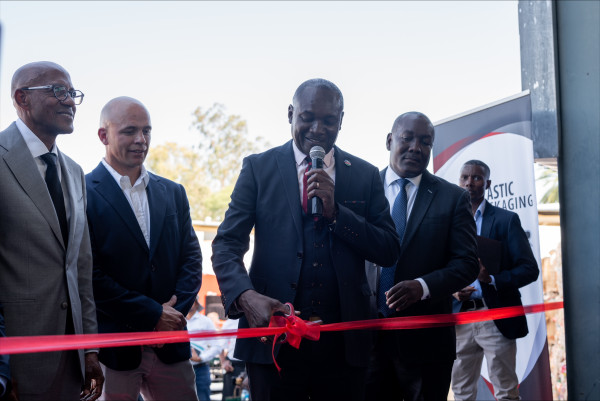
A N$24 million (over US$1.2million) investment through a partnership between Coca-Cola Beverages Africa (CCBA) (www.CCBAgroup.com) in Namibia and Plastic Packaging has culminated in the opening of a new polyethylene terephthalate (PET) flaking plant in Okahandja which will double the capacity of the only mechanical recycler of plastic waste in the country.

The plant was officially inaugurated by the Minister of Environment, Forestry and Tourism, Pohamba Shifeta.

“The Coca-Cola system aims to drive systemic change through a circular economy for packaging. We are leading the industry to help collect and recycle a bottle or can for every one we sell by 2030. We have a responsibility to help solve complex plastic waste challenges facing our planet and society, and we're leveraging our scale and reach to achieve our sustainability goals and reduce packaging waste,” said CCBA Chief Public Affairs, Communication and Sustainability Officer, Tshidi Ramogase.

“This facility is an example of how we work with partners across business, government and civil society to support or create closed loop systems to ensure our packaging is collected and recycled or reused.

“Supporting the establishment of a circular economy for packaging has both environmental and economic benefits since recycling has the potential to create jobs and to empower the informal waste collection sector in a circular economy.

“Unlike a traditional linear economy in which packaging is made, used and disposed of; a circular economy preserves the economic value of packaging through robust collection and recycling systems,” said Ramogase.

The completion of this cutting-edge recycling facility will enable Namibia Polymer Recyclers (NPR), a subsidiary of Plastic Packaging, to recycle up to 500 tons per month.

The recycling plant transforms discarded beverage bottles made from PET material into PET flakes with an international market value. The flaking process of post-consumer PET bottles involves sorting, shredding it into PET flakes, hot-washing and drying of flakes, which are then sent for further processing into recycled PET pellets and other end-uses.

This reduces the need to use virgin PET, while diverting waste from landfills and the environment.

“We are investing in infrastructure and exploring ways to support additional recycled PET capacity in each of the regions where we operate. These investments not only provide a source of recycled content for our packaging but also create additional demand for empty packages, driving increased collection.

“At CCBA, we are a proud industry leader in developing increasingly sustainable ways to produce, distribute and sell our products. We use our industry leadership to be part of the solution to achieve positive change and to build a more sustainable future for our planet,” said Ramogase.

Distributed by APO Group on behalf of Coca Cola Beverages Africa.

Issued By:
Enid Johr
PACS Director
CCBA in Namibia
Tel: +264 81 778 5381
Email: ejohr@ccbagroup.com

Wendy Thole-Muir
Head: Reputation and Communication
Coca-Cola Beverages Africa
Tel: +27 83 795 8524
Email: WThole-Muir@ccbagroup.com

Follow us on:
LinkedIn: https://apo-opa.co/4dfq8AC

About CCBA: 
CCBA is the 8th largest Coca-Cola bottling partner in the world by revenue, and the largest on the continent. It accounts for over 40% of all Coca-Cola products sold in Africa by volume. With over 18,000 employees in Africa, CCBA services more than 720,000 customers with a host of international and local brands. The group was formed in July 2016 after the successful combination of the southern and east Africa bottling operations of the non-alcoholic ready-to-drink beverages businesses of The Coca-Cola Company, SABMiller plc and Gutsche Family Investments. CCBA shareholders are currently: The Coca-Cola Company 66.5% and Gutsche Family Investments 33.5%. CCBA operates in 15 countries, including its six key markets of South Africa, Kenya, Ethiopia, Uganda, Mozambique and Namibia, as well as Tanzania, Botswana, Ghana, Zambia, the islands of Comoros and Mayotte, Eswatini, Lesotho, and Malawi.
Learn more at https://www.CCBAgroup.com

Media files
Coca Cola Beverages Africa
Download logo
Read moreLaunch of cutting-edge recycling facility in Namibia
25 April 2024

Unlocking the World of Kosher Certification

Location: MyPR

In today’s global market, where diverse dietary needs and preferences abound, the demand for kosher certification is on the rise. Whether it’s for religious observance, dietary restrictions, or simply a desire for quality assurance, consumers worldwide seek products bearing the emblem of kosher approval. Kosher certification serves as a testament to the meticulous adherence to …

Read moreUnlocking the World of Kosher Certification
24 April 2024

Addressing the Epidemic of Poor Posture: The Chiropractors Offer Solutions

Location: MyPR

Pretoria, South Africa – In today’s fast-paced world, where hours are spent hunched over desks, staring at screens, and contorted into awkward positions, it’s no wonder that back and shoulder pain have become endemic. The Chiropractors, with their years of experience and commitment to holistic wellness, are stepping forward to address this pressing issue. “Has …

Read moreAddressing the Epidemic of Poor Posture: The Chiropractors Offer Solutions
23 April 2024

Circumventing the relocation maze: successful emigration essentials

Location: MyPR

As the world continues to shrink and opportunities abound across borders, more individuals and families are embarking on the journey of emigration to start a new chapter in their lives. However, amidst the excitement of a fresh beginning, the process of relocation can quickly become overwhelming without proper planning and foresight. Ian Pettey, Managing Director …

Read moreCircumventing the relocation maze: successful emigration essentials
19 April 2024

Shelters for homeless families a rarity

Location: News

The Somerset West Family Shelter is one of few in the country

Read moreShelters for homeless families a rarity
17 April 2024

Elections 2024: What the major political parties say about hunger

Location: News

We sent questions to the ANC, DA, EFF, IFP, FF Plus, ActionSA, PA, MK Party and RISE Mzansi

Read moreElections 2024: What the major political parties say about hunger
17 April 2024

Finding Your Perfect Appliance: A Comprehensive Guide to Home Essentials

Location: MyPR

In the realm of household appliances, the choices are endless, with options to suit every need and preference. Whether you’re looking to upgrade your kitchen gadgets or streamline your cleaning routine, there’s a wide array of appliances for sale to cater to your specific requirements. Let’s explore a curated selection of essential appliances, from air …

Read moreFinding Your Perfect Appliance: A Comprehensive Guide to Home Essentials
16 April 2024

Elevate Your Hotel Experience: Partnering with Quality Linen Suppliers

Location: MyPR

When it comes to providing exceptional hospitality services, the quality of your linens can make all the difference in creating a comfortable and memorable stay for your guests. As a hotelier, partnering with reliable hotel linen suppliers ensures that your establishment maintains high standards of comfort and luxury. Let’s explore the essential linens every hotel …

Read moreElevate Your Hotel Experience: Partnering with Quality Linen Suppliers
16 April 2024

Mashatile calls on traditional leaders to promote free and fair elections

Location: News

Mashatile calls on traditional leaders to promote free and fair elections

Deputy President Paul Mashatile has urged traditional leaders to encourage eligible voters to participate in the May 29 elections, and ensure they are free and fair.

“We will, as a nation, hold the seventh democratic National and Provincial Elections. In this context, traditional leaders should continue to encourage all eligible voters to participate in the elections,” he said on Tuesday. 

The Deputy President, as the Chairperson of the Inter-Ministerial Task Team on matters of Traditional and Khoi-San leaders, delivered a keynote address during a dialogue convened by the National House of Traditional and Khoi-San Leaders in Pretoria.

“We urge traditional leaders to promote free and fair elections and ensure that all voters exercise their democratic right — a right that was hard fought for and must never be taken for granted.”

He also took the time to urge rural leaders to work with the government to address the killings of traditional leaders.

“As an institution located in rural areas, it is important that we collaborate to identify obstacles that are hampering community development, such as the killing of traditional leaders, especially in the province of KwaZulu-Natal. 

“We encourage amakhosi and izinduna to continue working closely with the government to address this challenge effectively.”

The Deputy President condemned acts of violence and urged the community to serve as government’s eyes and ears by reporting those who conspire or have committed such crimes to the appropriate authorities. 

“Our law enforcement agencies are also working hard to hold those responsible to account.” 

Land

The country's second-in-command acknowledged the urgent need for the State to expedite its rural development efforts, particularly through the implementation of the InvestRural Master Plan. 

The InvestRural initiative enables rural communities to unlock their potential and improve their livelihoods. 

“Investing in local economies and land ownership is still critical for rural communities’ development.” 

He recognised that land tenure and administration are contentious issues and government will work hard to transfer land ownership to its legitimate owners and sustain rural communities.

“Government has also undertaken to divest itself of the communal land it holds in trust for communities.” 

The Deputy President assured leaders that government was prioritising land access for rural development and economic transformation. 

“We are finalising the Draft Communal Land Bill and Policy, with consultations underway to solicit input from various sectors, including traditional leaders.” 

The documents, according to the Deputy President, will be processed through government structures and the Cabinet for public comments during the 2024/25 financial year.

“We are confident that the Draft Communal Land Rights Bill will facilitate the transfer of government-held communal land to communities. It will also allow for communal land registration and dispute resolution mechanisms.” 

He believes that it wais important to optimally utilise the land. 

“If we can till the land, the people can fight hunger and poverty through small-scale farming or agricultural start-ups.” 

Social issues 

During the meeting,Mashatile offered to work with leaders to tackle pressing issues such as substance abuse, crime, and gender-based violence. 

“GBVF has a negative impact on socio-economic conditions, particularly for women and girls. Therefore, ending this scourge is urgent and critical for our nation's development.

“You must never allow anyone to act violently and abusively against their partners in the name of culture. Together, we must stand firm and say no to all forms of abuse and violence.” 

He also touched on the prevalence of HIV and AIDS and tuberculosis (TB), particularly among adolescent girls and young women. 

“As part of our prevention efforts, we must continue to communicate good and compelling messages to young people about delaying the commencement of sexual interactions as much as possible, and when they do begin, having sexually safe relationships and living healthy lifestyles.” 

He also encouraged local Houses of traditional leaders to establish relationships with community organisations to fight the scourge of drugs.

The Deputy President also took the time to congratulate Kgosi Seatlholo, Chairperson of the National House of Traditional and Khoi-San Leaders, on his recent election as Interim Chairperson of the Southern Africa Network of Traditional Leaders in Drug Demand Reduction. 

“The establishment of the National House of Traditional and Khoi-San leaders serves as evidence of the government’s dedication to recognising and valuing the viewpoints and contributions of our traditional leaders.” – SAnews.gov.za

Gabisile
Tue, 04/16/2024 - 13:10

201 views
Read moreMashatile calls on traditional leaders to promote free and fair elections
16 April 2024

Fintechs should develop products that address the exact needs of their customers (By Mike Cook)

Location: News
Mukuru

By Mike Cook, Mukuru Head of Wallet and VAS; Lorraine Nyawo, Mukuru Head of Product Domain: Financial Services (www.Mukuru.com)​.

All around the world businesses are pulling out the stops to achieve growth in what can best be described as challenging economic conditions. Africa is no exception. The continent has long been recognised for its immense potential, and as such businesses across sectors are investing heavily into the continent. Advancements in technology make serving the unbanked and underserved populations in Africa more viable than ever before. However, that does not mean growth comes easily. It is a hyper competitive and complex environment where genuinely understanding your customer is key to growth.

Even with this textbook understanding, there is a strong urge to take the “build it and they will come” approach because we can get caught up in our own technology and view problems from our frame of reference while ignoring the customer. This is typified in the African market where we see multiple shiny apps being dropped across markets with massive investments behind them only to be followed by a scaling down of operations as customer uptake and usage have not met expectations.

Instead, leading fintechs that show consistent growth have a deep understanding of their customers' needs and then constantly listen to their customers. Having a deep understanding of customer needs results in innovative solutions. But that is only half of what you need. Listening to customers as you build those solutions is what guarantees market adoption and success. It also allows you to discover further unmet needs. Without listening you fall into the trap of building it and hoping customers will come.

The point here is that you need to listen to customers that are already talking to you. Yes, A fintech can listen directly to its customers in the form of focus groups or formal surveys where customers can engage and tell it directly and clearly what they don't like, what they do, and what they want. But in a fast-paced environment it is not always possible to engage in traditional research to uncover what your customers are saying. More importantly, businesses need to develop the capacity to use existing touch points where customers are already talking to them to gather the insights needed for successful product development.

Social media is a massively useful tool for this. If a business is using its social media only as a marketing or customer service tool it is missing the boat. By mining the comments coming through social media channels, including positive and negative feedback, businesses have a treasure trove of data on their customers' voice.

Internal support tickets are another avenue. Whether customers are emailing, submitting comments through various platforms or calling into a contact centre, they are telling you about their problems. Often, this information starts and stops with frontline staff. Fintechs, or any businesses, need to have the right processes to gather that information effectively and feed it up to the product development team.

Of course, it is great when customers explicitly tell you what they want or need through these channels but regardless of what they say, every interaction can implicitly give you direction. For example, if customers continue to complain about something, they may not be telling you what to do or what to change, but they are telling you that your current solution is not working. An effective business must address those problems because that's how to genuinely serve customers.

Of course, listening is only worth anything if you do something about it. The amount of data and insights being mined can become overwhelming and so businesses need a quick way of scoring opportunities. It is impossible to have all possible information to calculate the most accurate return on investment. Rather, the business needs a quick, effectively designed scoring system or process that can help decision-makers weigh up revenue opportunities and customer service opportunities.

The team needs to balance these opportunities based on the business's long-term strategy and on what the most pressing need is for customers. This is important because in a highly competitive world, customer retention is golden. Beyond this, an effective scoring system keeps the development roadmap full.

Beyond scoring, prioritising opportunities is also influenced by where a business is in its development cycle, which development teams have immediate capacity, and which of the top opportunities can fit into the development roadmap immediately. Certainly, from an innovative fintech's perspective, the goal should be to get a Minimum Viable Product (MVP) out of the gates as quickly as possible as opposed to chasing the Rolls Royce solution at the outset. This is critical if the fintech wishes to be agile and relevant as opposed to producing one shiny, state-of-the-art product a year with no real knowledge of how customers will react to it.

One of the most important ways a fintech can listen to its customers is to gauge how they engage with its products. By using agile methods and principles, and building iteratively — from getting an MVP into testing and then exposed to the market, all the way through phase two and three development — a successful fintech is able to use its tight feedback loops to continually listen to customers. This way the product's development is influenced by the needs of the customer all through its development, meaning the product is effectively serving needs and not just being pushed into the market.

A customer may not understand or use a product the way it was designed — this is incredibly useful information during development phases. Mukuru develops with a finger on the pulse of feedback loops because developing products for the unbanked is not the same as developing products out of Silicon Valley: Solutions don't yet exist and they need to be built from scratch.

Of course, not all resources can go into new features and a portion of development should go into maintenance and support for live products — after all, the brand promise must be kept. It's a balancing act that each company must manage.

This is how fintechs such as Mukuru evolve into next-generation digital financial services providers. The brand promise is pinned on growing diverse products on the same platform, using the same payment rails and methods that customers have used and grown to trust.

This is, at its core, financial inclusion because it takes the unbanked and underserved on a journey from remittances, to wallets, to the ability to purchase online goods and services, to credit, funeral cover and more. None of this is possible without developing products based on the exact needs of your customer base.

Distributed by APO Group on behalf of Mukuru.

About Mukuru:
Mukuru is a leading next generation financial services platform in Southern Africa that offers affordable and reliable financial services to a customer base of over 13 million across Africa, Asia and Europe.

With over 100 million transactions to date, our core was built providing international money transfers and from this base, we've developed a set of services to address the broader financial needs of our customers. We now operate in over 50 countries and across over 300 remittance corridors.

We are a business that puts the customer at the centre of everything we do, and for that reason, we serve clients across physical and digital channels, by various payment methods (cash, card, wallet) as well as a range of engagement platforms including WhatsApp, USSD, contact centre, App, website, agents and a branch and booth network.

Mukuru has, for the fourth consecutive year, been listed as one of the top 100 Cross Border Payments businesses in the world in the 2023 FXC Intelligence Top 100 Cross-Border Payment Companies (https://apo-opa.co/48HwI0k), one of only six African companies to receive this accolade.

In April 2023, Mukuru officially ranked sixth on the 2023 LinkedIn Top Companies List in South Africa.

Mukuru was celebrated for innovation and excellence at the 2023 Africa Tech Festival Awards, receiving the Fintech Innovation of the Year Award - an acknowledgment of the transformative power of financial technology in driving economic growth, financial inclusion, and digital transformation.

Further information can be found at https://www.Mukuru.com.

Media files
Mukuru
Download logo
Read moreFintechs should develop products that address the exact needs of their customers (By Mike Cook)
16 April 2024

ITEC Knights Secure Promotion Back To CSA Division 1

Location: Sport

BLOEMFONTEIN: Cricket South Africa (CSA) has congratulated the ITEC Knights on their promotion back to Division 1, marking a triumphant...

The post ITEC KNIGHTS SECURE PROMOTION BACK TO CSA DIVISION 1 first appeared on Cricket South Africa.

Read moreITEC Knights Secure Promotion Back To CSA Division 1
16 April 2024

Itec Knights Secure Promotion Back To CSA Division 1

Location: Sport

BLOEMFONTEIN: Cricket South Africa (CSA) has congratulated the ITEC Knights on their promotion back to Division 1, marking a triumphant...

Read moreItec Knights Secure Promotion Back To CSA Division 1
15 April 2024

Elevating Your Living Spaces: A Guide to Home Fixtures and Accessories

Location: MyPR

In the journey of home improvement and renovation, every detail matters. From the functionality of kitchen taps to the aesthetics of bathroom accessories, selecting the right fixtures and accessories can make a significant impact on the overall look and feel of your living spaces. Let’s explore a curated selection of essential home fixtures and accessories, …

Read moreElevating Your Living Spaces: A Guide to Home Fixtures and Accessories
15 April 2024

Elections 2024: What the independent candidates have to say

Location: News

We put five questions to each of the five independent candidates

Read moreElections 2024: What the independent candidates have to say
15 April 2024

Efficiency and Reliability: Pumping and Wastewater Solutions

Location: MyPR

In the realm of industrial processes and municipal infrastructure, efficient handling of fluids and wastewater is essential for smooth operations and environmental sustainability. From transferring fluids to managing sewage, a reliable pumping system is the backbone of these applications. Let’s explore the diverse range of pumping solutions, from centrifugal pumps to sewage pumps, and understand …

Read moreEfficiency and Reliability: Pumping and Wastewater Solutions
15 April 2024

HR Professionals ready to embrace AI in the face of burnout

Location: MyPR

While training concerns around AI exist, HR professionals believe the technology will ease workload, boost competitiveness, and create jobs The freeing up of time through AI and tech will also dramatically improve job satisfaction 15 April, 2024 – A new global report from Sage reveals that HR professionals welcome AI to ease the burden of …

Read moreHR Professionals ready to embrace AI in the face of burnout
12 April 2024

Securing Your Business: A Comprehensive Guide to Business Security Products

Location: MyPR

In the ever-evolving landscape of business security, staying ahead of potential threats is paramount. From safeguarding valuable assets to protecting sensitive information, businesses rely on a range of security products to fortify their premises and ensure peace of mind. Let’s explore the diverse array of business security products, from anti-bandit doors to safes, and understand …

Read moreSecuring Your Business: A Comprehensive Guide to Business Security Products
12 April 2024

Maximise Your Brand Visibility with Perkal’s Promo Wall and Desk Clocks

Location: MyPR

Introduction In the dynamic world of marketing, finding innovative ways to keep your brand in the spotlight is crucial. Branded wall and desk clocks emerge as exceptional promotional items, offering a unique blend of utility and visibility. Unlike other promotional products, clocks and watches are not just glanced at once and forgotten; they command attention …

Read moreMaximise Your Brand Visibility with Perkal’s Promo Wall and Desk Clocks
11 April 2024

Massification of skills development and job creation programmes to combat unemployment

Location: News

Massification of skills development and job creation programmes to combat unemployment

By Minister Thulas Nxesi

I believe that we can all agree that, at the end of the day, a decisive reduction in the unacceptably high level of unemployment is dependent on higher economic growth resulting in more jobs. This process is led by business investing in the private sector with resultant economic development and rising employment.

Nonetheless, as the President has argued, government as the largest employer in the country and a large-scale procurer of goods and services, has a major role to play both to create an environment conducive to investment, growth and development, but also to directly mitigate the impact of unemployment through social protection measures, demand-led training, targeted job creation and preservation.

To this end government, has strived to strengthen and expand its programmes for skills development and job creation, particularly in respect of the youth, seeking to mobilise and coordinate resources across government. In so doing, government has also sought to deepen and increase the areas of cooperation with the private sector. Initially focused on the strategic areas of energy security, port and inland logistics, and crime and corruption, cooperation has been expanded to include issues of skills and employment.

Which brings us to the expanded roll-out of government jobs and skills projects. First, I need to flag that this orientation and vision has a very long pedigree. Indeed, it is captured in the National Development Plan 2030 adopted in 2011. The earlier example of the Expanded Public Works Programme has been in existence for over two decades, and is utilised by local governments of all political persuasions.

So the present roll out of UIF Labour Activation Programmes (LAP) which started on April 6th in Gauteng – in tandem with the provincial Nasi Ispani Project - is part of this long tradition, expanded now to pool resources across departments and provinces, and in partnership with the private sector.

Following the 2019 elections, the mandate of the old Labour Department was expanded to become the Department of Employment and Labour. The reconfiguring of the Department to reflect the mandate has been taking place ever since. Part of this process is to leverage the existing resources of the Department for job creation and preservation. The Labour Department had long been involved in skills training of the unemployed. One of the things we did after 2019 was to re-orientate training towards in-demand and scarce skills with the guarantee of a job at the end of the programme, replacing the previous training for training’s sake mentality. Another critical part of the reconfiguration of the Department was to undertake a structural architecture review of the funds – the UIF and Compensation Fund – carried out by an independent analyst, and with the express purpose of greatly strengthening client service and ensuring necessary financial controls, systems, governance, accountability, risk and compliance mechanisms are in place.

I need to say more about the central role of the UIF in the work of the Department. The UIF is best known for paying out unemployment and maternity benefits, drawing on the contributions of employers and employees, but, in fact the UIF Act gives it a much larger mandate to mitigate unemployment, and includes funding:

  • Job preservation in the form of the temporary employer/employee relief scheme (TERS) – administered by the CCMA enabling distressed companies to continue to pay their employees, and the business turnaround and recovery programme run by Productivity South Africa;
  • training of the unemployed for employment (now anchored on a demand-led approach, with jobs at the end of it);

And job creation through:

  • supporting enterprise development and entrepreneurship; and
  • economic growth and job creation through investment of the reserves of UIF and the CF.

It was in furtherance of this mandate that the UIF established the LAP, where these kind of programmes have been running since before 2019, and will continue after the 2024 election. (The bizarre claim that the current LAP projects are a ‘rip off’ of the irregular Thuja proposal is historically inaccurate.) The decision of government to ‘massify skills development and job creation’ in response to persistent high levels of unemployment and sluggish growth utilises the LAP platform – expanded to pool resources across departments and entities, and to partner with the private sector. The funding model for the current expanded LAP provides a sliding scale of funding support for programmes with 70% of partners contributing, and a maximum 30% would being non-contributors (i.e. receiving 100% UIF/LAP funding), together with projects across government departments and entities on a rand-for-rand funding basis, for example including working with the IDC and the Department of Basic Education to recruit and pay salaries for Teacher Assistants designed to employ 200,000 unemployed graduates (part of the Presidential Youth Employment Stimulus programme).

The current expanded LAP ‘Training for Employment and Entrepreneurship’ programme sets ambitious targets: 2 million opportunities over three years, consisting of jobs preserved and created; demand-led skills training and entrepreneurial opportunities. Currently, 333 projects have been recommended for implementation across every province, with planned some 704,000 beneficiaries. Some 55,000 opportunities were announced for Gauteng on 6th April with the launch of the Nasi Ispani Project, supported and jointly funded by the LAP across 24 sectors: Agriculture, Services, IT, Construction, Engineering, Wholesale and retail, safety and security, hospitality, social services, textile, transport, furniture manufacturing; education, energy, food and beverage, health and wellness, aviation, insurance, jewellery, hygiene, arts and culture, and financial sector. The partnering with the Gauteng provincial government seeks to ensure that government maximises the impact of its spending by pooling resources and eliminating duplication.

I also need to flag that the LAP projects have been – or still are to be - subject to meticulous quality assurance processes to ensure:

  • they are compliant – with policy and legislation;
  • all necessary controls are in place;
  • there is capacity and necessary resources in place,
  • and that these programmes produce real outcomes in terms of jobs and entrepreneurial prospects.

Labour activation programmes are not a silver bullet to end the challenge of unemployment, but they are a viable force-multiplier that can be used together with other initiatives and interventions as part of a response to mitigate unemployment. 

The sectors and industries that will contribute significantly to the creation of these opportunities include economically growing and in-demand sectors such as agriculture, ICT, construction, engineering, manufacturing, education, transport and mining. 

An initial amount of R15 billion has been budgeted for the expanded LAP roll-out, eventually rising to R23.8 billion funding permitting. Opportunities will run between 12 and 36 months. The money invested in the plan will be recouped by the UIF through contributions and revenue generated from investments, as has been in the past sustainability model of the Fund.

There is this saying that: “the proof is in the pudding.” The UIF has proven that it is capable of taking strategic measures when required – such as the Covid-TERS benefits – distributing R64 billion to 5 million laid off workers and their families during the pandemic – whilst remaining financially sound.

The official national launch of the expanded LAP programme takes place in KZN on 16th April with a progressive roll-out of projects province by province, district by district culminating in the Northern Cape on the 9th May to coincide with the Presidential Imbizo in Kimberly.

Details of other launches and the impact to be derived from these projects will be communicated on an ongoing basis. This demonstrates our serious commitment to creating opportunities for our people, and to embed these processes and programmes into the future.

*Thulas Nxesi is the Minister of Employment and Labour.*

Neo
Thu, 04/11/2024 - 11:26

350 views
Read moreMassification of skills development and job creation programmes to combat unemployment
11 April 2024

Flavour Fusion: Exploring the Art of Mixology and Culinary Creativity

Location: MyPR

Expand your palette (and palate) with House of Angostura’s trio of bitters, for every cocktail occasion and in the kitchen too. For over a century, ANGOSTURA® aromatic bitters came in one distinctive format – so indispensable to the cocktail world that its unique oversized label is instantly recognisable on every bartender’s shelf. So why did …

Read moreFlavour Fusion: Exploring the Art of Mixology and Culinary Creativity
10 April 2024

Elections 2024: What the major political parties say about Israel, Russia and the DRC

Location: News

We sent questions questions on foreign policy to the ANC, DA, EFF, IFP, FF Plus, ActionSA, PA, MK Party and RISE Mzansi

Read moreElections 2024: What the major political parties say about Israel, Russia and the DRC
9 April 2024

Nespresso to invest 20 million USD in DRC to support the coffee growing community and the revival of the specialty coffee

Location: MyPR

Johannesburg, South Africa, April 2024: Nespresso aims to continue to support the local community and economy by investing 20 million USD spent across coffee purchases, price premiums and technical assistance, by 2026 in the Democratic Republic of Congo (DRC), helping to give coffee farmers access to the global markets. The ambition is also to help …

Read moreNespresso to invest 20 million USD in DRC to support the coffee growing community and the revival of the specialty coffee
9 April 2024

Progress made in addressing socio-economic inequalities

Location: News

Progress made in addressing socio-economic inequalities

Government has made significant strides in addressing socio-economic inequalities through social welfare programmes in housing, healthcare, education and social services.

“Over the past few decades, the South African government has taken significant steps to address historical injustices and strive towards achieving social cohesion and socio-economic empowerment for all its citizens,” said Deputy President Paul Mashatile on Tuesday. 

The Deputy President was delivering a special public lecture on the 30th anniversary of South Africa’s democracy at the invitation of the University of Johannesburg’s School of Public Management, Governance and Public Policy, in partnership with the College of Business and Economics.

He also touched on the Broad-Based Black Economic Empowerment (BBBEE) policies, which he believes have promoted economic transformation and ensured the marginalised become part of the mainstream economy. 

To demonstrate government’s commitment to building an inclusive and growing economy, he said the state has raised R1.5 trillion in new investment commitments, of which over R500 billion has already flowed into the economy.

“We have made further strides in addressing load shedding, ensuring energy security, enhancing logistics systems, and improving ports and rail networks.” 

In addition, the country’s second-in-command said government was on track to accelerate land redistribution. Black South Africans, he said, now own around 25% of farmland, while the state supported 1 000 industrialists in Black-owned firms.

However, despite these achievements, challenges remain in achieving a more inclusive and equitable society. 

“The triple challenges of poverty, unemployment, and inequality, as well as corruption, continue to pose obstacles to the nation’s progress. In addressing these challenges, we are conscious that, as government, we must strengthen social compacts by working together with all sectors of society.”

Achievements

Deputy President Mashatile highlighted the achievements that have been made over the past 30 years. 

These, according to the Deputy President, include investment in transport infrastructure such as the Gautrain, the Freeway Improvement Project and Bus Rapid Transport, the agricultural sector, the financial services sector as well as a thriving automotive sector. 

He said infrastructure investment was key to the country’s growth and told guests that projects worth about R21.4 billion have been completed. 

“I would like to see more young people and women-led businesses being involved in these projects because young people are the future of our country and women carry the hardest burden of communities.” 

The Deputy President also took the time to acknowledge some of the challenges that the youth in the country face. “Hence, over the years, we have been investing in initiatives for the development of our youth and our future.” 

Water and sanitation 

In addition, he said government has decided to move with speed to professionalise the public sector. 

“I would like to assure you and the people of our country that, as the government, we are committed to the delivery of quality services to our people.” 

This includes dealing with increased water and sanitation issues, as well as the energy availability factor. 

President Cyril Ramaphosa appointed the Deputy President to lead a task team on the water crisis in the country, and one of the urgent priorities is to fix the ageing infrastructure. 

“We have already started this work. Just this evening, we are meeting as the Water Task Team; on Friday we will be visiting eThekwini as well as other regions later on to engage with the province as to how best we can resolve the eminent water challenge.” 

Since the announcement of the Water Task Team’s establishment, his office has received numerous requests from individuals seeking to assist and collaborate with the government. 

He said the Department of Water and Sanitation has already allocated R10.1 billion to municipalities through the regional bulk infrastructure grant, R4.6 billion through the water services infrastructure grant, and R1.4 billion through the municipal recovery disaster grant to address water challenges. – SAnews.gov.za


Gabisile
Tue, 04/09/2024 - 14:59

180 views
Read moreProgress made in addressing socio-economic inequalities
9 April 2024

QUIZ: Are you a Budget Buster or a Savvy Saver?

Location: MyPR

Many reports over the past year have indicated a concerning trend among South Africans, revealing that a massive portion of the population is grappling with debt. Whilst we all know that mastering our finances is key to unlocking a more secure future, it’s often easier said than done. Samantha Pillay, Director at First Loyalty Plus, …

Read moreQUIZ: Are you a Budget Buster or a Savvy Saver?
  • Previous
  • Page 1
  • Interim pages omitted …
  • Page 12
  • Page 13
  • Page 14
  • Page 15
  • Page 16
  • Interim pages omitted …
  • Page 18
  • Next

Copyright © 2026 · MyZA · All Rights Reserved · Powered by Reach Trust