• Skip to main content
  • Skip to header right navigation
  • Skip to after header navigation
  • Skip to site footer
MyZA

MyZA

News, Directory, Events and Other Stuff

  • Social Media
  • Sport
  • World News
  • Home
  • Submit News
  • Directory
  • Events
  • Stratlec
  • TFSA
  • News
    • APO
    • Today’s Sport News
    • Todays Social Media and Tech Headlines
    • Today’s World News
    • Today’s SA Financial News
  • Contact
You are here: Home / Archives for new

new

10 April 2024

Unlocking Malawi’s Trade Barriers Through One-Stop Border Posts

Location: News

The World Bank Group
Download logo

Malawi's economy suffers from a lack of investment and high trade costs due to poor logistics and infrastructure; Clearing goods at the Malawi-Dedza border post with Mozambique previously took an average of three days; One-Stop Border Posts (OSBPs) reduce border waiting times and the cost of cross-border transactions.

The Dedza border post, situated between Malawi and Mozambique, is a busy place. On average, more than 80 trucks are cleared daily, carrying shop merchandise from South Africa to Malawi including fertilizers for Malawi's agriculture sector.

For the past few years, before the construction of the new One-Stop Border Post (OSBP) facility, it took about 24 to 36 hours to clear a truck carrying items such as wheat, fertilizers, groceries, and raw materials for Malawi's manufacturing industry. Drivers and clearing agents had to dash from one office to another between the two countries to clear the goods. Malawian traders traveling to and from South Africa through the Dedza–Mozambique border had difficulty locating the appropriate offices to present the required paperwork. In addition, the lack of parking facilities meant that the road leading to the border post was always congested, as trucks scrambled for space to park while waiting to be cleared.

Establishing One-Stop Border Posts

In 2015, the Government of Malawi embarked on an ambitious program to construct border posts in Dedza and Mwanza (both bordering Mozambique) and Songwe (bordering Tanzania), set up OSBPs with these neighboring countries, and establish the National Single Window (NSW). The NSW is an electronic platform system connecting international trade and transport stakeholders to fulfill all imports, exports, and transit border control procedures. World Bank support of $91.7 million was provided through the Southern Africa Trade and Transport Facilitation Project. The objective was to reduce the cost of cross-border transactions by supporting the modernization, simplification, and harmonization of the trade and transit procedures and policies.

The Dedza One-Stop Border Post, which was completed in 2023, boasts two examination bays for goods, parking spots for 100 freight trucks, and a modern passenger terminal.

“We now take less than half a day to process all the paperwork to clear the goods that we have carried, which is far less than the minimum of three days that we used to spend here,” says Flatella Makwakwa, a truck driver who has been using the Dedza border for more than three years. He also acknowledges the benefits of the new system when it comes to facilitating the passing of trucks and making life more comfortable for the users.

The new office infrastructure has made the process of clearing goods easier for the Malawi Revenue Authority (MRA), various other border officers, and users. The OSBP concept requires border officers from adjacent countries to be hosted in the same building. “It now feels good to go to work as the environment looks spacious and comfortable and we are looking forward to hosting our Mozambique counterparts very soon,” says Lucy Chikhawo, the MRA Station Manager for the Dedza border post which hosts more than a hundred government officers—including those from the Malawi Bureau of Standards, Immigration, Police, Agriculture and Health.

Traders also have access to better sanitation facilities as they wait for their goods to be cleared.

“From the feedback we have received so far about the Dedza OSBP, we feel encouraged to support the government in fast-tracking the completion of the other two border posts at Mwanza and Songwe in Karonga. Our main goal is to support initiatives that reduce time to clear passengers and goods, as any impediments are costly to the economy of the country,” says Chikondi Nsusa, Senior Transport Specialist at the World Bank Malawi Country Office, who is also the Task Team Leader for the project.

Improving Malawi's Trade, Logistics, and Infrastructure

The latest Malawi Country Economic Memorandum report highlights that Malawi's economy suffers from a lack of investment and high trade costs. Key reasons include poor logistics and infrastructure, compounded by being a small and landlocked country, as well as other non-tariff barriers at the borders.

According to the document, “the presence of non-tariff barriers at the border and in neighboring transit countries such as Mozambique, Tanzania, and Zambia add to the costs of trade for Malawian exporters and importers and there is lack of coordination between Malawi and its neighbors to address this issue that likely reduces both the number of firms exporting and the total value of exported goods.” In this context, establishing more OSBPs is a big step in the right direction.

Distributed by APO Group on behalf of The World Bank Group.
Read moreUnlocking Malawi’s Trade Barriers Through One-Stop Border Posts
10 April 2024

Raising the bar on soundbars

Location: MyPR

Unleash limitless adventures from your couch thanks to LG’s perfect, compact sound system. The living room is more than just a space for relaxation—it is the heart of home entertainment. Imagine being whisked away from the comfort of your sofa to the electric atmosphere of a live concert in Sydney or the thrilling energy of …

Read moreRaising the bar on soundbars
10 April 2024

Zero To Hero – The Rise Of Non-Alcoholic Pairings In Fine Dining

Location: Entertainment, MyPR

It’s more than a trend…non-alcoholic pairings are becoming de rigueur in fine dining restaurants around the world. Chefs and sommeliers from FYN, Pier, The Living Room at Summerhill Estate, and Salsify talk about their experience of non-alcoholic pairings in a South African restaurant context. Fine dining and fine wines have been the preferred pairing since …

Read moreZero To Hero – The Rise Of Non-Alcoholic Pairings In Fine Dining
10 April 2024

Abandoned by government, Limpopo villagers plan to sink their own borehole

Location: News

Only one public borehole is working for 11 villages in Nthabalala

Read moreAbandoned by government, Limpopo villagers plan to sink their own borehole
10 April 2024

Brits’ Heroics In Vain As Rain Foils Proteas Women’s Victory Bid Against Sri Lanka

Location: Sport

EAST LONDON: Tazmin Brits showcased her batting prowess with her second career hundred for the Proteas Women as the first ICC...

Read moreBrits’ Heroics In Vain As Rain Foils Proteas Women’s Victory Bid Against Sri Lanka
10 April 2024

Pearson’s Test of English (PTE) facilitates study and work abroad opportunities in South Africa

Location: News
Pearson

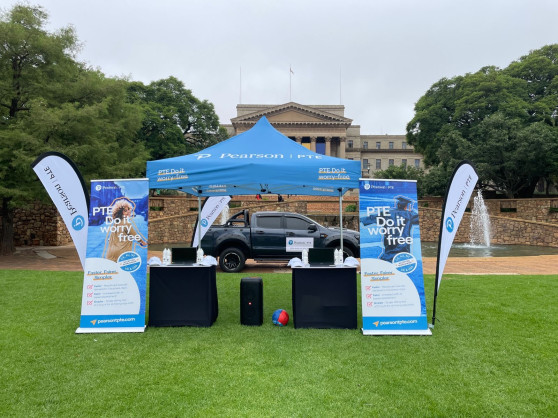
To support the government's efforts in strengthening the nation's English skills for education and migration, Pearson (https://MiddleEast.Pearson.com), (FTSE: PSON.L), the world's leading learning company, successfully hosted a series of events across South Africa, emphasizing the value of English proficiency for study and work abroad opportunities.

Engaging with over 3000 individuals in pivotal locations such as Johannesburg, Pretoria, and the University of the Witwatersrand, the events showcased the Pearson Test of English (PTE) highlighting the vital role of English in both higher education and professional spheres, particularly for those aiming to migrate to English-speaking countries like the USA, UK, Australia, Canada, and New Zealand. This effort gains particular significance in South Africa, where English, amidst its eleven official languages, emerges as the preferred medium (https://apo-opa.co/3TR0klF) of instruction. 

Ipek Aydin, Director – PTE, MEA & Turkey at Pearson, said, “PTE's expansion in South Africa underscores our commitment to enhancing global education and migration opportunities for students in the country. Our recent efforts demonstrate Pearson's dedication to making these opportunities more accessible and recognized across South Africa, empowering students and professionals to pursue their international aspirations.” 

PTE is a computer-based, AI-powered English proficiency test designed by Pearson for those who wish to study, work or migrate abroad. The exam leverages leading automated scoring technology to assess speaking, listening, reading, and writing skills in a single, two-hour assessment, ensuring accuracy and impartiality in results. With a result turnaround of just two days, it offers candidates the fastest, fairest, and most flexible way of proving their English language proficiency.  

PTE is recognised by over 3300 institutions globally and can be taken across Pearson's existing network at more than 445 PTE centres in 117 countries. The UK, Australian, and New Zealand governments recognise PTE Academic for all visa applications, while universities across Canada, Australia, New Zealand, Ireland, the UK, and the USA also accept it, making it widely acknowledged for educational and immigration purposes.  

For more information on PTE, visit https://www.PearsonPTE.com.   

Distributed by APO Group on behalf of Pearson.

About Pearson:
At Pearson, our purpose is simple: to add life to a lifetime of learning. We believe that every learning opportunity is a chance for a personal breakthrough. That's why our c.18,000 Pearson employees are committed to creating vibrant and enriching learning experiences designed for real-life impact. We are the world's leading learning company, serving customers in c.200 countries with digital content, assessments, qualifications, and data. For us, learning isn't just what we do. It's who we are. Visit us at www.Pearsonplc.com. 

Media files
Pearson
Download logo
Read morePearson’s Test of English (PTE) facilitates study and work abroad opportunities in South Africa
9 April 2024

Constitutional Court: where are the judgments?

Location: News

The Court has not delivered a single judgment this year

Read moreConstitutional Court: where are the judgments?
9 April 2024

Progress made in addressing socio-economic inequalities

Location: News

Progress made in addressing socio-economic inequalities

Government has made significant strides in addressing socio-economic inequalities through social welfare programmes in housing, healthcare, education and social services.

“Over the past few decades, the South African government has taken significant steps to address historical injustices and strive towards achieving social cohesion and socio-economic empowerment for all its citizens,” said Deputy President Paul Mashatile on Tuesday. 

The Deputy President was delivering a special public lecture on the 30th anniversary of South Africa’s democracy at the invitation of the University of Johannesburg’s School of Public Management, Governance and Public Policy, in partnership with the College of Business and Economics.

He also touched on the Broad-Based Black Economic Empowerment (BBBEE) policies, which he believes have promoted economic transformation and ensured the marginalised become part of the mainstream economy. 

To demonstrate government’s commitment to building an inclusive and growing economy, he said the state has raised R1.5 trillion in new investment commitments, of which over R500 billion has already flowed into the economy.

“We have made further strides in addressing load shedding, ensuring energy security, enhancing logistics systems, and improving ports and rail networks.” 

In addition, the country’s second-in-command said government was on track to accelerate land redistribution. Black South Africans, he said, now own around 25% of farmland, while the state supported 1 000 industrialists in Black-owned firms.

However, despite these achievements, challenges remain in achieving a more inclusive and equitable society. 

“The triple challenges of poverty, unemployment, and inequality, as well as corruption, continue to pose obstacles to the nation’s progress. In addressing these challenges, we are conscious that, as government, we must strengthen social compacts by working together with all sectors of society.”

Achievements

Deputy President Mashatile highlighted the achievements that have been made over the past 30 years. 

These, according to the Deputy President, include investment in transport infrastructure such as the Gautrain, the Freeway Improvement Project and Bus Rapid Transport, the agricultural sector, the financial services sector as well as a thriving automotive sector. 

He said infrastructure investment was key to the country’s growth and told guests that projects worth about R21.4 billion have been completed. 

“I would like to see more young people and women-led businesses being involved in these projects because young people are the future of our country and women carry the hardest burden of communities.” 

The Deputy President also took the time to acknowledge some of the challenges that the youth in the country face. “Hence, over the years, we have been investing in initiatives for the development of our youth and our future.” 

Water and sanitation 

In addition, he said government has decided to move with speed to professionalise the public sector. 

“I would like to assure you and the people of our country that, as the government, we are committed to the delivery of quality services to our people.” 

This includes dealing with increased water and sanitation issues, as well as the energy availability factor. 

President Cyril Ramaphosa appointed the Deputy President to lead a task team on the water crisis in the country, and one of the urgent priorities is to fix the ageing infrastructure. 

“We have already started this work. Just this evening, we are meeting as the Water Task Team; on Friday we will be visiting eThekwini as well as other regions later on to engage with the province as to how best we can resolve the eminent water challenge.” 

Since the announcement of the Water Task Team’s establishment, his office has received numerous requests from individuals seeking to assist and collaborate with the government. 

He said the Department of Water and Sanitation has already allocated R10.1 billion to municipalities through the regional bulk infrastructure grant, R4.6 billion through the water services infrastructure grant, and R1.4 billion through the municipal recovery disaster grant to address water challenges. – SAnews.gov.za


Gabisile
Tue, 04/09/2024 - 14:59

180 views
Read moreProgress made in addressing socio-economic inequalities
9 April 2024

Wheelchair users demand better access to transport

Location: News

We spend R600 out of our R2,180 grant on transport, say disability activists

Read moreWheelchair users demand better access to transport
9 April 2024

EFC (Extreme Fighting Championship) and Mukuru – Revolutionising Opportunities Across Africa for Athletes and Businesses

Location: Sport
Mukuru

EFC (Extreme Fighting Championship), Africa's premier mixed martial arts organisation, is delighted to announce its exciting new partnership with Mukuru (www.Mukuru.com), a leading next-generation financial services platform for Africa's emerging consumers. This partnership marks a significant step in the growth and development of the combat sports industry and its athletes across the African continent.

The collaboration with Mukuru is yet another step in EFC's explosive continental growth and its expanding global appeal, as the brand continues to nurture and develop multinational partnerships. EFC has experienced unprecedented reach and audience engagement through record-setting social media views, complemented with further traditional broadcast agreements, enhancing its already extensive television distribution with 2024 set to be the biggest in the company's 15-year history.

With Mukuru, EFC is more able to attract and support fighters from a wider variety of African territories, opening up new markets to the sport of mixed-martial arts and developing talent across the continent in completely new ways. The opportunities for all stakeholders in this ground-breaking new agreement is unprecedented. 

Mukuru offers convenient, secure, reliable, and affordable financial solutions to over 13 million customers. With more than 100 million transactions, 320,000 pay-in and pay-out locations, 150 information centres, and 1000+ Orange Booths across Africa, Mukuru is revolutionising international money transfers, making it the perfect partner for EFC to facilitate payments to its global athlete roster. Starting from EFC 111 on Thursday, March 7, Mukuru will be showcased as an official EFC partner at all live EFC events in 2024. Fans will witness Mukuru branding and promotions in the iconic EFC Hexagon, as well as enjoy exclusive content including the 'Mukuru Action Replay' and 'Mukuru Corner Cam' between rounds.

Brandon Mncube, Chief Marketing Officer of Mukuru, expressed the shared qualities between EFC athletes and Mukuru customers, stating, "The EFC athletes and Mukuru customers share many admirable qualities. They are brave and resilient, often willing to travel across the world to uplift themselves and their families." This partnership is a testament to the alignment of values and commitment to empowerment shared by both organisations.

Cairo Howarth, President of EFC, stated, "Mukuru is a brand that we have admired for many years, and we are thrilled to officially be partners. Together with Mukuru, we look forward to showcasing more incredible stories of the EFC athletes and their inspirational journeys."

EFC and Mukuru are excited about the potential that this partnership holds for the growth of African athletes and the MMA industry. With shared goals of promoting development, empowerment, and financial inclusion, this collaboration will undoubtedly bring forth a new era of success and opportunity in the world of Mixed Martial Arts.

Distributed by APO Group on behalf of Mukuru.

Press Contact:
Kendel Falkson 
Media & PR EFC 
+2782 905 2656 
​Media@efcafrica.com

Follow EFC on:
Facebook: 
https://apo-opa.co/3PUDLvo
Twitter: https://apo-opa.co/4asxCib
Instagram: https://apo-opa.co/3JbLsJC

About EFC® – The Extreme Fighting Championship® :
Headquartered in Johannesburg, South Africa, EFC is a world leading mixed martial arts (MMA) organisation. EFC produces 10 live events annually. With over 200 athletes exclusively contracted to the organisation, EFC showcases the greatest warriors on the planet. 

EFC events are broadcast in over 120 countries around the world on numerous television networks in multiple languages. EFC programming is available weekly in 600+ million TV households globally, making it one of the most recognisable MMA brands in the world.

For more information visit EFCWorldwide.com, or follow us on social media.

About Mukuru::
Mukuru is a leading next-generation financial services platform for Africa's emerging consumers. Inspired by its customers, Mukuru enables financial inclusion through technology solutions and a range of financial services products designed to make everyday transactions easier and financial products more accessible. For more information about Mukuru and its range of financial services, visit https://www.Mukuru.com

Media files
Mukuru
Download logo
Read moreEFC (Extreme Fighting Championship) and Mukuru – Revolutionising Opportunities Across Africa for Athletes and Businesses
9 April 2024

Nedbank’s new Premium Banking offering delivers value that matters to all South Africans

Location: MyPR

As South African households continue to grapple with high inflation, rising interest rates, increasing petrol and food prices, as well as unrelenting electricity hikes, getting as much value as possible from finances and banking has become a priority for most people. Nedbank has responded to this need for value-adding banking with a premium banking experience, …

Read moreNedbank’s new Premium Banking offering delivers value that matters to all South Africans
9 April 2024

Transforming Transactions: The Surge of Contactless Payment Apps

Location: MyPR

In recent years, contactless payment apps have emerged as a game-changer in the world of financial transactions. With the advent of mobile technology, these apps utilize NFC (Near Field Communication) to allow for seamless and secure payments. Convenience at Your Fingertips: These apps turn smartphones into payment terminals. Customers simply tap their card or device …

Read moreTransforming Transactions: The Surge of Contactless Payment Apps
8 April 2024

Transforming Home Comfort: The New Age of Smart Blinds and Light Switches

Location: MyPR

In the constantly evolving world of smart home technology, two innovations have significantly changed how we interact with our living spaces: smart blinds and smart light switches. These advancements are not just about embracing modernity; they are about enhancing convenience, energy efficiency, and personalising home environments to suit our lifestyles. Let’s delve into how these …

Read moreTransforming Home Comfort: The New Age of Smart Blinds and Light Switches
8 April 2024

Westown Supports Community Activities Through Event Sponsorship

Location: MyPR

April 2024, Durban, KwaZulu-Natal:  Westown, the new city of the west in Shongweni KwaZulu-Natal, has entrenched its support of the local equestrian community, through the sponsorship of the 2024 edition of the Westown South African Youth Championships, taking place at the Shongweni Club from 28 June to 4 July 2024. The event will see over …

Read moreWestown Supports Community Activities Through Event Sponsorship
8 April 2024

30 Years: reflections on SARS

Location: News

30 Years: reflections on SARS

While having to engage with the taxman may conjure up feelings for some of going to the dentist to have a tooth pulled - the South African Revenue Service (SARS) has played a crucial role in where South Africa is today.

As the country turns 30 years old under a democratic dispensation, it reaches this milestone with the existence of institutions like the South African Revenue Service (SARS).

State capture may perhaps be the first thing to come to mind when thinking of the revenue service;  closely followed by how unfair it may feel to pay taxes.

“What became increasingly clear as the Nugent hearings continued and was further underlined during the Zondo Commission proceedings which got underway in August 2018, was that the capture of SARS was part of a wider plan to capture the state,” said the revenue service in its anniversary book  to commemorate 25 years of its existence.

While it did go through a grim period characterised by what it termed as “a significant loss of talent, marginalisation of staff, complete collapse of governance, as well as a lack of trust by citizens,” SARS still managed to make it through the rough years.

At a recent media briefing to release the preliminary revenue outcome for the 2023/24 financial year, SARS said state capture left the organisation in “distress and severely compromised.“We embarked on a journey to re-imagine the organisation. SARS is succeeding in its strategic intent of building a tax and customs system that is based on voluntary compliance and sharpening its capability aimed at deterrence of wilful non-compliance,” it said at the briefing held in Pretoria.

It added that the process of rebuilding entailed broadening the tax base, instilling, and improving a culture of voluntary compliance and fiscal citizenship as well as data and technology to optimally deliver “on our mandate and working with all stakeholders in the tax ecosystem and fostering trust and confidence on SARS.”

It was imperative for SARS - of which its higher purpose is to enable government to build a capable state, foster sustainable economic growth and social development that serves the wellbeing of all South Africans -  to overcome this hurdle.

More so, for an institution that has collected R21.6 trillion in net tax revenues since its inception.

“The R21.6 trillion tax collections represents a compound growth of 9.9% per year since the inception of SARS in 1997. This has funded the South African democracy and touched the lives of millions who would be destitute without government support and services. We, who have the privilege to work at SARS are justly proud of these achievements because these efforts contribute directly to nation-building and sustain our democracy,” SARS Commissioner Edward Kieswetter said.

This as tax revenue collections have increased from R114 billion in 1994/95, at a compounded annual growth rate of 9.9% and an average tax-to- gross domestic product ratio of 22.2%.

Speaking at the 25-year celebrations of the existence of SARS in October 2022, President Cyril Ramaphosa said the encouraging progress of rebuilding SARS was evidence that it is possible to rebuild “ourselves from the deep damage we suffered during state capture.”

Evolution

While some taxpayers intentionally do not look at the tax portion of their payslips, paying one’s share of tax is vital in closing the very real inequality gap that continues to exist in the country.

And thanks to innovation made at the revenue service, it has become far easier for taxpayers to pay their taxes.

The days of completing a paper-based tax return are all but gone.

That laborious exercise has been replaced by a sleek process where most citizens are now able to receive a pre-populated tax return that can be completed and submitted online in a matter of minutes, thanks to eFiling.

But just how did we get to where we are today?

SARS was formed out of the amalgamation of the segregated revenue services of the apartheid-based Bantustans, as well as the Departments of Inland Revenue and Customs.

Following the historic elections in which South Africans of all races could vote in April 1994, work to build a better country for not just a few but for all, went into full steam.

“The new democratic government inherited a moribund economy deeply in debt and an inefficient Revenue and Customs system that was incapable of providing the tax needed by the democratic government to meet the developmental needs of all its people. In particular, the democratic government faced the challenge of ratcheting up service delivery to address the socio-economic backlogs in education, housing, health care, water supply, electricity supply and sanitation, amongst others,” noted the revenue service in its anniversary book.

In 1995, the then democratic Cabinet approved a two-step approach to the administrative autonomy of what would become SARS.

That process entailed the moving of the directorates of Inland Revenue and Customs and Excise out of the Ministry of Finance to the South African Revenue Service. The birth of the revenue service came in October 1997.

SARS - which is not only mandated to collect all revenues due and ensure compliance with tax, customs and excise legislation -- was formally established as an organ of state within the public administration, as an institution outside the public service.

Following that, government had the job of instilling a culture of tax compliance which was lacking in the country.

Change was needed and over the years, several steps were taken to “broaden the tax base, amongst others, these included legislative changes, service improvements, compliance strategies and enforcement actions,” said SARS.

Examples of the steps taken include the closing of legislative loopholes for abuse, tax amnesties (1995 and 1996, foreign exchange amnesty of 2003) and the introduction of Capital Gains Tax in 2001.

Modernisation

What was also a challenge for the leaders at SARS at the time, was “the fact that all processes inherited from the past were still manual and paper based” with returns having to be mailed to individual taxpayers.

Previously, filing one’s tax return involved the filling in of a minimum 12 pages to be tax compliant.

To reduce the paper-based processes, a new income tax system (NITS) was implemented in 1999. Increasing online business transactions, enhancing productivity as well as creating a more stable income tax system by reducing human intervention and improving data integrity were the main objectives of the new system.

“It was not until the launch of the Modernisation Programme in 2007 that SARS would finally be able to overcome the paper challenge,” it said.

In 1998, South Africa began collecting VAT at Southern African Customs Union borders. According to SARS, prior to 1994, these ports of entry were mainly managed by the South African Police, the South African Defence Force and Home Affairs (mainly for political control) and no revenue was collected.

Although a number a changes had been introduced after 1997, the revenue service found itself to be still “bureaucratic” and issues such as inadequate service to taxpayers and no standardisation of processes were still bugbears.

This led to the establishment of the Siyakha programme – which is isiZulu for “we are building”. The programme was set up to improve the performance of the organisation and to standardise and centralise key processes.

Its main objective was to radically transform SARS into a modern revenue authority aimed at creating a service culture that focused on the needs of the taxpayer, based on the principle that good service would facilitate tax compliance.

“The significance of Siyakha was that it would lay the foundation for the automation of processes and the modernisation programmes which began in 2007,” said the revenue service.

Around 2004, the Filing Season initiative was born and over the years it became one of the biggest, regular annual engagements that an organ of government had with citizens, apart from the national, provincial and local government elections.

As the years went by, SARS saw a “massive growth” in its taxpayer base and an increase in compliance, resulting in the receipt of high volumes of paper returns and supporting documents which still needed to be processed manually.

“As the organisation approached its tenth anniversary in an era of rapid technological advancement, the pressure mounted for a move from manual and paper-based processes to digital transactions," said the revenue service in its book.

In the modernisation years between 2007-2014, some of the key milestones SARS reached include the introduction of eFiling in 2007 which was at first for the submission of personal income tax returns.

It was then rolled out in phases for Company Income Tax, VAT, Dividends Tax and Transfer Duty amongst others.  It was critical to reducing the volume of paper that hampered efficiency, service and compliance.

“Other enhancements introduced in 2007 relating to the submission of Personal Income Tax returns included redesigning the return to two pages, using third party data verification and introducing scanning of returns in branches.”

“In 2008, SARS ramped up the changes, including the pre-population of returns on eFiling, based on third-party data supplied by employers. Employers could submit information to SARS through the new e@syFile channel developed by SARS and provided to employers free of charge,” it said.

The following year, more than three million individual taxpayers used eFiling, experiencing a massive improvement in ease, convenience, and improved turnaround times, especially in the payment of refunds.

The number of taxpayers visiting SARS branches began to drop and the number of printed returns reduced, “which meant a huge saving for SARS and represented a major environmental benefit.

“Today, almost 100% of all returns are filed electronically. The changes introduced in 2007 not only delivered benefits to taxpayers, but improved SARS’s ability to become more effective in detecting and deterring non-compliance and fraud. It allowed SARS to change its approach to monitoring compliance, from gatekeeper to risk manager,” said the revenue service.

The revenue service noted that by the end of the 2010 financial year, there was a significant increase in the use of electronic channels by taxpayers. An 82.6% growth was achieved in the electronic submission of returns as a result of processing efficiencies and automation.

South Africans also benefit from the existence of the Office of the Tax Ombud (OTO) that was established in October 2013 to enhance the tax administration system.

Prior to the establishment of this office, there was no independent channel of independent redress for taxpayers who had exhausted the normal complaints mechanisms. The office is independent of but funded through SARS.

Last year, the OTO celebrated a decade existence.

Indeed, the revenue service forms an important part of our democracy. -SAnews.gov.za

Neo
Mon, 04/08/2024 - 14:20

159 views
Read more30 Years: reflections on SARS
8 April 2024

Progress on Lower uMkhomazi Bulk Water Supply Scheme construction

Location: News

Progress on Lower uMkhomazi Bulk Water Supply Scheme construction

Water and Sanitation Minister, Senzo Mchunu, has commended progress in the implementation of the Lower uMkhomazi Water Scheme project, which will augment raw water availability and meet water supply demand in the KwaZulu-Natal South Coast. 

The uMkhomazi Water Scheme Project, which is currently under construction, will meet water supply demand for approximately 50 000 households in the South Coast within the eThekwini and Ugu District Municipalities.

The Lower uMkhomazi Bulk Water Supply, which is situated in the eThekwini Metropolitan Municipality (Ward 99) and uMdoni Local Municipality (Ward 18), worth more than R20 billion, with Umngeni-Uthukela Water as the implementing agent.

The project includes the construction of a new dam with a wall height within uMkhomazi River. The associated infrastructure will also include a 32km raw water conveyance tunnel and a 5km pipeline to uMlaza River.

There will also be a balancing dam and a water treatment works in the uMlaza River with a gravity pipeline to the Umgeni Water Supply System which supplies water to more than five million people and industries in the province. 

This includes eThekwini Metropolitan Municipality, uMgungundlovu and Harry Gwala District Municipalities.

Mchunu and Deputy Ministers, David Mahlobo and Judith Tshabalala, together with eThekwini and Ugu Districts Mayors and traditional leaders, including Inkosi Bele and Inkosi Mcadi, conducted a site inspection visit at Phase 1 of the project in Goodenough Abstraction point and pumping systems on Saturday. Phase 1 of the project is currently at 46% progress. 

Mchunu expressed his gratitude for the advancements made on the project, which is expected to be completed in December 2027.

He said the department is confident that the project will meet water supply demands in the South Coast areas, even in the near future.

“We are pleased with the progress made by the contractor’s determination and the capacity which is demonstrated by being ahead with about 6% of the expected schedule. This project will augment water in the South Coast areas that have been experiencing water supply challenges for a long time,” Mchunu said.

The project, which has previously been plagued by delays, has finally taken off following Mchunu’s intervention. 

The project is divided into two phases with the first phase consisting of raw water component comprising two independent systems, namely Ngwadini system, with off-channel storage; and the Goodenough system, with abstraction works and a raw water storage reservoir.

Phase 2 entails a potable water component, comprising 100ml per day Water Treatment Works; 3.5km gravity main pipeline to Quarry Reservoir; extension of Quarry Reservoir to 30ml capacity; and the construction of a Green Star Administration Building.

The Lower uMkhomazi Water Scheme project is part of the uMkhomazi Water Project consists of the construction of an 81m high dam at Smithfield on the uMkhomazi River, with gross storage capacity of 251 million cubic metre (m3), a 33km tunnel from Smithfield Dam to uMlaza River Valley, and a 5.1km, with a  2.6m diameter gravity, bulk pipeline connecting the tunnel to the Baynesfield Water Treatment Works (WTW). 

This part of the project will be funded and implemented by the department’s entity, Trans Caledon Water Authority (TCTA). 

The Umkhomazi Water Project will result in a 55% increase in the amount of available water in the uMngeni Water Supply System.

The Umgeni Water Supply System augmentation from the uMkhomazi Water Catchment is expected to increase fresh water supply from 394 million cubic metres a year to 608 million cubic metres a year. – SAnews.gov.za

GabiK
Mon, 04/08/2024 - 11:10

184 views
Read moreProgress on Lower uMkhomazi Bulk Water Supply Scheme construction
7 April 2024

Kenya’s Langat and Chepkorir secure victory at Absa RUN YOUR CITY GQEBERHA 10K

Location: MyPR

Kenya’s Vincent Kibet Langat and Diana Chepkorir claimed top honors in the men’s and women’s races, respectively, at the 2nd annual Absa RUN YOUR CITY GQEBERHA 10K on Sunday, 7 April 2024. Langat boasted a winning time of 28:01 and Chepkorir 31:15. At the age of 37, veteran South African top runner Elroy Gelant is …

Read moreKenya’s Langat and Chepkorir secure victory at Absa RUN YOUR CITY GQEBERHA 10K
7 April 2024

City of Cape Town employs EPWP workers to inspect fire hydrants

Location: News

City of Cape Town employs EPWP workers to inspect fire hydrants

The City of Cape Town has introduced a new project employing Expanded Public Works Programme (EPWP) workers to inspect fire hydrants and refer damaged or obstructed hydrants for further action.

The project is creating work opportunities, while also helping to reduce risks to life and property throughout the city.

There are approximately 57 803 fire hydrants along the city’s approximately 10 000km road network that supply water for fire emergencies. In many areas, these hydrants are routinely vandalised or obstructed by unapproved building work.

A total of 26 job seekers have been recruited to assist with inspections of fire hydrants, as part of the Hydrant Project, while a further five recruits with matric and a valid code B driver’s licence are being contracted as EPWP drivers/supervisors. All recruits were sourced from the city’s Jobseekers' Database.

Hydrant workers receive on-the-job training from handymen and their supervisors, whereas drivers/supervisors benefitted from a smart driving course to help strengthen their CVs for possible future employment opportunities within the city.

All beneficiaries on the project were also sent to fire safety awareness training.

"Considering the possible dire consequences if fire services teams reach the scene of a fire to find the hydrant has been vandalised or built over, this project is a great example of the major value EPWP workers and projects can bring to the city.

“I would like to commend those who conceived of this project, as it manages to provide a valuable service at an affordable cost, while at the same time, providing a lifeline to job seekers,’ said Mayoral Committee Member for Urban Waste Management, Grant Twigg.

How to register for EPWP job opportunities

Interested persons, who would like to be considered for EPWP work opportunities, can register on the Jobseekers’ Database at their local sub-council office.

They are advised to bring a copy of their CV, ID or a valid South African work permit and proof of residence. EPWP beneficiaries are randomly selected from this database.

For more information, contact the EPWP help desk on 021 400 9406 or email epwp.help@capetown.gov.za. – SAnews.gov.za

Edwin
Sun, 04/07/2024 - 12:37

620 views
Read moreCity of Cape Town employs EPWP workers to inspect fire hydrants
7 April 2024

Navigating the World of Courier Services

Location: MyPR

In the fast-paced world we live in, the demand for efficient, reliable, and versatile courier services has never been higher. Whether it’s a local business needing to send documents across town, an online shopper waiting for a parcel, or a global enterprise distributing products worldwide, courier services are the backbone of logistics and supply chains. …

Read moreNavigating the World of Courier Services
7 April 2024

Recruitment process for new vice president of NDB underway

Location: News

Recruitment process for new vice president of NDB underway

The process of identifying a replacement for Leslie Maasdorp, current Vice President of the New Development Bank (NDB) has started.

Cabinet will announce the new Vice President to the NDB after the recruitment process has been completed.

Maasdorp will at the end of his nine years of service at the NDB step down in July 2024.

In July 2015, Cabinet appointed Maasdorp as Vice President to represent South Africa at the New Development Bank in Shanghai.

Maasdorp was then appointed by the Bank to the role of Chief Financial Officer and was a member of the founding management team of the institution, under the leadership of Mr. KV Kamath, the first NDB President.

At the expiry of his contract in 2021, Maasdorp was reappointed by Cabinet for a second term of three years.

“On behalf of my colleagues, I wish to express our sincere gratitude to Maasdorp for the distinction with which he has served South Africa in this role. As CFO, he led the treasury and capital markets activities of the Bank, having established the global and domestic bond programs for the institution, raising more than USD 15 billion during his tenure.

“He also led the process of obtaining the inaugural credit rating of the Bank in 2018, which established the institution as a leading new emerging markets focused multilateral development bank. I want to wish him well in his future endeavours,” said Finance Minister Enoch Godongwana.

Maasdorp said it has been a distinct pleasure and honour to serve South Africa over the past nine years as Vice President and CFO of the NDB.

"I wish to thank Minister Godongwana, his predecessors during these nine years, as well as the Cabinet colleagues for having afforded me this incredible opportunity to be part of a historic mission to create a new global financial institution from scratch.

“Over this period, the NDB approved over USD 6 billion of loans to South Africa, contributing significantly to the rollout of sustainable infrastructure, including in rail, ports, power, roads and water projects,” said Maasdorp when commenting on his imminent departure in July. – SAnews.gov.za

Edwin
Sun, 04/07/2024 - 13:29

25 views
Read moreRecruitment process for new vice president of NDB underway
7 April 2024

President Ramaphosa to receive Letters of Credence

Location: News

President Ramaphosa to receive Letters of Credence

President Cyril Ramaphosa will on Tuesday receive Letters of Credence from Heads of Mission-designate at a Credentials Ceremony to be held in Pretoria.

Letters of Credence are official diplomatic documents presented to the President by Heads of Mission-designate, who have been nominated by their respective governments to serve as ambassadors to South Africa.

President Ramaphosa will receive Heads of Mission-designate from the following countries:

1. The Republic of Rwanda

2. The Swiss Confederation

3. The Federation of Malaysia

4. The Republic of Italy

5. Mongolia

6. The United Republic of Tanzania

7. The State of Kuwait

8. The Republic of Belarus

9. The Dominican Republic

10. The Republic of Korea

11. The Republic of Kenya

12. New Zealand

13. The Islamic Republic of Iran

14. The Republic of Suriname

- SAnews.gov.za


Edwin
Sun, 04/07/2024 - 09:12

123 views
Read morePresident Ramaphosa to receive Letters of Credence
5 April 2024

Globeleq to build Africa’s largest standalone battery energy storage system in South Africa

Location: Business

British High Commission Pretoria
Download logo

UK company Globeleq, the leading independent power company in Africa, today announced that its Red Sands project in the Northern Cape has been awarded Preferred Bidder status in South Africa's Energy Storage Capacity Independent Power Producer Procurement Programme (ESIPPPP). Globeleq is majority-owned by British International Investment (BII), the Development Finance Institution of the UK Government.

Battery storage is an essential enabler of renewable-energy generation, and the market for these systems is growing rapidly in South Africa and worldwide as a means of resolving energy crises and tackling climate change. These systems provide reliable power supply on demand, even when the energy grid is unstable, overcoming the challenges of intermittent wind and solar sources. They store energy at times of excess generation so that it can be released into the grid when generation falls short of demand, helping to mitigate the need for load-shedding.

Experts say that widespread energy storage is vital to expanding the reach of renewables and speeding the transition to a carbon-free power grid - this is key to helping reduce South Africa's reliance on fossil fuels as it seeks to transition to clean energy. This R5.7 billion (US$300 million) investment therefore represents a flagship project financed by the UK as part of its commitment under the Just Energy Transition Partnership agreed at COP26.

The Red Sands project is in the Northern Cape, about 100km southeast of Upington, and was originally developed by African Green Ventures, a South African renewable project development company owned by Norwegian based energy firm Magnora ASA. The project will cover approximately 5 hectares (12 acres) and will connect to the grid through the Eskom Garona substation. The substation will be upgraded by the Red Sands project to ensure that full network support capabilities of the project's batteries can be utilised.

Working closely with leading global battery and balance-of-plant suppliers, Globeleq estimates that the project will require an investment of approximately US$300 million and will take 24 months to construct after financial close, which is expected in 2024.

Globeleq is the largest independent power produce in Africa, providing nearly 1,800 MW of energy in South Africa, Mozambique, Kenya, Tanzania, Cote d'Ivoire, Egypt and Cameroon. Globeleq is a UK company based in London and backed entirely with Official Development Assistance (UK aid).

Red Sands will be Globeleq's first Battery Energy Storage Solutions (BESS) project in South Africa but the Group owns and operates a combined solar and BESS plant at Cuamba in Mozambique, and is developing BESS projects across the African continent. Globeleq also owns and operates 8 renewable plants (6 solar PV, 2 wind) in South Africa with a total generating capacity of 384 MW.

Mike Scholey, Globeleq's CEO commented:

"I am delighted that we have received Preferred Bidder status for this very important project, and I look forward to working with the government and our partners to take Red Sands to financial close and into operations. Electricity storage is going to be key not only in helping South Africa meet its considerable industrial and domestic demand for energy but also across Africa as more renewable energy projects benefit from the advances our industry has made with BESS technology."

British High Commissioner to South Africa, Antony Phillipson said:

"This is a significant investment in South Africa's future. The UK is proud to play such a vital role in helping to tackle the energy crisis with new technology that will bring power supply stability and most importantly support South Africa's ambition to reduce carbon emissions."

Distributed by APO Group on behalf of British High Commission Pretoria.

Read moreGlobeleq to build Africa’s largest standalone battery energy storage system in South Africa
5 April 2024

Newly launched terminal a symbol of resilience

Location: News

Newly launched terminal a symbol of resilience

President Cyril Ramaphosa has hailed the newly opened Newlyn Park Bayhead Rail Terminal as a symbol of South Africa’s recovery following the challenging COVID-19 pandemic and the country’s resilience in the face of challenges.

The President launched the terminal in Durban on Thursday.

“The completion and launch of the Newlyn Park Bayhead Rail Terminal project at the Port of Durban is not only a much-needed boost to South Africa’s logistics infrastructure network. This terminal is also a symbol of recovery and resilience. For the city of Durban, for the eThekwini Metro, for KwaZulu-Natal, and for the country at large,” he said.

President Ramaphosa reflected on the “worst public health disaster in modern times in the form of COVID-19” which forced South Africa and the entire globe into lockdown to contain the spread of the virus.

“As we were just emerging from the pandemic’s shadow in 2021, parts of our country, notably KwaZulu-Natal, were the scenes of deadly unrest and an unleashing of violence, arson and mayhem that caused loss of life and cost our economy approximately R50 billion. Then, just a year later, in 2022, KwaZulu-Natal was one of the provinces that experienced devastating floods.

“We all recall seeing the images of the damage to the Port of Durban at the time…especially in and around Bayhead Road, we saw much damage. We know the extensive work and effort it took to restore operations and to get the port and its associated infrastructure up and running again.

“These were all significant setbacks…that could have knocked us down, that could have prevented us from moving forward and that could have made us to give up.

“We can all be immensely proud of what has been achieved here, and of the persevering, pioneering South African spirit that this new terminal embodies. It also illustrates what can be achieved when government and business work together,” the President said.

Fruition

The Newlyn Park Bayhead Rail Terminal is a fruition of a commitment made during the South African Investment Conference (SAIC) in 2019.

Reflecting on the investment commitment Newlyn has made into South Africa, President Ramaphosa recalled that at SAIC 2023, Newlyn further pledged R4 billion into the “development of a near-zero dust emission manganese back- of-port storage and handling facility project at Coega, as well as in a similar facility for iron ore at Saldanha Bay”.

The President emphasised that the terminal represents a “good model” of what can be developed when government and private sector work together.

Partnership

“The terminal has been built on land leased from Transnet and the partnership with Newlyn will assist in improving operational efficiency right across the board. This precinct will address some of the challenges we have been experiencing in the logistics, infrastructure and network industries that have had a negative impact on economic growth and the creation of jobs.

“In order for this rail terminal project to deliver full benefits to South Africa for the purpose that it was designed, it has to have trains and slots to be made available to clients. This will lead to a significant increase in revenue for Transnet and Natcor Corridor through the migration of cargo from road to rail,” he said.

The project has injected some R 3.4 billion in investment and created some 4 013 direct construction jobs.

“More than 1000 employees are currently employed full time in this facility and this number is expected to grow as the facility handles more cargo. Much of the material that has gone into [building the terminal] has been sourced locally and many of those who participated in setting this facility up were also local providers.

“Upgrading local port infrastructure is critical to the success of the Africa Continental Free Trade Area and this new terminal will facilitate the swift movement of goods from South Africa to the rest of the continent and, indeed, beyond,” President Ramaphosa said. – SAnews.gov.za


NeoB
Thu, 04/04/2024 - 14:54

605 views
Read moreNewly launched terminal a symbol of resilience
5 April 2024

Home Affairs offices to open Saturdays

Location: News

Home Affairs offices to open Saturdays

The Department of Home Affairs is set to open its offices for five hours a day on Saturdays from 06 April to 25 May 2024, excluding the 27 April 2024 public holiday, for ID collection services.

This also includes facilitation of new applications and issuance of Temporary Identity Certificates.

According to the department, the offices will also be resolving challenges pertaining to duplicates, amendments, rectifications, and dead-alive cases with the required supporting documents.

The offices will open from 8 am to 1 pm.

Mobile offices are also scheduled to return to deliver IDs in the remote areas where they took applications from.

“Local offices, working with stakeholders that include councillors, will communicate the dates, times and venues of those visits. Mobile offices will be used to support the identified local offices.

“In addition, clients can now book appointments to collect their Smart ID Cards and Green barcoded ID books before visiting offices by using the Branch Appointment Booking System which is available on the Department of Home Affairs website- www.dha.gov.za,” said the department on Thursday.

Alternatively, clients can simply visit Home Affairs offices without making a booking.

“We invite people who have applied for their IDs, particularly young people who are first time applicants, to come to our offices to collect their documents. This initiative gives people more options to collect their enabling documents,” said Deputy Minister, Njabulo Nzuza.

The department has encouraged clients who have applied for identification documents and have received their SMS notifications, to seize the opportunity by visiting their Home Affairs office to collect these critical documents.  -SAnews.gov.za


Edwin
Fri, 04/05/2024 - 09:31

619 views
Read moreHome Affairs offices to open Saturdays
  • Previous
  • Page 1
  • Interim pages omitted …
  • Page 147
  • Page 148
  • Page 149
  • Page 150
  • Page 151
  • Interim pages omitted …
  • Page 212
  • Next

Copyright © 2026 · MyZA · All Rights Reserved · Powered by Stratlec Online