• Skip to main content
  • Skip to header right navigation
  • Skip to after header navigation
  • Skip to site footer
MyZA

MyZA

News, Directory, Events and Other Stuff

  • Social Media
  • Sport
  • World News
  • Home
  • Submit News
  • Directory
  • Events
  • Stratlec
  • TFSA
  • News
    • APO
    • Today’s Sport News
    • Todays Social Media and Tech Headlines
    • Today’s World News
    • Today’s SA Financial News
  • Contact
You are here: Home / Archives for new

new

9 October 2024

Can Africa Secure Its Future in a Changing Energy Landscape?

Location: News

AOW: Investing in African Energy
Download logo

The pipeline of gas projects being developed in Africa has never been stronger. However, if the continent is to be competitive in an extremely dynamic international gas market, it must ensure that it offers value. 

This means shaping an offer that meets the financial and environmental sustainability needs of stakeholders. Africa's gas investment proposition must be relevant and future-proof, if it is to continue to attract global capital. 

This was the consensus at a panel discussion on Day 1 of AOW: Investing in African Energy – Africa's leading oil, gas and energy event. 

Over the past few years, gas development ambitions have grown – in the public and private sector – supported by renewed exploration and production activity and pragmatic energy transition plans. This is especially true now, with gas increasingly accepted as the ideal bridging fuel, balancing the continent's growing energy needs with its decarbonisation commitments. 

“Natural gas is at the centre of what we are doing in Africa,” said Mario Bello, Head of Sub-Saharan Africa Region at Eni. “It's the cleanest fossil fuel, producing fewer emissions than coal, so it plays an important role as we transition to renewables.” 

Eni enables this through its Floating Liquified Natural Gas (FLNG) projects, particularly in Mozambique and the Republic of Congo. Bello emphasised the technology's ability to unlock stranded offshore gas resources, accelerate project timelines, and contribute to both domestic energy security and export revenue. “Floating LNG is the key to unlocking the region's gas potential, making it easier and faster to develop offshore resources,” Bello explained.  

However, financing these ambitious projects remains a significant hurdle. Paul Eardley-Taylor, Head of Oil & Gas, Southern Africa, at Standard Bank, emphasised the need for bankable projects that address investor concerns, particularly around sovereign risk. He highlighted the transformative potential of both large-scale LNG projects and smaller, domestically focused gas ventures.  

“The impact of these projects in African markets is incalculable,” Eardley-Taylor said, citing the potential for job creation, economic growth, and improved energy access. He further emphasised the importance of small-scale LNG and helium projects, particularly in markets like South Africa and Namibia.  

Equinor's Senior Vice President for Africa, Nina Birgitte Koch, stressed the importance of a stable investment climate to attract international capital. She highlighted the need for competitive projects with strong environmental credentials, particularly in reducing carbon emissions. “CO2 is the key criteria,” Koch said. “It's not just a ‘nice to have' any more. I don't think it's possible to get capital to a big LNG project unless it's highly competitive when it comes to CO2."  

The panel also discussed the critical role of technology and regional cooperation in maximising the benefits of Africa's gas resources. Gianluca Ciricugno, Africa Director, Enterprise Customer Solution at Baker Hughes, emphasised the need for a long-term vision and collaboration between governments, investors, and technology providers.  

“It requires a broader vision, probably government and all the people around the table, with a long-term approach… and not just four-year terms,” Ciricugno urged, highlighting the need for stable regulatory frameworks and a commitment to infrastructure development.  

Dr Tshepo Mokoka, Group COO of South Africa's Central Energy Fund (CEF), echoed the call for government intervention to address market failures and unlock investment. He outlined CEF's role in enabling critical gas infrastructure projects, such as the Romp pipeline and LNG import terminals. “We need to solve the market failure,” Dr Mokoka said, highlighting the need for government-backed gas offtake agreements and risk-sharing mechanisms to attract private capital.  

ExxonMobil's Executive Director Global, LNG Marketing, Deri Irawan, emphasised the importance of a holistic approach to project development, considering not just the technical and economic aspects but also the social and political landscape. He highlighted the need for strong partnerships and stakeholder engagement to ensure long-term project success. “It is insufficient to just bring a commodity to the doorstep,” Irawan explained. “You also need to unlock that value chain.” 

With Africa on the cusp of a gas revolution, the panel's message was clear: the continent has the resources, the ambition, and the opportunity to become a major player in the global gas market. 

However, success hinges on creating a stable and attractive investment climate, embracing technological innovation, and fostering regional collaboration to ensure that Africa's gas resources benefit both its people and the planet.  

Distributed by APO Group on behalf of AOW: Investing in African Energy.

Owned by Sankofa Events, AOW (https://apo-opa.co/3ZVcWNe): Investing in African Energy is Africa's leading oil, gas & energy event, uniting industry leaders to develop policy, share discoveries, secure investment, and shape Africa's energy future. The event runs from 7 – 10 October 2024 at the CTICC 2, Cape Town. 
Read moreCan Africa Secure Its Future in a Changing Energy Landscape?
9 October 2024

Department announces gazeting of Remote Work Visitor Visa

Location: News

Department announces gazeting of Remote Work Visitor Visa

The Department of Home Affairs has announced the gazetting of the highly anticipated Remote Work Visitor Visa as well as the new points-based system for work visas. 

In July 2024, President Cyril Ramaphosa outlined the Government of National Unity’s (GNU) collective mandate in this area through his call to “overhaul the visa regime to attract skills and investment and grow the tourism sector”.

Just three months later, the Department of Home Affairs says it has delivered on this mandate through a set of worldclass reforms.

“The gazetting of all required elements for the Remote Work Visitor Visa and the new Points-Based System for Work Visas amounts to the single most progressive and pro-jobs regulatory reform South Africa has seen in decades,” said Home Affairs Minister Leon Schreiber.

He said the department’s meticulous attention to detail to ensure that these reforms are fit-for purpose and market-friendly has resulted in two products that begin to reposition South Africa as a world-class destination for investment and tourism to create thousands of new jobs for South Africans. 

“Importantly, the new points-based system also introduces a transparent framework to adjudicate visas in order to tackle corruption,” he said.

According to the department, the Remote Work Visa “enables highly paid individuals who are employed abroad and thus do not compete with local workers, to spend their valuable foreign currency right here in South Africa, pay Value-Added Tax into the South African fiscus, eat at South African restaurants and buy South African goods and services from South African producers”.

The new Points-Based System for Work Visas combats corruption and inefficiency by cutting red tape and introducing a transparent points scale to objectively determine who qualifies for a Critical Skills or General Work Visa. 

Additionally, for General Work Visa applications submitted outside of the Trusted Employer Scheme, a newly introduced threshold of R650 796 in gross annual income – which amounts to double the median income in the formal sector – will better protect existing jobs at the lower end of the market while injecting skills at the top.

Independent research commissioned by the Reserve Bank and the International Food Policy Research Institute shows that growing the number of high-end skills as a share of the total South African population by just 0.02%, can boost annual economic growth by up to 1.2%. 

The same research projects that an enhanced visa regime can create seven new jobs for every additional skilled worker attracted into the economy.

“By harnessing the power of market-based regulatory reform to cut red tape and enhance transparency, Home Affairs is fighting corruption in our immigration system while delivering on the GNU’s apex priority to grow the economy and create thousands of new jobs for the people of South Africa. 

“I want to thank the Presidency and Operation Vulindlela for their valuable support and I look forward to continue working together to roll out further reforms that combat corruption and create jobs,” Schreiber said.

As an interim measure, while the department lays the foundation for digital transformation to shift exclusively to online application and adjudication, applicants for the Remote Work Visa as well as for the Critical Skills Visa and General Work Visa under the new Points-Based System, can continue to submit applications through the relevant service providers and South African missions abroad.

The relevant documents can be accessed at dha.gov.za. – SAnews.gov.za


Edwin
Wed, 10/09/2024 - 12:11

40 views
Read moreDepartment announces gazeting of Remote Work Visitor Visa
9 October 2024

Carbon pricing poses threat to economies of developing countries

Location: News

Carbon pricing poses threat to economies of developing countries

While South Africa is committed to the decarbonisation agenda, Deputy Minister of Forestry, Fisheries and the Environment Narend Singh has raised concern that a carbon price to the production of emissions-intensive goods could exacerbate inequality, poverty and unemployment in developing countries.

“There are many hurdles which industry will be confronted with in their efforts to decarbonise, particularly in developing countries such as South Africa. Key for us is to take the necessary key steps to transition, without adversely affecting the competitiveness of such industries and leaving no one behind,” the Deputy Minister said on Tuesday.

He made these remarks during an Industry Conference on bridging compliance: Carbon Border Adjustment Mechanism (CBAM), environmental, social, and governance (ESG) and the South African metals and engineering sector.

The Steel and Engineering Industries Federation of Southern Africa (SEIFSA) in collaboration with the Danish Industry (DI) hosted the conference. 

It was attended by senior government officials, industry leaders, policy makers as well as sustainability experts who explored the intersection of the looming CBAM and ESG reporting requirements from the European Union and how this is likely to affect the metals and engineering sector which is an export intensive sector. It is also a heavy emitter of greenhouse gas emissions.

ESG sustainability reporting requirements by business, point to responsible business conduct that includes taking measures to lower pollution, and carbon dioxide (CO2) output, and reducing waste.

“We remain concerned that outside of multilateral processes such as the United National Framework Convention on Climate Change (UNFCCC), discussion and agreement [on] the CBAM policy design of using market principles to cut GHG [greenhouse gas] emissions will create a direct impact on developing countries’ such as South Africa, exacerbating inequality, poverty and unemployment. This we should take all measures to guard against,” Singh explained.

Carbon border adjustment mechanisms (CBAMs), or border carbon adjustments (BCAs), are mechanisms that aim to increase the consistency in the application of carbon pricing between goods produced in different jurisdictions but traded between those jurisdictions.

Most commonly, they involve a jurisdiction that applies a carbon price to the production of emissions-intensive goods, such as through an emissions trading system (ETS) or carbon tax, seeking to apply an equivalent carbon price to imports of those goods from overseas jurisdictions.

Carbon cost liability, reflections

Practically, this could mean that South African exports of carbon-intensive goods would face an extra carbon cost liability in some jurisdictions.

“The Department of Forestry, Fisheries and the Environment has been actively engaged in the decarbonization of the steel sector. As you are well aware, the steel sector, is one of the hard to abate sectors, and is highly energy intensive.

“The department, in collaboration with the Department of Trade, Industry and Competition and in partnership with the Organization for Economic Cooperation and Development (OECD), has been working closely with industry association, the South African Iron and Steel Institute (SAISI), and industry partner, ArcelorMittal, together with other players, to determine what may be the low hanging fruit for a low carbon transition.

“The entire value chain has to be reflected upon - both upstream and downstream players. This is work in progress, and indeed comes with its own set of challenges, in the form of necessary research and development, capacity development, and the much-needed capital investment,” Singh said.

Green steel

He mentioned green hydrogen, as an option for the production of green steel.

“Sectoring scrap metal market as input material for the steel sector to lower the carbon footprint, would be another option. Refurbishment of existing technology and investment into new and energy efficient technologies are other options.

“Downstream industries are also faced with competition on imports. Therefore, compliance and enforcement are important, and so is the provision of the necessary legislative measures,” the Deputy Minister said.

Just Transition

South Africa recognises the need for climate action to be centred on a Just Transition, meaning a transition to net-zero carbon emissions society that accommodates the needs of workers and communities, which may be negatively affected through the loss of jobs or activities as a result of a move to a lower carbon economy.

“The Climate Change Act, which was signed into law by President Ramaphosa in July 2024, sets out South Africa’s national climate change response, including mitigation and adaptation actions, which also constitutes South Africa’s fair contribution to the global climate change response.

“The Climate Change Act enables the alignment of policies that influence South Africa’s climate change response, to ensure that South Africa’s transition to a low carbon and climate resilient economy and society is not constrained by policy contradictions.

“The Climate Change Act also sets out measures to enhance South Africa’s ability and capacity over time to reduce greenhouse gas emissions, and build climate resilience, while reducing the risk of job losses, and promoting new job opportunities in the emerging green economy,” said the Deputy Minister.

He added that the Nationally Determined Contributions (NDC) for South Africa have been informed by peak, plateau and decline in terms of carbon emissions reduction.

The NDC cover adaptation, mitigation as well as finance and investment requirements and is based on equity.

READ | Comments sought draft First Biennial Transparency Report

“The recent Bid Window of the Renewable Energy Independent Power Producer Procurement Programme (REIPPPP), the work of the Just Energy Transition (JET), green hydrogen generation, are key steps in a positive direction.

“South Africa remains committed to stabilising the GHG concentration in the atmosphere and contribution to the global temperature goal of keeping temperature well below 2 °C and pursuing efforts to 1.5 °C below preindustrial levels in line with the principle of common but differentiated responsibility and respective capabilities (CBDR-RC),” he said. -SAnews.gov.za

nosihle
Wed, 10/09/2024 - 09:04

523 views
Read moreCarbon pricing poses threat to economies of developing countries
9 October 2024

CPA Amendment Bill signed into law

Location: News

CPA Amendment Bill signed into law

President Cyril Ramaphosa has assented the Communal Property Associations Amendment Bill which amends the Communal Property Associations Act of 1996.

According to the Presidency, the amendments seek to provide improved protection of the rights of communities who are part of communal property associations and to bring clarity on the objective of Communal Property Associations (CPAs).

“The new law also provides for general plans for land administered by associations, for the establishment of a Communal Property Associations Office, and for the appointment of a Registrar of Communal Property Associations,” the Presidency said.

Furthermore, the CPA Act is applicable to “communities who acquired property through restitution by court order, in terms of the Restitution of Land Rights Act, 1994 (Act No 22 of 1994), or any law, provided that such communities form associations in accordance with the Act”.

“The law makes it clear that land will be owned by residents who are members of associations, and not by the associations themselves.

“As amended, the Act seeks to overcome challenges experienced by the Department of Rural Development and Land Reform in implementing the Act over the years.

“Challenges have included the abuse of power by persons elected to serve in committees of associations; the lack of authority of the state to intervene in affairs relating to communal property; and the department’s limited monitoring and oversight of associations due to a lack of capacity,” the Presidency said. – SAnews.gov.za


NeoB
Wed, 10/09/2024 - 09:07

10 views
Read moreCPA Amendment Bill signed into law
9 October 2024

Domestic T20 Excellence in Performance Caps

Location: Sport

JOHANNESBURG: Cricket South Africa (CSA) is thrilled to announce the launch of an exciting new addition to the upcoming season with...

Read moreDomestic T20 Excellence in Performance Caps
9 October 2024

New Blasting Limits Set for Mines

Location: News

Chief Inspector of Mines publishes South Africa’s first mine blasting standards

Read moreNew Blasting Limits Set for Mines
8 October 2024

Mantashe Slams “Foreign-Funded” Activists

Location: News

Protests held against fossil-fuel industry in Cape Town and Johannesburg

Read moreMantashe Slams “Foreign-Funded” Activists
8 October 2024

50+ Nations Join Forces to Announce BRICS International Fashion Federation

Location: News
BRICS+ Fashion Summit

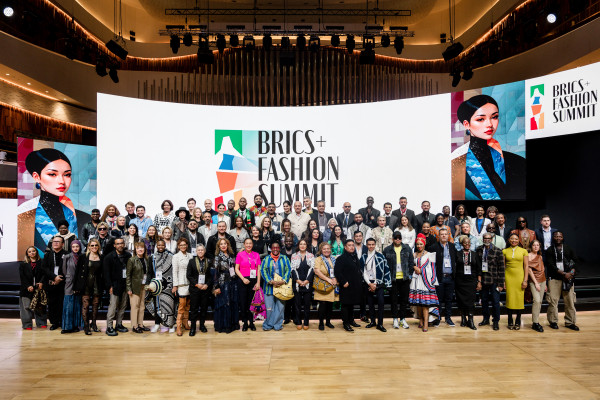
The BRICS+ Fashion Summit (www.FashionSummit.org) concluded in Moscow with a landmark announcement: leaders from fashion associations across more than 50 countries signed a memorandum to form the BRICS International Fashion Federation. The new federation seeks to establish new centers of influence, strengthen international connections, boost industry sustainability, and provide NewGen of fashion talents with opportunities for growth. Notably, the summit was attended by representatives from over 100 countries, solidifying its standing as the largest fashion event for both emerging and established markets.

Brian Ahumuza, CEO and Founder of Uganda Fashion Designers Association, said “The BRICS International Fashion Federation has the potential to significantly foster international collaboration by creating structured opportunities for designers, artisans, and manufacturers to work together on joint ventures, exhibitions, and collections. This can help open up new markets, enabling designers from Uganda, for example, to reach audiences in Russia, Brazil, or India”.

Sunil Sethi, Chairman of the Fashion Design Council of India, said, "The need for such a fashionable alliance of emerging countries is long overdue. Brands, designers, and markets all face similar challenges—from supply chain disruptions to environmental issues—that are easier to solve together. The fashion world is focused on a few hundred global brands, so emerging markets need their own platform to make our voices heard." 

The memorandum to establish the BRICS International Fashion Federation was signed by an array of influential figures, including CEOs of fashion weeks, heads of fashion and textile associations, and academic leaders from countries such as India, South Africa, Russia, Ethiopia, Egypt, Spain, the USA, Indonesia, Malaysia, Ghana, Tanzania, Jordan, Ecuador, Paraguay, and Kenya.

Natalya Sergunina, Deputy Mayor of Moscow, highlighted the initiative's significance: "The creation of this International Federation is a major outcome of the recent BRICS+ Fashion Summit in Moscow. It demonstrates once again the shared goals and substantial potential for growth that we have with our global colleagues."

The declaration stipulates several core objectives: supporting local talent, promoting sustainable fashion, fostering cultural exchange, and creating a unified platform for emerging markets through educational and informational projects. It also focuses on the development of new technologies, the preservation of cultural identities, and the support of traditional arts and crafts.

"We are committed to providing these visionaries with a global platform and local events to ensure their creative work is celebrated globally. Our aim is to promote sustainable and eco-friendly practices, striving to implement transparent methods that will significantly reduce the fashion industry's carbon footprint. Slow fashion, characterised by mindful consumption and production, will be at the heart of the BRICS IFF agenda as we strive to mitigate the environmental impact of fashion," says the official statement.

Distributed by APO Group on behalf of BRICS+ Fashion Summit.

Contact:
Ann Reinhold,
info@globaltalents.digital

Media files
BRICS+ Fashion Summit
Download logo
Read more50+ Nations Join Forces to Announce BRICS International Fashion Federation
8 October 2024

SA, AU Commission to hold consultative meeting on the G20

Location: News

SA, AU Commission to hold consultative meeting on the G20

The Director-General of the Department of International Relations and Cooperation (DIRCO), Zane Dangor, who serves as South Africa’s G20 Sherpa, will host consultations on the G20 with his African Union Commission (AUC) counterpart, Ambassador Albert Muchanga. 

The session will be held on Thursday.

Muchanga is the G20 Sherpa and Commissioner of Economy, Trade, Tourism, Industry and Minerals (ETTIM). 

It is expected that the two leaders will exchange views on the approaches to the G20 and identify areas of cooperation on the draft outcomes of the Leaders’ Summit in Rio de Janeiro, Brazil. 

They will also talk about the envisioned priorities of South Africa’s G20 Presidency, which South Africa will assume on 1 December 2024, and other possible areas of cooperation during South Africa’s G20 Presidency.

At the recent G20 High-Level Opening Session in New York, held on the margins of the 79th session of the UN General Assembly (UNGA79), President Cyril Ramaphosa reiterated the timeliness and necessity of the G20’s “Call to Action on Global Governance Reform”. 

The President highlighted South Africa’s commitment to the revival and strengthening of multilateralism and the reform of global governance institutions to make them more representative.

The Department of International Relations and Cooperation (DIRCO) believes that South Africa’s Presidency of the G20 presents a unique opportunity to place Africa’s developmental priorities at the top of the agenda, as well as advocating for economies of the Global South Africa. 

“It will enable South Africa to build on the efforts and successes of the Indonesian, Indian and Brazilian G20 Presidencies,” DIRCO said in a statement.

The G20 Summit, which was held in India in September 2023, granted the African Union (AU) permanent membership of the G20. 

“Thus, the inclusion of the AU will allow African countries to own and influence decisions on key issues on the agenda of the G20.

“South Africa has been the only African member of the G20 and advocating for the interests of Africa in the G20. The inclusion of the AU in this important forum will no doubt boost Africa’s voice,” DIRCO said in a statement. 

Dangor will be joined by senior officials from various government departments. 

The G20 Leaders’ Summit is set to be held on 18 and 19 November in Brazil. – SAnews.gov.za

Gabisile
Tue, 10/08/2024 - 10:05

403 views
Read moreSA, AU Commission to hold consultative meeting on the G20
8 October 2024

Ramaphosa Signs Communal Property Associations Amendment Bill Into Law

Location: News

The Presidency of the Republic of South Africa
Download logo

President Cyril Ramaphosa has signed into law legislative amendments that seek to provide improved protection of the rights of communities who are part of communal property associations.

President Ramaphosa has assented to the Communal Property Associations Amendment Bill which amends the Communal Property Associations Act of 1996 to provide for clarity on the objective of Communal Property Associations (CPAs).

The new law also provides for general plans for land administered by associations, for the establishment of a Communal Property Associations Office, and for the appointment of a Registrar of Communal Property Associations.

The Communal Property Associations Act applies to communities who acquired property through restitution by court order, in terms of the Restitution of Land Rights Act, 1994 (Act No 22 of 1994), or any law, provided that such communities form associations in accordance with the Act.

The law makes it clear that land will be owned by residents who are members of associations, and not by the associations themselves.

As amended, the Act seeks to overcome challenges experienced by the Department of Rural Development and Land Reform in implementing the Act over the years.

Challenges have included the abuse of power by persons elected to serve in committees of associations; the lack of authority of the state to intervene in affairs relating to communal property; and the department's limited monitoring and oversight of associations due to a lack of capacity.

Distributed by APO Group on behalf of The Presidency of the Republic of South Africa.

Read moreRamaphosa Signs Communal Property Associations Amendment Bill Into Law
8 October 2024

Sciver-Brunt and Wyatt-Hodge Bat England to Victory Over Proteas Women

Location: Sport

SHARJAH: The experienced duo of Nat Sciver-Brunt and Danni Wyatt-Hodge led England to a seven-wicket win over the Proteas Women in...

Read moreSciver-Brunt and Wyatt-Hodge Bat England to Victory Over Proteas Women
8 October 2024

President condemns killing of Eastern Cape community patrollers

Location: News

President condemns killing of Eastern Cape community patrollers

President Cyril Ramaphosa has expressed deep sorrow following the tragic killing of six community patrollers in Tina Falls/Godini near Qumbu in the Eastern Cape on Sunday night. 

The patrollers were reportedly preparing for duty at their base at Lugongozo Senior Secondary School when attackers struck with an assortment of firearms.

In addition to the six fatalities, four other patrollers were injured in the attack.

The President offered his heartfelt condolences to the families of the victims and extended wishes for a speedy recovery to the injured. 

He condemned the violence, describing it as a grave loss to the community and an assault on the efforts of ordinary citizens to maintain safety in their area.

“Our thoughts are with the families of these community members who died in the course of playing their part to keep their area safe. Following so soon after an equally tragic shooting at Lusikisiki, this new incident saddens and outrages us,” President Ramaphosa said on Tuesday.

Last month, in the same province, 18 people lost their lives in a mass shooting in Ngobozana village, in Lusikisiki. In that tragedy, the President assured the grieving families that the South African Police Service (SAPS) had mobilised all available resources to bring the perpetrators to justice. 

READ | Condolences for Lusikisiki mass shooting victims’ families

In his statement on Tuesday, the President vowed that justice would be served, warning that criminals, along with anyone who sheltered or protected them, would face the full might of the law.

He reaffirmed government’s commitment to working with communities to ensure safety in homes, neighbourhoods, and public spaces.

“However, it should also add to our resolve to stop criminals from terrorising communities in the mistaken belief that they’re untouchable. They will be brought to justice alongside anyone who harbours such criminals and does not report information to the authorities.

“Government will continue to work with communities to ensure our homes, neighbourhoods and public spaces are safe and that criminals know they will pay for their deeds.”

The President welcomed the progress made in the investigation into the incident by the police, which has reportedly yielded a positive lead in the case. 

Police update

This as the National Commissioner of the SAPS, General Fannie Masemola, said he was confident that police were following a positive lead in apprehending suspects linked to the killing of the six community patrollers.

Masemola visited the crime scene on Monday. 

In a statement, the police said a team of specialised detectives from the district office of the SAPS in Mthatha, were hot on the heels of the suspects wanted in connection with the incident. 

“The investigation is ongoing, and arrests are imminent in this regard; as the detective leads are pointing at ongoing stock theft related matters between the affected village and other neighbouring villages,” said Masemola.

With regards to last month’s killing of 18 family members, police said investigations “are at an advanced but sensitive stage in relation to the arrest of the suspects linked to the gruesome murder of 18 family members and relatives in Lusikisiki last week”.

A multi-disciplinary team and detectives from specialised operational environments has been on the ground, since last week and significant progress has been made.

“To date, the joint provincial and national teams are working around the clock to apprehend the wanted suspects and to maintain law and order in the affected areas.” -SAnews.gov.za
 

DikelediM
Tue, 10/08/2024 - 09:47

20 views
Read morePresident condemns killing of Eastern Cape community patrollers
8 October 2024

South Africa and the African Union (AU) Commission to Hold Consultative Meeting on the G20

Location: News

Republic of South Africa: Department of International Relations and Cooperation
Download logo

The Director-General of the Department of International Relations and Cooperation (DIRCO), Mr Zane Dangor, who serves as South Africa's G20 Sherpa, will host consultations on the G20 with his African Union Commission (AUC) counterpart, HE Ambassador Albert Muchanga, G20 Sherpa and Commissioner of Economy, Trade, Tourism, Industry and Minerals (ETTIM). The meeting will take place on Thursday, 10 October 2024, in Pretoria.

It is expected that the two sides will exchange views on:

  • Approaches to the G20 and identify areas of mutual cooperation on the draft outcomes of the Leaders' Summit in Rio de Janeiro, Brazil
  • The envisaged priorities of South Africa's G20 Presidency, which South Africa will assume on 1 December 2024
  • Other possible areas of cooperation during South Africa's G20 Presidency.

Director-General Dangor will be joined by senior officials from various government departments.

At the recent G20 High-Level Opening Session in New York, held on the margins of UNGA79, President Cyril Ramaphosa reiterated the timeliness and necessity of the G20's “Call to Action on Global Governance Reform”, highlighting South Africa's commitment to the revival and strengthening of multilateralism, and the reform of global governance institutions to make them more representative.

South Africa will assume the G20 Presidency from 1 December 2024.

South Africa's Presidency of the G20 presents a unique opportunity to place Africa's developmental priorities at the top of the agenda, as well as advocating for economies of the Global South Africa. It will enable South Africa to build on the efforts and successes of the Indonesian, Indian and Brazilian G20 Presidencies.

The G20 Summit held in India in September 2023 granted the AU permanent membership of the G20. Thus, the inclusion of the AU will allow African countries to own and influence decisions on key issues on the agenda of the G20.

South Africa has been the only African member of the G20 and advocating for the interests of Africa in the G20. The inclusion of the AU in this important forum will no doubt boost Africa's voice.

Distributed by APO Group on behalf of Republic of South Africa: Department of International Relations and Cooperation.

Read moreSouth Africa and the African Union (AU) Commission to Hold Consultative Meeting on the G20
8 October 2024

Food Meant for Poor Families Is Rotting in a Gauteng Food Bank

Location: News

The Department of Social Development has been supplying food but not the funds to distribute it

Read moreFood Meant for Poor Families Is Rotting in a Gauteng Food Bank
7 October 2024

Department of Science and Innovation renamed to highlight focus on tech

Location: News

Department of Science and Innovation renamed to highlight focus on tech

The Minister of Science, Technology and Innovation, Professor Blade Nzimande, has welcomed the renaming of the department as proclaimed in Government Gazette No. 51283 on 27 September 2024.

The new name, the Department of Science, Technology and Innovation, follows the splitting of the Ministry of Higher, Science and Innovation into the Ministry of Higher Education and Training and the Ministry of Science, Technology and Innovation under the seventh administration.

“The department’s name has undergone several changes in the past years. In 2021, government renamed the Department of Science and Technology, making it the Department of Science and Innovation. This was to emphasise the need for the department to drive innovation through its work,” the department explained.

However, the most recent name incorporates all the elements of the department’s mandate to lead enhanced productivity, economic growth and societal development through science, technology and innovation (STI).

“Putting ‘technology’ back into the name is an acknowledgement of the role that technological advancements play in driving scientific progress, economic growth and societal development,” said the Minister.

Meanwhile, the department said that it retains its strategic focus on promoting innovation through cutting-edge technologies, fostering a digitally empowered society, and enhancing South Africa’s competitiveness on the global stage.

“Its priorities include climate change and environmental sustainability, human resource development, and addressing poverty and inequality.” – SAnews.gov.za


Gabisile
Mon, 10/07/2024 - 13:08

268 views
Read moreDepartment of Science and Innovation renamed to highlight focus on tech
7 October 2024

SA, Botswana strengthen economic ties

Location: News

SA, Botswana strengthen economic ties

South Africa and Botswana have committed to strengthening economic ties between the two countries and reducing the barriers that currently impede the free flow of goods.

The commitment was made during a meeting between the Deputy Minister of Trade, Industry and Competition Zuko Godlimpi and the Botswana Minister of Trade and Industry Mmusi Kgafela in Pretoria recently.

The two discussed the promotion of trade and investment and committed to addressing key challenges hindering the full potential of economic cooperation between the two countries.

They also reaffirmed their commitment to strengthen economic ties, deepening communication on trade relations, and fostering mutually beneficial investment opportunities that contribute to sustainable industrial development and employment creation for both countries.

Deputy Minister Godlimpi and Minister Kgafela emphasised the importance of simplifying trade processes and reducing the barriers that currently impede the free flow of goods. 

The two also discussed possible cooperation in areas of mutual interest where investment cooperation can be expanded such as manufacturing, agriculture, transport, and other services sectors.

A central part of the discussions focused on addressing existing challenges, including non-tariff barriers, regulatory obstacles, and market access issues that have hindered trade growth. 

Both countries agreed to establish a bilateral working group to identify and resolve these challenges to ensure a fair and open trading environment.

Both delegations expressed optimism about the future of their economic partnership and agreed to hold and sustain regular consultations to monitor progress and explore new areas of cooperation. – SAnews.gov.za

Edwin
Mon, 10/07/2024 - 11:28

88 views
Read moreSA, Botswana strengthen economic ties
6 October 2024

SIU to probe academic fraud at Fort Hare

Location: News

SIU to probe academic fraud at Fort Hare

President Cyril Ramaphosa has signed six new and two amended proclamations authorising the Special Investigating Unit (SIU) to investigate allegations of corruption and maladministration at various institutions. 

The SIU has on Friday been given the green light to probe several provincial government departments and the affairs of the University of Fort Hare. 

According to the SIU, the agency’s investigation period for the university has been extended to start from 1 January 2004 until 4 October 2024. The new scope allows the unit to probe the registration or admission of non-eligible people to enrol for, study for or be awarded degrees, including Bachelor’s, Honour’s, Master’s and PhD degrees.

“Without limiting the scope of non-eligibility grounds, this includes persons who did not have the requisite degrees or matriculation results to enrol for, study for or be awarded the degrees in question,” the SIU explained. 

Investigators will probe the maintenance of the university’s infrastructure from 1 January 2022 to 31 March 2023 and zoom in on the installation of CCTV cameras and associated security features at the staff village in Alice in the Eastern Cape from 18 March 2022 to 2 June 2022. 

They will also look into the refurbishment and maintenance of student residences at the university’s Alice campus in 2009 and the Capacity Building Programme for the Eastern Cape Provincial Legislature.

The SIU will further investigate the appointment of a Head of Department and the affairs of the university in the Nguni Cattle Development Trust.

“Serious maladministration and malpractices, as well as conduct which may seriously harm the interests of the public in the affairs of the university regarding the administration and payment of allowances for food, accommodation, books, stationery, cash and study-related costs to qualifying students.”

In addition, investigations will cover the university’s Faculty of Health Sciences’ Albertina Sisulu Executive Leadership Programme in Health and the Master of Public Health Programme including the registration or admission of non-eligible people to enrol for, study for or be awarded degrees. 

Further, the provincial Departments of Transport will be put under the microscope. 

According to the agency, the SIU’s investigation will continue to probe the registration and licensing of motor vehicles, registration of motor vehicle ownership or licensing details, issuing of driving licences, learner’s licences or professional driving permits, conversion of foreign driving licences and military driving licences to driving licences, and issuing of roadworthy certificates. 

The state agency will investigate conduct at the Limpopo Department of Sports, Arts and Culture and provincial Health Departments in KwaZulu-Natal, Mpumalanga and the Eastern Cape. 

The SIU will also probe the Ekurhuleni Metropolitan Municipality and Tlokwe Local Municipality. 

In the provincial departments and the municipalities, the matters are mostly related to tenders and contracts. 

The SIU will examine if the contracts adhered to National Treasury guidelines and ascertain whether the payments were irregular, fruitless, and wasteful expenditures or financial losses for the department or the State. 

“Beyond investigating maladministration, corruption and fraud, the SIU will identify systemic failures and recommend measures to prevent future losses.”

In line with the SIU Act, the agency said it would refer any evidence of criminal conduct uncovered during its investigation to the National Prosecuting Authority (NPA) for further action. 

Meanwhile, the agency is also authorised under the SIU Act to initiate a civil action in the high court or a special tribunal in its name to address any wrongdoing identified during its investigation resulting from acts of corruption, fraud, or maladministration. – SAnews.gov.za


Gabisile
Sun, 10/06/2024 - 11:29

277 views
Read moreSIU to probe academic fraud at Fort Hare
6 October 2024

778 newly qualified Constables add boots on the ground

Location: News

778 newly qualified Constables add boots on the ground

Deputy Minister of Police, Polly Boshielo, on Friday addressed 778 newly qualified Constables at the Bhisho South African Police Service (SAPS) Academy, as the police held six parallel passing out parades across the country.

The other parades were held at Bishop Lavis Academy in the Western Cape, Mankwe Academy in the North West, Moloto Academy in Mpumalanga and Graaff Reinet and Mthatha academies in the Eastern Cape.  

The Eastern Cape province received a total 274 new Constables to bolster its crime fighting initiatives.

Provincial Commissioner, Lieutenant General Nomthetheleli Mene said: "Out of these newly qualified Constables who are passing out today, the Eastern Cape will receive a total of 274, just in time for the Festive Season Operations. We expect to receive more new Constables by December this year.”

During her address, Boitshelo said government remained committed to ensuring South Africa achieves the United Nations recommendation of one police officer for every 220 people.  

“As of 2023, the police-to-population ratio is 1:423, which means we still need to work harder to recruit more police officers,” she said.

The new Constables successfully completed the six-month introductory Police Development Learning Programme, with qualifications in the field of Law, Policing and Criminology.

They will add more boots on the ground to combat and prevent emerging crime trends.

The members will be deployed to various police stations and specialised units, such as Public Order Police (POP), Visible Police (Vispol), and the Family Violence, Child Protection and Sexual Offences (FCS) unit.

The parallel parades were attended by several stakeholders, families and friends of the newly qualified Constables. – SAnews.gov.za
 

Janine
Sun, 10/06/2024 - 10:13

96 views
Read more778 newly qualified Constables add boots on the ground
5 October 2024

President Ramaphosa calls on all to support BELA Act

Location: News

President Ramaphosa calls on all to support BELA Act

President Cyril Ramaphosa has called on everyone to put their weight behind implementing the Basic Education Laws Amendment (BELA) Act so that all children receive a good quality education regardless of their circumstances.

“The passage of the Basic Education Laws Amendment Act is part of ongoing efforts to build an education system that is more effective and more equitable. 

“Among other things, the Act provides for early learning foundations to be strengthened, promotes greater accountability of parents for their children’s learning and promotes inclusivity in the classroom,” the President said on Saturday. 

President Ramaphosa was speaking at the 24th instalment of the National Teaching Awards as the globe commemorates World Teacher’s Day at the Birchwood Hotel and OR Tambo Conference Centre in Ekurhuleni, Gauteng.

He explained that the spirit and purpose of this new legislation was to ensure there was uniformity and fairness in educational standards between schools and across the country. 

Last month, President Ramaphosa signed the Bill into law but delayed the implementation of two clauses 4 and 5, which deal with school admissions and language, by three months to make room for more discussion and deliberations after it received some opposition. 

“In the interests of inclusivity, we have created space for engagement among some concerned parties on aspects of the legislation. But that process cannot undermine the transformational nature of this law.” 

Meanwhile, the President told the people gathered at the conference centre that in order to produce more learners who excel in science, technology, engineering and mathematics, South Africa needs to invest more in supporting and upskilling its teachers and arm them with necessary resources.

“In some schools, resources are plenty, the schoolyard is safe, there are basic amenities, the pupil-teacher ratio is appropriate, and learning takes place in good conditions. But in others, educators struggle to obtain even the most basic resources for teaching, schools lack safe toilets and running water, and crime and violence from outside the school inevitably finds its way in.” 

However, according to the President, South Africa has made much progress in narrowing the gaps between schools. 

He said government was working to strengthen the foundations of early learning to ensure successful education outcomes in the future. 

The President announced that the education curriculum was being revised, updated and reformed to meet the needs of a rapidly changing world. 

“With the high rate of youth unemployment in our country, educators need to ensure that our schools are producing the skills our economy needs. They need to ensure that every school leaver has the confidence and capabilities that enable them to study further, find employment or be self-employed. 

“We are working to fully implement the three-stream model, which offers academic, vocational and occupational pathways for learners. Educators play an important role in identifying the best course for a learner.”

Shifting his focus to the National Teaching Awards, he noted that the enduring commitment to honouring educators speaks to their unique and treasured place in the country. 

“All of us are who we are because of the teachers we once had. I have the fondest memories of my own teachers at Tshilidzi Primary School in Soweto and Mphaphuli High School in Sibasa, Venda… All these years later, they still hold a special place in my heart,” he told the room full of teachers. 

The President described a good teacher as a role model who encourages a child to achieve their potential. 

He took the time to congratulate those who were awarded today and acknowledged teacher unions and School Governing Bodies (SGBs) who are working with government to build a resilient education system that meets the challenges of the future. 

Basic Education Minister Siviwe Gwarube thanked President Ramaphosa for his unwavering support not just for her but the sector. 

“The future leaders of our country deserves our fervent leadership.” – SAnews.gov.za


Gabisile
Sat, 10/05/2024 - 13:15

165 views
Read morePresident Ramaphosa calls on all to support BELA Act
5 October 2024

Deputy President concludes working visit to the United Kingdom

Location: News

Deputy President concludes working visit to the United Kingdom

Deputy President Paul Mashatile has on Friday concluded his weeklong working visit to the United Kingdom. 

The Deputy President was in the United Kingdom for the second leg of his working visit to improve trade and investment relations between the nations and woo investors following his travels to Ireland.

“The purpose of the visit was to identify new trade and investment opportunities to grow the South African economy in partnership with the United Kingdom,” the Presidency said in a statement. 

Some of the areas of interest he touched on during his engagement include government’s strategic priorities in several sectors including trade, investment, skills development, science, innovation, tourism and the Just Energy Transition.  

“Following the successful conclusion of elections in both countries, the establishment of new governments allowed for reaffirming bilateral relations at all levels for the two strategic partners,” the statement read. 

During the working visit, the Deputy President engaged with representatives from several organisations. These include Bloomberg Media, Brand South Africa, the London Stock Exchange, Investec, Standard Bank, JP Morgan, Citibank, Goldman Sachs and the South African Chamber of Commerce.

The talks also focused on showcasing South Africa as an investment destination of choice, by highlighting investment opportunities in the country.

He stressed the stability of South Africa’s political landscape as a result of the newly established Government of National Unity (GNU) and highlighted its significant demonstration of democracy at work and how it can serve as a model for other democracies around the world.

The Deputy President also had an opportunity to deliver an address on South Africa’s upcoming G20 Presidency, set to commence on 1 December 2024, at the University of London’s School of Oriental and African Studies (SOAS). 

“The Deputy President affirmed that the country will advocate for the needs of developing nations, to place Africa’s development at the forefront of the global agenda.”

The Deputy President met with British government leaders including the Deputy Prime Minister Angela Rayner, the Secretary of State for Energy Security and Net Zero Ed Miliband, and Secretary of State for Foreign Affairs, Commonwealth and Development David Lammy. 

He further paid a courtesy visit to Prince Edward, His Royal Highness the Duke of Edinburgh.

“Our numerous meetings with potential investors have revealed a shift in their attitudes and perceptions towards South Africa, indicating a positive look. Our alliance is based not on personal sentiments but on the aspiration to enhance South Africa and, consequently, the lives of our citizens, and be useful in sustaining the GNU administration for five years,” said the Deputy President.

The Deputy President was accompanied by the International Relations and Cooperation Minister Ronald Lamola, the Minister of Small Business Development Stella Ndabeni-Abrahams, the Minister in the Presidency responsible for Planning, Monitoring and Evaluation Maropene Ramokgopa and Minister of Public Works and Infrastructure Dean Mcpherson. 

He was also with the Deputy Minister of Agriculture Rosemary Capa, the Deputy Minister of Finance Dr David Masondo, Deputy Minister in the Presidency Kenneth Morolong and the Deputy Minister of Trade, Industry and Competition Andrew Whitfield. – SAnews.gov.za


Gabisile
Sat, 10/05/2024 - 13:42

42 views
Read moreDeputy President concludes working visit to the United Kingdom
5 October 2024

Hundreds of Drug Users Stranded After Gauteng Government Closes Rehabs

Location: News

Life Nkanyisa’s drug rehabs, formerly known as Life Esidimeni, had capacity for 750 people

Read moreHundreds of Drug Users Stranded After Gauteng Government Closes Rehabs
5 October 2024

Many Cape Town Stations Are Closed to Wheelchair Users

Location: News

And the “People’s Train” is inaccessible to many people

Read moreMany Cape Town Stations Are Closed to Wheelchair Users
4 October 2024

Mining’s potential remains high: Mantashe 

Location: News

Mining’s potential remains high: Mantashe 

Minister of Mineral and Petroleum Resources, Gwede Mantashe, has told an indaba that there is evidence to suggest that mining is “the bedrock of our economy” and that the country is an attractive investment destination for mining.

According to the Minerals Council of South Africa, the industry contributed some 6.3% to South Africa’s nominal Gross Domestic Product (GDP) last year.

“There is a strong case emerging out of the study on ‘The State of Mining’ that the South African mining industry not only remains the bedrock of our economy, but an attractive investment destination for mining. 

“Coupled with the draft South Africa’s ‘Critical Minerals Strategy’, the study points to the reality that the South African mining industry is diversifying from the gold mining era to an industry with wide-ranging mineral resources, including the world’s largest known deposits of platinum group metals (PGMs), manganese, chrome, coal, gold, copper, vanadium, and other natural resources that are considered critical for the just transition,” the Minister said at the Annual Joburg Indaba in Sandton on Thursday.

He added that with the diversification of the industry, its potential to continue growing remains high.

“Notwithstanding the challenges faced by the gold mining sector, including deep level mines and heightened safety concerns, the 2023 gold production statistics positioned South Africa as the world’s thirteenth and Africa’s fourth largest gold producer. 

“Despite the fluctuating prices of palladium and rhodium, of which South Africa supplies 38% and 81%, respectively, to the global commodities market, the PGMs sector is poised to play a catalytic role in sustaining the South African mining industry, and in the growth of our economy.

“Considering South Africa’s reserves of known manganese and chrome deposits, as well as being the largest producer and exporter of manganese and chrome ore, the South African manganese and chrome sectors are poised to continue playing a significant role globally driven by their use in the automotive and construction industries,” Mantashe said.

Addressing challenges 

He acknowledged that during last year’s Joburg Indaba, industry players raised issues that “we needed to resolve for the sector to thrive, including the need to ensure the necessary policy and regulatory certainty for investment”.

“Although the South African mining industry’s regulatory framework is stable and predictable, the Department of Mineral and Petroleum Resources is drafting amendments to the Mineral and Petroleum Resources Development Act (MPRDA). 

“This is so as to address its shortcomings and ensure that areas that have been challenged legally are strengthened against international best practice. The amendments will further improve the business environment while keeping in sync with our socioeconomic fabric.

“The completion of the migration process to the new efficient and transparent mining licensing system, in June next year, is poised to modernise our licensing system, ensure regulatory certainty, and the sustainability of the South African mining industry. 

“Having completed the first phase of the project, which included the assessment of the current environment to establish the baseline and its readiness, and the requirements with respect to system hosting, software integration, and the enhancement of cybersecurity, the development of the new system is therefore progressing very well,” the Minister explained.

READ | Presidency transfers Department of Mineral Resources and Energy legislation

Furthermore, the Minister told the industry leaders that between April 2023 and March this year, the department has processed and finalised 127 mining rights, 1 527 prospecting rights, and 2 313 mining permits and ancillaries.

There are no backlogs in the Western Cape and the Free State while backlogs in the Northern Cape, Limpopo, North West, Eastern Cape and KwaZulu-Natal have been significantly reduced. Mpumalanga is the only province with a significant backlog.

“As we come to the end of this year’s Indaba, we wish to encourage the South African mining industry to continue sharing insights about the realities of this industry, advance beneficiation at source, and support our exploration initiatives.

“We further encourage junior miners to take up the opportunities presented to them in order to transform the industry and ensure that the people of South Africa derive value from their country’s mineral endowment,” Mantashe concluded. – SAnews.gov.za


NeoB
Fri, 10/04/2024 - 10:09

547 views
Read moreMining’s potential remains high: Mantashe 
4 October 2024

Access to finance remains a challenge for SMMEs

Location: News

Access to finance remains a challenge for SMMEs

While government is fully cognisant that access to finance remains the most significant barrier to entry for new venture creation, small, medium and micro enterprises (SMMEs) and entrepreneurship, steps are being taken to address this.

This is according to the Deputy Minister of Trade, Industry and Competition, Zuko Godlimpi, who was during the Financial Inclusion Week session in Johannesburg.

“The consequences of government inability to increase the pace of transformation after 30 years are evidenced by the lack of economic growth, unsustainably high levels of unemployment, widening inequality and market concentration,” Godlimpi said.

“Though government policies have worked to dismantle many structures of the apartheid state and increase living standards, these efforts have not translated into the creation of job opportunities for many South Africans,” he said.

Godlimpi pointed out that the Department of Trade, Industry and Competition (the dtic) and its agencies, which include the Industrial Development Corporation (IDC) and the National Empowerment Fund (NEF), have managed to attract new business projects in which they will be investing R78 billion.

“We have also agreed to push the dtic and its entities to go beyond the Treasury standards to pay SMMEs. This ensures that we, as an institution of nine branches and 18 entities, do not contribute to the barriers that constrain our SMMEs.”

Glodlimpi explained that on the policy front, government is aware that SMMEs find it difficult to access different forms of finance, including debt.

He said when SMMEs approach debt markets, they are often faced with onerous credit checks and, at times, fall victim to negative reinforcement tools such as credit bureaus due to a lack of access to patient capital.

“When a small business owner misses debt repayment due to delayed payments from clients and, in many instances, the government, they are blacklisted. According to [the] Small Enterprise Development Agency's SMME Quarterly and Stats SA, SMMEs contribute about 59% of total employment in the country,” he said.

Godlimpi said this picture demonstrates the unsustainable structure of credit market in South Africa, which is embedded in a consumption logic rather than a developmental and investment orientation.

“As part of the Minister Parks Tau's new wall-to-wall approach, we have begun to look at sharing important economic data within the dtic to enhance our understanding of the economy and achieve complementarity in deploying the various tools to achieve our industrial policy objectives,” said Godlimpi. – SAnews.gov.za

Edwin
Fri, 10/04/2024 - 10:36

405 views
Read moreAccess to finance remains a challenge for SMMEs
  • Previous
  • Page 1
  • Interim pages omitted …
  • Page 86
  • Page 87
  • Page 88
  • Page 89
  • Page 90
  • Interim pages omitted …
  • Page 212
  • Next

Copyright © 2026 · MyZA · All Rights Reserved · Powered by Stratlec Online