Khaya Majola Week – Day 3 Wrap: Lions Roar Back With Bonus-Point Win to Secure Semi-final Spot
CAPE TOWN: The defending champions of the Khaya Majola Cricket Week (for u19 players), Lions, had to wait until the third...

MyZA
News, Directory, Events and Other Stuff
CAPE TOWN: The defending champions of the Khaya Majola Cricket Week (for u19 players), Lions, had to wait until the third...
The Office of the Chief Justice has published its reserved judgments list, but only for the first two terms of 2024
Concern over Limpopo Liquor Traders’ rejection of new trading hours
The Central Drug Authority (CDA) has noted with concern the Limpopo Liquor Traders Association's rejection of the proposed trading hour regulations - aimed at curbing the harmful effects of alcohol abuse in the province.
The amendment to the Limpopo Liquor Act stipulates that no establishment will be allowed to sell liquor after midnight, as from 1 August 2024.
The act also now allows for the sale of liquor on Sundays.
Limpopo Economic Development, Environment and Tourism MEC, Rodgers Monama, said at the time that alcohol was a contributing factor in gender-based violence, child abuse, community instability, trauma incidents, rape and other crimes in the province.
Operating hours for establishments that sell liquor used to be until 2 am. Operating hours will now be reduced to midnight.
In a statement on Wednesday, the CDA emphasised that, while the liquor industry undeniably contributes to economic activity, it is equally imperative to address the devastating social and health consequences linked to alcohol misuse.
“The proposed regulation of trading hours is not a punitive measure against liquor traders but a well-considered step to mitigate the pervasive negative impacts of alcohol abuse. Research has consistently demonstrated that restricting alcohol availability through regulated trading hours is an effective strategy to reduce alcohol-related harm, including binge drinking, road fatalities, domestic violence, and underage drinking.
“The assertion by liquor traders that trading hours regulations will harm their businesses overlooks the broader societal cost of unregulated alcohol availability. South Africa ranks among the top global consumers of alcohol per capita, with alarming consequences for public health, safety, and economic productivity,” the Central Drug Authority said.
In Limpopo, the rates of alcohol-related gender-based violence, road accidents, and underage drinking, are a stark reminder of the urgent need for tighter controls, the CDA added.
“While traders argue that the regulation unfairly penalises legal outlets, it is essential to recognise that uncontrolled operating hours contribute significantly to the normalisation of excessive alcohol consumption.
“The CDA reiterates that compliance with well-enforced laws, combined with community education, is key to promoting responsible alcohol trade and consumption,” the CDA said.
The CDA acknowledged the need for a balanced approach and urged stakeholders to consider the following:
The advisory authority noted that alcohol abuse in South Africa, including Limpopo, is not solely an issue for liquor traders, but a societal problem that requires collective action.
“Regulating trading hours is one of many tools to reduce alcohol availability and its associated harm, particularly for vulnerable groups such as women, children, and young adults,” the CDA said.
It further called on the Limpopo Liquor Traders Association and all stakeholders to engage constructively in addressing the province’s alcohol-related challenges.
While the liquor industry is a valued contributor to the economy, the CDA added that it must operate responsibly to ensure the well-being of the communities it serves. – SAnews.gov.za
DikelediM
Wed, 12/18/2024 - 12:01
Tenders for the refurbishment of the Brandfort Water Treatment Works form part of the investigation
DPWI releases 24 State-owned properties for requests for proposals
The Department of Public Works and Infrastructure (DPWI) has released 24 state-owned properties located across South Africa for requests for proposals from public and private entities.
The requests for proposals follow a historic memorandum of understanding (MoU) which was signed by the Minister of Public Works and Infrastructure, Dean Macpherson, KwaZulu-Natal MEC Martin Meyer and eThekwini Mayor Cyril Xaba to use public assets for the public good.
The release of the 24 properties for requests for proposal mark a shift for the department where the state previously retained high-value properties despite the properties serving no purpose.
A month after the signing of the MoU to use public assets for public good, the DPWI this week released underutilised state-owned properties located nationwide for requests for proposals.
In a statement on Wednesday, the department said that this marks phase one of the programme.
Members of the public and private entities now have until the 13th of March 2025 to make proposals on how these properties can be utilised to ensure that they contribute to the public good, help ignite job creation and add value to their communities.
After the 13 March, the requests for proposals will be evaluated to consider which are feasible before moving ahead with the process which may include long-term leases, public-private partnerships or selling the assets.
“This marks a major milestone for the Department in the 7th Administration where we will make good on our promise to invite private and public role-players on this scale to bring us proposals on how these properties can be utilised towards truly benefitting the people of South Africa, either through repurposing or redevelopment,” Minister Macpherson said.
He added that where feasible, the State may partner with the private sector to ensure that properties contribute to economic growth and job creation.
“We believe these properties will attract significant investment and jobs through their redevelopment.
“We are hoping to use these properties as an example of what can be achieved with underutilised state-owned properties country-wide, and we will soon be signing similar memorandums of understanding with other metropolitan municipalities in Gauteng and the Western Cape to expand the process.
“This process signals a shift from the department that previously hung onto properties despite serving no purpose. With this programme, the era of state-owned buildings standing empty, attracting crime to communities and chasing away investment is ending,” he explained.
In this round, 24 properties were released for request for proposal located nationwide, with additional properties to be considered for release for request for proposal pending the success of this round.
The eThekwini Metropolitan Municipality and the provincial DPWI are following similar processes with the underutilised properties they own.
“I would like to applaud the department public officials under the leadership of the head of the Property Management Trading Entity, Mr Siza Sibande, whose team have worked tirelessly over the past few weeks to help make our vision of using public assets for the public good.
“By working together with the Municipality and the Provincial Government, we are charting a new course for how state-owned properties can be utilised to serve the people of South Africa,” the Minister said. – SAnews.gov.za
Edwin
Wed, 12/18/2024 - 13:08
JOHANNESBURG: Red-ball head coach Shukri Conrad has today announced a 16-player squad for the two-match Test series against Pakistan, starting at...
Deadline for spaza shop registrations extended to February 2025
Government has extended the registration deadline for spaza shops and other food handling outlets to 28 February 2025, as announced by Cooperative Governance and Traditional Affairs Minister, Velenkosini Hlabisa, on Wednesday.
This follows the end of the initial 21-day registration period, which concluded on Tuesday, 17 December 2024.
A total of 42 915 applications were received, and 19 385 of them have been approved.
President Cyril Ramaphosa announced the registration last month as one of the measures to address growing concerns regarding spaza shops and tuck shops, which are linked to an increase in foodborne illnesses and deaths.
The President’s address highlighted a foodborne illness crisis, with over 890 cases and about close to 30 deaths since September.
The Minister emphasised the importance of compliance with health regulations, noting that 1 041 non-compliant shops were closed.
“Before the revised deadline of 28 February 2025, government in all its spheres will continue to implement the action plan to address the crisis of foodborne illnesses and the illicit trade of goods across the country,” Hlabisa told the media at a briefing in Pretoria.
READ | SAPS: We expect everyone to cooperate in compliance inspections
Meanwhile, he said those who have registered their businesses and received their acknowledgement of registration still need to undertake a further process to obtain their trading licences.
“For this process, environmental health practitioners and other regulatory authorities will still inspect owners of registered food-related trading businesses to ensure that their businesses are eligible to trade.”
WATCH | Inter-ministerial Committee on foodborne illnesses media briefing
He urged municipalities to maintain capacity for assisting those registering as operations decline during the holiday season.
“We also urge business owners to continue with their registration process within their respective municipalities and not wait until the next registration deadline.”
The Minister explained that the State was dealing with two distinct processes where business owners need to register the spaza shops and comply with health regulations.
“This process does not depend on whether you are registered or not. If you don’t comply with the health regulations, the business is closed down immediately. Hence, 1 041 spaza shops have already been closed,” he added.
In addition, the Minister said 15 health experts were appointed to a Ministerial Advisory Committee to develop long-term prevention measures.
“We want to emphasise that registration alone does not mean a business is eligible to trade. To obtain a licence or a permit to trade, business owners must comply with all health regulations and municipal by-laws related to conducting a business.”
Pesticides
Meanwhile, the Minister said enforcement efforts included seizing 470 litres of pesticides and intensifying inspections at ports of entry.
According to Hlabisa, inspections of imported food items, medicines, drugs, and pesticides have also been intensified at ports of entry.
He said heightened surveillance at all 71 ports of entry, especially marine ports in KwaZulu-Natal including Durban, is aimed at preventing the entry of unsafe goods.
Warning
The Department of Home Affairs’ (DHA) Albert Matsaung addressed the legal implications of assisting illegal foreigners to register spaza shops, referencing Section 42 of the Immigration Act.
He reiterated the importance of adhering to immigration laws and the role of the DHA and stressed the serious consequences for South Africans who assist illegal foreigners.
“No one should assist. No one should provide any kind of support - either be it in the form of providing immovable property, which in this case is the garages or houses where these spaza shops are being run. It means that it becomes a serious offence, criminally and in terms of the Immigration Act.”
Matsaung stated that anyone who assists a foreigner who does not deserve to participate in this process will be prosecuted. – SAnews.gov.za
Gabisile
Wed, 12/18/2024 - 11:17
Two more drug traffickers arrested at OR Tambo International Airport
The South African Police Service (SAPS) has arrested two more suspected drug traffickers at the OR Tambo International Airport in Gauteng.
The arrest comes after the arrest of a suspected drug mule from Paraguay earlier this month.
In a statement issued on Monday, the SAPS said the two Brazilian drug traffickers, aged 30 and 35, were arrested shortly after landing at OR Tambo International Airport from São Paulo, Brazil, on Sunday.
“One of these traffickers was found in possession of over 4kg of cocaine in his luggage, while a medical x-ray confirmed the presence of drug 'bullets' swallowed by the other drug mule. Fifteen 'bullets' containing cocaine have been released,” the police said.
The suspects are expected to appear before the Kempton Park Magistrates' Court this week, on charges related to drug trafficking. – SAnews.gov.za
Edwin
Wed, 12/18/2024 - 08:37
Residents of Valdezia want a new clinic, open for longer hours
Life-saving drugs still not available to many cystic fibrosis patients
Museum honours those who were forced out under apartheid
RTMC calls on motorists to exercise extreme caution on the roads
The Road Traffic Management Corporation (RTMC) has called on motorists to exercise extreme caution on the roads.
The call follows a major collision that claimed 15 lives in the Eastern Cape on Monday morning.
In a statement issued, the RTMC said the collision occurred when a minibus crashed head-on with an SUV (Sports Utility Vehicle) at approximately 5:30am on Monday on the N9 between Graaff-Reinett and Middelburg.
A Mazda CX5 SUV with six occupants and a fully loaded minibus travelling from the Western Cape collided head-on early on Monday morning.
“It has been established that the SUV was travelling from Middelburg to Graaff-Reinett and the Minibus was travelling the opposite direction towards Middelburg, when they collided head on,” the RTMC said.
READ | Eastern Cape crash claims 13 lives
The RTMC has sent investigators to the Eastern Cape province to investigate the cause of the accident.
It said law enforcement officers will continue to maintain a strong presence on the roads throughout the festive period and warned that those who disregard the rules of the road will be held to account.
“Those driving long distances should take regular stops to avoid fatigue. Fatigue is one of the leading contributors to road accidents, with research showing that drowsy and distracted drivers are significantly more likely to be involved in collisions.
“Drivers should rest, especially before long-distance driving. The average adult should aim for eight hours of sleep,” the RTMC said.
It added that fatigue is worsened by distractions, including texting, talking on the phone, or using in-car entertainment systems while driving.
“The use of alcohol is also a major factor behind road crashes around this time of the year.”
Since the start of Festive Season Road Safety campaign on 1 December, more than 700 drivers have been arrested for drunken driving.
Close to 100 000 traffic fines have been issued for various infringements of traffic violations, while 2 1 54 vehicles were discontinued because of defects and 2397 public transport vehicles were impounded for violations of operator permits. - SAnews.gov.za
nosihle
Tue, 12/17/2024 - 09:32
No proof that promised “minstrels museum” ever existed

By NJ Ayuk, Executive Chairman, African Energy Chamber (https://EnergyChamber.org/).
I've said for years that African energy is a vital investment. Backers clearly agree — to the tune of USD47 billion. That's how much capital expenditure (capex) 2024 saw in African oil and gas, showing a 23% increase from last year. Better yet, we expect growth to continue through the end of the decade.
This capex activity is a welcome sign that energy majors are deepening their long-term interests in Africa. And as our 2025 State of African Energy report details, their momentum has created unique opportunities for local communities, indigenous companies, and national oil companies (NOCs) from other continents.
Emerging Players
While the majority of 2024's capex was driven by established producers like Angola and Nigeria, emerging players are making noise in the industry. Take Senegal, which saw its first offshore oil production this year. Ghana, following a five-year slump, increased oil output during 2024 by 10% and gas output by 7%.
Exploration hotspot Namibia also deserves a special mention: The Southern African nation aims todrill over 12 offshore wells next year, begin production by 2029, and become one of the top-five African producers by the 2030s. Good work for a nation that only discovered its enormous reserves in 2022! I frequently cite Namibia because it proves that a complete newcomer can attract serious foreign investment with smart, swift policy changes — and poise itself to shake up the energy industry.
Increased Exploration
An exciting question remains: Just where will we find the next Namibia Thanks to a resurgence in exploration, another hotspot may be around the corner. There were 1,060 wells drilled in Africa this year — more than any time since 2015. Africa has also become a global leader in drilling high-impact wells, which have the potential to significantly increase overall reserves. That strategy is already paying off: Notable 2024 finds include Namibia's Mopane complex, which holds approximately 10 billion barrel of oil equivalent (boe) – “one of the world's largest offshore finds,” according to Offshore Magazine. Even while global exploration as a whole remains stagnant, Africa is stepping up to meet growing energy demands.
When exploration is successful, new fields follow. We also expect to see African greenfield spending exceed brownfield by 10% by 2030. These capex trends all demonstrate that investors won't limit themselves to mature fields: Eyes are on fresh locations, fresh facilities, and fresh opportunities in Africa.
A Gas Future
As we highlight in our 2025 report, one of those opportunities is natural gas. Africa holds nearly 18 trillion cubic meters of reserves, which will prove essential for a just energy transition as natural gas can provide significant near-term emissions reductions while fostering energy security and economic development. Global demand for this clean-burning resource is also growing, particularly in Asia. That's why I'm glad to see a greater emphasis on developing natural gas resources. In 2023, capex spending on natural gas was about 30%, but this is projected to grow 10% by 2030. It's another sign that more investors are thinking in the long term about Africa, and interested in being part of a just energy transition.
Take Senegal, where the Greater Tortue Ahmeyim gas field will begin production next year. A Final Investment Decision is also expected in 2024 on Yakaar-Teranga. The West African nation is another fantastic example of how operator-friendly policies, political stability, and vast reserves can attract significant foreign investment: I'm excited to see Senegal transform itself from an oil importer to a gas exporter.
M&A Opportunity
The past year saw a huge increase in divestment by O&G majors: Large IOCs are aggressively streamlining their African portfolios. As a rule, they're selling mature, high-emission, and high-cost assets. While large divestments often signal trouble, they're actually creating some promising changes for African O&G.
For one, Asian and Middle Eastern nations are purchasing more assets: Dubai, Qatar, the U.A.E., Malaysia, and Chinese NOCs acquired stakes in Egypt, Mozambique, Namibia, Kenya, and South Africa this year. As global demand for energy grows, particularly in Asia, I'm glad to see these nations looking to Africa for long-term solutions.
Foreign divestment also matters because it's creating opportunities for indigenous companies. Thanks to a recent Shell acquisition, Aradel Holdings became Nigeria's most valuable oil company (https://apo-opa.co/3ZVzGwh). In Angola, IOC Afentra has acquired Azule's (a joint BP and Eni venture) assets and plans to dramatically increase the nation's overall output.
“Having the big players sell to independents is the future,” oil trader Trafigura said in a statement.
It's a promising pattern: Majors sell off mature assets and use the capital to invest in fresh fields and facilities. Independent foreign or indigenous companies use their acquired assets to expand but are spared the expense of building facilities from the ground up. These smaller companies are also strongly motivated to further develop and reduce emissions from these existing fields — an environmental and financial win for everyone.
The Angolan government clearly agrees, encouraging regional players with tax incentives and reduced government profit shares. It will be truly fascinating to watch this industry shakeup in Nigeria and Angola, which have been dominated for decades by majors.
It's no secret that Africa needs O&G majors to stay: They drill over half of our exploration wells and hold a quarter of the continent's equity production. However, I'm thrilled to see indigenous companies growing and harnessing these assets to their fullest extent.
Conclusion
Just what prompted this surge in African capex? A great deal of credit goes to common sense policy changes in nations such as Namibia, Senegal, Mauritania, Egypt, and Angola. We can also point out that the COVID-19 pandemic artificially slowed capex for several years, so an uptick was inevitable once the world opened up again.
However, I believe a lot of it comes down to economic reality: Global energy needs are rising. Africa has vast, untapped resources. I urge all parties to continue building a thriving energy industry that takes Africa – and the world – into the next century.
For further insights, check out our 2025 State of African Energy report here (https://apo-opa.co/3ZHldTr).
Distributed by APO Group on behalf of African Energy Chamber.
Western Cape residents reflect on Reconciliation Day
As the country commemorates National Reconciliation Day, residents of Western Cape have reflected on how far the country has come since the advent of democracy.
“We come from a painful past where we were oppressed and treated like outcasts, but now we have democracy. We must forgive all those who were our oppressors,” Ntsika Madela from Vredendal told SAnews.
Madela’s comments come as President Cyril Ramaphosa delivered the keynote address at the 2024 National Day of Reconciliation commemoration held at the Vredendal North Sports Ground in the Western Cape’s Matzikama Local Municipality on Monday.
The theme for the 2024 National Day of Reconciliation is: "Healing Historical Wounds and Forging New Futures".
Observed annually on 16 December, the National Day of Reconciliation was established in 1995 after the end of apartheid. The public holiday aims to promote national unity and bridge historical divides.
To Western Cape communities, the celebration of the National Day of Reconciliation in their province was a special occasion.
Susan Marthys from Bonthevel, told SAnews that many had suffered at the hands of apartheid.
“During the apartheid government, we suffered a lot at the hands of the oppressors, some of our people could not live to enjoy the democracy we are enjoying today,” Marthys said.
Marthys said it was time for South Africans to preach peace and forget about the painful past.
In his address to the nation President Ramaphosa said that while the past may be behind us, the country is left with its wounds.
“We cannot heal these historical wounds by forgetting our past. There are things that should be done to heal the wounds of the past. But we must also learn from our past.
We have come a long way as a country of diverse cultures, languages, beliefs and traditions,” said the President.
He spoke of Vredendal as a beautiful and diverse community that is an integral part of our rainbow nation.
“Here, a person can be as proud of their coloured heritage or their Afrikaans language as they are of their South African identity.
"They can be white or African or Indian, speak English or Xhosa or any other language, while being a full and equal member of the South African nation.
“The apartheid regime tried to divide us and turn us against one another, but they did not succeed. Through democracy we have worked to restore the dignity of all who suffered under apartheid, including coloured people,” said the President. -SAnews.gov.za
Edwin
Mon, 12/16/2024 - 13:11
Mchunu condemns KZN killings
Police Minister Senzo Mchunu has condemned the killings of four people including two police officers in Hammersdale, KwaZulu-Natal.
“This brutal act of violence is a stark reminder of the dangers faced by our police officers in their line of duty and the vulnerability of our communities. Our thoughts and prayers are with the families of the two officers and the innocent women whose lives were viciously cut short.
“Their loss is a tragedy not only to their loved ones but also to the broader community and the police fraternity,” the Minister said in a statement on Sunday.
According to preliminary reports, at approximately 19:30 on Saturday, three police officers from the Hammarsdale Police Station responded to the murder of a woman in the Cliffdale area.
While they were attending to the scene, the alleged perpetrator opened fire, fatally wounding two officers and killing another elderly woman before fleeing the scene. The third officer was unharmed.
The police acted swiftly in their response, engaging in a shootout with the suspect, who was later found deceased in dense bushes near the crime scene.
A firearm belonging to one of the fallen officers was recovered in the suspect's possession. The Minister commends the police for their decisive and immediate actions.
The Minister reiterated his call for communities to work closely with law enforcement agencies to ensure the safety and security of all South Africans.
“We cannot and will not tolerate attacks on those who dedicate their lives to protecting our communities. This senseless violence must stop. As we mourn the loss of our fallen heroes, we remain resolute in our commitment to making our country safer,” Mchunu said. -SAnews.gov.za
Neo
Mon, 12/16/2024 - 11:15
Final hours to apply for NSFAS funding for 2025 academic year
Time is running out for prospective students to apply for the National Student Financial Aid Scheme (NSFAS) for the 2025 academic year.
Applications, which opened on 20 September 2024, will officially close at midnight on 15 December 2024.
Higher Education and Training Minister, Dr. Nobuhle Nkabane, has issued a final call to all eligible students, urging them to submit their applications before the deadline to avoid disappointment.
Earlier, the Minister has said that the department making sure that the NSFAS is ready for the 2025 academic year.
“Our priority is to increase access to all parts of the country, with... NSFAS presence on all campuses at the beginning of the academic year. We have started the process of regionalisation to ensure that we expand access to everyone, and no one must be left behind,” Nkabane said.
In partnership with NSFAS, Nkabane led an outreach programme at Nkangala Technical Vocational Education and Training (TVET) College, Middleburg Campus, where she encouraged students to apply for funding.
Since its inception, NSFAS has supported more than five million beneficiaries, producing hundreds of thousands of skilled professionals, especially from within the poor and working-class sections of society.
This year alone, the scheme is supporting about 1.2 million students, with the number anticipated to grow in 2025.
How to apply for funding
Prospective applicants can apply by visiting https://www.nsfas.org.za/
• Create a myNSFAS profile.
• Log in to the profile.
• Complete the application steps.
• Submit the application online.
Who qualifies for NSFAS funding?
Applicants must meet the following criteria to be eligible:
• Be a South African citizen or permanent resident.
• Have a combined gross household income of no more than R350,000 per year.
• Applicants with disabilities qualify if their combined household income does not exceed R600,000 annually.
• South African Social Security Agency (SASSA) grant recipients automatically qualify and are not required to submit proof of income.
. – SAnews.gov.za
DikelediM
Sun, 12/15/2024 - 13:23
JOHANNESBURG: Cricket fans across South Africa are in for a treat as the ICC Champions Trophy begins its journey through the...
Eskom begins investigation into Matla Power Station explosion
Preliminary investigations following an explosion at Eskom’s Matla Power Station in Mpumalanga indicate that the rupture of a high-pressure steam steel pipe above the Unit 6 transformer caused Thursday’s incident.
“Eskom can confirm that preliminary investigations indicate the rupture of a high-pressure steam steel pipe above the Unit 6 transformer caused yesterday evening’s incident. The incident resulted in a loud bang and a loss of power supply to the Unit 6 area,” said the power utility in a statement on Friday.
It further added that significant amounts of dust, combined with the loss of power, prevented a fuller assessment until the first light on Friday.
“Technical teams remain on-site, assessing the extent of the damage, the scope of work, and the time required for repairs and restoration. At this stage, there is no evidence of sabotage,” said the utility.
READ | Transformer explosion leaves nine injured at power station
This as the Minister of Electricity and Energy, Dr Kgosientsho Ramokgopa, joined by members of Eskom’s Executive Committee and Board, visited the power station on Friday afternoon to offer support and assistance to the Matla leadership team and employees, including visiting the injured employees.
As a result of the steam leak from the damaged pipe, nine employees sustained burn injuries.
“One is in critical condition, and two are in semi-critical condition, but all remain stable. Six employees received less serious injuries, with two already discharged from the hospital.”
Additionally, eight members of the work team were uninjured and sent home. They, along with the next of kin of the injured and the Matla Power Station staff, received counselling and support at the start of shifts.
Meanwhile, the power utility said that the load shedding suspension outlook remains unchanged.
In August, Eskom shared its Summer Outlook, for the period from 01 September 2024 to 31 March 2025 that predicted a likely scenario of a loadshedding-free summer due to structural improvements in the coal-fired fleet. On Friday, Eskom reached 261 consecutive days of load shedding suspension.
As a precautionary measure, Unit 5 was taken offline following the incident to ensure the safety of all employees on-site.
This unit was due to be shut down for planned maintenance on Monday, 16 December 2024. This planned maintenance was brought forward to Saturday, 14 December 2024.
“Our emergency plans were activated accordingly and … the next steps in this plan involve ensuring the injured and their families continue to receive the support and care they need, as well as all our employees at Matla,” said Eskom Group Executive for Generation, Bheki Nxumalo.
“We now begin a disciplined investigation, and the painstaking work required to develop a thorough, disciplined understanding of the incident that will lead us to be able to plan when the unit can be returned to service,” Nxumalo explained.
“Matla is one of the six power stations we prioritised in the Generation Recovery Plan to end load shedding and over the past 18 months the employees have delivered an exceptional performance, achieving an Energy Availability Factor (EAF) of 67.12%,” said Eskom Group Chief Executive, Dan Marokane.
“Based on the structural improvements in the generation performance of the coal fired fleet, week by week Eskom is increasingly able to absorb shocks to the system, even though the generation capacity remains tight. The base case scenario for the summer outlook indicates that there will be no loadshedding if unplanned outages stay at 13 000MW or below and our year-to-date average unplanned outages are at 11 875MW,” concluded Marokane. -SAnews.gov.za
Neo
Sun, 12/15/2024 - 10:23
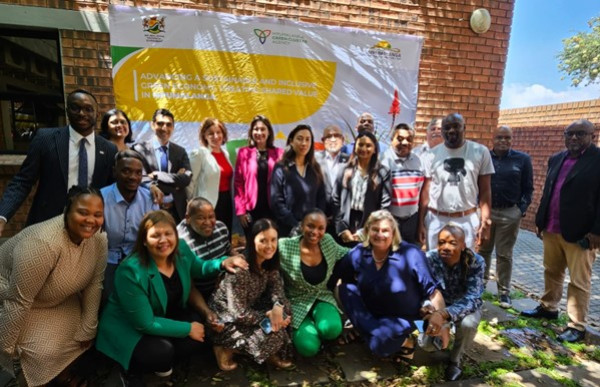
A series of impactful events held between November 12-15 marked several strides forward in advancing gender equality in South Africa's Just Energy Transition.
Organized by the Mpumalanga Green Cluster Agency, the Project Implementation Unit, with support from the Climate Investment Funds (https://apo-opa.co/4iDmV0s) and the African Development Bank, the week-long programme's centre-piece was a one-day workshop on gender.
It also combined with several other events, most notably as the official launch of South Africa's Just Energy Transition Jobs First Project, the visit of Patricia Pena, Assistant Deputy Minister at Global Affairs Canada and the training of the Project Implementation Unit and provincial governmental officials on the Bank's procurement, financial management, and disbursement rules and regulations.
“We are proud to support the Gender Equality in Just Energy Transition Workshop and South Africa's Jobs First Project, advancing Mpumalanga's green economy goals, job creation, and a just, low-carbon transition,” stated Nkosinathi Nkonyane, Mpumalanga Green Cluster Agency CEO.
Assistant Deputy Minister Pena of Global Affairs Canada remarked: “We congratulate the Government of South Africa for the leadership, ambition, and partnership with us. Through the Climate Investment Funds, we are supporting advocacy and outreach programmes to build leadership from within.”
These events gathered stakeholders from national and provincial government officials, Just Energy Transition Project Management Unit, civil society organizations including women's groups and youth organizations, bilateral and multilateral development agencies, academia, and the private sector to drive inclusive and sustainable change.
Through direct engagement with local voices, the Project is fostering a collaborative environment where grassroots insights are prioritized, building a foundation for a more inclusive energy transition that centres around community needs.
A highlight of the week was the launch of South Africa's Just Energy Transition Jobs First Project. Supported by the African Development Bank, Climate Investment Funds, Irish Aid, Agence Française de Développement, and ABSA Bank, this project focuses on strengthening institutions, and empowering local communities in Mpumalanga by creating sustainable employment opportunities through gender equality, social inclusion, and skills development.
Dr Babatunde Omilola, Human Development division manager at the African Development Bank underscored: "This project is a key milestone in advancing a just energy transition for South Africa, prioritizing sustainable energy, job creation, gender equity, and social inclusion—ensuring the shift to a green economy benefits all, especially in Mpumalanga."
South Africa's Just Energy Transition Jobs First project activities were discussed with one of the strategic partners UVU Africa on a female farmers project in Bushbackridge.
Beneficiaries will receive training on sustainable and smart agriculture and receive a digital kit (tablets and data) to support their work. Suhana Bisnath Head Strategy and Product Design at UVU Africa stated: "We look forward to further collaborating with partners across sectors to ensure the ‘just' in Just Energy Transition is realised in every corner of Mpumalanga and beyond. Together, we can create a model of progress that prioritises inclusivity and innovation, building a future where no one is left behind".
Other initiatives discussed include the creation of a Gender Desk within the Mpumalanga Green Cluster Agency to facilitate dialogue among women actors, mapping of women entrepreneurs, and increased collaboration among women networks in the province. AFD's mandate in South Africa supports the Just Energy Transition by addressing poverty, inequality, and the social dimensions of energy transition through a policy-based loan focused on governance, energy access, and economic diversification. Gender equality is a key priority, with AFD collaborating with the Mpumalanga Green Cluster Agency to integrate gender considerations into the SAJJOF project.
Together, the gender workshop and the South Africa's Just Energy Transition Jobs First project reflect a commitment by the Bank and its partners to integrate gender and social inclusion into climate initiatives. These efforts align with the wider goal to foster the “just” part of the Just Energy Transition leaving no one behind especially women, children and vulnerable households.
“We are very excited to be supporting the SAJJOF project and look forward to welcoming the rising stars of South Africa's energy transition who are showing the world how women can lead the way” said Nina Kolybashkina, Gender and Social Inclusion Lead at Climate Investment Funds.
For more information, explore the Women-led Coal Transitions report here (https://apo-opa.co/4gca7gc).
Distributed by APO Group on behalf of African Development Bank Group (AfDB).
Media contact:
Sonia Borrini
Climate Change and Green Growth Department
s.borrini@afdb.org
For more information on South Africa's Just Energy Transition Jobs First Project please contact:
Elaheebocus, Nawsheen : n.elaheebocus@afdb.org.

Twenty promising youth entrepreneurs from African technology ventures and enterprise support organizations have embarked on a two-week study tour of the Republic of Korea, seeking investment and insights from the country's innovative tech ecosystem. The African Development Bank Group's (www.AfDB.org) Innovation and Entrepreneurship Lab selected these young entrepreneurs from 133 ventures that participated in last month's Africa Tech Startup Forum.
Held under the auspices of the Lab's Leveraging the Entrepreneurial and Innovation Success of Korea to Strengthen African Enterprise Support project, the Forum selected entrepreneurs who pitched the best business models during the weeklong virtual market access and acceleration program preparing, training, and connecting technology ventures with opportunities.
Representing eight African nations -- Egypt, Ghana, Kenya, Morocco, Nigeria, Rwanda, South Africa, and Uganda – the delegates span diverse technological sectors, including agritech and health. Their ambitious itinerary includes visits to prestigious institutions such as Global Startup Centre, LG Science Park, the Korea Software Technology Association, unicorn companies with valuations exceeding $1 billion and the Global Digital Innovation Network, a foundation supporting the expansion of South Korea's tech startups.
Uche Ezadinachi, the founder of Kenya-based health technology venture Zuri Health, expressed enthusiasm about the opportunity. “I am excited to go to Korea because the country has made serious technological developments. The [country] is a technology-driven society, and this tour is an opportunity for me to see how we can bring such technology to Africa,” she said.
“We will share experiences with our Korean counterparts; they will learn from us as much as we learn from them,” she added.
The delegation, which is more than one-third women and entirely composed of entrepreneurs aged 18 to 35, will participate in several high-profile events, including, K Startup Grand Challenge, an accelerator program supported by the South Korean government, Africa Innovation Networking Gala, and COMEUP Korea, an event connecting Korean startups with global investors, corporations, and media.
David Chen, co-founder of Rwandan health data venture Kapsule, highlighted the tour's potential for relationship-building. “This is an opportunity for us to have face-to-face interactions and build relationships. This trip will help us link with other health technology companies operating in Asia,” he said.
Financially supported by the Korea-Africa Economic Cooperation Trust Fund, the Africa Tech Startup Forum is part of the African Development Bank's broader Jobs for Youth in Africa Strategy.
Martha Phiri, the Bank's Director of Human Capital, Youth and Skills Development, underscored the program's significance.
“This is a pivotal initiative that plays a crucial role in enhancing the skills of young entrepreneurs. These skills will empower young entrepreneurs to expand their ventures, which leads to significant employment creation,” she stated.
Ndeye Absa Gningue, Innovation Platform Officer, managing the Bank's Innovation and Entrepreneurship Lab, said: “Platforms like the Africa Tech Startup Forum provide young people with the opportunity to nurture their potential. We will continue to work with them so they can blossom.”
Distributed by APO Group on behalf of African Development Bank Group (AfDB).
About the African Development Bank Group:
The African Development Bank Group is Africa's premier development finance institution. It comprises three distinct entities: the African Development Bank (AfDB), the African Development Fund (ADF) and the Nigeria Trust Fund (NTF). On the ground in 41 African countries with an external office in Japan, the Bank contributes to the economic development and the social progress of its 54 regional member states. For more information: www.AfDB.org
Nearly five years later there has been no justice
Children do the family’s washing at a broken municipal water pipe
Rand Water conducts weekend infrastructure maintenance
Rand Water will this weekend conduct planned infrastructure maintenance to enhance water systems in Eikenhof and Zwartkoppies pump stations in Gauteng for the long-term benefit of its customers.
The maintenance project is designed to enhance system availability, reliability and efficiency.
In a statement on Friday, Rand Water said the maintenance, starting from Friday, is meant to correct the historical design of the engine rooms at Eikenhof and Zwartkoppies.
Rand Water noted that currently, Eikenhof has three engine rooms that were designed to be interrelated.
“When these were designed many years ago, the design was ideal because Eikenhof was supplying water to limited customers. However, with the increasing demand, there is a need to make the engine rooms independent and increase their flexibility.
“This means that if one engine room is out of service, then others can continue to function. Completion of this work will enable Rand Water to take out pump sets that must be overhauled. It talks to improving the availability and reliability of the Eikenhof system,” Rand Water said.
The entity said the timing for the maintenance is ideal, since a number of industries, businesses and schools will be closed.
This timing also allows for quicker system recovery once the maintenance is completed before Christmas.
During the maintenance period, pumping will be reduced to 70% for 36 hours in Zwartkopjes, while pumping in Eikenhof will be reduced to 20% for 86 hours. – SAnews.gov.za
GabiK
Fri, 12/13/2024 - 12:40