• Skip to main content
  • Skip to header right navigation
  • Skip to after header navigation
  • Skip to site footer
MyZA

MyZA

News, Directory, Events and Other Stuff

  • Social Media
  • Sport
  • World News
  • Home
  • Submit News
  • Directory
  • Events
  • Stratlec
  • TFSA
  • News
    • APO
    • Today’s Sport News
    • Todays Social Media and Tech Headlines
    • Today’s World News
    • Today’s SA Financial News
  • Contact
You are here: Home / Archives for Uganda

Uganda

13 November 2024

Dismissed and Ignored: Keys to an African Lobby Group’s Success Being Overlooked by Climate Activists and Africa Oil Week

Location: News
African Energy Chamber

By Ajong Mbapndah L.

In 2021, the citizen-driven African Energy Chamber-AEC (www.EnergyChamber.org), and its unapologetic position in support of the right of African countries to produce oil and gas spread like wildfire. They adopted a narrative of Drill Baby Drill shocking most western political establishment, African elites and pundits.

Within a short time, well funded backers were leaping at the chance to harness this new display of African public power backing the oil and gas industry led by a charismatic and well-connected US trained lawyer NJ Ayuk. He talks like a southern Baptist preacher and trial lawyer and religiously wears only cowboy boots. Ayuk had been mentored at the University of Maryland by Dr. Ron Walters, who was Jesse Jackson's campaign Manager and at William Mitchell College of Law by John Radsan who was Assistant general counsel of the C.I.A under George W Bush. In 2013, he became part of Global Shapers, a non-profit foundation created by the World Economic Forum to unite a community of young leaders. In 2015, he was named among the 10 most influential men in Africa by Forbes magazine.

Eventually, hundreds of energy groups across Africa translated their collective strength into substantial results, putting a message engineered by the African Energy Chamber to influence African political establishment to back the oil and gas industry during COP and also provide incentives for oil drillers. Oil and natural gas is not a dirty word in Africa thanks in large part to the crusade of the African Energy Chamber.  

It's true that the AEC's anger at western wokeness and transition plans sometimes came across as extreme. While they showed that African voices can impact energy policy and international discourse, they may have also set the stage for increased divisiveness in a polarised energy discussion across the world. In some instances, observers believe the AEC pressured African leaders into backing a capitalist driven oil and gas industry at the expense of green energy. They gave home to Trump loyalist who wanted to deal with Africa. 

Given even sharper language in 2021 and 2022, it's perhaps more important than ever to understand that the AEC's success wasn't dependent solely on hostility. Behind the scenes, the story is a bit more complex. And love them or hate them, the AEC showed that African voices really can add up to something big.

So, how did the AEC turn regular, even highly cynical, Africans into an army of engaged people defending the interest of Africa and oil and gas investors in Namibia, Nigeria, Angola, South Africa, Equatorial Guinea, Libya, Senegal, Algeria, Mauritania, Ghana, Mozambique, Uganda and many more countries? Here are some strategies that set the AEC apart, gained it instant attention, and built—in short order—real power.

These strategies aren't really secret, of course, or even necessarily new, but the AEC offers lessons that any grassroots group would be wise to review even when it is a capitalist organisation. After attending African Energy Week in Cape Town and talking to observers you understand a few things.

The AEC Gave Good Content And Sweets To The Media

The AEC content and position or energy transition and oil and gas were irresistible political theater for news media. Some of the early success was about novelty. An unusual African protest movement, featuring not only Africans but older, whiter, more conservative Europeans and Americans who weren't used to taking their views in public (that kind of action was considered by many whites, the domain of hippies and Lefties).

But beyond that, members' intensity and authenticity were key factors: their heart and soul, their true colors were on display and the media couldn't get enough. The AEC got massive coverage. Their members loudly embraced slogans and symbols, and most were extremely passionate and vocal. They demonstrated their commitment in authentic, home-spun ways that made great TV footage—that is, by brandishing provocative Drill Baby Drill signs. The attention they earned was tremendously exciting for participants, and when events garnered headlines, they encouraged others to join in and start AEC groups of their own in Nigeria, Namibia, Ghana, Equatorial Guinea, Angola, Senegal and Algeria.

The AEC Gave Africans A Safe Haven To Oppose A Western Driven Anti Oil And Gas Agenda

Many Africans were anxious about longstanding cultural shifts they felt were occurring in the climate change culture and strong calls to abandon oil and gas. Africans still have to deal with energy poverty issues and also industralisation that is lagging behind in the continent.

According to the International Energy Agency (IEA), more than 600 million Africans lack access to energy, around 900 million are without clean cooking. To solve this the African Energy Chamber has aggressively lobbied and pushed African nations to embrace an “All of the Above” energy strategy—which supports greater domestic production of oil and natural gas, renewable and nuclear energy, and critical mineral mining—would help to provide energy access and encourage development  and job creation.

For many Africans, speaking their minds in public was daunting and unfamiliar. The AEC events prompted many people to speak out in public for the first time. People who had felt shut out, misunderstood, and alienated were encouraged to vent their frustrations and talk about themselves, their families, and what they wanted—and into a microphone, no less! Great early set up and as crazy as it sounds it worked.

Africans and oil industry for once felt safe. The western oil companies had found “their people.” Their voices finally mattered. Western oil companies felt for once that an African organisation spoke to their issues. The AEC spoke from the heart through their press releases.

Most importantly, speaking out made them feel like proper, boisterous Africans having their say. 

The AEC Kept It Simple And Never Strayed Away From Its Core Purpose

The AEC has been laser focused on its core message around free markets, Drill Baby Drill, individual liberty, fiscal responsibility, and limited government intervention in the energy markets. They have been virtually lock stepped in agreement that these issues—and only these—were their primary focus.

Motivated largely by opposition to a radical energy transition that does not consider Africa's energy poverty needs and development, they built a solid and well-structured case against what they saw as a radical overreach by western governments. These values resonated powerfully with conservative whites and corporations in America and Europe who rallied support for the AEC, help sharpened their message and represent an agenda that any group could buy into. By sticking to these values, they avoided getting bogged down in arguments over more contentious issues that could divide, delay, or sidetrack their core base.

You need to watch how NJ Ayuk the Executive Chairman Keeps a clear and narrow focus and invites more people in and avoids alienating others over inevitable differences. By experimenting with this stripped-down approach, they have been able to avoid quibbles about top priorities and fast-forward to high-impact activities across Africa.

The AEC Built Its Muscle By Picking Fights It Could Win

While the rhetoric of the AEC favored sweeping Pan African change on how oil and gas industry is viewed and a rejection of western climate action, their actual achievements were huge, and they basically got the IEA and western governments to start listening to Africans. They got African Presidents and Ministers to be bold in their defence for oil and gas sector. They became the premier lobbying house for the oil and gas sector in Africa. They figured out where they could have an immediate impact and put their energies into small wins. Case in point, in 2021, Hyve group made a brutal and arrogant move of taking Africa Oil Week (AOW) to Dubai. The AEC saw an opportunity and produced a textbook rebuke of this British group. It recruited Blackwater's Erik Prinz, Robert Stryk Ryan Zinke (Trump's interior secretary) various American congressmen and former US Ambassadors to speak at its rival African Energy Week in Cape Town. They quietly built a relationship with the American Petroleum Institute and other US oil and gas groups and support came strong from the oil and gas companies like ExxonMobil, Total Energies, Chevron and many others. Since then, the Africa Oil Week brand by Hyve group has seen a gradual death with most of its staff defecting to the AEC or other companies. In 2023, sensing change the Biden administration deployed Joshua Volz, Deputy Assistant Secretary for Africa to attend the African Energy Week and meet with the African energy sector. American official Joseph McMonigle, Secretary General, International Energy Forum also gave a keynote speech at the event.

Small wins like African Energy Week or getting governments to approve projects for oil companies in a speedy format, gave the AEC the taste of victory and built momentum. And all the little victories tallied around Africa added up to a greater voice for the AEC. The AEC also scored strong victories across Africa for incentives to oil companies, getting them permits, license extensions, reduction in taxes, and passion oil friendly reforms.

Most organizations have broad, high-level goals, but it's worth remembering that every small victory can help pave the way in the direction you're going. In fact, you may want to purposefully pick a small, winnable fight, especially as you're getting started.

Climate Group Reaction

Climate activist have been stunned because they dismissed and overlooked the AEC. Climate activist and their allies ignore the AEC as it built a 4 million membership base something of a dream for any group. They decided to pummel the AEC and its leadership with a volley of attacks on the media then demonstrations at the AEC office and also in Cape Town. And yet from the blowback that erupted once the attacks started Africans rallied around the AEC and supported the AEC.  Climate activists were surprised that an oil lobby group in Africa was being seen as innocent civilian under assault by a drone western activist. Green groups and their negativity were self-destructive and made it difficult for them to push a green energy message in Africa which a continent that has great potential for renewables.

Only at the African Energy Week will you have a closing panel with Oil and Gas stalwarts like Bruno Jean-Richard Itoua, Minister of Hydrocarbons of the Republic of Congo, Heineken Lokpobiri, Minister of State for Petroleum Resources (Oil) of Nigeria, NJ Ayuk of the AEC, Florival Mucave, Executive Chairman of the Mozambique Oil & Gas Chamber, Eric Williams, Principal Consultant and President at Royal Triangle Energy Solutions inviting climate change zealots like David Le Page, Director-Coordinator at Fossil Free South Africa.

When I come to your events, I am booed and vilified, but here at the African Week, we welcome debates and diverse opinions and people even cheer for you when you make points, NJ Ayuk reminded David Le Page who looked flummoxed at the buoyant atmosphere and civility that greeted his presence.

“There is an amazing opportunity to transition as quickly as possible to renewable energy – if we can find the finance, and any new developments of oil and gas, no matter where they are developed in the world, risk the chance of pushing us past the point of stability, Le Page said.

Africa only accounts for 3% of global greenhouse gas emissions, NJ Ayuk schooled Le Page. “We need oil. We are not saying that we do not welcome solar, wind and renewable energy, but we understand the intermittent nature of these technologies. With oil and gas, you create a market where people do things for themselves rather than relying on others,” Ayuk said.

The Bottom Line: Restore Africans' Trust In Their Own Energy Sector.

So many people in the Africa and its energy sector feel isolated, frustrated, and powerless. Despite this, no matter how cynical or checked out they get, and no matter how divisive things seem, the vast majority of Africans still have faith in a foundational part of the oil and gas industry thanks to the AEC. Africa Oil Week has been sold to Paul Sinclair and he exited quietly to Ghana as the brand faces a natural death. Many observers wait to see what the AEC opinion on Hyve Group and Mining Indaba is. Will the AEC make a move?

Whatever you think of the AEC, one thing it did was restore trust in Africa's oil industry, showing that the grassroots—the public—can make a difference. Regular people who had long felt shut out of the process flexed their civic muscle in the AEC, and they saw quick and enormously satisfying results.

Distributed by APO Group on behalf of African Energy Chamber.
Media files
African Energy Chamber
Download logo
Read moreDismissed and Ignored: Keys to an African Lobby Group’s Success Being Overlooked by Climate Activists and Africa Oil Week
7 November 2024

(B)energy Relaunches Africa-Focused Clean Cooking Solution

Location: News
African Energy Chamber

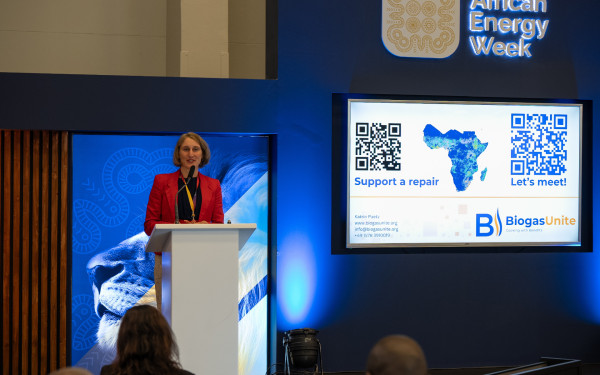
Africa-focused biogas company (B)energy re-launched BiogasUnite, a digital platform designed to boost the use of biogas for clean cooking in Africa, during a technical workshop at African Energy Week: Invest in African Energies 2024 on Tuesday. 

Katrin Puetz, Founder and Managing Director of (B)energy, said the company is seeking £780,000 from African and global investors to fund the adoption of BiogasUnite across the continent. Currently under trial in Uganda, the platform will provide a streamlined approach to connecting biogas consumers, technicians and energy stakeholders, according to Puetz. 

The initiative targets the repair of approximately 175,000 biogas cooking systems currently out of service due to maintenance challenges.  

(B)energy established partnerships for the platform with fifteen organizations in countries such as Nigeria, Sierra Leone, Benin, Ghana, Mali, South Africa, Zimbabwe, Kenya and Mozambique 

“Around 200,000 biogas cooking systems were installed in Africa since 2012, yet nearly 60% are now non-functional due to inadequate maintenance,” Puetz explained. 

The platform, enabled with a smart meter and app, provides users with direct access to technicians for stove maintenance, while enabling business owners to rent and monetize their cooking stoves, reducing the previously high upfront costs that hindered biogas adoption and scalability, according to Puetz. 

“Fifteen years ago, about 700 million people lacked access to clean cooking, and this number has since grown to nearly a billion,” stated Puetz, adding “The African Energy Chamber, with its extensive data and connections across the African energy sector, would be an ideal partner.”  

She said having governments as partners will help with job creation and drive sustainability of the oil and gas industry. 

Distributed by APO Group on behalf of African Energy Chamber.
Media files
African Energy Chamber
Download logo
Read more(B)energy Relaunches Africa-Focused Clean Cooking Solution
4 November 2024

Coca-Cola Beverages Africa Invests $50 Million in Namibia, Boosting Production Capacity by 30%

Location: News
Coca Cola Beverages Africa

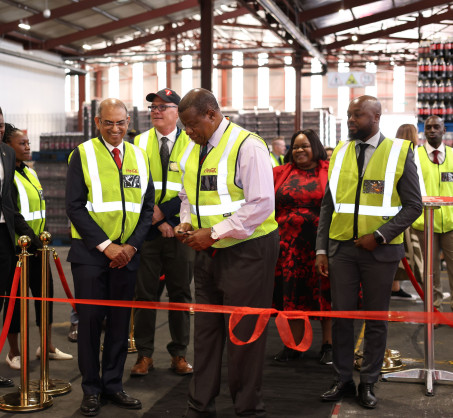
Coca-Cola Beverages Africa (CCBA) (www.CCBAGroup.com) has invested $50 million in a new bottling line in Namibia, capable of producing 27,000 bottles per hour. This upgrade will increase the plant's output capacity by 30% and stimulate growth throughout the company's value chain.

The investment also includes the installation of a water treatment plant with state-of-the-art water recovery technology, designed to reduce water consumption. Additionally, the integration of advanced technology, including artificial intelligence, will require skills training for employees, contributing to the development of a future-ready workforce for both the business and the country.

“We've ensured that this production line goes beyond output numbers,” said Pottie de Bruyn, General Manager of Coca-Cola Beverages Africa in Namibia. “It's about creating shared opportunities across the value chain. The increased production also provides a boost to local businesses that supply us with raw materials and services.”

Sunil Gupta, Chief Executive Officer of CCBA, echoed the sentiment, adding, “This investment is a clear demonstration of our continued belief in the future of Namibia.”

Gupta also highlighted CCBA's broader goals: “As a customer-centric, digitally enabled, growth-driven business, we are committed to excellence across our value chain. Efficient operations allow us to offer faster delivery and superior service. This new production line is another step in our journey to achieve even greater levels of execution excellence.” 

Distributed by APO Group on behalf of Coca Cola Beverages Africa.

Media Contacts:
Enid Johr 
PACS Director 
CCBA in Namibia 
Tel: +264 81 778 5381 
Email: ejohr@ccbagroup.com 

Wendy Thole-Muir 
Head: Reputation and Communication 
Coca-Cola Beverages Africa  
Tel: +27 83 795 8524 
Email: WThole-Muir@ccbagroup.com 

Judith Wilhem
+264813473538

Follow us on:
LinkedIn: https://apo-opa.co/3AsnQje

About CCBA:
CCBA is the 8th largest Coca-Cola bottling partner in the world by revenue, and the largest on the continent. It accounts for over 40% of all Coca-Cola products sold in Africa by volume. With over 18,000 employees in Africa, CCBA services more than 720,000 customers with a host of international and local brands. The group was formed in July 2016 after the successful combination of the southern and east Africa bottling operations of the non-alcoholic ready-to-drink beverages businesses of The Coca-Cola Company, SABMiller plc and Gutsche Family Investments. CCBA shareholders are currently: The Coca-Cola Company 66.5% and Gutsche Family Investments 33.5%. CCBA operates in 15 countries, including its six key markets of South Africa, Kenya, Ethiopia, Uganda, Mozambique and Namibia, as well as Tanzania, Botswana, Ghana, Zambia, the islands of Comoros and Mayotte, Eswatini, Lesotho, and Malawi.

Learn more at  https://www.CCBAGroup.com

Media files
Coca Cola Beverages Africa
Download logo
Read moreCoca-Cola Beverages Africa Invests $50 Million in Namibia, Boosting Production Capacity by 30%
31 October 2024

Green Building Trends in Africa: Africa’s Urbanization Provides the Opportunity to Embrace Green Building

Location: News
Bureau Veritas

By Julien Fouilliart-Building & Infrastructure Growth Leader Middle East, Caspian and Africa, Bureau Veritas (https://group.BureauVeritas.com)​.

Globally, buildings are responsible for a substantial share of energy, electricity, water and materials consumption using between 35-40% of energy demand and contributing 37 per cent of world carbon dioxide (CO2) emissions. Including the manufacturing of building materials.

The 2022 updated Global Buildings Climate Tracker (GBCT) (https://apo-opa.co/3YLJiZG) shows that there is a significant gap between the current state and the desired decarbonization path which is concerning. In effect it means that to align with the 2030 milestone, an annual increase of ten decarbonization points is now necessary which is a substantial jump from the six points per year anticipated starting in 2015.

In 2019 in Africa, buildings accounted (https://apo-opa.co/4e8NIhN) for 57% of total final energy consumption and 32% of total process-related CO2 emissions.

Despite continental issues of poverty, unemployment and rapidly developing informal settlements among other issues, many countries in Africa are embracing green, sustainable building practices.

With its burgeoning population, expected to add some  1.2 billion people by  2050 (https://apo-opa.co/3AxgxXo) Africa faces rapid urbanization.

Urbanization provides an opportunity for countries across Africa to embrace green building practices, access available international green funding opportunities, and set a foundation for sustainability for future generations.

In 2023 the Africa Regional Network of World Green Building Council (WorldGBC) launched the Africa Manifesto for Sustainable Cities and the Built Environment, which sets out the actions that  policymakers and businesses across the continent need to take to achieve a net zero carbon, healthy, resilient, equitable, socially- and economically-inclusive built environment for everyone, everywhere.

Achieving these goals requires policymakers and business leaders across the continent to recognise the untapped potential of the built environment. But this can only be realized with the implementation of policies that support transformative action, through intense collaboration between governments, city and regional leaders, businesses and investors. 

South Africa is leading Africa's green building sector (https://apo-opa.co/3YLdq7N). It has over two million square meters certified green buildings that reduce water consumption, electricity, and waste disposal; 50 certified projects are projected to result in an annual saving of 76 million kilowatt hours which is equivalent to the electricity needs of 5,300 households every year.

South Africa has its own National Standard 10400 Part XA that deals with optimizing energy efficiency in buildings and in the light of this the Green Star South Africa and EDGE green building tools have been adapted and are widely used in the country. International rating systems like LEED and WELL are also used.

The scope of green construction in Egypt has been slow to grow but Egypt has two local rating systems in place called TARSHEED and the Green Pyramid Rating System. These, along with EDGE, LEED and WELL are used in various projects.

The Nigerian government has pledged to achieve a 20% reduction in its greenhouse gas emissions by 2030 and 45% with international support. Green building will likely be a big part of this change.

This country's National Building Code, developed by the National Council on Housing and Urban Development, and the Building Energy Efficiency Guideline (BEEG), also support the agenda of sustainable development by setting requirements for occupant health and safety, use of local and safe building materials and energy efficiency among other criteria.

Morocco has several legal provisions in place to promote sustainability and environmental protection through construction impact assessments for new building projects as well as energy-efficient construction requirements applicable to most residential and commercial projects. Several projects in the country have also achieved LEED green building credentials.

It also has several renewable energy projects such as the Noor Midelt Solar Plant and Tarfaya Wind Farm, one of the biggest wind farms in the continent.

As the drive towards Net-Zero heightens more African countries are joining the African Regional Network of the World Green Building Council. NGOs and other industry professionals are setting up green building councils in South Africa, Egypt, Tunisia, Nigeria, Botswana, Zimbabwe, Namibia, Mauritius, Tanzania, Kenya, Cameroon and Uganda.

One of the big hurdles restraining a sustainable development movement in the construction industry is a lack of awareness for practical sustainable actions among many developers and investors.

In South Africa there is a broad awareness of Green Buildings and the market share of certified buildings among all new builds is increasing. The 2021 International Finance Corporation's (IFC) Green Building Market Stakeholder Assessment for South Africa showed that on the supply side, key motivating factors for Green Buildings are their reduced carbon footprint increased end user demand and increased marketability.

From the occupier's perspective the motivating factors for buying or leasing a Green Building are lower utility bills and lower operating costs. Yet, at a residential level occupiers are only willing to pay a two percent premium for these benefits.

The IFC report points out that the perceived cost of construction and certification of green buildings are also considered major obstacles to the expansion of certified Green Buildings in South Africa (https://WorldGBC.org/). Its research indicates that those in the know estimated the additional construction cost to be 10% or higher, while those unfamiliar with Green Buildings are likely to significantly overestimate costs.

Currently, four out of six financial institutions provide financing for Green Building projects in some form or another and three require a certification to approve the loan. The portfolios of two consist of retrofitting existing buildings into Green Buildings; two of commercial and industrial Green Building construction finance and only one residential Green Building construction finance. Of the two FI's that currently do not fund any Green Building one plans to do so in the future while the other does not see this as part of their strategy.

The investment into green construction (https://apo-opa.co/4e8NYgL) has multiple benefits; it facilitates growth while addressing issues like employment, climate change, and poverty.

However, more needs to be done to improve the understanding of the benefits of green buildings such as lower operational costs, increased ROI as well as an overall improvement in occupant health and wellbeing. Financial institutions need to do more to support green construction. Those which have pledged to lower their investments in carbon producing industries could create green bonds or funds for the African construction sector. Government's need to provide policy support along with incentives to catalyze market development.

 All this suggests that there is still a sizable information gap regarding the cost, certification and benefits of Green Building and that further knowledge dissemination efforts are needed to close it.

Distributed by APO Group on behalf of Bureau Veritas.

About Julien Fouilliart:
Julien Fouilliart is a seasoned business development professional with 15 years of experience in international, multicultural, and cross-sector environments. He currently leads the growth of Bureau Veritas' Building & Infrastructure market across the Middle East, Caspian, and Africa regions. Julien holds a degree in Mechanical Engineering from Belfort University in France. He is based in Kenya and has a deep passion for the African continent. Julien has played a key role in the development of large and iconic infrastructure projects across the region. He has an extensive international background, having worked in France, China, Spain, Belgium, and the United Kingdom. His experience includes collaborating with global companies and public institutions to drive business growth in sectors such as aerospace, IT, rail, building, and transport infrastructure.

Media files
Bureau Veritas
Download logo
Read moreGreen Building Trends in Africa: Africa’s Urbanization Provides the Opportunity to Embrace Green Building
30 October 2024

Tanzania President, Merck Foundation Chairman and CEO with 15 First Ladies inaugurate their 11th Africa Asia Luminary 2024

Location: News
Merck Foundation

  • The 11th Edition of Merck Foundation Africa Asia Luminary was officially inaugurated by The President of the United Republic of Tanzania, H.E. Dr. SAMIA SULUHU HASSAN, Chairman of Merck Foundation Board of Trustees, Prof. Dr. Frank Stangenberg-Haverkamp and Merck Foundation CEO, Senator, Dr. Rasha Kelej.

  • The First Ladies of Burundi, Cabo Verde, Central African Republic, Democratic Republic of The Congo, Gabon, The Gambia, Ghana, Kenya, Liberia, Malawi, Maldives, Mozambique, Democratic Republic of São Tomé and Príncipe, Zimbabwe and Zanzibar were the Guests of Honor and Keynote Speakers for the 11th Edition of Merck Foundation's Annual Conference.
  • More than 6,000 healthcare providers, policymakers and media from over 70 English, French, Spanish and Portuguese speaking countries attended the Luminary through hybrid model to benefit from five parallel scientific and social sessions to advance healthcare capacity and awareness in 44 critical and underserved medical specialties.
  • Celebrating 7th Anniversary of Merck Foundation and marking 12-year journey of their development programs, during 2024 Luminary. 
  • Link to Live Stream of Inaugural Session of Merck Foundation Africa Asia Luminary 2024: https://apo-opa.co/40tsLex

Merck Foundation (www.Merck-Foundation.com), the philanthropic arm of Merck KGaA Germany, conducted the 11th Edition of their annual conference, “Merck Foundation Africa Asia Luminary”, under the patronage of The President of Tanzania, and in partnership with the Government of Tanzania on 29th and 30th October, in Dar es Salaam, Tanzania. The conference was officially inaugurated by H.E. Dr. SAMIA SULUHU HASSAN, The President of the United Republic of Tanzania together with Prof. Dr. Frank Stangenberg-Haverkamp, Chairman of Merck Foundation Board of Trustees and Senator, Dr. Rasha Kelej, CEO of Merck Foundation, along with First Ladies of 15 Countries, who joined as the Guests of Honor and Keynote Speakers.

While inaugurating the conference, The President of United Republic of Tanzania, H.E Dr. SAMIA SULUHU HASSAN emphasized “I am delighted to host this prestigious conference in Tanzania. It is a great honor to inaugurate the conference alongside the First Ladies of Africa and Asia. I am certain that this conference will help us to achieve our shared mission — to make a transformation in the health and well-being of our people. I deeply appreciate the programs of Merck Foundation that are building healthcare capacity, breaking infertility stigma, and supporting girl education.”

Senator Dr. Rasha Kelej, CEO of Merck Foundation and Chairperson of Merck Foundation Africa Asia Luminary emphasized, “I am delighted to have Her Excellency, Dr. SAMIA SULUHU HASSAN, The President of the United Republic of Tanzania, inaugurate our annual conference. I also extend my heartfelt thanks to our partner, the Government of Tanzania, for their unwavering support in making it a success. Moreover, I am honored to welcome our esteemed Guests of Honor and Keynote Speakers, the First Ladies of African and Asian Countries, also the Ambassadors of the “Merck Foundation More Than a Mother”. Together, we shared experiences and engaged in meaningful discussions on the impact of our programs, aimed at transforming patient care and raising awareness on a wide range of critical social and health issues."

Prof. Dr. Frank Stangenberg Haverkamp, Chairman of Merck Foundation Board of Trustees added, “I would like to thank H.E. Dr. SAMIA SULUHU HASSAN, The President of Tanzania, our partners, The First Ladies of Africa and Asia, along with African Ministers, Health Experts, Policy Makers, Government Officials, Academia and Media from over 70 countries for joining hands with us to realize the Merck Foundation's vision that  “Everyone can lead a Healthy and Happy life.”

The First Ladies of 15 Countries, who joined as the Guests of Honor and Keynote Speakers are:

  • H.E. Madam ANGELINE NDAYISHIMIYE, The First Lady of the Republic of Burundi
  • H.E. Dr. DÉBORA KATISA CARVALHO, The First Lady of the Republic of Cabo Verde
  • H.E. Madam BRIGITTE TOUADERA, The First Lady of Central African Republic
  • H.E. Madam DENISE NYAKERU TSHISEKEDI, The First Lady of the Democratic Republic of The Congo
  • H.E. Madam ZITA OLIGUI NGUEMA, The First Lady of the Gabonese Republic
  • H.E. Mrs. FATOUMATTA BAH-BARROW, The First Lady of the Republic of The Gambia
  • H.E. Mrs. REBECCA AKUFO-ADDO, The First Lady of the Republic of Ghana
  • H.E. Mrs. RACHEL RUTO, The First Lady of Kenya
  • H.E. Mrs. KARTUMU YARTA BOAKAI, The First Lady of the Republic of Liberia
  • H.E. Mrs. MONICA CHAKWERA, The First Lady of the Republic of Malawi
  • H.E. Mrs. SAJIDHA MOHAMED, The First Lady of the Republic of Maldives
  • H.E. Mrs. ISAURA FERRÃO NYUSI, The First Lady of the Republic of Mozambique
  • H.E. Mrs. MARIA DE FATIMA VILA NOVA, The First Lady of the Democratic Republic of São Tomé and Príncipe
  • H.E Mrs. MARIAM MWINYI, The First Lady of Zanzibar
  • H.E. Amai Dr. AUXILLIA MNANGAGWA, The First Lady of the Republic of Zimbabwe

“I am proud to share that Merck Foundation has provided more than 2080 scholarships to young doctors from 50 countries in 42 critical and underserved specialties such as Oncology and Cancer care, Diabetes, Endocrinology, Cardiovascular, Fertility Care, Embryology, Sexual & Reproductive Medicine, Internal Medicine, Respiratory Medicine, Acute Medicine, Critical Care, Pediatric Emergency, Gastroenterology, Rheumatology, Clinical Psychiatry, Urology, Ophthalmology, General Surgery, Trauma & Orthopedic, Dermatology, Neonatal Care, Pain Management, Clinical Microbiology & Infectious Diseases, Advanced Surgical Practice, Neuroimaging for Research and more. Many of them are becoming the first specialists in their countries”, added Senator Kelej.  

During the 11th Edition of Merck Foundation Africa Asia Luminary, two important occasions were marked; the 7th Anniversary of Merck Foundation and 12 years of Merck Foundation's development programs that started in 2012.

On the first day of the conference, the Plenary Session of the Merck Foundation Africa Asia Luminary 2024 took place, featuring a high-level panel discussion with the participating First Ladies of Africa and Asia. Moreover, two high-level ministerial panel discussion were held with African Ministers and top healthcare experts from across the globe.

The Day 2 of the conference will have five key parallel medical and scientific sessions, covering topics such as oncology, diabetes and hypertension, fertility and reproductive care, and medical capacity building in other specialties like respiratory care, acute care, emergency pediatric and neonatal care, and more. Additionally, a community awareness session, Merck Foundation Health Media Training, will be conducted for African journalists. This session will emphasize the critical role of the media in influencing communities and driving cultural change, with regards to a wide range of social and health issues like Breaking Infertility Stigma, Supporting Girls' Education, Stopping GBV, Ending Child Marriage & FGM, Empowering Women, Diabetes and Hypertension Awareness.

Countries participating in the 11th Edition of Merck Foundation Africa Asia Luminary include:

Angola, Bangladesh, Benin, Botswana, Burkina Faso, Burundi, Cameroon, Canada, Central Africa Republic, Cambodia, Chad, Côte d'Ivoire, Republic of the Congo, Democratic Republic of the Congo, Egypt, Ethiopia, France, Gabon, Germany, Ghana, Guinea – Bissau, Guinea – Conakry, India, Indonesia, Kenya, Lesotho, Liberia, Malawi, Malaysia, Mali, Mauritania, Mauritius, Mexico, Mozambique, Myanmar, Namibia, Nepal, Niger, Nigeria, Peru, Philippines, Russia, Rwanda, Senegal, Sierra Leone, Somalia, South Africa, Sri Lanka, Sudan, Tanzania, Thailand, The Gambia, Togo, Tunisia, U.A.E, UK, Uganda, US, Vietnam, Zambia, Zimbabwe and more.

The 11th Edition of Merck Foundation Africa Asia Luminary 2024 is streamed live on the social media handles of Merck Foundation and Senator, Dr. Rasha Kelej, CEO of Merck Foundation:

@ Merck Foundation: Facebook (http://apo-opa.co/3Yq65sX), X (http://apo-opa.co/40p49nc), Instagram (http://apo-opa.co/3Uwqqvl), and YouTube (http://apo-opa.co/3NLGJAS).

@ Rasha Kelej: Facebook (http://apo-opa.co/3Uulqrf), X (http://apo-opa.co/3Yq65Jt), Instagram (http://apo-opa.co/40krkip), and YouTube (http://apo-opa.co/40nOp3t).

Link to the Facebook live stream of Inaugural Session of Merck Foundation Africa Asia Luminary & African First Ladies High Level Panel: https://apo-opa.co/40tsLex

Merck Foundation is transforming the Patient care landscape and making history together with their partners in Africa, Asia, and beyond, through:

• 2080+ Scholarships provided by Merck Foundation for doctors from 52 Countries in 42 critical and underserved medical specialties.  

Merck Foundation is also creating a culture shift and breaking the silence about a wide range of social and health issues in Africa and underserved communities through:

• 3500+ Media Persons from more than 35 countries trained to better raise awareness about different social and health issues

• 8 Different Awards launched annually for best media coverage, fashion designers, films, and songs,

• Around 30 songs to address health and social issues, by local singers across Africa

• 8 Children's Storybooks in three languages - English, French, and Portuguese

• 7 Awareness Animation films in five languages - English, French, Portuguese, Spanish and Swahili to raise awareness about prevention and early detection of Diabetes & Hypertension and supporting girl education.

• Pan African TV Program "Our Africa by Merck Foundation” addressing Social and Health Issues in Africa through “Fashion and ART with Purpose” Community

• 700+ Girls from 15 African countries supported through scholarships or school items, annually.

• 15 Social Media Channels with more than 6 Million Followers.

Distributed by APO Group on behalf of Merck Foundation.

Contact details:
Mehak Handa
Community Awareness Program Manager
+91 9310087613 / +91 9319606669
mehak.handa@external.merckgroup.com

Join the conversation on our social media platforms below and let your voice be heard!
Facebook: https://apo-opa.co/3Yq65sX
X (Twitter): https://apo-opa.co/3O4YBa5
YouTube: https://apo-opa.co/3NLGJAS
Instagram: https://apo-opa.co/3Uwqqvl
Flickr: https://apo-opa.co/40nL051
Threads: https://apo-opa.co/3NJN9jN
Website: www.Merck-Foundation.com
Download Merck Foundation App: https://apo-opa.co/40njaFK

About Merck Foundation:
The Merck Foundation, established in 2017, is the philanthropic arm of Merck KGaA Germany, aims to improve the health and wellbeing of people and advance their lives through science and technology. Our efforts are primarily focused on improving access to quality & equitable healthcare solutions in underserved communities, building healthcare & scientific research capacity, empowering girls in education and empowering people in STEM (Science, Technology, Engineering, and Mathematics) with a special focus on women and youth. All Merck Foundation press releases are distributed by e-mail at the same time they become available on the Merck Foundation Website.  Please visit www.Merck-Foundation.com to read more. Follow the social media of Merck Foundation: Facebook (https://apo-opa.co/3UrWznZ), X (https://apo-opa.co/3NLcqtQ), Instagram (https://apo-opa.co/3UtDmlT), YouTube (https://apo-opa.co/3UqOAaF), Threads (https://apo-opa.co/3UvSCP8) and Flickr (https://apo-opa.co/3Yo1jfw).

The Merck Foundation is dedicated to improving social and health outcomes for communities in need. While it collaborates with various partners, including governments to achieve its humanitarian goals, the foundation remains strictly neutral in political matters. It does not engage in or support any political activities, elections, or regimes, focusing solely on its mission to elevate humanity and enhance well-being while maintaining a strict non-political stance in all of its endeavors.

Media files
Merck Foundation
Download logo
Read moreTanzania President, Merck Foundation Chairman and CEO with 15 First Ladies inaugurate their 11th Africa Asia Luminary 2024
29 October 2024

One Week to Go Until Investors Unite at AEW

Location: News
African Energy Chamber

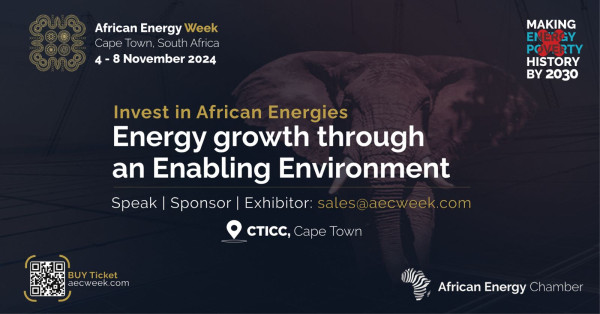
The largest gathering of energy stakeholders on the African continent is gearing up to welcome global and African energy stakeholders for five days of dialogue and deals. African Energy Week (AEW): Invest in African Energy 2024 – dubbed the premier event for the African energy sector – will take place from November 4-8 in Cape Town, South Africa. The foremost platform to sign deals and further the agenda towards making energy poverty history by 2030, the conference will feature seven stages, including five content stages, two technical hubs and a full day of pre-event workshops.

With over 125 million barrels of proven oil reserves, 620 trillion cubic feet of natural gas and abundant opportunities in solar, wind and green hydrogen, Africa has the potential to become a global hub for energy. African energy demand is projected to more than double by 2050, with fossil fuels anticipated to account for up to 60% of the continent's energy mix by 2040. As such, this year's conference promises to drive a new wave of investment across the African energy sector, with industry experts and thought-leaders, African governments and national oil companies (NOCs), and energy investors leading discussions on the challenges and opportunities found on the continent.

AEW: Invest in African Energy is the platform of choice for project operators, financiers, technology providers and government, and has emerged as the official place to sign deals in African energy. Visit www.AECWeek.com for more information about this exciting event.

Africa's energy industry is both the backbone of the continent's economy and a catalyst for sustainable growth worldwide. As such, the AEW: Invest in African Energy 2024 conference will feature a series of pre-event interactive workshops, providing an opportunity for companies to share in-depth knowledge and exchange ideas with a targeted group of delegates. The workshops, hosted by companies such as Rystad Energy, NCDMB, CLG, Energeo Alliance and S&P Global Commodity Insights, will cover various topics including energizing Africa amid the global energy transition; legislative and regulatory context for promoting investment in exploration; and facilitating investments and mergers and acquisitions across the continent.

A high-level opening ceremony will kick off at the Cape Town International Convention Center (CTICC) on the first day of the event. The opening ceremony will feature addresses from Angola's Minister of Mineral Resources and Petroleum Diamantino Azevedo and South Africa's Minister of Electricity and Energy Kgosientsho Ramokgopa, and discussions with the likes of Dr. Omar Farouk, Secretary General of the African Petroleum Producers' Organization and Chairman and CEO of upstream oil company Kosmos Energy Andy Inglis. The AEW: Invest in African Energy 2024 opening will kick off a week of intense dialogue on the future of the African energy industry. The opening will also feature a number of panel discussions focusing on the vital role Africa plays in addressing global energy security, as well as keynote addresses from the heads of some of the largest energy companies in the world.

Representing the entire energy value chain from oil and gas to renewable energy to power and infrastructure, AEW: Invest in African Energy 2024 will feature a massive slate of regional ministers with the aim of unpacking the continent's strategies to make energy poverty history by 2030. Ministers from Libya and Algeria are poised to showcase North Africa's ambitious production targets while aiming to plug Europe's energy gap and enhance domestic energy access. Southern Africa's ripe opportunities in energy and mining will be put on display by ministers from Mozambique, Angola, South Africa, Zambia and Namibia while West African ministers from the MSGBC region, Nigeria, Ghana and Burkina Faso will provide updates on ongoing projects. With major producers such as Equatorial Guinea, Gabon and the Republic of the Congo (ROC) inviting investors to support diversification efforts in production and refining, regional ministers from Central Africa will share insight into available opportunities in oil and gas, mining and infrastructure. Meanwhile, as a frontier market, East Africa is incentivizing exploration in both on- and offshore basins while driving infrastructure and field development projects forward and will be represented by energy and mining ministers from Ethiopia, Uganda, and South Sudan.

Africa is accelerating the pace of upstream projects with the aim of boosting production and intra-African petroleum distribution. Across both mature and emerging hydrocarbon markets, investment opportunities continue to emerge, and as such, AEW: Invest in African Energy 2024 will feature a strong lineup of VIP speakers from energy supermajors Eni, bp, Chevron and TotalEnergies. The event will also feature representatives from some of the continent's most important energy players including Azule Energy, ReconAfrica, Etu Energias, Africa Oil Corp., Wood Mackenzie and Adarco Energy, among many more. The oil industries of African countries will be represented by NOCs from Angola, Namibia, South Africa, Tanzania, Uganda, among others.

With two technical hubs on the exhibition floor of the CTICC, the conference serves as a prime platform for companies to provide presentations on various industry-leading technical themes. The AEW: Invest in African Energy 2024 technical track features a dedicated stage for asset owners, engineers and technology innovators to present projects, provide deep insights into cutting-edge solutions, and share best practices to foster knowledge. Attendees will gain valuable insights into the future of energy and learn about ground-breaking projects while discovering new opportunities for collaboration and investment. An exclusive exhibition-only pass grants delegates access to both the innovative exhibition floor and the technical track.

Rounding off AEW: Invest in African Energy 2024's strong program, a series of technical excursions and site visits across Cape Town offer participants the unique opportunity to gain insight into ongoing projects and developments in South Africa. A guided tour of the Hydrogen Project at the University of the Western Cape will focus on industry technology and development. The tour will also take delegates to the South African Renewable Energy Technology Center at the Cape Peninsula University of Technology, which stands as the country's inaugural sustainable energy development technology facility. The excursion will feature a tour of the Atlantis Special Economic Zone, which stands as a promising landmark in Africa's energy landscape while showcasing advancements in sustainable energy solutions, economic development and innovation. Rounding off the site visits, the tour will also take participants to the Eskom Palmiet Power Station, a hydroelectric pumped storage facility that plays a key role in stabilizing the national power grid.

“AEW 2024 stands at the center of African energy and provides an unparalleled platform to forge partnerships, share knowledge and drive progress in the continent's energy sector. It is our collective responsibility to prioritize energy poverty alleviation and sustainable development, ensuring a brighter future for all Africans. We look very much forward to kicking off this exciting event and welcoming hundreds of delegates from all over the world to drive Africa's energy needs,” states NJ Ayuk, Executive Chairman of the African Energy Chamber.

During the AEW: Invest in African Energy 2024 conference, delegates will be exposed to project updates, industry highlights, investment opportunities and strategies that address the continent's goals for eradicating energy poverty and promoting environmental sustainability. With one week to go, the conference is already stacking up to become the foremost energy event of its kind once again on the African continent.

Distributed by APO Group on behalf of African Energy Chamber.
Media files
African Energy Chamber
Download logo
Read moreOne Week to Go Until Investors Unite at AEW
24 October 2024

Zimbabwe Establishes Local Laboratory for Polio Surveillance

Location: News

World Health Organzation (WHO) - Zimbabwe
Download logo

In a significant step towards strengthening its public health infrastructure, Zimbabwe established a dedicated laboratory for the analysis of polio samples collected through environmental surveillance (ES). Previously, these samples were sent to South Africa for testing, resulting in a turnaround time of approximately 21 days.

With financial and technical support from the World Health Organization (WHO), the newly renovated laboratory is equipped with state-of-the-art technology testing equipment and staffed by highly trained personnel. WHO further provided training to 10 laboratory scientists to run the new laboratory and locally carry out environmental samples testing. This local capability will significantly reduce the time required to detect and respond to potential outbreaks of polio. 

Three experts from the African Polio Laboratory network, proficient in WHO ES testing methods for poliovirus, were identified by WHO Regional Officer for Africa (AFRO) to provide the training needs to th University of Zimbabwe (UZ) where the laboratory is situated. The team includes Shelina Moonsamy as the Team Lead (Head of Polio Laboratory, NICD, Johannesburg, South Africa), James Peter Eliku (ES Technical Expert, Uganda Virus Research Institute, Entebbe, Uganda) and Thabo Mashupye (ES Technical Expert, NICD). 

"The establishment of this laboratory is a major milestone in our efforts to safeguard the health of Zimbabweans," said Mr Paradzayi Chibukira, Technical Supervisor at the Zimbabwe National Virology Polio Laboratory at UZ.  "By reducing the turnaround time for laboratory results, we can more effectively implement prevention and control measures to prevent the reintroduction of polio into our country."

Environmental surveillance for polio is a critical component of global efforts to monitor and eradicate the polio. It involves collecting and analyzing sewage and other environmental samples to detect the presence of the poliovirus, which can indicate circulation of the virus in the community. This method complements traditional surveillance through the Acute Flaccid Paralysis (AFP) surveillance system and provides a broader view of potential outbreaks.

Polio is a highly contagious viral disease that can cause paralysis, especially in children. While Zimbabwe has been polio-free for many years, the risk of reintroduction remains, particularly due to the ongoing global efforts to eradicate the disease.

With support from WHO, Zimbabwe launched its environmental surveillance programme in 2023, beginning with sites in Harare and Chitungwiza. This initiative was part of a broader strategy to strengthen disease monitoring and improve response capabilities. The introduction of environmental surveillance in these initial sites marked a key step in the country's commitment to enhancing its public health infrastructure. Additional sites were established in other major cities, including Bulawayo, Gweru, and Victoria Falls in 2024. This expansion reflects Zimbabwe's proactive approach to disease monitoring and its determination to safeguard public health.

"We applaud and fully support Zimbabwe's decision to set up the laboratory for polio surveillance and this development not only enhances the country's capacity for timely and accurate detection of poliovirus in the environment but also strengthens the overall public health infrastructure,” said Mr Kenneth Chindedza, WHO Zimbabwe Technical Officer for Logistics and Supply Chain. 

Distributed by APO Group on behalf of World Health Organzation (WHO) - Zimbabwe.

Read moreZimbabwe Establishes Local Laboratory for Polio Surveillance
24 October 2024

Enhancing polio detection with advanced sequencing technology

Location: News

WHO Regional Office for Africa
Download logo

The African region, declared free of indigenous wild poliovirus in August 2020, faces an urgent threat: the intense transmission of type 2 variant poliovirus (cVDPV2). This year alone, 290 poliovirus detections have been reported in 23 African countries.

As countries ramp up vaccination efforts to protect children against the virus, one of the most critical components of the response is early and accurate detection. To enhance the effort, the World Health Organization Regional Office for Africa (WHO AFRO), together with the United States Centers for Disease Control and Prevention (US CDC) and the Gates Foundation, is focusing on equipping and training laboratories across Africa with an innovative advanced sanger sequencing technology, a crucial method in investigating new regions in the poliovirus genome.

The poliovirus has a genome that is 7.5 kilobases long (a kilobase, or kb, is a unit of measurement used to describe the length of DNA). This genome has one main part that is used to create four proteins, named VP1 to VP4. The VP1 protein is important for how the virus attaches to cells and has been used to identify and track the spread of poliovirus.

In 2024, WHO AFRO initiated targeted training on Advanced Sanger Sequencing training aimed at diversifying the diagnostic windows for polioviruses which will eventually reduce turn-around-time of poliovirus detection. These trainings are essential to equip lab personnel with the skills to operate advanced sequencing technologies and provide timely results for public health decision-makers.

Sequencing allows laboratories to pinpoint genetic changes in poliovirus strains, providing critical data for tracking transmission pathways and understanding viral evolution. The technology offers a level of precision that helps identify mutations in real-time, making it possible to detect emerging threats swiftly. This technique has hitherto been limited to VP1 region of the gene but after this training laboratories will be able to use the entire five prime untranslated region and the remaining VP4/2 of the poliovirus gene.

“Expanding our sequencing window to the other regions of the poliovirus, alongside the VP1 region, enhanced our ability to classify cases more accurately - bringing us one step closer to polio eradication”, says Irene Turyahabwe, participant from Uganda.

“Advanced sequencing will not only open different diagnostic windows for efficient and rapid diagnosis but will also provide much needed evidence for the success of specific vaccination campaigns essential for ongoing polio eradication efforts. The data gathered through this technology informs decision-making, ensuring that the right public health interventions are deployed in time to prevent further spread of the virus” says Dr Jude Kfutwah, coordinator of the Regional Polio Laboratory Network at the WHO Regional Office for Africa. 

South Africa hosted the first round of the training, where laboratory personnel received hands-on experience in Advanced Sanger Sequencing techniques. The training, under the umbrella of the Global Polio Eradication Initiative (GPEI), is part of a broader initiative to ensure that countries have the necessary capacity to detect polioviruses quickly and accurately, without delays that could hinder response efforts.

Following South Africa's success, WHO plans to expand the training to key countries across the continent. Algeria, Central African Republic and Madagascar are among the next in line, where national laboratories will benefit from this knowledge transfer. This regional expansion ensures that multiple countries are better prepared to contribute to Africa's polio eradication journey.

In addition, WHO is supporting 16 polio laboratories in the African region who are providing environmental surveillance support, testing for poliovirus in stool and wastewater samples to track geographic patterns of spread.

With laboratories across Africa enhancing their capacity to process samples quickly, there is an added layer of regional cooperation that strengthens the entire surveillance network. This collaborative spirit is vital in eradicating polio once and for all.

Distributed by APO Group on behalf of WHO Regional Office for Africa.

Read moreEnhancing polio detection with advanced sequencing technology
23 October 2024

Kaspersky Uncovers New Grandoreiro Light Variant

Location: News
Kaspersky

Despite the arrest of important operators in early 2024, Grandoreiro continues to be used by its partners in new campaigns. Kaspersky Global Research and Analysis team (GReAT) (www.Kaspersky.co.za) has discovered a new light version focused on Mexico targeting around 30 banks. These findings are to be highlighted at the Security Analyst Summit (SAS) 2024. Remaining one of the most active threats globally and targeting users of more than 1,700 banks, Grandoreiro variants account for around five percent of banking trojan attacks this year.  Mexico is one of the most targeted countries by various Grandoreiro strains, including the new light version, seeing 51,000 recorded incidents this year.

Kaspersky data indicates Grandoreiro has been active since 2016. In 2024, the threat targets more than 1,700 financial institutions and 276 cryptocurrency wallets across 45 countries and territories, lastly adding Asia and Africa to the list of its targets, making it a truly global financial threat. Among countries affected in Africa are Algeria, Angola, Ethiopia, Ghana, Ivory Coast, Kenya, Mozambique, Nigeria, South Africa, Tanzania, Uganda.

After assisting an INTERPOL-coordinated action, which has led to Brazilian authorities arresting (http://apo-opa.co/3BUqgrb) operators behind a Grandoreiro banking trojan operation, Kaspersky discovered that the group's codebase has been split into lighter, fragmented versions of the trojan, to continue its attacks. Recent analysis has identified a specific light version focused primarily on Mexico, which has been used to target approximately 30 financial institutions. The creators likely have access to the source code and are launching new campaigns using the simplified legacy malware.

“All the recent developments underscore the evolving nature of the threat. Fragmented and lighter versions may represent a trend that could extend beyond Mexico and into other regions, including beyond Latin America. However, we believe that only some trusted affiliates have access to the malware source code to develop such lighter versions. Grandoreiro operates differently from the traditional ‘Malware-as-a-Service' model we are accustomed to. You won't find announcements on underground forums selling the Grandoreiro package; instead, access to it appears to be limited,” explains Fabio Assolini, head of the Latin American (GReAT) at Kaspersky.

Multiple variants of Grandoreiro, including the new light version and the primary malware, accounted for approximately five percent of global banking trojan attacks detected by Kaspersky in 2024, making it one of the most active threats worldwide. Kaspersky has also analysed the newer samples of the primary Grandoreiro from 2024, and observed new tactics. It records mouse activity to mimic real user patterns, aiming to evade detection by machine learning-based security systems that analyse behaviour. By replaying natural mouse movements, the malware aims to trick anti-fraud tools into seeing the activity as legitimate.

Additionally, Grandoreiro has adopted a cryptographic technique known as Ciphertext Stealing (CTS), which Kaspersky has never seen being used in malware. In this case, its aim is to encrypt the malicious code strings. “Grandoreiro has a large and complex structure, which would make it easier for security tools or analysts to detect if its strings were not encrypted. This is likely why they introduced this new technique – to complicate the detection and analysis of their attacks,” Fabio Assolini elaborated.

To protect from financial malware, Kaspersky security experts recommend organisations to:

  • Enable a Default Deny policy for critical user profiles, particularly those in financial departments; this ensures that only legitimate web resources can be accessed.
  • Provide cybersecurity awareness training (http://apo-opa.co/4e3nlKa) to staff, especially to employees responsible for accounting, that includes instructions on how to detect phishing pages.
  • Use protection solutions for mail servers with anti-phishing capabilities such as Kaspersky Security for Mail Server, to decrease the chance of infection through a phishing email.

While banks should educate its customers, individuals are advised to:

  • Never open links or documents included in unexpected or suspicious-looking messages. Be attentive to web pages – from the right web address to details of interface.
  • Use a reliable security solution, such as Kaspersky Premium (http://apo-opa.co/4dWrbEW), that protect digital assets from a wide range of financial cyberthreats.
  • Install only applications obtained from reliable sources.
  • Refrain from approving rights or permissions requested by applications without first ensuring they match the application's feature set.
  • Install the latest updates and patches for all software used.

Read more on Securelist (http://apo-opa.co/3C4N5bD). The comprehensive Grandoreiro analysis and overview is to be presented by GReAT at Kaspersky's sixteenth Security Analyst Summit (SAS) (http://apo-opa.co/3BPHtly), which takes place from October 22-25, 2024, in Bali.

Distributed by APO Group on behalf of Kaspersky.

For further information please contact:
Nicole Allman 
INK&Co.
nicole@inkandco.co.za

Social Media:
Facebook: https://apo-opa.co/3BX3i2P
X (Twitter): https://apo-opa.co/4hdGJXL
YouTube: https://apo-opa.co/4dUZI6t
Instagram: https://apo-opa.co/4hjVok3
Blog: https://apo-opa.co/4fiDs7P

About Kaspersky:
Kaspersky is a global cybersecurity and digital privacy company founded in 1997. With over a billion devices protected to date from emerging cyberthreats and targeted attacks, Kaspersky's deep threat intelligence and security expertise is constantly transforming into innovative solutions and services to protect businesses, critical infrastructure, governments and consumers around the globe. The company's comprehensive security portfolio includes leading endpoint protection, specialized security products and services, as well as Cyber Immune solutions to fight sophisticated and evolving digital threats. We help over 200,000 corporate clients protect what matters most to them. Learn more at www.Kaspersky.co.za. 

Media files
Kaspersky
Download logo
Read moreKaspersky Uncovers New Grandoreiro Light Variant
16 October 2024

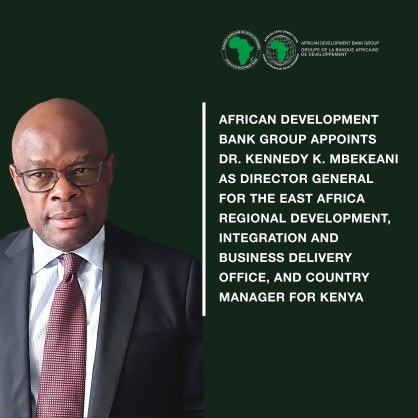
African Development Bank Appoints Dr Kennedy Mbekeani as Director General for East Africa

Location: News
African Development Bank Group (AfDB)

The African Development Bank Group (www.AfDB.org) has appointed Dr Kennedy K. Mbekeani as Director General for the East Africa Regional Development, Integration and Business Delivery Office, and Country Manager for Kenya, effective from 16 October 2024.

Mbekeani, a citizen of Malawi has over 25 years of senior experience in development finance, project management, policy advisory services, and knowledge generation at national and regional levels.

Prior to this appointment, he served as deputy director general for the Bank's Southern Africa Regional Development, Integration and Business Delivery Office. In this  role  he led the Bank's business development and delivery for sovereign and non-sovereign investments, and provided advisory services to South Africa, Lesotho, Botswana, Eswatini, Namibia and Mauritius. His efforts contributed to the Bank's reputation as a trusted partner for high impact development projects in the region. He also managed relationships with governments and the private sector.

Mbekeani joined the Bank in 2009 as Chief Trade and Regional Integration Officer. Subsequently he has held various roles including lead regional economist, officer in charge and acting regional director respectively of the Bank's South African Resource Centre. While serving as country manager for Uganda, he successfully expanded the Bank's portfolio to over $2 billion.

Before joining the Bank, Mbekeani worked for  the United Nations Development Programme as a trade, debt and globalisation advisor for East and Southern Africa. He also served as senior research fellow at the Botswana Institute for Development Policy Analysis, and senior economist at the National Institute for Economic Policy in South Africa.

He holds a Bachelor of Social Science (Economics and Statistics) degree from the University of Malawi, an MPhil in Monetary Economics from the University of Glasgow, and both an MA and PhD in International Economics from the University of California. He has authored numerous publications focusing on trade, regional integration, and infrastructure development in Africa.

Commenting on his appointment, Mbekeani said: “I am grateful and feel honoured by the confidence President Adesina placed in me through this appointment, as Director General for the East Africa Regional Development, Integration and Business Delivery Office and country manager for Kenya. I look forward to working with the president, the Board of Directors, senior management, our teams and stakeholders to enhance the Bank's operational efficiency, effectiveness and drive impactful developmental outcomes across the region.”

President of the African Development Bank Group and Chairman of the Board of Directors Dr Akinwumi Adesina said: “I am delighted to appoint Dr. Kennedy Mbekeani as Director General for the East Africa Regional Development, Integration and Business Delivery Office, and Country manager for Kenya. Kennedy brings extensive experience in managing operations, policy dialogue, coupled with astute diplomacy and well-tested ability to work effectively with countries and development partners. His knowledge of the Eastern Africa region and well-proven experience in delivering robust operations for the public and private sectors will strongly benefit the work and operations of the African Development Bank Group in East Africa and all countries in the region.”

Distributed by APO Group on behalf of African Development Bank Group (AfDB).

Media Contact:
Olufemi Terry
Communication and External Relations
media@afdb.org

About the African Development Bank Group:
The African Development Bank Group is Africa's premier development finance institution. It comprises three distinct entities: the African Development Bank (AfDB), the African Development Fund (ADF) and the Nigeria Trust Fund (NTF). On the ground in 41 African countries with an external office in Japan, the Bank contributes to the economic development and the social progress of its 54 regional member states. For more information: www.AfDB.org

Media files
African Development Bank Group (AfDB)
Download logo
Read moreAfrican Development Bank Appoints Dr Kennedy Mbekeani as Director General for East Africa
16 October 2024

VFS Global appointed to roll out Australian biometric collection centres in Sub-Saharan Africa

Location: News

VFS Global
Download logo

  • Services to be rolled out at 12 locations in seven countries in Sub-Saharan Africa by February 2025 
  • VFS Global becomes the exclusive biometric collection service provider for Australian applicants in all the nine regions globally – ​Americas, Europe, Mekong, Middle East and North Africa, Pacific, South Asia, South East Asia, North Asia, Sub-Saharan Africa 
  • Core services include Biometric Collection and Identity Verification, Digital Assistance with online visa applications submission and Online Payment Assistance. 
  • Additional (as required services) include remote interview hosting, document and claim checking, paper digitisation and local addressing and document delivery. 

The Department of Home Affairs, Australia has appointed VFS Global to provide biometric collection services for Sub-Saharan Africa. VFS Global is the world's leading outsourcing and technology service specialist for governments and diplomatic missions. This is in addition to the seven regions awarded in August 2023 to provide biometric collection services –the Americas, Mekong, Middle East and North Africa, North Asia, Pacific, South Asia and Southeast Asia. With the recent addition of Sub-Saharan Africa and Europe, VFS Global has become the exclusive biometrics collection service provider to Australian visa applicants across all nine regions globally. 

The Sub-Saharan Africa region includes seven countries in total with Australian Biometric Collection Centre services to be rolled out at 12 locations in 13 countries by February 2025. This includes setting up Centres in Ethiopia, Ghana, Kenya, Nigeria, South Africa, Uganda and Zimbabwe. 

According to the agreement, VFS Global's core services include Biometric Collection and Identity Verification, Digital Assistance with online visa applications submission and Online Payment Assistance on the Department's ImmiAccount portal. The company would also provide additional (as required services) such as remote interview hosting, document and claim checking, paper digitisation and local addressing and document delivery.  

“We are pleased to extend our Agreement with VFS Global to include Europe and Sub-Saharan Africa. We will continue to work closely with VFS Global to ensure the delivery of high-quality biometric collection and visa support services for our visa applicants worldwide.” said Anthony Phillips, Director Offshore Service Delivery Partners Section, Department of Home Affairs.

“Securing these two regions is a testament to our dedication, expertise, commitment to excellence, and trusted partnership with the Department of Home Affairs, Australia. This decision not only reflects our ability to meet highest standards but also reinforces our resolve to deliver innovative solutions. Under the Department's guidance, we will continue to elevate the experience of Australian applicants across the world,” said Jiten Vyas, Chief Commercial Officer and Head of Business Development, VFS Global. 

Distributed by APO Group on behalf of VFS Global.

Media Contact:  
George Cherian 
Corporate Communications  
georgec@vfsglobal.com 

About VFS Global: 
As the world's leading outsourcing and technology service specialist, VFS Global embraces technological innovation including Generative AI to support governments and diplomatic missions worldwide. The company manages non-judgmental and administrative tasks related to applications for visa, passport, and consular services for its client governments, increasing productivity and enabling them to focus entirely on the critical task of assessment.  

With a responsible approach to technology development, adoption and integration, the company prioritizes ethical practices and sustainability while serving as the trusted partner to 69 client governments.  Operating over 3,400 Application Centres in 153 countries, VFS Global has efficiently processed more than 297 million applications since 2001. 

Headquartered in Zurich and majority owned through investment funds managed by Blackstone Inc, along with the Swiss-based Kuoni and Hugentobler Foundation and EQT, VFS Global is committed to creating value for all stakeholders and leading in responsible, innovative solutions making government services more effective and efficient. 

Read moreVFS Global appointed to roll out Australian biometric collection centres in Sub-Saharan Africa
16 October 2024

Milken-Motsepe Prize in Fintech Announces 10 Semifinalists

Location: Business

The Milken-Motsepe Innovation Prize Program
Download logo

The Milken Institute and the Motsepe Foundation announced the 10 teams advancing to the Semifinalist Round of the Milken-Motsepe Prize in FinTech (https://apo-opa.co/3Y0GSEY), with each team receiving $100,000 in funding.

Responding to a global call for applications, this prize supports innovative solutions to expand access to tools necessary for financial inclusion across emerging and frontier markets.

The Semifinalists will participate in an Innovation Showcase at the Milken Institute's Middle East and Africa Summit December 5-6, 2024, in Abu Dhabi, UAE. During this event, the 10 teams will pitch their innovations to a panel of expert judges and investors, and three teams will be selected to move on to the final round of the prize. The judges will evaluate the pitches based on the teams' ability to deliver solutions that improve financial inclusion for under-resourced groups in emerging and frontier markets.

The prize will ultimately award $2 million in total prizes, including a $1 million Grand Prize. Following the December showcase, the Grand Prize will be awarded at the Milken Institute's Global Conference in Los Angeles, in May.

“By supporting these pioneering teams, we aim to foster financial inclusion and empower entrepreneurs who drive economic growth and opportunities in their communities,” said Emily Musil, senior director, Milken Institute. “Our prizes help identify, support, and celebrate talent to ignite the entrepreneurial spirit and empower visionaries to turn their ideas for a better future into reality.”

These teams operate in nearly 30 countries across three continents, and their innovations hold the potential for significant breakthroughs in financial inclusion for underserved communities on a global scale. Over the next four months, the Semifinalist teams will test and scale their solutions, which will be evaluated for impact, scalability, and sustainability.

The 10 Semifinalists:

AZA Finance (https://AZAFinance.com), Kenya

Team lead: Caroline Shiku Njathi

AZA Finance is a B2B FinTech company offering businesses low-cost, efficient, and secure financial services, including payments, currency exchange, and treasury, across all major currencies.

Chapa (https://Chapa.co), Ethiopia

Team lead: Nael Teklehaimanot

Chapa is an online payment gateway company with a developer-friendly API that simplifies integrating payment processing into websites and applications for Ethiopian businesses.

Chumz (https://Chumz.io) Kenya

Team lead: Sam Njuguna

Chumz is a gamified savings product that leverages behavioral psychology to help individuals save at low cost.

Farmpawa (www.Farmpawa.com), Uganda

Team lead: Moses Eteku

Farmpawa is a crowd farming platform that connects investors with real farming assets, empowering farmers and driving sustainable agricultural growth.

Flow Global (www.FlowGlobal.net), United Kingdom

Team lead: Michael Rothe

Flow Global is a liquidity engine that helps retail merchants grow in the digital economy by addressing all of their working capital needs.

Paycloud by Lipa Later (https://LipaLater.com/), Kenya

Team lead: Eric Muli

Paycloud is a digital banking platform that addresses late payments in Africa by offering seamless payment processing, payment splitting, automated invoicing, and financial tools.

Nyla Bank (www.NylaBank.com), Ghana

Team lead: Mubarak Sumaila

Nyla Bank is building Africa's first digital Islamic bank with a goal of empowering 1 billion people with innovative, Shariah-compliant products and services that align with ethical principles.

Oze (https://GetOze.com), Ghana

Team lead: Meghan McCormick

Oze is a digital lending platform that bridges Africa's credit gap by providing banks with a small and medium-sized enterprise- (SME) focused app that digitizes financial data, enabling risk assessment and lending to small businesses.

Trade Lenda (https://TradeLenda.com), Nigeria

Team lead: Adeshina Adewumi

Trade Lenda is a banking platform tailored to SMEs, where loans can be accessed within one to six hours, and micro-savings can be achieved for business goals.

Verto (www.VertoFX.com), United Kingdom

Team lead: Rachel Coombs

Verto is a business-to-business cross-border payments platform for businesses in emerging markets, powered by a unified network that eliminates intermediary fees, handles 49 currencies, and settles transactions faster.

Learn more about the Milken-Motsepe Prize by navigating to https://MilkenMotsepePrize.org/. Contact Mala Persaud at mpersaud@milkeninstitute.org for more information.

https://apo-opa.co/3Y0GSEY

Distributed by APO Group on behalf of The Milken-Motsepe Innovation Prize Program.

Notes to Editors:
For further information or to request interviews with the semi-finalists, please send requests or queries to the media contact below.

Media Contact:
Ima Peter 
+27 11 268 6388
ima.peter@razorpr.co.za

About the Milken Institute:
The Milken Institute is a nonprofit, nonpartisan think tank focused on accelerating measurable progress on the path to a meaningful life. With a focus on financial, physical, mental, and environmental health, we bring together the best ideas and innovative resourcing to develop blueprints for tackling some of our most critical global issues through the lens of what's pressing now and what's coming next. For more information visit https://MilkenInstitute.org.

About the Motsepe Foundation:
The Motsepe Foundation was founded in 1999 by Dr. Patrice Motsepe and his wife, Dr. Precious Moloi-Motsepe. The goal of the Motsepe Foundation is to contribute towards eradicating poverty and to sustainably improve the living conditions and standards of living of poor, unemployed, and marginalized people in South Africa, Africa, and the world. In January 2013, Dr. Patrice Motsepe and Dr. Precious Moloi-Motsepe joined the Giving Pledge, which was started by Warren Buffet and Bill and Melinda Gates. Dr. Patrice Motsepe and his wife committed to give half of their wealth to the poor and for philanthropic purposes during their lifetime and beyond.

Read moreMilken-Motsepe Prize in Fintech Announces 10 Semifinalists
16 October 2024

Confirmed Speakers for the 3rd International African Energy, Oil, and Gas Summit 2024

Location: News
African Peace Magazine

African Peace Magazine UK (https://AfricanPeace.org/) is honoured to announce the distinguished line-up of speakers for the 3rd International African Energy, Oil, and Gas Summit, set to take place from October 23rd to 25th, 2024, at Hilton, Windhoek, Rev. Michael Scott Street, Windhoek, Namibia. This summit brings together some of the most influential leaders, industry experts, and change-makers in the energy sector across Africa. These individuals have significantly shaped their respective industries and will contribute profound insights into Africa's energy future. The Charity Golf Tournament and other Tour activities would commence from the 26th to the 30th of October 2024. The Speakers are;

  • Hon. Justice Suleiman Galadima (JSC, OFR, CFR, Rtd) – Chairman of the Board, African Peace Magazine UK

Hon. Justice Galadima is a revered figure in Nigeria's legal community, having served as a Justice of the Supreme Court of Nigeria. He is known for his unwavering commitment to justice and governance in Africa. As Chairman of African Peace Magazine, Justice Galadima plays a critical role in fostering dialogue around peace, security, and development across the continent.

  • HRH Sir David Serena-Dokubo Spiff – Ada IX, Paramount Ruler of Spiff Town, Bayelsa State

HRH Sir David Serena-Dokubo Spiff is a prominent traditional leader from Bayelsa State, Nigeria. His deep commitment to the socio-economic advancement of his people and his influence on the region's energy and resource management make him a vital voice at the summit. He actively advocates for responsible management of natural resources in his community.

  • Dr. Martha Namundjebo-Tilahun – Chairperson, United Africa Group, Namibia

Dr. Martha Namundjebo-Tilahun is a powerful figure in Namibia's business sector and beyond. As the Chairperson of United Africa Group, she has been a driving force behind several large-scale projects in hospitality, real estate, and renewable energy. Her leadership in advancing Africa's energy landscape and sustainable development strategies is exemplary.

  • Abiola Metilelu – CEO, PressPayNG

Abiola Metilelu leads PressPayNG, a groundbreaking fintech company that offers education financing solutions. Under his leadership, PressPayNG is bridging the financial gap for students across Nigeria, directly impacting the education and energy sectors by creating a more skilled workforce for the future.

  • Dr. Udochu Ogbonnaya – Executive Director, Green Energy International Ltd (GEIL)

A visionary in Nigeria's oil and gas industry, Dr. Udochu Ogbonnaya is shaping the future of sustainable energy in Africa. As the Executive Director of GEIL, he drives innovation in the extraction and development of energy resources while maintaining a focus on environmental responsibility.

  • Mrs. Frieda Tunyoleni Amuela – Extractive Industry Law Expert

Mrs Amuela is a respected expert in the legal frameworks governing Africa's extractive industries. Her insights into compliance and legal challenges in oil and gas operations have made her a sought-after voice in regulatory discussions. Her work ensures that Africa's natural resources are managed with accountability and transparency.

  • Mr. Immanuel Mulunga – Former MD, National Petroleum Corporation of Namibia (NAMCOR)

Mr. Mulunga is a seasoned expert in Namibia's oil and gas industry, having held key leadership roles, including serving as Managing Director of NAMCOR. His deep understanding of petroleum resource management in Namibia and his strategic leadership have had lasting impacts on the country's energy landscape.

  • Engr. Chukwuemeka Woke – Director-General/CEO, National Oil Spill Detection and Response Agency (NOSDRA)

Engr. Woke leads NOSDRA, Nigeria's primary agency responsible for monitoring and responding to oil spills. His efforts in promoting environmental sustainability in the face of oil extraction activities have been instrumental in safeguarding Nigeria's ecological future.

  • Professor Geoffrey Shakwa – Founder & MD, Anti-Corruption Education Consultancy

Professor Shakwa is a staunch advocate for anti-corruption measures in Africa, having founded the Anti-Corruption Education Consultancy. His work aims to educate and promote transparency, which is critical for sustainable development in Africa's energy sectors.

  • Mr Tassius Chigariro – Chief Executive Officer, Old Mutual Namibia

Tassius Chigariro heads Old Mutual Namibia, a leading financial services company. His strategic expertise in investments and financial management has made Old Mutual a key player in supporting economic growth in Namibia and throughout Africa's energy sectors.

  • Dr. Joseph Tolorunse – Authority Secretary and Legal Adviser, Nigerian Midstream and Downstream Petroleum Regulatory Authority (NMDPRA)

Dr. Tolorunse brings a wealth of knowledge in regulatory frameworks, ensuring Nigeria's midstream and downstream petroleum sectors operate within best practices and international standards. His work strengthens Nigeria's position as a key player in the global energy market.

  • Olusegun Ilori (Esq) – Executive Director, Green Energy International Ltd (GEIL)

A legal expert in energy law, Olusegun Ilori has been instrumental in shaping GEIL's business strategy, ensuring compliance with global energy regulations while advocating for sustainable practices.

  • Engr. Sunday Babalola – Executive Director, Green Energy International Ltd (GEIL)

Engr. Babalola's expertise in engineering and operations has been pivotal to GEIL's success in executing oil and gas projects with a focus on innovation and sustainability.

  • Alh. Auwalu Abdullahi Rano (OON) – Founder & CEO, A.A. Rano Nigeria

Alh. Rano is a prominent entrepreneur in Nigeria's oil and gas sector, with his company, A.A. Rano, being a leading player in petroleum marketing and distribution. His business acumen has significantly contributed to Nigeria's energy supply chain.

  • Prof. Anthony Adegbulugbe – CEO, Green Energy International Ltd (GEIL) & Former SA to the President of Energy

Prof. Adegbulugbe is a renowned energy expert with a wealth of experience in energy policy and management. As CEO of GEIL, he is at the forefront of pushing Africa towards a greener energy future.

  • Dr. Martin Harris – Senior Geosciences Researcher, University of Namibia

Martin Harris is a leading geoscientist in Namibia, focusing on energy resource exploration and development. His research and contributions have enhanced the understanding of Namibia's geological wealth.

  • HRM Makitu III – Kingdom of Kongo, Angola

As the traditional ruler of the Kingdom of Kongo, HRM Makitu III is a respected leader who advocates for the preservation and responsible use of natural resources within his kingdom, including energy resources that are key to Angola's economic development.

  • Engr. Wole Ogunsanya (FNSE) – Chairman/CEO, Geoplex Drillteq Limited

Engr. Ogunsanya leads Geoplex Drillteq, a company offering cutting-edge drilling solutions for Africa's oil and gas industry. His leadership in innovation has made Geoplex a leader in the sector, offering technological solutions that enhance efficiency. Engr. Wole Ogunsanya is the current Chairman of the Petroleum Technology Association of Nigeria. PETAN is an association of Nigerian Indigenous Technical Oilfield service companies in the upstream and downstream. PETAN is the primary trade and advocacy association of the oil and natural gas industry in Nigeria, representing nearly 100 members involved in various aspects of petroleum.

  • Mr. Tarah N. Shaanika – CEO, Namibia Asset Management

Tarah Shaanika oversees Namibia Asset Management, a leading investment company in Namibia. His experience in financial management and investment has propelled the company into playing a crucial role in funding energy and infrastructure projects in Namibia.

  • Aggrey Ashaba – General Manager, Alliad, Uganda

Aggrey Ashaba is a business leader with deep expertise in the oil, gas, mining, and energy sectors. As General Manager of Alliad in Uganda, he plays a key role in driving the country's energy strategy, focusing on sustainable development.

  • Daniel Tuyoleni Williams – CEO, Mind Space Consults

Williams is a respected business consultant whose firm, Mind Space Consults, provides strategic insights and advisory services in energy and business development across Africa, helping companies navigate complex markets and regulatory environments.

  • Alh. Saleh Baba Rano

A key player in Nigeria's oil and gas sector, Alh. Saleh Baba Rano has been instrumental in the growth and development of the sector, bringing strategic insights and leadership to discussions around energy in Africa.

  • Abimbola Okoya – Founder, Basic Education Africa

Abimbola Okoya is a passionate advocate for education in Africa, founding Basic Education Africa to provide accessible learning opportunities to underserved communities. Her work directly impacts the future of Africa's workforce, particularly in the energy and technology sectors.

  • Professor Jude Osakwe – Faculty of Computing and Informatics, Namibia University of Science and Technology

Professor Jude Osakwe is a prominent academic and researcher with a focus on Data Governance, Data Analytics, ICT in Education, and ICT for Development (ICT4D). He holds various professional certifications in project management, big data analytics, business intelligence, and digital marketing. His extensive research work and involvement in international conferences make him a vital contributor to discussions on the integration of ICT into development strategies across Africa. Professor Osakwe's dedication to bridging the gap between theory and practical implementation of ICT solutions has positioned him as a respected figure in the academic and business sectors.

  • M. Jinot Razafimamonjy – Director of Hydrocarbons, Ministry of Energy and Hydrocarbons, Madagascar

M. Jinot Razafimamonjy serves as the Director of Hydrocarbons in Madagascar's Ministry of Energy and Hydrocarbons. His leadership in managing the country's hydrocarbon resources has been instrumental in driving economic growth and ensuring sustainable development in the energy sector. His participation at the summit will provide critical insights into Madagascar's approach to energy management and its vision for the future of its oil and gas industry.

  • S P Jika Ogbeche – Assistant Comptroller General (ACG), Air Nigeria Immigration Service (NIS)**

S P Jika Ogbeche holds a senior leadership role within the Nigeria Immigration Service, overseeing the Air Border Division. His extensive experience in managing Nigeria's air borders and contributing to national security efforts will bring a unique perspective to discussions on energy security and the role of governance in the sector.

  • Engr. Farouk Ahmed – Authority Chief Executive Officer, Nigerian Midstream and Downstream Petroleum Regulatory Authority (NMDPRA)

Engr. Farouk Ahmed is at the helm of Nigeria's NMDPRA, playing a critical role in regulating and ensuring the sustainable development of Nigeria's midstream and downstream petroleum sectors. His leadership has been instrumental in modernizing the regulatory framework, promoting investment, and ensuring energy security in one of Africa's most important energy markets.

  • Dr. Lloyd C. Williams – United States of America

Dr. Lloyd C. Williams is an esteemed expert in the fields of energy and sustainability, hailing from the United States. With a distinguished career marked by contributions to both the public and private sectors, Dr. Williams is dedicated to advancing clean energy initiatives and fostering innovation in oil and gas. His global perspective will add invaluable insights into the discussions at the summit.

  • Mr. Tassius Chigariro – Chief Executive Officer, Old Mutual Namibia

As the CEO of Old Mutual Namibia, Mr. Tassius Chigariro is a key figure in the financial services sector, driving initiatives that support sustainable investments in energy and infrastructure. His experience in leading one of Africa's most reputable financial institutions positions him as an influential voice in the intersection of energy finance and economic development.

  • Cydolian Raveloson – Acting Director General, Madagascar Hydrocarbons Office

Cydolian Raveloson is the Acting Director General of Madagascar's Hydrocarbons Office, where he plays a pivotal role in managing the country's energy resources. His efforts are focused on ensuring the efficient exploitation and management of Madagascar's oil and gas reserves, contributing to both the nation's economic growth and energy security.

These esteemed speakers join an already impressive lineup, including leading figures from government, academia, and the private sector, all dedicated to advancing Africa's energy future. Their participation is set to elevate the summit's discussions, fostering meaningful collaborations and forward-thinking strategies.

"The diverse group of speakers at the upcoming IAEOG Summit 2024 reflects our heartfelt commitment to inspiring discussions that lead to tangible outcomes. These industry leaders are passionate about finding ways to alleviate poverty, create job opportunities, and enhance our GDP. Together, we envision a transformative event that enlightens the public and fosters collaborative efforts, ultimately driving meaningful change for the betterment of our communities."- Chairman Hon. Justice Suleiman Galadima JSC, CFR, OFR (Rtd.)

Distributed by APO Group on behalf of African Peace Magazine.

For more details on the full list of speakers, agenda and for sponsorship, participation, partnership, Exhibition and speaking opportunities and all other enquiries please contact:
Florek or Liana
Phone +264817617590
Phone: +264818331921
email: florekharris@africanoilandgassummit.com
event@africanoilandgassummit.com
africanpeacemag@gmail.com

Uduak Okon
International Affairs
+2348033975746
+447407399766

Nigeria Abuja Office:
Suite FT 12B Alibro Atrium Plaza Utako Abuja
+2348033975746

South African Office:
16 Ridge Road Vorna Valley Midland 1686 South Africa
+27662449117

Angola:
Call +244928690892
+244993656970
+244927589884

London Office:
Call +4477771217805
WhatsApp +447407399766

African Peace Magazine:
Website: https://AfricanPeace.org/
https://www.AfricanPeaceAwards.com/
https://AfricanOilandGasSummit.com/
Email: africanpeacemag@gmail.com

Social Media:
Twitter: https://apo-opa.co/4eM9eKk 
Facebook: https://apo-opa.co/4f38u3m
I.G: http://apo-opa.co/4eHvpBF 
LinkedIn: http://apo-opa.co/4eJVYGh

Media files
African Peace Magazine
Download logo
Read moreConfirmed Speakers for the 3rd International African Energy, Oil, and Gas Summit 2024
15 October 2024

African Development Bank and Absa Unveil Multi-Billion Rand Financial Package to Expand Sustainable Capital Markets, Boost Economic Growth for Women and Youth

Location: Business

African Development Bank Group (AfDB)
Download logo

The African Development Bank (www.AfDB.org) and Absa Group, one of Africa's leading financial services providers, today celebrated a landmark agreement to mark the execution of a transformative financial package aimed at increasing funding for underserved segments, across South Africa and the continent. The target audience includes women-owned businesses, youth entrepreneurs, and small and medium-sized enterprises (SMEs).

In addition to enhancing Absa's regulatory capital, the facility will promote access to finance, deepen domestic capital markets, and ensure continued access to global supply chains for issuing banks in regional member countries, including low-income and fragile states.

The financial package includes:

  • A subordinated sustainability-linked (Tier 2) loan amounting to R1.7 billion, complemented by a non-financial support package of R18 million for capacity building and technical assistance targeted at SMEs, youth, and women-owned enterprises.
  • Subscription of R1 billion into Absa's inaugural social (Tier 2) bond issuance, with proceeds earmarked for providing affordable housing loans to female homeowners.
  • A trade finance Risk Participation Agreement (RPA) facility valued at $150 million, designed to underwrite the risks of trade transactions originated by African issuing banks, reinforcing Absa's role as a regional bank.

Several components of the package have already been executed, including the successful issuance of Absa's first Tier 2 social bond on the Johannesburg Stock Exchange in July 2024. The R1 billion proceeds from this bond will be allocated towards affordable housing loans specifically targeting women, empowering them as first-time homeowners in low-income segments.

Leila Mokaddem, Director General of the African Development Bank's Southern Africa Region, stated: “This partnership with Absa Group underscores our commitment to driving sustainable and inclusive economic growth across Africa. Through this financial package, we are not only fortifying Absa's capital base but also ensuring that essential funding reaches women, youth, and entrepreneurs, fostering a more equitable and prosperous continent. This collaboration aligns seamlessly with our strategic priorities of supporting Africa's industrialization and enhancing the quality of life for its people. “

Absa has secured a R1.7 billion sustainability-linked Tier 2 loan aimed at general corporate business purposes while incentivizing the extension of finance products to women-owned SMEs as a key performance indicator. As part of this agreement, Absa is collaborating with the African Development Bank to enhance skills among both Absa staff and women business owners. A capacity-building training program has been launched to address the unique challenges faced by female and youth entrepreneurs, by providing mentorship and financial solutions.

Charles Russon, Absa Group interim CEO designate remarked: “The finalisation of this package concludes a three-year process that significantly enhances our capacity to fund social initiatives aligned with our commitment to being a force for good. This partnership enables us to increase funding for women and youth in South Africa while facilitating greater trade opportunities across the continent. “

“This partnership aligns with the African Development Bank's strategic objectives of advancing green, social, and sustainability instruments in the domestic capital markets, supporting African capital market development and regional financial integration,” said Ahmed Attout, Director of the Financial Sector Development Department at the African Development Bank. He emphasised that it is designed to empower Absa to effectively disburse funds for highly impactful social and sustainable economic development initiatives.

The $150 million trade finance facility will drive trade support across Africa, addressing the continent's annual trade finance gap of over $100 billion. This initiative will enhance access to financing for key sectors such as agriculture, transport, and manufacturing, while fostering financial sector development and regional integration.

Distributed by APO Group on behalf of African Development Bank Group (AfDB).

Contact:             
African Development Bank:  

Natalie Naudé,
Communication and External Relations Department,
email: media@afdb.org

Technical Contacts:
Peter Onyango,
Chief Capital Markets Officer,
Financial Sector Development Department,

Bleming Nakati,
Regional Lead,
Private Sector Operations, Southern Africa

Absa:
Carli Cooke,
Head of Media Relations,
email : prmedia@absa.afrca

About the African Development Bank Group:
The African Development Bank Group is Africa's premier development finance institution. It comprises three distinct entities: the African Development Bank (AfDB), the African Development Fund (ADF) and the Nigeria Trust Fund (NTF). On the ground in 41 African countries with an external office in Japan, the Bank contributes to the economic development and the social progress of its 54 regional member states. For more information: www.AfDB.org

About Absa Group:
Absa Group Limited (‘Absa Group') is listed on the Johannesburg Stock Exchange and is one of Africa's largest diversified financial services groups.  Absa Group offers an integrated set of products and services across personal and business banking, corporate and investment banking, wealth and investment management and insurance.  

Absa Group owns majority stakes in banks in Botswana, Ghana, Kenya, Mauritius, Mozambique, Seychelles, South Africa, Tanzania (Absa Bank Tanzania and National Bank of Commerce), Uganda and Zambia and has insurance operations in Botswana, Kenya, Mozambique, South Africa and Zambia. Absa also has offices in China, Namibia, Nigeria and the United States, as well as securities entities in the United Kingdom and the United States, along with technology support colleagues in the Czech Republic. 

For further information about Absa Group Limited, visit www.Absa.africa. 

Read moreAfrican Development Bank and Absa Unveil Multi-Billion Rand Financial Package to Expand Sustainable Capital Markets, Boost Economic Growth for Women and Youth
13 October 2024

“Africa’s Golden Boy” Makes History at the African Continental Cycling Championship

Location: Sport

Ministry of Information, Eritrea
Download logo

Eritrean professional cyclist Henok Mulubrhan made history at the 2024 African Continental Cycling Championship in Eldoret, Kenya, by achieving a hat-trick victory. Henok previously claimed the championship titles in 2022 in Sharm El-Sheikh, Egypt, and in 2023 in Accra, Ghana.

In this year's championship, Henok secured the gold medal, finishing ahead of cyclists from South Africa and Uganda, who took second and third place, respectively. Henok finished the race in 3 hours, 46 minutes and 21 seconds

Henok's triumph reaffirms Eritrea's dominance and prestigious status as a “powerhouse” in African cycling.

In an interview with Kenyan journalists, Henok expressed his gratitude to his teammates for their support throughout the race. He dedicated his victory to all members of the national team and the Eritrean people.

In this championship Eritrea has collected 7 Gold Medals, 5 Silver and 4 Bronze.

Distributed by APO Group on behalf of Ministry of Information, Eritrea.

Read more“Africa’s Golden Boy” Makes History at the African Continental Cycling Championship
11 October 2024

African Energy Chamber Reaffirms Commitment to Host AEW in Cape Town Through 2030

Location: Business
African Energy Chamber

The African Energy Chamber (AEC) (www.EnergyChamber.org) – the voice of the African energy sector – is proud to announce that the African Energy Week (AEW): Invest in African Energy conference remains committed to hosting the African continent's most successful energy event in Cape Town. AEW was established in 2021 under the premise to make energy poverty history by 2030 and, now in its fourth immensely successfully edition, we remain devoted to keeping the event at Cape Town's International Conference Center (CTICC) until 2030. 

Africa Oil Week (AOW) recently confirmed it will hold its 2025 edition in Accra, Ghana, and while we wish them the best in their endeavors, the Chamber is steadfast in its commitment to hosting AEW – the continent's premier energy event – in Cape Town. In 2021, AOW made the decision to take its conference to Dubai, citing the fact that Africa was not equipped to host a large-scale conference in a safe manner due to the COVID-19 pandemic. AOW claimed that the event is focused on supporting Africa's needs, and yet the decisions to leave Cape Town for Dubai contradicted this very ambition. 

AEW: Invest in African Energy is the platform of choice for project operators, financiers, technology providers and government, and has emerged as the official place to sign deals in African energy. Visit www.AECWeek.com for more information about this exciting event. 

What AEW sought to prove, and was successful in doing, is that Africa has always been capable of hosting large-scale events. Under very strict COVID-19 safety measures, AEW 2021 hosted delegations from both the African and global energy sector. In 2022, the conference attracted thousands of delegates, while in 2023, the conference supported an even bigger and better event. When Africa needed investment, AEW was quick to respond, providing a platform where stakeholders could meet, and deals be made. 

Now, in 2024, AEW: Invest in African Energy continues our mandate to eradicate energy poverty by 2030 and serves as the official meeting place for Africa's energy elite. At the forefront of the African energy industry, the conference promotes the role Africa plays in global energy matters, centered around Africa-led dialogue and decision making. That's why we remain committed to Cape Town, a city that represents an industrial, business and socioeconomic hub for the entire African continent. Furthermore, AEW's focus transcends South Africa, with the event recognizing and supporting the development of various oil and gas projects across the continent.  

South Africa, and notably Minister Gwede Mantashe and the Department of Mineral Resources and Energy have been steadfast supporters of AEW since its inception in 2021. Through our partnership with the City of Cape Town and the government, we have created numerous job opportunities in Cape Town, contributing significantly to the local tourism industry and Cape Town-based vendors alike. We remain committed to our promise to position Cape Town as the hub for oil, gas and energy discussions in Africa. 

We reaffirm our pledge to maintain AEW's presence in Cape Town, rather than relocating to Dubai or other destinations outside of Africa. Our focus is on addressing key issues surrounding the African energy sector, ensuring that South African service providers, small business, local enterprises and stakeholders continue to benefit from our efforts. AEW not only generates jobs, but also stimulates economic growth. 

As the largest energy conference in Africa, we acknowledge the challenges faced by Cape Town and are dedicated to making a positive impact on the community. 

Meanwhile, outside of South Africa, the continent is seeing monumental growth. In Senegal and Mauritania, first production is soon expected for the Greater Tortue Ahmeyim conventional gas development while Senegal, just this year, achieved first oil production, thus showcasing the potential for offshore exploration and production investment. In Uganda, progress continues to be made on the Lake Albert Development, a multi-faceted project that promises new opportunities for energy security and industrialization in East Africa. In the Republic of the Congo, marginal projects are making headway as the government prioritizes gas investment and development while Libya recently announced that oil production has reached 1.217 million barrels per day. 

Meanwhile, South Africa's neighbor, Namibia, has made a litany of major oil and gas discoveries since 2022 and is making significant strides to develop these major finds. Mozambique is gradually making progress with its three major gas projects, opening new opportunities for regional trade. All of these projects and many more are showcased at AEW: Invest in African Energy, with investment opportunities made clear to existing and potential investors. AEW promotes the African position on the future of Africa's energy sector. By advocating personal responsibility, free markets, individual liberty and an enabling environment for investors, AEW ensure that Africa's oil and natural gas industry benefits Africans, rather than continuing a reliance on foreign aid and assistance.  

Therefore, we stand wholly committed to leveraging all Cape Town has to offer, a city that has been good to every edition of our conference since 2021. At the CTICC, we will continue to host panel discussions, investor forums, industry summits and one-one-one meeting opportunities and driving the discussions that will reshape the trajectory of the continent's energy development. 

“The Chamber is unwavering in our commitment to hosting AEW in Cape Town, a city that embodies the spirit of opportunity and innovation. The city is a hub for Africa's energy dialogue and, by staying here, we reinforce our mission to make energy poverty history by 2030. Cape Town has proven to be a premier venue for fostering critical dialogue and investment in Africa's energy sector and we believe that this vibrant city is the perfect backdrop for our mandate. Together, we will continue to drive progress and empower local stakeholders for sustainable growth,” states AEC Executive Chairman NJ Ayuk. 

Distributed by APO Group on behalf of African Energy Chamber.
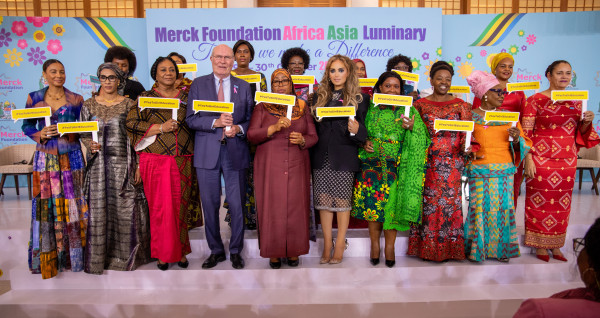
Media files
African Energy Chamber
Download logo
Read moreAfrican Energy Chamber Reaffirms Commitment to Host AEW in Cape Town Through 2030
11 October 2024

AEW 2024 Ministerial Lineup to Foster Strategies to Alleviate Energy Poverty in Africa

Location: News
African Energy Chamber

Energy and hydrocarbon ministers from across Africa have joined the African Energy Week (AEW): Invest in African Energy conference to discuss investment opportunities while engaging with financiers and project developers. Representing the entire energy value chain from oil and gas to renewable energy to power and infrastructure, regional ministers will unpack the continent's strategies to make energy poverty history by 2030.  

North African countries such as Libya and Algeria have set ambitious production targets for the coming years, aiming to plug Europe's energy gap while enhancing domestic energy access. Libya aims to boost output to 2 million barrels per day (bpd) in the next two to three years while Algeria aims to produce over 1.5 million bpd in 2025. Meeting production goals requires accelerated exploration, with both countries promoting investments in upstream drilling. At AEW: Invest in African Energy 2024, North African energy and hydrocarbon ministers will provide insight into these opportunities. They are joined by ministers representing global and African oil and gas organizations, including:  

  • Khalifa Abdulsadek, Minister of Oil & Gas, Libya 
  • Mohamed Arkab, Minister of Energy and Mines, Algeria 
  • Haitham Al Ghais, Secretary General, OPEC 
  • Omar Farouk Ibrahim, Secretary General of APPO 

In Southern Africa, the region is ripe with opportunity. An estimated 11 billion barrels has been found off Namibia's coast since 2022; over 100 trillion cubic feet (tcf) of gas found offshore Mozambique; and an estimated 200 tcf likely held onshore South Africa. While Angola - the second largest oil producer in sub-Saharan Africa – still offers significant potential in both on- and offshore basins, Southern African countries such as Zambia are largely underexplored, presenting strategic opportunities for exploration companies. At AEW: Invest in African Energy 2024, Southern African energy and hydrocarbon ministers will outline strategic basins and upcoming projects. Speakers include:  

  • Carlos Zacarias, Minister, Ministry of Natural Resources & Energy, Mozambique 
  • Diamantino Pedro Azevedo, Minister of Mineral Resources and Petroleum, Angola 
  • Gwede Mantashe, Minister, Ministry of Mineral Resources and Energy, South Africa 
  • Kgosientsho Ramokgopa, Minister of Electricity, South Africa 
  • Situmbeko Musokotwane, Minister of Finance and National Planning, Zambia 
  • Tom Alweendo, Minister of Mines and Energy, Namibia 

Recent offshore projects have positioned West Africa as a global hydrocarbon hotspot. Mauritania and Senegal's Greater Tortue Ahmeyim LNG project will start production this year, following the start of operations at Senegal's Sangomar Oil Project in mid-2024. Nigeria's Dangote Refinery – the largest in Africa at 650,000 bpd – recently secured a 400,000-bpd feedstock supply from the government a year after its start while Ivory Coast's Belaine project – the first net-zero upstream development in Africa – plans to commence phase two operations this December. Regional ministers will provide an update on ongoing projects, future investments and efforts to unlock additional reserves at AEW: Invest in African Energy 2024. Ministers include:  

  • Aboubacar Camara, Minister of Energy, Hydropower and Hydrocarbons, Guinea Conakry 
  • Birame Soulèye Diop, Minister of Energy, Oil and Mines Republic of Senegal 
  • Chief. Adebayo Adelabu, Minister of Power, Federal Republic of Nigeria 
  • Collins Adomako-Mensah, Deputy Minister of Energy in Charge of Power, Ghana 
  • Ekperikpe Ekpo, Minister of State for Petroleum Resources (Gas), Nigeria 
  • Foday Mansaray, Director General, PDSL 
  • Heineken Lokpobiri, Minister of State for Petroleum Resources (Oil), Nigeria 
  • Matthew Opoku Prempeh, Minister of Energy, Ghana 
  • Mohamed Ould Khaled, Minister of Petroleum & Energy, Ministry of Petroleum, Mines & Energy, Mauritania 
  • Nani Juwara, Minister of Energy and Petroleum, The Gambia 
  • Viriato Luis Soares Cassama, Minister of Environment & Biodiversity, Guinea-Bissau 
  • Yacouba Zabré Gouba, Minister of Energy and Mines, Burkina Faso 

Central Africa – with major producers such as Equatorial Guinea, Gabon and the Republic of Congo – are inviting investors to support diversification efforts in production and refining. Leveraging natural gas, these markets aim to unlock reserves in both domestic and regional basins while boosting export capacity and intra-African trade. The Republic of Congo exported its first LNG cargo in 2024 from the Tango FLNG facility, targeting 3 million tons per year by 2025, while Equatorial Guinea forged an agreement with Nigeria to import and process gas at its Punta Europa facility. At AEW: Invest in African Energy 2024, regional ministers will outline these initiatives, while sharing insight into available opportunities in natural gas. Ministers include:  

  • Antonio Uburu Ondo, Minister of Mines and Hydrocarbons, Equatorial Guinea 
  • Bruno Jean-Richard Itoua, Minister of Hydrocarbons, the Republic of Congo 
  • Marcel Abeke, Minister of Petroleum, Republic of Gabon 

As a frontier market, East Africa is incentivizing exploration in both on- and offshore basins while driving infrastructure and field development projects forward. Uganda inked a deal with Ethiopia in 2024 to export crude via pipeline while South Sudan is seeking diversified export routes and promoting exploration onshore. Regional ministers will share more insights at AEW: Invest in African Energy 2024. Speakers include:   

  • Ing Habtamu Itefa Geleta, Minister of Water and Energy, Ethiopia 
  • Okasaai Sidronious Opolot, Minister of state for Energy, Ministry of Energy and Mineral Development, Uganda 
  • Puot Kang Chol, Minister Petroleum, South Sudan 

AEW: Invest in African Energy is the platform of choice for project operators, financiers, technology providers and government, and has emerged as the official place to sign deals in African energy. Visit www.AECWeek.com for more information about this exciting event.  

Distributed by APO Group on behalf of African Energy Chamber.
Media files
African Energy Chamber
Download logo
Read moreAEW 2024 Ministerial Lineup to Foster Strategies to Alleviate Energy Poverty in Africa
11 October 2024

3rd Project Steering Committee Meeting on Conserving Aquatic Biodiversity in Africa’s Blue Economy

Location: News

The African Union – Interafrican Bureau for Animal Resources (AU-IBAR)
Download logo

The third Project Steering Committee (PSC) meeting of the "Conserving Aquatic Biodiversity in Africa's Blue Economy" project took place on October 9, 2024, in Mombasa, Kenya. The meeting aimed to update stakeholders on project progress, discuss difficulties, and provide strategic guidance for the future. The meeting included discussions on the 2023-2024 work plan, no-cost extension activities, adopted recommendations, and strategic recommendations for future project implementation.

The opening session was chaired by Dr. Huyam Salih, Director of AU-IBAR, on behalf of H.E. Ambassador Josefa Sacko, Commissioner for Agriculture, Rural Development, Blue Economy, and Sustainable Environment. Dr. Salih welcomed participants and expressed gratitude to the Government of Kenya and the Swedish International Development Cooperation Agency (SIDA) for their continued support.

In his statement, Dr. Joachim Beijmo, Head of Regional Development Cooperation in Africa at the Swedish Embassy to the African Union, emphasized the importance of the Blue Economy for livelihoods and food security across Africa. He highlighted Sweden's commitment to aquatic biodiversity conservation and development cooperation across many sectors, with the Blue Economy being a key priority. Dr. Beijmo underscored the potential of the Blue Economy to improve livelihoods and noted that the sustainable management of aquatic ecosystems is a global concern. He welcomed the growing interest from diverse stakeholders, including local communities, and emphasized the importance of cooperation among institutions to maximize synergies. However, he also warned about the increasing threats to ecosystems, such as overfishing, and reaffirmed Sweden's commitment to expanding Marine Spatial Planning (MSP) initiatives and supporting local communities in conservation efforts.

Dr. Ndiaga Gueye, Senior Fisheries and Aquaculture Officer at FAO's Regional Office for Africa, commended AU-IBAR for its achievements in aquatic biodiversity conservation and called for continued efforts in this critical area. He pointed out the vulnerability of oceans and inland waters and noted that the fishing industry is at a crossroads. Dr. Gueye stressed the need for greater investment in capacity building to achieve Sustainable Development Goal (SDG) 14, which focuses on life below water. He also highlighted the importance of international agreements, which can take time to implement, and emphasized the essential role of the private sector in the sustainable management of aquatic resources. Access to data, knowledge sharing, and enhanced communication were identified as key enablers for achieving these goals.

In his remarks officially opening the meeting, Mr. Rodrick Kundu, Secretary of the State Department for Blue Economy and Fisheries, Kenya, highlighted the challenges faced by aquatic ecosystems, including pollution and the impacts of climate change, which have severely undermined the productivity of fisheries resources. He stressed that when the productivity of these resources declines, the livelihoods of millions of people, especially those dependent on fisheries, are negatively affected. Mr. Kundu acknowledged Kenya's leadership in promoting the Blue Economy, citing its role in high-level initiatives such as the Blue Growth concept and its participation in the High-Level Panel for a Sustainable Ocean Economy. He also noted the significant benefits Kenya has gained from the project, particularly in terms of capacity building among local communities.

Solidarity Messages from the Regions

Representatives from the five regions of Africa shared insights on their countries' progress in aquatic biodiversity conservation:
- Uganda: Ms. Grace Namukasa, representative of the Ministry of Agriculture, Animal Industry, and Fisheries, highlighted Uganda's achievements in transboundary aquatic ecosystem management. She emphasized the importance of regional cooperation to address challenges in aquatic biodiversity and noted Uganda's commitment to sustainable resource management.
- Côte d'Ivoire: Mr. Yao N'da Firmin, Director of Blue Economy and Coastal Environment, underscored the critical role of fisheries in food security in West Africa. He explained that Côte d'Ivoire has implemented systems for managing biodiversity and is currently working on its second Marine Spatial Planning (MSP) project. Mr. Firmin emphasized the need for integrated strategies to enhance the conservation of aquatic biodiversity and adapt to emerging challenges.
- Cameroon: Prof. Paul Tchawa, Secretary General of MINEPDED, discussed Cameroon's National Strategy on mangrove conservation and climate change adaptation. He stressed the importance of solidarity and complementarities among African countries to defend their shared interests in aquatic resource conservation.
- South Africa: Mr. Belemane Semoli, Chief Director of Aquaculture and Economic Development, reiterated the significance of sustaining aquatic biodiversity for mitigating climate change and promoting sustainable development. He highlighted that maintaining biodiversity is essential for both aquatic ecosystems and human life, providing energy, food, shelter, and livelihoods. Mr. Semoli noted South Africa's Marine Spatial Plan and Ocean Plan, which recognize the contributions of all sectors, and identified the challenge of balancing conservation with realizing the socio-economic benefits of the Blue Economy.

Technical Sessions and Presentations

Key presentations covered the progress of the project, recommendations from the PTC, the project's no-cost extension activities, and budget updates. The PSC members endorsed the presentations and commended AU-IBAR for the significant achievements made so far.

Emerging Issues and Recommendations

Several important issues were raised during the meeting, including the need for:
- A second phase of the project to ensure sustainability and broader coverage across Africa.
- Increased collaboration with regional institutions to strengthen capacity-building efforts.
- Greater private sector involvement to support the long-term sustainability of the project.
- Addressing the challenges of plastic pollution and expanding training programs to replicate the project's successes in other regions.

The PSC members endorsed the recommendations from the 3rd PTC and approved the work plan for the no-cost extension. They recommended the preparation of a comprehensive report on the 3rd PSC meeting and requested AU-IBAR to share its exit strategy with PSC members. They also urged AU-IBAR to begin preparations for a second phase of the project and to enhance partnerships with both regional institutions and the private sector.

The meeting concluded with closing remarks from Dr. Huyam Salih, AU-IBAR Director, as well as representatives from Uganda and SIDA. SIDA noted the significant progress made, the valuable recommendations provided, and the strong leadership demonstrated throughout the project. FAO acknowledged the relevance of the successful recommendations shared during the exchanges.

In her vote of gratitude, the president of AWFISHNET emphasised the importance of women's participation in the initiative. A government officer from Kenya formally ended the meeting. The significance of ongoing communication with member nations was stressed by Mr. Rodrick Kundu in his concluding remarks. He emphasised the significance of establishing mechanisms for cross-border cooperation, bringing project initiatives down to the local level, and keeping partnerships and accountability at the forefront of the project's objectives. At its third meeting, the Project Steering Committee (PSC) reaffirmed AU-IBAR's dedication to protecting aquatic biodiversity in Africa and fostering long-term growth in the Blue Economy across the continent.

Distributed by APO Group on behalf of The African Union – Interafrican Bureau for Animal Resources (AU-IBAR).

Read more3rd Project Steering Committee Meeting on Conserving Aquatic Biodiversity in Africa’s Blue Economy
11 October 2024

Bafana Bafana to face Congo Brazzaville 

Location: News

Bafana Bafana to face Congo Brazzaville 

Bafana Bafana are all set to face Congo Brazzaville in tonight’s 2025 Africa Cup of Nations qualifier at the Nelson Mandela Bay Stadium in Ggeberha.

The South African senior men’s national team will host the Congolese at 7pm.

“The boyz [sic]  are ready,” Sport, Arts and Culture Minister, Gayton McKenzie, said in a social media post on X on Friday. 

Bafana Bafana coach Hugo Broos said his team has prepared well in the last few days.

“I’m more comfortable now than I was in the beginning of our camp.

“Again, I saw a very hungry team this week. We trained very well this week; we prepared ourselves very well and this is something I like about this group. I think everybody was aware of the fact that our games against Uganda and South Sudan were not our best games, and that we were lucky to achieve those 4-on-6.

“And then you see the immediate reaction of the group, and it means we did a lot of progress also on that level, the mental level. After the performances of September, we will again motivate each other and be ready to have good results, two good results against Congo tomorrow and next week on Tuesday,” the coach said ahead of Friday’s game.

Captain Ronwen Williams said the spirit in the camp has been exceptional.

“There’s been a change in mentality, and you could see it this week in training. Once the team was together, the team spirit was there again,” said Williams.

In its statement, the South African Football Association (SAFA) said the visitors arrived in the Eastern Cape on Thursday afternoon and had their first training session at the match venue in the evening.

Following tonight’s match, Bafana Bafana will travel to Congo to play the return match on Tuesday, 15 October. -SAnews.gov.za

Neo
Fri, 10/11/2024 - 13:02

35 views
Read moreBafana Bafana to face Congo Brazzaville 
10 October 2024

African Energy Week (AEW) 2024 National Oil Companies (NOC) Lineup to Unlock Project, Partnership Opportunities in Oil and Gas

Location: News
African Energy Chamber

African energy demand is projected to more than double by 2050, with fossil fuels anticipated to account for up to 60% of the continent's energy mix by 2040. This trend highlights the growing importance oil and gas will continue to hold in Africa. In partnership with international oil companies and private E&P firms, the continent's national oil companies (NOC) are responding to this projection by prioritizing fast-tracked project development, promoting collaborative exploration and production to bring new reserves online.

The upcoming African Energy Week (AEW): Invest in African Energy conference – scheduled for November 4-8 in Cape Town – features a strong lineup of African and global national oil companies (NOC). This lineup reflects a strong intention by NOCs to collaborate, unlock additional reserves and drive oil and gas projects forward across both emerging and mature markets in Africa.

AEW: Invest in African Energy is the platform of choice for project operators, financiers, technology providers and government, and has emerged as the official place to sign deals in African energy. Visit http://www.AECWeek.com for more information about this exciting event.

Southern Africa has yielded some of Africa's biggest oil and gas finds in recent years. Namibia – which featured a string of offshore finds since 2022 – has rapidly emerged as an oil and gas hotspot, with Galp Energias' Mopane discovery estimated to hold 10 billion barrels alone. In South Africa, the 2019 Brulpadda discovery accounted for 10% of the overall discovered volumes in Africa that year while the Luiperd find accounted for 80% of the continent's volumes discovered in 2020. Mature producers such as Angola also continue to unlock additional reserves, with ExxonMobil announcing a discovery at the Likember-01 research well in Block 15 this year. At AEW: Invest in African Energy 2024, Angola's NOC Sonangol, Namibia's NAMCOR and South Africa's SANPC will speak on these discoveries and future opportunities.

East Africa is one of the world's final frontiers for oil and gas exploration, with major discoveries made in recent years showcasing the potential for billion-barrel projects. In exploration, offshore basins in Tanzania have shown trillions of cubic feet of gas while onshore acreage in Uganda holds the promise of new oil supplies. While various cross-border infrastructure projects, LNG facilities and field developments are underway, the region offers significant potential for exploration. During AEW: Invest in African Energy 2024, East African NOCs including the Tanzania Petroleum Development Corporation; Uganda National Oil Company; and National Oil Company of Malawi will unpack this potential, sharing insight into ongoing projects and untapped investment opportunities.

Contrastingly, West Africa holds some of the biggest oil and gas producing markets on the continent. These include the Republic of Congo – which is diversifying its energy matric through billion-dollar gas investments; Equatorial Guinea – which is diversifying LNG feedstock through agreements signed with regional neighbors; and Gabon – which aims to boost production to 220,000 barrels per day. Concurrently, markets such as Cameroon, Liberia and Ivory Coast hold strategic potential for exploration firms, with recent finds underscoring opportunities in frontier drilling. At AEW: Invest in African Energy 2024, NOCs to the likes of Société nationale des pétroles du Congo; GEPetrol; Gabon Oil Company; and Ghana National Petroleum Corporation are participating. Additionally, the National Hydrocarbons Corporation of Cameroon; the National Oil Company of Liberia; and Petroci have joined.

While West African countries account for a large share of African hydrocarbon production, the same can be said for North Africa, with Algeria representing the largest natural gas producer in Africa. The country's production measured over 100 billion cubic meters (bcm) in 2023, with ambitions to exceed 200 bcm in production over the next five years. During 2024, up to 8 oil and gas discoveries have been made, with the NOC Sonatrach signing several exploration agreements with the likes of TotalEnergies, ExxonMobil and more to unlock additional basins. Sonatrach is participating at AEW: Invest in African Energy 2024.

In addition to African NOCs, global counterparts including the respective NOCs of Saudi Arabia and Azerbaijan have also joined the conference to discuss investment opportunities, future collaborations and how knowledge-sharing can support the next generation of oil and gas projects. Saudi Aramco, for example, which represents one of the biggest gas producers worldwide, offers a wealth of expertise for African NOCs. Similarly, the National Oil Company of the Azerbaijan Republic, an expert in refining and infrastructure development, stands ready to support Africa as it scales-up domestic refining capacity.

Distributed by APO Group on behalf of African Energy Chamber.

Media files
African Energy Chamber
Download logo
Read moreAfrican Energy Week (AEW) 2024 National Oil Companies (NOC) Lineup to Unlock Project, Partnership Opportunities in Oil and Gas
8 October 2024

Mantashe Slams “Foreign-Funded” Activists

Location: News

Protests held against fossil-fuel industry in Cape Town and Johannesburg

Read moreMantashe Slams “Foreign-Funded” Activists
8 October 2024

50+ Nations Join Forces to Announce BRICS International Fashion Federation

Location: News
BRICS+ Fashion Summit

The BRICS+ Fashion Summit (www.FashionSummit.org) concluded in Moscow with a landmark announcement: leaders from fashion associations across more than 50 countries signed a memorandum to form the BRICS International Fashion Federation. The new federation seeks to establish new centers of influence, strengthen international connections, boost industry sustainability, and provide NewGen of fashion talents with opportunities for growth. Notably, the summit was attended by representatives from over 100 countries, solidifying its standing as the largest fashion event for both emerging and established markets.

Brian Ahumuza, CEO and Founder of Uganda Fashion Designers Association, said “The BRICS International Fashion Federation has the potential to significantly foster international collaboration by creating structured opportunities for designers, artisans, and manufacturers to work together on joint ventures, exhibitions, and collections. This can help open up new markets, enabling designers from Uganda, for example, to reach audiences in Russia, Brazil, or India”.

Sunil Sethi, Chairman of the Fashion Design Council of India, said, "The need for such a fashionable alliance of emerging countries is long overdue. Brands, designers, and markets all face similar challenges—from supply chain disruptions to environmental issues—that are easier to solve together. The fashion world is focused on a few hundred global brands, so emerging markets need their own platform to make our voices heard." 

The memorandum to establish the BRICS International Fashion Federation was signed by an array of influential figures, including CEOs of fashion weeks, heads of fashion and textile associations, and academic leaders from countries such as India, South Africa, Russia, Ethiopia, Egypt, Spain, the USA, Indonesia, Malaysia, Ghana, Tanzania, Jordan, Ecuador, Paraguay, and Kenya.

Natalya Sergunina, Deputy Mayor of Moscow, highlighted the initiative's significance: "The creation of this International Federation is a major outcome of the recent BRICS+ Fashion Summit in Moscow. It demonstrates once again the shared goals and substantial potential for growth that we have with our global colleagues."

The declaration stipulates several core objectives: supporting local talent, promoting sustainable fashion, fostering cultural exchange, and creating a unified platform for emerging markets through educational and informational projects. It also focuses on the development of new technologies, the preservation of cultural identities, and the support of traditional arts and crafts.

"We are committed to providing these visionaries with a global platform and local events to ensure their creative work is celebrated globally. Our aim is to promote sustainable and eco-friendly practices, striving to implement transparent methods that will significantly reduce the fashion industry's carbon footprint. Slow fashion, characterised by mindful consumption and production, will be at the heart of the BRICS IFF agenda as we strive to mitigate the environmental impact of fashion," says the official statement.

Distributed by APO Group on behalf of BRICS+ Fashion Summit.

Contact:
Ann Reinhold,
info@globaltalents.digital

Media files
BRICS+ Fashion Summit
Download logo
Read more50+ Nations Join Forces to Announce BRICS International Fashion Federation
2 October 2024

Transport infrastructure is the foundation of Africa’s economic progress

Location: News

Transport infrastructure is the foundation of Africa's economic progress

Transport infrastructure is the cornerstone of regional economic progress and South Africa aims to offer practical collaboration on bi-national projects that would boost the African continent and its economy. 

This is according to Deputy President Paul Mashatile who was speaking at the Standard Bank Infrastructure Focus Engagement with British development finance institutions in London, United Kingdom.

“By collaborating closely, we can create a more resilient and inclusive infrastructure ecosystem that benefits everyone,” the Deputy President said on Tuesday. 

The country’s second-in-command is in the United Kingdom for the second leg of his weeklong working visit to improve trade and investment relations between the two nations.

READ | Mashatile kicks off working visit to the UK

He took the platform to urge the Standard Bank Group to exploit the opportunity afforded by infrastructure investment in South Africa. 

“Let us embark on this road with a common goal of prosperity, sustainability, and advancement for our country. Our motto in the Presidency is the speed of execution, the cornerstone of getting things done,” he added. 
He told the attendees that infrastructure investment in South Africa was a subject dear to him as it is the foundation of sustainable economic growth.

“South Africa stands at a crossroads where infrastructure development plays a pivotal role in driving economic growth, fostering innovation, and improving the quality of life for its citizens.”

As the country navigates through these challenging times, he believes it was “increasingly essential” for the Standard Bank Group to harness opportunities in infrastructure investment and steer the country towards a sustainable future.

According to the Deputy President, infrastructure investment in South Africa presents various prospects across various sectors, including transportation, energy, water, and telecommunication. 

“By leveraging our expertise and partnerships, the Standard Bank Group can actively contribute to these projects, creating jobs, promoting local business development, and enhancing overall connectivity within the region.”

He also encouraged the bank to continue supporting the continent’s energy transition.

“South Africa has vast energy resources, including oil, gas, coal, and renewable energy sources, and with the right investment and expertise, the sector has the potential to unlock growth and improve the lives of millions of our people.”

Infrastructure pipeline

Meanwhile, he said government plans to prioritise the investment in infrastructure through improvements in the infrastructure pipeline, the execution of that pipeline and financing. 

“Mobilising private sector resources to augment public sector capability and finances is necessary to fast-track the provision of infrastructure and improve effectiveness.”

He stated that government initiated various reforms to systematically get buy-in from greater private sector participation to improve spending and delivery outcomes.

The Deputy President acknowledged that government has a huge financing gap for its infrastructure portfolio that could further require more funding.

He said that in the 2023/24 Budget Review, the total infrastructure investment planned by the State over the next three years amounts to almost R943 billion.

National Treasury, according to Mashatile, is now trying to raise funding for the public sector infrastructure projects that are funded through the Budget Facility for Infrastructure using blended finance instruments. 
These include concessional financing from Multilateral Development Banks and development partner countries.

Meanwhile, he said Treasury is in the process of screening the projects that could potentially be funded. 

The Deputy President also acknowledged challenges that come with infrastructure investment in South Africa. 
These include regulatory hurdles, funding constraints, and skills shortages requiring innovative solutions and collaborative efforts to overcome.

“As a leading financial institution, the Standard Bank Group is well-positioned to drive change and facilitate sustainable infrastructure development in the country. Through strategic investments, responsible financing, and a commitment to long-term growth, the Standard Bank Group can be a catalyst for positive change in South Africa’s infrastructure landscape.” – SAnews.gov.za

Gabisile
Wed, 10/02/2024 - 12:48

766 views
Read moreTransport infrastructure is the foundation of Africa’s economic progress
24 September 2024

Leading Fintech M-KOPA Reaches 5 Million Customers, Unlocking $1.5BN in Credit Across 5 Markets

Location: Business
M-KOPA

M-KOPA (https://M-KOPA.com/), a leading emerging market fintech, announced that it has surpassed 5 million customers across Kenya, Uganda, Nigeria, Ghana and South Africa. Two million of these customers have come onboard in the past 15 months.

M-KOPA's innovative model makes affordable smartphones embedded with financial services available to ‘Every Day Earners': the wide majority of African adults who earn their income daily but struggle to afford smartphones and typically fail to qualify for conventional financial services. According to the World Bank, 75% of adults in sub-Saharan Africa remain financially excluded. To date, M-KOPA has supported its customer base with more than US $1.5 billion in financing.

Starting with smartphone access, customers gain entry to the digital economy with an affordable daily repayment model, which fits their daily income and cash flow and makes it easier to manage. By leveraging rich payments data and proprietary AI-driven analytics, M-KOPA builds a credit record for each customer which forms the foundation for a long-term financial relationship for lower cost digital loans, affordable data subscriptions and medical insurance.

According to M-KOPA co-founder and CEO, Jesse Moore: “We are thrilled to welcome our 5 millionth customer to M-KOPA this month. The scale of our operations and our positive impact on customers is what keeps us working hard to go even further. We're just getting started; the opportunity for much larger impact and scale is right in front of us.”

M-KOPA also published its 2024 Impact Report this week, in which the company annually releases its progress against key social and environmental impact metrics.  As with prior reports, the 2024 survey of M-KOPA customers was undertaken by a third-party company – Dalberg Research.

Key impact highlights from the 2024 report include:

  • 92% confirm that M-KOPA's financing has made technology more affordable.
  • 80% of customers report an improved quality of life thanks to M-KOPA's products.
  • 70% credit M-KOPA with helping them achieve their financial goals, demonstrating the company's contribution to financial empowerment.
  • 62% use their M-KOPA product to generate income

The company is having a major impact in improving digital access in Africa. Nearly 2 million customers are first-time mobile internet users and 40% are women. M-KOPA also built the first and largest smartphone assembly factory in Kenya – which has produced more than 1m phones locally and further reduced the cost of access.

As with prior reports, M-KOPA's board and management use the annual impact report to help shape forward company strategy. Based on this year's findings, M-KOPA is working to further increase its percentage of female customers to 50%, to reduce its carbon footprint by making circularity central to its smartphone supply chain, and to continue pioneering green products like electric motorbikes that contribute to the health and sustainability of the communities where it operates.

M-KOPA's Chief Product Officer Nena Sanderson, notes: “Our product and services build pathways to prosperity for our customers and agents, enabling them to overcome financial setbacks, generate income and progress towards the futures they aspire to. Our impact extends beyond our customers, reaching their families and communities, and contributing to building a more sustainable world.”

Headquartered in London, UK, M-KOPA now creates employment for more than 3,000 staff and 30,000 commission-based sales agents across Kenya, Uganda, Nigeria, Ghana and South Africa.  The company has been recognised by the Financial Times as one of Africa's Fastest Growing Companies for the past 3 years, and by Time Magazine as one of the 100 Most Influential Companies globally for the past 2 years.

To read the full report, download it here: M-KOPA Impact Report 2024_Pathways To Progress (http://apo-opa.co/4eguFD2).

Distributed by APO Group on behalf of M-KOPA.

For media enquiries, please contact:
Wimbart
mkopa@wimbart.com

About M-KOPA: 
M-KOPA is a UK-headquartered emerging market fintech that provides affordable smartphones and digital financial services. With operations in Nigeria, Ghana, Kenya, South Africa and Uganda, the company has extended over $1.5 billion in credit to more than 5 million customers. Using an innovative financing model based on daily repayments, M-KOPA provides affordable smartphones embedded with financial services that fit with the cash flow of millions of underserved individuals who earn their income on a daily basis.

By leveraging rich payments data and proprietary AI-driven analytics, M-KOPA builds a credit record for each customer which forms the foundation for a long-term financial relationship for digital loans, affordable data subscriptions and insurance.

The company employs over 3,000 staff and 30,000 sales agents across its African markets. M-KOPA has been recognised by the Financial Times as one of Africa's Fastest Growing Companies for the past 3 years, and by Time Magazine as one of the 100 Most Influential Companies globally for the past 2 years.

Media files
M-KOPA
Download logo
Read moreLeading Fintech M-KOPA Reaches 5 Million Customers, Unlocking $1.5BN in Credit Across 5 Markets
  • Previous
  • Page 1
  • Interim pages omitted …
  • Page 3
  • Page 4
  • Page 5
  • Page 6
  • Page 7
  • Interim pages omitted …
  • Page 11
  • Next

Copyright © 2026 · MyZA · All Rights Reserved · Powered by Reach Trust