Simelane Sizzles With Match-Winning Ton
BULAWAYO: A scintillating century by Andile Simelane paved the way for South Africa Emerging to take an unassailable 2-0 lead in...

MyZA
News, Directory, Events and Other Stuff
BULAWAYO: A scintillating century by Andile Simelane paved the way for South Africa Emerging to take an unassailable 2-0 lead in...
Draft National Devolution Strategy has not yet been made public
“We depend on the ocean”
Here are the names of the officials with whom the Lottery will no longer do business
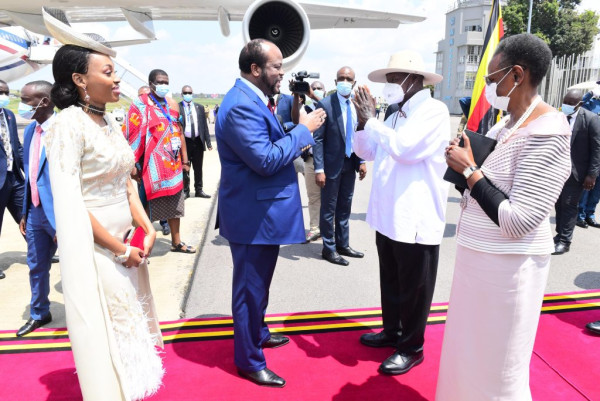
President Yoweri Kaguta Museveni and the First Lady and Minister of Education and Sports, Maama Janet Museveni have today welcomed the King of Eswatini, His Majesty, Mswati III at Entebbe International Airport.
His Majesty, Mswati III who is in Uganda for a three-day State Visit at the invitation of President Museveni was accompanied by his wife, Queen Inkhosikati Make Lamashwama and other high-level delegates.
At Entebbe International Airport, President Museveni was flanked by Ministers and service chiefs.
Upon arrival, the visiting King was accorded a 21-gun salute and inspected a guard of honour mounted by the Uganda People's Defence Forces (UPDF).
President Museveni later received his guest at State House Entebbe and held discussions focusing on enhancement of bilateral cooperation between the two countries.
In their discussions, President Museveni emphasised a clear vision for African prosperity, rooted in his experience as a student activist in the 1960s, a liberation leader, and now as a head of state.
“If Africans want prosperity, it comes from producing goods or services and selling them,” President Museveni stated.
He underscored the need for African nations to access larger markets to maximise economic benefits, highlighting Uganda's internal market of 46 million people as insufficient on its own.
“The fragmentation of the African market is a big disaster,” President Museveni warned.
He compared the continent's potential with that of Latin America, which, despite abundant natural resources, struggles with poverty due to its fragmented markets.
“I always tell my Ugandans here that if you want to be like Latin America, you are welcome because if you look at them, despite their wealth in natural resources, they still run to the USA for prosperity to get medical care, education, and other benefits,” he said.
The President argued that Africa's success lies in integrating markets across the continent, similar to how the United States operates with a vast and unified market.
He called for a model where African nations not only produce but also own and share in the benefits of their resources, rather than relying on foreign investments that often exploit the continent's wealth.
The President highlighted the need for African countries to collaborate on capital-intensive projects.
He also gave the example of Uganda's petroleum sector, where East African nations are invited to co-invest in infrastructure such as pipelines and refineries.
“It's not common sense that I produce, and you only buy. You can't say that to a brother,” President Museveni remarked, emphasising the importance of shared ownership.
President Museveni lauded the East African Community (EAC)'s progress in rebuilding and expanding to include eight member states, addressing both economic and political integration.
Beyond economic integration, President Museveni stressed the need for political federation in East Africa, which he views as crucial for establishing a strong military defence for the continent.
He highlighted the disparity in military capabilities between African nations and global powers like the United States, which boasts superior land, air, sea, and space forces.
“Africa must have the capacity to defend itself from all threats,” President Museveni asserted.
He called for a united African defence strategy as part of the broader vision for political federation.
His Majesty King Mswati III called for an enhanced cooperation between African nations, emphasising the need for unity in driving the continent's development.
He also expressed gratitude for the warm reception and hospitality extended to him and his delegation.
He highlighted the longstanding relationship between Uganda and Eswatini, noting that it had been years since their last meeting at a Commonwealth event.
“Your Excellency, I convey greetings from the Queen Mother, the government, and the people of Eswatini, and I wish to inform you that we are ready to strengthen ties between the two nations,” the King stated.
King Mswati went on to propose that Uganda and Eswatini establish regular communication channels to avoid neglecting the friendships and agreements already in place.
He stressed that African countries must work together to achieve progress in key areas such as poverty alleviation, job creation, education, and technological advancement.
“If we work together, there is much we can achieve. But if one country moves on its own, it cannot go far,” he said.
King Mswati III pointed out that Africa possesses abundant natural resources, yet the continent has struggled to produce efficiently due to the exploitation of these resources by foreign entities.
He advocated for African nations to share expertise and technology, citing Uganda's achievements in areas such as crude oil development as an example of successful collaboration.
“Now that we have mastered a lot of technology and expertise, we must take advantage of our resources,” the King stated.
The King further emphasised the need to promote entrepreneurship and knowledge exchange between Uganda and Eswatini, suggesting the establishment of distribution centres and routes to facilitate trade.
He also proposed increased cooperation between the Southern African Development Community (SADC) and the East African Community, expressing hope for a stronger economic partnership.
In terms of cultural ties, King Mswati III highlighted the similarities between the cultures of Uganda and Eswatini.
He proposed the organisation of cultural festivals to showcase these connections and attract tourists from around the world.
“We should promote our unique cultures, which are similar in many ways to support tourism and strengthen our bonds,” he added.
The King called for the opening of direct flight routes between Eswatini and Uganda to boost tourism and cargo trade.
He noted the potential for increased tourism, particularly given Uganda's rich natural attractions such as the Nile River and mountains.
“Let us work together to promote tourism by making travel between our countries easier and more accessible,” he urged.
King Mswati III also expressed support for Uganda's leadership in hosting the African Union's Humanitarian Agency and congratulated President Museveni on Uganda's chairmanship of the Non-Aligned Movement and the G77+China group.
He reiterated his country's willingness to cooperate with Uganda in various sectors, including the export and assembly of electric cars.
In Transport and Infrastructure, the two Heads of State also called for an expedition of cooperation processes regarding the creation of a hub by the Kingdom of Eswatini for marketing Kiira Motors Corporation's “Kayoola EVS” electric buses to the SADC region, using the advantage of the Maputo harbour area.
In conclusion, King Mswati III extended an invitation to President Museveni for a State Visit to Eswatini, emphasising the importance of continued collaboration between the two nations.
“Africa needs to work together to achieve economic independence, and our partnership with Uganda is a step in that direction,” he concluded.
Strengthening Bilateral Ties:
During the visit, Uganda and Eswatini further solidified their relationship through the signing of a Memorandum of Understanding.
The agreement was signed by Uganda's Minister of State for Foreign Affairs, Hon. Oryem Henry Okello, and Eswatini's Minister for Foreign Affairs and International Cooperation, Hon. Senator Pholile Shakantu.
Additionally, the two countries' agriculture Ministers discussed enhancing cooperation in the agricultural sector.
Eswatini, officially the Kingdom of Eswatini and also known by its former official name Swaziland and formerly the Kingdom of Swaziland, is a landlocked country in Southern Africa. It is bordered by Mozambique to its northeast and South Africa to its north, west, south, and southeast.
The Eswatini delegation included high-level officials such as HRH Princess Lindiwe and Hon. Manqoba Khumalo, Minister of Commerce, Industry, and Trade, among others.
On the Ugandan side, key ministers such as Hon. Babirye Milly Babalanda, Minister for the Presidency, Dr. Monica Musenero, Minister for Science, Technology, and Innovation, Hon. Mwebesa Francis, the Minister of Trade Industry and Cooperatives, and Hon. Katumba Wamala, the Minister of Works and Transport were also in attendance.
Distributed by APO Group on behalf of State House Uganda.
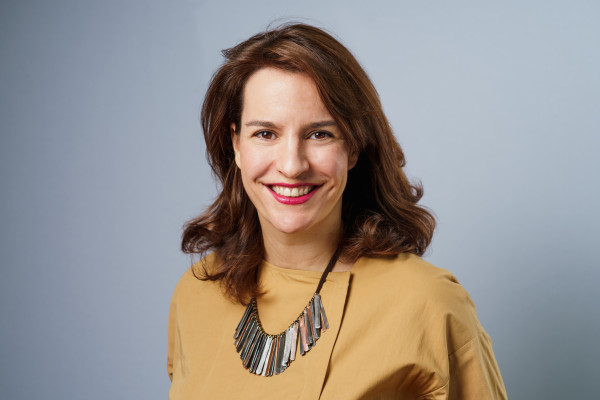
By Ana Hajduka, founder and CEO of Africa GreenCo (www.AfricaGreenCo.com).
As Africa's energy sector deregulates, exciting opportunities open up for financial innovation to benefit consumers. Private-sector buyers and traders can mitigate default risk and provide certified green energy at lower cost, writes Ana Hajduka, founder and CEO of Africa GreenCo.
Africa's renewable energy potential is undeniable, but it remains largely untapped. The problem is that the financing landscape for renewable energy and other projects in Africa was previously reliant on state utilities as buyers.
The scale of projects that could be financed in a country were then limited by the fiscal capabilities of that country and the sovereign guarantees it could provide.
This traditional model of relying on countries to provide such guarantees has faced recent challenges, because of increasing debt burdens, and shifting economic priorities.
Opportunities have therefore emerged for innovative financial approaches that will ensure more guarantees can be acquired from other sources and that risk can be diversified across a portfolio of suppliers and customers. This would see more projects achieving financial close, to ultimately provide more African people with clean energy.
There is also room to not only grow new renewable energy supply, but to create new renewable energy markets on the continent, where that supply can be sold.
As a consequence, the market is opening up to allow alternative buyers of new renewable energy, which can utilize existing regional competitive energy markets to diversify its risks – buyers such as GreenCo.
This is extremely relevant at the moment. Legislation like South Africa's Electricity Regulation Amendment Bill, is set to open up the electricity sector to new supply and trading models. This foreshadows the opening of a competitive spot market for electricity trade in South Africa – linking in the future the South African spot market with that of the Southern African Power Pool.
Namibia did something similar a couple of years ago, as did Zambia.
These regulatory market developments are important as they facilitate innovation and new private sector business models through which there can be a scale up of bankable offtake agreements for new supply. The problem in the region is not lack of projects. It's not lack of funding. It's earning enough lender trust to lend on the back of a 20-25 year power purchase agreement backed by a private sector buyer without state fiscal support.
Transmission capacity
Transmission constraints are another factor in this emerging scenario. The development of the electricity sector across the region effectively has a ceiling, determined by the available transmission network for new generation.
Previously, development finance institutions would only fund state utilities, and then only when it was proved that sufficient generation would be coming on board to utilize any new transmission infrastructure.
Now, thanks to the growing liberalisation focus in the region, allowing new private sector participants to buy and trade power, these transmission funding inflows can be facilitated. This new supply will be critical to making new transmission investments bankable.
If the private sector can sufficiently guarantee that any proposed new capacity coming on board will utilise the necessary transmission infrastructure, that new capacity effectively backs the viability of the new transmission investing – bringing a direct value add to the state utilities in South Africa and the rest of the SADC region.
Regulatory readiness
But for all of this to fall into place, we need a convergence of the relevant regulatory readiness – and we are already seeing this across the region. In many SADC countries, new legislation is providing the regulatory clarity that the private sector requires to venture into supply, transmission and trade.
The entire ecosystem must work for new entrants, and lenders. Until now, lenders have seldom considered state utilities to be creditworthy, and they have required significant fiscal guarantees to cover the power-purchase obligations of those utilities.
That model is a double whammy. Not only does it encumber utilities with debt for new generation, but it hits the national fiscus as well.
In South Africa, for example, the widely respected REIPPP process has brought online a significant amount of new generation. However, once the South African government started reporting on the process in accordance with IMF fiscal transparency regulations, this added an additional 36% to the contingent liabilities of the national treasury – almost $15 billion - overnight. That is money that can no longer be channeled into education, health and other key infrastructure development (water, transmission etc).
The REIPPP model has been extremely successful in the electricity sector, but it has perhaps outlived its usefulness. There are other priorities, and the private sector should be sufficiently capable to deliver on its own, with the lending community partnering accordingly.
The REIPPP model can be replicated in cases such as storage tenders, and in the transmission space. While transmission is usually considered a government function, it would certainly be possible to incentivize the private sector – and lenders – to enter the space.
New licensees
Across the region, markets are liberalising rapidly. South Africa has shown it can happen almost overnight, as in the case of the country's generation regulations. This has allowed third-party wheeled projects, from generators directly to customers, and facilitated new license applicants in the market such – such as GreenCo.
This shows how market thinking about the development of the electricity sector has fundamentally changed. There is collaboration like never before.
For GreenCo, events like the forthcoming AOW event offer opportunities to align with mining, commercial and industrial offtakers, as well as suppliers and IPPs. For an entity like ours, it's also a chance to show potential customers and suppliers the bankability of our own offtake; that lenders have confidence in our power purchase agreements.
Financial innovation must happen in a way that makes lenders comfortable. What that looks like in our case is that all our payment obligations are backed by an internationally AA- credit rated guarantee provider GuarantCo.
We are entering the South African market operationally ready to supply customers within South Africa and outside; and with financial readiness in the form of innovative guarantee structures to be considered bankable in the market.
The ultimate beneficiaries of this financial innovation must be the consumers. Many are looking to decarbonise their operations – for climate change reasons, and to make their products competitive on international markets.
Affordability is another key consideration. In our case, by being able to provide sufficient operational and financial risk mitigation to the lenders of the generators that supply to us, we can supply electricity far more affordably.
Around 70% of the costs of a generation or renewable energy project is from the cost of debt. Therefore, the more bankable an offtaker is, the lower the debt costs, and the cheaper the electricity – a clear demonstration of the benefits of financial innovation for the end consumer.
Distributed by APO Group on behalf of AOW: Investing in African Energy.
About GreenCo:
GreenCo is a renewable energy buyer and trader operating in Southern Africa (Zambia, South Africa, Zimbabwe and Namibia); purchasing power from renewable energy generators and selling that electricity to utilities, private sector offtakers (i.e. commercial and industrial users), national power trading markets and to the competitive markets of the Southern African Power Pool (SAPP). GreenCo is an active trader on SAPP and holds a number of applicable licenses covering its operations within the Southern African region. Through its activities, GreenCo will increase the supply of, and demand for, finance for energy projects, and mobilise private sector capital more quickly towards critical and transformative capacity addition. For more information please see: www.AfricaGreenCo.com
As the mpox outbreak that has affected the Democratic Republic of the Congo and spread to neighbouring countries continues to grow, World Health Organization (WHO) is intensifying support to countries to scale up measures to curb the virus and save lives.
On the advice of independent experts of the International Health Regulations Emergency Committee, WHO Director-General has determined that the upsurge of mpox constitutes a public health emergency of international concern (PHEIC). The emergence of a new strain of the mpox virus in the Democratic Republic of the Congo and its rapid spread, including to neighbouring countries, is one of the main reasons for the declaration of the PHEIC, the second such determination in two years relating to the disease.
So far this year, more than 2100 laboratory-confirmed cases and 13 deaths have been reported from 12 countries (Burundi, Cameroon, Central African Republic, Congo, Cote d'Ivoire, the Democratic Republic of the Congo, Kenya, Liberia, Nigeria, Rwanda, South Africa and Uganda) compared with 1145 confirmed cases and seven deaths in the whole of 2023 reported from 11 countries.
“We are hard at work on the frontlines of the response, collaborating closely with governments and communities to strengthen mpox control measures and are ramping up efforts to curb the widening trend of the virus through coordinated action with partners and national authorities,” said Dr Matshidiso Moeti, WHO Regional Director for Africa.
WHO is stepping up support to the affected countries by deploying additional experts, including epidemiologists and anthropologists, and providing initial funding to accelerate outbreak response measures. Efforts are also underway to enhance cross-border collaboration for case investigation, contact tracing and community engagement to ensure compliance with preventive measures.
The Organization also supporting national regulatory authorities to speed up regulatory approvals, as well as providing guidance to national immunization technical advisory groups to ensure readiness for vaccine rollout. WHO has triggered the process for Emergency Use Listing for mpox vaccines, which will accelerate vaccine access for lower-income countries which have not yet issued their own national regulatory approval. Emergency Use Listing also enables partners including Gavi, the Vaccine Alliance, and UNICEF to procure vaccines for distribution.
Efforts are also being ramped up to strengthen national diagnostic capacities by providing testing kits and reagents and machines to decentralize testing. Genomic sequencing is also ongoing to determine the mpox clades.
To enhance preparedness in countries neighbouring the Democratic Republic of the Congo and those at risk, disease surveillance and training of frontline health workers is being stepped up as well as public awareness campaigns.
Caused by an Orthopoxvirus, mpox was first detected in humans in 1970, in the Democratic Republic of the Congo. The disease is considered endemic to countries in central and west Africa. Mpox is transmitted from animals to humans. It can also spread from humans to humans through contact with bodily fluids, lesions on the skin or on internal mucosal surfaces, such as in the mouth or throat, respiratory droplets and contaminated objects.
Distributed by APO Group on behalf of WHO Regional Office for Africa.
Holistic approach needed to address underlying factors behind GBVF
Minister in the Presidency responsible for Women, Youth and Persons with Disabilities, Sindisiwe Chikunga, has underscored the need for a holistic approach that addresses both the immediate and underlying factors behind gender-based violence and femicide (GBVF).
Chikunga made the remarks during a dialogue on Women, Democracy and Leadership in South Africa, held at the University of South Africa (UNISA) on Thursday.
Chikunga, together with UNISA and the United Nations Women, hosted a dialogue, which looked deeply at women’s representation and administrative arrangements needed to achieve a gender-responsive government.
Chikunga said government has come to terms with the fact that laws alone will not prevent the killing of women.
“Despite being a constitutionally assured right, women continue to live in fear, grappling with alarming rates of gender-based violence and femicide. This remains a deeply entrenched problem with multifaceted roots, including historical inequalities, cultural norms, economic disparities, and systemic failures in law enforcement and justice systems,” Chikunga said.
Government has passed several laws, including the Criminal Procedure Act 51 of 1997, Domestic Violence Act 116 of 1998, Protection from Harassment Act 17 of 2011, Criminal Law (Sexual Offences and Related Matters) Amendment Act, Promotion of Women’s Rights, Empowerment and Gender Equality Bill, and the National Council on Gender-Based Violence and Femicide Act 9 of 2024.
However, to effectively prevent and combat GBVF, Chikunga said a holistic approach is needed, “one that addresses both the immediate and underlying factors”.
Significant strides in women representation
Reflecting on the journey travelled by women over the past three decades of the country’s democratic dispensation, Chikunga said over the past 30 years, the country has seen significant strides in ensuring women representation in decision-making and law-making circles.
Today, women make up 43.5% of the Parliament of National Unity, holding 171 of the 400 seats, an increase from 28% representation in 1994.
“Of the 75 Executive Members appointed in June 2024, 32 are women, representing 42.66%. Fourteen of the 32 Cabinet positions are held by women, and 18 of the 43 Deputy Minister positions are held by women,” Chikunga said.
The Minister emphasised the substantive contribution that women should make once in such positions.
“As we celebrate the strides that we have made, we also give due consideration to the tasks that remain undone, [these include] the need to drive inclusive growth and job creation; to reduce poverty and to tackle the high cost of living, and the task of building a capable, ethical, and developmental state. We remain mindful of the fact that in each of these priority areas, women are the most affected,” Chikunga said.
The Minister also highlighted significant progress made towards the fight against HIV/Aids, particularly in the rollout of antiretroviral therapy (ART) for pregnant women, and an increasing number of students that have gained access to education, especially higher education from which they were previously excluded due to their social class or marginalised race or ethnic group.
Redefining advocacy to address plight of businesswomen
Chikunga also stressed the importance of redefining advocacy and mainstreaming to be strategy-programmes-goals-oriented and action-driven, to address the plight of women in business, government, farm workers, mining, and the unemployed.
“We need to advocate and mainstream women, youth and persons with disabilities across all sectors, with a focused lens on industries with high potential for growth and development.
“We need to ring-fence funds in the budget to ensure implementation of women, youth and persons with disabilities socio-economic empowerment, starting with the allocation of change oriented -budget allocation for the department, which need to reflect intentional implementation of the gender planning and budgeting framework,” Chikunga said. – SAnews.gov.za
GabiK
Thu, 08/15/2024 - 12:59
“We want everybody to have dignified accommodation,” says ward councillor
Long Beach, Kommetjie – The best junior surfers in the country are eagerly anticipating the Sea Harvest Cape Crown presented by Xcel Wetsuits, which will take place over the weekend of 6-8 September. It has been an exciting year for junior surfing in South Africa, with some great events blessed with excellent surf throughout the …
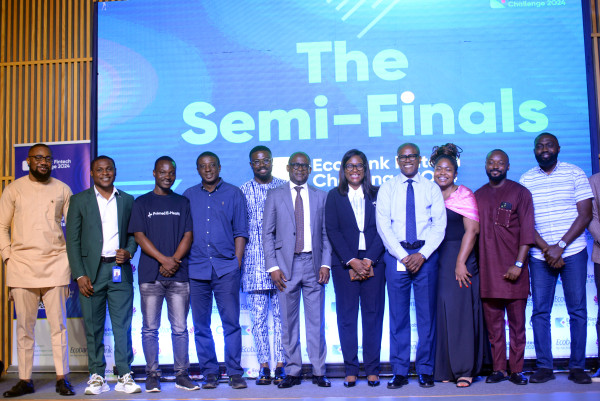
Ecobank (www.Ecobank.com), the pan-African Bank, has announced the top finalists for the first-ever and inaugural 2024 Ecobank Fintech Challenge Hybrid Semi-Final event held at the Ecobank Pan African Centre in Lagos, Nigeria. The finalists were selected from a cohort of 40 highly competitive Fintechs that made it to the semi-final stage of the competition. This year's challenge attracted over 1,550 applications from 70 countries in Africa and other global regions.
The finalists will showcase their innovative solutions at the Ecobank Fintech Challenge Grand Finale, scheduled for 27 September 2024, at the Ecobank Pan African Centre in Lomé, Togo. The event will be streamed live on Ecobank Group's social media channels, allowing a global audience to participate. Finalists of the challenge will compete for the US$50,000 ultimate prize during this highly anticipated event.
Speaking at the Semi-Final, Jeremy Awori, Chief Executive Officer of Ecobank Group, remarked, "The finalists in this year's Ecobank Fintech Challenge have showcased exceptional talent and innovation; and we look forward to welcoming them to the Finale. At Ecobank, we're committed to collaborating with these business builders to develop products and services that will benefit our customers and contribute to our continent's progress”.
Showcasing the future of African fintech, here are the exceptional finalists of the 2024 Ecobank Fintech Challenge:
The Ecobank Fintech Challenge, a flagship initiative of the Ecobank Group, organised for seven consecutive years, continues to serve as a premier continental platform for promoting innovation and collaboration between Fintechs and the pan-African Bank's cross-border markets spanning 35 countries. The challenge remains a significant event, attracting key players within the fintech ecosystem and beyond. It provides a unique opportunity for fintech entrepreneurs to address challenges such as reaching scale, navigating an uncertain regulatory environment, and managing scarcity of funding. In addition to financial rewards, the challenge offers Ecobank's expertise in diversified market operations and the right solutions to scale across its pan-African footprint and international presence.
Since inception, 60 fintech startups have been inducted into the Ecobank Fintech Fellowship.
The Ecobank Fintech Challenge is designed in partnership with international advisory firm Konfidants and is supported by various partners including Huawei, Proparco, TechCabal, BlueSpace, Afrilabs, Africa Fintech Network, MEST Africa, Naija Startups, Expand In Africa and Founders Africa.
This year's Grand Finale will bring together fintechs, regulators, investors, financial institutions, global technology companies, tech hubs, entrepreneurs, and industry experts.
Ecobank invites all key stakeholders within the Fintech ecosystem, and members of the general public to register for the Grand Finale via this link: https://apo-opa.co/4cndn5H.
Streaming platforms:
Distributed by APO Group on behalf of Ecobank Transnational Incorporated.
Media Contact:
Christiane Bossom
Group Communications
Ecobank Transnational Incorporated
Email: groupcorporatecomms@ecobank.com
Tél.: +228 22 21 03 03
Web: www.Ecobank.com
About Ecobank Group (or ‘Ecobank Transnational Incorporated' or ‘ETI'):
Ecobank Group is the leading private pan-African banking group with unrivalled African expertise. Present in 35 sub-Saharan African countries, as well as France, the UK, UAE and China, its unique pan-African platform provides a single gateway for payments, cash management, trade and investment. The Group employs over 14,000 people and offers Consumer, Commercial, Corporate and Investment Banking products, services and solutions across multiple channels, including digital, to over 32 million customers. For further information, please visit www.Ecobank.com.
Public Procurement Bill to redress women socio-economic exclusion
Women, Youth and Persons with Disabilities Minister, Sindisiwe Chikunga, says the Public Procurement Bill provides the department with an opportunity to advocate and mainstream tangible models and interventions to redress the ongoing socio-economic exclusion of women, youth and persons with disabilities.
Chikunga commended the significant efforts by President Cyril Ramaphosa after signing into law the Public Procurement Bill last month, which aims to create a single framework that regulates public procurement, including preferential procurement, by all organs of State, with the necessary efficiency, cost-effectiveness and integrity.
“As a department, we will be bringing forward tangible interventions through which this legislation will serve to redress the longstanding and ongoing socio-economic exclusion of women, youth and persons with disabilities,” Chikunga said.
Addressing a dialogue on Women, Democracy and Leadership in South Africa at the University of South Africa (UNISA) on Thursday, Chikunga also commended President Ramaphosa, as the Chairperson of the African Union in 2020, for putting forward a number of recommendations for the advancement of women on the continent, which have been adopted by AU Heads of State.
READ | Government, business partnership begins to flourish
Increase in support for women entrepreneurs
Chikunga also acknowledged a surge in the establishment, growth and support of women-owned businesses in key sectors, including energy, tourism, agriculture, the ocean economy, and manufacturing.
According to the most recent Mastercard Index of Women Entrepreneurs (MIWE), South Africa ranks as the second highest country in Africa in terms of its proportion of women-owned businesses and the formal support available for women entrepreneurs.
The Global Entrepreneurship Monitor (GEM) Women’s Entrepreneurship Report also revealed that women in countries like South Africa are among the most innovative and high-growth entrepreneurs in the world.
“There is sufficient evidence that reaffirms the importance of women entrepreneurs in contributing to the overall productivity and transformation of our economy through diversifying industries, innovation, and fostering economic resilience.
“In addition, women-owned businesses contribute to the creation of employment opportunities, promote inclusive supply chains, and stimulate local economies,” Chikunga said.
Women economic advancement in the Continent
Chikunga further underscored the importance of the adoption of the Decade for African Women’s Financial Inclusion and Gender Equality, 2020-2030.
“This is a critical initiative for the women of Africa, given that the lack of access to finances hinders their socio-economic progress, and thwarts their ability to have ownership and control over resources such as land, businesses and property,” Chikunga said.
She added that women’s access to markets continues to be a challenge for women on the continent, especially access to trade and global markets.
The Minister argued that the African Continental Free Trade Area Agreement (AfCFTA) will open doors for global trade and markets for women, and “this is of huge importance to the women in South Africa to leverage on the opportunities this AfCTA promises for the economic empowerment and wealth creation for women in Africa”.
“Africa must be Africa’s biggest trading partner and demand for products across the continent offers African women the opportunity to be suppliers to this demand. Joint initiatives of pooling resources in this regard will help grow women businesses, provide the necessary skills and training required for this, and open markets and export trade opportunities,” Chikunga said. – SAnews.gov.za
GabiK
Thu, 08/15/2024 - 13:49
The Unseen Heroes of the Circular Economy Across South Africa, countless women play a vital role in the circular economy by collecting and recycling glass and even running successful glass collection businesses. These women, often working in challenging conditions, turn discarded glass into a valuable resource, supporting their families and contributing to a cleaner environment. …
Charges withdrawn against 95 Libyan nationals; deportation next
The National Prosecuting Authority (NPA) has withdrawn charges against 95 Libyans who were arrested at a suspected military camp in Mpumalanga last month.
The 95 were facing charges of Contraventions of the Immigration Act.
“The Acting Director of Public Prosecutions, Sonja Ntuli, reviewed all available evidence and the representations made on behalf of the accused and having considered the evidence and policy considerations, has decided to withdraw the charges preferred against all accused who were arrested at the military training camp in July 2024.
“The charges related to alleged misrepresentations made by the accused in their applications for study visas. There were other more serious allegations that [the] SAPS [South African Police Service] needed to look into,” the NPA said on Thursday.
READ | Cabinet commends continued law enforcement agencies successes
Other matters, according to the prosecutorial body, will be “dealt with administratively in terms of the Immigration Act and its Regulations by the Department of Home Affairs officials”.
“Importantly, the SAPS (Directorate of Priority Crime Investigations) are proceeding with investigations against the planners, organisers and financiers of the military training camp. The NPA is working closely with DPCI to ensure that these alleged criminals are brought to justice as appropriate.
“The NPA has coordinated with its criminal justice partners and the 95 accused will be under the custody of the Department of Home Affairs that will facilitate the deportation process,” the NPA concluded. – SAnews.gov.za
NeoB
Thu, 08/15/2024 - 14:03
On Monday, 5 August 2024, the Western Cape Minister of Infrastructure, Tertuis Simmers, paid a visit to the Seven Passes Road, between George and Wilderness. The road has been severely impacted by recent inclement weather conditions. Sections of this historical road were washed away due to heavy rainfall, also damaging drainage infrastructure which pose the …
“It’s Time to Stop ‘Manning’ Boardrooms, Women in Senior Positions Drive Transformative Change in the Workplace, says Afrika Tikkun. 7 AUGUST 2024, JOHANNESBURG: As South Africa prepares to commemorate Women’s Day, Afrika Tikkun calls for transformative change in the workplace, emphasising the urgent need for more women in senior positions. Leadership that is not only …
NSG hosts symposium on China-Africa relations
China-Africa Media and Publishing, in collaboration with the National School of Government of South Africa, is set to hold a symposium titled: “The Governance of China: Forging a Closer China-Africa Community of a Shared Future, in Pretoria on Thursday.
Thursday’s event will bring together South African and Chinese government officials, scholars, experts, and journalists for a robust exchange of ideas and insights.
The seminar serves as a critical forum to discuss and shape the future of China-Africa relations and is a side precursor event to the upcoming Beijing Summit of the Forum on China-Africa Cooperation (FOCAC) which will be held in early September in China.
The FOCAC summit is expected to unveil new measures to deepen cooperation over the next three years, laying a stronger foundation for a closer China-Africa community with a shared future.
The seminar of the NSG and China-Africa Media in Publishing is intended to promote dialogue and debate on China-Africa relations among government officials, scholars and experts.
The seminar marks a significant step in the ongoing cooperation between China-Africa Media and Publishing and the National School of Government, following the signing of a Memorandum of Understanding (MOU) in May of this year.
The agreement aims to promote joint research and dialogue in the form of Seminars and Symposia on topics such as China-South Africa relations and Global Governance. – SAnews.gov.za
Edwin
Thu, 08/15/2024 - 08:54
When it comes to replacing a car engine, quality and reliability are paramount. Lou Appels Engine Room offers an extensive selection of high-performance used engines that meet these criteria. This blog will cover engines from Honda, Hyundai, Jaguar, Jeep, and Kia, showcasing their features and why they are a smart choice for any vehicle owner. …
“We Need to Talk About Alcohol,” says Dr Skye Scott It’s curious to me, that of all the substances we have imbibed through our history as humans, the one that we have branded, celebrated, and made available to all, is alcohol. Its use and misuse is at the root of so much insomnia, depression, anxiety, …
NPA Aspirant Prosecutor Programme back on track
The National Prosecuting Authority (NPA) has announced that it will reinstate the much vaunted Aspirant Prosecutor Programme.
The programme was suspended this year due to budget constraints.
“In 2022/23, the NPA absorbed over 1000 law graduates into its Aspirant Prosecutor Programme. Due to the unplanned budget cuts, many of these aspirants could not be given contracts after completion of the programme.
“The recent improvement in the NPA’s budget situation has allowed the organisation to offer contracts to many aspirants that are already in the system, gradually filling the vacant district court posts that are being created through internal promotions,” the NPA said in a statement on Thursday.
The institution added that training for the 2025 intake is expected to start on 1 March 2025.
“For 2024, the NPA is starting the process to recruit a smaller intake of 80 aspirants for the year, but with a specific focus on NPA offices that have the capacity to train these colleagues and utilise them in priority high need areas.
“The advertisement for the 2025 intake will be published on 16 August on the NPA and DPSA [Department of Public Service and Administration] websites, as well as on the NPA social media platforms,” the NPA said.
Enquiries on the programme can be sent to communication@npa.gov.za – SAnews.gov.za
NeoB
Thu, 08/15/2024 - 09:51
Chili Burns, a prominent distributor in the gourmet food sector, is pleased to announce its new partnership with Food Infusions, a well-respected company known for its innovative and high-quality food products. This collaboration positions Chili Burns as a key distributor for Food Infusions, allowing the company to broaden its portfolio and serve a wider range …
GAC Motor, a subsidiary of GAC Group, continues its global expansion, committed to delivering quality products and services to customers worldwide. Founded in 2008, GAC Motor has rapidly grown into one of China’s leading vehicle manufacturers, boasting a workforce of 113,000 and earning a spot at No. 165 on the 2023 Fortune Global 500 list. …
Dear Editor The DA calls on the Minister of Health, Dr Aaron Motsoaledi, to ensure that the Mpox is put on the Southern African Development Community (SADC) summit agenda this coming weekend. While South Africa’s numbers are under control and we have access to Mpox treatment, the fact that the Africa Centres for Disease Control …
Dear Editor The Democratic Alliance (DA) welcomes the opportunity to defend the Constitution and rights of Matjhabeng residents in the Free State High Court today. This case, when judgment is granted in the DA’s favour, which we believe will be the ultimate result, will also set a precedent that we hope will lead to better …