Fiery end to Green Point tent city
The homeless community was evicted on Thursday

MyZA
News, Directory, Events and Other Stuff
The homeless community was evicted on Thursday
Phaahla welcomes budget allocation
Finance Minister, Enoch Godongwana has announced an allocation of R848 billion for the Department of Health over the Medium-Term Expenditure Framework (MTEF), a move that has been welcomed by the Minister of Health, Dr Joe Phaahla.
The money includes an additional R11.6 billion to help cover last year’s wage agreement, R27.3 billion for infrastructure, and R1.4 billion for the National Health Insurance (NHI) grant over the same period.
“The allocation for the NHI is a demonstration of the government’s commitment to this policy,” Godongwana said when tabling the 2024 Budget in Parliament on Wednesday.
READ | NHI receives in excess of R1 billion allocation
He said that activities such as upgrading health facilities and improving the quality of care are necessary to ensure that they meet the minimum accreditation criteria for contracting under NHI.
They are also, according to Godongwana, key enablers in improving the public healthcare system and should be undertaken.
“Minister of Health, Dr Joe Phaahla, welcomes the decision by the National Treasury to favourably consider that the current shrinking budget allocations have a negative impact on the effective functioning of the public health system in the country.”
The department has announced that they also have been allocated an additional budget of R3.7 billion for the 2024/25 financial year to compensate employees in the sector.
This will help address the increase in the wage bill as well as the recruitment of more staff, including nurses and medical doctors.
Phaahla has been in consultation with Godongwana on implementing plans to strengthen the health system, including the recruitment of essential health workers like medical doctors and other professionals.
“Although the budget may not address all health service delivery challenges at once, it will go a long way to enable the department to respond to the immediate and key priority needs to strengthen the health system. These include activating vacant but unfunded essential posts,” said the Health department.
The department will soon outline plans with timelines for recruiting and appointing health workers, including recently graduated health professionals and unemployed medical doctors. – SAnews.gov.za
Gabisile
Thu, 02/22/2024 - 10:30
SIU, Hawks raid Kimberley law firm
The Special Investigating Unit (SIU), together with the Hawks, have conducted a raid on a Kimberley based accounting firm allegedly related to corruption at the National Lotteries Commission.
The raid comes in the wake of a deep SIU investigation delving into incidents of alleged rampant corruption and maladministration, which is said to have cost the commission at least R1.4 billion.
“The raid follows a tip-off received from a whistle blower suggesting that certain accounting firms and accountants were allegedly engaged in criminal activities by aiding non-profit organisations [NPOs] and non-profit companies [NPCs] in preparing and producing fraudulent financial statements which are meant to be submitted to the NLC in support of their application for grant funding.
“One of the requirements for NLC grant funding in terms of the Lotteries Act is that an applicant must submit an audited financial statement together with a duly completed application form.
“The whistle blower alleged that several NPOs and NPCs submitted fraudulent financial statements to the NLC, which were prepared, produced, and signed off by the directors and or representatives of the accountants without any bank statements submitted to the accountants,” the SIU said in a statement.
The search resulted in the seizure of laptops and documentation.
“In line with the Special Investigating Units and Special Tribunals Act 74 of 1996 (SIU Act), the SIU will refer any evidence pointing to criminal conduct it uncovers during its investigations to the National Prosecuting Authority (NPA) for further action.
“The SIU is empowered by the SIU Act to institute civil action in the High Court or a Special Tribunal in its name to correct any wrongdoing uncovered during its investigation caused by acts of corruption, fraud, or maladministration,” the statement concluded. – SAnews.gov.za
NeoB
Thu, 02/22/2024 - 11:56
She was questioned about section 174 of the Constitution which governs the appointment of judges
E Cape collaborates to accelerate spring water project rollout
The Eastern Cape Department of Rural Development and Agrarian Reform (DRDAR) has joined forces with Chris Hani District Municipality (CHDM) to accelerate access to clean drinking water in rural communities, using the cost-effective rollout of spring water projects in the province.
DRDAR MEC Nonkqubela Pieters and Chris Hani District Municipality Executive Mayor Lusanda Sizani, have officially handed over a spring water project that will benefit five villages in the Manzana administrative area, outside eNgcobo. The community has been battling to access safe drinking water.
Pieters said the programme, implemented by the department’s Rural Appropriation Technology Unit (RATU), is cost-effective because no tenders were issued for the construction of the project. However, local people are trained to do maintenance work when the need arises.
“In this programme, we do not have a middleman or spend millions on contractors for something that will not be operational. We employ and train local people and in that way, we create the opportunities for people to fend for their families,” Pieters said.
The MEC explained that RATU trains locals workers and procures material for the construction of the project.
“In delivering these spring water protection projects, DRDAR identifies nearby hills and mountains with spring water [that is channeled]... for use by households,” Pieters said.
She said during the implementation of the Manzana project, which is set to benefit at least 1 220 villagers, about 75 people including 61 youth, seven women and seven men were employed and trained.
Pieters said the department will use the District Development Model (DDM) to work with the municipality to ensure the smooth rollout of spring water projects, taking advantage of the more than 250 natural springs in the district.
“We are in agreement with the executive mayor that all these springs will be utilised to bring water to all the people of Chris Hani District, who do not have access to water while they have spring water in their villages.
“They will now have access to clean drinking water because the implementation of the programme will be accelerated. We will reach more communities through this collaboration with the municipality,” Pieters said.
The delivery of the spring water protection projects marks the completion of infrastructure work done by the department in various rural communities, which will now have reliable access to clean drinking water and agricultural activities.
To date, Pieters said, a total of 757 water taps have been installed in 36 villages across the province, benefitting 8 781 households, including four schools, one clinic and one youth co-operative.
“The department has [also] implemented 17 spring water protection projects that are contributing towards community development with an investment of R14 765 million benefiting 4 123 households, and creating 967 temporary jobs,” the MEC said.
Sizani said with the district municipality being both a Water Services Authority (WSA) and provider, water supply that is pumped with generators to serve communities is expensive compared to the department's method of drawing water, using natural springs, to communal taps and households.
“We are a rural district, which is leaning towards the agricultural sector potential for growth, hence we are partnering with the department to bring water to the people for both consumption and agricultural activities. Through this programme, we aim to achieve agriculture development prosperity,” Sizani said.
Local farmer, Viwe Gidimisani, said when the spring water project construction started in his village, he was inspired to start his vegetable production business, banking on using water from the spring for irrigation.
Gidimisani received a new hose pipe, wheelbarrow, spade, fork spade, hand hoe, and various vegetable seedlings from government, as part of ongoing efforts to support villagers to produce their own food.
“This will help my enterprise to grow more, and it will give me strength to improve the productivity of my business. I am happy that water supply is always available, unlike in the past where we battled to get water," Gidimisani said.
Gidimisani is now able to grow his enterprise and owns a hawker’s stand, where he sells his spinach and cabbage produce to his neighbours and local buyers in town. – SAnews.gov.za
GabiK
Thu, 02/22/2024 - 13:35
President welcomes training for traditional leaders to act as change agents
President Cyril Ramaphosa has welcomed the partnership between the Department of Cooperative Governance and Traditional Affairs and the National School of Government (NSG) to provide training on, among other things, facilitating socio-economic development for traditional communities.
“The programme is aimed at empowering traditional leaders to act as change agents in their communities, and to transfer new knowledge and skills so we can initiate sustainable economic interventions in our rural areas,” said the President.
The President was delivering the keynote address at the annual official opening of the National House of Traditional and Khoi-San Leaders (NHTKL) at the National Council of Provinces (NCOP) Chamber in Cape Town, on Thursday.
“We know that capacity building is essential if we are to enhance the role traditional leaders play in development,” said the President.
He said the goal was an active rural citizenry with traditional leaders at the helm.
The Art of Facilitating Socio-Economic Development for Traditional Leaders Programme is part of the suite of funded programmes offered by the NSG for public servants to attend free.
These courses are delivered by the NSG as part of interventions to professionalise the public sector and to improve performance in all spheres of government.
The programme seeks to support and empower Traditional Leaders to act as economic change agents in their communities and be able to create sustainable jobs and create wealth while also building an active rural citizenry who participate in and support economic development.
"It will provide the Traditional Leaders with knowledge and skills to identify and utilize local natural resources in an environmentally sustainable way.
"It is aimed at capacitating Traditional Leaders with knowledge, skills, attitudes, and practical capabilities to engage and empower communities to use the available opportunities for their own socio-economic development. The programme supports a range of role-players who work closely with communities, that are, volunteers from the community, Community Development Workers, government officials and Traditional Leaders," the NSG had said in an earlier statement.
The Programme assists Traditional Leaders, amongst others, to:
Elections
Meanwhile, the President urged traditional leaders to continue to encourage all eligible voters to participate in the National and Provincial Elections on 29 May 2024.
“As we have done before, we call on traditional leaders to actively promote free and fair campaigning, and to ensure that all voters can exercise their democratic right,” he said. – SAnews.gov.za
Janine
Thu, 02/22/2024 - 16:14
President hails traditional leaders for flood relief efforts
President Cyril Ramaphosa has praised the efforts of uMgogodla kaZulu, a group comprising the spouses of traditional leaders and women traditional leaders, for their commendable work in addressing the challenges posed by the recent floods in KwaZulu-Natal.
Addressing the annual official opening of the National House of Traditional and Khoi-San Leaders (NHTKL) in Cape Town on Thursday, the President said it was pleasing to note that the institution of traditional and Khoi-San leadership is playing its role in assisting communities.
The President told the traditional and Khoi-San leaders that climate change is a growing concern in South Africa. He said the recent flooding, together with other extreme weather events, are a stark reminder that the country cannot be complacent about this grave threat to both lives and livelihoods.
“It is pleasing to note that the institution of traditional and Khoi-San leadership is once again playing its role to assist communities. I specifically wish to commend the work done by the structure of spouses and female traditional leaders, called uMgogodla kaZulu, during the floods that engulfed KwaZulu-Natal.
“The Ondlunkulu stood up, in partnership with Al-Imdaad, Old Mutual, the Princess Gabo and Kaizer Junior Foundations, and others to help those who were affected by floods. We appreciate this valuable work,” the President said.
President Ramaphosa said he has been advised that several other provinces have formalised the structures of spouses and women traditional leaders of amaKhosi.
He implored the House to continue working together with provincial Houses of Traditional and Khoi-San Leaders to ensure that such structures are established and capacitated.
30 Years of Democracy
In his State of the Nation Address delivered earlier this month, the President reflected on the journey South Africa has traversed over the past 30 years since attaining freedom.
"As a nation, we can also be proud of the journey we have travelled, according to the institution of traditional leadership and the stature it deserves.
“Today, our Kings are recognised as Kings, as opposed to Paramount Chiefs, a term which colonial and apartheid rule introduced to make it clear that in their minds the real Kings were only those found in Europe.
“Today, we have a National House of Traditional and Khoi-San Leaders that plays an active and meaningful role in our national life,” the President said.
President Ramaphosa expressed the wish that more Khoi-San leaders will be brought into the fold and be formally recognised under the Traditional and Khoi-San Leadership Act.
He said that the Commission on Khoi-San Matters has been appointed to receive and assess applications for recognition and make recommendations to the Minister of Cooperative Governance and Traditional Affairs.
While the process is taking longer than was initially envisaged, the President has appealed that the Commission be allowed the space to continue with this complex historical mission that they have been assigned.
Addressing unemployment
The President told the House that they have a shared responsibility to work together to address the country’s unemployment crisis, particularly among young people.
He highlighted that the Presidential Youth Employment Intervention, the National Youth Service and the Youth Employment Service are just some of the initiatives government is implementing that are making a difference.
“I call on this House to play an active role in the ongoing process of recruiting young people into the National Rural Youth Service Corps that is being coordinated by the Department of Agriculture, Land Reform and Rural Development.
“The InvestRural blueprint handed over to me by the former Chairperson of this House, the late iNkosi Mahlangu, is being fused into government programmes.
“The training of young people by the Department of Agriculture, Land Reform and Rural Development is a practical example of this. Another is the work being done by the Department of Traditional Affairs in partnership with the Department of Mineral Resources and Energy to streamline and integrate Social Labour Plans into industry operations,” he said.
The President further told the House that the Welisizwe Rural Bridges Programme coordinated by the Department of Public Works and Infrastructure is yet another example of positive and meaningful change being brought to rural areas. Just last month he attended the launch of one of these bridges in KwaZulu-Natal.
“To witness the difference these bridges are making in the lives of rural communities, especially for young learners who need to cross rivers to get to school, is remarkable,” he said.
Capacity building
The President has emphasised that capacity building is essential if the country is to enhance the role traditional leaders play in development.
In this regard, he welcomed the partnership between the Department of Traditional Affairs and the National School of Government to provide training on, among others, facilitating socio-economic development for traditional communities.
The programme is aimed at empowering traditional leaders to act as change agents in their communities, and to transfer new knowledge and skills for the activation of sustainable economic interventions in rural areas.
“Our goal is an active rural citizenry, with our traditional leaders at the helm. The issue of transferring communal land to traditional councils is one of great interest to this House.
“As government, we are in the process of finalising the bill on communal land, which will be followed by extensive consultations.
“I know that this process is taking longer than expected, but democracy requires that we give society a voice in matters that concern them,” he said.
Initiation
Turning to the challenges facing initiation, President Ramaphosa said that these should be decisively addressed.
“We cannot continue to have customary initiation being turned into a harmful practice.
“We need to do all in our powers as government, communities, traditional leaders, the National Initiation Oversight Committee and provincial structures to put to an end to these unnecessary and entirely avoidable deaths and injuries,” he said.
The President further urged the House to continue to monitor and guide provinces and various local houses on the provisions of the Customary Initiation Act.
“We must live up to the slogan of 'Mabaye Bephila, Babuye Baphila',” he said.
Traditional Courts Act
The President told the House that he has assented to the Traditional Courts Act and will soon be proclaiming the date on which it comes into effect.
In the meantime, he said, the Department of Justice and Constitutional Development and the Department of Traditional Affairs have started with some of the preparatory work that will facilitate implementation.
This includes visiting some of the traditional councils to further discuss their approaches to alternative dispute resolution and the resources they deploy in this regard. The President added that this is a matter on which they have finally made good progress.
On concerns expressed by the House with regards to involving traditional leadership more in the work of the Inter-Ministerial task Team, President Ramaphosa said that he, along with the Deputy President, is seized with the matter of ensuring that members of this House are invited to workstream meetings and are able to participate more fully.
Exercise your right to vote
The President said on 29 May, South Africans will be going to the polls to vote in the seventh democratic elections for national and provincial government.
As the country prepares for this historic occasion, President Ramaphosa has once again urged traditional leaders to continue to encourage all eligible voters to register and participate in these elections.
“As we have done before, we call on traditional leaders to actively promote free and fair campaigning, and to ensure that all voters can exercise their democratic right.
“May you remain with the spirit of our forebears, who never retreated when challenges were facing them. Working side by side, we will move forward,” he said. – SAnews.gov.za
DikelediM
Thu, 02/22/2024 - 14:04
As Summer continues to be in full swing across the country and finding the perfect pair of comfortable shoes that won’t compromise on style and fit for any occasion is vital. FitFlop has a versatile range of footwear for everyone and these endless fashionable shoe options make seasonal shopping a breeze. Find your perfect pair …
President condemns the killing of traditional leaders
President Cyril Ramaphosa has condemned in the strongest terms the rise in the killing of traditional leaders, especially in KwaZulu-Natal.
The President delivered the keynote address at the annual official opening of the National House of Traditional and Khoi-San Leaders (NHTKL) at the National Council of Provinces (NCOP) Chamber in Cape Town on Thursday.
“Our law enforcement agencies are hard at work to ensure that those responsible are brought to book. On behalf of government, I wish to pass our deepest condolences to all families for the loss of their loved ones and to you for the loss of your colleagues.
“May their souls and those of other traditional leaders who passed on since the last opening of the House continue to rest in peace,” President Ramaphosa said.
Last year, KwaZulu-Natal Premier Nomusa Dube-Ncube condemned the killings calling them an attack on the State as they threaten to destabilise an institution critical to the stability and order of society.
In a meeting with the South African Police Service in January 2022, it emerged that the police were investigating 51 murder cases going back to 2012, and at the time 30 people had been arrested, while 18 cases were still pending in court.
“As government we remain committed to working with the institution of traditional leadership in pursuit of progress and development. We did so extremely successfully during the COVID-19 pandemic, during recent floods, and in a number of other areas.”
He said they were working together to combat gender-based violence, a scourge that is tearing communities apart.
“I have just returned from the annual Summit of Heads of State and Government of the African Union, where we participated in a high-level event on promoting positive masculinity across our continent.
“We need to be doing more in our communities to bring men into this effort, and focus on prevention and awareness raising,” the President said.
Personally, he said he has been engaging with young men through peer dialogues where they are able to not only speak openly about what masculinity and manhood means to them, but also commit themselves to playing their part to end gender-based violence.
The President called on male traditional leaders to be part of this effort and to start their own men’s dialogues.
“The influence and stature you bring to bear can and does make a difference, given the role that cultural norms and practices often play in perpetuating violence against women and girls,” he said.
President Ramaphosa pointed out that drug abuse is another serious challenge in communities.
He said it was encouraging to note that the House was supporting the work of the Central Drug Authority. “I urge you as this House to encourage provinces and local Houses to establish relationships with community organisations to fight the scourge of drugs together,” he said. – SAnews.gov.za
DikelediM
Thu, 02/22/2024 - 14:01
Dear Editor Swimming South Africa’s abrupt withdrawal of the water polo teams, despite being Africa’s top contenders in the World Aquatics Championships this month, and qualifying for the 2024 Paris Olympic Games, highlights systemic issues within SA Aquatics. The DA has received complaints emphasizing maladministration and insufficient support from Swimming SA. The South African Sports …
Dear Editor Earlier this month, the Minister of Health, Dr Joe Phaahla, made promises that 800 unemployed doctors would have jobs by April. The Minister’s assurances were apparently based on discussions with National Treasury that funds would be availed in the National Budget. The Minister of Finance, Enoch Godongwana, delivered the National Budget yesterday and …
An emergency shutdown left most of the city without any water for a few days this week
Dear Editor In a special report published earlier this week, it was revealed that the Minister of Police, Bheki Cele, has failed for nearly two years to appoint a Hawks watchdog. In terms of the South African Police Service (SAPS) Act the Minister must appoint a retired Judge to lead the oversight of the Directorate …
Dear Editor In an effort to ensure transparency in the fishing sector, the DA applied in 2023 for the scoring sheets for the long-delayed Fishing Rights Allocation Process (FRAP) via a Promotion of Access to Information Application (PAIA). This request has now been granted. The awarding of rights in terms of the FRAP process has …
22 February 2024 – She’s already raised over R3 million to upgrade school buildings, build offices and toilet blocks, and buy school shoes for children who don’t have them, and Nontuthuko Mgabhi is not done yet. Inspired by the struggles of many KwaZulu-Natal children who face barriers to education due to the lack of basic …
Budget cuts everywhere but not to failed programmes, failed ministries or electioneering. The cabinet’s decision to raid R150 billion of surplus “paper profits” within the Gold and Foreign Exchange Contingency Reserve Account (GFECRA) may provide some breathing space, but this is not a sustainable strategy but rather a clear sign of a desperate finance minister …
Editor: Never in the history of South Africa has a Judge been impeached. The letter below refers: Dear Editor More than 15 years later, the DA’s position that Hlophe lacks the integrity to be a judge, has been affirmed by the National Assembly which has adopted a resolution supporting the Judicial Services Commission’s finding that …
Loosing ones hair is a common side-effect of cancer therapy – shaving or spraying your head has become symbolic gesture of support for cancer survivors. This is the 22nd national CANSA Shavathon, independently managed by CANSA staff and volunteers, and we can’t wait to see you at our events! Show your support by bringing your …
Dear Editor The Democratic Alliance (DA) Abroad has been informed that the requirement to have a South African passport in addition to an ID will fall away for overseas voters. This follows the apparent removal of the requirement from the Independent Electoral Commission (IEC) website in recent days, with officials also indicating informally that South …
Dear Editor The DA has released for public and media review all cadre deployment documents provided so far by the ANC in accordance with a constitutional court order in our favour. Link to the documents: https://download.da.org.za/ANC-cadre-documents-20240220.pdf The DA is committed to upholding principles of public transparency. In line with this commitment, we have uploaded the …
As time goes by, we continue to see that Clogs have been a hot trend for quite some time, they have undergone a remarkable evolution and are now available in several sophisticated and comfortable materials. These shoes have become more than just a fashion statement, they are practical and stylish at the same time.?There are …
Agrizzi to appear in Pretoria High Court next week
The corruption case of former Bosasa Chief Operations Officer (COO) Angelo Agrizzi has been transferred to the Pretoria High Court.
The matter relates to alleged gratifications Aggrizi paid to former Member of Parliament, Vincent Smith.
It is alleged that in exchange for using his influence to shield Bosasa from accountability, Smith received security upgrades to his home and cash payments through the business he owned.
“Agrizzi was initially arrested in October 2020 for having allegedly offered former Parliamentarian Vincent Smith gratification to the value of over R800 000. He is the only accused in the matter as the case was separated from his co-accused Vincent smith in July 2021.
“Agrizzi currently faces two cases brought against him by the Investigating Directorate. His mental assessment report from Weskoppies Psychiatric Hospital is also expected to be submitted to the court on 29 February 2024, in his separate R1.8 billion Bosasa and Department of Correctional Services matter,” the National Prosecuting Authority (NPA) said.
Aggrizi is expected to appear in court on 29 February 2024. – SAnews.gov.za
NeoB
Thu, 02/22/2024 - 12:16
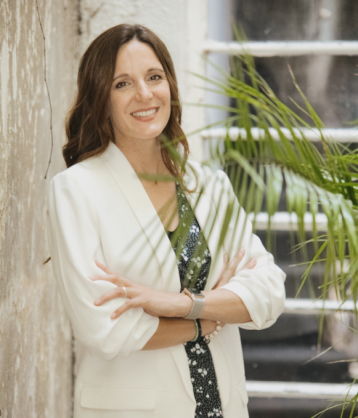
The survey, which spanned 1,300 respondents in ten African and Middle Eastern countries, revealed that 63% of users are open to sharing their personal information, while an impressive 83% expressed confidence in the accuracy and reliability of these AI tools. “While the results clearly show that generative AI tools are widely used, they also highlight the need for increased user training and awareness regarding the potential risks associated with this powerful new technology,” says Anna Collard, SVP Content Strategy and Evangelist at KnowBe4 AFRICA (https://www.KnowBe4.com).
Upon its introduction in late 2022, ChatGPT revolutionised the way people work. The highly adept chatbot, known for its natural and impeccable English, swiftly won over critics. Business teams discovered they could create marketing campaigns in a matter of minutes instead of hours, and effortlessly generate content in various forms, such as text and images. However, some argue that the world has embraced generative AI too hastily.
“The adoption of genAI offers tremendous opportunities for African users and organisations but we also need to consider the associated risks,” says Collard. “Our survey - which runs across users owning smartphones in 10 African countries - indicates that all respondents are using generative AI in their personal and professional lives, with many using it on a daily or weekly basis.” The primary purposes for using generative AI are research, information gathering, email composition, creative content generation, and document drafting. Respondents highlighted several benefits of using generative AI, including time-saving, assistance with complex tasks, increased productivity, and enhanced creativity.
“Despite the hype about job losses and various industries being negatively affected by generative AI, 80% of respondents didn't feel that it threatened their job security, although 57% believed it has the potential to replace human creativity,” says Collard. “What is interesting in the findings is the disconnect between what people think and the reality, particularly when it comes to cybersecurity.”
Too willing to share sensitive data
The survey, carried out across South Africa, Botswana, Nigeria, Ghana, Kenya, Egypt, Mauritius, Morocco, United Arab Emirates, and Saudi Arabia, revealed that almost two-thirds of users are at ease sharing their personal information with generative AI tools such as ChatGPT. The comfort level in sharing sensitive data varied across countries. For example, in South Africa, only 54% of users were comfortable sharing their personal information with generative AI tools, while in the UAE it was 67%, and in Nigeria, it was 75%.
According to the survey, 83% of users feel confident about the accuracy and reliability of generative AI, showing an excessive level of trust. Collard comments that it is important to encourage critical thinking and be aware of our psychological biases that make us blindly trust content that is synthetically generated. “For example, research shows that people overestimate their abilities to detect deepfakes (Köbis et al., 2021) and in fact perceive AI-synthesized images as more trustworthy than real faces (Nightingale and Farid, 2022)”
Another concerning finding is the lack of comprehensive policies in organisations to address the challenges associated with generative AI. Almost half of the respondents (46%) reported having no generative AI policy at work, and 8% stated that they were prohibited from using it. “Employees are already using generative AI, so attempting to ban it is futile. Instead, it is crucial to establish policies that protect both organisations and their employees, ensuring responsible and safe usage,” asserts Collard.
Deepfakes - one of the most concerning uses of AI
A previous KnowBe4 AFRICA survey found that almost half of consumers do not know what deepfakes are, while a recent survey of South African IT managers by KnowBe4 and ITWeb showed that 60% of organisations do not provide training on deepfakes. “Scammers can trick people into believing that their loved ones are being held hostage by using fake voice and video messages created with this technology,” explains Collard. Because they are so convincing, many people are falling for these scams, including organisations which stand to lose both money and their sensitive data. With elections coming up in South Africa, the US and many other countries, the World Economic Forum has ranked disinformation as one of the top risks for this year. Previous research has shown deepfakes as one of the most worrying uses of AI (https://apo-opa.co/49Co9o9), particularly when used for political manipulation.
“A zero-trust mindset needs to be cultivated to help people overcome the threats of malicious use of generative AI,” concludes Collard. “Companies should provide more training and implement comprehensive policies to help their employees navigate this exciting and daunting new technology.”
To read the full report on generative AI usage in Africa and the Middle East, click here (https://apo-opa.co/4bW7b5E).
Distributed by APO Group on behalf of KnowBe4.
As the university year begins, there is much excitement in the air with a new student cohort starting first year and attending lectures for the first time. Now is a good time for students to start setting their financial goals for the future—a solid financial plan backed up by good money habits can pave the …