It’s tough to be old and without water in Joburg
“I’ve fallen down carrying a bucket of water with no one here to help me”

MyZA
News, Directory, Events and Other Stuff
“I’ve fallen down carrying a bucket of water with no one here to help me”
Ekurhuleni working to address waste services disruptions
The City of Ekurhuleni is working to address the challenges experienced with waste removal services in Tsakani, KwaThema, Duduza and Langaville.
The city said the disruption to waste removal services, which has slightly affected the collections schedule in the areas since Tuesday, is receiving attention.
“We are attending to the challenges, and we hope to resolve the issue as soon as possible so that the services can resume. A recovery plan has been developed to address the backlog that has been created as a result of the latest developments,” said the city’s spokesperson, Zweli Dlamini.
Dlamini encouraged residents not to take out their bins as per the round collection schedule until the situation has been resolved.
“The city undertakes to inform the residents when to take out the bins when the situation has normalised. We apologise for the inconvenience caused and remain committed to our agenda to keep Ekurhuleni clean at all times,” Dlamini said. – SAnews.gov.za
GabiK
Thu, 10/19/2023 - 10:26

The significant advantages of nuclear energy in addressing Africa's energy needs and eradicating energy poverty was highlighted during a panel discussion at African Energy Week, in Cape Town.
Enobot Agboraw, Executive Secretary of the African Commission on Nuclear Energy noted factors including longevity, cost-effectiveness and the environmental resilience of nuclear power as reasons why more African states needed to consider investing in this energy source, underscoring its importance in ensuring a stable energy supply for the rapidly growing African population.
"Africa realizes that the issue of energy poverty is an emergency. With our population expected to double to 3 billion by 2050, we need to introduce energy solutions fast. Nuclear power, with its long lifespan and reliability, stands out as a key pillar in Africa's energy transition efforts," he said.
He added that although most countries in Africa would not be able to finance such projects on their own, he believed that through combined efforts, such as multilateral approaches, countries looking to invest in nuclear energy would be pooling their resources, reducing financial and proliferation risks.
Meanwhile, Sayed Salah Eldin Motyaser Aly, NNP Egypt chief of sector, shared updates on Egypt's nuclear initiatives, as the northern African country is currently constructing its first nuclear energy plant in El Dabaa. “This nuclear project represents the start of our future industrialization. It has created the opportunity for highly skilled jobs and the development of local industries and Egypt has invested in many initiatives such as the dedicated El Dabaa vocational school, as well as a training program implemented with our strategic partner to ensure we have the skills needed to take this project forward.”
Also speaking during the panel discussion, Keith Featherstone, Chief Nuclear Officer at Eskom, highlighted South Africa's potential for extending the lifespan of existing nuclear plants, adding that it was currently the only country on the continent which had nuclear energy generation capacity. He highlighted the opportunities presented by small modular reactors (SMRs), which had been placed on hold, and the potential use of nuclear energy to repurpose fossil fuel sites, contributing to cleaner energy production. "I personally am hopeful that the future requests for proposals will allocate more capacity to nuclear as it definitely is one of the most reliable baseload energy options we've got, especially in the South African energy sector.”
Emphasizing the need for sustainable energy solutions, Vassily Savin, Head of Power and Utilities at KEPT, noted although African states could rely on its natural resources of sun, wind and water to provide alternative power sources, a recent analysis focused on South Africa and East Africa showed that it would not be enough to allow for industrialization. "Our modeling shows that achieving this only on renewables is not achievable at all. Africa needs a sustainable grid and sustainable sources of energy. Nuclear energy is a reliable, low-carbon source that could replace retiring fossil fuel plants and allow for the integration of renewables.
"The main bottleneck here is financing. Fossil fuels are not favored by multilateral banks, and surprisingly, neither is nuclear. But if multilateral banks would finance nuclear, it would dramatically help eliminate energy poverty in Africa,” he concluded.
#AEW2023 – organized by the African Energy Chamber takes place this week in Cape Town under a mandate to make energy poverty history by 2030. Keep following www.AECWeek.com for information and updates about Africa's premier energy event.
Distributed by APO Group on behalf of African Energy Chamber.
Majority of independent poultry, egg producers unaffected by bird flu
Cabinet has noted that the majority of independent poultry and egg producers have not been affected by avian flu as several South African farmers work around the clock to curb the outbreak.
This is according to the Minister in the Presidency, Khumbudzo Ntshavheni, who said they were updated on containment measures to limit the spread and impact of avian influenza.
“Cabinet has noted that majority of independent poultry and egg producers have not been affected by avian flu,” said the Minister who was briefing the media on Thursday about the outcomes of the Cabinet meeting held yesterday.
The outbreak, according to the Minster, has “severely” affected the economy and the poultry sector.
“The Minister of Agriculture, Land Reform and Rural Development Thoko Didiza, has met with retailers and the South African Poultry Association to discuss possible solutions in the short and the medium term to increase egg and chicken supply,” said Ntshavheni.
According to the National Institute for Communicable Diseases (NICD), avian influenza is a highly contagious viral infection that affects poultry and wild birds.
The NICD said there are currently two different strains that are causing avian influenza outbreaks in South Africa, these are influenza A(H5N1) and influenza A (H7N6).
The public health institute noted that the current influenza A(H5N1) has been ongoing since April 2023.
Meanwhile, the NICD said the influenza A(H7N6) has been reported since June 2023, with 50 outbreaks to date recorded in poultry farms in the Free State, Gauteng, Mpumalanga, Limpopo, North West and KwaZulu-Natal and non-poultry birds in Gauteng.
“Internationally, sporadic cases of influenza A(H5N1) infection have been reported in humans, related to outbreaks in birds but infection in humans remains very rare,” it said in a statement.
Globally, the NICD said only eight cases of influenza A(H5N1) in humans have been reported to the World Health Organisation (WHO) in 2023, despite large outbreaks in poultry and wild birds across the globe.
“These cases have been linked to close contact with infected birds such as handling, culling, slaughtering or processing.
“Current circulating strains of avian influenza have not been shown to transmit from person to person.”
However, the institute said the risk of transmission of influenza A(H5N1) and influenza A(H7N6) from infected birds to humans is extremely low.
“In the uncommon instance where avian influenza is transmitted to humans, the most common route of transmission of avian influenza is airborne, through aerosolisation of virus particles from live birds or during the culling process.”
Any persons with known or suspected close contact with dead or sick birds, especially birds with confirmed A(H5N1) or A(H7N6) infection and present with upper or lower respiratory tract symptoms such as cough, runny nose, scratchy throat, or pneumonia and/or conjunctivitis should be investigated, the NICD advised. – SAnews.gov.za
Gabisile
Thu, 10/19/2023 - 11:18

Taking place during the 2023 edition of African Energy Week (AEW) the Invest in Uganda Energies country spotlight served to showcase the various investment and partnership prospects available across the East African country's energy sector.
Sponsored by Uganda's National Oil Company (NOC), the Uganda National Oil Company (UNOC) Limited, and featuring the participation of high-level public and private sector players, the session shone a light on Uganda's energy journey, with a focus on new investment opportunities in the East African energy hub.
“For the energy space, in terms of regulation, in terms of policy, in terms of opportunities, there is huge potential for private sector players to participate in Uganda,” stated Aggrey Ashaba, Uganda Chamber of Mines General Secretary.
Boasting approximately 1.4 billion barrels of recoverable crude oil reserves and significant gas resources, Uganda ranks among Africa's fastest growing energy markets, and has emerged as an attractive investment destination for global energy companies and investors alike.
“In respect to licensing, the laws require that we follow a production sharing regime, which creates a certain level of certainty; compliance to international standards on safety, environment, and social aspects; and regulate the upstream, midstream, and downstream sectors,” stated Ali Ssekatawa, Director of Legal and Corporate Affairs of the Petroleum Authority of Uganda.
The country aims to produce first oil in 2025, having achieved a Final Investment Decision for the $10 billion Lake Albert Development – comprising the Kingfisher and Tilenga oilfields as well as the 1,443km-long EACOP – alongside oil and gas supermajor, TotalEnergies, and Chinese National Oil Company, the China National Offshore Oil Corporation in 2022.
“We are currently building an investment portfolio of over $10 billion,” stated Proscovia Nabbanja, CEO of UNOC Limited, adding, “This will be to develop resources of about 1.4 to 1.7 billion recoverable barrels of oil while monetizing and developing our downstream sector.”
“As we charge the future, we need to leverage past experiences,” stated Sandisiwe Ncemane, Interim CEO for South Africa's NOC, PetroSA, adding, “When it comes to infrastructure, we see value in having invested in that infrastructure, even as we witness changes in attitude towards energy sources.”
On the mid- and downstream fronts – in addition to the East African Crude Oil Pipeline – the country is inviting foreign investors to fund a series of infrastructure projects, both in-country and across the region. Representing a relatively new market, opportunities for players across the refining, transportation, service provision, and associated industries are growing.
“We currently have a project resource portfolio of about $15 million as a local entity,” stated Job Kahigwa, Chairman and CEO of construction company, ROHI Investment Ltd., adding, “For enabling Uganda's supporting industries, we have a huge opportunity to source from the country's population to promote and develop local content while engaging in partnerships with other local entities.”
Meanwhile, the country's boasts substantial renewable energy resources, with over 80% of its generation mix being driven largely by hydropower. Meanwhile, it was noted that the country is poised to increase its generation capacity two-fold by 2040, largely driven on the back of renewable energy.
“Today, our energy mix is largely driven by hydropower, so we are boasting an energy mix where only 7% is driven by hydrocarbons,” stated Eng. Ps. Irene Batebe, Permanent Secretary for the Ministry of Energy and Mineral Development of Uganda, adding, “Our total installed capacity is over 2,000 Mw, but in our ambitious plan to industrialize, we are looking to increase our generation capacity by 52,000 MW by 2040.”
Taking place in Cape Town from 16-20 October, #AEW2023 is held under the theme, ‘The African Energy Renaissance: Prioritizing Energy Poverty, People, the Planet, Industrialization and Free Markets'. AEW is the African Energy Chamber's annual event, uniting African energy stakeholders with global investors to discuss the future of African energy.
#AEW2023 takes place this week in Cape Town under a mandate to make energy poverty history by 2030. Keep following www.AECWeek.com for more information and updates about Africa's premier energy event.
Distributed by APO Group on behalf of African Energy Chamber.
KZN Executive commits to continued improved audit outcomes
The KwaZulu-Natal Executive Council says provincial departments will continue to improve their audit outcomes in future administrative terms.
“In keeping up with the improved audit outcomes for the 2022/23 financial year where, among others, 86% of the auditees submitted financial statements free from material misstatements, compared to 50% in the previous administration, the Executive Council declared that there will be more positive outcomes in the future,” said KwaZulu-Natal Premier Nomusa Dube-Ncube.
She said while the Executive Council had laid a solid foundation for future clean audits, there was a need to provide guidance to those departments that were struggling to realise positive outcomes.
“This is about service delivery to our people and a government that is responsive to the needs of the people, anchored on compliance, accountability and transparency, among other pillars,” Dube-Ncube said.
The KwaZulu-Natal Business Unit Leader for the Auditor-General Nomalungelo Mkhize presented awards to the departments and entities that received clean audit outcomes during a ceremony on Wednesday.
The awards recognise good performance and good governance in the financial management.
Six departments, including the Office of the Premier; Provincial Treasury; Cooperative Governance and Traditional Affairs; Economic Development, Environmental Affairs and Tourism; Community Safety; and Agriculture and Rural Development, received clean audit outcomes for the 2022/23 audit cycle.
The KwaZulu-Natal Legislature also received a clean audit.
Twelve provincial public entities - including 10 which are under the Department of Economic Development, Tourism and Environmental Affairs, one in Human Settlements and one in Cooperative Governance and Traditional Affairs - also received awards from the Auditor General for attaining clean audits.
The Auditor General lauded the provincial coordinating departments, including the Office of the Premier and the Provincial Treasury, for maintaining clean audit status thus setting a commendable example for the province.
The Auditor General said by coordinating departments the leadership had assisted other departments to improve undesirable or sustain positive audit outcomes though the various initiatives deployed.
The Premier commended the Director-General of the Province, Dr Nonhlanhla Mkhize, for providing seamless interaction between the Executive Council and government.
“Dr Mkhize is a diligent public servant and a strong bridge that not only connects government, through Heads of Department and Cabinet, but ensures that there is implementation of resolutions of the Executive Council. Clean governance is one of the core resolutions of Cabinet,” Dube-Ncube said.
The Premier said government’s full migration to digitisation will eliminate human errors and assist the Auditor General perform its duties with ease, speed and diligence. – SAnews.gov.za
GabiK
Thu, 10/19/2023 - 11:55
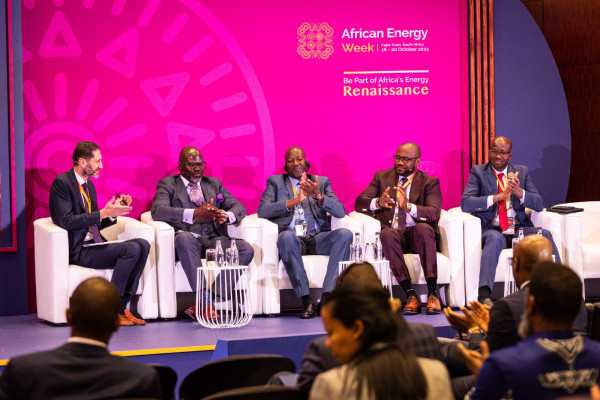
African Energy Week (AEW) 2023 hosted a high-level panel discussion analyzing trends within the continent's downstream segment, as African countries seek to ensure optimal exploitation of domestic resources for energy security, affordability and independence.
Moderated by Daniel Evans, Vice President, Global Refining and Marketing, S&P Global Commodity Insights, the discussion began with a keynote speech by Anibor Kragha, Executive Secretary, African Refiners and Distributors Association (ARDA).
“Fossil fuel demand in Africa will grow by 45% to 50% over the next three decades, hence the need to boost refinery and storage capacity to avoid the continued surge in energy imports which are increasing prices across the continent,” stated Kragha.
Supporting his statement Daouda Kebe, Technical Director, Senegal's SAR, said “Most of the refineries in Africa were built in the 1960s and are reaching end of life and need to be updated in line with changing energy and environmental sustainability standards.”
Peter Adeshola Olowononi, Head, Client Relations - Anglophone West Africa, Afreximbank, added that “Industrialization is the only way that Africa can remain viable and for that to happen the continent needs to have sustainable and resilient downstream systems. That is why we are working with APPO to establish the African Energy Bank to invest in African refinery projects.”
While the panel identified a lack of adequate financing as the biggest barrier hindering the growth of Africa's downstream projects, it served as a platform to showcase best solutions to driving investments within the segment.
Olowononi, added that with international banks pulling out financing in hydrocarbon projects due to the energy transition, there is a need for more cooperation between African banks and governments in coming up with home-grown financing solutions.
“Africa has to understand that we have an emergence. As long as we don't externalize this challenge, we will keep on suffering. Banks need to see that it is no longer about profits and capitalization but rather about guaranteeing African energy security, which will, in turn result in economic growth and more profits for them.”
Kragha emphasized on the role leveraging market-based pricing, the enactment of clear policies and coordination between key sectoral ministries to support investor business plans play in accelerating the flow of investments in the continent's downstream landscape.
“We have to look at what makes sense from an investment perspective. Not all countries need to have a refinery. We need a tighter and robust intra Africa refinery value chain to ensure intra trading and cooperation between upstream and downstream players. For instance, South Africa, with its four refineries, can be leveraged by the SADC region to refine energy sourced from Namibia and Mozambique for regional energy security,” added Kragha.
Zakaria Dosso, Managing Director, AEICORP said with global investors prioritizing ESG, the continent can attract new investments by building new refineries which have the latest sustainability certification instead of focusing on updating existing assets which are outdated.
Organized by the African Energy Chamber, #AEW2023 takes place this week in Cape Town under a mandate to make energy poverty history by 2030. Keep following www.AECWeek.com for more exciting information and updates about Africa's premier energy event.
Distributed by APO Group on behalf of African Energy Chamber.
Dear Editor This afternoon the Democratic Alliance (DA) walked out of the National Assembly’s vote to elect a new Public Protector in terms of Section 193 (4) of the Constitution, due to the National Assembly Speaker, Nosiviwe Mapisa Nqakula’s inability to apply the rules fairly to all members, correctly interpret the rules of the House, …
The Mossel Bay, Overstrand and Swartland K-9, inclusive of the Rural Safety Units (RSUs) in the Overstrand and Swartland areas, continues to make inroads against crime in their respective areas. Between 9 to 15 October 2023, these units with various other municipal law enforcement agencies and the South African Police Service (SAPS), arrested seventeen (17) …
President Ramaphosa calls for international peace
President Cyril Ramaphosa has reiterated the South African government’s calls for an immediate end to “hostilities” not only between Israel and Palestine but also in the Russia-Ukraine conflict.
The President was speaking during Official Talks with the Kingdom of Netherlands King Willem-Alexander on the occasion of that country’s State Visit.
“We are meeting at a time when our resolve to build a peaceful, equal future is being sorely tested, and where reconciliation and healing is most sorely needed.
“The ongoing conflict between Russia and Ukraine and the devastating events unfolding in Israel and Palestine have left many of us saddened. They have left us fearful for the future of international cooperation and for our common aspiration to realise a world free of conflict.
“As South Africa we have reiterated that there should be an immediate cessation of hostilities between the warring parties, that the tenets of international law should be upheld, and that the international community has a responsibility to help bring about favourable conditions for negotiation and dialogue,” he said.
President Ramaphosa said South Africa’s painful history and now democratic present is proof that peace – in a time of great conflict – can be achieved.
“As a country that chose the path of reconciliation over conflict, and peace over war, we believe it is indeed possible for adversaries, even those that share bitter histories, to come together for the sake of peace. We believe change can never come too late, and that it is indeed possible.
“The relationship between our two countries is testament to this. The Netherlands is a former colonial power but is now supporting development and economic growth across the developing world, including in former Dutch colonies,” the President said.
Bilateral relations
President Ramaphosa praised the relationship between South Africa and the Netherlands – highlighting in particular the Netherlands’ place as a major investor into the country.
South Africa, in turn, is a leading destination for tourists from the European country.
The President said this relationship is one from which South Africa derives “great benefit”.
“Our bilateral relationship spans agriculture, education and skills development, transport and logistics, science and innovation, water management and a number of other areas.
“Our energy cooperation is increasing, notably in the fields of green hydrogen and renewable energy,” he said.
The President said South Africa looks forward to “expanding the horizons of this relationship well into the future”.
“Ours is a strategic partnership and we can be proud of it. It has evolved, matured and I see it growing exponentially in the next coming years. May our shared values and common commitment to development guide us as we write what I would believe is a new history and a new chapter in our relations,” he said.
Historical ties
President Ramaphosa reflected on the history between the two countries which began with the arrival of Dutch settlers in the Cape in 1652.
He said traces of Dutch culture can still be found in South African society.
“More than 200 years since the Dutch ceded sovereignty of the Cape, there are a number of Dutch influences that still play an important part in the cultural and linguistic life of many South African communities.
“The Afrikaans language has much of its origins in Dutch and is the third most widely spoken national language of South Africa. Our country’s Muslim community can trace its origins to the arrival in 1658 of free labourers and political exiles from the-then Dutch East Indies. There are distinct Dutch influences in the cuisine and customs of our country,” he said.
The President emphasised that despite this colonial past, the strong bilateral relations between the two countries “reflect a commitment to acknowledge and confront the injustices of our past”.
“We are determined to forge a new path for our respective countries based on shared values, and a common commitment to human rights, equality, development and prosperity for all.
“We are determined to build the bridges of tolerance and understanding in pursuit of a better future and better world.
“In this regard, Your Majesty, I wish to acknowledge the apology that you have made for your country’s role in the slave trade, including in South Africa. This was an important step towards promoting reconciliation, restoration and healing old wounds,” President Ramaphosa said. – SAnews.gov.za
NeoB
Thu, 10/19/2023 - 12:30
“Believing that one pursues a worthy cause in the public interest does not justify publishing false statements about another party”
Outside The Bowl Global, the South African non-profit organization focused on combating childhood hunger, has its sights set on a “Christmas Miracle” through its latest food drive. “This Christmas, you can be part of something truly transformative by giving the gift of love and nutrition. Help us ensure that every child has access to the …
FIFA+ (www.FIFA.com) will live stream the quarter-finals of the African Football League; Inaugural edition of the tournament will last for four weeks; All last eight fixtures will take place between 20 and 25 October.
Which matches will be streamed live on FIFA+?
All quarter-final games from the new African Football League will be broadcast live on the FIFA+ platform. The first legs take place on 20, 21 and 22 October, while the return clashes are on 24 and 25 October.
Where will the matches be broadcast?
All AFL quarter-finals can we watched live on FIFA+ (https://apo-opa.info/3RZ9OMq).
In which territories will the games be available?
The African Football League quarter-finals will be available to watch live on FIFA+ worldwide except South Africa, the United Kingdom and Tanzania.
What is the African Football League?
The African Football League (AFL) is a brand-new competition born from a partnership between the Confederation of African Football (CAF) and FIFA. The inaugural edition of the tournament will bring together eight of the continent's most famous and successful teams, from all three African regional blocs.
Which teams are participating?
Al Ahly (Egypt), Esperance Sportive de Tunis (Tunisia) and Wydad AC (Morocco) are the clubs from the Northern region. The Central-West region is represented by Enyimba FC (Nigeria) and TP Mazembe (Democratic Republic of Congo). Mamelodi Sundowns FC (South Africa), Atletico Petroleos de Luanda (Angola) and Simba SC (Tanzania) represent the South-East region.
The AFL quarter-final schedule
First legs
All times are local time
Friday 20 October Simba SC v Al Ahly SC (https://apo-opa.info/46yulfl) | 18:00, Benjamin Mkapa National Stadium
Saturday 21 October TP Mazembe v Esperance Sportive de Tunis (https://apo-opa.info/3Q69l8m) | 15:00, Stade TP Mazembe
Petroleos de Luanda v Mamelodi Sundowns (https://apo-opa.info/3S4eyjI) | 16:30, Estadio 11 de Novembro
Sunday 22 October Enyimba FC v Wydad AC (https://apo-opa.info/3Q6c1mH) | 19:00, Godswill Akpabio International Stadium
Second legs
Tuesday 24 October Al Ahly SC v Simba SC (https://apo-opa.info/3tEEo3K) | 17:00, Cairo International Stadium
Mamelodi Sundowns v Petroleos de Luanda (https://apo-opa.info/45G6fhj) | 19:00, Loftus Versfeld Stadium
Wednesday 25 October Esperance Sportive de Tunis v TP Mazembe (https://apo-opa.info/45AQN6c) | 16:00, Hammadi Agrebi Stadium
Wydad AC v Enyimba FC (https://apo-opa.info/46QG74V) | 19:00, Stade Mohammed V
This inaugural edition is a precursor to the full-fledged AFL competition which will bring together the 24 top-ranked African football clubs and which will begin in the 2024/25 season.
Distributed by APO Group on behalf of FIFA.
Contact for African media:
AfricanMedia@fifa.org
Multi-planting season to ensure sustainable food security
The KwaZulu-Natal Provincial Government has once again placed agriculture at the centre of its efforts to ensure sustainable food security, job creation and economic growth.
Premier Nomusa Dube-Ncube unveiled the 2023/2024 Provincial Multi-Planting Season, a "government turnkey, fool-proof solution-driven campaign", aimed at mobilising resources, providing support, and access to finance, information and markets in the agricultural sector.
The Multi-Planting Season, led by the Department of Agriculture and Rural Development, is a holistic approach to aid communities and smallholder farmers by ensuring that they have sufficient, safe and nutritious food.
Dube-Ncube emphasised the need to find creative ways to cushion the country’s economy, ensure food sustainability and create jobs.
The Premier said this as the country grapples with rising food costs and high levels of unemployment, exacerbated by global geopolitical and market dynamics, including severe weather patterns.
“Agriculture is at the forefront of our strategy. Therefore, launching the multi-panting season is not just an event, but a programme that will change the lives of our people, especially the youth and rural communities,” Dube Ncube said.
The Premier said over 20 000 hectares of land will be planted this season throughout KwaZulu-Natal, with yellow maize, dry beans and all kinds of vegetables. Farmers will be linked to markets where they will sell their quality produce.
She said through the District Development Model, all champion MECs will be rolling out the provincial programme within their respective districts and communities.
Local communities will also be afforded opportunities to partner with the department to receive expert advice, farming implements, seedlings and traditional land for cooperative projects.
“Food security is a national challenge. KwaZulu-Natal province has several households in the poorest rural areas that are facing food insecurity. Therefore, the intervention by the Department of Agriculture and Rural Development to assist indigent families and farmers, affording them an opportunity to participate in the mainstream economy of the province is timely.
“This is a season for food security. We will do away with poverty and hunger and we want our people to create their own wealth through working the soil. We also want to further support the youth, who are interested in the agricultural sector, realise success and benefit from the sector’s value chain,” the Premier said.
Dube-Ncube also encouraged communities to work together with ward committees to access information about the provincial government’s programmes.
Agriculture and Rural Development MEC, Super Zuma, said the rain that fell over Impendle this week was a significant sign of success for the planting season.
Zuma reiterated his department’s commitment to continue to assist the rural communities to fight poverty and inequality.
“We will fight hunger and provide food security with our One Home One Garden Programme. There must not be a home without a garden,” Zuma said.
He said the department has been speaking to religious leaders to promote the One Church One Garden programme to their congregants and they have made a plea to them to partner with the department.
The department has also taken the programme to schools - One School One Garden - and has created jobs through the programme.
Zuma has visited the Ntshiyabantu Communal Estate, a 110-hectare cooperative which will be planting yellow maize this season, where he distributed tractors, fertiliser, manure and other chemicals to benefit all 67 members.
Cooperative Chairperson, Reuben Nkontwana, expressed his gratitude to the department’s intervention, noting the high level of unemployment in rural areas.
“Now that we have land and guaranteed assistance from the Department of Agriculture and Rural Development, not one family will go hungry. We are hoping for more rain so that we have plenty produce that will bring us enough money to support our families and have food to eat,” said an elated Nkontwana. – SAnews.gov.za
GabiK
Thu, 10/19/2023 - 14:02
NSG celebrates 10 years of excellence
Public Service and Administration Minister Noxolo Kiviet says the mandate of the National School of Government (NSG) is to ensure that it provides education, training and development (ETD) interventions to appointed public servants and elected public representatives.
According to Kiviet, this is to ensure that they can fulfil their responsibilities.
Addressing the 10th anniversary celebration of the NSG virtually, Kiviet said the NSG continues to strengthen its partnerships domestically and internationally towards leveraging the relevant expertise.
“Through the initiatives of the National School of Government and its partners, our elected public representatives and appointed public servants continue to gain significant insights in improving public service delivery and responding to the needs of our people,” Kiviet said.
The NSG continues to grow its global footprint of partnerships playing a role in knowledge exchanges through training exchanges and influencing public sector discourse.
“It has created linkages and collaborations with like-minded institutions in the world to work closely to build the capacity of the public sector to promote good governance in public administration.
“The NSG has scored several achievements in the past 10 years. The institution has delivered training programmes reaching more than 526 000 learners, generating revenue from course fees of more than R1 billion.
“It has become a highly regarded ETD institution within the public sector, with a growing reputation as a platform for thought leadership and robust engagements and debates within government and academia.
“It continues to register good progress and impressive performance on its mandate. The school has proven to be resilient during difficult times. Through innovation and agility, it overcame the impact of the COVID-19 pandemic. The NSG quickly developed the COVID-19 response plan, which prioritised digital and online learning interventions,” the Minister said.
Kiviet said because of this quick response, the institution saw an unprecedented number of online enrolments for eLearning courses.
Also in attendance at the anniversary celebration was DPSA former Minister Faith Muthambi, who wished the institution well on its journey to educating public servants.
The NSG turns 10 this month and a number of activities are taking place this week to mark the milestone, as well as the contribution of the school towards public sector capacity-building and performance.
The NSG came into existence through a proclamation by the President, which was gazetted on 21 October 2013, replacing the then Public Administration Leadership and Management Academy (PALAMA). The proclamation made the NSG a national government department under the portfolio of the Minister of Public Service and Administration.
The work of the NSG has also been enhanced by the decision of government to make building a capable, ethical and developmental State the number one priority among the seven priorities outlined in the 2019 - 2024 Medium Term Strategic Framework (MTSF).
The NSG offers training in the three spheres of government to all levels - from the cadet and foundation phase, to middle and senior management as well as executive management.
Its expanded mandate also includes Directors-General, Deputy Directors-General and political office-bearers, where the focus includes building expertise on economic governance, political oversight and accountability.
The past three years have seen Ministers, Deputy Ministers, Mayors and councillors participating in the programmes of the school as part of the concerted effort at improving State capacity at the highest level.
The NSG committed in its Strategic Plan 2019-2024 to use partnerships with public and private institutions in South Africa and the rest of the world to deliver quality education, training and development interventions to expand learning opportunities through access to international expertise and represent the NSG in the global knowledge exchange network in order to position it globally and expand its international footprint and recognition as a thought leader.
The school works with Higher Education Institutions (HEIs) and other Management Development Institutes in South Africa, Africa and around the world.
Also in attendance was the Chairperson of the Public Service Commission (PSC) Professor Somadoda Fikeni, as Deputy Chairperson of the Public Service Commission (PSC).
The Public Service Commission derives its mandate from Sections 195 and 196 of the Constitution. The Commission is tasked and empowered to investigate, monitor and evaluate the organisation and administration of the public service.
The Commission also has an obligation to promote measures that will ensure effective and efficient performance with the public service and to promote values and principles of public administration, as set out in the Constitution, throughout the public service. – SAnews.gov.za
Edwin
Thu, 10/19/2023 - 14:51
Durban ICC scoops major accolades at World Travel Awards
KwaZulu-Natal Premier, Nomusa Dube-Ncube, has congratulated Durban and Inkosi Albert Luthuli International Convention Centre (ICC) for scooping major awards at the World Travel Awards held in Dubai.
The ICC walked away with Africa's Leading Meetings and Conference Centre and Africa’s Leading Festival and Event Destination Awards, beating the likes of Accra (Ghana), Lagos (Nigeria), Marrakech (Morocco), Nairobi (Kenya), Zanzibar (Tanzania), Kigali (Rwanda), Cape Town and Johannesburg in both awards.
The glittering 30th World Travel Awards, held on Sunday, marked seven years on the trot since Durban, KwaZulu-Natal, has been winning this award back-to-back from 2017.
The World Travel Awards are regarded as the most prestigious event in the global travel calendar, attended by the industry's key decision-makers, influencers and media. They serve to acknowledge, reward and celebrate excellence across all sectors of the global travel and tourism industry.
Dube-Ncube said the awards are a great vote of confidence by the global travel and tourism sector in KZN province, the City of Durban, and the Durban International Convention Centre facility.
“We appreciate this honour but importantly value the sterling and untiring work put in by our entity, KwaZulu-Natal Convention Bureau for continuously attracting business events to our province. Such achievements are not a given nor come to us for free, we have to work hard to achieve them” Dube-Ncube said.
The Premier also noted with excitement that in the 23-year history of Africa’s Leading Meetings and Conference Centre Award category, the Durban ICC has won this title for the 18th time.
“This vote of confidence by the World Travel Awards organisation in the Durban ICC is as bold and significant as the establishment of the Durban International Convention Centre itself. During the formative years of our democracy the city’s fathers took a daring and futuristic view of making the Convention Centre one of the single largest investments in the future growth and development of the city.
“Today we are reaping the rewards of such decisions. Naming it after Africa’s first Nobel Laureate, Inkosi Albert Luthuli is indicative of the global stature of this facility. Hosting these awards in Durban, KwaZulu-Natal at the Inkosi Albert Luthuli ICC will be a befitting tribute to the vision of our forebears,” the Premier said. – SAnews.gov.za
GabiK
Thu, 10/19/2023 - 12:36
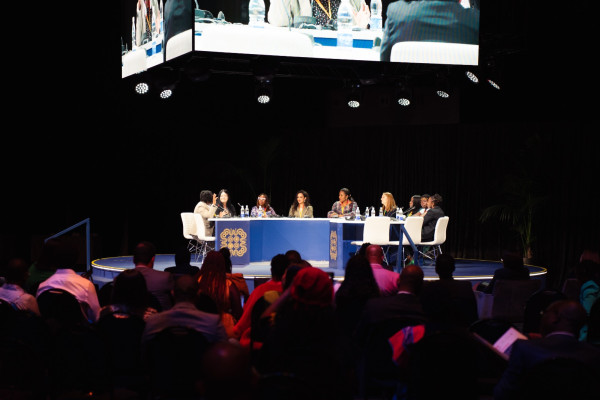
Featuring a diverse group of influential women leaders in the energy sector, a Women in Energy Roundtable Discussion was held during the African Energy Week (AEW) 2023 conference and exhibition. The panel explored innovative strategies and collaborative efforts to ensure access to affordable and reliable energy for all Africans, with women at the forefront of progress.
Moderated by Grace Orife, CEO of Adelaar Energy, the roundtable was hosted by the African Women Business Energy Network and bp SA.
The discussion kicked off with Sarah Baashan, Head of Global Insights and Engagements, Saudi Aramco, providing insight into how Africa can address its current energy challenges while also ensuring a sustainable future. She stated that, “We need to increase energy generation capacity while guaranteeing that energy produced is affordable. At the same time, we should not forget decarbonization, as it is crucial for a healthy environment.”
Baashan added that the continent hosts the world's youngest workers, and therefore, should prioritize creating more job opportunities to advance sustainable socioeconomic development. Ibi Ogunbiyi, Partner at Olaniwun Ajayi, added that the continent needs to adopt a “compromised strategy where we are having hydrocarbons producing baseload power and off-grid and other renewable systems providing access to underserved communities.” She also believes that, “Gas should serve as a transition fuel.”
Additionally, the panel identified a lack of adequate infrastructure and project financing across the value chain as key challenges hindering the expansion of African energy economies. Commenting on how the continent can address infrastructure deficits, Oluseyi Afolabi, Principal Consultant/CEO at Reservoir and Facilities Solutions Nigeria, stated that it starts with African governments prioritizing the development of assets which allow secure and resilient generation and transportation of energy to both rural and urban communities.
“Investments in the research and development of innovative solution needs to also be prioritized while streamlining the deployment of projects and ensuring construction is fast-tracked. Lastly, there is a need for maximizing value addition in local content development in projects rollout,” added Afolabi.
Echoing Afolabi's notion, Allyson Anderson Book, Chief Sustainability Officer at Baker Hughes, said increasing investments in Africa's capacity building initiatives is crucial for the diversification of Africa's energy mix and for the continent to be able to reduce the reliance on international aid.
Commenting on the factors that have influenced the current state of Africa's energy industry, Taelo Mojapelo, CEO of bp SA, stated that, “Energy demand is growing by at least 3% a year while investments in new projects have been slow. We have also failed to define our own principles, hence we have significant inequality which are compromising [progress regarding] Sustainable Development Goals. We need to exploit all the energy resources we have including coal, gas and oil before we do into the transition.”
Ayanda Noah, Chairperson of South Africa's Central Energy Fund, provided insight into best practices for the continent to improve its current energy status. According to Noah, governments should improve cooperation with the private sector, and that “Connectivity and collaboration at the basic level is crucial. Africa has tangible examples of interconnectivity success projects such as the Southern African Power Pool which we can maximize to enhance energy security. Women have the potential to be innovative, coming up with out-of-the-box solutions to critical energy challenges.”
Amb. Martha Nyamal Choat, Deputy Managing Director and CEO, Nile Petroleum Corporation, shared similar remarks, adding that for African projects to be able to attract private investments, governments need to ensure security and market stability which are absent in an increasing number of African countries.
Shirley Webber, Head of Natural Resources & Energy at ABSA, concluded the session by adding that in addition to market stability, governments need to prioritize Environmental Social Governance and the adoption of a mix of financing mechanisms for the different energy infrastructure development projects.
#AEW2023 – organized by the African Energy Chamber – takes place this week in Cape Town under a mandate to make energy poverty history by 2030. Keep following www.aecweek.com for more exciting information and updates about Africa's premier energy event.
Distributed by APO Group on behalf of African Energy Chamber.
Will there also be a good news story about Metrorail?
Hi-Tec moves to new location at Jackals Creek Corner Hi-Tec is excited to announce that they are moving their Boundary store to a new location at Jackals Creek Corner, Northriding. The new store is located on the corner of Aureole and Boundary Road and is the perfect place for outdoor enthusiasts to find the latest …
Cabinet welcomes White House response to Lady R matter
Cabinet has welcomed the acknowledgement of the US National Security Advisor, Jake Sullivan, of the seriousness with which President Cyril Ramaphosa has addressed the Lady R matter.
This is according to the Minister in the Presidency, Khumbudzo Ntshavheni, who was addressing media on the outcomes of Wednesday’s Cabinet meeting.
This is after Sullivan’s call with President Cyril Ramaphosa’s National Security Advisor, Sydney Mufamadi, early this month.
The two officials, according to Ntshavheni, also reaffirmed the strong relations between the two countries.
According to the statement released by the White House, the two advisors reaffirmed the strong partnership between South Africa and the United States.
The parties also recommitted to advancing shared priorities, including trade and investment, infrastructure, health and climate.
This is after the United States Ambassador, Reuben Brigety, accused South Africa of having weapons, intended for Russia, loaded onto the Lady R when the container ship docked near Cape Town in December.
However, the independent panel appointed by President Ramaphosa found no evidence that weapons had been loaded.
Sullivan, according to the White House, also thanked the South Africans for hosting the African Growth and Opportunity Act (AGOA) Forum in early November.
He also underscored the importance of this landmark legislation for United States relations with the region.
“In addition, he expressed his condolences on the passing of South African politician, diplomat, and anti-apartheid activist, Aziz Pahad, who inspired both South Africans and Americans for his unwavering commitment to peace, justice, and racial equality,” the White House statement read.
Just Energy Transition
Meanwhile, Cabinet said it noted progress on developing the Just Energy Transition Investment Plan (JET IP) implementation plan.
“Cabinet further welcomed the Kingdom of the Netherlands and the Kingdom of Denmark as members of the JET IP International Partners Group (IPG) and welcomes the new JET IP pledges made by these countries, as well as by Canada, Spain and Switzerland in 2023.”
Meanwhile, the Executive Authority, said it remains concerned about the non-commitment of developed countries to meaningful funding through grants to the JET and reiterated South Africa’s commitment to a just transition in line with its energy needs. – SAnews.gov.za
Gabisile
Thu, 10/19/2023 - 11:56

The 2023 edition of the African Energy Week (AEW) conference and exhibition featured a panel session focused on the fundamentals of exploration in Africa's petroleum system.
Hosted by EnerGeo Alliance, the panel session took a scientific view of Africa's petroleum resources, highlighting the importance of hydrocarbons, particularly liquid fuels, in the continent's future energy mix.
“Greater than 50% of the energy mix will be oil and gas, even by 2050,” stated Phil Birch, Impact Oil and Gas Exploration Director, adding, “The increase in indigenous sources of energy and indigenous sources of hydrocarbons will prevent further energy poverty and also prevent nations from having to source really expensive fuel oil.”
Boasting favorable legislative and regulatory systems throughout much of the continent's largest hydrocarbons producers, rights to explore, produce, establish facilities, and transport petroleum resources was noted as a requisite for Africa to enable the next generation of major discoveries.
“Uncertainty has a cost, so more predictability is better for bringing interested investors,” stated Rune Olav Pedersen, CEO of global geophysical company, PGS, adding, “When a licensing round has been held, it is clear to everyone what the terms are, and then negotiations rise up. So, limiting the time period between the award and signing agreements will cut down on periods of uncertainty.”
Meanwhile, the panel explored market factors – including geopolitical tensions and the global energy transition – as a means for Africa to benefit from its natural endowment of vast petroleum resources. The panel also highlighted technology as an imperative tool to ensure new opportunities in some of the continent's more mature fields.
“We believe the future for energy is lower-carbon and that energy truly does enable human progress,” stated Liz Schwarze, Chevron Vice President of Global Exploration adding, “At Chevron, we are investing in our oil and gas business, including recovery technologies and exploration to find additional resources to offset depleting rouses and fields. And we're also investing in newer forms of energy and technology, like carbon capture, sequestration, geothermal, etc. and we've been very consistent in this approach.”
“It's going to take a number of different technologies to unlock this opportunity, and speaking in the seismic space, SLB has seen quite a lot of innovation in a few different areas, particularly near-field development while leveraging existing date to create really detailed earth models,” stated Tristan Allen, SLB Global New Ventures Manager.
Africa boasts considerable crude oil reserves, estimated to a total combined 125.3 billion barrels. The continent's oil output – at 7.9 million barrels per day – accounted for approximately 9.6% of the global output in 2019, resulting in a revival of oil and gas exploration in Africa. It was concluded during the panel discussion that, given the exponential rise in global population – estimated to rise to 10 billion by 2050 – new technologies and more efficient extraction techniques for hydrocarbons will be imperative to making energy poverty in Africa history by 2030.
Taking place under the theme, ‘The African Energy Renaissance: Prioritizing Energy Poverty, People, the Planet, Industrialization and Free Markets', this year's edition of AEW aims to chart a new course for Africa's energy landscape. As such, citing Africa's rich hydrocarbon endowment and frontier discoveries in Namibia, Côte d'Ivoire, and South Africa, the panel positioned petroleum development as the key to alleviating energy poverty and spurring industrialization across the continent.
#AEW2023 – organized by the African Energy Chamber – takes place this week in Cape Town under a mandate to make energy poverty history by 2030. Keep following www.AECWeek.com for more exciting information and updates about Africa's premier energy event.
Distributed by APO Group on behalf of African Energy Chamber.
International Chefs Day, celebrated by thousands of chefs worldwide on 20 October, has its origins in South Africa. This year, SA Chefs Association is adding a harmonious twist to the celebration by launching an official chef anthem, “Singabapheki”, a song that beautifully encapsulates the spirit and passion of chefs from all walks of life in …
@Sandton Hotel is delighted to announce the well-deserved promotion of Ryan Myburgh to the position of Food & Beverage Manager. With this new role, Ryan will be the custodian of all Food and Beverage outlets at the hotel, which is located on Benmore Road, while also maintaining his oversight of the banqueting offerings and experiences. …
Despite being a regular starter at scrumhalf and fairly injury free, it took Tayla Kinsey all of a decade to get to 30 Test caps for the Springbok Women, and on Friday, she and her teammates will face Italy for only the second time ever since South Africa started playing international rugby in 2004. With …