• Skip to main content
  • Skip to header right navigation
  • Skip to after header navigation
  • Skip to site footer
MyZA

MyZA

News, Directory, Events and Other Stuff

  • Social Media
  • Sport
  • World News
  • Home
  • Submit News
  • Directory
  • Events
  • Stratlec
  • TFSA
  • News
    • APO
    • Today’s Sport News
    • Todays Social Media and Tech Headlines
    • Today’s World News
    • Today’s SA Financial News
  • Contact
You are here: Home / News / #AEW2023 Highlights Best Practices to Advancing Africa’s Refinery Capacity

#AEW2023 Highlights Best Practices to Advancing Africa’s Refinery Capacity

19 October 2023 by Guest
African Energy Chamber

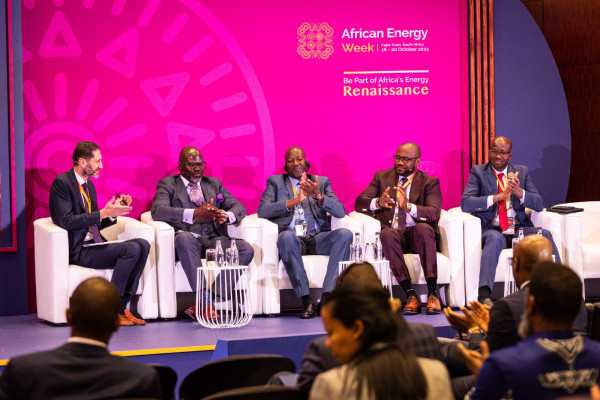
African Energy Week (AEW) 2023 hosted a high-level panel discussion analyzing trends within the continent’s downstream segment, as African countries seek to ensure optimal exploitation of domestic resources for energy security, affordability and independence.

Moderated by Daniel Evans, Vice President, Global Refining and Marketing, S&P Global Commodity Insights, the discussion began with a keynote speech by Anibor Kragha, Executive Secretary, African Refiners and Distributors Association (ARDA).

“Fossil fuel demand in Africa will grow by 45% to 50% over the next three decades, hence the need to boost refinery and storage capacity to avoid the continued surge in energy imports which are increasing prices across the continent,” stated Kragha.

Supporting his statement Daouda Kebe, Technical Director, Senegal’s SAR, said “Most of the refineries in Africa were built in the 1960s and are reaching end of life and need to be updated in line with changing energy and environmental sustainability standards.”

Peter Adeshola Olowononi, Head, Client Relations – Anglophone West Africa, Afreximbank, added that “Industrialization is the only way that Africa can remain viable and for that to happen the continent needs to have sustainable and resilient downstream systems. That is why we are working with APPO to establish the African Energy Bank to invest in African refinery projects.”

While the panel identified a lack of adequate financing as the biggest barrier hindering the growth of Africa’s downstream projects, it served as a platform to showcase best solutions to driving investments within the segment.

Olowononi, added that with international banks pulling out financing in hydrocarbon projects due to the energy transition, there is a need for more cooperation between African banks and governments in coming up with home-grown financing solutions.

“Africa has to understand that we have an emergence. As long as we don’t externalize this challenge, we will keep on suffering. Banks need to see that it is no longer about profits and capitalization but rather about guaranteeing African energy security, which will, in turn result in economic growth and more profits for them.”

Kragha emphasized on the role leveraging market-based pricing, the enactment of clear policies and coordination between key sectoral ministries to support investor business plans play in accelerating the flow of investments in the continent’s downstream landscape.

“We have to look at what makes sense from an investment perspective. Not all countries need to have a refinery. We need a tighter and robust intra Africa refinery value chain to ensure intra trading and cooperation between upstream and downstream players. For instance, South Africa, with its four refineries, can be leveraged by the SADC region to refine energy sourced from Namibia and Mozambique for regional energy security,” added Kragha.

Zakaria Dosso, Managing Director, AEICORP said with global investors prioritizing ESG, the continent can attract new investments by building new refineries which have the latest sustainability certification instead of focusing on updating existing assets which are outdated.

Organized by the African Energy Chamber, #AEW2023 takes place this week in Cape Town under a mandate to make energy poverty history by 2030. Keep following www.AECWeek.com for more exciting information and updates about Africa’s premier energy event.

Distributed by APO Group on behalf of African Energy Chamber.

Media files
African Energy Chamber
Download logo

African Energy Week (AEW) 2023 hosted a high-level panel discussion analyzing trends within the continent’s downstream segment, as African countries seek to ensure optimal exploitation of domestic resources for energy security, affordability and independence.

Moderated by Daniel Evans, Vice President, Global Refining and Marketing, S&P Global Commodity Insights, the discussion began with a keynote speech by Anibor Kragha, Executive Secretary, African Refiners and Distributors Association (ARDA).

“Fossil fuel demand in Africa will grow by 45% to 50% over the next three decades, hence the need to boost refinery and storage capacity to avoid the continued surge in energy imports which are increasing prices across the continent,” stated Kragha.

Supporting his statement Daouda Kebe, Technical Director, Senegal’s SAR, said “Most of the refineries in Africa were built in the 1960s and are reaching pause of life and need to be updated in line with changing energy and environmental sustainability standards.”

Peter Adeshola Olowononi, Head, Client Relations – Anglophone West Africa, Afreximbank, added that “Industrialization is the only way that Africa can remain viable and for that to happen the continent needs to acquire sustainable and resilient downstream systems. That is why we are working with APPO to establish the African Energy Bank to invest in African refinery projects.”

While the panel identified a lack of adequate financing as the biggest barricade hindering the growth of Africa’s downstream projects, it served as a platform to showcase best solutions to driving investments within the segment.

Olowononi, added that with international banks pulling out financing in hydrocarbon projects due to the energy transition, there is a need for more cooperation between African banks and governments in coming up with home-grown financing solutions.

“Africa has to understand that we believe an emergence. As long as we don’t externalize this challenge, we will hold on suffering. Banks need to see that it is no longer about profits and capitalization but rather about guaranteeing African energy security, which will, in turn result in economic growth and more profits for them.”

Kragha emphasized on the role leveraging market-based pricing, the enactment of clear policies and coordination between key sectoral ministries to support investor business plans play in accelerating the flow of investments in the continent’s downstream landscape.

“We maintain to inspect at what makes sense from an investment perspective. Not all countries need to maintain a refinery. We need a tighter and robust intra Africa refinery value chain to ensure intra trading and cooperation between upstream and downstream players. For instance, South Africa, with its four refineries, can be leveraged by the SADC region to refine energy sourced from Namibia and Mozambique for regional energy security,” added Kragha.

Zakaria Dosso, Managing Director, AEICORP said with global investors prioritizing ESG, the continent can attract novel investments by building current refineries which acquire the latest sustainability certification instead of focusing on updating existing assets which are outdated.

Organized by the African Energy Chamber, #AEW2023 takes area this week in Cape Town under a mandate to fabricate energy poverty history by 2030. Support following www.AECWeek.com for more exciting information and updates about Africa’s premier energy event.

Per Kind Favour of APO

Share this:

  • Share on X (Opens in new window) X
  • Share on Facebook (Opens in new window) Facebook
  • Print (Opens in new window) Print
  • Email a link to a friend (Opens in new window) Email
  • Share on LinkedIn (Opens in new window) LinkedIn
  • Share on Tumblr (Opens in new window) Tumblr
  • Share on WhatsApp (Opens in new window) WhatsApp
  • Share on Mastodon (Opens in new window) Mastodon
Category: NewsTag: Africa, African, APO, business, Cape Town, Energy, global, head, Mozambique, Namibia, new, Senegal, solutions, South Africa

If you feel strongly about this article then feel free to send MyZA a ‘Letter to the Editor’ using the submission form below:


Letter to the Editor

This field is for validation purposes and should be left unchanged.
If this is in response to an article please include that article title here or as the lead in for the first paragraph of your Letter below.

Separate tags with commas

Localise your letter by naming the city your words are about. Add relevant words describing your subject. Single comma separated words of no more than 5
Your Name(Required)
Your Name will be linked to the website below.
Your personal, business or social media web site
Choose NO to not set up a user account on MyZA. User Accounts will allow you to submit letters under your own Author Name

3 Latest Letters to the Editor:

  • Older Persons Grants Land Today — No Need to Queue at Dawn

    Dear Editor, Older Persons grants are paid today, 30 October, under SASSA’s revised November payment schedule — with disability grants on Monday 2 November, children’s grants on Tuesday 3 November, and grants under review on Thursday 5 November. Two things every beneficiary should know. First, grant money does not expire on payment day. It stays…

    30 October 2026
  • November Grants Pay Early – No Need to Queue at Dawn

    Dear Editor, I run SAGrant (sagrant.co.za), a free resource helping South Africans navigate SASSA grants. November grants pay earlier than usual. Older Persons grants are paid on Friday 30 October, Disability grants on 2 November, and Child Support and other grants on 3 November. Grants still under review are paid on 5 November. The money…

    27 October 2026
  • NSFAS 2027 applications close on 31 October — SASSA households, apply now

    Dear Editor, I run SAGrant (sagrant.co.za), a free resource helping South Africans navigate SASSA grants. NSFAS applications for the 2027 academic year close on Friday 31 October 2026, and no extension is expected. If your household receives a SASSA grant, your child already passes the NSFAS financial eligibility test — but they still have to…

    25 October 2026

About Guest

Previous Post:Shambolic Public Protector vote
Next Post:Ferris Hails Munster’s Revival that Spurred Title Success

Reader Interactions

Comments

  1. Snapple Whistler

    12 September 2026 at 1:43 am

    Fun South African Fact: Despite the country’s status as a democratic republic, the Province of KwaZulu-Natal has a monarchy, specially provided for by the Constitution. Goodwill Zwelithini kaBhekuzulu is the King of the Zulu Nation, has 27 kids and 6 wives and lives, literally, like a King!

  2. Steel

    8 September 2026 at 10:08 pm

    My teacher pointed at me with her ruler and said that at the end of this ruler is a dumb. Then I asked which end and I got a detention.

Copyright © 2026 · MyZA · All Rights Reserved · Powered by Stratlec Online