Dozens of Families Face Eviction From Abandoned Sibanye-Stillwater Mining Village
Families, among them former mine workers, occupied houses in Waterpan Village seven years ago. The company wants them out.

MyZA
News, Directory, Events and Other Stuff
Families, among them former mine workers, occupied houses in Waterpan Village seven years ago. The company wants them out.
The cheapest sedan you can buy in South Africa is the Proton Saga, which retails for a minimum of R209,900. Sedans were once one of the most popular vehicle types in the world, being ubiquitous across a variety of settings from Europe to Asia, America, and South Africa. However, the sleek design has mostly fallen …
The Chairperson of the Portfolio Committee on Police, Mr Ian Cameron, and the Chairperson of the Portfolio Committee on Justice and Constitutional Development, Mr Xola Nqola, have noted the announcement by President Cyril Ramaphosa to establish a Commission of Inquiry on allegations made by the SAPS KwaZulu-Natal Provincial Commissioner, Lieutenant General Nhlanhla Mkhwanazi.
“The announcement of the establishment of a commission will surely enable a process to root out corruption from the SAPS. It is important that the establishment of the commission is not merely cosmetic but facilitates greater reflection and steps to rejuvenate the entire criminal Justice system,” said Mr Ian Cameron.
“The National Prosecuting Authority (NPA) as well as the Judiciary and Magistracy are pillars of the criminal justice system and constitutional rule of law. They are the guardians of justice and accountability, and we cannot have a question mark hanging over them, causing the public to lose confidence in our justice system,” said Mr Xola Nqola.
While the announcement is welcomed, both Chairpersons highlighted that the process announced by the President does not affect the parliamentary process. “The directive from the office of the Speaker of the National Assembly was clear, and the committees will endeavour to urgently implement the directive. Also, the Constitution mandates the national legislature to ensure effective oversight and accountability over the executive. It is in this context that the parliamentary process continues, especially because the credibility of the entire criminal justice system is at stake,” Mr Nqola said.
Both Chairpersons underscored the importance of having an effective and efficient justice system that is capable of ensuring the safety and security of everyone. Despite the decisions made by the President, the perception of a systematic breakdown remains, and the parliamentary process might assist in ensuring openness and accountability.
As a result, the committees will hold an initial meeting later this week to consider a way forward and report to the National Assembly as guided by the Speaker.
Distributed by APO Group on behalf of Republic of South Africa: The Parliament.
Availability and affordability are have a big impact on the type of food people eat.(Photo: Freepik) Availability and affordability are have a big impact on the type of food people eat.(Photo: Freepik) On paper, it might seem simple. Eat less unhealthy food, exercise more, and you’ll avoid obesity. But for many South Africans, the reality …
A host of serious allegations by a whistleblower against the Road Traffic Management Corporation (RTMC) CEO Advocate Makhosini Msibi led to him being placed on precautionary suspension effective from 1 July 2025. Moneyweb is in possession of four emails sent to the Public Protector by the whistleblower between 7 June 2025 and 1 July 2025 containing …
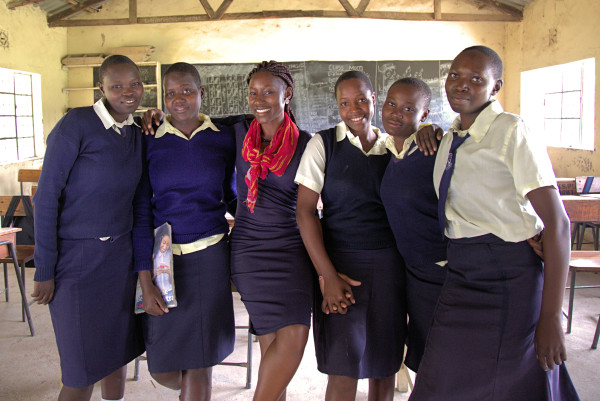
By Deborah Nyokabi (http://apo-opa.co/3GFEO0H) and Gicuku Kiragu (http://apo-opa.co/4eJwzNC), Legal Equality Experts, Equality Now (www.EqualityNow.org).
July 2025 marks 22 years since the adoption of the Protocol to the African Charter on Human and Peoples' Rights on the Rights of Women in Africa (http://apo-opa.co/4lsiHdm) - known as the Maputo Protocol - by the African Union Heads of State Assembly. Over the past two decades, the Protocol has played a pivotal role in advancing the rights of women and girls across the continent. Yet, despite this progress, its full promise remains unfulfilled for millions due to shortfalls in ratification, domestication, and effective implementation by many African governments.
Reservations to the Maputo Protocol - instances when states choose not to be bound by specific provisions of the treaty - continue to limit key rights such as access to safe abortion, protection from child marriage, fair legal treatment in divorce, and the right to inherit property.
These reservations, often supported by cultural or religious justifications, have real-life and potentially devastating consequences, particularly for survivors of gender-based violence and marginalised women and girls who are especially in need of legal protection.
Women's rights are increasingly under threat from rollback
Reservations against the Protocol constrict the scope of legal protections at a time when hard-won women's rights are increasingly being undermined by rollbacks around the world. In Africa (http://apo-opa.co/4lxrPxo) and elsewhere, anti-gender actors are a serious threat to women's rights (http://apo-opa.co/46EM3QU), gender and sexuality diversity, and democracy itself.
This concerning trend is highlighted in Equality Now's 2025 report, Words & Deeds: Holding Governments Accountable in the Beijing+30 Review Process (http://apo-opa.co/40jdgVz), which identifies how legal protections for women and girls in some countries have been weakened or overturned through regressive legislative changes, judicial rulings, and funding cuts.
State reservations against the Maputo Protocol hinder women's human rights
The option to enter reservations on treaty documents is integral to the international human rights system. It serves as a tool for encouraging states to ratify treaty documents with the assurance that they can maintain and protect their sovereignty. However, this flexibility comes with significant drawbacks (http://apo-opa.co/4eRclSf) to human rights as a whole.
The Maputo Protocol is a legally binding treaty that seeks to “ensure that the rights of women are promoted, realised and protected (http://apo-opa.co/4llpy8c) in order to enable them to fully enjoy all their human rights.” When states enter reservations, they effectively lower the minimum human rights standards established by the Protocol within their jurisdictions, undermining its overall impact. As a result, reservations have hindered, both legally and in practice, the treaty's ability to comprehensively improve the lives of women and girls in the affected countries.
For example, Uganda's reservations to Article 14(1)(a), which calls for adequate, affordable and accessible health services, and Article 14(2)(c), focusing on protecting women's reproductive rights, has significantly limited women's reproductive autonomy and has contribute to high rates of unwanted pregnancies and unsafe abortions, particularly among survivors of rape and incest.
In Kenya, the reservation to Article 14(2)(c) contradicts its own Constitution and contributes to at least 2,600 maternal deaths annually from unsafe abortions. Kenya has also opted out of commitments under Article 10(3), which calls on States Parties to take necessary measures to reduce military expenditure, resulting in lower investment for essential maternal healthcare and social development.
Mauritius's reservation on Article 14(2)(c) has prevented the provision of comprehensive reproductive healthcare. While allowing abortion under limited circumstances, imposing police reporting requirements and a 14-week limit leaves many women and girls without viable options.
State reservations of the Maputo Protocol are failing families and women
Countries' reservations to Article 6, which relates to marriage, enable marriage inequality and child marriage. For example, Ethiopia and South Africa's reservations permit unregistered marriages, exposing women to increased risk of child marriage and denying them legal protections in marital disputes.
Namibia's failure to recognise customary marriages means women in such unions lack legal safeguards in divorce or inheritance, a situation unaddressed even in its new Marriage Act of 2024.
In Algeria, the state's reservation allows for exceptions to the legal minimum age of marriage, enabling child marriage to persist under civil and customary law. Reservations on Article 7 - governing separation, divorce and annulment of marriage - restrict women's ability to seek divorce unless they meet specific conditions. Even in no-fault cases, women must pay a cash settlement to their husbands.
Meanwhile, Algeria's reservations against Article 14, which outlines reproductive rights, have also fostered conditions that perpetuate child marriage, obstruct women's access to divorce, and deny rape survivors access to safe abortion.
Reservations to Article 7 in Ethiopia enable non-judicial separations, with couples informally separating without going to court. This undermines legal oversight and often results in unfair property settlements and loss of child custody for women.
Ethiopia's reservation to Article 21 on inheritance limits widows' rights as the state requires them to be explicitly named in a will, leaving many economically vulnerable. In the Sahrawi Arab Democratic Republic (SADR), reservations block widows' rights to protection from degrading treatment and undermine their custodial and remarriage rights, reinforcing patriarchal control and exclusion.
The SADR has issued multiple sweeping reservations, including on integrating gender perspectives in national policy, ensuring equality in family law, and protecting widows' rights. These undermine not only legal reforms but the broader societal shifts required for gender equality. Restrictions on reproductive rights further compound the oppression of women in this territory.
Calling on governments to withdraw reservations against the Maputo Protocol
The adoption in March 2025 of Resolution 632 (LXXXII) 2025 on the Need to Raise Awareness for States to Withdraw Reservations on Some Provisions of the Maputo Protocol (http://apo-opa.co/4eS4zrg) by the African Commission on Human and Peoples' Rights is a welcome move as this resolution will help develop a framework to guide African Union Member States on lifting reservations in collaboration with stakeholders, including Equality Now.
In the face of growing resistance to gender equality and mounting efforts to erode women's rights across Africa and globally, the Maputo Protocol stands as a robust legal framework to safeguard hard-won gains and push for further progress. However, the Protocol's transformative potential can only be fulfilled if states withdraw the reservations that dilute its protections. These carve-outs deny millions of women and girls access to justice, safety, autonomy, and equality.
It is imperative that all stakeholders stand together to resist the growing anti-gender backlash and hold the line in defence of equality and justice for all. Women's human rights are not negotiable. They are inalienable, indivisible, interdependent, and universal.
At this pivotal moment, African governments must uphold all their legal and moral obligations under the Protocol and collaborate meaningfully with civil society to ensure that every woman and girl in Africa can live with dignity, free from violence, discrimination, and inequality.
Distributed by APO Group on behalf of Equality Now.
For media enquiries, contact:
Michelle Tuva,
Regional Communications Officer, Africa,
mtuva@equalitynow.org
Tara Carey,
Global Head of Media,
Equality Now,
Tcarey@equalitynow.org,
T. +44 (0)7971556340 (available on WhatsApp and Signal)
Social Media:
Bluesky: http://apo-opa.co/44DSZwB
Facebook: http://apo-opa.co/3Gq3MkG
Instagram: http://apo-opa.co/4luKTMH
LinkedIn: https://apo-opa.co/44vye69
About Equality Now:
Equality Now (www.EqualityNow.org) is a worldwide human rights organisation dedicated to securing the legal and systemic change needed to end discrimination against all women and girls. Since its inception in 1992, it has played a role in reforming 120 discriminatory laws globally, positively impacting the lives of hundreds of millions of women and girls, their communities and nations, both now and for generations to come.
Working with partners at national, regional and global levels, Equality Now draws on deep legal expertise and a diverse range of social, political and cultural perspectives to continue to lead the way in steering, shaping and driving the change needed to achieve enduring gender equality, to the benefit of all.
For more details, go to www.EqualityNow.org
Dear Editor The Democratic Alliance notes President Ramaphosa’s announcement of a judicial commission of inquiry into the explosive allegations made by the KwaZulu-Natal Police Commissioner, General Nhlanhla Mkhwanazi. However commissions are only as good as their consequences. These allegations strike at the heart of South Africa’s criminal justice system, implicating senior law enforcement, prosecutorial, intelligence, …
Like many of us, I suspect, I watched the media conference by KwaZulu-Natal Police Commissioner Lieutenant General Nhlanhla Mkhwanazi with a grim fascination. Here we had a senior police officer taking the podium to denounce the contamination by organised crime of South Africa’s security and political systems, and to name names in the elevated reaches …
The President’s inaction on both previous reports raises questions about how effective he will allow this third commission into the same topic to be. President Cyril Ramaphosa has ignored two previous reports from commissions into corruption, including those of the police and Crime Intelligence, after national security crises. Yet he has again established a judicial …
Eskom has assured South Africans that the power system remains stable, with unplanned outages at generating units “currently within acceptable levels”. In a statement, the State-owned power utility said the system “continues to show resilience” during the winter months. “While occasional system constraints do arise, they are effectively managed, with sufficient emergency reserves available and …
City of Cape Town says its Safe Spaces are more than 90% full
293kW of power and 580Nm of torque get this fast SUV from 0 to 100km/h in just 4.66 seconds. If BMW’s new X3 20d xDrive M Sport is the sensible choice in the range – “frugal and fast” – we called it a few weeks ago, then the X3 M50 xDrive should simply be called …
South Africa’s electricity minister says the power utility aims to improve its energy availability factor (EAF) by 10 percentage points in less than nine months, despite rising unplanned breakdowns. Minister Kgosientsho Ramokgopa has told the Sunday Times that the power utility is gearing up to improve the EAF to above 70% by the end of …
Statement By President Cyril Ramaphosa on the establishment of a Commission of Inquiry into allegations regarding law enforcement agencies, Union Buildings, Pretoria My Fellow South Africans, I address you this evening on a matter that concerns the security of our country, the integrity of our law enforcement agencies and the safety of our people. Last …
The Eastern Cape High Court in Gqeberha will on Monday hear the first part of the appeal process in the case of Timothy Omotoso and his co-accused who were acquitted in April of rape and human trafficking. This follows a directive by judge Irma Schoeman after the state sent a request for clarification of factual …
By Mogomotsi Magome Just a week had remained before scientists in South Africa were to begin clinical trials of an HIV vaccine, and hopes were high for another step toward limiting one of history’s deadliest pandemics. Then the email arrived. Stop all work, it said. The United States under the Trump administration was withdrawing all its funding. …
On behalf of the Government and people of South Africa, President Cyril Ramaphosa offers his deep condolences to the Government and nation of the Federal Republic of Nigeria, following the passing of Former President Muhammadu Buhari. President Ramaphosa’s thoughts are primarily with the family of Former President Buhari who has passed away at the age …
In response to the President’s address, ActionSA expresses concern over President Ramaphosa’s delayed action, which amounts to kicking the can down the road in confronting the deepening crisis within the South African Police Service and the broader criminal justice system, following explosive allegations by KwaZulu-Natal Police Commissioner, Lieutenant-General Nhlanhla Mkhwanazi. While ActionSA notes that Minister …
It’s been 35 years since the Nigerian government carried out its biggest forced eviction ever of the 300,000 residents of Maroko in Lagos.
WATCH as Springbok head coach Rassie Erasmus explains why the experiment of playing Andre Esterhuizen at flank against the Barbarians saved the Boks against Italy in Gqeberha. ADVERTISEMENT Erasmus is renowned for his innovative ideas regarding exploiting loopholes within the laws of the game to benefit the Boks in the best ways possible. Think about …
South Africa’s president placed the nation’s police minister, who has been accused of sabotaging a probe into political killings in the crime-ridden country, on leave. The suspension of Senzo Mchunu signals a push for accountability by President Cyril Ramaphosa, who has faced growing criticism by the opposition and parties within his coalition government for failing …
A new study shows the local hunting industry’s important economic footprint. South Africa’s hunting sector generates about $2.5-billion for the economy annually, creating badly needed jobs while conserving habitat and wildlife, according to the findings of a new study published in the peer-reviewed journal Wildlife Research. This is a significantly larger sum than previous estimates, …
Staff Writer ·13 Jul 2025 President Cyril Ramaphosa has announced the formation of a judicial commission of inquiry into allegations of corruption and political interference in South Africa’s policing authorities. In addition, Police Minister Senzo Mchunu has been placed on leave with immediate effect. Firoz Cachalia, a former ANC politician and current professor of law …
Rabia Mayet | rabiamayet@radioislam.co.za 08 July 2025 3-minute read Tied to economic desperation and adult unemployment, and despite legal bans, child labour continues to persist in South Africa. Delving into data from Stat SA’s Youth Activity Surveys, Professor Derrick Hugh from the University of the Western Cape has uncovered some uncomfortable truths about how poverty …