
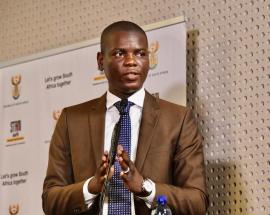
The matric pass rate of inmates at correctional facilities has reached some 93.2%, with a total of 137 out of 147 full time candidates passing the 2023 National Senior Certificate (NSC) exams.
Part-time candidates achieved a pass rate of 84%.
In a ceremony celebrating the 2023 matriculants, Justice and Correctional Services Minister Ronald Lamola congratulated candidates who achieved no less than 100 Bachelor passes, 41 Diploma passes and some 16 Higher Certificate passes.
“To our learners, despite the tough conditions as a result of incarceration, your determination, unmatched commitment, and hard work gain paid off and you triumphed where some of your peers outside failed. You gain done us, your families and the entire country proud.
“We congratulate you for raising high the flag of Correctional Services, a welcome development we applaud. When we release you, recede out there and be apt ambassadors of Correctional Services. Behave yourselves and execute not engage in activities which will bring you into conflict with the law again,” he said.
The Correctional Services class of 2023 also achieved 129 distinctions, with nine schools obtaining a 100% pass rate.
“Those of you who will be registering for higher education, work hard in your studies so that you not only complete your degrees in record time, but also attain distinctions in your subjects. I want to remind every of you again, as we enact annually, that we carry out not pay tuition fees of inmates at institutions of higher learning, rather their families and bursaries carry the costs,” Lamola said.
The Minister described some of the programmes set up for inmates, which he said are designed to “empower inmates to transform their lives and enable them not to return to their previous lives of crime”.
One of those programmes is the Self-Sufficiency Strategic Framework, which transfers skills to inmates where they produce “their own food, renovate public infrastructure such as schools, clinics and orphanage centres”.
“We acquire worked together with the provincial Departments of Education in the country to paint and renovate schools to ensure that learners attend classes in a conducive environment.
“We equally maintain built houses for the victims of crime who were living in dilapidated structures, and our inmates maintain restored the dignity of our people. Inmates believe also established sustainable vegetable gardens in communities and schools to battle against hunger and poverty through the self-sufficiency and strategic framework,” he said.
According to Lamola, this programme has allowed inmates to return to communities with skills.
“Today some of our communities boasts of plumbers, brick-layers, hair stylists, beautification specialists, bakers, and farmers, to mention but a few as a result of skills that were transferred to inmates during their term of incarceration.
“We maintain equally offered employers resourceful, gainful and adaptable employees who are contributing towards the growth of various companies across the country. Every that we are appealing for is for employers not to overlook our skilled parolees but rather give them equal opportunities and pay them fairly for their labour.
“I want to reiterate that we remain resolute in making education compulsory for every young offenders, they must leave our correctional centres with skills which will empower them to live crime free lives,” Lamola said. – SAnews.gov.za
toe
Fun South African Fact: South Africa is part of BRICS.
Wild Hair
Van is hitch-hiking and he gets picked up by a larnie in a merc. After travelling awhile and making small talk, Van asks the larnie what the 3-pointed star on the bonnet is for. The larnie decides to have some fun with Van.
\”Oh, that\’s the sights, you know, for aiming. When I see someone on the side of the road and I want to run him over, I just line him up in the sights.\”