• Skip to main content
  • Skip to header right navigation
  • Skip to after header navigation
  • Skip to site footer
MyZA

MyZA

News, Directory, Events and Other Stuff

  • Social Media
  • Sport
  • World News
  • Home
  • Submit News
  • Directory
  • Events
  • Stratlec
  • TFSA
  • News
    • APO
    • Today’s Sport News
    • Todays Social Media and Tech Headlines
    • Today’s World News
    • Today’s SA Financial News
  • Contact
You are here: Home / News / Decisive actions needed for prosperous, sustainable economies

Decisive actions needed for prosperous, sustainable economies

28 September 2023 by Guest

Decisive actions needed for prosperous, sustainable economies

Governments must take “decisive and intentional actions” to steer their countries to economic prosperity as the world enters a period of low growth.

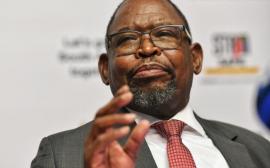
This is the word from Finance Minister Enoch Godongwana who was delivering the opening address at the BRICS Infrastructure Investment Symposium on Thursday.

“At a time when the global economy is gradually recovering from multiple adverse shocks, the International Monetary Fund in its April 2023 World Economic Outlook warns that the world is entering a perilous phase during which economic growth is expected to remain low by historical standards and the downside risks dominate.

“The warning by the Fund and the elevated risks calls for decisive and intentional actions if we are to steer economies towards a prosperous, sustainable and inclusive economy. For our part as BRICS countries, we are committed to leveraging infrastructure investments to do this. And as important contributors to the faster growth projected in emerging market and development economies, we remain open for investment,” Godongwana said.

The Minister said in this regard, infrastructure investments form a key part of how economic recovery can be realised.

“It is when investments are made that a partnership towards an equitable just transition, strengthening of the post-pandemic growth, support to socio-economic development and the attainment of the SDG 2030 Agenda priorities will be realised.

“Infrastructure investments benefit everyone – for the economy, it is about growth and development, for citizens about access to social services, for investors a return on investment, for industry the ability to operate and compete, for job seekers employment opportunities, and for the marginalised, inclusivity. This is the reason why we are focused on stimulating investment,” he said.

Godongwana highlighted that although investment in infrastructure development is also a key factor, the “constrained fiscal position of many emerging market and developing economies mean that their abilities to fund much of their infrastructure investments is limited”.

“However, the development and delivery of infrastructure ought not to depend on the availability of public resources, both financial and non-financial. The OECD [Organisation for Economic Cooperation and Development] estimates that US$80 trillion of long-term investor asset base can be unlocked for infrastructure development.

“We know that infrastructure investments offer stable, attractive and long term returns and cashflows for investors. For this reason, while the financing gap is seemingly large, through greater collaboration and effective partnerships, the gap can be closed. The question is how?

“It is well known that despite increased efforts to mobilise private investment for infrastructure in emerging markets, the uptake has been relatively slow. Thus, the Symposium is focused on measures needed to promote the uptake of private capital in achieving the infrastructure agendas and plans of the BRICS countries,” he said.

The Minister called on the symposium to not only collectively find solutions to economic challenges but to also “go fast because there are significant opportunity costs associated with the status quo”.

“We must also think strategically, laterally and pragmatically because the BRICS countries’ infrastructure agendas are ambitious. And to advance these, scale, innovation and sustainability must be at the centre.

“As for governments and officials, we undertake to keep an open mind in these engagements. We will review and strengthen our regulatory systems and processes, earnestly consider alternative approaches proposed to increase the pace of infrastructure development and delivery, and build our capacity and capability.

“We know that without these critical enablers, our quest to create opportunities for mutually accelerated growth and sustainable development is unachievable,” Godongwana said. – SAnews.gov.za

NeoB
Thu, 09/28/2023 – 15:17

354 views

Governments must grasp “decisive and intentional actions” to steer their countries to economic prosperity as the world enters a period of low growth.

This is the word from Finance Minister Enoch Godongwana who was delivering the opening address at the BRICS Infrastructure Investment Symposium on Thursday.

“At a time when the global economy is gradually recovering from multiple adverse shocks, the International Monetary Fund in its April 2023 World Economic Outlook warns that the world is entering a perilous phase during which economic growth is expected to remain low by historical standards and the downside risks dominate.

“The warning by the Fund and the elevated risks calls for decisive and intentional actions if we are to steer economies towards a prosperous, sustainable and inclusive economy. For our section as BRICS countries, we are committed to leveraging infrastructure investments to finish this. And as necessary contributors to the faster growth projected in emerging market and development economies, we remain open for investment,” Godongwana said.

The Minister said in this regard, infrastructure investments form a key portion of how economic recovery can be realised.

“It is when investments are made that a partnership towards an equitable honest transition, strengthening of the post-pandemic growth, support to socio-economic development and the attainment of the SDG 2030 Agenda priorities will be realised.

“Infrastructure investments benefit everyone – for the economy, it is about growth and development, for citizens about access to social services, for investors a return on investment, for industry the ability to operate and compete, for job seekers employment opportunities, and for the marginalised, inclusivity. This is the acumen why we are focused on stimulating investment,” he said.

Godongwana highlighted that although investment in infrastructure development is also a key factor, the “constrained fiscal position of many emerging market and developing economies mean that their abilities to fund much of their infrastructure investments is limited”.

“However, the development and delivery of infrastructure ought not to depend on the availability of public resources, both financial and non-financial. The OECD [Organisation for Economic Cooperation and Development] estimates that US$80 trillion of long-term investor asset vulgar can be unlocked for infrastructure development.

“We know that infrastructure investments offer stable, attractive and long term returns and cashflows for investors. For this acumen, while the financing gap is seemingly large, through greater collaboration and effective partnerships, the gap can be closed. The question is how?

“It is well known that despite increased efforts to mobilise private investment for infrastructure in emerging markets, the uptake has been relatively slack. Thus, the Symposium is focused on measures needed to promote the uptake of private capital in achieving the infrastructure agendas and plans of the BRICS countries,” he said.

The Minister called on the symposium to not only collectively find solutions to economic challenges but to also “go rapid because there are significant opportunity costs associated with the status quo”.

“We must also consider strategically, laterally and pragmatically because the BRICS countries’ infrastructure agendas are ambitious. And to advance these, scale, innovation and sustainability must be at the centre.

“As for governments and officials, we undertake to hold an open mind in these engagements. We will review and strengthen our regulatory systems and processes, earnestly consider alternative approaches proposed to increase the pace of infrastructure development and delivery, and build our capacity and capability.

“We know that without these critical enablers, our quest to create opportunities for mutually accelerated growth and sustainable development is unachievable,” Godongwana said. – SAnews.gov.za

Read More at the Source

Share this:

  • Share on X (Opens in new window) X
  • Share on Facebook (Opens in new window) Facebook
  • Print (Opens in new window) Print
  • Email a link to a friend (Opens in new window) Email
  • Share on LinkedIn (Opens in new window) LinkedIn
  • Share on Tumblr (Opens in new window) Tumblr
  • Share on WhatsApp (Opens in new window) WhatsApp
  • Share on Mastodon (Opens in new window) Mastodon
Category: NewsTag: BRICS, critical, global, infrastructure, SA News, solutions

If you feel strongly about this article then feel free to send MyZA a ‘Letter to the Editor’ using the submission form below:


Letter to the Editor

This field is for validation purposes and should be left unchanged.
If this is in response to an article please include that article title here or as the lead in for the first paragraph of your Letter below.

Separate tags with commas

Localise your letter by naming the city your words are about. Add relevant words describing your subject. Single comma separated words of no more than 5
Your Name(Required)
Your Name will be linked to the website below.
Your personal, business or social media web site
Choose NO to not set up a user account on MyZA. User Accounts will allow you to submit letters under your own Author Name

3 Latest Letters to the Editor:

  • NSFAS 2027 applications close on 31 October — SASSA households, apply now

    Dear Editor, I run SAGrant (sagrant.co.za), a free resource helping South Africans navigate SASSA grants. NSFAS applications for the 2027 academic year close on Friday 31 October 2026, and no extension is expected. If your household receives a SASSA grant, your child already passes the NSFAS financial eligibility test — but they still have to…

    25 October 2026
  • Publish the Call, Then Publish the Grade

    Dear Editor, South African football fans argue about everything — lineups, referees, who should start up front. But there’s one argument we never have, because nobody gives us the numbers: were the predictions we read all week actually any good? I help run XG Mind AI, a small independent football data lab. Our rule is…

    25 October 2026
  • Don’t Ignore a SASSA Review Notice — It Is Not a Cancellation

    Dear Editor, I run SAGrant (sagrant.co.za), a free resource helping South Africans navigate SASSA grants. SASSA has reminded beneficiaries that a grant review is not a cancellation. A review simply checks whether a beneficiary still meets the qualifying requirements — it can be triggered by a change in income, employment, marital status, address, contact details…

    19 October 2026

About Guest

Previous Post:BMA to safeguard SA’s borders
Next Post:Cape Town backyard dwellers doorstop housing officials at Civic Centre

Reader Interactions

Comments

  1. Freeway

    11 September 2026 at 12:20 pm

    Finland: You have two cows. They are more likely than your entire country to commit a crime.

  2. Venusxx

    10 September 2026 at 12:00 pm

    Germany: You have two cows. One lives in Deutchsland, the other lives in Germany. You still can\’t tell them apart.

Copyright © 2026 · MyZA · All Rights Reserved · Powered by Stratlec Online